Kārlis Bērziņš*,
Ilze Grante,
Ilva Nakurte and
Andris Actiņš
University of Latvia, Faculty of Chemistry, Kr. Valdemara iela 48, Riga, LV-1013, Latvia. E-mail: karlis_berzins@live.com
First published on 3rd August 2015
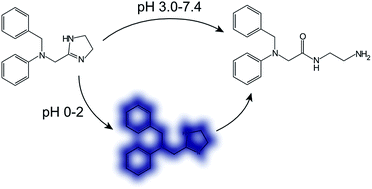
Degradation of the drug antazoline was studied in aqueous solutions by means of pH-rate profiling (pH 0–7.4). The novel approach of Runge–Kutta numerical integration in combination with multi-parameter optimisation was applied to UV-Vis spectral data to determine a valid kinetic model and kinetic parameters of the degradation process. The overall degradation mechanism was found to be dependent on the environmental pH. In the pH range of 3.0–7.4, the formation of the antazoline hydrolysis product (N-(2-aminoethyl)-2-(N-benzylanilino)acetamide) through three different pathways (acidic, non-catalysed, and semi-alkaline hydrolysis) was observed. In highly acidic media (pH 0–2), the degradation mechanism was found to be more complex. Although the same primary degradation product formed, a colourful (dark blue/violet) intermediate was also observed and further investigated by HPLC/TOF-MS.
The International Conference on Harmonisation (ICH) guidelines2 require stress tests for assessing the stability of drug substances and drug products, as well as to describe the nature of the degradation products and the operating degradation mechanisms.3 These tests also reveal useful information that is essential for improving manufacturing processes, validating expiration dates and selecting proper packagings.4
Degradation of a particular active pharmaceutical compound can be caused by various factors (temperature, humidity, pH, etc.). During API manufacturing, alternating pH conditions is a widely accepted strategy for improving drug solubility.5 However, this can also lead to API degradation, typically through hydrolysis,6 and depending on the environmental pH, different degradation products may form.7 Therefore, pH-rate profiling is commonly used for investigating API degradation rate and mechanisms.8
Degradation of pharmaceuticals under various pH conditions can be investigated by using a number of analytical methods. Spectrophotometric techniques are widely used due to the ease of spectral data acquisition, handling and interpretation. In addition, these techniques are highly sensitive and thus suitable for studying chemical reactions in solutions.9 The advantages of spectrophotometric methods also include improved selectivity due to the simultaneous measurement and evaluation of the absorbance with the reaction time, as well as possibility to avoid interference from coloured and opaque samples.10,11
Antazoline, also known as imidamine or phenazoline (C17H19N3, N-(4,5-dihydro-1H-imidazol-2-ylmethyl)-N-(phenylmethyl)-aniline) (ANT, Fig. 1) is a histamine H1 receptor antagonist used mainly in the treatment of nasal congestion and allergic conjunctivitis.12,13
However, due to the poor solubility of its free base, only antazoline salts (hydrochloride and phosphate) are currently used in pharmaceutical practice.14 The drug also exhibits significant antiarrhythmic properties, therefore, can be applied in the treatment of ventricular and supraventricular tachycardia.15 Furthermore, several studies have confirmed the overall positive, but less common effect of intravenously administered antazoline in the treatment of paroxysmal atrial tachycardia, atrial flutter, and atrial fibrillation.16
Only one impurity of antazoline (its hydrolysis product) has been defined in European Pharmacopoeia – N-(2-aminoethyl)-2-(N-benzylanilino)acetamide (ABA, Fig. 1).17 This compound has been characterised using different analytical methods – UV-Vis spectroscopy, TLC-MS, FT-IR,18 as well as NMR and HPLC-MS.19 To the best of our knowledge, the degradation process of antazoline has been studied only at pH 7.4 (ref. 18) and no investigation of degradation process kinetics has been performed.
The present research expanded the degradation kinetics studies of antazoline to wider pH range (pH 0–7.4). It was found that the previously reported degradation process occurs only over a limited pH range (3.0–7.4). In strongly acidic media, a more complex degradation route with the formation of a colourful intermediate was identified. The degradation pathway was further investigated and characterised using UV-Vis spectrophotometry and HPLC/TOF-MS analysis.
The Runge–Kutta numerical integration method in combination with least squares multi-parameter optimisation was used to determine the kinetic model and parameters of antazoline degradation at various pH conditions.
Chromatographic separation was performed using a Waters XTerra MS C18 column (2.1 × 150 mm, 3 μm) (Waters Corp., USA) placed in a column oven at 30 °C. The UV-Vis spectra were recorded between 250 and 600 nm. The chromatographic profiles were registered at 293, 330, 425, and 590 nm.
The analysis was performed in gradient mode, with the mobile phase (90
:
10, v/v) composed of solvent A (HPLC grade water + 0.1% formic acid) and solvent B (HPLC grade acetonitrile + 0.1% formic acid), and gradually changed over 10 min to 5
:
95, and then maintained for an additional 5 min. The injection volume was 1 μL and the flow rate was 0.2 mL min−1.
The mass spectrometry conditions were as follows: positive ionisation mode, scan range from m/z 50 to 1600 was used with the gas temperature of 325 °C, nitrogen flow rate was 10 L min−1, nebulizer pressure 45 psi, capillary voltage 3000 V and the applied fragmentor voltage was 130 V.
In this study, the degradation process was mainly investigated using UV-Vis absorption spectroscopy. A series of absorption spectra was collected and processed as a function of time. The results were used to extract analytical information: the number of species present, the concentration profiles of specific components, the process kinetic model and kinetic parameters. First, the theoretical absorption values were modelled as a sum of the pure component contributions to the system. The spectral profiles of the individual components at various wavelengths were expressed using the general Beer–Lambert law (eqn (1)):
![]() | (1) |
The Runge–Kutta method was applied to different kinetic models that were potentially suitable for describing the degradation process. As a result, molar concentration plots for each component were constructed. Various pathways including different reaction orders and rates were evaluated. Kinetic parameters, reaction rate constants (ki) were characterized for each degradation step.
The optimal εi and ki values were calculated using multi-parameter least squares optimisation by finding the minimum value of the goal function with MS Excel Solver software (eqn (2)):
![]() | (2) |
The calculations were repeated until a global minimum value was achieved. The optimisation process was validated by assigning different input values for the optimised parameters (εi and ki).
The most appropriate kinetic model was then determined by using root-mean-square deviation (RMSD) criteria (eqn (3)):
![]() | (3) |
The obtained RMSD values for each kinetic model were compared, and the models with the lowest RMSD values were considered as the most probable. In the cases with similar RMSD values (difference of less than two times), the simplest kinetic model was chosen for describing the degradation process.
![]() | ||
| Fig. 2 The PXRD patterns of antazoline phosphate, antazoline synthesis product, and antazoline base.22 | ||
Qualitative analysis of the system was mainly based on previously conducted research at pH = 7.4, where simple conversion of ANT to ABA was proven using chromatographic and spectroscopic techniques.18 Since our recorded UV-Vis profiles were practically identical in the pH range of 3.0–7.4, the same simple conversion of ANT to ABA was assumed under the applied conditions.
Although the degradation process of antazoline was monitored for a total of 5000 hours, the conversion of antazoline into ABA was complete only at pH = 7.4 within the experimental time period. Fig. 3 shows overall UV-Vis spectral changes of the sample over time (a) and the corresponding concentration profiles obtained from the most suitable kinetic model (b). In this case, only part of the obtained UV-Vis data is presented for clarity.
The comparison of the experimental UV-Vis spectra with those of the pure antazoline and the main degradation product (ABA) suggested that only two components were present in the solution. An isosbestic point (at 310 nm) was also observed throughout the degradation process, indicating a conversion of one species into another unique species or the existence of an equilibrium between the two species.23
The RMSD values (Table 1) obtained for various applied kinetic models clearly favored a simple first order reaction. The concentration profiles of ANT and ABA for this particular kinetic model were expressed with the following equations (eqn (4) and (5)) and solved according to the Runge–Kutta method using numerical integration:
![]() | (4) |
![]() | (5) |
Although the determined RMSD values for the reversible first order and simple first order kinetic models were the same, the obtained rate constants revealed that the reversible first order kinetic model was also describing a simple first order reaction. This was due to the reversible reaction rate constant (k−1) being close to zero after optimisation.
Furthermore, the εi values optimised using the first order kinetic model were in good agreement with those calculated from the experimental UV-Vis absorption spectra of the pure components (see ESI (Table S1†)).
At moderately low pH conditions (3.0–6.0), the first order reaction kinetic model was also favoured for describing antazoline degradation.
First of all, for antazoline sample at pH = 6.0 the overall degradation rate dropped significantly (approximately 10 times compared to degradation at pH = 7.4). At pH = 5.0 the degradation rate reached the minimum value and then started to increase at lower pH values (3.0–4.0) (Table 2).
| pH | k1, h−1 |
|---|---|
| 7.4 | 1.85 × 10⁻³ |
| 6.0 | 3.28 × 10⁻⁴ |
| 5.0 | 1.69 × 10⁻⁴ |
| 4.0 | 1.80 × 10⁻⁴ |
| 3.0 | 2.24 × 10⁻⁴ |
Thus, antazoline degradation process at the pH range of 7.4–3.0 was proposed to consist of three different reactions: semi-alkaline (pH 7.4–6.0) (Fig. 4b), non-catalysed (pH 5.0) (Fig. 4c), and acidic hydrolysis (4.0–3.0) (Fig. 4d) of the imidazoline ring in antazoline molecule. Considering the distinct basic properties of antazoline (pKa = 10.10 (ref. 24) at 25 °C), the previously reported alkaline hydrolysis reaction25 (Fig. 4a) did not occur under applied pH conditions.
![]() | ||
| Fig. 4 The proposed mechanisms of imidazoline ring degradation through (a) alkaline,25 (b) semi-alkaline,26 (c) non-catalysed26 and (d) acidic26 hydrolysis. | ||
Process kinetic parameters were in good agreement with the proposed mechanisms, emphasizing the differences between each rate limiting step of hydrolysis. In semi-alkaline and acidic media, the controlling step is the nucleophilic attack on the protonated form by a hydroxide ion or water respectively. However, as the nucleophilicity of hydroxide ion and water is different, the overall process kinetic rate varies. Furthermore, the effect of pH is more evident in semi-alkaline media, as the hydroxide ion concentration directly affects the formation rate of the unstable intermediate with imidol structure, whereas in acidic hydrolysis the decrease of pH would only shift the equilibrium towards the formation of the protonated imidazoline form.
The non-catalysed hydrolysis with the reported limiting stage of C–N bond cleavage is regarded as an intermediate process between semi-alkaline and acidic hydrolysis, and consequently exhibits the lowest overall reaction rate.26
At the very beginning of the degradation process a rapid decrease of the antazoline absorbance peak (298 nm) was observed. It could not be rationalised by the simple formation of an intermediate X even if kinetic models of higher order reactions were applied. Consequently, an additional hypothetical intermediate Y was proposed in order to yield a valid kinetic model. The resulting kinetic model, as determined by the obtained RMSD values (Table 3), consisted of one reversible reaction of antazoline being in equilibrium with the intermediate Y, followed by two consecutive first order reactions. To facilitate the processing and interpretation of the obtained data, the intermediates X and Y were assumed to be single components with distinct molecular structures. However, due to the overall system intricacy, X and Y might also consist of multiple components.
Similar minimum RMSD values were obtained for first order kinetic models with various levels of complexity. The improvement of RMSD values achieved by elaborating the applicable kinetic model was insignificant. Additionally, when higher order kinetics were used, the overall RMSD values for all kinetic models increased by 2–10 times. Therefore, the simplest model with the lowest RMSD value was determined to be most suitable. Consequently, the degradation process was described with a kinetic model consists of one reversible first order reaction followed by two consecutive first order reactions. Concentration plots for the selected kinetic model were expressed with the following equations (eqn (6)–(9)) using a similar approach as previously described:
![]() | (6) |
![]() | (7) |
![]() | (8) |
![]() | (9) |
Comparable RMSD values were also obtained for the less acidic samples of antazoline solutions (pH 1 and 2); the same kinetic model was favoured for describing the degradation process. A comparison of the obtained kinetic parameters for antazoline degradation in highly acidic media (Table 4) revealed the substantial effect of the applied pH conditions. The conversion rates for both of the consecutive reactions (ANT → X → ABA) exhibited exponential dependence on pH. The kinetic parameters also showed that a decrease of pH in the medium promoted faster formation of intermediate X and main degradation product ABA.
| pH | k1, h−1 | k−1, h−1 | k2, h−1 | k3, h−1 |
|---|---|---|---|---|
| 0 | 5.51 × 10⁻³ | 9.15 × 10⁻³ | 9.05 × 10⁻⁴ | 6.19 × 10⁻⁴ |
| 1 | 3.21 × 10⁻³ | 1.54 × 10⁻² | 8.13 × 10⁻⁵ | 1.23 × 10⁻⁴ |
| 2 | 7.85 × 10⁻⁴ | 8.79 × 10⁻¹ | 3.11 × 10⁻⁵ | 2.41 × 10⁻⁵ |
Both antazoline and the main hydrolysis product (ABA) were identified from chromatographic data by their mass spectral peaks (Fig. 6). The respective chromatographic peak intensity changes were in a good agreement with the selected kinetic model (Fig. 6, TIC). A slight peak shift was observed during the antazoline degradation process and was investigated further with EIC (extracted ion chromatography). Two different mass spectra profiles were separated by their most characteristic mass to charge ratio (m/z) peaks and were identified as antazoline and intermediate X (Fig. 6, EIC).
Chromatographic identification of the intermediate X was continued by analysing data obtained with DAD (diode array detector). In both EIC and DAD, the chromatographic peaks of antazoline and intermediate X had similar retention time differences between the components. Additionally, their respective chromatographic UV-Vis spectral profiles generated from DAD chromatographic data (Fig. 7) matched those observed in degradation studies using UV-Vis spectrophotometry.
![]() | ||
| Fig. 7 The extracted UV-Vis spectra profiles of the intermediate X (left side) and antazoline (right side) from the chromatographic data obtained with DAD. | ||
Based on the experimental data obtained from chromatographic analysis, intermediate X and antazoline were proposed to be structurally similar. The characteristic deep blue/violet colour of intermediate X may be attributed to the formation of charge transfer complex, strong chromophore or conjugation in the molecule. However, complete structure identification could not be achieved within this study.
It was found that within the pH range of 0–7.4, degradation of antazoline resulted in the formation of previously reported hydrolysis product, however, the reaction rate strictly depended on the environmental pH. Within the pH range of 3.0–7.4, three distinct pH intervals were distinguished and exhibiting different imidazoline ring hydrolysis mechanisms (acidic, non-catalyzed, and semi-alkaline) with distinct rate limiting steps for these degradation processes.
In highly acidic media (pH 0–2), however, the overall degradation process was found to be more complex due to the formation of highly colourful (dark blue/violet) intermediate which was later characterised by its individual mass spectra using HPLC/TOF-MS analysis. Nevertheless, complete explanation of the reaction mechanism requires more specific research of the degradation process in highly acidic media.
Footnote |
| † Electronic supplementary information (ESI) available. See DOI: 10.1039/c5ra09043a |
| This journal is © The Royal Society of Chemistry 2015 |