Sorption behavior of tylosin and sulfamethazine on humic acid: kinetic and thermodynamic studies

Xuetao Guoa, Jianhua Ge*a, Chen Yang*b, Renren Wuc, Zhi Dangb and Shaomin Liua
aSchool of Earth and Environment, Anhui University of Science and Technology, Huainan 232001, China. E-mail: gejianhua13@163.com
bCollege of Environment and Energy, South China University of Technology, Guangzhou, 510006, China. E-mail: cyanggz@scut.edu.cn; Fax: +86-20-39380508; Tel: +86-20-87110198
cSouth China Institute of Environmental Sciences, Ministry of Environmental Protection, Guangzhou 510655, China

Received 10th May 2015 , Accepted 1st July 2015

First published on 1st July 2015


Abstract

With the aim to investigate the kinetics and thermodynamics of tylosin (TYL) and sulfamethazine (SMT) sorption on humic acid (HA), batch sorption experiments were performed using batch reactor systems. The results indicated that the Freundlich model was much more suitable for explaining the sorption of TYL/SMT on HA, where the sorption rates for TYL/SMT decreased with the initial concentration and the sorption equilibrium could be attained within 24 h. Based on the intraparticle diffusion model, the sorption process of TYL and SMT on HA could be divided into the fast sorption stage and the slow sorption stage. The kinetic data were well-fitted to the compartment pseudo first order model, where both surface diffusion and intraparticle diffusion may play an important role in rate-controlling processes. At a specific aqueous concentration, the single-point sorption distribution coefficient (kd) of TYL and SMT decreased when the solution pH and ionic strength increased, which suggested that the sorption of TYL and SMT on HA might be dominated by both ion exchange, surface complexation and hydrophobic interactions. Meanwhile, thermodynamic calculations of sorption of TYL and SMT on HA revealed that the sorption was endothermic and spontaneous at different temperatures and the transportation abilities of TYL and SMT might be weak for soils rich in HA.

1. Introduction

Extensive and worldwide use of antibiotics has increased dramatically during the last two decades due to changes in husbandry for combating parasites, prevention and treatment of bacterially transmitted diseases, and acceleration of meat production.1,2 Tylosin (TYL) and sulfamethazine (SMT) are the most widely used antibiotics in poultry and swine feed as a growth promoter and have therapeutic uses in many countries, and have been detected in surface water, ground water, sediments and soils.3–5 For example, it was reported that the concentrations of TYL and SMT in surface soil receiving liquid manure were up to 198.7 μg kg−1 and 86.2 μg kg−1 on average.6,7 For the chemical and animal species, 50–80% were excreted as the parent compound, conjugates, oxidation or hydrolysis products of the parent compounds. Therefore, TYL and SMT might enter the environment in substantial amounts through grazing livestock or spreading of manure on agricultural soils.8 Additionally, the development of resistant bacteria caused by these antibiotics to farm animals and their presence in the faeces, milk, meat, and eggs have already been observed.9 Following application to the soil, TYL and SMT were distributed between the aqueous and solid phases of soil. The fate of TYL and SMT in the environment, including soil retention, water transport, biological or chemical degradation, and plant uptake, was affected by the respective relative concentration in the aqueous and the solid phases. Sorption to soils/sediments is a fundamental process controlling the fate, bioavailability, exposure, and reactivity of antibiotics in the environment.2,9,10 Thus, it is of great importance to evaluate the relative importance of different soil components to the overall sorption of pharmaceutical antibiotics.

Humic acids (HA) are the most important reactive fractions of natural organic matter (NOM) in soils, sediments, surface water, and groundwater.11,12 HA contains various chemical reactive functional groups, including carboxyls, phenolic hydroxyls and aromatic units. Thereby, it has crucial effect on the environmental sorption/desorption behavior of antibiotics.13,14 Extensive work has been reported focusing on the sorption of antibiotics onto the HA,15–21 which suggested that the principal sorption properties of HA depend considerably on HA structure, pH values and ionic strength. Many other factors, such as the extraction technique, the types and sources of HA are also responsible for HA characteristic. A variety of mechanisms have been proposed to explain the interaction of HA with antibiotics. These mechanisms include H-bounding, ion exchange and hydrophobic bindings.22,23

Sorption to solid surfaces is an important processes that ultimately influences the transport and fate of antibiotics in the environment. Although many experiments have focused on the sorption of antibiotics onto HA,16,24,25 the thermodynamics and kinetics have not been extensively investigated or discussed. The kinetic and thermodynamic principles are helpful to understand the sorption process.26,27 It is a common sense to use sorption isotherms at different temperatures when discussing the sorption thermodynamics properties.28 However, the interaction between HAs and antibiotics, as well as the dynamics are usually disregarded. On the above summary, the objective of this work were (1) to understand the sorption process of TYL and SMT on HA, (2) to find the aspects influencing factors of the sorption behavior, (3) to seek a suitable characterization of possible reaction mechanisms from the thermodynamic and kinetic analysis, (4) and to provide further insight to evaluate the sorption potential of antibiotics in unsaturated soils and its transport in the environmental.

2. Materials and methods

2.1. Materials

TYL tartrate (purity > 95%) and SMT (purity > 99%) were purchased from Sigma-Aldrich Corporation (St Louis, MO). TYL and SMT, like most antibiotics, are ionic compounds. The molecular structures and physicochemical properties were listed in Fig. 1. TYL is a weak base with a pKa of 7.1 and molecular weight of 916.14 g mol−1.29 In acidic condition, there might be formed ionic bonds between protonated TYL and anionic components of soil and manure matrices.30 SMT is an amphoteric compound with pKa values at 2.28 and 7.42. The net charges of SMT in different condition would be more complicated and lead to heterogeneous sorption activities between SMT and solid phase. Acetonitrile and formic acid (HPLC grade, Merck Chemicals Co. AQ5) were used as received. Pure water was prepared by Milli-Q® water machine (Millipore Co., Guangzhou, China). All the other chemicals were of analytical reagent grade and used without further purification.
image file: c5ra08684a-f1.tif
Fig. 1 Percent ionization at different pH, chemical structure, and selected properties of tylosin (a) and sulfamethazine (b).

Primary stock solutions of TYL and SMT at 1000 mg L−1 were prepared with pure water and stored at 4 °C for a maximum of 1 month. The work solutions were prepared by diluting stock solution using 0.01 M KNO3 solution.

Humic acids (solid granule, particle size is 0.5–2 μm) used throughout this investigation was obtained from JuFeng Chemical Corporation, Shanghai, China. The elemental composition of HA is: 52.37% C, 3.57% H, 36.12% O, and 1.80% N.

2.2. Chemical analysis

The concentrations of TYL and SMT in aqueous solution were measured by a reverse-phase high-performance liquid chromatography (Agilent 1200) with C18 column (5 μm, 4.6 × 250 mm; Agilent) and diode array UV detector (wavelength at 290 nm for TYL and 264 nm for SMT). The mobile phase (at a flow rate of 0.5 mL min−1) for TYL was a mixture of acetonitrile (35%) and an aqueous solution (65%) containing 0.01 mol L−1 KH2PO4 (pH = 2.0) but for SMT it was a mixture of acetonitrile and formic acid solution (0.05% v/v) at a volumetric ratio of 60[thin space (1/6-em)]:[thin space (1/6-em)]40 with a flow rate of 1 mL min−1. The injection volume was 20 μL. External standards of TYL and SMT (0.1–100 mg L−1) were employed to establish a linear calibration curve and the sample concentrations were calculated from its integrated peak areas. The solid phase concentrations were calculated based on the mass balance of the solute between the two phases.

2.3. Sorption procedure

The sorption experiments were conducted using a batch equilibrium technique. TYL and SMT were mixed at high concentration in methanol before being added to background solution. The background solution contained 0.003 M NaN3 to minimize bioactivity and 0.01 M KNO3 to adjust ionic strength. A predetermined amount of HA with filled with the initial aqueous solution in completely mixed batch reactor (CMBR) systems with Teflon gaskets and mixed for sorption equilibrium on a shaker at 150 rpm. After sorption experiments, the screw cap vial were centrifuged at 4000 rpm for 30 min, and 1 mL of supernatant was transferred to a pre-weight 1.5 mL amber glass vial for chemical analyses. Each concentration level, including blanks, was run in three parallels. Potassium hydroxide and HNO3 solutions were used for pH adjustment.

Kinetic studies of TYL and SMT sorption on HA were carried out from aqueous solutions with a certain concentration (0.5, 10 and 50 mg L−1) and pH. A fixed volume of the aliquot was withdrawn at designated time points while the reactors were run continuously. In order to investigate the influences of temperature, the shaker was adjusted at the desired temperature (15–45 °C).

2.4. Sorption models

2.4.1. Sorption isotherms models. The equilibrium sorption data was fitted using Henry (eqn (1)) and Freundlich (eqn (2)) models:31
 
qe = kdCe (1)
 
qe = kfCen (2)
where Ce (mg L−1) and qe (mg kg−1) are the equilibrium concentration of TYL in the liquid phase and solid phase, respectively; kd (L kg−1) is the distribution coefficient of solute between soil and water. kf (μg g−1) (mg L−1)−1 is the capacity affinity parameter and n (dimensionless) is the exponential parameter. Parameters were estimated by nonlinear regression weighted by the dependent variable.
2.4.2. Sorption kinetic models. To investigate the potential rate-controlling steps involved in the sorption of TYL and SMT on HA, pseudo-first-order model, pseudo-second-order kinetic model, two-compartment first order sorption model and intraparticle diffusion model were employed to fit the data.32,33

The pseudo-first-order rate expression is generally expressed as follows:

 
image file: c5ra08684a-t1.tif(3)

After integration with the initial condition qt = 0 at t = 0, eqn (4) can be obtained.

 
image file: c5ra08684a-t2.tif(4)

The pseudo-second-order model is given as:

 
image file: c5ra08684a-t3.tif(5)

Two-compartment first order model can be expressed as:

 
image file: c5ra08684a-t4.tif(6)

The rate parameter ki for intraparticle diffusion model can be defined as:

 
qt = kit0.5 + constant (7)
where qe and qt are the amounts of sorption TYL and SMT at equilibrium and at time t respectively. k1 (h−1) and k2 (g μg−1 h−1) are the sorption rate constant of pseudo-first-order and pseudo-second-order sorption rate, respectively. The rate constants k1 and k2 can be derived from linear regressions based on experiment results. k1a and k2a (h−1) are the rate constants of the two compartments; f1 and f2 represent the fractions of the two compartments, and f1 + f2 = 1. It should be noted that we did not use the linearly transformed equations as most of the studies did. Nonlinear regression was applied for data modeling to obtain the best estimation of qt.

2.4.3. Sorption thermodynamics models. The thermodynamic parameters (ΔH0, ΔS0, and ΔG0) can be determined from the temperature dependence. Free energy changes (ΔG0) are calculated from the equation.
 
ΔG0 = −RT in K0 (8)
 
image file: c5ra08684a-t5.tif(9)

The values of ΔS0 were calculated from:

 
image file: c5ra08684a-t6.tif(10)
where R is the universal gas constant, T is the temperature in Kelvin. Equilibrium constant (K0) was obtained following a method used by Khan and Singh.34–36 In brief, the sorption data were plotted as ln[thin space (1/6-em)]Kd vs. qe and extrapolated qe to zero firstly; then, a linear regression was performed on the experimental data based on least-squares analyses and the intercept on the y-axis gives the value of ln[thin space (1/6-em)]K0. Its intercept with the vertical axis gives the value of ln[thin space (1/6-em)]K0. The ΔH0 values are calculated from the slopes of the linear variation of ln[thin space (1/6-em)]K0 versus 1/T.

3. Results and discussion

3.1. Sorption isotherms of TYL and SMT on HA

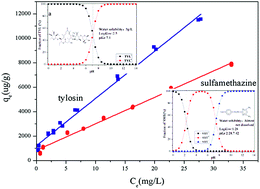
Sorption isotherms of TYL and SMT on HA were shown in Fig. 2. The linear and Freundlich isotherms were employed to describe the sorption isotherms. The fitting parameters were summarized in Table 1. It was observed that the two models were suitable to describe sorption behavior of TYL and SMT on HA, as indicated by the high regression coefficient (R2 > 0.98). However, many researches focused on sorption isotherms of SA (including SDM) fitting such data to linear and Freundlich which was in agreement with our studies.37–41
image file: c5ra08684a-f2.tif
Fig. 2 TYL and SMT sorption isotherms on HA (pH of solution at 3.5, 25 °C and 0.01 M KNO3).
Table 1 List of TYL and SMT sorption isotherm parameters
Conditions Henry model Freundlich model
kd (L kg−1) R2 n kf (μg g−1) (mg L−1)n R2
TYL 386.1 ± 5.2 0.989 0.55 ± 0.02 1610 ± 9.7 0.980
SMT 216.4 ± 3.1 0.987 0.85 ± 0.03 839 ± 8.2 0.996


The estimated kd were 386.1 ± 5.2 and 216.4 ± 3.1 L kg−1 for TYL and SMT sorption on HA, which were higher than those reported for TYL and other sulfonamides sorption on soils.6,9,10,37 Zhang et al.6 reported the kd for TYL on agricultural soils were from 1.7 to 12 L kg−1. Lertpaitoonpan et al.38 reported kd values for SMT ranged from 0.23 ± 0.06 to 3.91 ± 0.36 L kg−1 at different soils. In our previously studies the estimated kd for TYL and SMT on goethite were 11.54 and 5.08 L kg−1.26 These results suggest that not only the physico-chemical properties of TYL and SMT but also the properties of HA play a crucial role in the fate of TYL and SMT in soil ecosystems. The transportation ability of TYL and SMT might be weak for the soils rich in HA.

The nonlinearity coefficient n values for TYL and SMT on HA were less than 1, indicating the nonlinearity sorption of TYL and SMT on HA. Although nonlinearity was also observed in the sorption isotherms of tetracyclines and norfloxacin onto HA,23 the n values for those previous studies were closer to 1 than TYL and SMT in this study. The lower n value indicates more heterogeneous glass, hard or condensed sorption domain in the sorbents and higher sorption site energy distribution.42 As the n values generally reflects site energy distribution, the smaller the n values, the more heterogeneous the sorption sites. The heterogeneous nature of HA made it more difficult to adsorb additional molecules at a high TYL and SMT concentration. This may occur when specific binding sites become saturated and the remaining sites were much weaker in adsorbing the molecules.42 The kf obtained in this study were 1610 ± 9.7 and 839 ± 8.2 (μg g−1) (mg L−1)n for TYL and SMT, which were consistent with the others studies.21

It should be noted that the sorption nonlinearity and capacity of TYL were stronger than SMT, which might be related with the difference of the physicochemical properties of two chemicals. At pH 3.5, cationic forms of TYL were dominant and the primary forms of SMT were the neutral species. Sorption of TYL were higher than SMT, thus highlighting the importance of cationic forms in sorption interactions with HA, which was dominant the sorption interaction of TYL on HA might be cation exchange. Similar phenomena could be observed for norfloxacin sorption onto humic acid extracted from weathered coal.23 It was different that SMT is an amphoteric compound. Its water solubility is lower than TYL. The interactions between SMT molecules and HA might be hydrophobic effect.2

3.2. Sorption kinetics of TYL and SMT on HA

The sorption processes of various initial concentrations of TYL and SMT on HA were shown in Fig. 3. It was obvious that TYL and SMT were able to be adsorbed effectively by HA up to more than 80%. But there was little difference for the sorption capacity of TYL and SMT. Seen from the whole sorption process, the sorption could reach equilibrium within 24 h and be divided into two stages, rapid sorption stage (5 h ahead) and slow sorption stage (5 h afterward). This indicates that TYL and SMT adsorbed rapidly adsorbed onto the outer surfaces of HA and then diffused into the micropores which were lying in the interlayer structure of the HA.43
image file: c5ra08684a-f3.tif
Fig. 3 Sorption kinetics of TYL and SMT on humic acid (equilibrium pH for TYL and SMT were 3.5; temperature = 25 °C; I = 0.01 M KNO3).

From the sorption results, three kinetic models were generated to assess the kinetic characteristics of TYL and SMT sorption on HA. Table 2 showed the parameters of simulated sorption kinetics models. The results proved that the two-compartment first order model could explain better the sorption processes of TYL and SMT on HA than pseudo-first-order model and pseudo-second-order model because of the higher R2.43 It was obvious that the sorption rate (k1 and k2) for TYL and SMT decreased with the initial concentrations increased. This is related to the complicated interactions between TYL/SMT and HA.44 As listed in Table 2, the large values of k1a/k2a indicated that different sorption stages had distinct sorption characteristics of the fast compartment (with the higher rate constant, k1a) and the slow compartment (with the slower rate constant, k2a).45 It indicated that the sorption process might be related with chemical sorption. The chemisorptions reaction or an activated site sorption would be more predominant in the rate controlling step for TYL and SMT. The fact that HA presented the highest sorption capacity attributed to the structure of HA molecular (such as rubbery and glassy type carbon). TYL and SMT molecules in the solution could effective been bonded with alkyl C by hydrophobic interaction.45

Table 2 The pseudo-first-order, pseudo-second-order and two-compartment first order model sorption models constants of TYL and SMT on humic acid
Conditions Pseudo-first-order Pseudo-second-order Two-compartment first order
k1 (h−1) R2 k2 (g μg−1 h−1) R2 f1 f2 k1a (h−1) k2a (h−1) k1a/k2a R2
TYL 1 mg L−1 0.20 0.949 5.70 0.997 0.83 0.17 0.98 0.03 32.67 0.999
5 mg L−1 0.17 0.934 5.12 0.997 0.89 0.11 0.56 0.02 28.00 0.999
10 mg L−1 0.13 0.868 3.74 0.998 0.91 0.09 0.41 0.02 20.50 0.999
SMT 1 mg L−1 0.17 0.930 9.46 0.995 0.85 0.15 1.12 0.04 28.00 0.999
5 mg L−1 0.12 0.991 6.58 0.998 0.90 0.10 0.67 0.04 16.75 0.999
10 mg L−1 0.08 0.922 3.51 0.998 0.93 0.07 0.31 0.03 10.33 0.999


To reveal the relative contribution of surface and intraparticle diffusion to the entire kinetic sorption process, the experimental data were fitted with the intraparticle diffusion model. Intraparticle diffusion was presumed to be the rate-controlling step if the simulation curve conformed to linear and the plot passes through origin. As seen from Fig. 4, the fact that the model curves did not pass through the origin with positive intercepts (C ≠ 0) indicated that both surface sorption and intra-particle diffusion contributed to the actual sorption process of TYL and SMT on HA.44 Subsequently, three successive sorption mechanisms were postulated to fit a linear model as seen in Fig. 4. In the first stage about 46.3–66.9% of TYL and SMT was adsorbed on HA attributed to the occupation of exterior activated sites by various physicochemical interactions (such as hydrophobic interaction, covalent forces, and van de Walls forces and so on). Moreover, the thickness of the boundary layer (C) for the HA in this stage was more conspicuously, indicating that the surface sorption played an important role for the TYL and SMT on HA. In the second stage, only 15.0–23.8% of TYL and SMT adsorbed on sorbents were slowly diffused from liquid film into microporous surface. In the third stage, the intra-particle diffusion rate was obviously lower than the former stage of surface diffusion due to the diameter of micropore which was relatively small compared to the larger molecule-sized of TYL and SMT.


image file: c5ra08684a-f4.tif
Fig. 4 Intraparticle diffusion model with different initial concentrations of TYL and SMT on humic acid.

3.3. Influences of pH and ionic strength

As ionized chemicals, ionic species would be different at different pH values. In order to better understand the sorption mechanism of TYL and SMT on humic acid, the sorption equilibrium experiments at different pH and ionic strength conditions were performed. The correlationship of sorption distribution coefficient kd vs. pH and ionic strength were shown in Fig. 5. It shows the sorption of TYL and SMT on HA under different pHs against final solution pH, which were illustrated by the single-point sorption data.
image file: c5ra08684a-f5.tif
Fig. 5 Effect of pH and ionic strength on the sorption of TYL and SMT on humic acid (contact time for TYL and SMT was 24 h; temperature was 25 °C).

The sorption capacity for TYL decreased as the pH values increased, which might be related with the ionic species at different pH values. When pH of the aqueous solution was below 7.1, the positively charged TYL+ would be the major ionic species. When pH was equal to and beyond 7.1, the main species of the TYL would be the neutral TYL0. At acidic conditions, the dominant sorption interaction of TYL on HA might be electrostatic interactions, a major mechanism for cation exchange process for uptake of cationic species on HA.46 As the solution pH increased and over 7.1, the relative concentration of TYL+ decreased and the neutral species of TYL became dominant. As a result, the electrostatic interactions between TYL+ and HA weakened. Sorption of neutral TYL on HA may be dominated by hydrophobic interactions, a mechanism that controls the overall sorption of non-ionic and less polar organic chemicals on soils and sediments. The sorption decreased as the ionic strength increased from 0.01 to 0.1 M, which suggested that there might exist the surface complexation between TYL and HA.26

But for SMT it was the same as TYL. SMT has two pKa (2.25 and 7.45) values and could exist as a cationic, neutral and anionic species under different pH conditions. When pH of the solution was below 3, it was similar with TYL. Cation exchange might be the main interaction in the sorption process.46 When pH value was in the range from 3.0 to 8.0, the neutral form would be dominant. The hydrophobic interactions may be the dominated mechanisms.8 The SMT molecules might be adsorbed by HA via surface complexation which could be confirmed by the phenomena observed through ionic strength. The sorption decreased as the ionic strength increased from 0.01 to 0.1 M at this pH values.

3.4. Sorption thermodynamics of TYL and SMT on HA

Changes of temperature could affect sorption behavior of organic chemicals on sorbents, thus sorption of TYL and SMT on HA at different temperature was investigated (Fig. 6). Increasing temperature could enhance the rate of molecular diffusion and decrease the viscosity of solution. Thus, it can be easier for sorbate molecules to cross the external boundary layer and move into the internal pores of sorbents.22 As shown in Fig. 6 (Table 3), TYL and SMT sorption increased with increasing temperature from 5 °C to 45 °C, which indicated that the higher temperature could favor the sorption of TYL and SMT on HA.
image file: c5ra08684a-f6.tif
Fig. 6 Effect of temperature on the sorption of TYL and SMT on humic acid (contact time for TYL and SMT was 24 h; equilibrium pH for TYL and SMT was 3.5; I = 0.01 M KNO3).

The thermodynamic parameters (ΔH0, ΔS0, and ΔG0) calculated by eqn (8)–(10) were shown in Table 4. It can be seen that the value of kd increased with the increase of temperature. Because the plot of ln[thin space (1/6-em)]k versus 1/T was linear for TYL and SMT (Fig. 7), thus the related thermodynamic parameters such as ΔH0, ΔS0 are available.22 The negative value of ΔG0 for TYL and SMT indicated that the sorption process was thermodynamically spontaneous. The more negative ΔG0 indicated that the driving force of sorption was stronger. The increased ΔG0 with increasing TYL and SMT sorption illustrated that the driving force of sorption decreased due to occupation of high energy sorption sites. The highest negative ΔG0 values were found for TYL at the same temperature, suggesting that the sorption potential for TYL was the largest. The positive ΔH0 values for TYL and SMT indicated that sorption of TYL and SMT on HA was endothermic associated with an entropy driven process (ΔS0 > 0). The variation of molecular groups may account for the difference of thermodynamic sorption behaviors between two antibiotics. Changes in ΔH0 may indicate the binding mechanisms including physisorption (ΔH0 < 40 kJ mol−1) and chemisorption (ΔH0 > 40 kJ mol−1). Thus, SMT sorption onto HA can be mainly attributed to physisorption and TYL sorption onto HA can be mainly attributed to chemisorption. Another thermodynamic parameter, entropy ΔS0, was used to evaluate randomness of system. Sorption of TYL and SMT disrupted the hydration shell around HA, leading to the increased randomness of TYL/SMT–water–HA system (ΔS0 > 0). For TYL–water–HA system with higher ΔS0 than SMT–water–HA, more energy is needed to regain its original entropy state and TYL sorption onto HA can be mainly attributed to chemisorption.22,26

Table 3 Effect of temperature on the sorption isotherm parameters of TYL and SMT on HA
Conditions Henry model Freundlich model
kd (L kg−1) R2 n kf (μg g−1) (mg L−1)n R2
TYL 5 °C 174.6 0.996 0.234 998 0.987
15 °C 301.2 0.993 0.358 1385 0.979
25 °C 386.1 0.989 0.546 1610 0.980
35 °C 620.7 0.994 0.612 1876 0.981
SMT 15 °C 192.6 0.995 0.765 769 0.984
25 °C 216.4 0.987 0.846 839 0.996
35 °C 243.2 0.985 0.884 942 0.991
45 °C 305.2 0.991 0.921 1015 0.986


image file: c5ra08684a-f7.tif
Fig. 7 Effect of temperature on TYL and SMT sorption on humic acid.
Table 4 Thermodynamic parameters of TYL and SMT sorption on humic acid
Sample ln[thin space (1/6-em)]k Temperature (°C) ΔG0 (kJ mol−1) ΔH0 (kJ mol−1) ΔS0 (J mol−1 K−1)
TYL 5.16 5 −11.9 48.9 146.7
5.71 15 −13.6
5.96 25 −14.7
6.44 35 −16.5
SMT 5.26 15 −12.6 31.3 82.9
5.38 25 −13.3
5.49 35 −14.1
5.72 45 −15.1


4. Conclusion

Sorption and transport of TYL and SMT in soils is complicated because it exists as different forms at environmentally relevant pH conditions. Although several factors might influence the sorption of TYL and SMT on HA, our batch sorption data of thermodynamics and kinetics calculated confirmed the importance of cation exchange, surface complexation and hydrophobic interactions in the sorption of TYL and SMT on HA. The sorption process might be constituted with the initial boundary layer diffusion or external surface, then the intraparticle diffusion or pore diffusion stage and finally equilibrium stage related with the sorption on the interior surface of sorbent. The results indicated that the transportation abilities of TYL and SMT might be weak for the soils rich in organic matter. Our studies showed that it is crucial to assess the environmental risks of TYL and SMT and the following up investigations.

Acknowledgements

The study was financially supported by the China National Science Fund Program (No. 41072268, 41173104), Pearl River Young Scientist Project of Guangzhou (2011J2200060), the Natural Science Foundation of Universities of Anhui Province (KJ2014A069), postdoctoral Science Foundation of Anhui Province (2013DG125) and the PhD Fund of Anhui University of Science and Technology (ZY540).

References

  1. R. Zhang, J. Tang, J. Li, Z. Cheng, C. Chaemfa, D. Liu, Q. Zheng, M. Song, C. Luo and G. Zhang, Sci. Total Environ., 2013, 450, 197–204 CrossRef PubMed.
  2. M. Teixido, J. J. Pignatello, J. L. Beltran, M. Granados and J. Peccia, Environ. Sci. Technol., 2011, 45, 10020–10027 CrossRef CAS PubMed.
  3. M. J. Garcia-Galan, M. S. Diaz-Cruz and D. Barcelo, Environ. Int., 2011, 37, 462–473 CrossRef CAS PubMed.
  4. K. McClellan and R. U. Halden, Water Res., 2010, 44, 658–668 CrossRef CAS PubMed.
  5. X. Hu, Q. Zhou and Y. Luo, Environ. Pollut., 2010, 158, 2992–2998 CrossRef CAS PubMed.
  6. Q. Zhang, C. Yang, Z. Dang and W. Huang, Soil Sci., 2011, 176, 407–412 CrossRef CAS.
  7. L. Ji, Y. Wan, S. Zheng and D. Zhu, Environ. Sci. Technol., 2011, 45, 5580–5586 CrossRef CAS PubMed.
  8. X. Guo, C. Yang, Y. Wu and Z. Dang, Environ. Sci. Pollut. Res., 2014, 21, 2572–2580 CrossRef CAS PubMed.
  9. J. Tolls, Environ. Sci. Technol., 2001, 35, 3397–3406 CrossRef CAS.
  10. S. Thiele-Bruhn, T. Seibicke, H. R. Schulten and P. Leinweber, J. Environ. Qual., 2004, 33, 1331–1342 CrossRef CAS.
  11. G. Zhang, H. Liu, J. Qu and W. Jefferson, J. Colloid Interface Sci., 2012, 366, 141–146 CrossRef CAS PubMed.
  12. H. R. Schulten, M. Thomsen and L. Carlsen, Chemosphere, 2001, 45, 357–369 CrossRef CAS.
  13. E. Cadkova, M. Komarek, R. Kaliszova, V. Koudelkova, J. Dvorak and A. Vanek, J. Environ. Sci. Health, Part B, 2012, 47, 336–342 CrossRef CAS PubMed.
  14. X. Wang, X. Guo, Y. Yang, S. Tao and B. Xing, Environ. Sci. Technol., 2011, 45, 2124–2130 CrossRef CAS PubMed.
  15. M. Borisover and E. R. Graber, Environ. Sci. Technol., 2004, 38, 4120–4129 CrossRef CAS.
  16. Q. Zhang, L. Zhao, Y.-H. Dong and G.-Y. Huang, J. Environ. Manage., 2012, 102, 165–172 CrossRef CAS PubMed.
  17. W. Yan, S. Hu and C. Jing, J. Colloid Interface Sci., 2012, 372, 141–147 CrossRef CAS PubMed.
  18. O. P. Bansal, Natl. Acad. Sci. Lett., 2012, 35, 109–114 CrossRef CAS.
  19. J. Hou, B. Pan, X. Niu, J. Chen and B. Xing, Environ. Pollut., 2010, 158, 2826–2832 CrossRef CAS PubMed.
  20. C. Gu and K. G. Karthikeyan, J. Environ. Qual., 2008, 37, 704–711 CrossRef CAS.
  21. C. Gu, K. G. Karthikeyan, S. D. Sibley and J. A. Pedersen, Chemosphere, 2007, 66, 1494–1501 CrossRef CAS PubMed.
  22. V. Leone, P. Iovino, S. Salvestrini and S. Capasso, Chemosphere, 2014, 95, 75–80 CrossRef CAS PubMed.
  23. Q. Zhang, L. Zhao, Y.-H. Dong and G.-Y. Huang, J. Environ. Manage., 2012, 102, 165–172 CrossRef CAS PubMed.
  24. A. Iglesias, R. Lopez, D. Gondar, J. Antelo, S. Fiol and F. Arce, Chemosphere, 2010, 78, 1403–1408 CrossRef CAS PubMed.
  25. Y. Li, Q. Yue, B. Gao, Q. Li and C. Li, Colloids and Surfaces, B: Biointerfaces, 2008, 65, 25–29 CrossRef CAS PubMed.
  26. X. Guo, C. Yang, Z. Dang, Q. Zhang, Y. Li and Q. Meng, Chem. Eng. J., 2013, 223, 59–67 CrossRef CAS PubMed.
  27. B. Li and T. Zhang, Environ. Sci. Pollut. Res., 2013, 20, 3024–3033 CrossRef CAS PubMed.
  28. A. Celekli and H. Bozkurt, Environ. Sci. Pollut. Res., 2013, 20, 4647–4658 CrossRef CAS PubMed.
  29. E. Cundliffe, N. Bate, A. Butler, S. Fish, A. Gandecha and L. Merson-Davies, Antonie van Leeuwenhoek, 2001, 79, 229–234 CrossRef CAS.
  30. M.-L. Loke, J. Tjørnelund and B. Halling-Sørensen, Chemosphere, 2002, 48, 351–361 CrossRef CAS.
  31. L. Ji, W. Chen, L. Duan and D. Zhu, Environ. Sci. Technol., 2009, 43, 2322–2327 CrossRef CAS.
  32. Y. S. Ho, J. C. Y. Ng and G. McKay, Sep. Purif. Methods, 2000, 29, 189–232 CrossRef CAS.
  33. Y. Li, Q. Yue and B. Gao, J. Hazard. Mater., 2010, 178, 455–461 CrossRef CAS PubMed.
  34. S. I. Lyubchik, A. I. Lyubchik, O. L. Galushko, L. P. Tikhonova, J. Vital, I. M. Fonseca and S. B. Lyubchik, Colloids Surf., A, 2004, 242, 151–158 CrossRef CAS PubMed.
  35. W. Li, G. Pan, M. Zhang, D. Zhao, Y. Yang, H. Chen and G. He, J. Colloid Interface Sci., 2008, 319, 385–391 CrossRef CAS PubMed.
  36. M. Makehelwala, R. Weerasooriya, L. Jayaratne and C. B. Dissanayake, J. Chem. Thermodyn., 2012, 51, 1–7 CrossRef CAS PubMed.
  37. A. Białk-Bielińska, J. Maszkowska, W. Mrozik, A. Bielawska, M. Kołodziejska, R. Palavinskas, P. Stepnowski and J. Kumirska, Chemosphere, 2012, 86, 1059–1065 CrossRef PubMed.
  38. W. Lertpaitoonpan, S. K. Ong and T. B. Moorman, Chemosphere, 2009, 76, 558–564 CrossRef CAS PubMed.
  39. H. Chen, X. Wang, J. Li and X. Wang, J. Mater. Chem. A, 2015, 3, 6073–6081 CAS.
  40. X. Yang, J. Li, T. Wen, X. Ren, Y. Huang and X. Wang, Colloids Surf., A, 2013, 422, 118–125 CrossRef CAS PubMed.
  41. J. Li, S. Chen, G. Sheng, J. Hu, X. Tan and X. Wang, Chem. Eng. J., 2011, 166, 551–558 CrossRef CAS PubMed.
  42. G. Zhang, Q. Zhang, K. Sun, X. Liu, W. Zheng and Y. Zhao, Environ. Pollut., 2011, 159, 2594–2601 CrossRef CAS PubMed.
  43. J. Li, J. Fu, X. Xiang, M. Wu and X. Liu, Sci. Total Environ., 2013, 452, 404–410 CrossRef PubMed.
  44. H. Li, D. Zhang, X. Han and B. Xing, Chemosphere, 2014, 95, 150–155 CrossRef CAS PubMed.
  45. B. Pan, P. Wang, M. Wu, J. Li, D. Zhang and D. Xiao, Environ. Pollut., 2012, 171, 185–190 CrossRef CAS PubMed.
  46. Q. Zhang, C. Yang, W. Huang, Z. Dang and X. Shu, Chemosphere, 2013, 93, 2180–2186 CrossRef CAS PubMed.

Footnote

Electronic supplementary information (ESI) available. See DOI: 10.1039/c5ra08684a

This journal is © The Royal Society of Chemistry 2015
Click here to see how this site uses Cookies. View our privacy policy here.