DOI:
10.1039/C5RA08624H
(Paper)
RSC Adv., 2015,
5, 48908-48915
Interaction between CO2 and ionic liquids confined in the nanopores of SAPO-11†
Received
9th May 2015
, Accepted 26th May 2015
First published on 27th May 2015
Abstract
A series of ionic liquids (P4,4,4,6BF4, APMIMBF4, P4,4,4,6Triz, as well as the newly prepared anion dual-functionalized amino-triz IL P4,4,4,6ATriz, etc.) supported on glass powder and SAPO-11 were prepared, and their interaction with CO2 was investigated by “limited” temperature-programmed desorption. The results showed that the strength of the interaction of CO2 with IL/glass powder (11 wt%) followed the order P4,4,4,6BF4 < APMIMBF4 < P4,4,4,6Triz < P4,4,4,6ATriz. Two desorption peaks were observed for P4,4,4,6Triz, probably attributed to the two sites of interaction between Triz and CO2, and the Gaussian 03 program was employed to obtain the optimized structures, revealing the interaction between P4,4,4,6Triz and CO2. When ILs were confined in the nanopores of SAPO-11, the desorption capacity and interaction strength increased because of the nano-confinement effect. Meanwhile, the loading, as well as the structure of ILs and Na2CO3-modified SAPO-11, significantly affected the interaction between CO2 and ILs. Besides, P4,4,4,6ATriz/SAPO-11 (modified with Na2CO3, 30 wt%) with a maximum CO2 desorption capacity of 1.55 moleCO2/moleILs could reversibly adsorb CO2 15 times without any apparent reduction in the desorption capacity.
1. Introduction
Carbon dioxide (CO2) is considered to be the main greenhouse gas, and it is highly desirable to develop a method to efficiently capture CO2. In the past decades, ionic liquids (ILs) have tremendously attracted attention for use in the capture of acid gases, especially CO2, caused by their unique properties; they are also good alternatives to traditional aqueous amine solvents.1–6 To increase the absorption capacity of CO2, Davis et al. have reported the binding of CO2 with pioneering amino-functionalized ILs by physical and chemical absorption, with an absorption capacity of approximately 0.5 moleCO2/moleILs.7 Subsequently, some anion-functionalized ILs, including amino-acid-based ILs, acetate ILs, azolate ILs and pyridine ILs, have been developed for the chemisorption of CO2 and exhibited improved absorption capacity.8–13 Compared to lithium-based ceramic adsorbents (CO2 capture at high temperatures: 400–700 °C),14–18 the process of capturing CO2 by ILs (at room temperature) obviously leads to more energy savings. In addition, the captured CO2 can easily undergo catalytic conversion into valuable compounds such as CO, CH4 and epoxide, particularly in the case of electrocatalysis conducted at room temperature because ILs exhibit conductivity higher than that of metal organic frameworks.19–24
However, currently, the conventional method for measuring the CO2 absorption capacity predominantly involves weighing the quality changes of bulk ILs before and after the absorption of CO2, which provides marginal information about CO2 absorption; however, detailed desorption information, such as the number and types of desorption sites and temperature of the maximum and complete desorption, is not obtained. Typically, temperature-programmed desorption (TPD) analyses are employed for understanding the properties of the active sites on a catalyst, which in turn can provide information about the number and types of surface sites as well as their reactivity and sensitivity to adsorbate coverage.25,26 When TPD employs to investigate the interaction between ILs and CO2, information such as desorption capacity, different absorption sites, temperatures of the maximum and complete desorption and basicity of ILs can be obtained.
In this study, we first employed the “limited” TPD technology to explore the interaction between ILs and CO2 to obtain detailed information of desorption. We used glass powder as the support as it has almost no pores and does not have the ability to capture CO2; hence, we can observe actual interactions between ILs and CO2. Silicoaluminophosphate molecular sieve SAPO-11 (mean mesopore size: 7 nm; pore volume: 0.45 cm3 g−1) has excellent mean nanopores and mild acidity27,28 such that bare SAPO-11 exhibits a small desorption capacity; hence, we used it as the support to determine the interaction between CO2 and ILs confined in nanoscale pores. Herein, a series of ILs supported on glass powder and SAPO-11 were prepared, and their interaction with CO2 was investigated by TPD. Moreover, the effects of the loadings of ILs, as well as the structure of ILs and Na2CO3-modified SAPO-11, on the interaction between CO2 and ILs were also investigated. The newly prepared IL P4,4,4,6ATriz supported on glass powder with a loading of 11 wt% exhibited a higher desorption capacity (0.79 molCO2/molILs) and the maximum desorption temperature (80 °C, 136 °C) caused by the introduction of electron-donating ammonium groups. The desorption capacity further increased to 0.97 molCO2/molILs when confined in the nanopores of SAPO-11 with a loading of 30 wt%.
2. Experimental
2.1 Chemicals
All reagents and solvents of pure analytical grade were purchased from commercial sources and were used without further purification, if not stated otherwise.
2.2 Preparation of ILs
1-Ethyl-3-methylimidazolium tetrafluoroborate (EMIMBF4), 1-aminopropyl-3-methylimidazolium tetrafluoroborate (APMIMBF4), 1-ethyl-3-methylimidazolium acetate (EMIMOAc), 1-ethyl-2,3-dimethylimidazolium acetate (EMMIMOAc), alkyltributylphosphonium tetrafluoroborate (P4,4,4,nBF4 n = 2, 4, 6, 8, 10), aminopropyltributylphosphonium tetrafluoroborate (P4,4,4,APBF4), hexyltributylphosphonium X (P4,4,4,6X X = bromide (Br), hexafluorophosphate (PF6) and bis((trifluoromethyl)sulfonyl)imide (TFSI) investigated in this study (Scheme 1) were synthesized and purified according to well-established procedures29 and dried under high vacuum at 80 °C for 8 h before use.
 |
| | Scheme 1 Structures and abbreviations of the cations and anions used in this study. | |
Hexyltributylphosphonium triazole (P4,4,4,6Triz) and hexyltributylphosphonium aminotriazole (P4,4,4,6ATriz) were prepared by the neutralization of hexyltributylphosphonium hydroxide (P4,4,4,6OH) and 1,2,4-triazole or 3-amino-1,2,4-triazole according to literature methods.30,31 Typically, a solution of P4,4,4,6OH in ethanol was first prepared from P4,4,4,6Br using the anion-exchange resin method. Second, equimolar 1,2,4-triazole or 3-amino-1,2,4-triazole was added to the P4,4,4,6OH solution in ethanol. Next, the mixture was stirred at room temperature for 12 h. Subsequently, ethanol and water were removed by distillation at 60 °C under reduced pressure. The obtained ILs were dried under high vacuum at 80 °C for 8 h. The structures of these ILs were confirmed by NMR spectroscopy. 1H NMR and 13C NMR spectra were recorded on a Bruker AMX FT 400 MHz NMR spectrometer. Chemical shifts were reported downfield in parts per million (ppm, δ) using tetramethylsilane as the reference.
P4,4,4,6Triz 1H NMR (CDCl3) 0.95 (m, 12H, CH3), 1.30–1.52 (m, 20H, CH2), 2.29–2.38 (m, 8H, PCH2), 8.07 ppm (s, 2H, Triz C2 and C5); 13C NMR (CDCl3) 13.3, 13.8, 18.5, 19.0, 21.7, 22.2, 23.7, 23.9, 30.3, 30.9, 148.8, 152.5 ppm.
P4,4,4,6ATriz 1H NMR (CDCl3) 0.94 (m, 12H, CH3), 1.29–1.50 (m, 20H, CH2), 2.21–2.29 (m, 8H, PCH2), 7.34 (s, 2H, Triz-NH2), 7.49 ppm (s, H, Triz C5); 13C NMR (CDCl3) 13.4, 13.8, 18.5, 19.1, 21.7, 22.2, 23.6, 23.9, 30.4, 30.9, 148.6, 158.9 ppm.
The water content in these ILs was determined by Karl–Fischer titration; it was found to be less than 0.05 wt%. The residual bromide content in these ILs was determined using a Mettler–Toledo Seven Multi pH meter with a Br-selective electrode; the bromide content was lower than 0.1 wt%. The thermal stability of the ILs (Fig. S1†) was determined on a TA Instruments Q500 series thermal gravimetric analyzer with samples held in platinum pans under a continuous flow of nitrogen. Samples were heated at a constant rate of 5 °C min−1 during all TGA experiments.
2.3 Preparation of supported ILs
We describe the preparation of P4,4,4,6BF4/SAPO-11 (30 wt%) as an example; it was prepared in a manner similar to a previous procedure in a filling experiment.32 First, 1.2 g SAPO-11 was placed in a two-neck flask (one of the necks was sealed by a rubber stopper). The flask was maintained at 100 °C for 4 h under vacuum to remove the gas inside SAPO-11. Second, 360 mg P4,4,4,6BF4 dissolved in methanol was transferred into the flask using a syringe, and the mixture was ultrasonically vibrated for 1 h to fill the porous SAPO-11 with ILs. Next, methanol was removed by distillation at 80 °C under reduced pressure. Finally, P4,4,4,6BF4/SAPO-11 (30 wt%) thus obtained was dried under high vacuum at 80 °C for 8 h.
2.4 Preparation of Na2CO3-modified SAPO-11
First, 5 g SAPO-11 was added to 200 mL of a Na2CO3 solution (0.02 mol L−1) at room temperature and then the mixture was stirred vigorously for 12 h. Next, the mixture was filtered and washed with water till a pH of 7 was attained in the washing solution. Finally, the resultant precipitate was dried at 120 °C for 12 h and further calcined at 300 °C for 5 h to yield Na2CO3-modified SAPO-11.
2.5 Temperature-programmed desorption
Temperature-programmed desorption (TPD) was performed using a TPD flow system (Fig. 1) equipped with a thermal conductivity detector (TCD). In a typical experiment, the supported IL sample (P4,4,4,6BF4/glass powder, 1.11 g, 11 wt%) was first pretreated at 180 °C for 1 h under Ar flow (65 mL min−1) and then cooled to 10 °C. Second, the sample was subsequently exposed to a stream of CO2 (65 mL min−1) at 10 °C for 1 h and flushed again with Ar (65 mL min−1) for 1 h to remove any weakly adsorbed CO2. Next, the desorption profile was recorded at a heating rate of 15 °C min−1 from 10 to 180 °C, and 180 °C was maintained until the TCD signal of CO2 returned to the baseline. The peak area was quantitatively analysed by the standard peak area of one quantitative ring of CO2 (0.1727 mL) and was confirmed by a titrimetric method of the CO2 collected using a Ba(OH)2/BaCl2 standard solution.
 |
| | Fig. 1 Schematic diagram of a temperature-programmed desorption instrument. | |
3. Results and discussion
3.1 Interaction between CO2 and ILs supported on glass powder and SAPO-11
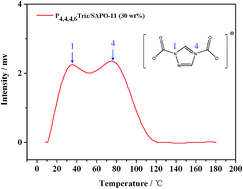
Fig. 2A shows the desorption curves of P4,4,4,6BF4, APMIMBF4, P4,4,4,6Triz and P4,4,4,6ATriz (11 wt%) supported on glass powder; desorption capacities of 0, 0.1, 0.4 and 0.79 moleCO2/moleILs were observed (Table 1), respectively. No peak was observed in the desorption curve of P4,4,4,6BF4 as TPD only exhibited a relatively strong interaction between CO2 and ILs. This result indicates that the interaction between CO2 and P4,4,4,6BF4 is very weak, probably only physical interaction, and the adsorbed CO2 is completely flushed out by Ar in the blowing process. On the other hand, for APMIMBF4, one peak was observed, and the maximum and complete desorption was observed at 53 °C and 120 °C, respectively. The relative high desorption capacity was attributed to the formation of an ammonium carbamate salt by CO2 and ammonium ILs. Moreover, the desorption capacity of APMIMBF4/glass powder was lower than those of bulk ILs reported by Davis et al.7 The supported ILs are speculated to have been adsorbed by the membrane, with a majority of the weakly adsorbed CO2 being removed in the blowing process. On the other hand, for P4,4,4,6Triz, two desorption peaks were observed at 60 °C and 119 °C, attributed to two absorption sites corresponding to the P4,4,4,6Triz anion (Scheme 2), although only one new peak was observed at 1745 cm−1 in the FTIR spectrum after CO2 absorption, attributed to the C
O stretch of carbamate (Fig. 3A). According to Scheme 2, the optimized structures reflecting the interaction between the Triz anion and free CO2 molecules was obtained by theoretical calculations using the Gaussian 03 program at the B3LYP/6-31++(d, p) level of theory33,34 (Fig. 3B). In the curve of P4,4,4,6Triz, the first peak was observed at 60 °C, possibly attributed to the interaction site of the low atomic charge 1 N of 1,2,4-triazole (Mulliken charges: −0.301), while the second peak was observed at 119 °C, attributed to the high atomic charge of 4 N of 1,2,4-triazole (Mulliken charges: −0.419). This new proposed mechanism possibly urges us to reconsider the interaction between CO2 and triz-based ILs. When the temperature increased to 180 °C, approximately 30% of the adsorbed CO2 was still not desorbed, and subsequently we maintained the temperature at 180 °C until the TCD signal returned to the baseline to ensure complete desorption of CO2. This indicated that the diffusion and desorption of CO2 in the ILs are slow.
 |
| | Fig. 2 (A) TPD-CO2 profiles of different ILs supported on glass powder; (B) TPD-CO2 profiles of different ILs confined in SAPO-11 (30 wt%). | |
Table 1 CO2 desorption of different ILs/support
| IL/support |
Desorption capacity/moleCO2/moleILs |
Maximum desorption temperature/°C |
Complete desorption temperature/°C |
| P4,4,4,6BF4/glass powder (11 wt%) |
0 |
0 |
0 |
| APMIMBF4/glass powder (11 wt%) |
0.1 |
53 |
120 |
| P4,4,4,6Triz/glass powder (11 wt%) |
0.4 |
60, 119 |
— |
| P4,4,4,6ATriz/glass powder (11 wt%) |
0.79 |
80, 136 |
— |
| P4,4,4,6BF4/SAPO-11 (30 wt%) |
0.14 |
77 |
110 |
| APMIMBF4/SAPO-11 (30 wt%) |
0.47 |
87 |
— |
| P4,4,4,6Triz/SAPO-11 (30 wt%) |
0.16 |
35, 75 |
120 |
| P4,4,4,6ATriz/SAPO-11 (30 wt%) |
0.97 |
82, 132 |
— |
 |
| | Scheme 2 Proposed reaction mechanism between P4,4,4,6Triz and CO2. | |
 |
| | Fig. 3 (A) FT-IR spectra of P4,4,4,6Triz before and after absorption of CO2; optimized structures of anion-2CO2 complexes at the B3LYP/6-31++G (d, p) level. (B) Triz-2CO2; (C) ATriz-2CO2. | |
To increase the desorption capacity and interaction strength between ILs and CO2, we described a new strategy for significantly increasing the capture of CO2 by the introduction of an ammonium group on the triz-based anion. The desorption capacity of this anion dual-functionalized IL supported on glass powder (11 wt%) reached up to 0.79 moleCO2/moleILs, and the maximum desorption temperature increased to 80 °C and 136 °C. The increase in the desorption capacity of this new dual amino-triz IL could be explained by the synergistic effect of the ammonium group and the N atoms of the triazole ring. Simultaneously, the electron-donating ammonium group caused the increase of the atomic charges of 1 N (Mulliken charges: −0.381) and 4 N (Mulliken charges: −0.502) of triazole; consequently, the interaction between P4,4,4,6ATriz and CO2 clearly enhanced. The desorption peaks of the ammonium group and 1 N of the triazole ring may overlap with each other to form one peak; hence, two peaks were observed in the desorption curve of P4,4,4,6ATriz/SAPO-11.
Then, the desorption performance of P4,4,4,6BF4, APMIMBF4, P4,4,4,6Triz and P4,4,4,6Atriz confined in the nanopores of molecular sieve SAPO-11 was investigated. Fig. 2B shows the desorption curves of ILs/SAPO-11 (30 wt%); bare SAPO-11 exhibited a low desorption capacity with a relatively low maximum and complete desorption temperature of 31 °C and 68 °C, respectively. Compared to those of ILs supported on glass powder, the desorption capacities of P4,4,4,6BF4, APMIMBF4 and P4,4,4,6Atriz confined in SAPO-11 increased to 0.14, 0.47 and 0.97 moleCO2/moleILs (Table 1), respectively, with the corresponding temperature of desorption peaks increasing to 77 °C, 87 °C as well as 82 °C and 132 °C. On the contrary, the desorption capacity of P4,4,4,6Triz obviously decreased to 0.16 moleCO2/moleILs. The increase is probably attributed to the nano-confinement effect of SAPO-11. When the ILs are confined in the pores of SAPO-11, the higher dispersion of ILs by SAPO-11 could enhance the absorption of CO2 caused by the more efficient contact of CO2 with the ILs confined in the matrices of SAPO-11 as compared to that in case of bulk ILs. The ILs containing an ammonium group may exhibit a favourable interaction with the inner surface of SAPO-11, although SAPO-11 exhibits mild acidity, which probably decreases the whole basicity of ILs/SAPO-11. The obvious decrease in the desorption capacity and temperatures of maximum and complete desorption of P4,4,4,6Triz suggested that the interaction between the support's inner surface and ILs is very complicated, and P4,4,4,6Triz does not exhibit excellent interaction with SAPO-11 probably because the mild acidity of SAPO-11 significantly influences P4,4,4,6Triz.
The reusability of the supported IL is a critical factor for gas absorption, which directly impacts cost because it determines the frequency at which the supported IL is replaced. Fig. 4 shows the results after 15 adsorption–desorption cycles of P4,4,4,6Atriz/SAPO-11 (30 wt%). The high desorption capacity was well maintained during 15 cycles, indicating that CO2 absorption by P4,4,4,6Atriz/SAPO-11 (30 wt%) is highly reversible.
 |
| | Fig. 4 CO2 desorption capacity of P4,4,4,6ATriz/SAPO-11 (30 wt%) for 15 cycles. | |
3.2 Effect of IL loading
Furthermore, the effect of IL loading on the desorption performance of ILs/SAPO-11 was investigated. For 10 wt% loading of APMIMBF4 confined in SAPO-11 (Fig. 5A), the amounts of desorbed CO2 increased to 0.63 moleCO2/moleILs. However, the temperature for maximum desorption exhibited almost no change, indicating that the loading of APMIMBF4 marginally affects the strength of interaction between CO2 and APMIMBF4. On the other hand, at a 50 wt% loading of APMIMBF4, the amounts of desorbed CO2 reduced to 0.25 moleCO2/moleILs (Table 2), probably caused by the blocking of pores by the excess ILs. Moreover, the temperature for the maximum desorption slightly changed, although there was an additional shoulder peak (relatively weak absorption) at 45 °C, attributed to the interaction of CO2 with ILs accumulated inside the pores of SAPO-11. Similar changing trends were observed from the TPD-CO2 profiles of P4,4,4,6Triz (Fig. 5B) and P4,4,4,6ATriz (Fig. S2†). Very interestingly, when the loading of P4,4,4,6Triz decreased from 30 wt% to 20 wt%, the desorption capacity (0.84 moleCO2/moleILs) sharply increased (Table 2), and the temperature of the maximum desorption peaks (88 °C, 141 °C), while only small changes were observed for P4,4,4,6ATriz. Such an obvious enlargement is possibly attributed to the fact that the interaction between SAPO-11 and P4,4,4,6Triz becomes benign at low loading of P4,4,4,6Triz.
 |
| | Fig. 5 (A) TPD-CO2 profiles of APMIMBF4 confined in SAPO-11 at different loading values; (B) TPD-CO2 profiles of P4,4,4,6Triz confined in SAPO-11 at different loading values. | |
Table 2 CO2 desorption of ILs confined in SAPO-11 at different loading
| IL/SAPO-11 (wt%) |
Desorption capacity/moleCO2/moleILs |
Maximum desorption temperature/°C |
Complete desorption temperature/°C |
| APMIMBF4 (10%) |
0.63 |
88 |
138 |
| APMIMBF4 (30%) |
0.47 |
87 |
— |
| APMIMBF4 (50%) |
0.25 |
96 |
— |
| P4,4,4,6Triz (11%) |
0.94 |
85 |
— |
| P4,4,4,6Triz (20%) |
0.84 |
88, 141 |
— |
| P4,4,4,6Triz (30%) |
0.16 |
35, 75 |
120 |
3.3 Effect of the structure of ILs
The effect of the structure of ILs on the interaction between CO2 and supported ILs was also investigated. In comparison with that of P4,4,4,6Triz/glass powder (11 wt%), the desorption capacity of EMIMTriz/glass powder (11 wt%) decreased to 0.15 moleCO2/moleILs (Table 3), while the temperature of the desorption peaks increased to 79 °C and 151 °C (Fig. 6A). This result suggests that, as compared to P4,4,4,6Triz, EMIMTriz has lesser total basic sites, albeit with stronger basic strength. Similar results were observed for P4,4,4,APBF4/glass powder (11 wt%), as compared to APMIMBF4/glass powder (11 wt%), where the desorption capacity increased to 0.39 moleCO2/moleILs, and the temperature of maximum and complete desorption increased to 82 °C and 150 °C, respectively, according to the increase in both basic sites and basic strength. For EMIMOAc/glass powder (11 wt%), the chemisorption of CO2 onto 1,3-dialkylimidazolium acetate ILs was confirmed by direct experimental evidence obtained from TPD. The desorption capacity of EMIMOAc was 0.13 moleCO2/moleILs with a desorption peak at 49 °C, while a desorption peak was not observed for EMMIMOAc/glass powder (11 wt%). This chemisorption of EMIMOAc could be attributed to the interaction between CO2 and the C(2) of the imidazolium ring to form imidazolium carboxylate.11 When the C(2)-H proton was occupied by the methyl group, no chemisorption of CO2 occurred for EMMIMOAc.
Table 3 CO2 desorption of ILs with different cations or anions
| Supported ILs |
Desorption capacity/moleCO2/moleILs |
Maximum desorption temperature/°C |
Complete desorption temperature/°C |
| EMIMTriz/glass powder (11 wt%) |
0.15 |
79, 151 |
— |
| P4,4,4,6Triz/glass powder (11 wt%) |
0.4 |
60, 119 |
— |
| APMIMBF4/glass powder (11 wt%) |
0.1 |
53 |
120 |
| P4,4,4,APBF4/glass powder (11 wt%) |
0.39 |
82 |
150 |
| EMIMOAc/glass powder (11 wt%) |
0 |
0 |
0 |
| EMMIMOAc/glass powder (11 wt%) |
0.13 |
49 |
84 |
 |
| | Fig. 6 (A) TPD-CO2 profiles of ILs with different cations; (B) TPD-CO2 profiles of different alkyl chain lengths of P4,4,4,nBF4/SAPO-11 (30 wt%) (n = 2, 4, 6, 8, 10); (C) TPD-CO2 profiles of different anions of P4,4,4,6X/SAPO-11 (30 wt%) (X = BF4, Br, PF6, TFSI). | |
Subsequently, we examined the effect of the alkyl chain length of the cation on the interaction between CO2 and P4,4,4,nBF4/SAPO-11 (30 wt%) (Fig. 6B). The result showed that P4,4,4,6BF4/SAPO-11 (30 wt%) exhibited the maximum desorption capacity (Fig. S3†). Meanwhile, the desorption capacity of P4,4,4,nBF4/SAPO-11 (30 wt%) followed the order of C6 > C10 > C8 > C2 > C4 (Table S2†), indicating that the total basic sites of P4,4,4,nBF4 follow this order. However, the basic strength (maximum desorption temperature) of P4,4,4,nBF4/SAPO-11 (30 wt%) almost gradually weakened with the increasing alkyl chain length of P4,4,4,nBF4, except in the case of P4,4,4,4BF4, which has the best structure symmetry on the cation of IL. The effect of the anion on the desorption performance of P4,4,4,6X/SAPO-11 (X = BF4, Br, PF6, TFSI; 30 wt%) was also investigated. As shown in Fig. 6C, the desorption capacity (basic sites) followed the order of P4,4,4,6BF4 > P4,4,4,6PF6 > P4,4,4,6TFSI > P4,4,4,6Br (Table S3†), while the maximum desorption temperatures (basic strength) followed the order of P4,4,4,6BF4 > P4,4,4,6PF6 > P4,4,4,6Br > P4,4,4,6TFSI.
3.4 Effect of modification of SAPO-11 by Na2CO3
As SAPO-11 exhibits mild acidity, which will decrease the basicity of the total supported ILs, we modified SAPO-11 using Na2CO3 (0.02 mol L−1) to yield ILs/SAPO-11 (30 wt%, modified with Na2CO3); the CO2 desorption performance of these ILs/SAPO-11 exhibited a significant boost (Fig. 7). Table 4 shows the amounts of CO2 desorbed when the ILs confined in Na2CO3-modified SAPO: the desorption capacities of P4,4,4,6BF4, APMIMBF4, P4,4,4,6Triz and P4,4,4,6ATriz increased to 0.31, 0.70, 0.32 and 1.55 moleCO2/moleILs, respectively. For P4,4,4,6Triz/SAPO-11 (30 wt%, modified with Na2CO3), the temperature of the second desorption peak obviously increased to 180 °C. However, the peaks of the other desorption curves only exhibited marginal changes. P4,4,4,6ATriz/SAPO-11 (30 wt%, modified with Na2CO3) with an improved desorption capacity could also reversibly adsorb CO2 15 times without apparent reduction in the desorption capacity (Fig. S4†).
 |
| | Fig. 7 TPD-CO2 profiles of ILs confined in Na2CO3-modified SAPO-11 (30 wt%). | |
Table 4 CO2 desorption of ILs confined in Na2CO3-modified SAPO-11 (30 wt%)
| ILs |
Desorption capacity/moleCO2/moleILs |
Maximum desorption temperature/°C |
Complete desorption temperature/°C |
| P4,4,4,6BF4 |
0.31 |
78 |
154 |
| APMIMBF4 |
0.70 |
88 |
— |
| P4,4,4,6Triz |
0.32 |
42, 180 |
— |
| P4,4,4,6ATriz |
1.55 |
120 |
— |
4. Conclusions
In summary, we developed a “limited” temperature-programmed desorption method for investigating the interaction between CO2 and ILs. The results showed that the strength of interaction between CO2 and ILs/glass powder (11 wt%) followed the order P4,4,4,6BF4 < APMIMBF4 < P4,4,4,6Triz < P4,4,4,6ATriz. The desorption capacity and strength of the interaction of most ILs increased owing to the nano-confinement effect when they are confined in SAPO-11 as compared to glass powder. Furthermore, the loading, as well as the structure of ILs and Na2CO3-modified SAPO-11, significantly affect the interaction between CO2 and supported ILs. P4,4,4,6ATriz/SAPO-11 (modified with Na2CO3) with an IL loading of 30 wt% exhibited the maximum CO2 desorption capacity of 1.55 moleCO2/moleILs, and reversible absorption of CO2 was possible for 15 times without apparent reduction. Further investigating on the interaction between ILs and other waste gases (such as SO2 and NH3) by TPD and conversion the captured CO2 are currently underway.
Acknowledgements
This study was supported by the National Natural Science Foundation of China (no. 21173240).
Notes and references
- T. Welton, Chem. Rev., 1999, 99, 2071–2083 CrossRef CAS PubMed.
- R. P. Swatloski, S. K. Spear, J. D. Holbrey and R. D. Rogers, J. Am. Chem. Soc., 2002, 124, 4974–4975 CrossRef CAS PubMed.
- J. Dupont, R. F. de Souza and P. A. Z. Suarez, Chem. Rev., 2002, 102, 3667–3691 CrossRef CAS PubMed.
- P. Wasserscheid and T. Welton, Ionic Liquids in Synthesis, Wiley-VCH, Weinheim, 2003 Search PubMed.
- Z. Lei, B. Chen, C. Li and H. Liu, Chem. Rev., 2008, 108, 1419–1455 CrossRef CAS PubMed.
- D. L. Gin and R. D. Noble, Science, 2011, 332, 674–676 CrossRef CAS PubMed.
- E. D. Bates, R. D. Mayton, I. Ntai and J. H. Davis, J. Am. Chem. Soc., 2002, 124, 926–927 CrossRef CAS PubMed.
- B. E. Gurkan, J. C. de la Fuente, E. M. Mindrup, L. E. Ficke, B. F. Goodrich, E. A. Price, W. F. Schneider and J. F. Brennecke, J. Am. Chem. Soc., 2010, 132, 2116–2117 CrossRef CAS PubMed.
- B. F. Goodrich, J. C. de la Fuente, B. E. Gurkan, D. J. Zadigian, E. A. Price, Y. Huang and J. F. Brennecke, Ind. Eng. Chem. Res., 2011, 50, 111–118 CrossRef CAS.
- I. Niedermaier, M. Bahlmann, C. Papp, C. Kolbeck, W. Wei, S. K. Calderón, M. Grabau, P. S. Schulz, P. Wasserscheid, H. P. Steinrück and F. Maier, J. Am. Chem. Soc., 2014, 136, 436–441 CrossRef CAS PubMed.
- G. Gurau, H. Rodriguez, S. P. Kelley, P. Janiczek, R. S. Kalb and R. D. Rogers, Angew. Chem., Int. Ed., 2011, 50, 12024–12026 CrossRef CAS PubMed.
- C. M. Wang, X. Y. Luo, H. M. Luo, D. E. Jiang, H. R. Li and S. Dai, Angew. Chem., Int. Ed., 2011, 50, 4918–4922 CrossRef CAS PubMed.
- X. Y. Luo, Y. Guo, F. Ding, H. Q. Zhao, G. K. Cui, H. R. Li and C. M. Wang, Angew. Chem., Int. Ed., 2014, 53, 7053–7057 CrossRef CAS PubMed.
- H. A. Mosqueda, C. Vazquez, P. Bosch and H. Pfeiffer, Chem. Mater., 2006, 18, 2307–2310 CrossRef CAS.
- M. Olivares-Marin, T. C. Drage and M. M. Maroto-Valer, Int. J. Greenhouse Gas Control, 2010, 4, 623–629 CrossRef CAS PubMed.
- F. Duran-Munoz, I. C. Romero-Ibarra and H. Pfeiffer, J. Mater. Chem. A, 2013, 1, 3919–3925 CAS.
- P. V. Subha, B. N. Nair, P. Hareesh, A. Peer Mohamed, T. Yamaguchi, K. G. K. Warrier and U. S. Hareesh, J. Mater. Chem. A, 2014, 2, 12792–12798 CAS.
- J. Y. Wang, L. Huang, R. Y. Yang, Z. Zhang, J. W. Wu, Y. S. Gao, Q. Wang, D. O'Hare and Z. Y. Zhong, Energy Environ. Sci., 2014, 7, 3478–3518 CAS.
- Y. Y. Liu, Z. U. Wang and H.-C. Zhou, Greenhouse Gases: Sci. Technol., 2012, 2, 239–259 CrossRef CAS PubMed.
- X. Peng, X. Cheng and D. P. Cao, J. Mater. Chem., 2011, 21, 11259–11270 RSC.
- Z. H. Xiang, D. P. Cao, J. H. Lan, W. C. Wang and D. P. Broom, Energy Environ. Sci., 2010, 3, 1469–1487 CAS.
- Z. H. Xiang, X. Peng, X. Cheng, X. J. Li and D. P. Cao, J. Phys. Chem. C, 2011, 115, 19864–19871 CAS.
- Z. J. Zhang, Y. G. Zhao, Q. H. Gong, Z. Li and J. Li, Chem. Commun., 2013, 49, 653–661 RSC.
- A. G. Kontos, V. Likodimos, C. M. Veziri, E. Kouvelos, N. Moustakas, G. N. Karanikolos, G. E. Romanos and P. Falaras, ChemSusChem, 2014, 7, 1696–1702 CrossRef CAS PubMed.
- M. Niwa and N. Katada, Chem. Rec., 2013, 13, 432–455 CrossRef CAS PubMed.
- J. M. Bray, I. J. Skavdahl, J. S. McEwen and W. F. Schneider, Surf. Sci., 2014, 622, 1–6 CrossRef PubMed.
- B. M. Lok, C. A. Messina, R. L. Patton, R. T. Gajek, T. R. Cannan and E. M. Flanigen, J. Am. Chem. Soc., 1984, 106, 6092–6093 CrossRef CAS.
- J. A. Martens, P. J. Grobet and P. A. Jacobs, J. Catal., 1990, 126, 299–305 CrossRef CAS.
- P. Bonhote, A. P. Dias, N. Papageorgiou, K. Kalyanasundaram and M. Gratzel, Inorg. Chem., 1996, 35, 1168–1178 CrossRef CAS PubMed.
- K. Fukumoto, M. Yoshizawa and H. Ohno, J. Am. Chem. Soc., 2005, 127, 2398–2399 CrossRef CAS PubMed.
- K. Fukumoto, Y. Kohno and H. Ohno, Chem. Lett., 2006, 35, 1252–1253 CrossRef CAS.
- C. Li, X. J. Guo, Y. X. He, Z. Jiang, Y. X. Wang, S. M. Chen, H. Y. Fu, Y. Zou, S. Dai, G. Z. Wu and H. J. Xu, RSC. Adv., 2013, 3, 9618–9621 RSC.
- A. D. Becke, J. Chem. Phys., 1993, 98, 5648–5652 CrossRef CAS PubMed.
- P. J. Stephens, F. J. Devlin, C. F. Chabalowski and M. J. Frisch, J. Phys. Chem., 1994, 98, 11623–11627 CrossRef CAS.
Footnote |
| † Electronic supplementary information (ESI) available. See DOI: 10.1039/c5ra08624h |
|
| This journal is © The Royal Society of Chemistry 2015 |
Click here to see how this site uses Cookies. View our privacy policy here.