DOI:
10.1039/C5RA08489J
(Paper)
RSC Adv., 2015,
5, 53433-53440
In situ growth of ZnO nanorod arrays on cotton cloth for the removal of uranium(VI)†
Received
7th May 2015
, Accepted 11th June 2015
First published on 11th June 2015
Abstract
In situ growth of ZnO nanorod arrays on cotton cloth (ZnO/CC) was proposed to remove uranium(VI) from aqueous solutions. The as-prepared adsorbent is easy to separate from the reaction medium after adsorption. The effect factors for uranium adsorption, such as solution pH, initial U(VI) concentration, contact time, and temperature have been systematically investigated. The maximum adsorption capacity of uranium(VI) which was calculated by the Langmuir model at pH = 5.0 and T = 298 K is 431.03 mg g−1, exhibiting excellent uranium adsorption properties. It was observed that the kinetic data fit well with a pseudo-second-order kinetic model indicating that the rate-limiting step of the adsorption process is chemical adsorption. Moreover, thermodynamic parameters [ΔH0 = 20.26 kJ mol−1 ΔG0 = −5.66 kJ mol−1 (298 K) ΔS0 = 86.98 J mol−1 K−1] reveal that the uranium adsorption is endothermic and spontaneous. Therefore, the ZnO/CC is a potential adsorbent for recovery of uranium(VI) from aqueous solutions.
1. Introduction
Recently, significant attention has been focused on the nuclear power industry due to the depletion of fossil fuels.1–3 However, the depletable conventional uranium resources can only last for about a few decades.4 Considering that uranium mining and hydrometallurgy processes usually cause serious water pollution,5–9 it is necessary to extract uranium from industrial nuclear waste water which contains abundant and dissolved uranium(VI) for the sustainable development of nuclear power.2,10
Many techniques, such as ion exchange, reverse osmosis, co-precipitation, have been developed to remove uranium from aqueous medium.11–13 Compared with the methods above, uranium adsorption is relatively efficient and low cost.14,15 Therefore, different types of adsorbent have been prepared for recovery of uranium(VI) from aqueous solution.16 Nair et al. have used SiO2, Al2O3, TiO2 and FeOOH to adsorb uranyl and arsenate.17 Xu et al. have synthesized amidoximated chitosan-grafted polyacrylonitrile for uranium(VI) adsorption.18 Gu et al. have prepared graphene oxide–carbon nanotubes hybrid aerogels for removal of uranium(VI).19 Among this adsorbents, metal oxides, such as manganese dioxide, titanium dioxide and zinc oxide, have received enormous attention due to its availability, thermostability and environmental friendliness.10,20
As a multifunctional and environmental friendly material, ZnO has been used for uranium(VI) adsorption.21 Recently, Kaynar et al. have prepared nanoporous ZnO for removal of uranium.22 Hallaji et al. have synthesized a novel PVA/ZnO nanofiber adsorbent to remove U(VI), Cu(II) and Ni(II) from aqueous solution.23 Although the as-prepared ZnO have shown large adsorption capacity for uranium due to large specific surface area and rich active surface sites.21 However, as a kind of superfine powder, ZnO is difficult to be separated from solution. Therefore, further treatment for adsorbent should be considered. An effective method to solve this problem is finding a carrier for ZnO.24 As a kind of substrate materials, cotton cloth is cost-effective and environmental-friendly. The hydroxyl on the surface of cotton fibers is facile to ZnO seeded sol loading on the substrate. In addition, the flexible cotton cloth substrate is also convenient to recycle after adsorption. Therefore, cotton cloth could serve as the substrate material for ZnO powder.
As a proof-of-concept, ZnO nanorod arrays have been fabricated on cotton cloth by a two-step method: cotton cloth modified with ZnO seeded sol and in situ growth of ZnO nanorod arrays on cotton cloth. Chemical components and structure of ZnO/CC are characterized by XRD, SEM and TEM methods. The process of the obtained ZnO/CC for uranium(VI) adsorption on aqueous solution was also fully researched. The results show that the as-prepared adsorbent not only possesses high adsorption capacity for uranium(VI) but also can be easily separated from aqueous system. Such high efficient and environmental friendly ZnO/CC adsorbent will further promote uranium adsorption for practical application.
2. Experimental
2.1. Chemicals
Zn(CH3COO)2·4H2O, Zn(NO3)2·6H2O, UO2(NO3)2·6H2O, NaOH, hexamethylenetetramine and ethanol were purchased from Tianjin Kermel Chemical Reagents Company. Cotton cloth (medical) was obtained from local market. Stock solutions of uranium(VI) were prepared by dissolving uranyl nitrate in deionized water at the desired initial concentrations. All chemical reagents were used without further purification.
2.2. Preparation of ZnO/CC
Cotton cloth modified with ZnO seeded sol. 0.120 g NaOH and 0.114 g Zn(CH3COO)2·4H2O were dispersed in 100 and 75 mL ethanol, respectively. The above solutions were mixed to obtain a ZnO seeded sol after stirring for 4 h at 60 °C. Then, the cotton cloth was immersed in the ZnO seeded sol for 5 min. After that, cotton cloth was taken out and annealed at 150 °C.
In situ growth of ZnO nanorod arrays on cotton cloth25. 3.000 g Zn(NO3)2·6H2O and 1.400 g hexamethylenetetramine were dissolved in 100 mL deionized water. Then, 0.500 g modified cotton cloth was added to the above solution to form a homogeneous mixture. After that, the mixture were transferred into a Teflon-lined autoclave, sealed and heated for 4 h at 95 °C. After cooling to room temperature, the product was separated by filter, washed with deionized water and absolute alcohol several times, and then dried in at 50 °C.
2.3. Adsorption experiments
Uranium adsorption experiments were carried out the following procedure: a given dose of ZnO/CC was shaken together with the 20 mL uranium(VI) solution in a conical flask. The conical flask was placed in a thermostatic water shaker at speed of 150 rpm. In this process, the experimental parameters of adsorption were changed, including solution concentration, solution pH, adsorption time and temperature. The pH value of working solution was adjusted with HNO3 or NaOH solution. After the adsorption reached equilibrium, the VIU–ZnO/CC was separated out with tweezers. The adsorption capacity (Qe) was calculated using the following equation:26| |
 | (1) |
where C0 (mg L−1) and Ce (mg L−1) are initial concentration and equilibrium concentration, respectively. m (g) is the weight of ZnO/CC, V (L) is the volume of the solution. The adsorption removal efficiency (η) and distribution coefficient (KD) were obtained according to following equations:14| |
 | (2) |
| |
 | (3) |
2.4. Characterization
The structures of ZnO/CC and cotton cloth were analyzed by a Rigaku X-ray power diffractometer with Cu-Kα radiation (40 kV, 150 mA). The morphology of ZnO/CC was characterized using SEM and TEM. The SEM images were recorded on a JEOL JSM-6480 with an energy-dispersive X-ray spectrum. The TEM images were performed on a Tecnai G2 20 STWIN with an accelerating voltage of 200 kV. The uranium(VI) concentration was analyzed using WGJ-III Trace Uranium Analyzer. The concentration of zinc(II) was analyzed by ICP.
3. Results and discussions
3.1. Characterization of samples
The XRD patterns of cotton cloth and ZnO/CC are shown in Fig. 1. The diffraction peaks are caused by cellulose crystal at 15°, 17° and 22°, respectively. All strong peaks (100), (002), (101), (110), (103), (112), (201) and (202) can be identified and indexed to ZnO (JCPDS. 36-1451).27,28 The sharp diffraction peaks of ZnO/CC indicate that the crystallized ZnO was successfully fabricated on the fibers of cotton cloth. From Fig. 2a and b, it also can be observed that ZnO nanorod arrays were grown on the modified cotton cloth.
 |
| | Fig. 1 XRD patterns of ZnO/CC and cotton cloth. | |
 |
| | Fig. 2 (a) SEM image of an as-prepared ZnO/CC using the modified cotton cloth; (b) SEM image of an as-prepared ZnO/CC using the unmodified cotton cloth. | |
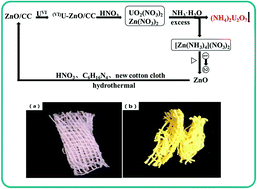
Fig. 3a–c show the SEM images of cotton cloth, modified cotton cloth and ZnO/CC, respectively. The ZnO seeded sol was coated on the fibers of cotton cloth (Fig. 3a and b). Moreover, ZnO nanorod arrays were densely and uniformly covered on fibers of cotton cloth (Fig. 3c and d). Further detailed structural analysis of ZnO nanorod was carried out by TEM. Fig. 3e shows that the diameter of ZnO nanorod is different and the phenomenon of overlapping growth was manifested. The rod diameter of ZnO can be evaluated to be 150–200 nm. When the TEM was magnified, the as-prepared ZnO shows inerratic columnar structure (Fig. 3f). Fig. 4a and b show the actual object of ZnO/CC adsorbed before and after uranium(VI). From Fig. 4b, it is evident that the white ZnO/CC changed to yellow after adsorbing uranium(VI), indicating the good result of adsorption toward uranium(VI). In order to investigate the adhesion of ZnO nanorods on the cotton fiber, ZnO/CC was treated by ultrasound for 10 min. As shown in Table S1,† the weight loss for ZnO/CC after ultrasound is about 2 mg, revealing that the good adhesion of ZnO nanorods on cotton fibers.
 |
| | Fig. 3 SEM images of cotton cloth (a), cotton cloth modified with ZnO seeded sol (b), cotton cloth in situ grown ZnO rod arrays (c) and (d); TEM images of rod ZnO (e) and (f). | |
 |
| | Fig. 4 Actual object of ZnO/CC before (a) and after (b) adsorbed uranium(VI). | |
3.2. Effect of solution pH
The pH of a solution is an important parameter for adsorption because it can influence chemical property of adsorbent and hydrolysis species of uranium(VI).29 In general, adsorbents have excellent adsorption capacity at certain value of pH. The adsorption of uranium(VI) on ZnO/CC was carried out at different pH values from 2.0 to 10.0. The adsorption time is 2 h and the concentration of uranium(VI) solution is 200.00 mg L−1. It can be seen that the adsorption capacity reaches to the maximum value when the pH is 5.0 (Fig. 5). When the pH of solution is low, hydrogen ions can compete with uranyl ions to adsorb on ZnO/CC. In addition, the ZnO/CC can be damaged by hydrogen ions.30,31 Along with the increase of pH, a lot of Zn2+ which can exchange with uranyl ions attached to surface of ZnO nanorods, resulting in an increased adsorption capacity. When the pH is higher than 6.0, hydrolyzed uranyl ion cannot be adsorbed on surface of ZnO/CC. Based on the above analysis, the optimal pH is 5.0.
 |
| | Fig. 5 Effect of pH on the adsorption of uranium(VI), C0 = 200.00 mg L−1, t = 2 h, T = 298 K. | |
3.3. Effect of adsorbent dose
The effect of the uranium removal on the dosage of ZnO/CC was carried out by using different adsorbent doses from 0.002 to 0.012 g at fixed initial concentration of uranium(VI). The working initial concentration of uranium(VI) was 200.00 mg L−1. Fig. 6 shows the removal efficiency increased with the increasing amount of adsorbent clearly. The more availability adsorption sites were involved in adsorption of uranium(VI) at higher dosage. When 0.010 g adsorbent was used, the maximum removal efficiency was attained. When the amount of adsorbent exceeded 0.010 g, the constant of the removal efficiency and the decrease of the adsorption capacity indicate that the adsorption remained unsaturated state. From an economical point of view, 0.010 g of ZnO/CC is considered as an optimum dose.
 |
| | Fig. 6 Effect of amount of adsorbent on the adsorption of uranium(VI), C0 = 200.00 mg L−1, pH = 5.0, t = 4 h, T = 298 K. | |
3.4. Effect of initial concentration of uranium(VI) and adsorption isotherms
The study of uranium(VI) concentration influenced on adsorption was carried out using different initial uranium(VI) concentrations which ranged from 100.00 to 350.00 mg L−1.
The results in Fig. 7 express that adsorption capacity of uranium(VI) increases with the increasing concentration of uranium(VI). This is due to obtaining a high driving force which overcomes transfer resistance, when the concentration of uranium(VI) increases.32 Moreover, the equilibrium adsorption capacity increases as temperature rose. Furthermore, the adsorption experiments in uranium(VI) solutions with pure cotton cloth and ZnO/CC grown without seeding were carried out at 298 K (Table S2†).
 |
| | Fig. 7 Isotherm of uranium(VI) adsorption onto ZnO/CC, pH = 5.0, t = 4 h. | |
The adsorption data were analyzed using Langmuir and Freundlich isotherms. The Langmuir isotherm based on monolayer adsorption can be represented by eqn (4).33
| |
 | (4) |
where
KL is an equilibrium constant (L mg
−1),
Qe and
Qm are equilibrium adsorption capacity and maximum adsorption capacity (mg g
−1), respectively. As an empirical equation Freundlich isotherm is applicable to heterogeneous surfaces. The empirical equation of Freundlich isotherm can be expressed as follow:
| |
 | (5) |
where
KF is Freundlich constant,
n is adsorption intensity. The linear plots of Langmuir and Freundlich equations representing uranium(
VI) adsorption are illustrated in
Fig. 8. The corresponding parameters of Langmuir and Freundlich equations were calculated in Table S3.
† Comparing the two correlating coefficients (
R2) of isotherms, it is confirmed that the Langmuir isotherm is more suitable to characterize the behavior of uranium(
VI) adsorption on ZnO/CC. The Langmuir constant (
KL) and the maximum adsorption capacity (
Qm) were evaluated from the intercept and slope of the Langmuir plots. The values of
KL show a strong bonding energy between ZnO/CC and uranium(
VI). The maximum adsorption capacity reaches 431.03 mg g
−1, exhibiting its excellent performance of uranium adsorption at room temperature (298 K). All the parameters were obtained in the initial concentration from 100.00 to 350.00 mg L
−1 and 10 mg of adsorbent in 20 mL of adsorbate at pH 5.0 for 4 h.
 |
| | Fig. 8 Langmuir (a) and Freundlich (b) isotherms of uranium(VI) on ZnO/CC. | |
3.5. Effect of temperature and thermodynamic study
As can be seen from Fig. 7, the adsorption of uranium(VI) is favored with an increased temperature from 298 to 328 K. The corresponding adsorption capacity of uranium(VI) is increased from 428.76 to 470.44 mg g−1. This can be explained that the more adsorption sites were activated with the increase of temperature. In order to understand the nature and thermodynamic feasibility of the adsorption process, the standard free energy (ΔG0), standard enthalpy (ΔH0) and standard entropy (ΔS0) are calculated from adsorption data at different temperatures. The three thermodynamic parameters are calculated using the following equations:34| |
 | (6) |
where KD is the distribution coefficient (mL g−1), R is the ideal gas constant (8.314 kJ mol−1 K−1), T is the temperature (K). The ΔH0 and ΔS0 were determined from the slope and intercept of ln
KD versus T−1, respectively (Fig. 9). According to Table S4,† the value of ΔH0 is positive, demonstrating that the process of uranium adsorption on ZnO/CC is endothermic. The negative values of ΔG0 confirm that the process is spontaneous nature. The positive value of ΔS0 suggests an increase of randomness at the solid–liquid interface. And it also indicates that the adsorption of uranium(VI) on ZnO/CC is in a range of the dissociative mechanism.35 Through the above analysis, the increase of temperature is conducive to adsorption of uranium(VI) on ZnO/CC.
 |
| | Fig. 9 Relationship curve between ln KD and 1/T. | |
3.6. Effect of contact time and adsorption dynamics
Fig. 10 shows the amount of uranyl ion adsorbed on ZnO/CC as a function of the contact time at a fixed temperature. It is clear that the adsorption capacity increases with the increase of contact time, and the adsorption equilibrium is established after 30 min. The rate of adsorption increases rapidly during the first 10 min due to the strong interaction between ZnO/CC and uranium(VI). Then the rate of adsorption gradually reduces with the decrease of active sites. To investigate the controlling mechanism of the adsorption process, the adsorption data were analyzed using pseudo-first-order and pseudo-second-order kinetic equations. The pseudo-first-order kinetic and pseudo-second-order models are given as:36| |
ln(Qe − Qt) = ln Qe − k1t
| (8) |
| |
 | (9) |
where Qe and Qt (mg g−1) are adsorption capacity at equilibrium and at time, respectively. k1 (min−1) is the rate constant of the pseudo-first-order kinetic equation, k2 (g mg−1 min−1) is the rate constant of the pseudo-second-order kinetic equation.
 |
| | Fig. 10 Effect of contact time on uranium(VI) adsorption, m = 0.010 g, C0 = 200.00 mg L−1, T = 298 K. | |
The values of Qe, k2 can be obtained by plotting t/Qt vs. t (Fig. 11b), these are presented in Table S5.† According to correlation coefficients (0.99 > 0.91), the adsorption of uranium(VI) on ZnO/CC follows the pseudo-second-order model better than the pseudo-first-order model. The pseudo-second-order kinetic model assumes that the rate-limiting step may be chemical adsorption.37 It is more likely to predict that the mechanism of the adsorption process may be ion exchange.
 |
| | Fig. 11 Pseudo-first-order (a), pseudo-second-order (b), plot for the adsorption of uranium(VI) by ZnO/CC. | |
3.7. Comparison of uranium(VI) adsorption capacity of ZnO/CC with other adsorbents
The adsorption capacities of different uranium adsorbents reported in literatures are listed in Table S6.†38–44 The data reveal that adsorption capacity of ZnO/CC (431.03 mg g−1) is superior to some materials adsorbed uranium(VI). In addition, the nanoporous ZnO prepared by microwave-assisted combustion synthesis possesses have a higher adsorption capacity. However, the ZnO/CC is a more suitable material for uranium(VI) sorption because it is easily separated from solution.
3.8. Adsorption mechanism and strategy for enrichment of uranium(VI)
The coordination mechanism of interaction between ZnO/CC and uranium(VI) was speculated in Scheme 1. Reaction mechanism can be described as follows: ① H+ from the solution reacts with ZnO, generating ZnOH+ and [Zn2O]2+ covering on the surface of the rod at pH 5.0. ② UO22+ subsequently can replace Zn2+ and H+ dispersing in the solution. The variation of pH (from 5.0 to 4.7) and occurrence of Zn2+ from ICP data (Table S7†) indirectly prove speculation.
 |
| | Scheme 1 Proposed mechanism of the adsorption of uranium(VI). | |
It is an important factor to desorb and enrich uranyl from the adsorbent. To save the costs and improve the utilization rate of raw materials, adsorbent-ZnO/CC was re-prepared. And the uranyl was desorbed and enriched, simultaneously. As shown in Scheme 2, a novel strategy was devised for the enrichment of the uranyl and re-preparation of the adsorbent. Firstly, ZnO/CC adsorbed uranium(VI) was immersed into dilute nitric acid solution to produce zinc nitrate and uranyl nitrate. Then, excessive amounts of the NH3·H2O were added to the above solution. White and yellow precipitations were present in solution. As the concentration of ammonium hydroxide increased, the white precipitation gradually dissolved by equation as follow:
| | |
Zn(NO3)2 + 2NH3·H2O = Zn(OH)2↓ + 2NH4NO3
| (10) |
| | |
2UO2(NO3)2 + 6NH3·H2O = (NH4)2U2O7↓ + 4NH4NO3 + 3H2O
| (11) |
| | |
Zn(OH)2 + 2NH3·H2O + 2NH4NO3 = [Zn(NH3)4](NO3)2 + 4H2O
| (12) |
 |
| | Scheme 2 Design for enrichment of uranyl and recycling of adsorbent; (a) and (b) are XRD pattern and SEM image of the (NH4)2U2O7, respectively; (c) and (d) are XRD pattern and SEM image of the product by drying treatment at 50 °C, respectively; (e) and (f) are XRD pattern and SEM image of the product (ZnO) by follow-up drying treatment at 500 °C, respectively. | |
According to the ① in Scheme 2, the supernatant filtered out yellow precipitation was carried out by drying treatment at 50 °C. The XRD pattern (Scheme 2c) confirms that the white powder is composed of zinc oxide and ammonium nitrate. Scheme 2d is SEM image of the white powder. The ZnO was obtained through calcining the white powder at 500 °C (②). The XRD pattern and SEM image (Scheme 2e and f) also confirm that the white powder decomposed into ZnO. Scheme 2a and b are XRD pattern and SEM image of the (NH4)2U2O7, respectively. Finally, the obtained ZnO, a certain concentration of nitric acid, new modified cotton cloth and a certain amount of hexamethylenetetramine were transferred into a Teflon-lined autoclave for the regeneration of the ZnO/CC adsorbent. Moreover, the regenerated ZnO/CC adsorbent sustained excellent adsorption ability after three cycles (Fig. S2†), indicating that the as-prepared ZnO/CC adsorbent is reusable.
4. Conclusions
In summary, as a cost-effective, nontoxic and environmentally friendly material, the as-prepared ZnO/CC shows significant uranium(VI) removal efficiency. Effects of uranium(VI) concentration, adsorbent dosage, solution pH, contact time and temperature on the adsorption properties for uranium(VI) were fully researched. The results reveal that the maximum uranium adsorption capacity of ZnO/CC is 431.03 mg g−1 and the adsorption equilibrium is established after 30 min, showing its high efficiency. Furthermore, the enrichment of uranyl process and the reuse of ZnO/CC adsorbent process have been simultaneously performed via a novel strategy. Such high efficient and environmental friendly ZnO/CC adsorbent will further promote uranium adsorption for practical application.
Acknowledgements
This work was supported by Heilongjiang Province Natural Science Funds for Distinguished Young Scholar (JC201404), Special Innovation Talents of Harbin Science and Technology for Distinguished Young Scholar (2014RFYXJ005), Fundamental Research Funds of the Central University (HEUCFZ), Natural Science Foundation of Heilongjiang Province (B201316), Program of International S&T Cooperation special project (2015DFR50050), Special Innovation Talents of Harbin Science and Technology (2014RFQXJ087).
References
- Q. Cao, Y. C. Liu, C. Z. Wang and J. S. Cheng, J. Hazard. Mater., 2013, 263, 311 CrossRef CAS PubMed.
- Z. Chen, Z. Y. Zhuang, Q. Cao, X. H. Pan, X. Guan and Z. Lin, ACS Appl. Mater. Interfaces, 2014, 6, 1301 CAS.
- L. Tan, Y. Wang, Q. Liu, J. Wang, X. Jing, L. Liu, J. Liu and D. Song, Chem. Eng. J., 2015, 259, 752 CrossRef CAS PubMed.
- N. Singh and K. Balasubramanian, RSC Adv., 2014, 4, 27691 RSC.
- C. X. Liu, J. Y. Shang, H. M. Shan and J. M. Zachara, Environ. Sci. Technol., 2014, 48, 1745 CrossRef CAS PubMed.
- H. Foerstendorf, N. Jordan and K. Heim, J. Colloid Interface Sci., 2014, 416, 133 CrossRef CAS PubMed.
- O. A. Elhefnawy, W. I. Zidan, M. M. Abo-Aly, E. M. Bakier and G. A. Elsayed, J. Radioanal. Nucl. Chem., 2014, 299, 1821 CrossRef CAS.
- B. Campos, J. Aguilar-Carrillo, M. Algarra, M. A. Goncalves, E. Rodriguez-Castellon, J. da Silva and I. Bobos, Appl. Clay Sci., 2013, 85, 53 CrossRef CAS PubMed.
- H. J. Zhang, H. L. Liang, Q. D. Chen and X. H. Shen, J. Radioanal. Nucl. Chem., 2013, 298, 1705 CrossRef CAS.
- L. Zhang, X. Jing, R. Li, Q. Liu, J. Liu, H. Zhang, S. Hu and J. Wang, RSC Adv., 2015, 5, 23144 RSC.
- H. Zhang, Q. Liu, J. Wang, J. Liu, H. Yan, X. Jing and B. Zhang, RSC Adv., 2015, 5, 5904 RSC.
- K. Z. Elwakeel and A. A. Atia, J. Cleaner Prod., 2014, 70, 292 CrossRef CAS PubMed.
- D. Humelnicu, C. Blegescu and D. Ganju, J. Radioanal. Nucl. Chem., 2014, 299, 1183 CrossRef CAS PubMed.
- H. Yan, J. Bai, X. Chen, J. Wang, H. Zhang, Q. Liu, M. Zhang and L. Liu, RSC Adv., 2013, 3, 23278 RSC.
- A. S. Al-Hobaib and A. A. Al-Suhybani, J. Radioanal. Nucl. Chem., 2014, 299, 559 CrossRef CAS PubMed.
- X. Zhang, J. Wang, R. Li, Q. Liu, L. Li, J. Yu, M. Zhang and L. Liu, Environ. Sci. Pollut. Res. Int., 2013, 20, 8202 CrossRef CAS PubMed.
- S. Nair, L. Karimzadeh and B. J. Merkel, Environ. Earth Sci., 2014, 72, 3507 CrossRef CAS.
- C. Xu, J. Wang, T. Yang, X. Chen, X. Liu and X. Ding, Carbohydr. Polym., 2015, 121, 79 CrossRef CAS PubMed.
- Z. Gu, Y. Wang, J. Tang, J. Yang, J. Liao, Y. Yang and N. Liu, J. Radioanal. Nucl. Chem., 2015, 303, 1835 CrossRef CAS.
- J. Ramkumar, S. Chandramouleeswaran, B. S. Naidu and V. Sudarsan, J. Radioanal. Nucl. Chem., 2013, 298, 1845 CrossRef CAS PubMed.
- Y. Yang, J. E. Saiers and M. O. Barnett, Environ. Sci. Technol., 2013, 47, 2661 CrossRef CAS PubMed.
- U. H. Kaynar, M. Ayvacikli, S. C. Kaynar and U. Hicsonmez, J. Radioanal. Nucl. Chem., 2014, 299, 1469 CrossRef CAS.
- H. Hallaji, A. R. Keshtkar and M. A. Moosavian, J. Taiwan Inst. Chem. Eng., 2015, 46, 109 CrossRef CAS PubMed.
- X. Yu, S. Tong, M. Ge, J. Zuo, C. Cao and W. Song, J. Mater. Chem. A, 2013, 1, 959 CAS.
- Z. Zheng, Z. S. Lim, Y. Peng, L. You, L. Chen and J. Wang, Sci. Rep., 2013, 3, 2434 Search PubMed.
- J. Yu, Z. Li, Q. Liu, J. Wang, H. Wei, M. Zhang and L. Liu, RSC Adv., 2013, 3, 6621 RSC.
- W. Ye, X. Xiao-Lang, X. Wei-Yu, W. Zhuang-Bing, L. Liu and Z. Ya-Li, Acta Phys. Sin., 2008, 57, 2582 Search PubMed.
- H. X. Liu, S. M. Zhou, S. Z. Li, Y. Hang, J. Xu, S. L. Gu and R. Zhang, Acta Phys. Sin., 2006, 55, 1398 CAS.
- J. Qian, S. Zhang, Y. Zhou, P. Dong and D. Hua, RSC Adv., 2015, 5, 4153 RSC.
- L. Li and M. Schuster, Sci. Total Environ., 2014, 472, 971 CrossRef CAS PubMed.
- N. Odzak, D. Kistler, R. Behra and L. Sigg, Environ. Pollut., 2014, 191, 135 CrossRef PubMed.
- S. Zhang, J. Li, T. Wen, J. Xu and X. Wang, RSC Adv., 2013, 3, 2754 RSC.
- S. Zhang, W. Xu, M. Zeng, J. Li, J. Li, J. Xu and X. Wang, J. Mater. Chem. A, 2013, 1, 11691 CAS.
- S. Zhang, M. Zeng, J. Li, J. Li, J. Xu and X. Wang, J. Mater. Chem. A, 2014, 2, 4391 CAS.
- Y. Sun, J. Li and X. Wang, Geochim. Cosmochim. Acta, 2014, 140, 621 CrossRef CAS PubMed.
- Y. Zhao, J. Li, S. Zhang, H. Chen and D. Shao, RSC Adv., 2013, 3, 18952 RSC.
- X. Tan, X. Ren, J. Li and X. Wang, RSC Adv., 2013, 3, 19551 RSC.
- S. P. Dubey, A. D. Dwivedi, M. Sillanpaa, Y. N. Kwon and C. Lee, RSC Adv., 2014, 4, 46114 RSC.
- J. Wei, X. Zhang, Q. Liu, Z. Li, L. Liu and J. Wang, Chem. Eng. J., 2014, 241, 228 CrossRef CAS PubMed.
- M. Zeng, Y. Huang, S. Zhang, S. Qin, J. Li and J. Xu, RSC Adv., 2014, 4, 5021 RSC.
- W. Cheng, M. Wang, Z. Yang, Y. Sun and C. Ding, RSC Adv., 2014, 4, 61919 RSC.
- W. L. Zhang, Z. B. Zhang, X. H. Cao, R. C. Ma and Y. H. Liu, J. Radioanal. Nucl. Chem., 2014, 301, 197 CrossRef CAS PubMed.
- S. Li, H. Bai, J. Wang, X. Jing, Q. Liu, M. Zhang, R. Chen, L. Liu and C. Jiao, Chem. Eng. J., 2012, 193, 372 CrossRef PubMed.
- D. Shao, G. Hou, J. Li, T. Wen, X. Ren and X. Wang, Chem. Eng. J., 2014, 255, 604 CrossRef CAS PubMed.
Footnote |
| † Electronic supplementary information (ESI) available. See DOI: 10.1039/c5ra08489j |
|
| This journal is © The Royal Society of Chemistry 2015 |
Click here to see how this site uses Cookies. View our privacy policy here.