DOI:
10.1039/C5RA08080K
(Paper)
RSC Adv., 2015,
5, 60736-60744
Conversion of glucose into 5-hydroxymethylfurfural catalyzed by chromium(III) Schiff base complexes and acidic ionic liquids immobilized on mesoporous silica†
Received
2nd May 2015
, Accepted 25th June 2015
First published on
25th June 2015
Abstract
A series of novel catalysts were prepared by immobilizing chromium(III) Schiff base complexes and acidic ionic liquids onto the surface of MCM-41, and characterized by FT-IR, TG, XRD, SEM, TEM, NH3-TPD, ICP-OES and N2 sorption studies. The catalytic activity of the prepared solid catalysts was investigated for the conversion of biomass (mainly including glucose, fructose and inulin) in the presence of DMSO. The dependencies of catalytic activity on reaction parameters such as temperature, reaction time and solvent were investigated and the reaction conditions were optimized. A HMF yield of 43.5% was achieved from glucose using Cr(salen)-IM-HSO4-MCM-41 as the catalyst in DMSO at 140 °C for 4 h. Furthermore, the catalyst also demonstrated good activity, and as high as 83.5% HMF was directly obtained from fructose, and the HMF yield reached 80.2% when inulin was selected as the substrate. The immobilized catalysts developed in this study present improved performance over other solid catalysts, and they have been efficiently and easily recycled at least five times without significant loss of activity in glucose conversion and HMF yield.
1. Introduction
Diminishing fossil resources, combined with the growing concern about global warming and environmental pollution, have led to the development of novel sustainable routes for the production of fine chemicals and fuels from renewable resources. Biomass has been regarded as the most appropriate substitute for the synthesis of chemicals and transportation biofuels.1 Currently, 5-hydroxymethylfurfural (HMF), obtained from the dehydration of carbohydrates (e.g. glucose, fructose, inulin, cellobiose and cellulose), has been identified to be a key platform compound2 for the production of biochemicals, pharmaceuticals and furan-based polymers.3–6
Although HMF could be easily formed by dehydration of fructose using various acid catalysts, fructose is not an ideal feedstock for HMF production due to its high cost. The transformation of glucose in one-pot syntheses has attracted much attention because glucose is the most abundant monosaccharide and is less expensive than fructose.7,8 One of the challenges of using glucose as a raw material is that the stability of the glucose ring makes the processing difficult.9 Recently, a tandem catalytic system combining isomerization of glucose with subsequent acid-catalyzed dehydration of fructose to HMF has been extensively investigated.10,11 High yields of HMF from glucose have been shown in ionic liquids and organic solvents using various Lewis acids as catalysts.12,13 In 2007, a HMF yield of nearly 70% was firstly reported from glucose in a system consisting of CrCl2 and 1-ethyl-3-methylimidazolium chloride [EMIM]Cl.14 Subsequently, catalysts with chromium as the catalytic center were designed to catalyze the conversion of glucose into HMF. Wu et al.15 reported that the yield of HMF from glucose can reach 83.4% using chromium(III) chloride (CrCl3·6H2O) in DBU-based (DBU = 1,8-diazabicyclo[5.4.0]undec-7-ene) ILs. Ionic liquids with chromium salts have exhibited excellent catalytic performance, but severe drawbacks exist in terms of separation and recycling. In order to overcome these problems while achieving appropriate catalytic activity, heterogeneous catalysts have been developed. A HMF yield of 90% with a full fructose conversion was obtained using MIL-101(Cr)-SO3H.16 Bromberg et al.17 synthesized novel functional composite materials that are hybrids of MOFs and a polymer network, which showed high activity in fructose dehydration to HMF. However, the dehydration of glucose is very unselective and the yield is low in these catalytic systems.
Supported ionic liquid nanoparticles18–20 exhibit excellent catalytic performance for the dehydration of fructose to HMF, but HMF was not detected when glucose was used as the substrate. This is probably because the supported ionic liquid nanoparticles have Brønsted acid sites, which favor the dehydration of fructose, but lack Lewis acid sites. Recently, Liu et al.21 prepared a series of cation-exchange resins modified by metal ions, and investigated their activity in glucose conversion in the ionic liquid [Bmim]Cl. Yi et al.22 reported that a HMF yield of 48% was achieved from glucose using a heteropoly acid ionic crystal (Cs2Cr3SiW12) as the catalyst in both aqueous and DMSO media. As seen in the studies mentioned above, a heterogeneous catalyst combining Lewis with Brønsted acidic sites should be a better choice to degrade glucose into HMF.
Schiff base transition metal complexes have been extensively studied because of their potential uses as catalysts in a wide range of reactions, such as the epoxidation of olefins,23 oxidation of alcohols,24 Suzuki–Miyaura coupling reactions,25 asymmetric reactions,26 and so on. Many strategies have adopted the anchoring of metal complexes on mesoporous silica to overcome the disadvantages of Schiff base complexes. Mesoporous silica, especially MCM-41, has been widely used as a heterogeneous support for the immobilization of homogeneous catalysts due to its thermal stability, large surface area, high dispersion, ease of surface modification and tunable pore size.27,28 From our previous work, homogeneous chromium–Salen complexes can catalyze the isomerization of glucose to fructose with high activity and selectivity. Moreover, SO3H-functionalized ionic liquids with a hydrogen sulfate counteranion are suitable candidates for bifunctional catalysts, because the dual acidic functionalized ILs can obviously enhance their acidities.19,20
Herein, we synthesized bifunctional catalysts via the anchoring of chromium(III) Schiff base moieties and SO3H-functionalized ionic liquids on the surface of mesoporous silica, MCM-41. In particular, utilizing an insoluble solid catalyst diminishes the hazardous effect of chromium. This is the first application of the catalysts in the conversion of carbohydrates. Furthermore, the catalysts exhibit efficient activity for the dehydration of glucose into HMF, and could be also used in the production of HMF from other carbohydrates, such as fructose, inulin, cellobiose, sucrose, cellulose and starch.
2. Experimental
2.1 Materials
5-Chlorosalicylaldehyde, 5-bromosalicylaldehyde, chromium acetate(Cr(OAc)3, 99%), γ-chloropropyl triethoxysilane (CPTES), 3-aminopropyltriethoxysilane and 1,3-propanesultone were purchased from Shanghai Aladdin Industrial Inc.; the HMF used in the study was obtained from Sigma-Aldrich Co. LLC.; inulin was obtained from Alfa Aesar; fructose, sucrose, glucose, cellobiose, cetyltrimethylammonium bromide (CTAB), tetraethyl orthosilicate (TEOS) and ethylenediamine were purchased from Sinopharm Chemical Reagent Co. Ltd; solvents and reagents were obtained from commercial sources and were used without further purification. Deionized water was produced by using a laboratory water purification system (RO DI Digital plus).
2.2 Catalyst preparation
We report a simple and efficient procedure for preparing immobilized chromium(III) Schiff base complexes and acidic ionic liquids on mesoporous silica as an effective and reusable catalyst (Scheme 1).
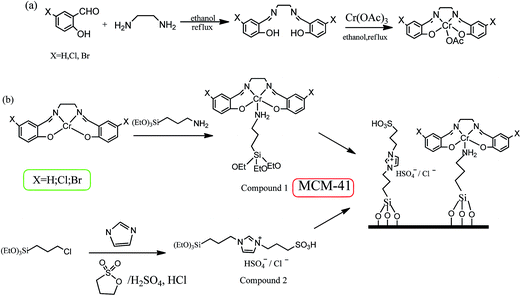 |
| | Scheme 1 (a) Synthetic route to the chromium(III) complexes; (b) synthetic route to the Cr-mesoporous silica supported catalyst. | |
2.2.1 Preparation of MCM-41 nanoparticles.
Mesoporous MCM-41 was prepared according to a literature method,28 with a slight modification. In a typical procedure, CTAB (1.36 g, 3.7 mmol) was added to deionized water (50 mL) at room temperature to give a clear solution, and 5.2 mL TEOS was added dropwise under stirring. Aqueous ammonia (25 wt%) was then added until the pH of the solution was adjusted to 10.5 and the mixture was stirred for 3 h, then transferred into a Teflon-lined autoclave and heated at 105 °C for 24 h. The gel was separated by filtration, washed with distilled water and ethanol, dried in air at room temperature, and then calcined at 550 °C for 6 h.
2.2.2 Synthesis of salen-type ligands.
The ligands were prepared and purified according to the literature.29 The appropriate substituted salicylaldehyde (10 mmol) in ethanol (50 mL) was added to a ethanol (20 mL) solution of ethylenediamine (5 mmol). The mixture was refluxed for 3 h and cooled to room temperature. The formed solid was collected by filtration. The solid was subsequently recrystallized from ethanol and dried at 60 °C in a vacuum oven. The ligands were characterized by 1H NMR, FT-IR, and UV-vis (see the ESI†).
2.2.3 Synthesis of the chromium(III) complexes.
The chromium(III) complexes were prepared essentially as described previously.30 In the synthetic procedure, Cr(OAc)3 (2.29 g, 10 mmol) dissolved in 20 mL of ethanol was added dropwise into ethanol solution (15 mL) containing 5 mmol of ligand. The suspension was refluxed for 10 h under nitrogen protection, and then cooled to room temperature. On removal of the ethanol and addition of deionized water, the complex precipitated from solution. After filtering, the filter cake was washed with deionized water. The crude product was recrystallized with petroleum ether. After drying under vacuum at 40 °C, the obtained chromium(III) Schiff base complexes were denoted as Cr(salen), Cr(salen-Cl) and Cr(salen-Br). The chromium(III) complexes were characterized by FT-IR and UV-vis (see the ESI Fig. S4†).
2.2.4 Synthesis of the APTS-NH2-Cr(salen).
A mixture of Cr(salen) (10 mmol) and (3-aminopropyl) triethoxysilane (5 mmol) was heated under a N2 atmosphere, refluxing for 24 h. After the reaction, the solvent was evaporated under reduced pressure to give compound 1.
2.2.5 Synthesis of the acidic ionic liquids [CPTES-IM-SO3H][HSO4]/[Cl].
The acidic ionic liquids [CPTES-IM-SO3H][HSO4]/[Cl] were synthesized according to the following process.31,32 Equivalent moles of imidazole (3.4 g, 50 mmol) and sodium ethoxide (3.4 g, 50 mmol) were dissolved in ethanol with stirring at 70 °C for 8 h. Subsequently, CPTES (12 g, 50 mmol) was added dropwise, and the mixture was refluxed for 12 h under a N2 atmosphere. The mixture was filtered to remove the by-product sodium chloride, and the ethanol was evaporated under reduced pressure. A yellowish oil compound was obtained. 1,3-Propanesultone (6.1 g, 0.05 mol) was slowly added into the solution in ethanol and the mixture was stirred at 50 °C for 8 h. Then sulfuric acid or hydrochloric acid was added dropwise for another 12 h. The target compound 2 was obtained by washing with diethyl ether 3 times and drying under vacuum.
2.2.6 Synthesis of the heterogeneous chromium(III) complexes and acidic ionic liquid catalysts.
Typically, fresh dried mesoporous silica MCM-41 (0.5 g), compound 1 (0.5 g) and compound 2 (1.0 g) were added to 50 mL of dry toluene, and the mixture was refluxed for 24 h under a N2 atmosphere. Then, the resulting suspension was cooled and filtered. The collected powder was washed overnight in a Soxhlet extractor using equivalent amounts of ethanol and acetonitrile as the solvent, and then the solid was dried at 60 °C overnight. The obtained catalysts were denoted as Cr(salen)-IM-HSO4-MCM-41, Cr(salen)-IM-Cl-MCM-41, Cr(salen-Cl)-IM-HSO4-MCM-41 and Cr(salen-Br)-IM-HSO4-MCM-41, and the aforementioned synthetic route was followed (Scheme 1).
2.3 Characterization techniques
FT-IR spectra were recorded on a Nicolet 360 FT-IR instrument (KBr discs) in the 4000–500 cm−1 region. UV-vis spectra were recorded on a TU-1901 dual-beam UV-vis spectrophotometer in the 200–800 nm region. 1H-NMR spectra were measured on a Bruker DPX 300 spectrometer at ambient temperature in D2O or CDCl3, using TMS as the internal reference. TG analysis was carried out using a STA409 instrument in dry air at a heating rate of 20 °C min−1 from 25 to 800 °C. SEM was performed on a HITACHI S-4800 field-emission scanning electron microscope. TEM was obtained using a JEOL JEM model 2100 microscope operated at 200 kV. XRD patterns were collected on a Bruker D8 Advance powder diffractometer, using a Ni-filtered Cu/Kα radiation source at 40 kV and 20 mA, with a scanning speed of 1° min−1. BET surface areas were determined by N2 adsorption–desorption measurements (Micromeritics ASAP 2020) done at 77 K. Surface areas were calculated using the Brunauer–Emmett–Teller (BET) method over the range P/P0 = 0.05–0.30, where a linear relationship was maintained. Pore size distributions were calculated using the Barrett–Joyner–Halenda (BJH) model. NH3-temperature-programmed desorption (NH3-TPD) experiments were carried out using a chemisorption apparatus equipped with a TCD detector. The catalyst in the solids and recovered catalyst were determined by the ICP-OES method with an Optima 7300DV (PerkinElmer) spectrometer.
2.4 Catalytic reactions
All the dehydration reaction experiments were conducted in a 5 mL reaction vial equipped with magnetic stirrer. A typical procedure for dehydration of glucose was as follows: fructose (100 mg), catalyst (50 mg) and DMSO (2 mL) were added into the reaction vial. The mixture was stirred vigorously and heated with a thermostatically-controlled oil bath for a specific time. The reaction mixture was heated to the desired temperatures with an oil bath under strong stirring for a specific time. After the reaction, the catalyst was separated by centrifugation, and the sample was diluted with deionized water and analyzed by high-performance liquid chromatography (HPLC). HMF was characterized by 1H NMR and 13C NMR spectroscopy (see the ESI†).
2.5 Analysis
The liquid samples were analyzed with HPLC using a Agilent Alliance System instrument (1100 series) equipped with a refractive index detector and a UV detector, and a Shodex SURGER SP0810 (300 × 8.0) columns for analysis. Deionized water was used as the eluent phase, with a flow rate of 0.7 mL min−1 and 70 °C column temperature. The amounts of HMF and fructose were determined using an external standard. The conversion of glucose and the yield of HMF were evaluated as follows:
3. Results and discussion
3.1 Catalyst characterization
3.1.1 SEM and TEM analysis.
SEM micrographs of the pure MCM-41 and the catalyst Cr(salen)-IM-HSO4-MCM-41 are shown in Fig. 1(a) and (b); these mesoporous silica materials were likely spherical in nature, but some mesoporous molecular sieves generated aggregation because of the incorporation of organic functional groups.33 As seen from Fig. 1(c), the TEM micrograph shown confirms that the catalyst material contains a long-range ordered one-dimensional pore structure, similar to that of the pure silicon MCM-41.29,34
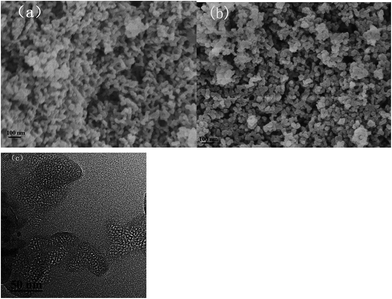 |
| | Fig. 1 (a) SEM image of the pure MCM-41, (b) SEM image of the catalyst Cr(salen)-IM-HSO4-MCM-41, and (c) TEM image of the catalyst Cr(salen)-IM-HSO4-MCM-41. | |
3.1.2 FT-IR spectroscopy.
The ligand showed a characteristic band at 1633 cm−1 (see the ESI Fig. S4†) for the azomethine group (C![[double bond, length as m-dash]](https://www.rsc.org/images/entities/char_e001.gif) N), which was shifted to a lower frequency (1625 cm−1) on complexation, indicating coordination of the Schiff-base with chromium.35 The Si–O–Si vibration at 1091 cm−1 was indeed grafted onto the functionalized silica. In the hydroxyl region, a broad band was seen at 3441 cm−1, belonging to the stretching vibration of Si–OH groups and H–O–H stretching of absorbed water. Two characteristic peaks were also found at 1459 and 1565 cm−1, which were due to CN and CC vibrations of the imidazole ring. In addition, the bands at 1191 and 1048 cm−1 were assigned to the SO stretching vibration of the –SO3H group (Fig. 2).36 The Cr(salen)-IM-Cl-MCM-41, Cr(salen-Cl)-IM-HSO4-MCM-41 and Cr(salen-Br)-IM-HSO4-MCM-41 catalysts were also investigated by FT-IR spectroscopy (ESI, Fig. S6†).
N), which was shifted to a lower frequency (1625 cm−1) on complexation, indicating coordination of the Schiff-base with chromium.35 The Si–O–Si vibration at 1091 cm−1 was indeed grafted onto the functionalized silica. In the hydroxyl region, a broad band was seen at 3441 cm−1, belonging to the stretching vibration of Si–OH groups and H–O–H stretching of absorbed water. Two characteristic peaks were also found at 1459 and 1565 cm−1, which were due to CN and CC vibrations of the imidazole ring. In addition, the bands at 1191 and 1048 cm−1 were assigned to the SO stretching vibration of the –SO3H group (Fig. 2).36 The Cr(salen)-IM-Cl-MCM-41, Cr(salen-Cl)-IM-HSO4-MCM-41 and Cr(salen-Br)-IM-HSO4-MCM-41 catalysts were also investigated by FT-IR spectroscopy (ESI, Fig. S6†).
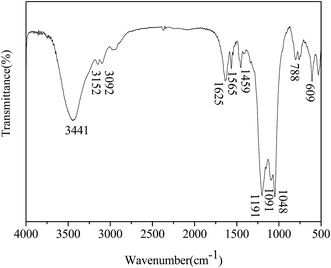 |
| | Fig. 2 FT-IR spectra of Cr(salen)-IM-HSO4-MCM-41. | |
3.1.3 Thermal analysis.
The stability of the catalysts was determined by thermogravimetric analysis. The TG curve for Cr(salen)-IM-HSO4-MCM-41 (Fig. 3) indicates an minor weight loss of 1.4% in the range of 25–120 °C, which is attributed to physically absorbed water in the silica. On the other hand, the coordinated water molecules were eliminated as usual (nearly 1.1% weight loss) at higher temperatures in the range of 120–250 °C. Complete loss of the acidic ionic liquid and chromium complex covalently grafted on to the silica was seen in the temperature range 250–480 °C, and the amount of organic moiety was about 33.0% against the total solid catalyst. Meanwhile, the peak in the DTG curve showed the fastest loss of the catalyst occurred at 400 °C. It was demonstrated that the catalyst exhibited good thermal stability below 250 °C (Fig. 3). The Cr(salen)-IM-Cl-MCM-41, Cr(salen-Cl)-IM-HSO4-MCM-41 and Cr(salen-Br)-IM-HSO4-MCM-41 catalysts were also investigated by thermal analysis (ESI, Fig. S7†).
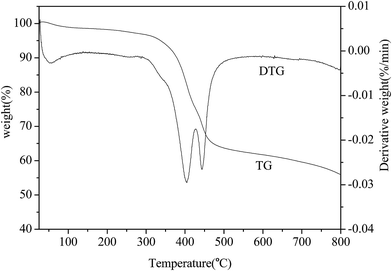 |
| | Fig. 3 TG-DTG analysis for the Cr(salen)-IM-HSO4-MCM-41 catalyst. | |
3.1.4 Small angle X-ray diffraction studies.
XRD patterns of MCM-41 and Cr(salen)-IM-HSO4-MCM-41 are shown in Fig. 4. The powder X-ray diffraction pattern of the parent MCM-41 shows a typical three-peak pattern with a very strong d100 = 46.29 Å reflection at 2θ = 1.91°and two other weaker reflections at 2θ = 3.79° and 2θ = 4.51° for d110 and d200, respectively, indicating a well-ordered hexagonal structure.23,29 Cr(salen)-IM-HSO4-MCM-41 exhibited a lower intensity d100 reflection with a spacing of 40.04 Å at 2θ = 2.19°, and the higher order (110 and 200) diffraction peaks disappeared. The diffraction lines shifted to higher angle and became broader after the anchoring of the acidic ionic liquid and chromium complex in MCM-41. This suggests that the mesoporous structure of the MCM-41 remains almost unchanged.37,38
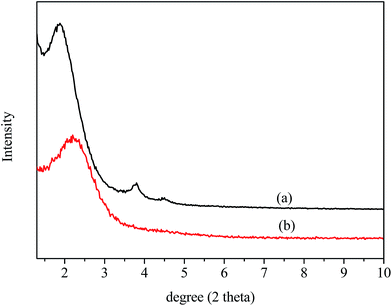 |
| | Fig. 4 Low angle powder XRD patterns of MCM-41 (a) and Cr(salen)-IM-HSO4-MCM-41 (b). | |
3.1.5 N2 sorption studies.
The mesoporous structures of the samples were determined by nitrogen adsorption–desorption isotherms, as shown in Fig. 5. The samples display type IV isotherms that are typical for mesoporous materials. This indicates that the mesoporous structure of the parent support was retained in the immobilized catalyst.39 The surface areas and pore size distributions, calculated using the BET and BJH methods, are shown in Table 1. A decrease in surface area was observed for Cr(salen)-IM-HSO4-MCM-41 with respect to MCM-4, from 890.6 to 576.3 m2 g−1, and the average pore volume decreased from 1.278 to 1.168 cm3 g−1. The decrease in BET surface area and the loss of uniformity of pore size for Cr(salen)-IM-HSO4-MCM-41, in comparison with MCM-41, demonstrate that the anchoring of the chromium complex and acidic ionic liquid into the mesoporous silica had a significant effect on the pore structure of the catalyst. Furthermore, the average pore diameter decreased from 4.83 to 4.33 nm, which suggests that the acidic ionic liquid and the chromium complex might be confirmed the in-depth functionalization with organic groups in the channels of the mesoporous silica.40
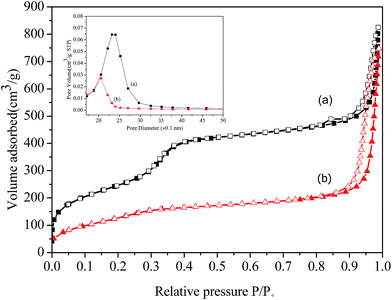 |
| | Fig. 5 Nitrogen physisorption isotherms and pore size distributions (inset) for the MCM-41 (a) and for Cr(salen)-IM-HSO4-MCM-41 (b). | |
Table 1 Physico-chemical properties of MCM-41 and the catalysts
| Entry |
Sample type |
Surface area (m2 g−1) |
Pore volume (cm3 g−1) |
Average pore size (nm) |
Surface aciditya (mmol g−1) |
Crb (wt%) |
|
Acid concentration values were determined through NH3-TPD.
The chromium content of the catalysts were obtained using ICP-OES.
The recovered catalyst after five times use.
|
| 1 |
MCM-41 |
890.6 |
1.278 |
4.83 |
— |
— |
| 2 |
Cr(salen)-IM-Cl-MCM-41 |
540.5 |
1.162 |
4.32 |
0.112 |
2.79 |
| 3 |
Cr(salen)-IM-HSO4-MCM-41 |
576.3 |
1.168 |
4.33 |
0.148 |
2.83 |
| 4 |
Cr(salen-Cl)-IM-HSO4-MCM-41 |
523.4 |
1.159 |
4.34 |
0.135 |
2.75 |
| 5 |
Cr(salen-Br)-IM-HSO4-MCM-41 |
515.2 |
1.143 |
4.28 |
0.142 |
2.79 |
| 6 |
Cr(salen)-IM-HSO4-MCM-41c |
527.8 |
1.158 |
4.29 |
0.139 |
2.78 |
3.2 Conversion of glucose to HMF by the homogeneous Schiff base complexes
The effects of the different metal Schiff base complexes on the dehydration of glucose to HMF were investigated in DMSO and the results are listed in Table 2. The homogeneous catalysts Cu(salen) and Mn(salen) had little catalytic activity for the dehydration of glucose at 120 °C for 3 h, and the yields of fructose were about 3.2% and 6.8%, respectively (Table 2, entries 4 and 5). But Cr(salen) can efficiently catalyze the isomerization of glucose to fructose under the same conditions (Table 2, entry 1); the fructose yield was 27.8%. A possible reason is that chromium complexes have relatively weaker bound Schiff base ligands than do manganese and copper complexes. The catalytic activity of chlorine and bromine substituent groups on the chromium(III) Schiff base complexes was also investigated for the dehydration of glucose (Table 2, entries 2 and 3), with the results indicating that the different substituent groups do not improve the catalytic activity. A possible reason is that the electron-accepting character of the substituents leads to a decrease in the delocalization.41
Table 2 The catalytic activity of different Schiff base complexes on the conversion of glucose to HMFa
| Entry |
Catalyst |
Temperature (°C) |
Conversion (%) |
Fructose yield (%) |
HMF yield (%) |
|
Reaction conditions: 100 mg of glucose, 2 mL of DMSO, t = 3 h, 8 mol% of catalyst.
Not detected.
|
| 1 |
Cr(salen) |
120 |
75.1 |
27.8 |
NDb |
| 2 |
Cr(salen-Cl) |
120 |
73.4 |
23.5 |
ND |
| 3 |
Cr(salen-Br) |
120 |
74.8 |
25.4 |
ND |
| 4 |
Cu(salen) |
120 |
90.5 |
3.2 |
ND |
| 5 |
Mn(salen) |
120 |
91.5 |
6.8 |
ND |
3.3 Conversion of glucose to HMF by the heterogeneous Schiff base complexes
Based on the considerations above, the chromium(III) Schiff base complexes can be more active homogenous catalysts for the isomerization of glucose to fructose. Furthermore, high yields of HMF could be easily obtained from dehydration of fructose using various acidic catalysts. Therefore, the acidic ionic liquid can effectively promote the dehydration of fructose (ESI Table S1†), and shift the equilibrium from glucose to fructose.42
The catalyst Cr(salen)-IM-Cl-MCM-41 showed good catalytic activity (with a HMF yield of 31.2%) at 140 °C for 4 h, but the catalytic ability (HMF yield of 43.5%) was improved significantly under the same conditions when Cr(salen)-IM-HSO4-MCM-41 was used as the catalyst (Fig. 6). The Brønsted acidity of the Cr(salen)-IM-HSO4-MCM-41 was higher than that of the Cr(salen)-IM-Cl-MCM-41 (Table 1), indicating that optimization of the Brønsted acidic functionality is an important factor for HMF selectivity. The effects of substituent groups in the heterogeneous catalysts on the catalytic activity was also investigated for the conversion of glucose to HMF. For Cr(salen-Br)-IM-HSO4-MCM-41, it can be seen that the yield of HMF increased to 38.6% after 4 h at 140 °C, while a HMF yield of 37.8% was obtained using Cr(salen-Cl)-IM-HSO4-MCM-41 as the catalyst under the same conditions. Based on the results discussed above, Cr(salen)-IM-HSO4-MCM-41 showed better catalytic activity toward the dehydration of glucose into HMF.
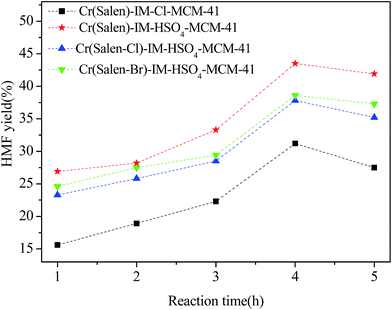 |
| | Fig. 6 Influence of different catalysts on the conversion of glucose to HMF. Reaction conditions: 100 mg of glucose, 2 mL of DMSO, 50 mg of catalyst, T = 140 °C. | |
As shown in Fig. 7, the temperature and reaction time in DMSO were optimized to achieve the maximum quantity of HMF from glucose. Reaction times ranged from 1 to 5 h, and reactions were carried out at different temperatures, of 120, 130, 140 and 150 °C. With further increase in the reaction time, the HMF yield does not improve significantly at low temperature (120 °C). The probable reason might be that the substrates or products are strongly adsorbed on the surface of the mesoporous silica materials, causing deactivation at low temperature.22 The desorption become stronger at higher temperature, with the initial HMF yield showing an obvious improvement. However, upon further increase in the reaction temperature and time, the HMF can be decomposed to levulinic acid, formic acid and insoluble humins,43 leading to a decrease in the HMF yield. Therefore, 140 °C and 4 h were selected as the optimum conditions for the dehydration of glucose to HMF.
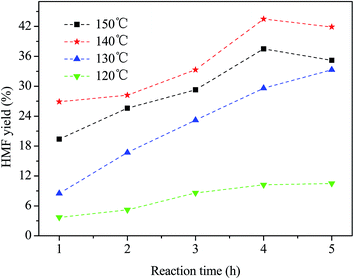 |
| | Fig. 7 Glucose transformation into HMF in the presence of Cr(salen)-IM-HSO4-MCM-41. Reaction conditions: 100 mg of glucose, 2 mL of DMSO, 50 mg catalyst. | |
Cr(salen)-IM-HSO4-MCM-41 is a solid bifunctional catalyst with dual Brønsted–Lewis acidity. The effect of different dosages of catalyst on the conversion of glucose was investigated at 140 °C for 4 h, and the results are given in Fig. 8. It can be seen that increasing the catalyst loading led to an increase in the yield of HMF. This may be due to the availability of more active sites of the catalyst. It reached a maximum when the amount of the catalyst was 50 mg. The further increase of the amount of catalyst led to a decrease in the yield of HMF, meaning that the excessive catalyst did not facilitate the transformation of glucose into HMF but into undesired products such as soluble polymers and humins.
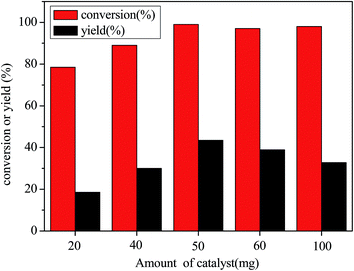 |
| | Fig. 8 The HMF yield and conversion of glucose with different amounts of catalyst. Reaction conditions: 100 mg of glucose, 2 mL of DMSO, T = 140 °C, t = 4 h. | |
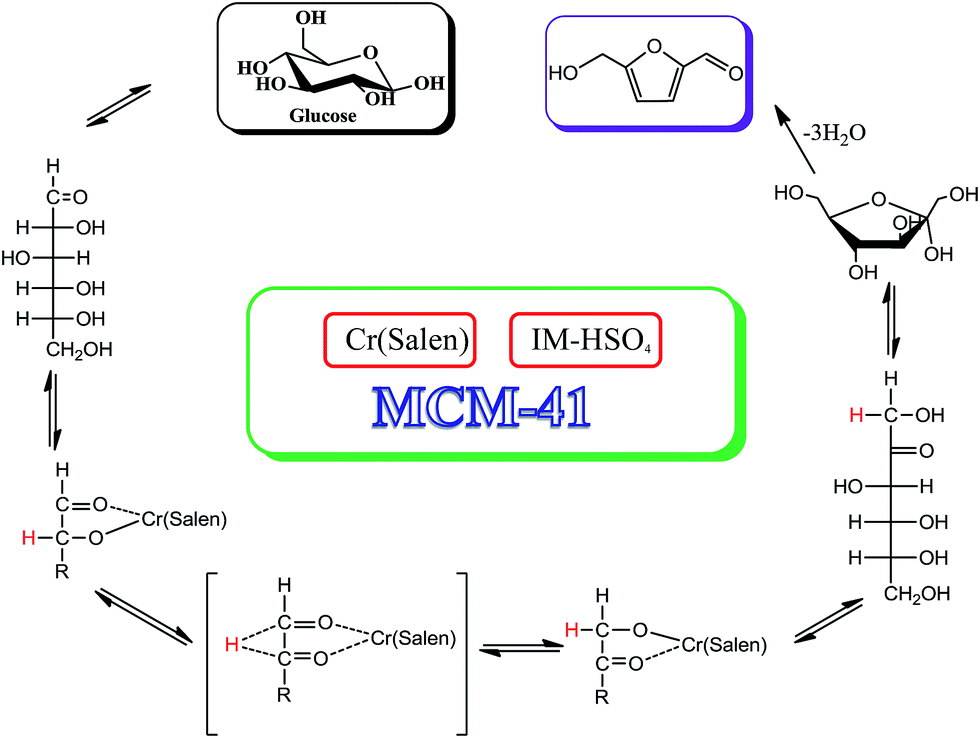
We screened the catalytic activity of Cr(salen)-IM-HSO4-MCM-41 using various solvents at 140 °C for 4 h (Table 3). Nearly full conversion with 43.5% HMF yield was obtained in DMSO; this result is not surprising, as DMSO could stabilize HMF and suppress the side reactions.44 However, DMA, DMF, NMP and [BMIM]Cl were less effective reaction media in this study. When NMP was used as the solvent, an HMF yield of 28.9% was obtained from glucose. An HMF yield of 14.2% was achieved in [BMIM]Cl. In the polar aprotic solvents, DMA and DMF, 15.7% and 12.5% HMF yields were obtained, respectively. In addition, the catalytic activity of the catalyst for the conversion of glucose into HMF was also investigated in co-solvent systems. It was demonstrated that reactions in the co-solvent gave low yields of 16.5–22.1% (entries 6–8). Based on the experiments and referring to the relevant literature, we put forward a possible reaction mechanism for glucose conversion to HMF (Scheme 2).
Table 3 Effects of different solvents on the conversion of glucose to HMFa
| Entry |
Solvent |
Temperature (°C) |
Conversion (%) |
Yield (%) |
Reaction conditions: 100 mg of glucose, 50 mg of Cr(salen)-IM-HSO4-MCM-41, 2 mL of solvent, t = 4 h.
Volume ratio of H2O–DMSO, H2O–DMA, [BMIM]Cl–DMSO = 1![[thin space (1/6-em)]](https://www.rsc.org/images/entities/char_2009.gif) :3. :3.
|
| 1 |
DMSO |
140 |
99 |
43.5 |
| 2 |
DMF |
140 |
97 |
12.5 |
| 3 |
DMA |
140 |
89.3 |
15.7 |
| 4 |
NMP |
140 |
98 |
28.9 |
| 5 |
[BMIM]Cl |
140 |
95 |
14.2 |
| 6 |
H2O–DMSOb |
140 |
80.5 |
21.4 |
| 7 |
H2O–DMAb |
140 |
81.1 |
16.5 |
| 8 |
[BMIM]Cl–DMSOb |
140 |
96 |
22.1 |
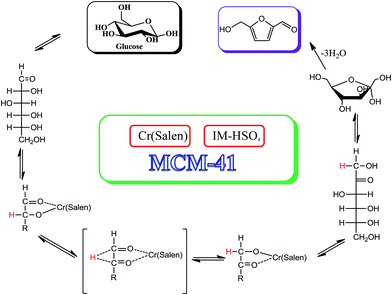 |
| | Scheme 2 Plausible reaction mechanism for the conversion of glucose into HMF on the Cr(salen)-IM-HSO4-MCM-41 catalyst. | |
3.4 Reusability of the catalyst
The recyclability is of significant importance for applying catalysts in industrial processes. Cr(salen)-IM-HSO4-MCM-41 was separated from the product mixture by centrifugation, washed with ethanol, and dried in an oven at 70 °C. The reaction temperature and time were 140 °C and 4 h, respectively. The catalyst was successfully recycled for five experiments for the conversion of glucose into HMF, with only a minor decrease in catalytic activity (Fig. 9). In addition, the loading of the chromium complex and acidic ionic liquid of the recovered catalyst was determined (Table 1, entry 6). This result suggested that the MCM-Cr(salen)-IM-HSO4 catalyst can be reused, but the recycling time is limited. It can be mainly attributed to two factors: firstly, the leaching of active components from the silica support surface in vigorous operating conditions, and secondly, the polymer produced in the reaction may be absorbed on the silica, thus poisoning the catalytic activity of the catalyst.
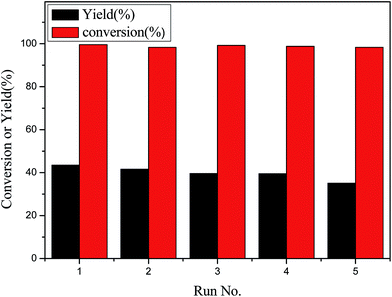 |
| | Fig. 9 Reusability of the Cr(salen)-IM-HSO4-MCM-41 catalyst in the dehydration of glucose. Reaction conditions: 50 mg of catalyst, T = 140 °C, t = 4 h. | |
3.5 Conversion of other saccharides to HMF
The application of the Cr(salen)-IM-HSO4-MCM-41 catalyst in HMF formation from glucose opens up the possibility of using other carbohydrates, such as fructose, galactose, sucrose, cellobiose and inulin. An HMF yield of 83.5% for the dehydration of fructose was obtained using Cr(salen)-IM-HSO4-MCM-41 at 120 °C for 3 h (Table 4, entry 2). The HMF yield reached 80.2% when inulin was selected as the substrate, which is higher than the HMF yield from sucrose. However, the HMF yield from starch and cellulose was low under the same conditions, because the hydrolysis of starch or cellulose to glucose is difficult in organic media.
Table 4 Dehydration of different substrates catalyzed by Cr(salen)-IM-HSO4-MCM-41a
| Entry |
Substrate |
Time (h) |
Temperature (°C) |
Conversion (%) |
HMF yield (%) |
|
Reaction conditions: 100 mg of substrate, 50 mg of catalyst, 2 mL of DMSO.
|
| 1 |
Fructose |
2 |
120 |
98.7 |
65.6 |
| 2 |
Fructose |
3 |
120 |
99.5 |
83.5 |
| 3 |
Galactose |
5 |
140 |
78.9 |
12.1 |
| 4 |
Sucrose |
2 |
140 |
94.3 |
39.6 |
| 5 |
Sucrose |
4 |
140 |
97.5 |
43.7 |
| 6 |
Cellobiose |
5 |
140 |
68.2 |
25.2 |
| 7 |
Inulin |
3 |
140 |
96.8 |
74.4 |
| 8 |
Inulin |
4 |
140 |
98.5 |
80.2 |
| 9 |
Cellulose |
5 |
140 |
57.8 |
7.8 |
| 10 |
Starch |
5 |
140 |
50.3 |
4.3 |
4. Conclusions
A series of functionalized mesoporous silica materials were tested as catalysts for the selective conversion of glucose into HMF. Owing to the presence of a chromium complex and an acidic ionic liquid in the framework, the heterogeneous catalysts can serve as bifunctional catalysts with Brønsted and Lewis acidity. The catalyst Cr(salen)-IM-HSO4-MCM-41 has been demonstrated to be the most active, exhibiting a high glucose conversion and a high HMF yield (43.5%) at 140 °C for 4 h in DMSO. The Cr(salen)-IM-HSO4-MCM-41 catalyst also shows good catalytic activity for the dehydration of biomass-derived fructose, sucrose and inulin to HMF, resulting in maximum yields of 83.5%, 43.7% and 80.2%, respectively. It is therefore indicated that the novel catalysts have great potential in industrial applications as heterogeneous catalysts, due to their green preparation, high activity and high reusability.
Acknowledgements
This work was financially supported by the National Natural Science Foundation of China (21206057), and the Natural Science Foundation of Jiangsu Province, China (BK2012118), (BK2012547), and MOE & SAFEA for the 111 Project (B13025).
References
-
(a) Y. Roman-Leshkov, C. J. Barrett, Z. Y. Liu and J. A. Dumesic, Nature, 2007, 447, 982–985 CrossRef CAS PubMed;
(b) P. J. Deuss, K. Barta and G. G. de Vries, Catal. Sci. Technol., 2014, 4, 1174–1196 RSC;
(c) S. Zhang, J. Sun, X. Zhang, J. Xin, Q. Miao and J. Wang, Chem. Soc. Rev., 2014, 43, 7838–7869 RSC;
(d) C. Chatterjee, F. Pong and A. Sen, Green Chem., 2015, 17, 40–71 RSC.
-
(a) T. Pasini, G. Solinas, V. Zanotti, S. Albonetti, F. Cavani, A. Vaccari, A. Mazzanti, S. Ranieri and R. Mazzoni, Dalton Trans., 2014, 43, 10224–10234 RSC;
(b) S. De, B. Saha and R. Luque, Bioresour. Technol., 2015, 178, 108–118 CrossRef CAS PubMed;
(c) Z. W. Xu, P. F. Yan, W. J. Liu, Z. Xia, B. J. Chung and S. Y. Jia, ACS Catal., 2015, 5, 788–792 CrossRef CAS.
- T. Pan, J. Deng, Q. Xu, Y. Zuo, Q.-X. Guo and Y. Fu, ChemSusChem, 2013, 6, 47–50 CrossRef CAS PubMed.
- T. Buntara, S. Noel, P. H. Phua, I. Melian-Cabrera, J. G. De Vries and H. J. Heeres, Angew. Chem., Int. Ed., 2011, 50, 7083–7087 CrossRef CAS PubMed.
- H. Kobayashi and A. Fukuoka, Green Chem., 2013, 15, 1740–1763 RSC.
- B. Liu and Z. H. Zhang, RSC Adv., 2013, 3, 12313–12319 RSC.
- L. Hu, Z. Wu, J. X. Xu, Y. Sun, L. Lin and S. J. Liu, Chem. Eng. J., 2014, 244, 137–144 CrossRef CAS PubMed.
- R. Otomo, T. Yokoi, J. N. Kondo and T. Tatsumi, Appl. Catal., A, 2014, 470, 318–326 CrossRef CAS PubMed.
- E. Nikolla, Y. Roman-Leshkov, M. Moliner and M. E. Davis, ACS Catal., 2011, 1, 408–410 CrossRef CAS.
- A. Takagaki, M. Ohara, S. Nishimura and K. Ebitani, Chem. Commun., 2009, 41, 6276–6278 RSC.
- I. Jiménez-Morales, A. Teckchandani-Ortiz, J. Santamaría-González, P. Maireles-Torres and A. Jiménez-López, Appl. Catal., B, 2014, 144, 22–28 CrossRef PubMed.
- Y. J. Pagán-Torres, T. F. Wang, J. M. R. Gallo, B. H. Shanks and J. A. Dumesic, ACS Catal., 2012, 2, 930–934 CrossRef.
- M. E. Zakrzewska, E. Bogel-Łukasik and R. Bogel-Łukasik, Chem. Rev., 2010, 111, 397–417 CrossRef PubMed.
- H. B. Zhao, J. E. Holladay, H. Brown and Z. C. Zhang, Science, 2007, 316, 1597–1600 CrossRef CAS PubMed.
- L. Q. Wu, J. L. Song, B. B. Zhang, B. W. Zhou, H. C. Zhou, H. L. Fan, Y. Y. Yang and B. X. Han, Green Chem., 2014, 16, 3935–3941 RSC.
- J. Z. Chen, K. G. Li, L. M. Chen, R. L. Liu, X. Huang and D. Q. Ye, Green Chem., 2014, 16, 2490–2499 RSC.
- L. Bromberg, X. Su and T. A. Hatton, Chem. Mater., 2014, 26, 6257–6264 CrossRef CAS.
- Y.-Y. Lee and K. C.-W. Wu, Phys. Chem. Chem. Phys., 2012, 14, 13914–13917 RSC.
- K. B. Sidhpuria, A. L. Daniel-da-Silva, T. Trindade and J. A. P. Coutinho, Green Chem., 2011, 13, 340–349 RSC.
- H. Li, Q. Y. Zhang, X. F. Liu, F. Chang, Y. P. Zhang, W. Xue and S. Yang, Bioresour. Technol., 2013, 144, 21–27 CrossRef CAS PubMed.
- H. Liu, H. W. Wang, Y. Li, W. Yang, C. H. Song, H. M. Li, W. S. Zhu and W. Jiang, RSC Adv., 2015, 5, 9290–9297 RSC.
- X. H. Yi, I. Delidovich, Z. Sun, S. T. Wang, X. H. Wang and R. Palkovits, Catal. Sci. Technol., 2015, 5, 2496–2502 CAS.
- S. Bhunia, S. Jana, D. Saha, B. Dutta and S. Koner, Catal. Sci. Technol., 2014, 4, 1820–1828 CAS.
- X. L. Wang, G. D. Wu, J. P. Li, N. Zhao, W. Wei and Y. H. Sun, J. Mol. Catal. A: Chem., 2007, 276, 86–94 CrossRef CAS PubMed.
- K. Dhara, K. Sarkar, D. Srimani, S. K. Saha, P. Chattopadhyaye and A. Bhaumik, Dalton Trans., 2010, 39, 6395–6402 RSC.
- S. S. Thakur, S.-W. Chen, W. J. Li, C.-K. Shin, S.-J. Kim, Y.-M. Koo and G.-J. Kim, J. Organomet. Chem., 2006, 691, 1862–1872 CrossRef CAS PubMed.
- H. M. A. Hassana, E. M. Saada, M. S. Soltana, M. A. Betiha, I. S. Butler and S. I. Mostafa, Appl. Catal., A, 2014, 488, 148–159 CrossRef PubMed.
- Y. Yang, Y. Zhang, S. J. Hao, J. Q. Guan, H. Ding, F. P. Shang, P. P. Qiu and Q. B. Kan, Appl. Catal., A, 2010, 381, 274–328 CrossRef CAS PubMed.
- M. Abdollahi-Alibeik and A. Rezaeipoor-Anari, Catal. Sci. Technol., 2014, 4, 1151–1159 CAS.
- P. E. Aranha, M. P. D. Santos, S. Romera and E. R. Dockal, Polyhedron, 2007, 26, 1373–1382 CrossRef CAS PubMed.
- S. Sahoo, P. Kumar, F. Lefebvre and S. B. Halligudi, Appl. Catal., A, 2009, 354, 17–25 CrossRef CAS PubMed.
- Q. Zhang, J. Luo and Y. Y. Wei, Green Chem., 2010, 12, 2246–2254 RSC.
- S. Safaei, I. Mohammadpoor-Baltork, A. R. Khosropour, M. Moghadam, S. Tangestaninejad and V. Mirkhani, Catal. Sci. Technol., 2013, 3, 2717–2722 CAS.
- K. M. Parida and D. Rath, J. Mol. Catal. A: Chem., 2009, 310, 93–100 CrossRef CAS PubMed.
- S. J. J. Titinchi and H. S. Abbo, Catal. Today, 2013, 204, 114–124 CrossRef CAS PubMed.
- Q. Zhang, H. Su, J. Luo and Y. Y. Wei, Green Chem., 2012, 14, 201–208 RSC.
- L. F. Bobadilla, T. Blasco and J. A. Odriozola, Phys. Chem. Chem. Phys., 2013, 15, 16927–16934 RSC.
- A. E. R. S. Khder, H. M. A. Hassan and M. S. El-Shall, Appl. Catal., A, 2012, 411, 77–86 CrossRef PubMed.
- S. Singha and K. M. Parida, Catal. Sci. Technol., 2011, 1, 1496–1505 CAS.
- S. A. Idrisa, C. M. Davidsona, C. McManamonb, M. A. Morrisb and P. A. L. T. Gibsona, J. Hazard. Mater., 2011, 185, 898–904 CrossRef PubMed.
- N. Sar and S. Özcan, Chin. J. Polym. Sci., 2009, 5(27), 675–683 CrossRef.
- V. Choudhary, S. H. Mushrif, C. Ho, A. Anderko, V. Nikolakis, N. S. Marinkovic, A. I. Frenkel, S. I. Sandler and D. G. Vlachos, J. Am. Chem. Soc., 2013, 135, 3997–4006 CrossRef CAS PubMed.
- R. L. Huang, W. Qi, R. X. Su and Z. M. He, Chem. Commun., 2010, 46, 1115–1117 RSC.
- W. T. Liu, Y. F. Wang, W. Li, Y. Yang, N. N. Wang, Z. X. Song, X.-F. Xia and H. J. Wang, Catal. Lett., 2015, 145, 1080–1088 CrossRef CAS PubMed.
Footnote |
| † Electronic supplementary information (ESI) available. See DOI: 10.1039/c5ra08080k |
|
| This journal is © The Royal Society of Chemistry 2015 |
Click here to see how this site uses Cookies. View our privacy policy here.