DOI:
10.1039/C5RA06879G
(Paper)
RSC Adv., 2015,
5, 48954-48960
Performance and biofilm characteristics of a gas biofilter for n-hexane removal at various operational conditions
Received
16th April 2015
, Accepted 26th May 2015
First published on 26th May 2015
Abstract
The effects of operational parameters including nitrate concentration, n-hexane inlet concentration and gas empty bed residence time (EBRT) on long-term removal performance of n-hexane were discussed. Biofilm characteristics over long-term operation in a gas biotrickling filter (BTF) were also investigated. The results showed that 160 mg L−1 of N–NO3− was sufficient for n-hexane removal at a constant inlet concentration of 350 mg m−3 and gas EBRT of 30 s. With increasing inlet concentration and decreasing EBRT, the removal efficiency (RE) declined. The elimination capacity (EC) maximized at 45.36 g m−3 h−1 for an inlet concentration of 900 mg m−3 and gas EBRT of 30 s. Proteins were the dominant component of EPS in biofilms for n-hexane removal in a gas biofilter. Protein concentration in the biofilms increased while the polysaccharide concentration changed slightly, therefore the total extracellular polymeric substance (EPS) concentration increased over time. The zeta potential of the biofilms became less negative due to an increase in protein concentration, indicating that the zeta potential could be used as an index of protein concentration in gas biofilters.
1 Introduction
Volatile organic compounds (VOCs) emitted to the ambient atmosphere from municipal and industrial air represent a major environmental and human health problem due to their high toxicity. In response to the increasingly stringent government regulations for them, numerous VOCs treatment technologies have emerged in recent years.1 Biofiltration systems, compared to other conventional VOC control methods such as carbon adsorption and incineration, are rapidly becoming an attractive and a favorable biological technique for controlling VOCs emissions as they are stable and robust, cost-effective, reliable and eco-friendly.2,3
Although biofiltration systems have been operated extensively with great success for VOC removal, there are shortcomings for biofiltration technologies such as excess accumulation of biomass in bioreactors over a long-term operation period. Excess biomass in reactors causes some biofilter operating problems including clogging and channeling which leads to a deterioration of removal performance. Thus, the current published literatures4 have concentrated on the study of the pollutants' removal and strategies for excess biomass control in gas biofiltration. However, most of the literatures focused only on the biomass accumulation variations during the entire operation period which can be determined by the pressure drop of medium beds.5–7 Characteristics of the biofilms (i.e., extracellular polymeric substances (EPS) and its components) related to the amount of biomass that reflects the bioreactor performance are often neglected.
In liquid phase bioreactors, most of the microorganisms are present in the form of biofilms and EPS are a major component of biofilms which are produced by most of the bacteria. EPS participate in the formation of biofilms since EPS are responsible for the structural and functional integrity of biofilms, and polysaccharides and proteins are mainly components of EPS.8 Particularly, EPS have significant influence on microbial adhesion because EPS can alter surface characters of biofilms such as charge density which is characterized by the zeta of potential.9,10 Besides, EPS can promote cell aggregation and the accumulation of biomass8 and a decrease of the amount of biomass can lead to a concentration decrease of EPS.11 At present, EPS have been studied in the area of wastewater treatment to a certain extent.8,12,13 Since the biofilter performance is affected by the amount of biomass that is relevant to EPS, investigation of EPS in biofilms is necessary to better assess the biofilter performance for VOCs removal. In addition, in waste-gaseous biofiltration systems, researches about dynamic variations of biofilms characteristics are rarely reported in literatures.
Consequently, the objective of this research was to investigate the variation of characteristics of biofilms including the EPS and its components and the surface charge of biofilms over long-term operation of a gas biotrickling filter, and the relationship between the biofilms characteristics and the VOC removal performance was also examined.
2 Materials and methods
2.1 Biotrickling filter
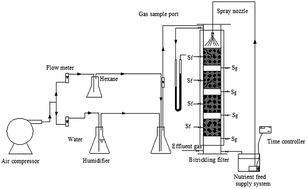
The schematic of the biotrickling filter (BTF) system used in this study is shown in Fig. 1. The BTF column was a transparent plexiglas pipe with an inner diameter of 10 cm and a total height of 78 cm. It was packed with four layers of identical cylindrical spongy medium which was made of open-pore reticulated polyurethane. The characteristic parameters of the polyurethane sponge were described in our previous work.7 The BTF was operated in co-current mode with a downward air flow. The compressed air feed to the BTF was supplied by mixing two separate air streams whose airflow rates were separately regulated with two flow meters (LZB-10, Yuyao Yinhuan Flowmeter Co., Ltd., China). VOCs in waste gas stream were absorbed and biodegraded by biofilms in the BTF. The purified gas stream exited out of the BTF through the outlet at the bottom of the BTF. A synthetic nutrient solution being made from tap water was sprayed onto the media at a rate of 4.5 L per day. The liquid solution flowed downwards through the media and was discharged from the bottom of the column without recirculation. The BTF was operated in a temperature controlled chamber with a constant operating temperature of 25 °C.
 |
| | Fig. 1 Schematic diagram of the biotrickling filter (Sf: biofilm sampling ports; Sg: gas sampling ports). | |
2.2 Chemicals
In this study, analytical reagent n-hexane (C6H14, >99%) was selected as the model VOC for this study. The reported dimensionless Henry's law constant at 25 °C for n-hexane is 40.7 ± 2.78.14 All other chemicals used in this work were also analytical grade.
2.3 Nutrients
Nutrients fed into the BTF were made up of macronutrients (nitrate and phosphate), micronutrients, and vitamins. The feed rate was kept 4.5 L per day for the BTF.
2.4 Microorganism inoculation
2.4.1 Pretreatment for the activated sludge. The fresh activated sludge was taken from a secondary sedimentation tank of Changsha Guozhen Wastewater Treatment Plant, Hunan, China. The wastewater treatment plant received primarily municipal wastewater. The activated sludge was passed through 0.4 mm sieves to catch impurities before its utilization and then settled for 6 h to obtain the concentrated sludge. The concentrations of mixed liquor suspended solids (MLSS) and mixed liquor volatile suspended solids (MLVSS) were approximately 14.54 g L−1, 9.04 g L−1, respectively. The MLSS and MLVSS analysis were carried out according to Standard Methods 2540G.15
2.4.2 Inoculation. Sponge packing materials were immersed into the above preprocessed activated sludge for 24 h to allow biomass attachment. Then, sponge packing materials were taken out of the activated sludge and transferred into the BTF. Subsequently, the moistened n-hexane gas and air were mixed and introduced into the BTF. The BTF received influent air with 250 mg m−3 n-hexane and an empty bed retention time (EBRT) of 30 s to facilitate microbial growth. Meanwhile, the nutrient solution was sprayed into the packing materials. At this point, the experimental startup initiated.
2.5 Biotrickling filter operation
The BTF was operated for about 135 days under pseudo-steady-state conditions. The sequence of operating conditions tested in the BTF is shown in Table 1. Experiments were carried out at different stages (runs A–L), including nitrate concentration, inlet n-hexane concentration and EBRT. After the BTF was successful started up (run A), the second stage (run B and C) was carried out with BTF fed with different nitrate concentration (0.08, 0.16, 0.24 g N–NO3− L−1) and no nitrate in solution at an inlet n-hexane concentration of 350 mg m−3 and a gas EBRT of 30 s. The third stage (runs D–L) was subsequently conducted to evaluate the impact of inlet n-hexane concentration and gas EBRT on the BTF performance. This stage lasted from day 67 to day 135. Throughout day 67 to 94 and day 95 to 135, the effects of inlet n-hexane concentrations at a constant gas EBRT and gas EBRTs at a constant inlet concentration were evaluated, respectively.
Table 1 Experimental scheme for continuous n-hexane degradation experiments using BTF
| Stage |
Duration (day) |
Nutrient solution (L per day) |
Temperature (°C) |
EBRT (s) |
n-Hexane concentration (mg m−3) |
| A |
0–20 |
4.5 |
25 |
30 |
250 |
| B |
21–57 |
4.5 |
25 |
30 |
350 |
| C |
58–66 |
4.5 |
25 |
30 |
250 |
| D |
67–80 |
4.5 |
25 |
30 |
650 |
| E |
81–86 |
4.5 |
25 |
30 |
900 |
| F |
87–94 |
4.5 |
25 |
30 |
250 |
| I |
95–99 |
4.5 |
25 |
15 |
250 |
| J |
100–106 |
4.5 |
25 |
30 |
250 |
| K |
107–113 |
4.5 |
25 |
7.5 |
250 |
| L |
114–135 |
4.5 |
25 |
30 |
250 |
To ensure the BTF at pseudo-steady-state, the BTF is operated in reference condition so that the experimental results under different operating parameters were comparable, the BTF was operated in reference condition with a hexane concentration of 250 mg m−3 and a gas EBRT of 30 s to go through a recover period before and after a change of the operating parameter.
2.6 Analytical methods
2.6.1 n-Hexane concentration. Measurements for the gas phase included influent and effluent concentrations of n-hexane samples. Gas samples for VOC measurement were collected daily. Gas-phase samples for VOC analysis were taken with gas-tight syringes. Analysis for VOC concentrations were immediately carried out by using GC (Agilent 6890 Series, Hewlett-Packard, Palo Alto, USA) equipped with a flame ionization detector and a capillary column type HP-VOC (60 m × 320 μm ID × 1.8 μm). The GC oven was programmed isothermal at 120 °C. The carrier gas nitrogen flow rate was set 30 mL min−1. The hydrogen flame detector (FID) was used with a fuel gas flow (H2) of 30 mL min−1 and an oxidizing gas flow (air) of 350 mL min−1. The detector temperature was 200 °C and the temperature of the injector was 120 °C.
2.6.2 Extraction of EPS and chemical analysis. Extraction procedures for EPS fractionation were detailed by Comtem et al.16 The biofilm was removed gently from the second bed medium and put into a 2 mL plastic centrifuge tube. After centrifugation at 4000 rpm for 5 min at 4 °C using an MR 23i (JOUAN) type centrifuge, the supernatant was discarded. The residual biofilm was resuspended to a Ringer's solution equal volume for the extraction of EPS according to the thermal treatment method described by Morgan et al.17 The resuspended mixed liquor was heated in a water bath (80 °C, 1 h) and then centrifuged at 12
500 rpm for 15 min at 4 °C. The supernatant was regarded as the EPS. The EPS solution was then filtrated through 0.45 μm acetate cellulose membranes for chemical analysis.The method of preparing the Ringer's solution: 6.5 g NaCl, 0.14 g KCl, 0.2 g NaHCO3 and 0.01 g NaH2PO4 were dissolved in distilled water, respectively, and then mixed them together and diluted with distilled water to 980 mL. The Ringer's solution was formed by adding 20 mL 6 g L−1 CaCl2 solution into the above solution dropwise, and stirring to avoid insoluble calcium phosphate precipitation.
Polysaccharide concentration was detected by the anthrone–sulfuric acid colorimetry method.18 0.5 mL of each extracted EPS solution above was mixed with 1.5 mL ultrapure water in the reaction vial. The sample was mixed with anthrone and sulfuric acid and allowed to cool to room temperature. The absorbance at 620 nm was compared to a glucose standard curve to measure the Polysaccharide concentration. Protein concentration was measured using Folin–Ciocalteu method.19 0.2 mL of each extracted EPS solution above was mixed with 0.8 mL ultrapure water in the reaction vial. The sample was mixed with Folin-phenol proteins Assay Reagent (Beijing Dingguo Changsheng Biotechnology, China) and then let it sit for 30 min. The absorbance at 500 nm was compared to a bovine serum albumin standard curve to determine the mass of proteins. Polysaccharide and proteins concentration were as the biofilm EPS.
2.6.3 Zeta potential. The biofilm was removed gently from the second bed medium and put into a 5 mL plastic centrifuge tube. After centrifugation at 4000 rpm for 10 min using type centrifuge (TG 16k, Dongwang Instrument, Changsha, China), the zeta potential of the supernatant was detected by using a Zetasizer Nano ZS90 Instrument (Malvern Co., Worcestershire, U.K.) at 25 °C.
3 Results and discussion
3.1 Performance of n-hexane removal in gas biofilter
3.1.1 Effect of nitrate concentration. Nitrogen, among all the nutrients, makes up the largest fraction of dry cell mass which is about 12% for a typical bacterial cell formula of C5H7O2N. It is the key to sustain and promote biomass growth and VOC degradation capacity.20 In the gas phase bioreactors, when using inorganic materials, essential nutrients such as nitrogen can not usually present in the filter bed and must be supplied by an exterior source. In general, a nutrient solution, including the carbon and nitrogen source, inorganic salts, growth factors and so on, is sprayed upon the packing materials by the nozzle and then absorbed by microorganisms. However, the supply of carbon source and energy to microorganisms is mainly from contaminants in waste gas. Nitrogen source has a very important effect on biodegradation of pollutants. In this stage, n-hexane removal during the changes of nitrogen concentration was presented in Fig. 2.
 |
| | Fig. 2 Effect of the nitrate concentration on removal efficiency of BTF (▲: inlet concentration; ▼: outlet concentration; ★: removal efficiency). | |
After the BTF achieved stable, the trials to investigate the influence of the nitrate in the nutrient solution were carried out at 350 mg m−3 and EBRT of 30 s. Fig. 2 showed the removal efficiency (RE) as a function of the nitrate concentration in the nutrient solution. When nitrate concentration was added in nutrient solution from 0.08 to 0.16 g N–NO3− L−1, the average RE increased from 77% up to 85% and the corresponding elimination capacity (EC) increased from 32.34 g m−3 h−1 to 35.7 g m−3 h−1, indicating that n-hexane could be removed better at a high nitrate concentration than a low nitrate concentration. There was a similar behavior in a study of n-hexane removal in biofilters packed with perlite and a peat–perlite mixture: the solid media were supplemented with nitrogen source up to 1 kg m−3 per week and 0.2 kg m−3 per month, respectively. In this research, n-hexane was found to be removed better at a high nutrient supplementation than a low nutrient supplementation.21 Further increasing nitrate concentration of 0.24 g NO3− L−1, the addition of nutrients did not improve the BTF performance. The RE remained the same and quite stable: the average values varied between 84% and 85%, indicating that a nitrate concentration of 0.16 g N–NO3− L−1 was sufficient for proper BTF operation at 350 mg m−3. However, when no nitrate was added to the nutrient solution, the RE dropped significantly to about 68% and remained stable for a week. This is due to the fact that the nutrient solution was prepared with municipal tap water where the nitrate concentration was only approximately 0.0027 g N–NO3− L−1. In this case of the absence of nitrogen source, n-hexane was removed through oxidation to provide maintenance energy depending on how fast the nitrogen was recycled from dead cells.21 Furthermore, due to nitrogen source in short, microbes would slow down or stop their growth, simply using the targeted pollutant for cellular respiration and EPS production.22 However, microbes could still maintain metabolisms through obtaining very little nitrogen from storage in cells, cell lysis or possibly nitrate adsorbed on the packing media. Similar biodegradation behavior was reported by Girarda et al.23 on biofiltration removal of methane from a pig farm at low concentrations. In this study, it was observed that when no inorganic nitrogen was provided in the nutrient solution, the removal efficiency of CH4 remained at 18% ± 0.7%. To inspect the RE recovered or not, the nitrate concentration of 0.16 g N–NO3− L−1 then was added to the nutrient solution, the RE showed a gradual increase and finally stable at about 84%.
3.1.2 Effect of n-hexane inlet concentration. In this stage, for a given constant gas flow rate (0.3 m3 h−1, corresponding to EBCT of 30 s), the BTF was running under a unique n-hexane with a concentration from about 250 mg m−3 to 650 mg m−3 and 900 mg m−3, corresponding to the organic loading rate (IR) of 30, 78 and as high as 108 g m−3 h−1. The operating conditions were summarized in Table 1. The relationship between the inlet concentration and the n-hexane removal efficiency was presented in Fig. 3. As evident from Fig. 3, when the n-hexane inlet concentration increased to about 650 mg m−3 on day 67, the RE dropped to 51 ± 2% sharply and then steadied at about 58 ± 2%. When the n-hexane inlet concentration continued to increase from 650 to 900 mg m−3 on day 81, the RE decreased to 42%. As found by Hassan and Sorial,24 the average RE of n-hexane decreased from 80.6% to 56.5% at the inlet concentration of 50, 100 mg m−3, respectively and EBRT of 2 min when a trickle bed air biofilter was used to treat n-hexane. The reason can be attributed to the fact that the high n-hexane concentration had an inhibitory effect on microbial activity, leading to a lower mass transfer between the gas phase and the biofilm phase, thus making this hydrophobic organic substance less biodegradation in BTF.25 After a recovery experiment, the reactor performance and the microbial activity returned to their initial status, illustrating that the biotrickling filter had a very stable performance for n-hexane removal. This showed that control of inlet concentration of aim pollutants was the key to remain a high removal effect in the disposal of industrial waste gases.
 |
| | Fig. 3 Effect of inlet concentration on the removal efficiency of BTF (▲: inlet concentration; ▼: outlet concentration; ★: removal efficiency). | |
Although the RE decreased with an increase of inlet concentration, the EC increased. Under a constant EBRT of 30 s, the calculated EC was 25.5, 45.24, 45.36 g m−3 h−1 for the BTF at an average organic loading rate of 30, 78 and 108 g m−3 h−1. The results were in agreement with the reported by Tu et al.26 who found that the average RE of n-hexane was 62.5% and a corresponding n-hexane EC was 45.8 g m−3 h−1 when the n-hexane concentration in the incoming stream was average 600 mg m−3 and the gas EBCT was 30.0 s. The EC of n-hexane in this study is higher than that obtained by the previous researchers. For instance, when the biofilter, packed with a mixture of 50% peat and 50% (v/v) perlite and inoculated with activated sludge, was used to remove the n-hexane, the average removal efficiency and removal capacity of n-hexane was respectively 60% and 30 g m−3 h−1 under the inlet concentration of 1500 mg m−3 and EBRT of 118 s.21 In a comparative study for destruction of n-hexane in trickle bed air biofilters, the average RE of n-hexane in a BTF reached 59 ± 18% at a organic loading rate of 13.4 g m−3 h−1 with the present of a surfactant.27 In another study of enhancing hexane biodegradation in a two phase partitioning bioreactor, the average RE and EC achieved were 13 ± 4% and 12 ± 7 g m−3 h−1, respectively, when a conventional packed-bed biofilter was used.28 The reason that high EC achieved in this study should be attributed to higher specific surface area of polyurethane sponges than the media used in other bioreactors. There was more space for microorganisms to grow in this media with a higher porosity, enhancing the mass transfer efficiency of n-hexane from the gas phase to the biofilm. More uniform distribution of pores could also reduce the channeling of gas streams within the media bed. Therefore, high EC could be achieved.29
3.1.3 Effect of gas EBRT. In this experiment, the stability of the system under conditions of different EBRTs was investigated. This stage lasted 41 days for n-hexane removal. Before the experiment started, the reactor was operated at a constant EBRT of 30 s during 1 week and the RE remained about 84%. Subsequently, the EBRT has been changed. Before once again changing EBRT, the reactor was running under the condition of EBRT 30 s for recovery experiments. EBRT variations were performed by modifying the gas flow rate. n-Hexane at 250 mg m−3 was continuously supplied at the EBRT of 7.5, 15 and 30 s and a loading rate (LR) of 30, 60, 120 g m−3 h−1, respectively. Results were shown in Fig. 4. According to the Fig. 4, there was apparently effect of EBRTs on the n-hexane elimination under a constant n-hexane inlet concentration. Percentage removal values for BTF decreased from 84% to 68% and 45% when EBRT decreased from 30 to 15 and 7.5 s at the same range of n-hexane inlet concentrations. A similar trend of VOC removal with a decrease of EBRT was observed during biodegradation of other VOC.7 The less the residence time of n-hexane was, the less fully the n-hexane contacted with microorganism in the BTF, hence this trend of lower removal efficiency at lower residence time was expected.21 Besides, the EC increased from 25.2 to 40.8 and 54.0 g m−3 h−1 as a decrease of EBRT. A study found that, the RE and EC of n-hexane in a compost-based biofilter was respectively 52% and 16 g m−3 h−1 when the EBRT was 1.25 min and the IR was 29.4 ± 1.9 g m−3 h−1.30 Hassan and Sorial24 reported that the average RE was only 56.5% after choosing a long EBRT of 2 min and the inlet concentration of 100 mg m−3. An analytical comparison with the reported literatures showed that n-hexane can be also better removed in BTF at a short EBRT.
 |
| | Fig. 4 Effect of EBRT on the removal efficiency of n-hexane (▲: inlet concentration; ▼: outlet concentration; ★: removal efficiency). | |
After a recovery experiment, the RE remaining above 80% could be observed, which showed that the reactor adapted to the fluctuation of operation parameters excellently. However, the efficiency subsequently began to drop on day 128, reaching 74% by day 135 in a final stage of BTF. One possible explanation is that an increase of the EPS in biofilms (seen in Fig. 5) accelerated plentiful biomass accumulated in bed media, consequently, causing a low n-hexane removal efficiency. As reported by Kim and Sorial,13 excess biomass would cause clogging across the bed and lead to a deterioration in performance of VOC removal.
 |
| | Fig. 5 Dynamic variations of EPS in biofilms. | |
3.2 Dynamic variations of biofilms over long-term operation
3.2.1 EPS fractions in biofilms. Changes of EPS during the running process of BTF for n-hexane removal were shown in Fig. 5. With the running of gas biofilter, EPS increased gradually. Moreover, the components of EPS were quantified in different period of time (Fig. 5(a)) because they could change the surface properties, such as surface charge and they played an important role in biofilm formation. The examination of main EPS components, including proteins and polysaccharide in different time showed the trend of change. With the running of biofilter, the production of protein and polysaccharide was enhanced. However, the concentration of protein (from 87.45 to 190.5 mg g−1 MLSS) was found to be more than that of polysaccharide (from 38.74 to 50.76 mg g−1 MLSS) (Fig. 5(a)). Furthermore, the content of protein changed significantly while the content of polysaccharide changed slightly over time. Consequently, the ratio of protein to polysaccharide (PN/PS) was greater than 1 and increased continuously (Fig. 5(b)). Besides, it is worthwhile noting that the protein and polysaccharide concentrations were higher in biofilms of biotrickling filter, compared with the activated sludge before being attached to the medium (Fig. 5(a)). One possible explanation is that an increase in amount of biomass made the biofilms produce more EPS with running time. In a study of biodegradability of biofilm extracellular polymeric substances, Zhang and Bishop31 found that the rate of EPS polysaccharide utilization were much faster than that of EPS proteins during EPS biodegradation. From this point of view, an increasing tendency of EPS proteins was much larger than that of EPS polysaccharide and therefore the protein was the dominant component of EPS samples when n-hexane as substrate was utilized by microbes. Several literatures32 suggested that studies of EPS in activated sludge showed a majority of proteins while Fang et al.33 found that EPS was composed mainly of carbohydrates. This is relevant to microbial species, operation conditions and characteristics of substrates which they can cause the variation of composition of EPS.34 Moreover, an increase of the protein concentration and the amount of EPS may promote the biofilm accumulation on the packing materials in the early days of the biotrickling filter system. As reported by Tourney et al.22 in a review of the role of bacterial EPS, the EPS facilitated the adhesion of bacteria to surfaces and cells adhere to each other and promoted cell aggregation and the biofilm accumulation. During the final operational stage of BTF, the amount of EPS and protein further increased might be one of reasons of leading to deterioration in the performance of BTF. This was consistent with the results shown in Fig. 4.
3.2.2 Zeta potential of biofilms. The biofilm surface characteristic, either in the inoculation of activated sludge or in the biofilm of biotrickling filter, changed significantly. EPS can alter surface charge density of biofilms which is characterized by the zeta of potential. The variation of the zeta potential of the biofilm with the operational time of the bioreactor was shown in Fig. 6. The zeta potential of activated sludge before inoculation was −13.05 mV. With the running of bioreactor, the surface charge of biofilms became less negative. On day 90 it was −10.15 mV. One possible explanation is that the increase of protein concentration in EPS during the operation of the BTF. The presence of higher quantities of basic amino acids protein in EPS components would give higher positive charges, which could neutralize some of the negative charge from carboxyl and phosphate groups and therefore decreased the zeta potential of the biofilm.35 Moreover, according to Tsuneda et al.,36 EPS covering on cell surface could decrease the negative surface charge density around the cell surface. The decrease of the negative surface charge density of the biofilm aggregated microorganisms easily and thus facilitated the biofilm formation and the accumulation of biomass in bed media. This might be an important reason of maintaining a stable performance of BTF.
 |
| | Fig. 6 Zeta potential of biofilms in BTF. | |
4 Conclusions
The performance and the biofilm characteristics of n-hexane removal in a BTF were investigated. The sufficient concentration was 0.16 g N–NO3− L−1 for n-hexane removal at an inlet concentration of 350 mg m−3 and gas EBRT of 30 s. The EC maximized at 45.36 g m−3 h−1 for n-hexane removal. Proteins were the dominant component of EPS in biofilms for n-hexane removal in a gas biofilter. The concentration of protein (from 87.45 to 190.5 mg g−1 MLSS) increased continuously and changed significantly while that of polysaccharide (from 38.74 to 50.76 mg g−1 MLSS) changed in volatility and slightly. Therefore the amount of EPS increased from 126.19 to 241.26 mg g−1 MLSS over time. Moreover, the content of protein was found to be more than that of polysaccharide. The zeta potential of biofilms became less negative (from −12.05 to −10.15 mV) due to an increase in protein concentration.
Acknowledgements
Financial support from the Nation Science Foundation of China (Grant number: 51278464 and 51478172), the International S&T Cooperation Program of China (Project Contract no.: 2015DFG92750), and Department of Science & Technology of Hunan Province (Project Contract no.: 2014GK1012) is greatly appreciated.
References
- C. Kennes, E. R. Rene and M. C. Veiga, J. Chem. Technol. Biotechnol., 2009, 84(10), 1419–1436 CrossRef CAS PubMed.
- G. A. Sorial, F. L. Smith, M. T. Suidan, A. Pandit, P. Biswas and R. C. Brenner, J. Environ. Eng., 1997, 123, 530–537 CrossRef CAS.
- H. H. J. Cox and M. A. Deshusses, Chem. Eng. J., 2002, 87(1), 101–110 CrossRef CAS.
- C. P. Yang, M. T. Suidan, X. Q. Zhu and B. J. Kim, Water Sci. Technol., 2003, 48(8), 89–96 CAS.
- W. J. H. Okkerse, S. P. P. Ottengraf, B. Osinga-Kuipers and M. Okkerse, Biotechnol. Bioeng., 1999, 63(4), 418–430 CrossRef CAS.
- Y. M. Jin, M. C. Veiga and C. Kennes, Chemosphere, 2007, 68(6), 1186–1193 CrossRef CAS PubMed.
- L. Wang, C. P. Yang, Y. Cheng, J. Huang, H. L. Yang, G. M. Zeng, L. Lu and S. Y. He, J. Environ. Sci., 2014, 26(12), 2500–2507 CrossRef PubMed.
- G. P. Sheng, H. Q. Yu and X. Y. Li, Biotechnol. Adv., 2010, 28(6), 882–894 CrossRef CAS PubMed.
- H. Lin, M. Zhang, F. Wang, F. Meng, B. Q. Liao, H. Hong, J. Chen and W. Gao, J. Membr. Sci., 2014, 460, 110–125 CrossRef CAS PubMed.
- E. Neyens, J. Baeyens, R. Dewil and B. De heyder, J. Hazard. Mater., 2004, 106(2–3), 83–92 CrossRef CAS PubMed.
- T. T. More, J. S. S. Yadav, S. Yan, R. D. Tyagi and R. Y. Surampalli, J. Environ. Manage., 2014, 144, 1–25 CrossRef CAS PubMed.
- Y. Liu, C. H. Yang and J. Li, Environ. Sci. Technol., 2007, 41(1), 198–205 CrossRef CAS.
- D. Kim and G. A. Sorial, Chemosphere, 2007, 66(9), 1758–1764 CrossRef CAS PubMed.
- C. P. Yang, F. Y. Chen, S. L. Luo, G. X. Xie, G. M. Zeng and C. Z. Fan, J. Hazard. Mater., 2010, 175, 187–192 CrossRef CAS PubMed.
- APHA, American Public Health Association/American Water Works Association/Water Pollution Control Federation, Washington, DC, 1998 Search PubMed.
- S. Comtem, G. Guibaud and M. Baudu, Enzyme Microb. Technol., 2006, 38(1–2), 237–345 CrossRef PubMed.
- J. W. Morgan, C. F. Forster and L. Evison, Water Res., 1990, 24(6), 743–753 CrossRef CAS.
- B. Frolund, T. Griebe and P. H. Nielsen, Appl. Environ. Microbiol., 1995, 43(4), 755–761 CAS.
- O. H. Lowry, N. J. Rowebrough, A. L. Farr and R. J. Randall, J. Biol. Chem., 1951, 193(1), 265–275 CAS.
- D. Kim and G. A. Sorial, J. Hazard. Mater., 2010, 182(1–3), 358–362 CrossRef CAS PubMed.
- O. Kibazohi, S. I. Yun and W. A. Anderson, World J. Microbiol. Biotechnol., 2004, 20(4), 337–343 CrossRef CAS.
- J. Tourney and B. T. Ngwenya, Chem. Geol., 2014, 386, 115–132 CrossRef CAS PubMed.
- M. Girarda, A. A. Ramirez, G. Buelna and M. Heitz, Chem. Eng. J., 2011, 168(1), 151–158 CrossRef PubMed.
- A. A. Hassan and G. A. Sorial, Water, Air, Soil Pollut.: Focus, 2008, 8(3–4), 287–296 CrossRef.
- A. Zehraoui, A. A. Hassan and G. A. Biochem, Eng. J., 2013, 77, 129–135 CAS.
- Y. H. Tu, C. P. Yang, Y. Cheng, G. M. Zeng, L. Lu and L. Wang, Bioresour. Technol., 2015, 175, 231–238 CrossRef CAS PubMed.
- A. A. Hassan and G. A. Sorial, Chem. Eng. J., 2010, 162(1), 227–233 CrossRef PubMed.
- R. Muñoz, S. Arriaga and S. Hernandez, Process Biochem., 2006, 41(7), 1614–1619 CrossRef PubMed.
- C. P. Yang, G. L. Yu, G. M. Zeng, H. N. Yang, F. Y. Chen and C. Y. Jin, J. Environ. Sci., 2011, 23(8), 1325–1333 CrossRef CAS.
- R. Lebrero, M. Hernández, G. Quijano and R. Muñoz, Chem. Eng. J., 2014, 237, 162–168 CrossRef CAS PubMed.
- X. Q. Zhang and P. L. Bishop, Chemosphere, 2003, 50(1), 63–69 CrossRef CAS.
- L. Ge, H. Deng, H. Wang, L. Ma and Y. Liu, Fresenius Environ. Bull., 2007, 16(3), 299–303 CAS.
- H. H. P. Fang, H. Liu and T. Zhang, Biotechnol. Bioeng., 2002, 78(1), 44–52 CrossRef CAS PubMed.
- Y. Q. Liu, Y. Liu and J. H. Tay, Appl. Microbiol. Biotechnol., 2004, 65(2), 143–148 CrossRef CAS PubMed.
- B. B. Wang, D. C. Peng, Y. P. Hou, H. J. Li, L. Y. Pei and L. F. Yu, Water Res., 2014, 58, 1–8 CrossRef CAS PubMed.
- S. Tsuneda, J. Jung and H. Hayashi, Colloids Surf., 2003, 29(2–3), 181–188 CrossRef CAS.
|
| This journal is © The Royal Society of Chemistry 2015 |
Click here to see how this site uses Cookies. View our privacy policy here.