DOI:
10.1039/C5RA06771E
(Paper)
RSC Adv., 2015,
5, 48169-48175
Turn-on luminescence based discrimination of protic acids using a flexible layered metal–organic coordination polymer†
Received
15th April 2015
, Accepted 21st May 2015
First published on 21st May 2015
Abstract
Micro-sized metal–organic coordination compound [Co(OBA) (H2O)2] (OBA = 4,4′-oxybis(benzoate)) 1 has been synthesized on a gram scale by solvent evaporation method. The two-dimensional structure of the micro-crystals has been confirmed by comparing with the previously reported hydrothermally synthesized compound. The compound was systematically characterized by PXRD, TGA, DSC, IR and SEM studies. The compound shows reversible hydration behaviour and structural flexibility by changing the inter-layers distances. The compound changes its colour to dark blue from the bright pink after heating at 150 °C for 1 hour. The dehydrated blue compound shows weak luminescence centered at 382 nm upon excitation at 273 nm. Luminescence based titration with the addition of traces amount of aqueous solution of various acids with different pKa values such as hydrochloric acid (HCl), nitric acid (HNO3), sulphuric acid (H2SO4), oxalic acid (COOH)2, formic acid (HCOOH), acetic acid (CH3COOH) in dehydrated compound (1′) dispersed in acetonitrile show differential luminescence turn-on according to their pKa values. Similar behaviours have also been observed for amino acids based on their isoelectric point (pI).
Introduction
The clever blend of the principles of supramolecular and coordination chemistry gave rise to an attractive variety of solids that are now being known as metal–organic coordination polymers (MOCPs).1 MOCPs are relatively a new class of hybrid crystalline materials with diverse structural characteristics constructed by the connectivity of metal ions or metal clusters and organic ligands.2 The exceptional non-covalent interactions along with good structural robustness and flexibility exhibited by these compounds make them attractive for research.3 MOCPs have shown a variety of potential applications such as gas storage,4 gas separation,5 catalysis,6 magnetism,7 drug delivery,8 bio-imaging9 and proton conductivity.10 Many of the important MOCPs compounds have three-dimensional structures, and the preparation of two-dimensional ones is also significant because some of them can replicate the behaviour of naturally occurring clays.11 The two-dimensional compounds can also take part in variety of host–guest chemistries such as photopolymerization reactions, catalysis, etc.12 Solvent molecules can play a important role in the control of crystal structure and the physical and chemical behaviour of the MOCP compounds.13
Luminescence behaviour of MOCPs has become an active area of research based on various potential applications.14 Details investigations point to the observation of two types of luminescent properties in MOCP: (i) intra-ligand and (ii) ligand sensitized metal centre luminescence. Very recently, significant progress has been made in the uses of both of these types of luminescence property of MOCPs for sensing of small molecules,15 metal ions16 and explosives.17
Luminescence based methods for the sensing of pH18 and the determinations of pKa values19 have also reported using various materials such as organic polymer, mesoporous thin film, DNA-conjugated polymer composite, inorganic complexes, semiconductor quantum dot, silica nano-particles etc. Nevertheless, their wide spread use is limited owing to multistep processing, requirement of expensive chemicals, stability and lack of molecular organization. Recently few Zr and lanthanide based MOCPs have been used for the pH sensing based on their luminescence properties,20 but there are no reports of discrimination of protic acids according to their pKa values using MOCP.
Based on the above considerations, we have prepared micro crystals of a two-dimensional Co-based MOCP, [Co(OBA) (H2O)2] [OBA = 4,4′-oxybis(benzoate)], 1, through simple solvent evaporation methods on gram scale. Powder X-ray diffraction studies indicate that 1 has the same structure as the hydrothermally synthesized compound reported earlier by Natarajan and co-workers.21 The compound 1 has bright pink colour in day light and upon dehydration at 150 °C for 1 hour it changes to dark blue colour. The dehydrated compound (1′) retains its blue colour in various water miscible solvents but changes to pink only in presence of water. 1′ shows weak blue emission upon exposure to UV light. 1′ in acetonitrile show high luminescence turn-on behaviour in presence of trace amount of 0.001 N of aqueous solution of various protic acids such as HCl, HNO3, H2SO4, (COOH)2, HCOOH and CH3COOH. The degrees of luminescence turn-on in presence of these acids are according to the pKa values (highest turn-on for lowest pKa value). Similar luminescence turn-on behaviour have also been observed in the case of three amino acids, L-aspartic acid, L-glutamic acid and L-alanine based on their isoelctric points (pI). Enhancement in luminescence according to their hydrogen ion concentration (pKa/pI) in presence of trace amount of these aqueous acid solutions gives a clear indication of strong molecular level interaction between MOCP and the hydrogen ions. This is the first observation, to our knowledge, where a MOCP is used for the discrimination of protic acids according to their pKa/pI values. In this article, we present the gram scale synthesis and luminescence based discriminating behaviour of various protic acids using the dehydrated compound, 1′.
Experimental section
Materials
The chemicals needed for the synthesis of the metal–organic coordination compound, are CoCl2·6H2O (Merck, 98%), 4,4′-oxybis(benzoic acid) (Sigma-Aldrich, 99%) and NaOH (Merck, 97%) were used as received. The chemical used for the luminescence experiments, hydrochloric acid (HCl) (35%), nitric acid (HNO3) (69%), sulphuric acid (H2SO4) (98%), oxalic acid ((COOH)2·2H2O) (99%), formic acid (HCOOH) (85%), acetic acid (CH3COOH) (99%), sodium chloride (99%), sodium nitrate (99.5%), sodium sulphate (99%), were used as received from Merck without further purification. Sodium oxalate, sodium formate and sodium acetate, were prepared using their corresponding acids and NaOH. The amino acids used for the luminescence experiments, L-alanine (Ala) (99%), L-aspartic acid (Asp) (98%) and L-glutamic (Glu) (99%), were used as received from Sigma-Aldrich without further purification. The solvents used for the luminescence experiments, acetonitrile (99%), methanol (99.5%), ethanol (99.9%), acetone (99%), DMF (99%), DMSO (99%), were used as received from Merck without further purification. The water used was double distilled and filtered through a Millipore membrane.
Synthesis and initial characterizations
Compound 1 was prepared by simple solvent evaporation reaction. For this, CoCl2·6H2O (0.97 g, 4 mM) was dissolved in 20 ml of water in a 100 ml beaker. In a another 100 ml beaker, 4,4′-oxy-bis(benzoic)acid (1.04 g, 4 mM) and NaOH (0.33 g, 8 mM) were dissolved in 20 ml of water. Both the solution mixture was heated at 100 °C for 10 min. Then the homogeneous solution of 4,4′-oxy-bis(benzoic)acid and NaOH was poured into the cobalt salt solution and the resulting solution mixture was kept in a hot plate with continuous stirring at 80 °C for 3 hours. After that, the mixture was continuously heated at 80 °C for 12 hours without any stirring. The final product, containing large quantities of dark pink colored homogenous micro crystals, was filtered, washed with deionized water under vacuum, and dried at ambient conditions (yield 85% based on Co). Elemental analysis calcd (%) for 1: C 47.84, H 3.42; found: C 47.65, H 3.33. The products were analyzed by PXRD and the PXRD patterns being entirely consistent with the simulated XRD pattern generated based on the structures determined using the single-crystal XRD data of [Co(OBA)3(H2O)2] (CCDC: 897211) (see ESI, Fig. S1†).
Instrumentations
The powder X-ray diffraction (PXRD) patterns were collected on a Rigaku Miniflex diffractometer with Cu Kα radiation within the 2θ range of 5–50°. The IR spectrums were recorded on a KBr pellet using JASCO FT/IR-6300 Fourier Transform Infrared Spectrometer. The thermogravimetric analysis (TGA) was carried out using Perkin-Elmer Diamond instrument in nitrogen atmosphere (flow rate = 20 ml min−1) in the temperature range of RT-800 °C at a heating rate 10 °C min−1. The differential scanning calorimetric (DSC) measurement was performed in nitrogen atmosphere using TA Instrument, Q2000 in the temperature range of 30–500 °C at a heating rate of 10 °C min−1. The morphologies and the sizes of the synthesized compound were investigated using scanning electron microscope (QUANTA FEG250, FEI). Magnetic studies of compound 1 were performed using Lakeshore Vibrating Sample Magnetometer.
Photoluminescence based measurements
The photoluminescence properties of 1′ dispersed in acetonitrile were investigated at room temperature. The dispersions were prepared by introducing 5 mg of 1′ into 100 ml solvent and ultrasonic agitation for 30 minutes. Photoluminescent spectra were measured using a Fluorolog Horiba Jobin-Yuon spectrometer. The analytes were added into the dispersion using micro pipette.
Results and discussion
Structure, morphology and thermal behaviour
To describe and discuss the properties of 1′, it is important to discuss briefly about the structure of 1. Here, the Co2+ ions are linked to the carboxylate units forming a one dimensional wire-like structure, which are connected by the OBA unit forming a two-dimensional layer structure. Hydrogen bond interactions between the coordinated water of one layer and carboxylate oxygens of another layer gives rise to a supra-molecularly organized three-dimensional structure (Fig. 1).
 |
| | Fig. 1 Arrangement of two layers in compound 1. Dotted lines represent the hydrogen bond interactions. | |
The size and the morphologies of compound 1 were studied using scanning electron microscopy. Powder grains are of plates shaped in micro size regime (Fig. 2).
 |
| | Fig. 2 SEM image of compound 1. | |
TGA shows that 1 release coordinated water molecules in the range of 125–155 °C (observed weight loss 9.5%, calculated weight loss 10.25%) followed by the decomposition of the framework in the range of 375–460 °C (Fig. 3). The DSC data show two endothermic peaks centered at 148 °C (calculated 1.84 kcal mole−1 of water) and 431 °C corresponding to removal of water molecules and decomposition of organic ligand, respectively (Fig. 3). To understand the dynamics of the water molecules, 1 was heated at 150 °C for 1 h in an oven. The heated sample changed its colour from pink to blue due to the removal of the coordinated water molecules (Fig. 4). The changes of colour indicate the changes of coordination geometry from octahedral to tetrahedral around Co2+ metal ions.
 |
| | Fig. 3 TGA and DSC studies of compound 1. | |
 |
| | Fig. 4 Photograph of original and dehydrated compound. | |
The dehydration was further confirmed by IR spectroscopy as the broad band due to water molecules in the range of 3000–3500 cm−1 disappeared after the sample heated at 150 °C for 1 hour (see ESI, Fig. S2†).
To check the reversibility of the water molecules removal, the dehydrated compound (1′) were kept in open air for various time interval. The powder XRD patterns of all the samples were compared with the XRD pattern of the original 1 and the dehydrated one (1′) (see ESI, Fig. S3†). The powder XRD pattern of 1 heated at 150 °C/1 h indicates a shift of the two main peaks towards higher 2θ angles from 2θ = 6.6° to 6.8° and 13.1° to 13.7° (Fig. 5). The main peaks appear to return back towards the originally observed 2θ values when the dehydrated sample was mixed with minute quantity of liquid water; but the reverse transition (uptake of H2O) appears not complete even after keeping the sample exposed to atmosphere for 3 days. This indicates that the coordinated water molecules may be reversibly adsorbed.
 |
| | Fig. 5 The ex-situ heated powder X-ray diffraction patterns of the compound 1: (a) compound 1, (b) the sample heated 150 °C for 1 h, (c) dehydrated sample left under atmospheric condition for 1 day, (d) dehydrated sample left under atmospheric condition for 3 days, (e) the dehydrated sample after mixing with minute quantity of water. | |
The changes of the coordination geometry around the Co2+ ions have studied using solid-state visible spectroscopy (Fig. 6). The original compound and rehydrated one shows almost identical spectra. On the other hand, a spectrum of the dehydrated compound (blue one) is completely different. This support the formation of four coordinated Co2+ centres after the dehydration from the six coordinated Co2+ centres in original compound and its reversibility after rehydration.
 |
| | Fig. 6 Visible spectra of the powdered sample: (a) compound 1, (b) dehydrated compound, (c) rehydrated compound. Note the similarity between the spectra of original and rehydrated compound. | |
The powder X-ray diffraction patterns and visible spectra of the dehydrated compound (1′) suggest that the inter-layers distances between the two dimensional metal–organic coordination polymers are reduced after the removal of the coordinated water molecules. As a result the distances between the OBA ligands of two different adjacent layers are expected to reduce. The reductions of the distances between the OBA ligands have significant role for the luminescence properties. The stability of dark blue coloured dehydrated compound (1′) were also tested in various water miscible solvents such as methanol, ethanol, acetone, DMF, DMSO, acetonitrile and mixture of water and acetonitrile by immersing the blue dehydrated compound in these liquid solvent (see ESI, Fig. S4†). The dehydrated compound (1′) remains blue in colour in all the cases except in water and the mixture of water and acetonitrile. This indicates that only in presence of water the dehydrated blue compound changes to pink colour. Powder X-ray diffraction pattern of 1′ (blue compound) after immersing in acetonitrile for 24 h followed by drying in open air and its comparison with original 1′ confirmed the stability of the dehydrated state (see ESI, Fig. S5†).
To understand the magnetic behaviour after the dehydration, magnetic susceptibility measurement has been carried out on powdered sample in high temperature. As can been from Fig. 7, the magnetic susceptibility value has been reduced drastically in the range of 425–475 K. The changes can be correlated with the changes of the coordination geometry during the dehydration. In octahedral coordination geometry with t2g5eg2 electronic configuration of high spin Co2+ systems have significant orbital contribution due to the presence of four electrons in degenerate t2g level. Whereas in tetrahedral geometry with e4t23 electronic configuration of Co2+ systems do not have orbital contribution in total magnetic moment due to the half filled t2 level and full filled e level. Hence, the reduction of magnetic susceptibility in that range further supports the changes of coordination geometry during the dehydration. Magnetic susceptibility measurements have also been studied separately for 1 and 1′ in the low temperature range (80–325 K) (see ESI, Fig. S6†). In low temperature, 1 show slightly higher values of magnetic moment compared to 1′ due to the differential orbital contribution.
 |
| | Fig. 7 Temperature variation of molar magnetic susceptibility (χM) in high temperature range (350–525 K). The encircled portion of plot shows the large changes of magnetic susceptibility. | |
Luminescence studies
The dehydrated blue compound (1′) when dispersed in acetonitrile exhibited weak emission centered at 382 nm upon excitation at 273 nm (see ESI, Fig. S6†). The emission observed are due to intra-ligand transitions (π* → n and π* → π transitions) of the OBA ligands. The emissions of 1′ are also sensitive to the changes of the solvents. It shows emissions at 371, 389, 402, 405 and 410 nm, respectively, for DMSO, ethanol, acetone, methanol and DMF upon excitation at 273 nm (see ESI, Fig. S7†). To explore the ability of 1′ to differentiate protic acids using trace amount of their aqueous solution of ultra low concentration, luminescence titrations were performed with the incremental addition of acid solutions to 1′ dispersed in acetonitrile. Fig. 8 shows changes in the luminescence intensity with the increasing addition of 0.001 N HCl (pKa = −6.3) solutions (upto 0.500% v/v). The emission of 1′ on UV exposure was intensified upon the addition of HCl solution, which is nearly 13 times of the initial luminescence intensity. The luminescence quantum yield has been calculated using tyrosine as standard. The observed values are 0.045 and 0.4, respectively, for before and after addition of the 0.001 N HCl solutions (0.500% v/v) in acetonitrile. Similar luminescence based titrations were also performed with other protic acids with diverse pKa values such as nitric acid (HNO3, pKa = −1.64), sulphuric acid (H2SO4, pK1 = −3, pK2 = 1.92), oxalic acid ((COOH)2, pK1 = 1.23, pK2 = 4.19), formic acid (HCOOH, pKa = 3.7) and acetic acid (CH3COOH, pKa = 4.7) and pure water (pKa = 15.7) (see ESI, Fig. S8–S13†).
 |
| | Fig. 8 (a) Emission spectra of 1′ dispersed in acetonitrile upon incremental addition of 0.001 N HCl solutions (0.025–0.500% v/v). The excitation wavelength (λ) is 273 nm. The volume of the aqueous solution with respect to the volume of acetonitrile solution in the medium is indicated in the legend as % v/v. (b) Images showing the original luminescence of 1′ (left) and the turn-on one in presence of 0.5% v/v of aqueous solution of 0.001 N HCl (right). | |
Luminescence turn-on behaviours have been observed in all of these protic acids solutions and the degrees of turn-on efficiencies are according to the acids dissociation constants (pKa values). The changes of luminescence intensity (turn-on) in the case of all protic acids after the addition 0.5% v/v of aqueous acid solutions are shown in Fig. 9 as bar diagram with respect of I/I0 values. These results indicate luminescence behaviour of 1′ can be used for the differentiation of protic acids according to their pKa values.
 |
| | Fig. 9 Plot of I/I0 of 1′ and all the protic acids. I0 and I are luminescence intensity in absence of acid solution and presence of 0.500% v/v of 0.001 N acids solution, respectively. The pKa value of each acid is mentioned in top of bar. In the case of sulphuric acid and oxalic acid average pKa values are given. | |
Similar luminescence titrations with the corresponding sodium salts solutions show less turn-on behaviours. This indicates the role of hydrogen ions in the aqueous solution (see ESI, Fig. S14–S19†).
Encouraged by the results of the common protic acids, the phenomenon has been extended for the amino acids. For these three amino acids have been chosen, L-aspartic acid, L-glutamic acid and L-alanine (see ESI, Fig. S20–S22†). In these cases, the luminescence turn-on behaviours are according to the values of isoelectric points (pI) (Fig. 10). L-Aspartic acid, L-glutamic acid and L-alanine show 3.36, 3.05 and 2.71 fold enhancement in luminescence intensity upon the addition of 0.500% (v/v) addition.
 |
| | Fig. 10 Plot of I/I0 of 1′ and all the amino acids. I0 and I are luminescence intensity in absence of amino acid solution and presence of 0.500% v/v of 0.001 N amino acids solution, respectively. The pI value of each amino acids are mentioned in top respective bar. | |
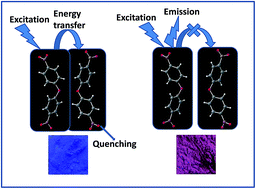
To understand the observed luminescence turn-on behaviour in presence of aqueous solution of acids, the structural transformation from the blue dehydrated state to hydrated pink state is important. This transformation helps for efficient luminescence behaviour by increasing the inter-ligand (inter-OBA) distances of the compound.3c The process has been shown schematically in Fig. 11. The hydrogen bonding between coordinated water and organic ligands of pink state help to exceed the critical radius between two OBA ligands for Coulombic energy transfer, thereby favouring the radiative deactivation of ligand-based excited states. Whereas in blue state the self-quenching of intra-ligand emission becomes important factor for the observation less intense luminescence. In acidic solution, the higher hydrogen ions concentration in the system further help to from the stable pink compound by increasing the higher hydrogen bonding effect. The acids with lower pKa values/pI values in aqueous medium can increase the hydrogen ions concentration in medium, which effectively help to increase the luminescence intensity.
 |
| | Fig. 11 Schematic of luminescence behaviour of blue and pink compounds through the changes of inter-ligands distances. | |
Conclusions
In conclusion, a micro sized layered MOCP has been synthesized on gram scale by simple solvent evaporation reaction. The compound shows exceptional flexibility and reversible hydration behaviour. Luminescence based titrations with the addition of traces amount of various acidic aqueous solutions in dehydrated MOCP dispersed in acetonitrile show differential luminescence turn-on behaviours based on their pKa values. The compound also show discriminating behaviour in presence of traces amount of aqueous solution of amino acids based on their isoelectric points (pI). Luminescence turn-on behaviour according to their hydrogen ion concentration (pKa/pI) in presence of trace amount of these aqueous acid solutions gives a clear indication of strong molecular level interaction between MOCP and the hydrogen ions. This is the first observation, to our knowledge, where a MOCP is used for the discrimination of protic acids/amino acids according to their pKa/pI values.
Acknowledgements
This work was supported by INSPIRE faculty research grant (IFA12-CH-69) and fast track project grant (SB/FT/CS114/2012) of Department of Science and Technology (DST), Government of India. NS thanks CSIR, Government of India for fellowship.
Notes and references
- T. R. Cook, Y.-R. Zheng and P. J. Stang, Chem. Rev., 2013, 113, 734 CrossRef CAS PubMed.
-
(a) M. Li, D. Li, M. O'Keeffe and O. M. Yaghi, Chem. Rev., 2014, 114, 1343 CrossRef CAS PubMed;
(b) P. Mahata and S. Natarajan, Chem. Soc. Rev., 2009, 38, 2304 RSC;
(c) A. K. Cheetham, C. N. R. Rao and R. K. Feller, Chem. Commun., 2006, 4780 RSC.
-
(a) L. Hamon, P. L. Llewellyn, T. Devic, A. Ghoufi, G. Clet, V. Guillerm, G. D. Pirngruber, G. Maurin, C. Serre, G. Driver, W. V. Beek, E. Jolimaître, A. Vimont, M. Daturi and G. Férey, J. Am. Chem. Soc., 2009, 131, 17490 CrossRef CAS PubMed;
(b) A. Schneemann, V. Bon, I. Schwedler, I. Senkovska, S. Kaskel and R. A. Fischer, Chem. Soc. Rev., 2014, 43, 6062 RSC;
(c) A. Douvali, A. C. Tsipis, S. V. Eliseeva, S. Petoud, G. S. Papaefstathiou, C. D. Malliakas, I. Papadas, G. S. Armatas, I. Margiolaki, M. G. Kanatzidis, T. Lazarides and M. J. Manos, Angew. Chem., Int. Ed., 2015, 54, 1651 CrossRef CAS PubMed.
-
(a) H. C. Zhou, J. R. Long and O. M. Yaghi, Chem. Rev., 2012, 112, 673 CrossRef CAS PubMed;
(b) Y. He, W. Zhou, G. Qian and B. Chen, Chem. Soc. Rev., 2014, 43, 5657 RSC;
(c) F. Gándara, H. Furukawa, S. Lee and O. M. Yaghi, J. Am. Chem. Soc., 2014, 136, 5271 CrossRef PubMed;
(d) L. Li, S. Tang, C. Wang, X. Lv, M. Jiang, H. Wu and X. Zhao, Chem. Commun., 2014, 50, 2304 RSC.
-
(a) P. Nugent, Y. Belmabkhout, S. D. Burd, A. J. Cairns, R. Luebke, K. Forrest, T. Pham, S. Ma, B. Space, L. Wojtas, M. Eddaoudi and M. J. Zaworotko, Nature, 2013, 495, 80 CrossRef CAS PubMed;
(b) J.-R. Li, J. Sculley and H.-C. Zhou, Chem. Rev., 2012, 112, 869 CrossRef CAS PubMed;
(c) Z. Xie, T. Li, N. L. Rosi and M. A. Carreon, J. Mater. Chem. A, 2014, 2, 1239 RSC;
(d) H. Yin, J. Wang, Z. Xie, J. Yang, J. Bai, J. Lu, Y. Zang, D. Yin and J. Y. S. Lin, Chem. Commun., 2014, 50, 3699 RSC.
-
(a) L. Ma, C. Abney and W. Lin, Chem. Soc. Rev., 2009, 38, 1248 RSC;
(b) H. R. Moon, D.-W. Lim and M. P. Suh, Chem. Soc. Rev., 2013, 42, 1807 RSC;
(c) K. Manna, T. Zhang and W. Lin, J. Am. Chem. Soc., 2014, 136, 6566 CrossRef CAS PubMed;
(d) O. Kozachuk, I. Luz, F. X. L. Xamena, H. Noei, M. Kauer, H. B. Albada, E. D. Bloch, B. Marler, Y. Wang, M. Muhler and R. A. Fischer, Angew. Chem., Int. Ed., 2014, 53, 7058 CrossRef CAS PubMed.
-
(a) M. Kurmoo, Chem. Soc. Rev., 2009, 38, 1353 RSC;
(b) P. Mahata, S. Natarajan, P. Panissod and M. Drillon, J. Am. Chem. Soc., 2009, 131, 10140 CrossRef CAS PubMed;
(c) T. Aharen, F. Habib, I. Korobkov, T. J. Burchell, R. G. Nicolas, F. Kleiz and M. Murugesu, Dalton Trans., 2013, 42, 7795 RSC.
-
(a) F. Ke, Y.-P. Yuan, L.-G. Qiu, Y.-H. Shen, A.-J. Xie, J.-F. Zhu, X.-Y. Tian and L.-D. Zhang, J. Mater. Chem., 2011, 21, 3843 RSC;
(b) P. K. Allan, P. S. Wheatley, D. Aldous, M. I. Mohideen, C. Tang, J. A. Hriljac, I. L. Megson, K. W. Chapman, G. D. Weireld, S. Vaesen and R. E. Morris, Dalton Trans., 2012, 41, 4060 RSC.
-
(a) P. Wu, J. Wang, C. He, X. Zhang, Y. Wang, T. Liu and C. Duan, Adv. Funct. Mater., 2012, 22, 1698 CrossRef CAS PubMed;
(b) D. Liu, K. Lu, C. Poon and W. Lin, Inorg. Chem., 2014, 53, 1916 CrossRef CAS PubMed.
-
(a) M. Yoon, K. Suh, S. Natarajan and K. Kim, Angew. Chem., Int. Ed., 2013, 52, 2688 CrossRef CAS PubMed;
(b) P. Ramaswamy, N. E. Wong and G. K. H. Shimizu, Chem. Soc. Rev., 2014, 43, 5913 RSC;
(c) M. Sadakiyo, T. Yamada and H. Kitagawa, J. Am. Chem. Soc., 2014, 136, 13166 CrossRef CAS PubMed.
- C. L. Chen and A. M. Beatty, J. Am. Chem. Soc., 2008, 130, 17222 CrossRef CAS PubMed.
-
(a) A. Matsumoto, K. Sada, K. Tashiro, M. Miyata, T. Tsubouchi, T. Tanaka, T. Odani, S. Nagahama, T. Tanaka, K. Inoue, S. Saragai and S. Nakamoto, Angew. Chem., Int. Ed., 2002, 41, 2502 CrossRef CAS;
(b) K. Nakano, K. Sada, K. Nakagawa, K. Aburaya, N. Yoswathananont, N. Tohnai and M. Miyata, Chem.–Eur. J., 2005, 11, 1725 CrossRef CAS PubMed;
(c) D. S. Reddy, S. Duncan and G. K. H. Shimizu, Angew. Chem., Int. Ed., 2003, 42, 1360 CrossRef CAS PubMed.
-
(a) K. T. Holman, A. M. Pivovar and M. D. Ward, Science, 2001, 294, 1907 CrossRef CAS PubMed;
(b) A. M. Beatty, C. M. Schneider, A. E. Simpson and J. L. Zaher, CrystEngComm, 2002, 4, 282 RSC;
(c) T. Yuge, M. Miyata and N. Tohnai, Cryst. Growth Des., 2006, 6, 1271 CrossRef CAS;
(d) S. Khoshhal, A. A. Ghoreyshi, M. Jahanshahi and M. Mohammadi, RSC Adv., 2015, 5, 24758 RSC.
-
(a) M. D. Allendorf, C. A. Bauer, R. K. Bhakta and R. J. T. Houk, Chem. Soc. Rev., 2009, 38, 1330 RSC;
(b) L. E. Kreno, K. Leong, O. K. Farha, M. Allendorf, R. P. V. Duyne and J. T. Hupp, Chem. Rev., 2012, 112, 1105 CrossRef CAS PubMed.
-
(a) F.-Y. Yi, W. Yang and Z.-M. Sun, J. Mater.
Chem., 2012, 22, 23201 CAS;
(b) Z. Guo, H. Xu, S. Su, J. Cai, S. Dang, S. Xiang, G. Qian, H. Zhang, M. O'Keeffe and B. Chen, Chem. Commun., 2011, 47, 5551 RSC;
(c) N. B. Shustova, A. F. Cozzolino, S. Reineke, M. Baldo and M. Dincă, J. Am. Chem. Soc., 2013, 135, 13326 CrossRef CAS PubMed;
(d) Z. Jin, H. He, H. Zhao, T. Borjigin, F. Sun, D. Zhang and G. Zhu, Dalton Trans., 2013, 42, 13335 RSC;
(e) Z.-Z. Lu, R. Zhang, Y.-Z. Li, Z.-J. Guo and H.-G. Zheng, J. Am. Chem. Soc., 2011, 133, 4172 CrossRef CAS PubMed;
(f) J.-M. Li, Y. Yang and D. Qin, J. Mater. Chem. C, 2014, 2, 9934 RSC;
(g) M. M. Wanderley, C. Wang, C.-D. Wu and W. Lin, J. Am. Chem. Soc., 2012, 134, 9050 CrossRef CAS PubMed.
-
(a) Y. Wu, G.-P. Yang, Y. Zhao, W.-P. Wu, B. Liu and Y.-Y. Wang, Dalton Trans., 2015, 44, 3271 RSC;
(b) Z. Xiang, C. Fang, S. Leng and D. Cao, J. Mater. Chem. A, 2014, 2, 7662 RSC;
(c) W. Sun, J. Wang, G. Zhang and Z. Liu, RSC Adv., 2014, 4, 55252 RSC;
(d) X.-N. Zhang, L. Liu, Z.-B. Han, M.-L. Gao and D.-Q. Yuan, RSC Adv., 2015, 5, 10119 CAS.
-
(a) Z. Hu, B. J. Deibert and J. Li, Chem. Soc. Rev., 2014, 43, 5815 RSC;
(b) D. K. Singha, S. Bhattacharya, P. Majee, S. K. Mondal, M. Kumar and P. Mahata, J. Mater. Chem. A, 2014, 2, 20908 RSC;
(c) S. S. Nagarkar, B. Joarder, A. K. Chaudhari, S. Mukherjee and S. K. Ghosh, Angew. Chem., Int. Ed., 2013, 52, 2881 CrossRef CAS PubMed;
(d) B. Gole, A. K. Bar and P. S. Mukherjee, Chem.–Eur. J., 2014, 20, 2276 CrossRef CAS PubMed;
(e) D. Banerjee, Z. Hu and J. Li, Dalton Trans., 2014, 43, 10668 RSC;
(f) D. K. Singha, P. Majee, S. K. Mondal and P. Mahata, Eur. J. Inorg. Chem., 2015, 1390 CrossRef CAS PubMed;
(g) D. K. Singha and P. Mahata, RSC Adv., 2015, 5, 28092 CAS.
-
(a) Y.-H. Chan, C. Wu, F. Ye, Y. Jin, P. B. Smith and D. T. Chiu, Anal. Chem., 2011, 83, 1448 CrossRef CAS PubMed;
(b) G. Wirnsberger, B. J. Scott and G. D. Stucky, Chem. Commun., 2001, 119 RSC;
(c) L. J. Nielsen, S. Eyley, W. Thielemans and J. W. Aylott, Chem. Commun., 2010, 46, 8929 RSC;
(d) F. Pu, C. Wang, D. Hu, Z. Huang, J. Ren, S. Wang and X. Qu, Mol. BioSyst., 2010, 6, 1928 RSC;
(e) H. Sun, A. M. S. Poulsen, H. Gu and K. Almdal, Chem. Mater., 2006, 18, 3381 CrossRef CAS;
(f) C. P. McCoy, F. Stomeo, S. E. Plush and T. Gunnlaugsson, Chem. Mater., 2006, 18, 4336 CrossRef CAS;
(g) Y. Chen, H. Wang, L. Wan, Y. Bian and J. Jiang, J. Org. Chem., 2011, 76, 3774 CrossRef CAS PubMed;
(h) I. L. Medintz, M. H. Stewart, S. A. Trammell, K. Susumu, J. B. Delehanty, B. C. Mei, J. S. Melinger, J. B. B.- Canosa, P. E. Dawson and H. Mattoussi, Nat. Mater., 2010, 9, 676 CrossRef CAS PubMed;
(i) K. M. Sun, C. K. McLaughlin, D. R. Lantero and R. A. Manderville, J. Am. Chem. Soc., 2007, 129, 1894 CrossRef CAS PubMed;
(j) K. Aslan, J. R. Lakowicz, H. Szmacinski and C. D. Geddes, J. Fluoresc., 2005, 15, 37 CrossRef CAS PubMed;
(k) W. Wu, J. Shen, P. Banerjee and S. Zhou, Biomaterials, 2010, 31, 8371 CrossRef CAS PubMed;
(l) X. Wan, D. Wang and S. Liu, Langmuir, 2010, 26, 15574 CrossRef CAS PubMed.
-
(a) L. S. Rosenberg, J. Simons and S. G. Schulman, Talanta, 1979, 26, 867 CrossRef CAS;
(b) B. Marciniak, H. Kozubek and S. Paszyc, J. Chem. Educ., 1992, 69, 247 CrossRef CAS;
(c) H. E. Gsponer, G. A. Argüello and G. A. Argüello, J. Chem. Educ., 1997, 74, 968 CrossRef CAS.
-
(a) H.-L. Jiang, D. Feng, K. Wang, Z.-Y. Gu, Z. Wei, Y.-P. Chen and H.-C. Zhou, J. Am. Chem. Soc., 2013, 135, 13934 CrossRef CAS PubMed;
(b) J. A. Sigalat and D. Bradshaw, Chem. Commun., 2014, 50, 4711 RSC;
(c) Y.-H. Han, C.-B. Tian, Q.-H. Li and S.-W. Du, J. Mater. Chem. C, 2014, 2, 8065 RSC;
(d) B. V. Harbuzaru, A. Corma, F. Rey, J. L. Jordá, D. Ananias, L. D. Carlos and J. Rocha, Angew. Chem., Int. Ed., 2009, 48, 6476 CrossRef CAS PubMed;
(e) Y. Lu and B. Yan, Chem. Commun., 2014, 50, 13323 RSC;
(f) B. J. Deibert and J. Li, Chem. Commun., 2014, 50, 9636 RSC;
(g) C. He, K. Lu and W. Lin, J. Am. Chem. Soc., 2014, 136, 12253 CrossRef CAS PubMed;
(h) H.-Y. Li, Y.-L. Wei, X.-Y. Dong, S.-Q. Zang and T. C. W. Mak, Chem. Mater., 2015, 27, 1327 CrossRef CAS.
- P. Mahata, C.-M. Draznieks, P. Roy and S. Natarajan, Cryst. Growth Des., 2013, 13, 155 CAS.
Footnote |
| † Electronic supplementary information (ESI) available: See DOI: 10.1039/c5ra06771e |
|
| This journal is © The Royal Society of Chemistry 2015 |
Click here to see how this site uses Cookies. View our privacy policy here.