Simple green synthesis of solid polymeric bisphenol A bis(diphenyl phosphate) and its flame retardancy in epoxy resins

Wei Zhao, Jiping Liu*, Yi Zhang and Daming Ban
School of Material Science and Engineering, Beijing Institute of Technology, Beijing, 100081, P. R. China. E-mail: liujp@bit.edu.cn; Fax: +86-10-6891-4530; Tel: +86-10-6891-4530

Received 17th April 2015 , Accepted 16th September 2015

First published on 16th September 2015


Abstract

A simple and green method for the preparation of solid polymeric bisphenol A bis(diphenyl phosphate) (PBDP), aimed at improving the flame retardancy of epoxy resins (EP) is presented. The PBDP was synthesized through melt polycondensation and has been extensively characterized by FTIR, 1H NMR, and 31P NMR. Flame retardant properties as well as thermal properties of epoxy resin composites have been investigated by various methods. The incorporation of PBDP into EP led to a superior flame retardant performance, such as reduced heat release rate, and higher char yield during combustion, compared to pure EP. The UL-94 V-0 rating was achieved at 20 wt% of PBDP in the composite and the glass transition temperature (Tg) was maintained at the high level of the pure EP. Meanwhile, a slight improvement in fracture toughness was observed in the EP/PBDP composites compared to pure EP. The flame retardant mechanism of PBDP combines condensed phase and gas phase mechanisms such as the catalysis effect, char-forming effect, gas activity, and the improved thermal stability of char layer. Moreover, the synthesized PBDP provides a novel flame retardant for EPs that imparts them with high Tg, high fracture toughness, and excellent flame retardancy.

1 Introduction

Epoxy resin (EP), is among the most useful of thermal setting materials, and is widely encountered in our daily lives, with applications in construction, transportation, and electrical and electronic products.1–3 However, the high flammability of EP has limited its application in many fields falling short of the defined flame retardancy standard.4,5 Hence, it is essential to improve the flame retardancy of EP. In the past, halogen-containing flame retardants proved effective and were once most widely used to suppress the flammability of EP. However, growing health and environmental concerns about the toxic smoke generated by halogenated flame retardants resulted in a shift towards halogen-free alternatives.6–10

Among the halogen-free solutions, aromatic phosphates have received considerable attention due to their high efficiency and low cost.11,12 For instance, triphenyl phosphate (TPP), bisphenol A bis(diphenyl phosphate) (BDP) and resorcinol bis(diphenylphosphate) are the most well-known and widely applicable.13,14 However, disadvantages such as high viscosity, volatility, deep color, negative effect on mechanical properties, potential plasticizing effect and leaching, greatly limit their further application.15,16 To avoid these problems, flame retardants with polymeric structure or high molecular weight have been proposed to overcome the major drawbacks of low molecular weight phosphates.16–18 However, solid polymeric BDP with high molecular weight has seldom been reported to date.

Herein, we present a new approach for the synthesis of solid polymeric bisphenol A bis(diphenyl phosphate) (PBDP). The chemical structure of PBDP has been characterized by Fourier transform infrared (FTIR) and nuclear magnetic resonance (NMR) spectroscopies. The flame retardant and thermal properties of PBDP in the epoxy resin have been determined by means of cone calorimeter tests and thermogravimetric analysis (TGA). Dynamic FTIR spectroscopy and X-ray photoelectron spectroscopy (XPS) have been used to analyze the thermal degradation of the EP/PBDP composites.

2 Experimental

2.1 Materials

Phosphorus oxychloride (POCl3) was purchased from Tianjin Guangfu Fine Chemical Research Institute (Tianjin, China) and freshly distilled before use. Phenol, bisphenol A, aluminium chloride (AlCl3) and m-phenylenediamine (m-PDA) were obtained from Sinopharm Chemical Reagent Beijing Co., Ltd (Beijing, China), were all reagent grade and used as received. Phenylphosphonic dichloride was synthesized according to the ref. 19 and freshly distilled before use. The epoxy resin (DGEBA, commercial name: E-44) with epoxy value of 0.44 was supplied by Sinopec Baling Company (Yueyang, China).

2.2 Synthesis of PBDP

21.1 g (0.1 mol) of phenylphosphonic dichloride, 22.8 g (0.1 mol) bisphenol A and 0.13 g (0.001 mol) AlCl3 were added to a 250 mL three-neck and round-bottom glass flask equipped with a temperature controller, magnetic stirrer and a reflux condenser. Under a nitrogen atmosphere, the mixture was heated to 120 °C and stirred for 3 h. As the mixture became more viscous, reaction temperature was raised up to 180 °C for 2 h to give solid product. After cooling down to room temperature, the product was washed with distilled water, and then dried at 80 °C under reduced pressure. The final product was obtained as white solid, giving a yield of 90%.

2.3 Preparation of the EP/PBDP composites

The EP/PBDP composites were prepared by thermal curing process. At first, PBDP was mixed into DGEBA adequately by mechanical stirring at 65 °C. Until the mixture was homogeneous, the curing agent m-PDA was added to the mixture. Then, the mixture was poured into mould and cured at 80 °C for 2 h, and post cured at 120 °C for 2 h. The formulations of each sample are listed in Table 1.
Table 1 Formulation and flame retardancy of the prepared epoxy resins
Samples PBDP (wt%) LOI (%) UL-94
EP 0 24.7 No rating
EP-1 5 26.4 No rating
EP-2 10 27.6 V-1
EP-3 15 28.0 V-1
EP-4 20 29.8 V-0


2.4 Characterization and measurements

Fourier transform infrared (FTIR) spectra were recorded on a Bruker 27 Fourier transform infrared spectrophotometer using KBr pellets. The wavelength range was set from 4000 to 400 cm−1. 1H (400 MHz) and 31P (163 MHz) NMR spectra was obtained by a Bruker AVANCE NMR Spectrometer. All NMR spectra were collected in CDCl3 using TMS and phosphoric acid as references.

Gel permeation chromatography (GPC) measurements were performed on a Waters Breeze™ 2 HPLC system with a 2489 UV/Visible detector and a 1515 isocratic HPLC pump. Analysis was performed with chloroform at a flow rate of 0.5 mL min−1. Both the column and the detector were maintained at 40 °C during the determination process.

The limiting oxygen index (LOI) values were measured on a JF-3 oxygen index meter (Nanjing Jiangning Analysis Instrument Co., China). According to ASTM D2863, the specimens for the test were prepared by molding. The samples dimensions for the UL-94 vertical burning test were 130 × 6.5 × 3 mm3 and the test was carried out with CZF-3 instrument (Nanjing Jiangning Analysis Instrument Co., China).

Differential scanning calorimetry (DSC) was performed on a DSC Q2000 (TA Ltd, USA) under nitrogen and results from the second heating in the range of 40–220 °C are reported. Thermogravimetric analysis (TGA) was conducted on a Mettler-Toledo TGA/DSC-1 thermogravimetric analyzer. About 5–7 mg of the sample was put in an alumina crucible and heated from 50 °C to 700 °C at a heating rate of 20 °C min−1 under both nitrogen and air. To study the residual chars of the cured epoxy resins at certain temperature, the residual chars were obtained as the same conditions as the TGA measurements, followed by cooling to room temperature and analysis by FTIR and X-ray photoelectron spectroscopy (XPS). FTIR was studied by the Bruker 27 Fourier transform infrared spectrophotometer using total reflection mode ranging from 4000 to 600 cm−1. XPS data were obtained using a PHI Quantera II SXM at 25 W under a vacuum lower than 10−6 Pa. To analysis the pyrolysis products, the TG-IR of the cured samples was investigated with thermogravimetric analyzer which was coupled with Fourier-transform infrared spectrometer (Bruker 27 Fourier transform infrared spectrophotometer). About 5 mg of samples was put in an alumina crucible and heated from 50 to 600 °C at a heating rate of 20 °C min−1.

Cone calorimeter (CONE) measurements were carried out in a Fire Testing Technology apparatus according to ISO5660-1. The specimens with dimension of 100 × 100 × 1.2 mm3 were tested at a heat flux of 50 kW m−2. The morphologies of residual chars obtained from CONE tests were studied by a Hitachi S4800 scanning electron microscope (SEM). All samples for SEM observation were sputtered with a gold layer to ensure surface conductivity.

The fracture toughness (KIC) of the prepared epoxy resins was measured according to ASTM D 5045 using a MTS 810 material testing machine (USA). Specimens with dimensions of 50 × 48 × 5 mm3 were prepared. At least five specimens of each formulation were tested at room temperature.

3 Results and discussion

3.1 Characterization of PBDP

PBDP was synthesized through direct condensation polymerization of bisphenol A and phenylphosphonic dichloride in the presence of AlCl3 as the catalyst under solvent-free conditions (Scheme 1). The polymeric product was obtained as a solid, making it more convenient to handle, store and transport than viscous liquid BDP. The chemical structure of PBDP was characterized by FTIR, 1H NMR, and 31P NMR. Fig. 1 displays the FTIR spectra of the synthesized PBDP. Characteristic absorption at around ν = 1304 cm−1 corresponds to P[double bond, length as m-dash]O, which is characteristic of phosphate ester compounds.20,21 The strong absorptions at ν = 1156 and 961 cm−1 can be assigned to P–O–C stretching vibration. The other absorptions are characteristic of the C–H stretching band of benzene rings and –CH3 (ν = 3062, 2967 cm−1) and the C[double bond, length as m-dash]C stretching band in the benzene ring (ν = 1596, 1498 cm−1).
image file: c5ra06762f-s1.tif
Scheme 1 Synthesis route of PBDP.

image file: c5ra06762f-f1.tif
Fig. 1 FTIR spectra of PBDP.

Fig. 2 presents the 1H NMR spectra of PBDP with the assignments to all of the protons. The multiplet between δ = 6.60 and 7.32 ppm corresponds to the protons of the benzene ring. The CH3 protons in PBDP give rise to a signal at δ = 2.31 ppm. In addition, a signal at δ = 3.76 ppm corresponding to the phenolic OH of biphenol at the chain end was observed. The structure of PBDP was also confirmed by 31P NMR (Fig. 3). The 31P NMR spectrum shows only one distinct peak at −17.51 ppm, corresponding to the P in the repeat unit of the main chain. All of the spectroscopic data support the structure of PBDP.


image file: c5ra06762f-f2.tif
Fig. 2 1H NMR spectra of PBDP.

image file: c5ra06762f-f3.tif
Fig. 3 31P NMR spectra of PBDP.

Gel-permeation chromatography revealed a weight-average molecular weight (Mw) of 8468 g mol−1, a number-average molecular weight of 7461 g mol−1, and a molecular weight dispersity (Đ) of 1.13. The degree of polycondensation typically derives from side reactions, such as chlorination, cross-linking effect, or transesterification.22 The degree of polycondensation of PBDP calculated from the number-average molecular weights was approximately 20, much higher than that of commercial BDP products. Meanwhile, the narrow molecular weight dispersity would be expected to cause a minor plasticizing effect and to be beneficial for the glass transition temperature of the flame retarded EP.

DSC was used to evaluate the glass transition temperature and melting point of the synthesized PBDP. Featureless phase-transition behaviors with a Tg value of 57 °C was observed, showing the PBDP to be a solid product at room temperature, making it suitable for transportation, storage, and especially for application (see Fig. S1, ESI). Besides, no melting point for PBDP was observed. A micro melting point instrument was employed to measure the melting behavior of PBDP. Its melting temperature was in the range 85–92 °C, matching the processing temperature of different flame retardant polymeric materials.23

3.2 Combustion properties

The LOI values and UL-94 results of the cured epoxy resins are shown in Table 1. The LOI value clearly increased with increasing PBDP content. At 20 wt% PBDP incorporation into EP, the LOI value increased to 29.8% and this formulation passed the V-0 classification in the UL-94 test. However, the limited increase in LOI values may be associated with possible gas activity of PBDP.24 The results indicate that PBDP imparts good flame retardancy to epoxy resins.

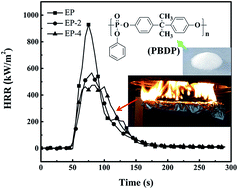
To evaluate the fire behavior of the prepared epoxy resins on a large scale, cone calorimeter tests were employed. The cone calorimeter test is a useful tool for better understanding the flammability, time to ignition (TTI), peak heat release rate (PHRR), and total heat release (THR) of many materials in order to maintain a safe environment.25,26 The fire behavior of the prepared epoxy resins is illustrated in Fig. 4, and the detailed data are summarized in Table 2.


image file: c5ra06762f-f4.tif
Fig. 4 HRR (a) and THR (b) curves of the prepared epoxy resins.
Table 2 The characteristic data of cone calorimeter tests of the prepared epoxy resins
Sample TTI (s) PHRR (kW m−2) THR (MJ m−2) TML (%) TSP (m2) THR/TML (MJ m−2 g−1)
EP 50 928 39.0 91 18.6 2.0
EP-2 37 567 32.3 86 19.3 1.8
EP-4 36 474 30.6 85 20.3 1.7


In the cone calorimeter tests, the flame retardant samples showed obvious intumescence, whereas the pure EP exhibited only limited charring (Fig. 5). With increasing loadings of PBDP, the samples expanded faster and more strongly. Moreover, TTI decreased only slightly from 50 s for EP to about 37 s for the mixtures, which may associate with ignition of the volatiles catalytically released from PBDP.


image file: c5ra06762f-f5.tif
Fig. 5 Digital photos and SEM images of residual chars for the prepared epoxy resins after cone calorimeter tests.

The addition of PBDP significantly reduced the PHRR of the EP/PBDP composites; EP-2 and EP-4 exhibited 38.9% and 48.9% reductions of PHRR compared to that of pure EP. Meanwhile, the THR decreased from 39.0 MJ m−2 for EP to 32.3 and 30.6 MJ m−2 for EP-2 and EP-4, respectively. The residue at flame out increased slightly when PBDP was added (9 wt% for EP; 14 wt% for EP-2, and 15 wt% for EP-4). Meanwhile, the total smoke production (TSP) of the prepared epoxy resins increased with increasing loading of PBDP. Based on the above analysis, it can be concluded that some gas activity of PBDP may arise in the flame retardant epoxy resins. Schartel et al. reported that the THR divided by the total mass loss (THR/TML) equals the product of effective heat of combustion of pyrolysis gases and the combustion efficiency.12,27 The THR/TML was reduced by 10% and 15% for EP-2 and EP-4, respectively. Thus, PBDP in epoxy resins performed in the condensed phase as well as in the gas phase. This is also in accordance with the LOI values.

Fig. 5 displays digital photographs and SEM images of the residual chars after cone calorimeter tests. As can be observed, EP burned very efficiently and almost left no char after the tests. For the EP-PDBP composites, the addition of PBDP enhanced the char yield, but many holes and cracks were found on the surface of the residual char. To further study the morphology of the residual chars, SEM was employed to get more information. For the residue from EP, its image showed that EP only form a loose and weak char layer, with many cracks and holes. In the case of EP-2, the char exhibited a smooth and porous surface with many micro-sized pores. For EP-4, the char showed a similar porous structure to that from EP-2. Both EP-2 and EP-4 generated many gaseous volatiles during combustion, and the swelling due to these gases led to the formation of multi-porous chars. However, with increasing PBDP content, the surface of the residual char from EP-4 showed some closed-pore structure, indicating the formation of a cohesive char layer and reduced release of volatiles during combustion.28

3.3 Thermal properties

The influence of the PBDP additive on the glass transition temperature (Tg) of the prepared epoxy resins was investigated by DSC. Fig. 6 shows the DSC curves of the prepared epoxy resins and the results are summarized in Table 3. It is evident that PBDP had only a slight influence on the Tg in the epoxy system. In the case of EP-4 with 20 wt% PBDP, the Tg was found to be 147 °C, as compared to 152 °C for EP. In comparison with low molecular weight phosphates (TPP, BDP and RDP), PBDP with high molecular weight hardly show the plasticizer effect.12 The decrease in Tg can be attributed to two possible factors: firstly, the incorporation of PBDP containing phenol units could catalyze the curing reaction of the epoxy resin and decrease the cross-linking density and secondly there may be some cohesive forces between the EP molecules and PBDP, such as hydrogen bonds (Fig. 7).29 The net result is that EP-4 has a higher glass transition temperature. This is rarely seen in the literature following the addition of a phosphorus-based non-reactive flame retardant.
image file: c5ra06762f-f6.tif
Fig. 6 DSC curves of the prepared epoxy resins.
Table 3 Thermal properties of PBDP and the prepared epoxy resins
Samples Tg (°C) Nitrogen Air
T1% (°C) Tmax (°C) Chara exp./calcd T1% (°C) Tmax (°C) Chara exp./calcd
a Char yield at 700 °C.
EP 152 357 380 16.5/— 312 381 3.7/—
PBDP 54 357 507 21.3/— 294 490 17.8/—
EP-2 149 331 379 23.4/17.0 283 375 13.4/5.1
EP-4 147 316 370 24.2/17.5 283 370 19.8/6.5


image file: c5ra06762f-f7.tif
Fig. 7 The possible hydrogen bonds between epoxy resins and PBDP.

In order to study the effect of PBDP on the thermal properties of EP, the thermal stabilities of EP and EP/PBDP under air and nitrogen were evaluated by TGA. The TGA and DTG curves of the prepared epoxy resins are displayed in Fig. 8, and the data are collected in Table 3. As can be seen in Fig. 8b, PBDP begins to decompose at 294 °C and shows only one thermal degradation step with a maximum mass loss rate at 490 °C, which is much higher than that of BDP.30 Therefore, the thermal stability of EP/PBDP composites tends to increase with the incorporation of PBDP, more so than with BDP. TGA of the EP and EP/PBDP composites showed that the thermal oxidative processes of all samples had similar one stage. In comparison with EP, the T1% and Tmax shifted to lower values, indicating that the incorporation of PBDP could promote the pyrolysis of EP at a lower temperature. The residual char from EP-4 formed at 700 °C is much higher than the calculated value. This implies that there was a strong interaction between EP and PBDP during the thermal-oxidative degradation process, and EP/PBDP composites showed good stability at high temperatures. These results could be rationalized in terms of the catalytic effect of PBDP promoting the pyrolysis and char-forming process of EP.31


image file: c5ra06762f-f8.tif
Fig. 8 TGA and DTG curves of the prepared epoxy resins under nitrogen (a) and air atmosphere (b).

From inspection of the TG and DTG curves in nitrogen (Fig. 8a), the degradation processes of all samples were seen to be similar to those in air. It is noteworthy that the residual chars from the EP/PBDP composites were much higher than those from EP under both air and nitrogen. Meanwhile, the maximum weight loss rates of the EP/PBDP composites were lower than those for EP. This demonstrates that the addition of PBDP could catalyze EP to form char layer, enhance its thermal stability and improve its flame retardancy.32

3.4 Flame retardant mechanism

In order to investigate the flame retardant mechanism in the condensed phase, the solid pyrolysis products of EP and EP-4 at different temperatures were studied by FTIR. The FTIR spectra of EP and EP-4 after heat treatment are shown in Fig. 9. As can be seen from Fig. 9a, the main characteristic peak of EP can be discerned at room temperature. The absorption peaks at around ν = 3383 cm−1 had almost disappeared at 250 °C, which can be attributed to the release of water and non-flammable gases.33 On heating the sample to 380 °C, the absorption peaks at ν = 2966, 2864, and 1177 cm−1 (aliphatic units), 1605, 1504, and 1181 cm−1 (aromatic rings), and 1233, and 1026 cm−1 (alkyl–aryl ether bonds) decreased sharply, suggesting that the main decomposition occurred at this stage.17,34 This is consistent with the TGA results (Tmax = 380 °C). Meanwhile, it is noteworthy that the aromatic ring C[double bond, length as m-dash]C stretching vibrations at ν = 1600 and 1503 cm−1 disappeared, and two new broader peaks at ν = 1609 and 1500 cm−1 developed, indicating the formation of cross-linked aromatic compounds.35
image file: c5ra06762f-f9.tif
Fig. 9 The FTIR spectra of EP (a) and EP-4 (b) at different pyrolysis temperatures.

The spectrum of EP-4 at room temperature (Fig. 9b), featured an additional sharp peak at ν = 964 cm−1, which could be assigned to the P–O–C structure of PBDP. In comparison with EP, the intensity of the band at ν = 2960–2869 cm−1 gradually decreased from 250 to 300 °C and completely disappear at 350 °C, indicating the decomposition of EP at a lower temperature in the presence of PBDP. Moreover, it was found that new broad peaks at ν = 1593, 1495, 1169, and 960 cm−1 appeared at higher temperature, implying the formation of polyaromatic compounds bridged by P–O–P structures.33 This also demonstrated that PBDP catalyzed the pyrolysis of EP at a lower temperature.

To further understand the flame retardant mechanism in the condensed phase, the residual chars from EP and EP-4 at different temperatures were studied by XPS analysis, and the results are summarized in Table 4. As regards the residual chars from EP, it can be clearly seen that the atom percent of oxygen gradually decreased with increasing temperature from 250 to 380 °C, corresponding to the release of water. In addition, up to 380 °C, an evident decrease in the atom percent of nitrogen could be discerned, indicating decomposition of the main chain of EP. In the case of EP-4, on heating from room temperature to 250 °C, the atom percent of nitrogen in the residual chars decreased remarkably, suggesting that the presence of PBDP could catalyze decomposition of the main chain of EP and release nonflammable gases. In addition, the N content in the char from EP-4 at high temperature (420 °C) was much higher than that from pure EP. This may be attributed to the incorporation of PBDP promoting the char forming process, so that more nitrogen remained in the condensed phase.36 Moreover, the atom percent of phosphorus gradually decreased with increasing temperature, which indicated that PBDP also played a flame retardant role in the gas phase.31 This is consistent with the Cone results.

Table 4 XPS results of the residual char of EP and EP-4 at different temperatures
Samples Ca (%) N (%) O (%) P (%)
a Atomic concentration.
EP RT 81.91 2.32 15.76  
250 82.37 2.32 15.31  
300 82.89 2.30 14.81  
350 84.52 2.30 13.18  
380 84.90 2.13 12.96  
400 84.89 2.05 13.07  
420 83.69 1.20 15.11  
EP-4 RT 80.69 1.01 16.88 1.42
250 80.23 0.51 16.93 2.33
300 80.10 0.83 17.23 1.84
350 82.67 1.19 14.64 1.50
380 81.42 1.93 15.21 1.44
400 82.65 1.92 14.44 1.00
420 83.50 2.33 13.05 1.11


In order to investigate the flame retardant mechanism in the gas phase, TG-IR was employed to analyze the pyrolysis products from EP and EP-4 during thermal degradation and the absorbance of the pyrolysis products vs. time is plotted in Fig. 10. For EP, the main pyrolysis products were water or phenol (3652 cm−1), hydrocarbons (2969 cm−1), acetone (1750 cm−1), aromatic compounds (1609, 1509 cm−1) and ethers (1259, 1176 cm−1).37–39 The characteristic bands of EP-4 were similar to those of EP. However, in the TG-IR results for EP-4, the peaks at ν = 2969 cm−1 and 1763 cm−1 are less intense than those for EP. Based on the peak intensity for EP-4 at ν = 1763 cm−1, it can be concluded that the presence of PBDP catalyzes the thermal degradation of EP and reduce the release of flammable gases.29 This conclusion is also consistent with the TGA, TGA-FTIR and XPS results.


image file: c5ra06762f-f10.tif
Fig. 10 Absorbance of gas products for EP and EP-4 vs. time: (a) H2O; (b) hydrocarbons; (c) acetone; (d) aromatic compounds.

Due to the catalysis effect, char-forming effect, gas activity, and improved thermal stability of the char layer, PBDP exhibits great flame retardant efficiency. The deployment of PBDP combined condensed phase and gas phase flame retardant mechanisms, resulting in significant improvements in the properties of EP.

3.5 Fracture toughness

The quasi-static fracture toughness values, KIC, of the prepared epoxy resins are present in Table 5. For EP-2 and EP-4, the incorporation of PBDP into epoxy resins resulted in a moderate increase in KIC, which is highly desirable, but rare for additive-type phosphorus-containing flame retardant. This result may be ascribed to the particular microstructure of the prepared epoxy resins following the addition of PBDP.27 Thus, the incorporation of PBDP into epoxy resin showed some promising improvements in flame retardancy as well as slightly increased fracture toughness.
Table 5 Fracture toughness data of the prepared epoxy resins
Samples KIC (MPa m1/2)
EP 0.92 ± 0.05
EP-2 0.98 ± 0.04
EP-4 1.05 ± 0.07


4 Conclusions

Solid polymeric bisphenol A bis(diphenyl phosphate) (PBDP), has been successfully synthesized by melt polycondensation of phenylphosphonic dichloride and bisphenol A and applied to prepare flame retardant epoxy resins. The EP/PBDP composites exhibited enhanced flame retardancy compared to pure EP. With the incorporation of PBDP into EP, significant reductions in PHRR and THR were observed, indicating that PBDP was effective in reducing the flammability of EP. The thermal properties of the EP/PBDP composites showed that PBDP could catalyze the pyrolysis of EP at a lower temperature, promote char formation, and reduce the production of flammable gases. The residual chars of the composites in both air and nitrogen increased with increasing content of PBDP. Analysis of the flammability data suggested that the flame retardant mechanism of PBDP combined condensed phase and gas phase mechanism related to the catalyzed effect, char-forming effect and improved thermal stability of the char layer. Most importantly, the performance of PBDP in improving the flame retardancy of EP was achieved without compromising the glass transition temperature or the fracture toughness of the resulting material. This work demonstrates a new class of polymeric flame retardants based on an aromatic polyphosphate structure, which are expected to be applicable in enhancing the flame retardancy of EP for durable goods.

References

  1. Z. K. Chen, G. Yang, J. P. Yang, S. Y. Fu, L. Ye and Y. G. Huang, Polymer, 2009, 50, 1316–1323 CrossRef CAS PubMed.
  2. X. Wang, W. Y. Xing, X. M. Feng, B. Yu, L. Song and Y. Hu, Polym. Chem., 2014, 5, 1145–1154 RSC.
  3. J. Baller, N. Becker, M. Ziehmer, M. Thomassey, B. Zielinski, U. Muller and R. Sanctuary, Polymer, 2009, 50, 3211–3219 CrossRef CAS PubMed.
  4. E. D. Weil and S. V. Levchik, J. Fire Sci., 2004, 22, 25–40 CrossRef CAS PubMed.
  5. M. Rakotomalala, S. Wagner and M. Döring, Materials, 2010, 3, 4300–4327 CrossRef CAS PubMed.
  6. T. Zhang, H. Q. Yan, L. Shen, Z. P. Fang, X. M. Zhang, J. J. Wang and B. Y. Zhang, RSC Adv., 2014, 4, 48285–49292 RSC.
  7. M. Yin, L. Yang, X. Y. Li and H. B. Ma, J. Appl. Polym. Sci., 2013, 130, 2801–2808 CrossRef CAS PubMed.
  8. C. A. de Wit, D. Herzke and K. Vorkamp, Sci. Total Environ., 2010, 15, 2885–2918 CrossRef PubMed.
  9. P. Müllera, Y. Bykovb and M. Döring, Polym. Adv. Technol., 2013, 24, 834–840 CrossRef PubMed.
  10. X. Wang, Y. Hu, L. Song, W. Y. Xing, H. D. Lu, P. Lv and G. X. Jie, Polymer, 2010, 51, 2435–2445 CrossRef CAS PubMed.
  11. B. Schartel, Materials, 2010, 3, 4710–4745 CrossRef CAS PubMed.
  12. K. Täuber, F. Marsico, F. R. Wurm and B. Schartel, Polym. Chem., 2014, 5, 7042–7053 RSC.
  13. M. Ciesielski, A. Schäfer and M. Döring, Polym. Adv. Technol., 2008, 19, 507–515 CrossRef CAS PubMed.
  14. K. H. Pawlowski and B. Schartel, Polym. Int., 2007, 56, 1401–1414 CrossRef PubMed.
  15. Q. L. Tai, Y. Hu, R. K. K. Yuen, L. Song and H. D. Lu, J. Mater. Chem., 2011, 21, 6621–6627 RSC.
  16. N. N. Tian, J. Gong, X. Wen, K. Yao and T. Tang, RSC Adv., 2014, 4, 17607–17614 RSC.
  17. T. C. Mauldin, M. Zammarano, J. W. Gilman, J. R. Shields and D. J. Boday, Polym. Chem., 2014, 5, 5139–5146 RSC.
  18. L. Chen, C. Ruan, R. Yang and Y. Z. Wang, Polym. Chem., 2014, 5, 3737–3749 RSC.
  19. F. X. Markley and C. J. Worrel, US Pat., 3153081, 1964, pp. 10–19.
  20. K. S. Annakutty and K. Kishore, Polymer, 1988, 29, 756–761 CrossRef CAS.
  21. S. Iliescu, G. Ilia, A. Pascariu, A. Popa and N. Plesu, Pure Appl. Chem., 2007, 79, 1879–1884 CrossRef CAS.
  22. R. D. Myrex, B. Farmer, G. M. Gray, Y. Wright, J. Dees, P. C. Bharara, H. Byrd and K. E. Branham, Eur. Polym. J., 2003, 39, 1105–1115 CrossRef.
  23. L. Chen and Y. Z. Wang, Materials, 2010, 3, 4746–4760 CrossRef CAS PubMed.
  24. S. Brehme, T. Koppl, B. Schartel, O. Fischer, V. Altstädt, D. Pospiech and M. Döring, Macromol. Chem. Phys., 2012, 213, 2386–2397 CrossRef CAS PubMed.
  25. F. Carosio, A. Di Blasio, J. Alongi and G. Malucelli, Polymer, 2013, 54, 5148–5153 CrossRef CAS PubMed.
  26. G. Malucelli, F. Bosco, J. Alongi, F. Carosio, A. D. Blasio, C. Mollea, F. Cutticaa and A. Casaleab, RSC Adv., 2014, 4, 46024–46039 RSC.
  27. R. M. Perez, J. K. W. Sandler, V. Altstädt, T. Hoffmann, D. Pospiech, M. Ciesielski, M. Döring, U. Braun, A. I. Balabanovich and B. Schartel, Polymer, 2007, 48, 778–790 CrossRef CAS PubMed.
  28. W. C. Zhang, X. M. Li and R. J. Yang, Polym. Degrad. Stab., 2014, 99, 118–126 CrossRef CAS PubMed.
  29. Y. Zhou, J. Feng, H. Peng, H. Q. Qu and J. W. Hao, Polym. Degrad. Stab., 2014, 110, 395–404 CrossRef CAS PubMed.
  30. K. H. Pawlowski and B. Schartel, Polym. Int., 2007, 56, 1404–1414 CrossRef CAS PubMed.
  31. X. D. Qian, L. Song, B. Yu, B. B. Wang, B. H. Yuan, Y. Q. Shi, Y. Hu and R. K. K. Yuen, J. Mater. Chem. A, 2013, 1, 6822–6830 CAS.
  32. X. Wang, Y. Hu, L. Song and W. Y. Xing, Polym. Bull., 2011, 67, 859–873 CrossRef CAS.
  33. X. Wang, Y. Hu, L. Song, H. Y. Yang, W. Y. Xing and H. D. Lu, Prog. Org. Coat., 2011, 71, 72–82 CrossRef CAS PubMed.
  34. T. Mariappan, Y. Zhou, J. W. Hao and C. A. Wilkie, Eur. Polym. J., 2013, 49, 3171–3180 CrossRef CAS PubMed.
  35. W. C. Zhang, X. M. Li, L. M. Li and R. J. Yang, Polym. Degrad. Stab., 2012, 97, 1041–1048 CrossRef CAS PubMed.
  36. S. J. Chen, J. Li, Y. K. Zhu and S. P. Su, RSC Adv., 2014, 4, 32902–32913 RSC.
  37. T. Mariappan, J. W. Hao and C. A. Wilkie, Polymer, 2013, 49, 3171–3180 CAS.
  38. X. Wang, Y. Hu, L. Song, W. Y. Xing and H. D. Lu, J. Anal. Appl. Pyrolysis, 2011, 92, 164–170 CrossRef CAS PubMed.
  39. W. C. Zhang, X. M. Li and R. J. Yang, Polym. Degrad. Stab., 2011, 96, 1821–1832 CrossRef CAS PubMed.

Footnote

Electronic supplementary information (ESI) available. See DOI: 10.1039/c5ra06762f

This journal is © The Royal Society of Chemistry 2015
Click here to see how this site uses Cookies. View our privacy policy here.