
DOI:
10.1039/C5RA06588G
(Paper)
RSC Adv., 2015,
5, 76949-76956
The isotopic effects of 13C-labeled large carbon cage (C70) fullerenes and their formation process
Received
13th April 2015
, Accepted 24th August 2015
First published on 24th August 2015
Abstract
Fullerene, C60, and its derivatives, have been fully investigated and commercialized. The importance of large carbon cage-based fullerenes for biomedical applications was gradually recognized due to their fantastic biological effects. In nanotoxicology, the key detection techniques are able to retain the intrinsic structure and properties of nanomaterials in a biological background. However, there were puzzling questions regarding how to facilely obtain detectable fullerene nanomaterials and their formation process. In this study, 13C-enriched fullerenes of a large carbon cage, C70, were synthesized on a large scale from a 13C-enriched raw carbon material by an arc-discharge method. The stable isotope 13C was directly incorporated into the skeleton of the fullerene cages without destroying their intrinsic structures. The isotopic effects of 13C-labeled C70 were investigated in detail. The amount of 13C labelling of C70 was about 7% higher than that of the natural abundance, which greatly improved the 13C detection signal in isotope ratio mass spectrometry and gave an apparent 8-fold carbon nuclear magnetic resonance signal enhancement for the fullerenes. The 13C-enriched fullerenes showed significant isotopic effects, such as the strongest peak position shifting up (m/z > 840) and the Poisson distribution of the isotopic peaks in the mass spectra, and the migration or splitting of infrared and Raman characteristic peaks. When comparing the 13C labelling amounts and the isotopic effects of 13C-enriched C70 and those of 13C-enriched C60, the formation dynamics of the fullerenes were different with different carbon cages; lower carbon cage fullerenes were easily generated in the arc-discharge process, and the 13C stable isotopic effects in high carbon fullerenes were also slightly weak. Moreover, these important isotopic effects of the 13C-enriched fullerenes will facilitate the development of new analytical methods for carbon nanomaterials in vivo.
Introduction
Fullerenes, one category of the most popular carbon nanomaterials, have been widely used in solar energy, cosmetics, personal care, electronics and biomedicine due to their unique chemical and physical properties.1–7 Their biological efficiency depends on both the modification of the cage and the cage size (C60, C70, C82, etc.). To date, pristine C60 and its functionalized derivatives have been fully investigated and commercialized. The large carbon cage-based fullerenes possess much greater biological significance. For instance, C70 and its derivatives exhibited higher photodynamic therapy and antioxidation efficiencies due to the much more extended conjugated π-system of the cage, which can efficiently absorb electrons.8–12 Metallofullerenes of larger carbon cages (e.g. Gd@C82 and Gd@C82(OH)x) also showed promise as radiotracers, magnetic resonance imaging (MRI) contrast reagents and anticancer drugs with high efficacy and low toxicity.13–18 Obviously, these biomedical investigations of fullerene nanomaterials, especially for the large carbon cage-based fullerenes, are very significant.19 Inevitably, the related health and safety issues of fullerene nanomaterials have become urgent.20–23 Nevertheless, the principal issue is how to quantitatively trace or detect intrinsic carbon nanomaterials in vivo.
Compared with C60, the synthesis and chemical structure of the large carbon cage-based fullerenes have been less investigated, especially for the detectable labeled fullerene nanomaterials, including the large-scale synthesis of the labeled fullerenes and the influences of labeled groups, etc. Actually, it is very difficult to directly and quantitatively detect fullerene nanomaterials in vivo, because of the high carbon background in environmental and biological systems, the lack of specific detection signals of carbon nanomaterials and the complexity of biological matrixes.24 Currently, radioactive labeling and fluorescent modification have been adopted to quantify fullerene nanomaterials in vivo.25–32 Although these labeling methods have high sensitivity and specificity, radioactive labeling suffers from some inescapable drawbacks, such as the strict conditions of radioactivity operation and the generation of radioactive waste. Separately, fluorescent groups easily detach away from the modified nanomaterials or are quenched during exposure to environmental and biological systems. In addition, metallofullerenes, as higher temperature superconductors, redox active systems, and contrast agents etc., have been investigated.14,15,33–40 However, the properties and structures of fullerenes can be significantly altered by the metal inside the carbon cage.33–40 The synthetic yield of metallofullerenes is also far less than fullerenes. Therefore, stable isotopic labeling is a good choice, which overcomes many of the drawbacks aforementioned.41–50
Stable isotopic labeling combined with the high sensitivity and accuracy of isotope ratio mass spectrometry (IRMS) can provide information about the geographic, chemical and biological origins of substances, and has been widely used in diverse disciplines such as archaeology, medicine, geology, biology, food authenticity and forensic science for several decades.43–47,51–53 The 13C stable isotope can be incorporated into the skeletons of these carbon nanomaterials. 13C stable isotopes are used to investigate the structural properties and the formation mechanism of fullerene nanomaterials.54–65 We have demonstrated previously the 13C stable isotopic labeling of carbon nanotubes (CNTs), carbon quantum dots and C60 for in vivo quantitative biodistribution studies.48–50 The 13C stable isotopes labeled directly on the skeleton of these carbon nanomaterials do not damage their stability and intrinsic structures. Therefore, the invaluable 13C stable isotopic tracers can reflect the real properties of carbon nanomaterials in biological systems and can also be potentially used as internal standard substances. Feasible 13C stable isotopic labeled technology will promote the development of carbon nanomaterials in nanotoxicology.
In the present work, taking C70 as an example of a large carbon cage-based fullerene, 13C-labeled C70 was synthesized on a large scale from a 13C-enriched raw carbon material by an arc-discharge method. The stable isotope 13C was directly substituted for the carbon atoms of the fullerene cages. The 13C-labeled C70 samples were separated and purified through preparative high performance liquid chromatography (HPLC). The number of 13C atoms per C70 cage was determined by IRMS. The isotopic effects of 13C-labeled fullerenes were studied in detail by mass spectrometry (MS), carbon nuclear magnetic resonance (CNMR), Fourier transform infrared (IR) and Raman spectroscopies, and an electrochemical system. The obtained 13C-enriched fullerenes, as tracers or potential internal standard substances, will be very important for the biosafety and biomedical development of fullerene nanomaterials in the future.
Experimental
Preparation of 13C-enriched fullerenes
13C-enriched fullerenes were prepared by an arc-discharge method.54,59,66–69 Briefly, the anode electrodes were fabricated by coring out natural-abundance carbon rods and packing them with isotope-enriched amorphous carbon powder (Cambridge Isotopes, 99% 13C). The cathode was a pure graphite rod. The arc discharge was performed under a He atmosphere (200 Torr) with the following parameters: interelectrode distance: 5 mm; current: 110 A; voltage: 27 V. Fullerene without labeling was prepared following the same protocol using normal carbon (98.5% 12C) as the starting material.
Separation and purification of 13C-enriched fullerenes
The carbon soot-containing fullerenes were collected and refluxed in CS2 for 10 h to extract the 13C-enriched fullerenes. The 13C-enriched fullerenes were further separated and purified by high performance liquid chromatography (HPLC, LC908-C60, Japan Analytical Industry Co.) with toluene as the mobile phase at a flow-rate of 15.0 mL min−1 and employing a Buckyprep column (20 mm × 250 mm, Nacalai Co., Japan), equipped with a UV detector (wavelength, 335 nm).
Determination of 13C amounts in 13C-enriched fullerenes
IRMS can precisely measure the relative abundance of stable isotopes. Samples are converted into gas and then ionized. Subsequently, the ionized gases with different m/z values are separated under a magnetic field and quantified by the detectors. By comparing the detected isotopic ratios to an isotopic standard, an accurate determination of the isotope composition of the sample is obtained. Therefore, it can eliminate any bias or systematic error in the measurements. For example, carbon isotope ratios are measured relative to the internationally recognized C standard Vienna Pee Dee Belemnite (VPDB) and are reported in the delta notation, δ,
where the 13C/12Cstandard ratio of the VPDB standard sample was 0.0112372. Aliquots of 0.2000 ± 0.0100 mg fullerene samples were weighed into Φ 3.2 × 4 mm tin cups for stable isotope analysis. Urea was the working standard, and the analyses of the carbon isotopes were carried out using a Finnigan MAT-253 (Thermo Electron-Finnigan, USA) continuous-flow isotope ratio mass spectrometer (ConFlo III, Finnigan MAT) coupled with a Flash Elemental Analyzer 1112 (Finnigan, Flash EA 1112 series).
Investigation of isotopic effects in 13C-enriched fullerenes
The detection of 13C incorporation is achieved by measuring the isotopic distribution and shift caused by the slightly heavier 13C atoms. To investigate the isotopic effects, the obtained fullerene samples were dissolved in toluene and characterized by matrix-assisted laser desorption ionization time-of-flight mass spectrometry (MALDI-TOF-MS, Autoflex, Bruker Co., Germany) under negative ion mode, and microprobe Raman spectroscopy (Renishaw inVia plus, Renishaw, UK) under the conditions of 514 nm excitation wavelength, 0.5% laser power, 4 cycles and exposure for 50 seconds. The powdered fullerene samples were ground into KBr pellets under an appropriate pressure for Fourier transform infrared spectroscopy (IR, Tensor 27, Bruker, Germany). The fullerene samples for CNMR were dissolved in an excess of toluene-d8 and evaporated at 25 °C until saturation was achieved. Using a 30 deg pulse and a 20 s pulse delay, a total of 30
720 accumulations obtained over 48 h using a Bruker AV 400 instrument (400 MHz, Switzerland) gave a spectrum with an acceptable signal/noise ratio, showing clearly the presence of fullerene. The analysis and comparison of all the data were normalized by a mathematical method using Origin software (OriginPro 8.0). For electrochemical measurements, 4.5 mg of C70 was dissolved in 10 mL acetonitrile/toluene (volume ratio: 1
:
4) containing 0.1 M tetrabutylammonium perchlorate (TBAClO4) electrolyte under 30 minutes of ultrasound. A CHI604E electrochemical workstation (Shanghai, China) was used for cyclic voltammetry (CV). A three-electrode cell was used with Ag/AgCl as the reference electrode, Pt wire as the counter electrode, and a glassy carbon electrode as the working electrode. The cyclic voltammetry measurements were recorded by a linear potential scan at a sweep rate of 50 mV s−1. The samples were purged with high-purity nitrogen for 10 min before the test was performed; the potential range was from −2.0 to 0 V. All the electrochemical experiments were performed at 25 ± 1 °C.
Results and discussion
Separation and purification of 13C-enriched fullerenes
A Buckyprep preparative column can be used for the separation and enrichment of fullerene nanomaterials. CS2 solvent extracts containing fullerenes were separated into C60, C70, C76, C82 and C96 on the column in 100 minutes. There was a clear resolution of the C60 and C70 (Rs > 2) without interference from endogenous sources (Fig. 1). The retention times of C60 and C70 were 11.707 and 18.355 min, respectively. Herein, we did not observe the effect of stable isotope 13C labeling of the skeleton of the carbon cages on the chromatographic retention times of the fullerenes. 13C-enriched fullerenes and normal fullerenes have the same chromatographic behaviour. The yield of pure 13C-enriched C70 was about 2–3% relative to the discharged soot.
 |
| | Fig. 1 Separation and purification of 13C-enriched fullerenes. | |
MS analysis
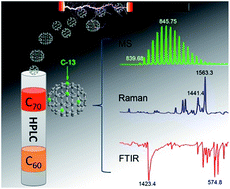
The HPLC-isolated fullerenes were identified by MALDI-TOF-MS. The mass spectra for the purified fullerenes and 13C-enriched fullerenes are shown in Fig. 2. Normal C70, due to the high abundance of 12C in nature, had a dominant peak at 840 (m/z), and was consistent with the theoretical calculation. C70 with a high purity of greater than 99.5% was achieved. The 13C isotopes were labeled on the skeleton of the fullerenes. The MS spectrum of the 13C-enriched C70 indicated clearly a statistical distribution of isotopic abundance. As shown in Fig. 2, compared to the C70, the highest peak of 13C-enriched C70 shifted due to 13C from 840.18 (m/z) to 845.75 (m/z). The isotopic distributions in the MS spectra were widened from 840 to 855 (m/z) and displayed the Poisson distribution extremely well. This experimental evidence was similar to that reported in the literature.55,58,59 The MS of 13C-enriched C60 was compliant with our previous reports.69 In addition, we also found that other high carbon fullerenes (such as 13C-enriched C76, C82 and C96) displayed similar results. The stable 13C isotope enriched the isotopic distribution in the mass spectra and the composition of the carbon elements of the fullerenes. The isotopic effect of 13C-enriched fullerenes clearly changed the isotopic distribution in the MS.
 |
| | Fig. 2 MS spectra of 13C-C70 (left) and C70 (right). | |
IRMS analysis
Generally, stable isotope labeling is combined with IRMS, which is a specialization of mass spectrometry and can precisely measure the relative abundance of stable isotopes, then quantify 13C in fullerenes. 13C is an environmental and non-radioactive isotope of carbon in nature. It makes up about 1.1% of all the natural carbon on earth. IRMS can detect the ratio of 13C to 12C of the test samples, which is very sensitive for the addition of the 13C isotope into fullerene. Using IRMS we measured the δ of 13C-enriched C70 from the different carbon isotope proportion of the synthetic materials (the mass ratio of 13C-powder/12C-rod was 15
:
85). The δ signal showed an increment of about 7000 with 13C/12C increasing by only 5 percent in abundance ratio (Table 1).
Table 1 13C/12C isotope ratios of 13C-enriched C70
| Addition of 13C in raw carbon powder (%) |
δ 13C/12C |
13C/12C (%) |
13C-enriched C70 |
| 0 |
−17.436 |
1.087 |
C70 |
| 15 |
7211.047 |
8.408 |
13C5C65 |
The number of 13C labels on the skeleton of fullerene was calculated and estimated by the following equation:
The value ncarbon is the total carbon number of the fullerene cage. 13C-enriched C70 is expressed as 13CnC(70−n). The number of 13C atoms in a 13C-enriched C70 molecule was 5, meaning 13C5C65. Compared to normal C70, the abundance of 13C in 13C-labeled fullerenes was ∼7% higher than that of the natural abundance. The stable isotope 13C may be randomly distributed in the carbon cage.56 The 13C labelling amount of 13C-enriched C70 was ∼2% less than that of the 13C-enriched C60 in our previous report.69 The mixed carbon powders needed to be packed closely and uniformly. Generally, the extractions from the discharged carbon soot include many high carbon fullerenes (such as C76, C82 and C96 etc.) except C60. During the discharge process, the packed 13C powder was utilized dispersedly by the variety of fullerene carbon cages and other carbon substances (e.g. graphite, graphene, carbon nanoparticles). 13C was also labeled in other higher carbon fullerenes of the discharged carbon soot. So, the numbers of 13C atoms in C60 or C70 were less than the proportion of the starting materials. By comparison of the 13C labelling amounts in 13C-enriched C70 and C60, we found obviously that 13C was easily utilized by low carbon fullerene. We sought to understand the formation process of fullerenes by reasoning that low carbon fullerene was more easily generated, and the construction of the fullerenes probably originated from small carbon cages formed in the arc-discharge process. The speculations were consistent with the previous reports.55,56,59,61,64 The skeleton 13C-labeling technique has been facilitated to explore the formation mechanism of fullerenes and other carbon materials.54–65 However, the skeleton 13C-labeled fullerenes were obtained largely from direct addition of the stable isotope in the origin by an arc-discharge method. The 13C labeling was stable without introducing other outside atoms onto the carbon networks. In the future, we believe that it is significant for exploring and optimizing the synthesis process to improve the 13C labelling amount in fullerenes.
NMR analysis
NMR spectroscopy is a powerful research technique for investigating the physical and chemical properties of chemical molecules (ranging from small compounds to large proteins or nucleic acids). The CNMR spectrum for 13C-enriched C70, shown in Fig. 3, consists of five lines with intensities in the ratio 10
:
20
:
10
:
20
:
10, with chemical shifts of 130.5, 145.0, 147.0, 147.7, and 150.3 ppm, as reported by Johnson et al.61,70 The spectrum strongly confirmed the D5h C70 structure with five chemically distinct kinds of carbon atoms, in good agreement with the spectrum of C70. In addition, all the carbon atoms in the C60 molecule were chemically equivalent; the CNMR spectrum for C60 was a single line at 143 ppm (in both liquids and solids).71–74 The single-resonance CNMR spectrum of C60 was also strong evidence for the icosahedral symmetry of this molecule. In a magnetic field, the addition of 13C resulted in the NMR active nuclei enhancing the absorption of electromagnetic radiation at a frequency characteristic of the isotope. The sensitivity and signal strength of the CNMR spectra were all increased in the skeleton 13C-enriched fullerenes, while their chemical shifts were not changed in 13C-enriched C60/C70 (Fig. 3). The peaks corresponding to 13C-enriched C70/C60 and C70/C60 are all at the same positions, which is in excellent agreement with the results reported by other groups.55,57,58
 |
| | Fig. 3 NMR spectra of 13C-enriched fullerenes and unlabeled fullerenes. | |
From the results of the CNMR spectra, we did not observe that the symmetry of the molecular structure was altered or destroyed due to ∼7% 13C incorporation into the skeleton carbon cage of the fullerenes; they only show signal enhancement of the spectra and reduction of the data acquisition time to a feasible 3 days despite low solubility.75,76 The signal strength of the CNMR of 13C-enriched C70/C60 indicated about an 8-fold increase with five 13C substitutions in the fullerene carbon cage. As expected, the proton NMR spectra of the samples dissolved in toluene-d8 were devoid of any absorption besides the C6D5CD3 peak at 137.11 ppm. In brief, these were the typical characteristics: that the introduction of 13C enlarged the CNMR signal of the fullerenes, and enhanced the detection sensitivity of the CNMR. The CNMR signal enhancement of the fullerene nanomaterials would provide the potential for the development of new analytical methods.
IR and Raman analysis
IR and Raman spectra are both molecular vibration spectra which reveal the characteristics of molecular structure. Compared to 12C, 13C has a relatively heavy atomic weight of 13, which is made up of 6 protons and 7 neutrons. The introduction of the heavy atom 13C would likely change the molecular vibrations of fullerene. The IR results revealed that the 13C-enriched C70 retained all the characteristic bands of 12C70 and showed a trend that with the increase of incorporated 13C atoms the absorption bands shifted slightly to lower wavenumbers (Table 2). Compared to C60, the molecular symmetry of C70 and 13C-enriched C70 was lower. Their IR spectra were relatively complicated. The introduced 13C atoms did not cause strong changes of the IR spectra and made the most characteristic peak shift from 1427 cm−1 to 1423 cm−1 (Fig. 4).
Table 2 Displacement of the IR characteristic peaks of C70 and 13C5C65
| |
C70 |
13C5C65 |
| νIR/cm−1 |
1427.3 |
1423.4 |
| 1132.2 |
1128.3 |
| 792.7 |
792.7 |
| 723.3 |
723.3 |
| 671.2 |
669.3 |
| 574.8 |
574.8 |
| 532.3 |
532.3 |
| 457.1 |
455.2 |
 |
| | Fig. 4 IR spectra of 13C5C65 and C70. | |
For 13C-enriched C60, the small addition of 13C atoms also did not change the four vibration modes, but made the characteristic bands shift down observably.69
The Raman spectrum of 13C-enriched C70 displayed the usual changes and is shown in Fig. 5. For C70, the Raman spectrum showed 12 obvious characteristic peaks at 258.6, 701.4, 737.7, 770.6, 1061.1, 1184.0, 1229.2, 1332.8, 1368.0, 1447.2, 1513.6 and 1566.1 cm−1.77 The strongest peak was at about 1566.1 cm−1. For 13C5C65, five incorporated 13C atoms did not alter the Raman vibrational modes of C70, with no new characteristic peaks, and only caused the characteristic peaks to shift down 3–4 wavenumbers (Table 3). In view of the lower molecular symmetry of C70, a few introduced 13C atoms may be not be enough to cause strong alterations in the molecular vibration spectra of high carbon cage-based fullerenes. More incorporated atoms exacerbated the change of symmetry, reducing the degeneracy and potentially triggering some new characteristic peaks. But for the lower molecular symmetry of high carbon cage-based fullerenes, the 13C stable isotope effects were possibly relatively weak and would not easily alter or damage the intrinsic structure of the fullerenes. The IR and Raman spectra showed that the incorporated 13C did not change the overall structure of the fullerenes. But in our previous investigations, with increased amounts of 13C, the Raman spectrum of 13C-enriched C60 shifted to lower wavenumbers, the Raman silent mode was activated and new vibrational peaks emerged.69 These changes were due to the mass addition caused by the incorporation of 13C atoms which easily broke the high symmetry structure of C60.
 |
| | Fig. 5 Raman spectra of 13C5C65 and C70. | |
Table 3 Displacement of the characteristic Raman peaks of C70 and 13C5C65
| |
νRaman/cm−1 |
| C70 |
258.6 |
|
|
|
|
| 701.4 |
737.7 |
770.6 |
|
|
| 1061.1 |
1184.0 |
1229.2 |
1332.8 |
1368.0 |
| 1447.2 |
1513.6 |
1566.1 |
|
|
| 13C5C65 |
255.4 |
|
|
|
|
| 698.3 |
733.0 |
765.9 |
|
|
| 1055.0 |
1180.0 |
1223.3 |
1328.4 |
1362.2 |
| 1441.4 |
1507.8 |
1563.3 |
|
|
Electrochemical analysis
Electrochemical measurements are the main methods used to characterize the electronic properties of fullerenes and their derivatives. Fig. 6 shows the electrochemical properties of the purified C70 and 13C-enriched C70 samples. Three reversible electron reduction waves were observed, which verified the good electron withdrawing ability of C70 molecules. These results were similar to previous reports.78–81 The cyclic voltammogram of 13C-enriched C70 showed clearly a positive shift relative to unlabelled C70. Incorporation of the stable isotope 13C into the fullerene molecular structure significantly influenced the half-wave potentials of C70. The electron affinity of 13C-enriched C70 should be weaker than that of unlabeled C70 in the redox process. These diversities may be due to the addition of 13C and caused the HOMO–LUMO energy difference between C70 and 13C-enriched C70, altered the C70 molecular strain and reduced the degree of conjugation of the molecules. This isotope effect on the electrochemical properties of fullerene C70 has not been reported yet. These data again demonstrated that the 13C atom labels break the mass distribution and change the electron configuration of the C70 molecule.
 |
| | Fig. 6 Cyclic voltammograms of 13C5C65 and C70. | |
Conclusions
In the present work, 13C-enriched large carbon cage-based fullerenes were synthesized on a large scale by an arc discharge method. The direct stable isotope 13C labeling on the skeleton of the fullerenes retained their intrinsic structures. The stable isotope atoms were randomly distributed in the carbon cage. The 13C labelling amounts of C70 were higher than that of natural abundance, which greatly improved the 13C detection signal strength in IRMS, and also enhanced the signal strength and sensitivity of the fullerenes for CNMR. MS spectra showed that the isotopic effects fitted with a Poisson distribution. In the arc-discharge experiment, the 13C stable isotopic effects seemed to be weaker with increasing size of the fullerene carbon cages, especially for their molecular vibration spectra. Simultaneously, some 13C-enriched high carbon fullerenes (such as 13C-C76, C82 and C96 etc.) also existed in the arc-discharge. The mechanism of fullerene formation in the arc-discharge process was speculated by contrasting 13C labelling amounts and isotopic effects between 13C-enriched C70 and those of 13C-enriched C60. The skeleton 13C-labeling technique would elucidate fully the formation mechanism of fullerenes and other carbon materials. Relying on the diversity of spectroscopic methods and IRMS, 13C stable isotope labeling methods provide a convenient and safer way to reflect the real properties of C70 in biological systems. However, due to the expensive pure 13C powder the manufacturing cost of 13C-enriched C70 is very high. It is also worth noting that the amount needed for a tracing experiment in vivo is small, usually less than 50 mg, and the detection sensitivity of IRMS for 13C is very high.48–50 Therefore, the introduction of a stable isotope labeling technique makes the biomedical effect research of fullerene nanomaterials safer and more effective compared with radioactive markers.82–86 We have confidence that the stable isotope labeling provides a new analytical method of in vivo quantitative and intrinsic detection for carbon nanomaterials and can be widely used in the nanomedical fields of fullerene-based nanomaterials and other carbon materials.
Acknowledgements
This work was supported by the National Natural Science Foundation of China (No. 11475194, 11005116 and 21307101), Beijing Natural Science Foundation (2152038) and the National Basic Research Program of China (973 program: 2012CB932601 and 2013CB932703). We thank Mrs Ping Liang at the Analytical and Testing Center, Huazhong University of Science & Technology, for the CNMR analyses.
Notes and references
- A. Kleiman-Shwarsctein, T. F. Jaramillo, S.-H. Baeck, M. Sushchikh and E. W. McFarland, J. Electrochem. Soc., 2006, 153, C483–C487 CrossRef PubMed
. - C. Lorenz, N. Von Goetz, M. Scheringer, M. Wormuth and K. Hungerbühler, Nanotoxicology, 2011, 5, 12–29 CrossRef PubMed
. - P. Avouris, Z. Chen and V. Perebeinos, Nat. Nanotechnol., 2007, 2, 605–615 CrossRef CAS
. - M. Ferrari, Nat. Rev. Cancer, 2005, 5, 161–171 CrossRef CAS PubMed
. - J. Lee, Y. Mackeyev, M. Cho, D. Li, J.-H. Kim, L. J. Wilson and P. J. Alvarez, Environ. Sci. Technol., 2009, 43, 6604–6610 CrossRef CAS
. - R. Partha and J. L. Conyers, Int. J. Nanomed., 2009, 4, 261–275 CrossRef CAS
. - P. Chaudhuri, A. Paraskar, S. Soni, R. A. Mashelkar and S. Sengupta, Acs Nano, 2009, 3, 2505–2514 CrossRef CAS PubMed
. - S. Osuna, M. Swart and M. Solà, Chem.–Eur. J., 2010, 16, 3207–3214 CrossRef CAS PubMed
. - Y. Doi, A. Ikeda, M. Akiyama, M. Nagano, T. Shigematsu, T. Ogawa, T. Takeya and T. Nagasaki, Chem.–Eur. J., 2008, 14, 8892–8897 CrossRef CAS PubMed
. - A. Ikeda, M. Matsumoto, M. Akiyama, J.-i. Kikuchi, T. Ogawa and T. Takeya, Chem. Commun., 2009, 1547–1549 RSC
. - Q. Liu, M. Guan, L. Xu, C. Shu, C. Jin, J. Zheng, X. Fang, Y. Yang and C. Wang, Small, 2012, 8, 2070–2077 CrossRef CAS PubMed
. - Q. Liu, X. Zhang, X. Zhang, G. Zhang, J. Zheng, M. Guan, X. Fang, C. Wang and C. Shu, ACS Appl. Mater. Interfaces, 2013, 5, 11101–11107 CAS
. - M. Mikawa, H. Kato, M. Okumura, M. Narazaki, Y. Kanazawa, N. Miwa and H. Shinohara, Bioconjugate Chem., 2001, 12, 510–514 CrossRef CAS PubMed
. - J. Zhang, K. M. Liu, G. M. Xing, T. X. Ren and S. K. Wang, J. Radioanal. Nucl. Chem., 2007, 272, 605–609 CrossRef CAS
. - G. M. Xing, H. Yuan, R. He, X. Y. Gao, L. Jing, F. Zhao, Z. F. Chai and Y. L. Zhao, J. Phys. Chem. B, 2008, 112, 6288–6291 CrossRef CAS PubMed
. - C. Y. Chen, G. M. Xing, J. X. Wang, Y. L. Zhao, B. Li, J. Tang, G. Jia, T. C. Wang, J. Sun, L. Xing, H. Yuan, Y. X. Gao, H. Meng, Z. Chen, F. Zhao, Z. F. Chai and X. H. Fang, Nano Lett., 2005, 5, 2050–2057 CrossRef CAS PubMed
. - X.-J. Liang, H. Meng, Y. Z. Wang, H. Y. He, J. Meng, J. Lu, P. C. Wang, Y. L. Zhao, X. Y. Gao, B. Y. Sun, C. Y. Chen, G. M. Xing, D. W. Shen, M. M. Gottesman, Y. Wu, J.-J. Yin and L. Jia, Proc. Natl. Acad. Sci. U. S. A., 2010, 107, 7449–7454 CrossRef CAS PubMed
. - H. Meng, G. M. Xing, B. Y. Sun, F. Zhao, H. Lei, W. Li, Y. Song, Z. Chen, H. Yuan, X. X. Wang, J. Long, C. Y. Chen, X. J. Liang, N. Zhang, Z. F. Chai and Y. L. Zhao, ACS Nano, 2010, 4, 2773–2783 CrossRef CAS PubMed
. - X.-L. Chang, S.-T. Yang and G. M. Xing, J. Biomed. Nanotechnol., 2014, 10, 2828–2851 CrossRef CAS PubMed
. - A. Nel, T. Xia, L. Mädler and N. Li, Science, 2006, 311, 622–627 CrossRef CAS PubMed
. - G. Oberdörster, E. Oberdörster and J. Oberdörster, Environ. Health Perspect., 2005, 113, 823–839 CrossRef
. - G. Oberdörster, J. Intern. Med., 2010, 267, 89–105 CrossRef PubMed
. - M. Uo, T. Akasaka, F. Watari, Y. Sato and K. Tohji, Dent. Mater. J., 2011, 30, 245–263 CrossRef CAS
. - H. Wang, S.-T. Yang, A. Cao and Y. Liu, Acc. Chem. Res., 2012, 46, 750–760 CrossRef PubMed
. - R. Bullard-Dillard, K. E. Creek, W. A. Scrivens and J. M. Tour, Bioorg. Chem., 1996, 24, 376–385 CrossRef CAS
. - J.-Y. Xu, Q.-N. Li, J.-G. Li, T.-C. Ran, S.-W. Wu, W.-M. Song, S.-L. Chen and W.-X. Li, Carbon, 2007, 45, 1865–1870 CrossRef CAS PubMed
. - S. Yamago, H. Tokuyama, E. Nakamura, K. Kikuchi, S. Kananishi, K. Sueki, H. Nakahara, S. Enomoto and F. Ambe, Chem. Biol., 1995, 2, 385–389 CrossRef CAS
. - S. C. J. Sumner, T. R. Fennell, R. W. Snyder, G. F. Taylor and A. H. Lewin, J. Appl. Toxicol., 2010, 30, 354–360 CAS
. - H. Song, S. Luo, H. Wei, H. Song, Y. Yang and W. Zhao, J. Radioanal. Nucl. Chem., 2010, 285, 635–639 CrossRef CAS
. - Y. G. Li, X. Huang, R. L. Liu, Q. N. Li, X. D. Zhang and W. X. Li, J. Radioanal. Nucl. Chem., 2005, 265, 127–131 CrossRef CAS
. - N. Nadežda, V.-Ð. Sanja, J. Drina, Ð. Divna, M. Marija, B. Nataša and T. Vladimir, Nanotechnology, 2009, 20, 385102 CrossRef PubMed
. - Q. N. Li, Y. Xiu, X. D. Zhang, R. L. Liu, Q. Q. Du, X. G. Shun, S. L. Chen and W. X. Li, Nucl. Med. Biol., 2002, 29, 707–710 CrossRef CAS
. - J. Tang, G. M. Xing, H. Yuan, W. B. Cao, L. Jing, X. F. Gao, L. Qu, Y. Cheng, C. Ye, Y. L. Zhao, Z. F. Chai, K. Ibrahim, H. J. Qian and R. Su, J. Phys. Chem. B, 2005, 109, 8779–8785 CrossRef CAS PubMed
. - J. Tang, G. M. Xing, Y. L. Zhao, L. Jing, X. F. Gao, Y. Cheng, H. Yuan, F. Zhao, Z. Chen, H. Meng, H. Zhang, H. J. Qian, R. Su and K. Ibrahim, Adv. Mater., 2006, 18, 1458–1462 CrossRef CAS PubMed
. - J. Tang, G. M. Xing, H. Yuan, X. F. Gao, L. Jing, S. K. Wang, Y. Cheng and Y. L. Zhao, J. Radioanal. Nucl. Chem., 2007, 272, 307–310 CrossRef CAS
. - J. Tang, G. M. Xing, F. Zhao, H. Yuan and Y. L. Zhao, J. Nanosci. Nanotechnol., 2007, 7, 1085–1101 CrossRef CAS PubMed
. - J. Tang, G. M. Xing, Y. L. Zhao, L. Jing, H. Yuan, F. Zhao, X. Y. Gao, H. J. Qian, R. Su, K. Ibrahim, W. G. Chu, L. N. Zhang and K. Tanigaki, J. Phys. Chem. B, 2007, 111, 11929–11934 CrossRef CAS PubMed
. - S. X. Zhao, J. Zhang, J. Q. Dong, B. K. Yuan, X. H. Qiu, S. Yang, J. Hao, H. Zhang, H. Yuan, G. M. Xing, Y. L. Zhao and B. Y. Sun, J. Phys. Chem. C, 2011, 115, 6265–6268 CAS
. - S. X. Zhao, J. Zhang, X. H. Guo, X. H. Qiu, J. Q. Dong, B. K. Yuan, K. Ibrahim, J. O. Wang, H. J. Qian, Y. L. Zhao, S. Y. Yang, J. Hao, H. Zhang, H. Yuan, G. M. Xing and B. Y. Sun, Nanoscale, 2011, 3, 4130–4134 RSC
. - J. Zhang, S. X. Zhao, B. K. Yuan, K. Deng, B. Y. Sun and X. H. Qiu, Surf. Sci., 2012, 606, 78–82 CrossRef CAS PubMed
. - J. Eagles, S. J. Fairweather-Tait and R. Self, Anal. Chem., 1985, 57, 469–471 CrossRef CAS
. - B. Gulson and H. Wong, Environ. Health Perspect., 2006, 114, 1486–1488 CrossRef CAS
. - M. Li, W. E. Huang, C. M. Gibson, P. W. Fowler and A. Jousset, Anal. Chem., 2012, 85, 1642–1649 CrossRef PubMed
. - A. Mutlib, R. Espina, J. Atherton, J. Wang, R. Talaat, J. Scatina and A. Chandrasekaran, Chem. Res. Toxicol., 2012, 25, 572–583 CrossRef CAS PubMed
. - A. E. Mutlib, Chem. Res. Toxicol., 2008, 21, 1672–1689 CrossRef PubMed
. - M.-N. Croteau, D. J. Cain and C. C. Fuller, Environ. Sci. Technol., 2013, 47, 3424–3431 CAS
. - B. Gulson, M. McCall, M. Korsch, L. Gomez, P. Casey, Y. Oytam, A. Taylor, M. McCulloch, J. Trotter and L. Kinsley, Toxicol. Sci., 2010, 118, 140–149 CrossRef CAS PubMed
. - S. T. Yang, W. Guo, Y. Lin, X. Y. Deng, H. F. Wang, H. F. Sun, Y. F. Liu, X. Wang, W. Wang, M. Chen, Y. P. Huang and Y. P. Sun, J. Phys. Chem. C, 2007, 111, 17761–17764 CAS
. - S. T. Yang, K. A. S. Fernando, J. H. Liu, J. Wang, H. F. Sun, Y. F. Liu, M. Chen, Y. P. Huang, X. Wang, H. F. Wang and Y. P. Sun, Small, 2008, 4, 940–944 CrossRef CAS PubMed
. - X.-L. Chang, L. Ruan, S.-T. Yang, B. Sun, C. Guo, L. Zhou, J. Dong, H. Yuan, G. Xing, Y. Zhao and M. Yang, Environ. Sci.: Nano, 2014, 1, 64–70 RSC
. - Z. Muccio and G. P. Jackson, Analyst, 2009, 134, 213–222 RSC
. - L. A. Gregoricka, Am. J. Phys. Anthropol., 2013, 152, 353–369 CrossRef PubMed
. - S. Benson, C. Lennard, P. Maynard and C. Roux, Forensic Sci. Int., 2006, 157, 1–22 CrossRef CAS PubMed
. - W. Krätschmer, K. Fostiropoulos and D. R. Huffman, Chem. Phys. Lett., 1990, 170, 167–170 CrossRef
. - G. Meijer and D. S. Bethune, J. Chem. Phys., 1990, 93, 7800–7802 CrossRef CAS PubMed
. - J. M. Hawkins, A. Meyer, S. Loren and R. Nunlist, J. Am. Chem. Soc., 1991, 113, 9394–9395 CrossRef CAS
. - C. S. Yannoni, P. P. Bernier, D. S. Bethune, G. Meijer and J. R. Salem, J. Am. Chem. Soc., 1991, 113, 3190–3192 CrossRef CAS
. - C. C. Chen and C. M. Lieber, J. Am. Chem. Soc., 1992, 114, 3141–3142 CrossRef CAS
. - T. W. Ebbesen, J. Tabuchi and K. Tanigaki, Chem. Phys. Lett., 1992, 191, 336–338 CrossRef CAS
. - J. M. Hawkins, Acc. Chem. Res., 1992, 25, 150–156 CrossRef CAS
. - R. D. Johnson, D. S. Bethune and C. S. Yannoni, Acc. Chem. Res., 1992, 25, 169–175 CrossRef CAS
. - M. C. Martin, J. Fabian, J. Godard, P. Bernier, J. M. Lambert and L. Mihaly, Phys. Rev. B: Condens. Matter Mater. Phys., 1995, 51, 2844–2847 CrossRef CAS
. - P. J. Horoyski, M. L. W. Thewalt and T. R. Anthony, Phys. Rev. B: Condens. Matter Mater. Phys., 1996, 54, 920–929 CrossRef CAS
. - P. W. Dunk, N. K. Kaiser, C. L. Hendrickson, J. P. Quinn, C. P. Ewels, Y. Nakanishi, Y. Sasaki, H. Shinohara, A. G. Marshall and H. W. Kroto, Nat. Commun., 2012, 3, 855 CrossRef PubMed
. - Z. Wang, X. L. Chang, Z. H. Lu, M. Gu, Y. L. Zhao and X. F. Gao, Chem. Sci., 2014, 5, 2940–2948 RSC
. - W. Kratschmer, L. D. Lamb, K. Fostiropoulos and D. R. Huffman, Nature, 1990, 347, 354–358 CrossRef PubMed
. - R. E. Haufler, J. Conceicao, L. P. F. Chibante, Y. Chai, N. E. Byrne, S. Flanagan, M. M. Haley, S. C. O’Brien, C. Pan, Z. Xiao, W. E. Billups, M. A. Ciufolini, R. H. Hauge, J. L. Margrave, L. J. Wilson, R. F. Curl and R. E. Smalley, J. Phys. Chem., 1990, 94, 8634–8636 CrossRef CAS
. - Z. N. Gu, J. X. Qian, X. H. Zhou, Y. Q. Wu, X. Zhu, S. Q. Feng and Z. Z. Gan, J. Phys. Chem., 1991, 95, 9615–9618 CrossRef CAS
. - L. F. Ruan, X. L. Chang, B. Y. Sun, C. B. Guo, J. Q. Dong, S. T. Yang, X. F. Gao, Y. L. Zhao and M. Yang, Chin. Sci. Bull., 2014, 59, 905–912 CrossRef
. - R. D. Johnson, G. Meijer, J. R. Salem and D. S. Bethune, J. Am. Chem. Soc., 1991, 113, 3619–3621 CrossRef CAS
. - J. M. Hawkins, S. Loren, A. Meyer and R. Nunlist, J. Am. Chem. Soc., 1991, 113, 7770–7771 CrossRef CAS
. - R. Tycko, R. C. Haddon, G. Dabbagh, S. H. Glarum, D. C. Douglass and A. M. Mujsce, J. Phys. Chem., 1991, 95, 518–520 CrossRef CAS
. - C. S. Yannoni, R. D. Johnson, G. Meijer, D. S. Bethune and J. R. Salem, J. Phys. Chem., 1991, 95, 9–10 CrossRef CAS
. - R. D. Johnson, G. Meijer and D. S. Bethune, J. Am. Chem. Soc., 1992, 112, 8983–8984 CrossRef
. - H. Ajie, M. M. Alvarez, S. J. Anz, R. D. Beck, F. Diederich, K. Fostiropoulos, D. R. Huffman, W. Kraetschmer, Y. Rubin, K. E. Schriver, D. Sensharma and R. L. Whetten, J. Phys. Chem., 1990, 94, 8630–8633 CrossRef CAS
. - R. Taylor, J. P. Hare, A. K. Abdulsada and H. W. Kroto, J. Chem. Soc., Chem. Commun., 1990, 1423–1424 RSC
. - D. S. Bethune, G. Meijer, W. C. Tang, H. J. Rosen, W. G. Golden, H. Seki, C. A. Brown and M. S. de Vries, Chem. Phys. Lett., 1991, 179, 181–186 CrossRef CAS
. - P. M. Allemand, A. Koch, F. Wudl, Y. Rubin, F. Diederich, M. M. Alvarez, S. J. Anz and R. L. Whetten, J. Am. Chem. Soc., 1991, 113, 1050–1051 CrossRef CAS
. - D. M. Cox, S. Behal, M. Disko, S. M. Gorun, M. Greaney, C. S. Hsu, E. B. Kollin, J. Millar and J. Robbins, J. Am. Chem. Soc., 1991, 113, 2940–2944 CrossRef CAS
. - D. Dubois, G. Moninot, W. Kutner, M. T. Jones and K. M. Kadish, J. Phys. Chem., 1992, 96, 7137–7145 CrossRef CAS
. - Q. Xie, E. Perez-Cordero and L. Echegoyen, J. Am. Chem. Soc., 1992, 114, 3978–3980 CrossRef CAS
. - J. H. Liu, S. T. Yang, X. Wang, H. Wang, Y. Liu, P. G. Luo, Y. Liu and Y. P. Sun, ACS Appl. Mater. Interfaces, 2014, 6, 14672–14678 CAS
. - S. K. Hanna, R. J. Miller and H. S. Lenihan, J. Hazard. Mater., 2014, 279, 32–37 CrossRef CAS PubMed
. - K. M. Schreiner, T. R. Filley, R. A. Blanchette, B. B. Bowen, R. D. Bolskar, W. C. Hockaday, C. A. Masiello and J. W. Raebiger, Environ. Sci. Technol., 2009, 43, 3162–3168 CrossRef CAS
. - Z. Liu, X. Li, S. M. Tabakman, K. Jiang, S. Fan and H. Dai, J. Am. Chem. Soc., 2008, 130, 13540–13541 CrossRef CAS PubMed
. - C. W. Isaacson, C. Y. Usenko, R. L. Tanguay and J. A. Field, Anal. Chem., 2007, 79, 9091–9097 CrossRef CAS PubMed
.
Footnote |
| † C. L. Wang and L. F. Ruan contributed equally. |
|
| This journal is © The Royal Society of Chemistry 2015 |
Click here to see how this site uses Cookies. View our privacy policy here.