DOI:
10.1039/C5RA05894E
(Paper)
RSC Adv., 2015,
5, 58072-58083
Hydrothermal synthesis and enhanced photocatalytic activity of ternary Fe2O3/ZnFe2O4/ZnO nanocomposite through cascade electron transfer†
Received
2nd April 2015
, Accepted 29th June 2015
First published on 29th June 2015
1. Introduction
Semiconducting metal oxide nanoparticles have received remarkable attention because of their potential application for the removal of organic pollutants from aqueous media through photocatalytic degradation.1–4 The semiconductor photocatalysis process utilizes energy from solar light especially visible light or UV light to clean water, air and surfaces. The basic decomposition process can be described as:5–7| |
 | (1) |
here minerals are generated from hetero atoms such as S, N and Cl, containing organic pollutants and Eg is the band gap of the semiconductor. During the photocatalytic process, electron–hole pairs are generated in valence and conduction bands of a semiconductor due to presence of free radical, attack the molecules of pollutants.8
Generally, semiconducting metal oxide such as: TiO2, WO3, MnO2, CeO2 and ZnO, are used in photocatalytic degradation process.9,10 All these metal oxides are wide band semiconductors; hence these materials can only be used be excited for photocatalysis under UV light irradiation. It is known that more than 90% solar light reaches earth surface is in the range of visible light (mostly 400–600 nm) since most UV is filtered by ozone layer. Thus, it is a challenging area of research to develop novel photocatalysts with high efficiency of utilization of solar irradiation, high energy transfer efficiency, nontoxicity and low cost. Photocatalysis with artificial light sources need high electrical power which is costly and hazardous, but solar energy is an abundant natural source of energy, which will meet the requirements of future environmental and energy technologies.11–14 Among the candidate materials, different forms of iron oxides, because of their small band gaps are considered to very suitable materials for solar light driven photocatalytic reaction. The band gap of α-Fe2O3 is around 2.2 eV, which can be activated with visible light region and collects up 40% of the solar spectrum energy.15,16 The drawbacks of α-Fe2O3 materials are high electron–hole recombination rates, small optical absorption coefficient in the visible region, and short hole diffusion lengths. To overcome these disadvantages, one of the important factors is using nanostructuring techniques i.e. using α-Fe2O3 nanomaterial to increase performance of α-Fe2O3 for photoresponse. Because nanomaterials exhibit large surface area compared to bulk counterpart, without an increase of the geometric area, reduced the scattering of free electrons, and enhanced the electrons mobility.17 Similarly, another promising approach to overcome this disadvantage is making composite with α-Fe2O3 by coupling with other wide band gap semiconductors such as: ZnO, TiO2, SnO2, etc. As a result the performance the composite increases by mutual transfer of charge carriers i.e. electron excited under visible light may transfer from the conduction band of narrow band gap semiconductor to that of wide band gap semiconductor inside the composite. Thus positive charged electron centers could be formed with compatible chemical and electrical properties, which may lead to great improvement of photocatalytic efficiency of the composite.18 Recently, a number of research groups studied the photocatalytic activity of nanocomposite such as: Fe2O3–ZnO,19 Fe2O3–SnO2,20 ZnO–CuO,12 TiO2–Fe2O3,21 CeO2–SiO2,22 Fe2O3–TiO2,23 SnO2–Fe2O3,24 and so on. They found that these composite semiconductor photocatalysts show enhanced photocatalytic efficiency and also exhibit fine optical properties compared with the corresponding parent component.
In the present work, we designed and synthesized novel Fe2O3/ZnFe2O4/ZnO nanocomposite photocatalyst by changing molar ratios of Fe and Zn using a hydrothermal method. The prepared metal oxide photocatalysts were used towards catalytic degradation of organic contaminants/dye (malachite green) from aqueous media.
2. Experimental
2.1. Materials used
Ferric nitrate (Fe(NO3)3·9H2O) from s d Fine-Chem limited, zinc sulphate (ZnSO4·7H2O) from Universal laboratory, ethylenediamine from Merck India, oxalic acid dehydrate from Merck India, malachite green (MG) from Merck India, and ethanol from Merck Germany. All the reagents used in the synthesis and catalytic study were of analytical grade and used as received without further purification.
2.2. Synthesis of α-Fe2O3 nanoparticles
Iron oxide (α-Fe2O3) was synthesized by hydrothermal method keeping the starting material ferric nitrate (Fe(NO)3·9H2O). 1.212 g of ferric nitrate was dissolved in 150 mL of water under vigorous stirring. Under this condition 10 g of ethylenediamine was added drop wise for maintain the pH 11. After the addition of ethylenediamine, a brown precipitate was formed and the stirring was continued for half an hour to form a homogeneous solution. Then the solution was kept into a Teflon-linked sealed autoclave followed by hydrothermal treatment at 150 °C for 12 h. Then the sample was washed and centrifuged for several times with ethanol and distilled water and then dried at 60 °C for 2 hours. Then the dried sample was calcined at 500 °C for 2 hours with heating rate 10 °C min−1 to form α-Fe2O3 nanoparticles.
2.3. Synthesis of α-Fe2O3/ZnFe2O4/ZnO nanocomposites
For the synthesis of α-Fe2O3/ZnFe2O4 mixed nanocomposite, we followed the same above hydrothermal procedure, taking the starting materials ferric nitrate and zinc sulphate (ZnSO4·7H2O) by varying the molar ratio ferric nitrate
:
zinc sulphate = 90
:
10, 80
:
20, 70
:
30, 60
:
40 and 50
:
50 followed by calcination at 500 °C to form Fe2O3/ZnFe2O4, Fe2O3/ZnFe2O4/ZnO and ZnFe2O4/ZnO nanocomposites. The details of the synthesis of Fe2O3/ZnFe2O4/ZnO nanocomposites are schematically presented in Scheme 1.
 |
| | Scheme 1 Schematic representation of the synthesis of Fe2O3/ZnFe2O4/ZnO nanocomposite. | |
2.4. Characterization techniques
The surface morphology of the prepared composite materials was characterized by a Nova Nano SEM 450 Field emission scanning electron microscopy (FE-SEM) operated at an acceleration voltage of 15 and 20 kV. The size of the particle and selected area electron diffraction (SAED) pattern of the nanocomposite was observed using a high resolution transmission electron microscope (JEM-2100 HRTEM, Make-JEOL, Japan) with an acceleration voltage of 200 kV. The phases were identified by means of X-ray diffraction (XRD) by a PANalytical X-ray diffractometer with Cu Kα radiation (λ) 1.54156 Å at a scan rate of 2° min−1. X-Ray photoelectron spectroscopy (XPS) was determined using a VG Scientific ESCA LAB Mk-II Spectrometer with Al Kα radiation (1486.6 eV) at a takeoff angle at 45°. The UV-visible absorbance spectra of the sample were recorded using Shimadzu spectrometer (model 2450) with BaSO4 coated integration sphere in the range of 200–800 nm. Specific surface area and pore size distribution (PSD) of the samples were determined from nitrogen adsorption/desorption isotherms obtained at the temperature of liquid nitrogen in an automated physisorption instrument (Autosorb-iQ, Quantachrome Instruments). The PL spectra were recorded using HORIBA Jobin-Yvon Spectrofluorimeter (Fluoromax-4P) at an excitation wavelength of 420 nm.
2.5. Photocatalytic activity study
The photodegradation efficiency of all synthesized catalysts was tested towards degradation of malachite green (MG) under natural solar light radiation. All the experiments were performed at the location of 22°15′N 84°54′E during the months of May and June (sunny days), from 09:00 AM to 11:00 AM, when the average solar intensity was 1.0 kW m−2 with minimum fluctuation. Initially a stock solution of 1 g L−1 was prepared by dissolving 1 g of malachite green (oxalate) in 1000 mL of double distilled water. In a typical experiment, 0.1 g of catalyst was added to 100 mL of 20 mg L−1 MG solution in a 250 mL of beaker. Before irradiation, the suspension was magnetically stirred in dark for 2 hour to ensure the establishment of the adsorption/desorption equilibrium of the dye onto the surface of photocatalysts. Afterwards the solution was exposed to natural sunlight with continuous stirring. At given time interval (every 15 min) the solution (3 mL) sampled and filtered. Then the solution was put into a quartz cell, and adsorption spectrum was measured using Shimadzu UV-2450 spectrometer. This process was repeated until complete degradation of dye from the aqueous solution. TOC before and after 90 min of photodegradation studies was measured using a TOC analyzer (SHIMADZU TOC-L).
3. Results and discussion
3.1. Detailed characterizations and properties of the prepared nanocomposites
Morphology and compositional analysis. FE-SEM images and EDAX pattern of the synthesized α-Fe2O3 nanoparticles and the nanocomposites with different molar proportion of Fe and Zn are shown in Fig. 1. Fig. 1a shows the FESEM image of α-Fe2O3 nanoparticles. The image suggests the formation of very fine particles with irregular shape and morphology. The sizes of the particles are in the range of 80–100 nm. Fig. 1b–f represent the FESEM images of α-Fe2O3/ZnFe2O4/ZnO nanocomposites prepared by varying mol% of iron and zinc. From the images it is observed that, with increasing percentage of Zn in the nanocomposite the morphology of the nanocomposites gradually changes from irregular (for α-Fe2O3) to cubical and when Zn percentage reaches 50% the shape of the nanocomposite becomes cubical with uniform size. The sizes of all the nanocomposites are in the range of 100–200 nm. The EDAX patterns of ZnFe2O4/ZnO (Fe
:
Zn = 50
:
50) is shown in Fig. 1g. The EDAX patterns of other nanocomposites and α-Fe2O3 nanoparticles are shown Fig. S1 (ESI†). The percentage of elemental composition of nanocomposites obtained from EDAX analysis are analyzed and given in Table ST1 of (ESI†). The patterns demonstrate that the nanocomposite contains O, Fe and Zn elements. The transmission electron micrographs and SAED pattern of ZnFe2O4/ZnO (Fe
:
Zn = 50
:
50) nanocomposite are shown in Fig. 2. From Fig. 2a–c it is observed that, apart from some irregular particles the major morphological feature is regular cubic shape with mean edge length in the range 100–200 nm. Fig. 2d shows the corresponding SAED pattern of the nanocomposite, which demonstrates the crystalline nature.
 |
| | Fig. 1 FE-SEM images of (a) α-Fe2O3, (b) Fe2O3/ZnFe2O4 (Fe : Zn = 90 : 10), (c) Fe2O3/ZnFe2O4 (Fe : Zn = 80 : 20), (d) Fe2O3/ZnFe2O4/ZnO (Fe : Zn = 70 : 30), (e) Fe2O3/ZnFe2O4/ZnO (Fe : Zn = 60 : 40), (f) ZnFe2O4/ZnO (Fe : Zn = 50 : 50) and EDAX pattern of ZnFe2O4/ZnO (Fe : Zn = 50 : 50). | |
 |
| | Fig. 2 (a–c) TEM images and (d) SAED pattern of ZnFe2O4/ZnO (Fe : Zn = 50 : 50). | |
XRD analysis. Fig. 3 shows the XRD patterns of the α-Fe2O3 and Fe2O3/ZnFe2O4 and Fe2O3/ZnFe2O4/ZnO nanocomposites (with different molar ratios). The pattern of α-Fe2O3 (Fig. 3a) contains characteristics peaks at 2θ = 24.12°, 33.15°, 35.62°, 39.21°, 40.85°, 49.47°, 54.08°, 57.62° and 62.44° (marked as: α) and can be indexed as (012), (104), (110), (112), (024), (116), (018), (214) and (300) reflections, respectively of the rhombohedral crystal structure of α-Fe2O3 according to JCPDS no. 79-0007. Fig. 3b–f show the XRD patterns of nanocomposite system prepared by taking (100 − x) mol% Fe(NO3)3·9H2O and x mol% ZnSO4·7H2O as the initial precursors (where x = 10, 20, 30, 40 and 50). For x = 10 (Fig. 3b), the presence of ZnFe2O4 with cubic crystal structure peaks are detected according to JCPDS card no. 22-1012; which confirms its formation along with α-Fe2O3. The prominence of peaks (Fig. 3c) corresponding to ZnFe2O4 for x = 20 in expense of parent phase indicates the evolution of a well composite system of α-Fe2O3 and ZnFe2O4. When x varied to 30, the appearance of some new peaks is observed which are detected to be of ZnO compound with hexagonal wurtzite crystal structure according to JCPDS no. 01-1136, but simultaneously parent phase also found to be weakened. The presence of ZnO phase gradually increases with ZnFe2O4 as their corresponding peaks become more prominent for next higher percentage of x = 40, shown in Fig. 3d, along with minute presence of α-Fe2O3 phase. This confirms a well formulated composite system with the presence of three compounds. For x = 50, the peaks corresponding to α-Fe2O3 is completely absence in the XRD pattern (Fig. 3e). But the corresponding peaks of other two compounds still appear which indicates the formation of a composite system of ZnFe2O4 and ZnO.
 |
| | Fig. 3 XRD patterns of (a) α-Fe2O3 nanoparticle, (b) Fe2O3/ZnFe2O4 (Fe : Zn = 90 : 10), (c) Fe2O3/ZnFe2O4 (Fe : Zn = 80 : 20), (d) Fe2O3/ZnFe2O4/ZnO (Fe : Zn = 70 : 30), (e) Fe2O3/ZnFe2O4/ZnO (Fe : Zn = 60 : 40), (f) ZnFe2O4/ZnO (Fe : Zn = 50 : 50) nanocomposites. | |
XPS analysis. Fig. 4a gives the full XPS survey spectrum for the Fe2O3/ZnFe2O4/ZnO (Fe
:
Zn = 70
:
30) nanocomposite. The presence Fe, Zn, O and C elements are observed from the spectra. Carbon is due to the adventitious hydrocarbon from the XPS instrument itself. Fig. 4b displays the high resolution XPS spectra of Fe 2p, in which two peaks at 712.7 and 726.8 eV correspond to Fe 2p1/2 and Fe 2p3/2, respectively. In addition, the presence of satellite peak at 718.3 suggests that only Fe3+ exists in the nanocomposite. The high resolution spectrum of Zn 2p is displayed in Fig. 4c. The peaks at binding energy of 1043.5 and 1022.1 eV can be attributed to Zn 2p1/2 and Zn 2p3/2, respectively. It suggests that the oxidation state of Zn is 2+ in the present nanocomposites. The spectrum of O 1s is shown in Fig. 4d. The broad asymmetric curve can be de-convoluted into three peaks with binding energies at 532.8, 531.6 and 530.2 eV, respectively. The peak at 530.2 eV is due to surface lattice oxygen (O2−) in metal oxide framework and the other peaks at around 531.6 and 532.8 eV are ascribed to surface adsorbed oxygen species such as O− and O2−.25,26
 |
| | Fig. 4 XPS patterns of (a) survey, (b) Fe 2p, (c) Zn 2p, (d) O 1s of the Fe2O3/ZnFe2O4/ZnO (Fe : Zn = 70 : 30) nanocomposite. | |
UV-vis-DRS study and calculation of band gap. Because of the importance of the optical absorption properties and the electronic nature of band gap of the prepared nanocomposites for solar energy photocatalytic reaction, we have studied changes in the optical properties of pure α-Fe2O3 nanoparticle with addition of Zn to form α-Fe2O3/ZnFe2O4/ZnO nanocomposite, by UV-vis spectroscopy. The band-gap Eg can be calculated by the Kubelka–Munk function:27where hν is the photon energy, α is the absorption coefficient, B is a constant. The band-gap can be derived from the plot of the Kubelka–Munk function versus the absorption energy. The value of n is determined from the nature of optical transition. n = 2 or 3 for indirect allowed and indirect forbidden transition, respectively and n = 1/2 or 3/2 for direct allowed and direct forbidden transition, respectively. The band-gap of all the synthesized photocatalysts is shown in Fig. 5b–g. It is estimated from the plot of (αhν)n versus hν by extrapolating the straight line to the X axis intercept. From the graph it is observed that there is a sharp increase of the absorptivity between wavelength range 550 and 600 nm. Fig. 5a shows the absorption coefficient, α, as a function of wavelength for pure α-Fe2O3 and Fe2O3/ZnFe2O4/ZnO nanocomposites. For α-Fe2O3, absorption bands at 593 and 366 nm corresponding to the ligand-free (6A1 → 4E) and a ligand-to-metal charge transfer (6t1u → 2t2g) transitions, respectively.28 Upon increasing percentage of Zn in the composite from 0% to 20%, the adsorption edges show a red shift and also increases in intensity of the absorption spectra in the visible light region compared to α-Fe2O3. The red shift indicated that the band gap of the composite decreases and the size quantization effect exists.29 The band-gap energy of α-Fe2O3 is 2.42. When percentage of Zn in the composite increases to 20%, the band-gap adsorption edge shifted to 631 nm, indicating that the Eg is 2.08 eV. However, further increasing the Zn amount to 30% in the composite brings a slightly blue shift of the maximum adsorption peak and band-gap adsorption edge. The band gap of Fe2O3/ZnFe2O4/ZnO (Fe
:
Zn = 70
:
30) is 2.01. The slightly blue shift and increase in band gap of the composite is due to formation of a small amount of ZnO in the nanocomposite. When the percentage of Zn again increases to 40 and 50%, the band gap of the composites increases to 2.03 and 2.55 for Fe2O3/ZnFe2O4/ZnO (Fe
:
Zn = 60
:
40) and ZnFe2O4/ZnO (Fe
:
Zn = 50
:
50) nanocomposites respectively. The increase in band gap for the nanocomposite is due to formation of extra ZnO phase in the nanocomposites.
 |
| | Fig. 5 (a) Optical absorbance spectra and (b) calculated band-gap energy of (b) α-Fe2O3 nanoparticle, (c) Fe2O3/ZnFe2O4 (Fe : Zn = 90 : 10), (d) Fe2O3/ZnFe2O4 (Fe : Zn = 80 : 20), (e) Fe2O3/ZnFe2O4/ZnO (Fe : Zn = 70 : 30), (f) Fe2O3/ZnFe2O4/ZnO (Fe : Zn = 60 : 40), (g) ZnFe2O4/ZnO (Fe : Zn = 50 : 50) nanocomposites. | |
Surface area and porosity measurement. Based on N2 adsorption–desorption measurements, the isotherms and corresponding pore size distribution curves for prepared α-Fe2O3 and Fe2O3/ZnFe2O4/ZnO nanoparticles are shown in Fig. 6. The BET surface area of pure α-Fe2O3 nanoparticle was found to be very low i.e. 18.555 m2 g−1. But in case of composites the surface areas were found to be 21.2, 26.076, 32.775, 38.494 and 49.464 m2 g−1 for Fe2O3/ZnFe2O4 (Fe
:
Zn = 90
:
10), Fe2O3/ZnFe2O4 (Fe
:
Zn = 80
:
10), Fe2O3/ZnFe2O4/ZnO (Fe
:
Zn = 70
:
30), Fe2O3/ZnFe2O4/ZnO (Fe
:
Zn = 60
:
40) and ZnFe2O4/ZnO (Fe
:
Zn = 50
:
50), respectively. It is observed that with increasing percentages of Zn in the nanocomposites the surface area increases slowly. From the BJH pore size distribution curve sharp peaks were observed at 2.5, 3.4, 3.4, 3.8, 3.3 and 3.5 nm for α-Fe2O3, Fe2O3/ZnFe2O4 (Fe
:
Zn = 90
:
10), Fe2O3/ZnFe2O4 (Fe
:
Zn = 80
:
10), Fe2O3/ZnFe2O4/ZnO (Fe
:
Zn = 70
:
30), Fe2O3/ZnFe2O4/ZnO (Fe
:
Zn = 60
:
40) and ZnFe2O4/ZnO (Fe
:
Zn = 50
:
50), respectively; which demonstrates the existence of inter-particle voids with pore-size distribution in the nanostructures.
 |
| | Fig. 6 BET isotherm of and pore size distribution curves (inset) based on the BJH method for (a) α-Fe2O3 nanoparticle, (b) Fe2O3/ZnFe2O4 (Fe : Zn = 90 : 10), (c) Fe2O3/ZnFe2O4 (Fe : Zn = 80 : 20), (d) Fe2O3/ZnFe2O4/ZnO (Fe : Zn = 70 : 30), (e) Fe2O3/ZnFe2O4/ZnO (Fe : Zn = 60 : 40), (f) ZnFe2O4/ZnO (Fe : Zn = 50 : 50) nanocomposites. | |
3.2. Photocatalytic degradation of MG under solar light irradiation
The photocatalytic activities of the prepared α-Fe2O3 nanoparticle, Fe2O3/ZnFe2O4, Fe2O3/ZnFe2O4/ZnO and ZnFe2O4/ZnO nanocomposites with variable Fe
:
Zn ratios are evaluated by photocatalytic degradation of MG from aqueous solution under natural sunlight irradiation by monitoring the intensity of the characteristic absorption peak at 618 nm of malachite green. The degradation percentage of MG was calculated by the following equation:| |
 | (3) |
where C0 and Ct were the concentration of MG when the reaction time was 0 and t and A0 and At were the absorbance of MG when the reaction time was 0 and t, respectively. The UV-vis spectral changes of MG aqueous solution in the process of photodegradation for Fe2O3/ZnFe2O4/ZnO (Fe
:
Zn = 70
:
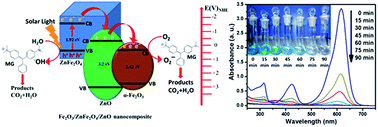
30) nanocomposites is displayed Fig. 7. From the figure it is observed that, the absorbance at 618 nm of MG diminishes gradually with time elapsed: which indicates the reduction of MG from blue to colorless. The absorption peak completely disappeared in 90 min. The photograph of MG solution before and after solar light irradiation with different time is given in Fig. 7 (inset), which also confirms the complete degradation of the MG in 90 min.
 |
| | Fig. 7 UV-vis spectral changes and optical images (inset) of malachite green during degradation process as a function of reaction time using Fe2O3/ZnFe2O4/ZnO (Fe : Zn = 70 : 30) nanocomposite photocatalyst (100 mL of 20 mg L−1 MG solution, 0.1 g catalyst and natural solution pH). | |
Effect of pH of the solution. The solution pH is a significant parameter in photocatalytic degradation process. The influence of different pH (4–8) value on the degradation efficiency of MG was investigated using 0.1 g of Fe2O3/ZnFe2O4/ZnO (Fe
:
Zn = 70
:
30) photocatalyst in 100 mL of 20 mg L−1 MG solution and the result is shown in Fig. S2 (ESI†). The natural pH value of 20 mg L−1 MG solution was found to be 5.7. The pH value was adjusted using dilute HCl or dilute NaOH solution for the experiment. Before the irradiation to sunlight, the MG solutions with the photocatalyst was kept in dark condition with constant stirring for 2 h, but the reduction in concentration was found to be around 2%; this might be due to adsorption rather than photodecomposition. However with the exposure of sunlight, the performances of the photoreaction were extremely improved. The experimental results reveal that the percentage of degradation increases with pH. The increase in rate of photocatalytic degradation might be due to the more availability of OH− ions in alkaline medium which will generate more ˙OH radicals by combining with holes which are formed due to the electronic excitation in catalyst.30 For more alkaline solution pH (pH ≥ 10), it was observed a total decolorization of malachite green within a few seconds. This is because, malachite green dye changes to a colorless leuco compound at highly alkaline medium.31 Hence, all further experiments were done at the natural pH of the dye solution.
Effect of dye solution concentration. The effect of initial dye concentration of MG was investigated using 0.1 g of Fe2O3/ZnFe2O4/ZnO (Fe
:
Zn = 70
:
30) photocatalyst in 100 mL of dye solutions of different concentrations ranging from 10 to 40 mg L−1. From Fig. S3 (ESI†), it is observed that the percentage of degradation was found to be almost same for 10 and 20 mg L−1 concentrations of dye. Before the irradiation to sunlight, the adsorption of MG solutions with the photocatalyst was studied in dark condition with constant stirring for 2 h, but the sorption percentage was found to be 0.5–2%. The percentage of degradation under solar light irradiation was found to decrease with increase in dye concentration. The reason for this decrease is attributed to the shielding effect of dye at high concentration that hinders the penetration of solar light to the dye molecules deposited over the catalyst surface.32 Hence, further experiments were carried out with 20 mg L−1 concentration of dye.
Effect of catalyst compositions and kinetics study. Fig. 8a shows the percentage of photodegradation and Fig. 8b shows the decrease in concentration of malachite green with respect to time using 0.1 g of α-Fe2O3 nanoparticle and Fe2O3/ZnFe2O4 (Fe
:
Zn = 90
:
10), Fe2O3/ZnFe2O4 (Fe
:
Zn = 80
:
10), Fe2O3/ZnFe2O4/ZnO (Fe
:
Zn = 70
:
30), Fe2O3/ZnFe2O4/ZnO (Fe
:
Zn = 60
:
40) and ZnFe2O4/ZnO (Fe
:
Zn = 50
:
50) nanocomposites catalysts each in 100 mL of 20 mg L−1. In the absence of catalyst, no degradation of MG dye was observed (not shown in graph) which indicated that photolysis did not occur under solar light. We have repeated the sorption experiment in dark, prior to photocatalysis studies in all the experiments as described previously. The decrease in dye concentration due to adsorption is found to be around 2% in all cases. It is observed that the proportion degradation of MG increases with increase in solar light exposure time and almost all the MG molecules were decomposed within 90 min with Fe2O3/ZnFe2O4/ZnO (Fe
:
Zn = 70
:
30) nanocomposite photocatalyst. When α-Fe2O3 nanoparticle was used as photocatalyst the percentage of degradation was 81.86% after 90 min of irradiation. The degradation percentages are more in case of nanocomposites i.e. 88.37, 94.37 and 99.77% after 90 min irradiation time using Fe2O3/ZnFe2O4 (Fe
:
Zn = 90
:
10), Fe2O3/ZnFe2O4/(Fe
:
Zn = 80
:
20) and Fe2O3/ZnFe2O4/ZnO (Fe
:
Zn = 70
:
30) nanocomposites, respectively. The percentage of degradation again decreased when percentage of Zn in the nanocomposites increased i.e. 98.29 and 96.92% for Fe2O3/ZnFe2O4/ZnO (Fe
:
Zn = 60
:
40) and ZnFe2O4/ZnO (Fe
:
Zn = 50
:
50) nanocomposites, respectively. Hence, it may be inferred that addition of Zn effectively enhances the photocatalytic activity of α-Fe2O3 up to 30% and upon further addition up to 40 and 50%, the photocatalytic activity decreases (Fig. 8c).
 |
| | Fig. 8 (a) Percentage of photocatalytic degradation, (b) concentration changes of MG, (c) degradation of MG over all the synthesized photocatalysts and, (d) pseudo-first-order reaction kinetic linear relationship curves for different photocatalysts (100 mL of 20 mg L−1 MG solution, 0.1 g catalyst and natural solution pH). | |
The degradation patterns suggested that the degradation of MG followed a pseudo-first order kinetic model and the rate constant could be determined according to the following equation:33
| |
 | (4) |
where
r is the reaction rate (mol L
−1 min
−1),
C0 is the initial concentration of MG dye (mol L
−1),
Ct is the concentration of MG dye at time
t (mol L
−1),
t is the irradiation time (min),
k is the reaction rate constant (min
−1),
K is the adsorption coefficient of dye on a photocatalyst particle (L mol
−1).
Fig. 8d shows the graph of ln(
C0/
Ct)
versus reaction time (
t). The reaction rate constants (
k1) for all the six photocatalysts were determined from the slope of the fitted curves (
Fig. 8d) by means of linear regression and the values are given in
Table 1. All the plots show a linear relationship with good correlation coefficient (
R2 > 0.966), indicating that the MG degradation by the prepared photocatalysts under natural solar light degradation follows the pseudo-first-order kinetic model below: here, it is observed that the highest apparent reaction rate constants
kapp, 0.0714 min
−1 was calculated for Fe
2O
3/ZnFe
2O
4/ZnO (Fe
![[thin space (1/6-em)]](https://www.rsc.org/images/entities/char_2009.gif)
:
![[thin space (1/6-em)]](https://www.rsc.org/images/entities/char_2009.gif)
Zn = 70
![[thin space (1/6-em)]](https://www.rsc.org/images/entities/char_2009.gif)
:
![[thin space (1/6-em)]](https://www.rsc.org/images/entities/char_2009.gif)
30) nanocomposite. Furthermore, the extent of mineralization is evaluated by measuring the total organic carbon (TOC). After solar light irradiation for 90 min, the percentage of mineralization was found to be 71% by using Fe
2O
3/ZnFe
2O
4/ZnO (Fe
![[thin space (1/6-em)]](https://www.rsc.org/images/entities/char_2009.gif)
:
![[thin space (1/6-em)]](https://www.rsc.org/images/entities/char_2009.gif)
Zn = 70
![[thin space (1/6-em)]](https://www.rsc.org/images/entities/char_2009.gif)
:
![[thin space (1/6-em)]](https://www.rsc.org/images/entities/char_2009.gif)
30) nanocomposite photocatalyst (0.1 g) in 100 mL of 20 mg L
−1 MG solution.
Table 1 Percentage of degradation and pseudo-first-order kinetic parameters of MG
| Photocatalyst |
Degradation (%) |
k1 (min−1) |
R2 |
| α-Fe2O3 |
81.86 |
0.0183 |
0.996 |
Fe2O3/ZnFe2O4 (Fe : Zn = 90 : 10) |
88.37 |
0.0231 |
0.989 |
Fe2O3/ZnFe2O4 (Fe : Zn = 80 : 20) |
94.37 |
0.0309 |
0.991 |
Fe2O3/ZnFe2O4/ZnO (Fe : Zn = 70 : 30) |
99.77 |
0.0714 |
0.966 |
Fe2O3/ZnFe2O4/ZnO (Fe : Zn = 60 : 40) |
98.29 |
0.0441 |
0.984 |
ZnFe2O4/ZnO (Fe : Zn = 50 : 50) |
96.92 |
0.0373 |
0.993 |
The stability of catalysts is an important issue for their practical applications. To prove the stability and the reusability of Fe2O3/ZnFe2O4/ZnO (Fe
:
Zn = 70
:
30) nanocomposite photocatalyst, we have repeated it four times for degradation of the MG and the result is shown in Fig. 9. Here, we have calculated the percentage of degradation only after dark reaction. As can be seen, the repeatability of the entire process and the final result of degradation of MG are very good, which further demonstrate the excellent efficiency of the photocatalyst.
 |
| | Fig. 9 Repeating experiments for the photocatalytic degradation of MO using Fe2O3/ZnFe2O4/ZnO (Fe : Zn = 70 : 30) nanocomposite under solar light irradiation. | |
3.3. Mechanism on enhancement of photocatalytic activity
The photocatalytic activity is influenced by some crucial factors like surface area, optical absorption, phase structure and separation efficiency of photo-generated charge carriers.34 From the experimental results, it is observed that the photocatalytic activities of Fe2O3/ZnFe2O4, Fe2O3/ZnFe2O4/ZnO and ZnFe2O4/ZnO nanocomposites are higher than that of pristine α-Fe2O3 nanoparticle. This can be attributed to the formation of the hetero-nanostructure. The evolution of phase/nanocomposites with addition of Zn salt precursor up to 30% results with (a) increased surface area, (b) reduced band gap and (c) easily separation of generated electron–hole pair due to formation of hetero-nanostructures. But for Fe2O3/ZnFe2O4/ZnO (Fe
:
Zn = 70
:
30) nanocomposites, additional mechanism of cascade electron transfer is presumed due to the presence of ternary hybrid structure; which is not possible in binary hybrid/composite system. Similar type of evidences is also reported by Kim et al.35 The mechanism is schematically described in Fig. 10. When the Fe2O3/ZnFe2O4/ZnO (Fe
:
Zn = 70
:
30) ternary nanocomposite was irradiated by solar light, the energy of solar light exceeds band gap of ZnFe2O4 (1.92 eV), the VB e− of ZnFe2O4 were excited to CB (ECB = −1.54 VNHE) creating h+ in the VB. Then the photogenerated e− of ZnFe2O4 was immediately transferred to CB of ZnO (ECB = −0.31 VNHE). Again the photogenerated e− from ZnO were transferred to the CB of α-Fe2O3 (ECB = +0.35 VNHE). As a result, a high concentration of free electrons was formed in the conduction band of α-Fe2O3. This makes the charge separation more effective and hence the electrons and holes migrate to the surface of respective particles and participate in the redox reaction. In the reaction mechanism, the photogenerated electrons reduced the dissolved oxygen into peroxide (−O2˙) or hydroxyl (HO˙) radicals; meanwhile the photogenerated holes likely to oxidize H2O to form HO˙ radicals. The HO˙ radicals form both the process can effectively oxidize MG into minerals as end products.36–38 But in case of only ZnFe2O4 or α-Fe2O3 single phase, the usual recombination of electron–hole pairs takes place and a few of e− and h+ can participate in photocatalytic process.
 |
| | Fig. 10 A proposed solar light photodegradation mechanism of Fe2O3/ZnFe2O4/ZnO nanocomposite. | |
For addition of 40% Zn salt precursor, the percentage of ZnO phase in the Fe2O3/ZnFe2O4/ZnO (Fe
:
Zn = 60
:
40) nanocomposite is increased with slightly increase in the net band gap of nanocomposite. This results in the decrease of photocatalytic activity compared to Fe2O3/ZnFe2O4/ZnO (Fe
:
Zn = 70
:
30) nanocomposite. Again for 50% Zn salt precursor, the formation of binary ZnFe2O4/ZnO (Fe
:
Zn = 50
:
50) phase is observed. Therefore cascade electron transfer is not possible and electron–hole pair recombination becomes more predictable mechanism. Hence, the photocatalytic activity for degradation of MG dye was found to be highest for Fe2O3/ZnFe2O4/ZnO (Fe
:
Zn = 70
:
30) nanocomposites than the series of photocatalysts prepared by varying the mol% of Zn from 10–50%.
In order to examine photogenerated electron transfer pathways, we have carried out the photoluminescence (PL) emission spectra of all the prepared nanomaterials by exciting at wavelengths of 420 nm. The PL spectrum is related to the transfer behavior of the photoinduced electrons and holes so that it can reflect the separation and recombination rate of photoinduced charge carriers.39,40 Fig. S4 (ESI†) shows the PL spectra of pure α-Fe2O3, Fe2O3/ZnFe2O4 (Fe
:
Zn = 90
:
10), Fe2O3/ZnFe2O4 (Fe
:
Zn = 80
:
20), Fe2O3/ZnFe2O4/ZnO (Fe
:
Zn = 70
:
30), Fe2O3/ZnFe2O4/ZnO (Fe
:
Zn = 60
:
40) and ZnFe2O4/ZnO (Fe
:
Zn = 50
:
50) nanoparticles. From these spectra it is observed that the PL intensity decreased dramatically when the α-Fe2O3 was coupled with the ZnFe2O4 to form Fe2O3/ZnFe2O4 nanocomposites. This result indicates the formation of heterojunctions between Fe2O3 and ZnFe2O4. Due to the potential difference between Fe2O3 and ZnFe2O4 the generated photoelectrons easily migrate from the ZnFe2O4 surfaces to the Fe2O3 conduction band. This resulted in a decrease in the rate of recombination of photoinduced electrons on the composite surfaces and hence weakening the PL intensity. In case of Fe2O3/ZnFe2O4/ZnO, further decrease in PL intensity is observed and found to be lowest for Fe2O3/ZnFe2O4/ZnO (Fe
:
Zn = 70
:
30) system. After that in case of ZnFe2O4/ZnO (Fe
:
Zn = 50
:
50) the PL intensity increases. This indicates that the ternary nanocomposites are more effective in inhibiting the charge recombination than binary nanocomposite. It is presumed that photogenerated electrons are effectively transported from ZnFe2O4 to Fe2O3 through ZnO. This is considerable evidence for the cascaded electron transfer. Thus the photogenerated electrons and holes on the surface of composite nanomaterials generate the free radicals which are responsible for photocatalytic degradation of MG dye.
4. Conclusions
In summary, we have synthesized natural solar light sensitive photocatalysts of α-Fe2O3 nanoparticles and Fe2O3/ZnFe2O4, Fe2O3/ZnFe2O4/ZnO and ZnFe2O4/ZnO nanocomposites with various morphologies by a facile hydrothermal method. Morphology, crystalline phase, BET surface area and optical absorption of the nanostructures are strongly influenced by the molar ratio of Fe3+ and Zn2+. XRD result gives the well crystalline nature of the prepared samples with appropriate phase without the presence of any impurity. From FE-SEM, we have observed irregular shape α-Fe2O3 nanoparticles having diameter in the range of 80–100 nm, which gradually becomes cubical shape in due formation of Fe2O3/ZnFe2O4/ZnO & ZnFe2O4/ZnO mixed oxide nanocomposite with an increase in zinc content. The narrow band gap semiconducting nature of the samples was analyzed by UV-vis-DRS technique. This prepared composite nanomaterials were used for photocatalytic degradation of malachite green (MG) under natural solar light. It was observed that the nanocomposites show enhanced photocatalytic activity compared to pristine α-Fe2O3 nanoparticles. The Fe2O3/ZnFe2O4/ZnO (Fe
:
Zn = 70
:
30) exhibits highest photocatalytic activity than other compositions.
Acknowledgements
The authors would like to thank MHRD, Govt. of India and NIT Rourkela for providing the research facility and funding to carry out this work.
References
- N. Khakpash, A. Simchi and T. Jafari, J. Mater. Sci.: Mater. Electron., 2012, 23, 659–667 CrossRef CAS.
- A. Qurashi, Z. Zhong and M. W. Alam, Solid State Sci., 2010, 12, 1516–1519 CrossRef CAS PubMed.
- M. Zhang, L. Li and X. Zhang, RSC Adv., 2015, 5, 29693–29697 RSC.
- Y. Xing, W. Que, X. Yin, X. Liu, H. M. A. Javed, Y. Yang and L. B. Kong, RSC Adv., 2015, 5, 27576–27583 RSC.
- M. Asiltürk, F. Sayılkan and E. Arpac, J. Photochem. Photobiol., A, 2009, 203, 64–71 CrossRef PubMed.
- A. S. Alshammari, L. Chi, X. Chen, A. Bagabas, D. Kramer, A. Alromaeh and Z. Jiang, RSC Adv., 2015, 5, 27690–27698 RSC.
- K. Vignesh, S. Kang, B. S. Kwak and M. Kang, RSC Adv., 2015, 5, 30120–30124 RSC.
- C. Gómez-Solís, I. Juárez-Ramírez, E. Moctezuma and L. M. Torres-Martínez, J. Hazard. Mater., 2012, 217–218, 194–199 CrossRef PubMed.
- Y. Liu, H. Yu, S. Zhan, Y. Li, Z. Lv, X. Yang and Y. Yu, J. Sol-Gel Sci. Technol., 2011, 58, 716–772 CrossRef CAS.
- A. K. Kole, C. S. Tiwary and P. Kumbhakar, CrystEngComm, 2013, 15, 5515–5525 RSC.
- J. C. S. Wu and C. Chen, J. Photochem. Photobiol., A, 2004, 163, 509–515 CrossRef CAS PubMed.
- B. Li and Y. Wang, Superlattices Microstruct., 2010, 47, 615–623 CrossRef CAS PubMed.
- H. G. Kim, P. H. Borse, W. Choi and J. S. Lee, Angew. Chem., 2005, 117, 4661–4665 CrossRef PubMed.
- M. Muruganandham and M. Swaminathan, Sol. Energy Mater. Sol. Cells, 2004, 81, 439–457 CrossRef CAS PubMed.
- J. S. Jang, J. Lee, H. Ye, F. F. Fan and A. J. Bard, J. Phys. Chem. C, 2009, 113, 6719–6724 CAS.
- C. Karunakaran and S. Senthilvelan, Electrochem. Commun., 2006, 8, 95–101 CrossRef CAS PubMed.
- Z. Zhang, M. F. Hossain and T. Takahashi, Appl. Catal., B, 2010, 95, 423–429 CrossRef CAS PubMed.
- Y. Zhang, L. Ma, J. Li and Y. Ying, Environ. Sci. Technol., 2007, 41, 6264–6269 CrossRef CAS.
- Y. Liu, L. Yu, Y. Hu, C. Guo, F. Zhang and X. W. Lou, Nanoscale, 2012, 4, 183–187 RSC.
- H. Xia, H. Zhuang, T. Zhang and D. Xiao, Mater. Lett., 2008, 62, 1126–1128 CrossRef CAS PubMed.
- W. Zhou, H. Fu, K. Pan, C. Tian, Y. Qu, P. Lu and C. Sun, J. Phys. Chem. C, 2008, 112, 19584–19589 CAS.
- R. M. Mohamed and E. S. Aazam, Int. J. Photoenergy, 2012, 928760, DOI:10.1155/2012/928760.
- L. Peng, T. Xie, Y. Lu, H. Fan and D. Wang, Phys. Chem. Chem. Phys., 2010, 12, 8033–8041 RSC.
- J. Kang, Q. Kuang, Z. Xie and L. Zheng, J. Phys. Chem. C, 2011, 115, 7874–7879 CAS.
- H. Lv, L. Ma and P. Zeng, J. Mater. Chem., 2010, 20, 3665–3672 RSC.
- S. Wang, J. Zhang, J. Yang, X. Gao, H. Zhang, Y. Wang and Z. Zhu, RSC Adv., 2015, 5, 10048–10057 RSC.
- C. R. Mariappan, R. Kumar and G. V. Prakash, RSC Adv., 2015, 5, 26843–26849 RSC.
- K. Sivula, R. Zboril, F. L. Formal, R. Robert, A. Weidenkaff, J. Tucek, J. Frydrych and M. Gratzel, J. Am. Chem. Soc., 2010, 132, 7436–7444 CrossRef CAS PubMed.
- R. L. Frost, T. Hong, H. Ma and J. Yang, Chin. J. Process Eng., 2006, 6, 268–271 Search PubMed.
- B. Pare, B. Sarwan and S. B. Jonnalagadda, Appl. Surf. Sci., 2011, 258, 247–253 CrossRef CAS PubMed.
- A. Charanpahari, S. G. Ghugal, S. S. Umare and R. Sasikala, New J. Chem., 2015, 39, 3629–3638 RSC.
- G. D. Tarigh, F. Shemirani and N. S. Mazhari, RSC Adv., 2015, 5, 35070–35079 RSC.
- V. L. Chandraboss, J. Kamalakkannan, S. Prabha and S. Senthilvelan, RSC Adv., 2015, 5, 25857–25869 RSC.
- I. Aslam, C. Cao, M. Tanveer, M. H. Farooq, W. S. Khan, M. Tahir, F. Idreesa and S. Khalid, RSC Adv., 2015, 5, 6019–6026 RSC.
- H. Kim, J. Kim, W. Kim and W. Choi, J. Phys. Chem. C, 2011, 115, 9797–9805 CAS.
- M. N. Z. Ahmed, K. B. Chandrasekhar, A. A. Jahagirdar, H. Nagabhushana and B. M. Nagabhushana, Appl. Nanosci., 2015 DOI:10.1007/s13204-014-0395-1.
- C. Lin, Y. Song, L. Cao and S. Chen, J. Chin. Adv. Mater. Soc., 2013, 1, 188–199 CrossRef CAS PubMed.
- K. Dai, D. Li, L. Lu, Q. Liu, C. Liang, J. Lv and G. Zhu, Appl. Surf. Sci., 2014, 314, 864–871 CrossRef CAS PubMed.
- Z. Liu, D. D. Sun, P. Guo and J. O. Leckie, Nano Lett., 2007, 7, 1081–1085 CrossRef CAS PubMed.
- G. Khan, S. K. Choi, S. Kim, S. K. Lim, J. S. Jang and H. Park, Appl. Catal., B, 2013, 142–143, 647–653 CrossRef CAS PubMed.
Footnote |
| † Electronic supplementary information (ESI) available. See DOI: 10.1039/c5ra05894e |
|
| This journal is © The Royal Society of Chemistry 2015 |
Click here to see how this site uses Cookies. View our privacy policy here.