

Cross dehydrogenative coupling (CDC) of aldehydes with N-hydroxyimides by visible light photoredox catalysis†
Milan Dindaa,
Chandan Boseb,
Tridev Ghosha and
Soumitra Maity*ab
aCSIR-Central Salt and Marine Chemicals Research Institute, Bhavnagar, Gujarat 364002, India
bDepartment of Applied Chemistry, Indian School of Mines, Dhanbad, Jharkhand 826004, India. E-mail: maity.s.ac@ismdhanbad.ac.in
First published on 12th May 2015
Abstract
A photoinduced cross-dehydrogenative-coupling (CDC) reaction between aldehydes and N-hydroxyimides has been developed for the synthesis of ester derivatives. Using 2 mol% [Ru(bpy)3]Cl2 in dry acetonitrile at room temperature with an LED light bulb, we were able to synthesize N-hydroxyesters in good yields. The ester derivatives are very useful synthetic intermediates, which were transformed to amide and oxazole building blocks in excellent yields.
There is an increasing demand from society towards the development of new synthetic strategies that are more sustainable, environment friendly and atom economic.1 To this end cross dehydrogenative coupling (CDC) reactions through oxidative C–H bond functionalization have rapidly emerged as the forefront of chemical research.2 Due to their simplicity and atom economy, CDC reactions have established themselves as an ideal synthetic tool in recent years.3 Therefore a lot of effort has been made for its implementation in various organic transformations. Although significant advances have been made in metal/non-metal catalyzed carbon–carbon bond formation, carbon-heteroatom bond,4,5 particularly carbon–oxygen by CDC strategy is less well developed.6
Ester is one of the common organic functionality frequently encountered in natural products, pharmaceuticals and polymers.7 Although many methods are available for their synthesis, more efficient method is highly desirable. The traditional approach by acylation of alcohol with activated carboxylic acid or coupling of N-hydroxyimide with carboxylic acid suffer serious problems during separation of byproducts, particularly in industrial scale up.8 On contrary, cross dehydrogenative coupling (CDC) reaction of aldehyde with N-hydroxyimide could be one of the straightforward alternatives of traditional coupling, which produce minimum byproducts. Although Barbaras III and Luca groups have independently achieved this CDC reaction, but harsh reaction condition (heating at high temperature) and use of external oxidant and additives limit this transformation.9 Therefore development of mild and sustainable methods for this transformation is needed.
Nowadays visible light photoredox catalysis with metal polypyridyl complexes is one of the emerging field10 and much attention has been paid to explore the scope of visible light in cross dehydrogenative coupling reactions from the aspect of basic science research as well as sustainable chemistry.11 Visible light is clean, inexpensive, safe, and environmentally benign. So use of sunlight as the reaction component in any transformation would be one of the efficient approach than ever. Herein we disclose a visible light mediated photo-CDC reaction between aldehyde and N-hydroxyimide using Ru(bpy)3Cl2 as the photoredox catalyst (Scheme 1). In contrast to existing metal/non-metal-catalyzed coupling reactions, which often needed an external oxidant with high temperature, the new photo-CDC reaction operates in mild conditions (visible light, and room temperature).
 | ||
| Scheme 1 Photo-CDC strategy of ester synthesis from aldehyde and N-hydroxyimide. | ||
We began the investigation of the photo-CDC reaction with benzaldehyde (1a) and N-hydroxy phthalimide (NHPI) (2a) as the model substrates (Table 1). Using 2 mol% [Ru(bpy)3]Cl2 4a in CH3NO2 and exposure of the reaction mixture to blue LED light provided the coupling product in 31% yield in 24 h (entry 1). Changing the solvent system to DCM or more polar solvents like DMSO or DMF did not produce any desired product (entry 2–4). But reaction in CH3CN improved the yield to 84% and the reaction completed in 6 h (entry 5). Reducing the catalyst loading from 2 to 1 mol% increased the reaction time to 12 h with a drop of product yield (entry 6). Visible light active organic dye Rose Bengal 4b did not provide any better yield of the product 3a (entry 7). Control experiments showed that light, catalyst both were essential for efficient conversion into 3a (entry 8 and 9).
|
|||
|---|---|---|---|
| Entry | Conditionsa | T [h] | Yield of 3ab [%] |
| a Conditions: 1a (0.4 mmol), 2a (0.2 mmol), solvent, irradiation with a blue LED light at rt for 6–24 h.b Isolated yields after column chromatography. | |||
| 1 | 4a (2 mol%), CH3NO2 | 24 | 31 |
| 2 | 4a (2 mol%), DCM | 24 | 0 |
| 3 | 4a (2 mol%), DMSO | 24 | 0 |
| 4 | 4a (2 mol%), DMF | 24 | 0 |
| 5 | 4a (2 mol%), CH3CN | 6 | 84 |
| 6 | 4a (1 mol%), CH3CN | 12 | 72 |
| 7 | 4b (2 mol%), CH3CN | 24 | 19 |
| 8 | CH3CN, without 4a | 24 | 15 |
| 9 | 4a (2 mol%), CH3CN, no light | 24 | Trace |

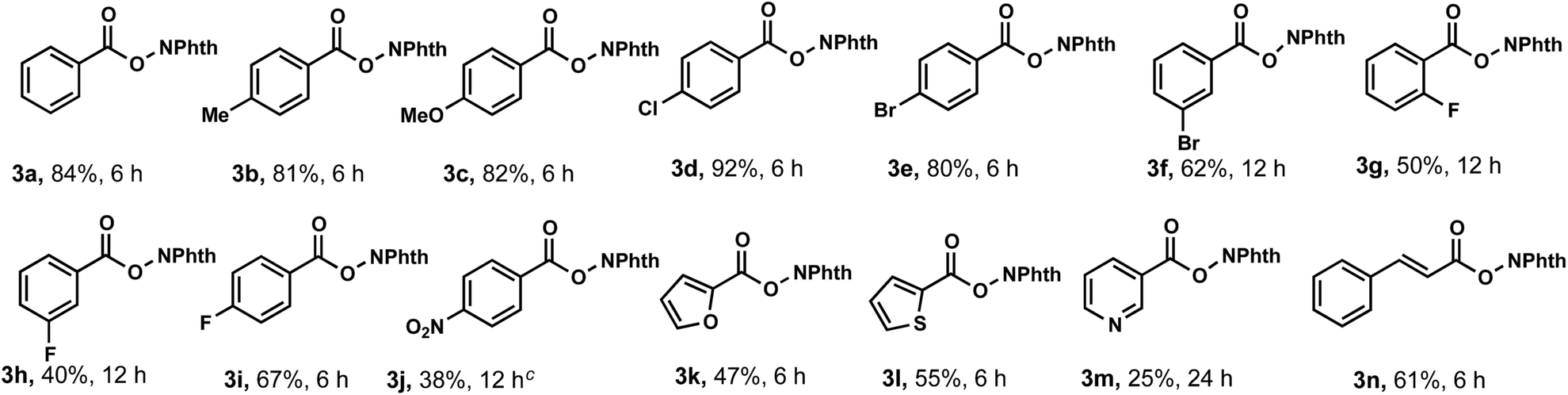
With the optimized reaction conditions in hand, we examined the scope of the present photo-CDC reactions of NHPI (2a) as summarized in Table 2.12 Aromatic aldehydes with electron-rich moieties underwent coupling smoothly to afford the desired products (3b,c) in good yields. Similarly, with electron-withdrawing substituents, including such as halogens (Cl-, Br-, and F-), and nitro groups were effectively converted to the corresponding esters, 3d–j, respectively. Electronic effect on any position was well tolerated in this reaction, so aldehydes bearing o-, m-, and p-fluorophenyl rings were suitable substrates (3g–i). The present condition is also suitable for heterocyclic aldehydes, like furfural, thenaldehyde and nicotinaldehyde as coupling partners (3k–m). Further cinnamaldehyde also participated in this reaction to provide ester 3n with 61% yield. Although aromatic aldehydes were suitable substrates in the present photo-CDC reactions, aliphatic aldehydes such as acetaldehyde and pivalaldehyde failed to produce any product under the optimized conditions.

After successful demonstration of photo-CDC reaction with NHPI as a coupling partner, we extended the scope of this reaction with N-hydroxy succinimide (NHSI) and aldehydes under optimal reaction conditions. The results are summarized in Table 3. Reactions of NHSI (2b) with aryl aldehydes (1a–g) were sluggish and their average yield were moderate with compare to NHPI reactions. Additionally, we have not found any side products and unreacted substrates were recovered from the reaction mixture. The difference of reactivity might be attributed with high bond dissociation energy (BDE) of NO–H bond during generation of the reactive N–O˙ radical in NHSI compare to NHPI.13


To demonstrate the utility of this photo-CDC product, we have performed a few organic transformations on NHPI-ester 3d (Scheme 2). Amines such as, benzylamine and 4-bromophenethylamine readily reacted with 3d to provide the amides 6a and 6b in excellent yield. The amide 6b on treatment with NBS in presence of tungsten bulb at 80 °C provided bromo-oxazole 6c in 72% yield.14 Substituted oxazoles are important class of compounds in drug discovery research and biologically active natural products.
 | ||
| Scheme 2 Synthetic application of photo CDC products. | ||
The efficiency of this new photo-CDC reaction could be highlighted by its scalability, ease and simplicity. We conducted the coupling experiment of 1d on a gram scale with NHPI in sunlight as the only source of light (Scheme 3A). To our delight the yield of 3d did not compromise far with the small-scale reaction albeit taking longer time to go to completion. Moreover, a one-pot amidation procedure was developed to synthesize amide from aldehyde in one pot (Scheme 3B). Upon completion of the photo-CDC step, benzyl amine was added to the reaction mixture to provide the amide 6a in 85% yield.
 | ||
| Scheme 3 (A) Gram-scale photo-CDC reaction and (B) one-pot amide synthesis. | ||
To shed light on the reaction mechanism a control experiment was performed (Scheme 4). When the reaction of 4-chloro benzaldehyde 1d with NHPI 2a was carried out under standard condition (Table 1, entry 5) in the presence of 2,2,6,6-tetramethyl-1-piperidin-1-oxyl (TEMPO), no desired product 3d was detected. This credence a clue of plausible radical mechanism. On the basis of this control study as well as previous reports,9,15 a possible mechanism for this photo CDC reaction was proposed (Scheme 5). The photo excited Ru(II) oxidised NHPI to a radical cation 7 which upon deprotonation generate active species phthalimide N-oxyl radical 8 (ref. 16) (PINO). This radical was then intercepted by aldehyde to hemiaminal radical 10 (ref. 17) which on oxidation furnished the ester 3a.
 | ||
| Scheme 4 Control experiment. | ||
 | ||
| Scheme 5 Plausible mechanism. | ||
Conclusions
In conclusion, we have demonstrated a novel and efficient protocol for the synthesis of N-hydroxyester derivatives by cross dehydrogenative coupling (CDC) of aldehydes and N-hydroxyimides at room temperature under visible light. The utility of this newly developed method has been showcased by transforming the N-hydroxyimide esters into amides and oxazole motifs of synthetic interest.Acknowledgements
SM gratefully acknowledges the DST, Government of India for the DST INSPIRE Fellowship and Research Grant (IFA13-CH-90). We thank Dr P. K. Ghosh and Dr S. Adimurthy of CSIR-CSMCRI for their generous support.Notes and references
- (a) N. S. Lewis, Science, 2007, 315, 798 CrossRef CAS PubMed; (b) D. J. C. Constable, P. J. Dunn, J. D. Hayler, G. R. Humphrey, J. L. Leazer, R. J. Linderman, K. Lorenz, J. Manley, B. A. Pearlman, A. Wells, A. Zaks and T. Y. Zhang, Green Chem., 2007, 9, 411 RSC; (c) A. Albini and M. Fagnoni, Green Chem., 2004, 6, 1 RSC.
- For recent reviews on CDC, see: (a) C. S. Yeung and V. M. Dong, Chem. Rev., 2011, 111, 1215 CrossRef CAS PubMed; (b) M. Klussmann and D. Sureshkumar, Synthesis, 2011, 353 CrossRef CAS PubMed; (c) X. Bugaut and F. Glorius, Angew. Chem., Int. Ed., 2011, 50, 7479 CrossRef CAS PubMed; (d) S. H. Cho, J. Y. Kim, J. Kwak and S. Chang, Chem. Soc. Rev., 2011, 40, 5068 RSC; (e) J. A. Ashenhurst, Chem. Soc. Rev., 2010, 39, 540 RSC; (f) C. J. Scheuermann, Chem.–Asian J., 2010, 5, 436 CrossRef CAS PubMed; (g) W. J. Yoo and C.-J. Li, Top. Curr. Chem., 2010, 292, 281 CrossRef; (h) C.-J. Li, Acc. Chem. Res., 2009, 42, 3352 Search PubMed.
- For the ideal chemical synthesis, see: (a) S. Balieu, G. E. Hallett, M. Burns, T. Bootwicha, J. Studley and V. K. Aggarwal, J. Am. Chem. Soc., 2015, 137, 4398 CrossRef CAS PubMed; (b) T. Gaich and P. S. Baran, J. Org. Chem., 2010, 75, 4657 CrossRef CAS PubMed; (c) T. Newhouse, P. S. Baran and R. W. Hoffmann, Chem. Soc. Rev., 2009, 38, 3010 RSC; (d) J. B. Hendrickson, J. Am. Chem. Soc., 1975, 97, 5784 CrossRef CAS.
- For recent examples on C–P bond formation by CDC, see: (a) W.-B. Sun, Y.-F. Ji, X.-Q. Pan, S.-F. Zhou, J.-P. Zou, W. Zhang and O. Asekun, Synthesis, 2013, 45, 1529 CrossRef CAS PubMed; (b) C. Hou, Y. Ren, R. Lang, X. Hu, C. Xia and F. Li, Chem. Commun., 2012, 48, 5181 RSC; (c) J. Xie, H. Li, Q. Xue, Y. Cheng and C. Zhu, Adv. Synth. Catal., 2012, 354, 1646 CrossRef CAS PubMed; (d) X.-Q. Pan, J.-P. Zou, G.-L. Zhang and W. Zhang, Chem. Commun., 2010, 46, 1721 RSC; (e) H. Wang, X. Li, F. Wua and B. Wan, Tetrahedron Lett., 2012, 53, 681 CrossRef CAS PubMed; (f) K. Alagiri, P. Devadig and K. R. Prabhu, Tetrahedron Lett., 2012, 53, 1456 CrossRef CAS PubMed.
- For recent examples on C–N bond formation by CDC, see: (a) C. Zhang, X. Zong, L. Zhang and N. Jiao, Org. Lett., 2012, 14, 3280 CrossRef CAS PubMed; (b) R. T. Gephart III, D. L. Huang, M. J. B. Aguila, G. Schmidt, A. Shahu and T. H. Warren, Angew. Chem., Int. Ed., 2012, 51, 6488 CrossRef PubMed; (c) Q. Xia, W. Chen and H. Qiu, J. Org. Chem., 2011, 76, 7577 CrossRef CAS PubMed; (d) R. Samanta, J. O. Bauer, C. Strohmann and A. P. Antonchick, Org. Lett., 2012, 14, 5518 CrossRef CAS PubMed; (e) F.-T. Du and J.-X. Ji, Chem. Sci., 2012, 3, 460 RSC; (f) T. Froehr, C. P. Sindlinger, U. Kloeckner, P. Finkbeiner and B. J. Nachtsheim, Org. Lett., 2011, 13, 3754 CrossRef CAS PubMed; (g) J. Yu, S.-S. Liu, J. Cui, X.-S. Hou and C. Zhang, Org. Lett., 2012, 14, 832 CrossRef CAS PubMed; (h) C. Zhang, Z. Xu, L. Zhang and N. Jiao, Angew. Chem., Int. Ed., 2011, 50, 11088 CrossRef CAS PubMed; (i) J. Y. Kim, S. H. Cho, J. Joseph and S. Chang, Angew. Chem., Int. Ed., 2010, 49, 9899 CrossRef CAS PubMed.
- For recent examples on C–O bond formation by CDC, see: (a) I. B. Krylov, A. O. Terent'ev, V. P. Timofeev, B. N. Shelimov, R. A. Novikov, V. M. Merkulova and G. I. Nikishin, Adv. Synth. Catal., 2014, 356, 2266 CrossRef CAS PubMed; (b) A. O. Terent'ev, I. B. Krylov, V. P. Timofeev, Z. A. Starikova, V. M. Merkulova, A. I. Ilovaisky and G. I. Nikishin, Adv. Synth. Catal., 2013, 355, 2375 CrossRef PubMed; (c) S. K. Rout, S. Guin, K. K. Ghara, A. Banerjee and B. K. Patel, Org. Lett., 2012, 14, 3982 CrossRef CAS PubMed; (d) D. Srimani, E. Balaraman, B. Gnanaprakasam, Y. Ben-David and D. Milstein, Adv. Synth. Catal., 2012, 354, 2403 CrossRef CAS PubMed; (e) E. Shi, Y. Shao, S. Chen, H. Hu, Z. Liu, J. Zhang and X. Wan, Org. Lett., 2012, 14, 3384 CrossRef CAS PubMed; (f) M. Baidya, K. A. Griffin and H. Yamamoto, J. Am. Chem. Soc., 2012, 134, 18566 CrossRef CAS PubMed; (g) M. Uyanik, D. Suzuki, T. Yasui and K. Ishihara, Angew. Chem., Int. Ed., 2011, 50, 5331 CrossRef CAS PubMed; (h) G. S. Kumar, C. U. Maheswari, R. A. Kumar, M. L. Kantam and K. R. Reddy, Angew. Chem., Int. Ed., 2011, 50, 11748 CrossRef CAS PubMed.
- (a) J. Otera, Esterification Methods, Reactions, and Applications, Wiley-VCH, Weinheim, Germany, 2003 CrossRef PubMed; (b) M. Tsakos, E. S. Schaffert, L. L. Clement, N. L. Villadsen and T. B. Poulsen, Nat. Prod. Rep., 2015, 32, 605 RSC.
- (a) J. Otera and J. Nishikido, Esterification: Methods, Reactions, and Applications, Wiley-VCH, Weinheim, Germany, 2010 Search PubMed; (b) M. Kim and K. J. Han, Synth. Commun., 2009, 39, 4467 CrossRef CAS PubMed; (c) P. Pçchlauer and W. Hendel, Tetrahedron, 1998, 54, 3489 CrossRef; (d) S. Kim and Y. K. Ko, J. Chem. Soc., Chem. Commun., 1985, 473 RSC; (e) H. Ogura, T. Kobayashi, K. Shimizu, K. Kawabe and K. Takeda, Tetrahedron Lett., 1979, 20, 4745 CrossRef.
- (a) B. Tan, N. Toda and C. F. Barbaras III, Angew. Chem., Int. Ed., 2012, 51, 12538 CrossRef CAS PubMed; (b) M. Pilo, A. Porcheddu and L. D. Luca, Org. Biomol. Chem., 2013, 11, 8241 RSC; (c) H. Yao and K. Yamamoto, Chem.–Asian J., 2012, 7, 1542 CrossRef CAS PubMed; (d) H. Yao, Y. Tung and K. Yamamoto, Tetrahedron Lett., 2012, 53, 5094 CrossRef CAS PubMed.
- For recent reviews on photoredox catalysis, see: (a) M. Majek, F. Filace and J. A. Von Wangelin, Beilstein J. Org. Chem., 2014, 10, 981 CrossRef CAS PubMed; (b) D. P. Hari and B. Konig, Chem. Commun., 2014, 50, 6688 RSC; (c) C. K. Prier, D. A. Rankic and D. W. C. MacMillan, Chem. Rev., 2013, 113, 5322 CrossRef CAS PubMed; (d) M. A. Ischay, M. S. Ament and T. P. Yoon, Chem. Sci., 2012, 3, 2807 RSC; (e) J. W. Tucker and C. R. J. Stephenson, J. Org. Chem., 2012, 77, 1617 CrossRef CAS PubMed; (f) J. Xuan and W.-J. Xiao, Angew. Chem., Int. Ed., 2012, 51, 6828 CrossRef CAS PubMed; (g) S. Maity and N. Zheng, Synlett, 2012, 23, 1851 CrossRef CAS PubMed; (h) F. Teplý, Collect. Czech. Chem. Commun., 2011, 76, 859 CrossRef.
- Selected articles on photo-CDC reactions: (a) Y.-Q. Zou, L.-Q. Lu, L. Fu, N.-J. Chang, J. Rong, J.-R. Chen and W.-J. Xiao, Angew. Chem., Int. Ed., 2011, 50, 7171 CrossRef CAS PubMed; (b) D. P. Hari and B. Konig, Org. Lett., 2011, 13, 3852 CrossRef CAS PubMed; (c) M. Rueping, S. Zhu and R. M. Koenigs, Chem. Commun., 2011, 47, 12709 RSC; (d) M. Rueping, S. Zhu and R. M. Koenigs, Chem. Commun., 2011, 47, 8679 RSC; (e) J. Y. Cheng, J. An, L.-Q. Lu, X.-X. Zhang and W.-J. Xiao, Chem. Commun., 2011, 47, 8337 RSC; (f) Y. Pan, C. W. Kee, L. Chen and C.-H. Tan, Green Chem., 2011, 13, 2682 RSC; (g) M. Rueping, C. Vila, R. M. Koenigs, K. Poscharny and D. C. Fabry, Chem. Commun., 2011, 47, 2360 RSC; (h) A. G. Condie, J. C. Gonzalez-Gomez and C. R. J. Stephenson, J. Am. Chem. Soc., 2010, 132, 1464 CrossRef CAS PubMed.
- A representative procedure of photo CDC reaction for compound 3d: an oven-dried test tube equipped with a stir bar was charged with [Ru(bpy)3]Cl2 4a (3 mg, 2 mol%) and N-hydroxyphthalimide 2a (33 mg, 0.2 mmol). The tube was sealed with a Teflon screw cap, before 4-chlorobenzaldehyde 1d (56 mg, 0.4 mmol) and dry CH3CN (2 mL) were added to it. The orange reaction mixture was irradiated at room temperature with a 18 W blue LED bulb for 6 h. The solution was concentrated and the residue was purified by silica gel flash chromatography to afford the corresponding product 3d (55 mg, 92%) as white amorphous solid. 1H NMR (500 MHz, CDCl3) δ 8.15–8.14 (m, 2H), 7.95–7.90 (m, 4H), 7.65–7.63 (m, 2H); 13C NMR (125 MHz, CDCl3) δ 162.3, 162.1, 141.4, 135.3, 131.8, 129.6, 128.7, 123.9, 117.3. HRMS (ESI) calcd for C15H9ClNO4 [M + H]: 302.0220; found 302.0208.
- BDE of NO–H bond is 86.0 kcal mol−1 for NHSI vs. 81.2 for NHPI, see: I. Hermans, P. Jacobs and J. Peeters, Phys. Chem. Chem. Phys., 2007, 9, 686 RSC.
- M. Dinda, S. Samanta, S. Eringathodi and P. K. Ghosh, RSC Adv., 2014, 4, 12252 RSC.
- S. Maity and N. Zheng, Angew. Chem., Int. Ed., 2012, 51, 9562 CrossRef CAS PubMed.
- Generation of PINO radical from NHPI see the reviews: (a) L. Melone and C. Punta, Beilstein J. Org. Chem., 2013, 9, 1296 CrossRef CAS PubMed; (b) S. Coseri, Catal. Rev., 2009, 51, 218 CrossRef CAS PubMed; (c) F. Recupero and C. Punta, Chem. Rev., 2007, 107, 3800 CrossRef CAS PubMed; (d) R. A. Sheldon and I. W. C. E. Arends, Adv. Synth. Catal., 2004, 346, 1051 CrossRef CAS PubMed; (e) Y. Ishii, S. Sakaguchi and T. Iwahama, Adv. Synth. Catal., 2001, 343, 393 CrossRef CAS.
- To find experimental evidence on formation of hemiaminal radical, a control experiment was carried out with an idea to identify any pinacol type product if formed by homodimerization of the radical 10 (Scheme 5). But we did not find any dimerized products in the reaction between benzaldehyde and NHPI under optimized condition. However, the radical 10 may still be present in our system, but the oxidation of 10 to ester 3a is faster compare to dimerization. More studies are needed to understand the mechanism of this reaction.
Footnote |
| † Electronic supplementary information (ESI) available. See DOI: 10.1039/c5ra05719a |
| This journal is © The Royal Society of Chemistry 2015 |