
CO2 adsorption on crab shell derived activated carbons: contribution of micropores and nitrogen-containing groups

Tao Chen, Shubo Deng*, Bin Wang, Jun Huang, Yujue Wang and Gang Yu
School of Environment, Beijing Key Laboratory for Emerging Organic Contaminants Control, State Key Joint Laboratory of Environment Simulation and Pollution Control (SKLESPC), Tsinghua University, Beijing 100084, China. E-mail: dengshubo@tsinghua.edu.cn; Fax: +86-10-62794006; Tel: +86-10-62792165

Received 20th March 2015 , Accepted 22nd May 2015

First published on 22nd May 2015


Abstract

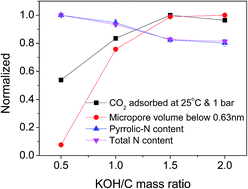
Nitrogen-doped activated carbons with high and selective CO2 adsorption are attractive for carbon capture, but the contribution of nitrogen-containing groups to CO2 adsorption has not been clearly elucidated. In this study, crab shells are used as a carbon precursor for the preparation of effective N-containing activated carbons for CO2 adsorption. The activated carbon prepared at a KOH/C mass ratio of 1.5 and activation temperature of 650 °C has the highest CO2 adsorption of 1.57 mmol g−1 at 0.15 bar & 25 °C and 4.37 mmol g−1 at 1 bar & 25 °C. The activated carbon also exhibits better adsorption selectivity for CO2 than conventional activated carbons, and the content of pyrrolic-N in the activated carbons shows a positive relationship with CO2/N2 selectivity. The activated carbons prepared under different activation conditions contain 5.1–8.5% nitrogen in the form of pyridinic-N, pyrrolic-N, quaternary nitrogen, and pyridinic-N-oxide, accounting for at least 0.9–78.2% contribution to CO2 adsorption at 25 °C & 1 bar. About 45.1–47.3% of doped nitrogen is verified to be pyrrolic-N via X-ray photoelectron spectroscopy (XPS) analysis, which is effective for CO2 adsorption. However, the effective micropores are mainly responsible for CO2 adsorption on the well-developed activated carbons via a micropore filling mechanism.

1. Introduction

CO2 emission control is becoming more and more urgent nowadays as the global atmospheric CO2 concentration rises rapidly, causing a series of environmental problems.1,2 Among all CO2 emission sources, fossil fuel-fired power plants account for 35% of worldwide CO2 discharge,3 thus being a major source to control CO2.

Activated carbon is considered to be a promising CO2 adsorbent for large-scale application because of its intrinsic characteristics such as high stability, widely available precursors, low cost and easy regeneration.4,5 Researchers have tried a lot of biomass wastes and chemical polymers to prepare activated carbons for CO2 adsorption.6–10 Although the highest adsorption capacities of CO2 on activated carbons have reached 8.9 mmol g−1 at 0 °C & 1 bar,9 and 5.0 mmol g−1 at 25 °C & 1 bar,11 the adsorption selectivity of activated carbons for CO2 still remains relatively low in comparison with other adsorbents such as amine-functionalized solid sorbents.5,7 Because conventional activated carbons are short of CO2-philic surface functional groups, physisorption is the overwhelming adsorption mechanism for CO2 adsorption.5,12 Besides, weak adsorption affinity also results in high sensitivity to the change of adsorption temperature and CO2 partial pressure,5,13 and the latter is generally about 0.15 bar in power plant flue gas, instead of 1 bar. How to improve the surface affinity of activated carbons becomes one of the critical issues for CO2 capture in practical application.

Nitrogen doping strategy has been used by many researchers to strength the adsorption affinity of activated carbon for CO2, and the most frequently adopted technique to prepare activated carbons with high nitrogen content is to choose nitrogen-containing organic polymers as carbon precursors, such as polypyrrole,14,15 polybenzoxazine,16 polyindole,13,17 polyaniline,18,19 and polyacrylonitrile.20 Some activated carbons produced from these precursors are reported to be more effective than conventional activated carbons in adsorption capacity and selectivity for CO2, but there is still much doubt about the effectiveness of the doped nitrogen for CO2 adsorption.21 Sevilla et al. has reported that nitrogen atoms incorporated in their material don't influence CO2 adsorption.21 Although some activated carbons contain high content of nitrogen element and show high adsorption capacity or selectivity for CO2, no convincing evidence has been provided to support that these benefits come from the doped nitrogen. Micropore filling has already been proved to be the dominant CO2 adsorption mechanism for nitrogen-deficient activated carbons,6,22,23 but it is difficult to distinguish the contributions of micropore filling and nitrogen functional groups-assisted surface adsorption on the surface of large pores for CO2 adsorption on nitrogen-enriched activated carbons.24 Therefore, it is still unclear that the improvement comes from the N-containing groups or more developed microporous structure.

In this study, for the first time we used crab shells as a carbon precursor to prepare nitrogen-enriched activated carbon. Crab shell is an easily available bio-waste, and contains about 20% of chitin and 30% of protein, both of which are nitrogen abundant macromolecular polymers. KOH was used as activating agent for the preparation because of its strong ability to create narrow micropores.6,8,25,26 The crab shell derived activated carbon prepared in this study shows high adsorption capacity and selectivity for CO2, and we analyze the contributions of effective micropores and nitrogen-containing groups to CO2 adsorption via the analysis of CO2 adsorption on different activated carbons prepared under different activation conditions as well as the volume of effective micropores and the contents of different nitrogen species on adsorbent surfaces.

2. Materials and methods

2.1 Reagents and materials

Hydrochloric acid (35%) and potassium hydroxide (flake, >98%) were purchased from Beijing Modern Eastern Fine Chemical Co. The crabs, specifically, Portunus trituberculatus, were bought from a supermarket in Beijing. After boiling in water for 20 min, the crabs were got rid of flesh, and the remaining crab shells were collected, washed by tap water, and finally dried at 60 °C for 1 h. Actually, these crab shells are discarded as wastes in coastal areas in China, and can be used as raw materials in this study.

2.2 Preparation of activated carbons

Crab shells were immersed in 1 M HCl solution for 10 h to remove calcium carbonate, and then washed with water and dried in an oven at 80 °C overnight. Thereafter, the pretreated crab shells were cut into small pieces and placed in a tubular furnace for carbonization. The temperature was increased at a rate of 3 °C min−1 until 450 °C, and then kept for 90 min before cooling to room temperature. The material was under the protection of pure nitrogen gas at a flow rate of about 100 mL min−1 throughout the whole carbonization process. The carbonized samples were next impregnated by the KOH solution at the predetermined KOH/C mass ratios for 2 days, and then the mixture was dried at 105 °C for 12 h. The resulting material was placed in a tubular furnace, followed by heating at the predetermined activation temperatures (500, 550, 600, 650, and 700 °C) for 90 min under nitrogen flow protection. After the activation process, the samples were washed with HCl solution (1 M) and deionized water until the pH value of wash water was neutral. Finally, the samples were dried at 105 °C for 12 h. The prepared activated carbon samples are denoted as CS-X-Y, where CS represents the original material crab shell, and X and Y are the activation temperature (°C) and KOH/C mass ratio, respectively.

2.3 Characterization

Nitrogen adsorption at 77 K was carried out on a physisorption analyzer (Micromeritics ASAP 2020, USA) for textural characterization of the prepared activated carbons. Multipoint Brunauer–Emmett–Teller (BET) surface area (SBET) was calculated using N2 adsorption isotherm at the relative pressure (P/P0) below 0.3, and total pore volume (Vt) was obtained at P/P0 = 0.995. Micropore size distribution (MPSD) and cumulative micropore volume (CMPV) were deduced from N2 adsorption isotherms by applying the none-local density functional theory (NLDFT) model. All samples were degassed at 250 °C under vacuum for at least 10 h before measurement. Elemental analysis was performed on an elemental analyzer (CE440, Exeter Analytical Inc., USA). X-ray photoelectron spectroscopy (XPS) analysis was conducted on Thermo Scientific ESCALAB 250Xi with Al Kα irradiation as the excitation source. The surface morphology of samples were obtained on field emission scanning electron microscopy (FE-SEM) JSM-7410F, JEOL Ltd., Japan).

2.4 CO2 adsorption experiments

All CO2 adsorption experiments were conducted on a gas adsorption instrument (Autosorb iQ, Quantachrome Co., USA) using static volumetric measuring method for the quantification of adsorbed amount of CO2. All the activated carbon samples were degassed at 200 °C for 10 h under vacuum before each measurement. In the preparation of activated carbons under different activation conditions, CO2 adsorption was carried out at 298 K, and the adsorbed amounts at 0.15 bar and 1 bar were measured. Adsorption isotherms of CO2 on the CS-500-1.5 and CS-650-1.5 were studied at 0, 25, 50 and 75 °C. Adsorption selectivity experiments of CO2 over N2 on the eight activated carbons were conducted at 25 °C to measure their adsorbed amounts at different pressures. The adsorption selectivity, denoted as S(CO2/N2), was calculated using IAST method by calculating their ratios of CO2 adsorbed amounts at 0.15 bar to N2 adsorbed amount at 0.85 bar, namely, image file: c5ra04937g-t1.tif.27,28

3. Results and discussion

3.1 CO2 adsorption on activated carbons prepared under different conditions

CO2 adsorption at 0.15 bar/1 bar and 25 °C on the crab shell derived activated carbons prepared at different KOH/C ratios and activation temperatures was measured and shown in Fig. 1. When the activated carbons were activated at 600 °C and the KOH/C ratios ranging from 0.5 to 2.0, the adsorbed amounts of CO2 at 0.15 and 1 bar all first increase significantly and then decrease slowly with increasing KOH/C ratios (Fig. 1a). The highest CO2 adsorption at 0.15 bar is achieved at the KOH/C ratio of 1.0, but the optimal KOH/C ratio is found to be 1.5 for CO2 adsorption at 1 bar. The sample prepared at the KOH/C ratio of 1.5 has much higher adsorbed amount of CO2 at 1 bar than that obtained at the KOH/C ratio of 1.0, indicating that the former has a better developed microporous structure. When the KOH/C mass ratio is fixed at 1.5 and activation temperatures increase from 500 °C to 700 °C, the adsorbed amounts of CO2 also first increase and then decrease with increasing activation temperatures (Fig. 1b), and the highest adsorbed amounts of CO2 at 0.15 and 1 bar are all achieved at the activation temperature of 650 °C. Evidently, the moderate activation conditions are favorable for the preparation of activated carbons with high CO2 adsorption, and the optimal activated carbon obtained at the KOH/C ratio of 1.5 and activation temperature of 650 °C (CS-650-1.5) shows the highest CO2 adsorption of 1.57 mmol g−1 at 25 °C and 0.15 bar, and 4.37 mmol g−1 at 25 °C and 1 bar. Table S1 compares the CO2 uptake on some activated carbons derived from different precursors in the literature, and it can be seen that the crab shell derived activated carbon is among the best carbon materials for CO2 adsorption at 1 bar and 0.15 bar, especially it exhibits high CO2 adsorption at 0.15 bar.
image file: c5ra04937g-f1.tif
Fig. 1 Crab shell derived activated carbons prepared at different KOH/C mass ratios (activation temperature = 600 °C) (a) and activation temperatures (KOH/C ratio = 1.5) (b) for CO2 adsorption at 0.15 bar/1 bar and 25 °C.

Some researchers have reported the micropore filling mechanism for CO2 adsorption onto porous carbons,6,8,9,29,30 and high CO2 adsorption capacities on activated carbons are attributed to their high pore volume in specific pore size ranges. However, the explanation for CO2 adsorption becomes ambiguous when it comes to nitrogen-enriched activated carbons.30,31 The reasons are that both microporous structure and surface N-containing groups are relevant to CO2 adsorption, but it's difficult to evaluate their respective contributions although lots of N-doped porous carbon materials have already been developed. To explain the change of CO2 adsorption on the crab shell derived activated carbons prepared under different activation conditions, the microporous structure and N-containing functional groups on these adsorbents were characterized.

3.2 Textural and surface chemical properties of activated carbons

SEM images (Fig. S1) show the tremendous changes of crab shells in surface morphology during the preparation. The crab shells have a layer-stacking structure with large interspaces between the fibrous building components, while the KOH-activated crab shell turns into a solid and uniform carbon monolith. Furthermore, highly magnified image of the activated carbon illustrates the presence of abundant pores with diameter below 1 μm on its surface, indicating the creation of porous structure by KOH activation.

Table 1 shows the textural property of the activated carbons prepared at different KOH/C ratios and activation temperatures. Both BET surface area and total pore volume of the samples increase with increasing KOH/C ratios and activation temperatures. The severer activation conditions tend to consume more carbon atoms and create more developed porous structure, which can be easily explained by the following reaction: 6KOH + C → 2K + 3H2 + 2K2CO3.32 When the KOH/C ratios are increased from 0.5 (CS-600-0.5) to 1.0 (CS-600-1.0), the BET surface area and total pore volume increase significantly from 192 m2 g−1 to 798 m2 g−1, and 0.09 cm3 g−1 to 0.34 cm3 g−1, respectively. However, further increase of KOH/C ratios only result in slow increase of surface area and pore volume. This may be due to the effect of the enlargement of small pores and the resulting collapse of partial porous structure, which offsets the contribution of the creation of new pores. When the activation temperatures are increased from 650 °C to 700 °C, significant increases of total pore volume and surface area are observed, but the cumulative micropore volume (CMPV) at 0.63 nm (V0.63) decreases a little, possibly due to the intensified loss of carbon and other heteroatoms caused by the high temperature.31 The increase of CMPV at 0.82 nm (V0.82) may be caused by the enlargement of small micropores.

Table 1 Textural property and chemical composition of crab shell derived activated carbons prepared under different conditions
Samples SBET (m2 g−1) Pore volume (cm3 g−1) Elemental composition (%)
Vta V0.63b V0.82c C H O N
a Total pore volume calculated at P/P0 = 0.995 via N2 adsorption.b Cumulative micropore volume at pore size of 0.63 nm via N2 adsorption.c Cumulative micropore volume at pore size of 0.82 nm via N2 adsorption.
CS-600-0.5 192 0.09 0.03 0.04 72.9 3.1 12.0 7.5
CS-600-1.0 798 0.34 0.18 0.23 66.7 3.6 17.0 7.0
CS-600-1.5 1004 0.46 0.23 0.32 67.0 3.7 16.4 6.2
CS-600-2.0 1387 0.47 0.23 0.33 71.6 3.5 13.7 6.1
CS-500-1.5 503 0.24 0.12 0.14 69.1 4.1 16.8 8.5
CS-550-1.5 718 0.33 0.16 0.23 71.4 3.7 16.7 7.7
CS-650-1.5 1196 0.50 0.25 0.32 70.5 3.2 14.4 6.3
CS-700-1.5 1663 0.72 0.24 0.34 71.7 2.9 10.4 5.1


CO2 adsorption isotherms are commonly used to determine the micropore size distribution (MPSD) of activated carbons by many researchers,6,24,33 but some functional groups on adsorbent surfaces can adsorb CO2 and consequently influence the calculated MPSD, and thus N2 is used as adsorbate for micropore analysis in this study. Fig. S2 shows the pore size distribution (<100 nm) of crab shell derived activated carbons prepared under different activation conditions. Most of the samples have the pore sizes less than 2 nm (Fig. S2a), and the moderately activated samples have the well-developed microporous structure. The MPSD curves in the range of 0.5 nm to 2.0 nm for all the samples are presented in Fig. S2b and S2c, and it is evident that more big micropores and high pore volume are produced with increasing activation temperatures and KOH/C ratios.

Elemental analysis results of activated carbons are listed in Table 1. Besides the dominant carbon, the activated carbons also contain oxygen (10.4–17.0%), nitrogen (5.1–8.5%) and hydrogen (2.9–4.1%). The contents of these elements are dependent on the activation conditions. When the KOH/C ratios increase from 0.5 to 2.0, both oxygen and hydrogen contents first increase and then decrease, but nitrogen content always decreases. For the samples prepared at the KOH/C ratio of 1.5, oxygen, hydrogen and nitrogen all decrease with increasing activation temperatures from 500 °C to 700 °C. These results indicate that more nitrogen atoms would be removed in severer activation process.

To further distinguish the nitrogen-containing groups on the adsorbent surfaces, XPS was used to analyze the activated carbons prepared under different activation conditions. Fig. 2 illustrates the existence of two main nitrogen-containing groups: pyrrolic-N at the peak of about 400.2 eV (denoted by N-2), and pyridinic-N at the peak of about 398.5 eV (N-1).21,31,34,35 These two species account for over 70% of total nitrogen in all N-containing groups. Other two nitrogen species can be assigned to the peaks at 401.1 eV (quaternary nitrogen, N-3) and 403.2 eV (pyridinic-N-oxide, N-4).21,34,36 As shown in Fig. 2 and Table 2, the percents of pyrrolic-N change a little (45.9–47.3%), while the contents of pyridinic-N decrease significantly (35.1–28.0%) with increasing KOH/C ratios, but the total percents of quaternary nitrogen and pyridinic-N-oxide increase significantly (18.5–26.1%) with increasing KOH/C ratios.


image file: c5ra04937g-f2.tif
Fig. 2 XPS N1s core-level spectra of the activated carbons prepared at different KOH/C ratios (a–d) and activation temperatures (e–h) (N-1: pyridinic-N; N-2: pyrrolic-N; N-3: quaternary nitrogen; N-4: pyridinic-N-oxide).
Table 2 Nitrogen percents in different N-containing groups on the activated carbons calculated from XPS spectra and the actual contents of different nitrogen in the activated carbons (shown in parentheses)
Samples Nitrogen species (%)
Pyridinic-N (N-1) Pyrrolic-N (N-2) Quaternary N (N-3) Pyridinic-N-oxide (N-4)
CS-600-0.5 35.1(2.63) 46.4(3.48) 11.9(0.89) 6.6(0.50)
CS-600-1.0 34.1(2.37) 47.3(3.29) 11.7(0.81) 6.9(0.48)
CS-600-1.5 28.8(1.78) 46.3(2.86) 13.7(0.85) 11.2(0.69)
CS-600-2.0 28.0(1.70) 45.9(2.79) 16.5(1.00) 9.6(0.58)
CS-500-1.5 25.6(2.17) 46.0(3.90) 20.1(1.70) 8.3(0.70)
CS-550-1.5 30.7(2.37) 46.0(3.55) 14.4(1.11) 8.9(0.68)
CS-650-1.5 28.4(1.78) 46.1(2.88) 14.8(0.93) 10.7(0.67)
CS-700-1.5 27.6(1.39) 45.1(2.28) 16.0(0.81) 11.3(0.57)


3.3 Contributions of micropores and nitrogen-containing groups to CO2 sorption

The effective micropores responsible for CO2 adsorption on nitrogen-deficient activated carbons have been reported recently. According to the micropore filling mechanism, the upper limit of micropores is found to be 0.63 nm for CO2 adsorption at 25 °C & 1 bar, and 0.82 nm for CO2 adsorption at 0 °C & 1 bar on pine nut shell and bamboo derived activated carbons.6,11 The variation of CMPV of crab shell derived activated carbons is shown in Fig. 3, and the CMPV at the micropore sizes of 0.63 nm (V0.63) and 0.82 nm (V0.82) are listed in Table 1. The relationships between V0.63/V0.82 and CO2 adsorption at 25 °C/0 °C and 1 bar are also shown in Fig. 4. Although their linear relationships still exist for crab shell derived activated carbons, the obtained correlation coefficients are lower than other nitrogen-deficient activated carbons,6,11 indicating that micropore filling still dominates CO2 adsorption on crab shell derived activated carbon with high nitrogen content and the N-containing groups on the activated carbons should be also involved in CO2 adsorption to some extent. The contribution of N-containing groups to CO2 adsorption on nitrogen-enriched activated carbons should not be ignored.
image file: c5ra04937g-f3.tif
Fig. 3 CMPV variation of crab shell derived activated carbons prepared under different activation conditions.

image file: c5ra04937g-f4.tif
Fig. 4 Relationship between CO2 uptake at 25 °C & 1 bar and CMPV at 0.63 nm (a), and CO2 adsorption at 0 °C & 1 bar and CMPV at 0.82 nm (b).

Although the accurate calculation of the contribution of N-containing groups to CO2 adsorption is impossible, it can be estimated by simplification. The CS-700-1.5 prepared under the most severe condition has the lowest content of nitrogen. It is reasonable to speculate that CS-700-1.5 has the weakest sorption by N-containing groups. If we assume that its CO2 adsorption is completely attributed to micropore filling, the adsorbed amounts of CO2 at 25 °C & 1 bar by micropore filling on other samples can be obtained (qCO2, CS-700-1.5 × V0.63, other sample/V0.63, CS-700-1.5) since the adsorbed amount of CO2 facilitated by micropore filling is proportional to micropore volume, and thus the adsorbed amount of CO2 on N-containing groups can be calculated by deducting the adsorbed amount of micropore filling from the actually measured values. Table 3 lists contributions of micropore filling and N-contain groups to CO2 adsorption at 25 °C & 1 bar, and the contribution presents of N-containing groups to CO2 adsorption can be as high as 78.2% for the CS-600-0.5 prepared under mild activation conditions. However, this sample is not well-activated, and has much lower CO2 adsorbed amount. For the samples with well-developed microporous structure, the contributions of N-containing groups are below 15%. It should be noted that the contribution of N-containing groups to CO2 adsorption on CS-700-1.5 may not be so weak as none, and thus the actual contributions of N-containing groups should be higher than the calculated ones.

Table 3 Estimated contributions of micropores and N-containing groups to CO2 adsorption at 25 °C & 1 bar on crab shell derived activated carbons
Samples qa (mmol g−1) qmb (mmol g−1) qNc (mmol g−1) qN/q (%)
a Measured adsorbed amount of CO2 at 25 °C & 1 bar.b Estimated adsorbed amount of CO2 by micropore filling.c Estimated adsorbed amount of CO2 by N-containing groups.
CS-600-0.5 2.29 0.50 1.79 78.2
CS-600-1.0 3.56 3.03 0.53 14.9
CS-600-1.5 4.26 3.96 0.30 7.20
CS-600-2.0 4.11 4.00 0.11 2.60
CS-500-1.5 2.68 2.01 0.67 25.0
CS-550-1.5 3.34 2.84 0.50 14.8
CS-650-1.5 4.37 4.33 0.04 0.90


There is still a dispute about their adsorption mechanism although N-containing functional groups are considered to be effective for CO2 adsorption.37 It is well known that the N-containing groups on carbon surfaces can act as Lewis basic sites to adsorb acidic CO2 molecules through Lewis acid–base interaction.30,36,38 Besides, some researchers also propose that N-doping increases the polarity of carbon surface and thus enhance pole–pole interaction between adsorbent surface and CO2 molecule.5,27 Upon these theories, pyrrolic-N is commonly regarded as a much more effective N-containing group than other nitrogen species in activated carbon for CO2 adsorption,15,28,35 even though exact experimental supports have been hardly reported.

In order to look into the effectiveness of different nitrogen species on the activated carbons for CO2 adsorption, we compare their contents in the activated carbons prepared at different KOH/C ratios and activation temperatures. As shown in Fig. S3, only the varying trend of N-2 is consistent with the contribution of N-containing groups to CO2 adsorption in Table 3, indicating that pyrrolic-N is mainly responsible for CO2 adsorption. We also compare the adsorbed amounts of CO2 (qCO2), effective micropore volume for CO2 adsorption through micropore filling (V0.63 or V0.82) and the content of pyrrolic-N (N-2) on the activated carbons prepared under different activation conditions (Fig. 5). All values of each variable are normalized by divided by the largest one to facilitate the comparison of their varying trend. It can be seen that the activated carbons with larger CMPV values generally has higher CO2 adsorption capacity, further indicating the undoubted importance of micropore filling for CO2 adsorption. However, some differences in the varying trend between CO2 adsorption and CMPV are clearly observed in each figure, suggesting that the correlation between CMPV and CO2 adsorption is far from linear fitting. In Fig. 5a, the increase rate of qCO2 is obviously lower than that of V0.63 until the KOH/C ratio reaches 1.5. When the KOH/C mass ratios further increase from 1.5 to 2.0, the V0.63 values keep almost constant, while qCO2 decreases by 0.15 mmol g−1. In Fig. 5c, a little increase of V0.82 is observed while qCO2 still decreases when the KOH/C ratios increase from 1.5 to 2.0. This inconsistent trend between qCO2 and V0.63/V0.82 is related to the adsorption of CO2 on the N-containing groups on the activated carbons. It is obvious that the decrease of CO2 adsorption is related to the decrease of N-2 content (Fig. 5a and c). As shown in Fig. 5, the curves of V0.63/V0.82 is gradually approaching the curve of qCO2 with increasing KOH/C ratios and activation temperatures, and the bigger gaps are observed at lower KOH/C ratios and activation temperatures, suggesting the more contribution of pyrrolic-N (N-2) to CO2 adsorption and consistent with the results obtained in Table 3. The contents of pyrrolic-N on the surface of crab shell derived activated carbon decrease with increasing KOH/C ratios or activation temperatures, and the loss of pyrrolic-N would cause a decrease of CO2 adsorption on the activated carbons. It is evident that both micropores and N-containing groups are involved in CO2 adsorption on the crab shell derived activated carbon, and their contributions are dependent on the microporous structure and the pyrrolic-N content on the activated carbons.


image file: c5ra04937g-f5.tif
Fig. 5 Normalized CO2 adsorbed amount at 25 °C & 1 bar, V0.63 and N-2 (pyrrolic-N) content (a and b), as well as CO2 adsorbed amount at 0 °C & 1 bar, V0.82 and N-2 (pyrrolic-N) content (c and d) on activated carbons prepared at different KOH/C ratios and activation temperatures.

3.4 Adsorption capacity and selectivity on crab shell derived activated carbons

CO2 adsorption isotherm and selectivity over N2 were conducted to evaluate the activated carbons. Fig. 6 presents the adsorption isotherms of CO2 at 0, 25, 50 and 75 °C on CS-500-1.5 and CS-650-1.5. The CS-500-1.5 exhibits a much more curved isotherm than CS-650-1.5. CO2 uptake at 0.15 bar and 0 °C on CS-500-1.5 reaches 54% of that at 1 bar and 0 °C, while the corresponding percent for CS-650-1.5 is only 44%. The more curved isotherm indicates the possible more CO2 adsorption at low CO2 pressure on the N-containing functional groups on the adsorbent surface. Adsorption temperature has significant influence on CO2 adsorption on the activated carbons. When adsorption temperatures are increased from 25 °C to 75 °C, the adsorbed amounts of CO2 on CS-650-1.5 decrease by 71% at 0.15 bar, and 64% at 1 bar. However, the adsorbed amounts of CO2 still remain to be 0.61 mmol g−1 at 50 °C & 0.15 bar, and 1.28 mmol g−1 at 75 °C & 1 bar, higher than most activated carbons reported.39–41
image file: c5ra04937g-f6.tif
Fig. 6 Adsorption isotherms of CO2 on CS-500-1.5 (a) and CS-650-1.5 (b) at different temperatures.

Adsorption heat of CO2 on the activated carbons is calculated from their adsorption isotherms between 0 °C and 75 °C using the dual-site Langmuir model fitting.28,42 These values of adsorption heat on CS-500-1.5 and CS-650-1.5 are found to be in the range of 26–36 kJ mol−1 (Fig. 7). The CS-500-1.5 has higher adsorption heat than the CS-650-1.5 due to the higher nitrogen content, and the differences become more obvious at higher CO2 uptake.


image file: c5ra04937g-f7.tif
Fig. 7 Adsorption heat of CO2 on CS-500-1.5 and CS-650-1.5.

CO2 and N2 are the two main components of flue gas, and the S(CO2/N2) calculated using IAST method is commonly used to value the adsorption selectivity of adsorbents.27,28 The selectivity values of activated carbons are dependent on their activation conditions, and the activated carbons prepared under weak activation conditions have high selectivity (Fig. 8). The CS-500-1.5 exhibits the highest selectivity of 23.1. The selectivity values of these activated carbons show a positive correlation with their nitrogen contents (Fig. 8a), indicating that N-containing groups are effective for the increase of selectivity. Fig. 8b illustrates that the selectivity values also have a similar positive relationship with the pyrrolic-N contents, further verifying the effective adsorption of CO2 on pyrrolic-N species on the activated carbons. Table S1 lists the selectivity of activated carbons prepared from other precursors, and most of these activated carbons have lower selectivity for CO2 than the crab shell derived activated carbons in this study. The polyindole derived activated carbon has higher CO2 selectivity due to the presence of higher content of pyrrolic-N.13,17 Evidently, increasing the content of pyrrolic-N in activated carbons is crucial to enhance the selectivity for CO2.


image file: c5ra04937g-f8.tif
Fig. 8 Relationship between CO2/N2 selectivity and nitrogen content (a)/pyrrolic-N content (b) on the crab shell derived activated carbons.

4. Conclusions

For the first time, we successfully prepared the nitrogen-enriched crab shell derived activated carbons with high CO2 adsorption capacity and selectivity, and quantitatively analyzed the contributions of micropores and N-containing groups to CO2 adsorption. The CS-650-1.5 exhibits the CO2 adsorption capacity of 1.57 mmol g−1 at 0.15 bar & 25 °C and 4.37 mmol g−1 at 1 bar & 25 °C, attributed to both high volume of effective micropores and nitrogen-containing groups. The nitrogen contents decreased with increasing activation temperatures and KOH/C ratios, and the activated carbons prepared under lower activation conditions possess higher selectivity for CO2 over N2. The nitrogen species on the activated carbons include pyridinic-N (25.6–35.1%), pyrrolic-N (45.1–47.3%), quaternary nitrogen (11.7–20.1%), and pyridinic-N-oxide (6.6–11.3%), and the content of major pyrrolic-N is closely related to CO2 adsorption capacity and selectivity on the activated carbons. Although micropore filling mechanism dominates CO2 adsorption on the well-developed activated carbons, the effective N-containing groups such as pyrrolic-N on the adsorbent surfaces play an important role in CO2 adsorption on the less-developed activated carbons. This study provides a deep insight into the contributions of N-containing groups and micropores on activated carbons to CO2 adsorption, and more clearly quantitative analysis of their contributions may be conducted on the activated carbons with much higher nitrogen content in the future.

Acknowledgements

We appreciate the Collaborative Innovation Center for Regional Environmental Quality, and Tsinghua University-Veolia Environment Joint Research Center for Advanced Technology for financial support.

Notes and references

  1. R. A. Kerr, Science, 2007, 316, 188–190 CrossRef CAS PubMed.
  2. P. Pall, T. Aina, D. A. Stone, P. A. Stott, T. Nozawa, A. G. J. Hilberts, D. Lohmann and M. R. Allen, Nature, 2011, 470, 382–385 CrossRef CAS PubMed.
  3. R. Notz, I. Toennies, N. McCann, G. Scheffknecht and H. Hasse, Chem. Eng. Technol., 2011, 34, 163–172 CrossRef CAS PubMed.
  4. S. Choi, J. H. Drese and C. W. Jones, ChemSusChem, 2009, 2, 796–854 CrossRef CAS PubMed.
  5. A. Samanta, A. Zhao, G. K. H. Shimizu, P. Sarkar and R. Gupta, Ind. Eng. Chem. Res., 2012, 51, 1438–1463 CrossRef CAS.
  6. H. Wei, S. Deng, B. Hu, Z. Chen, B. Wang, J. Huang and G. Yu, ChemSusChem, 2012, 5, 2354–2360 CrossRef CAS PubMed.
  7. Z. Chen, S. Deng, H. Wei, B. Wang, J. Huang and G. Yu, Front. Environ. Sci. Eng., 2013, 7, 326–340 CrossRef CAS.
  8. L. K. C. de Souza, N. P. Wickramaratne, A. S. Ello, M. J. F. Costa, C. E. F. da Costa and M. Jaroniec, Carbon, 2013, 65, 334–340 CrossRef CAS PubMed.
  9. N. P. Wickramaratne and M. Jaroniec, J. Mater. Chem. A, 2013, 1, 112–116 CAS.
  10. S. D. Kenarsari, D. Yang, G. Jiang, S. Zhang, J. Wang, A. G. Russell, Q. Wei and M. Fan, RSC Adv., 2013, 3, 22739–22773 RSC.
  11. S. Deng, H. Wei, T. Chen, B. Wang, J. Huang and G. Yu, Chem. Eng. J., 2014, 253, 46–54 CrossRef CAS PubMed.
  12. S. Cui, W. Cheng, X. Shen, M. Fan, A. T. Russell, Z. Wu and X. Yi, Energy Environ. Sci., 2011, 4, 2070–2074 CAS.
  13. M. Saleh, J. N. Tiwari, K. C. Kemp, M. Yousuf and K. S. Kim, Environ. Sci. Technol., 2013, 47, 5467–5473 CrossRef CAS PubMed.
  14. D. Lee, C. Zhang, C. Wei, B. L. Ashfeld and H. Gao, J. Mater. Chem. A, 2013, 1, 14862–14867 CAS.
  15. M. Sevilla, P. Valle-Vigon and A. B. Fuertes, Adv. Funct. Mater., 2011, 21, 2781–2787 CrossRef CAS PubMed.
  16. L. Wan, J. Wang, Y. Sun, C. Feng and K. Li, RSC Adv., 2015, 5, 5331–5342 RSC.
  17. M. Saleh, V. Chandra, K. C. Kemp and K. S. Kim, Nanotechnology, 2013, 24, 255702 CrossRef CAS PubMed.
  18. K. C. Kemp, V. Chandra, M. Saleh and K. S. Kim, Nanotechnology, 2013, 24, 235703 CrossRef PubMed.
  19. D. Lin, X. Zhang, X. Cui and W. Chen, RSC Adv., 2014, 4, 27414–27421 RSC.
  20. W. Shen, S. Zhang, Y. He, J. Li and W. Fan, J. Mater. Chem., 2011, 21, 14036–14040 RSC.
  21. M. Sevilla, J. B. Parra and A. B. Fuertes, ACS Appl. Mater. Interfaces, 2013, 5, 6360–6368 CAS.
  22. V. Presser, J. McDonough, S. Yeon and Y. Gogotsi, Energy Environ. Sci., 2011, 4, 3059–3066 CAS.
  23. G. Yin, Z. Liu, Q. Liu and W. Wu, Chem. Eng. J., 2013, 230, 133–140 CrossRef CAS PubMed.
  24. H. Chen, F. Sun, J. Wang, W. Li, W. Qiao, L. Ling and D. Long, J. Phys. Chem. C, 2013, 117, 8318–8328 CAS.
  25. M. Song, B. Jin, R. Xiao, L. Yang, Y. Wu, Z. Zhong and Y. Huang, Biomass Bioenerg., 2013, 48, 250–256 CrossRef CAS PubMed.
  26. Y. Li, T. Ben, B. Zhang, Y. Fu and S. Qiu, Sci. Rep., 2013, 3, 2420 Search PubMed.
  27. L. Xie and M. P. Suh, Chem.–Eur. J., 2013, 19, 11590–11597 CrossRef CAS PubMed.
  28. X. Ma, Y. Li, M. Cao and C. Hu, J. Mater. Chem. A, 2014, 2, 4819–4826 CAS.
  29. Z. Zhang, J. Zhou, W. Xing, Q. Xue, Z. Yan, S. Zhuo and S. Qiao, Phys. Chem. Chem. Phys., 2013, 15, 2523–2529 RSC.
  30. J. Wang and Q. Liu, Nanoscale, 2014, 6, 4148–4156 RSC.
  31. S. Feng, W. Li, Q. Shi, Y. Li, J. Chen, Y. Ling, A. M. Asiri and D. Zhao, Chem. Commun., 2014, 50, 329–331 RSC.
  32. M. A. Lillo-Rodenas, D. Cazorla-Amoros and A. Linares-Solano, Carbon, 2003, 41, 267–275 CrossRef CAS.
  33. R. Thiruvenkatachari, S. Su, X. Yu and J. Bae, Int. J. Greenhouse Gas Control, 2013, 13, 191–200 CrossRef CAS PubMed.
  34. R. Arrigo, M. Haevecker, S. Wrabetz, R. Blume, M. Lerch, J. McGregor, E. P. J. Parrott, J. A. Zeitler, L. F. Gladden, A. Knop-Gericke, R. Schloegl and D. S. Su, J. Am. Chem. Soc., 2010, 132, 9616–9630 CrossRef CAS PubMed.
  35. J. R. Pels, F. Kapteijn, J. A. Moulijn, Q. Zhu and K. M. Thomas, Carbon, 1995, 33, 1641–1653 CrossRef CAS.
  36. G. Hao, W. Li, D. Qian and A. Lu, Adv. Mater., 2010, 22, 853–857 CrossRef CAS PubMed.
  37. W. Xing, C. Liu, Z. Zhou, L. Zhang, J. Zhou, S. Zhuo, Z. Yan, H. Gao, G. Wang and S. Qiao, Energy Environ. Sci., 2012, 5, 7323–7327 CAS.
  38. J. Wei, D. Zhou, Z. Sun, Y. Deng, Y. Xia and D. Zhao, Adv. Funct. Mater., 2013, 23, 2322–2328 CrossRef CAS PubMed.
  39. T. C. Drage, A. Arenillas, K. M. Smith, C. Pevida, S. Piippo and C. E. Snape, Fuel, 2007, 86, 22–31 CrossRef CAS PubMed.
  40. Q. Li, J. Yang, D. Feng, Z. Wu, Q. Wu, S. S. Park, C. Ha and D. Zhao, Nano Res., 2010, 3, 632–642 CrossRef CAS PubMed.
  41. C. Pevida, T. Drage and C. Snape, Carbon, 2008, 46, 1464–1474 CrossRef CAS PubMed.
  42. J. R. Long, Z. R. Herm, J. A. Mason, R. Krishna and K. Sumida, Energy Environ. Sci., 2011, 4, 3030–3040 Search PubMed.

Footnote

Electronic supplementary information (ESI) available. See DOI: 10.1039/c5ra04937g

This journal is © The Royal Society of Chemistry 2015
Click here to see how this site uses Cookies. View our privacy policy here.