
Raluca-Ioana Stefan-van Staden*ab,
Livia Alexandra Gugoaşăab,
Marius Badulescuc and
Carmen Cristina Surdu-Bobc
aLaboratory of Electrochemistry and PATLAB, National Institute of Research for Electrochemistry and Condensed Matter, 202 Splaiul Independentei Str., 060021, Bucharest-6, Romania. E-mail: ralucavanstaden@gmail.com; Fax: +40 21 3163113; Tel: +40 75 1507779
bFaculty of Applied Chemistry and Material Science, Politehnica University of Bucharest, Bucharest, Romania
cLow Temperature Plasma Laboratory, National Institute for Lasers, Plasma and Radiation Physics (NILPRP), Str. Atomistilor 409, Magurele, Romania
First published on 14th May 2015
A novel textile material was used for the design of new disposable stochastic sensors for biomedical analysis. The textile material used had a veil texture, and was plasma coated with a layer of silver; the sensing part was covered using a plasma technique with a second layer of carbon like diamond. The silver side was used as an electrical contact. The diamond side was modified with three types of maltodextrines having different dextrose equivalence (DE) (MD-1 (DE 4.0–7.0), MD-2 (DE 13.0–17.0), MD-3 (DE 16.5–19.5)). Interleukin-6 (IL-6), a pro-inflammatory cytokine that plays a key role in the pathophysiology of cardiovascular diseases, was used as a model analyte. These stochastic microsensors can be used reliably for both qualitative and quantitative analysis for the assay of IL-6 in whole blood samples with limits of determination as low as 1 fg mL−1.
Interleukin-6 (IL-6) is a polypeptide chain of 185 rests of amino acids, which form a bunch of 4 α-helixes,2 a major inflammatory mediator that presents both pro- and anti-inflammatory effects and it is a regulator of immune responses.3 IL-6 it is also a cytokine type of biomarker for cardiovascular diseases,4 and a potential indicator of leukemia5 and of visceral and abdominal obesity.6 It is known that in circulating blood, 15–35% of total IL-6 concentration originates from adipose tissue,7 which is why adiposity contributes to the pro-inflammatory state.8 Serum IL-6 levels are high in humans with excess adiposity.9 Moreover, IL-6 was fully connected by Park and his coworkers, with visceral adiposity.6 Besides overall obesity, the deposition of visceral adipose tissue is a major factor responsible for the control of chronic inflammation state in obese patients. Therefore, a decrease in visceral adiposity may prevent patients from cardiovascular diseases.6
To date, for the expression of IL-6 in confirmed patients there were proposed methods such as: electrochemical immunoassay,10 enzyme-linked immunosorbent assay (ELISA),11,12 fluorescent microarray,13 conductometric immunosensor,14 chemiluminescence immunoassay,15 and fluorescence-based fiber-optic biosensors.16 All these methods need complicated instrumentation, expensive reagents and extra-qualified personnel. Their limits of detection are sometime too high for the normal levels in fluids such saliva or cerebrospinal liquid, especially if these samples are belonging to children. Therefore, it is a real need to develop new methods of analysis of such IL-6 in biological fluids.
In the past years, electrochemical methods have attracted the interest of the researchers, as a response to these concerns. The advantages of electrochemical methods are: high sensitivity, good selectivity, very low limits of detection, simple use and cheaper reagents. Some electrochemical methods and their low limit of detection are presented in Table 1. Furthermore, developments of a new class of sensors – stochastic sensors allowed reliable identification of the analytes in the biological fluid based on their signature, followed by their quantification.17
| Sensor | Method | Limit of detection | Sample | Reference |
|---|---|---|---|---|
| SWCNTs/AbIL-6/HRP | Electrochemical sandwich immunoassay | 0.5 pg mL−1 | Calf serum | Malhotra et al., 2010 |
| AuNPs | Electrochemical immunosensor | 2.0 pg mL−1 | Human serum | Deng et al., 2011 |
| AbIL-6/SWCNTFs | ECL immunosensor | 0.25 pg mL−1 | Sardesai et al., 2011 | |
| AuNPs/HCPE | Electrochemical immunosensor | 0.033 pg mL−1 | Zhang et al., 2011 | |
| ERGO-AuPdNPs/AgNPs/HCPE | Electrochemical immunosensor | 0.059 pg mL−1 | Lou et al., 2014 | |
| PS@PDAmetalNCs-GNR/HSPCE | Electrochemical multi-analyte immunoassay | 0.1 pg mL−1 | Shi et al., 2014 |
In this paper we proposed three stochastic sensors based on a novel fabric material which can detect with high sensitivity IL-6 in whole blood samples, based on its signature.
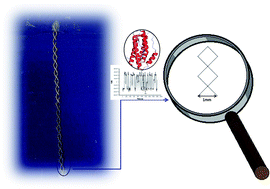
The veil textile was covered first with a layer of silver, and the active side was covered with a layer of carbon like diamond (Fig. 1). Layer-by-layer deposition was used for the active side of the sensor. Polyester textile was coated with a layer of diamond-like carbon on top of a conductive silver layer using anodic arc plasma, in vacuum. The main asset of this type of plasma is the fact that the plasma plume does not fill the vacuum chamber volume (it is localized). Temperature sensitive substrates such as polyester are not immersed into the plasma and can therefore be coated. The operation principle of this plasma source consists on evaporation of the material to be deposited by electron-bombardment and ignition of a plasma in the vapors thus created, using high voltage.18,19
![]() | ||
| Fig. 1 Design of the veil based stochastic sensor. (a) General shape; (b) layer-by-layer deposition: 1 – textile fiber; 2 – silver layer; 3 – carbon like diamond layer. | ||
A SEM image of coated polyester textile is presented in Fig. 2. As can be observed, the coating material penetrates through the fine fibers composing a textile thread and bonds them such that a continuous conductive fiber is obtained.
The silver side was used as electrical contact, while the carbon side was used as the sensing part. The carbon side was modified with three types of maltodextrines having different dextrose equivalences, MD-1, MD-2, and MD-3 by immersion into 10−3 mol L−1 maltodextrines solutions (MD-1, MD-2, or MD-3) for 24 hours. After the immersion, the fabric pieces were left to dry, at room temperature, for another 12 hours. A C-veil piece of fabric, modified with maltodextrine can be used for one day with high reliability (RSD (%) for sensitivity is lower than 0.1%). After a day, the sensitivity drops, RSD (%) values recorded for the sensitivity for between day's measurements being higher than 47.0%. Before each measurement, the fabric-based sensors were cleaned with deionized water. When not in use, they were kept at room temperature, in a dry place.
| Sensor based on C-veil and | Calibration equation and correlation coefficient (r)* | Linear concentration range (g mL−1) | Limit of determination (g mL−1) | Sensitivity (s−1 g−1 mL−1) |
|---|---|---|---|---|
| a All measurements are the average of ten determinations. * 〈1/ton〉 = s−1; 〈C〉 = g mL−1. | ||||
| MD-1 | 1/ton = 0.038 + 3.31 × 10⁴ × C, r = 0.9996 | 10−8 to 10−6 | 1 × 10⁻⁸ | 3.31(±0.01) × 104 |
| MD-2 | 1/ton = 0.050 + 6.20 × 10¹¹ × C, r = 0.9997 | 10−15 to 10−13 | 1 × 10⁻¹⁵ | 6.20(±0.03) × 1011 |
| MD-3 | 1/ton = 0.133 + 6.62 × 10⁴ × C, r = 0.9993 | 10−8 to 10−6 | 1 × 10⁻⁸ | 6.62(±0.03) × 104 |
The whole blood samples (1–2 mL) were analyzed as collected from patients, without any pretreatment.
| Ch(i) + IL-6(i) ⇔ Ch·IL-6(i) |
![]() | ||
| Fig. 4 Diagrams obtained for the assay of interleukin-6 in whole blood samples using the sensors based on diamond-like carbon based veil impregnated with: (a) MD-1, (b) MD-2, and (c) MD-3. | ||
The response characteristics of the proposed stochastic sensors were shown in Table 2. The signatures of IL-6 determined using different stochastic sensing assays are given by the values of toff (Table 2) which are different for each sensor, and depend on the length, size, geometry of the molecule, as well as its velocity to go inside the channel.
As shown in Table 2 the lowest limit of determination (1 fg mL−1) and the highest sensibility (6.20 × 10¹¹ s−1 g−1 mL−1) were obtained when the MD-2 modified C-veil based sensor was used. Low values for the RSD (%) values of sensitivity were recorded, these proving the stability and accuracy of the proposed sensors. This sensor showed a better stability and a better signal than the other two sensors, in experimental measurements. This response of the sensor based on MD-2 can be correlated with the structure of MD-2 which is between tide helix (MD-1) and coil (MD-3), and favorized a better chemistry inside its channel.
Comparing the results presented in Tables 1 and 2, the sensor based on MD-2 present a lower limit of determination than those shown by the methods in Table 1.
Each sensor can only be used for one day, when more than 50 measurements were performed; for these measurements the RSD (%) recorded for sensitivity were less than 0.1%. In between days, the RSD (%) recorded for the sensitivity was higher than 47%, showing that the sensors based on veil cannot be used. Accordingly, the lifetime of the sensors designed is 1 day.
Selectivity was checked versus two other cytokines: MCP-1 and TNF-α, as well as versus some adipokines like leptin and PAI-1. For these substances were obtained different toff values, proving that the proposed sensors are selective.
Recovery tests were performed for the assay of IL-6 in whole blood samples. Different amounts of IL-6 were added to the whole blood samples to give certain concentrations. The results shown in Table 3 proved that IL-6 an be reliable assaied in whole blood samples: the accuracy of measurements were demonstrated by recoveries of IL-6 which were higher than 97.00%, while the precision was given by the RSD (%) values for recovery tests and for the assay of IL-6 in whole blood samples – RSD (%) values being lower than 0.40%.
| Sample no. | Modifier | Paired t-test | ||
|---|---|---|---|---|
| MD-1 | MD-2 | MD-3 | ||
| IL-6, ng mL−1 | ||||
| a All results are the average of four measurements. | ||||
| 1 | 4.0 ± 0.1 | 3.4 ± 0.2 | 4.0 ± 0.2 | 2.04 |
| 2 | 3.0 ± 0.2 | 2.2 ± 0.2 | 3.1 ± 0.1 | 2.56 |
| 3 | 1.0 ± 0.1 | 0.9 ± 0.1 | 0.8 ± 0.1 | 1.34 |
| 4 | 3.0 ± 0.1 | 3.2 ± 0.1 | 3.5 ± 0.2 | 1.25 |
| 5 | 6.0 ± 0.1 | 6.3 ± 0.1 | 5.2 ± 0.2 | 3.02 |
| 6 | 6.2 ± 0.2 | 6.8 ± 0.2 | 6.0 ± 0.2 | 0.96 |
| 7 | 18.0 ± 0.3 | 20.0 ± 0.3 | 17.1 ± 0.1 | 3.07 |
| 8 | 1.7 ± 0.1 | 1.7 ± 0.1 | 1.1 ± 0.1 | 1.01 |
| 9 | 11.0 ± 0.3 | 10.9 ± 0.2 | 10.7 ± 0.2 | 2.23 |
| 10 | 14.0 ± 0.2 | 13.8 ± 0.2 | 13.0 ± 0.2 | 2.20 |
| Recovery% | 99.98 ± 0.11 | 98.65 ± 0.10 | 97.62 ± 0.13 | — |
Paired t-test at 99.00% confidence level was performed for the results obtained for the assay of IL-6 in ten whole blood samples (Table 3). All values calculated for pair-t test at the 99.00% confidence level are less than the tabulated theoretical value: 4.032. Accordingly, there is no statistically significant difference between the results obtained using the proposed sensors at 99.00% confidence level, for the assay of IL-6 in whole blood samples.
| SWCNTs | Single walled carbon nanotubes |
| SWCNTFs | Single walled carbon nanotubes forests |
| ECL | Electrochemiluminescence |
| Ab | Anti-body |
| HRP | Horseradish peroxidase |
| HCPE | Heated carbon paste electrode |
| NPs | Nanoparticles |
| ERGO | Electrochemically reduced graphene oxide |
| GNR | Graphene nanoribbon |
| PS | Polymer |
| NCs | Nanocomposites |
| HSPCE | Heated screen-printed carbon electrode |
| This journal is © The Royal Society of Chemistry 2015 |