DOI:
10.1039/C5RA04491J
(Paper)
RSC Adv., 2015,
5, 34549-34556
Synthesis of a hierarchical SiO2/Au/CeO2 rod-like nanostructure for high catalytic activity and recyclability†
Received
14th March 2015
, Accepted 9th April 2015
First published on 9th April 2015
Abstract
Uniform hierarchical SiO2/Au/CeO2 rod-like nanostructures were successfully fabricated by combining three individual synthesis steps, in which sub-5 nm gold nanoparticles (Au NPs) were coated with a mesoporous CeO2 shell. This method involves preparation of rod-like silica particles, deposition of Au NPs through a self-assembly procedure and then sequential deposition of CeO2 layers. To investigate the catalytic structure, the obtained sample was characterized by several techniques, including transmission electron microscopy (TEM), X-ray powder diffraction (XRD), N2 adsorption–desorption isotherms (BET), and UV-vis diffuse reflection spectroscopy. It was found that SiO2/Au/CeO2 possessed an integral core shell structure including encapsulated Au NPs as core and mesoporous CeO2 as shell. Meantime, the inner silica plays an important role in the morphology control and improvement of the catalyst mechanical strength. The sample shows unique features such as uniform rod-like morphology, well dispersed Au NPs, and large specific surface area. The results of reaction performance indicate that the synthesized SiO2/Au/CeO2 catalysts exhibit significantly enhanced catalytic activity. Moreover, the catalytic activity of our as-prepared nanocomposite catalysts was well maintained even after 8 repeated cycles. It is clear that the core–shell composites can be used as effective nanoreactors with superior catalytic activity and recyclability due to their unique structural features.
1. Introduction
Since the seminal work of Haruta,1 Au NPs have attracted considerable attention because they show specific catalytic properties, which the bulk gold material does not possess. Over the past few decades, nanosized gold particles have been found to have extraordinary catalytic properties in a variety of industrially relevant reactions, such as preferential oxidation of CO, hydrocarbon combustion, propylene epoxidation, methanol synthesis, water gas shift reaction, environmental catalysis and hydrogenation reactions.2–6
It is generally accepted that the catalytic activity of Au NPs is critically dependent on their size, shape, and the surface state.7 Among those, the size gold particle is a very important parameter to affect the catalytic properties. For most reactions, catalysts with Au particles size below 6 nm can display good activity.8,9 It is well known that small Au nanoparticles encapsulated in the support behave more like individual Au atoms, which are highly active. Furthermore the election affinity and electron transfer of neutral Au particles largely depend on their size.10,11 Unfortunately, due to their high surface energy, nanosized gold particles are relatively unstable and tend to rapidly aggregate into larger clusters during the processes of calcination treatment and catalytic reaction, which results in the rapid deactivation.12–14 In this regard, development of Au nanocatalyst possessing high reaction stability and anti-sinter capacity is a primary challenge. Recently, an effectively approach for the protection of catalytically active nanoparticles is to build core shell structure in which Au NPs are isolated by the shell,15–21 which is always SiO2 due to its stable property, can control the formation of composite particles with low leakage rates. Lee et al.22 reported a core shell catalyst, SiO2 as spheres and Au NPs residing inside the spheres, which showed superior catalytic activity and stability for reduction of 4-NP. However, the SiO2 could only play a dispersion role for Au NPs because SiO2 is an inert oxide which has quite weak metal-support interaction with the gold. As a result, the active oxide, such as CeO2, SnO2, La2O3, and TiO2 replacing SiO2 is a good choice. This is owing to the existence of active oxides shell can not only stabilize the metal phase to against aggregating, but also gives rise to novel properties due to the strong metal-support interaction between the surface of the Au NPs and the support layer.
Among the active oxides that have been studied, CeO2 have been of increasing interest in catalyst for their unique structural properties.23,24 Cerium is the most important functional rare earth oxide and widely used in many different application areas owing to its outstanding physical and chemical properties.25–27 It is also has been recognized as a prevalent supporting material for catalysis at supported Au nanoparticles.28 Au–CeO2 systems have drawn continuous attention because of its high oxygen storage capacity, abundant oxygen vacancy defects between the III and IV oxidation states and the thermal stabilizing behavior, giving rise to the enhanced rates of the reaction.29–33 Considering these properties, it is wise to choose the ceria as shell, on one hand, structural feature of CeO2 shell encapsulation will be quite effective to prevent the Au NPs from aggregating in the processes of activation and reaction. On the other hand, the encapsulation also increases the contact area between the Au NPs and the CeO2 matrix, which allows more efficient electron transfer that enhances the synergistic effect and further improves the catalytic ability.
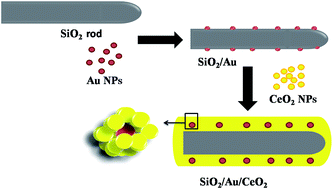
Herein, in this paper, we report the preparation of rod-like SiO2/Au/CeO2 hierarchical nanostructures with Au NPs embedded in the inner surfaces of CeO2. The detailed structure and synthetic procedure was depicted in Fig. 1. Firstly, monodisperse rod-like SiO2 were obtained with an interesting wet-chemical route and chosen as cores to keep catalytic structural stability, because they have excellent chemical stability and easy chemical modification. Meantime, the unique 1D structure may facilitates their potential applications in electronics and optoelectronics.34 Then, tunable amount of Au NPs were absorbed on the surface of SiO2 cores via colloidal dispersion. Finally, the as-prepared SiO2/Au collides were coated with a thin mesoporous CeO2 layer to boost catalytic activity, and stability of Au NPs. When used in the reduction of 4-nitrophenol (4-NP) to 4-aminophenol (4-AP), the catalyst exhibits an enhanced catalytic activity and recyclability.
 |
| | Fig. 1 Schematic illustration of the synthetic procedures for SiO2/Au/CeO2 nanocomposites. | |
2. Experimental section
2.1. Materials
1-pentanol (≥99%), polyvinyl pyrrolidone (PVP, average molecular weight Mn = 40.000), ethanol, deionized (DI) water, sodium citrate dihydrate (99%), ammonia (28 wt%), tetraethyl orthosilicate (TEOS), sodium borohydride (NaBH4), HAuCl4 (10 mg mL−1), γ-aminopropyl-triethoxysilane (APTES), hexamethylenetetramine (HMT) and cerium(III) nitrate hexahydrate (Ce(NO3)3·6H2O) were purchased from the China National Pharmaceutical Group Corp. All reagents were used without further purification.
Synthesis of rod-like SiO2 particles. The rod-like silica particles were prepared by a modified strategy described by Kuijk et al.35 Briefly, 1-pentanol (300 mL), PVP (30 g), ethanol (3 mL), deionized water (8 mL), sodium citrate dihydrate solution (0.18 M, 4 mL), concentrated ammonia solution (28 wt%, 4 mL), TEOS (1.92 mL) in a 500 mL round-bottom flask for 12 h at room temperature. Next, the reaction mixture was centrifuged at 1500 rpm for 15 min, successively washed with ethanol and water for 2 times. To remove small rods and improve monodispersity, the rods were centrifuged two times at 700 rpm for 15 min and the product was collected and dried at 60 °C for 12 h.
Synthesis of SiO2/Au. 0.2 g of silica rods were transferred into a mixture of isopropanol (100 mL) and 1 mL APTES, and heated up to 80 °C for 12 hours to functionalize the silica surface with amino groups. The treated SiO2 were washed with ethanol twice and dried in vacuum at 50 °C overnight, then re-dispersed in 80 mL of deionized water. SiO2/Au was obtained by the reduction of HAuCl4 with NaBH4 under the protection of trisodium citrate. Typically, 80 mL of above SiO2 aqueous solution was mixed with HAuCl4 (0.72 mL) and trisodium citrate (40 mg mL−1, 1.2 mL). After 30 min, NaBH4 (0.1 M, 9 mL) was immediately injected to the above solution. The color of the solution was changed from light yellow to light red. After stirring at room temperature for 2 h, the Au colloids were completely absorbed, as indicated by the discoloration of the solution. The SiO2/Au was collected by centrifugation, and washed more than five times with water to completely remove the trisodium citrate and dried at 50 °C for 12 h.
Synthesis of hierarchical SiO2/Au/CeO2 core–shell composites. The SiO2/Au/CeO2 was synthesized by homogeneous precipitation and subsequent calcination process. The as-obtained SiO2/Au rods (1 g) were dispersed ultrasonically in a mixed solution of water (40 mL) and ethanol (40 mL). Ce(NO3)3·6H2O (0.05 g) and HMT (0.2 g) were added in turn. Then, the temperature of the mixture was increased to 70 °C and kept under reflux for 2 h before being cooled to room temperature. The products were purified by centrifugation and washed with water, then dried at 50 °C. Finally, the products were calcined in air at 300 °C for 3 h.
Synthesis of CeO2/Au. For comparing the catalytic activity, the CeO2/Au catalysts were also prepared. For the synthesis of CeO2 NPs, similar synthetic procedures were followed previous stage without adding the SiO2/Au rods. Then, CeO2/Au was synthesized by deposition precipitation method using urea as the precipitating agent. Briefly, 0.2 g CeO2 nanoparticles were dispersed in 80 mL water and then the required amounts of HAuCl4 (0.02 mmol) and urea (1.9 mmol) were added under stirring conditions. The temperature of the reaction mixture was gradually increased up to 80 °C. The stirring was continued for 12 h at the same temperature and the suspension was cooled to room temperature. The obtained slurry was washed with water several times and dried at 50 °C for 12 h. Finally, the products were calcined in air at 300 °C for 3 h.
2.2. Characterization
The particle size and shape were analyzed with TEM images using a JEM-2010 transmission electron microscope (TEM) with an accelerating voltage of 100 kV. The X-ray diffraction patterns of the products were collected on a Bruker D8 Advance Diffractometer (Germany) with Cu-Kα radiation (λ = 1.5418 Å) at a scanning rate of 0.02 S−1 in the 2θ range from 20°to 90°, with an operation voltage and current maintained at 40 kV and 40 mA. The BET surface area distribution of the products were measured by N2 adsorption–desorption test on an ASAP 2020 (Micromertics USA) measuring instrument. The pore size distributions were calculated from desorption branch of the N2 isotherm using the Barrett–Joyner–Halenda (BJH) analyses. The UV-visible diffuse reflectance spectra were measured on a UV-3600 spectrophotometer equipped with a lab sphere diffuse reflectance accessory.
2.3. Catalytic test
The catalytic properties were investigated by the reduction of 4-nitrophenol (4-NP) to 4-aminophenol (4-AP) with NaBH4 under ambient temperature. Typically, the 4-NP (0.012 M, 0.25 mL) and NaBH4 aqueous solution (0.5 M, 0.5 mL) were added to quartz cell. Then, 0.5 mL of aqueous dispersion of the catalyst particles (0.5 mg mL−1) was added to the above suspension, and the suspension was maintained at room temperature. The UV-vis absorption spectra of the mixture was measured to evaluate the catalytic activity and stability, as the reactant of 4-NP has a strong absorption peak at 400 nm, while the product of 4-AP has a median absorption peak at 300 nm. To determine the catalytic recycling properties, the catalyst was separated after reaction for 1 h, and washed thoroughly with water and ethanol, followed by drying at 60 °C for 12 h in vacuum oven and calcinated at 300 °C. Finally, the catalyst was dispersed in a new reaction system for subsequent catalytic experiments under the same reaction conditions.
3. Results and discussion
3.1. Structure and morphology of rod-like SiO2/Au/CeO2 catalyst
The work is to synthesize rod-like SiO2/Au/CeO2 catalytic system with core–shell structure to enhanced stability and activity of Au NPs. The catalyst has a sandwich structure consisting of a SiO2 core, a layer of Au NPs and mesoporous CeO2 nanocrystalline shell. As illustrated in Fig. 1, the synthesis procedures of core shell structured nanocatalysts involve three steps and each step is well controlled. Firstly, the SiO2 particles were obtained from the hydrolysis of TEOS. The TEM of the resultant SiO2 sample, as presented in Fig. 2a, show the rod-like morphology of the particles, with an average size of lengths of ∼2 μm and diameters of ∼200 nm. Gold particles were then dispersed onto the SiO2 rods by a sol-immobilization method. As shown in Fig. 2b, a number of uniform gold NPs that highly dispersed on the surface of SiO2 microspheres can be observed. In this case, all the Au NPs possessed approximately the size with about 3.4 nm and a narrow size distribution. And finally, the as-prepared SiO2/Au collides were coated with a thin CeO2 layer by addition of a certain amount of Ce(NO3)3. From the TEM results (Fig. 1c and d), the alternate dark and bright borderline are clearly found, suggesting that the shells of SiO2/Au/CeO2 are synthesis successfully. Moreover, their morphologies are well maintained before and after calcinations. Significantly, as revealed in Fig. 2e and f, SiO2/Au rode was coated by a dense CeO2 layer built up of hundreds of ultra small CeO2 nanoparticles self-assembled together and the thickness of the wall is estimated to be 10 nm and quite loose. Moreover, the energy-dispersive X-ray analysis on SiO2/Au/CeO2 (Fig. S1†) confirms that the samples contain Au, Ce and Si elements. Additionally, the sample with the Au content is 1.4% from the EDX analysis.
 |
| | Fig. 2 TEM images of (a) rod-like SiO2, (b) SiO2/Au composites, (c) SiO2/Au/CeO2 before calcinations, (d–f) SiO2/Au/CeO2 after calcinations in different magnification. | |
In order to more clearly observe the state of Au NPs and the core shell structure, high-resolution transmission electron microscopy (HRTEM) were obtained. As can be noted, the marked white circles in Fig. 3a and b suggests that Au particles were completely covered with CeO2 nanoparticles and closely contact with inner wall of CeO2 shells. The shells are composed of uniform CeO2 nanoparticles that are ∼5 nm in size and loosely bound together (Fig. 3b). Au NPs with the average size of 4 nm and no major changes were observed after being coated with CeO2. In this situation, the APTES plays an important role in connecting the Au NPs with SiO2 by electrostatic interaction. According to our previous work,36 the strong chemical affinity between Au and primary amines of APTES can protected Au NPs from sintering in the TiO2 coating process in a high temperature (85 °C). Therefore, in CeO2 coating process, the strong electrostatic interaction that effective prevent the Au NPs from sintering in the temperature of 70 °C is not surprising. Furthermore, the obvious lattice fringes in the HRTEM image Fig. 3c confirm the high crystallinity of the sample. They are crystalline with an interplanar spacing of 0.312 nm corresponds to the (111) plane of the cubic CeO2 phase (Fig. 3d) which is in good agreement with the wide-angle XRD results. All the results indicated that the SiO2/Au/CeO2 has mesoporous and hierarchical structure, which may endows high specific surface area and a large number of specific surface sites designed for the promotion of catalytic activity.37
 |
| | Fig. 3 (a–c) HRTEM images of the obtained SiO2/Au/CeO2, (d) the SAED pattern obtained from SiO2/Au/CeO2. | |
Fig. 4 presents the XRD patterns of different samples. As can be seen, amorphous SiO2 presents a broad feature at 2θ = 22°, and the face-centered cubic gold peaks appear at 2θ = 38.18°, 44.39°, 64.58° and 77.54° (JCPDS 65-2870). After the deposition of CeO2 shell, typical peaks for CeO2 could be observed in Fig. 3b and c, which confirm that the successful coating of CeO2. Just as show in XRD patterns, the peaks at 2θ = 28.55°, 33.08°, 47.48°, 56.33°, and 76.70° can be indexed to the characteristic (111), (220), (220), (311) and (331) reflections of fluorite-phase CeO2, respectively (JCPDS no. 34-0394).26 No extra lines due to the additive oxides or new-formed mixed phases are found, which is similar to the results reported in the literature.38 In particular, Fig. 3b and c are the samples before and after calcinations suggest that the mesoporous CeO2 shell after calcinations at 300 °C exhibits higher crystallinity than that of its precursor, while their morphologies are well maintained (Fig. 2c and d). Interesting, the gold peak intensity of SiO2/Au/CeO2 composite particles became much weaker than that of the SiO2/Au. Possibly, this is due to the gold particles are well coated with CeO2 particles and the outer CeO2 shell weaken the phase transformation of inner gold particles to some degree. A similar phenomenon was also found with SiO2 peaks, which suggested that the existence of the outside ceria oxide layer may prevent the diffraction of SiO2 to a certain extent.39 Moreover, the peak of gold has little change after calcinations, it proof the special structures with the Au NPs embedded inside the CeO2 shell protected the former from moving together and sintering in the calcinations process (Fig. 5).
 |
| | Fig. 4 XRD patterns of (a) SiO2, (b) SiO2/Au, (c and d) SiO2/Au/CeO2 before and after calcinations. | |
 |
| | Fig. 5 UV-vis absorption spectra of (a) SiO2, (b) SiO2/Au, (c) SiO2/Au/CeO2. | |
Adsorption studies were carried out by the UV-vis spectra of the ethanol solutions. For comparison, the UV-vis spectrum of SiO2 and SiO2/Au are also presented. As shown in Fig. 4, the aqueous solutions have peak absorption wavelength at 300 and 556 nm (Fig. 4c), respectively. The strong absorption band with a maximum around 300 nm can be related with the charge-transfer transitions from O 2p to Ce 4f in CeO2.40,41 In addition, the peak absorption wavelength at 556 nm is the characteristic of nanocrystalline Au particle. Interestingly, an adsorption band indexed to Au centred at 556 nm exhibits red-shift compared with SiO2/Au (Fig. 4b). It is well known that Au NPs ranging from 3 to 20 nm exhibit SPR absorption at around 520 nm.42 Nevertheless, CeO2, a dielectric material, with higher refractive index (2.2) than that of Au (0.47), leads to a SPR peak shift to about 556 nm.43 Besides, the peak of gold in SiO2/Au/CeO2 is became weak and further affirm that the surface of supported-Au NPs core is covered with CeO2 shell, which is in accordance with the results of TEM images (Fig. 3b).
The porous nature of the outer shell was further investigated by the BET method. Based on the BET results (Fig. 6), the N2 adsorption isotherms of the sample can be classified as type IV because of the obvious hysteresis loop ranging from 0.4 to 1.0 in the relative pressure, simultaneously revealing the existence of a mesoporous and macroporous region of the core shell structure.36 The BET surface area, average pore diameter and total pore volume are showed in Table S1,† respectively. As can be seen, the BET surface area of SiO2/Au oxide support is only 21 m2 g−1. However, it was dramatically increased to 110 m2 g−1 after coating of CeO2 particles. The pore size distribution derived from the desorption branch using the Barrett–Joyner–Halenda (BJH) method shows a narrow pore size distribution centered at about 5 nm (inert in Fig. 6). Obviously, this finding affirms formation of the mesoporous structure of the SiO2/Au/CeO2.
 |
| | Fig. 6 N2 adsorption–desorption isotherms of SiO2/Au/CeO2 and inert is corresponding pore size distribution curves. | |
3.2. Catalytic performance
To explore the advantages of novel SiO2/Au/CeO2 nanostructures as catalyst, we chose the reduction of 4-NP to 4-AP by NaBH4 at room temperature as a model reaction and reduction process was monitored by UV-vis absorption spectroscopy.44 This model reaction has been widely employed to evaluate the catalytic activity of noble metal nanoparticles, and the color change of the solution involved in the reduction also provides a simple spectrophotometry method to monitor the catalytic reaction kinetics. Under the neutral or acidic condition, aqueous 4-NP showed a peak centered at 317 nm (Fig. 7a, black spectrum). Upon the addition of NaBH4, the absorption peak of 4-NP goes a red shift from 317 nm to 400 nm (Fig. 7a, blue spectrum), which can be attributed to the formation of 4-nitrophenolate ions under the alkaline conditions. From Fig. S1,† no change in the absorption with the absence of catalyst indicates that the reduction does not proceed only belongs to NaBH4. In contrast, after addition of a trace amount of catalysts into the system, the intensity of the characteristic absorption peak at 400 nm corresponding to 4-nitrophenol quickly decreased and the characteristic absorption of 4-aminophenol at 300 nm (Fig. 7a, red spectrum) appeared accordingly, meaning that the formation of 4-AP has taken place. Additionally, in our experiment, the progress or kinetics of the reduction reaction was monitored by recording the absorbance at 400 nm, because the peak at 400 nm was much stronger than that at 300 nm. Fig. 7b shows the evolution of the absorption spectrum versus and the reaction time after addition of the SiO2/Au/CeO2. It is clear that the reaction is so fast that the conversion of 4-NP was more than 50% within the initial 180 s and reduction of 4-NP into 4-AP was completely finished in 12 min with the color change of bright yellow to colorless was observed. For comparison, the reduction reactions using unprotected CeO2/Au (Fig. S3b†) and SiO2/Au (Fig. S3a†) comparticles were also carried out under the same conditions. Fig. 7c and d show the evolution of the UV-vis spectra of the 4-NP reaction solution when the CeO2/Au and SiO2/Au are used as a catalyst. It can be seen that the reaction by CeO2/Au was completely finished at almost 15 min. On the other hand, for the SiO2/Au, the absorbance of 4-nitrophenolate ions only decreases by half after 10.5 min, indicating that SiO2 was not a good support and the size of Au nanoparticles was relatively large (more than 40 nm) after the calcination process, thus suppressing significantly the reduction reaction. These comparative results implied that the prepared SiO2/Au/CeO2 catalyst exhibited higher catalytic activity than SiO2/Au and traditional noble metal supported CeO2/Au. As analyzed before, this behavior can be explained in terms of the following aspects. First, the uniform rod-like particles can better dispersion in the reaction solution without gather together. Second, the large contact areas between Au NPs and CeO2 matrices promote the higher synergistic effect than CeO2/Au will accelerate the reduction of 4-NP to 4-AP. Third, unique core shell structure can against the Au NPs aggregating in the calcination procedure and the thin CeO2 shells are porous and quite loose (Fig. 3b), which will has latter influence on the access of reactant to the active sites. Moreover, it is also finding that the variation of the absorption peak with reaction time is quite different. For CeO2/Au catalysts (Au loading on the outer surface), the initial reaction rate is very fast and decreases gradually. In contrast, for SiO2/Au/CeO2 catalyst (Au loading on the inner surface), the reaction rate is slow initially, becomes fast suddenly after a specific reaction time, and then reduces step by step. The results suggest that the diffusion of reactants into inner spaces is the rate-limiting step in the reaction process for SiO2/Au/CeO2 catalysts with active noble metal nanoparticles decorated in the inner wall. Therefore, different thickness of CeO2 shells will affect the diffusion of reactant in the macroporous materials and may influence the reaction activity.
 |
| | Fig. 7 (a) UV-vis spectra of 4-NP before (black line) and after (blue line) adding NaBH4 and 4-AP (red line) solution, (b and d) UV-vis spectra of catalytic reduction of 4-NP to 4-AP: (b) SiO2/Au/CeO2 (c) CeO2/Au (d) SiO2/Au. | |
So, to study the relationship between the catalytic performance and the CeO2 shell thickness, CeO2 layer was tuned by varying the feeding amounts of Ce(NO3)3 (0.05 g, 0.1 g, 0.15 g) with the amount of Au/SiO2 (0.2 g) unchanging. The products were named SiO2/Au/CeO2 (0.05), SiO2/Au/CeO2 (0.1) and SiO2/Au/CeO2 (0.15) and the detail was discussed in the ESI (Fig. S4†). Then, all the samples were used for the reduction of 4-NP. Fig. 8a presents the relationship between catalytic activity and the thickness of CeO2 shell. The ratios of Ct and C0, which describe the 4-NP concentration at time t and 0 min, were determined by the relative absorption intensity at 400 nm. Linear relationships between ln(Ct/C0) and reaction time are obtained in the reduction catalyzed by different SiO2/Au/CeO2 samples, which confirms the first-order reaction kinetics. According to the linear relationship, the reaction rate constant k was determined from the slope of the plots of ln(Ct/C0) vs. time and was calculated to be 0.27 min−1, 0.50 min−1, and 0.77 min−1 for the reactions using SiO2/Au/CeO2 with mesoporous CeO2 thickness decreasing, respectively. The results reaction rate indicate that decreasing the mesoporous shell thickness can help to increase the catalysis efficiency, which is mainly due to the shorter diffusion distance and thus better mass diffusion for the catalysis with thinner mesoporous shell.
 |
| | Fig. 8 (a) Relationship of ln(Ct/C0) and reaction time for the reduction of 4-NP catalyzed by different samples: (1) SiO2/Au/CeO2 (0.05) (2) SiO2/Au/CeO2 (0.1) (3) SiO2/Au/CeO2 (0.15) (b) the reusability test of SiO2/Au/CeO2 and CeO2/Au. | |
On the other hand, the stability and recyclability are of great importance for the practical applications of catalysts.45 Herein, the cyclic stability of the as-prepared SiO2/Au/CeO2 and CeO2/Au catalysts was evaluated by monitoring the catalytic activity during successive cycles of the reduction reaction. As shown in Fig. 8b, SiO2/Au/CeO2 catalyst exhibits relatively stable catalytic performance and without visible reduction in the conversion for the same reaction time even after running for more than 8 cycles. TEM image (Fig. 9b) showed that Au nanoparticles remained small particle size about 5 nm after 8 successive cycles, it mainly because of the ceria shells offering an obstacle to prevent the Au NPs from detaching of the supports and connecting with each other during the plenty of repeating catalytic processes. By comparison, as for the CeO2/Au, the conversion of 4-NP reduces to 86% after four cycles of catalytic tests and to 61% after eight cycles of catalytic tests. The low stability and reusability may be related with the agglomeration of Au NPs and leaching of the noble metals from the surface of CeO2. As show in Fig. 9a, the Au NPs agglomerated extensively to form particles larger than 20 nm in size during the repeat operations of calcinations and reactions. The bigger Au NPs may lose most active sites and lead to rapid decay of catalytic activity.46 All of the above results demonstrated that the structural feature of CeO2 shell encapsulation was feasible for the design of active, stable, and recyclable nanocatalysts.
 |
| | Fig. 9 TEM of catalysts used for five cycle tests (a) CeO2/Au, (b) SiO2/Au/CeO2. | |
4. Conclusion
We have demonstrated a successful synthesis of hierarchical SiO2/Au/CeO2 rod-like catalyst constructed by the sub-5 nm Au NPs imbedded CeO2 nanocrystals. The obtained catalysts show good dispersion of gold nanoparticles, mesoporous CeO2 shells and decreased leaching of noble metals. The thin CeO2 shell can immobilize the Au NPs cores and prevent possible migration and sintering in calcination and reaction procedures, leading high catalytic stability. Furthermore, the mesoporous core shell structure provide the large contact areas between Au NPs and CeO2 particles can promote the metal-support interaction, leading to an improvement in catalytic activity. The results of reduction of 4-nitrophenol (4-NP) demonstrate that the SiO2/Au/CeO2 core shell composites are highly active and recyclability. Particularly, even after 8 cycles of reuse, the catalytic activity and the structure of the composite catalysts were well retained. Further work will involve the varying of protective layers, such as TiO2 or Co3O4, to get unique core shell composites with higher reactivity and stability.
Acknowledgements
The authors are grateful to the financial supports of National Natural Science Foundation of China (Grant no. 21376051, 21106017, 21306023 and 51077013), Natural Science Foundation of Jiangsu Province of China (Grant no. BK20131288), Fund Project for Transformation of Scientific and Technological Achievements of Jiangsu Province of China (Grant no. BA2011086), China Scholarship Council (no.201308320238), and Instrumental Analysis Fund of Southeast University.
References
- M. Haruta, N. Yamada, T. Kobayashi and S. Iijima, J. Catal., 1989, 115, 301–309 CrossRef CAS.
- C. Wen, Y. Zhu, Y. C. Ye, S. R. Zhang, F. Cheng, Y. Liu, P. Wang and F. Tao, ACS Nano, 2012, 6, 9305–9313 CrossRef CAS PubMed.
- W. Cui, Q. Xiao, S. Sarina, W. Ao, M. Xie, H. Zhu and Z. Bao, Catal. Today, 2014, 235, 152–159 CrossRef CAS PubMed.
- R. Mallampati and S. Valiyaveettil, Nanoscale, 2013, 5, 3395–3399 RSC.
- X. Fang, Y. Bando, U. K. Gautam, T. Zhai, S. Gradečak and D. Golberg, J. Mater. Chem., 2009, 19, 5683 RSC.
- Q. Zhang, D. Q. Lima, I. Lee, F. Zaera, M. Chi and Y. Yin, Angew. Chem., 2011, 50, 7088–7092 CrossRef CAS PubMed.
- Z. Ma and S. Dai, Nano Res., 2010, 4, 3–32 CrossRef PubMed.
- L. Guczi, G. Peto, A. Beck, K. Frey, O. Geszti, G. Molnar and C. Daroczi, J. Am. Chem. Soc., 2003, 125, 4332–4337 CrossRef CAS PubMed.
- J. A. Farmer and C. T. Campbell, Science, 2010, 329, 933–936 CrossRef CAS PubMed.
- J. Gong, Chem. Rev., 2012, 112, 2987–3054 CrossRef CAS PubMed.
- H. Chong, P. Li, J. Xiang, F. Fu, D. Zhang, X. Ran and M. Zhu, Nanoscale, 2013, 5, 7622–7628 RSC.
- R. Güttel, M. Paul, C. Galeano and F. Schüth, J. Catal., 2012, 289, 100–104 CrossRef PubMed.
- A. Cao, R. Lu and G. Veser, Phys. Chem. Chem. Phys., 2010, 12, 13499–13510 RSC.
- C. Zhang, Y. Zhou, Y. Zhang, Q. Wang and Y. Xu, RSC Adv., 2015, 5, 12472–12479 RSC.
- Q. Zhang, I. Lee, J. B. Joo, F. Zaera and Y. D. Yin, Acc. Chem. Res., 2013, 46, 1816–1824 CrossRef CAS PubMed.
- Y. L. Shi and T. Asefa, Langmuir, 2007, 23, 9455–9462 CrossRef CAS PubMed.
- S. H. Joo, J. Y. Park, C. K. Tsung, Y. Yamada, P. Yang and G. A. Somorjai, Nat. Mater., 2009, 8, 126–131 CrossRef CAS PubMed.
- Q. Zhang, I. Lee, J. Ge, F. Zaera and Y. Yin, Adv. Funct. Mater., 2010, 20, 2201–2214 CrossRef CAS PubMed.
- X. L. Fang, Z. H. Liu, M. F. Hsieh, M. Chen, P. X. Liu, C. Chen and N. F. Zheng, ACS Nano, 2012, 6, 4434–4444 CrossRef CAS PubMed.
- I. Lee, M. A. Albiter, Q. Zhang, J. Ge, Y. Yin and F. Zaera, Phys. Chem. Chem. Phys., 2011, 13, 2449–2456 RSC.
- S. M. Xiang, Y. M. Zhou, Y. W. Zhang, Z. W. Zhang, X. L. Sheng, S. J. Zhou and Z. B. Yang, Dalton Trans., 2014, 43, 11039–11047 RSC.
- J. Lee, J. C. Park and H. Song, Adv. Mater., 2008, 20, 1523–1528 CrossRef CAS PubMed.
- P. Munusamy, S. Sanghavi, T. Varga and T. Suntharampillai, RSC Adv., 2014, 4, 8421 RSC.
- G. Cheng, J. L. Zhang, Y. L. Liu, D. H. Sun and J. Z. Ni, Chem. Commun., 2011, 47, 5732–5734 RSC.
- M. Cargnello, T. Montini, S. Polizzi, N. L. Wieder, R. J. Gorte, M. Graziani and P. Fornasiero, Dalton Trans., 2010, 39, 2122–2127 RSC.
- J. Zhen, X. Wang, D. Liu, S. Song, Z. Wang, Y. Wang, J. Li, F. Wang and H. Zhang, Chemistry, 2014, 20, 4469–4473 CrossRef CAS PubMed.
- D. Zhang, C. Pan, L. Shi, L. Huang, J. Fang and H. Fu, Microporous Mesoporous Mater., 2009, 117, 193–200 CrossRef CAS PubMed.
- Q. Yuan, H. H. Duan, L. L. Li, L. D. Sun, Y. W. Zhang and C. H. Yan, J. Colloid Interface Sci., 2009, 335, 151–167 CrossRef CAS PubMed.
- J. A. Rodriguez, R. Si, J. Evans, W. Xu, J. C. Hanson, J. Tao and Y. Zhu, Catal. Today, 2015, 240, 229–235 CrossRef CAS PubMed.
- X. Liu, H. Yang, L. Han, W. Liu, C. Zhang, X. Zhang, S. Wang and Y. Yang, CrystEngComm, 2013, 15, 7769 RSC.
- P. Xu, R. Yu, H. Ren, L. Zong, J. Chen and X. Xing, Chem. Sci., 2014, 5, 4221–4226 RSC.
- P. Sudarsanam, B. Mallesham, P. S. Reddy, D. Großmann, W. Grünert and B. M. Reddy, Appl. Catal., B, 2014, 144, 900–908 CrossRef CAS PubMed.
- N. Ta, J. J. Liu, S. Chenna, P. A. Crozier, Y. Li, A. Chen and W. Shen, J. Am. Chem. Soc., 2012, 134, 20585–20588 CrossRef CAS PubMed.
- B. X. Li, T. Gu, T. Ming, J. X. Wang, P. Wang, J. F. Wang and J. C. Yu, ACS Nano, 2014, 8, 8152–8162 CrossRef CAS PubMed.
- A. Kuijk, A. van Blaaderen and A. Imhof, J. Am. Chem. Soc., 2011, 133, 2346–2349 CrossRef CAS PubMed.
- Z. Zhang, Y. Zhou, Y. Zhang, S. Xiang, S. Zhou and X. Sheng, RSC Adv., 2014, 4, 7313 RSC.
- J. Qi, J. Chen, G. Li, S. Li, Y. Gao and Z. Tang, Energy Environ. Sci., 2012, 5, 8937 CAS.
- Z.-R. Tang, Y. Zhang and Y.-J. Xu, RSC Adv., 2011, 1, 1772 RSC.
- S. Xiang, Y. Zhang, Y. Zhou, Z. Zhang, X. Sheng and Y. Xu, RSC Adv., 2014, 4, 51334–51341 RSC.
- D. Zhang, F. Li, J. Gu, Q. Xie, S. Li, X. Zhang, G. Han, A. Ying and Z. Tong, Particuology, 2012, 10, 771–776 CrossRef CAS PubMed.
- J. Li, G. Lu, H. Li, Y. Wang, Y. Guo and Y. Guo, J. Colloid Interface Sci., 2011, 360, 93–99 CrossRef CAS PubMed.
- Y. W. Zhang, Y. M. Zhou, Z. W. Zhang, S. M. Xiang, X. L. Sheng, S. J. Zhou and F. Wang, Dalton Trans., 2014, 43, 1360–1367 RSC.
- F. Zhu, G. Chen, S. Sun and X. Sun, J. Mater. Chem. A, 2013, 1, 288 CAS.
- P. Herves, M. Perez-Lorenzo, L. M. Liz-Marzan, J. Dzubiella, Y. Lu and M. Ballauff, Chem. Soc. Rev., 2012, 41, 5577–5587 RSC.
- N. Zhang and Y.-J. Xu, Chem. Mater., 2013, 25, 1979–1988 CrossRef CAS.
- M. S. Chen and D. W. Goodman, Catal. Today, 2006, 111, 22–33 CrossRef CAS PubMed.
Footnote |
| † Electronic supplementary information (ESI) available. See DOI: 10.1039/c5ra04491j |
|
| This journal is © The Royal Society of Chemistry 2015 |
Click here to see how this site uses Cookies. View our privacy policy here.