
Catalytic mechanism study on manganese oxide in the catalytic supercritical water oxidation of nitrobenzene

Xiuqin Dongab, Ya’nan Zhangab, Yongwei Xuab and Minhua Zhang*ab
aKey Laboratory for Green Chemical Technology of Ministry of Education, R&D Center for Petrochemical Technology, Tianjin University, Tianjin 300072, China
bCollaborative Innovation Center of Chemical Science and Engineering, Tianjin 300072, China. E-mail: mhzhang@tju.edu.cn; Fax: +86-22-27406119; Tel: +86-22-27406119

Received 11th March 2015 , Accepted 18th May 2015

First published on 18th May 2015


Abstract

Among all the transition metal oxides, MnO2, which exhibits stable performance in supercritical water oxidation (SCWO), has a relatively high catalytic activity in the catalytic decomposition of organic compounds by oxidation. Hence, for some organics that are difficult to degrade, MnO2 is a commonly used catalyst. However, the mechanism of the catalytic oxidation of organic compounds by a manganese oxide catalyst is not very clear. In this study, the catalytic mechanism of manganese oxide in the supercritical water oxidation of nitrobenzene was discussed via TG-MS, XRD, activity tests and product analysis. In the process of supercritical water oxidation, the catalyst exists in a mixed MnO2–Mn2O3 state, in the role of an electron relay that promotes the generation of strong oxidizing agents (˙OH, O*) and the catalytic oxidation of nitrobenzene.

1. Introduction

Wastewater treatment has become a significant issue for chemical processes on account of the natural laws and rules for maintaining a clean environment.1 As an important chemical raw material as well as a product of industry, nitrobenzene has been widely used in the manufacture of dyes, plastics, pesticides, explosives, pharmaceuticals and lubricating oil.2 Nitrobenzene is usually found in wastewater and has been listed as a priority pollutant due to the mutagenesis and carcinogenesis of the compound.3 The persistence of nitrobenzene in the natural environment has been a serious environmental concern. At present, the existing processes employed are physical,4,5 biochemical,6–9 and chemical oxidation methods,10–12 and the combination of the aforementioned methods.13,14 The physical methods are simple to operate with the disadvantage of a low organic removal rate. Therefore, it is often used as a pretreatment technology, combined with other processing methods. By using biochemical treatment methods, thorough treatment can be achieved with low operation cost. However, the strain requirement is strict and the concentration of organics cannot be too high because of the high toxicity of nitrobenzene. It also takes a significant amount of space for processing, with a high investment cost. Therefore, it is not universally applicable. Chemical oxidation methods, including the Fenton reagent oxidation, ozone oxidation and wet oxidation methods, have the advantage of high removal rate, but ozone is toxic and the handling cost is high. Thus, research into an effective method for nitrobenzene removal has become increasingly important.

Supercritical water oxidation (SCWO) is a powerful technology used to eliminate a wide range of problematic wastes from a wide variety of chemical industries.15–18 Supercritical water (SCW) is a unique medium above the thermodynamic critical point (374 °C, 221 bar).19,20 When exceeding its critical point, the density, dielectric constant and ionic product of water decrease. Supercritical water acts as a non-polar solvent of high diffusivity and excellent transport properties.21–23 During the SCWO process, the organic compounds react completely with the oxidant—mostly oxygen—in a single-phase reaction, forming CO2 and H2O without secondary pollution and with a removal rate above 99%.24

The addition of catalyst not only alleviates the strict requirements with less investment by reducing the temperature and pressure of the reaction, but also increases the reaction rate. The reaction proceeds with a short residence time. The catalyst increases the wastewater treatment capacity of the unit volume reactor and reduces the cost of wastewater treatment.25,26 For some refractory organic wastewater whose emission requirement is strict, catalytic supercritical water oxidation technology is very green and promising. High demands are placed on the physical and chemical properties of the catalyst stability as a result of high temperature, high pressure and strong oxidizing atmosphere in the supercritical water oxidation system. In this research system, MnO2 is proposed as the catalyst because of its high catalytic oxidation activity for organics and its good stability with low solubility in supercritical water.27 Yu and Savage found that bulk MnO2 is an active catalyst for the oxidation of acetic acid under supercritical conditions. It reduces the required reactor volume for treatment by more than 2 orders of magnitude.28 They also used bulk MnO2 as a catalyst for phenol oxidation in supercritical water at 380–420 °C and 219–300 atm. in a flow reactor. The bulk MnO2 catalyst enhances both the phenol removal and CO2 formation rates during supercritical water oxidation (SCWO). The catalytic mechanisms of MnO2 have been studied. The role of the catalyst appears to be to accelerate the formation rate of phenoxy radicals, which then react in the fluid phase by the same mechanism as the non-catalytic SCWO of phenol.29 In the process of formaldehyde adsorption, the surface active groups of O2 and ˙OH radicals of the manganese dioxide oxidize formaldehyde to yield carbon dioxide and water, but the generated water may continue to dissociate into ˙OH free radicals which are involved in the oxidation of formaldehyde.30

The goal of this study was to assess the performance of SCWO for nitrobenzene decomposition. More specifically, the catalytic mechanisms of manganese oxide in the process of nitrobenzene decomposition in supercritical water were investigated.

2. Experiments

2.1. Materials and preparation

The solid catalyst is made by compression molding, drying and calcination with MnO2. The initial concentration of nitrobenzene is 800 mg L−1. The chemicals are shown in Table 1.
Table 1 The chemicals and their specifications
Compound Chemical formula Specification Company
Manganese dioxide MnO2 AR Tianjin Damao Chemical Reagent Factory
Methyl cellulose [C6H7O2(OCH3)3]n AR Tianjin University Kewei Company
Nitrobenzene C6H5NO2 AR Tianjin University Kewei Company


Combined with the investigation results of the catalyst and its usage requirements, adding the proper amount of methyl cellulose can facilitate the forming process of the catalyst. In addition, as a pore forming agent, its decomposition increases the catalyst pore volume and the specific surface area after calcination. The optimum preparation conditions were as follows: 600 MPa molding pressure, 1.5 wt% agglutinating agent content, drying for 1 hour at 120 °C and calcination for 2 hours at 500 °C.

2.2. Apparatus and procedures

The flow chart of the supercritical water oxidation system is shown in Fig. 1. The liquid raw material first flows into a liquid preheater via a high pressure plunger pump to control the temperature, while the air from high-pressure cylinders decompresses and enters a buffer vessel in order to reduce gas flow fluctuation and keep the air flow steady. Then, the air flows into a gas preheater via a compressor, the preheated gas and liquid mixture flows into a tubular fixed-bed reactor where the catalytic oxidation reaction occurs, and then the materials get cooled in a quench cooler. The gas–liquid mixture is separated by the gas–liquid separator. The separated liquid is continuously discharged and the gas goes through a backpressure valve to control the system pressure.
image file: c5ra04322k-f1.tif
Fig. 1 The flow chart of the supercritical water oxidation system. 1 – Waste liquid tank; 2 – ram pump; 3 – liquid preheater; 4 – air cylinder; 5 – buffer vessel; 6 – compressor; 7 – gas preheater; 8 – gas–liquid mixer; 9 – insulation; 10 – reactor; 11 – quencher; 12 – sampler; 13 – gas–liquid separator; 14 – backpressure valve; 15 – gas vessel; 16 – liquid tank.

In the experimental process, the liquid feed flow is automatically controlled by the plunger pump while the gas flow rate can be adjusted through the compressor entrance pressure and outlet circulating pipeline. A compressor with frequency modulation power is supplied for the gas regulator. The pressure of the system is controlled by the backpressure valve. Under normal circumstances, the system pressure fluctuates within the range of ±0.2 MPa.

2.3. Sample analysis

2.3.1 Analysis of the content of nitrobenzene. A HP1100 liquid chromatograph produced by the Agilent Company was used for analyzing nitrobenzene. The conditions for the raw material and the liquid products are shown in Table 2.
Table 2 The analyzing conditions of the raw material and the liquid product
Column Zorbax SB-C18 column, 4.6 × 250 mm, 5 μm
The column temperature 30 °C
Mobile phase Acetonitrile–water (20/80)
Sample size 1 μL
Detector Diode array detector
Detector wavelength 262 nm


2.3.2 Qualitative analysis of the intermediate products. In order to gain a further understanding of the nitrobenzene oxidation process and products in supercritical water, GC-MS was used for qualitative analysis of the intermediate products in this experiment. As the concentration of the intermediate products in the final liquid product was very low, it could not be directly analyzed using liquid chromatography. Samples were extracted with CH2Cl2 and concentrated before analysis.31

A 10 mL sample was extracted with 30 mL CH2Cl2 three times. The extracted liquid was separated using a separating funnel, heated in water bath at 40 °C and concentrated to about 1 mL. Analysis of the concentrated solution was conducted with a GC-MSD. The specific chromatographic conditions are shown in Table 3.

Table 3 Specific chromatographic conditions of intermediate products
Column HP-5ms
Sample size 1 μL
The split ratio 100[thin space (1/6-em)]:[thin space (1/6-em)]1
Inlet temperature 280 °C
Transmission line 280 °C
The column temperature box 90 °C for 1 min, to 270 °C at 15 °C min−1, to 270 °C for 5 min
The ion source 230 °C
Four rod 150 °C
Scanning range 10–500 amu


3. Experimental results and discussion

3.1. Phase behavior change of MnO2 and Mn2O3

In order to study the phase change process of the manganese oxide before and during reaction, thermo-gravimetric mass spectrometry (TG-MS) experiments were performed under air and nitrogen atmosphere. In addition, the MnO2 and Mn2O3 catalysts were characterized using XRD by pattern analysis.
3.1.1 Phase behavior change of MnO2 and Mn2O3 with temperature. Manganese is a transition metal with a 3d54s2 structure of outer electrons, which can form compounds of different valencies with oxygen, such as MnO, Mn3O4, Mn2O3, MnO2, etc. With different oxygen partial pressures and heating temperatures, the various valence states of manganese oxide can be transformed into another form. MnO2 can have different crystal structures, which include some common ones like α-, β-, γ-, and δ-MnO2, whose activity differs significantly.

In order to study the phase change process of MnO2 with temperature, TG-MS experiments were performed under air and nitrogen atmosphere. The experimental results are shown in Fig. 2 and 3.


image file: c5ra04322k-f2.tif
Fig. 2 The TG-MS pattern of MnO2 in air.

image file: c5ra04322k-f3.tif
Fig. 3 The TG-MS pattern of MnO2 in nitrogen.

As shown in Fig. 2, the TG curve slowly declines in air below a temperature of 500 °C and a significant change can be observed in the temperature range of 500–570 °C. The sample had significant weight loss in the temperature range of 500–570 °C, and correspondingly the mass spectrometer detected an O2 ion peak. According to the analysis of the XRD pattern of the catalyst after calcination in air at a temperature of 550 °C, the catalyst was Mn2O3. The standard JCPDS numbers of MnO2 and Mn2O3 are 24-0735 and 41-1442, respectively. The XRD pattern of the catalyst is shown in Fig. 4.


image file: c5ra04322k-f4.tif
Fig. 4 The XRD pattern of the catalyst after calcination in air at 550 °C.

It suggested that in the temperature ranging from 500 °C to 570 °C, the phase transformation process shown in eqn (1) occurred.

 
MnO2 → Mn2O3 + O2 (1)

With reference to the corresponding temperature of the oxygen ion peak in the mass spectrometric detection, the phase transition temperature was 539 °C. The sample weight loss rate was 11.23% in the temperature range from 30 °C to 570 °C, which is slightly higher than the temperature at which MnO2 completely changed into Mn2O3 (9.20%). The high weight loss rate may be caused by the gas adsorption or water desorption of the sample.

In Fig. 3, the TG curve slowly decreases under nitrogen atmosphere at temperatures up to 450 °C, while weight is lost more obviously in the temperature range from 450 °C to 620 °C. There is an inflection point on the TG curve and the weight loss rates are different before and after the point, and correspondingly, two obvious O2 ions peaks were detected by MS in this temperature range and the highest peaks of the corresponding temperatures were at 514 °C and 567 °C. The sample weight loss rate was 10.60% in the temperature ranging from 30 °C to 545 °C, which was slightly higher than the temperature at which MnO2 completely turned into Mn2O3. The relatively high weight loss rate may be caused by the gas adsorption or water desorption of the sample. This shows that a MnO2 phase change occurred and generated Mn2O3 in this temperature range. In the temperature range from 545 °C to 620 °C, further weight loss of the sample may brought about by a further complex change of Mn2O3. It is thought that the peak at 567 °C is caused by the transformation from Mn2O3 to Mn3O4. MnO2, in air under 535 °C, can be converted to Mn2O3 and totally turned into Mn3O4 after the temperature further increases to 1000 °C.32 It is easier to obtain Mn3O4 when heating with lower oxygen concentration and higher temperature.33–36 Thus, the transformation of Mn3O4 occurs more facilely under nitrogen atmosphere than in the air, which is reasonable for explaining why there is only one peak in the air while there are two peaks under nitrogen.

Comparison between the experimental results of the MnO2 TG-MS under different atmospheres indicates that MnO2 undergoes a phase change with increasing temperature that is related to the oxygen partial pressure in the atmosphere. The temperature for the phase change of MnO2 becomes higher with increasing oxygen partial pressure.

3.1.2. Phase change of the catalyst during the chemical reaction process. For the purpose of further investigation of the phase change of MnO2 and Mn2O3 during the reaction process, the MnO2 and Mn2O3 catalysts were characterized using XRD after the reaction at 440 °C finished. The characterization results and the standard patterns are shown in Fig. 5.
image file: c5ra04322k-f5.tif
Fig. 5 (a) X-ray diffraction pattern for fresh MnO2 after reaction. (b) X-ray diffraction pattern for fresh Mn2O3 after reaction. (c) The standard pattern of MnO2. (d) The standard pattern of Mn2O3.

The experimental results indicate that the Mn2O3 and MnO2 catalysts exist in a mixed MnO2–Mn2O3 state after reaction. This shows that at 440 °C, both MnO2 and Mn2O3 mutually transformed into each other so that the two kinds of catalyst achieved the same phase state during the reaction process.

In addition, Mn2O3 transformed into the mixed MnO2–Mn2O3 state after the catalytic oxidation of nitrobenzene at 440 °C, which indicates that in the studied system Mn2O3 can participate in the change shown in eqn (2).

 
Mn2O3 + O2 → MnO2 (2)

3.2. Catalytic activity and stability of the catalysts

3.2.1. The mineralization of organic molecules. Mineralization is the process of organic compounds turning into inorganics, which is related to the decomposition of organic molecules in waste water treatment37–39 and can be effectively evaluated from the total organic carbon (TOC).40–42 Measurement of the TOC was performed to evaluate the mineralization of organic molecules under the optimal process conditions.43 The conditions were as follows: reaction temperature 460 °C, pressure 28 MPa, residence time 7 seconds, and 15 times excess air. The TOC data before reaction is 458.71 mg L−1. The experimental results are shown in Table 4.
Table 4 The experimental results
Nitrobenzene degradation (%) Nitrobenzene/mg L−1 TOC/mg L−1
99.66 2.7 5.3


As we can see from the results, the catalyst has great catalytic efficiency, giving a high level of mineralization of organic molecules.

3.2.2. The stability of the catalysts. For the catalyst, the activity and stability after 18 h on stream are reported, providing data on the long-term performance of the catalyst in the catalytic supercritical water oxidation process. The conditions are as follows: 15.045 g catalyst, reaction temperature 465 °C, pressure 28 MPa, residence time 7 seconds, and 15 times excess air. The results are shown in Fig. 6.
image file: c5ra04322k-f6.tif
Fig. 6 The stability of MnO2.

The time on stream data shows that the degradation is maintained over time and no significant deactivation can be observed, so the re-generation of the catalyst has not been studied. The research will be the key point of the next study.

In other literature, the MnO2 stability is also reported. Bulk MnO2 is a good catalyst for complete oxidation because it combines high activity, hydrothermal stability, activity maintenance, and resistance to metal leaching under the reaction conditions.44,45

3.2.3. Catalytic activity of catalysts MnO2 and Mn2O3. MnO2 will be converted into Mn2O3 in a certain temperature range. In order to investigate the activity of the two kinds of catalysts in the catalytic oxidation of nitrobenzene, MnO2 and Mn2O3 were used as the catalysts in experiments under the same experimental conditions (P = 25 MPa, 15 times excess air), as is shown in Table 5.
Table 5 The results for SCWO of nitrobenzene using different catalysts
Initial phase of catalyst MnO2 Mn2O3
Reaction temperature (°C) 400 440 400 440
Nitrobenzene degradation (%) 65.59 97.76 74.83 97.43


The experimental results show that at 400 °C, the Mn2O3 activity towards the catalytic oxidation of nitrobenzene is much higher than that of MnO2, but is of similar catalytic activity at 440 °C.

At 400 °C, the activity of Mn2O3 is better than that of MnO2. However, at 440 °C, in the MnO2 and Mn2O3 catalyzed oxidation decomposition of nitrobenzene, the catalysts exist in the mixed MnO2–Mn2O3 state after reaction and the contents of the two catalysts are fairly close because of mutual conversion. Thus, at 440 °C, the activity of Mn2O3 is similar to that of MnO2.

3.3. Analysis results of the reaction products

To obtain more information on the catalytic mechanism and oxidative degradation path of nitrobenzene, the oxidative degradation products of nitrobenzene in the liquid phase in supercritical water with catalyst or without catalyst were analyzed under conditions of T = 400 °C and P = 25 MPa. The GC-MS data is shown in Fig. 7 and 8. As shown in Fig. 7, NPs and 1,3-dinitrobenzene are detected in the CSCWO of nitrobenzene.
image file: c5ra04322k-f7.tif
Fig. 7 (a) The chromatogram for CSCWO of nitrobenzene. (b) The mass spectrum of o-nitrophenol. (c) The mass spectrum of 1,3-dinitrobenzene. (d) The mass spectrum of m-nitrophenol. (e) The mass spectrum of p-nitrophenol.

image file: c5ra04322k-f8.tif
Fig. 8 (a) The chromatogram for SCWO of nitrobenzene. (b) The mass spectrum of nitrobenzene. (c) The mass spectrum of aniline. (d) The mass spectrum of hydroquinone.

The GC-MS data for the SCWO of nitrobenzene is shown in Fig. 8. As the concentration of intermediate products in the final liquid products was much lower than that of nitrobenzene, the peak of nitrobenzene cannot be seen completely. Aniline and hydroquinone can be found in the products, besides NPs and 1,3-dinitrobenzene, in the SCWO of nitrobenzene without catalyst.

The intermediate products, which include o-, m-, p-nitrophenol (NPs) and m-dinitrobenzene, are almost identical between the SCWO and the catalytic supercritical water oxidation (CSCWO), according to Fig. 7 and 8. However, aniline and hydroquinone can be found in the reaction without catalyst. The results of the SCWO are in good agreement with those of Lee and Park.31

The fact that aniline and hydroquinone can be found in the product of SCWO proved that nitrobenzene has oxidative ability for oxidizing organic compounds. In addition, the nitrobenzene is reduced to amine. On the other hand, in supercritical water the catalyst has a stronger oxidative ability because of the different oxidation mechanisms, so the phenol is oxidized and can no longer be detected. According to other literature,46 phenols can be oxidized more easily than nitro-compounds in supercritical water.

The fact that NPs and m-dinitrobenzene can be detected in the intermediate products can prove that the nitrobenzene was converted to NPs because of de-ethylation and hydroxylation processes. A portion of the NPs were turned into phenol and ˙NO2. The ˙NO2 reacted with other organics to form such nitro-compound as m-dinitrobenzene, or was mineralized. Then the phenol and nitro-compounds were oxidized into inorganic compounds.

The benzene ring has a stable structure, so the de-ethylation and hydroxylation of organics with benzene rings becomes the rate-limiting step of SCWO. As a result, lots of NPs and organics produced by pyrolysis from NPs like phenols and dinitrobenzene can exist in the oxidation process.

Yang47 found that at the reaction temperature of 400 °C, the mixed catalyst state mainly consists of MnO2. As we can see in Fig. 7 and 8, a lot of phenols exist in the nitrobenzene products, which suggests that a hydroxyl radical oxidation mechanism may play a dominant role in the MnO2 catalysis.

3.4. Catalytic mechanism of the catalyst

During the calcination process, the catalyst mainly exists in the form of MnO2 and Mn2O3 crystals. Under certain conditions, the two crystals can change into each other, so the study of the structure and catalytic activity of the two phases of the manganese oxide is the basis for understanding the catalytic oxidation mechanism of the catalysts.

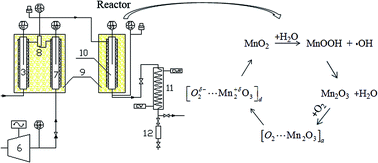
Based on the cracking-free radical oxidation mechanism of the supercritical water oxidation process proposed by Yang48 and Ding,49 and research on the characteristics of manganese oxide combined with the results of this study, the following catalytic oxidation mechanism is proposed, as is shown in eqn (3)–(13).

First, under supercritical conditions, the water splits:

 
H2O → ˙H + ˙OH (3)

Because of the strong oxidizing ability of MnO2 on the surface of the catalyst, the ˙H produced by homolytic cleavage interact with MnO2.50

 
MnO2 + ˙H → MnOOH (4)

As is shown in eqn (3), ˙OH free radicals with strong electron withdrawing ability (568 kJ mol−1),51 which interact with the H of weak C–H bonds in organics (RH), are generated in the system. Organics (RH) lose H and form a hydrocarbon radical R˙, as is shown in eqn (5).

 
RH + ˙OH → R˙ + H2O (5)

MnOOH is unstable and quickly decomposes,52 as is shown in eqn (6).

 
2MnOOH → Mn2O3 + H2O (6)

Mn2O3, produced by this decomposition, rapidly interacts with oxygen resulting in surface adsorption in the oxygen-rich environment. The adsorbed oxygen dissociates and produces oxygen anions (O2or O)53 (eqn (7) and (8)).

 
Mn2O3 + O2 → [O2⋯Mn2O3]a (7)
 
[O2⋯Mn2O3]a → [Oδ2⋯Mn+δ2O3]d (8)

The dissociated oxygen anions have strong oxidation ability, interacting with the R˙ generated in eqn (5), and R˙ is oxidized to a peroxide free radical. The latter further acquires an H atom to form peroxide (eqn (9) and (10)).

 
R˙ + [Oδ2⋯Mn+δ2O3]d → ROO˙ + Mn2O3 (9)
 
ROO˙ + RH → ROOH + R˙ (10)

The generated peroxide is unstable and rapidly breaks up into small molecule organics which are oxidized and eventually converted into CO2, H2O and N2.

Some of the oxygen in the adsorbed state continues to diffuse inward and interact with Mn2O3 to form MnO2, as is shown in eqn (11).

 
[Oδ2⋯Mn+δ2O3]d → MnO2 (11)

Under the effect of ˙OH, the R˙ generated in eqn (5) and (10) undergoes hydroxylation to generate phenols, as is shown in eqn (12).

 
R˙ + ˙OH → R-OH (12)

The phenols continue to be oxidized and are eventually transformed into CO2 and H2O.

From the above catalytic process, the different valence states of the manganese compounds have the equilibrium relationship shown in eqn (13).

 
MnO2 + H2O → MnOOH → Mn2O3 + O2 → MnO2 (13)

The reaction of Mn2O3 and O2, forming MnO2, is influenced by the oxygen concentration and temperature. The higher the oxygen concentration and the lower the temperature are, the more conducive it is to the formation of MnO2. On the contrary, the lower the oxygen concentration and the higher the temperature are, the slower the generation rate of MnO2 is. Mn2O3 gradually forms as the reaction proceeds. This is a reasonable explanation for the experimental phenomena in Section 3.1.2, that in the MnO2 and Mn2O3 catalyzed oxidation decomposition of nitrobenzene the catalysts exist in a mixed MnO2–Mn2O3 state after reaction.

4. Conclusions

In this study, nitrobenzene was degraded by a catalyst which existed in a mixed MnO2–Mn2O3 state in supercritical water oxidation. Through analysis of the characteristics of the performance of the catalyst, examining MnO2 using TG-MS, analyzing the XRD characterization of the catalysts before and after reaction, identifying the liquid products of nitrobenzene oxidation decomposition and analyzing the experimental results, the catalytic mechanism of the catalyst in supercritical water was proposed in a certain temperature and pressure range. From the aforementioned, it can be described as in eqn (6)–(8), (11) and (14).
 
MnO2 + H2O → MnOOH + ˙OH (14)

With low temperature and high oxygen partial pressure, the reaction shown in eqn (11) proceeds rapidly. When the catalyst is mainly MnO2, the hydroxyl radical oxidation mechanism is dominant. On the contrary, when the temperature is high and oxygen partial pressure is low, the reaction shown in eqn (11) occurs relatively slowly, which is the rate-limiting step of the conversion of Mn2O3 to MnO2. Therefore, the content of Mn2O3 is high in the equilibrium phase of MnO2–Mn2O3 and the oxygen anion oxidation mechanism is dominant. As the electron relay, the role of MnO2 and Mn2O3 is to promote the generation of strong oxidizing agents (˙OH or O*) and the catalytic oxidation of nitrobenzene.

References

  1. G. C. Sahu, A. Garg, T. Majozi and S. Bandyopadhyay, Ind. Eng. Chem. Res., 2013, 52, 5161 CrossRef CAS.
  2. M. C. He, Y. Sun, X. R. Li and Z. F. Yang, Chemosphere, 2006, 65, 365 CrossRef CAS PubMed.
  3. Y. Mu, H. Q. Yu, J. C. Zheng, S. J. Zhang and G. P. Sheng, Chemosphere, 2004, 54, 789 CrossRef CAS PubMed.
  4. E. Ayranci and O. Duman, J. Hazard. Mater., 2005, 124, 125 CrossRef CAS PubMed.
  5. P. A. Quinlivan, L. Li and D. R. Knappe, Water Res., 2005, 39, 1663 CrossRef CAS PubMed.
  6. C. Zheng, J. Zhou, L. Zhao, H. Lu, B. Qu and J. Wang, Bull. Environ. Contam. Toxicol., 2007, 78, 163 CrossRef CAS PubMed.
  7. Z. Chunli, Z. Jiti, W. Jing, W. Jing and Q. Baocheng, J. Hazard. Mater., 2008, 160, 194 CrossRef PubMed.
  8. T. Lv, S. Wu, H. Hong, L. Chen and R. Dong, Bioresour. Technol., 2013, 133, 529 CrossRef CAS PubMed.
  9. Y. Lin, J. Yin, J. Wang and W. Tian, Bioresour. Technol., 2012, 118, 128 CrossRef CAS PubMed.
  10. K. Pecher, S. B. Haderlein and R. P. Schwarzenbach, Environ. Sci. Technol., 2002, 36, 1734 CrossRef CAS.
  11. M. L. Rodriguez, V. I. Timokhin, S. Contreras, E. Chamarro and S. Esplugas, Adv. Environ. Res., 2003, 7, 583 CrossRef CAS.
  12. D. S. Bhatkhande, V. G. Pangarkar and A. A. Beenackers, Water Res., 2003, 37, 1223 CrossRef CAS.
  13. Y. N. Gao, W. Li, Y. Bai and S. Liu, Bioinformatics and Biomedical Engineering, 2009, p. 1 Search PubMed.
  14. L. Bell, J. Devlin, R. Gillham and P. J. Binning, J. Contam. Hydrol., 2003, 66, 201 CrossRef CAS.
  15. M. Bermejo and M. Cocero, J. Hazard. Mater., 2006, 137, 965 CrossRef CAS PubMed.
  16. T. J. Park, J. S. Lim, Y. W. Lee and S. H. Kim, J. Supercrit. Fluids, 2003, 26, 201 CrossRef CAS.
  17. M. Cocero, E. Alonso, R. Torio, D. Vallelado, T. Sanz and F. Fdz-Polanco, Ind. Eng. Chem. Res., 2000, 39, 4652 CrossRef CAS.
  18. G. Brunner, J. Supercrit. Fluids, 2009, 47, 382 CrossRef CAS PubMed.
  19. V. Vadillo, M. García-Jarana, J. Sánchez-Oneto, J. Portela and E. Martínez de la Ossa, J. Supercrit. Fluids, 2012, 72, 263 CrossRef CAS PubMed.
  20. P. A. Marrone, J. Supercrit. Fluid, 2013, 79, 283 CrossRef CAS PubMed.
  21. ASME Steam Tables, The American Society of Mechanical Engineers, 1992.
  22. E. Franck, Ber. Bunsen-Ges., 1984, 88, 820 CrossRef CAS PubMed.
  23. E. U. Franck, J. Chem. Thermodyn., 1987, 19, 225 CrossRef CAS.
  24. M. Modell, Standard Handbook of Hazardous Waste Treatment and Disposal, 1989 Search PubMed.
  25. Y. M. Yang, X. Q. Dong and M. H. Zhang, Petrochem. Technol., 2004, 33, 987 CAS.
  26. Z. Y. Ding, M. A. Frisch, L. Li and E. F. Gloyna, Ind. Eng. Chem. Res., 1996, 35, 3257 CrossRef CAS.
  27. D. H. Wang, D. Y. Cheng and X. C. Shi, Mod. Chem. Ind., 2001, 21, 16 Search PubMed.
  28. J. Yu and P. E. Savage, Ind. Eng. Chem. Res., 2000, 39, 4014 CrossRef CAS.
  29. J. Yu and P. E. Savage, Ind. Eng. Chem. Res., 1999, 38, 3793 CrossRef CAS.
  30. W. C. Wang, Y. Wang and L. N. Wang, Nonferrous Min. Metall., 2008, 24, 49 Search PubMed.
  31. D. S. Lee and S. D. Park, J. Hazard. Mater., 1996, 51, 67 CrossRef CAS.
  32. C. Weiqi, Q. E. Tianwan and H. S. Tianbu, Handbook of Catalysts, 1982, p. 511 Search PubMed.
  33. R. Ramachandran, J. Mater. Sci.: Mater. Electron., 2002, 13, 257 CrossRef CAS.
  34. E. Chalmin, M. Menu and C. Vignaud, Meas. Sci. Technol., 2003, 14, 1590 CrossRef CAS.
  35. W. Chen, N. Wang and L. Liu, Nanotechnology, 2009, 20, 445601 CrossRef PubMed.
  36. V. F. Balakirev, V. P. Barkhatov, Y. V. Golikov and Manganites: Equilibrium and unstable states, Institute of Metallurgy, Ekaterinburg, 2000 Search PubMed.
  37. S. C. Hart, J. M. Stark and E. A. Davidson, Methods of Soil Analysis: Part 2-Microbiological and Biochemical Properties, 1994, p. 985 Search PubMed.
  38. R. V. Subba-Rao, H. E. Rubin and M. Alexander, Appl. Environ. Microbiol., 1982, 43, 1139 CAS.
  39. S. Malato, J. Blanco and C. Richter, Appl. Catal., B, 1998, 17, 347 CrossRef CAS.
  40. M. Muneer, H. K. Singh and D. Bahnemann, Chemosphere, 2002, 49, 193 CrossRef CAS.
  41. E. C. Catalkaya and F. Kargi, J. Hazard. Mater., 2009, 168, 688 CrossRef CAS PubMed.
  42. M. Neamtu, I. Siminiceanu and A. Yediler, Dyes Pigm., 2002, 53, 93 CrossRef CAS.
  43. Y. W. Xu and M. H. Zhang, Chem. React. Eng. Technol., 2006, 5, 013 Search PubMed.
  44. S. Yesodharan, Curr. Sci., 2002, 82, 1112 CAS.
  45. P. E. Savage, J. B. Dunn and J. Yu, Combust. Sci. Technol., 2006, 178, 443 CrossRef CAS PubMed.
  46. C. J. Martino and P. E. Savage, Ind. Eng. Chem. Res., 1997, 36, 1385 CrossRef CAS.
  47. Y. M. Yang, Study on Catalytic Degradation of Phenolic Wastewater in BPA Production via Supercritical Water Oxidation, Master Dissertation, Tianjin University, 2005.
  48. H. H. Yang and C. A. Eckert, Ind. Eng. Chem. Res., 1988, 27, 2009 CrossRef CAS.
  49. Z. Y. Ding, Catalytic Supercritical Water Oxidation of Aromatic Compounds on Transition Metal Oxides, Ph.D. Dissertation, University of Tulsa, 1995.
  50. Y. L. Cao, H. X. Yang and X. P. Ai, Electrochemistry, 2003, 9, 336 CAS.
  51. C. M. Lin and Z. Y. Pan, Zhejiang Chem., 1996, 27, 16 Search PubMed.
  52. C. R. Robbins and H. F. McMurdie, Phase diagrams for ceramists, 1964, p. 1 Search PubMed.
  53. J. F. Deng, Catalysis principle introduction, 1980 Search PubMed.

Footnote

Electronic supplementary information (ESI) available. See DOI: 10.1039/c5ra04322k

This journal is © The Royal Society of Chemistry 2015
Click here to see how this site uses Cookies. View our privacy policy here.