Modified recycled concrete aggregates for asphalt mixture using microbial calcite precipitation

Zhong-Yao Pana, Gengying Li*ab, Cheng-Yu Hongc, Hui-Ling Kuanga, Yu Yua, Fo-Xiong Fenga, Dong-Ming Liud and Hong Dud
aDepartment of Civil Engineering, Shantou University, Shantou 515063, China. E-mail: gyli@stu.edu.cn; Tel: +86-754-86503392
bDepartment of Civil and Environmental Engineering, Hong Kong University of Science and Technology, Hong Kong, China
cTechnological and Higher Education Institute of Hong Kong, China
dDepartment of Biology, Shantou University, Guangdong 515063, P. R. China

Received 11th March 2015 , Accepted 27th March 2015

First published on 27th March 2015


Abstract

Using recycled concrete aggregate (RCA) in an asphalt mixture has many economic and environmental benefits for our society. However, due to the poor adhesion of RCA to asphalt binder, the replacement of normal aggregate with RCA leads to a reduction in the properties of asphalt mixture. This study presents a new approach to overcome this deficiency by treating RCA with microbial carbonate precipitation to develop chemical bonds between RCA and asphalt binder. This study first investigates the effect of this surface treatment on the properties of RCA. The experimental results showed that the capillary water absorption and porosity of the treated-RCA could be reduced by 86.5% and 32%, respectively, as compared to those of the untreated-RCA. In addition, this study investigates the influence of this surface treatment on the interfacial behavior of RCA to asphalt binder by means of standard boiling test and direct tension test. According to the test results, the adhesion behavior of the treated-RCA to asphalt binder could be improved by 2 grades as compared to the asphalt mixture with untreated-RCA. Moreover, the bonding strength of treated-RCA to asphalt binder was also improved by 55%. The formation of chemical affinity between treated-RCA and asphalt binder, as shown in FTIR spectra, is the explanation for the enhancement in the bonding strength and water susceptibility for the treated-RCA–asphalt mixture.

1. Introduction

Waste cement concrete is a highly polluting material, and many attempts have been made to reuse this waste material.1–4 Recycling concrete aggregate (RCA) in new cement concrete or asphalt mixture is one of the most effective and environmentally friendly methods.5–15 This reusing process leads to a number of typical issues associated with sustainability such as (a) lack of land resources for disposing demolished concrete debris and (b) depletion of quality primary natural aggregates for cement concrete or asphalt mixture production.16 However, many studies have shown that the use of RCA in cement concrete or asphalt mixture usually leads to a considerable reduction in the strength and durability of RCA production.5–13 These unfavorable properties are associated with the poor interfacial bond between RCA and binder, as well as the porous microstructure in the interfacial transitive zone for RCA productions. To date, removing the pores that lay on the surface of RCA or reducing its porosity is considered the most effective method to improve the properties of RCA. Several related techniques have been developed by a number of researchers.8,15–19

Microbial carbonate precipitation (MCP), referring to the technique of using bacteria to induce calcium carbonate crystal precipitation, is thought to be an effective method to improve the properties of RCA.16,18–32 The mechanism of MCP is based on the enzymatic hydrolysis of urea to ammonia and carbon dioxide,16,24,33 and the process of MCP has been described as follows:

 
(NH2)2CO + 2H2O = CO32− + 2NH4+ (1)
 
Bp.cell + Ca2+ = Bp.cell − Ca2+ (2)
 
Bp.cell − Ca2+ + CO32− = Bp.cell − CaCO3 (3)
where bacillus pasteurii bacteria (Bp. Cell) can attract Ca ions (Ca2+), which react with carbonate ions (CO32−) originating from urea ((NH2)2CO) hydrolysis.

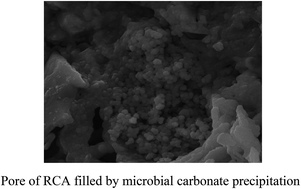
The enhancement mechanism of MCP on the properties of RCA is realized by two methods, namely, bio-deposition and bio-cementation. Bio-deposition refers to bacteria induced CaCO3 precipitation to fill the pores of RCA.28 Bio-cementation refers to the bacteria induced CaCO3 precipitation functioning as binder material to increase the strength of RCA.28

Currently RCA treated by MCP has been used to replace natural aggregate to produce cement concrete and achieve satisfactory mechanical properties.16,18–32 However, few studies have been reported using this treated-RCA in asphalt mixture. Asphalt is acidic in asphalt mixture and alkaline aggregates such as limestone are usually required to yield good aggregate–asphalt adhesion.34–36 When alkaline aggregates are mixed with acidic asphalt at high temperature, the asphalt exhibits physical adhesion to the surface of aggregates and a related chemical reaction takes place.35 The treated-RCA covered by a layer of alkaline calcite precipitation was thus expected to yield chemical bonding between the aggregate and asphalt binder. In addition, the rough surface of RCA provides the space for mechanical interlocking at the interface and leads to an effective bonding.11 Therefore, using treated-RCA in asphalt mixture may be more effective than that in cement concrete. In addition, using treated-RCA in asphalt mixture is particularly important in China due to the road construction being highlighted as part of the Chinese ‘five-year plan’, in which the overall mileage of expressways will be up to 85[thin space (1/6-em)]000 km until 2030. At the same time, it was reported that about 200 million tons of waste concrete were produced annually in mainland China.2,4 Therefore, the use of RCA treated by MCP to replace natural alkaline aggregates in the production of asphalt mixture can provide both social and economic benefits.

The motive of this work is first to investigate the effect of MCP treatment on the properties of RCA. The permeability resistance of RCA was investigated by using a capillary water absorption test. The porosity and pore size distribution were determined using mercury intrusion porosimetry (MIP). X-ray diffraction was used to determine the mineralogical composition of the microbial calcite precipitation. Then, the potential application of the treated-RCA in asphalt mixture was investigated. The interfacial behavior between asphalt binder and treated-RCA was investigated using the direct tensile test and water boiling method. Fourier transform infrared spectroscopy was used to characterize the phase and mineralogy composition of the interface between the RCA and asphalt binder.

2. Preparation of materials and testing methods

2.1 Preparation of recycled concrete aggregate (RCA)

Two types of RCA samples, namely RCA1 and RCA2, were used in different laboratory tests in this study. RCA1 was produced from 3 year old mortar columns made by ordinary Portland cement and was used for capillary water absorption test and the bonding strength test. The related water–cement ratio (W–C) and sand-cement ratio were 0.45 and 2, respectively. In this test, a total of 12 RCA1 samples were produced and the related dimensions of each RCA1 sample were 70.7 × 70.7 × 70.7 mm (length × width × height). RCA2 was used to investigate the related resistance to moisture damage of RCA–asphalt mixture using the water boiling method. RCA2 particles with a size of 13.2–19 mm were produced from the broken old concrete. The original compressive strength of these concrete prisms was about 25 MPa.

Matrix asphalt no. 70 was adopted to test the interfacial behavior between asphalt binder and RCA, and the property values are summarized in Table 1, according to Standard Test Methods of Asphalt and Bituminous Mixtures for Highway Engineering (JTJ 052-2000) of China.37 Ordinary Portland cement was used as the mineral filler. The Blaine surface area and specific gravity of the ordinary Portland cement were 3734 cm2 g−1 and 3.1 g cm−3, respectively.

Table 1 Properties of no. 70 asphalt binder
Properties Test result Standard
Needle penetration (5 s, 100 g, 25 °C)/(0.1 mm) 72.1 60–80
Softening point (R&B)/°C 48.5 ≥46
Ductility (5 cm min−1, 15 °C)/cm ≥140 ≥100
Solubility (trichloroethylene)/% 99.8 ≥99.5


2.2 Bacterial strain and culture medium

Bacillus pasteurii purchased from the German Collection of Microorganisms and Cell Cultures (DSMZ) was used to modify RCA by means of inducing the precipitation of CaCO3. This bacillus was chosen due to the great potential for the precipitation of calcium carbonate and the lack of pathogenicity under extreme conditions. The culture medium for preparing bacterial stock cultures contained the following ingredients:33 beef extract (3 g l−1), peptone (10 g l−1), urea (20 g l−1), NaCl (5 g l−1) and NH4Cl (10 g l−1). All these ingredients were prepared in deionized water to avoid the influence of contaminating ions on the culture medium.

The culture medium, in an Erlenmeyer flask, was sterilized by autoclaving for 30 min at 121 °C and then was inoculated with bacillus pasteurii bacteria from the stock culture. Then the Erlenmeyer flask was put on a rotary shaker (30 °C, 170 rpm) for up to 24 hours and after that, the bacteria medium was centrifuged for 5 min at 6000 rpm, and the final density was 109 cells per ml.33

2.3 Bacterial treatment procedure

In this study, old cement mortar particles (OMP) removed from RCA2 were used as a new bacterial carrier due to the following two main advantages:38,39 (a) OMP was porous and rich in the gradient of CaCO3. The porous structure of OMP is highly effective for transferring calcite precipitation into RCA. CaCO3 acts as nuclei for the OMP and is capable of promoting the formation of calcite precipitation; (b) OMP is an alkaline material, and the related high pH value improves calcite precipitation efficiency during the MCP treatment process.16,31,40,41

Bacterial treatment procedures of RCA include the following steps as shown in Fig. 1: (a) OMP (pH 9–10) removed from RCA2 was crushed and sieved using a 5 mm sieve. This OMP was used as the bacterial carrier; (b) bacillus pasteurii bacteria and OMP were mixed together and placed on the surface of RCA; (c) the culture medium was sprayed at regular time intervals (3 hours interval for the first 24 hours and 12 hours intervals afterward); and (d) after 7 days, OMP was removed and the treated-RCA was kept in a dry condition for the following tests.


image file: c5ra04203h-f1.tif
Fig. 1 A schematic view of MCP treatment procedures using old cement mortar particles (OMP) as the bacterial carrier.

2.4 Testing methods

In this study, a total of six different tests were carried out to examine the performance of treated RCA and its asphalt productions. These include X-ray diffraction analysis, capillary water absorption test, porosity and pore size distributions test, FTIR, boiling water test and direct tensile test.
2.4.1 X-ray diffraction analysis. X-ray diffraction was used to determine the mineralogical composition of microbial calcite precipitation of RCA. It was carried out using an X'PertPrRO PANalytical X-ray diffractometer with graphite monochromatized Cu Kα radiation operating at 40 kV and 200 mA. Scanning was conducted at fixed time intervals. The related time interval and step length were 4 s and 0.02°, respectively. The step scan was set for scattering angle (2θ) in the range of 10–75°.
2.4.2 Capillary water absorption test. The capillary water absorption test is a simple and effective measure to evaluate the penetration resistance of RCA.33 RCA samples were adopted in this test and this basic test includes the following procedures: (a) prior to the test, all RCA1 samples were dried at 45 °C in an oven until mass loss was less than 0.1% (after a 24 h interval); (b) all RCA1 specimens were weighed and coated with wax at four surfaces adjacent to the treated surface to avoid the absorption of water; (c) RCA1 samples were immersed at a depth of 10 mm below water, as shown in Fig. 2; (d) RCA1 samples were taken out of the water at regular time intervals (5 min, 10 min, 20 min, 30 min, 60 min, 90 min, 120 min, 180 min, and 240 min) for the measurement of mass, and then the RCA1 samples were immediately returned to the water. It is noted that the surface of RCA1 samples should be cleaned with a wet towel before the mass measurement.
image file: c5ra04203h-f2.tif
Fig. 2 (a) A schematic diagram and (b) samples for the capillary water absorption test.
2.4.3 Porosity and pore size distributions of RCA. Porosity and pore size distributions are major factors controlling the durability and strength of aggregates.42,43 In this test, AUTOSCA-GT60 mercury intrusion porosimetry (MIP) equipment, which is capable of determining the distribution of pore size varying from 10 nm to 200 μm, was used for the measurement of porosity and pore size distributions. Spherical specimens were extracted from the surface of the RCA2 samples. These extracted specimens were dried in an oven at around 60 °C for 24 hours prior to testing. The contact angle and mercury surface tension used were taken to be 140° and 480.0 erg cm−2, respectively.
2.4.4 Fourier transform infrared spectroscopy (FTIR). Fourier transform infrared spectroscopy was used to characterize the change of chemical bonds at the interface between RCA and asphalt binder. Analysis of infrared absorption spectra was conducted for the surface layer with the Nicolet 5DXC FTIR spectrometer. The samples prepared for FTIR tests were taken from the interfacial zone after a direct tensile strength test. These samples were first washed with trichloroethylene until no asphalt binder could be observed on the surface, and then they were washed with anhydrous alcohol. These samples were dried in an oven (50 ± 2 °C) for 24 hours and ground to pass through a 45 μm sieve. In the present test, three samples of each mixture were coated on a KBr pellet. IR spectra were obtained in the absorption mode with a resolution of 400 cm−1 and 4000 cm−1 scans.
2.4.5 Direct tensile strength test. The bonding strength between the treated-RCA and asphalt binder was examined using a direct tensile test. A total of six specimens, including treated and untreated RCA specimens, were prepared for the direct tensile strength test. Dimensions of the RCA specimens were 70.7 mm in height, 70.7 mm in width and 70.7 mm in thickness. Fig. 3 shows the typical procedures of the preparation work of a sample for direct tensile strength test. The thickness of the asphalt film, as shown in Fig. 3a, is 10 mm. Noting that the RCA samples were preheated at 140 °C for 40–50 min before asphalt binder was poured into the gap and the filling temperature of the asphalt binder was 140 °C. The specimen was glued to the steel plate with epoxy resin. Great attention was paid to the gluing process of the specimens to the plates to ensure proper alignment between the plates and the specimen axis. The experiments were carried out in a controlled environmental chamber, in which testing temperature was maintained at 20 ± 2 °C for a long time. Specimens were placed in this chamber for at least 3 h until the inner component of specimens was homogenized at the desired temperature. The strain-loading rate, which is used to evaluate the fracture characteristics of the interface between RCA and asphalt mixture, was 0.5 mm min−1.
image file: c5ra04203h-f3.tif
Fig. 3 A schematic view of the test setup for direct tensile strength test.
2.4.6 Boiling water test. The boiling water test is a simple test to assess the effect of water on the adhesion between aggregate and asphalt binder. This test involves the immersion of asphalt binder-coated aggregate into boiling water and the evaluation of the retained coated area with a visual rating. According to ASTM D3625 and the Chinese Boiling Test,35,44 250 g clean aggregate particles (particle size between 13.2 mm and 19 mm and covered with asphalt) were placed into approximately 800 mL distilled boiling water for 3 min. The quality of aggregate adhesion is classified by the observations of the conditions of the asphalt film left on the particles, according to Table 2.35,44
Table 2 Grade of aggregate adhesion to asphalt according to Chinese code35,44
Condition of asphalt film left on the particles after 3 min of boiling Grade
Full aggregate surface still covered by asphalt and no film is removed 5
Less than 10% of the asphalt-covered area is removed and the film is not significantly deformed 4
Less than 30% of the asphalt-covered area is removed. Part of the film is significantly deformed but still stays on aggregate surfaces 3
More than 30% of the asphalt-covered area is removed. A significant part of the film is deformed but stays on the aggregate surfaces 2
The aggregates are substantially bar, and the rest of the asphalt film is totally deformed or floats on water 1


3. Results and discussion

The mineralogical composition of the aggregate plays an important role in determining the mechanical properties and durability properties of asphalt mixture. To better understand the effect of surface treatment on the properties of RCA–asphalt mixture, the mineralogical composition of both untreated-RCA and treated-RCA was examined by XRD. The program MDI Jade 5.0 was used to process the XRD analysis, and the results are shown in Fig. 4. The figure indicates that the predominant crystalline phase of treated-RCA was calcium carbonate and the main polymorph was calcite. A large amount of vaterite crystals were also detected in the treated-RCA, whereas the untreated-RCA was mainly composed of calcite crystal. The strength or relative strength of the diffraction peak corresponds to a phase that correlates with the content of that ingredient, i.e., the higher crystal phase content, the larger the diffraction peak.45 It is noted that in Fig. 4, the MCP treatment significantly increased the diffraction peak of calcite and vaterite crystals. This phenomenon indicates that the bacteria were highly effective in inducing vaterite and calcite crystals in RCA.
image file: c5ra04203h-f4.tif
Fig. 4 Influence of MCP on the mineralogical composition of RCA (Δ: Calcite; ●: Vaterite).

3.1 Capillary water absorption test results

The absorptive coefficient, K, was used to evaluate the capillary water absorption of RCA treated with MCP.33 This K is determined by the following expression:
 
image file: c5ra04203h-t1.tif(4)
where Q is the weight of water absorbed at different time intervals, A is the cross section area of the RAC specimen in contact with water, and t is the time interval. K is estimated from the slope ratio of water mass absorbed per square centimeter against the square root of time.

Fig. 5 presents the effect of MCP on the absorptive coefficient, K, of RCA. It is clear from the figure that the MCP treatment greatly decreased the capillary water absorption of RCA. The average absorptivity coefficient, K, of untreated-RCA and treated-RCA was 1.63 and 0.22, respectively. The K is proportional to the permeability of aggregates in relation to their porosity. The K of treated-RCA was reduced by more than 86.5% indicating that treated RCA samples exhibited lower porosity and relatively stronger permeability resistance compared with untreated RCA samples.


image file: c5ra04203h-f5.tif
Fig. 5 Influence of MCP on water absorptivity of RCA (untreated-RCA with a K value of 1.63 and treated-RCA with a K value of 0.22).

3.2 Porosity and pore structure

Porosity and pore size distributions are considered to be the major factors controlling the durability and strengths of the aggregates, which further influence the properties of asphalt mixtures. Generally, aggregates with higher porosity and coarser pores are believed to exhibit low durability properties and low strength. Aggregates with low strength will act as a “soft core”, which can introduce significant stress concentration under loading to reduce the overall strength of asphalt mixture. Moreover, the higher porosity and coarser pores may cause water to easily enter into asphalt mixture and therefore decrease the mixture's resistance to moisture damage.8,12,46,47 Thus, the porosity and pore size distributions of RCA are very important for its productions, and the effects of MCP on the porosity and pore size distributions in RCA determined from MIP are discussed as follows.

Table 3 shows a summary of parameter values obtained from the MIP test for treated-RCA and untreated-RCA samples. Evidently, the porosity and pore size distribution were influenced by the MCP treatment in a statistically significant way. The total porosities are 25.1% and 17.1% for untreated-RCA and treated-RCA, respectively. The total porosity directly affects the physical properties of aggregates, including strength and durability. Because the porosity of treated-RCA was 32% lower than untreated-RCA, it is expected that this surface treatment can improve both the strength and durability of RCA, and further testing should be conducted to study these potential positive effects, which are not covered by the present investigation. Table 3 also indicates that the pores with a size larger than 100 nm were 19.33% and 3.76% for untreated-RCA and treated-RCA, respectively. In porous inorganic materials, there is a direct relationship between the permeability and the volume of pores larger than about 100 nm.43 The fact that the pores in these ranges in untreated-RCA were about five times higher than that in treated-RCA explains the lower resistance to permeability for untreated-RCA as compared to treated-RCA during the capillary water absorption test, as shown in Fig. 5.

Table 3 Porosity and mean radius of the attached mortar treated RCA
Sample Total intruded vol. (ml g−1) Mean radius (nm) Bulk density (g cm−3) Total porosity (%) Porosity (d < 100 nm) (%) Porosity (d ≥ 100 nm) (%)
Untreated-RCA 0.155 115.97 1.62 25.10 5.77 19.33
Treated-RCA 0.091 52.34 1.84 17.11 13.35 3.76


Fig. 6 shows the variation of dV/d[thin space (1/6-em)]log[thin space (1/6-em)]R against pore diameter. For untreated-RCA, dV/d[thin space (1/6-em)]log[thin space (1/6-em)]R increases with the decrease of pore diameter and reaches the highest value of 0.168 at the diameter of 210 nm. Thereafter, dV/d[thin space (1/6-em)]log[thin space (1/6-em)]R decreases with the decrease of pore diameter. For treated-RCA, a similar trend can be observed. However, the highest value of 0.145 appeared in the considerably finer region of pores, i.e., at the diameter of 70 nm. These phenomena indicate that the MCP treatment was effective in reducing the pore size and porosity of RCA due to the production of calcite and vaterite crystals by bacillus pasteurii bacteria, as demonstrated by the XRD test result (Fig. 4 and Table 3).


image file: c5ra04203h-f6.tif
Fig. 6 Influence of MCP on the pore size distribution of RCA.

3.3 FT-IR spectra analysis

The FT-IR spectrum of untreated-RCA–asphalt mixture is presented in Fig. 7. Major vibration bands, corresponding to the OH stretching band from Ca(OH)2 (3643 cm−1), ν3H2O (3431 cm−1), and ν2H2O (1633 cm−1), and the CO3 band from CaCO3 (1422, 874 cm−1) are observed.48–51 Si (Si–O and Si–O–Si) and Al (Al–O and Al–O–Al) vibrational bands are detected in the 1200–400 cm−1 region, where the 1081 cm−1 and 459 cm−1 bands correspond to ν3(Si–O) and ν4(O–Si–O) stretching vibration of the SiO4 tetrahedron, respectively, and the 863–626 cm−1 region corresponds to the Al–O–H bending vibration.48–51
image file: c5ra04203h-f7.tif
Fig. 7 FT-IR spectra of the interface transition zone in RCA–asphalt mixture (Samples washed by trichloroethylene and anhydrous alcohol prior to FTIR test).

FT-IR spectrum of treated-RCA–asphalt mixture is also presented in Fig. 7. The 1420 and 874 cm−1 bands are attributed to the CO3 group mode of vibration. Comparing the FTIR spectrum of untreated-RCA mixture with that of treated-RCA mixture in Fig. 7, it can be seen that the relative content of the CO3 group in the treated-RCA mixture is significantly higher than that in the untreated-RCA mixture, indicating that the bacteria used in the present study was effective in forming CaCO3. Comparing Fig. 3 with 7, it is clear that the FR-IR test results are highly consistent with the XRD test results.

The 2925 and 2327 cm−1 bands are attributed to CH2 and CH3 group mode of vibration, respectively. Due to the solubility of asphalt binder in the trichloroethylene (99.8% in Table 1), the asphalt binder in the form of physical adsorption on the surface of RCA had been dissolved away when the samples were washed by trichloroethylene. Thus, the appearance of the CH2 and CH3 groups in FT-IR spectrum probably indicates the yield of chemical interaction between asphalt binder and aggregate. Moreover, the treated-RCA–asphalt mixture showing a relatively higher content of CH2 and CH3 groups over untreated-RCA–asphalt mixture indicates the positive effect of MCP treatment on the improvement of chemical adhesion between aggregate and asphalt binder.

3.4 Direct tensile strength test

Direct tensile strength is a very important measure to examine the parameters related to interfacial characteristics of asphalt mixture and can be further used to assess the fracture properties of asphalt mixture.52–54 The direct tensile strength can be determined as follows:
 
image file: c5ra04203h-t2.tif(5)
where RDTS is direct tensile strength, MPa; Pmax is the maximum load of each stress elongation curve, N; and A is the area of specimen, mm3.

Fig. 8 shows the results of the direct tensile strength test of asphalt mixtures for untreated-RCA and treated-RCA. This figure shows that the direct tensile strength increases 55% after RCA was modified by MCP treatment. The enhancement in the bonding strength of treated-RCA asphalt mixture is plausibly due to the formation of chemical adhesion at the interface, as demonstrated by the FTIR analysis (Fig. 7).


image file: c5ra04203h-f8.tif
Fig. 8 Influence of MCP treatment on the direct tensile strength.

Fig. 9 shows the fracture mode in the direct tensile strength experiment. In the untreated-RCA, the detachment of asphalt binder film away from aggregate can be observed during the direct tensile process, which means a poor interface bonding between untreated-RCA and asphalt binder. While in the treated-RCA, the asphalt binder film was broken due to direct tensile force, indicating that the MCP treatment is effective in enhancing the interface bonding between aggregate and asphalt binder.


image file: c5ra04203h-f9.tif
Fig. 9 Influence of MCP on the fracture behavior of asphalt mixture.

3.5 Boiling water test

Moisture damage can reduce the structural strength of asphalt mixtures. This is mainly due to the loss of the adhesion between aggregate and asphalt binder or the loss of the cohesive strength within the asphalt binder under wet conditions. The boiling water test is a qualitative test conducted on loose asphalt-coated aggregate to identify the durability of asphalt mixtures and their response to moisture ingress.55

Fig. 10 shows the RCA samples before and after the MCP treatment boiling water test. As shown in Fig. 10a, the surface of untreated RCA was mainly composed of old cement mortar and original silica aggregate (acidic in character). The asphalt binder on the silica surface was removed after the boiling water test, and the mixtures with untreated-RCA showed excessive potential towards moisture damage. With regard to Table 2, the adhesive behavior of the untreated-RCA–asphalt mixture is lower than Grade 3 and this adhesive behavior depends on the surface characteristics of RCA. Fig. 10b shows that the treated-RCA was covered by a layer of alkaline carbonate precipitate when treated by MCP, and after the boiling water test they were still covered by a layer of asphalt binder film. According to Table 2, the adhesive behavior of the treated-RCA–asphalt mixture reached the highest grade (Grade 5).


image file: c5ra04203h-f10.tif
Fig. 10 Influence of MCP treatment on the moisture-damage of asphalt mixture. (a) RCA samples with acidic surface (left) and partial asphalt binder was removed from an untreated-RCA sample (right). (b) RCA samples covered by alkaline carbonate (left) and full surface covered by asphalt for treated-RCA (right).

By comparing Fig. 10a and b, it is evident that the surface treatment increases the resistance to moisture damage for the RCA asphalt mixture. The enhancement effect is attributed to the same reason as mentioned above, where carbonate precipitation covered on the surface of treated-RCA results in strong chemical bonding between the aggregates and asphalt binder.

4. Summary and conclusions

The highly porous nature and acidic nature of recycled concrete aggregate (RCA) lead to the poor interfacial bonding and high water absorption of the RCA–asphalt mixture. As a result, the replacement of natural aggregate with RCA often results in the degradation of mechanical strength and durability properties of asphalt mixture. This work studies a new surface modification of RCA with bacillus pasteurii bacteria to introduce alkaline carbonate precipitation onto RCA. The effect of this surface modification on the properties of RCA and its asphalt production was investigated. Based on our experimental results, the following major conclusions can be made:

(1) The surface treatment of RCA by bacteria induces a large amount of calcite and vaterite crystals in RCA, as demonstrated by X-ray diffraction analysis results.

(2) The surface treatment improves the permeability resistance of RCA significantly. This phenomenon can be explained by the dense microstructure of RCA treated by microbial calcite precipitation, as demonstrated by MIP test results.

(3) FTIR analysis indicates the formation of chemical bonds at the interface between RCA and asphalt binder as a result of the interaction of acidic groups of asphalt binder with alkaline calcite precipitation of treated-RCA. Therefore, the bonding strength of asphalt mixture with treated-RCA was increased 55% over the asphalt mixture with untreated-RCA.

(4) The surface treatment enhanced the moisture damage resistance of RCA–asphalt mixture, where the adhesive behavior of asphalt mixture increased by 2 grades when the aggregate was pretreated by microbial calcite precipitation. The enhancement effect is attributed to the formation of chemical affinity between alkaline treated-RCA and acidic asphalt binder.

According to our results, microbial calcite precipitation is a useful method to enhance the properties of RCA and its asphalt production. Further tests should be conducted to study other potential effects that have not been investigated by present tests.

Acknowledgements

The authors gratefully acknowledge the funding provided by the Natural Science Foundation of China (51378303, 51378462), Natural Science Foundation of Guangdong Province (S2013010011951), Scientific and Technological Innovation Project from Department of Education of Guangdong Province (2013KJCX0074), Science and Technology Plan of Shantou City (2012-164), and Seed Grant Scheme of the Technological and Higher Education Institute of Hong Kong (Program Code: 99424).

References

  1. R. V. Silva, J. de Brito and R. K. Dhir, Properties and composition of recycled aggregates from construction and demolition waste suitable for concrete production, Construct. Build. Mater., 2014, 65, 201–217 CrossRef PubMed.
  2. J. Xiao, W. Li, Y. Fan and X. Huang, An overview of study on recycled aggregate concrete in China (1996–2011), Construct. Build. Mater., 2012, 31, 364–383 CrossRef PubMed.
  3. S. Erdem and M. A. Blankson, Environmental performance and mechanical analysis of concrete containing recycled asphalt pavement (RAP) and waste precast concrete as aggregate, J. Hazard. Mater., 2014, 264, 403–410 CrossRef CAS PubMed.
  4. X. Li, Recycling and reuse of waste concrete in China, Resour., Conserv. Recycl., 2008, 53, 36–44 CrossRef PubMed.
  5. J. Sim and C. Park, Compressive strength and resistance to chloride ion penetration and carbonation of recycled aggregate concrete with varying amount of fly ash and fine recycled aggregate, Waste Manag., 2011, 31, 2352–2360 CrossRef CAS PubMed.
  6. W. A. Gul and M. Guler, Rutting susceptibility of asphalt concrete with recycled concrete aggregate using revised Marshall procedure, Construct. Build. Mater., 2014, 55, 341–349 CrossRef PubMed.
  7. S. Ismail and M. Ramli, Engineering properties of treated recycled concrete aggregate (RCA) for structural applications, Construct. Build. Mater., 2013, 44, 464–476 CrossRef PubMed.
  8. C.-H. Lee, J.-C. Du and D.-H. Shen, Evaluation of pre-coated recycled concrete aggregate for hot mix asphalt, Construct. Build. Mater., 2012, 28, 66–71 CrossRef PubMed.
  9. J. Mills-Beale and Z. You, The mechanical properties of asphalt mixtures with Recycled Concrete Aggregates, Construct. Build. Mater., 2010, 24, 230–235 CrossRef PubMed.
  10. E. Özgan and S. Serin, Investigation of certain engineering characteristics of asphalt concrete exposed to freeze–thaw cycles, Cold Reg. Sci. Technol., 2013, 85, 131–136 CrossRef PubMed.
  11. S. Paranavithana and A. Mohajerani, Effects of recycled concrete aggregates on properties of asphalt concrete, Resour., Conserv. Recycl., 2006, 48, 1–12 CrossRef PubMed.
  12. A. R. Pasandín and I. Pérez, Laboratory evaluation of hot-mix asphalt containing construction and demolition waste, Construct. Build. Mater., 2013, 43, 497–505 CrossRef PubMed.
  13. A. R. Pasandín and I. Pérez, Effect of ageing time on properties of hot-mix asphalt containing recycled concrete aggregates, Construct. Build. Mater., 2014, 52, 284–293 CrossRef PubMed.
  14. M. Arabani and A. R. Azarhoosh, The effect of recycled concrete aggregate and steel slag on the dynamic properties of asphalt mixtures, Construct. Build. Mater., 2012, 35, 1–7 CrossRef PubMed.
  15. V. W. Y. Tam, C. M. Tam and K. N. Le, Removal of cement mortar remains from recycled aggregate using pre-soaking approaches, Resour., Conserv. Recycl., 2007, 50, 82–101 CrossRef PubMed.
  16. J. Qiu, D. Tng and E. Yang, Surface treatment of recycled concrete aggregates through microbial carbonate precipitation, Construct. Build. Mater., 2014, 57, 144–150 CrossRef PubMed.
  17. Ö. Çakır, Experimental analysis of properties of recycled coarse aggregate (RCA) concrete with mineral additives, Construct. Build. Mater., 2014, 68, 17–25 CrossRef PubMed.
  18. A. M. Grabiec, J. Klama, D. Zawal and D. Krupa, Modification of recycled concrete aggregate by calcium carbonate biodeposition, Construct. Build. Mater., 2012, 34, 145–150 CrossRef PubMed.
  19. S. Amidi and J. Wang, Surface treatment of concrete bricks using calcium carbonate precipitation, Construct. Build. Mater., 2015, 80, 273–278 CrossRef PubMed.
  20. H. M. Jonkers, A. Thijssen, G. Muyzer, O. Copuroglu and E. Schlangen, Application of bacteria as self-healing agent for the development of sustainable concrete, Ecol. Eng., 2010, 36, 230–235 CrossRef PubMed.
  21. M. G. Sierra-Beltran, H. M. Jonkers and E. Schlangen, Characterization of sustainable bio-based mortar for concrete repair, Construct. Build. Mater., 2014, 67, 344–352 CrossRef PubMed.
  22. R. Siddique and N. K. Chahal, Effect of ureolytic bacteria on concrete properties, Construct. Build. Mater., 2011, 25, 3791–3801 CrossRef PubMed.
  23. K. Van Tittelboom, N. De Belie, W. De Muynck and W. Verstraete, Use of bacteria to repair cracks in concrete, Cem. Concr. Res., 2010, 40, 157–166 CrossRef CAS PubMed.
  24. V. Wiktor and H. M. Jonkers, Quantification of crack-healing in novel bacteria-based self-healing concrete, Cem. Concr. Compos., 2011, 33, 763–770 CrossRef CAS PubMed.
  25. V. Achal, X. Pan and N. Özyurt, Improved strength and durability of fly ash-amended concrete by microbial calcite precipitation, Ecol. Eng., 2011, 37, 554–559 CrossRef PubMed.
  26. J. Connolly, M. Kaufman, A. Rothman, R. Gupta, G. Redden and M. Schuster, et al., Construction of two ureolytic model organisms for the study of microbially induced calcium carbonate precipitation, J. Microbiol. Methods, 2013, 94, 290–299 CrossRef CAS PubMed.
  27. W. De Muynck, K. Cox, N. D. Belie and W. Verstraete, Bacterial carbonate precipitation as an alternative surface treatment for concrete, Construct. Build. Mater., 2008, 22, 875–885 CrossRef PubMed.
  28. W. De Muynck, N. De Belie and W. Verstraete, Microbial carbonate precipitation in construction materials: A review, Ecol. Eng., 2010, 36, 118–136 CrossRef PubMed.
  29. W. De Muynck, D. Debrouwer, N. De Belie and W. Verstraete, Bacterial carbonate precipitation improves the durability of cementitious materials, Cem. Concr. Res., 2008, 38, 1005–1014 CrossRef CAS PubMed.
  30. W. De Muynck, K. Verbeken, N. De Belie and W. Verstraete, Influence of urea and calcium dosage on the effectiveness of bacterially induced carbonate precipitation on limestone, Ecol. Eng., 2010, 36, 99–111 CrossRef PubMed.
  31. F. Farmani, B. Bonakdarpour and A. A. Ramezanianpour, pH reduction through amendment of cement mortar with silica fume enhances its biological treatment using bacterial carbonate precipitation, Mater. Struct., 2014 DOI:10.1617/s11527-014-0391-7.
  32. H. K. Kim, S. J. Park, J. I. Han and H. K. Lee, Microbially mediated calcium carbonate precipitation on normal and lightweight concrete, Construct. Build. Mater., 2013, 38, 1073–1082 CrossRef PubMed.
  33. Q. Chunxiang, W. Jianyun, W. Ruixing and C. Liang, Corrosion protection of cement-based building materials by surface deposition of CaCO3 by Bacillus pasteurii, Mater. Sci. Eng., C, 2009, 29, 1273–1280 CrossRef PubMed.
  34. S. G. Jahromi, Estimation of resistance to moisture destruction in asphalt mixtures, Construct. Build. Mater., 2009, 23, 2324–2331 CrossRef PubMed.
  35. W. Wang, Y. Zhang, K. Höeg and Y. Zhu, Investigation of the use of strip-prone aggregates in hydraulic asphalt concrete, Construct. Build. Mater., 2010, 24, 2157–2163 CrossRef PubMed.
  36. Z. Chen, J. Xie, Y. Xiao, J. Chen and S. Wu, Characteristics of bonding behavior between basic oxygen furnace slag and asphalt binder, Construct. Build. Mater., 2014, 64, 60–66 CrossRef PubMed.
  37. Highway Engineering (JTJ 052-2000), Standard Test Methods of Bitumen and Bituminous Mixtures for Highway Engineering [in Chinese].
  38. G. Y. Li, Z. Y. Pan, Y. Yu, H. L. Kuang, F. X. Feng and D. M. Liu, Calcium Carbonate Bio-Deposition Technique by Using Fine Waste Mortar Particles as Bacteria-Immobilization Medium, Key Eng. Mater., 2014, 633, 149–153 CrossRef.
  39. Z. H. U. Fei-long, L. I. Geng-ying, D. U. Hong, C. U. I. Peng-fei, W. U. Ya-qing and L. I. U. Hai-feng, A new surface-modified technology of cement mortar using calcium carbonate biodeposition, J. Funct. Mater., 2013, 40(5), 700–703 Search PubMed.
  40. N. Chahal, R. Siddique and A. Rajor, Influence of bacteria on the compressive strength, water absorption and rapid chloride permeability of fly ash concrete, Construct. Build. Mater., 2012, 28, 351–356 CrossRef PubMed.
  41. F. Pacheco-Torgal and J. A. Labrincha, Biotech cementitious materials: Some aspects of an innovative approach for concrete with enhanced durability, Construct. Build. Mater., 2013, 40, 1136–1141 CrossRef PubMed.
  42. G. Li, X. Xu, E. Chen, J. Fan and G. Xiong, Properties of cement-based bricks with oyster-shells ash, J. Cleaner Prod., 2015, 91, 279–287 CrossRef PubMed.
  43. P. K. Mehta and J. M. Monteiro, Concrete,Structure., Properties and Materials, McGraw Hill Professional, 2005 Search PubMed.
  44. DL/T 5362-2006, Test code for hydraulic asphalt concrete [in Chinese].
  45. N. Yang and W. Yue, Handbook of a collection of illustrative plates of inorganicnonmetal materials, Wuhan University of Technology PublishingCompany, Wuhan, Nov. 2000 Search PubMed.
  46. J. Zhu, S. Wu, J. Zhong and D. Wang, Investigation of asphalt mixture containing demolition waste obtained from earthquake-damaged buildings, Construct. Build. Mater., 2012, 29, 466–475 CrossRef PubMed.
  47. A. R. Pasandín and I. Pérez, Mechanical properties of hot-mix asphalt made with recycled concrete aggregates coated with bitumen emulsion, Construct. Build. Mater., 2014, 55, 350–358 CrossRef PubMed.
  48. G. Y. Li, P. M. Wang and X. Zhao, Mechanical behavior and microstructure of cement composites incorporating surface-treated multi-walled carbon nanotubes, Carbon, 2005, 43, 1239–1245 CrossRef CAS PubMed.
  49. H. Ma, Y. Tian and Z. Li, Interactions between organic and inorganic phases in PA- and PU/PA-modified cement-based materials, J. Mater. Civ. Eng., 2011, 23, 1412–1421 CrossRef CAS.
  50. R. Wang, L. Yao and P. Wang, Mechanism analysis and effect of styrene–acrylate copolymer powder on cement hydrates, Construct. Build. Mater., 2013, 41, 538–544 CrossRef PubMed.
  51. H. Böke and S. Akkurt, Ettringite formation in historic bath brick–lime plasters, Cem. Concr. Res., 2003, 33, 1457–1464 CrossRef.
  52. Y. Xiao, M. F. C. van de Ven, A. A. A. Molenaar, Z. Su and F. Zandvoort, Characteristics of two-component epoxy modified bitumen, Mater. Struct., 2010, 44, 611–622 CrossRef.
  53. S. Abo-Qudais, The effects of damage evaluation techniques on the prediction of environmental damage in asphalt mixtures, Build. Environ., 2007, 42, 288–296 CrossRef PubMed.
  54. X. Shu, B. Huang and D. Vukosavljevic, Laboratory evaluation of fatigue characteristics of recycled asphalt mixture, Construct. Build. Mater., 2008, 22, 1323–1330 CrossRef PubMed.
  55. B. R. K. Blackman, S. Cui, A. J. Kinloch and A. C. Taylor, The development of a novel test method to assess the durability of asphalt road–pavement materials, Int. J. Adhes. Adhes., 2013, 42, 1–10 CrossRef CAS PubMed.

This journal is © The Royal Society of Chemistry 2015
Click here to see how this site uses Cookies. View our privacy policy here.