Satish N. Nadig†
abe,
Suraj K. Dixit†cd,
Natalie Leveya,
Scott Esckilsena,
Kayla Millercd,
William Dennisa,
Carl Atkinson*be and
Ann-Marie Broome*cde
aDepartment of Surgery, Division of Transplant, Medical University of South Carolina, 96 Jonathan Lucas Street, Charleston, SC 29425, USA. E-mail: nadigsn@musc.edu; Fax: +1 843 792 8596; Tel: +1 843 792 8596
bDepartment of Microbiology and Immunology, Medical University of South Carolina, 173 Ashley Avenue, Charleston, SC 29425, USA. E-mail: atkinsoc@musc.edu; Fax: +1 843 792 2464; Tel: +1 843 792 1716
cDepartment of Radiology & Radiological Science, Medical University of South Carolina, 68 President Street MSC 120, Charleston, SC 29425, USA. E-mail: broomea@musc.edu; Fax: +1 843 876 2469; Tel: +1 843 876 2481
dCenter for Biomedical Imaging (CBI), Medical University of South Carolina, 68 President Street MSC 120, Charleston, SC 29425, USA. E-mail: broomea@musc.edu; Fax: +01 843 876 2469; Tel: +01 843 876 2481
eSouth Carolina Investigators in Transplantation (SCIT), Medical University of South Carolina, 96 Jonathan Lucas Street, Charleston, SC 29425, USA. E-mail: nadigsn@musc.edu; Fax: +01 843 792 8596; Tel: +1 843 792 3553
First published on 24th April 2015
In this study, we developed a stable, nontoxic novel micelle nanoparticle to attenuate responses of endothelial cell (EC) inflammation when subjected to oxidative stress, such as observed in organ transplantation. Targeted Rapamycin Micelles (TRaM) were synthesized using PEG–PE-amine and N-palmitoyl homocysteine (PHC) with further tailoring of the micelle using targeting peptides (cRGD) and labeling with far-red fluorescent dye for tracking during cellular uptake studies. Our results revealed that the TRaM was approximately 10 nm in diameter and underwent successful internalization in Human Umbilical Vein EC (HUVEC) lines. The uptake efficiency of TRaM nanoparticles was improved with the addition of a targeting moiety. In addition, our TRaM therapy was able to downregulate both mouse cardiac EC (MCEC) and HUVEC production and release of the pro-inflammatory cytokines IL-6 and IL-8 in normal oxygen tension and hypoxic conditions. We were also able to demonstrate a dose-dependent uptake of TRaM therapy into biological tissues ex vivo. Taken together, these data demonstrate the feasibility of targeted drug delivery in transplantation, which has the potential for conferring local immunosuppressive effects without systemic consequences while also dampening endothelial cell injury responses.
Once reperfusion occurs, the access of inflammatory mediators sets off an inflammatory reaction in which neutrophils, platelets, cytokines, molecular oxygen and complement play important roles, and which culminates in necrotic and apoptotic tissue death. Central to the pathogenesis are the endothelial cells (EC). EC sit at the interface between the graft and recipient immune response and early insults to EC within an organ allograft result in irreparable damage to the graft itself in both the short and long-term.10
Elegant studies by Collard et al. in 2000 suggested that oxidative stress is a key factor in the initiation of an immunologic insult, with in vitro and in vivo studies demonstrating a role for the endothelium in activating the immune system after IRI.11 The immunologic damage to the cells lining the vasculature of organ allografts are thought to set a cascade of events in motion which ultimately lead to inappropriate antigen presentation to lymphocytes primed to attack the foreign organ.12 The oxidative stress of ischemic injury on EC plays a major role in endothelial dysfunction and rapid development of vascular disease. The insults of oxidative stress are also mediated, in part, by signaling through the mammalian target of the rapamycin (mToR) intracellular pathway, which can be abrogated by rapamycin blockade.13 Therapeutics are clinically available for the treatment of oxidative stress; given that the oxidative insult occurs almost immediately post-IRI, the therapeutic window is small in the non-transplant setting. However, the oxidative insult experienced in transplantation is controllable since the time of reperfusion is controlled surgically, thus providing a larger window for therapeutic intervention.11 Currently, no therapeutics are utilized to control IRI or the initiation of an adaptive immune response at this early time point post-transplantation.
Conventional immunosuppression globally reduces the immunological response by dampening the entire immune system to protect the newly grafted organ. However, side effects such as infections, cancers, and metabolic derangements are among the list of complications that organ transplant recipients suffer while on the necessary organ saving immunosuppressant medications. Furthermore, these therapies have little impact on the cascade induced during IRI. While significant advancements have been made with the design and efficacy of newer immunosuppressive medications, such as rapamycin, many carry heightened systemic risk profiles.14 Therefore, a potential way to circumvent the systemic side effects of immunotherapeutics and protect the organ graft is to develop strategies to specifically deliver these medications directly to the endothelium of grafted tissues to reduce local injury, inflammation, allopresentation, and the harmful side effects associated with their systemic counterparts.
The use of targeted immunosuppressive delivery allows for focused release of the medication at a specified cell type within the organ and provides the potential for local organ allograft tolerance. Targeted nanoparticle (NP) therapy is a novel alternative to delivering these vital medications in the setting of transplantation.15,16 Various nanotherapeutic carriers exist and include liposomes, spherical and cylindrical fullerenes, viral particles, and micelle-based carriers.17 Among the existing options, micelles provide the ability to package hydrophobic payloads within their core and maintain a small size.
Recently, NPs have shown promising advances in the medical field with respect to treatment and diagnosis.18,19 Most significant applications include drug delivery, diagnostics, and cancer therapy. However, the use of NPs in transplantation is still an emerging concept and in its infancy with very few descriptions in the current literature.20–22 The attraction of NPs is, in large part, attributed to their unique physiochemical properties, such as their small size, stability and the ability for tailoring with various functionalities. In addition, the large functional surface on a NP is able to attach biomarkers and proteins. In order to design an efficient and effective drug carrier, certain issues need to be addressed: (1) a tailored surface on the carrier to attach biomolecules for targeted delivery; (2) a biocompatible composition which can efficiently encapsulate the hydrophobic drug; and (3) stimuli-induced (i.e., pH) disruption of the carrier agent for drug release in the desired environment. Micelles are the preferred choice of carrier as they fulfill these requirements.23,24 Micelles can be altered on their exterior surface with functional moieties, such as ligands or peptides, to provide targeting capability. The inner micelle core can be used as a container for many hydrophobic drugs. Environmentally-sensitive lipids that take advantage of pH (or temperature) can be used to formulate the micelle shell to provide responsive drug release. In addition, polyethylene glycol (PEG) can be incorporated in the micelle structure to ensure long-term circulation without non-specific adsorption.
In this study, we use a novel, pH-sensitive, targeted micelle NP (Fig. 1a) to attenuate the responses of human EC inflammation and allopresentation when subjected to oxidative stress such as in the case of solid organ transplantation. These micelles are decorated with cyclic arginine–glycine–aspartate (cRGD) moieties to facilitate targeting to integrin alpha v beta 3 (αVβ3) on the EC and loaded with the immunosuppressive rapamycin. Rapamycin, a potent mToR inhibitor, was selected due to its ability to not only inhibit T cell effector cell functions, but also protect the endothelium. Studies have shown that rapamycin can modulate the upregulation of vascular endothelial growth factor, thereby conferring a protective effect on vascular endothelium, while also successfully attenuating endothelial injury and transplant vasculopathy in a humanized mouse aortic interposition graft model.25,26 Further, rapamycin may impede the emigration of passenger leukocytes to lymphoid organs, confirming that the release of rapamycin at the level of the organ itself may prevent the early IRI induced injury and further blunt alloimmune responses.27 In addition to rapamycin loading, micelles were also conjugated to near infrared (NIR) fluorophores for tracking studies. The characterization and classification of these novel Targeted Rapamycin Micelles (TRaM) devices set the stage for future experiments investigating therapeutics for both acute and chronic allograft rejection in the setting of solid organ transplantation.
Stability of the NPs was evaluated over a 24 hour period. To mimic the physiologic environment, the NPs were suspended in saline (phosphate buffered saline (PBS), pH 7.2) and drug absorbance was monitored (Fig. 1d). Both constructs were relatively stable over the 24 hours and did not show any significant aggregation of the drug (loss of absorbance at 275 nm of ∼20 to 26%). The stability of these NPs was also tested in serum since the presence of lipids, amino acids, and proteins in the serum could contribute to NP instability (Fig. 1e). The NPs were slightly more stable than those suspended in saline over the same period with overall loss of absorbance at 275 nm of ∼14 to 18%. These NP stability experiments confirmed the robust nature of the NPs for potential use in in vivo studies.
Rapamycin is encapsulated inside the hydrophobic micelle core, which reduces the interaction of the drug with the cellular environment. Encapsulation can potentially decrease the cytotoxicity of the drug and subsequent side effects of parenchymal absorption. However, once the drug is delivered it must be released from its micelle package. PHC is a pH sensitive lipid that when incorporated within a micelle ruptures at an approximate pH of 5.0.28,29 High absorbance of rapamycin is seen between a pH of 7.0 and 7.6 with less than 5% loss of fluorescence indicating that the TRaM remains intact in this physiologic range (Fig. 2). In contrast, RaM undergoes a 17.5% rupture within the same range, suggesting that the cyclic targeting moiety (cRGD) imparts some benefit in preventing rupture. These results further suggest that the NPs hold the rapamycin inside their cores and resist rupture at physiologic pH. At pH values lower than 7 and higher than 8, the fluorescence intensity significantly decreases indicating the rupture of the micelle due to the pH sensitive lipid composition. Rapamycin is released from the micelle and the hydrophobic drug quickly aggregates within the hydrophilic solvent. Upon rupture, the free drug is then removed from the optical path of the excitation wavelength.
![]() | ||
| Fig. 2 pH-dependent release of encapsulated rapamycin. The absorbance of rapamycin (275 nm)-filled NPs is high between pH 7 and 7.6 and is lost outside of the physiologic range due to NP rupture. | ||
Human umbilical vein ECs (HUVECs) and mouse cardiac ECs (MCECs) were pre-treated for 6 hours with escalating doses of TRaM, RaM, empty micelles or free rapamycin to assess cellular toxicity (Fig. 3). M-Per lysis of ECs was used as an assay control. After 6 hours of pre-treatment, a four hour MTS assay was performed as a colorimetric method for determining the number of viable, metabolically active cells. Nanoparticles with and without a therapeutic payload, along with free rapamycin showed no significant toxic effects on either EC lines (Fig. 3a and b). Additionally, at escalating doses, TRaM nanoparticle therapy exhibited no significant toxic effects on either MCECs (Fig. 3c) or HUVECs (not shown). This lack of toxicity is not significantly different from that seen in free drug treated mouse and human ECs. Treatment with 3000 ng ml−1 did induce toxicity; however, this was seen in both free drug and TRaM treated groups, for both cell lines.
Micelles were functionalized with a cRGD peptide to target the αVβ3 integrin on EC surfaces to facilitate targeting and cellular uptake (Fig. 4a). To examine the intracellular uptake of our RaM and TRaM, human EC were incubated with these constructs for 6 and 24 hour periods and subsequently examined for micelle accumulation by visualization of the Dylight 680 fluorophore (red) on the micelles surface by confocal microscopy. Internalization was observed as early as 6 hours after incubation and internalization was concentration dependent (Fig. 4b). Targeting with cRGD significantly improved the micelle internalization by more than 50% as compared to untargeted RaM. αVβ3 integrin is well-characterized for its function related to angiogenesis as well as its expression on human EC. Additionally, cRGD has also been established as a prime candidate for targeting cells expressing αVβ3 integrin.30 We confirmed the expression of αVβ3 integrin on the HUVEC used within these experiments and show in Fig. 4c the presence of TRaM within these αVβ3 integrin-expressing HUVECs.
To demonstrate that uptake of TRaM was predominantly due to endocytosis associated with the cRGD peptide and not diffusion of the micelles, HUVEC were treated with brefeldin A (BA), a fungal metabolite that reversibly interferes with intracellular transport and receptor cycling and examined for uptake (Fig. 4d). BA acts by inducing major structural changes in the morphology of endosomes, the trans-Golgi network, and lysosomes by causing the formation of an extensive tubular network and preventing new endosome formation.31 As seen previously, significant fluorescence was observed when HUVEC were incubated with TRaM (−BA, 88% increase) over a 6 hour period. Fluorescence intensity increased by only 36% when HUVEC were treated with RaM (−BA). Pre-incubation with BA (+BA) decreased the relative fluorescence intensity of TRaM incubated cells by ∼38% over time. RaM uptake was inhibited to a lesser extent with BA.
Given these data, we assessed the biologic efficacy of these novel targeted micelles. To determine the potential impact of local targeted delivery of rapamycin for later translation to organ transplantation, we performed in vitro culture experiments using a cell system to model the impact of reperfusion injury on EC activation and antigen presentation capacity (Fig. 5). The endothelium is the first site of donor organ interface with the recipient and is particularly susceptible to ischemia reperfusion injury. Furthermore, the endothelium plays an important role in priming of the adaptive immune system, which contributes to the tempo and severity of the recipient rejection response. We treated human primary HUVEC that mimic the in vivo vascular target with H2O2, in order to mimic the oxidative stress that occurs during the ischemia/reperfusion phase of solid organ transplantation (Fig. 5a and b). Cells were treated with 10 ng ml−1 or 100 ng ml−1 of free rapamycin or the TRaM constructs.32 Oxidative injury to endothelial cells induces endothelial activation, which results in a pro-inflammatory phenotype that is characterized by the production and release of the pro-inflammatory cytokines, IL-6 (Fig. 5a) and IL-8 (Fig. 5b). H2O2 exposure significantly increased EC production of IL-6 and IL-8 and TRaM therapy significantly blunted this response.
Along with IRI, memory T cell responses remain a barrier to achieving tolerance in organ transplantation. To test the ability of TRaM to reduce cold storage, IR-induced endothelial activation, and memory T lymphocyte-induced injury, MCECs from FVB mice were used to inoculate allogeneic C57BL/6 mice. Sensitized T cells from the spleens of these mice were isolated using magnetic cell sorting 14 days later and co-cultured with MCEC in UW solution at 4 °C in a hypoxic chamber with or without TRaM therapy (100 ng ml−1). The efficacy of TRaM therapy was assessed by measuring mouse IL-8 (KC), a marker of EC activation, from MCEC and IFN-γ, a T cell cytokine, from T cells. As shown in Fig. 5, biomarkers of inflammation in a clinically relevant model of cold ischemia are significantly reduced in both EC and T cells when treated with TRaM therapy on par with the standard of care (Fig. 5c–e). These data suggest that targeted drug delivery demonstrates equivalent efficacy to standard therapy in the face of oxidative stress induced injury and can uniquely down regulate memory T cell responses in a novel model of cold-storage hypoxia.
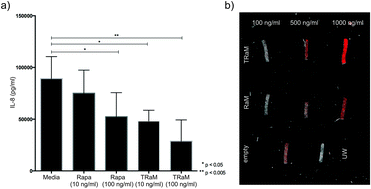
Finally, we examined whether encapsulated rapamycin would accumulate in aortic grafts soaked for 6 hours in cold UW solution containing increasing concentrations of TRaM (Fig. 6). Spectral analysis revealed uptake of TRaM and RaM in a dose-dependent fashion, beginning with as little as 500 ng ml−1 in ex vivo aortas. Little micelle uptake was observed in aorta grafts incubated with RaM or empty micelles. The micelles remained intact over the 6 hour period as observed by fluorescence.
Along with chronic rejection, transplant recipients continue to suffer the dire consequences of systemic immunosuppression. These medications, although a necessity, carry a host of serious and often fatal side-effects that range from new onset diabetes to lymphomas.39 Certain immunosuppressants, such as rapamycin, inhibit the attacking T lymphocyte’s ability to proliferate by halting cellular proliferation at the mToR.40 These mToR inhibitors have proven to be more advantageous than standard calcineurin inhibitors in their ability to prevent the progression of vascular disease and endothelial dysfunction.26 Rapamycin delivered systemically, or as part of a coated stent has been well established to slow the progression of smooth muscle cell proliferation inhibiting neointimal hyperplasia and arteriosclerosis within venous and arterial lumens.26,41–43 Interestingly, rapamycin-releasing polymers have also been recently shown to reduce fibro-proliferative lesions in injury models of carotid arteries when delivered as a perivascular sheath.44 Rapamycin has also been touted as tolerogenic, as it has the potential ability to skew a transplant recipient’s immunologic phenotype to one that is more advantageous to the grafted organ.38 The synergy between mToR inhibition and statin therapy, which many transplant recipients are prescribed, has also confirmed the presence of protective effects at the level of the endothelium in the combination’s ability to protect EC from injury driven by the innate immune system.45 Despite these physiologic and immunologic advantages, rapamycin is seldom used clinically due to a significant side-effect profile.38,46 Patients taking rapamycin suffer from a spectrum of adverse consequences that includes, but is not limited to, metabolic derangements, intolerance to the medication, and impaired wound healing.47
There is emerging and established evidence that immunoregulation may be beneficial at the local level of a graft itself and that rapamycin may blunt the trafficking ability of passenger leukocytes, which may allow for a more specific target for immunotherapeutics.27,48,49 Rapamycin NPs have been shown to dampen immune responses and provide modest prolongation of allografts when administered systemically.21 Although, the concept of targeted drug delivery has been the focus of investigative strategies in the oncologic literature, immunologists have yet to study the effects of triggered-released focused drug delivery in the setting of organ transplantation. Here, for the first time, we utilized a novel delivery method wherein an immunotherapeutic is encapsulated in a biologically inert NP and delivered to endothelium in a focused manner with a pH sensitive triggered-release mechanism. Together, these data suggest that the specific delivery of these pH sensitive, endothelial integrin cell-targeted NPs are able to blunt alloantigen presentation by HUVEC in an in vitro model of transplant IRI. The eventual goal of this novel therapy is to “pre-treat” donor organ endothelia by utilizing TRaM as an additive to hypothermic storage solutions. The rapamycin-coated vasculature would be hypothesized to minimize the harmful systemic side effects of traditional pharmacotherapies along with allowing for protection from the initial insults of organ ischemia and reperfusion.
The studies presented here represent the foundation for future applications of TRaM therapy either ex vivo or in vivo. The application of TRaM therapy would change the way we provide induction and maintenance immunosuppression to our transplant recipients. By delivering the drug in a targeted manner with focused release, the activation and initial immunologic insult may be blunted, which would allow for lower doses of induction therapy at the time of transplantation, and potentially lower and less frequent doses of maintenance immunotherapy. The delivery of this device as an additive in standard perfusion and cold storage solution would serve as an initial step to clinical translation. Furthermore, this novel device may also serve as a platform for additional immunomodulating payloads as well as alternative targeting moieties. By delivering the drug in a targeted manner with focused release in the endothelium, the activation and initial immunologic insult may be blunted leading to an attenuation of the downstream immunologic and inflammatory insults seen in IRI.
We not only propose a novel application of standard immunosuppression, but also refine existing delivery methods to achieve drug-delivery to the endothelia of organ allografts for eventual use in solid organ transplantation. A continuous challenge in transplantation is balancing the anti-rejection effects of immunomodulating drugs with the inherent toxicities they inevitably incur. Therefore, using existing nanotechnology with specific targeting to the endothelium of organs may be the ideal way to achieve operational tolerance, which is defined as immunosuppression to the organ while keeping the global immune system intact. EC line the vasculature in all solid organ transplants and are arguably the site of the initial immunologic insult in transplantation, which make them an ideal target for immunosuppressive delivery.
:
1 ratio of carboxyl group on peptide to amine group on the micelles at 30% coverage of amines). 10 μl of cRGD (1 mg per 200 μl in DMSO) was added to 1 ml of MES buffer (pH 4.5) in separate scintillation vials followed by 4 μl EDC and 11 μl sulfo-NHS (10 mg per 100 μl in MES). After 15 minutes of incubation at room temperature, PBS (pH ∼ 12) was added to bring the pH back to 7.5. The micelle solution was added to the peptide solution and incubated for 2 hours at room temperature. Excess peptide was removed using a 10k MWCO ultracentrifugal device (Millipore, MD) at 4000 rpm for 15 minutes at 4 °C. For dye labeling, 1 μl of NHS Dylight 680 (1 mg per 200 μl in DMSO) was added at a ratio covering 30% amine groups of the micelles to RaM and TRaM, respectively. The solution was incubated for 1 hour at room temperature. Excess dye was removed using a 10k MWCO ultracentrifugal device at 4000 rpm for 15 minutes at 4 °C.
000 cells per coverslip and maintained overnight in media at 37 °C in an incubator supplied with 5% CO2. Twenty four hours after plating, one set of cells were treated with 250 μl of brefeldin A (BA) solution (10 μg ml−1 in media) and were incubated for 1 hour (+BA). Another set of coverslips was left with 250 μl of media as −BA controls. For the +BA set of cells, the BA solution in media was replaced with 250 μl of 500 nM RaM 680 or TRaM 680 solutions. The −BA cells were treated with 250 μl of 500 nM RaM 680 or TRaM 680 solutions. Both sets of cells were incubated with the NPs for 0.5, 1, 4 and 6 hours respectively. After treatment, the cells were washed with media and then fixed with 4% paraformaldehyde for 10 minutes followed by three washes with PBS buffer. For staining of nuclei, cells were incubated with DAPI. Uptake and co-localization of NPs were visualized by fluorescence microscopy using a Leica DM 4000B microscope (Leica Microsystems, IL). The images were analyzed using ImageJ (NIH, MA) software for relative normalized intensities for comparison analysis.
000 cells per well) with rapamycin or TRaM pre-treated MCECs in 12 well plates at 4 °C in a hypoxic chamber.
Footnote |
| † These authors contributed equally to this manuscript. |
| This journal is © The Royal Society of Chemistry 2015 |