
DOI:
10.1039/C5RA03941J
(Paper)
RSC Adv., 2015,
5, 55191-55200
Fabrication of lanthanum-based phosphate binder using cross-linked alginate as a carrier
Received
5th March 2015
, Accepted 9th June 2015
First published on 9th June 2015
Abstract
In this paper, phosphate binding properties of lanthanum carbonate loaded sodium alginate cross-linked beads (LaC@SA) were investigated. The beads were shaped when the alginate solution (with La2(CO3)3 dispersed in it) was dropped in calcium ion solution. During this process, the alginate macromolecular chains combined with each other. The morphology of the LaC@SA beads was observed using scanning electron microscopy. Thermal gravimetric analysis and X-ray diffraction analysis were also applied to confirm the existence of the LaC solid in the beads. The LaC@SA beads showed good swelling abilities in different aqueous circumstances. The phosphate binding behavior was investigated through the molybdenum blue spectrophotometric method. The beads exhibited maximum phosphate binding capacity at pH 5 and 45 °C, but at the same time, the capacity showed no remarkable differences from 25 to 65 °C or pH from 1 to 7. Thus, the LaC@SA beads may have potential applications in environmental management, wastewater treatment and moreover, treatment of hyperphosphatemia patients.
1. Introduction
Over the past years, much attention has been paid to natural polymer study along with the development of environmental and biomedical materials. Chitosan,1 cellulose,2 alginate,3 collagen4 and their derivatives are well-known natural macromolecules. They have been widely used as raw materials for the design of drug delivery formulations, scaffolds or biomedical films and catalyst carriers in environmental management owing to their excellent properties, such as non-toxicity, biocompatibility and biodegradability.5,6 Among these natural materials, alginate is probably the most facile matrix material for encapsulation.7–9
Alginate consists of linear unbranched polymers containing β-(1 → 4)-linked D-mannuronic acid and α-(1 → 4)-linked L-guluronic acid residues in their basic molecular structure.10,11 Alginate can form a biocompatible and thermally stable hydrogel in the presence of divalent or trivalent cations. This ready gel-forming ability under mild conditions can avoid the inactivation of proteins, cells and enzymes, and makes it widely used for bioencapsulation.12 Moreover, alginate has been used as a catalyst carrier for lots of reactions. Cacchi et al. reported Suzuki-Miyaura cross-coupling reactions of arenediazonium salts catalyzed by alginate/gellan-stabilized palladium nanoparticles under aerobic conditions in water. At the same time, alginate has been successfully applied in environmental areas such as adsorption in wastewater treatment. Carbon nanotube/calcium alginate composites achieved an adsorption capacity of 67.9 mg g−1 for Cu2+ ions while white-rot fungus (Phanerochaete chrysosporium) immobilised Ca-alginate beads could decolourise different recalcitrant azo dyes.13,14
In addition, alginate beads can be easily produced by dropping an alginate droplet in a bath of metal ion solution.15,16 The beads have been used as drug carriers to prepare oral multiple-unit capsules intended for sustained release dosage forms.17 The calcium alginate beads could protect an acid-sensitive drug from gastric juices, so that the drug could be consequently released from the beads in the intestine.18
Phosphate is usually considered to be the limiting nutrient with respect to the eutrophication of natural water bodies. Therefore, it is desirable that water treatment facilities remove phosphate from the wastewater before it is returned to the environment. Various techniques have been used for phosphate removal. Among these, chemical precipitation, adsorption and biological methods have been successfully applied. Adsorption is comparatively more useful and more efficient.19 Aluminum and aluminum oxides,20 iron and iron oxides,21 flyash,19,22 slag,23 calcite,24 red mud,25 Al/SBA-15,26 and La/mesoporous SiO2 (ref. 27) have been used to remove phosphate. Recently, modified coal fly ash,28 palygorskites29 and coir pith30 have been applied for the removal of phosphate. However, it would be very difficult for them to be separated/regenerated since these materials would be dispersed into the treated water bodies.
Lanthanum exhibits more adsorptive capability for phosphate compared with other transition metals, and a suitable form of lanthanum may be nontoxic and environment-friendly.31 Lanthanum carbonate, in general, is well suited for water treatment and is highly effective at removing phosphate ions (PO43−). Moreover, it is environmentally friendly with no biotoxicity, so it can be used to cure hyperphospheremia.32 It is considered to be one of a new generation of noncalcium and nonaluminum phosphate binders for treating hyperphosphataemia in chronic kidney disease,33 a condition associated with progressive bone and cardiovascular pathology and a markedly elevated risk of death. Patients with rickets can have bone function restored more effectively than using calcium carbonate. Besides, complications of end-stage renal disease patients which include secondary hyperthyroidism can also be alleviated by the lanthanum carbonate.34,35 In addition, the phosphate-binding efficacy can be applied to treat water polluted by phosphorus coming from pesticide use and mineral mining.36,37
The purpose of the present study is to utilize the intrinsic properties of alginate polymer hydrogels such as easy formation and relatively economical cost to develop a facile approach to prepare a new, inexpensive dosage form of lanthanum carbonate (La2(CO3)3) loaded alginate hydrogel beads (LaC@SA), and investigate their potential application as phosphate binders. Their structure and properties were characterized by X-ray diffraction (XRD), scanning electron microscopy (SEM) and thermogravimetric analysis (TGA). Their binding capacity for phosphorus and the factors that affect the phosphorus binding were investigated using a molybdenum blue spectrophotometric method.
2. Experimental
2.1. Materials
Lanthanum(III) chloride heptahydrate (LaCl3·7H2O), sodium alginate, hexadecyl trimethyl ammonium bromide, and calcium chloride were purchased from Alfa Chemical Reagent Company. Ascorbic acid, anhydrous sodium carbonate, ammonium molybdate, and potassium antimonyl tartrate were from Aldrich. All the above chemicals were used as received.
2.2. Preparation of LaC@SA beads
Lanthanum carbonate La2(CO3)3 was prepared by a precipitation reaction between LaCl3·7H2O and Na2CO3. The precipitate was rinsed with distilled water several times before it was dried in a vacuum at 60 °C.
A weighed amount (40, 120, 200, 280 and 400 mg) of La2(CO3)3 was dispersed in 20 mL SA solution which was previously prepared by dissolving 2 g of sodium alginate in 100 mL of distilled water. The solution was sonicated for 10 min to homogeneously disperse La2(CO3)3 in the alginate solution. Then, the solution was dropped into 1% calcium chloride solution (40 mL) at room temperature using a 25 mL hypodermic syringe through a 6-gauge needle. The droplets gelled immediately to form gel beads that were deeply cross-linked in the solution for 1 h. They were then taken out, rinsed with distilled water to remove the excess Ca2+ on the beads’ surface and then allowed to dry at 60 °C.
2.3. Observation of the size and morphology of LaC@SA beads
The size and morphology of the LaC@SA beads were recorded with an optical camera (COOLPIX S620, Nikon). To determine the mean diameter of the LaC@SA beads, twenty beads were used for each measurement (wet, dry). The dry beads were sputter coated with gold and observed on a scanning electron microscope (JEOL-6700F ESEM, Japan) to study their surface morphology.
2.4. TGA
The thermogravimetric diagrams were produced with a Rigaku-TD-TDA analyzer using a heating rate of 6 °C min−1 from 20 °C to 1000 °C under a N2 atmosphere. The samples were prepared by drying beads to a constant weight in a vacuum at 60 °C and then grinding them into powder.
2.5. FT-IR spectroscopy
The FT-IR of the samples were measured with a Perkin-Elmer Paragon-1000 FT-IR spectrometer in the range of 500–4000 cm−1.
2.6. XRD analysis
XRD was conducted on a BDX3300 X-ray diffractometer at a scanning rate of 4° per min with 2θ ranging from 10° to 70°, employing Cu Kα radiation (λ = 0.15418 nm).
2.7. Surface area test of the LaC@SA beads
The specific surface area of the LaC@SA bead was determined by N2 adsorption–desorption isotherms measured using a Quantasorb Analyzer (Quantachrome Corporation, USA). The sample was degassed at 393 K for 3 h before sampling.
2.8. Measurements of swelling ability of the LaC@SA beads
The dried beads were weighed and immersed in 0.9% NaCl solution (wt%) at 37 °C. They were taken out at certain time intervals, gently wiped with tissue paper to remove surface water, and then weighed. The swelling ratio (SR, g g−1) was determined according to the following equation:
| SR (g g−1) = (Wt − W0)/W0 |
where W0 is the mass of dried beads and Wt is their mass at time t. The measurements were made in triplicate and average data was used for calculations.
For the pH-dependent swelling behavior tests, the beads were soaked in 0.9% NaCl solution (wt%) with different pH values at room temperature.
2.9. Phosphate binding test
A certain amount of LaC@SA beads was put into several test tubes that contained potassium phosphate solution of a certain concentration (c0). They were shaken on a shaker, and one of them was taken out at a certain interval and left for a while. The supernatant was poured out and its concentration (ct) was measured using a molybdenum blue spectrophotometric method.38 The binding amount (BA) of LaC@SA beads to phosphate was calculated according to the equation below:
where MP is the molecular weight of the phosphate ion, V is the volume of phosphate solution and WLC is the weight of LaC@SA beads. When ct became a constant, the binding amount became the binding capacity (BC).
3. Results and discussion
3.1. Characterization of the LaC@SA beads
La2(CO3)3 was encapsulated into alginate gel beads using a facile approach. The bead size, morphology and properties are dependent on preparation conditions that include alginate concentration and La2(CO3)3 content. Fig. 1 shows the influence of La2(CO3)3 content on the bead size, weight and morphology. The wet alginate beads are semitransparent with an almost perfect spherical shape (Fig. 1a-1). With an increase in La2(CO3)3 content, the transparency of the LaC@SA beads decreased and the beads became white with a pearl luster (Fig. 1a-2, 3, 4). However, addition of La2(CO3)3 has no obvious effect on the size of wet LaC@SA beads. In the dry state, LaC@SA beads are no longer spherical and show a noticeable reduction in size and weight because of contraction during the drying treatment. Alginate beads are pale yellow and they have a relatively smooth surface (Fig. 1b-1). However, the LaC@SA beads are white with a rough surface (Fig. 1b-2, 3, 4). Though the wet LaC@SA beads with different La2(CO3)3 content are almost the same size (about 2.00 mm in diameter), the dry LaC@SA beads are apparently smaller than those in the wet state and the bead size increases with increasing La2(CO3)3 content (Fig. 1b). The addition of La2(CO3)3 increases the net weight of the LaC@SA beads, so both the size and weight of the dry LaC@SA beads increase (Fig. 1c).
 |
| | Fig. 1 Photographs of LaC@SA beads with different La2(CO3)3 content (0, 2, 6 and 20 mg mL−1) in the wet (a) and dry (b) state, and diameter and weight of LaC@SA dry beads with different La2(CO3)3 content (c). (Bars in (a) and (b) are 1 cm. All beads were fabricated with alginate solution of 20 mg mL−1.) | |
Besides the amount of La2(CO3)3, the concentration of the sodium alginate solution also influences the net weight and morphology of LaC@SA beads. As shown in Fig. 2, when the concentration of sodium alginate rose, the dry beads showed a higher weight and slightly larger diameter. Although all the beads were extruded from the same syringe needle, their volumes were different. A possible reason is that the more concentrated the sodium alginate solution, the higher the viscosity and surface tension of the solution. Thus, it needs a large gravity (big bead) to balance the surface tension.
 |
| | Fig. 2 Diameter and weight of LaC@SA dry beads prepared with sodium alginate solutions of different concentrations (all the lanthanum contents are 14 mg mL−1). | |
The microscopic morphologies of the LaC@SA beads were observed under SEM and the images are given in Fig. 3. The surfaces of the dry beads are rough and full of random pits and holes as shown in Fig. 3a, which is a typical characteristic of composite beads. Such a structure is of great importance for the beads as carriers of drugs because it offers large numbers of channels for diffusion of drugs or other molecules. Fig. 3b shows the appearance of the intersecting surface of the beads. It can be clearly seen that there is a large amount of uniformly distributed lanthanum carbonate flakes just like those on the bead surface. The magnified images in Fig. 3c and d display the shape of the flakes that are micrometers in size.
 |
| | Fig. 3 SEM images of LaC@SA beads fabricated with sodium alginate solution of 20 mg mL−1 and lanthanum content of 14 mg mL−1 (a–c) and pure lanthanum carbonate flakes (d) (bars in (c) and (d) are 2 μm). | |
To verify the existence of La2(CO3)3 in the SA beads, XRD analysis was carried out and the results are shown in Fig. 4. The curve of sodium alginate showed no obvious diffraction peak because it has no crystalline structure. The peak at 16° of the La2(CO3)3 loaded SA bead belongs to the orthorhombic type of La2(CO3)3 crystal.39 This fact also confirmed that through the current methodology, La2(CO3)3 could be successfully loaded in the beads. Due to the amorphous macromolecular carrier, the other characteristic peaks of La2(CO3)3 crystals could not be found in the spectrum.
 |
| | Fig. 4 XRD diagrams of LaC@SA beads and sodium alginate. | |
Fig. 5 shows the TGA curves of alginate and the as-prepared LaC@SA dry beads in a nitrogen atmosphere from ambient temperature to 800 °C. The TGA curve of alginate beads shows two rapid mass losses. The first one of about 7% before 100 °C corresponds to the loss of physically bound water, while the LaC@SA beads show a greater mass decrease (∼12%) around 100 °C. This is due to the loss of crystalline water from lanthanum carbonate in the beads (as shown in the equation below). The mass loss of about 30% (around 250 °C) for alginate corresponds to the decomposition of alginate macromolecular chains, whereas that of LaC@SA is just ∼20% because the lanthanum carbonate has no mass loss in this region. It’s worth noting that from 500 to 650 °C, the curve of alginate shows a plateau; however, the curve of LaC@SA continues to drop from 500 to 800 °C. This mass loss corresponds to the thermal decomposition of lanthanum carbonate, the evolution of CO2 and the formation of lanthanum oxide. Alginate and LaC@SA beads demonstrate similar total mass losses.
 |
| | Fig. 5 TGA diagrams of alginate and LaC@SA beads. Sodium alginate concentration: 20 mg mL−1, lanthanum carbonate content: 14 mg mL−1. | |
The LaC@SA beads with a lanthanum carbonate content of 10 mg mL−1 were used to conduct the nitrogen adsorption–desorption test and the result is as shown in Fig. 6. Using the Brunauer–Emmett–Teller (BET) method, the specific surface area of the spheres was determined to be 22.75 m2 g−1, which could help the adsorption of the phosphate ions.
 |
| | Fig. 6 Nitrogen adsorption–desorption isotherms of LaC@SA beads. | |
3.2. Water uptake studies of the LaC@SA beads
As the swelling behavior of a delivering/carrying system is an important aspect in its successful application, the water uptake capabilities of the LaC@SA beads were investigated. As shown in Fig. 7, the LaC@SA dry beads turned from smaller white particles of irregular shape to semitransparent big and regular spheres after they were immersed in water. The swelling behavior can be well justified due to the fact that hydrophilic polymer beads tend to absorb water in order to fill the void regions of the macromolecular network within the beads, until an equilibrium is reached.
 |
| | Fig. 7 Photos of LaC@SA beads during the swelling process (bars are 1 cm). | |
The swelling is provoked by the relaxation of the macromolecular network in the presence of osmotic pressure. Swelling of the dry calcium-alginate beads in water lasted for about eight hours until the osmotic pressure was equal to the forces of the cross-linking bonds that maintain the structural stability of the macromolecular network. When these two forces are equal, no further water gaining from the LaC@SA beads was observed.
Fig. 8 illustrates the swelling behavior of the beads prepared with alginate solutions of different concentrations. The beads exhibited swelling ratios of about 450–650% in water and the ratio rose along with the increase of the alginate concentration. This may be attributed to their difference in density. When the concentration of the sodium alginate solution rose, both the wet and dry beads showed higher weights. Since all the beads were extruded from the same syringe needle, their volumes were approximately the same. Nevertheless, the more concentrated solution has a higher density due to the solute, thus the weight of the bead will rise along with the increase of the concentration of the alginate solution. Meanwhile, for different beads, water occupies approximately the same proportion, so the influence is much more distinct for wet beads than dry beads.
 |
| | Fig. 8 Swelling ratios of LaC@SA beads prepared with sodium alginate solutions of different concentrations (lanthanum carbonate content: 14 mg mL−1). | |
For a cross-linked macromolecular architecture, the swelling ratio will decrease sharply with the increase of cross-linking degree. As shown in Fig. 9a, the existence of La2(CO3)3 particles is able to inhibit the combination of the alginate macromolecular chains with Ca2+ ions and the cross-linking degree may decline. In addition, La2(CO3)3 solid particles may prevent the alginate macromolecules from heavily piling up during the drying step. So, the swelling ratio of the LaC@SA beads became high as shown in Fig. 9b when the dose of La2(CO3)3 increased.
 |
| | Fig. 9 The influence of La2(CO3)3 on the cross-linking of SA beads (a) and swelling ratios of LaC@SA beads prepared with different La2(CO3)3 doses (alginate solution concentration: 20 mg mL−1) (b). | |
Fig. 10 shows the influence of pH value on the swelling of LaC@SA beads. The beads tend to shrink when exposed to an acidic environment and the mechanism is illustrated in Fig. 11. At a low pH value, the carboxylate groups of alginate are protonated and hence the electrostatic repulsion among these groups weakens, so the beads shrink.
 |
| | Fig. 10 Swelling ratios of LaC@SA beads in aqueous solutions of different pH values. Influence of pH on beads prepared with the same sodium alginate solution (20 mg mL−1) but different La2(CO3)3 doses (a) and beads prepared with the same lanthanum carbonate content (14 mg mL−1) but different alginate concentrations (b). | |
 |
| | Fig. 11 Molecular structure of alginate macromolecules (a) and the shrinking mechanism of alginate hydrogel in an acidic environment (b). | |
3.3. Phosphate binding capability studies of the LaC@SA beads
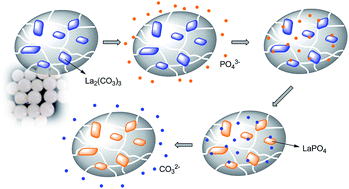
The possible mechanism of phosphate binding of the LaC@SA beads is as shown in Fig. 12. The phosphate binding process contains three main steps: (1) the phosphate ions are adsorbed and diffused into the gel beads, (2) the phosphate ions react with the La2(CO3)3 to form LaPO4 and carbonate ions, and (3) the carbonate ions are released out of the gel beads.
 |
| | Fig. 12 Illustration of a possible mechanism of the phosphate combination using lanthanum carbonate loaded calcium cross-linked sodium alginate beads. | |
The phosphate binding capability of the LaC@SA beads was measured by immersing the beads in a potassium phosphate solution. There are several factors that affect the binding capability of the LaC@SA beads, including pH and temperature of the potassium phosphate solution and the composition of the LaC@SA beads. Fig. 13 shows the influence of acidity on the phosphate binding capability of the LaC@SA beads. At pH 5, the binding capability reached the maximum value. The trend is consistent with the swelling ratio of LaC@SA beads in aqueous solution with different pH values. Since the binding process is limited by the diffusion of ions into/out of the LaC@SA beads, the more the beads swell, the looser the alginate macromolecular network becomes, and so the ions can enter the beads and be absorbed by La2(CO3)3 more easily. Thus, the binding capability increases.
 |
| | Fig. 13 The phosphate binding capacity based on LaC@SA beads and La2(CO3)3 at different pH values. | |
Fig. 14 shows the influence of temperature on the phosphate combining capacities of the LaC@SA beads. At 45 °C, the binding capacity reached the maximum value, but in general, the impact of temperature was not distinct. That is to say, the beads can be applied under a wide range of temperatures. If LaC@SA beads are applied in pharmacology as phosphate binders to cure hyperphospheremia, 37 °C is around the normal body temperature.
 |
| | Fig. 14 Effect of temperature on the phosphate binding capacity of LaC@SA beads. | |
Among the various kinds of components of LaC@SA beads, La2(CO3)3 is the essential and decisive one for phosphate binding. Fig. 15a and b show the phosphate binding kinetic curves of LaC@SA beads with different La2(CO3)3 content (tested under 25 °C and pH value 7). Evidently, for all beads, the phosphate binding could reach equilibrium in approximately 120 min. The bead with more La2(CO3)3 in it showed a higher binding rate constant. The phosphate binding capacity obviously increased as the dose of La2(CO3)3 in LaC@SA beads increased (Fig. 15c). The results of the current phosphate binder are higher than those reported in the literature.40
 |
| | Fig. 15 Effect of La2(CO3)3 content on phosphate binding capacity. Phosphate binding kinetic curves of LaC@SA beads with different La2(CO3)3 content (a and b), and phosphate binding capacity based on the masses of the beads and La2(CO3)3 (c). | |
4. Conclusions
In this study, a natural macromolecular raw material, sodium alginate, was used to prepare hydrogel beads with the cross-linking effect of calcium ions. This methodology was used to fabricate a new kind of phosphate binder with lanthanum carbonate loaded in the beads. The LaC@SA beads showed good swelling abilities and phosphate binding capacities in a broad range (pH from acidic to neutral; temperature from room temperature, to body temperature, to 65 °C). The possible mechanism of the phosphate binding of the LaC@SA beads was presumed. Thus, the LaC@SA beads have potential applications in wastewater treatment and environmental management. Moreover, the beads may also find usage in a biomedical domain, such as the cure of hyperphosphatemia.
References
- M. C. Kimling and R. A. Caruso, Sol–gel synthesis of hierarchically porous TiO2 beads using calcium alginate beads as sacrificial templates, J. Mater. Chem., 2012, 22, 4073–4082 RSC.
- K. J. Edgar, Cellulose esters in drug delivery, Cellulose, 2007, 14, 49–64 CrossRef CAS.
- M. George and T. E. Abraham, Polyionic hydrocolloids for the intestinal delivery of protein drugs: alginate and chitosan–a review, J. Controlled Release, 2006, 114, 1–14 CrossRef CAS PubMed.
- Y. S. R. Krishnaiah, R. S. Karthikeyan, V. G. Sankar and V. Satyanarayana, Three-layer guar gum matrix tablet formulations for oral controlled delivery of highly soluble trimetazidine dihydrochloride, J. Controlled Release, 2002, 81, 45–56 CrossRef CAS.
- D. L. Kaplan, B. J. Wiley, J. M. Mayer, S. Arcidiacono, J. Keith, S. J. Lombardi, D. Ball and A. L. Allen, Biosynthetic polysaccharides, Biomed. Polym., 1994, 189–212 CAS.
- J. Wu, W. Wei, L. Y. Wang, Z. G. Su and G. H. Ma, A thermosensitive hydrogel based on quaternized chitosan and poly(ethylene glycol) for nasal drug delivery system, Biomaterials, 2007, 28, 2220–2232 CrossRef CAS PubMed.
- E. S. Chan, T. K. Lim, P. Ravindra, R. F. Mansa and A. Islam, The effect of low air-to-liquid mass flow rate ratios on the size, size distribution and shape of calcium alginate particles produced using the atomization method, J. Food Eng., 2012, 108, 297–303 CrossRef CAS PubMed.
- C. Oerlemans, P. R. Seevinck, G. H. van de Maat, H. Boulkhrif, C. J. G. Bakker, W. E. Hennink and J. F. W. Nijsen, Alginate-lanthanide microspheres for MRI-guided embolotherapy, Acta Biomater., 2013, 9, 4681–4687 CrossRef CAS PubMed.
- B. H. Lee, B. Li and S. A. Guelcher, Gel microstructure regulates proliferation and differentiation of MC3T3-E1 cells encapsulated in alginate beads, Acta Biomater., 2012, 8, 1693–1702 CrossRef CAS PubMed.
- A. Hagen, B. G. Skjäk-Braek and M. Dornish, Pharmacokinetics of sodium alginate in mice, Euro. J. Pharm. Sci., 1996, 4, S100 CrossRef.
- N. Nagasawa, H. Mitomo, F. Yoshii and T. Kume, Radiation-induced degradation of sodium alginate, Polym. Degrad. Stab., 2000, 69, 279–285 CrossRef CAS.
- M. Kumar and R. Tamilarasan, Kinetics and equilibrium studies on the removal of victoria blue using Prosopis juliflora-modified carbon/Zn/alginate polymer composite beads, J. Chem. Eng. Data, 2013, 58, 517–527 CrossRef CAS.
- Y. Li, F. Liu, B. Xia, Q. Du, P. Zhang, D. Wang, Z. Wang and Y. Xia, J. Hazard. Mater., 2010, 177, 876–880 CrossRef CAS PubMed.
- K. Enayatzamir, H. A. Alikhani, B. Yakhchali, F. Tabandeh and S. Rodríguez-Couto, Environ. Sci. Pollut. Res., 2010, 17, 145–153 CrossRef CAS PubMed.
- A. Nualkaekul, D. Lenton, M. T. Cook, V. V. Khutoryanskiy and D. Charalampopoulos, Chitosan coated alginate beads for the survival of microencapsulated Lactobacillus plantarum in pomegranate juice, Carbohydr. Polym., 2012, 90, 1281–1287 CrossRef PubMed.
- W. Krasaekoopt, B. Bhandari and H. Deeth, Evaluation of encapsulation techniques of probiotics for yoghurt, Int. Dairy J., 2003, 13, 3–13 CrossRef CAS.
- A. Blandino, M. Macias and D. Cantero, Glucose oxidase release from calcium alginate gel capsules, Enzyme Microb. Technol., 2000, 27, 319–324 CrossRef CAS.
- S. J. Hwang, G. J. Rhee, K. M. Lee, K. H. Oh and C. K. Kim, Release characteristics of ibuprofen from excipient-loaded alginate gel beads, Int. J. Pharm., 1995, 116, 125–128 CrossRef CAS.
- A. Ugurlu and B. Salman, Phosphorus removal by fly ash, Environ. Int., 1998, 24, 911–918 CrossRef CAS.
- B. B. Johnson, A. V. Ivanov, O. N. Antzutkin and W. Forsling, 31P nuclear magnetic resonance study of the adsorption of phosphate and phenyl phosphates on Al2O3, Langmuir, 2002, 18, 1104–1111 CrossRef CAS.
- Z. Hongshao and R. Stanforth, Competitive adsorption of phosphate and arsenate on goethite, Environ. Sci. Technol., 2001, 35, 4753–4757 CrossRef CAS.
- R. Tsitouridou and J. Georgiou, A contribution to the study of phosphate sorption by three Greek fly ashes, Toxicol. Environ. Chem., 1988, 17, 129–138 CrossRef CAS PubMed.
- H. Yamada, M. Kayama, K. Saito and M. Kara, A fundamental research on phosphate removal by using slag, Water Res., 1986, 20, 547–557 CrossRef CAS.
- K. Karageorgiou, M. Paschalis and G. N. Anastassakis, Removal of phosphate species from solution by adsorption onto calcite used as natural adsorbent, J. Hazard. Mater., 2007, 139, 447–452 CrossRef CAS PubMed.
- W. Huang, S. Wang, Z. Zhu, L. Li, X. Yao, V. Rudolph and F. Haghseresht, Phosphate removal from wastewater using red mud, J. Hazard. Mater., 2008, 158, 35–42 CrossRef CAS PubMed.
- E. W. Shin, J. S. Han, M. Jang, S. H. Min, J. W. Park and R. M. Rowell, Phosphate adsorption on aluminum-impregnated mesoporous silicates: surface structure and behavior of adsorbents, Environ. Sci. Technol., 2004, 38, 912–917 CrossRef CAS.
- E. Ou, J. Zhou, S. Mao, J. Wang, F. Xia and L. Min, Highly efficient removal of phosphate by lanthanum-doped mesoporous SiO2, Colloids Surf., A, 2007, 308, 1–3 CrossRef PubMed.
- P. Pengthamkeerati, T. Satapanajaru and P. Chularuengoaksorn, Chemical modification of coal fly ash for the removal of phosphate from aqueous solution, Fuel, 2008, 87, 2469–3247 CrossRef CAS PubMed.
- H. Ye, F. Chen, Y. Sheng, G. Sheng and J. Fu, Adsorption of phosphate from aqueous solution onto modified palygorskites, Sep. Purif. Technol., 2006, 50, 283–290 CrossRef CAS PubMed.
- K. A. Krishnan and A. Haridas, Removal of phosphate from aqueous solutions and sewage using natural and surface modified coir pith, J. Hazard. Mater., 2008, 152, 527–535 CrossRef CAS PubMed.
- C. M. Gao, M. Z. Liu, S. L. Chen, S. P. Jin and J. Chen, Int. J. Pharm., 2009, 371, 16–24 CrossRef CAS PubMed.
- A. P. Sage, J. Lu, Y. Tintut and L. L. Demer, Hyperphosphatemia-induced nanocrystals upregulate the expression of bone morphogenetic protein-2 and osteopontin genes in mouse smooth muscle cells in vitro, Kidney Int., 2011, 79, 411–422 Search PubMed.
- A. J. Hutchison, Oral phosphate binders, Kidney Int., 2009, 75, 906–914 CrossRef CAS PubMed.
- C. Mario, G. Maurizio, P. Sabina, F. Giuditta, C. Paola, V. E. Maria, O. Laura and B. Diego, Management of secondary hyperparathyroidism in the patient with chronic elderly kidney disease, Drugs Aging, 2009, 26, 457–468 Search PubMed.
- C. Mario and B. Diego, Lanthanum carbonate-new data on parathyroid hormone control without liver damage, Nephrol., Dial., Transplant., 2007, 22, 316–318 Search PubMed.
- V. Shalini, D. J. Abraham and K. Neeraj, Nanomaterials for regenerative medicine, Nanomedicine, 2011, 6, 157–181 CrossRef PubMed.
- C. R. Thomas, S. George, A. M. Horst, Z. Ji, R. J. Miller, J. R. Peralta-Videa, T. Xia, S. Pokhrel, L. Mädler, J. L. Gardea-Torresdey, P. A. Holden, A. A. Keller, H. S. Lenihan, A. E. Nel and J. I. Zink, ACS Nano, 2011, 5, 13–20 CrossRef CAS PubMed.
- S. R. Crouch and H. V. Malmstadt, Mechanistic investigation of molybdenum blue method for determination of phosphate, Anal. Chem., 1967, 39, 1084–1089 CrossRef CAS.
- M. Salavati-Niasari, G. Hosseinzadeh and F. Davar, J. Alloys Compd., 2011, 509, 134–140 CrossRef CAS PubMed.
- C. Burger, D. Valcarenghi, S. Sandri and C. A. Rodrigues, Int. J. Pharm., 2001, 223, 29–33 CrossRef CAS.
|
| This journal is © The Royal Society of Chemistry 2015 |
Click here to see how this site uses Cookies. View our privacy policy here.