
Benzylic ethers as arylcarboxy surrogates in substrate directed ortho C–H functionalisation catalysed by copper

Nilufa Khatun, Arghya Banerjee, Sourav Kumar Santra, Wajid Ali and Bhisma K. Patel*
Department of Chemistry, Indian Institute of Technology Guwahati, 781 039, Assam, India. E-mail: patel@iitg.ernet.in; Fax: +91-3612690762

Received 25th February 2015 , Accepted 16th April 2015

First published on 16th April 2015


Abstract

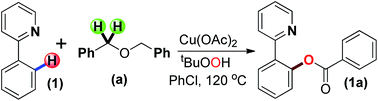
A copper catalysed ortho-benzoxylation of 2-arylpyridines has been accomplished using benzylic ethers as the alternative arylcarboxy sources (ArCOO–) via sp2 C–H bond activation. The use of the Pd/TBHP catalytic system is reported to install an o-aroyl (ArCO–) moiety at the 2-arylpyridine while the Cu/TBHP combination fixes a benzoxy (ArCOO–) group at the ortho site.

Introduction

Recently considerable efforts have been devoted to the ortho selective direct functionalisation of unreactive C–H bonds for the construction of C–C and C–X (X = heteroatom) bonds using transition metals such as Pd, Cu, Ru, Rh and Ir.1 Among ortho C–C and C–X bond making processes, the C–O bond forming processes are difficult to promote due to the binding of electronegative oxygen atoms with transition metals thereby making them inactive for further reactions. Direct functionalisation of C–H bonds has become the most attractive approach in recent organic synthesis as it obviates prefunctionalisation of substrates. In this context, our group has made ample contributions in the development of several unconventional coupling partners. Alkyl benzenes,2 terminal alkenes/alkynes3 and benzyl amines4 have been employed as the synthetic equivalents of ArCH2O–,2a ArCO–,2b,c,3c ArCOO–2d,3a–b,4 in directed and non-directed C–H functionalisations. In continuation to these developments, we focused on developing alternative synthetic precursors of arylcarboxy group (ArCOO–).

Benzylic ethers are commonly used as protecting groups for alcohols that can be easily cleaved under suitable oxidising or reducing conditions.5 It has also served as the dormant synthetic equivalents of aldehydes, carboxylic acids or esters depending upon the reaction conditions.6 Benzyl ether served as aroyl (ArCO–) equivalent both under palladium(II)7a or copper(I/II)7b catalysed reactions utilising TBHP as the oxidant (Scheme 1(a) and (b)). But under Cu catalysed reaction conditions, it resulted in O-aroylation and not C-aroylation.7b Catalyst dependent selectivity is not uncommon in literature. In our earlier works, during the synthesis of 2-aminobenzothiazoles from 2-halothioureas, catalyst CuI followed C–X (X = halogen) bond breaking path while PdII-preferred the C–H activation path.8 Further, divergent reactivity was observed using alkyl benzenes,2b terminal alkenes/alkynes,3c and benzyl amines.9 They all serve as aroyl (ArCO–) surrogates for substrate-directed ortho-aroylation when the catalyst used was PdII, while the use of CuII catalyst preferred installing aryl carboxy (ArCOO–) groups at the ortho site of directing arenes.3a,4,10


image file: c5ra03462k-s1.tif
Scheme 1 Metal dependent reactivities of dibenzyl ethers.

Results and discussion

To test whether benzyl ether serves as an aroyl (ArCO–) equivalent or as an arylcarboxy (ArCOO–) source during Cu-catalysed substrate-directed C–H functionalisation, 2-phenyl pyridine and dibenzylic ether were reacted. With this observation in mind, initially a reaction was carried out between 2-phenylpyridine (1) and dibenzyl ether (a) in the presence of CuI (10 mol%) as the catalyst, TBHP in decane (5–6 M) (3 equiv.) as the oxidant in 1,2-dichloroethane (DCE) solvent (Table 1, entry 1). The reaction ended up giving 2-(pyridin-2-yl)phenyl benzoate (1a) in 23% yield along with the recovery of both the starting materials (1) and (a). This result illustrates that dibenzyl ether serves as a carboxy (ArCOO–) source in the presence of Cu catalyst. This Cu-catalysed reaction showed differential reactivity to that of palladium(II)7a and even with copper(I/II)7b where benzyl ether acted only as an aroyl (ArCO–) group. However, propensity of Cu to insert (ArCOO–) group is similar to the previous reactivity with other latent arylcarboxy sources such as alkylbenzenes,10 terminal alkenes/alkynes3a and benzyl amines.4 A number of ortho C–O bond forming methods have been developed viz. o-acetoxylation,11 o-hydroxylation,12 and o-benzoxylation etc. due to their significant importance in pharmacology and bioactive natural products.13 At first, using Pd as the catalyst, Sanford group reported ortho benzoxylation of 2-phenylpyridine using benzoate iodonium salts14 (Scheme 2, path a). Subsequently, similar strategies were investigated by others using different transitional metals such as palladium,15 rhodium,16a ruthenium,16b and copper17 utilising either carboxylic acids/salts, acid chlorides, anhydrides or peroxides as the arylcarboxy (ArCOO–) sources (Scheme 2, path b). In addition, using aldehydes, (Scheme 2, path b) alkylbenzenes,10 (Scheme 2, path c) benzyl alcohols,18 (Scheme 2, path c), benzyl amines4,18 (Scheme 2, path c) and terminal alkenes/alkynes3a (Scheme 2, path d) have been developed as the arylcarboxy (ArCOO–) sources. Recently, ceric ammonium nitrate (CAN) as an efficient terminal oxidant has been demonstrated by our group during Pd(II) catalysed o-benzoxylation of directing substrates using carboxylic acids.15d Similar o-benzoxylation strategies have been reported with other directing substrates such as acetanilides,19a benzamides19b and ketoxime ether19c utilising carboxylic acids under Pd or Ru catalysed conditions.
Table 1 Screening of the reaction conditionsa,b

image file: c5ra03462k-u1.tif

Entry Catalyst (mol%) Oxidant (equiv.) Solvent Yield (%)
a Reaction conditions: 2-phenylpyridine (1), (0.5 mmol), dibenzyl ether (a), (0.75 mmol), PhCl (0.5 mL), 22 h.b Isolated yield.c Reaction carried out at 100 °C.
1 CuI (10) TBHP (3) DCE 23
2 CuCl (10) TBHP (3) DCE 17
3 CuBr (10) TBHP (3) DCE 18
4 Cu(OAc)2 (10) TBHP (3) DCE 26
5 Cu(OTf)2 (10) TBHP (3) DCE 18
6 CuCl2 (10) TBHP (3) DCE 11
7 CuBr2 (10) TBHP (3) DCE 9
8 CuO (10) TBHP (3) DCE 11
9 CuSO4·5H2O (10) TBHP (3) DCE 8
10 Cu(OAc)2 (20) TBHP (3) DCE 37
11 Cu(OAc)2 (30) TBHP (3) DCE 41
12 Cu(OAc)2 (20) TBHP (3) DMSO 6
13 Cu(OAc)2 (20) TBHP (3) DMF 5
14 Cu(OAc)2 (20) TBHP (3) CH3CN 13
15 Cu(OAc)2 (20) TBHP (3) PhCl 41
16 Cu(OAc)2 (20) Aq. TBHP (3) PhCl 47
17 Cu(OAc)2 (20) Aq. TBHP (6) PhCl 58
18 Cu(OAc)2 (20) H2O2 (6) PhCl 00
19 Cu(OAc)2 (20) DTBP (6) PhCl 00
20 Cu(OAc)2 (20) m-CPBA (6) PhCl 00
21 Cu(OAc)2 (20) Oxone (6) PhCl 00
22 Cu(OAc)2 (20) K2S2O8 (6) PhCl 00
23 Aq. TBHP (6) PhCl 00
24 Cu(OAc)2 (20) PhCl 00
25 Cu(OAc)2 (20) Aq. TBHP (6) PhCl 47c


image file: c5ra03462k-s2.tif
Scheme 2 Literature methods on o-benzoxylation of 2-phenylpyridine (1).

Encouraged by the finding of benzyl ethers serving as the surrogate of ArCOO–, a series of reactions were carried out by varying catalysts, oxidants and solvents to arrive at the best possible yield. At first, the efficacies of various copper salts were screened keeping all other parameters constant. Among the catalysts tested (Table 1, entries 2–9) such as CuCl (17%), CuBr (18%), Cu(OTf)2 (18%), CuCl2 (11%), CuBr2 (9%), CuO (11%) and CuSO4·5H2O (8%) in DCE solvent, Cu(OAc)2 (26%) (Table 1, entry 4) was found to be the ideal. The yield of the desired product (1a) marginally improved (37%) when the amount of Cu(OAc)2 was increased to 20 mol% (Table 1, entry 10). Furthermore, the use of excess Cu(OAc)2 (upto 30 mol%) did not improve the yield (41%) significantly (Table 1, entry 11). Polar aprotic solvents such as DMSO, DMF and CH3CN were found to be less effective for this transformation as illustrated in Table 1, (entries 12–14). The use of chlorobenzene as the solvent provided better yield (41%) with lesser side products (Table 1, entry 15) than DCE (Table 1, entry 10). The use of 70% aqueous solution of TBHP in a lieu of decane TBHP was found to be better (47%) for this transformation as shown in Table 1, entry 16. A further improvement in the yield (upto 58%) of (1a) was observed when the aq. TBHP quantity was increased to two fold (6 equiv.) (Table 1, entry 17). Instead of TBHP, other oxidants such as H2O2, di-tert-butyl peroxide (DTBP), m-chloroperbenzoic acid (m-CPBA), oxone and K2S2O8 were also tested during the screening of the reaction. As shown in Table 1, entries 18–22, all these oxidants are found to be ineffective for this transformation. Notably, either in the absence of copper salt or TBHP, the reaction failed to yield the desired product (1a). The yield of product (1a) dropped to 47% when the reaction temperature was decreased from 120 °C to 100 °C. Finally, the optimised reaction condition was, the use of 2-phenylpyridine (1) (0.5 mmol), dibenzyl ethers (a) (0.75 mmol), Cu(OAc)2 (20 mol%), TBHP (aq. 70%) (6 equiv.) in chlorobenzene (0.5 mL) at 120 °C.

With the above optimised conditions in hand, the scope of this strategy was then implemented to the reaction between 2-phenylpyridine (1) and various substituted dibenzyl ethers and the results are summarised in Scheme 3. Dibenzyl ethers having electron neutral –H (a) and electron donating groups such as o-Me (b), m-Me (c), p-Me (d) and p-OMe (e) as well as electron withdrawing p-Br (f) and p-Cl (g) substituents were all found to serve as ArCOO– sources and gave good to moderate yields of corresponding products of (1a–1g). The presence of electron donating substituents in the aryl ring of dibenzyl ethers irrespective of their position of attachments (b–e) provided better yields than those possessing electron-withdrawing substituents (f and g) as shown in Scheme 3. The efficacy of this coupling reaction was further executed with substituted 2-phenylpyridines such as 2-p-tolylpyridine (2). Reaction of (2) with various substituted dibenzyl ethers (a–g) were then carried out and all provided good to moderate yields of their respective products (2a–2g) as shown in Scheme 3. Similarly, 2-m-tolylpyridine (3) when treated with dibenzyl ether (a) under the reaction conditions gave a good yield of the desired product (3a).


image file: c5ra03462k-s3.tif
Scheme 3 Subtrate scope for o-benzoxylation using dibenzyl ethers. Reaction condition: 2-phenylpyridine (0.5 mmol), dibenzyl ether (0.75 mmol), aq. TBHP (70%) (6 equiv.) at 120 °C in chlorobenzene (0.5 mL). Yield of isolated product.

Further 2-(4-methoxyphenyl)pyridine (4), another activated substrate when treated with dibenzyl ethers possessing electron neutral –H (a) and electron withdrawing p-Cl (g) under the present reaction conditions, provided (4a) and (4g) in 75% and 54% yields respectively as shown in Scheme 3. Dibenzyl ether (a) also served as ArCOO– surrogate with other 2-phenylpyridine derivatives possessing electron-withdrawing substituents such as p-Br (5) and p-Cl (6), giving o-benzoxylated products (5a) and (6a) respectively in moderate yields. However, directed arenes bearing activated substituents such as p-Me (2), m-Me (3) and p-OMe (4) gave better yields compare to those possessing electron withdrawing substituents such as p-Br (5) and p-Cl (6) (Scheme 3). This is because of the better electrophilic metallation of Cu(II) catalyst with activated 2-aryl rings of 2-arylpyridine. To check whether both the halves of a dibenzyl ether acted as the arylcarboxy source or not, an unsymmetrical dibenzyl ether (eg) was treated with 2-phenylpyridine (1). Under the present reaction conditions, the unsymmetrical dibenzyl ether (eg) provided a separable mixture of (1e) and (1g) in a ratio of 1.5[thin space (1/6-em)]:[thin space (1/6-em)]1 as shown in Scheme 4(i). This result reconfirms that both the halves served as aryl carboxy source but the activated aryl ring acts as a better o-benzoxy source compare to its deactivated counterpart (Scheme 4(i)).


image file: c5ra03462k-s4.tif
Scheme 4 Various control experiments performed.

A set of controlled reactions were performed to gather the evidences to support the postulated reaction mechanism for this transformation. Analysis of the crude reaction products of dibenzyl ether (a) under the optimised conditions in the absence of directing substrate (1) revealed the presence of benzyl alcohol (A), benzaldehyde (B), benzoic acid (C) and benzylbenzoate (D) as detected by HRMS, which is consistent with previous observations.7b Thus, to find out the possible active intermediates, reaction of benzyl alcohol (A), benzaldehyde (B), benzoic acid (C) and benzylbenzoate (D) with (1) were carried out separately under otherwise identical conditions. Interestingly benzyl alcohol (A) and benzaldehyde (B) when reacted with (1), provided the corresponding product (1a) in 61% and 65% yields respectively (Scheme 4(ii), path I and path II). These results strongly support their intermediacy during this transformation. While benzoic acid (C) and benzylbenzoate (D) yielded only 7% and 10% of (1a), suggesting those species may not be the active coupling partners (Scheme 4(ii), path III and path IV). The use of benzoic acid in lieu of dibenzyl ether provided only a trace of o-benzoxylated product supporting the presence of active benzoxy radical and not the benzoate anion in the medium. Thus, the possibility of oxidation of the ligand chelated CuII species to CuIII species via disproportionation reaction21 is less feasible as compared to its oxidation via active benzoxy radical. Furthermore, to support the radical nature of the coupling, a reaction was conducted in the presence of a radical quencher TEMPO under standard conditions. A substantial drop in the yield of (1a) (13%) along with the formation of TEMPO-ester (X) confirms the radical nature of the reaction as illustrated in Scheme 4(iii). Results obtained from controlled experiments and from our recent reports3a,4 a plausible reaction mechanism has been postulated as shown in Scheme 5(i). Presumably, TBHP in the presence of copper catalyst produces species (a′) via an initial SET mechanism. The intermediate species (a′) undergo proton abstraction of α-sp3 C–H bond to give an oxonium species (a′′). However alternative path involving α-sp3 C–H proton abstraction followed by a SET mechanism to form oxonium species (a′′) cannot be ruled out.20 A nucleophilic attack of water on oxonium species leads to the formation of an unstable hemi-acetal species (benzyloxy)(phenyl)methanol (a′′′). This hemi-acetal species easily cleaved to give an equimolar mixture of benzyl alcohol (A) and benzaldehyde (B). Thus formed benzyl alcohol (A) generated is further oxidised to the corresponding benzaldehyde (B). Due to the presence of an excess of TBHP, the in situ generated (B′) obtained by the proton abstraction of benzaldehyde (B), forms a perester species (E). Homolytic cleavage of this perester (E) forms carboxy radical (C′). Further oxidative addition of this carboxy radical (C′) with cyclometallated Cu complex (F) lead to the formation of a unstable CuIII intermediate (G). Finally, a reductive elimination of (G) installs a benzoxy moiety at the ortho site of (1) forming CuI species. The generated CuI catalyst is oxidised to CuII for subsequent catalytic cycle as shown in Scheme 5(i). Unsymmetrical dibenzyl ether (eg) provided (1e) as the major product. This is due to the formation of a more stable oxonium species by the α-sp3 C–H proton abstraction from activated ring side (eg′′). The in situ generated hemi-acetal intermediate (eg′′′) cleaved to equimolar mixture of 4-methoxybenzaldehyde and 4-chlorobenzylalcohol as shown in Scheme 5(ii). The in situ generated 4-methoxy benzaldehyde then undergo preferential coupling with 2-phenylpyridine (1). This favoured coupling of electron-donating substituent is true even when an equimolar mixture of 4-methoxy benzaldehyde and 4-chlorobenzaldehyde were reacted with (1) under the optimised conditions. The ratio of corresponding o-benzoxylated products (1e) and (1g) obtained were 7[thin space (1/6-em)]:[thin space (1/6-em)]3 confirming our assumption. The higher propensity of formation of o-benzoxylated product derived from electron-donating part of unsymmetrical dibenzylether (eg) has been ascertain even when the reaction was performed with 0.5 mmol of unsymmetrical ether (eg). The ratio of products (1e) and (1g) (1.45[thin space (1/6-em)]:[thin space (1/6-em)]1) obtained were almost identical (1.50[thin space (1/6-em)]:[thin space (1/6-em)]1) using 0.75 mmol (1.5 equiv.) of (eg) supporting our presumption.


image file: c5ra03462k-s5.tif
Scheme 5 Plausible mechanism for o-benzoxylation of 2-phenylpyridine (1).

Conclusion

In Conclusion, an efficient CuII-catalysed protocol for the o-benzoxylation of 2-phenylpyridine derivatives has been demonstrated utilising benzyl ethers as the new arylcarboxy surrogates. The reaction shows a broad substrates scope and good tolerance toward the various functional groups using inexpensive copper catalyst. A mechanistic investigation reveals that the reaction is going via radical pathways. In addition, this reaction demonstrates the differential reactivity of Cu catalyst to that of Pd catalyst. It is true that benzyl alcohols and benzaldehydes also serve as the o-benzoxy source, however aldehydes on storage easily oxidises to their corresponding acids. Similarly, alcohols are also prone to oxidative conditions. The use of dibenzylether is advantageous because they are not only stable to areal oxidation but also releases two equivalents of aroylcarboxy group per molecule.

General procedure for the synthesis of 2-(pyridin-2-yl)phenyl benzoate (1a) from 2-phenylpyridine (1) and benzyl ether (a)

A oven-dried round bottle flask was charged with 2-phenylpyridine (1), (0.5 mmol, 0.078 g), benzyl ether (a) (0.75 mmol, 0.149 g), Cu(OAc)2 (20 mol%, 0.018 g), 70% aqueous solution TBHP (6 equiv., 430 μL) in chlorobenzene (0.5 mL). This resultant reaction mixture was stirred in a preheated oil bath at 120 °C for 22 h and the progress of the reaction was monitored by TLC. The reaction mixture was cooled down to room temperature, residual solvent evaporated under reduced pressure and diluted with ethyl acetate (1 × 10 mL). This diluted reaction mixture was passed through a celite bed and subsequently washed with ethyl acetate (2 × 10 mL). The combined organic layer was then washed with 10% aq. saturated solution of NaHCO3 (2 × 5 mL) followed by water (2 × 5 mL). The organic layer was dried over anhydrous Na2SO4 and evaporated under reduced pressure. The crude product was further purified by silica gel column chromatography using (heane[thin space (1/6-em)]:[thin space (1/6-em)]ethylacetate: 9[thin space (1/6-em)]:[thin space (1/6-em)]1) as the eluent to give pure compound (2-(pyridin-2-yl)phenyl benzoate) (1a, 0.08 g, 58%) as a brownish oil material.

Acknowledgements

B. K. P acknowledges the support of this research by the Science and Engineering Research Board (SERB) (SB/S1/OC-53/2013), New Delhi, and the Council of Scientific and Industrial Research (CSIR) (02(0096)/12/EMR-II). N.K. A.B. S.K.S. and W.A thank CSIR.

References

  1. (a) G. Dyker, Handbook of C–H Transformations: Applications in Organic Synthesis, Wiley-VCH, Weinheim, 2005 Search PubMed; (b) J.-Q. Yu and Z.-J. Shi, C–H Activation, Springer, Berlin, Germany, 2010 Search PubMed; (c) X. Chen, K. M. Engle, D.-H. Wang and J.-Q. Yu, Angew. Chem., Int. Ed., 2009, 48, 5094 CrossRef CAS PubMed; (d) T. Satoh and M. Miura, Chem.–Eur. J., 2010, 16, 11212 CrossRef CAS PubMed; (e) T. W. Lyons and M. S. Sanford, Chem. Rev., 2010, 110, 1147 CrossRef CAS PubMed; (f) L.-M. Xu, B.-J. Li, Z. Yang and Z.-J. Shi, Chem. Soc. Rev., 2010, 39, 712 RSC; (g) D. A. Colby, R. G. Bergman and J. A. Ellman, Chem. Rev., 2010, 110, 624 CrossRef CAS PubMed; (h) J. Wencel-Delord, T. Droge, F. Liu and F. Glorius, Chem. Soc. Rev., 2011, 40, 4740 RSC; (i) S. H. Cho, J. Y. Kim, J. Kwak and S. Chang, Chem. Soc. Rev., 2011, 40, 5068 RSC; (j) C.-L. Sun, B.-J. Li and Z.-J. Shi, Chem. Rev., 2011, 111, 1293 CrossRef CAS PubMed; (k) L. Ackermann, Chem. Rev., 2011, 111, 1315 CrossRef CAS PubMed; (l) S. E. Allen, R. R. Walvoord, R. Padilla-Salinas and M. C. Kozlowski, Chem. Rev., 2013, 113, 6234 CrossRef CAS PubMed.
  2. (a) S. K. Rout, S. Guin, K. K. Ghara, A. Banerjee and B. K. Patel, Org. Lett., 2012, 14, 3982 CrossRef CAS PubMed; (b) S. Guin, S. K. Rout, A. Banerjee, S. Nandi and B. K. Patel, Org. Lett., 2012, 14, 5294 CrossRef CAS PubMed; (c) S. K. Rout, S. Guin, A. Banerjee, N. Khatun, A. Gogoi and B. K. Patel, Org. Lett., 2013, 15, 4106 CrossRef CAS PubMed; (d) G. Majji, S. Guin, A. Gogoi, S. K. Rout and B. K. Patel, Chem. Commun., 2013, 49, 3031 RSC.
  3. (a) S. K. Rout, S. Guin, A. Gogoi, G. Majji and B. K. Patel, Org. Lett., 2014, 16, 1614 CrossRef CAS PubMed; (b) G. Majji, S. Guin, S. K. Rout, A. Behera and B. K. Patel, Chem. Commun., 2014, 50, 12193 RSC; (c) N. Khatun, A. Banerjee, S. K. Santra, A. Behera and B. K. Patel, RSC Adv., 2014, 4, 54532 RSC.
  4. A. Behera, S. K. Rout, S. Guin and B. K. Patel, RSC Adv., 2014, 4, 55115 RSC.
  5. P. G. M. Wuts and T. W. Green, Protective Groups in Organic Synthesis, Wiley & Sons, New York, 4th edn, 2007, p. 102 Search PubMed.
  6. (a) D. G. Markees, J. Org. Chem., 1958, 23, 1490 CrossRef CAS; (b) A. S. Mayhoub, A. Talukdar and M. Cushman, J. Org. Chem., 2010, 75, 3507 CrossRef CAS PubMed; (c) P. P. Pradhan, J. M. Bobbitt and W. F. Bailey, J. Org. Chem., 2009, 74, 9524 CrossRef CAS PubMed; (d) P. Strazzolini and A. Runcio, Eur. J. Org. Chem., 2003, 526 CrossRef CAS PubMed; (e) T. Nishiguchi and M. Bougauchi, J. Org. Chem., 1989, 54, 3001 CrossRef CAS; (f) E. Lee-Ruff and F. Ablenas, Can. J. Chem., 1989, 67, 699 CrossRef CAS; (g) Z. Shen, J. Dai, J. Xiong, X. He, W. Mo, B. Hu, N. Sun and X. Hu, Adv. Synth. Catal., 2011, 353, 3031 CrossRef CAS PubMed.
  7. (a) S. Han, S. Sharma, J. Park, M. Kim, Y. Shin, N. K. Mishra, J. J. Bae, J. H. Kwak, Y. H. Jung and I. S. Kim, J. Org. Chem., 2014, 79, 275 CrossRef CAS PubMed; (b) J. Park, S. H. Han, S. Sharma, S. Han, Y. Shin, N. K. Mishra, J. H. Kwak, C. H. Lee, J. Lee and I. S. Kim, J. Org. Chem., 2014, 79, 4735 CrossRef CAS PubMed.
  8. S. K. Sahoo, A. Banerjee, S. Chakraborty and B. K. Patel, ACS Catal., 2012, 2, 544 CrossRef CAS.
  9. Q. Zhang, F. Yang and Y. Wu, Chem. Commun., 2013, 49, 6837 RSC.
  10. Y.-J. Bian, C.-B. Xiang, Z.-M. Chen and Z.-Z. Huang, Synlett, 2011, 2407 CAS.
  11. (a) D. Kalyani and M. S. Sanford, Org. Lett., 2005, 7, 4149 CrossRef CAS PubMed; (b) F.-R. Gou, X.-C. Wang, P.-F. Huo, H.-P. Bi, Z.-H. Guan and Y.-M. Liang, Org. Lett., 2009, 11, 5726 CrossRef CAS PubMed; (c) X. Zheng, B. Song and B. Xu, Eur. J. Org. Chem., 2010, 4376 CAS; (d) L. Wang, X.-D. Xia, W. Guo, J.-R. Chen and W.-J. Xiao, Org. Biomol. Chem., 2011, 9, 6895 RSC; (e) R. K. Rit, R. Yadav and A. K. Sahoo, Org. Lett., 2012, 14, 3724 CrossRef CAS PubMed; (f) R. Yadav, R. K. Rit and A. K. Sahoo, Chem.–Eur. J., 2012, 18, 5541 CrossRef PubMed.
  12. (a) X. Chen, X.-S. Hao, C. E. Goodhue and J.-Q. Yu, J. Am. Chem. Soc., 2006, 128, 6790 CrossRef CAS PubMed; (b) S. H. Kim, H. S. Lee, S. H. Kim and J. N. Kim, Tetrahedron Lett., 2008, 49, 5863 CrossRef CAS PubMed; (c) A. Company and S. Enthaler, Chem. Soc. Rev., 2011, 40, 4912 RSC; (d) D. A. Alonso, C. Najera, I. M. Pastor and M. Yus, Chem.–Eur. J., 2010, 16, 5274 CrossRef CAS PubMed; (e) V. S. Thirunavukkarasu, S. I. Kozhushkov and L. Ackermann, Chem. Commun., 2014, 50, 29 RSC.
  13. F. Luo, C. Pan and J. Cheng, Synlett, 2012, 357 CAS.
  14. A. R. Dick, J. W. Kampf and M. S. Sanford, J. Am. Chem. Soc., 2005, 127, 12790 CrossRef CAS PubMed.
  15. (a) C.-L. Sun, J. Liu, Y. Wang, X. Zhou, B.-J. Li and Z.-J. Shi, Synlett, 2011, 883 CAS; (b) C.-J. Hu, X.-H. Zhang, Q.-P. Ding, T. Lv, S.-P. Ge and P. Zhong, Tetrahedron Lett., 2012, 53, 2465 CrossRef CAS PubMed; (c) W.-N. Sit, C.-W. Chan and W.-Y. Yu, Molecules, 2013, 18, 4403 CrossRef CAS PubMed; (d) S. K. Santra, A. Banerjee, N. Khatun and B. K. Patel, Eur. J. Org. Chem., 2015, 350 CrossRef CAS PubMed and references therein.
  16. (a) Z. Ye, W. Wang, F. Luo, S. Zhang and J. Cheng, Org. Lett., 2009, 11, 3974 CrossRef CAS PubMed; (b) K. Padala and M. Jeganmohan, Chem. Commun., 2013, 49, 9651 RSC.
  17. (a) W. Wang, F. Luo, S. Zhang and J. Cheng, J. Org. Chem., 2010, 75, 2415 CrossRef CAS PubMed; (b) W. Wang, C. Pan, F. Chen and J. Cheng, Chem. Commun., 2011, 47, 3978 RSC.
  18. A. B. Khemnar and B. M. Bhanage, Org. Biomol. Chem., 2014, 12, 9631 CAS.
  19. (a) K. Padala and M. Jeganmohan, Chem. Commun., 2013, 49, 9651 RSC; (b) K. Padala and M. Jeganmohan, Chem.–Eur. J., 2014, 20, 4092 CrossRef CAS PubMed; (c) C.-L. Sun, J. Liu, Y. Wang, X. Zhou, B.-J. Li and Z.-J. Shi, Synlett, 2011, 883 CAS.
  20. (a) C. J. Li, Acc. Chem. Res., 2009, 42, 335 CrossRef CAS PubMed; (b) Z. Li, D. S. Bohle and C.-J. Li, Proc. Natl. Acad. Sci. U. S. A., 2006, 103, 8928 CrossRef CAS PubMed.
  21. A. E. King, L. M. Huffman, A. Casitas, M. Costas, X. Ribas and S. S. Stahl, J. Am. Chem. Soc., 2010, 132, 12068 CrossRef CAS PubMed.

Footnote

Electronic supplementary information (ESI) available: 1H and 13C NMR spectra. See DOI: 10.1039/c5ra03462k

This journal is © The Royal Society of Chemistry 2015
Click here to see how this site uses Cookies. View our privacy policy here.