DOI:
10.1039/C5RA03300D
(Paper)
RSC Adv., 2015,
5, 34353-34363
Insights into the effects of γ-irradiation on the microstructure, thermal stability and irradiation-derived degradation components of microcrystalline cellulose (MCC)
Received
22nd February 2015
, Accepted 31st March 2015
First published on 31st March 2015
Abstract
It has been demonstrated that radiation pretreatment can cause a significant breakdown of the stubborn cellulose structure, which will increase the accessibility of cellulose and enhance enzyme hydrolysis in bio-fuel processes. In this study, using microcrystalline cellulose (MCC) as a model substrate, the impacts of irradiation dose on the microstructure, thermal stability and irradiated-degradation components of cellulose under 60Co γ-irradiation (0–1400 kGy) was comprehensively investigated. FT-IR, EPR and NMR analyses show that irradiation destroys the glycosidic bond and inter- and intra-molecular hydrogen bond of cellulose, resulting in the generation of reductive carbonyl groups and free radicals. SEM, XRD and GPC analyses confirm that irradiation can damage the crystalline microstructure and surface morphology of MCC, which reduces its degree of polymerization from 183![[thin space (1/6-em)]](https://www.rsc.org/images/entities/char_2009.gif) 045 kDa to 4413 kDa. TGA and DGA curves indicate that the activated energy (Ea) and thermal stability of treated MCC decrease with the increasing irradiation dose. Ion chromatography (IC) analysis demonstrates that there exist fermentation sugars such as glucose (10.73 mg g−1), xylose (1.58 mg g−1), arabinose (0.46 mg g−1), fructose (4.31 mg g−1), and cellobiose (1.90 mg g−1) as well as low amounts of glucuronic acid (0.35 mg g−1) and galacturonic acid (1.46 mg g−1) in the irradiation-derived degradation components. Therefore, the findings in this study suggest that γ-irradiation processing is an environment-friendly, promising and effective approach to treat lignocellulose biomass.
045 kDa to 4413 kDa. TGA and DGA curves indicate that the activated energy (Ea) and thermal stability of treated MCC decrease with the increasing irradiation dose. Ion chromatography (IC) analysis demonstrates that there exist fermentation sugars such as glucose (10.73 mg g−1), xylose (1.58 mg g−1), arabinose (0.46 mg g−1), fructose (4.31 mg g−1), and cellobiose (1.90 mg g−1) as well as low amounts of glucuronic acid (0.35 mg g−1) and galacturonic acid (1.46 mg g−1) in the irradiation-derived degradation components. Therefore, the findings in this study suggest that γ-irradiation processing is an environment-friendly, promising and effective approach to treat lignocellulose biomass.
1. Introduction
Increasing efforts have been made to exploit alternative bioenergy sources from renewable biomasses due to the depletion of fossil fuels and the serious problem of global warming.1 Lignocellulosic biomass, the most abundant renewable resource all over the world, is a promising feedstock because of non-competition with food and its high cellulose content, which is considerably converted to ethanol via hydrolysis and fermentation.2,3 However, cellulose possesses a crystalline structure and inaccessible morphology, hindering the enzymatic conversion from cellulose to fermentation sugars. To improve the accessibility of cellulose, a myriad of cellulose pretreatment methods have been intensively developed such as mechanical ball milling,4 steam explosion,5 dilute acid/alkali,6 supercritical fluid,7 ionic liquid,8–11 and ultrasound and radiation pretreatments.12–14 In order for these potential methods to be considered effective, the pretreatment processing must efficiently enhance the susceptibility of cellulose by modifying the cellulose structure and minimize the subsequent formation of toxic derivatives from the degraded cellulose.
Radiation processing methods, including ultrasound,12 electron beam,13 proton beam,15 microwave,16 ionizing irradiation17,18 and 60Co γ-irradiation,14,19 efficiently degrade cellulose during biofuel production from biomass. Radiation was successfully applied in lignocellulose pretreatment because it showed the abilities of predominant degradation or depolymerization of cellulose in biomasses such as bagasse cane, rice straw, wheat straw, and corn stalk.14,19,20 In comparison with other pretreatment methods, radiation uses an applied electromagnetic field to disrupt the microcrystal structure of cellulose in a solid state involving mild temperatures, short reaction times and minimal, even few, undesirable inhibitors.19 Thus, radiation is a highly effective, friendly and energy saving pretreatment processing method for lignocellulose ethanol production.19,20 However, a systematic insight into the degradation mechanism is not available and the effect of γ-irradiation pretreatment on cellulose such as the microstructural and morphologic changes, thermogravimetry and irradiation-derived degradation components of cellulose before and after treatment are not known.
In this study, 60Co γ-ray irradiation was employed to degrade microcrystalline cellulose (MCC) in the solid state under different irradiation doses from 0 kGy to 1400 kGy. The degree of polymerization (DP) was measured by the viscosity method to evaluate the extent of scission. Scanning electron microscopy (SEM) was employed to visualize the modification of MCC morphology before and after γ-irradiation treatment. The crystalline index (CrI) of treated MCC was calculated through X-ray diffraction (XRD) spectrum to evaluate the cellulose crystalline type variance. Changes in the structural and inter-(intra) molecular bonds for treated MCC were analyzed by Fourier transform infrared (FT-IR), electron paramagnetic resonance (EPR), and nuclear magnetic resonance (NMR) spectroscopy. The thermal stability properties of MCC were addressed by thermogravimetry analysis (TGA) and differential thermogravimetry (DTG) to calculate the activated energy (Ea) as a function of irradiation dose. Furthermore, the types and contents of the soluble degradation components of irradiated MCC were measured by ion chromatography (IC). The primary objectives of this study are to elucidate the degradation mechanism of irradiated cellulose, and assess the feasibility and accessibility of γ-ray irradiation as a potential pretreatment method of cellulose for bio-fuel processing.
2. Materials and methods
2.1 Materials
Avicel PH-101 MCC (pharmaceuticals grade, CAS 9004-34-6, particle size 50 μm) was purchased from Sigma-Aldrich Co. in China (Shanghai, China). Nine standards of glucose, fructose, xylose, arabinose, galactose, mannose, cellobiose, galacturonic acid, and glucuronic acid were also bought from Sigma-Aldrich Co. in China (Shanghai, China). Other chemicals used in this study were analytical reagents and purchased form the Beijing local markets, China.
2.2 MCC irradiation pretreatment
MCC irradiation pretreatment was performed according to the processing methods reported in our previous study.19 Specifically, all irradiation treatment experiments were performed using a 60Co γ-ray irradiation device at 1.85 × 10¹⁶ Bq in the Hunan Irradiation Center (Changsha, China). Approx. 5.0 g dried MCC in a 10 mL sealed glass bottle was set in the device and irradiated at room temperature under a 60Co γ-ray irradiation source with an intensity of 9.99 × 10¹⁵ Bq and a dose rate of 2.0 kGy h−1. The specific levels of 60Co γ-ray irradiation dose were 100 kGy, 200 kGy, 400 kGy, 600 kGy, 800 kGy, 1000 kGy, 1200 kGy and 1400 KGy. The untreated MCC (0 kGy) was used as the control sample. After treatment, MCC was homogeneously mixed and employed in the following experimental analyses of morphology, microstructure and irradiation degradation components.
2.3 Scanning electron microscopy (SEM)
First, MCC sample was homogeneously distributed in deionized water by ultrasonication with a power of 300 W (KQ-300E ultrasonic apparatus, Kunshan, China) for 10 min. Next, a drop of MCC dispersion was applied to a single monocrystal silicon gold sheet and dried under vacuum. The morphologies of untreated and treated MCC were imaged by a JSM-6380LV SEM (Japan Electron Optics Laboratory Co., Ltd, Japan) at a working electronic voltage of 10 kV.
2.4 X-ray diffraction analysis (XRD)
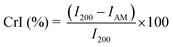
XRD measurements were performed to observe the crystalline type change of irradiated MCC against untreated sample using a Rigaku D/max 2500 diffractometer (Rigaku Corporation, Japan) under the following conditions: Cu/Kα wavelength = 0.154 nm, voltage 40 kV, current 250 mA, scanning speed rate 8° min−1, scanning step 0.02° and scanning scale (2θ) 10–40°. Crystalline index (CrI) was calculated from the XRD spectrum data according to the reported method16 using the intensity of the (200) peak (I200, 2θ = 22.4°) and the lowest intensity (IAM, 2θ = 18°) between the (200) peak (I200, 2θ = 22.4°) and (101) peak (I101, 2θ = 15.8°) by eqn (1):| |
 | (1) |
where I200 is the intensity of the (200) peak (at about 2θ = 22.4°) and IAM is the lowest intensity of the peak at about 2θ = 18°.
2.5 Fourier transform infrared analysis (FT-IR)
KBr pellets of MCC samples were prepared by mixing 1.0–2.0 mg of untreated and treated MCC powder with 200 mg KBr (spectroscopic grade) in a vibratory mixer for 30 s. 13 mm diameter pellets were obtained for FT-IR analysis using a standard device under a pressure of 75 kN cm−2. FT-IR spectra were obtained with a Nicolet 670 FT-IR spectrometer (Nicolet NicPlan IR microscope, USA) and using a liquid nitrogen-cooled mercury–cadmium–tellurium (MCT) detector in the region of 400–4000 cm−1. The running conditions were resolution 2 cm−1, scan 64 times, and scanning speed 20 kHz.
2.6 Electron paramagnetic resonance (EPR)
EPR spectrum was performed to examine the free radicals of cellulose after irradiation and was obtained using a JES FA-200 cw-EPR spectrometer (JEOL, Japan) at room temperature. A magnetic field modulation of 4 G and microwave power of 10 mW were used for all the experiments to avoid resonance line saturation. EPR intensity data were recalculated per 1 g MCC. EPR conditions: microwave frequency 9.06 GHz, microwave power 1 mW, center field 324 mT, initial field 299 mT, sweep width 50 mT, modulation amplitude 0.35 mT, modulation frequency 100 kHz, sweep time 60 s, and room temperature. In general, the reproducibility of the EPR measurement for five independent readings was within 5%.
2.7 Solid state 1H and 13C nuclear magnetic resonance (1H and 13C NMR)
In order to observe the variance of intra- and inter-molecular hydrogen bonds in treated MCC, cross-polarization/magic angle spinning (CP/MAS) solid state 1H and 13C NMR spectroscopy were performed using an Avance III 600 NMR spectrometer (Bruker, Switzerland). 1H NMR conditions: resonance frequency 600.1 MHz, π/2 pulse length 2.57 μs, and delay time 5 s. The 13C NMR conditions were as follows: resonance frequency 150.9 MHz, CP contact time 2 ms, delay time 5 s. The probe size of CP/MAS was 4 mm and the rotation speed of the rotor was 8 kHz. 300–3175 scans were required to obtain a good signal-to-noise ratio. 4000 accumulations were used for the 1H–13C CP/MAS measurement. Tetramethyl silane (TMS) was used as the reference to determine the chemical shifts of the structures.
2.8 Measurement of the degree of polymerization (DP)
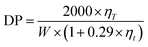
The average DP of untreated and treated MCC was determined by viscosity measurement methods as reported in the literature.14 The MCC sample was dissolved in saturated cupriethylenediamine solution. The viscosity of the solution was measured by an Ubbelohde viscometer (Shanghai, China) with a capillary (inner diameter 0.6 mm) at 25 °C. The intrinsic viscosity, [ηr], was calculated according to the Martin eqn (2), and the viscometric DP was calculated according to the Immergut formula (3):| |
 | (2) |
| |
 | (3) |
where t0 and ti are the duration of time in which cupriethylenediamine solution ran through the capillary with and without MCC, respectively, and W is the weight ratio of MCC in cupriethylenediamine solution.
2.9 Distribution of molecular weight (MW) by gel permeation chromatography (GPC)
To further test the degree of MCC irradiation-degradation, GPC was carried out to measure the MW distribution of untreated and treated MCC. The GPC system consisted of an isocratic pump, auto-sampler with thermostat (Agilent 1260 series, Santa Clara, USA), set of Agilent PLgel MIXED-C (Agilent 1260 GPC, USA) separation columns, and Agilent/HP 1316A column oven (Agilent 1260 series, Santa Clara, USA). N,N-Dimethylacetamide DMAc/LiCl (0.5%, m V−1), filtered through a 0.45 μm filter, was used as the eluent. 0.05% MCC in DMAc/LiCl (0.5% m V−1) was injected automatically, chromatographed on four serial GPC columns, and monitored by a refractive index (RI) detector. MW distribution was calculated by Addon software programs (Agilent Co., USA) based on the refractive index increment of the MCC samples. The GPC conditions were as follows: flow rate 1 mL min−1, column Agilent PLgel MIXED-C (7.5 mm × 300 mm, 5 μm), detector RI, injection volume 50 μL, run time 15 min, and temperature 50 °C. The MW deviations of replicate data were within 10%.
2.10 Thermal stability properties measured by thermogravimetry (TG) and differential thermogravimetry (DTG)
The thermodynamic properties of the irradiated MCC samples were assessed using TG and DTG on a TGA Q50 thermogravimetric analyzer (Waters Co., USA) under a N2 atmosphere. About 10 mg of irradiated MCC for each measurement was heated in a platinum crucible from 30 to 900 °C at a heating rate of 20 °C min−1. All measurements were performed under a nitrogen atmosphere at a gas flow rate of 40 mL min−1.
2.11 γ-Irradiated degradation components determination by ion chromatography (IC)
The water soluble fractions of irradiated MCC were determined at room temperature by ICS-3000 ion chromatography (IC) with a refractive index (RI) detector (Dionex, USA) and a CarboPac PA20 column (150 × 3 (i.d) mm, Bio-Rad Labs, USA). NaOH/NaOAc mixture solution was used as the mobile phase with a flow rate of 0.5 mL min−1. The injection volume was 25 μL and column temperature 30 °C. Gradient elution profile: NaOH 7 mmol L−1 at 0–15 min, NaOH 7–100 mmol L−1 at 15–20 min, NaOH 100 mmol L−1 and NaOAc 100 mmol L−1 at 30–40 min, NaOH 200 mmol L−1 at 40.1–42.1 min, NaOH 7 mmol L−1 at 42.2–46 min. The mobile phase eluent was set at 0.5 mL min−1. Each standard concentration of glucose, fructose, xylose, arabinose, galactose, mannose, cellobiose, galacturonic acid, and glucuronic acid was fixed at 1.0 mg mL−1.
3. Results and discussion
3.1 Effects of γ-irradiation pretreatment on the microstructure of MCC
SEM analysis. The impacts of γ-irradiation on the surface morphology of treated MCC were visualized by SEM and are shown in Fig. 1. Holes in a melted form can be clearly observed on the surface of the treated MCC with more than 400 kGy, whereas the surface of untreated MCC is comparatively smooth. The damage degree of MCC surface morphology is much greater with increasing absorbed dose from 100 kGy to 1400 kGy. This irradiation-derived damage to MCC morphology will significantly influence the substantial structural and thermal stability properties of MCC. This observation agrees well with that by Sun and co-workers,14 who demonstrated that cracks and trenches were clearly observed on the surface of the MCC samples irradiated with 500 kGy. In our previous work, it was also observed that the surface morphology of cellulose was damaged when γ-irradiation pretreatment was subjected to lignocellulose biomasses such as bagasse cane, corn stalk, rice straw, and Phragmites communis trim.19,20 Therefore, γ-irradiation pretreatment can easily disrupt the microstructure of MCC by disordering the cellulose molecular arrangement, which enhances the susceptibility of cellulose and achieves almost complete enzymatic digestibility in bioethanol production.21
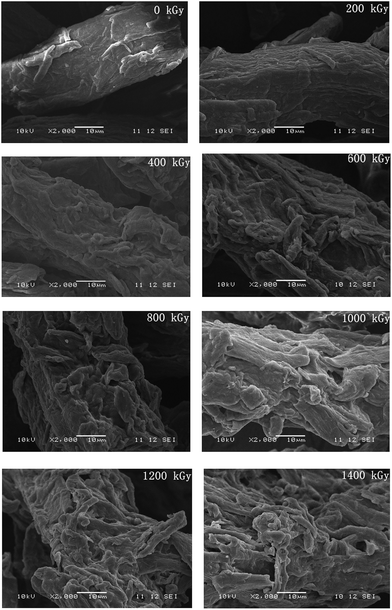 |
| | Fig. 1 SEM images of MCC before irradiation (0 kGy) and after irradiation at 200 kGy, 400 kGy, 600 kGy, 800 kGy, 1000 kGy, 1200 kGy and 1400 kGy. | |
XRD analysis. Fig. 2 shows the XRD spectra of MCC irradiated with different absorbed doses from 100 kGy to 1400 kGy. The characteristic peaks at about 15.8°, 22.4°, and 34° lattices and the crystalline parameters of the untreated and treated MCC were obtained by deconvoluting the spectra with the Jade 5.0 XRD software. The data are summarized in Table 1. In comparison with the untreated MCC, it is obvious that CrI values change as a function of the absorbed doses and decrease gradually from 75% to 58% leading to the formation of amorphous cellulose when the absorbed dose increases up to 1200 kGy. This observation implies that the crystalline structure of the irradiated MCC may be remarkably damaged, which is ascribed to the fragmentation of hydrogen bonds in the MCC molecule. Sun and co-workers,14 however, found that the dimensions of the crystal lattice did not evidently change (CrI only decreased from 68% to 61%) during the absorbed dose below 500 kGy. Furthermore, some researchers demonstrated that the crystalline transformation of cellulose showed significant effects on enzymatic digestibility and enzyme loading following saccharification.4,21
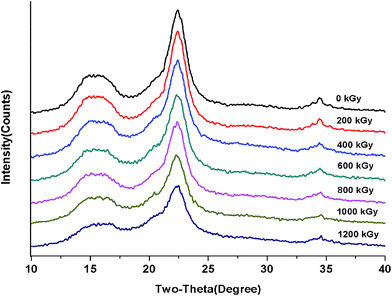 |
| | Fig. 2 XRD pattern of MCC irradiated with different absorbed doses at 0 kGy, 200 kGy, 400 kGy, 600 kGy, 800 kGy, 1000 kGy and 1200 kGy. | |
Table 1 Characterization peaks and CrI (%) of MCC irradiated with different absorbed doses
| Absorbed doses (kGy) |
Location of characterization peaks |
CrI (%) |
| I101 (15.8°) |
IAM (18°) |
I200 (22.4°) |
| 0 |
480 |
273 |
1115 |
75.52 |
| 200 |
506 |
334 |
1106 |
69.80 |
| 400 |
428 |
302 |
944 |
68.01 |
| 600 |
377 |
278 |
823 |
66.22 |
| 800 |
368 |
274 |
751 |
63.51 |
| 1000 |
356 |
297 |
734 |
59.54 |
| 1200 |
315 |
278 |
667 |
58.32 |
Distribution of molecular weight (Mw) and DP analysis. It has been demonstrated that γ-irradiation results in the de-polymerization and molecular weight reduction of the cellulose polymer.14,19,20 Table 2 summarizes the effect of γ-irradiation on the distribution of molecular weight and DP variances of MCC irradiated with different absorbed doses from 100 kGy to 1400 kGy. It can be seen from the last line in Table 2 that the DP of MCC is reduced from 183045 to 4413 under 1200 kGy irradiation, and the decrease of DP with further increases of the absorbed dose gradually slows down when the irradiation dose ranges from 400 kGy to 1200 KGy. Simultaneously, Mw, Mn, Mz, Mv and Mp distributions decrease steeply when the irradiation dose increases up to 1200 kGy and may be ascribed to the fact that the MCC surface has suffered from an irradiation-mediated oxidation degradation that eases further attacks on the molecule.14 However, in Table 2, it seems that there is sometimes an increase in Mz, Mz+1 and Mp at the irradiation doses of either 1000 or 1200 kGy. This may reasonably be attributed to measurement errors. However, the overall trend observed in our study is decreased molecular weight distribution with increased irradiation dose. The values of the polydispersity indexes (1.7–1.5) in the second line from the bottom in Table 2 indicate that irradiation results in homogenization of cellulose molecules and small particle size, which may be attributed to irradiation-mediated oxidation degradation leading to chain scission.22 All these observations are consistent with previous studies of SEM and XRD reported in this study.
Table 2 Effect of adsorbed dose on molecular weight distribution and DP of MCC
| Adsorbed doses (kGy) |
0 |
400 |
600 |
800 |
1000 |
1200 |
| Weight-average molecular weight (Mw, Da) |
189591 |
56610 |
46839 |
36221 |
35973 |
33336 |
| Number-average molecular weight (Mn, Da) |
65174 |
32182 |
28321 |
23680 |
24059 |
22933 |
| Z-average molecular weight (Mz, Da) |
2637259 |
109455 |
96275 |
92689 |
85470 |
89270 |
| Z + 1-average molecular weight (Mz+1, Da) |
36150445 |
265055 |
348634 |
550648 |
502651 |
602031 |
| Viscosity-average molecular weight (Mv, Da) |
164682 |
53093 |
44080 |
34143 |
34060 |
31562 |
| Peak molecular weight (Mp, Da) |
134310 |
49604 |
23645 |
20726 |
21480 |
20974 |
| Ratio of Mz/Mw |
13.91 |
1.933 |
2.055 |
2.559 |
2.376 |
2.678 |
| Ratio of Mz+1/Mw |
190.67 |
4.682 |
7.443 |
15.202 |
13.973 |
18.06 |
| Polydispersity index (ratio of Mw/Mn) |
2.909 |
1.759 |
1.654 |
1.53 |
1.495 |
1.454 |
| Degree of polymerization (DP) |
183045 |
47495 |
30700 |
17340 |
9137 |
4413 |
FT-IR analysis. The FT-IR spectra of the MCC irradiated with different absorbed doses are depicted in Fig. 3. It is known that the irradiation of cellulose with high absorbed dose in the presence of oxygen will lead to the formation of carbonyl and carboxyl groups due to oxidative degradation.14,22 Compared with untreated MCC (0 kGy), Fig. 3 clearly shows that the characteristic peak at around 1732 cm−1 ascribed to the carbonyl groups (C![[double bond, length as m-dash]](https://www.rsc.org/images/entities/char_e001.gif) O stretching vibration) is formed at 200 kGy, and the intensity of this peak at 1732 cm−1 increases gradually with increasing absorbed dose up to 1200 kGy. Furthermore, the band at around 3300 cm−1 attributed to the vibration of hydrogen bonded OH-groups first shifts to a lower wavenumber (at 200 kGy) and then to a higher wavenumber when the absorbed dose exceeds 400 kGy. Such shifts indicate that γ-irradiation interrupts the intra-molecular and inter-molecular hydrogen bonds in cellulose.23,24 At a lower absorbed dose (e.g. at 200 kGy), γ-irradiation mainly destroys the original intra-molecular hydrogen bonds and the peak at around 3300 cm−1 shifts to a lower wavenumber (3200 cm−1). At further increased irradiation doses up to 1200 kGy, the new formation of carbonyl groups becomes stronger, which strengthens the hydrogen bond of CO⋯H–O, resulting in a red shift to high wavenumbers (3400 cm−1) at higher absorbed doses.23,24 The absorbance at 2899 cm−1, used as a reference, is ascribed to the C–H stretching vibration. The findings suggest that the process of MCC degradation is accompanied with the formation of carbonyl group containing compounds.14 It can also be found from Fig. 3 that the vibration wavenumbers at 1164 cm−1, 1112 cm−1 and 1058 cm−1 all shift to lower wavenumber and the intensities of these bands become stronger with the increase in irradiation dose. Such shifts suggest that γ-irradiation probably interrupts the intermolecular C–O–C bond of cellulose due to irradiation-mediated oxidative degradation.25 The assignments of all these peak wavenumbers as reported in the ref. 23 are shown in Table 3.
O stretching vibration) is formed at 200 kGy, and the intensity of this peak at 1732 cm−1 increases gradually with increasing absorbed dose up to 1200 kGy. Furthermore, the band at around 3300 cm−1 attributed to the vibration of hydrogen bonded OH-groups first shifts to a lower wavenumber (at 200 kGy) and then to a higher wavenumber when the absorbed dose exceeds 400 kGy. Such shifts indicate that γ-irradiation interrupts the intra-molecular and inter-molecular hydrogen bonds in cellulose.23,24 At a lower absorbed dose (e.g. at 200 kGy), γ-irradiation mainly destroys the original intra-molecular hydrogen bonds and the peak at around 3300 cm−1 shifts to a lower wavenumber (3200 cm−1). At further increased irradiation doses up to 1200 kGy, the new formation of carbonyl groups becomes stronger, which strengthens the hydrogen bond of CO⋯H–O, resulting in a red shift to high wavenumbers (3400 cm−1) at higher absorbed doses.23,24 The absorbance at 2899 cm−1, used as a reference, is ascribed to the C–H stretching vibration. The findings suggest that the process of MCC degradation is accompanied with the formation of carbonyl group containing compounds.14 It can also be found from Fig. 3 that the vibration wavenumbers at 1164 cm−1, 1112 cm−1 and 1058 cm−1 all shift to lower wavenumber and the intensities of these bands become stronger with the increase in irradiation dose. Such shifts suggest that γ-irradiation probably interrupts the intermolecular C–O–C bond of cellulose due to irradiation-mediated oxidative degradation.25 The assignments of all these peak wavenumbers as reported in the ref. 23 are shown in Table 3.
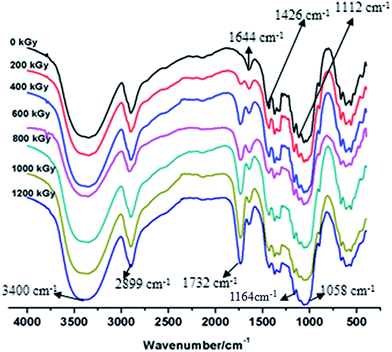 |
| | Fig. 3 FT-IR spectra of MCC irradiated with different absorbed doses at 0 kGy, 200 kGy, 400 kGy, 600 kGy, 800 kGy, 1000 kGy and 1200 kGy. | |
Table 3 Peak wavenumbers of FT-IR bands and their assignments according to the literature
| Wavenumber (cm−1) |
Band origin (assignment) with comments |
| 3340–3450 cm−1 |
Valence vibration of bonded OH-groups (intra-molecular) or inter-molecular in cellulose |
| 2898–2899 cm−1 |
–CH, –CH2 valence vibration in cellulose from C6 |
| 1731–1735 cm−1 |
CO valence vibration of acetyl- or COOH-groups |
| 1654–1642 cm−1 |
H–O–H valence vibration in adsorbed water |
| 1428–1431 cm−1 |
–CH2 scissoring |
| 1371–1372 cm−1 |
–CH deformation vibration |
| 1315–1318 cm−1 |
–CH2 rocking vibration |
| 1161–1164 cm−1 |
C–O–C asymmetric valence vibration |
| 1111–1119 cm−1 |
C–O stretching |
| 1057–1058 cm−1 |
CO valence vibration |
| 894–898 cm−1 |
β,1-4 Glycosidic bond |
1H and 1C CP/MAS NMR. In order to evaluate the bond cleavage in the cellulose backbone, solid-state NMR spectroscopy was employed to assess the changes in MCC functional groups before and after irradiation treatment, which can provide not only chemical shift details but also chemical environment and ultra-structural details. These details are not easily accessible by other non-destructive high-resolution spectral techniques.26 It can be noted that there are three noticeable changes in the character of the 1H NMR spectra (Fig. 4). Firstly, the total 1H intensity increases significantly when irradiation doses increase gradually up to 1200 kGy. Secondly, the 1H line shape apparently enlarges with increasing irradiation dose from 200 kGy to 1200 kGy. Thirdly, the high peak of H nuclei at about 5 ppm of MCC shift when irradiation dose increased up to 1200 kGy. These shifts of 1H NMR spectra of treated MCC are ascribed to a substantial increase of hydrogen nuclei during irradiation-induced degradation. From the 13C CP/MAS NMR spectra (Fig. 4), carbon chemical shifts and the intensity of carbon peaks for the C1, C4 and C6 ring positions in the cellulose backbone are changed in the presence of irradiation. These slight changes in carbon chemical shifts of irradiated MCC probably result in its microstructure changing from crystalline type to amorphous formation, which agree well with the findings of XRD analysis in this study. From the solid state 1H and 13C-NMR spectra, it can be reasonably concluded that treated MCC undergoes oxidative degradation and provide positive charges (H+) during this degradation process when MCC is subjected to high irradiation doses.
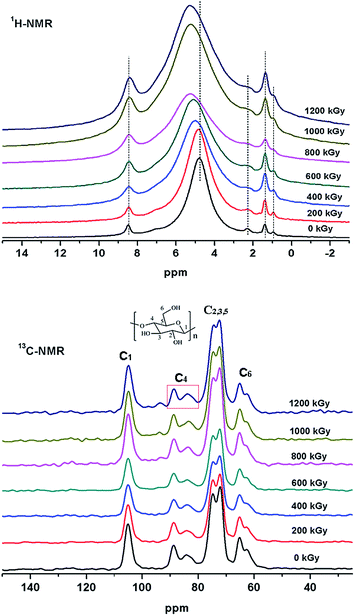 |
| | Fig. 4 1H MAS NMR and 1C CP/MAS NMR spectra of MCC irradiated with different doses at 0 kGy, 200 kGy, 400 kGy, 600 kGy, 800 kGy, 1000 kGy and 1200 kGy. | |
EPR investigation. As seen in Fig. 5, there exist significant differences in the EPR signals of untreated and irradiated MCC. Obviously, no EPR signal is observed for untreated MCC, while the EPR signals of irradiated MCC significantly represent weak triplets with relative intensity. It is reasonably speculated that free radicals are formed during the irradiation processing of MCC and a large increase in radical concentration occurs at high irradiation doses. The triplet spectrum consists of the central line, which is buried by the natural intense singlet, and two weak characteristic satellite lines at ca. 2 mT left and right of the singlet. This is probably attributed to the formation of weak charge-transfer complexes when MCC is subjected to high adsorbed dose of γ-irradiation.14 Free radicals were formed directly on the cellulose backbone, resulting from the cleavage of the C2–C3 bond and oxidation of cellulosic chain ends containing hemiacetal linkages. This observation agrees well with the NMR analysis in our study. Paukszta reported that other pretreatment methods, such as thermal and mechanical treatments of lignocellulose, also might result in free radical generation.27 Undoubtedly, the EPR method can be used for distinguishing the irradiated samples from non-irradiated samples of certain cellulose-containing foods stocks from the view of free radical formation.28
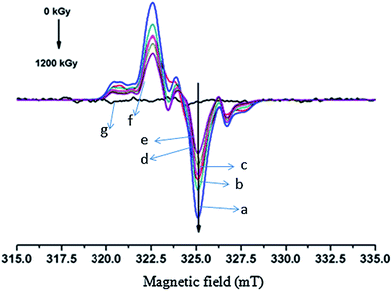 |
| | Fig. 5 EPR spectra of MCC irradiated with different doses at 0 kGy (g), 200 kGy (f), 400 kGy (e), 600 kGy (d), 800 kGy (c), 1000 kGy (b) and 1200 kGy (a). | |
3.2 Effects of absorbed dose on thermal stability of cellulose
To address the thermal properties of treated MCC, thermal gravimetric analysis (TGA) and differential thermal analysis (DTA) curves of MCC irradiated with different absorbed doses are shown in Fig. 6.
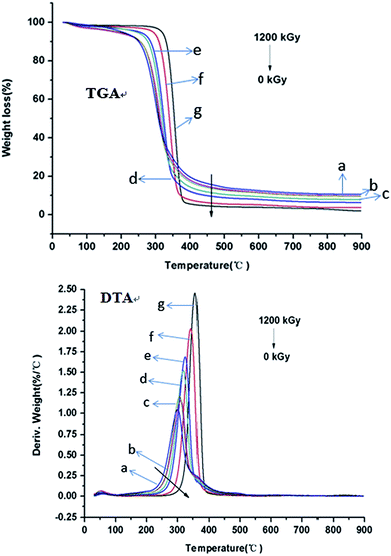 |
| | Fig. 6 Thermogravimetry and DTA curves of MCC irradiated with different doses at 0 kGy (g), 200 kGy (f), 400 kGy (e), 600 kGy (d), 800 kGy (c), 1000 kGy (b) and 1200 kGy (a). | |
As seen in Fig. 6, the TGA curves of the irradiated MCC appear to be divided into three weight loss phases. At the first stage, the initial weight loss mainly happens in the region between 50 °C and 150 °C due to dehydration. This change at the first stage was also called as physical change.29 The endothermic peak appears on the DTA curves at about 150 °C. The moisture content (%) in MCC between 50 °C and 150 °C increases with the increasing absorbed dose. From the previous findings of XRD, FT-IR and NMR, irradiation can disrupt the crystalline structure of MCC and generate some hydrophilic groups, such as carbonyl group, carboxyl group, and free hydroxyl group, which result in a higher hygroscopicity of irradiated MCC at higher irradiation doses. At the second stage, major weight loss occurs between 200 °C and 500 °C. The absorbed dose increases from 0 to 1200 kGy and the onset temperature (Ti) of the depolymerization and decomposition of MCC decreases from 300 °C to 150 °C, respectively. Moreover, the terminative temperature (Tf) gradually increases from 390 °C to 550 °C when the absorbed doses increase from 200 kGy to 1200 kGy. At the point about 310 °C, exothermal peaks appear in this stage on the DTA curve. At the second stage, the DTA peaks become wider and move to the lower temperature regions, which indicate that the maximum temperature (Tp) of highest weight loss reduces with an increase of irradiated dose. Fig. 7 shows the dependence of absorbed dose on the peak temperature Tp, at which the rate of degradation reaches the maximum value. Tp decreases from 390 °C to 305 °C with an increase of absorbed dose from 0 kGy to 1200 kGy, which coincides with the effect of absorbed dose on DP. The reduction of DP is the main cause of the degeneration of thermal stability of treated MCC. In addition, the slight decrease in crystallinity as observed in XRD also decreases the thermal stability of irradiated MCC. DTA peaks become wider because of the presence of a large number of low molecular weight fragments, random distributed cleavages, and breakdowns of C–O–C units in cellulose chains.14 The radiation degradation not only decreases the DP of MCC but also leads to the wider distribution of molecular weights.14 This result also reflects the randomicity of the radiation degradation.30 At the third stage, the weight loss is not very evident. The exothermal peaks change into relatively smooth ones, which indicate that the rates of weight loss slowed down. About 10% residue solid is left at 1200 kGy. Taken together, no obvious difference of thermal stability is observed for MCC irradiated with different absorbed doses from 200 kGy to 1200 kGy.
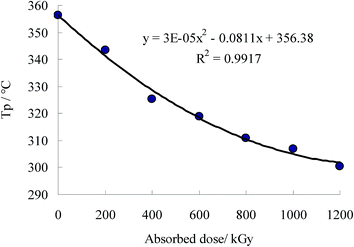 |
| | Fig. 7 The dependence of absorbed doses from 200 kGy to 1200 kGy on the peak temperature Tp. | |
To further elucidate the effect of absorbed doses on thermogravimetry of MCC, thermogravimetric kinetics was estimated to calculate activated energy (Ea) using the Coats–Redfern eqn (4) and (5) as follow:
| |
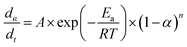 | (4) |
| | |
α = (m − mT)/(m − m2)
| (5) |
where
m is the mass weight of MCC, g;
mT is the mass weight of MCC at temperature of
T °C, g;
m2 is residue mass weight of MCC, g;
t is the treatment time, s;
R is the molar gas constant, J K
−1 mol
−1;
T is the temperature, °C; and
Ea is the activated energy, kJ mol
−1.
When the increasing rate of temperature is considered as β, K min−1, eqn (4) can be converted to eqn (6):
| |
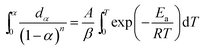 | (6) |
With  , eqn (7) can be obtained as follows:
| |
 | (7) |
By combining eqn (6) and (7), and further simplifying, eqn (8) could be obtained as follows:
| |
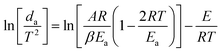 | (8) |
In this study,  ≫ 1, so
 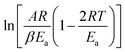 becomes almost a constant number. Therefore, the relationship between
  and
and  is a linear curve. From the slope and intercept, Ea can be obtained.
Linear fit is performed on the thermogravimetric curves using the Coats–Redfern method in presence of different irradiation doses and the results are shown in Fig. 8. It is apparent that the Ea of irradiated MCC decreases with increasing irradiation dose. The reasonable explanation is the fact that the crystalline structure of irradiated MCC is destroyed leading to decreased thermal stability. The findings are consistent with the results of FT-IR, SEM, XRD and NMR in the previous experiments of this study.
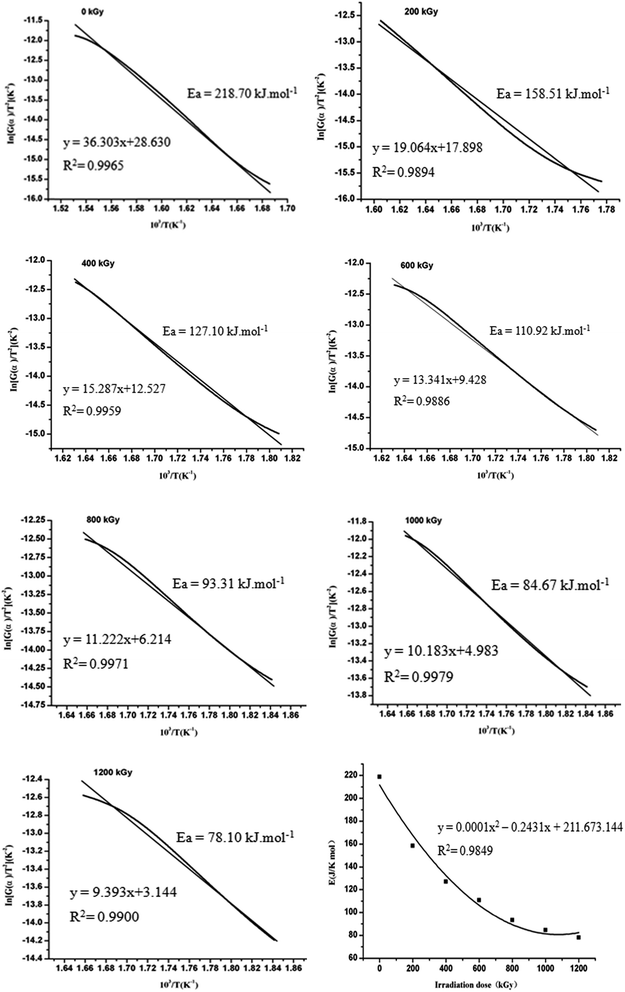 |
| | Fig. 8 Linear fit curves of the MCC thermogravimetric data using Coats–Redfern method in the presence of different irradiation doses at 0 kGy, 200 kGy, 400 kGy, 600 kGy, 800 kGy, 1000 kGy and 1200 kGy. | |
3.3 Effects of absorbed dose on irradiation-derived degradation components of cellulose
As noted above, γ-irradiation pretreatment could disrupt the cellulose crystalline structure, and yield both soluble and insoluble fractions. Therefore, the soluble fractions of irradiation-mediated degradation components comprise some water-soluble sugars, including C5 and C6 monomers, cellobiose, as well as the toxic by-product inhibitors such as galacturonic and glucuronic acids. The water-soluble sugars and glucuronic and galacturonic acids of irradiated MCC were measured by ion chromatography (IC), and the results are summarized in Table 4.
Table 4 MCC irradiated degradation components at different absorbed dosea
| Irradiation dose (kGy) |
Glucose (mg g−1) |
Fructose (mg g−1) |
Arabinose (mg g−1) |
Mannose (mg g−1) |
Xylose (mg g−1) |
Cellobiose (mg g−1) |
Glucuronic acid (mg g−1) |
Galacturonic acid (mg g−1) |
| n.a. means not available. |
| 0 |
n.a. |
n.a. |
0.02 ± 0.03 |
n.a. |
n.a. |
n.a. |
n.a. |
0.04 ± 0.03 |
| 100 |
0.08 ± 0.11 |
0.00 ± 0.00 |
0.03 ± 0.05 |
n.a. |
0.00 ± 0.00 |
0.04 ± 0.05 |
n.a. |
0.03 ± 0.04 |
| 200 |
0.42 ± 0.08 |
0.08 ± 0.11 |
0.10 ± 0.01 |
n.a. |
0.06 ± 0.01 |
0.50 ± 0.12 |
n.a. |
0.13 ± 0.04 |
| 400 |
2.26 ± 0.03 |
0.89 ± 0.00 |
0.18 ± 0.04 |
n.a. |
0.37 ± 0.01 |
0.50 ± 0.01 |
0.02 ± 0.00 |
0.26 ± 0.05 |
| 600 |
3.14 ± 0.25 |
0.95 ± 0.23 |
0.22 ± 0.01 |
n.a. |
0.49 ± 0.04 |
0.64 ± 0.02 |
0.05 ± 0.00 |
0.37 ± 0.03 |
| 800 |
5.15 ± 0.10 |
2.03 ± 0.12 |
0.32 ± 0.01 |
0.14 ± 0.01 |
0.87 ± 0.01 |
1.04 ± 0.04 |
0.20 ± 0.02 |
0.69 ± 0.10 |
| 1000 |
5.68 ± 0.00 |
2.65 ± 0.03 |
0.34 ± 0.03 |
0.13 ± 0.01 |
0.95 ± 0.06 |
1.24 ± 0.01 |
0.22 ± 0.00 |
0.80 ± 0.06 |
| 1200 |
6.79 ± 0.01 |
2.96 ± 0.07 |
0.41 ± 0.00 |
n.a. |
1.14 ± 0.12 |
1.40 ± 0.06 |
0.35 ± 0.02 |
1.05 ± 0.06 |
| 1400 |
10.73 ± 0.42 |
4.31 ± 0.14 |
0.46 ± 0.01 |
n.a. |
1.58 ± 0.09 |
1.90 ± 0.03 |
0.35 ± 0.00 |
1.46 ± 0.06 |
According to Table 4, the water-soluble sugars of the irradiated MCC at 1200 kGy are generally composed of relatively high concentrations of glucose (10.73 ± 0.42 mg g−1), fructose (4.31 ± 0.14 mg g−1), cellobiose (1.90 ± 0.03 mg g−1) and xylose (1.58 ± 0.09 mg g−1). Very little arabinose (0.46 ± 0.01 mg g−1) is observed at the dose of 1200 kGy, but almost no mannose is observed. It is interesting to notice that the contents of water-soluble sugars (glucose, fructose, xylose and cellobiose) of irradiated degradation components of MCC increase with increasing irradiation doses from 100 kGy to1400 kGy. Moreover, very low amounts of glucuronic acid (0.35 ± 0.00 mg g−1) are detected among the irradiation-mediated degradation components. In our previous study, we compared the effect of steam explosion and irradiation pretreatments on the inhibitors among the degradation components of rice straw materials. Interestingly, no glucuronic acid was detected in irradiation pretreated rice straw, while glucuronic acid ranging from 8.5 mg g−1 to 9.2 mg g−1 was obtained in steam explosion pretreated samples.19 In addition, a low content of galacturonic acid (1.46 ± 0.06 mg g−1) at 1400 kGy are detected in the MCC irradiated degradation components. It was reported that glucuronic and galacturonic acids are toxic compounds inhibitors to the yeast fermentation from biomass hydrolysis for bioethanol production.31,32
4. Conclusions
High γ-irradiation pretreatment can evidently disrupt the crystalline microstructure of MCC, resulting in reducing DP and thermal stability. Irradiation influences the inter- and intra-molecular hydrogen bond of MCC and generates carbonyl groups containing compounds. Apart from C5 and C6 monosugars and cellobiose, irradiation-mediated degradation components consist of low concentrations of inhibitors such as glucuronic and galacturonic acids. Efficiently eliminating the negative effects of these inhibitors on yeast fermentation is ongoing in our lab. In conclusion, positive effects of irradiation on cellulose will benefit the conversion of lignocellulose to ethanol using enzyme hydrolysis and fermentation.
Abbreviations
| MCC | Microcrystalline cellulose |
| DP | Degree of polymerization |
| SEM | Scanning electron microscopy |
| FT-IR | Fourier transform infrared spectrometry |
| EPR | Electron paramagnetic resonance |
| NMR | Nuclear magnetic resonance |
| CP/MAS | Cross-polarization/magic angle spinning |
| XRD | X-ray diffraction |
| TGA | Thermogravimetry analysis |
| DTG | Differential thermogravimetry |
| IC | Ion chromatography |
| Ea | Activated energy |
| MW | Molecular weight |
| GPC | Gel permeation chromatography |
Acknowledgements
This study was funded by the National Natural Science Foundation of China (NSFC, 31070709), the Program of the Co-construction with Beijing Municipal Commission of Education of China (506209), the “863” Program of High Technology Research and Development of China (2012AA101804), the Special Fund for Agro-scientific Research in the Public Interest (201503135), and the Innovation Team Project of Hunan Province Academy of Agricultural Sciences (2014TD03).
References
- D. Yue, F. You and S. W. Snyder, Biomass-to-bioenergy and biofuel supply chain optimization: overview, key issues and challenges, Comput. Chem. Eng., 2014, 66, 36–56 CrossRef CAS PubMed.
- S. A. Miller, Sustainable polymers: opportunities for the next decade, ACS Macro Lett., 2013, 2, 550–554 CrossRef CAS.
- P. Anbarasan, Z. C. Baer, S. Sreekumar, E. Gross, J. B. Binder and H. W. Blanch, et al., Integration of chemical catalysis with extractive fermentation to produce fuels, Nature, 2012, 491, 235–239 CrossRef CAS PubMed.
- H. Peng, H. Li, H. Luo and J. Xu, A novel combined pretreatment of ball milling and microwave irradiation for enhancing enzymatic hydrolysis of microcrystalline cellulose, Bioresour. Technol., 2013, 130, 81–87 CrossRef CAS PubMed.
- G. Li and H. Chen, Synergistic mechanism of steam explosion combined with fungal treatment by Phellinus baumii for the pretreatment of corn stalk, Biomass Bioenergy, 2014, 67, 1–7 CrossRef CAS PubMed.
- J. Singh, M. Suhag and A. Dhaka, Augmented digestion of lignocellulose by steam explosion, acid and alkaline pretreatment methods: a review, Carbohydr. Polym., 2015, 117, 624–631 CrossRef CAS PubMed.
- T. Gu, M. A. Held and A. Faik, Supercritical CO2 and ionic liquids for the pretreatment of lignocellulosic biomass in bioethanol production, Environ. Technol., 2013, 34, 1735–1749 CrossRef CAS PubMed.
- W.-H. Hsu, Y.-Y. Lee, W.-H. Peng and K. C.-W. Wu, Cellulosic conversion in ionic liquids (ILs): effects of H2O/cellulose molar ratios, temperatures, times, and different ILs on the production of monosaccharides and 5-hydroxymethylfurfural (HMF), Catal. Today, 2011, 174, 65–69 CrossRef CAS PubMed.
- Y. Su, H. M. Brown, G. Li, X. Zhou, J. E. Amonette, J. L. Fulton, D. M. Camaioni and Z. C. Zhang, Accelerated cellulose depolymerization catalyzed by paired metal chlorides in ionic liquid solvent, Appl. Catal., A, 2011, 391, 436–442 CrossRef CAS PubMed.
- J. Long, B. Guo, J. Teng, Y. Yu, L. Wang and X. Li, SO3H-functionalized ionic liquid: efficient catalyst for bagasse liquefaction, Bioresour. Technol., 2011, 102, 10114–10123 CrossRef CAS PubMed.
- I.-J. Kuo, N. Suzuki, Y. Yamauchi and K. C.-W. Wu, Cellulose-to-HMF conversion using crystalline mesoporous titania and zirconia nanocatalysts in ionic liquid systems, RSC Adv., 2013, 3, 2028–2034 RSC.
- M. Karimi, B. Jenkins and P. Stroeve, Ultrasound irradiation in the production of ethanol from biomass, Renewable Sustainable Energy Rev., 2014, 40, 400–421 CrossRef CAS PubMed.
- B. M. Lee, J. Y. Lee, P. H. Kang, S. K. Hong and J. P. Jeun, Improved Pretreatment Process Using an Electron Beam for Optimization of Glucose Yield with High Selectivity, Appl. Biochem. Biotechnol., 2014, 174, 1548–1557 CrossRef CAS PubMed.
- J. Sun, L. Xu, M. Ge and M. Zhai, Radiation Degradation of Microcrystalline Cellulose in Solid Status, J. Appl. Polym. Sci., 2013, 127, 1630–1636 CrossRef CAS PubMed.
- S. B. Kim, J. S. Kim, J. H. Lee, S. W. Kang, C. Park and S. W. Kim, Pretreatment of Rice Straw by Proton Beam Irradiation for Efficient Enzyme Digestibility, Appl. Biochem. Biotechnol., 2011, 164, 1183–1191 CrossRef CAS PubMed.
- M. M. D. Moretti, D. A. Bocchini-Martins, C. D. C. Nunes, M. A. Villena, O. M. Perrone, R. da Silva, M. Boscolo and E. Gomes, Pretreatment of sugarcane bagasse with microwaves irradiation and its effects on the structure and on enzymatic hydrolysis, Appl. Energy, 2014, 122, 189–195 CrossRef CAS PubMed.
- M. S. Driscoll, A. J. Stipanovic, K. Cheng, V. A. Barber, M. Manning and J. L. Smith, et al., Ionizing radiation and a wood-based biorefinery, Radiat. Phys. Chem., 2014, 94, 217–220 CrossRef CAS PubMed.
- A. Charlesby, The degradation
of cellulose by ionizing radiation, J. Polym. Sci., 1955, 15, 263–270 CrossRef CAS PubMed.
- K. Wang, X. Xiong, J. Chen, L. Chen, X. Su and Y. Liu, Comparison of gamma irradiation and steam explosion pretreatment for ethanol production from agricultural residues, Biomass Bioenergy, 2012, 46, 301–308 CrossRef CAS PubMed.
- K. Wang, X. Xiong, J. Chen, L. Chen and Y. Liu, Effect of 60Co-γ irradiation on the microcrystalline cellulose structure of Phragmites communis trim, Wood Fiber Sci., 2011, 43, 225–231 CAS.
- Y. Horikawa, N. Konakahara, T. Imai, A. Kentaro, Y. Kobayashi and J. Sugiyama, The structural changes in crystalline cellulose and effects on enzymatic digestibility, Polym. Degrad. Stab., 2013, 98, 2351–2356 CrossRef CAS PubMed.
- J. Milanovic, S. Schiehser, P. Milanovic, A. Potthast and M. Kostic, Molecular weight distribution and functional group profiles of TEMPO-oxidized lyocell fibers, Carbohydr. Polym., 2013, 98, 444–450 CrossRef CAS PubMed.
- S. Y. Oh, D. I. Yoo, Y. Shin, H. C. Kim, H. Y. Kim and Y. S. Chung, et al., Crystalline structure analysis of cellulose treated with sodium hydroxide and carbon dioxide by means of X-ray diffraction and FTIR spectroscopy, Carbohydr. Res., 2005, 340, 2376–2391 CrossRef CAS PubMed.
- M. Schwanninger, J. C. Rodrigues, H. Pereira and B. Hinterstoisser, Effects of short-time vibratory ball milling on the shape of FT-IR spectra of wood and cellulose, Vib. Spectrosc., 2004, 36, 23–40 CrossRef CAS PubMed.
- G. S. Yang, Y. P. Zhang, M. Y. Wei, H. L. Shao and X. C. Hu, Influence of γ-ray radiation on the structure and properties of paper grade bamboo pulp, Carbohydr. Polym., 2010, 81, 114–119 CrossRef CAS PubMed.
- M. Foston, Advances in solid-state NMR of cellulose, Curr. Opin. Biotechnol., 2014, 27, 176–184 CrossRef CAS PubMed.
- D. Paukszta, Mercerisation of Rapeseed Straw Investigated with the Use of WAXS Method, Fibres Text. East. Eur., 2013, 21, 19–23 CAS.
- N. D. Yordanov and V. Gancheva, A new approach for extension of the identification period of irradiated cellulose-containing foodstocks by EPR spectroscopy, Appl. Radiat. Isot., 2000, 52, 195–198 CrossRef CAS.
- J. Bian, F. Peng, X.-P. Peng, F. Xu, R.-C. Sun and J. F. Kennedy, Isolation of hemicelluloses from sugarcane bagasse at different temperatures: structure and properties, Carbohydr. Polym., 2012, 88, 638–645 CrossRef CAS PubMed.
- E. H. Qua, P. R. Hornsby, H. S. S. Sharma and G. Lyons, Preparation and characterisation of cellulose nanofibres, J. Mater. Sci., 2011, 46, 6029–6045 CrossRef CAS.
- A. J. A. van Maris, D. A. Abbott, E. Bellissimi, J. van den Brink, M. Kuyper and M. A. H. Luttik, et al., Alcoholic fermentation of carbon sources in biomass hydrolysates by Saccharomyces cerevisiae: current status, Antonie van Leeuwenhoek, 2006, 90, 391–418 CrossRef PubMed.
- C. Tissot, S. Grdanovska, A. Barkatt, J. Silverman and M. Al-Sheikhly, On the mechanisms of the radiation-induced degradation of cellulosic substances, Radiat. Phys. Chem., 2013, 84, 185–190 CrossRef CAS PubMed.
Footnote |
| † Equal contributor. |
|
| This journal is © The Royal Society of Chemistry 2015 |
Click here to see how this site uses Cookies. View our privacy policy here. 


 , eqn (7) can be obtained as follows:


 ≫ 1, so
  becomes almost a constant number. Therefore, the relationship between
  and
and  is a linear curve. From the slope and intercept, Ea can be obtained.