
Advances in selective catalytic oxidation of ammonia to dinitrogen: a review

Lucjan Chmielarz * and Magdalena Jabłońska
Jagiellonian University, Faculty of Chemistry, Ingardena 3, 30-60 Kraków, Poland. E-mail: Lucjan.Chmielarz@uj.edu.pl; Tel: +48 12 6632006

Received 20th February 2015 , Accepted 1st May 2015

First published on 1st May 2015


Abstract

Ammonia emission to the atmosphere is an important environmental problem. A significant increase in ammonia emission is expected in automotive and energy production sectors in the near future. It is related to the spreading of technologies that use ammonia for NOx conversion in flue gases (e.g. DeNOx, DEF) and combustion of nitrogen rich fuels (e.g. biogas, biomass). Among the various methods of ammonia elimination from flue gases, its catalytic selective oxidation to dinitrogen seems to be the most promising one. Different types of catalytic systems active in selective ammonia oxidation are presented and discussed. Moreover, the possible mechanisms of ammonia oxidation and the concept of a bifunctional catalyst are discussed and analysed. Finally, future trends in these studies are suggested.
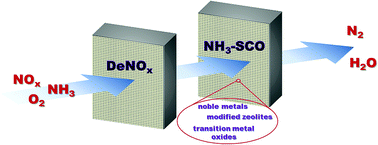

image file: c5ra03218k-p1.tif

Lucjan Chmielarz

Lucjan CHMIELARZ – D.Sc., Prof. JU, Graduated from Jagiellonian University in Krakow (1992). He received his Ph.D. and D.Sc. degree (1997 and 2007, respectively) in chemistry from the Jagiellonian University. Since 2010 he has been a professor of Jagiellonian University. He is head of Group of Chemical Environmental Technologies since 2008 and vice-dean for student affairs in the Faculty of Chemistry JU since 2012. He specializes in the synthesis and characteristics of micro- and mesoporous materials with a designed porous structure for catalysis and adsorption as well as catalytic processes for purification of waste gases. He is an author and co-author of more than 120 scientific papers in peer-reviewed journals.

image file: c5ra03218k-p2.tif

Magdalena Jabłońska

Magdalena JABŁOŃSKA received her PhD (2014) degree form the Faculty of Chemistry of Jagiellonian University in Kraków; and Eng (2013) from the Faculty of Energy and Fuel of the University of Science and Technology. During 2010–2014, she worked as a research fellow at the University of Warwick (2011), Polytechnic University of Valencia (2012), Polytechnic University of Milan (2013), Pavol Jozef Šafárik University in Košice (2014), and Lille University (2014). Her research interests are heterogeneous catalysis and materials chemistry.


1. Introduction

Ammonia (NH3) is a colourless gas with a characteristic pungent smell. Pure ammonia was first synthesized by Joseph Priestley in 1774, while its exact chemical composition was determined by Claude-Louse Berthollet in 1785. The main commercial method used for ammonia production on an industrial scale is based on the Haber–Bosch process,1 which involves the direct reaction of elemental hydrogen and elemental nitrogen:
 
N2 + 3H2 → 2NH3 (1)

This process is performed under high pressure (up to 100 MPa) and elevated temperature (400–550 °C). Moreover, this reaction requires an active catalyst. Typical industrial catalysts for ammonia synthesis are based on iron oxide doped with alkali metal oxide promoters. Ammonia is one of the world's most produced chemicals and its global industrial production in 2012 was estimated to be about 200 million tons.2 Due to its high nitrogen content, ammonia is mainly used as a fertilizer or as a material for the production of other fertilizers, such as urea – (NH2)2CO or anhydrous ammonium nitrate – NH4NO3. Thus, ammonia manufacturing is important for intensification of food production. On the other hand emission of ammonia into atmosphere is hazardous to human live and may result in degradation of environment. Exposure to low concentrations of ammonia may result in skin or eye irritation. Higher concentrations of ammonia may cause severe injury and burns, especially dangerous in case of burning of respiratory tract. It may cause bronchiolar and alveolar edema as well as airway destruction resulting in respiratory distress or failure. Ammonia has a negative impact on environment, especially on aquatic life. Its accumulation in the organism may cause alteration of metabolism. Different species of fish can tolerate different levels of ammonia. They may suffer a loss of equilibrium, hyperexcitability, increased respiratory activity and oxygen uptake, and increased heart rate. At extreme ammonia levels, fish may experience convulsions, coma and death.

Global emission of gaseous ammonia into the atmosphere was estimated to be about 44 million tons per year (without the oceanic sources).3 The major sources of ammonia emission into atmosphere are related to agriculture activities, mainly volatilization from livestock wastes and losses from agriculture crops, especially when nitrogen fertilizers are used. It was estimated that about 75% of the global emission of ammonia (without the oceanic sources) is related to agriculture.3 The remaining 25% of the ammonia emission from non-agriculture sources is poorly documented, however it was estimated that about 13% is a result of biomass burning (including biofuels), about 0.2% is related to fossil fuel combustion and about 0.5% to ammonia emission from industrial processes.3 The last two sources of ammonia emission, fossil fuel combustion and industrial processes, apparently seem to have a negligible role in the global NH3 emission, however it is anticipated that contribution of these sources will be increasing in the future, especially in the case of fuel combustion by cars.4 It is related to common application of catalytic three-way converts for flue gases purification (CO and hydrocarbons oxidation to CO2 as well as NOx reduction to N2), which increases ammonia formation. Average ammonia emission from gasoline European car not equipped with catalytic converter is 2.2 mg NH3 per km, while for European car with catalytic converter increases to 85 mg NH3 per km.5 In case of diesel cars even higher increase in ammonia emission is expected. It is related to implementation of diesel exhaust fluid (DEF) technology, commonly referred in Europe as AdBlue and standardized as ISO 22241.6 The DEF technology is used to lower nitrogen oxides (NOx = NO + NO2) concentration in exhaust emissions from diesel engines. In the first step an aqueous urea solution made with 32.5% high-purity urea and 67.5% deionized water is thermally or catalytically hydrolysed to produce ammonia and carbon dioxide:

 
(NH2)2CO + H2O → 2NH3 + CO2 (2)

Then ammonia, similarly to the classical DeNOx process, is used as reducing agent for catalytic conversion of NOx to N2:

 
4NO + 4NH3 + O2 → 4N2 + 6H2O (3)
 
2NO2 + 4NH3 + O2 → 3N2 + 6H2O (4)

There is a risk, that ammonia unconverted in reactions (3) and (4) will be present in exhaust gases of diesel car. In 2010, the U.S. Environmental Protection Agency (EPA) brought in new emissions standards requiring medium- and heavy-duty vehicles to significantly reduce engine emissions, particularly NOx and particulate matter (PM).7–9 A lot of vehicle manufacturers use DEF technology to meet these standards. Thus, this new became more and more widespread and therefore increased emission of ammonia by diesel cars is expected.

Other important sources of ammonia emission are NOx converts, in which ammonia is used as reducing agent for conversion of nitrogen oxides to N2 according to eqn (3) and (4). This technology, called DeNOx, is used for NOx conversion in exhaust gases produced in large utility boilers, industrial boilers and municipal solid waste boilers. Typical efficiency of nitrogen oxides reduction to dinitrogen in the DeNOx converter is in the range of 80–90%.10 There are two possible options of the DeNOx process: (i) selective non-catalytic reduction (SNCR) of NOx with ammonia and (ii) selective catalytic reduction (SCR) of NOx with ammonia. In SNCR technology the NOx conversion (eqn (3) and (4)) is thermally induced and takes place at high temperatures (1073–1373 K),11 whereas in the SCR process, which is performed in the presence of catalysts, NOx can be reduced to N2 and H2O (eqn (3) and (4)) rapidly and effectively at moderate temperatures (520–680 K).12 More detailed comparison between SNCR and SCR technologies was presented in papers.13,14 The technical problem of both those technologies is a risk of NH3 slip, which in industrial applications is restricted to 10 ppm.15 Above this limit excessive air heater plugging and fly ash contamination may occur, mainly due to a possible formation of ammonium sulphate salt.16,17 The SCR technology is more environmental friendly than SNCR due to nearly five times lower NH3 slip.17 Because of ammonia slip risk, the majority of the SCR installations operates with the NH3/NO ratio below 1 (≈0.90–0.95), so with ammonia content below stoichiometry of the reactions ((3) and (4)). Thus, the effectiveness of the SCR process is not optimal and complete NOx conversion is impossible.18 A strategy for improving the efficiency of NOx emission abatement together with keeping the goal of low NH3 slip can consist of increasing the inlet NH3 feed in the SCR reactor to stoichiometric or even higher ammonia content and selective oxidation of unreacted ammonia to nitrogen down-stream of the DeNOx converter.19

2. Methods for ammonia emission control

Removal of ammonia can be classified to elimination of ammonia from liquid or gas phase. However, in the paper only removal of gaseous ammonia will be discussed. Several abatement techniques to treat waste gases containing ammonia, such as absorption, adsorption, condensation, biofiltration, catalytic combustion, catalytic decomposition, thermal and catalytic oxidation were widely studied and used. Unfortunately, none of these methods cannot be a universal solution, because of their technical and/or economic limitations in ammonia removing from waste gases. In particular, it seems that the main parameter in ammonia removal that should be taken into account is its concentration in waste gases. General review about various methods for ammonia removal from waste gases was given by Busca and Pistarino,20 while reviews of particular methods can be also found in papers.21–26 Therefore, only a general overview of these methods is presented in this paper.

Absorption (scrubbing)

Absorption is used to remove ammonia from gas phase by its transferring into liquid non-volatile phase. Ammonia is highly soluble in pure water and inorganic acid solutions such as HCl, HNO3, H2SO4.27 The Henry's law constant (H) for NH3 is 5.33 × 101 M atm−1 at 298 K, and it is relatively high compared to other gases such as CO2, CH4 and H2S with H values of 3.47 × 10⁻², 1.50 × 10⁻³, 1.00 × 10⁻¹ M atm−1, respectively. During this process, ammonia is adsorbed in a diluted acidic solution and converted to NH4+.28

Packed-bed and spray wet scrubbers are widely used for reduction of ammonia emission because of their high efficiency. Acid-packed scrubbers reached efficiency on the level of 90–99% for treatment of inlet NH3 concentrations ranging from 8 to 29 ppm.21 For the higher ammonia concentration (100–400 ppm) acid spray wet scrubber was able to reduce NH3 by about 75–85%. In spray wet scrubber, air containing ammonia can react counter-current or cross-current, with a dilute acidic solution in the form of liquid droplets. The spray droplets hit the scrubber walls and form a liquid film. Typically, spray scrubbers operate in a closed loop in which the sprayed liquid is collected in a tank and recirculated back to the spray nozzles using pumps.28 Process control with pH measurements, usually at a value below 4, and automatic water discharge can guarantee sufficient ammonia removal.21

Finally, the formed valuable products such as ammonium sulphate and ammonium phosphate, can be used either as a fertilizer upon further purification or disposed of in some way. Other possibility is regeneration by air stripping at high temperature or reboiling.20 Subsequently, ammonia is not destroyed and further processing or disposal is necessary. Additionally, the investment and operational cost of scrubbers can be quite high as it was given by Melse and Ogink.21

Adsorption

Adsorption can take place by ammonia physisorption and chemisorption. Physisorption or non-specific adsorption is related to a micropores filling driven by van der Waals forces and relies on the porosity of the adsorbent. Chemisorption leads to much stronger interactions than physisorption and it involves chemical reactions between the species to be adsorbed and the adsorbent surface. Therefore, much more selective adsorption process is possible in this case.29 Adsorption can be successfully applied to a mixture containing besides NH3 also H2, N2, Ar and CH4, which can be regarded as non-adsorbing gases. However, this does not seem applicable to water vapour containing gases due to competition for the same adsorption sites.30

Ammonia molecules with a relatively small size and its basic and polar nature can be strongly adsorbed at ambient conditions by adsorbents with very small pores and acidic surface.31,32 The most widely used adsorbents are activated carbons, zeolites, alumina and silica.32–35 Typically ammonia adsorption occurs near room temperature, while adsorbent regeneration can be obtained at low pressure (Pressure Swing Adsorption, PSA) or even vacuum (Vacuum Swing Adsorption, VSA) and high temperatures (Temperature Swing Adsorption, TSA). E.g. TSA in the range of 323–473 K, and PSA between 10 and 40 kPa were used for regeneration of surface treated active carbon and ion-exchanged Y zeolite.36

Condensation (liquefaction)

Ammonia can be separated from other incondensable gases by pressure increase, temperature decrease or combination of both these parameters. Ammonia boiling point is 240 K at 0.1 MPa. For ammonia liquefaction at 298 K a pressure of about 1 MPa is required.23 Condensation of ammonia is used mainly in ammonia synthesis plant to its separation from the circulating gas. Usually, pressure about 15 MPa and temperature near 273 K is used for ammonia condensation. Apart from ammonia also other components of waste gases (e.g. water vapour) can be condensated under these conditions.20

Biofiltration

Biofilters are biological reactors, which use microorganisms that colonize porous media to decompose pollutants from air stream.37 Biofiltration has been successfully applied for treating large air streams with low ammonia concentration and high flow rates.38–40 Biofilters, based on a wide variety of support materials, either organic or inorganic, permit usually around 95–98% efficiency of ammonia removal.20 Lava rock, compost, plastic rings, activated carbon, ceramics rings, polyurethane foams and perlite are the most often used packing materials for microorganisms.41,42 Efficiency of biofiltration is relatively high, e.g. biofilter with wood chips was able to remove ammonia with efficiency of 79–81%.43

The general technical concept of this method is based on using of biofilter in the form of packed bed. Contaminated air passes through such bed and ammonia is removed from the air stream by adsorption onto the biofilter. Then ammonia is oxidized through microbial nitrification, which is the aerobic conversion of NH3 to nitrite (NO2) and nitrate (NO3). Subsequently, nitrite and nitrate are autotrophically or heterotrophically denitrified to NO, N2O and finally to N2.44

Although, biological treatments have become an effective and inexpensive alternative to other ammonia treatment systems,45,46 this method has several disadvantages. Biofilters operate under specific conditions, such as moisture content, pH, light, oxygen availability, nutrient limitation and temperature that strongly affect their performance.45,47

Catalytic decomposition

Studies of ammonia decomposition have been undertaken primarily to acquire insights into the ammonia synthesis process. However, it was further successfully applied in the generation of clean hydrogen for fuel cells. Conventional processes, such as stream reforming, catalytic biomass gasification, coal gasification, autothermal reforming and partial oxidation produce large amounts of COx.48–50 These by-products may be harmful not only for the environment but also for hydrogen cells. Therefore, catalytic decomposition of ammonia seems to be COx-free alternative.51,52 Decomposition of ammonia is endothermic process. The equilibrium conversion of NH3 under normal pressure and at 673 K reaches 99.1%, while above this temperature conversion is less temperature dependent. In scientific literature, there is a wide variety of catalytic materials that were proved to be effective even below 673 K,53,54 but some still require high operating temperatures (e.g. 973–1173 K) and the presence of reducing gases.55,56 Therefore, this method does not seem applicable to oxygen containing gases. Among different catalytic systems studied for ammonia decomposition, such as containing Fe,57 Ni,58 Pt,59 Ir,60 and Pd,59 the ruthenium containing catalysts were reported to be the most catalytically active.24

Thermal oxidation

Thermal oxidation of ammonia takes place in the Claus process used in oil refining and gas processing to recover sulphur and destroy contaminants formed in upstream processing. Ammonia is formed as a by-product of dinitrogen operations such as hydrocracking and hydrotreating. After sour water striping, sour gas stream containing NH3, is directed to the sulphur recovery facility for destruction at temperature higher than 1473–1523 K.61 Efficiency of thermal oxidation of ammonia depends on temperature, residence time and gas composition. Ammonia conversion was found to increase with both temperature and residence time.62 E.g. NH3 conversion through oxidation was in the range of 1–50% for temperatures between 1123 and 1223 K, while significantly higher conversion up to 90% was obtained at 1323–1473 K under the same conditions (residence times: 50–700 ms, O2/NH3: 0.85–2.55).61 Thus, this method can be used only for elimination of ammonia from hot waste gases.

Catalytic combustion

Catalytic combustion of ammonia was considered mainly in gasified biomass (biogas) used for gas-turbine (GT) applications operating below 1473 K.63 Biogas has a complex composition and contain apart from N2, CO2 and H2O significant amounts of CO, H2, NH3, H2S, CH4 and other hydrocarbons.64 The problem of this method is the formation apart from N2 also nitrogen oxides as ammonia oxidation products. Depending on the catalyst used, different contribution of NOx was found. One of the most widely studied materials were transition metals substituted (Mn, Cr, Co, Ni, Fe) hexaaluminates, which were reported to be the high-temperature stable combustion catalysts.65,66 Another group of effective catalysts are alumina-supported metals (e.g. Ag, Pd, Pt, Rh, Cu).67,68

Low-temperature selective catalytic oxidation (NH3–SCO)

Selective catalytic oxidation of ammonia concerns mainly the treatment of oxygen containing waste gases after SCR process from both stationary and mobile sources.69–73 Therefore, it is an attractive method, especially for treatment of large gas flows containing low concentration of ammonia. The advantage of this process is fact that it proceeds between components of waste gases (NH3, O2), therefore there is no need for supplying of additional reactants for ammonia conversion. Appropriate catalyst can promote oxidation in shorter reaction time under milder operation conditions. Catalyst for selective ammonia oxidation is referred also as the Ammonia Slip Catalyst (ASC), ammonia guard catalyst or Ammonia Oxidation Catalyst (AMOX). Such catalyst is placed down-stream of the SCR catalyst, either as a short zone on the same monolith or as a separate brick.74,75

For use in power plant applications the target temperature is in the range of 523–673 K. On the other hand, temperature of exhaust gases emitted by diesel engines varies in a broad temperature range and can increase up to 873 K (in cycle of diesel particulate filter regeneration). Therefore, different parameters of operation are expected for the catalysts dedicated for treatment of waste gases emitted from these sources. It should be also mentioned that although AdBlue technology already has been introduced for heavy trucks and buses, where the size of catalytic converters could be relatively large, it is necessary to develop more efficient catalysts for exhaust gas purification process in passenger cars, for which the size of the catalytic converters has to be much smaller.

The selective catalytic oxidation of ammonia to dinitrogen as a method for ammonia removal from waste gases is discussed in this paper.

3. Selective catalytic oxidation of ammonia to dinitrogen

Selective oxidation of ammonia to dinitrogen (eqn (5)) is one of the most promising technologies for elimination of NH3 from exhaust gases emitted by cars, especially diesel cars equipped with DEF converters, as well as boilers (down-stream DeNOx converter).
 
4NH3 + 3O2 → 2N2 + 6H2O (5)

Such gases contain small amounts of oxygen, which is an oxidizing agent for ammonia conversion, and therefore there is no need to introduce of any additional reactants into flue gases. The problem is related to the possible formation of NO (eqn (6)) and N2O (eqn (7)) as side-products of ammonia oxidation:

 
4NH3 + 5O2 → 4NO + 6H2O (6)
 
2NH3 + 2O2 → N2O + 3H2O (7)

All the reactions of ammonia oxidation are strongly exothermic. From Fig. 1A, presenting temperature dependence of Gibbs free energy for the reactions of ammonia oxidation, it can be clary seen that the formation of dinitrogen is much more thermodynamically favourable than oxidation of ammonia to NO or N2O. Moreover, the formation of N2O is more thermodynamically favourable at temperatures below 1000 K in comparison to ammonia conversion to NO, while at higher temperatures the formation of NO is more favourable. Fig. 1B presents temperature dependence of equilibrium constant (Keq) for the reaction of ammonia oxidation. It can be seem that for all these reactions the values of Keq are relatively high in a broad temperature range. Thus, apart from dinitrogen also nitrogen oxides can be formed as side reaction products. Therefore, beside high efficiency of ammonia conversion, the selectivity of the process is a very important issue, which should be controlled by conditions of ammonia oxidation as well as suitable catalytic systems.


image file: c5ra03218k-f1.tif
Fig. 1 Temperature dependence of Gibbs free energy – ΔG (A) and equilibrium constant – Keq (B) for reactions of ammonia oxidation.

The catalysts for the selective oxidation of ammonia should operate in a relatively low-temperature range (450–680 K) in order to reduce costs of additional heating of exhaust gases. Moreover, the effective catalysts of this process should be stable in the presence of water vapour and other typical components of waste gases (COx, SOx).68,76,77

Different types of catalysts have been tested for the low-temperature process of ammonia oxidation into nitrogen and water vapour. The number of papers related to this process gradually increases. Catalytic materials tested in oxidation of ammonia can be classified in three main groups, such as: (i) noble metal based catalysts, (ii) transition metal oxide based catalysts and (iii) modified zeolites.

Noble metals

Noble metals were found to be active catalysts in the low-temperature process of ammonia oxidation. In general, noble metal based catalysts effectively operate at temperatures 470–630 K,74,78–81 what fulfil expectations necessary for their applications in systems for waste gases treatment in cars and boilers. On the other hand noble metals, due to their redox properties, direct ammonia oxidation not only to N2 but also to nitrogen oxides, which are products of deeper oxidation of NH3. Another problem is related to a relatively high cost of noble metals, what make this group of the catalysts less attractive for potential large-scale applications. This problem can be partially solve by preparation of the supported catalysts, containing small amount of well dispersed noble metal species deposited on high surface area supports. The problem is also a relatively high volatility of some noble metals, what may result in fast deactivation of the catalysts.

Among noble metals the most promising results in the low-temperature process of selective ammonia oxidation to nitrogen were reported for platinum,76,78,82–84 palladium,18,82 rhodium,18,67,85 iridium,81,86,87 and ruthenium,18,88 as well as multicomponent noble metal systems (e.g. Pt–Rh or Pt–Pd–Rh).79,89–92

Different types of catalytic supports, including Al2O3, TiO2 or SiO2, were used for deposition of various noble metals.74,76,93 The Pt/Al2O3 catalysts were reported to be the most active in NH3 oxidation process, however also low selective to dinitrogen.74,80 Li and Armor studied catalytic activity of platinum, palladium and rhodium deposited on ZSM-5 and γ-Al2O3.76 The loading of noble metal was in the range of 2.5–4.2 wt%. It was reported that studied catalytic systems presented high efficiency in the ammonia oxidation process, however the selectivity to dinitrogen was not fully acceptable. The platinum based catalysts were non-selective (only 36 and 42% selectivity to N2 at 573 K for Pt–ZSM-5 and PtO/Al2O3, respectively), while much higher selectivity to N2 was found for palladium (81 or 87% at 573 K for Pd–ZSM-5 and PdO/Al2O3, respectively) and rhodium (84 or 82% at 573 K for Rh–ZSM-5 and RhO/Al2O3, respectively) based catalysts. Moreover, it was shown that catalytic performance of the studied samples is only slightly modified in the presence of wet reaction mixture (5 vol% of water vapour) at higher temperatures. Analysis of the support influence on the catalytic performance of the studied samples leads to the conclusion that Pd and Rh deposited on ZSM-5 are more active comparing to the catalysts based on γ-Al2O3. However, it must be noted that various method were used for deposition of noble metals. In case of ZSM-5 ion exchange method, most often resulting in deposition of monomeric metal cations and possibly also other low-aggregated metal oxide species, was used, while in case of γ-Al2O3 impregnation method, possibly leading to more aggregated metal oxides species, was applied. Unfortunately, this effect as well as an influence of surface acidity of the supports used on catalytic performance of the studied samples was not discussed by authors. This gap was partially fulfilled by Sobczyk et al., who studied ammonia oxidation in the presence of platinum doped γ-Al2O3.78,83,94 First of all, it was reported that platinum supported on γ-Al2O3 was significantly less catalytically active in the low-temperature process of ammonia oxidation (below 400 K) than pure platinum sponge and larger platinum aggregates are more active compared to smaller Pt-species. It should be noted that in contradiction to the presented above studies of Li and Armor76 higher selectivity to N2 in the presence of the studied platinum based catalysts was reported. Moreover, it was suggested that N2 is fast produced when there is a low surface coverage of the platinum surface with ammonia molecules, while in the case steady-state conditions, when the surface is fully covered relatively slow production of N2 and N2O was detected. Decreased activity of the Pt/γ-Al2O3 catalyst was explained by a preferential sorption of ammonia on the acidic alumina support, which was found to be inactive in ammonia oxidation. Preferential sorption of oxygen occurs on the platinum surface and resulting in its fast covering by oxygen species, which together with strongly adsorbed NHx species deactivate catalyst. In the temperature range of 400–520 K ammonia adsorbs on oxygen-rich platinum surface and therefore the reaction rate increases. Moreover, it was reported that oxygen spill-over to the alumina support is rather small. At temperatures higher than 520 K adsorbed oxygen and NHx species are removed from the catalyst surface and efficiency of ammonia oxidation increases.

More detailed information about the nature of adsorbed species and their interaction with the platinum surface in the Pt(1 1 1) orientation was reported by Daramola and Botte, who analysed their structural, electronic and vibrational properties using Density Functional Theory (DFT) for the model Pt20 cluster.95 The adsorption energies of the various possible surface species followed the trend: H2O < NH3 < OH < NH2 < NH < N, with the weakest bonds formed by charge transfer and the strongest bonds formed by orbital overlap of unpaired electrons of the radicals and the d orbital of adjacent Pt atoms. Reported calculated frequency vibrations showed sufficient agreement with experimental observations. The obtained results are fully supported by the presented above studies of Sobczyk et al. who suggested that the surface NH2 and NH species are so strongly bounded to the platinum surface that are responsible for catalyst deactivation.94

Long and Yang reported high catalytic activity of palladium doped ZSM-5 in the process of selective oxidation of ammonia to dinitrogen.96 The catalyst was obtained by ion-exchange method using a solution of Pd(NO3)2 as palladium precursor, with the final Pd loading of 5.51 wt%. Ammonia conversion obtained at 573 K was about 80% with a relatively low selectivity to dinitrogen (73%). Much better results were obtained for palladium introduced to Y zeolite.97 A series of Pd-doped Y zeolites, with different noble metal loading (0.05–2.5 wt%), were prepared by impregnation method using PdCl2–HCl solution. The catalytic activity of modified zeolites increased with an increase in noble metal loading. Opposite order was found for selectivity to nitrogen, which decreased with an increase in palladium content (Fig. 2). Optimal catalytic properties were found for the samples with palladium loading of 1.0 and 1.5 wt%, which at 573 K was able to convert 100% of ammonia with 96 and 95% of selectivity to dinitrogen, respectively. Studies of dispersion and aggregation of palladium species introduced to zeolite proved that for higher noble metal loading part of them exist in the form of aggregated species, which were found to be less active and selective in comparison with more dispersed palladium species. Moreover, important parameters of the studied catalyst are the low Si/Al molar ratio of 2.6 and therefore high concentration of the surface acid sites (about 1.3 mmol g−1) as well as their high specific surface area (813–993 m2 g−1) that allow for high dispersion of noble metal. It must be stressed that Pd-doped Y zeolites97 seem to be the most promising in a group of the noble metal containing catalysts due to selective and effective ammonia oxidation to dinitrogen in a relatively low temperature range.


image file: c5ra03218k-f2.tif
Fig. 2 Results of ammonia oxidation in the presence of Y zeolite doped with 1.5 wt% of palladium (A) and NH3 conversion and selectivity towards N2 vs. palladium loading in Y zeolite (B).97 Conditions: 0.5% NH3, 2.5% O2, total flow 40 cm3 min−1, catalyst – 0.1 g, GHSV – 19[thin space (1/6-em)]200 h−1.

Burch and Southward studied Al2O3-supported noble metals as catalysts for selective oxidation of ammonia to dinitrogen in gases produced by biomass combustion.67 It was reported that under conventional combustion conditions nitrogen oxides were the main product of ammonia oxidation. In contrast, it was shown that under oxygen deficient conditions it is possible to convert ammonia to dinitrogen with the Rh- or Ir-based catalysts, whereas for the Pt- or Pd-containing catalysts significantly lower selectivity to N2 was obtained. These differences in selectivities were attributed to various state of noble metal surface under operating conditions. For the Rh- and Ir-based catalysts it was shown that under fuel-rich conditions, surface carbon (Cads), derived from the dissociative adsorption of CO, results in self-poisoning toward CO and H2 oxidation at low temperatures. However, at higher temperatures methanation of the Cads is possible thought the surface reaction with Hads, so that Oads can react with NH3 in a highly specific manner resulting in nitrogen oxides, which in the subsequent step are reduced by CO to N2.

Chmielarz et al. studied noble metals (Pt, Pd and Rh) supported on calcined Mg–Al hydrotalcite.98 Small amounts of noble metals (0.05–0.09 wt%) were deposited by incipient wetness impregnation using acetylacetonates of suitable metals as precursors of catalytically active components. The highest conversion of ammonia was obtained in the presence of the Pt-containing catalysts (98% at 573 K), however selectivity to N2 was relatively low (48% at 573 K). The Pd- and Rh-containing catalysts were less active (NH3 conversion at 573 K was 89 and 66%, respectively) and more selective to N2 (58 and 72% at 573 K, respectively). Thus, the selectivity of these catalysts was not acceptable. Moreover, it should be also noted that, similarly to previously presented studies,76 the Pt-based catalysts were reported to be significantly less selective to dinitrogen in comparison to the Pd- and Rh-containing catalysts. Thus, it seems that platinum, independently on support used for its deposition, is non-selective in ammonia oxidation to dinitrogen.

Hung et al. studied multicomponent noble metal catalysts. An example is binary Pt–Rh system supported on γ-Al2O3 with a molar Pt[thin space (1/6-em)]:[thin space (1/6-em)]Rh ratio of 3[thin space (1/6-em)]:[thin space (1/6-em)]1.79,89–92 Complete oxidation of ammonia, with only 56% selectivity to dinitrogen, was obtained at 673 K in the presence of this catalyst. Thus, as it was shown above,76,98 the Pt-containing catalysts are non-selective in ammonia oxidation to dinitrogen and there is not significant modification of this feature for the binary noble metal systems containing platinum.

Gang et al. compared catalytic activity of powder silver and silver deposited on Al2O3 and SiO2 in the process of low-temperature selective ammonia oxidation.80 The supported catalysts were prepared by incipient wetness impregnation of AgNO3 solution to obtain 10 wt% of silver loading. Polycrystalline silver was prepared from Ag2O powder. In a group of the silver-based catalysts, the highest activity was reported for Ag/Al2O3, especially for the hydrogen pre-treated sample (473 K). Complete ammonia oxidation with N2 selectivity about 83% was obtained at 433 K in the presence of the reduced form of Ag/Al2O3.

Ammonia oxidation activity at low temperature was related to the catalyst ability to dissociative or non-dissociative adsorption of oxygen.80 Authors reported at least four types of oxygen species produced when silver was oxidized (adsorbed molecular oxygen, adsorbed atomic oxygen, subsurface oxygen and bulk dissolved oxygen). Thus, it was suggested that a well-dispersed, high surface area silver catalyst with abundant lattice defects favours the low-temperature ammonia oxidation. Moreover, it was suggested that dissociation of oxygen is the rate-controlling step for ammonia oxidation over silver-based catalysts.99 The selectivity to N2, N2O, and NO is mainly determined by the surface oxygen coverage and by reaction temperature. The adsorbed NO and N2O species are actually inhibitors for ammonia oxidation and lower the surface oxygen coverage. The selectivity to dinitrogen is improved with the increasing surface concentration of these adsorbed species.

Studies of Ag/Al2O3 (with Ag loading of 10 wt%) obtained by various methods (impregnation, incipient wetness impregnation and sol–gel) as catalysts for the selective ammonia oxidation were reported by Zhang et al.100 It was suggested that the activity of silver catalysts is related mainly to the states of Ag species. Ag0 was found to be the main active species at low temperature (T < 413 K). On the other hand, Ag+ was suggested to be the active species at higher temperatures. The catalysts with high surface areas and well-dispersed Ag0 particles favoured greater activity at low temperatures, whereas their N2 selectivity was not good. This effect is in full agreement with the presented above studies of Gang et al., who showed that pre-reduction of the Ag/Al2O3 catalyst increased its activity in ammonia oxidation.80 Moreover, it was reported that the catalysts with large Ag0 particles provided higher N2 selectivity but lower activity in the low-temperature range.99 Thus, both silver particle size and the states of the Ag species seem to be important factors that influence the activity and N2 selectivity of the catalysts in the process of ammonia oxidation.

Concluding this part, it could be stated that the noble based catalysts are catalytically active in a relatively low-temperature range (430–630 K) but selectivity to dinitrogen, reported for majority of these catalysts, is not fully rewarding. However, it must be stressed that among the noble metal based catalysts there is some very promising catalytic systems. Among them the most promising seems to be palladium deposited on H-form of Y zeolite, which combined high activity and selectivity in a broad temperature window (Fig. 2).97 High efficiency of these catalysts is possibly related to high dispersion of palladium species on the zeolite surface (authors reported higher catalytic activity of monomeric Pd species than aggregated clusters) and optimal acidity of Y zeolite (Si/Al = 2.6) responsible for ammonia accumulation on the catalyst surface. It seems possible that ammonia chemisorbed on the zeolite surface is protected against unselected oxidation. On the other hand such chemisorbed ammonia molecules could be transported from acid sites of Y zeolite into reactive Pd-species by desorption–re-adsorption cycles.

Other promising catalysts are the supported Rh/Al2O3 and Ir/Al2O3 samples, which were effective in the selective conversion of NH3 in gases produced by biomass combustion. More detailed studies of these catalytic systems should be done in the future. Catalytic results of various noble metal based systems for selective ammonia oxidation are compared in Table 1.

Table 1 Selective oxidation of ammonia to dinitrogen – summary of the results for noble metal based catalysts
Noble metal Catalyst NH3 conversion [%] Selectivity to N2 [%] Reaction conditions Ref.
Pt Pt(2.5 wt%)–ZSM-5 100 (523 K) 41 (523 K) 1000 ppm NH3, 4% O2, total flow 100 cm3 min−1, catalyst – 0.1 g 76
Pt(1.5 wt%)–ZSM-5 98 (523 K) 57 (523 K) 1000 ppm NH3, 2% O2, total flow 500 cm3 min−1, catalyst – 0.06 g 78
Pt(0.03 wt%)/Al2O3 80 (523 K) 61 (523 K) 500 ppm NH3, 5% O2, GHSV – 66[thin space (1/6-em)]000 h−1 162
Pt(0.46 wt%)/Al2O3 100 (523 K) 50 (523 K) 500 ppm NH3, 5% O2, GHSV – 66[thin space (1/6-em)]000 h−1 162
Pt(2.6 wt%)/Al2O3 100 (523 K) 82 (523 K) 1000 ppm NH3, 4% O2, total flow 100 cm3 min−1, catalyst – 0.1 g 76
Pt(1.0 wt%)/Al2O3 34 (493 K) 48 (493 K) 500 ppm NH3, 10% O2, total flow 200 cm3 min−1, catalyst – 0.2 g 138
Pt(1.2 wt%)/Al2O3 – reduced 100 (473 K) 75 (473 K) 1.14% NH3, 8.21% O2, total flow 74.7 cm3 min−1, catalyst – 0.2 g 101
Pt(0.05 wt%)–MgO–Al2O3 98 (573 K) 48 (573 K) 0.5% NH3, 2.5% O2, total flow 40 cm3 min−1, catalyst – 0.1 g 97
Pt–Rh (3[thin space (1/6-em)]:[thin space (1/6-em)]1) binary system 58 (523 K) 40 (523 K) 800 ppm NH3, 4% O2, GHSV – 92[thin space (1/6-em)]000 h−1 89
Pd Pd(4.1 wt%)–ZSM-5 94 (523 K) 75 (523 K) 1000 ppm NH3, 4% O2, total flow 100 cm3 min−1, catalyst – 0.1 g 76
Pd(5.5 wt%)–ZSM-5 80 (523 K) 73 (573 K) 1000 ppm NH3, 2% O2, total flow 500 cm3 min−1, catalyst – 0.1 g, GHSV – 230[thin space (1/6-em)]000 h−1 96
Pd(1.0 wt%)–Y 87 (523 K) 97 (523 K) 0.5% NH3, 2.5% O2, total flow 40 cm3 min−1, catalyst – 0.1 g, GHSV – 19[thin space (1/6-em)]200 h−1 97
Pd(2.5 wt%)–Y 100 (523 K) 95 (523 K) 0.5% NH3, 2.5% O2, total flow 40 cm3 min−1, catalyst – 0.1 g, GHSV – 19[thin space (1/6-em)]200 h−1 97
Pd(4.2 wt%)/Al2O3 84 (523 K) 97 (523 K) 1000 ppm NH3, 4% O2, total flow 100 cm3 min−1, catalyst – 0.1 g 76
Pd(1.2 wt%)/Al2O3 – reduced 60 (523 K) 97 (523 K) 1.14% NH3, 8.21% O2, total flow 74.7 cm3 min−1, catalyst – 0.2 g 101
Pd(1.0 wt%)/Al2O3 40 (413 K) 76 (413 K) 500 ppm NH3, 10% O2, total flow 200 cm3 min−1, catalyst – 0.2 g 138
Pd(0.09 wt%)–MgO–Al2O3 90 (573 K) 58 (573 K) 0.5% NH3, 2.5% O2, total flow 40 cm3 min−1, catalyst – 0.1 g 97
Rh Rh(2.7 wt%)–ZSM-5 9 (523 K) 95 (523 K) 1000 ppm NH3, 4% O2, total flow 100 cm3 min−1, catalyst – 0.1 g 76
Rh(2.7 wt%)/Al2O3 84 (523 K) 97 (523 K) 1000 ppm NH3, 4% O2, total flow 100 cm3 min−1, catalyst – 0.1 g 76
Rh(1.2 wt%)/Al2O3 – reduced 100 (473 K) 75 (473 K) 1.14% NH3, 8.21% O2, total flow 74.7 cm3 min−1, catalyst – 0.2 g 101
Rh(0.09 wt%)–MgO–Al2O3 25 (623 K) 90 (573 K) 0.5% NH3, 2.5% O2, total flow 40 cm3 min−1, catalyst – 0.1 g 97
Ir Ir(1.2 wt%)/Al2O3 – reduced 100 (473 K) 95 (473 K) 1.14% NH3, 8.21% O2, total flow 74.7 cm3 min−1, catalyst – 0.2 g 101
Ru Mesoporous RuO2 100 (523 K) 78 (523 K) 1000 ppm NH3, 2% O2, total flow 100 cm3 min−1, catalyst – 0.08 g 122
Ag Ag powder 100 (573 K) 72 (573 K) 1000 ppm NH3, 10% O2, total flow 50 cm3 min−1, catalyst – 0.1 g 152
Ag(10 wt%)/Al2O3 98 (523 K) 96 (523 K) 1.14% NH3, 8.21% O2, total flow 74.7 cm3 min−1, catalyst – 0.2 g 161
Ag(10 wt%)/Al2O3 100 (523 K) 69 (523 K) 1% NH3, 10% O2, total flow 400 cm3 min−1, catalyst – 0.8 g 160
Ag(10 wt%)/Al2O3 90 (473 K) 49 (473 K) 500 ppm NH3, 10% O2, total flow 200 cm3 min−1, catalyst – 0.2 g 138
Ag(10 wt%)/SiO2 100 (573 K) 62 (573 K) 1000 ppm NH3, 10% O2, total flow 50 cm3 min−1, catalyst – 0.1 g 80


The main objectives in these studies of noble based catalysts for selective ammonia oxidation are: (i) increasing selectivity to N2 in the low-temperature range; (ii) development of the catalysts stable under conditions of real waste gases converters; (iii) development of active, selective and stable catalytic systems with decreased loading of noble metals in order to reduce the cost of the catalysts; (iv) testing of catalytic systems in the structured from (e.g. monolith).

Modified zeolites

Zeolites have been intensively studied as catalysts and catalytic supports for selective oxidation of ammonia to dinitrogen. Attractiveness of zeolites as catalytic materials is related to their uniform microporous structures with different size and shape of pores and caves, presence of surface acid sites of uniform strength and location as well as ion-exchange properties, which allow introducing catalytically active components in highly dispersed form. Recent studies are focused, among other, on the synthesis of zeolitic materials with the hierarchical micro- and mesoporous structure with improved internal diffusion of reactants, especially in case of larger bulky molecules,102,103 as well as selective incorporation of the catalytically active components into the zeolite framework.104,105

The selective oxidation of ammonia to dinitrogen in simulated biogas containing a large excess of CO and H2 was examined using zeolite catalysts.106 Among the examined zeolitic materials the highest N2 yield (about 85% at 750–850 K) in the presence of Beta zeolite, lower dinitrogen yield (75% at 847 K) was obtained for ZSM-5, while HY was both less active and selective. It was suggested that N2 is formed via an internal selective catalytic reduction between nitrogen oxides, derived from direct oxidation of NH3, and NH3 adsorbed on Brønsted sites of zeolite. Thus, it could be concluded that zeolites non-modified with metal species effectively operate in the process of selective ammonia oxidation only in the high temperature range, and therefore could be considered for ammonia conversion only in hot flue gases.

Modifications of zeolites with metals activate them for the low-temperature ammonia oxidation. In a previous section some examples of noble metal modified zeolites were presented and discussed.76,95,97 More results of selective catalytic oxidation of ammonia in the presence of transition metal modified zeolites are presented in this section.

Catalytic performance of various transition metals introduced to Y zeolite by ion-exchange method in the process of selective ammonia oxidation was compared few decades ago by II'chenko.82 The following activity order of metals introduced to Y zeolite was reported: Cu > Cr > Ag > Co > Fe > Ni ∼ Mn. The selectivities to dinitrogen were relatively high and typically above 95% (with exception of AgY and CrY catalysts). High catalytic activity of copper introduced to Y zeolites was also reported by Gang et al.107 Catalysts were prepared by introduction of copper to NaY zeolite (Si/Al = 2.4) by ion-exchange method using a solution of Cu(NO3)2. Depending on copper loading (3.7 or 8.4 wt%) various ammonia conversion (54 and 88%, respectively at 573 K) and selectivity to N2 (98% for both catalysts at 573 K) were obtained. Treatment of the catalysts with NaOH solution significantly increased ammonia conversion (100% at 573 K for both the catalysts with 3.7 and 8.4 wt% of copper loadings), while the high selectivity to dinitrogen was not changed. This activation effect was related to the formation of [Cu–O–Cu]2+-like species or small copper oxide aggregates, which likely are the forms of the catalytically active centres operating at low-temperatures.

Similar studies, however with ZSM-5 zeolites as the catalytic support for deposition transition metal species, were reported by Long and Yang.96 The catalysts were prepared by ion-exchange procedure using solutions of metal salts as precursors of catalytically active components and NH4–ZSM-5 (Si/Al = 10) as support. The following activity order was reported: Fe > Cu > Cr > Pd > H–ZSM-5 > Mn > Ni ∼ Co. For two most active catalysts, Fe–ZSM-5 and Cu–ZSM-5, very high selectivity to N2 was obtained (at 723 K for both catalysts selectivities to N2 were 100%, while ammonia conversions 99 and 97%, respectively). It was shown that although iron cations were exchanged with NH4–ZSM-5 as Fe2+ (FeCl2 was used for iron introduction) most of iron cations in Fe–ZSM-5 is present as Fe3+ ions after calcination, leaving only a small amount of Fe2+. It was also been reported that both Cu+ and Cu2+ cations are present in Cu–ZSM-5. Thus, iron and copper in these catalysts exist in various oxidation states and the Fe2+/Fe3+ and Cu+/Cu2+ ratios in the zeolite samples depend on the content of transition metal and preparation procedure. Moreover, it was suggested that the variable valence of metal cations in these two catalysts may be beneficial to oxygen adsorption and activation. Therefore, their high activity in the process of selective ammonia oxidation could be expected. On the other hand relatively lower activities, observed for Mn, Co, and Ni exchanged ZSM-5, could be attributed to their stabilized valence in zeolites, which is not favourable for oxygen activation. Both Fe–ZSM-5 and Cu–ZSM-5 were sensitive to the presence of SO2 in reaction mixture but only Cu–ZSM-5 was deactivated in the presence of water vapour. The catalytic performance of Fe–ZSM-5 was only slightly affected when wet reaction mixture was used.

It should be noted that the activity order reported by II'chenko82 for metals deposited on Y zeolite and Long and Yang96 for zeolite ZSM-5 doped with transition metals species is not fully compatible. It could be related to the important role of the supports used (e.g. differences in nature, density and strength of surface acid sites and in porous structure) as well as form and aggregation of deposited metal species.107

The important problem of the role of the zeolitic support on the overall catalytic performance of iron catalysts was analysed by Qi et al. (Fig. 3).108 The following activity order was reported for zeolites modified with iron by FeCl3 sublimation: Fe–ZSM-5 ≈ Fe–mordenite ≈ Fe–clinoptilolite > Fe–Y ≈ Fe–Beta > Fe–ferrierite ≈ Fe–chabazite. Among the tested catalysts, the highest selectivity to N2 was obtained for Fe–ZSM-5 (100% at 673 K with complete NH3 conversion). The other Fe-modified zeolites were characterized by lower selectivity and activity. Also in this case authors related high catalytic activity of iron ions to their simultaneous existence in various oxidation states (Fe3+ and Fe2+). Moreover, the highest activity of the Fe–ZSM-5 catalyst was related to a unique pore structure that consists of two intersecting channel systems with 10-member ring elliptical openings (0.52–0.57 nm in diameter). It was suggested that such narrow pore structure favours ammonia oxidation to dinitrogen. Another important feature is a relatively high stability of the Fe–ZSM-5 catalysts in the presence of SO2 and water vapour, especially that obtained by FeCl2 sublimation followed by two-step calcination (in He at 823 K for 6 h and then in air for 6 h).109 For the Fe(2.5 wt%)–ZSM-5 catalyst the ammonia conversion at 673 K decreased from 90 to about 84% after introduction of water vapour (2.5 vol%) and SO2 (500 ppm) in to reaction mixture.


image file: c5ra03218k-f3.tif
Fig. 3 Results of ammonia oxidation in the presence of various zeolites modified with iron by sublimation of FeCl3:108 ammonia conversion (A) and selectivity towards dinitrogen (B). Conditions: 1000 ppm NH3, 2% O2, total flow 500 cm3 min−1, catalyst – 0.1 g.

The NH3 conversion was almost unchanged during next 5 h on-stream in the presence of water vapour and SO2.109 The inhibition effect of water vapour is possibly related to its competition with ammonia for these same adsorption sites.

It was suggested that the process of selective ammonia oxidation in the presence of the Fe–ZSM-5 catalysts proceeds by the formation of NO, as an intermediate, which in the next step is converted to N2 by NH3 (unreacted in the first step) according to eqn (3).108,109 This mechanism called internal selective catalytic reduction (i-SCR) is presented and discussed in chapter 4.

The consequence of the presented above results was a deeper analysis of the Fe–ZSM-5 catalysts, including the influence of kind of iron salts used for deposition of this metal.109 Iron was deposited on NH4–ZSM-5 using three different iron salts (FeCl2, FeSO4 and Fe(NO3)3) by incipient wetness impregnation method. Two calcination procedures were used: (i) one-step – calcination in air atmosphere and (ii) two-step – calcination in helium followed by calcination in air. It was reported that iron deposited using FeCl2 as its precursor was more active comparing to other iron salts. Moreover, the catalysts obtained using two-step calcination procedure, especially in case of the sample obtained from FeCl2, were more active in comparison to the catalysts calcined only in air atmosphere (one-step calcination). In this case 99% of ammonia conversion with 100% selectivity to dinitrogen was obtained at 723 K. Detailed analyses of forms and aggregation of deposited iron species showed that applied methods resulted in introduction of iron cations in ion-exchange positions as well as more aggregated iron oxide species. Authors suggest that monomeric iron ions, formed in larger amounts during calcination in helium atmosphere (two-step calcination), are responsible for high catalytic activity of the studied catalysts. Moreover, simultaneous co-existence of Fe3+ and Fe2+ ions, which are able to form active oxygen ad-species (e.g. O2, O2δ where: 1 < δ < 2, O22−) was reported. Authors showed high catalytic activity of the studied catalysts in the DeNOx process (eqn (3)) and suggested that the process of selective ammonia oxidation proceeds according to the internal selective catalytic reduction mechanism, i-SCR (see chapter 4).

The studies of iron modified zeolites as catalysts for selective ammonia oxidation were continued by Akah et al., who compared studied activity of a series of Fe–zeolites prepared by incipient wetness impregnation, ion exchange and hydrothermal synthesis.110 ZSM-5 and Beta zeolites as well as Amorphous Silica-Alumina (ASA) were used as supports for iron deposition. It was shown that the Fe–ZSM-5 catalysts prepared by incipient wetness impregnation were the most active for NH3 conversion (e.g. 88% at 673 K for 2 wt% of Fe loading) and selectivity to N2 (100% at 673 K for 2 wt% of Fe loading). Fe–ASA and Fe–Beta were less active and selective. Activity was found to depend on the amount of Fe and the nature of Fe species as well as the method used for the catalyst activation (reducing > inert > oxidizing). High activity of the studied catalysts was related to the simultaneous presence of Fe3+ and Fe2+ cations. It must be mentioned that the studied catalysts were deactivated in the presence of water vapour, which possibly rival with ammonia for these same adsorption sites.

The studies reporting zeolites modified with iron species as catalysts for selective oxidation of ammonia to dinitrogen show that the zeolitic support plays a very important role in catalytic activation of deposited iron species. The presented above studies report ZSM-5 as the most appropriate zeolitic support.96,108–110 Moreover, an important issue is high dispersion of iron species, that should contain redox pairs Fe3+/Fe2+ responsible for the catalytic activation of surface oxygen species.95,108–110

Apart from iron and noble metal (presented in a previous chapter) doped zeolites also copper modified zeolites were reported to be effective catalysts for selective ammonia oxidation. An example are studies of Curtin and Lenihan, who reported high catalytic activity of copper exchanged Beta zeolites.111 Catalytic activity increased with increasing copper loading. The most promising feature of these catalysts seems to be their high selectivity to dinitrogen (e.g. for the catalyst containing 6.6 wt% Cu, the complete ammonia oxidation with selectivity to N2 about 96% was obtained at 573 K). Moreover, introduction of water vapour into reaction mixture did not affect the selectivity to dinitrogen.

Catalytic results of various zeolite based systems for selective ammonia oxidation are compared in Table 2.

Table 2 Selective oxidation of ammonia to dinitrogen – summary of the results for zeolite based catalysts
Zeolite Metal deposition method NH3 conversion [%] Selectivity to N2 [%] Reaction conditions Ref.
ZSM-5 Fe(3.6 wt%), FeCl3 sublimation 66 (523 K) 99 (523 K) 1000 ppm NH3, 2% O2, total flow 500 cm3 min−1, catalyst – 0.1 g 108
Fe(2.5 wt%), Fe(NO3)3 impregnation 25 (523 K) 89 (523 K) 1000 ppm NH3, 2% O2, total flow 500 cm3 min−1, catalyst – 0.06 g 109
Fe(2.5 wt%), FeCl2 impregnation 40 (523 K) 99 (523 K) 1000 ppm NH3, 2% O2, total flow 500 cm3 min−1, catalyst – 0.06 g 109
Fe(2.5 wt%), FeSO4 impregnation 27 (523 K) 96 (523 K) 1000 ppm NH3, 2% O2, total flow 500 cm3 min−1, catalyst – 0.06 g 109
Fe(1.6 wt%), FeCl2 ion-exchange 28 (523 K) 99 (523 K) 1000 ppm NH3, 2% O2, total flow 500 cm3 min−1, catalyst – 0.06 g 109
Fe(1.6 wt%), FeCl2 ion-exchange 63 (523 K) 92 (523 K) 1000 ppm NH3, 2% O2, total flow 500 cm3 min−1, catalyst – 0.1 g 96
Fe(2.0 wt%), Fe(NO3)3 impregnation 78 (623 K) 90 (623 K) 500 ppm NH3, 2% O2, total flow 200 cm3 min−1, catalyst – 0.1 g 110
Fe(0.5 wt%), Fe(NO3)3 impregnation 10 (623 K) 72 (623 K) 500 ppm NH3, 2% O2, total flow 200 cm3 min−1, catalyst – 0.1 g 110
Fe(0.5 wt%), FeCl2 ion-exchange 25 (623 K) 76 (623 K) 500 ppm NH3, 2% O2, total flow 200 cm3 min−1, catalyst – 0.1 g 110
Cu(4.3 wt%), Cu(MeCO2)2 ion-exchange 48 (523 K) 95 (523 K) 1000 ppm NH3, 2% O2, total flow 500 cm3 min−1, catalyst – 0.1 g 96
Co(1.2 wt%), Co(MeCO2)2 ion-exchange 58 (523 K) 73 (523 K) 1000 ppm NH3, 2% O2, total flow 500 cm3 min−1, catalyst – 0.1 g 96
Co(3.8 wt%), ion-exchange 26 (523 K) 77 (523 K) 1000 ppm NH3, 4% O2, total flow 100 cm3 min−1, catalyst – 0.1 g 76
Mn(1.0 wt%), Mn(MeCO2)2 ion-exchange 68 (523 K) 77 (523 K) 1000 ppm NH3, 2% O2, total flow 500 cm3 min−1, catalyst – 0.1 g 96
Ni(0.9 wt%), Ni(MeCO2)2 ion-exchange 39 (523 K) 69 (523 K) 1000 ppm NH3, 2% O2, total flow 500 cm3 min−1, catalyst – 0.1 g 96
Mordenite (MOR) Fe, FeCl3 sublimation 26 (523 K) 88 (523 K) 1000 ppm NH3, 2% O2, total flow 500 cm3 min−1, catalyst – 0.1 g 108
Ferrierite (FER) Fe, FeCl3 sublimation 18 (523 K) 95 (523 K) 1000 ppm NH3, 2% O2, total flow 500 cm3 min−1, catalyst – 0.1 g 108
Y Fe, FeCl3 sublimation 12 (523 K) 89 (523 K) 1000 ppm NH3, 2% O2, total flow 500 cm3 min−1, catalyst – 0.1 g 108
Fe(2.0 wt%), FeCl2 impregnation 29 (623 K) 61 (623 K) 500 ppm NH3, 2% O2, total flow 200 cm3 min−1, catalyst – 0.1 g 110
Beta Fe, FeCl3 sublimation 13 (523 K) 95 (523 K) 1000 ppm NH3, 2% O2, total flow 500 cm3 min−1, catalyst – 0.1 g 108
Cu(6.6 wt%), Cu(NO3)2 ion-exchange 100 (623 K) 96 (623 K) 0.54% NH3, 8% O2, total flow 200 cm3 min−1, W/F – 0.015 g s cm−3, catalyst – 0.025 g 111


Concluding, modified zeolites seem to be very interesting catalysts for selective oxidation of ammonia. The most promising catalytic system seems to be ZSM-5 modified with iron or copper. It was shown that method used for catalytically active component deposition is very important for the synthesis of the catalysts with optimal properties. The studied zeolite based catalysts, especially those modified with iron and copper, presented high selectivity to dinitrogen. However, the main problem is related to rather lower activity in the low-temperature range (T < 673 K). Another important issue that should be taken into account is the need to increase the tolerance of the zeolite based catalysts for water vapour and SO2.

It must be remind that zeolites modified with noble metals, presented in a previous chapter, were active at temperatures below 673 K but were not enough selective to dinitrogen.

Transition metal oxides

A broad series of various metal oxides was compared with respect to their catalytic activity in the process of ammonia oxidation in early studies of Il'chenko, who reported the following activity order: MnO2, Co3O4 > CuO > NiO > Bi2O3 > Fe2O3 > V2O5 > TiO2 > CdO > PbO > ZnO > SnO2 > ZrO2 > MoO3 > WO3.82 Similar activity order was proposed few years earlier by Germain et al.: Co3O4 > MnO2 > Cr2O3 > Fe2O3 > CuO > NiO > V2O5 > MoO3 > U3O8 > ThO2 > WO3 > SnO2 > ZrO2 > ZnO > Nb2O5 > Sb2O4 > Ta2O5.112 It must be mentioned that in case of Co3O4 and MnO2, which showed high catalytic activity, N2O was the main product of ammonia oxidation.82 There is a lot of more recent studies focused on the CuO and Fe2O3 based samples, which were reported to be simultaneously active and selective catalysts in early studies of Germain et al.,112 and Il'chenko.82

Gang et al. studied the supported CuO/Al2O3 catalysts obtained by incipient wetness impregnation using a Cu(NO3)2 solution as copper precursor.107 A series of three catalysts containing 5, 10 and 15 wt% of copper was prepared. The best catalytic results in the process of selective ammonia oxidation were obtained for the sample doped with 10 wt% of Cu (90% of NH3 conversion with 97% selectivity to N2 at 573 K). The samples with lower and higher copper content were significantly less catalytically active. This effect was explained by the formation of the surface CuAl2O4-like species, active in selective ammonia oxidation, which dominated in the catalyst containing 5 and 10 wt% of copper. Most of the Cu2+ ions in these species are in a distorted octahedral geometry, unlike bulk CuAl2O4, where about 60% are tetrahedral and 40% octahedral. An increase in copper loading to 15 wt% resulted in the formation of bulk-like CuO, which was found to be less active comparing to CuAl2O4. Liang et al. extended these studies for analysis of copper based catalysts obtained by impregnation of Al2O3 with various copper salts – Cu(NO3)2, CuSO4 and (CH3COO)2Cu (Fig. 4).113 In all the samples copper loading was 10 wt%. It was found that crystalline CuO aggregates existed in the samples calcined at 673–1073 K. Calcination at 1073 K and higher temperatures resulted in gradual decrease in CuO and formation of the spinel CuAl2O4 phase. It was suggested that the CuAl2O4 phase is formed in the following thermal solid–solid reaction: CuO + Al2O3 → CuAl2O4. Moreover, it was reported that type of copper precursor influences the contribution of various copper oxide species deposited on alumina support. The acetate precursor favoured the formation of crystalline CuO more than the nitrate precursor, while more CuAl2O4 phase was formed when sulphate precursor was used. Moreover, in contradiction to Gang et al., it was suggested that CuO is more catalytically active in the process of selective ammonia oxidation than the CuAl2O4 phase.107 Examples of the catalytic studies for the Cu/Al2O3 catalysts obtained from various precursors are presented in Fig. 4. It should be noted that Cu/Al2O3 is one of the most promising catalyst with respect to low-temperature activity and high selectivity to dinitrogen in a group of the transition metal based samples.


image file: c5ra03218k-f4.tif
Fig. 4 NH3 conversion (A) and N2 selectivity (B) over CuO/Al2O3 catalysts prepared with different precursors: Cu(NO3)2 – Cu(N), CuSO4 – Cu(S) and (CH3COO)2Cu – Cu(AC).113 Reaction conditions: NH3 (1000 ppm), O2 (10 vol%), total flow rate – 100 cm3 min−1; catalyst weight – 0.2 g.

The studies of the CuO/Al2O3 catalytic system were continued by Curtin et al., who compared the influence of various promoters on catalytic performance of the supported CuO/Al2O3 sample (4.3 wt% of CuO introduced by incipient wetness impregnation).114 PbO (1 wt%), NiO (1 wt%), CoO (1 wt%), SnO (0.6 wt%) or Cr2O3 (0.4 wt%) were tested as catalytic promoters. The positive influence was found for all tested promoters with an exception of Cr2O3. The best results were found for the SnO–CuO/Al2O3 and CoO–CuO/Al2O3 catalysts. Moreover, it was reported that addition of sulphur dioxide to the reaction stream sharply reduces the level of ammonia conversion, but has a beneficial effect on selectivity to nitrogen. This effect was explained by the formation of surface CuSO4 and therefore limitation of the lattice oxygen availability for NH3 to NO oxidation. Addition of water vapour to the reaction stream has a lesser effect on activity but is equally beneficial in terms of selectivity to dinitrogen. Authors suggest that it is related to competitive adsorption of H2O and NH3 molecules and therefore, restricted access of ammonia to surface oxidation sites. The internal selective catalytic reduction (i-SCR) mechanism was postulated for the process of selective ammonia oxidation in the presence of the studied catalysts.

Jones et al.,115 and Darvell et al.,68 compared catalytic performance of CuO(10 wt%) deposited on Al2O3 with other metal oxides – NiO (10 wt%), CoO (10 wt%), Cr2O3 (10 wt%), MnO2 (7 wt%) and Fe2O3 (8.5 wt%) supported on alumina. Metal oxides were deposited on the Al2O3 support by impregnation method using solutions of suitable metal salts as their precursors. The catalysts were tested in the process of selective ammonia oxidation in gas stream simulating real gases produced by biomass combustion. Thus, reaction mixture apart from NH3 and O2 contained CO, CO2, CH4, H2, H2O, toluene and alternatively H2S. The highest ammonia conversion in the absence of H2S was obtained for Cr2O3/Al2O3 and NiO/Al2O3, which was 77 and 44% respectively at 973 K. The obtained results clearly show that additional components introduced to reaction mixture participate in the process of ammonia oxidation and therefore activity orders proposed by Il'chenko,82 and Germain et al.,112 are not fully consistent with the activity order presented in this work.115 A very interesting effect was observed for CuO/Al2O3 after introduction of H2S to the reaction stream. In this case ammonia conversion increased from 40 to 90% at 973 K. This effect was explained by oxidation of H2S to SO2 and then to SO3 catalysed by CuO/Al2O3, which finally can be bind to the catalyst surface in the form of sulphates. Authors suggest that the surface sulphate species increase the activity of Cu/Al2O3 in NH3 oxidation.115 Moreover, it was suggested that the mechanism of the NH3 oxidation reaction is possibly depend on the availability of oxygen through the relative rates of H2, NH3 and H2S oxidation reactions.

Similar studies, including the influence of various components of flue gases, were reported by Kušar et al., who compared catalytic performance of various metal oxides deposited on Al2O3 in selective oxidation of ammonia under fuel-lean and fuel-rich conditions in a monolith laboratory scale reactor.116 The catalysts were obtained by deposition of Fe2O3(5 wt%), MnO2(5 wt%), CuO(20 wt%), Pt–CuO(1 and 20 wt%, respectively) and Rh (2 wt%) on Al2O3 by impregnation method using solutions of suitable metal nitrates (in case of platinum – Pt(NH3)4(OH)2) as precursors of catalytically active components. Gas stream apart from NH3 and O2 contained: N2, H2, CO, CO2, CH4 and alternatively H2O. The main difference between fuel-lean (F-L) and fuel-rich (F-R) conditions was related to different contribution of oxygen in gas streams (18.2 vol% for F-L and 1.2 vol% for F-R). Oxidation of ammonia performed under F-L conditions resulted mainly in the formation of NO and N2O. An exception was Fe2O3/Al2O3, which presented relatively high selectivity to N2 (93% for NH3 conversion of 65% at 633 K). On the other hand, for the process performed under F-R conditions in the presence of CuO/Al2O3 and Pt–CuO/Al2O3, the selectivities to dinitrogen were much higher but ammonia conversions much lower in comparison to F-L conditions. For CuO/Al2O3 the selectivity to N2 was 99% for NH3 conversion of 75% at 573 K, while for Pt–CuO/Al2O3 the selectivity to N2 was 88% for NH3 conversion of 36% at the same temperature. Thus, introduction of platinum to CuO/Al2O3 decreased both NH3 conversion and N2 selectivity. Moreover, it must be mentioned that Fe2O3/Al2O3 surprisingly was less selective to N2 under F-R conditions then under F-L conditions, while Rh/Al2O3 was catalytically inactive under F-R conditions at temperatures below 873 K. The differences in the performance of the studied catalysts under F-R and F-L conditions are related to activity and selectivity of the catalysts not only in selective ammonia oxidation but also in oxidation of CO, H2 and CH4. In case of F-R conditions, where the oxygen content in reaction mixture is very low, O2 is fully consumed for CO and H2 oxidation and possibly also for CH4 oxidation at higher reaction temperatures. On the other hand, when the experiment was performed under F-L (oxygen excess) the performance of the catalyst and its interaction with various components of the reaction mixture determine ammonia conversion and distribution of the reaction products.

These studies again clearly show that efficiency of the catalytic systems in selective ammonia oxidation strongly depends on composition of the reaction mixture and the results obtained for the gas mixture containing only NH3 and O2 diluted in inert gas cannot be simply extrapolated for real flue gases (e.g. produced by biomass combustion or car engines).

An interesting concept of the catalyst for the low-temperature ammonia oxidation, based on CuO–CeO2 oxide system was proposed by Hung.117,118 Cerium dioxide in copper catalyst can be assumed to promote the formation of the active phase of CuO under the conditions of ammonia oxidation. Moreover, CeO2-based materials, due to the Ce3+–Ce4+ redox couple, can act as oxygen buffers by storing/releasing O2.119 The samples with different CuO[thin space (1/6-em)]:[thin space (1/6-em)]CeO2 molar ratios (6[thin space (1/6-em)]:[thin space (1/6-em)]4, 7[thin space (1/6-em)]:[thin space (1/6-em)]3, 8[thin space (1/6-em)]:[thin space (1/6-em)]2 and 9[thin space (1/6-em)]:[thin space (1/6-em)]1) were prepared by co-precipitating copper nitrate and cerium nitrate using K2CO3 as precipitating agent, followed by calcination of the obtained precipitates at 773 K.117,118 The highest ammonia conversion (99% at 673 K) and selectivity to N2 was obtained for the sample with the CuO[thin space (1/6-em)]:[thin space (1/6-em)]CeO2 molar ratio of 6[thin space (1/6-em)]:[thin space (1/6-em)]4. Author reported that the efficiency of ammonia conversion increased with reaction temperature and as the residence period was reduced. Moreover, a Langmuir–Hinshelwood model incorporating a first-order reaction was suggested to adequately represent the NH3 oxidation, which showed fairly good agreements with experimental data. The apparent activation energy, determined by authors, is 27.8 kJ mol−1.

One of the main drawbacks of the co-precipitated CuO–CeO2 studied by Hung was their relatively low surface area that limited the rate of ammonia conversion.117,118 This problem was solved by Wang et al., who studied CuO–CeO2 oxide system obtained by the surfactant directed method.120 Cetyltrimethyl ammonium bromide (CTAB) was used as surfactant, while Cu(NO3)2 and Ce(NO3)3 solutions were used as precursors of mixed metal oxides. The samples with the Cu content of 6, 8, 10 and 12 wt% were calcined at various temperatures (673, 773, 873 and 973 K). The BET surface area the samples calcined at 673 or 773 K is above 130 m2 g−1. The CuO–CeO2 oxide system obtained by the surfactant directed method was more catalytically active in the process of selective ammonia oxidation than the analogous oxide system prepared by conventional wet impregnation method. In a series of the catalysts obtained by the surfactant directed method the highest activity was found for the sample containing 10 wt% of Cu calcined at 773 K. The complete NH3 conversion with selectivity to N2 above 95% was obtained at about 523 K, thus this catalyst operates at temperatures lower than the co-precipitated CuO[thin space (1/6-em)]:[thin space (1/6-em)]CeO2 catalysts studied by Hung.117,118 The high catalytic activity of this sample was ascribed to the high molar ratio of the finely dispersed CuO species and small particle size of CeO2 as well as strong synergetic interaction between copper oxide species and ceria particles. It was suggested that this synergetic interaction between CuO and CeO2 changes the chemical state in near-surface region and the strong electron state interaction enhances the adsorption and activation of NH3 molecules. The activation of ammonia by ceria led to the formation of N2 and NOx, followed by reduction of NO by NH3 to N2 selectively catalysed by CuO. Moreover, the lattice oxygen provided by Cu–O–Ce solid solution could also react with the activated ammonia intermediates (NHx) to produce N2 and N2O. When the lattice oxygen was completely consumed, oxygen from gas phase could refill the oxygen vacancies in Cu–O–Ce solid solution to maintain the Ce4+–Ce3+ redox couple. Thus, the presence of the Cu–O–Ce solid solution promotes the activation of oxygen from gas phase as well as the formation and migration of the lattice oxygen, which is an important for the effectiveness of the selective ammonia oxidation process.

Hung et al. continued the studies of two-component copper oxide containing systems for the low-temperature ammonia oxidation by replacing for CeO2 by La2O3.121 A series of CuO–La2O3 mixed metal oxides with various Cu[thin space (1/6-em)]:[thin space (1/6-em)]La molar ratios (6[thin space (1/6-em)]:[thin space (1/6-em)]4, 7[thin space (1/6-em)]:[thin space (1/6-em)]3, 8[thin space (1/6-em)]:[thin space (1/6-em)]2 and 9[thin space (1/6-em)]:[thin space (1/6-em)]1) was prepared by co-precipitation method using Cu(NO3)2 and La(NO3)2. The best catalytic results were obtained for the sample with the Cu[thin space (1/6-em)]:[thin space (1/6-em)]La molar ratio of 8[thin space (1/6-em)]:[thin space (1/6-em)]2 (93% of NH3 conversion with selectivity to N2 about 53% at 673 K). Thus, the obtained catalytic results due to low selectivity to dinitrogen are significantly less promising in comparison to CuO–CeO2 oxide system.116,118

Interesting studies of the mesoporous CuO/RuO2 system in the role of catalyst for selective ammonia oxidation were reported by Cui et al.122 Mesoporous RuO2 and CuO/RuO2 materials were prepared by one-step co-nanocasting method using KIT-6 as hard template. KIT-6 template was impregnated with a methanol solution of Cu(NO3)2·3H2O and RuCl3. After ethanol evaporation, the ruthenium–copper/silica composite was kept under ammonia vapour to convert ruthenium precursor into metal hydroxide. In the next step the obtained sample was calcined at 773 K. Finally, the silica template was removed by treatment of the sample in NaOH solution. The CuO/RuO2 catalysts with CuO content in the range from 0 to 30 wt% were synthesized. The obtained samples were characterized by BET surface area about 100 m2 g−1 and pore volume in the range of 0.19–0.28 cm3 g−1. In general, this type of catalytic materials presented a very promising catalytic performance with respect to high catalytic activity in the low-temperature ammonia oxidation, high selectivity to dinitrogen and high catalytic stability. Among the studied catalysts the best results were obtained for the CuO/RuO2 catalysts containing 10 wt% of CuO (complete NH3 oxidation with selectivity to N2 about 95% was achieved at 453 K). Thus, this catalyst is one of the most active and selective reported in scientific literature. Authors suggest that the enhanced catalytic activity of CuO/RuO2 system is related to the synergetic catalytic effect between CuO and RuO2.122 The (1 1 0) surface of stoichiometric RuO2 is highly susceptive to NH3 molecules because it possesses numerous dangling bonds and exposes coordinatively unsaturated Ru-cus atoms able to adsorb NH3 molecules (NH3-cus) and oxygen atoms (O-cus).123 The interaction between these adsorbed species may result in the formation of N-cus and H2O. In the next step two N-cus species may recombine with the formation of N2 molecule or N-cus may react with neighbouring O-cus into NO-cus. Finally, NO-cus species can be reduced by NH3 with the formation of N2 and H2O. The last reaction is catalysed by CuO.

Recently, these studies were extended for RuO2–CuO/Al–ZrO2 composite with the hierarchical porous structure containing RuO2 and CuO nanoparticles homogeneously dispersed on the support surface.124 The composite catalyst, synthesized by the hydrothermal and wet impregnation method, presented high and stable catalytic activity for the process of selective ammonia oxidation (NH3 was completely oxidized with 100% N2 selectivity at 468 K in the presence of the Ru(20 wt%)–Cu(20 wt%)/Al–ZrO2 catalyst). Thus, the catalytic performance of this catalysts is similar to CuO(10 wt%) deposited on mesoporous RuO2 reported in earlier studies of Cui et al.122 The high performance of the RuO2–CuO/Al–ZrO2 composite catalyst was attributed to the synergetic catalytic effects of the Al–ZrO2 matrix and RuO2 nanoparticles, which are able to activate the oxygen and ammonia molecules into O-cus and NH3-cus by the large number of oxygen vacancies in the Al-doped matrix and the active (1 1 0) surface of RuO2, respectively. Subsequently, CuO plays a successive role of catalysing the NO reduction, an undesired intermediate during the NH3-cus oxidation by O-cus, into N2.

Other interesting studies reporting application of the copper oxide base catalysts for selective oxidation of ammonia were presented by Song and Jiang, who deposited CuO on carbon nanotubes (CNTs).125 Before CuO deposition CNTs were treated with concentrated HNO3 (at 353, 373, 393, 413 or 433 K for 5 h) in order to produce surface defects. Copper was introduced in the form of Cu(CH3COO)2 solution, which during calcination (623 K in He) was transformed to CuO. In general, the CuO/CNT catalysts presented excellent catalytic properties in the low-temperature ammonia oxidation with respect to high activity and selectivity to dinitrogen. It was reported that the CuO/CNT samples with the highest concentration of defeats in CNTs were the most catalytically active and selective. E.g. for the CuO supported on CNT treated with concentrated HNO3 at 413 K complete ammonia conversion occurred at about 450 K with selectivity to N2 above 98%. Authors suggest that CNTs with high defect density facilitated the reduction of CuO due to profound impact of the defects upon electronic transport properties and production of electron acceptor-like states within graphitic materials. Thus, the defects could promote electron transfer in the reduction process, which destabilizes the Cu–O bonds and facilitates the reduction of CuO to Cu0 and therefore, activate CuO in the ammonia oxidation process. It should be noted that although the CNT based catalysts presented excellent catalytic properties in the low-temperature ammonia oxidation process there is a serious risk of carbon nanotubes destruction in case of catalyst overheating in a presence of oxygen containing gases.

Mayer et al. studied an effect of pressure on reaction path and distribution of reaction products in the ammonia oxidation process over the polycrystalline copper foil by means of in situ NEXAFS (near-edge X-ray absorption fine structure) spectroscopy in the soft X-ray range.126 It was shown that at temperatures 570 and 670 K and at a total pressure of 40 Pa a fast deactivation of copper in the ammonia oxidation occurred due to surface nitride formation, whereas at 120 Pa no decrease in activity was observed and no copper nitride was formed. During reaction carried out under a pressure of 120 Pa no surface imide species was detected. Moreover, authors suggest that CuO is the active phase in NH3 oxidation to NO, whereas Cu2O catalyses ammonia oxidation to dinitrogen.

In the next step Mayer et al. extended their studies for deposited copper clusters prepared with the inert gas aggregation technique.127 It was reported that copper(I) nitride, which is responsible for deactivation of copper, was formed on both copper polycrystalline foil as well as copper clusters. Thus, it was assumed that the experiments and results obtained with copper foil as a model catalyst in ammonia oxidation was exemplary for the reaction behaviour of copper clusters or small particles.

There are some papers reporting studies of pillared layered clay minerals in the role of catalysts for selective ammonia oxidation.128,129 Chmielarz et al. studied alumina pillared vermiculite and phlogopite as supports of the catalysts for selective ammonia oxidation.128 Copper and iron were introduced to pillared clays by an ion exchange method using aqueous solutions of Cu(NO3)2 and Fe(NO3)3 as precursors of catalytically active components. In the calcined samples (723 K) copper was present mainly in the form of mononuclear ions, while iron formed oligomeric and bulky metal oxide species. The best catalytic performance presented pillared vermiculite modified with copper. However, the catalysts effectively operated only in the high temperature range (complete ammonia oxidation with nearly 100% of N2 selectivity was obtained at 773 K).

In order to increase the surface area and porosity of the clay mineral based catalysts another way of their pillaring, based on surfactant directed method, was applied by Chmielarz et al.129 Synthetic saponite was intercalated with silica pillars by surfactant directed method using hexadecyltrimethylammonium chloride and hexadecylamine as surfactants and co-surfactants, respectively, while tetraethyl orthosilicate (TEOS) was used a silica source. The obtained materials, called porous clay heterostructures (PCHs), directly after calcination were treated with ammonia in order to protect ion-exchange properties of the modified clay samples. Copper and iron were introduced to the PCH support by an ion exchange method using aqueous solutions of Cu(NO3)2 and Fe(NO3)3 as precursors of catalytically active components. In the calcined samples (823 K) copper and iron were present in highly dispersed forms (monomeric cations and small oligomeric metal oxide aggregates). The PCH supports modified with transition metals were found to be the active catalysts of selective oxidation of ammonia. The Cu-containing samples, especially the catalyst with higher copper loading, operated at lower temperatures (complete NH3 oxidation at 673 K) than PCHs modified with iron (complete NH3 oxidation at 823 K). The selectivity to dinitrogen obtained over the studied catalysts was very high and did not drop below 90% in the studied temperature range (423–823 K).

Thus, it could be concluded that the studied clay based catalysts are very interesting for potential application in conversion of ammonia in hot gas streams, mainly due to high selectivity to dinitrogen in a broad temperature range.128,129

Recently, a lot of attention was paid on hydrotalcite-like materials as possible catalysts or precursors of mixed metal oxide catalysts for various processes, including selective ammonia oxidation.98,130–132

Hydrotalcites, also called layered double hydroxides (LDHs), are characterized by the brucite-like structure [Mg(OH)2], where the octahedra of Mg2+ (six-coordinated to OH) form doubled layers, which are held by hydrogen bonding. In case of hydrotalcite part of Mg2+ ions is replaced by trivalent Al3+ cations, what results in a positive charging of the brucite-like layers. This positive charge is compensated by anions (typically CO32−), which together with water molecules are located in the interlayer space of the material. Furthermore, some of the Mg2+ as well as Al3+ ions can be replaced by other di- (e.g. Cu2+) and trivalent- (e.g. Fe3+) cations, respectively. Such samples are called hydrotalcite-like materials. Calcination of hydrotalcite-like materials results in their decomposition and formation of thermally stable mixed metal oxides characterized by a relatively high surface area and homogeneous distribution of metal cations.133 Taking into account these properties and additionally, a large number of various metals, which can be incorporated into the brucite-like layers, the hydrotalcite-like materials are very promising for the possible applications in catalysis.

Chmielarz et al. studied hydrotalcite derived mixed metal oxides containing apart from Mg2+ and Al3+ cations also other ions: Cu2+ (5, 10, 20 mol%), Co2+ (5, 10, 20 mol%), Ni2+ (10 mol%), Fe3+ (10 mol%) and simultaneously both Cu2+–Co2+ (2.5–2.5, 5–5, 10–10 mol%).130 Hydrotalcite-like materials were transformed into mixed metal oxides by calcination at 773 K. The highest activity in the process of selective ammonia oxidation was observed for the copper containing catalysts (e.g. for the catalysts with 5 mol% Cu complete ammonia oxidation with 88% selectivity to N2 was obtained at about 673 K). The samples modified with cobalt were less active, while the catalysts modified with nickel or iron showed poor catalytic performance in the studies reaction. Distribution of ammonia oxidation products strongly depends on transition metal loading. The highest selectivities towards nitrogen were obtained for the catalysts with the lowest transition metal content. An increase in transition metal content resulted in a decrease of the selectivity to dinitrogen and an increase in the selectivity to nitric oxide. The reaction temperature is also a very important factor affecting distribution of ammonia oxidation products. Dinitrogen was a dominant reaction product at lower temperatures, while at higher temperatures the selectivity to NO increased. The studies of reaction mechanism showed that distribution of ammonia oxidation products is dependent on reducibility of transition metal oxide dispersed in Mg–Al–O matrix. In the low-temperature range parallel scheme of product formation was proposed, while at higher temperatures NO is reduced by ammonia with the formation of N2 and N2O (i-SCR mechanism).

In the next step of these studies hydrotalcite originated metal oxide Mg–Cu–Fe system containing two transition metals was prepared and tested in selective ammonia oxidation.134 A series of hydrotalcite-like materials, obtained by co-precipitation method, with the Mg[thin space (1/6-em)]:[thin space (1/6-em)]Cu[thin space (1/6-em)]:[thin space (1/6-em)]Fe molar ratios of 2[thin space (1/6-em)]:[thin space (1/6-em)]1[thin space (1/6-em)]:[thin space (1/6-em)]1, 2[thin space (1/6-em)]:[thin space (1/6-em)]0.75[thin space (1/6-em)]:[thin space (1/6-em)]1, 2[thin space (1/6-em)]:[thin space (1/6-em)]0.5[thin space (1/6-em)]:[thin space (1/6-em)]1, 2[thin space (1/6-em)]:[thin space (1/6-em)]0.25[thin space (1/6-em)]:[thin space (1/6-em)]1, and 2[thin space (1/6-em)]:[thin space (1/6-em)]0[thin space (1/6-em)]:[thin space (1/6-em)]1 was calcined at 873 K. MgO, CuO, Cu2O, Fe3O4 and MgFe2O4 phases were identified in the calcined samples. For all the copper containing catalysts high activity in the process of low-temperature selective ammonia oxidation, which only slightly increased with an increase in Cu content, was reported. Also copper content in the studied catalysts slightly influence their selectivity to N2. Moreover, the Mg–Cu–Fe mixed metal oxide catalysts were only slightly deactivated in the presence of water, which possibly competes with ammonia for the same adsorption sites. Similarly to the presented above studies of the hydrotalcite originated Cu–Mg–Al catalysts,130 also for Mg–Cu–Fe the i-SCR mechanism of the ammonia oxidation process was suggested. Copper oxide species played a role of components active in selective reduction of NO with ammonia to dinitrogen.

The presented above studies were extended for the other hydrotalcite originated Cu–Mg–Al, Cu–Mg–Fe and Cu–Zn–Al mixed metal oxide catalysts.132 The samples with the Cu[thin space (1/6-em)]:[thin space (1/6-em)]Mg(Zn)[thin space (1/6-em)]:[thin space (1/6-em)]Al(Fe) molar ratio of 0.6[thin space (1/6-em)]:[thin space (1/6-em)]1.4[thin space (1/6-em)]:[thin space (1/6-em)]1.0 were obtained by co-precipitation method. Cu–Mg–Fe and Cu–Zn–Al hydrotalcite-like materials calcined at 873 K CuO, MgO, Fe2O3, ZnO and mixed oxides with spinel phases were identified. An increase in calcination temperature to 1173 K resulted in a significant increase in the crystallinity of the phases formed at lower temperatures and additionally, the formation of Cu2MgO3 phase. The highest catalytic activity was reported for Cu–Mg–Al, Cu–Zn–Al and Cu–Mg–Fe oxides systems calcined at 873 K. For these samples the complete NH3 conversion was obtained at about 650 K with selectivities to N2 about 90%. The samples calcined at 1173 K were significantly less active probably due to sintering of crystallites and formation of less active transition metal containing spinel phases. Catalytic performance of the studied samples was related mainly by the presence of copper oxide phases and their redox properties. The catalysts containing easily reduced copper oxide species presented not only catalytic activity at lower temperatures but also significant decrease in selectivity to dinitrogen at higher temperatures.

Apart of copper containing catalysts, which are the most intensively studied in a group of transition metal based catalysts for selective ammonia oxidation, there is also some reports presenting other metal oxide catalytically active in this process. Selected examples of such catalytic systems are presented below.

Lee et al. studied manganese ore (composed of β-MnO2 as main component and small amounts of Fe2O3, Al2O3, CaO, MgO and SiO2) as catalyst for selective low-temperature ammonia oxidation.135 As the reference catalysts pure manganese oxides such as MnO2 and Mn2O3 were used. The catalytic activity of manganese ore was relatively high (complete NH3 oxidation with N2 selectivity about 75% at 500 K) and was related to the promoting effect of minor components (e.g. Fe2O3, Al2O3). At temperature below 520 K, selectivity into N2 was in the following order: Mn-ore > MnO2 > Mn2O3, while the reverse order was reported for catalytic activity.

The promotional effect of vanadium on Ce/TiO2 catalyst for the selective catalytic oxidation of NH3 to N2 was studied by Lee and Hong.136 The vanadium doped Ce/TiO2 catalysts were prepared by a wetness impregnation method, using commercial anatase (TiO2) as support and solutions of ammonium metavanadate (NH4VO3) and cerium nitrate hydrate (Ce(NO3)3·6H2O) as precursors of vanadium and cerium, respectively. Vanadium or cerium were deposited by subsequent impregnations (e.g. 10Ce/2V/TiO2, catalysts containing 10 and 2 wt% of Ce and V, respectively) or co-impregnation (e.g. 10Ce–2V/TiO2). It was found that the addition of vanadium on the Ce/TiO2 catalyst greatly enhanced its activity (96% of NH3 conversion with 90% N2 yield over 10Ce/2V/TiO2 catalyst at 573 K). Addition of vanadium to Ce/TiO2 resulted in increased dispersion of Ce4+ species on TiO2. Moreover, vanadium enhanced the redox properties, which was beneficial to the selective ammonia oxidation. It was suggested that abundant adsorbed NH2 species have a promoting effect on the formation of NOx species, and it could accelerate the reaction with adsorbed NH3 or NH2 species and NOx species, according to the internal SCR (i-SCR) mechanism. Finally, it must be mention that addition of vanadium to the Ce/TiO2 catalyst, not only improved its catalytic activity but also greatly improved its SO2 tolerance.

Catalytic results of various transition metal oxide based systems for selective ammonia oxidation are compared in Table 3.

Table 3 Selective oxidation of ammonia to dinitrogen – summary of the results for transition metal oxide based catalysts
Metal Catalyst NH3 conversion [%] Selectivity to N2 [%] Reaction conditions Ref.
Cu CuO(5 wt%)/Al2O3, supported 75 (623 K) 96 (623 K) 1.14% NH3, 8.21% O2, total flow 74.7 cm3 min−1, catalyst – 0.2 g 107
CuO(10 wt%)/Al2O3, supported 100 (623 K) 90 (623 K) 1.14% NH3, 8.21% O2, total flow 74.7 cm3 min−1, catalyst – 0.2 g 107
CuO(4.6 wt%)/Al2O3, supported 77 (598 K) 92 (598 K) 0.54% NH3, 8% O2, total flow 20 cm3 min−1, catalyst – 0.025 g 114
CuO/Al2O3, supported 60 (523 K) 100 (523 K) 1000 ppm NH3, 10% O2, total flow 100 cm3 min−1, catalyst – 0.2 g 113
CuO(5 mol%)–Mg–Al, calcined hydrotalcite 98 (623 K) 80 (623 K) 0.5% NH3, 2.5% O2, total flow 40 cm3 min−1, catalyst – 0.1 g 130
Cu(8 mol%)–Mg–Fe(31 mol%), calcined hydrotalcite 80 (623 K) 93 (623 K) 0.5% NH3, 2.5% O2, total flow 40 cm3 min−1, catalyst – 0.1 g 134
CuO(20 wt%)/Al2O3–ZrO2, supported 19 (473 K) 100 (473 K) 500 ppm NH3, 5% O2, total flow 200 cm3 min−1, catalyst – 0.1 g 124
CuO/carbon nano-tubes, supported 98 (448 K) 99 (448 K) 1000 ppm NH3, 2% O2, total flow 100 cm3 min−1, catalyst – 0.1 g 125
V V2O5(5 wt%)/TiO2, supported 77 (623 K) 89 (623 K) 1000 ppm NH3, 4% O2, total flow 100 cm3 min−1, catalyst – 0.1 g 76
V2O5(2 wt%)–CeO (10 wt%)/TiO2, supported 98 (548 K) 75 (548 K) 200 ppm NH3, 8% O2, 6% moisture, total flow 500 cm3 min−1, GHSV – 60[thin space (1/6-em)]000 h−1 136
Co Co(5 mol%)–Mg–Al, calcined hydrotalcite 48 (623 K) 60 (623 K) 0.5% NH3, 2.5% O2, total flow 40 cm3 min−1, catalyst – 0.1 g 130
Fe Fe(4.6 mol%)–Mg–Al, calcined hydrotalcite 22 (623 K) 88 (623 K) 0.5% NH3, 2.5% O2, total flow 40 cm3 min−1, catalyst – 0.1 g 98
Fe2O3(5 wt%)–TiO2, sol–gel method 65 (623 K) 78 (623 K) 1000 ppm NH3, 2% O2, total flow 500 cm3 min−1, catalyst – 0.2 g 153
Fe2O3(5 wt%)–ZrO2, sol–gel method 62 (623 K) 80 (623 K) 1000 ppm NH3, 2% O2, total flow 500 cm3 min−1, catalyst – 0.2 g 153
Fe2O3(5 wt%)–Al2O3, sol–gel method 68 (623 K) 80 (623 K) 1000 ppm NH3, 2% O2, total flow 500 cm3 min−1, catalyst – 0.2 g 153
Fe2O3(5 wt%)–SiO2, sol–gel method 47 (623 K) 79 (623 K) 1000 ppm NH3, 2% O2, total flow 500 cm3 min−1, catalyst – 0.2 g 153
Mn MnO2 pure 96 (473 K) 67 (473 K) 500 ppm NH3, 3% O2, total flow 1000 cm3 min−1, catalyst – 2 g 144
Mn2O3 pure 100 (473 K) 70 (473 K) 500 ppm NH3, 3% O2, total flow 1000 cm3 min−1, catalyst – 2 g 144
Natural manganese ore 80 (473 K) 77 (473 K) 500 ppm NH3, 3% O2, total flow 1000 cm3 min−1, catalyst – 2 g 144


Concluding, transition metal based catalysts are very promising for application is selective oxidation of ammonia to dinitrogen. Among them the most interesting are the alumina supported copper catalysts (CuO/Al2O3). It was shown that various parameters of the catalysts synthesis, including type of copper salt used as precursor of active phase, content and type of copper species present in catalyst, presence of promoters, strongly influence their catalytic performance in the studied process. Majority of the presented studies is focused on low-temperature activation of the transition metal based catalysts as well as development catalysts operating under specific real conditions (e.g. conversion of ammonia in gases produced by biomass combustion) to fulfil requirements necessary for their commercialization.

4. Mechanisms of the ammonia oxidation process

Determination of the ammonia oxidation mechanism in the presence of various types of catalysts is an important scientific problem studied by many researchers. Such studies should result in better understanding of the chemical nature of this process as well as in determination of the catalyst properties responsible for their high activity, selectivity and stability. Various reaction mechanisms have been proposed for different types of the catalytic materials and processes performed under different conditions, however, in general there is agreement that the first step of the reaction is ammonia adsorption. The type of acid sites, Brønsted or Lewis, that adsorb ammonia molecules is depended on type of the catalyst used.68,137 E.g. Amblard et al.,106 and Jabłońska et al.,97 reported adsorption of ammonia in the form of NH4+ cations on Brønsted acid sites in the zeolite based catalysts.

Fourier transform infrared spectroscopy (FT-IR) conducted for different types of the catalytic materials, such as Ag/Al2O3, Ru/CeZrO2, V2O5, V2O5–WO3/TiO2, Fe2O3/TiO2,138–141 led to the concussion that upon heating, adsorbed ammonia is activated by abstraction of hydrogen atoms to form –NH2, –NH or –N. Such intermediates, depending on the availability of oxygen can be converted in various reaction pathways to produce N2, NO and N2O.

Zawadzki proposed the mechanism involving in the first step formation of imide species by reaction with atomic oxygen (eqn (8)).142 In the next step imide species are subsequently oxidised by atomic oxygen to nitrosyl (eqn (9)) intermediate. N2 and H2O are formed in the reaction between nitrosyl and imide (eqn (10)). Other final products such as NO, N2O and H2O are formed as a result of the reactions involving intermediate compounds: HNO, NH, HNO2 and O2 (eqn (11), (12a) and (12b)).

 
NH3 + O → NH + H2O (8)
 
NH + O → HNO (9)
 
HNO + NH → N2 + H2O (10)
 
2HNO → N2O + H2O (11)
 
NH + O2 → HNO2 (12a)
 
HNO2 → NO + OH (12b)

As it can be seen, the formation of active atomic oxygen species is the crucial reaction step of this mechanism. Active atomic oxygen species (O) are produced by recombination of OH species (eqn (13)) and by O2 dissociation (eqn (14)):

 
2OH → H2O + O (13)
 
O2 → 2O (14)

Imide mechanism was proposed for noble metals, such as Pt and Rh.143,144 An example proving the imide mechanism proposed by Zawadzki are studies of Mieher and Ho for the platinum catalyst using electron energy loss spectroscopy (EELS).145 These studies were performed as functions of both NH3 coverage and annealing temperature for various NH3 exposures on clean, atomic oxygen and molecular oxygen covered Pt(111) surfaces. OH, NH and NH2 were identified by EELS as stable intermediate species. Consequently, NO and N2 were formed by recombination of N and/or O atoms. Unfortunately, the formation of N2O was not mentioned in this work. Moreover, DFT simulations were used to study the mechanism of ammonia oxidation over Pt(100),146 Pt(111),143 and Rh(111),144 surfaces. The obtained results led to the conclusion that the reaction proceeds via an imide mechanism, in which NH3 is progressively dehydrogenated by adsorbed O or OH species and the resulting N atoms are converted to the reaction products (N2, NO, N2O).

As it was mentioned above the reaction mechanism depends on reaction conditions. The other mechanism, called hydrazine (N2H4) mechanism, was proposed for the process performed under conditions of the limited O2 concentration. In this case the only oxygen available was surface lattice oxygen (O2−) of transition metal oxides.137,140,147

 
NH3 + O → NH2 + OH (15)
 
NH2 + NH2 → N2H4 (16)
 
N2H4 + O2 → N2 + H2O (17)
 
2N2H4 + 3O2 → 2N2O + 4H2O (18)
 
NH2 + O2 → NO + H2O (19)

In the first step surface amide species are formed by abstraction of hydrogen atom from adsorbed ammonia molecules by surface oxygen (eqn (15)). Recombination of surface amide species results in the formation of hydrazine-type (NH2–NH2) intermediate (eqn (16)) and then its subsequent oxidation by O2 to N2 (eqn (17)) and/or N2O (eqn (18)). NO is formed by the reaction between surface amide and O2 from gas phase (eqn (19)).

The formulation of the hydrazine mechanism was possible by an early study of Williamson et al. based on IR and EPR measurements.148 It was suggested that surface amide (NH2) species, formed by ammonia oxidation on Cu2+ sites, are key intermediates in ammonia oxidation to dinitrogen on the zeolite Cu–Y catalyst. Further studies on reaction mechanism over copper oxide supported on titania suggested hydrazine (N2H4) as an intermediate in ammonia oxidation.149 FT-IR spectra of adsorbed ammonia on CuO/TiO2 in the absence of oxygen, after treatment to 423 K, gave rise to adsorbed hydrazine and nitroxyl species. Additional studies for surface adsorbed hydrazine revealed the formation of N2. Moreover, it was shown that N2 was the main product together with small amounts of NO and N2O appearing from about 520 K. Hydrazine mechanism over CuO/TiO2, together with other supported transition metal oxides, such as V2O5, V2O5/TiO2, V2O5–WO3/TiO2, Fe2O3/TiO2, was proved further by Ramis et al.140,141 It was shown that adsorbed ammonia was oxidised by surface lattice oxygen of metal oxide catalysts during thermal treatment, resulting in the formation of amide species. Further studies for alumina-supported Ni, Cu, Cr, Mn, Fe and Co showed that oxygen pre-treatment prior to ammonia adsorption led to the formation of active oxidized surface species active in ammonia oxidation.68 NH2, N2H4 and HNO were found as intermediates formed on the O2-pretreated CuO/Al2O3 catalyst in the absence of O2.

Another mechanism of the selective ammonia oxidation, called internal selective catalytic reduction (i-SCR) mechanism, consists of two steps. In the first step part of ammonia is oxidized to NO, according (eqn (6)), while in the second step NO is reduced by unreacted in the first step ammonia, according to the SCR reaction (eqn (3)). The main products are N2 and H2O. In this step also the formation of N2O is possible (eqn (20)):

 
4NO + 4NH3 + 3O2 → 4N2O + 6H2O (20)

The i-SCR mechanism was proposed for a large number of the catalytic systems, such as Pt, Pd and Rh wires,150 Pt95–Rh5 alloy,146,151 (Pt, Rh, Pd)/Al2O3, (Pt, Rh, Pd)–ZSM-5,76 Ag,152 Ag/Al2O3,138 Ag/SiO2,80 Fe2O3, Cr2O3, CeO2,147 Fe2O3–Al2O3, Fe2O3–TiO2, Fe2O3–ZrO2, Fe2O3–SiO2,153 CuO/Al2O3,114 Ni/Al2O3,154 hydrotalcite originated mixed metal oxides Cu–Mg–Fe,134 and (Pt, Rh, Pt)/Cu–Mg–Al,98 Beta, H–ZSM-5, HY,106 Fe–ZSM-5,110 and Pd–Y,97 or H3PW12O40.155

Various experimental methods and strategies were applied for proving of the i-SCR mechanism. Examples are catalytic tests performed with different space velocities for hydrotalcite derived Mg–(Cu)–Fe mixed metal oxides,134 and palladium modified Y zeolites.97 It was shown that for the test performed with a relatively low space velocity, the contact time of reactants with catalyst surface was long enough for both reaction step – ammonia oxidation to NO and subsequent reduction of NO by unreacted ammonia. In contrast, for experiments performed with increased space velocity, the contact time was too short for effective reduction of NO by ammonia, and therefore, selectivity to NO increased, while selectivity to N2 decreased. Also, the catalytic tests with changing W/F (weigh to flow) from 0.0075 to 0.075 g s cm−3 over CuO/Al2O3 showed that the amount of NO detected in the product stream increased as the contact time decreased.114 This behaviour is consistent with NO being an intermediate in the reaction leading to the formation of dinitrogen. Moreover, there is some reports suggesting that overoxidation of ammonia leads also to the formation of NO2.114 An example are FT-IR studies of ammonia adsorbed on Pd–Y zeolites, which revealed, in addition to the presence of NO, also small amounts of NO2.97 Similar results were also reported for Fe-exchanged zeolites.108 On the other side, Olofsson et al. proposed the formation of NO2 as intermediate product over Pt/Al2O3, CuO/Al2O3 and Pt–CuO/Al2O3.156 It was supposed that NO2 interacts with surface NHx species with N2 production.

Jabłońska et al. reported the studies of hydrotalcite derived Cu–Mg–Fe mixed metal oxides in the role of the catalysts for selective ammonia oxidation (SCO) and selective reduction of NO with ammonia (SCR).158 Comparison of both SCO and SCR processes for the same Cu–Mg–Fe mixed metal oxide, revealed that the ammonia oxidation process started at about 550 K, whereas conversion of NO in the SCR process was noticed at temperature lower by about 100 K. Therefore, it was concluded that oxidation of NH3 into NO (eqn (6)) is the rate-controlling step for the process performed in the presence of Cu–Mg–Fe mixed metal oxide.

In general, transition oxide species are less active in ammonia oxidation than noble metals. Consequently, dehydrogenation of chemisorbed ammonia is much slower, and therefore the significant population of NH3−x species on their surfaces is expected.156 Such species can react with NO to form N2, and/or N2O (eqn (21) and (22)):122,138

 
NHx + NO → N2 + H2O (21)
 
NHx + NO → N2O + H2O (22)

In particular, Burch and Southward suggested that over Pt–CuO/Al2O3 under fuel-rich conditions (0.1% O2), ammonia was partially reduced over CuO to produce NHx.159 While, under lean condition (2.1% O2), NH3 was again oxidized to NO on Pt, but formed NO was reduced to N2 by NHx on CuO.

Moreover, there are some studies indicating that ammonia oxidation proceeds according to different pathways, depending on reaction temperature. In particular, Zhang and He suggested that the ammonia oxidation process in the presence of Ag/Al2O3 proceeds at temperature below 415 K according to the imide mechanism, while above this temperature according to the i-SCR mechanism.138 On the other hand an appearance of hydrazine and nitroxyl species on the ammonia pre-adsorbed Pd–Y catalyst at 523 K suggests that the ammonia oxidation process is more complicated and followed different parallel routes.97

Concluding, various mechanisms of the selective ammonia oxidation were proposed. The validity of these mechanisms depends on type of the catalyst used as well as reaction conditions. Moreover, it was shown that also parallel conversion of ammonia according to various mechanisms may occur.

5. Concept of bi-functional for the selective ammonia oxidation

The studies focused on determination of the possible mechanisms of ammonia oxidation over various types of catalysts resulted not only in better understanding the chemical nature of this process on the molecular level but also were inspiration for designing new types of catalytic materials. An example is the concept of bi-functional catalyst, which is a result of i-SCR (internal selective catalytic reduction) mechanism recognition for many catalytic systems.76,98,122 According to the i-SCR mechanism (see previous section and Fig. 5) in the first step part of ammonia present in a reaction mixture is oxidised to NOx (NO or/and NO2), while in the second step NOx is reduced by NH3 (unreacted in first reaction step).
image file: c5ra03218k-f5.tif
Fig. 5 Schematic presentation of the i-SCR mechanism.

Thus, effective catalysts, operating according to the i-SCR mechanism, should contain (i) component catalytically active in ammonia oxidation to NOx and (ii) component active in reduction of NOx to N2 by NH3. Noble metals are the most important candidates to be components active in oxidation of ammonia to NOx.74,76,80 On the other hand there are a lot of catalytic systems, including V2O5–TiO2, Fe- or Cu-modified zeolites, active in selective reduction of NOx with ammonia.12 A very important issue in bi-functional catalysts designing is the ratio of components active in both processes. When there is an excess of the component active in ammonia oxidation to NOx the lower selectivity to dinitrogen in the overall ammonia oxidation process could be expected. On the other hand too low content of the component active in ammonia oxidation to NOx should result in increased selectivity to N2 but lower activity in the low-temperature range. Moreover, it should be noted that catalytic efficiency of the components active in both processes may change in different ways with the reaction temperature increase or decrease. Thus, the optimal ratio of both catalytically active components may be valid only for narrow temperature window. Other important issues are the form, in which catalytically active components are present in catalysts, possible interaction between catalytically active components as well as these components and support, guarantying high activity, selectivity to N2 and stability of the catalytic systems.

Bi-functional catalysts, containing components active in ammonia oxidation to NOx (CeO2 or noble metals – Pt, Rh, Pd) and iron active in NOx reduction to N2 by ammonia deposited on ZSM-5 were studied by Long and Yang.18 It was reported that bi-functional catalysts, especially platinum containing, presented much better activity in the low-temperature range with relatively high selectivity to N2 in comparison to Fe–ZSM-5 (Fig. 6). Moreover, it was shown that Pt/Fe–ZSM-5, which is one of the most promising catalyst reported in scientific literature, presented high stability in the presence of water vapour and SO2. For this catalyst the ammonia conversion at 623 K decreased from 91 to about 76% after introduction of water vapour (2.5 vol%) and SO2 (500 ppm) in to reaction mixture. The NH3 conversion was almost unchanged during next 3 h on-stream in the presence of water vapour and SO2.18 The inhibition effect of water vapour is possibly related to its competition with ammonia for these same adsorption sites.


image file: c5ra03218k-f6.tif
Fig. 6 NH3 conversion (A) and N2 selectivity (B) over Fe–ZSM-5 catalysts and its modifications with platinum (Pt/Fe–ZSM-5) and rhodium (Rh/Fe–ZSM-5).18 Conditions: NH3 (1000 ppm), O2 (2 vol%), total flow rate – 500 cm3 min−1; catalyst weight – 0.1 g.

Similar catalytic systems, based on Pt and Fe-particles deposited on ZSM-5, were tested in the selective ammonia oxidation to dinitrogen by Kim et al.77 Iron (0.5 and 4 wt%) and platinum (1.5 wt%) were deposited on the zeolite surface by impregnation method using FeCl2 and Pt(NH3)4(NO3)2 solutions, respectively. The presence of iron strongly influenced the characteristics of Pt particles in the Pt–Fe/ZSM-5 catalyst. It was reported that platinum particles were dispersed almost exclusively on the Fe oxide domains, and the size of Pt particles dramatically decreased as Fe-loading increased. The Pt- and Fe-doped zeolite catalysts were found to effectively operate in the low-temperature range. E.g. NH3 conversion about 81% with 93% of N2 selectivity was obtained in the presence of the Pt(1.5%)–Fe(0.5%)/ZSM-5 catalyst at 398 K. For Pt–Fe deposited of on Al2O3 and SiO2 different Pt–Fe interaction and NH3 oxidation activity from those of the Pt–Fe/ZSM-5 catalysts were found. In this case Pt particles were drifted out of FeOx domain and the NH3 oxidation activity was deteriorated. Thus, ZSM-5 was suggested to be the more suitable support for deposition of Pt–FeOx species active in NH3 oxidation.

Olofsson et al. reported much higher activity and dinitrogen selectivity of the bi-functional Pt–CuO/Al2O3 catalyst comparing to Pt/Al2O3 and CuO/Al2O3.156 Authors suggested that the main reaction route over the Pt–CuO/Al2O3 catalyst to form dinitrogen proceeds via direct oxidation involving NHx species and includes the reaction at the phase boundary between NHx species adsorbed on CuO and oxygen adsorbed on Pt. An option is a spill-over of oxygen from Pt to CuO. Moreover, a second possible reaction pathway is reduction of NO2 by adsorbed NHx species.

Similar catalytic system, based on CuO deposed on Al2O3, was studied by Yang et al.160 However, in this case silver was tested as component responsible for ammonia oxidation to NOx. It was reported that mixing of Ag with Cu improved the NH3 conversion activity of the Cu-based catalyst and the N2 selectivity of the Ag-based catalyst.160 The supported Cu(5 wt%)–Ag(5 wt%)/Al2O3 catalyst presented relatively low ammonia conversion temperature (<590 K) with high N2 selectivity (>95%). Moreover, it was suggested that the low selectivity to dinitrogen found for Ag(5 wt%)/Al2O3 is related to the presence of the crystallized Ag2O phases. Doping of copper decreases crystallinity of Ag2O.

Similar catalytic systems, based on alumina supported Cu–Ag, were studied by Gang et al.161 The Ag/Al2O3, Cu/Al2O3 and Ag–Cu/Al2O3 catalysts with different Ag and Cu loadings were prepared by incipient wetness impregnation. Silver and copper were deposited on alumina using AgNO3 and Cu(NO3)2 solutions. It was reported that the addition of copper to the Ag/Al2O3 catalysts, by co-incipient wetness impregnation, increased the selectivity to dinitrogen during the catalytic oxidation of ammonia without significant decrease in activity. An increase in N2 selectivity from 80 to about 95% was observed at 100% ammonia conversion at the optimum Ag/Cu weight ratio (between 1[thin space (1/6-em)]:[thin space (1/6-em)]1 and 3[thin space (1/6-em)]:[thin space (1/6-em)]1) at 523 K. It was shown that the catalyst consists of copper oxide monolayer on alumina upon which silver particles are deposited. Thus, intimate contact between silver and copper on alumina-supported Ag–Cu catalysts could be responsible for excellent properties of these catalysts. The promotional effect of copper can be explained by a bi-functional mechanism, in which silver component mainly catalyses ammonia oxidation to NO (the first step of this reaction) and copper species catalyse the selective reduction of NO to nitrogen.

Chmielarz et al. reported interesting catalytic properties of bi-functional catalysts based on hydrotalcite derived mixed metal oxides doped with selected noble metals.98 Platinum, palladium and rhodium played a role of components active in ammonia oxidation to NOx, while Cu–Mg–Al and Fe–Mg–Al mixed metal oxides were components active in selective reduction of NO with ammonia to dinitrogen and water vapour. Cu–Mg–Al mixed metal oxide was found to be active catalyst of the selective ammonia oxidation at lower temperatures (complete NH3 conversion with N2 selectivity about 92% was reached at 673 K) than Fe–Mg–Al mixed metal oxide (complete NH3 conversion with selectivity to N2 about 90% was obtained at 773 K). Deposition of small amounts of noble metals increased low-temperature activity but also decreased dinitrogen selectivity (e.g. for Pt/Cu–Mg–Al complete NH3 conversion with N2 selectivity about 87% was obtained at 623 K).

Interesting concept of dual-layer catalytic converter for selective oxidation of ammonia was reported by Shrestha et al.162 The efficiency of ammonia oxidation on combined Fe–ZSM-5 and Pt/Al2O3 system in the form of dual-layer and mixed catalyst washcoated on a monolith was compared. Authors showed that the addition of the Fe–zeolite layer, active in selective reduction of NOx by NH3 to N2, on top of the Pt/Al2O3 oxidation layer, active in oxidation of NH3 to NOx, shifts the product selectivity from N2O and NOx to N2. Moreover, it was reported that N2O and NOx formed in the bottom layer of Pt crystallites are selectively reduced by the top Fe–ZSM-5 layer to N2. A comparison between the dual layer and mixed catalysts at high space velocity showed higher NH3 oxidation capability of the mixed catalyst due to the shorter diffusion length. On the other hand, for the low space velocity experiments, it was shown that the dual layer catalyst is more effective than the mixed catalyst at high temperature with respect to higher N2 selectivity and lower selectivity towards NOx and N2O. On the other hand rather poor results were obtained for dual-layer Pt/Al2O3 and Cu–ZSM-5 based catalytic system.163

Similar studies were reported by Scheuer et al., who compared efficiency of the automotive single layer Pt/Al2O3 catalyst and dual layer bifunctional, Pt/Al2O3 and Fe–zeolite, catalytic system for the selective ammonia oxidation.74 Authors demonstrated that the dual layer catalyst shows reduced NO formation and improved selectivity to N2. However, a lower overall NH3 conversion was observed for the dual layer catalyst. Moreover, it was shown that numerical models can accurately predict the performance of such multilayer catalysts, and therefore, computer simulation can be used as useful tool for designing of such systems.

Caudle et al. patented bifunctional catalyst based on Pt(0.57 wt%)/Al2O3 and Fe(1.1 wt%)–BEA components active in ammonia oxidation to NOx and NOx reduction with ammonia, respectively.164 Complete ammonia conversion in the presence of such bifunctional catalyst was achieved at temperatures about 500 K with rather poor selectivity to N2 (<60%). Moreover, significant amount of N2O were produced in the temperature range of 500–620 K. Catalytic performance of the bi-functional catalysts in selective oxidation of ammonia is compared in Table 4. Analysis of these results shows that the catalytic systems consisting of platinum as component active in ammonia oxidation to NOx and iron as component active in reduction of NOx to N2 by ammonia belong to most promising with respect to high activity in the low-temperature range as well as selectivity to dinitrogen. It should be noted that high activity for the Pt–Fe system was observed for various types of catalysts – calcined hydrotalcites,98 modified zeolites,18,77 supported catalysts based on Al2O3 (ref. 77) and SiO2 (ref. 77) as well as dual layer catalytic system.160

Table 4 Selective oxidation of ammonia to dinitrogen – summary of the results for bi-functional catalysts (Function 1: Ammonia oxidation to NOx, Function 2: SCR of NOx with NH3)
Function 1 Function 2 NH3 conversion [%] Selectivity to N2 [%] Reaction conditions Ref.
Pt(0.2 wt%) Cu(5 wt%)–Mg–Al calcined hydrotalcite 75 (573 K) 90 (573 K) 0.5% NH3, 2.5% O2, total flow 40 cm3 min−1, catalyst – 0.1 g 98
Pt(0.2 wt%) Fe(5 wt%)–Mg–Al calcined hydrotalcite 92 (573 K) 85 (573 K) 0.5% NH3, 2.5% O2, total flow 40 cm3 min−1, catalyst – 0.1 g 98
Pt(1.5 wt%) Fe(0.5 wt%)/ZSM-5, supported 95 (473 K) 82 (473 K) 1000 ppm NH3, 2% O2, total flow 500 cm3 min−1, space velocity – 8333 cm3 (g min)−1 77
Pt(1.5 wt%) Fe(4 wt%)/ZSM-5, supported 94 (473 K) 80 (473 K) 1000 ppm NH3, 2% O2, total flow 500 cm3 min−1, space velocity – 8333 cm3 (g min)−1 77
Pt(0.5 wt%) Fe(1.5 wt%)–ZSM-5, supported 100 (523 K) 88 (523 K) 1000 ppm NH3, 2% O2, total flow 500 cm3 min−1, catalyst – 0.1 g 18
Pt(1.5 wt%) Fe2O3(0.5 wt%)/Al2O3, supported 73 (473 K) 85 (473 K) 1000 ppm NH3, 2% O2, total flow 500 cm3 min−1, space velocity – 8333 cm3 (g min)−1 77
Pt(1.5 wt%) Fe2O3(0.5 wt%)/SiO2, supported 88 (473 K) 75 (473 K) 1000 ppm NH3, 2% O2, total flow 500 cm3 min−1, space velocity – 8333 cm3 (g min)−1 77
Pt(1 wt%) CuO(20 wt%)/Al2O3, supported 42 (473 K) 82 (473 K) 700 ppm NH3, 8% O2, total flow 1000 cm3 min−1, space velocity – 3000 cm3 (g min)−1 157
Pt(4 wt%) CuO(20 wt%)/Al2O3, supported 59 (473 K) 81 (473 K) 700 ppm NH3, 8% O2, total flow 1000 cm3 min−1, space velocity – 3000 cm3 (g min)−1 157
Pt(10 wt%)/Al2O3 Fe(1.5 wt%)–ZSM-5 dual-layer 99 (498 K) 63 (498 K) 500 ppm NH3, 5% O2, GHSV – 66[thin space (1/6-em)]000 h−1 162
Rh(0.2 wt%) Cu(5 wt%)–Mg–Al calcined hydrotalcite 40 (573 K) 95 (573 K) 0.5% NH3, 2.5% O2, total flow 40 cm3 min−1, catalyst – 0.1 g 98
Rh(0.5 wt%) Fe(1.5 wt%)–ZSM-5, supported 92 (573 K) 90 (573 K) 1000 ppm NH3, 2% O2, total flow 500 cm3 min−1, catalyst – 0.1 g 18
Pd(0.2 wt%) Cu(5 wt%)–Mg–Al calcined hydrotalcite 85 (573 K) 88 (573 K) 0.5% NH3, 2.5% O2, total flow 40 cm3 min−1, catalyst – 0.1 g 98
Pd(0.2 wt%) Fe(5 wt%)–Mg–Al calcined hydrotalcite 84 (573 K) 84 (573 K) 0.5% NH3, 2.5% O2, total flow 40 cm3 min−1, catalyst – 0.1 g 98
Pd(0.5 wt%) Fe(1.5 wt%)–ZSM-5, supported 56 (573 K) 92 (573 K) 1000 ppm NH3, 2% O2, total flow 500 cm3 min−1, catalyst – 0.1 g 18
Ru(20 wt%) CuO(20 wt%)/ZrO2, supported 55 (473 K) 95 (473 K) 400 ppm NH3, 5% O2, 6% H2O, total flow 200 cm3 min−1, catalyst – 0.1 g 124
Ru(20 wt%) CuO(20 wt%)/ZrO2–Al2O3, supported 100 (473 K) 95 (473 K) 400 ppm NH3, 5% O2, 6% H2O, total flow 200 cm3 min−1, catalyst – 0.1 g 124
RuO2 CuO(10 wt%), supported 99 (473 K) 95 (473 K) 1000 ppm NH3, 4% O2, total flow 100 cm3 min−1, catalyst – 0.08 g 124
CeO2(40 wt%) CuO(60 wt%), co-precipitated 99 (673 K) 86 (673 K) 1000 ppm NH3, 5% O2, space velocity – 1533 cm3 (g min)−1 117
CeO2(10 wt%) V2O5(2 wt%)/TiO2, co-impregnated 98 (548 K) 77 (548 K) 200 ppm NH3, 8% O2, 6% H2O, total flow 500 cm3 min−1, GHSV – 60[thin space (1/6-em)]000 h−1 136
CeO2(0.1 wt%) Fe(1.5 wt%)–ZSM-5, supported 51 (673 K) 96 (673 K) 1000 ppm NH3, 2% O2, total flow 500 cm3 min−1, catalyst – 0.1 g 18
CeO2 CuO(10 wt%), supported on CeO2 46 (473 K) 99 (473 K) 1000 ppm NH3, 10% O2, total flow 100, cm3 min−1, GHSV – 40[thin space (1/6-em)]000 h−1 120
Ag(5 wt%) CuO(5 wt%)/Al2O3, supported 70 (473 K) 97 (473 K) 1% NH3, 10% O2, total flow 400, cm3 min−1, catalyst – 0.1 g 160
Ag(10 wt%) CuO(10 wt%)/Al2O3, supported 68 (473 K) 77 (473 K) 1% NH3, 10% O2, total flow 400, cm3 min−1, catalyst – 0.1 g 160
Ag(7.5 wt%) CuO(2.5 wt%)/Al2O3, supported 90 (473 K) 91 (473 K) 1000 ppm NH3, 10% O2, total flow 50 cm3 min−1, catalyst – 0.1 g 161


6. Conclusions and perspectives

Selective catalytic oxidation of ammonia to dinitrogen is the most promising method for NH3 conversion in oxygen containing waste gases. Although, a large number of various studies related to development of active, selective and stable catalysts for this process was reported in scientific literature, the problem is not fully solved. One of the main problems is development of the catalysts operating in a broad temperature range with the simultaneous high ammonia conversion and selectivity to dinitrogen. It is important in case of ammonia oxidation in gas stream of variable temperature (e.g. car exhaust gases). Moreover, it was shown that the majority of the studies have been carried out for model gas streams (typically containing ammonia and oxygen diluted in inert gas). On the other hand the studies performed in the presence of gas mixtures simulating real exhaust gases (containing apart from NH3 and O2 also hydrocarbons, CO2, CO, H2S etc.) showed that the result obtained for model gas mixtures cannot be in a simple way extrapolated for real flue gases. Thus, these additional components play a very important role in the overall efficiency of ammonia oxidation process and the future studies focused on development of commercial catalysts should be carried out with gas mixtures simulating compositions of real flue gases. Moreover, designing of such catalysts should include possible changes in composition of such gas mixture in the range typical for real flue gases. Another important issue is testing of the catalysts in the structured form (e.g. monolith, rings) to include effects that may occur in real installations for selective ammonia oxidation.

References

  1. C. Bosh, US Pat., 990 191, 1911 .
  2. Ceresana Online, http://www.ceresana.com/en/market-studies/chemicals/ammonia/ceresana-market-study-ammonia.html, accessed January 2015.
  3. FAO Global Estimates of Gaseous Emissions of NH3, NO and N2O from Agricultural Land Online, http://www.fao.org/docrep/004/Y2780E/y2780e00.htm, accessed January 2015.
  4. D. Zhao and A. Wang, Atmos. Environ., 1994, 28, 689 CrossRef .
  5. M. A. Sutton, U. Dragosits, Y. S. Tang and D. Fowler, Atmos. Environ., 2000, 34, 855 CrossRef CAS .
  6. ISO 22241-4:2009 Online, https://www.iso.org/obp/ui/#iso:std:iso:22241:-4:ed-1:v1:en, accessed January 2015.
  7. P. Forzatti, Appl. Catal., A, 2001, 222, 221 CrossRef CAS .
  8. Y. Zhao, J. Hu, L. Hua, S. Shuai and J. Wang, Ind. Eng. Chem. Res., 2011, 50, 11863 CrossRef CAS .
  9. L. Xu, W. Watkins, R. Snow, G. Graham, R. McCabe, C. Lambert and R. O. Carter, SAE [Tech. Pap.] Search PubMed  , 2007-01-1582.
  10. A. Błaszczuk, W. Nowaka and S. Jagodzik, J. Power Technol., 2013, 93, 1 Search PubMed .
  11. B. K. Gullett, P. W. Groff, M. L. Lin and J. M. Chen, J. Air Waste Manage. Assoc., 1994, 44, 1188 CAS .
  12. G. Busca, L. Lietti, G. Ramis and F. Berti, Appl. Catal., B, 1998, 18, 1 CrossRef CAS .
  13. M. Radojevic, Environ. Pollut., 1998, 102, S1, 685 CrossRef .
  14. L. J. Muzio, G. C. Quartucy and J. E. Cichanowicz, Int. J. Environ. Pollut., 2002, 17, 4 CrossRef CAS .
  15. Air Pollution Control Technology Fact Sheet Online, http://www.epa.gov/ttncatc1/dir1/fscr.pdf, accessed January 2015.
  16. R. T. Wilburn and T. L. Wright, PowerPlant Chem., 2004, 6, 295 CAS .
  17. L. Larrimore, Prepr. Pap. - Am. Chem. Soc., Div. Fuel Chem., 2002, 47, 832 Search PubMed .
  18. R. Q. Long and R. T. Yang, Catal. Lett., 2002, 78, 353 CrossRef CAS .
  19. M. Votsmeier, A. Scheuer, A. Drochner, H. Vogel and J. Gieshoff, Catal. Today, 2010, 151, 271 CrossRef CAS PubMed .
  20. G. Busca and C. Pistarino, J. Loss Prev. Process Ind., 2003, 16, 157 CrossRef .
  21. R. W. Melse and N. W. M. Ogink, Trans. ASABE, 2005, 48, 2303 CrossRef CAS .
  22. K. V. Kumar, V. Sridevi, N. Harsha, M. V. V. C. Lakshmi and K. Rani, Int. J. Appl. Innov. Eng. Manage., 2013, 2, 226 Search PubMed .
  23. F. Schüth, R. Palkovits, R. Schlögl and D. S. Su, Energy Environ. Sci., 2012, 5, 6278 Search PubMed .
  24. S. F. Yin, B. Q. Xu, X. P. Zhou and C. T. Au, Appl. Catal., A, 2004, 277, 1 CrossRef CAS PubMed .
  25. M. Jabłońska, L. Chmielarz and A. Węgrzyn, Chemik, 2013, 67, 706 Search PubMed .
  26. M. Jabłońska, Selective Catalytic Ammonia Oxidation into Nitrogen and Water Vapour, LAP Lambert Academic Publishing, Saarbrücken, 1st edn, 2014 Search PubMed .
  27. L. T. Hsieh and T. C. Chen, Aerosol Air Qual. Res., 2010, 10, 596 CAS .
  28. L. S. Hadlocon, R. B. Manuzon and L. Y. Zhao, Trans. ASABE, 2014, 57, 647 CAS .
  29. T. J. Bandosz and C. Petit, J. Colloid Interface Sci., 2009, 338, 329 CrossRef CAS PubMed .
  30. J. Helminen, J. Helenius and E. Paatero, AIChE J., 2000, 46, 1541 CrossRef CAS PubMed .
  31. J. C. Thompson, Phys. Rev. A, 1971, 4, 802 CrossRef .
  32. D. Saha and S. Deng, J. Chem. Eng. Data, 2010, 55, 5587 CrossRef CAS .
  33. C. C. Rodrigues, D. de Moraes Jr, S. W. da Nóbrega and M. G. Barboza, Bioresour. Technol., 2007, 98, 886 CrossRef CAS PubMed .
  34. M. E. Bernal and J. M. Lopez-Real, Bioresour. Technol., 1993, 43, 27 CrossRef CAS .
  35. J. Helminen, J. Helenius and E. Paatero, J. Chem. Eng. Data, 2001, 46, 391 CrossRef CAS .
  36. C. Y. Liu and K. I. Aika, Res. Chem. Intermed., 2002, 28, 409 CrossRef CAS PubMed .
  37. S. D. Devinny, M. A. Deshusses and T. S. Webster, Biofiltration of Air Pollution Control, CRC Press, Boca Raton, 1st edn, 1998 Search PubMed .
  38. T. O. Williams and F. C. Miller, BioCycle, 1992, 33, 72 CAS .
  39. T. Hartikainen, J. Ruuskanen, M. Vanhatalo and P. J. Martikainen, Environ. Technol., 1996, 17, 45 CrossRef CAS PubMed .
  40. M. Yani, M. Hirai and M. Shoda, J. Ferment. Bioeng., 1998, 85, 502 CrossRef CAS .
  41. C. Kennes and M. C. Veiga, Rev. Environ. Sci. Biotechnol., 2002, 1, 201 CrossRef CAS .
  42. S. H. Lee, C. Li, A. J. Heber, J. Ni and H. Huang, Bioresour. Technol., 2013, 127, 366 CrossRef CAS PubMed .
  43. B. A. Sheridan, T. P. Curran and V. A. Dood, Bioresour. Technol., 2002, 84, 129 CrossRef CAS .
  44. G. D. N. Maia, G. B. Day, R. S. Gates and J. L. Taraba, Atmos. Environ., 2012, 46, 659 CrossRef CAS PubMed .
  45. E. Pagans, X. Font and A. Sánchez, Chem. Eng. J., 2006, 113, 105 CrossRef PubMed .
  46. E. Pagans, R. Barrena, X. Font and A. Sánchez, Chemosphere, 2006, 62, 1534 CrossRef CAS PubMed .
  47. G. A. Sorial, F. L. Smith, M. T. Suidan and R. C. Brenner, J. Air Waste Manage. Assoc., 2001, 51, 756 CAS .
  48. J. N. Armor, Appl. Catal., A, 1999, 176, 159 CrossRef CAS .
  49. M. Inaba, K. Murata, M. Saito and I. Takahara, Energy Fuels, 2006, 20, 432 CrossRef CAS .
  50. V. R. Choudhary, B. S. Uphade and A. S. Mamman, J. Catal., 1997, 172, 281 CrossRef CAS .
  51. Z. Lendzion-Bielun, U. Narkiewicz and W. Arabczyk, Materials, 2013, 6, 2400 CrossRef CAS PubMed .
  52. F. R. García-García, Y. H. Ma, I. Rodríguez-Ramos and A. Guerrero-Ruiz, Catal. Commun., 2008, 9, 482 CrossRef PubMed .
  53. A. Klerke, S. K. Klitgaard and R. Fehrmann, Catal. Lett., 2009, 130, 541 CrossRef CAS .
  54. R. Z. Sorensen, A. Klerke, U. Quaade, S. Jensen, O. Hansen and C. H. Christensen, Catal. Lett., 2006, 112, 77 CrossRef CAS .
  55. W. Mojtahedi and J. Abbasian, Fuel, 1995, 11, 1698 CrossRef .
  56. Y. Ozawa and Y. Tochihara, Chem. Eng. Sci., 2007, 62, 5364 CrossRef CAS PubMed .
  57. K. Kiełbasa, R. Pelka and W. Arabczyk, J. Phys. Chem. A, 2010, 114, 4531 CrossRef PubMed .
  58. H. Liu, H. Wang, J. Shen, Y. Sun and Z. Liu, Appl. Catal., A, 2008, 337, 138 CrossRef CAS PubMed .
  59. G. Papapolymerou and V. Bontozoglou, J. Mol. Catal. A: Chem., 1997, 120, 165 CrossRef CAS .
  60. W. H. Chen, I. Ermanoski and T. E. Madey, J. Am. Chem. Soc., 2005, 127, 5014 CrossRef CAS PubMed .
  61. W. D. Monnery, K. A. Hawboldt, A. E. Pollock and W. Y. Svrcek, Ind. Eng. Chem. Res., 2001, 40, 144 CrossRef CAS .
  62. F. Manenti, D. Papasidero and E. Ranzi, Chem. Eng. Trans., 2013, 32, 1285 Search PubMed .
  63. J. C. Bruno, V. Ortega-López and A. Coronas, Appl. Energy, 2009, 86, 837 CrossRef CAS PubMed .
  64. L. Lietti, G. Groppi and C. Ramella, Catal. Lett., 1998, 53, 91 CrossRef CAS .
  65. M. Berg, E. M. Johansson and S. G. Järås, Catal. Today, 2000, 59, 117 CrossRef CAS .
  66. L. Lietti, C. Cristiani, G. Groppi and P. Forzatti, Catal. Today, 2000, 59, 191 CrossRef CAS .
  67. R. Burch and B. W. L. Southward, J. Catal., 2001, 198, 286 CrossRef CAS .
  68. L. I. Darvell, K. Heiskanen, J. M. Jones, A. B. Ross, P. Simell and A. Williams, Catal. Today, 2003, 81, 681 CrossRef CAS .
  69. R. Y. Minkara and W. A. Farone, US Pat., 0 202 927 A1, 2003 .
  70. K. D. Sisken and Y. Liu, US Pat., 8 375 700 B2, 2013 .
  71. D. B. Brown, R. Mital, K. A. Jaffri and K. B. Fuqua, US Pat., 7 908 845 B2, 2011 .
  72. W. Funk and P. Roberts, US Pat., 7 497 076 B2, 2009 .
  73. P. H. Tran, G. D. Lapadula and X. Liu, US Pat., 7 393 511 B2, 2003 .
  74. A. Scheuer, W. Hauptmann, A. Drochner, J. Gieshoff, H. Vogel and M. Votsmeier, Appl. Catal., B, 2012, 111–112, 445 CrossRef CAS PubMed .
  75. R. S. Boorse, M. T. Caudle, M. Dieterle, S. V. Kumar and K. E. Voss, US Pat., 8 293 182 B2, 2012 .
  76. Y. Li and J. N. Armor, Appl. Catal., B, 1997, 13, 131 CrossRef CAS .
  77. M. S. Kim, D. W. Lee, S. H. Chung, Y. K. Hong, S. H. Lee, S. H. Oh, I. H. Cho and K. Y. Lee, J. Hazard. Mater., 2012, 237–238, 153 CrossRef CAS PubMed .
  78. D. P. Sobczyk, A. M. de Jong, E. J. M. Hensen and R. A. van Santen, J. Catal., 2003, 219, 156 CrossRef CAS .
  79. C. M. Hung, J. Hazard. Mater., 2010, 180, 561 CrossRef CAS PubMed .
  80. L. Gang, B. G. Anderson, J. van Grondelle and R. A. van Santen, Appl. Catal., B, 2003, 40, 101 CrossRef CAS .
  81. C. J. Weststrate, J. W. Bakker, A. C. Gluhoi, W. Ludwig and B. E. Nieuwenhuys, Catal. Today, 2010, 154, 46 CrossRef CAS PubMed .
  82. N. I. Il'chenko, Russ. Chem. Rev., 1976, 45, 1119 CrossRef PubMed .
  83. D. P. Sobczyk, E. J. M. Hensen, A. M. de Jong and A. S. van Santen, Top. Catal., 2003, 23, 109 CrossRef CAS .
  84. J. Ostermaier, J. R. Katzer and W. H. Manogue, J. Catal., 1976, 41, 277 CrossRef CAS .
  85. R. Burch and B. W. L. Southward, Chem. Commun., 2000, 703 RSC .
  86. S. A. C. Carabineiro and B. E. Nieuwenhuys, Surf. Sci., 2003, 532–535, 87 CrossRef CAS .
  87. A. C. M. van den Broek, J. van Grondelle and R. A. van Santen, J. Catal., 1999, 185, 297 CrossRef CAS .
  88. S. A. C. Carabineiro, A. V. Matveev, V. V. Gorodetskii and B. E. Nieuwenhuys, Surf. Sci., 2004, 555, 83 CrossRef CAS PubMed .
  89. C. M. Hung, Int. J. Phys. Sci., 2012, 7, 2166 CAS .
  90. C. M. Hung, W. L. Lai and J. L. Lin, Aerosol Air Qual. Res., 2012, 12, 583 CAS .
  91. C. M. Hung, Powder Technol., 2010, 200, 78 CrossRef CAS PubMed .
  92. C. M. Hung, Powder Technol., 2011, 209, 29 CrossRef CAS PubMed .
  93. A. Scheuer, M. Votsmeier, A. Schuler, J. Gieshoff, A. Drochner and H. Vogel, Top. Catal., 2009, 52, 1847 CrossRef CAS .
  94. D. P. Sobczyk, J. van Grondelle, P. C. Thüne, I. E. Kieft, A. M. de Jong and R. A. van Santen, J. Catal., 2004, 225, 466 CrossRef CAS PubMed .
  95. D. A. Daramola and G. G. Botte, Comput. Theor. Chem., 2012, 989, 7 CrossRef CAS PubMed .
  96. R. Q. Long and R. T. Yang, Chem. Commun., 2000, 1651–1652 RSC .
  97. M. Jabłońska, A. Król, E. Kukulska-Zając, K. Tarach, L. Chmielarz and K. Góra-Marek, J. Catal., 2014, 316, 36 CrossRef PubMed .
  98. L. Chmielarz, M. Jabłońska, A. Strumiński, Z. Piwowarska, A. Węgrzyn, S. Witkowski and M. Michalik, Appl. Catal., B, 2013, 130–131, 152 CrossRef CAS PubMed .
  99. B. G. Anderson, J. van Grondelle and R. A. van Santen, J. Catal., 2001, 199, 107 CrossRef .
  100. L. Zhang, C. Zhang and H. He, J. Catal., 2009, 261, 101 CrossRef CAS PubMed .
  101. L. Gang, B. G. Anderson, J. van Grondelle and R. A. van Santen, Catal. Today, 2001, 61, 179 CrossRef .
  102. M. Rutkowska, L. Chmielarz, D. Macina, Z. Piwowarska, B. Dudek, A. Adamski, S. Witkowski, Z. Sojka, L. Obalová, C. J. Van Oers and P. Cool, Appl. Catal., B, 2014, 146, 112 CrossRef CAS PubMed .
  103. M. Rutkowska, Z. Piwowarska, E. Micek and L. Chmielarz, Microporous Mesoporous Mater., 2015, 209, 54 CrossRef CAS PubMed .
  104. P. Boroń, L. Chmielarz, J. Gurgul, K. Łątka, B. Gil, J. M. Krafft and S. Dźwigaj, Catal. Today, 2014, 235, 210 CrossRef PubMed .
  105. P. Boroń, L. Chmielarz, J. Gurgul, K. Łątka, T. Shishido, J. M. Krafft and S. Dźwigaj, Appl. Catal., B, 2013, 138–139, 434 CrossRef PubMed .
  106. M. Amblard, R. Burch and B. W. L. Southward, Catal. Lett., 2000, 68, 105 CrossRef CAS .
  107. L. Gang, J. van Grondelle, B. G. Anderson and R. A. van Santen, J. Catal., 1999, 186, 100 CrossRef CAS .
  108. G. Qi, J. E. Gatt and R. T. Yang, J. Catal., 2004, 226, 120 CrossRef CAS PubMed .
  109. G. Qi and R. T. Yang, Appl. Catal., A, 2005, 287, 25 CrossRef CAS PubMed .
  110. A. Akah, C. Cundy and A. Garforth, Appl. Catal., B, 2005, 59, 221 CrossRef CAS PubMed .
  111. T. Curtin and S. Lenihan, Chem. Commun., 2003, 1280 RSC .
  112. J. E. Germain and R. Perez, Bull. Soc. Chim. Fr., 1972, 2042 CAS .
  113. C. Liang, X. Li, Z. Qu, M. Tade and S. Liu, Appl. Surf. Sci., 2012, 258, 3738 CrossRef CAS PubMed .
  114. T. Curtin, F. O'Regan, C. Deconinck, N. Knutte and B. H. Hodnett, Catal. Today, 2000, 55, 189 CrossRef CAS .
  115. J. M. Jones, M. Pourkashanian, A. Williams, R. I. Backreedy, L. I. Darvell, P. Simell, K. Heiskanen and P. Kilpinen, Appl. Catal., B, 2005, 60, 139 CrossRef CAS PubMed .
  116. H. M. J. Kušar, A. G. Ersson, M. Vosecký and S. G. Järås, Appl. Catal., B, 2005, 58, 25 CrossRef PubMed .
  117. C. M. Hung, Aerosol Air Qual. Res., 2006, 6, 150 CAS .
  118. C. M. Hung, J. Hazard. Mater., 2008, 150, 53 CrossRef CAS PubMed .
  119. J. Petryk and E. Kolakowska, Appl. Catal., B, 2000, 24, 121 CrossRef CAS .
  120. Z. Wang, Z. Qu, X. Quan, Z. Li, H. Wang and R. Fan, Appl. Catal., B, 2013, 134–135, 153 CrossRef CAS PubMed .
  121. C. M. Hung, Powder Technol., 2009, 196, 56 CrossRef CAS PubMed .
  122. X. Cui, J. Zhou, Z. Ye, H. Chen, L. Li, M. Ruan and J. Shi, J. Catal., 2010, 270, 310 CrossRef CAS PubMed .
  123. Y. Wang, K. Jacobi, W. D. Schölne and G. Ertl, J. Phys. Chem. B, 2005, 109, 7883 CrossRef CAS PubMed .
  124. X. Cui, L. Chen and Y. Wang, ACS Catal., 2014, 4, 2195 CrossRef CAS .
  125. S. Song and S. Jiang, Appl. Catal., B, 2012, 117–118, 346 CrossRef CAS PubMed .
  126. R. W. Mayer, M. Hävecker, A. Knop-Gericke and R. Schlögl, Catal. Lett., 2001, 74, 115 CrossRef CAS .
  127. R. W. Mayer, M. Melzer, M. Hävecker, A. Knop-Gericke, J. Urban, H. J. Freund and R. Schlögl, Catal. Lett., 2003, 86, 245 CrossRef CAS .
  128. L. Chmielarz, P. Kuśtrowski, Z. Piwowarska, M. Michalik, B. Dudek and R. Dziembaj, Top. Catal., 2009, 52, 1017 CrossRef CAS .
  129. L. Chmielarz, P. Kuśtrowski, M. Drozdek, R. Dziembaj, P. Cool and E. F. Vansant, Catal. Today, 2006, 114, 319 CrossRef CAS PubMed .
  130. L. Chmielarz, P. Kuśtrowski, A. Rafalska-Łasocha and R. Dziembaj, Appl. Catal., B, 2005, 58, 235 CrossRef CAS PubMed .
  131. M. Trombetta, G. Ramis, G. Busca, B. Montanari and A. Vaccari, Langmuir, 1997, 13, 4628 CrossRef CAS .
  132. M. Jabłońska, L. Chmielarz, A. Węgrzyn, K. Guzik, Z. Piwowarska, S. Witkowski, R. I. Walton, P. W. Dunne and F. Kovanda, J. Therm. Anal. Calorim., 2013, 114, 731 CrossRef .
  133. F. Cavani, F. Trifirò and A. Vaccari, Catal. Today, 1991, 11, 173 CrossRef CAS .
  134. L. Chmielarz, A. Węgrzyn, M. Wojciechowska, S. Witkowski and M. Michalik, Catal. Lett., 2011, 141, 1345 CrossRef CAS .
  135. J. Y. Lee, S. B. Kim and S. C. Hong, Chemosphere, 2003, 50, 1115 CrossRef CAS .
  136. S. M. Lee and S. C. Hong, Appl. Catal., B, 2015, 163, 30 CrossRef CAS PubMed .
  137. O. N. Sil'chenkova, V. N. Korchak and V. A. Matyshak, Kinet. Catal., 2002, 43, 363 CrossRef .
  138. L. Zhang and H. He, J. Catal., 2009, 268, 18 CrossRef CAS PubMed .
  139. W. Chen, Y. Ma, Z. Qu, Q. Liu, W. Huang, X. Hu and N. Yan, Environ. Sci. Technol., 2014, 48, 12199 CrossRef CAS PubMed .
  140. J. M. G. Amores, V. S. Escribano, G. Ramis and G. Busca, Appl. Catal., B, 1997, 13, 45 CrossRef .
  141. G. Ramis, L. Yi and G. Busca, Catal. Today, 1996, 28, 373 CrossRef CAS .
  142. J. Zawadzki, Discuss. Faraday Soc., 1950, 8, 140 RSC .
  143. W. K. Offermans, A. P. J. Jansen and R. A. van Santen, Surf. Sci., 2006, 600, 1714 CrossRef CAS PubMed .
  144. C. Popa, R. A. van Santen and A. P. J. Jansen, J. Phys. Chem. C, 2007, 111, 9839 CAS .
  145. W. D. Mieher and W. Ho, Surf. Sci., 1995, 322, 151 CrossRef CAS .
  146. G. Novell-Leruth, J. M. Ricart and J. Pérez-Ramírez, J. Phys. Chem. C, 2008, 12, 13554 Search PubMed .
  147. J. Pérez-Ramírez and E. V. Kondratenko, J. Catal., 2007, 250, 240 CrossRef PubMed .
  148. W. B. Williamson, D. R. Flentge and J. H. Lunsford, J. Catal., 1975, 37, 258 CrossRef CAS .
  149. G. Bagnasco, G. Peluso, G. Russo and M. Turco, Stud. Surf. Sci. Catal., 1997, 110, 643 CrossRef CAS .
  150. J. Pérez-Ramírez, E. V. Kondratenko, G. Novell-Leruth and J. M. Ricart, J. Catal., 2009, 261, 217 CrossRef PubMed .
  151. J. Pérez-Ramírez, E. V. Kondratenko, V. A. Kondratenko and M. Baerns, J. Catal., 2004, 27, 90 CrossRef PubMed .
  152. L. Gang, J. van Grondelle, B. G. Anderson and R. A. van Santen, J. Catal., 2001, 199, 107 CrossRef CAS .
  153. R. Q. Long and R. T. Yang, J. Catal., 2002, 207, 158 CrossRef CAS .
  154. M. Amblard, R. Burch and B. W. L. Southward, Catal. Today, 2000, 59, 365 CrossRef CAS .
  155. R. Burch and B. W. L. Southward, Chem. Commun., 1999, 1475 RSC .
  156. G. Olofsson, A. Hinz and A. Andersson, Chem. Eng. Sci., 2004, 59, 4113 CrossRef CAS PubMed .
  157. G. Olofsson, L. R. Wallenberg and A. Andersson, J. Catal., 2005, 230, 1 CrossRef CAS PubMed .
  158. M. Jabłońska, L. Chmielarz and A. Węgrzyn, Chemik, 2013, 67, 701 Search PubMed .
  159. R. Burch and B. W. L. Southward, Chem. Commun., 2000, 1115 RSC .
  160. M. Yang, C. Wu, C. Zhang and H. He, Catal. Today, 2004, 90, 263 CrossRef CAS PubMed .
  161. L. Gang, B. G. Anderson, J. van Grondelle, R. A. van Santen, W. J. H. van Gennip, J. W. Niemantsverdriet, P. J. Kooyman, A. Knoester and H. H. Brongersma, J. Catal., 2002, 206, 60 CrossRef .
  162. S. Shrestha, M. P. Harold, K. Kamasamudram and A. Yezerets, Catal. Today, 2014, 231, 105 CrossRef CAS PubMed .
  163. S. Shrestha, M. P. Harold, K. Kamasamudram and A. Yezerets, Top. Catal., 2013, 56, 182 CrossRef CAS .
  164. M. T. Caudle, M. Deiterle, S. A. Roth and W. Xue, US Pat., 0 292 519 A1, 2008 .

This journal is © The Royal Society of Chemistry 2015
Click here to see how this site uses Cookies. View our privacy policy here.