Lanthanum strontium manganese oxide (LSMO) nanoparticles: a versatile platform for anticancer therapy

Vaishnavi M. Kulkarni, Dhananjay Bodas and Kishore M. Paknikar*
Center for Nanobioscience, Agharkar Research Institute, G. G. Agarkar Road, Pune 411004, India. E-mail: kpaknikar@gmail.com; Fax: +91-20-25653860

Received 12th February 2015 , Accepted 24th June 2015

First published on 24th June 2015


Abstract

Lanthanum Strontium Manganese oxide (LSMO) nanoparticles are a new class of magnetic nanoparticles which exhibit favorable magnetic and biological properties. These nanoparticles have opened avenues for multi-modal cancer therapy using hyperthermia, imaging, and diagnosis. Ease of synthesis and facile surface modification makes LSMO nanoparticles promising candidates for application in anti-cancer therapy.

Introduction

Cancer is a disease of complex pathogenesis. It develops gradually through a multistage process by spurring and accumulation of several molecular abnormalities.1,2 Cancer shows multiple pathway crosstalk,3–5 metastasis6,7 and drug resistance8–10 and this limits the treatment outcomes. Early diagnosis using minimally invasive techniques can be of paramount importance in the management of cancer.

The recent progress in technology has led to the development of various imaging techniques. Various imaging techniques such as Positron Emission Tomography (PET), computed tomography (CT), and ultrasound are conventionally used for cancer diagnosis. Magnetic resonance imaging (MRI) is a widely used imaging technique that provides an excellent spatial resolution. These conventional anatomical imaging techniques typically detect cancers when they are a few millimeters (e.g., MRI) or centimeters (e.g., PET) in diameter. It can be said that MRI has not been exploited to its full potential for the diagnosis of cancer mostly because of its lack of specificity. MRI specificity can be enhanced using cell specific markers tagged on contrast agents. Detection of cancer at an early stage of disease progression is crucial to increasing the success of clinical treatment.11

Cancer diagnosed at an early stage is more likely to be treated successfully. In cases of metastasis, the treatment becomes more difficult, and the patient's chances of survival reduce. Cancer therapies can be broadly classified as local (viz. surgery and radiotherapy) or systemic (viz. chemo- and hormone-therapy). Surgery or radiation, in combination with chemotherapy, is aimed at disease management by removal of affected body tissue and controlling metastasis. In many clinical cases, these conventional therapies often fail to ensure complete removal of the tumor and prevent relapse. Besides, some of these treatments are known to cause undesirable side effects. Conventional anti-cancer treatments have limited therapeutic efficacy owing to the complicated nature of the disease. Therefore, newer alternatives are the need of the day.

Nanotechnology has been prophesied to revolutionize cancer management by early detection of cancer in vivo, its rapid molecular analysis ex vivo and subsequent anti-cancer therapy.12 Nanoparticles can target the tumor either passively or actively depending on their size, and deliver contrast agents and drugs.13 The size of nanoparticles (a) enables them to penetrate even through small blood vessels, and (b) increases their passive uptake within cells. Passive targeting uses the leaky and porous tumor vasculature, which enables the macromolecules and nanoparticles to accumulate in the interstitial spaces.14 Also, reduced lymphatic drainage from tissue also helps in retaining nanoparticles accumulated in tumor.15 Active targeting is achieved by conjugating the nanoparticles with targeting molecules bearing affinity towards receptors or antigens on tumor cells. Such targeting allows enhanced intracellular uptake of nanoparticle.16 Efficient nanoparticle accumulation at target sites can open options of sustained release of drugs at target sites.17 In general, drug targeting by nanoparticles could enhance drug stability, reduce required dosage, minimize side effects, and also enhance pharmaceutical effects.18,19

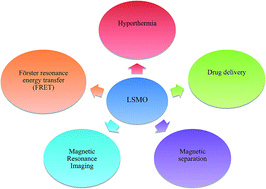
Magnetic nanoparticles (MNPs) by far are the most explored nanoparticle system in biomedicine.20 Drug delivery, magnetic resonance imaging (MRI), hyperthermia, bio-separation, and bio-sensing are few bio-medical applications of MNPs.21–25 MNPs have contributed significantly to the development of anti-cancer theranostics, as active and passive drug and gene carriers,26,27 contrast agents in tumor visualization,28–30 magnetic separation of cancer cells31–33 or detection tags in diagnosis of cancer biomarkers.34 Superparamagnetic nanoparticles can be used as contrast agents in MRI. They are known to produce quick water proton relaxation under magnetic field and thus enabling detection with MRI. Another unique ability of MNPs is heating under radiofrequency and, in turn elevating temperature of immediate surrounding.24,35,36 This property of MNPs has been widely explored for their use as hyperthermia agents. Heat generated by the MNPs is used in hyperthermia to destroy cancers or to make them more susceptible to conventional therapies in vitro and in vivo.37–40

Many nanoparticles have the capacity to produce heat when they are externally provided with energy. For example, gold nanoparticles can also act as hyperthermia agents as they heat up under infrared radiation.41,42 However, IR shows the relatively small depth of penetration limiting its therapeutic applicability. MNPs get heated upon exposure to radiofrequency radiation (100 to 400 KHz) and raise the temperature of tumor tissue. It is known that heating is directly proportional to the radiation frequency used, which can be exploited to achieve proper temperature control, finally leading to cell death.37,43–45

Hyperthermia therapy uses heat (typically, 41–48 °C) to treat cancers. Normal tissues can dissipate heat via circulating blood. However, tumors tend to accumulate heat because of their sluggish perfusion.46,47 This accumulated heat leads to the cell membrane and cytoskeletal damage.48 Hyperthermia also affects the membrane fluidity and potential.49 Numerous molecular changes viz. damage to intercellular proteins, generation of reactive oxygen species, increase in levels of heat shock proteins and damage to the mitochondrial membrane are observed.50,51 Hyperthermia also induces cytostatic signals.52 Further, hyperthermia results in the generalized destruction of microvessels in the tumor and also inhibits neo-angiogenesis. Loss of vasculature can cause loss of tumor drainage leading to oxygen and nutrient depletion, thereby arresting tumor proliferation.53–55

Magnetic fluids (i.e. magnetic nanoparticles dispersion in liquid media), when exposed to the radiofrequency field, can cause heat generation by several processes viz. Néel and Brownian relaxation, hysteresis loss and frictional losses (in viscous suspensions).56 Magnetic materials contain “domains” that align in response to an applied external magnetic field. On removal of the magnetic field, the magnetic moments revert to their original state. This process of magnetic moment alignment and reversal causes heat generation. In case of alternating magnetic field (radiofrequency), there is a cyclic reversal of the magnetic field ensuring continuous heat generation. This process can be used to heat up the cells in hyperthermia application.

In case of superparamagnetic nanoparticles such as iron oxide nanoparticles, Néel's and Brownian relaxation are the predominant mechanisms involved in generating heat. Néel's relaxation is a function of the spin of the magnetic nanoparticle, i.e. when the magnetic field is reversed heat is generated by relaxation of the magnetic moment of the particle. Brownian relaxation denotes that magnetic nanoparticles physically rotate under the alternating magnetic field and generate heat due to friction within the carrier liquid.57,58

Heating of magnetic nanoparticles by radio frequency is also a function of the Curie temperature that is governed by their magnetic and electron transport properties. The heat generated is dependent on the specific absorption rate (SAR) of the nanoparticles.59 Curie temperature is an important parameter in selection of magnetic material for an in vivo application of hyperthermia. On exposure to radiofrequency, magnetic nanoparticles get heated up till they achieve the Curie temperature. Upon attaining the Curie temperature, the saturation magnetization of particles drops to zero and heating stops as the material becomes paramagnetic (termed as “self-controlled heating”). Similarly, high SAR of MNPs is desirable for efficient heat generation. It can be thus said that MNPs with a high SAR and low Curie temperature can act as effective self-regulatory hyperthermia mediators.60

Different MNPs reported for magnetic fluid hyperthermia, bio-separations and magnetic resonance imaging include superparamagnetic iron oxides61 and ferrites of manganese, cobalt, nickel, and zinc.62 A relatively new class of magnetic nanoparticles, lanthanum strontium manganese oxide (LSMO) nanoparticles has recently been explored for similar use in anti-cancer therapy. This review summarizes the recent work on LSMO nanoparticles in therapeutics and diagnostics with a special focus on LSMO nanoparticle mediated hyperthermia for cancer therapy.

Lanthanum strontium manganese oxide (LSMO) nanoparticles

LSMO nanoparticles are manganese oxide-based compounds (manganites) with the formula R1−xAxMnO3; where the R sites are substituted by the rare earth metal – lanthanum, and A by strontium, which is a divalent alkaline earth metal (Fig. 1). The LSMO crystal is a perovskite-structured oxide, which is ferromagnetic in bulk form. However, super-paramagnetic and ferromagnetic nanoparticles of LSMO are present.
image file: c5ra02731d-f1.tif
Fig. 1 Structure of a typical LSMO perovskite structured oxide.

The choice of synthesis method governs crystal formation and growth, size, and homogeneity of nanoparticles. When nanoparticles are to be obtained from a top-down approach they may show a broad size distribution. While in the bottom-up approach, the reaction and nanoparticle formation can be controlled leading to more homogeneous particle formation.

The methods reported for the synthesis of LSMO nanoparticles include glycine nitrate combustion, chemical synthesis, sol–gel, and citrate gel method.63–67 The synthesis method governs properties of nanoparticles such as grain formation and annealing, magnetism, size and homogeneity. Hydrothermal synthesis of LSMO nanoparticles involves high temperature, and pressure treatment to precursors in aqueous solution to form nanoparticles, the addition of various surfactants during synthesis can help achieve particle size control.68 Combustion method is a relatively faster synthesis method involving the use of an organic molecule (with low decomposition temperature) that acts as a fuel in the synthesis procedure.69,70 Chemical methods have been widely used to synthesize LSMO nanoparticles for biomedical uses since standardized conditions of pH, temperature, and reactant stoichiometry ensure chemical homogeneity.71,72 Sol–gel methods reportedly produce small sized LSMO nanoparticles and allow control over the size and crystallinity.73,74 Thermal decomposition method for synthesis for nanocrystalline LSMO is a quick and easy method (Daengsakul et al., 2009).

Ravi and Karthikeyan63 have recently described modified sol–gel method where LSMO nanoparticles were synthesized using an oleic acid surfactant and a polyacrylic acid matrix. It was observed that temperatures up to 500 °C generated paramagnetic nanoparticles, whereas, at 800 °C, ferromagnetic LSMO nanoparticles were produced. Although the size of the nanoparticles did not vary significantly (20–30 nm), calcination temperatures affected the magnetic properties. LSMO nanoparticles synthesized using polyvinyl alcohol (size 50–60 nm) and glycine (size 40–50 nm).75 In another study, a non-aqueous sol–gel method was used to produce 20 nm particle with high saturation magnetization values; here, formation involved C–O bond breaking and formation the metal oxide bond without any hydrolysis.64

Applications of MNPs such as hyperthermia, magnetic resonance imaging, and drug delivery require a stable in a non-toxic solvent to facilitate injection,76 and their circulation in vivo. However, many MNPs, including LSMO nanoparticles, are not dispersible in aqueous solutions and show gradual aggregation and settling.

Surface modifications by diverse approaches have been attempted to make stable MNP suspensions. Magnetic nanoparticles surface can be modified during or post-synthesis to enhance their functions.77 MNPs can be coated with a stabilizing agent or generating a core–shell like structure. Modifications of MNPs using an array of materials viz. polymers, gold, silver, copper, carbon, silica, have been attempted to improve their stability and surface chemistry.78 Surface coatings can be used to impart a positive charge on negatively charged nanoparticles. It has been reported that positively charged nanoparticles are more successful at crossing the cell membrane barrier than neutral or negatively charged ones.79 Further, coating can improving surface reactivity to carry therapeutic moieties like drugs and ligands, and in certain cases reduce toxicity.34 LSMO have been coated with different inorganic and organic molecules viz. silica,80 gold,81 acrypol,82 octadecyl amine (ODA),83 fatty amine,83 chitosan,84 oleic acid,85,86 BSA,87 dextran,88 etc. to enhance their colloidal stability and biocompatibility. BSA was conjugated to LSMO using linker and the size of nanoparticles ranged from 80–100 nm, dextran coated LSMO show a size of 30–35 nm.87 Along with contributing to biocompatibility, coating with dextran imparts a near-neutral charge to LSMO nanoparticles and decreasing nanoparticle interaction with other biomolecules. Such a coating could possibly reduce their internalization in cells (in comparison to charged nanoparticles) resulting in reduced toxicity.89 Positively charged LSMO (coated with chitosan) showed good colloidal stability and biocompatibility up to a concentration of 1 mg mL−1.84 Stabilizing LSMO during synthesis is possible by using bilayer oleic acid surfactant mediated synthesis; these bilayer-coated nanoparticles did not show aggregation under conditions of physiological pH and at high ionic strength.90 Apart from polymer and biomolecule shells to impart stability and biocompatibility, LSMO nanoparticles with inorganic shells generate materials with enhanced chemical stability as well as favorable surface chemistry for modification.

Curie temperature of LSMO nanoparticles synthesized by different routes shows acceptable range and can be used for hyperthermia safely.69,82,91–93 Curie temperature of LSMO synthesized by various routes and coated with different coating materials fall into an acceptable range and can be used as hyperthermia agents safely (Fig. 2). Curie temperature of 335 K was reported by Kaman et al.;80 Curie temperature of acrypol coated LSMO is 318 K,82 octadecyl amine (ODA) and fatty amine coating show 360 K (ref. 83) while LSMO synthesized using aqueous combustion route read 316 K.69


image file: c5ra02731d-f2.tif
Fig. 2 (a) LSMO@silica nanoparticles synthesized using glycine nitrate process and coated with silica post synthesis and (b) heating experiments ([Mn] = 25 g L−1) at 108 kHz for (A) LSMO in agarose, (B) LSMO@silica in agarose, and (C) LSMO@silica in water. Inset – magnetic heating experiments for LSMO (88 mT, 108 kHz) vs. manganese concentration.69

LSMO nanoparticles in cancer therapy

However, along with the increasing interest in the treatment of cancer using an efficient, patient-friendly approach like hyperthermia there is also a rising concern with the use of the conventional hyperthermia agents – iron oxide nanoparticle. Iron oxide nanoparticles show high Curie temperature,61 and additionally add to iron homeostasis and toxicity concerns.94 Thus, the advantage of ‘self-controlled’ heating in desirable range can establish LSMO nanoparticles as superior hyperthermia mediator in comparison to its counterparts.91,95

In our studies, LSMO nanoparticle synthesis was carried out using a thermal decomposition method96 with modifications. This experiment demonstrated that it is possible to tune the treatment temperature by varying the concentration of nanoparticles and time of RF exposure. For example, the therapeutically desirable temperature of 47 °C can be achieved in approximately 10, 5 and 3.5 min using 1, 2, and 5 mg mL−1 LSMO suspensions, respectively (Fig. 3). The heating profile showed that temperature rise is concentration dependent. The temperature rise for all tested concentrations gained platitude after ∼12 to 15 min of RF exposure. It can be safely said that varying the concentration and time of exposure for hyperthermia treatment, desired temperature can be administered to cancerous cells (Kulkarni et al., 2015).


image file: c5ra02731d-f3.tif
Fig. 3 Heating profile of LSMO nanoparticles synthesized by thermal decomposition method (Kulkarni et al., 2015).

When dextran stabilized LSMO nanoparticles were used for hyperthermia treatment of human melanoma cell line – change in morphology, proliferation pattern and expression of heat shock proteins 70 and 90 were observed.97 LSMO nanoparticles based hyperthermia could be an alternative therapy that is targeted with no or less side effects and more patient-friendly than chemo- and radiotherapies with dose-dependent side effects. As surgery shows poor patient acceptability, solid tumors can be treated by nanoparticle based hyperthermia to avoid invasive operations.98,99

Clinical trials have shown improved benefits of hyperthermia when applied alongside chemo- and radiotherapy. Delivery of chemotherapeutic drugs can be enhanced by hyperthermia as that sluggish tumor perfusion improves transiently because of heat.100,101 Interaction of heat with chemotherapeutic drugs produces a synergistic effect in vitro, this effect can be achieved even at moderate temperatures.102 Hyperthermia has been seen to enhance the impact of anti-cancer drugs in different studies on types of cancer viz. in sarcoma, and breast cancer.103–105 Combination of hyperthermia and chemotherapy was found to increase the lifespan of gastric and ovarian cancer patients.106–108 A phase III study comparing the combination of radiotherapy, chemotherapy, and hyperthermia to conventional treatment in patients with advanced cervical carcinoma showed a 15% improvement in overall survival.109 Hyperthermia, in conjunction with radiotherapy, showed enhanced therapeutic outcomes than radiotherapy alone in glioblastoma as well as in prostrate- and cervical-cancer patients.110–113 It is known that hypoxic and quiescent cells within the tumor structure are more resistant to radiotherapy than the proliferating cells. However, the resistant cells are more heat-sensitive, and hyperthermia treatment increases their vulnerability to radiation.114

As drug loaded nanoparticles can be injected directly at the tumor site, it can help reduce the dose of administered drug and prevent systemic uptake of drug by other body tissues and the associated adverse effects.

Interestingly, to achieve combination therapy, the drug can be directly loaded on the surface of MNPs used for hyperthermia. The high surface to volume ratio of nanoparticles is beneficial for effective loading of the chemotherapeutic agent. In case of chemotherapeutic drugs prescribed for cancer, their targeting can significantly contribute to a reduction in drug-associated toxicity. At the same time, an increase in the concentration of the pharmacologically active agent at the target site can be achieved. For example, doxorubicin shows dosage dependent cardiotoxicity,115 hepato- and nephro-toxicity116 resistance of cancer cells to high doses of drugs.117 Magnetic drug targeting is an attractive option to restrict or localize the activity of drugs such as doxorubicin to the site of interest. The drug can be released from nanoparticles using a radiofrequency trigger.

Multiple approaches for drug loading can be adopted using LSMO nanoparticles, either the drug can be covalently or electrostatically presented on the surface. Alternatively, the nanoparticles and drugs can be encapsulated together in a degradable outer layer. In one such study, silica coated LSMO nanoparticles modified with block co-polymer structures (poly-L-lysine and polyether segments) have been used for encapsulating hydrophobic drugs like doxorubicin for thermally triggered drug release.118 Doxorubicin loaded on chitosan coated LSMO nanoparticles has been used as drug delivery and hyperthermia agent in the treatment of breast cancer cells in vitro. Primary coating of LSMO nanoparticles with positively charged polymer chitosan increased their colloidal stability and prepared the nanoparticle surface for doxorubicin loading. The nanoparticle system could release drug on stimuli of radio frequency radiation (Fig. 4) (Kulkarni et al., 2015). In another report, paclitaxel was encapsulated in a hybrid magnetic nanovesicle containing dextran coated LSMO and iron oxide. This ‘biphasic’ nanovesicles encapsulated ∼83% of the drug, and a combined effect of hyperthermia and chemotherapy was seen in human breast cancer cells MCF-7.119


image file: c5ra02731d-f4.tif
Fig. 4 Doxorubicin release and its nuclear accumulation from chitosan coated LSMO nanoparticles post radiofrequency radiation in human breast cancer cell lines MCF-7 and MDA-MB-231 (Kulkarni et al., 2015).

As chemotherapy is a relatively nonspecific therapy, trigger-based release along with a potent combination therapy can be a promising attempt at reducing drug-associated drawbacks.

LSMO nanoparticles in imaging and detection

LSMO core structure with double layer shell of fluorescent alkoxide/tetraethoxy silane and tetraethoxy silane could function as fluorescent probes in cell imaging and also as an MRI, contrast agent. These nanoparticles bear a manganite core ∼57 nm and an overall diameter of ∼89 nm. The excitation maximum of these nanoparticles was seen to be 514 nm and the emission maximum corresponded to that of fluorescein. These nanoparticles also showed high spin–spin relaxivities (r2 = 580, 540 and 520 s−1 mmol(Mn)−1 L at magnetic fields of 0.5, 1.5 and 3 T, respectively) which exceeded the relaxivity reported for iron oxide.120 Similar studies show that LSMO surface modified with SiF@Si along with fluorescent probe could be successfully used for cell labeling and contrast agent121 (Fig. 5).
image file: c5ra02731d-f5.tif
Fig. 5 B16F1 melanoma bearing mice showing T2 weighted images (a) before Dex-LSMO injection, (b) 15 min post Dex-LSMO injection, (c) 24 h post injection; T1 weighted images (d) before injection of Dex-LSMO, (e) 15 min post Dex-LSMO injection and (f) 24 h post injection of Dex-LSMO injection.88

In MRI, a magnetic field is applied followed by a magnetic pulse provided to sample, and the change in magnetization of protons in water molecules is measured. Under normal conditions, protons or hydrogen nuclei in the water molecules in the body are spinning about their axes and are randomly oriented. When an external magnetic field B0 is applied, the nuclear spins align with the field and also around its axis producing a net magnetic moment, M. Application of a radiofrequency (RF) pulse to the object to be imaged causes the nuclear spins to move away from the z-axis and these excited spins start aligning in the transverse plane. When the pulse is switched off the net magnetic moment, M continues to wobble, giving off RF waves and hence producing NMR signal.

Protons will relax differently depending on the source (tissue) they belong to, hence providing a contrast enabling differential visualization. The protons recover their original state of equilibrium by two relaxation processes to generate an MR image. This relaxation process involves the longitudinal relaxation time T1; and a transverse relaxation time, T2. Although MRI can efficiently image anatomical details, using magnetic contrast agents helps change the relaxation of water in their vicinity and improve differential visualization. Since the single magnetic domains have a magnetic moment, they are surrounded by a magnetic field produced from the magnetic moment. This surrounding magnetic field interacts with the hydrogen nucleus in the water molecules in the body and thereby affects the resonance properties. Tools like MRI can help improving the detection of cancers and their metastases. There are T1 and T2 contrast agents, and gadolinium (Gd), super-paramagnetic iron oxide nanoparticles (SPIONs) have been conventionally used as MRI agents. Recently, dextran stabilized La0.7Sr0.3MnO3 nanoparticles (Dex-LSMO NPs) have been used as a new type of contrast agents which have been established safe and compatible for in vivo use.

Dex-LSMO NPs showed both positive and negative contrast properties; with r2 value of 778 s−1 mg−1 mL.88 This finding opens up the possibility of image directed hyperthermia using LSMO nanoparticles in future.

Förster resonance energy transfer (FRET) is energy transfer between two molecules i.e. a donor and an acceptor molecule. FRET is very a very sensitive technique and can be used for measurements, determination of distances between the participating molecules. Interactions of modified LSMO with other biomolecules can be investigated using Förster resonance energy transfer (FRET) studies (Fig. 6). Citrate stabilized LSMO were used to explore the interaction of covalently bound chromophore 4-nitrophenylanthralinate (NPA) and adsorption of fluorescent adenine analogue (AP) on nanoparticle surface.122


image file: c5ra02731d-f6.tif
Fig. 6 (a) Schematic showing covalent attachment of NPA and non-covalent adsorption of base analogues 2AP with FRET transfer from ligands to nanoparticles. (b) Spectral overlap between the citrate NPA donor–citrate LSMO acceptor (above) and the quenching of donor (below, and inset). Excitation wavelength – 320 nm for steady state, and 375 nm for time-resolved experiments; (c) spectral overlap between the citrate 2AP donor–citrate LSMO acceptor (above) and the quenching of donor (below, and inset), excitation wavelength – 300 nm.122

As MR imaging and FRET analysis using modified LSMO nanoparticles is possible, they can be used for diagnosis of cancer biomarkers and whole cells in vivo.

Conclusions and future outlook

Efficient yet minimally invasive therapies showing fewer side effects, such as magnetic fluid hyperthermia, are gaining impetus since the last decade. The driving force for patients opting towards such alternative therapies includes the drug associated resistance shown by cancer cells, dosage dependent side effects on healthy cells and the rated failure of conventional therapies. The potential of LSMO nanoparticles, with their attractive magnetic properties and an inherent biocompatibility, has already been established with studies demonstrating its therapeutic efficiency (Table 1).
Table 1 Biomedical applications of LSMO nanoparticles
Year Author Application Ref. no.
2010 and 2015 Kačenka et al. Hybrid silica–fluorescein layer coated LSMO nanoparticles for imaging 120 and 123
2013 Berkova et al. Silica coated LSMO nanoparticles for MRI 124
2013 Bhayani et al. Dextran coated LSMO nanoparticles for hyperthermia 97
2013 Thorat et al. Oleic acid coated LSMO nanoparticles for hyperthermia 90
2013 and 2015 Jadhav et al. Polyvinylpyrrolidone glycol coated and polyvinyl alcohol, polyethylene glycol coated LSMO nanoparticles for hyperthermia 125 and 126
2014 Manh et al. LSMO nanoparticles for hyperthermia 127
2014 Shete et al. Chitosan coated LSMO nanoparticles for hyperthermia 128
2013 and 2015 Haghniaz et al. Dextran coated LSMO nanoparticles for hyperthermia and MRI 88 and 129
2015 Veverka et al. Silica coated LSMO nanoparticles for MRI 130


LSMO nanoparticles can be categorized as theranostic agents; i.e. they function as MRI contrast agents as well as a heat-generating source for localized hyperthermia. Along with hyperthermia and imaging, LSMO can also act as drug delivery agent. This review summarizes initial work conducted in the field of biomedicine using relatively new magnetic nanoparticle system. Prima facie, we can say that these nanoparticles have the potential to go a long way in biomedicine owing to their ease of control over size, magnetism, and heating. It would be interesting to investigate further LSMO nanoparticles for simultaneous hyperthermia, drug delivery and contrast agent for all round cancer theranostics. A comprehensive study on their in vivo residence and clearance times, the effectiveness of anti-tumor therapy in animal models is warranted to develop LSMO nanoparticles as nanomedicines.

Acknowledgements

Vaishnavi Kulkarni is grateful to the Council of Scientific and Industrial Research (CSIR), India for the award of funds.

References

  1. I. B. Weinstein and A. K. Joe, Nat. Clin. Pract. Oncol., 2006, 3, 448–457 CrossRef CAS PubMed.
  2. B. Vogelstein and K. W. Kinzler, Nat. Med., 2004, 10, 789–799 CrossRef CAS PubMed.
  3. D. Hanahan and R. A. Weinberg, Cell, 2011, 144, 646–674 CrossRef CAS PubMed.
  4. C. H. Squarize, R. M. Castilho, V. Sriuranpong, D. S. Pinto and J. S. Gutkind, Neoplasia, 2006, 8, 733–746 CrossRef CAS PubMed.
  5. E. F. Wagner and A. R. Nebreda, Nat. Rev. Cancer, 2009, 9, 537–549 CrossRef CAS PubMed.
  6. G. P. Gupta and J. Massagué, Cell, 2006, 127, 679–695 CrossRef CAS PubMed.
  7. I. J. Fidler, Nat. Rev. Cancer, 2003, 3, 453–458 CrossRef CAS PubMed.
  8. M. Dean, T. Fojo and S. Bates, Nat. Rev. Cancer, 2005, 5, 275–284 CrossRef CAS PubMed.
  9. A. Singh and J. Settleman, Oncogene, 2010, 29, 4741–4751 CrossRef CAS PubMed.
  10. M. M. Gottesman, Annu. Rev. Med., 2002, 53, 615–627 CrossRef CAS PubMed.
  11. T. Green, K. Atkin and U. Macleod, Br. J. Cancer, 2015, 112, S41–S49 CrossRef PubMed.
  12. M. Ferrari, Nat. Rev. Cancer, 2005, 5, 161–171 CrossRef CAS PubMed.
  13. J. W. Nichols and Y. H. Bae, Nano Today, 2012, 7, 606–618 CrossRef CAS PubMed.
  14. H. Maeda, H. Nakamura and J. Fang, Adv. Drug Delivery Rev., 2013, 65, 71–79 CrossRef CAS PubMed.
  15. V. Torchilin, Adv. Drug Delivery Rev., 2011, 63, 131–135 CrossRef CAS PubMed.
  16. M. Kanapathipillai, A. Brock and D. E. Ingber, Adv. Drug Delivery Rev., 2014, 79–80, 107–118 CrossRef CAS PubMed.
  17. A. Ponta and Y. Bae, J. Drug Targeting, 2015, 22, 619–628 CrossRef PubMed.
  18. S. Parveen, R. Misra and S. K. Sahoo, Nanomedicine, 2012, 8, 147–166 CrossRef CAS PubMed.
  19. P. Parhi, C. Mohanty and S. K. Sahoo, Drug Discovery Today, 2012, 17, 1044–1052 CrossRef CAS PubMed.
  20. Q. A. Pankhurst, J. Connolly, S. K. Jones and J. Dobson, J. Phys. D: Appl. Phys., 2003, 36, R167–R181 CrossRef CAS.
  21. R. Banerjee, Y. Katsenovich, L. Lagos, M. McIintosh, X. Zhang and C.-Z. Li, Curr. Med. Chem., 2010, 17, 3120–3141 CrossRef CAS.
  22. N. Tran and T. J. Webster, J. Mater. Chem., 2010, 20, 8760 RSC.
  23. S.-H. Huang and R.-S. Juang, J. Nanopart. Res., 2011, 13, 4411–4430 CrossRef.
  24. A. Singh and S. K. Sahoo, Drug Discovery Today, 2014, 19, 474–481 CrossRef CAS PubMed.
  25. M. V Yigit, A. Moore and Z. Medarova, Pharm. Res., 2012, 29, 1180–1188 CrossRef PubMed.
  26. S. Prijic and G. Sersa, Radiol. Oncol., 2011, 45, 1–16 CrossRef CAS PubMed.
  27. F. M. Kievit and M. Zhang, Acc. Chem. Res., 2011, 44, 853–862 CrossRef CAS PubMed.
  28. Y. Cheng, R. A. Morshed, B. Auffinger, A. L. Tobias and M. S. Lesniak, Adv. Drug Delivery Rev., 2014, 66, 42–57 CrossRef CAS PubMed.
  29. M. Wankhede, A. Bouras, M. Kaluzova and C. G. Hadjipanayis, Expert Rev. Clin. Pharmacol., 2012, 5, 173–186 CrossRef CAS PubMed.
  30. J. E. Rosen, L. Chan, D.-B. Shieh and F. X. Gu, Nanomedicine, 2012, 8, 275–290 CrossRef CAS PubMed.
  31. S.-M. Jo, S. Noh, Z. Jin, Y. Lim, J. Cheon and H.-S. Kim, Sens. Actuators, B, 2014, 201, 144–152 CrossRef CAS PubMed.
  32. J. O. Fierer, G. Veggiani and M. Howarth, Proc. Natl. Acad. Sci. U. S. A., 2014, 111, E1176–E1181 CrossRef CAS PubMed.
  33. W. Lu, M. Ling, M. Jia, P. Huang, C. Li and B. Yan, Mol. Med. Rep., 2014, 9, 1080–1084 CAS.
  34. O. Veiseh, J. W. Gunn and M. Zhang, Adv. Drug Delivery Rev., 2010, 62, 284–304 CrossRef CAS PubMed.
  35. Bio- and Bioinspired Nanomaterials, ed. D. Ruiz-Molina, F. Novio and C. Roscini, Wiley-VCH Verlag GmbH & Co. KGaA, Weinheim, Germany, 2014 Search PubMed.
  36. R. Regmi, A. Naik, J. S. Thakur, P. P. Vaishnava and G. Lawes, J. Appl. Phys., 2014, 115, 17B301 CrossRef PubMed.
  37. S. Dutz and R. Hergt, Nanotechnology, 2014, 25, 452001 CrossRef PubMed.
  38. S. Kossatz, R. Ludwig, H. Dähring, V. Ettelt, G. Rimkus, M. Marciello, G. Salas, V. Patel, F. J. Teran and I. Hilger, Pharm. Res., 2014, 31, 3274–3288 CrossRef CAS PubMed.
  39. P. T. Yin, B. P. Shah and K.-B. Lee, Small, 2014, 10, 4106–4112 CAS.
  40. K. H. Bae, M. Park, M. J. Do, N. Lee, J. H. Ryu, G. W. Kim, C. Kim, T. G. Park and T. Hyeon, ACS Nano, 2012, 6, 5266–5273 CrossRef CAS PubMed.
  41. T. B. Huff, L. Tong, Y. Zhao, M. N. Hansen, J.-X. Cheng and A. Wei, Nanomedicine (London, U. K.), 2007, 2, 125–132 CrossRef CAS PubMed.
  42. J. Gautier, E. Allard-Vannier, E. Munnier, M. Soucé and I. Chourpa, J. Controlled Release, 2013, 169, 48–61 CrossRef CAS PubMed.
  43. S. Dutz and R. Hergt, Int. J. Hyperthermia, 2013, 29, 790–800 CrossRef PubMed.
  44. J. van der Zee, Ann. Oncol., 2002, 13, 1173–1184 CrossRef CAS PubMed.
  45. R. Ivkov, S. J. DeNardo, W. Daum, A. R. Foreman, R. C. Goldstein, V. S. Nemkov and G. L. DeNardo, Clin. Cancer Res., 2005, 11, 7093s–7103s CrossRef CAS PubMed.
  46. T. E. Dudar and R. K. Jain, Cancer Res., 1984, 44, 605–612 CAS.
  47. C. W. Song, Cancer Res., 1984, 44, 4721s–4730 CAS.
  48. A. Pawlik, J. M. Nowak, D. Grzanka, L. Gackowska, J. Michalkiewicz and A. Grzanka, Acta Histochem., 2013, 115, 8–15 CrossRef CAS PubMed.
  49. P. Remani, V. V. Ostapenko, K. Akagi, V. Bhattathiri, M. Krishnan Nair and Y. Tanaka, Cancer Lett., 1999, 144, 117–123 CrossRef CAS.
  50. I. Belhadj Slimen, T. Najar, A. Ghram, H. Dabbebi, M. Ben Mrad and M. Abdrabbah, Int. J. Hyperthermia, 2014, 30, 513–523 CrossRef CAS PubMed.
  51. J. L. Roti Roti, Int. J. Hyperthermia, 2008, 24, 3–15 CrossRef PubMed.
  52. T. Turner and T. Caspari, Open Biol., 2014, 4, 140008 CrossRef PubMed.
  53. C. Roca, L. Primo, D. Valdembri, A. Cividalli, P. Declerck, P. Carmeliet, P. Gabriele and F. Bussolino, Cancer Res., 2003, 63, 1500–1507 CAS.
  54. Y. Nishimura, M. Hiraoka, S. Jo, K. Akuta, Y. Yukawa, Y. Shibamoto, M. Takahashi and M. Abe, Int. J. Radiat. Oncol. Biol. Phys., 1988, 15, 411–420 CrossRef CAS.
  55. L. F. Fajardo, S. D. Prionas, J. Kowalski and H. H. Kwan, Radiat. Res., 1988, 114, 297–306 CrossRef CAS.
  56. A. E. Deatsch and B. A. Evans, J. Magn. Magn. Mater., 2014, 354, 163–172 CrossRef CAS PubMed.
  57. R. Di Corato, A. Espinosa, L. Lartigue, M. Tharaud, S. Chat, T. Pellegrino, C. Ménager, F. Gazeau and C. Wilhelm, Biomaterials, 2014, 35, 6400–6411 CrossRef CAS PubMed.
  58. J.-P. Fortin, F. Gazeau and C. Wilhelm, Eur. Biophys. J., 2008, 37, 223–228 CrossRef CAS PubMed.
  59. C. C. Berry and A. S. G. Curtis, J. Phys. D: Appl. Phys., 2003, 36, R198–R206 CrossRef CAS.
  60. C. S. S. R. Kumar and F. Mohammad, Adv. Drug Delivery Rev., 2011, 63, 789–808 CrossRef CAS PubMed.
  61. S. Laurent, S. Dutz, U. O. Häfeli and M. Mahmoudi, Adv. Colloid Interface Sci., 2011, 166, 8–23 CAS.
  62. J. Xie, Y. Zhang, C. Yan, L. Song, S. Wen, F. Zang, G. Chen, Q. Ding, C. Yan and N. Gu, Biomaterials, 2014, 35, 9126–9136 CrossRef CAS PubMed.
  63. S. Ravi and A. Karthikeyan, Phys. Procedia, 2014, 54, 45–54 CrossRef CAS PubMed.
  64. A. Sadhu and S. Bhattacharyya, Chem. Mater., 2014, 26, 1702–1710 CrossRef CAS.
  65. M. Kačenka, O. Kaman, Z. Jirák, M. Maryško, P. Žvátora, S. Vratislav and I. Lukeš, J. Appl. Phys., 2014, 115, 17B525 CrossRef PubMed.
  66. S. Keshri, V. Kumar, P. Wiśniewski and A. S. Kamzin, Phase Transitions, 2014, 87, 468–476 CrossRef CAS PubMed.
  67. A. Tovstolytkin, S. Solopan, V. Kalita, S. Ryabchenko and A. Belous, in International Conference on Oxide Materials for Electronic Engineering - fabrication, properties and applications (OMEE-2014), IEEE, 2014, pp. 77–78 Search PubMed.
  68. M. S. Anwar, S. Kumar, F. Ahmed, G. W. Kim and B. H. Koo, J. Nanosci. Nanotechnol., 2012, 12, 5523–5526 CrossRef CAS PubMed.
  69. R. Epherre, E. Duguet, S. Mornet, E. Pollert, S. Louguet, S. Lecommandoux, C. Schatz and G. Goglio, J. Mater. Chem., 2011, 21, 4393 RSC.
  70. K. P. Shinde, N. D. Thorat, S. S. Pawar and S. H. Pawar, Mater. Chem. Phys., 2012, 134, 881–885 CrossRef CAS PubMed.
  71. Z. F. Zi, Y. P. Sun, X. B. Zhu, Z. R. Yang, J. M. Dai and W. H. Song, J. Magn. Magn. Mater., 2009, 321, 2378–2381 CrossRef CAS PubMed.
  72. D. R. Sahu, B. K. Roul, P. Pramanik and J.-L. Huang, Phys. B, 2005, 369, 209–214 CrossRef CAS PubMed.
  73. A. Rostamnejadi, H. Salamati, P. Kameli and H. Ahmadvand, J. Magn. Magn. Mater., 2009, 321, 3126–3131 CrossRef CAS PubMed.
  74. V. Ravi, S. D. Kulkarni, V. Samuel, S. N. Kale, J. Mona, R. Rajgopal, A. Daundkar, P. S. Lahoti and R. S. Joshee, Ceram. Int., 2007, 33, 1129–1132 CrossRef CAS PubMed.
  75. N. D. Thorat, K. P. Shinde, S. H. Pawar, K. C. Barick, C. A. Betty and R. S. Ningthoujam, Dalton Trans., 2012, 41, 3060–3071 RSC.
  76. C. Sun, J. S. H. Lee and M. Zhang, Adv. Drug Delivery Rev., 2008, 60, 1252–1265 CrossRef CAS PubMed.
  77. J. Xie, G. Liu, H. S. Eden, H. Ai and X. Chen, Acc. Chem. Res., 2011, 44, 883–892 CrossRef CAS PubMed.
  78. C. Xu and S. Sun, Adv. Drug Delivery Rev., 2013, 65, 732–743 CrossRef CAS PubMed.
  79. A. Verma and F. Stellacci, Small, 2010, 6, 12–21 CrossRef CAS PubMed.
  80. O. Kaman, E. Pollert, P. Veverka, M. Veverka, E. Hadová, K. Knízek, M. Marysko, P. Kaspar, M. Klementová, V. Grünwaldová, S. Vasseur, R. Epherre, S. Mornet, G. Goglio and E. Duguet, Nanotechnology, 2009, 20, 275610 CrossRef CAS PubMed.
  81. O. Pana, R. Turcu, M. L. Soran, C. Leostean, E. Gautron, C. Payen and O. Chauvet, Synth. Met., 2010, 160, 1692–1698 CrossRef CAS PubMed.
  82. N. K. Prasad, K. Rathinasamy, D. Panda and D. Bahadur, J. Biomed. Mater. Res., Part B, 2008, 85, 409–416 CrossRef CAS PubMed.
  83. R. Rajagopal, J. Mona, S. N. Kale, T. Bala, R. Pasricha, P. Poddar, M. Sastry, B. L. V. Prasad, D. C. Kundaliya and S. B. Ogale, Appl. Phys. Lett., 2006, 89, 023107 CrossRef PubMed.
  84. N. D. Thorat, S. V Otari, R. M. Patil, R. A. Bohara, H. M. Yadav, V. B. Koli, A. K. Chaurasia and R. S. Ningthoujam, Dalton Trans., 2014, 43, 17343–17351 RSC.
  85. N. D. Thorat, S. V. Otari, R. A. Bohara, H. M. Yadav, V. M. Khot, A. B. Salunkhe, M. R. Phadatare, A. I. Prasad, R. S. Ningthoujam and S. H. Pawar, Mater. Sci. Eng., C, 2014, 42, 637–646 CrossRef CAS PubMed.
  86. N. D. Thorat, R. M. Patil, V. M. Khot, A. B. Salunkhe, A. I. Prasad, K. C. Barick, R. S. Ningthoujam and S. H. Pawar, New J. Chem., 2013, 37, 2733 RSC.
  87. K. R. Bhayani, S. N. Kale, S. Arora, R. Rajagopal, H. Mamgain, R. Kaul-Ghanekar, D. C. Kundaliya, S. D. Kulkarni, R. Pasricha, S. D. Dhole, S. B. Ogale and K. M. Paknikar, Nanotechnology, 2007, 18, 345101 CrossRef.
  88. R. Haghniaz, K. R. Bhayani, R. D. Umrani and K. M. Paknikar, RSC Adv., 2013, 3, 18489 RSC.
  89. N. D. Thorat, V. M. Khot, A. B. Salunkhe, R. S. Ningthoujam and S. H. Pawar, Colloids Surf., B, 2013, 104, 40–47 CrossRef CAS PubMed.
  90. N. D. Thorat, V. M. Khot, A. B. Salunkhe, A. I. Prasad, R. S. Ningthoujam and S. H. Pawar, J. Phys. D: Appl. Phys., 2013, 46, 105003 CrossRef.
  91. E. Natividad, M. Castro, G. Goglio, I. Andreu, R. Epherre, E. Duguet and A. Mediano, Nanoscale, 2012, 4, 3954–3962 RSC.
  92. S. Manzoor, A. Ahmed, A. ur Rashid, S. N. Ahmad and S. A. Shaheen, IEEE Trans. Magn., 2013, 49, 3504–3507 CrossRef CAS.
  93. R. Rajagopal, J. Mona, S. N. Kale, T. Bala, R. Pasricha, P. Poddar, M. Sastry, B. L. V. Prasad, D. C. Kundaliya and S. B. Ogale, Appl. Phys. Lett., 2006, 89, 023107 CrossRef PubMed.
  94. N. Singh, G. J. S. Jenkins, R. Asadi and S. H. Doak, Nano Rev., 2010, 1, 5358 Search PubMed.
  95. S. N. Kale, S. Arora, K. R. Bhayani, K. M. Paknikar, M. Jani, U. V Wagh, S. D. Kulkarni and S. B. Ogale, Nanomedicine, 2006, 2, 217–221 CrossRef CAS PubMed.
  96. S. Daengsakul, C. Mongkolkachit, C. Thomas, S. Siri, I. Thomas, V. Amornkitbamrung and S. Maensiri, Appl. Phys. A, 2009, 96, 691–699 CrossRef CAS PubMed.
  97. K. R. Bhayani, J. M. Rajwade and K. M. Paknikar, Nanotechnology, 2013, 24, 015102 CrossRef CAS PubMed.
  98. K. F. Chu and D. E. Dupuy, Nat. Rev. Cancer, 2014, 14, 199–208 CrossRef CAS PubMed.
  99. J. F. R. Kerr, C. M. Winterford and B. V. Harmon, Cancer, 1994, 73, 2013–2026 CrossRef CAS.
  100. A. Sen, M. L. Capitano, J. A. Spernyak, J. T. Schueckler, S. Thomas, A. K. Singh, S. S. Evans, B. L. Hylander and E. A. Repasky, Cancer Res., 2011, 71, 3872–3880 CrossRef CAS PubMed.
  101. C. W. Song, A. Lokshina, J. G. Rhee, M. Patten and S. H. Levitt, IEEE Trans. Biomed. Eng., 1984, 31, 9–16 CrossRef CAS PubMed.
  102. P. Wust, B. Hildebrandt, G. Sreenivasa, B. Rau, J. Gellermann, H. Riess, R. Felix and P. Schlag, Lancet Oncol., 2002, 3, 487–497 CrossRef CAS.
  103. M. Babincov, V. Altanerov, C. Altaner, C. Bergemann and P. Babinec, IEEE Trans. Nanobioscience, 2008, 7, 15–19 CrossRef CAS PubMed.
  104. G. A. Koning, A. M. M. Eggermont, L. H. Lindner and T. L. M. ten Hagen, Pharm. Res., 2010, 27, 1750–1754 CrossRef CAS PubMed.
  105. Y. Mi, X. Liu, J. Zhao, J. Ding and S.-S. Feng, Biomaterials, 2012, 33, 7519–7529 CrossRef CAS PubMed.
  106. S. Singh, A. Armstrong, J. Robke, S. Waggoner and R. Debernardo, Gynecol. Oncol. Case Rep., 2014, 9, 24–25 CrossRef CAS PubMed.
  107. J. Sun, Y. Song, Z. Wang, P. Gao, X. Chen, Y. Xu, J. Liang and H. Xu, BMC Cancer, 2012, 12, 526 CrossRef CAS PubMed.
  108. S. Mulier, J.-P. Claes, V. Dierieck, J.-O. Amiel, J.-P. Pahaut, L. Marcelis, F. Bastin, D. Vanderbeeken, C. Finet, S. Cran and T. Velu, Curr. Pharm. Des., 2012, 18, 3793–3803 CrossRef CAS.
  109. A. M. Westermann, E. L. Jones, B.-C. Schem, E. M. van der Steen-Banasik, P. Koper, O. Mella, A. L. J. Uitterhoeve, R. de Wit, J. van der Velden, C. Burger, C. L. van der Wilt, O. Dahl, L. R. Prosnitz and J. van der Zee, Cancer, 2005, 104, 763–770 CrossRef CAS PubMed.
  110. M. Franckena, Int. J. Hyperthermia, 2012, 28, 543–548 CrossRef PubMed.
  111. S. T. Heijkoop, M. Franckena, M. G. J. Thomeer, I. A. Boere, C. van Montfort and H. C. van Doorn, 2012.
  112. M. D. Hurwitz, J. L. Hansen, S. Prokopios-Davos, J. Manola, Q. Wang, B. A. Bornstein, K. Hynynen and I. D. Kaplan, Cancer, 2011, 117, 510–516 CrossRef PubMed.
  113. K. Maier-Hauff, R. Rothe, R. Scholz, U. Gneveckow, P. Wust, B. Thiesen, A. Feussner, A. von Deimling, N. Waldoefner, R. Felix and A. Jordan, J. Neuro-Oncol., 2007, 81, 53–60 CrossRef CAS PubMed.
  114. Q. Xiao, X. Zheng, W. Bu, W. Ge, S. Zhang, F. Chen, H. Xing, Q. Ren, W. Fan, K. Zhao, Y. Hua and J. Shi, J. Am. Chem. Soc., 2013, 135, 13041–13048 CrossRef CAS PubMed.
  115. F. S. Carvalho, A. Burgeiro, R. Garcia, A. J. Moreno, R. A. Carvalho and P. J. Oliveira, Med. Res. Rev., 2014, 34, 106–135 CrossRef CAS PubMed.
  116. F. Tulubas, A. Gurel, M. Oran, B. Topcu, V. Caglar and E. Uygur, Toxicol. Ind. Health, 2013, 0748233713483203 Search PubMed.
  117. V. Fodale, M. Pierobon, L. Liotta and E. Petricoin, Cancer J., 2011, 17, 89–95 CrossRef CAS PubMed.
  118. S. Louguet, B. Rousseau, R. Epherre, N. Guidolin, G. Goglio, S. Mornet, E. Duguet, S. Lecommandoux and C. Schatz, Polym. Chem., 2012, 3, 1408 RSC.
  119. M. Gogoi, H. D. Sarma, D. Bahadur and R. Banerjee, Nanomedicine, 2014, 9, 955–970 CrossRef CAS PubMed.
  120. M. Kačenka, O. Kaman, J. Kotek, L. Falteisek, J. Černý, D. Jirák, V. Herynek, K. Zacharovová, Z. Berková, P. Jendelová, J. Kupčík, E. Pollert, P. Veverka and I. Lukeš, J. Mater. Chem., 2011, 21, 157 RSC.
  121. Z. Berkova, D. Jirak, K. Zacharovova, I. Lukes, Z. Kotkova, J. Kotek, M. Kacenka, O. Kaman, I. Rehor, M. Hajek and F. Saudek, ChemMedChem, 2013, 8, 614–621 CrossRef CAS PubMed.
  122. A. Giri, A. Makhal, B. Ghosh, A. K. Raychaudhuri and S. K. Pal, Nanoscale, 2010, 2, 2704–2709 RSC.
  123. M. Kačenka, O. Kaman, S. Kikerlová, B. Pavlů, Z. Jirák, D. Jirák, V. Herynek, J. Černý, F. Chaput, S. Laurent and I. Lukeš, J. Colloid Interface Sci., 2015, 447, 97–106 CrossRef PubMed.
  124. Z. Berkova, D. Jirak, K. Zacharovova, I. Lukes, Z. Kotkova, J. Kotek, M. Kacenka, O. Kaman, I. Rehor, M. Hajek and F. Saudek, ChemMedChem, 2013, 8, 614–621 CrossRef CAS PubMed.
  125. S. V. Jadhav, D. S. Nikam, V. M. Khot, N. D. Thorat, M. R. Phadatare, R. S. Ningthoujam, A. B. Salunkhe and S. H. Pawar, New J. Chem., 2013, 37, 3121 RSC.
  126. S. V. Jadhav, D. S. Nikam, V. M. Khot, S. S. Mali and S. H. Pawar, Mater. Charact., 2015, 102, 209–220 CrossRef CAS PubMed.
  127. D. H. Manh, P. T. Phong, P. H. Nam, D. K. Tung, N. X. Phuc and I.-J. Lee, Phys. B, 2014, 444, 94–102 CrossRef CAS PubMed.
  128. P. B. Shete, R. M. Patil, N. D. Thorat, A. Prasad, R. S. Ningthoujam, S. J. Ghosh and S. H. Pawar, Appl. Surf. Sci., 2014, 288, 149–157 CrossRef CAS PubMed.
  129. R. Haghniaz, R. D. Umrani and K. M. Paknikar, Int. J. Nanomed., 2015, 10, 1609–1623 CrossRef CAS PubMed.
  130. P. Veverka, O. Kaman, M. Kačenka, V. Herynek, M. Veverka, E. Šantavá, I. Lukeš and Z. Jirák, J. Nanopart. Res., 2015, 17, 33 CrossRef.

This journal is © The Royal Society of Chemistry 2015
Click here to see how this site uses Cookies. View our privacy policy here.