Immobilization of Thermomyces lanuginosus lipase on ZnO nanoparticles: mimicking the interfacial environment

Ekta Shah, Paramita Mahapatra, Ashutosh V. Bedekar and Hemant P. Soni*
Department of Chemistry, Faculty of Science, The Maharaja Sayajirao University of Baroda, Vadodara-390 002, Gujarat, India. E-mail: drhpsoni@yahoo.co.in; Tel: +91-0265-2795552

Received 5th February 2015 , Accepted 5th March 2015

First published on 6th March 2015


Abstract

Thermomyces lanuginosus lipase (TL lipase) was immobilized covalently on ZnO nanoparticles (NPs) functionalized with small amino acid molecules, like glycine. Glutaraldehyde was used as a spacer between the ZnO/glycine Nps and the enzyme. This study is based on the observation that the favorable conformation of an enzyme (in which the catalytic lid is exposed to reactant molecules) can be obtained at the lipid/water interface and such an interfacial environment can be mimicked by properly designing the carrier used as the support for its immobilization. Glycine functionalized ZnO NPs were covalently bonded with glutaraldehyde and consequently TL lipase enzyme immobilization was carried out by a simple wet chemical method. The resulting assemblies were characterized by using techniques like XRD, UV absorption and photoluminescence spectroscopy. The particle size was determined by using Transmission Electron Microscopy (TEM). The immobilized TL lipase enzyme showed high activity for esterification of oleic acid (C-18) with methanol in an organic medium. The catalyst was recovered and reused several times without any significant loss of activity.

1. Introduction

With thousands of years of evolution nature has developed molecules called enzymes which can carry out specific biochemical conversions in the constrained environment of a cell. Chemically, enzymes are long chain polypeptides folded in such a way that unique reaction sites (pockets) are generated according to a predefined genetic program enabling them to act as catalysts. Highly selective and specific reactions occur at these reaction sites usually in a narrow range of temperatures and pH values in an aqueous medium. From an industrial point of view, enzymes can be manufactured or extracted from the cells and utilized for large scale production of high purity stereoisomers which would be difficult by conventional catalytic processes. However, the major drawbacks are (i) denaturation of enzymes when the temperature or pH of the reaction are drastically changed (ii) enzymes function mostly in an aqueous medium under homogeneous conditions (iii) enzymes are denatured sometimes and the reaction sites may be distorted/blocked at the end of a single reaction cycle during the recovery process. Such problems can be solved by immobilizing enzyme on a suitable support. By this way the reactions can be heterogenized and the immobilized enzyme can be recovered and recycled for several times maintaining the activity. This makes overall operation simple, efficient in both aqueous and non-aqueous medium, and of course, economically viable.

Lipase (triacylglycerol ester hydrolase EC 3.1.1.3) is an enzyme which catalyzes the hydrolysis of triacylglycerol to glycerol and fatty acids. It finds wide applications in diverse areas like dairy industry, specialty chemicals, organic synthesis and manufacture of enantiomerically pure pharmaceuticals. Immobilization of lipase is carried out by various techniques1 such as (i) non-covalent adsorption on robust supports like polymeric beads,2,3 films,4,5 natural kaolin clay,6 nanoparticles,7 etc. (ii) entrapment of enzyme in a polymeric gel or on membranes by physical adsorption, inclusion or covalent bonding8–11 (iii) covalent attachment with the supports like polymers12 or nanoparticles13 and (iv) cross-linking of an enzyme making it carrier free.14 However, each method has its own drawbacks. For example, non-covalent adsorption of an enzyme may cause multilayers of unfavorable orientations on the support that hamper the activity.15 Cross-linking may cause inactive enzyme aggregates, deteriorating the catalytic efficiency of preparation. Physical entrapment in gels or membranes also requires the trapping of enzyme in active orientation in the matrix which is laborious and demands a lot of experimentation. This may restrict the natural movement of the enzyme16 diminishing the catalytic efficiency. The fact is that there is no universal method available for immobilizing the enzyme without restricting its activity.17 Suitable selection of a carrier, reaction conditions and enzyme itself are the three major components governing the performance of the developed immobilized enzyme.18 Proper strategy based on these parameters is required to develop a suitable biocatalyst for a chemical transformation.

ZnO is an ionic solid and environmentally friendly semiconducting material with band gap energy of 3.37 eV at room temperature. It finds wide applications in solar cells,19 photocatalysis,20 biosensors,21 luminescent material22 etc. Its biocompatible, biodegradable and antimicrobial nature encourage researchers using it as a sensor for biotransformation.23,24 In the present strategy ZnO/glycine/glutaraldehyde NPs have been developed as a catalyst akin to α-Al2O3, zeolites and cationic clay sheets which could provide an inert support for covalent binding of TLL enzyme and/or it may also enhance the catalytic activity of lipase synergistically by maintaining hydrophilic–hydrophobic balance.

Nowadays, biodiesel which is a mixture of methyl and ethyl ester of fatty acids (mainly palmitic, linolenic, linoleic, and oleic acids) is gaining an importance because of its comparatively clean burning, renewability, biodegradability and superior lubricating properties.25 Non-edible oils and fats, vegetable oils and their refining by-products are good sources of biodiesel. The amount of free fatty acids (FFA) content and the storage stability are some of the parameters affect the quality of the biodiesel. Oxidation of unsaturated esters in biodiesel occurs by contact with air and other pro-oxidizing conditions during long term storage. It was observed that the extent of unsaturation in fatty acid molecules (in FFA, mono-, di- or triglycerides) adversely affect the storage stability.26,27 Ideally, the FFA content in biodiesel should be less than 1% for superior quality and storage stability.28 For the purpose, acid or base-catalyzed esterification of FFA is carried out. The major problem associated with base catalysis is that it reacts with FFA instead of catalyzing the reaction and form soap like sticky mass.29 These decrease the biodiesel yield and create problems associated to the separation and purification steps due to emulsions and partial dissolution of Fatty Acid Methyl Esters (FAME) into the glycerol phase.30 Mineral acid (e.g. H2SO4 or HCl) catalyzed esterification of FFA is also associated with the work-up problems. It is very difficult to tackle the issues like recovery and recycling of the by-products, corrosion and other such environmental problems crop up during the reaction.31 Solid acid and supported Lewis acid catalysis may be preferred; however, the water produced as by-product severely affects the efficiency (in terms of leaching or solubility) of the catalyst and an environmental problem of discarding the catalyst after several cycles still persists.32 Catalysis involving the immobilized lipase enzymes for the esterification of FFA may appear a good choice. Careful selection of the support (in term of biodegradability and/or toxicity) for immobilization of the enzyme can minimize the environmental issues. Nanomaterials have high surface area to volume ratio and when coated with catalyst, provide efficient catalysis with minute quantity of material which can be reused for several cycles and regenerated by immobilizing fresh enzyme on the surface instead of polluting the environment by unrestricted waste disposal.

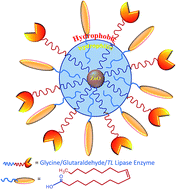
In the present study, we have attempted the wet chemical synthesis of ZnO NPs using glycine as capping agent to restrict the growth. The synthesized ZnO NPs were used as support to covalently immobilize TLL enzyme. It was observed that the microenvironment in the vicinity of the enzyme in terms of lipophilic–lipophobic balance and flexibility of the adopted conformation as well as porosity of the support directly affect the activity.18,33 The coating of zwitterionic glycine molecules functions in two ways. First, they stabilize ZnO NPs by adjusting the surface charge, making the surface hydrophilic. Secondly, they provide sites for glutaraldehyde activation. The glycylimine assembly acts as hydrophobic spacer between ZnO NPs and enzyme. Consequently, the microenvironment in its vicinity is tailored in such a way that the enzyme can be in its high activity state. The activity of the developed immobilized enzyme was evaluated for the esterification of oleic acid with methanol.

2. Experimental

2.1 Materials

Zinc acetate Zn(CH3COO)2 was obtained from Loba chemicals, India. Potassium hydroxide (KOH), glycine (NH2CH2COOH), methanol (CH3OH) were purchased from S.D. Fine Chemicals, Mumbai, India. All the chemicals were AR grade and used without further purification. Freshly prepared aqueous solutions were used for the synthesis of ZnS nanoparticles. Alkaline solution of Thermomyces lanuginosus lipase (TLL, activity-105 U g−1) procured from Aumgene Chemicals Limited, India. Glutaraldehyde was purchased from Merck.

2.2 Synthesis of ZnO nanoparticles

ZnO NPs were synthesized by a co-precipitation method. Methanolic solutions of zinc acetate (40 mL, 0.03 mmol) and glycine (20 mL, 0.04 mmol) were mixed. To this mixture, alcoholic KOH solution (40 mL, 0.13 mmol) was added drop wise and with constant stirring at 8000 rpm at room temperature. The resulting colloidal solution of ZnO NPs was ripened at 70 °C for three days. The solution was centrifuged, washed several times with distilled water then with absolute alcohol to remove any impurities and dried at 60 °C under vacuum for three days.

2.3 Lipase immobilization

Immobilization of lipase on the surface of ZnO NPs was carried out at room temperature. 200 mg of glycine functionalized ZnO NPs were dispersed in 0.5 mL PBS (5 mmol) buffer at 7.7 pH. Subsequently, glutaraldehyde (10 μL) was added and the mixture was stirred for about 4–5 h. Then 0.5 mL native TL lipase (1.675 mg mL−1, determined from protein assay) aqueous solution prepared in 0.5 mL PBS buffer (pH 7.7) was introduced. The mixture was then gently but thoroughly stirred to ensure complete mixing for further 4 h and then centrifuged at 8000 rpm. The solid collected was washed three times with 60 mL (5 mmol, 20 mL for each washing) PBS solution (Scheme 1).
image file: c5ra02249e-s1.tif
Scheme 1 Covalent immobilization of TL lipase enzyme on ZnO nanoparticles.

2.4 Protein estimation

Protein estimation was carried out by Lowry's method with bovine serum albumin as standard.34 It was calculated that on 100 mg of ZnO, 32.6 mg of lipase was loaded.

2.5 Enzyme assay

Lipase activity was assayed using p-nitrophenylpalmitate (p-NPP) as substrate.35 The basis of this assay protocol is the colorimetric estimation of p-NP released as a result of enzymatic hydrolysis of p-NPP at 410 nm. Enzyme solution (0.8375 mg/50 μL) was added to 950 μL of the substrate solution consisting mixture of solution A (50 mL, 5.0 mM p-NPP in 2-propanol) and solution B (900 mL, 100 mM potassium phosphate buffer with pH 7.0, 0.4% Triton X-100 and 0.1% gum arabic), which were freshly prepared before use. The reaction mixture was incubated at 37 °C for 10 min. The reaction was then terminated by adding 1 mL ethanol. The absorbance of the yellow color product p-nitrophenol (p-NP) was measured in spectrophotometer at 410 nm. Enzyme activity and specific activities were calculated as per the following formula,
 
image file: c5ra02249e-t1.tif(1)
where, A, B, C, D and E are μmol of p-NPA released, total volume of the reaction mixture, volume used in spectrophotometric determination, volume of enzyme used in assay and time of incubation respectively. One international unit of lipase activity was defined as the amount of enzyme catalyzing the release of 1 μmol of p-NP per min from p-NPP under the standard assay conditions.36
 
Specific activity (U mg−1) = {enzyme activity (U mL−1)/protein content (mg mL−1)} (2)

2.6 Operational stability of immobilized lipase

2.6.1 Effects of pH on enzyme activity. Lipase activity was measured in different buffers (0.05 M) of pH (5–12) viz. sodium citrate (pH 4.0–6.0), sodium phosphate (pH 7.0–9.0) and glycine–NaOH (pH 10.0–11.0) at 37 °C by incubating the free and immobilized lipase with p-NPP (maintaining other conditions same as mentioned above) for 1 h. The lipase activity was measured by the above standard assay method.35
2.6.2 Effect of temperature on enzyme activity. The optimum temperature of lipase activity was determined by carrying out enzymatic reactions at different temperature (55, 65, 75, 85 and 95 °C) at pH 7.4 by incubating the free and immobilized lipase with p-NPP for 1 h. Subsequently, NaOH (1 N, 1 mL) was added to stop further hydrolysis and then the lipase activity was determined by above mentioned assay method.35
2.6.3 Thermal stability of immobilized enzyme. Thermal stability of free and immobilized lipase was studied at 55, 65 and 75 °C. The stability was studied by collecting the aliquot at different time interval and then lipase activity was determined by standard assay method.35 The stability of the support ZnO/glycine/glutaraldehyde was also studied using differential thermal analysis.

2.7 Esterification reaction

Immobilized TLL on ZnO NPs was used as biocatalyst for esterification of oleic acid with methanol. For the reaction, 100 mg of immobilized lipase was dispersed in 5 mL of petroleum ether at room temperature. To this solution, oleic acid (5.95 mmol), methanol (2.97 mmol) and molecular sieves (1.6 g, 3 Å) were introduced. The temperature of the reaction then gradually raised to 55 °C. After about 10 h of reflux, further methanol (2.97 mmol) was added and the reaction was allowed to continue for about 14 h. Progress of the reaction was monitored on TLC plate. The purity of the product, after the completion of reaction, was determined by HPLC. For 1H, 13C NMR, and FTIR spectral analysis the reaction mixture was passed through column having silica as stationary phase and ethyl acetate:petroleum ether as eluent (Scheme 2).
image file: c5ra02249e-s2.tif
Scheme 2 Esterification of oleic acid (C-18) with methanol in presence of TL lipase enzyme immobilized on ZnO nanoparticles.
2.7.1 Methyl oleate. 1H NMR: (400 MHz, CDCl3) δ(ppm): 5.37 (m, 2H), 3.69 (s, 3H), 2.33 (2H), 2.19–1.70 (m, 4H), 1.62 (m, 2H), 1.47–1.28 (m, 20H), 0.88 (t, 3H). 13C NMR (CDCl3, 100 MHz) δ (ppm): 174.31, 129.98, 129.73, 51.42, 34.09, 31.90, 29.76, 29.68, 29.52, 29.32, 29.15, 29.08, 27.21, 27.15, 24.94, 22.68, 14.16.

2.8 Characterization of synthesized nanoparticles and esterification products

X-ray powder diffraction (XRD) pattern of the ZnO/Gly NPs and ZnO/Gly/glutaraldehyde/enzyme NPs were obtained from X-ray powder diffractometer (Bruker D8 Advance) with Cu Kα radiation, λ = 0.15418 nm. The nanoparticles were dispersed in water, sonicated for 10 minutes, and then UV-visible absorption spectra were recorded by means of Perkin-Elmer Lambda 35 UV-visible spectrophotometer. Photoluminescence (PL) spectra were recorded on a Jasco FP-6300 using xenon lamp as the excitation source at 260 nm. The size and shape of the nanoparticles were studied by means of Transmission Electron Microscopy (TEM, Philips Tecnai 20). A BIC 90 plus (Brookhaven) equipped with 35.0 mW solid state laser operating at 660 nm and an avalanche photodiode detector was used for the measurement of surface charges in term of zeta potential (ξ). All measurements were made at 25 °C in deionized water. Differential scanning calorimetric (DSC) analysis of ZnO/glycine/glutaraldehyde was also carried out using Mettler Toledo DSC 822. For the purpose, the material was heated inside a DSC set-up. The heating rate was 10 °C min−1 from RT to 500 °C in N2 atmosphere. The FTIR (Perkin-Elmer, RX-FTIR) spectra of the samples (biocatalyst and esterification products) were obtained in the range of 400 to 4000 cm−1. The 1H NMR and 13C spectra of the esterification products were recorded on a Bruker Advance 400 MHz spectrometer using TMS as an internal standard in CDCl3. HPLC analysis was carried out by using Shimadzu LC-20AD having C18 column (250 nm × 4.5 μ) and methanol[thin space (1/6-em)]:[thin space (1/6-em)]H2O (80[thin space (1/6-em)]:[thin space (1/6-em)]20 v/v) as mobile phase with a flow rate of 1 mL min−1 for 30 minutes.

3. Results and discussion

3.1 Compositional and morphological studies

The XRD patterns of the as-synthesized glycine functionalized ZnO NPs (ZnO/Gly) are shown in Fig. 1a. The XRD patterns manifest predominant diffraction peaks at 2θ values 31.7, 34.3, 36.2, 47.4, 56.5, 62.7, 66.3, 67.8, 69.0, 74.4 and 76.8. These peaks are well matched with standard JCPDS card no. 89-1397 corresponding to ZnO with hexagonal wurtzite phase. The particle size was calculated using Debye–Scherrer formula37 (D = 0.9λ/β[thin space (1/6-em)]cos[thin space (1/6-em)]θ) and the FWHM (full width at half maximum) value corresponding to the major plane (101), was 40 nm. On glutaraldehyde activation and covalent attachment of lipase on the ZnO/Gly NPs, the XRD peak positions almost remain same with change in intensity. It can be observed (Fig. 1) that on loading enzyme, the intensity of (002) peak increases indicating preferred unidirectional growth. The compactness and clear resolution of the peaks towards lower angles indicate properly ordered and compact enzyme layer on the surface of NPs. Further, the size and shape of ZnO/Gly NPs were studied by TEM analysis. The TEM image of pristine ZnO/Gly NPs shows almost monodispersed spherical particles with an average size 9–16 nm (Fig. 2a). On covalent binding of an enzyme, the size and shape of the NPs almost remains same (Fig. 2b). The surface morphology of the pristine ZnO/Gly NPs was studied by FEG-SEM analysis (Fig. 3). It can be seen from the Fig. 3 that the surface of the NPs is highly porous. The pores and cracks are formed due to agglomeration of NPs on the surface, indicating that the surface is capable to show catalytic activity.
image file: c5ra02249e-f1.tif
Fig. 1 XRD patterns of (a) bulk ZnO nanoparticles (JCPDS card no. 89-1397) (b) glycine functionalized ZnO nanoparticles (c) TL lipase enzyme immobilized ZnO nanoparticles.

image file: c5ra02249e-f2.tif
Fig. 2 TEM images of (A) ZnO/Gly nanoparticles (B) TL enzyme immobilized ZnO/Gly nanoparticles.

image file: c5ra02249e-f3.tif
Fig. 3 FEG-SEM image of glycine functionalized ZnO nanoparticles.

3.2 Optical studies

The quality of the pristine ZnO/Gly NPs was further confirmed using optical studies. As can be seen from Fig. 4 that ZnO/Gly NPs absorb sharply at 371 nm which is blue shifted when compared with bulk ZnO (380 nm). This observation confirms the quantum confinement and nano regime.38 When suspended in ultrapure water and excited at 200 nm, the ZnO/Gly luminesces at 425 nm. It can be observed from the Fig. 5 that virgin enzyme fluoresce at 470 nm and on covalent binding with glutaraldehyde on the surface of ZnO/Gly NPs, it is blue shifted to 360 nm. Haldar et al. explained the phenomena of blue shifting of λmax of enzyme on excitation at a suitable wavelength due to unfavorable interactions of dipole moments of polar solvent molecules with fluorophores of enzyme under excited state.39 This observation may lead to assume the conformational changes in enzyme and the exposure of catalytic hydrophobic triad (Asp–Hys–Ser) in aqueous medium on covalent binding.
image file: c5ra02249e-f4.tif
Fig. 4 UV absorption spectrum of ZnO/Gly nanoparticles.

image file: c5ra02249e-f5.tif
Fig. 5 Photoluminescence spectra of (A) ZnO/glycine nanoparticles (B) free TL enzyme and TL enzyme immobilized ZnO nanoparticles.

3.3 Surface charges

Surface charges on the NPs were studied by zeta potential (ξ) measurement. It gives an idea about the electrostatic charge stabilization during the growth of NPs. From Table 1 it can be seen that pristine ZnO/Gly NPs possess negatively charged surface with ξ value −17.15 mV and on glutaraldehyde activation and enzyme binding the surface charge decrease to −6.12 mV. The emergence of charge on the surface is directly influenced by the presence of counter ions in the medium and mode of crystallization.40 The negative charge on pristine ZnO NPs is due to presence of OH ions in the basic medium. During crystal growth, both OH ions and glycine act as capping agents, however, OH ions are more prone to be adsorbed on the surface of NPs while glycine makes coordination with the surface Zn2+ ions. On glutaraldehyde activation and covalent binding of enzyme, as proposed earlier, the conformational changes in enzyme takes place which increases the hydrophobicity and expel the OH ions or polar water molecules present in the vicinity. However, the polar molecules could not be totally expelled due to surface coordinated hydrophilic glycine molecules. This fact is expressed in term of decrease in ξ value to −6.12.
Table 1 Surface charge analysis of as-synthesized nanoparticles
System Charge, ξ (in mV)
ZnO/glycine −17.15
ZnO/glycine/glutaraldehyde/TLL enzyme −6.12


3.4 FTIR study

To understand the interactions among the ligands and the surface of ZnO NPs, FTIR spectroscopy is one of the best tools. The mode of interaction of carboxylate ions present in an ionic glycine can be confirmed from the vibrational spectroscopy (FTIR). Fig. S1 shows FTIR spectra of native enzyme, ZnO/Gly and ZnO/Gly/glutaraldehyde/enzyme. In FTIR spectra of native enzyme (Fig. S1a), the peak near 1632 cm−1 is amide I band due to C[double bond, length as m-dash]O stretching vibrations, the hump near 1510 cm−1 is amide II band due to N–H bending/C–H stretching vibration, the amide III band at 1222 cm−1 is due to N–H bending vibration. The band at 3430 cm−1 is due to N–H bending and at 1404 cm−1 is resulted from protein side chain COO.41,42 Fig. 6 shows the ways by which carboxylate ion of glycine (at pH 7.7, isoelectric point 6.0) can coordinate to the surface Zn(II) ion either as a unidentate ligand or as a chelating (bidentate fashion) ligand.43–46
image file: c5ra02249e-f6.tif
Fig. 6 Modes of interaction of glycine with the surface of the ZnO nanoparticles (orange balls indicate ZnO nanoparticles, light blue for carbon atoms, red for oxygen atoms, white for hydrogen atoms and blue for nitrogen atom).

This can be detected on the basis of COO stretching vibration frequencies. On the basis of a normal coordinate treatment two fundamental modes of vibrations of carboxylate ion in free acetate form can be observed: one is COO asymmetric stretching mode νas(–COO–) and the other is symmetric stretching mode νs(–COO–). The fundamental frequencies of vibrations for free acetate ion are 1583 and 1422 cm−1 for νas(–COO–) and νs(–COO–) respectively. If carboxylate ligand coordinate with surface Zn(II) in bidentate mode then νas(–COO–) decreases and νs(–COO–) increases from the normal modes in free state and vice versa in case of monodentate mode.47 On comparing Δ(νas(–COO–) − νs(–COO–)) with Δ′(νas(–COO–) − νs(–COO–)), we found Δ > Δ′, (where Δ indicates difference in the absorption bands for free carboxylate ion and Δ′ indicates the same for metal bound carboxylate ion) which suggests bidentate coordination of glycine with Zn(II) ion on the surface of ZnO NPs. On glutaraldehyde activation and enzyme covalent binding, the broad amide peak becomes sharp and blue shifted compared to ZnO/glycine due to high energy peptidal N–H stretching vibrations and at 1440 cm−1 imine stretching vibrations indicating covalent binding of TLL enzyme with glutaraldehyde on the surface of ZnO NPs (Fig. S1C).

It was observed from the previous studies that the catalytic activity of the most of the lipase enzymes is due to Ser–His–Asp/Glu catalytic triad present inside the surface loop having hydrophobic environment. This catalytic triad is not available to the substrates in aqueous medium and under normal conformation of enzyme. However, this hydrophobic catalytic triad can be made available to the substrate by forcing the enzyme to change its conformation. It was proved that at lipid/water interface the microenvironment around the enzyme forces it to change its conformation in such a way that the active sites (triad) expose on the surface and easily available to the substrate.48–51 It may be assumed that by proper tuning of the environment around the bound enzyme its suitable conformation can be locked. The lipophilic–lipophobic balance in vicinity of enzyme plays a key role to achieve the catalytically active conformation. We have designed the enzyme based on the idea that both hydrophilic (in term of zwitterionic glycine around the solid ZnO NPs) and hydrophobic (in term of glutaraldehyde chain) environment mimicking the lipid/water interface available to enzyme which stabilize the catalytically active conformation of enzyme in hydrophobic (organic) medium.

3.5 Operational stability of lipase enzyme

3.5.1 Effect of pH. Fig. 7 shows the effect of pH on lipase activity measured by spectrometric method. It can be observed that the immobilized TLL enzyme shows always higher activity than free form at the pH range 4–13. The free enzyme shows very less activity at pH 4.0 which increases with rise in pH. While immobilized lipase manifest constant increase in activity with rise in pH. It can be observed that enzyme activity increases to 21 from 19 U mL−1 on immobilization at pH 5 while at pH 12 it is increases to 26 from 22.5 U mL−1 of free counterpart. So it can be concluded that both free and bound enzyme show substantial stability at lower pH and it is increases with pH. Higher enzyme activity can be achieved in basic medium. Ortega et al. also reported enhanced stability of lipase at acidic and alkaline pH upon immobilization.52 The increase in stability upon immobilization might be due to multipoint covalent linking between lipase and support, which prevents lipase denaturation in acid or alkaline environments.36,53 Similar results were obtained with the immobilized Candida rugosa lipase on chitosan by Hung et al.54
image file: c5ra02249e-f7.tif
Fig. 7 Effect of pH on hydrolysis of p-NPP at 40 °C.
3.5.2 Effect of temperature. It is a fact that all enzymes denature and show degradation in activity at higher temperatures. It can be observed from the Fig. 8 that the activity of lipase increases three folds on immobilization and maximum activity can be achieved at 55 °C. At 65 °C the immobilized enzyme shows almost same activity which would have been shown by free enzyme at 55 °C i.e. on immobilization the operational stability and activity of the TLL enzyme can be extended to 10 °C. Industrial point of view, the immobilized enzyme shows moderate activity upto 75 °C. It is interesting to note that at 95 °C, both free and immobilized enzyme show some activity on hydrolysis of p-NPP. To explain this, a controlled experiment using only glycine functionalized ZnO nanoparticles (without any type of enzymes) was carried out. Similar kind of p-NPP hydrolysis activity was observed in the range of 90–95 °C. Hence, it can be inferred that this ‘residual’ activity is due to the thermal effect and not to the enzyme activity.
image file: c5ra02249e-f8.tif
Fig. 8 Effect of temperature on hydrolysis of p-NPP at 7.4 pH.
3.5.3 Thermal stability. Based on temperature studies, we have selected 55, 65 and 75 °C to monitor the thermal stability of immobilized lipase (Fig. 9). Both type of enzymes exhibited a similar trend; however, the immobilized lipase is more stable than that of free one. The half-life of the immobilized lipase is much longer than the free lipase at these three temperatures. This study also support our argument that the immobilized lipase shows three folds increase in activity than its free counterpart at 55 °C. It is obvious that with increase in temperature the efficiency of both the enzymes decreases. We adopted a rational approach to design immobilized lipase catalyst. Firstly, ZnO NPs were functionalized by hydrophilic glycine and then hydrophobic glutaraldehyde activation was carried out before binding the enzyme.
image file: c5ra02249e-f9.tif
Fig. 9 Thermal stability of TL lipase at (A) 55, (B) 65 and (C) 75 °C and 7.4 pH.

The stability of resulting assembly (ZnO/Gly/glutaraldehyde) was confirmed from thermal analysis (Fig. 10). Two major weigh losses were observed on TG curve. The first loss (11.0%) occurred at a temperature range between 50 to 110 °C accompanied by an endotherm at 104 °C with a rate of decomposition 0.426 mg min−1 then the curve becomes almost constant up to 400 °C. The horizontal part of the curve between 150 to 400 °C indicates stability of the support throughout the temperature range. After this, 8.1% weigh loss at 458 °C can be observed in term of exotherm in DTA curve with maximum rate of decomposition 0.84 mg min−1. This may be due to degradation of covalent bonding on the surface of ZnO NPs. This is a straightforward confirmation of presence of hydrophilic–hydrophobic environment on the surface.


image file: c5ra02249e-f10.tif
Fig. 10 Thermal analysis of ZnO/Gly/glutaraldehyde system.

3.6 Esterification reaction

Esterification of long chain fatty acid with alcohol is equilibrium dominated reaction. The rate of reaction becomes slow as it approaches towards the equilibrium and also with the rise in the amount of water as by-product in the reaction mixture. Generally, enzymes are involved to carry out reactions/biotransformations in aqueous media. The enzyme activity is greatly hampered by shifting the reaction media from aqueous to non-aqueous. The other factors like resistance of the substrate to diffuse into the immobilized matrix and resistance of the product to diffuse out (diffusional limitations), pH of the medium, flexibility of the enzyme molecules etc. directly affect the efficiency of the enzymatic reactions.50 The problem of diffusional limitation can be solved by inducing hydrophilic–hydrophobic environment on the surface of the support, the substrate (long chain fatty acid) can be attracted and oriented near the hydrophobic chains of supported matrix such that there would be maximum hydrophobic–hydrophobic interactions before undergoing the reactions in enzymatic lids and the products formed can also be diffused by the same mechanism. The advantage of presence of hydrophilic area near the support is that the by-product water can be collected at the beginning and then entrapped in molecular sieves at certain level. Hence, the equilibrium can be shifted continuously to forward direction by ‘pseudo’ removal of water from the reaction mixture (Scheme 2). Hence, the supported enzyme assembly can be viewed as ‘nano reactor’ to which the diffusion of reactants and products continuously takes place with instant entrapment of by-product.

The maximum esterification yield (90%) is obtained in presence of TLL enzyme (20 mg mL−1) with oleic acid (C18) and methanol in the molar ratio of 1[thin space (1/6-em)]:[thin space (1/6-em)]1 in petroleum ether as solvent at 40 °C. On HPLC analysis, the purity of the product was found to be 84% for the first cycle and 82.5 and 81% for the next two consecutive cycles (Fig. S3).

3.7 Leaching study

The stability and reusability of the immobilized enzyme is very important. The leaching study of immobilized enzyme was carried out using n-hexane as washing medium.55 The recycled immobilized TLL enzyme was used 4 consecutive cycles using 20 mL n-hexane for washing each cycle exhibiting almost same activity as in the first cycle, however, after 4th cycle there was fall in the activity and become almost 80% compared to the first cycle.

4. Conclusion

From this study it can be concluded that (1) microenvironment surround the immobilized enzyme plays an important role for activity and favorable enzymatic conformation can be obtained by mimicking the environment existing at lipid/water interface (2) diffusion limitation which is the major factor to restrict the enzyme activity can be controlled by prior designing of the biocatalyst (3) maximum catalytic activity and reusability can be achieved for several cycles by proper covalent binding of the biocatalyst with the solid support and (4) immobilized lipase enzymes can serve as a ‘green catalyst’ for the production of biodiesel. This study may provide a direction to future research to achieve maximum catalytic activity from the enzyme by changing its microenvironment e.g. using ‘spacer’ molecules having different chain length or different amino acid molecules as capping agent around the support altogether with optical activity from the metal oxide support which also may be useful in the area of developing bio-sensors for enzymatic reactions.

Author contributions

The manuscript was written through contributions of all authors. All authors have given approval to the final version of the manuscript.

Abbreviations

TLLThermomyces lanuginosus lipase
FFAFree fatty acids
NPsNanoparticles
HPLCHigh performance liquid chromatography
TLCThin layer chromatography

Acknowledgements

We wish to thank DBT, New Delhi for Research Associateship (RA) to one of us (PM).

References

  1. U. T. Bornscheuer, Angew. Chem., Int. Ed., 2003, 42, 3336 CrossRef CAS PubMed.
  2. M. P. Josè, M. Gloria, F.-L. Gloria, M. Cesar, F.-L. Roberto and M. G. Josè, J. Mol. Catal. B: Enzym., 2002, 19–20, 279 Search PubMed.
  3. T. Boller, C. Meier and S. Menzler, Org. Process Res. Dev., 2002, 6, 509 CrossRef CAS.
  4. R. Dalla-Vechhia, D. Sebrão, M. G. Nascimento and V. Soldi, Process Biochem., 2005, 40, 2677 CrossRef PubMed.
  5. J. S. Crespo, N. Queiroz, M. G. Nascimento and V. Soldi, Process Biochem., 2005, 40, 401 CrossRef PubMed.
  6. M. B. A. Rahman, S. M. Tajudin, M. Z. Hussein, R. N. Z. R. A. Rahman, A. B. Salleh and M. Basri, Appl. Clay Sci., 2005, 29, 111 CrossRef PubMed.
  7. M. I. Kim, H. O. Ham, S.-D. Oh, H. G. Park, H. N. Chang and S.-H. Choi, J. Mol. Catal. B: Enzym., 2006, 39, 62 CrossRef CAS PubMed.
  8. N. Hilal, V. Kochkodan, R. Nigmatullin, V. Goncharuk and L. Al-Khatib, J. Membr. Sci., 2006, 268, 198 CrossRef CAS PubMed.
  9. K. Nagayama, N. Yamasaki and M. Imai, Biochem. Eng. J., 2002, 12, 231 CrossRef CAS.
  10. J.-P. Chen and W.-S. Lin, Enzyme Microb. Technol., 2003, 32, 801 CrossRef CAS.
  11. M. Goto, C. Hatanaka and M. Goto, Biochem. Eng. J., 2005, 24, 91 CrossRef CAS PubMed.
  12. P. Ye, Z.-K. Xu, Z. G. Wang, J. Wu, H. T. Deng and P. Seta, J. Mol. Catal. B: Enzym., 2005, 32, 115 CrossRef CAS PubMed.
  13. G. Jun, D. Lu, Z. Liu and Z. Liu, Biochem. Eng. J., 2009, 44, 53 CrossRef PubMed.
  14. L. Cao, L. Langen and R. A. Sheldon, Curr. Opin. Biotechnol., 2003, 14, 387 CrossRef CAS.
  15. B. Al-Duri and Y. P. Yong, Biochem. Eng. J., 2000, 4, 207 CrossRef CAS.
  16. M. J. J. Litens, K. Q. Le, A. J. J. Straathof, J. A. Jongejan and J. J. Heinen, Biocatal. Biotransform., 2001, 19, 1 CrossRef.
  17. A. Dyal, K. Loos, M. Noto, S. W. Chang, C. Spangnoli, K. V. Shafi, A. Ulman, M. Cowman and R. A. Gross, J. Am. Chem. Soc., 2003, 125, 1684 CrossRef CAS PubMed.
  18. L. Cao, Curr. Opin. Chem. Biol., 2005, 9, 217 CrossRef CAS PubMed.
  19. W. J. E. Beek, M. M. Wienk and J. Raj, Adv. Mater., 2004, 16, 1009 CrossRef CAS.
  20. H. Zeng, W. Cai, P. Liu, X. Xu, H. Zhou, C. Klingshirn and H. Kalt, ACS Nano, 2008, 2, 1661 CrossRef CAS PubMed.
  21. A. Umar, M. M. Rahman, S. H. Kim and Y. B. Hahn, Chem. Commun., 2008, 166 RSC.
  22. P. Dolcet, M. Casarin, C. Maccato, L. Bovo, G. Ischia, S. Gialanella, F. Mancin, E. Tondello and S. J. Gross, Mater. Chem., 2012, 22, 1620 RSC.
  23. X. Shi, W. Gu, B. Li, N. Chen, K. Zhao and Y. Xian, Microchim. Acta, 2014, 181, 1 CrossRef CAS.
  24. M.-K. Liang, M. J. Lima, A. Sola-Rabada, M. J. Roe and C. C. Perry, Chem. Mater., 2014, 26, 4119 CrossRef CAS.
  25. P. Yin, L. Chen, Z. Wang, R. Qu, X. Liu and S. Ren, Bioresour. Technol., 2012, 110, 258 CrossRef CAS PubMed.
  26. E. Christensen and R. L. McCormick, Fuel Process. Technol., 2014, 28, 339 CrossRef PubMed.
  27. B. Abderrahim, M. Mercedes and A. José, Fuel, 2007, 86, 2596 CrossRef PubMed.
  28. V. G. Shashikant and R. Hifjur, Bioresour. Technol., 2006, 97, 379 CrossRef PubMed.
  29. M. J. Haas, Fuel Process. Technol., 2005, 86, 1087 CrossRef CAS PubMed.
  30. L. F. Bautista, G. Vicente, R. Rodríguez and M. Pacheco, Biomass Bioenergy, 2009, 33, 862 CrossRef CAS PubMed.
  31. E. Lotero, Y. Liu, D. E. Lopez, K. Suwannakarn, D. A. Bruce and J. G. Goodwin, Ind. Eng. Chem. Res., 2005, 44, 25353 CrossRef.
  32. A. L. Cardoso, S. C. G. Neves and M. J. da Silva, Energies, 2008, 1, 79 CrossRef CAS PubMed.
  33. X. S. Zhao, X. Y. Bao, W. Guo and F. Y. Lee, Mater. Today, 2006, 9, 32 CrossRef CAS.
  34. O. H. Lowry, N. J. Rosebrough, A. L. Farr and R. J. Randall, J. Biol. Chem., 1951, 193, 265 CAS.
  35. W. Kaewthonga, S. Sirisansaneeyakulb, P. Prasertsana and A. H. Kittikuna, Process Biochem., 2005, 40, 1525 CrossRef PubMed.
  36. D. Kumar, S. Nagar, I. Bhushan, L. Kumar, R. Parshad and V. K. Gupta, J. Mol. Catal. B: Enzym., 2013, 87, 51 CrossRef CAS PubMed.
  37. R. Jenkins and R. L. Snyder, Introduction to X-ray Powder Diffractometry, John Wiley & Sons, NY, 1996 Search PubMed.
  38. R. Rossetti, R. Hull, J. M. Gibson and L. E. Brus, J. Chem. Phys., 1985, 82, 552 CrossRef CAS PubMed.
  39. S. Haldar and A. Chattopadhyay, J. Phys. Chem. B, 2007, 111, 14436 CrossRef CAS PubMed.
  40. N. Dixit and H. P. Soni, Superlattices Microstruct., 2014, 65, 344 CrossRef CAS PubMed.
  41. FTIR spectroscopy of protein structure can be found at http://www.shimadzu.com/an/industry/pharmaceuticallifescience/proteome0205005.htm.
  42. J. Wagh, K. J. Patel, P. Soni, K. Desai, P. Upadhyay and H. P. Soni, Luminescence, 2014 DOI:10.1002/bio.2789 , accepted manuscript.
  43. P. S. Subramanian, P. C. Dave, V. P. Boricha and D. Srinivas, Polyhedron, 1998, 17, 443 CrossRef CAS.
  44. G. B. Deacon and R. J. Philips, Coord. Chem. Rev., 1980, 33, 227 CrossRef CAS.
  45. F. P. Tania, L. Werner, P. W. Smet, G. G. Herman and A. M. Goeminne, Polyhedron, 1999, 18, 1029 CrossRef.
  46. E. Shah and H. P. Soni, RSC Adv., 2013, 3, 17453 RSC.
  47. M. Kakihana, T. Nagumo, M. Okamoto and H. Kakihana, J. Phys. Chem., 1987, 91, 6128 CrossRef CAS.
  48. L. Sarda and P. Desmelle, Biochim. Biophys. Acta, 1958, 30, 513 CrossRef CAS.
  49. D. M. Blow, Nature, 1990, 343, 694 CrossRef CAS PubMed.
  50. M. Cygler and J. D. Schrag, Methods Enzymol., 1997, 284, 3 CAS.
  51. M. A. Abdel-Naby, A. A. Sherif, A. B. El-Tauash and A. T. J. Mankarios, J. Appl. Microbiol., 1999, 87, 108 CrossRef CAS.
  52. N. Ortega, M. P. Mateos, M. C. Pilar and M. D. Busto, J. Agric. Food Chem., 2009, 57, 109 CrossRef CAS PubMed.
  53. Y. Yang, Y. X. Bai, Y. F. Li, L. Lei, Y. J. Chui and C. G. Xia, Process Biochem., 2008, 43, 1179 CrossRef PubMed.
  54. T. C. Hung, R. Giridhar, S. H. Chiou and W. T. Wu, J. Mol. Catal. B: Enzym., 2003, 26, 69 CrossRef CAS.
  55. M. B. A. Rahman, M. Basri, M. L. Hussein, M. N. H. Idris, R. N. Z. R. A. Rahman and A. B. Salleh, Catal. Today, 2004, 93–95, 405 CrossRef CAS PubMed.

Footnote

Electronic supplementary information (ESI) available: FTIR spectra of immobilized enzyme at various stages, 1H NMR, 13C NMR and HPLC analysis of the product methyl oleate. See DOI: 10.1039/c5ra02249e

This journal is © The Royal Society of Chemistry 2015
Click here to see how this site uses Cookies. View our privacy policy here.