
Tandem catalytic conversion of 1-butene and ethene to propene over combined mesoporous W-FDU-12 and MgO catalysts

Wei Xuab, Chao Lina, Huan Liua, Hongbo Yua, Kai Tao*a and Shenghu Zhou*a
aNingbo Institute of Materials Technology and Engineering, Chinese Academy of Sciences, Ningbo, Zhejiang 315201, P. R. China. E-mail: zhoush@nimte.ac.cn; taokai@nimte.ac.cn; Fax: +86 574 86685043; Tel: +86 574 86696927
bCenter of Applied Solid State Chemistry Research, Ningbo University, Ningbo, Zhejiang 315201, P. R. China

Received 2nd February 2015 , Accepted 26th February 2015

First published on 26th February 2015


Abstract

Tungsten substituted mesoporous FDU-12 (W-FDU-12) catalysts were synthesized by a one-pot hydrothermal process using F127 as the structure directing agent. The studies of TEM, SAXS and BET illustrated that the highly ordered mesoporous structure of FDU-12 was maintained in the doped W-FDU-12 samples. XPS studies revealed that a high concentration of W5+ species appeared in doped W-FDU-12 catalysts whereas supported WO3/FDU-12 and WO3/SiO2 catalysts only contained W6+ species. Tandem catalytic conversion of 1-butene and ethene to propene through isomerization of 1-butene to 2-butene and consecutive cross metathesis of 2-butene and ethene in a fixed-bed reactor at different temperatures and atmospheric pressure was used to evaluate the catalytic performance of the W-FDU-12 catalyst, combined with MgO. The catalytic results showed that the doped W-FDU-12 illustrated a superior catalytic performance relative to the supported WO3/FDU-12 and WO3/SiO2 catalysts. The higher metathesis activity of W-FDU-12 catalysts can be ascribed to the good dispersion of W species and the incorporation of W species into the framework of FDU-12, forming a substantial amount of W5+, which was beneficial for the cross metathesis of 2-butene and ethene to propene.

1. Introduction

Recently, there has been a continuously increasing demand for propene owing to the strong demand for polypropene. Several production technologies including propane dehydrogenation,1,2 catalytic cracking of C4+ olefin3,4 and the methanol to olefin process,5 have been developed for propene production. Another effective pathway for propene production is the catalytic cross metathesis reaction of 1-butene (or 2-butene) and ethene.6–8 The most important metathesis catalysts for propene production are those supported rhenium, molybdenum and tungsten oxides.9–13 Among them, the WO3/SiO2 catalysts are of special interest due to lower price and good persistence. The metathesis of butene and ethene to propene using WO3/SiO2 catalysts has been commercialized as the olefin conversion technology (OCT).14,15

The activity and selectivity of olefin metathesis over the supported tungsten oxide are dependent on the physicochemical properties of the supports, tungsten contents, pretreatment conditions and the oxidation states of tungsten species.16–19 A variety of materials have been chosen as supports for W-containing catalyst, such as SiO2, Al2O3, TiO2, and mixed oxides including SiO2–Al2O3, SiO2–TiO2, and so on.20–23 Mazoyer et al.24 prepared W–H/Al2O3 catalysts for metathesis reaction of 2-butene and ethene, and the catalytic results showed that the W–H/Al2O3 catalysts were stable and highly selective to propene formation even at substoichiometric ratios of ethene/2-butene. Hua et al.25 synthesized the titanium–silica molecular sieve supported tungsten oxides for metathesis of butene to propene and pentene. The reported WO3/MTS-9 exhibited excellent catalytic performance, and the tetrahedral and the octahedral polytungsten species were speculated as active sites. These results have illustrated that different types of supports have significant effect on the catalytic performance of the W-containing catalysts.

Compared with the traditional supports, mesoporous silica materials show uniform pores, high BET surface areas, large pore volumes, and narrow pore size distribution, which is beneficial for dispersion of active species and provides rapid transportation channels for reactants and products. Several W doped mesoporous silica materials have been prepared for metathesis reactions.26–29 Bhuiyan et al.27 investigated the catalytic performance of W-SBA-15 and W-MCM-41 catalysts for metathesis of 2-butene to propene, and found that these materials exhibited the higher activity as compared to supported tungsten oxide catalysts. Moreover, W-MCM-41 materials were superior to W-SBA-15 at low reaction temperature because that W-MCM-41 had more number of tetrahedrally coordinated tungsten oxide species. Ramanathan et al.28 prepared the W-KIT-5 by one-step direct hydrothermal synthesis procedure, and the catalysts show high dispersion of W species with the strong interaction between W species and KIT-5 silicate as evidenced by the co-existence of W5+ and W6+ species on the support surface. In our previous work,29 we found that doped W-KIT-6 exhibited much higher catalytic performance than traditional SiO2 supported WO3 catalysts in metathesis of 1-butene and ethene to propene.

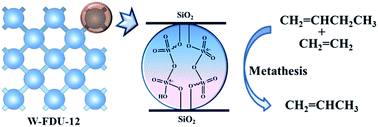
Herein, we first reported W doped mesoporous materials (W-FDU-12) by one-pot synthesis method. The W-FDU-12 combined with MgO was applied in tandem catalytic conversion of 1-butene and ethene to propene. The schematic demonstration of this study was shown in Scheme 1. FDU-12 is a highly ordered large cage-type (12 to 60 nm) mesoporous silica with a cubic Fm[3 with combining macron]m close-packed structure, allowing good accessibility for guest molecules.30–33 In this study, the supported WO3/FDU-12 and WO3/SiO2 catalysts with traditional impregnation method were also synthesized for comparison. Among these materials, the doped W-FDU-12 catalysts exhibited a superior catalytic performance for catalytic conversion of 1-butene and ethene relative to the supported WO3/FDU-12 and WO3/SiO2 catalysts. The results revealed that the catalytic activity and selectivity were strongly dependent on the preparation method of catalysts, and the superior catalytic performance of W-FDU-12 originated from highly dispersed W species and high concentration of W5+ species due to the doping method.


image file: c5ra02066b-s1.tif
Scheme 1 Schematic diagram of the synthesis of doped mesoporous W-FDU-12.

2. Experimental

2.1. Chemicals

Triblock poly(ethylene oxide)–poly(propylene oxide)–poly(ethylene oxide) co-polymer Pluronic F127 (Mav = 12[thin space (1/6-em)]600, EO106PO70EO106) was purchased from Sigma-Aldrich. Tetraethyl orthosilicate (TEOS, 98%) and 1,3,5-trimethylbenzene (TMB, 97%) and MgO powders (99.9%) were purchased from Aladdin. Ammonium metatungstate ((NH4)6H2W12O40·xH2O) was purchased from Kunshan Xingbang W&M Technology Company. Sodium tungstate dihydrate (Na2WO4·2H2O), potassium chloride (KCl) and hydrochloric acid (HCl) were purchased from Shanghai Chemical Reagent Company. Silica gel (surface area 399 m2 g−1) was obtained from Qingdao Haiyang Chemical Co. Ltd. All chemicals were used as received without further purification.

2.2. Catalyst preparation

2.2.1 Preparation of FDU-12. Pluronic F127 (2.00 g), TMB (5.00 g) and KCl (5.00 g) were dissolved in 120 mL of 2 M HCl aqueous solution. The resultant mixture was stirred at 15 °C for 1.0 hour. TEOS (8.32 g) was then dropwise added to the above solution with continuous stirring at 15 °C for another 24 hours. The resulting mixture was transferred into a Telfon-lined autoclave and aged at 100 °C for 24 hours. After cooling to room temperature, the solid was isolated by filtering, washing with water, and drying at 70 °C in an oven. Finally, the dried material was then calcined in a muffle oven at 550 °C for 4 hours with a ramping rate of 1 °C min to remove F127 surfactants to obtain FDU-12.
2.2.2 Preparation of W-FDU-12. Pluronic F127 (2.00 g), TMB (5.00 g) and KCl (5.00 g) were dissolved in 120 mL of 2 M HCl aqueous solution. The resultant mixture was stirred at 15 °C for 1.0 hour. Appropriate amount of sodium tungstate dihydrate dissolved in 10 mL deionized water was then added into the above mixture. The resulting solution was further stirred for 0.5 hours, followed by dropwise addition of 8.32 g of TEOS. The obtained mixture was vigorously stirred at 15 °C for 24 hours, and was then transferred to a Teflon-lined autoclave, followed by heating at 100 °C for another 24 hours. After cooling to room temperature, the yellow powdery products were collected, washed, and calcined by the same procedure of FDU-12. Five catalysts with W contents of 1.2, 2.2, 3.0, 4.0, and 5.2% (determined by inductively coupled plasma (ICP)) were prepared, and denoted as W-FDU-12-1.2%, W-FDU-12-2.2%, W-FDU-12-3.0%, W-FDU-12-4.0% and W-FDU-12-5.2%, respectively. The effect of calcination temperatures was also investigated using the W-FDU-12 with the W content of 4.0 wt%, and the materials obtained at calcination temperatures of 600, 650 and 700 °C were denoted as W-FDU-4.0%-600 (cal.), W-FDU-4.0%-650 (cal.) and W-FDU-4.0%-700 (cal.), respectively.
2.2.3 Preparation of supported WO3/FDU-12 and WO3/SiO2. The supported WO3/FDU-12 and WO3/SiO2 catalysts were prepared by impregnating 2.0 g of the support powders with the aqueous solution containing required amount of ammonium metatungstate in 5 mL deionized water. After drying in an oven at 100 °C overnight, the powders were calcined by the same procedure of FDU-12. The catalysts were denoted as WO3/FDU-12-4.0% and WO3/SiO2-4.0%, where the real loadings of W were 4.0 wt%.

2.3. Catalyst characterization

X-ray diffraction (XRD) measurements were performed on a Bruker D8 Advance X-ray diffractometer using Cu Kα radiation in the 2θ range of 5° to 80°. The average WO3 crystalline sizes were calculated using the half-width at half-height of the most intense peak of the diffraction pattern and the Scherrer equation. Small-angle X-ray scattering (SAXS) patterns were recorded using a Bruker Nanostar U small-angle X-ray scattering instrument with a rotating anode X-ray source and a Vantec-2000 two-dimensional detector. Inductively coupled plasma (ICP-OES) analysis was achieved to obtain the real W loading using Perkin-Elmer OPTIMA 2100 DV optical emission spectroscopy spectrometer. Transmission electron microscopy (TEM) observations were carried out on a JEOL 2100 transmission electron microscope operated at 200 kV. The oxide state of W species were studied by X-ray photoelectron spectroscopy (XPS) using an AXIS ULTRA DLD multifunctional X-ray photoelectron spectroscopy with an Al source. The data processing was performed with CaseXPS software. The infrared (IR) spectra were recorded from 4000–400 cm−1 using a Bruker Tensor 27 spectrometer.

N2 physical adsorption experiments were carried out on a Micrometrics ASAP-2020 M adsorption apparatus. The pore size distributions were obtained by Barrett–Joyner–Halenda (BJH) method. Before the tests, all the samples were degassed under vacuum at 200 °C for 5 hours. Carbon deposition of spent catalysts was measured by a Seiko thermal gravimetric (TG/DTA) 6300 apparatus. The sample was heated from 100 to 900 °C at a heating rate of 10 °C min−1 in an air atmosphere with a gas flow rate of 200 mL min−1.

2.4. Catalytic study

Tandem catalytic conversion of 1-butene and ethene to propene was performed in a fixed-bed reactor (i.d. 10 mm). In a typical test, 1.0 g of catalyst with the size of 20–40 mesh supported by an layer of inert SiO2 beads were placed in the center of the reactor, and 1.2 g MgO with the size of 20–40 mesh were put on the top of the W-contained catalyst layer for the isomerization of 1-butene to 2-butene. An additional layer of inert SiO2 beads covered the layer of MgO. Before catalytic tests, the catalysts were activated in situ at 550 °C for 4 hours in a pure N2 stream with a flow rate of 35 mL min−1 at 0.1 MPa to remove the moisture. After the reactor cooling down to reaction temperatures, ethene and 1-butene were then fed into the system. The catalytic reaction was carried out at the conditions of 400–500 °C, 0.1 MPa, weight hourly space velocity (WHSV, 1-C4H8 + C2H4) of 0.9 h−1 and a 1-butene/ethene molar ratio of 1/2. The products were analyzed by an online gas chromatograph (GC) equipped with a flame ionization detector (FID). The 1-butene conversion and propene selectivity were calculated according to the literatures,29,34 as following:
 
image file: c5ra02066b-t1.tif(1)
 
image file: c5ra02066b-t2.tif(2)
where [C3]n, [1−C4]n and [2−C4]n were the molar fraction of propene, 1-butene and 2-butene in effluent gases, respectively. And [C3]m, [1−C4]m and [2−C4]m were the weight percent of propene, 1-butene and 2-butene in effluent gases, respectively.

3. Results and discussion

TEM images of various samples were displayed in Fig. 1. As seen in Fig. 1a, it clearly showed that this sample had typical FDU-12 cage-like mesostructures. The ordered lattice array over large domains under the TEM observations suggested a uniform, cubic mesostructure (Fm[3 with combining macron]m) without intergrowth.35 The diameter of the cages could be directly measured from the thin edge of the particle and was about 17.5 nm, in good accordance with the N2 adsorption results (see below). As shown in Fig. 1b–d, the well-ordered mesoporous structures were observed in all W-FDU-12 materials. For lower W loading (1.2%, 3.0% and 4.0%) doped catalysts, individual WO3 particles cannot be found due to the incorporation of W species into framework. However, for high W loading catalyst W-FDU-12-5.2%, bulk WO3 aggregations were observed in Fig. 1e. However, the well-ordered mesoporous structure partially disappeared in Fig. 1f for W-FDU-4.0%-700 (cal.), suggesting the collapse of the structure at high calcination temperature. For comparison, TEM images of FDU-12 supported WO3/FDU-12-4.0% catalyst and traditional silica supported WO3/SiO2-4.0% catalyst were present in Fig. 1g and h. For the WO3/FDU-12-4.0% catalyst, it also exhibited the well-ordered array. But, nanosized WO3 particles confined in the channels of FDU-12 with some particles present on the outer surfaces were observed. For the WO3/SiO2-4.0% catalyst, it clearly showed the WO3 was dispersed on the surface of SiO2 support as large agglomerates.
image file: c5ra02066b-f1.tif
Fig. 1 TEM images of (a) FDU-12; (b) W-FDU-12-1.2%; (c) W-FDU-12-3.0%; (d) W-FDU-12-4.0%; (e) W-FDU-12-5.2%; (f) W-FDU-4.0%-700 (cal.); (g) WO3/FDU-12-4.0%; and (h) WO3/SiO2-4.0% catalysts.

In order to investigate the oxidation states of W species in W-containing catalysts, XPS experiments were carried out. Fig. 2 showed XPS spectra of W-FDU-12-4.0%, WO3/FDU-12-4.0%, WO3/SiO2-4.0% and W-FDU-12-4.0%-700 (cal.). The tungsten oxide species in different chemical states from the position of the W4f level was fitted by the curve-fitting procedure according to the theory of Doniach and Sunjic.36 The intensity ratio between the W4f7/2 and W4f5/2 was fixed to 4/3, according to fitting rules.37 Detailed quantitative results from the peak-fitting results of W4f were given in Table 1. As shown in Fig. 2a, the doped W-FDU-12-4.0% catalyst contained two W species. The binding energies of 37.1 eV/35.0 eV and 38.4 eV/36.3 eV were attributed to the binding energies of 4f5/2/4f7/2 of W5+ and W6+, respectively.38 The W5+/W6+ ratio was 80.9/19.1 (4.24). XPS spectra of W-FDU-12 with various W loadings were also measured and the results were present in Fig. S1 and Table S1. All the W-FDU-12 catalysts showed similar spectra (Fig. S1) and contained substantial amount of W5+ (Table S1). The XPS spectra of mesoporous FDU-12 supported WO3/FDU-12-4.0% (Fig. 2b) and traditional silica supported WO3/SiO2-4.0% (Fig. 2c) samples with the same W content only exhibited the highest oxidation state of W6+. According to the literatures,29,39 there were 5 kinds of structure of the tungsten oxide species in the W-doped SBA-15 and W-doped KIT-6 catalysts. Of them, three structures contained W5+ species. W5+ was induced by the strong interaction between W and Si through O bonding in the form of W[double bond, length as m-dash]O–Si for doped W-SBA-15 (ref. 39) and W-KIT-6.29 In the present study, a high concentration of W5+ species in FDU-12 was possibly induced in a similar way. These W5+ species in catalysts may be beneficial to the catalytic performance for the metathesis of ethene and 1-butene to propene. In comparison, on the sample (W-FDU-12-4.0%-700 (cal.)) calcined at 700 °C, the W4f peaks were also fitted with only one W6+ doublet at 38.2 eV and 36.2 eV, as shown in Fig. 2d, indicated that the W species were no longer doped into the framework due to the structure collapse, which was consistent with TEM observation in Fig. 1f.


image file: c5ra02066b-f2.tif
Fig. 2 XPS spectra of (a) W-FDU-12-4.0%; (b) WO3/FDU-12-4.0%; (c) WO3/SiO2-4.0%; and (d) W-FDU-12-4.0%-700 (cal.) catalysts.
Table 1 Binding energies, molar percentages of W6+ and W5+ species and WO3 crystalline sizes in different catalysts
Catalysts Binding energies of W4f (eV) W5+ (%) W6+ (%) The size of WO3 (nm)
W6+4f5/2 W6+4f7/2 W5+4f5/2 W5+4f7/2
W-FDU-12-4.0% 38.4 36.3 37.1 35.0 80.9 19.1 N/A
WO3/FDU-12-4.0% 38.3 36.2 N/A N/A 0 100 34
WO3/SiO2-4.0% 38.3 36.3 N/A N/A 0 100 79
W-FDU-12-4.0%-700 (cal.) 38.2 36.2 N/A N/A 0 100


The N2 adsorption–desorption isotherms of FDU-12 and W-FDU-12 were shown in Fig. 3 (left panel). For all the samples, they exhibited type IV isotherms with broad H1 hysteresis loops, which were typical for large-pore cagelike mesoporous silicas such as FDU-1, KIT-5, SBA-16 and so on.40–42 The sharp capillary condensation feature at relative pressure of 0.45–0.90 (P/P0) indicated the existence of uniform pores in all samples. As discussed the literatures, the delay of nitrogen capillary evaporation at 77 K to the lower pressure limit of hysteresis indicated that the diameters of the pore entrances to the cage-type pores in these mesostructural samples were smaller than 5 nm.43 Table 2 summarized the BET surface areas, pore volumes and mean pore sizes of different samples. The BET surface area of FDU-12 was 717 m2 g−1. When W species was incorporated into the FDU-12 framework, the surface areas of these W-FDU-12 catalysts decreased slightly with increasing the tungsten loading, and reached 549 m2 g−1 for the W-FDU-12-5.2% sample as shown in Table 2. The result confirmed that the doping method could maintain the textural properties of FDU-12 in the final W-FUD-12 catalysts.


image file: c5ra02066b-f3.tif
Fig. 3 N2 adsorption–desorption isotherms (left panel) and pore size distributions (right panel) showing (a) FDU-12; (b) W-FDU-12-1.2%; (c) W-FDU-12-2.2%; (d) W-FDU-12-3.0%; (e) W-FDU-12-4.0%; and (f) W-FDU-12-5.2%.
Table 2 BET surface areas, pore volumes, and pore sizes of FDU-12 and W-contained materials
Catalysts BET surface area (m2 g−1) Pore volume (cm3 g−1) Pore size (nm)
FDU-12 717 0.70 17.6
W-FDU-12-1.2% 631 0.60 18.2
W-FDU-12-2.2% 624 0.61 18.5
W-FDU-12-3.0% 584 0.57 17.6
W-FDU-12-4.0% 582 0.60 17.4
W-FDU-12-5.2% 549 0.62 17.7


The amount of W doped in catalysts affected the formation of the mesoporous matrix and its mesostructure differently. Fig. 4 compared the SAXS spectra of the FDU-12 mesoporous silica and W-contained catalysts, and all exhibited three main peaks, which could be indexed to the 111, 311, and 331 crystal lattices. These peaks reflected an ordered, face-centered cubic (fcc) structure (space group Fm[3 with combining macron]m).30–33 From the SAXS results, there were no significant changes were observed between FDU-12 and doped W-FDU-12, confirming the maintenance of long-range structural order either in FDU-12 support or in doped samples. I was also shown that the W-contained catalysts caused the shift of diffraction peaks to higher q-values in all spectra, indicating a reduction in cavity size for these doped materials.


image file: c5ra02066b-f4.tif
Fig. 4 SAXS patterns of (a) FDU-12; (b) W-FDU-12-1.2%; (c) W-FDU-12-2.2%; (d) W-FDU-12-3.0%; (e) W-FDU-12-4.0%; and (f) W-FDU-12-5.2% catalysts.

The wide-angle X-ray diffraction patterns of FDU-12, doped W-FDU-12, WO3/FDU-12 and WO3/SiO2 samples were shown in Fig. 5. It was observed that there was a broad diffraction in the 2θ range from 15° to 30° for all the samples, which was corresponding to the typical peak of an amorphous silica material. As shown in Fig. 5b–e, there were no obvious WO3 diffractions for all catalysts, which indicated that basically all tungsten was highly dispersed or amorphous phase was formed. When increasing the W content to 5.2% wt%, crystalline WO3 diffractions (PDF-83-0950) appeared as shown in Fig. 5f, which was consistent with the TEM images in Fig. 1e. Fig. 5e, g and h showed the XRD profiles of W-FDU-12-4.0%, W/FDU-12-4.0% and W/SiO2-4.0% with the same W loading of 4.0 wt%. No WO3 diffractions were observed for W-FDU-12-4.0%. To confirm the presence of W species, EDX analysis was performed and the result was present in Fig. S2. As shown in Fig. S2, the signal of W was detected. Combined with XRD and TEM results it was suggested that the W was incorporated into the framework of FDU-12 for W-FDU-12-4.0%. The characteristic peaks at 2θ = 23.1°, 23.6°, and 24.4° corresponding to crystalline tungsten oxide (WO3, P21/n) were observed for supported WO3/FDU-12-4.0% and WO3/SiO2-4.0% catalysts. The average WO3 crystallines were 34 and 79 nm, respectively, suggesting that the crystallite size of FDU-12 based catalysts were smaller than that of conventional silica gel based catalysts. These XRD results revealed that the dispersion of W species decreased in the following sequence: doped W-FDU-12 > supported WO3/FDU-12 > supported WO3/SiO2, which was also confirmed by TEM observation.


image file: c5ra02066b-f5.tif
Fig. 5 Wide-angle XRD profiles of different W containing materials showing (a) FDU-12; (b) W-FDU-12-1.2%; (c) W-FDU-12-2.2%; (d) W-FDU-12-3.0%; (e) W-FDU-12-4.0%; (f) W-FDU-12-5.2%; (g) WO3/FDU-12-4.0%; and (h) WO3/SiO2-4.0%.

The FTIR spectra of the FDU-12 and W-FDU-12 samples were shown in Fig. 6. The characteristics absorption bands centered at 467, 799 and 1082 cm−1 were attributed to the bending modes of bulk Si–O–Si bond, symmetric and antisymmetric stretching vibration bands for the tetrahedral SiO44− structure units. These vibrational bands were usually assigned as δ(Si–O–Si), νs(Si–O–Si) and νas(Si–O–Si) respectively, which accompanied by a progressive increase in intensity when tungsten content increased. The vibration at 966 cm−1 may be attributable to the W–O–Si linkage in the doped W-FDU-12 catalysts, indicating the successful incorporation of tungsten inside the silica framework.44


image file: c5ra02066b-f6.tif
Fig. 6 FTIR spectra of various samples showing (a) FDU-12; (b) W-FDU-12-1.2%; (c) W-FDU-12-2.2%; (d) W-FDU-12-3.0%; (e) W-FDU-12-4.0%; and (f) W-FDU-12-5.2%.

The W-contained catalysts were evaluated for catalytic conversion of 1-butene and ethene to propene. Because the metathesis reactions between olefins were reversible and competitive, a high ratio of ethene to 1-butene was favorable to the conversion of 1-butene into more propene. Industrial process used an ethene/butene ratio of 2/1 to obtain the best catalytic performance. Therefore, the comparison of different catalysts was carried out at the ratio of ethene/1-butene of 2/1. The careful analysis of products suggested that the main products of reaction over all of the W-FDU-12, WO3/FDU-12 and WO3/SiO2 catalysts were propene and 2-butene, only a little of byproduct (less than 0.2%) was found. Hence, the conversion of 1-butene (C1-butene) and the selectivity of propene (Spropene) were used to evaluate the performance of the different catalysts.

As discussed elsewhere, propene was mainly produced by the cross metathesis of 2-butene and ethene.14 Therefore, the MgO was used as isomerization catalyst for conversion of 1-butene to 2-butene during the reaction. The catalytic performance of single MgO or W-FDU-12-4% catalyst was present in Fig. S3. As shown in Fig. S3, only 32% 1-butene was converted and no propene was formed, indicating that the only role of MgO catalyst was isomerization of 1-butene to 2-butene. The 1-butene conversion (about 34%) and propene selectivity (around 11%) were very low, when using single WOx-containing catalyst. This suggested that the isomerization ability of W-FDU-12 was very poor due to neutral nature of FDU-12. In the present work, the reported catalytic performance was a combination of W contained catalysts and MgO. Since W contained catalysts were mixed with the same amount of MgO and the MgO had no contribution to metathesis (propene selectivity), the catalytic performances of W contained catalysts could be compared in this way.

To investigate the influence of the WO3 loading on catalyst activity, doped W-FDU-12 catalysts containing 1.2, 2.2, 3.0, 4.0 and 5.2 wt% of W were prepared. Fig. 7 showed the C1-butene and Spropene for the different W-containing catalysts at the reaction temperature of 450 °C. The W-FDU-12 catalyst with lower W loading of 1.2% showed a poor catalytic performance. The 1-butene conversion and propene selectivity increased with increasing W loading. When the W content increased to 4.0%, the C1-butene and Spropene reached a higher value with 78.8% and 89.9%, respectively. Further increasing the W loading, the catalytic performance exhibited slightly changes, although the molar fraction of W5+ species was less than that of W6+ (Table S1). However, the W loading was high and the absolute amount of W5+ species was large. Therefore, the W-FDU-12-5.2% catalyst showed a high 1-butene conversion and propene selectivity. It should be noted that besides the metathesis, many side-reactions coexisted, such as, oligomerization27 of ethene and/or butene to high molecular weight compound. At low W loading, the metathesis activity of butene and ethene to propene was low, and the oligomerization dominated. Therefore, the catalyst deactivated due to the formation of high molecular weight compound. To examine the effect of reaction temperature on the catalytic performance, W-FDU-12-4.0% catalyst at three different temperatures from 400, 450 and 500 °C was carried out and the results were shown in Fig. S4. It could be seen that the activity of catalyst was affected greatly by reaction temperature. The 1-butene conversion and propene selectivity decreased with time on stream from 77.3% to 45.4% and 89.8% to 49.8% at 400 °C, respectively. As discussed above, many side-reactions coexisted, such as oligomerization of ethene and/or butene to high molecular weight compound. At lower reaction temperature (400 °C), the metathesis active was low and the catalyst deactivated quickly due to the formation of high molecular weight compound. When the reaction temperature increased to 450 °C, the C1-butene and Spropene increased slightly but with a good stability. Further increasing the temperature resulted in slightly improved catalytic performance.


image file: c5ra02066b-f7.tif
Fig. 7 1-Butene conversion (left panel) and propene selectivity (right panel) over W-FDU-12 catalysts with different W loadings. Reaction conditions: T = 450 °C; P = 0.1 MPa; 1-C4H8/C2H4 = 1/2; WHSV (1-C4H8 + C2H4) of 0.9 h−1; W-contained catalyst = 1.0 g.

According to previous results reported in literatures,45 the calcination temperatures affected the nature of tungsten species of W-containing catalysts, which were active in the formation of propene by the metathesis reaction of ethene and butene. So the effect of calcination temperature on catalyst activity of W-FUD-12-4.0% was investigated in this study, and the results were shown in Fig. S5. It can be seen that the calcination temperature from 550 °C to 650 °C had no significant effect on C1-butene and Spropene, which exhibited the similar catalytic performance. When the temperature increased to 700 °C, the W-FDU-4.0%-700 (cal.) sample showed poor catalytic activity due to the disappearance of W5+ species and the collapse of well-ordered mesoporous structure at high calcination temperature, which was also confirmed by the TEM observation in Fig. 1f.

The catalytic performance of 4.0 wt% W-contained catalysts (W-FDU-12-4.0%, WO3/FDU-12-4.0% and WO3/SiO2-4.0%) was present in Fig. 8. The 1-butene conversion and propene selectivity were decreased in the following sequence: doped W-FDU-12 > supported WO3/FDU-12 > supported WO3/SiO2, which was consistent with the catalytic performance of W-containing mesoporous KIT-6 for the metathesis of ethene and 1-butene to propene.29 This phenomenon could be explained that the doping method could maintain the well-ordered mesoporous structure and effectively disperse W species with a high concentration of W5+ species.


image file: c5ra02066b-f8.tif
Fig. 8 1-Butene conversion (left panel) and propene selectivity (right panel) over different 4.0 wt% W-contained catalysts. Reaction conditions: T = 450 °C; P = 0.1 MPa; 1-C4H8/C2H4 = 1/2; WHSV (1-C4H8 + C2H4) of 0.9 h−1; W-contained catalyst = 1.0 g.

To investigate the carbon deposition of used catalysts, thermogravimetric analysis under air atmosphere was performed for the spent W-FDU-12-4.0%, WO3/FDU-12-4.0% and WO3/SiO2-4.0% catalysts after 8 h of reactions. Generally, the weight loss of used catalysts observed in TG study was due to removal of various types of carbon deposition. As shown in Fig. S6, the total weight loss for the spent W-FDU-12-4.0%, WO3/FDU-12-4.0% and WO3/SiO2-4.0% samples were 2.7%, 4.4% and 8.0%, respectively. It was clearly suggested that the FDU-12 based catalysts had the lower carbon formation compared to the SiO2 supported sample during catalytic reactions, and especially the doped W-FDU-12 had the lowest carbon deposition. The coke was caused by high molecular weight compound formed by side reactions. W-FDU-12 showed best metathesis activity and less side-reaction was occurred. Therefore, less coke was formed. TGA results showed the advantage of one-pot synthesized mesoporous W-FDU-12.

4. Conclusions

This study first reported the using large-pore mesoporous silica FDU-12 to synthesize the doped W-FDU-12 catalysts (combined with MgO) for tandem catalytic conversion of 1-butene and ethene to propene through isomerization of 1-butene to 2-butene and consecutive cross metathesis of 2-butene and ethene, and compared with the supported WO3/FDU-12 and WO3/SiO2 catalysts. For doped W-FDU-12, tungsten was successfully incorporated into the framework of mesoporous silica. Cubic three-dimensional mesoporous structure with a high degree of long-range ordering was evident for all tungsten doped catalysts from SAXS, BET and TEM analysis. The XPS results illustrated that W species were incorporated into the FDU-12 framework with a high concentration W5+ species for W-FDU-12. The 1-butene conversion and propene selectivity of doped W-FDU-12 catalyst were much better than those of supported WO3/FDU-12 and WO3/SiO2 catalysts. The doped W-FDU-12 with 4.0 wt% tungsten content exhibited a good catalytic performance with 1-butene conversion and propene selectivity of 78.8% and 89.9%, respectively. The optimal calcination temperature and metathesis reaction temperature were 550 °C and 450 °C, respectively. These results suggested that W-FDU-12 materials had promising application as catalytic materials in tandem catalytic conversion of 1-butene and ethene to propene to product propene through metathesis, and could be extended to other olefin metathesis reactions.

Acknowledgements

K. Tao thanks the financial support from the National Natural Science Foundation of China (Grant no. 51302278). S. Zhou thanks the Ministry of Science and Technology of China (Grant no. 2012DFA40550) for financial supports.

References

  1. J. Pless, B. Bardin, H. Kim, D. Ko, M. Smith, R. Hammond, P. Stair and K. Poeppelmeier, J. Catal., 2004, 223, 419–431 CrossRef CAS PubMed.
  2. L. Liu, Q. Deng, B. Agula, X. Zhao, T. Ren and Z. Yuan, Chem. Commun., 2011, 47, 8334–8336 RSC.
  3. O. Muraza, I. Bakare, T. Tago, K. Konno, T. Taniguchi, A. Al-Amer, Z. Yamani, Y. Nakasaka and T. Masuda, Fuel, 2014, 135, 105–111 CrossRef CAS PubMed.
  4. G. Zhao, J. Teng, Z. Xie, W. Jin, W. Yang, Q. Chen and Y. Tang, J. Catal., 2008, 248, 29–37 CrossRef PubMed.
  5. X. Wang, M. Wen, C. Wang, J. Ding, Y. Sun, Y. Liu and Y. Lu, Chem. Commun., 2014, 50, 6343–6345 RSC.
  6. Y. Chauvin, Angew. Chem., Int. Ed., 2006, 45, 3741–3747 CrossRef CAS PubMed.
  7. E. Mazoyer, K. Szeto, N. Merle, S. Nordic, O. Boyron, J. Basset, M. Taoufik and C. Nicholas, J. Catal., 2013, 301, 1–7 CrossRef CAS PubMed.
  8. T. Hahn, E. Kondratenko and D. Linke, Chem. Commun., 2014, 50, 9060–9063 RSC.
  9. W. Limsangkass, S. Phatanasri, P. Praserthdam, J. Panpranot, W. Jareewatchara, S. Ayudhya and K. Suriye, Catal. Lett., 2013, 143, 919–925 CrossRef CAS PubMed.
  10. D. Zhang, X. Li, S. Liu, S. Huang, X. Zhu, F. Chen, S. Xie and L. Xu, Appl. Catal., A, 2012, 439–440, 171–178 CrossRef CAS PubMed.
  11. C. Lin, K. Tao, H. Yu, D. Hua and S. Zhou, Catal. Sci. Technol., 2014, 4, 4010–4019 CAS.
  12. X. Solans-Monfort, E. Clot, C. Coperet and O. Eisenstein, J. Am. Chem. Soc., 2005, 127, 14015–14025 CrossRef CAS PubMed.
  13. N. Poovarawan, K. Suriye, S. Ayudhya, J. Punpranot, F. Aires and P. Praserthdam, Catal. Lett., 2014, 144, 920–927 CrossRef CAS PubMed.
  14. J. C. Mol, J. Mol. Catal. A: Chem., 2004, 213, 39–45 CrossRef CAS PubMed.
  15. A. Spamer, T. Dube, D. Moodley, C. Van Schalkwyk and J. Botha, Appl. Catal., A, 2003, 255, 133–142 CrossRef CAS.
  16. Z. Cheng and C. Lo, ACS Catal., 2012, 2, 341–349 CrossRef CAS.
  17. X. Yang, R. Gao, W. Dai and K. Fan, J. Phys. Chem. C, 2008, 112, 3819–3826 CAS.
  18. Y. Wang, Q. Chen, W. Yang, Z. Xie, W. Xu and D. Huang, Appl. Catal., A, 2003, 250, 25–37 CrossRef CAS.
  19. S. Huang, F. Chen, S. Liu, Q. Zhu, X. Zhu, W. Xin, Z. Feng, C. Li, Q. Wang and L. Xu, J. Mol. Catal. A: Chem., 2007, 267, 224–233 CrossRef CAS PubMed.
  20. A. Andreini and J. C. Mol, J. Chem. Soc., Faraday Trans. 1, 1985, 81, 1705–1714 RSC.
  21. D. Debecker, M. Stoyanova, U. Rodemerck, F. Colbeau-Justin, C. Boissère, A. Chaumonnot, A. Bonduelle and C. Sanchez, Appl. Catal., A, 2014, 470, 458–466 CrossRef CAS PubMed.
  22. H. Liu, L. Zhang, X. Li, S. Huang, S. Liu, W. Xin, S. Xie and L. Xu, J. Nat. Gas Chem., 2009, 18, 331–336 CrossRef CAS.
  23. D. Hua, S. Chen, G. Yuan, Y. Wang and L. Zhang, Transition Met. Chem., 2011, 36, 245–248 CrossRef CAS.
  24. E. Mazoyer, K. Szeto, N. Merle, J. Thivolle-Cazat, O. Boyron, J. Basset, C. Nicholas and M. Taoufik, J. Mol. Catal. A: Chem., 2014, 385, 125–132 CrossRef CAS PubMed.
  25. D. Hua, S. Chen, G. Yuan, Y. Wang, Q. Zhao, X. Wang and B. Fu, Microporous Mesoporous Mater., 2011, 143, 320–325 CrossRef CAS PubMed.
  26. J. Hu, Y. Wang, L. Chen, R. Richards, W. Yang, Z. Liu and W. Xu, Microporous Mesoporous Mater., 2006, 93, 158–163 CrossRef CAS PubMed.
  27. T. Bhuiyan, P. Arudra, M. Akhtar, A. Aitani, R. Abudawoud, M. Al-Yami and S. Al-Khattaf, Appl. Catal., A, 2013, 467, 224–234 CrossRef CAS PubMed.
  28. A. Pamanathan, R. Maheswari, B. Grady, D. Moore, D. Barich and B. Subramaniam, Microporous Mesoporous Mater., 2013, 175, 43–49 CrossRef PubMed.
  29. B. Hu, H. Liu, K. Tao, C. Xiong and S. Zhou, J. Phys. Chem. C, 2013, 117, 26385–26395 CAS.
  30. W. Li and D. Y. Zhao, Chem. Commun., 2013, 49, 943–946 RSC.
  31. J. Fan, C. Yu, F. Gao, J. Lei, B. Tian, L. Wang, Q. Luo, B. Tu, W. Zhou and D. Zhao, Angew. Chem., Int. Ed., 2003, 42, 3146–3150 CrossRef CAS PubMed.
  32. J. Liu, G. Lan, J. Peng, Y. Li, C. Li and Q. Yang, Chem. Commun., 2013, 49, 9558–9560 RSC.
  33. L. Cao and M. Kruk, RSC Adv., 2014, 4, 331–339 RSC.
  34. S. Huang, S. Liu, W. Xin, J. Bai, S. Xie, Q. Wang and L. Xu, J. Mol. Catal. A: Chem., 2005, 226, 61–68 CrossRef CAS PubMed.
  35. M. Kruk and C. Hui, J. Am. Chem. Soc., 2008, 130, 1528–1529 CrossRef CAS PubMed.
  36. S. Doniach and M. Sunjic, J. Phys. C: Solid State Phys., 1970, 3, 285–291 CrossRef CAS.
  37. S. Jeon and K. Yong, J. Mater. Res., 2008, 23, 1320–1326 CrossRef CAS.
  38. X. Yang, W. Dai, R. Gao and K. Fan, J. Catal., 2007, 249, 278–288 CrossRef CAS PubMed.
  39. X. Yang, R. Gao, W. Dai and K. Fan, J. Phys. Chem. C, 2008, 112, 3819–3826 CAS.
  40. D. Zhao, J. Feng, Q. Huo, N. Melosh, G. Fredrichson, B. Chmelka and G. Stucky, Science, 1998, 279, 548–552 CrossRef CAS.
  41. J. Matos, M. Kruk, L. Mercuri, M. Jaroniec, L. Zhao, T. Kamiyama, O. Terasaki, T. Pinnavaia and Y. Liu, J. Am. Chem. Soc., 2003, 125, 821–829 CrossRef CAS PubMed.
  42. F. Kleitz, D. Liu, G. Anilkumar, I. Park, L. Solovyov, A. Shmakov and R. Ryoo, J. Phys. Chem. B, 2003, 107, 14296–14300 CrossRef CAS.
  43. J. Fan, C. Yu, J. Lei, Q. Zhang, T. Li, B. Tu, W. Zhou and D. Zhao, J. Am. Chem. Soc., 2005, 127, 10794–10795 CrossRef CAS PubMed.
  44. Z. Zhang, J. Suo, X. Zhang and S. Li, Appl. Catal., A, 1999, 179, 11–19 CrossRef CAS.
  45. S. Chaemchuen, S. Phatanasri, F. Verpoort, N. Sea-ma and K. Suriye, Kinet. Catal., 2012, 53, 247–252 CrossRef CAS.

Footnote

Electronic supplementary information (ESI) available. See DOI: 10.1039/c5ra02066b

This journal is © The Royal Society of Chemistry 2015
Click here to see how this site uses Cookies. View our privacy policy here.