DOI:
10.1039/C5RA01971K
(Paper)
RSC Adv., 2015,
5, 33356-33363
Modification of PEG-b-PCL block copolymer with high melting temperature by the enhancement of POSS crystal and ordered phase structure
Received
1st February 2015
, Accepted 23rd March 2015
First published on 23rd March 2015
Abstract
Alkyne-functionalized polyhedral oligomeric silsesquioxane was successfully prepared using the commercially available propargylic acid precursor through DCC coupling, and it was further used to modify PEG-b-PCL via click chemistry, resulting in a successful synthesis of POSS grafted PEG-b-PCL block copolymer. The structures of the samples were comprehensively confirmed by FTIR, 1H NMR, GPC and electrospray ionization mass spectrometry (ESI-MS). The thermal properties of the polymers were investigated via DSC. The copolymers with grafted POSS showed excellent thermal properties with an increase of approximately 100 °C in melting temperature compared with the neat PEG-b-PCL. Furthermore, the side group POSS with high crystallinity inducing ability acted as a physical crosslinking point and a thermal enhancement agent and effectively induced the ordered phase separation, giving rise to nanostructures with high parallelism and a smooth interface.
1. Introduction
Biodegradable and biocompatible aliphatic polyesters, such as poly (ε-caprolactone) (PCL), poly (lactic acid) (PLA), poly (glycolic acid) (PGA), and their copolymer and blends have received worldwide attention for their potential applications in biomedical and environmentally friendly materials.1 In particular, micelles formed from block copolymers that contain PEG and PCL segments are widely applied in the design of drug delivery systems because the hydrophilic PEG block is biocompatible and the hydrophobic PCL block is biodegradable.2–4
There are several methods to synthesize PCL with a lower reaction temperature using a different initiator system or catalyst such as zinc bis[bis(trimethylsilyl) amide],4 triethylaluminum,5 calcium catalyst and methane sulfonic acid.6 However, the traditional approach7–9 that has been adopted most widely is using PEG as the macro initiator and stannous ion as the catalyst, giving rise to PEG-b-PCL copolymer. Stannous ion has the advantage of synthesizing a polymer with high yields and high molecular weights.10 In addition, PEG-b-PCL copolymer can be developed by attaching attractive functional groups, for example, S. Lenoir, et al.11,12 and K. Sripha13 systematically reported the synthesis and modification of PEG-b-PCL by ring opening polymerization (ROP) via α-chloro-ε-caprolactone. They allowed the Cl element to attach on the PCL side groups, which could lead to further side group modification, such as nicotinic acid, p-amino benzoic acid (PABA),14 phthaloyl tryptophan,13 and propargyl benzoate,15 for their use in novel drug delivery systems. However, all the grafted copolymers had melting temperatures lower than 40 °C, which limits the applications of the polymer. To the best of our knowledge, improvement of the thermal performance of PEG-b-PCL has been rarely reported.
In addition, polyhedral oligomeric silsesquioxane (POSS), known as a hybrid inorganic–organic monomer, and a well-defined spherosilicate polyhedral molecule with a typical composition of R8Si8O12 or R*R7Si8O12, will offer chemical versatility to the polymers16 and control the crystallinity of the polymer matrix.17,18 Several reports have established the modification of PEG-b-PCL via POSS. For example, Chan et al.19 synthesized a series of organic–inorganic hybrid star PCLs using Octakis (3-hydroxypropyl-dimethylsiloxy) octasilsesquioxane (OHPS) as the initiator. P. T. Mather et al.20 prepared well-defined POSS-initiated telechelics via ROP and used them to prepare photo-cured networks. Zheng et al.21 synthesized a novel organic–inorganic amphiphile POSS-capped PCL, which was incorporated into epoxy resin to prepare organic–inorganic hybrid thermosets.
Overall, the POSS-incorporated polymers showed an increase in heat22 and oxidative resistance.16,23 In addition, the utilization of chemoselective click chemistry allowed the preparation of well-defined macromolecules with complex compositions and architectures.24 In this study, we prepared alkyne-functionalized POSS through DCC coupling, and used the POSS to modify PEG-b-PCL by click chemistry, giving rise to a poly (ethylene glycol)-b-poly (ε-caprolactone)-(poly (ε-caprolactone)-g-POSS) (PEG-b-PCL-b-(PCL-g-POSS)) block copolymer. It was expected that the thermal properties, especially the melting temperature, would be enhanced remarkably (Scheme 1).
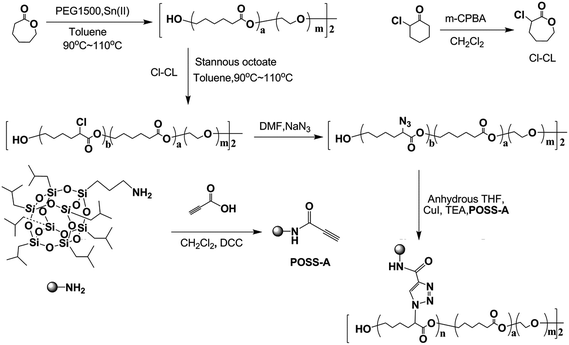 |
| | Scheme 1 Strategy for the chemical modification and grafting “POSS” of PEG-b-PCL by click chemistry. | |
2. Experimental
2.1. Materials
ε-Caprolactone (ε-CL, Alfa Aesar) was purified by toluene azeotropic distillation (50 g per 100 mL) using a Dean–Stark apparatus for 2 days. PEG1500 (Mn = 1730 g mol−1, Alfa Aesar) was dried in a vacuum oven for 48 h at 95 °C. Tetrahydrofuran (THF), dichloromethane (DCM) and toluene were purified by distillation over CaH2. Tin(II)-2-ethylhexanoate, 96% (Alfa Aesar); 3-chloroperoxybenzoic acid (75%) (Alfa Aesar); propiolic acid, 98+% (Alfa Aesar); aminopropylisobutyl POSS (Hybrid Plastics): 2-chlorocyclohexanone, 97% (Alfa Aesar); cuprous iodide (CuI), 99% (Alfa Aesar); and N,N′-dicyclohexylcarbodiimide, 99% (Alfa Aesar) were used as received. Other solvents such as triethanolamine (TEA) and sodium azide were obtained from Beijing Chemical works.
2.2. Characterization
1H NMR spectra were recorded in CDCl3 at 400 MHz in the AV400 (BRUKER) at 25 °C with deuterium solvents and TMS as an internal reference. Electrospray ionization mass spectrometry (ESI-MS) was performed with UPLC-Q-Tof-MS (WATERS) using CH3OH as a solvent. Fourier transform infrared (FTIR) spectra were recorded with a Bruker Tensor-27 Fourier transform infrared spectrometer using the KBr disk method. Gel permeation chromatography (GPC) was performed (Water 1515, Isocratic HPLC Pump and Water 2414 Refractive index Detector) to obtain the molecular weight and molecular weight polydispersity index (PDI) of all types of the polymers at room temperature. THF was used as the mobile phase with a flow rate of 1.0 mL min−1 and column temperature at 35 °C, and monodisperse polystyrene standard samples were used for calibration. The number average molecular weight (Mn) of PEG measured by GPC was 1708 g mol−1. Differential scanning calorimetry (DSC) was performed using a DSC-200PC (NETZSCH). The X-ray diffraction (XRD) data of the triblock copolymers were recorded with a BRUKER D8 ADVANCE diffractometer using Cu Kα radiation from 5° to 60° at room temperature. Transmission electron microscopy (TEM) was performed with a Tecnai G220 (FEI) microscope.
2.3. Synthesis route
2.3.1. The synthesis of PEG-b-PCL. Poly (ethylene glycol)-b-poly (ε-caprolactone) (PEG-b-PCL) block copolymer was synthesized by the ROP of ε-CL using PEG as the macro initiator and stannous ion as the catalyst.5,7 Briefly, 2.0 g PEG and 8.0 g ε-CL (16 mL) were weighed in an eggplant-shaped reaction flask. Then, 0.2–1 wt% of stannous ion was dropped into the mixture and degassed by connecting a vacuum pump for 30 min. The flask was immersed in an oil bath at 90–110 °C with magnetic stirring for 24 h. The product was precipitated using ether or methanol (400 mL). After filtration and drying in a vacuum oven at 40 °C for 24 h, white crystals were obtained. Purification was as follows: the solids were dissolved in CHCl3 (15 mL), and then put in 20 equiv. of n-hexane. After drying at 50 °C for 24 h, 9.1 g of a white solid was obtained (91% yield). The polymer showed good solubility in many organic solvents, such as THF, acetone, N,N-dimethylformamide (DMF), ethyl acetate, and chloroform. The only difference on comparing bulk polymerization with the solution method was that the reaction temperature could be 90 °C to 140 °C without solvent. FTIR (cm−1, KBr window): 3438.93 (–OH), 2946.07–2867.24 (–CH2–CH2–), 1726.17 (C![[double bond, length as m-dash]](https://www.rsc.org/images/entities/char_e001.gif) O), 1189.11 (C–O–C). 1H NMR in CDCl3 (ppm): δ 4.245 (t, J = 4.85 Hz, –OCH2CH2O(CO)–), δ 4.081 (t, J = 6.70 Hz, –CH2CH2O (CO)–), δ 3.665 (s, –OCH2CH2–), δ 2.327 (t, J = 7.52 Hz, –O(CO)–CH2CH2–), δ 1.711–1.628 (m, –O(CO)–CH2CH2–), δ 1.441–1.365 (m, –CH2CH2CH2–).
O), 1189.11 (C–O–C). 1H NMR in CDCl3 (ppm): δ 4.245 (t, J = 4.85 Hz, –OCH2CH2O(CO)–), δ 4.081 (t, J = 6.70 Hz, –CH2CH2O (CO)–), δ 3.665 (s, –OCH2CH2–), δ 2.327 (t, J = 7.52 Hz, –O(CO)–CH2CH2–), δ 1.711–1.628 (m, –O(CO)–CH2CH2–), δ 1.441–1.365 (m, –CH2CH2CH2–).
2.3.2. Baeyer–Villiger oxidation of α-chlorocyclohexanone. The monomer was synthesized using the similar procedure as reported earlier.11,12,25 3-Chloroperoxybenzoic acid (18.01 g, 75%) with 100 mL DCM was directly mixed with 9.14 g α-chlorocyclohexanone. Stirring was continued for additional 96 h at room temperature. The reaction flask was cooled to below 0 °C for 3 h. After filtration, the solution was washed three times with an aqueous solution of NaHCO3/NaHSO3, and then with water to remove all the inorganic salts. After drying over MgSO4, the organic layer was purified by column chromatography on silica gel with the mobile phase hexane![[thin space (1/6-em)]](https://www.rsc.org/images/entities/char_2009.gif) :EtOAc = 3:1 (TLC RF ∼ 0.3). The evaporation of the solvent at 35 °C yielded 8.10 g (79.1% yield) of α-chloro-ε-caprolactone (Cl-ε-CL). FTIR (KBr window) (cm−1): 2942.97, 2867.88 (–CH2–), 1750.67 (CO), 1157.50 (–CO–O), 571.74 (C–Cl). 1H NMR in CDCl3 (ppm): δ 4.727–4.761 (m, –CH2–ClCH–(CO)–), δ 4.439–4.471 (m, –ClCH–(CO)–O–CH2–), δ 4.172 (s, –ClCH–(CO)–O–CH2–), δ 1.739–1.765 (m, –CH2CH2CH2–), δ 1.910–1.992 (m, –CH2CH2–O–), δ 2.045–2.070 (m, –CH2–ClCH–(CO)–). ES+-MS (CH3OH): calculated 148.5, found 148.9 (M + H)+.
:EtOAc = 3:1 (TLC RF ∼ 0.3). The evaporation of the solvent at 35 °C yielded 8.10 g (79.1% yield) of α-chloro-ε-caprolactone (Cl-ε-CL). FTIR (KBr window) (cm−1): 2942.97, 2867.88 (–CH2–), 1750.67 (CO), 1157.50 (–CO–O), 571.74 (C–Cl). 1H NMR in CDCl3 (ppm): δ 4.727–4.761 (m, –CH2–ClCH–(CO)–), δ 4.439–4.471 (m, –ClCH–(CO)–O–CH2–), δ 4.172 (s, –ClCH–(CO)–O–CH2–), δ 1.739–1.765 (m, –CH2CH2CH2–), δ 1.910–1.992 (m, –CH2CH2–O–), δ 2.045–2.070 (m, –CH2–ClCH–(CO)–). ES+-MS (CH3OH): calculated 148.5, found 148.9 (M + H)+.
2.3.3. The synthesis of PEG-b-PCL-b-(PCL-g-Cl). PEG-b-PCL-b-(PCL-g-Cl) triblock copolymer was synthesized by the ROP of Cl-ε-CL using PEG-b-PCL (2200 g mol−1, PDI = 1.12) diols as the macro initiator and stannous ion as the catalyst. PEG-b-PCL (3.63 g) and Cl-ε-CL (1.80 g) were weighed in an eggplant-shaped reaction flask. Then, 4 drops of stannous ion and 10 mL toluene were added into the mixture. The mixture was degassed by the same method as the previous step. The flask was immersed in an oil bath at 90 °C with magnetic stirring for 48 h. The product was precipitated using n-hexane (200 mL). After filtration and drying in a vacuum oven at 35 °C for 48 h, 4.68 g of a soil yellow oil was obtained with 86.2% yield. FTIR (cm−1, KBr window): 3439.97 (–OH), 2945.34–2866.84 (–CH2–CH2–), 1725.98 (CO), 1192.04 (C–O–C). 1H NMR in CDCl3 (ppm): δ 4.282–4.238 (m, –ClCH–), δ 4.226–4.145 (m, –CHCl–(CO)–OCH2–), δ 4.065 (t, J = 6.67 Hz, –CH2–(CO)–OCH2–), δ 3.57 (s, –OCH2CH2O–), δ 2.22 (t, J = 7.54, –CH2CH2(CO)–O–).
2.3.4. The synthesis of PEG-b-PCL-b-(PCL-g-N3). PEG-b-PCL-b-(PCL-g-Cl) (Mn = 2970 g mol−1) 4.68 g was dissolved in 20 mL DMF, and sodium azide (0.6 g) was added into the system. After reaction for 24 h at 20 °C, the salt was removed by centrifugation (9000 rpm at 25 °C for 10 min), and the liquid was added into 200 mL of n-hexane. After drying at room temperature for 48 h, 4.38 g brown oil was obtained with 89.2% yield. FTIR (cm−1, KBr window): 3440.86 (–OH), 2946.06–2867.13 (–CH2–CH2–), 2108.01 (–N3), 1726.20 (CO), 1191.22 (C–O–C). 1H NMR in CDCl3 (ppm): δ 4.21 (t, J = 6.62 Hz, –(CO)–OCH2CH2CH2CH2CH2–), δ 4.08 (t, J = 6.67 Hz, –(CO) OCH2CH2CH2CH2CHN3–), δ 3.85 (q, J = 5.09 Hz, –N3CH–), δ 3.669 (s, –OCH2CH2O–), δ 2.326 (t, J = 7.50 Hz, –CH2CH2(CO)–O–).
2.3.5. The synthesis of alkyne-functional POSS. 2-Propynoic acid (0.2 mL, 3.25 mmol) was added at 0 °C to a solution of DCC (0.8 g, 3.9 mmol, 1.2 equiv.) in 25 mL of dichloromethane, which was stirred. After 30 min, aminopropylisobutyl POSS dissolved in 5 mL dichloromethane was added drop wise and the resulting mixture was stirred for 1 h at 0 °C. The temperature of the mixture was allowed to rise to 20 °C and stirred for an additional 10 h. The completion of the reaction was monitored via TLC, after which the mixture was filtered, and the filtrate was concentrated to afford a crude product. The product was purified via column chromatography using the gradient n-hexane/ethyl acetate (3:1 TLC RF ∼ 0.45). A yellow solid was isolated. The solid was dissolved in hexane, suspended in CH3CN and after filtration, dried and recrystallized to afford 5.6 g (65%) of a light yellow powder. FTIR (cm−1, KBr window): 3295.58, 2114.28 (–C![[triple bond, length as m-dash]](https://www.rsc.org/images/entities/char_e002.gif) H), 2956.65–2872.25 (–CH2CH2–), 1729.49, 1635.62, 1539.76 (–CONH–), 1465.66 (C–NH), 1103.48 (Si–O–Si). 1H NMR in CDCl3 (ppm): δ 5.898 (s, –CONH–), δ 3.33 (q, J = 6.76 Hz, –CH2NHCO–), δ 2.784 (s, –CH), δ 1.929–1.822 (m, –CH2CH (CH3)2), δ 1.697–1.621 (m, –CH2CH2CH2NH–), δ 0.992–0.972 (q, –CH3), 0.644–0.617 (q, –CH2CH(CH3)2). MS in CH3OH: found, 926.3165 [M + H]+, 948.2988 [M + Na]+, 964.2729 [M + K]+.
H), 2956.65–2872.25 (–CH2CH2–), 1729.49, 1635.62, 1539.76 (–CONH–), 1465.66 (C–NH), 1103.48 (Si–O–Si). 1H NMR in CDCl3 (ppm): δ 5.898 (s, –CONH–), δ 3.33 (q, J = 6.76 Hz, –CH2NHCO–), δ 2.784 (s, –CH), δ 1.929–1.822 (m, –CH2CH (CH3)2), δ 1.697–1.621 (m, –CH2CH2CH2NH–), δ 0.992–0.972 (q, –CH3), 0.644–0.617 (q, –CH2CH(CH3)2). MS in CH3OH: found, 926.3165 [M + H]+, 948.2988 [M + Na]+, 964.2729 [M + K]+.
2.3.6. The synthesis of PEG-b-PCL-b-(PCL-g-POSS) by click chemistry. PEG-b-PCL-b-(PCL-g-N3) (0.90 g) was transferred into an anhydrous THF (10 mL) containing glass reactor. 0.5 g alkyne-functional POSS, 0.1 equivalent of CuI, and 0.1 equivalent of TEA were then added to the mixture. The solution was stirred at 40 °C for 20 h under a N2 atmosphere. The salt was removed by centrifugation (9000 rpm at 25 °C for 10 min). The polyester was dissolved in hexane, and after precipitation and drying in vacuum at 40 °C for 48 h, 0.6 g of a solid was obtained. FTIR (cm−1, KBr window): 3417.63 (–OH), 2957.38, 2874.89 (–CH2–), 1743.67 (CO), 1662.68 (triazole ring), 1576.97 (–(CO)–NH–), 1465.35 (C–N), 1103.10, 481.46 (Si–O–Si). 1H NMR in CDCl3 (ppm): δ 8.433–8.304 (s, –NH), δ 5.421 (s, N–CH–), δ 3.666 (s, –OCH2CH2O–), δ 3.475–3.461 (m), δ 1.909–1.943 (m), δ 0.983–0.966, δ 0.639–0.612 (POSS).
3. Results and discussion
3.1. Synthesis and characterization of the PEG-b-PCL
The PEG-b-PCL here is the PCL diols with two hydroxyl end groups synthesized via ROP of ε-caprolactone with PEG1500. It is found that the ROP reaction can take place in a wide temperature range from 90 °C to 140 °C by bulk polymerization. We obtained PEG-b-PCL, white crystals, with a high yield (>90%) and low PDI (Table 1). The mechanism of the reaction is that of coordination polymerization.9 The optimum reaction conditions in our study were the use of 0.5–1 wt% stannous ion at 120 °C. Moreover, the solvents for precipitation consisted of n-hexane, cyclohexane, methanol and anhydrous ethyl ether, and all of them provided good crystallization conditions for the products. Fig. 1(a) shows a typical 1H NMR spectrum of PEG-b-PCL block copolymer in CDCl3. The peak f at 4.30 ppm is attributed to methylene protons of the PCL–CO–OCH2–CH2–O–PEG segment, which indicates the successful synthesis of PEG-b-PCL.
Table 1 DSC, GPC of PCL-b-PEG and the grafted copolymers
| Sample |
Mn,NMRa (g mol−1) |
Mnb (g mol−1) |
PDIb |
Tgc (mid.)/°C |
Tmc/°C |
ΔHcc (J g−1) |
ΔHmc (J g−1) |
| Determined by 1H NMR spectroscopy. Obtained from GPC. Obtained from DSC. |
| PEG |
— |
1730 |
1.08 |
NF |
52.1 |
NF |
−181.7 |
| PEG-b-PCL-1 |
— |
4840 |
1.18 |
−57.9 |
43.7 |
NF |
−45.46 |
| PEG-b-PCL-2 |
2160 |
2200 |
1.12 |
−59.6 |
45.2 |
NF |
−117.8 |
| PEG-b-PCL-b-(PCL-g-Cl)-1 |
10870 |
5800 |
1.20 |
−56.6 |
31.9 |
46.57 |
−40.33 |
| PEG-b-PCL-b-(PCL-g-Cl)-2 |
2770 |
2970 |
1.08 |
−57.1 |
27.6 |
57.53 |
−67.62 |
| PEG-b-PCL-b-(PCL-g-N3)-1 |
10990 |
5790 |
1.24 |
−53.9 |
32.6 |
33.47 |
−30.55 |
| PEG-b-PCL-b-(PCL-g-N3)-2 |
2790 |
2950 |
1.31 |
−55.1 |
28.8 |
44.34 |
−54.8 |
| PEG-b-PCL-b-(PCL-g-POSS) |
6470 |
4250 |
1.38 |
NF |
153.1 |
NF |
— |
 |
| | Fig. 1 1H NMR of (a) PEG-b-PCL, (b) α-chloro-ε-caprolactone. | |
3.2. Synthesis and characterization of α-chloro-ε-caprolactone
α-Chloro-ε-caprolactone, which is a light yellow liquid at room temperature and freezes to a white crystal when in the refrigerator, degenerates quickly even at a low temperature (∼0 °C) within 10 days. 1H NMR spectra is shown in Fig. 1(b), in which the characteristic peaks a, b, c, d and e of the product and peak x, which is attributed to residual eluent, are marked. The amount of eluent did not influence the polymerization. Importantly, the reaction temperature should be lower than 30 °C. Otherwise, a light yellow oil that is insoluble in DCM will be produced, which would lower the yield. α-Chloro-ε-caprolactone was dried by azeotropic distillation of toluene just before polymerization.
3.3. Synthesis and characterization of alkyne-functional POSS
Alkyne-functionalized POSS is synthesized by amide formation between propiolic acid and aminopropylisobutyl POSS through DCC coupling.26,27 The 1H NMR spectrum of alkyne-functional POSS is shown in Fig. 2(a). The signals at 2.85 ppm and 5.90 ppm are assigned to the alkyne and –CONH– groups, respectively. In addition, the FTIR spectrum also confirms the successful reaction by the peaks at 3295 cm−1 and 2114 cm−1, which are assigned to the stretching vibration and bending vibrations of the alkyne group, respectively. As can be seen from Fig. 2(b), the frequency at 1103 cm−1 is the characteristic of the absorption of Si–O–Si. Based on the 1H NMR, FTIR and ESI-MS (Fig. 2(c)), alkyne-functional POSS was successfully prepared. Moreover, it dissolves in both nonpolar solvents such as n-hexane, and polar solvents such as DMF.
 |
| | Fig. 2 (a) 1H NMR spectra, (b) FTIR and (c) ESI-MS of alkyne-functional POSS. | |
3.4. Characterization of PEG-b-PCL-b-(PCL-g-Cl) and PEG-b-PCL-b-(PCL-g-N3)
The spectral resolutions are displayed in Fig. 3(a) for PEG-b-PCL-b-(PCL-g-Cl) and Fig. 3(b) for PEG-b-PCL-b-(PCL-g-N3). 1H NMR spectrum confirms that all the pendant Cl was transformed into N3. Namely, the resonance peak at 4.30 ppm for the CHCl protons (Fig. 3(a), peak A) disappeared completely, and a new signal at 3.85 ppm for CHN3 protons (Fig. 3(b), peak A) appeared.
 |
| | Fig. 3 1H NMR of (a) PEG-b-PCL-b-(PCL-g-Cl), (b) PEG-b-PCL-b-(PCL-g-N3). | |
3.5. Characterization of PEG-b-PCL-b-(PCL-g-POSS)
Alkyne-functionalized POSS was attached to the backbone through click chemistry using CuI and TEA as catalysts at 35 °C for less than 20 h because of the hydrolysis of PCL in an alkaline environment.14 Fig. 4(a) shows the emergence of characteristic peak at 8.30 ppm (peak G), which is attributed to the methyne triazole ring, and a peak at 5.30 ppm (peak A) corresponds to that of the methyne proton of the caproyl unit adjacent to the triazole ring, which confirms the successful POSS-grafting via click reaction. On the other hand, Fig. 4(b) illustrates the FTIR spectrum of the grafted copolymers, which shows the characteristic absorption of the azide at 2108 cm−1. Based on FTIR spectroscopy, the click reaction was completed after 20 h with the complete disappearance of the azide peak at 2108 cm−1, while the triazole peak14 at 1630 cm−1 is observed. The presence of these peaks confirms the successful grafting of target-moieties. Asymmetric and symmetric stretching vibrations of C–H bonds are observed at 2975 cm−1 and 2919 cm−1; in addition, some other peaks are also marked in Fig. 4(b).
 |
| | Fig. 4 (a) 1H NMR of PEG-b-PCL-b-(PCL-g-POSS), (b) FTIR spectra of (A), PEG-b-PCL-b-(PCL-g-Cl), (B), PEG-b-PCL-b-(PCL-g-N3), and (C), PEG-b-PCL-b-(PCL-g-POSS). | |
3.6. The properties of PEG-b-PCL-b-(PCL-g-POSS)
XRD of the selected copolymers are shown in Fig. 5. As shown in Fig. 5(a), PEG1500 displayed good crystallinity. However, there was no PEG peak in the copolymer when Mn of PEG-b-PCL was 4840 g mol−1, indicating that the PEG segments in the copolymer was amorphous with the increased PCL molecule weight. Moreover, as shown in Fig. 5(b), PEG-b-PCL showed very sharp crystalline reflections at 2θ = 21.4° (4.15 Å) and 23.6° (3.76 Å), corresponding to the (110) and (200) lattice planes of an orthorhombic unit cell of PCL,19 respectively. According to Fig. 5(b), PEG-b-PCL (Mn 11000 g mol−1), PEG and POSS have good crystallinity. The grafting of POSS led to the amorphous structure for both PEG and PCL segments. However, POSS also could be crystalline even after grafting of the copolymer, which is confirmed by the appearance of the peak at 2θ = 8.3° (10.4 Å) in Fig. 5(b).
 |
| | Fig. 5 (a) XRD of PEG-b-PCL with different Mn, (b) XRD of PEG-b-PCL with Mn 11000 g mol−1, PEG1500, PEG-b-PCL-b-(PCL-g-POSS) and alkyne-functional POSS. | |
The phase morphology was further investigated by TEM. The copolymer thin films were prepared by dropping the polymer solution at a concentration of 1 mg mL−1 in THF on the copper grid. The samples were annealed at 25 °C, i.e., considerably higher than the glass transition temperature of the system, under vacuum for 24 h to induce phase separation. As can be seen from Fig. 6(a), the dark phase is assigned to PCL domains because PEG1500 in the copolymer (PEG-b-PCL with Mn 4840 g mol−1) was amorphous, leading to PEG with a lower density than the PCL phase, which was the same for both amorphous and crystalline regions (Fig. 6(c)). In addition, as is well known, POSS was grafted onto the PCL segments and POSS crystals, which are shown in the upper-right corner of Fig. 6(b), accounts for PCL segments being with higher density than that of PEG segments, thus the dark phase here is also assigned to the PCL domains. As illustrated in Fig. 6(d), POSS molecules on the PCL chains possessed a strong interaction and formed nanocrystals (diameter ∼2 nm according to the HRTEM imaging), which acted as physical cross-linking points. This assumption is supported by the POSS crystalline reflections from XRD (Fig. 5(b)). Furthermore, the phase structure of PEG-b-PCL-b-(PCL-g-POSS) (Fig. 6(b) and (d)) shows higher parallelism and a smoother interface than that of PEG-b-PCL (Fig. 6(a) and (c)), indicating that the interaction of POSS molecules induced effective self-assembly of the block copolymer and formed ordered nanophase separation. Because on one side high hydrophobicity of POSS increased the phase separation tendency between PCL and PEG, thus creating a smoother interface; on another side, as shown in Fig. 6(d), POSS were chemically grafted onto the polymer and the strong crystallization ability of POSS would induce intermolecular interactions, thereby inducing the formation of the nanostructure with high parallelism and a smooth interface.
 |
| | Fig. 6 (a) TEM of PEG-b-PCL with Mn = 4840 g mol−1; (b) TEM of PEG-b-PCL-b-(PCL-g-POSS); the upper-right corner of (b) is HRTEM of PEG-b-PCL-b-(PCL-g-POSS); and schematic illustration of (c) PEG-b-PCL, (d) PEG-b-PCL-b-(PCL-g-POSS) forming nanodomains. | |
It can be suspected that the POSS regulatory nano-crystalline phase will affect the properties of the copolymer. Herein, the thermal properties were evaluated by DSC. A typical DSC curve is shown in Fig. 7, which demonstrates that both PEG-b-PCL-b-(PCL-g-Cl) and PEG-b-PCL-b-(PCL-g-N3) have lower melting temperatures than PEG-b-PCL, which is not more than 60 °C (Fig. 7(a)). The covalently side-capped PCL with –Cl or –N3 macromers disrupted the crystallization of PCL, resulting in lower melting temperatures. The appearance of cold crystallization indicates that the modified polymers possess lower crystallization degrees at room temperature but with moderate crystallization ability. Namely, they can still form crystals under a certain thermal field due to the flexibility of the PCL molecular chain. In addition, there was no significant glass transition in sample A compared with that in samples B and C. This is mostly attributed to the high crystallinity, which would restrict the movement of chain segments below the melting point of sample A; in addition, some other data are also listed in Table 1.
 |
| | Fig. 7 (a) DSC curves for copolymers, (A) PEG-b-PCL (Mn ∼ 4800 g mol−1), (B) PEG-b-PCL-b-(PCL-g-Cl) (Mn ∼ 5800 g mol−1), (C) PEG-b-PCL-b-(PCL-g-N3); (b) DSC of the PEG-b-PCL-b-(PCL-g-POSS) with Mn ∼ 4200 g mol−1 compared to the neat PEG-b-PCL (Mn ∼ 4800 g mol−1). | |
As we know, the influence of molecular weight on Tg can be approximately described by the Flory equation:
where
Tg,∞ is the value of
Tg for very high molecular weight, and
K is a constant. Namely, within a certain range,
Tg increased when the molecular weight was increased. Herein, for example,
Tg of PEG-
b-PCL with
Mn ∼ 4840 g mol
−1 was slightly higher than that of PEG-
b-PCL with
Mn ∼ 2200 g mol
−1, as shown in
Table 1.
Tg of the block copolymer increased from −59.6 °C for PEG-
b-PCL (2200 g mol
−1) to −55.1 °C for PEG-
b-PCL-
b-(PCL-
g-N
3) (2950 g mol
−1), and the melting temperature decreased from 43.7 °C for PEG-
b-PCL to 32.6 °C for PEG-
b-PCL-
b-(PCL-
g-N
3). The chemical regularity of the copolymer chain was destructed by the incorporated –N
3, leading to a reduction in crystallinity. However, what is paradoxical is the melting temperature was improved significantly (with an increase of about 100 °C) after the introduction of POSS. As we know, PEG and PCL blocks are amorphous based on XRD analysis; thus, the melting temperature at 153.1 °C (
Fig. 7(b)) is attributed to POSS nano crystals, which are grafted onto the PCL chains. Herein, POSS nano crystals act as physical crosslinking points and a thermal enhancement agent.
4. Conclusion
Alkyne-functionalized POSS was successfully synthesized using acid and aminopropylisobutyl POSS through DCC coupling. The grafting POSS along with PEG-b-PCL with an increase of approximately 100 °C in melting temperature were successfully achieved via click chemistry. In addition, strong crystallization ability of POSS would induce intermolecular interactions, which accounts for the formation of orderliness phase structure. Simultaneously, POSS crystals acted as physical crosslinking points and the thermal enhancement agent supported the melting properties of the copolymer.
Acknowledgements
This research was supported by the National Natural Science Foundation of China (Grants: 51273017), and Polymer Chemistry and Physics, Beijing Municipal Education Commission (BMEC, no. XK100100640).
Notes and references
- K. Letchford and H. M. Burt, Mol. Pharm., 2011, 9, 248 CrossRef PubMed.
- X. Zhu, M. Fryd, B. D. Tran, M. A. Ilies and B. B. Wayland, Macromolecules, 2012, 45, 660 CrossRef CAS.
- N. Zheng, W. Dai, W. Du, H. Zhang, L. Lei, H. Zhang, X. Wang, J. Wang, X. Zhang, J. Gao and Q. Zhang, Mol. Pharm., 2012, 9(5), 1175 CAS.
- R. Yang, F. Meng, S. Ma, F. Huang, H. Liu and Z. Zhong, Biomacromolecules, 2011, 12, 3047 CrossRef CAS PubMed.
- D. Wang, Y. Su, C. Jin, B. Zhu, Y. Pang, L. Zhu, J. Liu, C. Tu, D. Yan and X. Zhu, Biomacromolecules, 2011, 12, 1370 CrossRef CAS PubMed.
- J. M. Ren, Q. Fu, A. Blencowe and G. G. Qiao, ACS Macro Lett., 2012, 1, 681 CrossRef CAS.
- M. J. Hwang, J. M. Suh, Y. H. Bae, S. W. Kim and B. Jeong, Biomacromolecules, 2005, 6, 885 CrossRef CAS PubMed.
- F. Wang, T. K. Bronich, A. V. Kabanov, R. D. Rauh and J. Roovers, Bioconjugate Chem., 2005, 16, 397 CrossRef CAS PubMed.
- S. Zhao, L. Zhang and D. Ma, J. Phys. Chem. B, 2006, 110, 12225 CrossRef CAS PubMed.
- S. M. Li, I. Rashkov, J. L. Espartero, N. Manolova and M. Vert, Macromolecules, 1996, 29, 57 CrossRef CAS.
- S. Lenoir, R. Riva, X. Lou, C. Detrembleur and P. Lecomte, Macromolecules, 2004, 37, 4055 CrossRef CAS.
- S. Rana, H. J. Yoo, J. W. Cho, B. C. Chun and J. S. Park, J. Appl. Polym. Sci., 2011, 119, 31 CrossRef CAS.
- J. Suksiriworapong, K. Sripha and V. B. Junyaprasert, Polymer, 2010, 51, 2286 CrossRef CAS PubMed.
- J. Suksiriworapong, K. Sripha, J. O. Kreuter and V. B. Junyaprasert, Bioconjugate Chem., 2011, 22, 582 CrossRef CAS PubMed.
- R. Riva, S. P. Schmeits and P. Lecomte, Macromolecules, 2007, 40, 796 CrossRef CAS.
- K. M. Lee, P. T. Knight, T. Chung and P. T. Mather, Macromolecules, 2008, 41, 4730 CrossRef CAS.
- X. Gu, J. Wu and P. T. Mather, Biomacromolecules, 2011, 12, 3066 CrossRef CAS PubMed.
- P. T. Knight, K. M. Lee, H. H. Qin and P. T. Mather, Biomacromolecules, 2008, 9, 2458 CrossRef CAS PubMed.
- S. Chan, S. Kuo and F. Chang, Macromolecules, 2005, 38, 3099 CrossRef CAS.
- B. Alvarado-Tenorio, A. Romo\Uribe and P. T. Mather, Macromolecules, 2011, 44, 5682 CrossRef CAS.
- Y. Ni and S. X. Zheng, Macromolecules, 2007, 40, 7009 CrossRef CAS.
- M. Raimondo, S. Russo, L. Guadagno, P. Longo, S. Chirico, A. Mariconda, L. Bonnaud, O. Murariu and P. Dubois, RSC Adv., 2015, 5, 10974 RSC.
- G. H. Song, X. S. Li, Q. Y. Jiang, J. X. Mu and Z. H. Jiang, RSC Adv., 2015, 5, 11980 RSC.
- Y. W. Li, H. Su, X. Y. Feng, K. Yue, Z. Wang, Z. W. Lin, X. L. Zhu, Q. Fu, Z. B. Zhang, S. Z. D. Cheng and W. B. Zhang, Polym. Chem., 2015, 6, 827 RSC.
- S. Rana, J. W. Cho and I. Kumar, J. Nanosci. Nanotechnol., 2010, 10, 5700 CrossRef CAS PubMed.
- K. Takizawa, C. Tang and C. J. Hawker, J. Am. Chem. Soc., 2008, 130, 1718 CrossRef CAS PubMed.
- G. Palui, H. B. Na and H. Mattoussi, Langmuir, 2011, 28, 2761 CrossRef PubMed.
|
| This journal is © The Royal Society of Chemistry 2015 |
Click here to see how this site uses Cookies. View our privacy policy here. 


