Plant kelch containing F-box proteins: structure, evolution and functions

M. Naeem ul Hassanac, Zamri Zainalab and Ismanizan Ismail*ab
aSchool of Bioscience and Biotechnology, Faculty of Science and Technology, University Kebangsaan Malaysia, Bangi, 43600, Selangor, Malaysia. E-mail: maniz@ukm.edu.my; ismanizan@gmail.com; Tel: +60389214546
bCenter for Plant Biotechnology, Institute of Systems Biology (INBIOSIS), University Kebangsaan Malaysia, Bangi, 43600, Malaysia
cDepartment of Chemistry, University of Sargodha, Sargodha, Pakistan

Received 30th January 2015 , Accepted 7th May 2015

First published on 7th May 2015


Abstract

Ubiquitination of regulatory proteins, catalysed by three enzyme complexes, E1, E2 and E3, renders the target proteins vulnerable to degradation by the 26S proteasome system. SCF (SKP1-Cullin1-F-box) is one of the best characterized among many E3 (ubiquitin ligase) complexes, which catalyse the transfer of ubiquitin to the substrate protein. F-box proteins constitute the most important part of the SCF complex, through which it interacts with the substrate proteins before they are transferred to ubiquitin. F-box proteins, in addition to the N-terminal F-box domain, contain C-terminal protein–protein interaction domains, including the WD-40 domain, leucine-rich domain, kelch domain and other domains. The kelch containing F-box protein (KFB) subfamily is one of the largest among plant F-box proteins and thought to be plant specific. The roles of some plant KFBs, like ZEITLUPE (ZTL), FKF1 and LKP2 have been well established in circadian clock and flowering time regulation. In the last few years, the functions of several KFBs have been revealed in various phenomena of plant physiology, but most of the members of this subfamily still remain ‘orphans’. This review highlights the structural, evolutionary and functional aspects of plant KFBs, with special focus on our understanding and recent developments for their roles in plant growth, development, secondary metabolism and defense.

1 Introduction

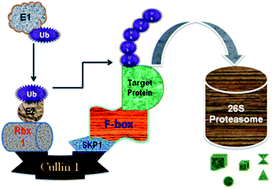
Protein degradation is a common post-translational regulatory process in multi-cellular organisms to control different phases of almost all metabolic pathways. Inside the cell, protein half-lives range from a few minutes to several days. Two major pathways used by eukaryotic cells to mediate protein degradation include the lysosomal proteolysis and the ubiquitin-26S proteasome system (UPS). In the first pathway, proteins are taken up by membrane bound organelles, such as lysosomes or vacuoles, and then degraded by the proteolytic enzymes present in these organelles. In the second pathway, proteins destined for degradation are first labelled by a specific signal or tag, which are then recognized by the degradome machinery for degradation. A 76 amino acid protein, ubiquitin (Ub) serves as a tag for the target proteins to be identified by a multicatalytic protease complex, the 26S proteasome [Fig. 1]. Target proteins may be tagged either by a single Ub to form mono-ubiquitinated proteins or may undergo repeated Ub conjugations to give polyubiquitinated proteins. Monoubiquitination is thought to modify the function of substrate proteins, while the polyubiquitinated proteins are degraded by the 26S proteasome complex.1,2
image file: c5ra01875g-f1.tif
Fig. 1 Mechanism of protein degradation via SCF–UPS.

Ub is covalently linked to the target proteins in a process catalysed by three enzyme complexes. E1 (Ub-activating enzyme) activates Ub in an ATP-dependent manner, resulting in the conjugation of Ub to E2, designated as Ub-conjugating enzyme. Ub is then transferred to a Lysine residue of the substrate protein via E3 recognition. This step is catalysed by E2 and E3 (Ub ligase) complexes [Fig. 1]. A large number of these enzymes have been reported in different species of plants. For example, there are two genes encoding E1, 45 encoding E2 and at least 1200 encoding E3 in Arabidopsis genome alone.3,4 Among the different types of E3 complexes, SCF is one of the largest groups that has been extensively studied and well characterized. The SCF complex consists of four major components, including SUPPRESSOR OF KINETOCHORE PROTEIN 1 (SKP1), Cullin 1 (CUL1), RING-BOX 1 (RBX1) and an F-box protein.5 Structure–activity relationship studies demonstrate that SKP1 serves as an adaptor protein, linked to CUL1 and one of the several F-box proteins. The role of CUL1 is to assemble different subunits of the complex, hence acting as a scaffold protein. RBX1 is thought to form the core catalytic domain of the complex, while F-box protein is used by SCF complex to interact with the target proteins and confers overall specificity to the complex [Fig. 1].6–8

F-box family of proteins is an emerging group of signalling proteins in eukaryotes. It is regarded as one of the largest superfamily of proteins in the plant kingdom.9 Interestingly, plants have been found to contain more F-box proteins than the animals, for example Arabidopsis genome has about 700 F-box genes, while human has only 68.10,11 Most of the proteins from this superfamily have been identified as essential components of SCF complexes for post-translational modification or degradation of regulatory proteins via UPS. However, a number of F-box proteins have been documented for their non-SCF functions. This group of F-box proteins participate in cellular functions beyond ubiquitination and are thought to be involved in other enzymatic activities and functional interactions.12,13 Chemical structures of F-box proteins contain a conserved F-box domain at the amino terminal, whereas the carboxy terminal contains one or more highly variable secondary motifs involved in protein–protein interactions, like leucine rich-repeats (LRR), kelch-repeats, WD40-repeats and other motifs.11,14 In this article, we review the progress and the recent developments in the structure, evolution and functions of plant kelch-repeat containing F-box proteins (KFBs).

2 Structure of KFBs

Proteins containing a well conserved N-terminal F-box domain of about 40–50 amino acids are called F-box proteins, named after this domain was first identified in human cyclin-F.15 However, the first F-box protein recognized in plants was UNUSUAL FLORAL ORGANS (UFO). This protein has been documented for its role in the floral development processes.16 F-box protein superfamily is one of the largest families of proteins in plants, as a large number of proteins belonging to this group have been identified in plants over the past one and half decade. Till date, researchers have been able to identify 692 F-box genes in Arabidopsis thaliana, 779 in rice, 539 in medicago, 359 in maize, 337 in poplar, and 156 in grape vine.17–19 But most of the F-box proteins identified till date remain ‘orphan’ because the number of functionally characterized F-box proteins is still very low. For example, at present less than 5% of Arabidopsis thaliana F-box proteins have been characterized for their physiological functions.20 In plants, F-box proteins have been reported to participate in many regulatory pathways of different physiological phenomena, such as phytohormone signalling, circadian clock, flowering time and pathogen defense.6,21,22

Kelch motif is an ancient motif of 44–56 amino acid residues, named after its identification in Drosophila mutant.23 Consensus sequence of kelch motif has shown that the motif possesses some highly conserved signatures; four hydrophobic residues followed by a double glycine and a downstream pair of two aromatic amino acids, tyrosine and tryptophan, separated from each other by about six residues in most instances.24,25 Four antiparallel β-sheets are twisted and folded to form a single kelch motif and the association of multiple kelch motifs results in bladed β-propeller, a structure known to serve as scaffold for protein–protein interactions [Fig. 2].26 The bladed β-propeller structure is formed by at least four kelch repeats and up to twelve, when they are arranged around a funnel-shaped central axis.27 Sequence identity between different kelch repeats is quite low; suggesting that kelch repeat containing proteins might be able to interact with multiple partners.28


image file: c5ra01875g-f2.tif
Fig. 2 A typical kelch motif with four β-sheets, loops and conserved residues.25

Phylogenetic studies of F-box proteins have shown that these proteins are clustered according to their C-terminal domains, which putatively establish interactions with target proteins.11 Among many C-terminal motifs in F-box proteins, kelch is one of the most frequent. Proteins containing F-box domains and kelch repeat domains are common in living organisms, but these two domains are only found together in plant proteins. Kelch repeat is not a common domain in animal F-box proteins. Only a few KFBs have been reported in animals and a couple of these proteins have been reported in other kingdoms, however it is one of the most common F-box C-terminal domain in plants.14,29,30

3 Evolution of plant KFBs

F-box superfamily has undergone a rapid evolution and has experienced the most dramatic changes among the significantly expanded protein families in land plants. This rapid evolution of the superfamily may be attributed to the increasing demands for ubiquitylation to ensure plant fitness in ever changing environments over the course of time. Comparison of F-box genes in the plant kingdom by Hua et al. (2011) revealed that this superfamily underwent substantial gain or loss independently in many plant lineages. Genomic drift was suggested to contribute to the diversification among plant F-box proteins.31 However, selective signatures of the C-terminal protein–protein interaction domains will show significant differences by cross species comparison among F-box protein subfamilies. Navarro-Quezada et al. (2013) proposed co-evolution of both N-terminal F-box domain and C-terminal interaction domains in the founder gene of each subfamily during evolution in the ancient times.32

Expansion of KFBs in land plants was investigated in selected organisms, such as Arabidopsis and rice by Sun et al. (2007) using BLAST searches and the analysis of gene duplication and gene expression studies, to construct the phylogram. They concluded that KFBs emerged before the divergence of animals and plants and the accelerated gene duplication events occurred in plant KFBs after the divergence.14 Schumann et al. (2011) categorised the KFB genes from seven plant species into unstable, stable and the superstable classes by constructing a phylogenetic tree. Among the three classes, superstable genes are well conserved in all seven species, whereas the unstable genes, defined as lineage specific and show potential for adaptation, because they were found with strong signatures of positive selection.20

4 Functions of plant KFBs

4.1. Circadian clock and photoperiodic flowering

Plants have to optimise the environmental conditions, like temperature, light and humidity for their survival under the given set of conditions. Light is an important factor in the life of plants, not only as a source of energy in photosynthesis, but also for the development, growth and different metabolic activities. Photoperiodic flowering pathway and circadian control may be regarded as the physiological phenomena in plants, best characterised for the role of KFBs [Table 1]. Harmon et al. (2003) identified and characterised a novel gene ATTENUATED FAR-RED RESPONSE (AFR) in Arabidopsis thaliana and suggested the role of this gene in preparing plants for perceiving light signals at dawn. They proposed that AFR participated in the phenomenon as a part of SCFAFR complex that interacts with and degrades a light signalling repressor that has accumulated in the dark. Double-stranded RNA interference (RNAi) was employed in this study followed by screening of the transgenic lines defective in circadian and light signalling. It was found that the ability of the phytochrome A-mediated light signalling was impaired in phenotypes of RNAi lines with reduced AFR expression.33
Table 1 Functions of plant KFBs
Name of KFB Number of kelch repeats Functions References
Attenuated far-red response (AFR) Two Participate in circadian light signalling 33
ZEITLUPE (ZTL) Six Circadian clock, photomorphogenesis, and flowering time regulation 38, 43, 46–48, 53, 54 and 81
Flavin-binding kelch repeat F-box1 (FKF1) Six Clock associated regulation of flowering 34, 41, 44–46, 50, 51 and 54
Light, oxygen or voltage kelch protein2 (LKP2) Six Circadian oscillator 37, 39, 46, 52–54 and 82
Hypocotyl development 61
COP9 interacting F-box kelch 1 (CFK1) Three Hypocotyl elongation in Arabidopsis 60
Chick pea F-box gene 1 (CarF-Box1) Two Plant development and abiotic stress response in chickpea 42
Rice kelch containing F-box12 (OsFBK12) Not published Regulates leaf senescence and grain size in rice by modulating ethylene levels 62
Arabidopsis thaliana KFB01/Kiss Me Deadly1 (AtKFB01/KMD1) Three This family of KFBs is involved in the regulation of phytohormone cytokinin signalling by degradation of type-B ARR transcription factors. These proteins also regulate the phenylpropanoids biosynthesis by interaction and subsequent degradation of the PAL isozymes 14, 67, 70 and 71
AtKFB20/KMD2 Three
AtKFB50/KMD4 Three
AtKFB39/KMD3 Two In addition to above mentioned roles of this family, this KFB has also been reported to facilitate pathogen infection 14, 67, 70, 71 and 80
TOO MUCH LOVE Three Maintains proper nodulation in roots during final stages of AON in Lotus Japonicus 63
Inhibitor for brown furrows1 (IBF1) Three Inhibition of brown pigmentation in rice hull furrows 64
LARGER PANICLE One Regulation of panicle architecture, thus affecting grain yield in rice 65
Botrytis induced grapevine KFB (BIG24.1) One Involved in grapevine defense response towards biotic and abiotic stresses 78
Sugar beet FBK Two Facilitates virus pathogenicity in sugar beet by suppressing resistance response 79


In Arabidopsis, three very similar KFBs have been found to control the circadian clock and the photoperiodic flowering processes in a light-dependent manner. ZEITLUPE (ZTL), FLAVIN BINDING, KELCH REPEAT, F-BOX1 (FKF1) and LIGHT, OXYGEN OR VOLTAGE (LOV) KELCH PROTEIN2 (LKP2) have been established as a unique family of blue-light photoreceptors.34 All of these three proteins consist of an N-terminal LOV domain, an F-box domain in the center and a C-terminal kelch repeat domain. LOV domain is non-covalently linked to the coenzyme flavin mononucleotide (FMN), which absorbs the blue light and undergoes a unique photochemical reaction cycle.35,36 The presence of F-box and kelch domains suggests that ZTL, FKF1 and LKP2 are E3 Ubiquitin ligases, as they have been shown to furnish their activity in vivo, by interacting with many Arabidopsis SKP1-like proteins (ASKs) through their F-box domain and conferring the substrate specificity through their kelch repeat domains.37–40

ZTL/FKF1/LKP2 family is involved in regulating the expression of flowering time gene CONSTANS (CO) by degrading repressors of CO gene, like CYCLING DOF FACTORs (CDFs).41–46 ZTL, the best characterized among the three is involved in light-dependent regulation of circadian clock components, like GIGANTEA (GI), TIMING OF CAB EXPRESSION 1 (TOC1) and PSEUDO-RESPONSE REGULATOR5 (PRR5).43,47,48 Xue et al. (2012) isolated and cloned a ZTL homologue from soybean (GmZTL3) and after the gene was constitutively expressed in Arabidopsis, they found that GmZTL3 is involved in the control of flowering activity.49 FKF1 is also involved in controlling the transcription of FLOWERING LOCUS T (FT) through CO stabilization as well as degradation of FT repressors in the long-day afternoon.45 Sawa et al. (2007) demonstrated that absorption of blue light by LOV domain of FKF1 induces formation of a complex between FKF1 and GI protein in vivo. This FKF1-GI complex regulates the daytime CO transcription and promotes flowering during the long day afternoon in Arabidopsis.50 Recently, Li et al. (2013) identified and cloned FKF1 and GI homologous genes in soybean for functional characterization in flowering time regulation.51 LKP2 was suggested to serve within or near Arabidopsis circadian oscillator.52 For a comprehensive description of the whole mechanism and detailed study for the roles of ZTL, FKF1 and LKP2 in circadian clock and photoperiodic flowering, we suggest some recently published review articles.39,40,53,54

4.2. Plant growth and development

Growth and development processes in plants, from seed germination to flower formation and fruit ripening involve various cellular activities, like cell division and differentiation, protein trafficking, stress and hormonal responses etc. The regulation of these cellular processes is furnished through several key signalling networks, including sugar signalling, phytohormone signalling, protein kinase signalling and calcium signalling. Another important component of the regulatory mechanisms, in almost all of the cellular processes is the degradation of specific proteins by UPS in a very precise manner. As an essential part of SCF, several F-box proteins have been found to participate in different phytohormone signalling networks during all phases of plant development.55 For example, TIR1 and auxin-signalling F-box protein 4 (AFB4) in auxin, COI1 in jasmonic acid and MAX2 in strigolactone signalling have been reported for their roles in many aspects of plant growth, development and defense.6,56–59

Some of the recent studies have highlighted the role of KFBs in different physiological processes for the growth and development of plants [Table 1]. Franciosini et al. (2013) characterised COP9 INTERACTING F-BOX KELCH 1 (CFK1), a plant specific kelch repeat containing F-box protein co-purified with COP9 signalosome (CSN) in Arabidopsis thaliana, as a component of functional SCF complex. From the analysis of seedlings with CFK1 overexpressed, knockdown and mutant lines, it was found that CFK1 gene is specifically expressed in the hypocotyl and the expression is strongly light-dependent. This study concluded that CFK1 is involved in hypocotyl elongation and the regulation of CFK1 stability is accomplished by CSN and proteasome-dependent proteolysis.60 Similarly, overexpressing LKP2 in Arabidopsis produced phenotypes with elongated hypocotyls containing enhanced cell number, DNA content and increased ploidy.61 Jia et al. (2012) reported that Chick pea F-box gene 1 (CarF-Box1), a nuclear KFB, is involved in seed germination and seed and flower development processes of the plant. Moreover, CarF-Box1 gene was found to respond to abiotic stresses like drought and salinity.42 Chen et al. (2013) published the role of a KFB from rice (OsFBK12) in the regulation of physiological processes including leaf senescence, grain number and seed size. They proposed formation of an SCF complex by interaction of OsFBK12 and S-PHASE KINASE-ASSOCIATED PROTEIN1-LIKE PROTEIN (OSK1) that degrades its substrate like ADENOSYL-L-METHIONINE SYNTHETASE1 (SAMS1). As a result of degradation of OsSAMS1, changes in SAM content and ethylene levels take place that affect seed germination, grain size and leaf senescence.62

Takahara et al. (2013), in model legume Lotus japonicas, demonstrated that TOO MUCH LOVE (TML) is a KFB with two nuclear localization signals. Evaluating the role of TML in auto-regulation of nodulation (AON) using tml mutants, it was concluded that TML is a root factor behind the proper maintenance of nodulation during final stage of AON, furnishing its function through 26S proteasome dependent degradation pathway.63 Shao et al. (2012) cloned a novel KFB gene from rice, inhibitor for brown furrows1 (IBF1), to show that IBF1 is involved as a negative regulator in flavonoids biosynthetic pathway and suppresses the brown pigments accumulation in rice hull.64 LARGER PANICLE (LP), a KFB encoding gene in rice has been characterised by Li et al. (2011) to reveal its role in the regulation of panicle architecture. LP was found to be an endoplasmic reticulum localized protein and was suggested to modulate cytokinin level by interacting with rice SKP1-like protein. Mutant plants were shown to have better plant architecture, increased panicle size and improved grain yield per plant.65

For the plant growth and development, the phytohormone cytokinin is very special because it is involved in almost all aspects of these processes.66 In a recent report, Kim et al. (2013) published the role of a family of four similar KFBs, which was named as KISS ME DEADLY (KMD) family, in the regulation of Arabidopsis cytokinin signalling. As a part of SCFKMD complex, KMD proteins were found to physically interact with key transcription factors of cytokinin signalling, type-B Arabidopsis response regulators (ARRs) as targets for degradation. Transgenic lines overexpressing KMD were insensitive, while KMD loss of function mutants were more sensitive to cytokinin, thus showing that KMD proteins negatively regulate the cytokinin signalling in Arabidopsis.67

4.3. Plant secondary metabolism

Two types of metabolisms are responsible to ensure a healthy flora. Primary metabolism produces some common basic metabolites, vital for the survival of plants. Secondary metabolism, on the other hand produces different metabolites that help for the adaptation of the producer plants to environment and to cope with different types of stresses. These small molecule organic compounds, also called as plant natural products, have been used by humans for the production of pharmaceuticals, nutraceuticals and food additives.68 Various internal and external stimuli affect the pace of secondary metabolism by either activating or repressing the gene expression levels. Several transcription factors, regulating various aspects of plants secondary metabolism have been identified and used (or can be used) for the engineering of useful compounds.69 A very little is known about the SCF signalling and the role of F-box proteins in plant's secondary metabolism, but some recent studies have elucidated the involvement of KFBs in secondary metabolites production.

A family of four similar KFBs in Arabidopsis, designated as AtKFB01, AtKFB20, AtKFB50 and AtKFB39 have been found to participate in the regulation of phenylpropanoid biosynthetic pathway. In one of the studies, Zhang et al. (2013) reported that AtKFB01, AtKFB20 and AtKFB50 physically interact with four phenylalanine ammonia-lyase (PAL) isozymes that catalyse the first and the committed step in phenylpropanoids biosynthesis. In the second study, Zhang et al. (2014) characterized AtKFB39 for a similar function in Arabidopsis phenylpropanoid biosynthetic pathway. Using tandem affinity protein purification-mass spectrometry analysis and yeast two-hybrid (Y2H) assays, it was concluded that KFB–PAL interactions mediate the proteolytic turnover of PAL isozymes by UPS, thus regulating the biosynthesis of phenylpropanoids, like anthocyanins, flavonoids, phenolic esters and lignin.70,71

4.4. Defense response

Due to their sessile nature, plants have to adapt themselves to the continuously changing environmental conditions. In the ‘struggle for survival’ plants have to cope with different kinds of biotic and abiotic stresses. Plants come up with the challenge through a series of molecular responses by integrating several signalling cascades and metabolic pathways. Various F-box proteins have been identified as a component of different SCF complexes in the regulation of different defense related signalling pathways.72 For instance, CaF-box in pepper and MAIF1 (miRNAs regulated and abiotic stress induced F-box gene) in rice are involved in abiotic stress tolerance.73,74 Similarly, SON1 and COI1 participate in the regulation of defense responses against the necrotrophic pathogens in Arabidopsis.75–77

However, the number of SCFs equipped with KFBs involved in plant defense signalling is limited to just a few complexes [Table 1]. Paquis et al. (2011) reported the induction or up-regulation of BIG24.1 (a Botrytis Induced Grapevine KFB) gene expression in response to biotic and abiotic stresses and by various defense related phytohormones in grapevine. Identification of several regulatory elements involved in the activation of plant defense responses was also reported in this study by sequence analysis of BIG24.1 promoter.78

On the other hand, some recent studies have identified KFB genes involved in plant pathogen interactions as “susceptibility” (S) genes and facilitate the pathogens for successful infestation. A sugar beet F-box protein with two kelch repeats was identified by Thiel et al. (2012) and characterised for its role in the resistance mechanism of P25, a Beet necrotic yellow vein virus pathogenicity factor. Authors reported interactions between sugar beet KFB and P25 in vivo, in vitro, in planta and in the sugar beet root cells, and suggested that P25 directly affects the formation of SCF complex.79 Similarly, a KFB from KMD family of A. thaliana, KMD3/AtKFB39 (At2g44130) was found to be induced in plant roots by Meloidogyne incognita, a root-knot nematode infection. This KFB was suggested to facilitate the pathogens for successful infestation through degradation of specific target proteins via formation of SCF(At2g44130) complex.80

5 Conclusions and future prospects

Regulation of the cellular processes via degradation of regulatory proteins by UPS, after being recognised by specific F-box proteins is one of the common signalling mechanisms. One and half decade since the recognition of, and assigning the name ‘F-box’ to a domain in cyclin-F protein, our understanding about the SCF biology, role of F-box proteins and the molecular mechanisms used by UPS is steadily growing. Researchers around the world have identified a large number of F-box proteins since then, especially in plants. However, most of these F-box proteins either remain ‘orphan’ or could not be completely characterised for their function until now. Although, hundreds of SCF complexes have been characterised and the number of F-box proteins serving for these SCF complexes is also quite significant, but the number of functionally characterised KFBs is still very low.

The fact that only a couple of KFBs have been characterised in non-plant organisms suggests that KFB subfamily of F-box proteins is exclusively a plant specific family of genes.20,28 This indicates that some very crucial roles have been assigned to these proteins in plant cell. In the recent few years, the pace of research involving plant KFBs in molecular signalling has advanced at a reasonable rate, but still a lot more is to be explored. Being one of the most common F-box proteins in planta, KFBs deserve special attention from the plant biologists and biochemists. A sufficient amount of data, especially identification of novel substrates interacting with known proteins and vice versa will be helpful to establish the structure–activity relationship. Ligand–receptor interactions are very important to identify as a lot of information can be obtained by modifying the SCF chemistry through deactivation or super activation of the F-box component. High throughput screening of naturally occurring compounds might be performed to single out the potential candidates exhibiting significant interactions with KFB containing SCF complexes. Moreover, molecular docking studies might be employed to design small molecular ligands capable of elevating or reducing the interactions.

Another interesting feature of KFBs is the variable number of kelch repeats, ranging from one to five in plants.14,20 Four or more kelch repeats form a bladed β-propeller, but many KFBs contain a fewer kelch motifs. The future research might also be focussed on the significance of having more kelch repeats and forming bladed structures or having less kelch motifs. Whether the functional diversity of a protein is affected by having less kelch motifs or it may be beneficial for the protein in terms of specificity for the substrates, as more the number of kelch motifs less specific will be the KFB.28 Another question is, other than possessing a broad specificity for the substrates, how much advantage a bladed β-propeller will impart to the KFB, and to overall SCF complex? Does it confer any extra stability during the formation of or after the complex has been formed between substrate proteins and the SCF?

Conserved features in the kelch motifs might also serve as important platform to study the pattern of folding in these proteins and its significance in molecular interactions. Site directed mutagenesis and epigenetic modification of the key residues in the candidate KFBs, followed by analysis of the modified proteins for their functions might be employed to yield some breakthroughs. Once the control points or the ‘molecular switches’ have been identified, many aspects of plant growth, development and defense will be practically manageable. Making a rational use of modern techniques from molecular biology, functional genomics and proteomics a deep insight of these most important plant proteins seems obvious in near future.

Acknowledgements

We would like to thank and show our appreciation to Universiti Kebangsaan Malaysia for financing this project through “Research University Grants (DLP-2013-008), and GUP-2013-008”.

References

  1. Y. Ben-Neriah, Nat. Immunol., 2002, 3, 20–26 CrossRef CAS PubMed.
  2. Z. C. Gu and C. Enenkel, Cell. Mol. Life Sci., 2014, 71, 4729–4745 CrossRef CAS PubMed.
  3. J. Smalle and R. D. Vierstra, Annu. Rev. Plant Biol., 2004, 55, 555–590 CrossRef CAS PubMed.
  4. S. K. Hotton and J. Callis, Annu. Rev. Plant Biol., 2008, 59, 467–489 CrossRef CAS PubMed.
  5. M. D. Petroski and R. J. Deshaies, Nat. Rev. Mol. Cell Biol., 2005, 6, 9–20 CrossRef CAS PubMed.
  6. E. Lechner, P. Achard, A. Vansiri, T. Potuschak and P. Genschik, Curr. Opin. Plant Biol., 2006, 9, 631–638 CrossRef CAS PubMed.
  7. J. R. Skaar, J. K. Pagan and M. Pagano, Nat. Rev. Mol. Cell Biol., 2013, 14, 369–381 CrossRef CAS PubMed.
  8. S. L. Stone and J. Callis, Curr. Opin. Plant Biol., 2007, 10, 624–632 CrossRef CAS PubMed.
  9. R. M. Clark, G. Schweikert, C. Toomajian, S. Ossowski, G. Zeller, P. Shinn, N. Warthmann, T. T. Hu, G. Fu, D. A. Hinds, H. Chen, K. A. Frazer, D. H. Huson, B. Scholkopf, M. Nordborg, G. Ratsch, J. R. Ecker and D. Weigel, Science, 2007, 317, 338–342 CrossRef CAS PubMed.
  10. J. Jin, T. Cardozo, R. C. Lovering, S. J. Elledge, M. Pagano and J. W. Harper, Genes Dev., 2004, 18, 2573–2580 CrossRef CAS PubMed.
  11. J. M. Gagne, B. P. Downes, S. H. Shiu, A. M. Durski and R. D. Vierstra, Proc. Natl. Acad. Sci. U. S. A., 2002, 99, 11519–11524 CrossRef CAS PubMed.
  12. D. E. Nelson, S. J. Randle and H. Laman, Open Biol., 2013, 3, 130131 CrossRef PubMed.
  13. D. Hermand, Cell Div., 2006, 1, 30 CrossRef PubMed.
  14. Y. Sun, X. Zhou and H. Ma, J. Integr. Plant Biol., 2007, 49, 940–952 CrossRef CAS PubMed.
  15. C. Bai, P. Sen, K. Hofmann, L. Ma, M. Goebl, J. W. Harper and S. J. Elledge, Cell, 1996, 86, 263–274 CrossRef CAS.
  16. S. R. Hepworth, J. E. Klenz and G. W. Haughn, Planta, 2006, 223, 769–778 CrossRef CAS PubMed.
  17. G. Xu, H. Ma, M. Nei and H. Kong, Proc. Natl. Acad. Sci. U. S. A., 2009, 106, 835–840 CrossRef CAS PubMed.
  18. X. Yang, U. C. Kalluri, S. Jawdy, L. E. Gunter, T. Yin, T. J. Tschaplinski, D. J. Weston, P. Ranjan and G. A. Tuskan, Plant Physiol., 2008, 148, 1189–1200 CrossRef CAS PubMed.
  19. F. Jia, B. Wu, H. Li, J. Huang and C. Zheng, Mol. Genet. Genomics, 2013, 288, 559–577 CrossRef CAS PubMed.
  20. N. Schumann, A. Navarro-Quezada, K. Ullrich, C. Kuhl and M. Quint, Plant Physiol., 2011, 155, 835–850 CrossRef CAS PubMed.
  21. E. T. Kipreos and M. Pagano, Genome Biol., 2000, 1(5), R3002 CrossRef PubMed.
  22. B. M. Binder, J. M. Walker, J. M. Gagne, T. J. Emborg, G. Hemmann, A. B. Bleecker and R. D. Vierstra, Plant Cell, 2007, 19, 509–523 CrossRef CAS PubMed.
  23. F. Xue and L. Cooley, Cell, 1993, 72, 681–693 CrossRef CAS.
  24. J. Adams, R. Kelso and L. Cooley, Trends Cell Biol., 2000, 10, 17–24 CrossRef CAS.
  25. S. Prag and J. C. Adams, BMC Bioinf., 2003, 4, 42 CrossRef PubMed.
  26. N. Ito, S. E. Phillips, C. Stevens, Z. B. Ogel, M. J. McPherson, J. N. Keen, K. D. Yadav and P. F. Knowles, Nature, 1991, 350, 87–90,  DOI:10.1038/350087a0.
  27. K. O. Kopec and A. N. Lupas, PLoS One, 2013, 8, e77074 CAS.
  28. C. H. Gray, L. C. McGarry, H. J. Spence, A. Riboldi-Tunnicliffe and B. W. Ozanne, J. Biol. Chem., 2009, 284, 30498–30507 CrossRef CAS PubMed.
  29. R. L. Correa, F. P. Bruckner, R. de Souza Cascardo and P. Alfenas-Zerbini, Int. J. Mol. Sci., 2013, 14, 4030–4049 CrossRef CAS PubMed.
  30. M. A. Andrade, M. González-Guzmán, R. Serrano and P. L. Rodríguez, Plant Mol. Biol., 2001, 46, 603–614 CrossRef CAS.
  31. Z. Hua, C. Zou, S.-H. Shiu and R. D. Vierstra, PLoS One, 2011, 6, e16219 CAS.
  32. A. Navarro-Quezada, N. Schumann and M. Quint, PLoS One, 2013, 8, e68672 CAS.
  33. F. G. Harmon and S. A. Kay, Curr. Biol., 2003, 13, 2091–2096 CrossRef CAS PubMed.
  34. T. Imaizumi, H. G. Tran, T. E. Swartz, W. R. Briggs and S. A. Kay, Nature, 2003, 426, 302–306 CrossRef CAS PubMed.
  35. B. L. Taylor and I. B. Zhulin, Microbiol. Mol. Biol. Rev., 1999, 63, 479–506 CAS.
  36. M. Kasahara, T. E. Swartz, M. A. Olney, A. Onodera, N. Mochizuki, H. Fukuzawa, E. Asamizu, S. Tabata, H. Kanegae and M. Takano, Plant Physiol., 2002, 129, 762–773 CrossRef CAS PubMed.
  37. M. Yasuhara, S. Mitsui, H. Hirano, R. Takanabe, Y. Tokioka, N. Ihara, A. Komatsu, M. Seki, K. Shinozaki and T. Kiyosue, J. Exp. Bot., 2004, 55, 2015–2027 CrossRef CAS PubMed.
  38. E. Kevei, P. Gyula, A. Hall, L. Kozma-Bognár, W.-Y. Kim, M. E. Eriksson, R. Tóth, S. Hanano, B. Fehér and M. M. Southern, Plant Physiol., 2006, 140, 933–945 CrossRef CAS PubMed.
  39. N. Suetsugu and M. Wada, Plant Cell Physiol., 2013, 54, 8–23 CrossRef CAS PubMed.
  40. P. J. Seo and P. Mas, Plant Cell, 2014, 26, 79–87 CrossRef CAS PubMed.
  41. D. C. Nelson, J. Lasswell, L. E. Rogg, M. A. Cohen and B. Bartel, Cell, 2000, 101, 331–340 CrossRef CAS.
  42. Y. Jia, H. Gu, X. Wang, Q. Chen, S. Shi, J. Zhang, L. Ma, H. Zhang and H. Ma, Mol. Biol. Rep., 2012, 39, 2337–2345 CrossRef CAS PubMed.
  43. J. Kim, R. Geng, R. A. Gallenstein and D. E. Somers, Development, 2013, 140, 4060–4069 CrossRef CAS PubMed.
  44. T. Imaizumi, T. F. Schultz, F. G. Harmon, L. A. Ho and S. A. Kay, Science, 2005, 309, 293–297 CrossRef CAS PubMed.
  45. Y. H. Song, R. W. Smith, B. J. To, A. J. Millar and T. Imaizumi, Science, 2012, 336, 1045–1049 CrossRef CAS PubMed.
  46. F. Fornara, A. de Montaigu and G. Coupland, Cell, 2010, 141, 550 CrossRef PubMed . e552.
  47. P. Más, W.-Y. Kim, D. E. Somers and S. A. Kay, Nature, 2003, 426, 567–570 CrossRef PubMed.
  48. T. Kiba, R. Henriques, H. Sakakibara and N.-H. Chua, Plant Cell, 2007, 19, 2516–2530 CrossRef CAS PubMed.
  49. Z.-G. Xue, X.-M. Zhang, C.-F. Lei, X.-J. Chen and Y.-F. Fu, Mol. Biol. Rep., 2012, 39, 1411–1418 CrossRef CAS PubMed.
  50. M. Sawa, D. A. Nusinow, S. A. Kay and T. Imaizumi, Science, 2007, 318, 261–265 CrossRef CAS PubMed.
  51. F. Li, X. Zhang, R. Hu, F. Wu, J. Ma, Y. Meng and Y. Fu, PLoS One, 2013, 8, e79036 Search PubMed.
  52. T. F. Schultz, T. Kiyosue, M. Yanovsky, M. Wada and S. A. Kay, Plant Cell, 2001, 13, 2659–2670 CrossRef CAS.
  53. Y. H. Song, S. Ito and T. Imaizumi, Trends Plant Sci., 2013, 18, 575–583 CrossRef CAS PubMed.
  54. S. Ito, Y. H. Song and T. Imaizumi, Mol. Plant, 2012, 5(3), 573–582,  DOI:10.1093/mp/sss013.
  55. Z. Hua and R. D. Vierstra, Annu. Rev. Plant Biol., 2011, 62, 299–334 CrossRef CAS PubMed.
  56. J. C. del Pozo and C. Manzano, J. Exp. Bot., 2013, 65(10), 2617–2632,  DOI:10.1093/jxb/ert363.
  57. Z. Hu, M. A. Keçeli, M. Piisilä, J. Li, M. Survila, P. Heino, G. Brader, E. T. Palva and J. Li, Cell Res., 2012, 22, 777 CrossRef CAS PubMed.
  58. C. Wasternack, Plant Cell Rep., 2014, 33, 707–718 CrossRef CAS PubMed.
  59. A. de Saint Germain, S. Bonhomme, F.-D. Boyer and C. Rameau, Curr. Opin. Plant Biol., 2013, 16, 583–589 CrossRef CAS PubMed.
  60. A. Franciosini, B. Lombardi, S. Iafrate, V. Pecce, G. Mele, L. Lupacchini, G. Rinaldi, Y. Kondou, G. Gusmaroli and S. Aki, Mol. Plant, 2013, 6, 1616–1629 CrossRef CAS PubMed.
  61. Y. Miyazaki, T. Yoshizumi, T. Takase, M. Matsui and T. Kiyosue, Plant Biotechnol., 2011, 28, 267–272 CrossRef CAS.
  62. Y. Chen, Y. Xu, W. Luo, W. Li, N. Chen, D. Zhang and K. Chong, Plant Physiol., 2013, 163, 1673–1685 CrossRef CAS PubMed.
  63. M. Takahara, S. Magori, T. Soyano, S. Okamoto, C. Yoshida, K. Yano, S. Sato, S. Tabata, K. Yamaguchi and S. Shigenobu, Plant Cell Physiol., 2013, 54(4), 433–447,  DOI:10.1093/pcp/pct022.
  64. T. Shao, Q. Qian, D. Tang, J. Chen, M. Li, Z. Cheng and Q. Luo, Theor. Appl. Genet., 2012, 125, 381–390 CrossRef CAS PubMed.
  65. M. Li, D. Tang, K. Wang, X. Wu, L. Lu, H. Yu, M. Gu, C. Yan and Z. Cheng, Plant Biotechnol. J., 2011, 9, 1002–1013 CrossRef CAS PubMed.
  66. C.-Y. Cheng and J. J. Kieber, Molecular Biology, 2014, pp. 1–19,  DOI:10.1007/978-1-4939-0263-7_14-1.
  67. H. J. Kim, Y.-H. Chiang, J. J. Kieber and G. E. Schaller, Proc. Natl. Acad. Sci. U. S. A., 2013, 110, 10028–10033 CrossRef CAS PubMed.
  68. G. Anarat-Cappillino and E. S. Sattely, Curr. Opin. Plant Biol., 2014, 19, 51–58 CrossRef CAS PubMed.
  69. C. Q. Yang, X. Fang, X. M. Wu, Y. B. Mao, L. J. Wang and X. Y. Chen, J. Integr. Plant Biol., 2012, 54, 703–712 CrossRef CAS PubMed.
  70. X. Zhang, M. Gou and C.-J. Liu, Plant Cell, 2013, 25, 4994–5010 CrossRef CAS PubMed.
  71. X. Zhang, M. Guo, C. Guo, H. Yang and C.-J. Liu, Plant Physiol., 2014, 114.249136 Search PubMed.
  72. D. Marino, N. Peeters and S. Rivas, Plant Physiol., 2012, 160, 15–27 CrossRef CAS PubMed.
  73. R. Chen, W. Guo, Y. Yin and Z.-H. Gong, Int. J. Mol. Sci., 2014, 15, 2413–2430 CrossRef PubMed.
  74. Y.-S. Yan, X.-Y. Chen, K. Yang, Z.-X. Sun, Y.-P. Fu, Y.-M. Zhang and R.-X. Fang, Mol. Plant, 2010, 4(1), 190–197,  DOI:10.1093/mp/ssq066.
  75. H. S. Kim and T. P. Delaney, Plant Cell, 2002, 14, 1469–1482 CrossRef CAS.
  76. X. Guo and H. U. Stotz, Mol. Plant-Microbe Interact., 2007, 20, 1384–1395 CrossRef CAS PubMed.
  77. O. Lorenzo, J. M. Chico, J. J. Sanchez-Serrano and R. Solano, Plant Cell, 2004, 16, 1938–1950 CrossRef CAS PubMed.
  78. S. Paquis, F. Mazeyrat-Gourbeyre, O. Fernandez, J. Crouzet, C. Clément, F. Baillieul and S. Dorey, Mol. Biol. Rep., 2011, 38, 3327–3337 CrossRef CAS PubMed.
  79. H. Thiel, K. Hleibieh, D. Gilmer and M. Varrelmann, Mol. Plant-Microbe Interact., 2012, 25, 1058–1072 CrossRef CAS PubMed.
  80. R. H. Curtis, S. J. Powers, J. Napier and M. C. Matthes, Mol. Plant-Microbe Interact., 2013, 26, 36–43 CrossRef CAS PubMed.
  81. D. E. Somers, W.-Y. Kim and R. Geng, Plant Cell, 2004, 16, 769–782 CrossRef CAS PubMed.
  82. M. J. Yanovsky and S. A. Kay, Curr. Opin. Plant Biol., 2001, 4, 429–435 CrossRef CAS.

This journal is © The Royal Society of Chemistry 2015
Click here to see how this site uses Cookies. View our privacy policy here.