Facile room-temperature precipitation strategy for Ag2O/Bi2WO6 heterojunction with high simulated sunlight photocatalytic performance via bi-directed electron migration mechanism

Chun-Mei Liu, Jing-Wang Liu, Guo-Ying Zhang*, Jing-Bo Zhang, Qing-Song Wu, Yan-Yan Xu and Ya-Qiu Sun
Tianjin Key Laboratory of Structure and Performance for Functional Molecules, Key Laboratory of Inorganic-Organic Hybrid Functional Material Chemistry, Ministry of Education, College of Chemistry, Tianjin Normal University, Tianjin 300387, China. E-mail: hxxyzgy@mail.tjnu.edu.cn; Fax: +86 22 23766532; Tel: +86 22 23766532

Received 26th January 2015 , Accepted 24th March 2015

First published on 27th March 2015


Abstract

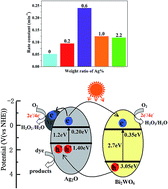
A trace Ag2O modified Bi2WO6 heterojunction was facilely synthesized via a solution precipitation strategy at ambient temperature. The characterizations of composition, morphology, microstructure, UV-vis absorption, photoluminescence, BET, photocurrent and solar simulated photocatalytic behavior were systematically investigated. They showed that besides a few visible nanoparticles, most of the Ag2O phase was inconspicuously distributed on the surface of the Bi2WO6 substrate. The composite photocatalyst exhibited obviously enhanced photocatalytic activity compared with pure Ag2O and Bi2WO6 for degradation of organic contaminants. In particular, the sample of Ag-0.6 wt% presented the best photocatalytic activity with a rate constant 4.8-fold as fast as that of Bi2WO6. Photochemical and photoelectrochemical analysis indicated that the introduction of trace Ag2O effectively broadened the visible-light absorption and inhibited the photogenerated carrier recombination in Bi2WO6. Based on band structure analysis and XPS results of recycled samples, a bi-directed migration mechanism of photogenerated electrons is proposed at the heterostructure interface. The band-gap coupling effect between Ag2O and Bi2WO6 and the electronic effect of trace metallic Ag in situ photoreduced from the self-stabilized Ag2O are believed to play vital roles in the separation and migration of e/h+ pairs. The work provides some insights into the rational design of hybrid photocatalysts with high performance via multi-path photogenerated carrier migration.

1. Introduction

Water pollution brought about by rapid industrial development is one of the most serious environmental problems to be solved in modern society. Semiconductor-mediated heterogeneous photocatalysis has been considered as a green and cost-effective alternative for wastewater remediation.1,2 The application of conventional TiO2 photocatalysts has been frustrated by the limited response in sunlight spectrum due to the wide band gap of 3.2 eV. From the viewpoint of effective utilization of solar irradiation, the development of visible-light driven photocatalysts is indispensable.

Bismuth tungstate (Bi2WO6), one of the simplest members of Aurivillius compound with a narrow band gap of 2.69 eV and special layered structure, has been confirmed to present amusing solar or visible-light photocatalytic performance in water-splitting and organic pollutants degradation.3–5 Great efforts have been devoted in the preparation of Bi2WO6 nanostructures6,7 and various 3D hierarchical structures8,9 to enhance the photocatalytic activity and retrievability. Among those, flower-shaped Bi2WO6 superstructure10–12 built up of nanoplates has received considerable attention and showed much improved photocatalytic performance. This structure not only has advantage of free settlement but also benefits the light penetration and the transfer of reactive species in photocatalysis.

Although remarkable advances have been made for Bi2WO6 microflowers, further improvement of the photocatalytic efficiency is still essential to meet practical environmental and energy application. For pristine Bi2WO6, the aim is hindered by two principal problems: one is the limited region of visible-light absorption up to only 450 nm and the other is high recombination rate of photogenerated electron–hole (e/h+) pairs. Combining two or more semiconductors with appropriate band positions to improve the photocatalytic performance is an established idea because it can lead to an enhanced interfacial charge-transfer efficiency and an extended light response.13,14 Coupling Bi2WO6 to another oxide semiconductor has been tried previously with an improved photocatalytic behavior, which mainly focused on the traditional photocatalyst TiO2[thin space (1/6-em)]15–17 and the component Bi/W-containing oxides such as Bi2O3[thin space (1/6-em)]18–20 and WO3.21 However, there was few report on Ag2O modified Bi2WO6 photocatalyst. Ag2O is a p-type narrow gap semiconductor with Eg of 1.2 eV and commonly used as water cleaning agent, colorant and catalyst.22 Very recently, Yu et al. reported Ag2O cocatalyst coated Bi2WO6 nanoparticles of 30–100 nm via an impregnation method followed by heat-treatment at 350 °C and confirmed the optimized Ag2O amount of Ag-20 wt% for decomposition of organic contaminants.23 But for nanoparticle photocatalyst, the small size makes it difficult to be thoroughly recollected from the degradation solution and thus brings about second pollution. And for the purpose of commercialization, it is necessary to develop a more facilely combined strategy and obtain highly active Ag2O/Bi2WO6 photocatalyst with much more economic Ag content.

In the work, based on our previously fabricated hierarchical Bi2WO6 microflower,24 Ag2O/Bi2WO6 heterostructure was successfully prepared via a readily scaled-up precipitation route at ambient temperature. The composite exhibited remarkably enhanced photocatalytic performance in the degradation of both colored and colorless organic contaminations in compared with pristine Bi2WO6. And the best photocatalytic dynamics with rate constant enhanced by 4.8 folds was achieved at a much trace Ag2O content of Ag-0.6 wt%. According to optical and photoelectrical analysis, the reason is mainly attributed to the extended visible-light response and the prolonged lifetime of photogenerated carriers in Ag2O/Bi2WO6 interfaces. At the heterojunction, a bi-directed electron migration model is proposed according to the band gap coupling effect between Ag2O and Bi2WO6 and the electronic effect of Ag which is photoreduced from Ag2O. The composite is believed to have promising application in wastewater remedy for the simply scaled-up preparation, trace Ag2O loading, high photocatalytic activity and excellent recyclability.

2. Experimental

2.1 Synthesis

Bi2WO6. All the reagents used were of analytical grade without further purification. Bi2WO6 substrate was synthesized according to our previously reported routine.24 In brief, 0.8 mmol Bi(NO3)3·5H2O and 0.4 mmol Na2WO4·2H2O were dissolved in 17.0 mL distilled water. After stirred for 30 min, the resulting suspension was transferred into a 25 mL Teflon-lined stainless steel autoclave and heated at 160 °C for 12 h. After the autoclave cooled to room temperature naturally, the products were collected by centrifugation, washed with distilled water and absolute ethanol for several times, and dried at 80 °C in air.
Ag2O/Bi2WO6. The Ag2O/Bi2WO6 heterostructures of different Ag wt% ranging from 0.2 to 2.2 were prepared by precipitation method. A typical process of the composite with Ag-0.6 wt% is as follows: 0.1 g of Bi2WO6 substrate was dispersed in 6.0 mL of AgNO3 solution of 9.3 × 10⁻⁴ M to form a suspension. After stirred magnetically for 30 min, 6.0 mL of NaOH solution with the same concentration was dropped to the above mixture of AgNO3 and Bi2WO6. The used amount of AgNO3 and NaOH was stoichiometric to precipitate Ag2O from the solution. Finally, Bi2WO6 microflowers modified by Ag2O were washed thoroughly with deionized water followed by a centrifugation and drying process. For comparison, pure Ag2O was also synthesized from AgNO3 and NaOH aqueous solutions by similar precipitation method.

2.2 Characterization

The crystal phases and compositions of the samples were characterized by X-ray diffraction (XRD) on a Bruker D8-Advance diffractometer with Cu Kα (λ = 0.15418 nm) radiation. X-ray photoelectron spectroscopy (XPS) images were recorded on a Thermo Fisher K-alpha X-ray photoelectron spectrometer. Morphologies and microstructures of the products were examined with a field-emission scanning electron microscopy (FEI, NOVA Nano SEM 230) and a high-resolution transmission electron microscopy (FEI, Tecnai G2 F20). N2 adsorption–desorption isotherms were collected at liquid nitrogen temperature using a Micromeritics ASAP2020 surface area and porosity analyzer. The pore size distributions were determined by Barret–Joyner–Halenda (BJH) method. Diffuse reflectance spectra (DRS) were recorded using a Varian Cary 5000 UV-vis-NIR spectrophotometer. Element analysis was made on an inductive coupling plasma-atomic emission spectroscopy (ICP-AMS) on an American Leeman PS-I instrument. The photoluminescence (PL) spectra were recorded with an F-4500 fluorescence spectrophotometer.

2.3 Photocatalytic activity

Photocatalytic activities of the prepared samples were evaluated for the decolorization of Rhodamine B (RhB) aqueous solution with a 500 W Xe lamp at ambient temperature. In each test, 5.0 mg of photocatalyst was added into 10 mL of RhB solution (10−5 M) in a quartz tube. Before illumination, the suspension was magnetically stirred in dark for 30 min to establish an adsorption–desorption equilibrium. Then at given time intervals, one quartz tube was taken out and the photocatalyst was immediately centrifugated to analyze the supernate by a Shimadzu 2550 UV-vis spectrophotometer. In addition, other dyes including methylene blue (MB) and methyl orange (MO) and the colorless phenol were also used as the target organic substances to evaluate the photocatalytic performance of the Ag2O/Bi2WO6 heterostructure.

2.4 Photoelectrochemical measurement

The transient photocurrent characterization was measured using a CHI 660E electrochemical analysis instrument and operated in a standard three-electrode configuration with a working electrode, a Pt counter electrode, and an saturated calomel electrode (SCE) as the reference electrode. The working electrode was prepared by drop-casting 1.0 mL of the photocatalyst sample dispersed in ethanol solution (5.0 mg mL−1) onto an indium tin oxide (ITO) glass of 1 × 1 cm2 and then dried at 60 °C for 1 h. The electrolyte was 0.5 M Na2SO4 aqueous solution. A CEL-HXF 300 W Xe lamp was used as light source with a UV-cut filter (λ > 420 nm) and 0.5 V bias vs. SCE was set.

3. Results and discussions

3.1 Composition analysis

Fig. 1 shows the XRD patterns of pristine Bi2WO6, Ag2O and Ag2O/Bi2WO6 heterostructure. Considering the overlap of the primary (111) peak of Ag2O and the secondary (200) diffraction of Bi2WO6 at 2θ of 32.8°, the composite with a much higher Ag2O content of Ag-10 wt% was selected. As shown in Fig. 1a, the substrate sample is well crystallized and all the diffraction peaks can be perfectly indexed to orthorhombic phase of Bi2WO6 (JCPDS no. 73-1126). After the precipitation of Ag2O (Fig. 1b), the dominate peaks still match well with Bi2WO6 without obvious change in diffractions and lattice parameters. It indicates that the surface modification of Ag2O would not affect the crystal structure of Bi2WO6 substrate. Although it is difficult to ascertain the presence of Ag2O from its major peak of (111) due to serious overlapping with Bi2WO6 (200) peak, close-up observation demonstrates that a weak peak of Ag2O (200) plane appears in the composite. The enlargement pattern in 2θ range of 37.5–39.5° shows more detailed information. Compared with the negligible background of Bi2WO6, the second major peak of Ag2O (200) plane (JCPDS no. 41-1104) at ca. 38.3° has been detected.
image file: c5ra01568e-f1.tif
Fig. 1 XRD patterns of the as-synthesized products: (a) Bi2WO6, (b) Ag2O/Bi2WO6, and (c) Ag2O nanoparticles.

The elemental composition and chemical states of the Ag2O/Bi2WO6 (Ag-3.0%) heterostructure were analyzed by XPS. The typical survey spectra in Fig. 2a display five elements of Bi, W, O, Ag and C contained in the sample. The trace amount of C is attributed to the adventitious hydrocarbon from the XPS instrument itself. The high resolution XPS spectra in Fig. 2b and c confirm the Bi 4f peaks positioned at 164.5 eV and 159.2 eV, and the W 4f peaks located at 37.7 eV and 35.6 eV, respectively. The asymmetry O 1s peak at 530.2 eV (Fig. 2d) comes from the overlapping contributions of crystal lattice oxygen and surface adsorbed oxygen.25 Fig. 2e shows the high resolution XPS spectrum with peaks located at 367.93 eV and 373.95 eV, which corresponds well to the binging energy of Ag3d5/2 and Ag3d3/2 in Ag2O phase, respectively. It indicates the formation of Ag2O on the surface of Bi2WO6 substrate, which is in good agreement with the XRD analysis. Considering the Ag wt% ranging from 0.2 to 2.2 is calculated based on the usage of AgNO3, the Ag2O containing by ICP-AMS technique was tested and the results were shown in Table 1. It is found that the actually determined Ag wt% by ICP is approximately 60% yield of the used amount of AgNO3.


image file: c5ra01568e-f2.tif
Fig. 2 XPS spectra of Ag2O/Bi2WO6: (a) the survey spectra, (b–e) the high resolution XPS spectra of Bi4f, W4f, O1s and Ag3d, respectively.
Table 1 The Ag wt% calculated by used AgNO3 and actually determined by ICP technique, respectively
Calculated method Ag2O/Bi2WO6 samples
Ag wt% (used) 0.2 0.6 1.0 2.2
Ag wt% (ICP) 0.12 0.38 0.58 1.29
ICP/used 60% 63% 58% 59%


3.2 Morphology and microstructure

Fig. 3 presents the morphologies of pristine Bi2WO6 and Ag2O/Bi2WO6 composites of different Ag loading. As shown in the panoramic SEM image in Fig. 3a, Bi2WO6 exhibits 3D flower-shaped microsphere with diameter ca. 2–4 μm. Close-up observation in Fig. 3b indicates the microsphere is constructed by nanosheets aligned perpendicularly to the spherical surface. High magnification image in Fig. 3c reveals that the nanosheet ca. 30 nm in thickness is further assembled from tiny nanoplates with “clean” surface. The SEM images of Ag2O/Bi2WO6 (Ag-0.6) in Fig. 3d–f demonstrate that the composite inherits the hierarchical structure of nanoplate-nanosheet-microflower throughout the precipitation. But vivid observation in Fig. 3f displays that some protruding islands (arrow indicated) with size of 10–15 nm are sparsely deposited onto the Bi2WO6 substrate, which cannot be detached even after 20 min ultrasonic. Combined with above XRD and XPS results, the islands are confirmed to be Ag2O nanoparticles. And with higher Ag2O content in Fig. 3g and h, more densely distributed and larger Ag2O nanoparticles even up to 30 nm appear on the surface of Bi2WO6 nanosheets. In fact, Ag2O/Bi2WO6 interface can also act as planar defect to provide recombination centers for carriers. So an appropriate loading should be fixed to achieve the best photocatalytic activity.
image file: c5ra01568e-f3.tif
Fig. 3 SEM images of (a–c) bare Bi2WO6, (d–f) Ag2O/Bi2WO6 composite with Ag-0.6%, (g and h) Ag2O/Bi2WO6 with Ag-1.0% and 2.2%, respectively.

Fig. 4 shows the microstructure and composition of Ag2O/Bi2WO6 composite. The TEM image in Fig. 4a shows an individual microsphere with zigzag edge and obvious color contrast. The zigzag structure comes from the construction of square nanoplates and the color difference is ascribed to the mesopores and non-uniform packing of the nanoplates. The HRTEM image (Fig. 4b) takes on the feature of Bi2WO6 substrate with the interplanar distances of 0.315 nm and 0.327 nm, which corresponds to (113) and (014) planes, respectively. But it is difficult to detect the crystal face of Ag2O, which may be attributed to the trace amount and weak crystallization. The STEM image in Fig. 4c further discloses the nanoplate building units and pore structure of the sample, and the corresponding EDX spectrum (Fig. 4d) indicates the coexistence of Ag element with Bi2WO6. The STEM mapping images (Fig. 4e–g) demonstrate that besides three distinct area of higher silver concentration, which correspond to the very few visible Ag2O particles observed in SEM image, most Ag2O is inconspicuously attached on the whole Bi2WO6 surface. It means the formation of more Ag2O/Bi2WO6 heterojunctions. Gas sorptometry measurement (Fig. S1) indicates the porous nature with micro/meso-pore distribution in a range of 1.3–5.6 nm and more than 15 nm, respectively. And the composite has a BET surface area of 13.5 m2 g−1, which is a little lowered than pristine Bi2WO6 (19.7 m2 g−1). It may be ascribed the deposition of Ag2O in the pores or pore edges of the structure, which is apparently not beneficial for the dye adsorption and photocatalysis.


image file: c5ra01568e-f4.tif
Fig. 4 Microstructure and composition of Ag2O/Bi2WO6 (Ag-0.6%): (a and b) TEM and HRTEM images, (c and d) STEM image and corresponding EDX spectrum, (e–g) element distributions of Bi, W, and Ag in the STEM image of c.

3.3 Optical absorption property

The UV-vis-NIR DRS spectra of Ag2O, Bi2WO6 and Ag2O/Bi2WO6 composites with different Ag contents are shown in Fig. 5. The absorption threshold of Bi2WO6 is located at around 450 nm due to the intrinsic band-gap transition,26 corresponding to the Eg of 2.8 eV. In comparison, Ag2O exhibits a broad absorption in the whole UV-vis region even up to infrared and the narrow band-gap of 1.2 eV is well determined as shown in the inset of Fig. 5. It is interestingly found that the introduction of trace amount of Ag2O obviously broadened and increased the light absorption of Bi2WO6. And the absorption intensity especially in 400–800 nm is apparently enhanced with increased Ag2O content. It indicates that the surface modification of Ag2O has effectively broadened and improved the visible-light response of Bi2WO6, which is favorable to the utilization of sunlight for pollutant abatement.
image file: c5ra01568e-f5.tif
Fig. 5 UV-vis-NIR DRS spectra of Ag2O, Bi2WO6 and Ag2O/Bi2WO6 composites.

3.4 PL spectra analysis

PL emission of a photocatalyst comes from the recombination of free carriers and can be used to disclose the separation and migration of photogenerated e/h+ pairs. The lower PL intensity often indicates a decreased recombination rate of carriers and thus an improved photocatalytic activity.27 Fig. 6 shows the typical PL spectra of pure Bi2WO6 and Ag2O/Bi2WO6 composites excited at 320 nm. Although the samples exhibit similar broad emission in 450–550 nm with a peak at 488 nm, the PL intensities of the composites are obviously reduced. In particular, the composite of Ag-0.6% gives the weakest emission, indicating the most inhibition of the recombination of photogenerated carriers. Excess Ag2O in the composite of Ag-1.0% conversely elevates the PL emission. It indicates that there is a balance between the carrier migration and recombination in the heterostructure interface.28
image file: c5ra01568e-f6.tif
Fig. 6 PL spectra of Bi2WO6 and Ag2O/Bi2WO6 composites excited at 320 nm.

3.5 Photocurrent

In addition to PL, photocurrent response can also provide evidence for the separation rate of the photogenerated e/h+ pairs in hererojuncitons.29 The transient photocurrent curves of electrodes based on bare Bi2WO6 and Ag2O/Bi2WO6 (Ag-0.6%) were shown in Fig. 7. The samples demonstrate rapid response both at the start and at the end of chopped visible-light illumination. And the trace Ag2O modified Bi2WO6 exhibits greatly improved photocurrent density. Although the photocurrent density of the composite tends to decrease with cycle, it is gratifying that the photocurrent becomes stable from the 8th circulation with a retained density ca. 2.8 folds. It confirms that the synergistic effect between Ag2O and Bi2WO effectively facilitates the separation and migration of photogenerated carriers and thus improves the photocatalytic activity.
image file: c5ra01568e-f7.tif
Fig. 7 The transient photocurrent response of bare Bi2WO6 and Ag2O/Bi2WO6 composite electrodes.

3.6 Photocatalytic performance

The photocatalytic activities of the as-prepared samples were evaluated by photocatalytic degradation of RhB under simulated sunlight irradiation with the results shown in Fig. 8. The RhB photolysis in the absence of photocatalyst and the photocatalyst adsorption in the dark can both be ignored by blank experiments. As shown in Fig. 8a, Ag2O shows an obviously inferior photocatalytic activity to Bi2WO6 with degradation efficiencies of 48.3% and 79.4% at 30 min, respectively. But the modification of Ag2O greatly improves the photocatalytic activity of Bi2WO6, indicating that a synergistic effect has been formed between the two semiconductors. And the loading amount of Ag2O has apparent influence to the photocatalytic activity, in which the composite with trace Ag-0.6% shows the best performance. Provided that the photocatalytic process follows a pseudo first-order reaction, the corresponding dynamic plots and rate constants k over different photocatalysts were given in Fig. 8b. The k value in the presence of Ag2O/Bi2WO6 (Ag-0.6%) is calculated to be 0.245 min−1, which is magnified by a factor of 4.8 in comparison with that of pure Bi2WO6 (0.051 min−1).
image file: c5ra01568e-f8.tif
Fig. 8 (a) Degradation of RhB over Ag2O, Bi2WO6 and Ag2O/Bi2WO6 composites, (b) corresponding pseudo first-order plots and rate constant k in inset, (c and d) temporal evolution of RhB absorption spectra over Bi2WO6 and Ag2O/Bi2WO6 (Ag-0.6%), respectively.

To give more vivid comparison, temporal evolutions of RhB spectral change over Bi2WO6 and Ag2O/Bi2WO6 (Ag-0.6%) were recorded. As shown in Fig. 8c, RhB decomposes steadily accompanied with a hypsochromic shift of the major absorption from 553 nm to 498 nm over Bi2WO6. It indicates that the RhB degradation is a dual mechanism of photosensitized N-de-ethylation and photocatalytic destruction of chromophore structure.30 The full de-ethylation is observed after 60 min illumination and the complete discoloration is accomplished in 90 min. In comparison, RhB concentration decreases dramatically with exposure time in the presence of Ag2O/Bi2WO6 composite (Fig. 8d). The full de-ethylation and entire degradation of RhB have been achieved at 20 and 40 min, respectively.

It is found that excess Ag2O loading more than Ag-0.6% leads to a decreased photodegradation efficiency. It has been reported that heterostructure interface as phase defect may also provide recombination centers for e/h+ pairs. And there is a reverse relationship of krecomb ∝ exp(−2R/α0) between the recombination rate krecomb and the average distance R of interface defects.31 As indicated from the SEM images in Fig. 3f–h, more and larger Ag2O nanoparticles appear on Bi2WO6 surface with higher Ag content. Besides, the STEM mapping image in Fig. 4 has indicated that most Ag2O exists on Bi2WO6 surface in the inconspicuous form. The shortened distances of Ag2O/Bi2WO6 interfaces may accelerate the recombination of photogenerated carriers,31,32 which is further confirmed by the elevated PL emission of the composite with Ag-1.0% in Fig. 6. In addition, the adsorption sites for dye and the light absorption of Bi2WO6 will be diminished by excess Ag2O covering, which may also result in the decreased photocatalytic activity. So an optimal Ag-0.6 wt% is required to balance the positive and negative effect of heterostructures. This trace loading is apparently much more economic than what is required in Yu's work of Ag-20 wt%.23

To investigate the recoverability and stability of the Ag2O/Bi2WO6 photocatalyst, which are vital factors in practical application, we repeated the photocatalytic decolorization of RhB five times. The photocatalyst is easily recovered due to the micrometer size of the hierarchical structures and thus avoids the second pollution. Following simple washing and drying steps, the recycled photocatalyst can be reused for RhB degradation. As indicated in Fig. 9a, the Ag2O/Bi2WO6 composite maintains a stable and efficient photocatalytic performance after five-cycle test. Although the photocatalytic activity of the 3–5th cycles is slightly decreased compared with that in the first two cycles, RhB molecules can be still decolorized after 40 min irradiation. And no obvious change is observed in the SEM images of the sample recovered after the 5th cycle (Fig. S2).


image file: c5ra01568e-f9.tif
Fig. 9 (a) Reuse of Ag2O/Bi2WO6 composite for degradation of RhB, (b) comparison of phenol photodegradation (10 ppm) over Bi2WO6 and Ag2O/Bi2WO6 composite.

In addition, extended investigation indicates that Ag2O/Bi2WO6 photocatalyst also shows superior photocatalytic activity for the decolorization of other dye aqueous solutions such as methylene blue and methyl orange (Fig. S3). It is known that partial photosensitization is unavoidable for dye probe, so the photochemical experiment was further applied to colorless phenol under visible-light irradiation (λ > 400 nm) because phenol has no light absorption in visible-light region and there is no contribution of photosensitization. Fig. 9b shows the degradation rate of 10 ppm phenol as a function of irradiation time monitored at 270 nm over Bi2WO6 and Ag2O/Bi2WO6, respectively. It is found that phenol as a persistent contaminant can also be degraded by Bi2WO6-based photocatalyst but in a longer irradiation time. The composite exhibits enhanced photocatalytic activity with a rate constant increased by a factor of 2.1. And the decomposition of 50 ppm phenol gives similar result (Fig. S4). The above results strongly confirm the improved photocatalytic behavior of Ag2O/Bi2WO6 to organic pollutants.

3.7 Enhanced photocatalytic mechanism

It is known that the photocatalytic activity is governed by various factors including phase structure, surface area, photoabsorption, interfacial charge migration, etc.33 Previous investigations show that the phase structure of Bi2WO6 remains unchanged after the surface modification of trace Ag2O. And the BET surface area of the composite (Ag-0.6%) decreases ca. 6.2 m2 g−1 compared with pure Bi2WO6, which is actually not beneficial for dye adsorption and thus the improvement of photocatalytic activity. So the enhanced photocatalytic behavior of Ag2O/Bi2WO6 is mainly attributed to the broadened light absorption and the effective separation of photoinduced charges. To further clarify the separation and migration of e/h+ pairs at Ag2O/Bi2WO6 interface, it is necessary to ascertain the band structure of Ag2O and Bi2WO6, respectively.

Theoretical prediction from the absolute electronegativity is an effective strategy to determine the potential levels of oxide photocatalysts with reasonable results.34 The conduction band (CB) edge of a semiconductor at the point of zero charge (pHzpc) can be calculated by the following equation: E0CB = XEc − 1/2 Eg. Wherein, X is the absolute electronegativity of a semiconductor, expressed as the geometric mean of the absolute electronegativity of the constituent atoms; Ec is the energy of free electrons on the hydrogen scale (ca. 4.5 eV); and Eg is the band gap of the semiconductor. Based on the estimated Eg of Bi2WO6 in DRS spectra, the calculated band edge positions of Bi2WO6 and Ag2O are shown in Table 2. The positions of CB and valence band (VB) for Bi2WO6 are both more anodic than those of Ag2O. So irreversible carriers transfer at Ag2O/Bi2WO6 interface would occur forced by the band-gap potential difference.15 As schematically illustrated in Fig. 10, Ag2O and Bi2WO6 can be simultaneously excited by irradiation to generate electrons in CBs and holes in VBs. Then induced by the potential difference, electrons in the CB of Ag2O would quickly inject to that of Bi2WO6, and meanwhile holes on the VB of Bi2WO6 could transfer to that of Ag2O. As a result, the photogenerated e/h+ pairs are effectively separated at Ag2O/Bi2WO6 interfaces.

Table 2 Absolute electronegativity, estimated band-gap, and potential energy levels of Ag2O and Bi2WO6 calculated at the point of zero charge
Semiconductor Absolute electronegativity (X) Estimated energy band-gap Eg (eV) Calculated CB edge (eV) Calculated VB edge (eV)
Ag2O 5.297 1.2 0.20 1.40
Bi2WO6 6.197 2.8 0.35 3.05


image file: c5ra01568e-f10.tif
Fig. 10 Schematic illustration of the charge transfer at Ag2O/Bi2WO6 interface.

It is noted that in a previous study on electrostatic self-assembled Ag2O/TiO2 heterostructure,35 Ag2O was believed to act as electron traps to separate e/h+ pairs in TiO2. In their work, XPS spectra indicated that no valence change was observed in pure Ag2O under UV light illumination, while in Ag2O/TiO2 heterostructure partial Ag2O was reduced to metallic Ag under the same conditions. So it was considered that the zero-valence Ag was resulted from the electron flow from TiO2 to Ag2O. In fact, Ag2O as a self-stability photocatalyst has been recently reported by Yu et al.36 They proposed that under visible-light illumination, a portion of Ag+ in Ag2O can be reduced in situ by photogenerated electrons to form metallic Ag. The two viewpoints seem somewhat inconsistent. To further prove the flow direction of photogenerated carriers in our work, XPS spectra of the freshly obtained Ag2O/Bi2WO6 and its recovered samples after two and five cycles of photocatalysis were also recorded (Fig. 11A). The binding energy of Ag3d5/2 in the as-obtained Ag2O/Bi2WO6 is located at 367.93 eV, which indicates that only Ag+ exists in the composite. After two and five cycles of photocatalytic decomposition for RhB, a slight higher binding energy and a larger full width at half maximum are observed. It is ascribed to the formation of partial metallic Ag23,37 and the Ag3d spectrum of the fifth recycled sample is well fitted into two curves of one- and zero-valence states, respectively (Fig. 11B). In comparison, the compositions of pure Ag2O and its recovered samples after the same photocatalytic cycles were also studied (Fig. 11C). Metallic Ag is distinctly formed in the individual Ag2O system under simulated sunlight illumination, which indicates the photosensitivity of Ag2O and agrees with Yu's opinion. So in the Ag2O/Bi2WO6 composite, the formation of Ag should come from the Ag+ reduction in situ by photogenerated electron in Ag2O rather than the electron capture at Ag2O/Bi2WO6 interface, because the band potentials indicate that the latter is thermodynamically inhibited.


image file: c5ra01568e-f11.tif
Fig. 11 XPS spectra of Ag peaks in (A) Ag2O/Bi2WO6 composite and (C) individual Ag2O system, (B) fitted Ag3d spectra of sample c in A: (a) freshly prepared sample, (b and c) samples recovered after two and five cycles photocatalysis, respectively.

Combined the band structure and XPS analysis, the photogenerated electrons in Ag2O/Bi2WO6 composite would separate through two different routes in the initial stage of photocatalysis. The major one is the electron transfer at Ag2O/Bi2WO6 interface forced by the CB potential difference, and the other is the electron capture by Ag+ to be in situ photoreduced to metallic Ag, which can in turn act as electron traps in Ag2O (Fig. 10). The bi-directed transfer of photogenerated electron may account for the initially decreased transient photocurrent of Ag2O/Bi2WO6 in Fig. 7. And the self-stability mechanism of Ag2O36 would make the photocurrent towards stabilization, which can also be reflected by the excellent circulating stability in photocatalysis as indicated in Fig. 9a. The interfacial effect of Ag2O/Bi2WO6 together with the electronic effect of trace noble metal Ag38,39 are believed to play vital roles in the transfer of photogenerated carriers and the resultantly enhanced photocatalytic activity. Just recently, we reported the in situ photocatalysis of Ag/Bi2WO6[thin space (1/6-em)]40 to RhB, in which photogenerated carriers were separated by only electronic effect. Its rate constant k was enhanced by 3.1 times than bare Bi2WO6 compared with the improved k of 4.8 folds over Ag2O/Bi2WO6 under the perfectly identical photocatalytic conditions. What's more, the used AgNO3 amount of the optimal Ag2O/Bi2WO6 composite is only 1/40 of that needed for the best Ag/Bi2WO6. It indicates that the proposed bi-directional electron transfer from band-gap coupling and electronic effect in the Ag2O/Bi2WO6 is more effective than the sole electron effect in Ag/Bi2WO6. The separated carriers would migrate towards the surface of photocatalyst to participate in photocatalytic oxidation. As further illustrated in Fig. 10, the captured electrons in Bi2WO6 and Ag can be transferred to oxygen through multielectron-transfer routes (O2 + 2e + 2H+ = H2O2 (aq.), +0.682 V vs. SHE; O2 + 4e + 4H+ = 2H2O (aq.), +1.23 V vs. SHE)23,36 in view of the more positive CB level of Bi2WO6 (+0.30 eV vs. SHE) compared with the one-electron reduction of oxygen (O2/HO2, −0.046 eV vs. SHE). And the photogenerated holes would transfer to the photocatalyst surface and directly oxidize the organic pollutants, resulting in an obviously improved photocatalytic activity.

4. Conclusion

In summary, trace Ag2O surface-modified Bi2WO6 was facilely synthesized through a solution precipitation strategy at room temperature. The composite exhibits greatly improved photocatalytic performance for the degradation of organic pollutants. The sample with Ag-0.6 wt% gives an optimum photocatalytic dynamics to RhB with a rate constant enhanced by 4.8 folds of pristine Bi2WO6. The reason is ascribed to the broadened and increased absorption in visible-light region and the effective inhibition of the recombination of photogenerated carriers. In addition, it is noted that although partial Ag2O is photoreduced to metallic Ag, the composite can retain excellent circulating stability. Based on band structure analysis and the well-known electronic effect of noble metal, a double-directed migration mechanism of photogenerated electron is proposed at the heterostructure interface. Considering the easily scaled-up preparation, trace Ag2O content, high photoactivity and satisfied stability, the Ag2O/Bi2WO6 composite is believed to have promising application in wastewater treatment.

Acknowledgements

The project was supported by National Natural Science Foundation of China (no. 21303122 and 21273160), the Program for Innovative Research Team in University of Tianjin (TD12-5038), and the Open Project Program of Tianjin Key Laboratory of Structure and Performance for Functional Molecules in 2014.

References

  1. F. J. Diaz, A. T. Chow, A. T. O'Geen, R. A. Dahlgren and P. K. Wong, Water Res., 2009, 43, 2750–2760 CrossRef CAS PubMed.
  2. S. W. Liu, J. G. Yu and M. Jaroniec, J. Am. Chem. Soc., 2010, 132, 11914–11916 CrossRef CAS PubMed.
  3. L. S. Zhang, H. L. Wang, Z. G. Chen, P. K. Wong and J. S. Liu, Appl. Catal., B, 2011, 106, 1–13 CrossRef CAS PubMed.
  4. S. M. Sun and W. Z. Wang, RSC Adv., 2014, 4, 47136–47152 RSC.
  5. L. W. Zhang and Y. F. Zhu, Catal. Sci. Technol., 2012, 2, 694–706 CAS.
  6. L. Wu, J. H. Bi, Z. H. Li, X. X. Wang and X. Z. Fu, Catal. Today, 2008, 131, 15–20 CrossRef CAS PubMed.
  7. A. K. P. Mann and S. E. Skrabalak, Chem. Mater., 2011, 23, 1017–1022 CrossRef CAS.
  8. J. Wu, F. Duan, Y. Zheng and Y. Xie, J. Phys. Chem. C, 2007, 111, 12866–12871 CAS.
  9. X. L. Liu, M. J. Zhou, G. X. Yao, W. D. Shi, C. C. Ma, P. Lv, Y. F. Tang and Y. S. Yan, RSC Adv., 2014, 4, 18264–18269 RSC.
  10. Z. Chen, L. W. Qian, J. Zhu, Y. P. Yuan and X. F. Qian, CrystEngComm, 2010, 12, 2100–2106 RSC.
  11. L. S. Zhang, W. Z. Wang, Z. G. Chen, L. Zhou, H. L. Xua and W. Zhu, J. Mater. Chem., 2007, 17, 2526–2532 RSC.
  12. S. W. Liu and J. G. Yu, J. Solid State Chem., 2008, 181, 1048–1055 CrossRef CAS PubMed.
  13. J. Zhang, J. H. Bang, C. C. Tang and P. V. Kamat, ACS Nano, 2010, 4, 387–395 CrossRef CAS PubMed.
  14. G. W. Cui, W. L. Wang, M. Y. Ma, M. Zhang, X. Y. Xia, F. Y. Han, X. F. Shi, Y. Q Zhao, Y. B. Dong and B. Tang, Chem. Commun., 2013, 49, 6415–6417 RSC.
  15. G. Colón, S. Murcia López, M. C. Hidalgo and J. A. Navío, Chem. Commun., 2010, 46, 4809–4811 RSC.
  16. S. Murcia López, M. C. Hidalgo and J. A. Navío, Appl. Catal., A, 2012, 423–424, 34–41 CrossRef PubMed.
  17. M. Shang, W. Z. Wang, L. Zhang, S. M. Sun, L. Wang and L. Zhou, J. Phys. Chem. C, 2009, 113, 14727–14731 CAS.
  18. Z. Q. Li, X. T. Chen and Z. L. Xue, J. Colloid Interface Sci., 2013, 394, 69–77 CrossRef CAS PubMed.
  19. M. Ge, Y. F. Li, L. Liu, Z. Zhou and W. Chen, J. Phys. Chem. C, 2011, 115, 5220–5225 CAS.
  20. X. N. Li, R. K. Huang, Y. H. Hu, Y. J. Chen, W. J. Liu, R. S. Yuan and Z. H. Li, Inorg. Chem., 2012, 51, 6245–6250 CrossRef CAS PubMed.
  21. M. S. Gui, W. D. Zhang, Y. Q. Chang and Y. X. Yu, Chem. Eng. J., 2012, 197, 283–288 CrossRef CAS PubMed.
  22. J. Zhou, Y. Xu, B. Hou, D. Wu and Y. H. Sun, Powder Technol., 2008, 183, 122–126 CrossRef PubMed.
  23. H. G. Yu, R. Liu, X. F. Wang, P. Wang and J. G. Yu, Appl. Catal., B, 2012, 111–112, 326–333 CrossRef CAS PubMed.
  24. G. Y. Zhang, Y. Feng, Q. S. Wu, Y. Y. Xu and D. Z. Gao, Mater. Res. Bull., 2012, 47, 1919–1924 CrossRef CAS PubMed.
  25. Y. Zhou, Z. P. Tian, Z. Y. Zhao, Q. Liu, J. H. Kou, X. Y. Chen, J. Gao, S. C. Yan and Z. G. Zou, ACS Appl. Mater. Interfaces, 2011, 3, 3594–3601 CAS.
  26. A. Kudo, I. Tsuji and H. Kato, Chem. Commun., 2002, 1958–1959 RSC.
  27. K. Fujihara, S. Izumi, T. Ohno and M. Matsumura, J. Photochem. Photobiol., A, 2009, 132, 99–104 CrossRef.
  28. D. J. Wang, G. L. Xue, Y. Z. Zhen, F. Fu and D. S. Li, J. Mater. Chem., 2012, 22, 4751–4758 RSC.
  29. N. Liang, M. Wang, L. Jin, S. S. Huang, W. L. Chen, M. Xu, Q. Q. He, J. T. Zai, N. H. Fang and X. F. Qian, ACS Appl. Mater. Interfaces, 2014, 6, 11698–11705 CAS.
  30. T. X. Wu, G. M. Liu, J. C. Zhao, H. Hiodaka and N. Serpone, J. Phys. Chem. B, 1998, 102, 5845–5851 CrossRef CAS.
  31. W. F. Yao, H. Wang, X. H. Xu, X. N. Yang, Y. Zhang, S. X. Shang and M. Wang, Appl. Catal., A, 2003, 251, 235–239 CrossRef CAS.
  32. N. Liang, J. T. Zai, M. Xu, Q. Zhu, X. Wei and X. F. Qian, J. Mater. Chem. A, 2014, 2, 4208–4216 CAS.
  33. S. B. Zhu, T. G. Xu, H. B. Fu, J. C. Zhao and Y. F. Zhu, Environ. Sci. Technol., 2007, 41, 6234–6239 CrossRef CAS.
  34. Y. Xu and M. A. A. Schoonen, Am. Mineral., 2000, 85, 543–556 CAS.
  35. W. J. Zhou, H. Liu, J. Y. Wang, D. Liu, G. J. Du, S. J. Han, J. J. Lin and R. J. Wang, Phys. Chem. Chem. Phys., 2010, 12, 15119–15123 RSC.
  36. X. F. Wang, S. F. Li, H. G. Yu, J. G. Yu and S. W. Liu, Chem.–Eur. J., 2011, 17, 7777–7780 CrossRef CAS PubMed.
  37. Y. Z. Li, H. Zhang, Z. M. Guo, J. J. Han, X. J. Zhao, Q. N. Zhao and S. J. Kim, Langmuir, 2008, 24, 8351–8367 CrossRef CAS PubMed.
  38. H. Tada, T. Mitsui, T. Kiyonaga, T. Akita and K. Tanaka, Nat. Mater., 2006, 5, 782–786 CrossRef CAS PubMed.
  39. J. Jiang, H. Li and L. Z. Zhang, Chem.–Eur. J., 2012, 18, 6360–6369 CrossRef CAS PubMed.
  40. Q. S. Wu, Y. Cui, L. M. Yang, G. Y. Zhang and D. Z. Gao, Sep. Purif. Technol., 2015, 142, 168–175 CrossRef CAS PubMed.

Footnote

Electronic supplementary information (ESI) available. See DOI: 10.1039/c5ra01568e

This journal is © The Royal Society of Chemistry 2015
Click here to see how this site uses Cookies. View our privacy policy here.