Chemical synthesis of the tumor-associated globo H antigen

Satadru S. Mandal, Guochao Liao and Zhongwu Guo*
Department of Chemistry, Wayne State University, 5101 Cass Avenue, Detroit, Michigan 48202, USA. E-mail: zwguo@chem.wayne.edu; Tel: +1-313-577-2557

Received 13th January 2015 , Accepted 24th February 2015

First published on 24th February 2015


Abstract

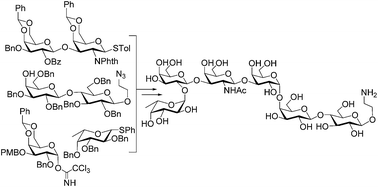
A derivative of the tumor-associated globo H antigen, a complex hexasaccharide, was synthesized by a convergent and efficient [3 + 2 + 1] strategy using various glycosylation methods. All glycosylation reactions afforded good to excellent yields and outstanding stereoselectivity, including the installation of cis α-linked D-galactose and L-fucose. The longest linear sequence for this synthesis was 11 steps from a galactose derivative 11 to give an overall yield of 2.6%. The synthetic target had a free and reactive amino group at the glycan reducing end, facilitating its conjugation with other molecules for various applications.

Introduction

Carbohydrates are abundantly displayed on the surface of both normal and tumor cells as glycoconjugates, such as glycolipids, glycoproteins, and so on. The special glycans expressed by cancer cells, which are known as tumor-associated carbohydrate antigens (TACAs), are useful molecular targets for the development of new cancer therapeutics and diagnostics. For example, the globo H antigen, a hexasaccharyl sphingolipid (1, Fig. 1), was first isolated by Hakomori and colleagues from the breast cancer cell line MCF-7.1–3 It was later discovered on many other tumors, especially breast, prostate and lung cancer, as well.4 Therefore, globo H has become an important target for anticancer vaccine development.5–12 It has been disclosed that the conjugates of globo H with proteins, such as keyhole limpet hemocyanin (KLH), could elicit strong immune responses in mice6 and humoral immune responses in cancer patients,13 demonstrating promising results in clinical trials as vaccines against breast and prostate cancer.12,13 As a result, the synthesis of globo H antigen has attracted significant attention in the past decades.12
image file: c5ra00759c-f1.tif
Fig. 1 Structure of tumor-associated globo H antigen.

Globo H was first assembled by Danishefsky and co-workers using the glycal strategy,14,15 which was subsequently refined.16 Other elegant syntheses include Schmidt's synthesis based on trichloroacetimidate glycosylation,17 Boon's synthesis employing a two-directional glycosylation strategy,18 Wong's reactivity based one-pot synthesis,19,20 Huang's thioglycoside pre-activation based one-pot synthesis,21 Wang's enzymatic synthesis,22 and Seeberger's linear and solid-phase syntheses,23,24 as well as the synthesis of globo H fragments.25,26 In spite of the great progress in total synthesis of globo H, currently it is still difficult to access, especially in the form suitable for further elaborations, thus scientist has to rely on oneself to prepare it for any investigation. As a consequence, new synthetic strategies for globo H are still desirable.

In an effort to explore TACA-based anticancer vaccines, we describe herein an efficient synthesis for a globo H derivative 2 (Scheme 1), which carried a free amino group at the glycan reducing end. It would facilitate the conjugation of this carbohydrate antigen with other molecules, such as vaccine carriers like KLH or monophosphoryl lipid A derivatives – a new type of vaccine carriers that are being explored in our laboratory,27,28 through simple linkers that do not have ill influence on the immunological properties of the resultant glycoconjugates.29 This synthesis is highlighted by combined application of different glycosylation methods to effect the assembly of specific glycosidic linkages.


image file: c5ra00759c-s1.tif
Scheme 1 Structure of the designed globo H derivative 2 and its retrosynthetic plan.

Results and discussion

As depicted in Scheme 1, successive retrosynthetic disconnections of the glycosidic bonds in the target molecule 2 resulted in monosaccharide building blocks 4, 7, 8 and 9, as well as a lactose derivative 10. Special attentions were paid to the two relatively challenging 1,2-cis-glycosidic linkages of Gal III and Fuc VI. Therefore, monosaccharides 4 and 9, instead of their oligosaccharide blocks, were utilized as glycosyl donors for constructing these glycosidic bonds. Moreover, the 2-O-positions of 4 and 9 were protected with the non-participating benzyl (Bn) group. On the other hand, the 2-O-positions of 7 and 8, as well as the resultant disaccharide 5, were protected with the participating benzoyl (Bz) and phthalyl (Phth) groups to guarantee stereoselective 1,2-trans-glycosylation reactions. Monosaccharides 7 and 8 would be coupled first to form disaccharide 5 as a building block to further improve the convergence and efficiency of the designed synthesis. Building block 10 may be readily prepared from lactose via a series of regioselective transformations.

The project commenced with the development of a new, concise and efficient route for the synthesis of 730 and 931,32 (Scheme 2), using 1133,34 as the common intermediate prepared from free D-galactose via a series of conventional reactions including peracetylation, thioglycosylation, deactylation, and regioselective acetal formation at the 4,6-O-positions. In both syntheses, a key step was the tin complex directed regioselective alkylation to give 3-O-alkylated products 12 and 13. Benzoylation of 12 readily afforded glycosyl donor 7. On the other hand, benzylation of 13 followed by oxidative hydrolysis of the thioglycoside in 14 and then trichloroacetimidation of the resultant hemiacetal gave glycosyl donor 9[thin space (1/6-em)]:[thin space (1/6-em)]β 12[thin space (1/6-em)]:[thin space (1/6-em)]1) in an excellent overall yield (42%) from 11.


image file: c5ra00759c-s2.tif
Scheme 2 Synthesis of glycosyl donors 7 and 9.

The synthesis of the disaccharide building block 10 (Scheme 3) started from lactose which was first converted into 15 according to a literature procedure.35,36 Selective protection of the cis 4′-O- and 6′-O-postions in 15 with the benzylidene ring was carried out successfully by treating 15 with benzaldehyde dimethyl acetal and camphor sulfonic acid (CSA) to afford 16 in a 74% yield. Perbenzylation of the remaining free hydroxyl groups in 16 was followed by regioselective reductive ring opening of the 4′:6′-O-benzylidene acetal in the resultant 17 to expose the 4′-OH and offer the desired building block 10 smoothly.


image file: c5ra00759c-s3.tif
Scheme 3 Synthesis of the disaccharide building block 10.

To construct the disaccharide building block 5 (Scheme 4), we conducted the glycosylation of 8, which was prepared from galactosamine by a reported procedure,30 with 7 at −5 °C in dichloromethane using methyl trifluoromethanesulfonate (MeOTf) as the promoter. While TLC indicated that the reaction was clean, to our surprise, it gave the unwanted α-disaccharide 18 as the predominant product (α[thin space (1/6-em)]:[thin space (1/6-em)]β 9[thin space (1/6-em)]:[thin space (1/6-em)]1), in spite of the presence of a participating Bz group at the 2-O-position of 7. A potential explanation for this result was that the presence of benzylidene rings in the donor and acceptor somehow decreased their reactivities to facilitate SN2 type of reaction. To deal with the problem, we converted thioglycoside donor 7 into the more reactive tricholoroacetamediate 19 in two steps, including treating 7 with N-iodosuccinimide (NIS) and silver triflate (AgOTf) in wet dichloromethane and then with trichloroacetonitrile in the presence of 1,8-diazabicycloundec-7-ene (DBU) to get mainly α-imidate (α[thin space (1/6-em)]:[thin space (1/6-em)]β 12[thin space (1/6-em)]:[thin space (1/6-em)]1). Glycosylation of 8 with 19 proceeded smoothly in the presence of trimethyl trifluoromethanesulfonate (TMSOTf) to give the desired β-disaccharide 4 (JH-1′,H-2′ = 8.1 Hz) as the major product (α[thin space (1/6-em)]:[thin space (1/6-em)]β 1[thin space (1/6-em)]:[thin space (1/6-em)]10) in a good yield (75%). Then, we attempted to selectively remove the 2′-O-benzoyl group in 5 using sodium methoxide in methanol, hoping that the fucose residue could be introduced at this stage to obtain a trisaccharide fragment for the target hexasaccharide assembly by a highly convergent [3 + 3] strategy. Surprisingly, the reaction was complex even when only a catalytic amount of sodium methoxide was used. It was possible that the Phth group was affected under this condition. Consequently, we directly employed 5 as a glycosyl donor for the assembly of the target molecule by a [3 + 2 + 1] strategy.


image file: c5ra00759c-s4.tif
Scheme 4 Synthesis of the disaccharide building block 5.

Next, our attention was focused on the installation of Gal III α-linked to Gal II (Scheme 5), which was one of the major challenges in the synthesis of globo H antigen, because in general it is relatively difficult to create the cis α-galactosidic linkage and the galactose axial 4-OH shows relatively low nucleophilicity. To cope with this issue, in addition to using the nonparticipating Bn group for 2-O-protection in donor 9, we also executed the glycosylation reaction employing a unique experimental procedure of reversed addition, i.e., slowly adding donor 9 to the solution of acceptor 10 and promoter TMSOTf at −70 °C. The reaction afforded the desired α-trisaccharide 6 (JH-1′′,H-2′′ = 3.2 Hz) in a good yield (58%) and excellent stereoselectivity (α[thin space (1/6-em)]:[thin space (1/6-em)]β 15[thin space (1/6-em)]:[thin space (1/6-em)]1). Selective removal of the 3′′-O-para-methoxybenzyl (PMB) group in 6 with DDQ gave trisaccharide 20 as a glycosyl acceptor in an 86% yield.


image file: c5ra00759c-s5.tif
Scheme 5 Assembly of the target molecule 2 from various building blocks.

The coupling reaction between 5 and 20 was accomplished smoothly in CH2Cl2 at −30 °C with NIS and AgOTf as promoters. The reaction was stereospecific to generate the β-anomer 3 only (JH-1′′′,H-2′′′ = 7.8 Hz), probably due to the participation of the neighboring 2-N,N-Phth group in donor 5 in the glycosylation. Again, attempts to selectively remove the Bz group at the Gal V 2-O-position in 3 were unsuccessful. Therefore, we decided to remove the 2-N,N-Phth protection and install the desired N-acetyl group at this stage, instead of at the final global deprotection step, and concomitantly remove the 2′′′′-O-Bz group. Refluxing 3 with hydrazine hydrate (NH2NH2·H2O) in ethanol removed the Phth and Bz groups smoothly and cleanly (monitored by TLC and MS). The freed amino group and hydroxyl group were acetylated under routine conditions, which was followed by selective removal of the 2′′′′-O-acetyl group with sodium methoxide in methanol to give 21 as a glycosyl acceptor. Finally, fucosylation of 21 with thioglycoside donor 426,37 using NIS and TfOH as promoters resulted in stereospecific formation of the desired hexasaccharide 22 (JH-Fuc-1,2 = 3.7 Hz) in a good yield (70%). We also transformed 4 into its corresponding trichloroacetimidate and tested it as a donor to react with acceptor 3 using TMSOTf as promoter; however, this reaction gave the desired hexasaccharide 22 in a very poor yield (15%). Clearly, the results of a glycosylation extensively depend on the donors used in the reaction. Attempted global deprotection of 22 to remove all of the benzylidene and Bn groups in one step by hydrogenolysis gave rather complex results, and the main side reactions were partial debenzylidenation as noticed by MS analysis. Consequently, we switched to a two-step protocol for the global deprotection, including the removal of all benzylidene groups in acetic acid and water (5[thin space (1/6-em)]:[thin space (1/6-em)]1) at 60 °C and then hydrogenolysis to remove all of the Bn groups with concomitant reduction of the azido group to a free primary amine, to yield the target molecule 2, which was fully characterized with both 1D, 2D NMR and HR MS.

In conclusion, a convergent and highly efficient [3 + 2 + 1] strategy was developed for the synthesis of a derivative of the globo H antigen. Different glycosylation methods were explored for generating the glycosidic linkages, so as to establish optimal conditions for the synthesis. As a consequence, all of the glycosylation reactions offered good to excellent yields and outstanding stereoselectivity, including the reactions to install the rather challenging cis α-linked D-galactose and L-fucose. Eventually, the target molecule 2 was prepared from a galactose derivative 11 in 11 steps and a 2.6% overall yield, which represented the longest linear synthetic sequence. The good overall yield of the current synthesis would make it feasible to prepare the title compound in relatively large quantities. Moreover, the target molecule 2 carried a free amino group at the glycan reducing end that can be selectively elaborated in the presence of free hydroxyl groups. It would facilitate regioselective conjugation of 2 with other molecules, thus it can be useful for various biological studies and applications.

Experimental section

General methods

Chemicals and materials were obtained from commercial sources and were used as received without further purification unless otherwise noted. 4 Å molecular sieves (MS) were flame-dried under high vacuum and used immediately after cooling under a N2 atmosphere. Analytical TLC was carried out on silica gel 60 Å F254 plates with detection by a UV detector and/or by charring with 15% (v/v) H2SO4 in EtOH. NMR spectra were recorded on a 400, 500, or 600 MHz machine with chemical shifts reported in ppm (δ) downfield from tetramethylsilane (TMS) that was used as an internal reference.

Ethyl 3-O-phenylmethyl-4:6-O-phenylmethylene-1-thio-β-D-galactopyranoside 1233

After the mixture of 1133 (4.0 g, 12.8 mmol) and Bu2SnO (3.83 g, 15.4 mmol) in anhydrous toluene (50 mL) was refluxed in a flask equipped with a Dean–Stark device to remove water for 6 h, the solvent was evaporated under reduced pressure. The residue was mixed with CsF (5.84 g, 38.46 mmol) and BnBr (2.28 mL, 19.2 mmol) in DMF (20 mL) and stirred at rt for 12 h. After the reaction was complete as indicated by TLC, DMF was removed under reduced pressure. The residue was dissolved in CH2Cl2 and washed with 1 M aq. NaF solution. The organic phase was dried over Na2SO4 and condensed, and the residue was purified by flash column chromatography (acetone–hexane 1[thin space (1/6-em)]:[thin space (1/6-em)]9, v/v) to produce 12 (4.28 g, 83%) as colorless syrup. 1H NMR (400 MHz, CDCl3): δ 7.58–7.54 (m, 2H, ArH), 7.40–7.35 (m, 8H, ArH), 5.45 (s, 1H, CHPh), 4.77 (s, 2H, CH2Ph), 4.36 (d, J = 9.6 Hz, 1H, H-1), 4.31 (dd, J = 12.0, 1.6 Hz, 1H, H-6), 4.18 (d, J = 2.4 Hz, 1H, H-4), 4.07 (t, J = 9.6 Hz, 1H, H-2), 3.97 (dd, J = 12.0, 1.6 Hz, 1H, H-6′), 3.50 (dd, J = 9.6, 4.0 Hz, 1H, H-3), 3.41 (s, 1H, H-5), 2.89–2.69 (m, 2H, SCH2CH3), 2.58 (bs, 1-OH), 1.33 (t, J = 7.6 Hz, 3H, SCH2CH3); 13C NMR (100 MHz, CDCl3): δ 138.0, 133.3, 130.2, 128.5, 128.0, 127.9, 126.8, 101.6, 83.1, 78.3, 73.7, 71.3, 70.4, 69.7, 69.0, 23.0, 15.1.

Ethyl 2-O-benzoyl-3-O-phenylmethyl-4:6-O-phenylmethylene-1-thio-β-D-galactopyranoside 730

After a solution of 12 (4.1 g, 10.1 mmol), Et3N (2.8 mL, 20.4 mmol), BzCl (1.42 mL, 12.2 mmol) and a few drop of DMAP in anhydrous CH2Cl2 (30 mL) was stirred at rt overnight, the reaction mixture was washed with saturated aq. NaHCO3 solution (3 × 10 mL) followed by drying over Na2SO4. The desired product 7 was obtained as colorless syrup (4.3 g, 84%) after flash column chromatography (acetone–hexane 1[thin space (1/6-em)]:[thin space (1/6-em)]10, v/v). 1H NMR (400 MHz, CDCl3): δ 8.04 (d, J = 6.5 Hz, 2H, ArH), 7.62–7.54 (m, 3H, ArH), 7.50–7.44 (m, 2H, ArH), 7.42–7.35 (m, 3H, ArH), 7.27–7.16 (m, 5H, ArH), 5.74 (t, J = 9.7 Hz, 1H, H-2), 5.52 (s, 1H, CHPh), 4.66 (q, J = 12.9 Hz, 2H, CH2Ph), 4.55 (d, J = 9.7 Hz, 1H, H-1), 4.36 (d, J = 12.9 Hz, 1H, H-6), 4.28 (d, J = 3.2 Hz, 1H, H-4), 4.02 (d, J = 12.9 Hz, 1H, H-6′), 3.75 (dd, J = 9.7, 3.2 Hz, 1H, H-3), 3.47 (s, 1H, H-5), 2.98–2.87 (m, 1H, SCH2CH3), 2.82–2.72 (m, 1H, SCH2CH3), 1.28 (t, J = 6.5 Hz, 3H, SCH2CH3); 13C NMR (100 MHz, CDCl3): δ 165.3, 137.8, 137.7, 129.9, 129.1, 128.3, 128.2, 127.8, 127.7, 126.5, 101.4, 73.4, 71.0, 70.1, 69.4, 68.7, 22.7, 14.9; HRMS (ESI TOF): calcd for C29H30NaO6S [M + Na]+ m/z, 529.1661; found, 529.1668.

2-O-Benzoyl-3-O-phenylmethyl-4:6-O-phenylmethylene-α-D-galactopyranosyl trichloroacetimidate 19

After a mixture of 7 (2.0 g, 3.95 mmol), TTBP (2.94 g, 11.8 mmol), NIS (1.77 g, 7.9 mmol) and AgOTf (2.03 g, 7.9 mmol) was stirred in wet CH2Cl2 (15 mL) at 0 °C for 2 h, the reaction mixture was allowed to warm up to rt and stirred for another 4 h. The reaction mixture was quenched with saturated aq. Na2S2O3 solution (10 mL) at 0 °C, and the mixture was diluted with CH2Cl2 and washed with brine. The organic layer was dried over anhydrous Na2SO4 and concentrated in vacuum. The residue was purified by flash column chromatography (acetone–hexane 1[thin space (1/6-em)]:[thin space (1/6-em)]4, v/v) to afford the hemiacetal as a white solid (1.38 g, 76%, an anomeric mixture with α as the major product), which was directly applied to the next reaction. DBU (4 drop) was added to a solution of the above product (1.3 g, 2.8 mmol) and trichloroacetonitrile (1.1 mL, 14.05 mmol) in anhydrous CH2Cl2 (15 mL), and the solution was stirred under an Ar atmosphere at 0 °C for 1 h. The reaction mixture was concentrated in vacuum, and the product was purified with a Et3N neutralized silica gel column to get 19 (1.42 g, 81%) as a white solid. 1H NMR (400 MHz, CDCl3): δ 8.49 (s, 1H, –NH), 7.79 (d, J = 8.1 Hz, 2H, ArH), 7.61–7.54 (m, 3H, ArH), 7.46–7.35 (m, 5H, ArH), 7.34–7.29 (m, 2H, ArH), 7.28–7.23 (m, 3H, ArH), 6.77 (d, J = 3.2 Hz, 1H, H-1), 5.74 (dd, J = 11.3, 3.2 Hz, 1H, H-2), 5.58 (s, 1H, CHPh), 4.74 (q, J = 12.9 Hz, 2H, CH2Ph), 4.43 (d, J = 3.2 Hz, 1H, H-4), 4.34 (d, J = 12.9 Hz, 1H, H-6), 4.28 (dd, J = 11.3, 3.2 Hz, 1H, H-3), 4.08 (d, J = 12.9 Hz, 1H, H-6′), 3.94 (s, 1H, H-5); 13C NMR (100 MHz, CDCl3): δ 165.6, 160.4, 137.5, 137.4, 133.3, 129.8, 129.4, 129.2, 128.4, 128.38, 128.32, 128.1, 128.0, 126.4, 101.2, 95.0, 73.6, 72.6, 71.7, 69.2, 68.9, 65.4.

Ethyl 3-O-(para-methoxyphenyl)methyl-4:6-O-phenylmethylene-1-thio-β-D-galactopyranoside 1331

It was prepared according to the same procedure used to prepare 12 except for replacing BnCl with PMBCl for the alkylation reaction. Starting from 4.0 g of 11 (12.8 mmol) and 2.6 mL of PMBCl (19.2 mmol), 4.58 g of 13 (83%) was obtained as colorless syrup. 1H NMR (400 MHz, CDCl3): δ 7.56 (d, J = 6.8 Hz, 2H, ArH), 7.40–7.31 (m, 5H, ArH), 6.86 (d, J = 8.0 Hz, 2H, ArH), 5.44 (s, 1H, CHPh), 4.69 (q, J = 12.9 Hz, 2H, PhCH2), 4.35 (d, J = 8.8 Hz, 1H, H-1), 4.31 (dd, J = 13.2, 1.6 Hz, 1H, H-6), 4.16 (d, J = 3.2 Hz, 1H, H-4), 4.04 (t, J = 8.8 Hz, 1H, H-2), 3.97 (dd, J = 13.2, 1.6 Hz, 1H, H-6′), 3.79 (s, 3H, –OCH3), 3.47 (dd, J = 8.8, 3.2 Hz, 1H, H-3), 3.41 (s, 1H, H-5), 3.88–3.69 (m, 2H, SCH2CH3), 1.32 (t, J = 7.6 Hz, 3H, SCH2CH3); 13C NMR (100 MHz, CDCl3): δ 159.4, 137.9, 130.1, 129.5, 129.0, 128.2, 126.4, 101.3, 85.3, 79.9, 73.5, 71.1, 70.1, 69.4, 68.0, 55.3, 22.9, 15.3.

Ethyl 2-O-benzoyl-3-O-(para-methoxyphenyl)methyl-4:6-O-phenylmethylene-1-thio-β-D-galactopyranoside 1432

To a solution of 13 (4.5 g, 10.4 mmol) dissolved in anhydrous DMF was added NaH (275 mg, 11.45 mmol) at 0 °C. After 45 min of stirring, BnBr (1.85 mL, 15.62 mmol) was added to the reaction mixture at 0 °C, and the reaction mixture was stirred for 6 h. When TLC showed that the reaction was completed, the reaction was quenched with H2O at 0 °C, and the mixture was diluted with EtOAc. The aqs layer was extracted with EtOAc (5 × 20 mL), and the organic phases were combined and dried over Na2SO4. The solvent was removed under reduced pressure, and the residue was purified by flash column chromatography (acetone–hexane 1[thin space (1/6-em)]:[thin space (1/6-em)]11, v/v) to obtain 14 (4.38 g, 81%) as colorless syrup. 1H NMR (400 MHz, CDCl3): δ 7.56 (d, J = 6.5 Hz, 2H, ArH), 7.48–7.26 (m, 10H, ArH), 6.86 (d, J = 8.1 Hz, 2H, ArH), 5.49 (s, 1H, CHPh), 4.88 (q, J = 12.9 Hz, 2H, CH2Ph), 4.71 (s, 2H, CH2Ph), 4.45 (d, J = 9.7 Hz, 1H, H-1), 4.31 (d, J = 11.3 Hz, 1H, H-6), 4.14 (d, J = 3.2 Hz, 1H, H-4), 3.97 (d, J = 11.3 Hz, 1H, H-6′), 3.89 (t, J = 9.7 Hz, 1H, H-2), 3.81 (s, 3H, –OCH3), 3.59 (dd, J = 9.7, 3.2 Hz, 1H, H-3), 3.35 (s, 1H, H-5), 3.93–3.83 (m, 1H, SCH2CH3), 3.82–3.72 (m, 1H, SCH2CH3), 1.35 (t, J = 6.5 Hz, 3H, SCH2CH3); 13C NMR (100 MHz, CDCl3): δ 159.3, 138.4, 138.0, 130.3, 129.4, 129.1, 128.4, 128.3, 128.2, 127.7, 127.6, 126.6, 113.8, 101.5, 84.4, 80.7, 76.9, 75.7, 74.0, 71.4, 69.8, 69.4, 55.3, 23.8, 15.1; HRMS (ESI TOF): calcd for C30H34NaO6S [M + Na]+ m/z, 545.1974; found, 545.1972.

2-O-Benzoyl-3-O-(para-methoxyphenyl)methyl-4:6-O-phenylmethylene-α-D-galactopyranosyl trichloroacetimidate 9

It was prepared according to the procedure used to prepare 7. Starting from 2.15 g of 11 (9.58 mmol), 1.77 g of 9 (81%) was obtained as a white solid. 1H NMR (400 MHz, CDCl3): δ 8.58 (s, 1H, –NH), 7.55–7.50 (m, 2H, ArH), 7.41–7.24 (m, 10H, ArH), 6.84 (d, J = 9.7 Hz, 2H, ArH), 6.63 (d, J = 3.2 Hz, 1H, H-1), 5.51 (s, 1H, CHPh), 4.82–4.69 (m, 4H, 2 × CH2Ph), 4.31–4.22 (m, 3H, H-2, H-6, H-6′), 4.08 (dd, J = 9.7, 3.2 Hz, 1H, H-3), 4.01 (dd, J = 11.3, 3.2 Hz, 1H, H-4), 3.84–3.82 (s, 1H, H-5); 13C NMR (100 MHz, CDCl3): δ 161.0, 159.2, 138.4, 137.6, 130.2, 129.8, 129.1, 128.3, 128.2, 127.5, 127.4, 127.3, 113.7, 101.2, 95.6, 75.1, 74.6, 74.0, 73.1, 72.0, 69.1, 65.3, 55.3.

2-Azidoethyl 4:6-O-phenylmethylene-β-d-galactopyranosyl-(1 → 4)-β-D-glucopyranoside 1635

The solution of 1535 (4.15 g, 10.1 mmol), benzaldehyde dimethyl acetal (1.82 mL, 12.10 mmol) and CSA (585 mg, 2.5 mmol) dissolved in anhydrous acetonitrile (50 mL) was stirred at rt with occasional vacuum application until TLC showed that the reaction was complete. The reaction was quenched with Et3N (0.7 mL, 5.04 mmol), and the mixture was diluted with CH2Cl2 (30 mL) and washed with brine. The organic phase was dried over anhydrous Na2SO4 and concentrated in vacuum. The residue was purified by flash column chromatography (MeOH–CH2Cl2, 1[thin space (1/6-em)]:[thin space (1/6-em)]9, v/v) to give 16 as a white floppy solid (3.74 g, 74.2%). 1H NMR (400 MHz, CDCl3): δ 7.55–7.50 (m, 2H, ArH), 7.38–7.31 (m, 3H, ArH), 5.61 (s, 1H, CHPh), 4.48 (d, J = 7.8 Hz, 1H, H-1), 4.35 (d, J = 7.8 Hz, 1H, H-1′), 4.23–4.12 (m, 3H, H-6a′, H-4′, H-6b′), 4.03–3.97 (m, 1H, H-6b), 3.92–3.89 (m, 2H, H-4, OCH2CH2N3), 3.77–3.70 (m, 1H, OCH2CH2N3), 3.68–3.55 (m, 4H, H-3, H-6a, H-3′, H-5′), 3.49–3.40 (m, 3H, H-2, OCH2CH2N3), 3.34 (bs, –OH), 3.32–3.25 (m, 2H, H-2′, H-5); 13C NMR (100 MHz, CDCl3): δ 138.1, 128.5, 127.6, 126.1, 103.4, 102.9, 100.8, 78.6, 75.9, 75.1, 74.8, 73.4, 72.1, 70.3, 68.8, 68.0, 66.9, 60.3, 50.6.

2-Azidoethyl 2,3-di-O-phenylmethyl-4:6-O-phenylmethylene-β-D-galactopyranosyl-(1 → 4)-2,3,6-tri-O-phenylmethyl-β-D-glucopyranoside 1736

To the solution of 16 (3.7 g, 7.41 mmol) dissolved in anhydrous DMF (30 mL) was added NaH (1.07 g, 44.44 mmol) at 0 °C. The mixture was stirred at 0 °C for 45 min, and then BnBr (6.16 mL, 51.85 mmol) was added. After stirring for another 12 h when TLC showed that the reaction was completed, it was quenched with H2O at 0 °C, and the mixture was diluted with EtOAc. The aqueous layer was extracted with EtOAc (5 × 25 mL), and the organic phases were combined and dried over Na2SO4. The desired product 17 (6.24 g, 89%) was obtained upon flash column chromatography (acetone–hexane 1[thin space (1/6-em)]:[thin space (1/6-em)]10, v/v) of the condensed product. 1H NMR (400 MHz, CDCl3): δ 7.76–7.19 (m, 30H, aromatic), 5.48 (s, 1H, CHPh), 5.21 (d, J = 10.8 Hz, 1H, CH2Ph), 4.94 (d, J = 11.0 Hz, 1H, CH2Ph), 4.87 (d, J = 11.2 Hz, 1H, CH2Ph), 4.83–4.73 (m, 5H, CH2Ph), 4.56 (d, J = 12.2 Hz, 1H, CH2Ph), 4.48 (d, J = 7.8 Hz, 1H, H-1), 4.44 (d, J = 7.8 Hz, 1H, H-1′), 4.34 (d, J = 12.0 Hz, 1H, CH2Ph), 4.22 (d, J = 12.2 Hz, 1H, H-6b′), 4.09–4.03 (m, 2H, H-4, H-6b), 3.99 (t, J = 9.0 Hz, 1H, H-6a′), 3.92–3.84 (m, 2H, H-4′, OCH2CH2N3), 3.78 (t, J = 9.3 Hz, 1H, H-2), 3.76–3.69 (m, 2H, H-6a, OCH2CH2N3), 3.36 (t, J = 9.0 Hz, 1H, H-2′), 3.56–3.36 (m, 5H, H-3, H-5, H-3′, OCH2CH2N3), 2.96 (s, 1H, H-5′); 13C NMR (100 MHz, CDCl3): δ 138.9; 138.8, 138.6, 138.5, 138.4, 138.1, 128.6, 128.4, 128.3, 128.2, 128.14, 128.11, 128.0, 127.75, 127.73, 127.6, 127.5, 127.4, 127.3, 126.6, 103.7, 102.9, 101.4, 82.9, 81.8, 81.2, 79.7, 78.8, 77.6, 75.8, 75.3, 75.15, 75.10, 73.6, 73.0, 71.6, 68.9, 68.3, 68.1, 66.4, 51.0; MALDI TOF MS (positive mode): calcd for C56H59N3NaO11 [M + Na]+ m/z, 972.41; found, 972.491.

2-Azidoethyl 2,3,6-tri-O-phenylmethyl-β-D-galactopyranosyl-(1 → 4)-2,3,6-tri-O-phenylmethyl-β-D-glucopyranoside 1036

After the mixture of 17 (2.0 g, 2.1 mmol), NaBH3CN (1.24 g, 21.05 mmol) and 4 Å MS (6 g) in dry THF (30 mL) was stirred at rt for 2 h, it was cooled to 0 °C, and then HCl (1 M in dry ether) was added dropwise until pH reached 2. The reaction mixture was stirred at 0 °C for 4 h and at rt for 8 h. When TLC showed that the reaction was completed, Et3N (1.5 mL) was added to terminate the reaction. Molecular sieves were filtered off through a Celite pat and washed with CH2Cl2 (25 mL). The filtrate and washings were combined and washed with saturated aq. NaHCO3 solution and brine, dried over Na2SO4 and condensed in vacuum. The residue was purified by flash column chromatography (acetone–hexane 1[thin space (1/6-em)]:[thin space (1/6-em)]11, v/v) to give 8 as a white floppy solid (1.42 g, 70.9%). 1H NMR (400 MHz, CDCl3): δ 7.45–7.20 (m, 30H, ArH), 5.01 (d, J = 11.3 Hz, 1H, CH2Ph), 4.92 (d, J = 11.3 Hz, 1H, CH2Ph), 4.84–4.66 (m, 6H, CH2Ph), 4.56 (d, J = 12.2 Hz, 1H, CH2Ph), 4.50–4.38 (m, 6H, H-1, H-1′, H-4′, CH2Ph), 4.10–3.94 (m, 4H, H-4, H-6b, H-6a′, OCH2CH2N3), 3.82 (dd, J = 10.5, 4.1 Hz, 1H, H-6b′), 3.76–3.57 (m, 4H, H-2, H-3′, H-6a, OCH2CH2N3), 3.55–3.32 (m, 6H, H-2′, H-3, H-5, H-5′, OCH2CH2N3); 13C NMR (100 MHz, CDCl3): δ 139.1; 138.7, 138.3, 138.2, 137.9, 128.6, 128.5, 128.4, 128.2, 128.1, 127.9, 127.8, 127.7, 127.66, 127.63, 127.3, 103.7, 102.6, 82.8, 81.8, 81.2, 79.4, 77.4, 76.6, 75.4, 75.3, 75.1, 73.6, 73.2, 72.1, 68.5, 68.3, 68.2, 66.2, 51.0; HRMS (ESI TOF): calcd for C56H61N3NaO11 [M + Na]+ m/z, 974.4204; found, 974.4194.

para-Tolyl 2-O-benzoyl-3-O-phenylmethyl-4:6-O-phenylmethylene-β-D-galactopyranosyl-(1 → 3)-2-deoxy-4:6-O-phenylmethylene-2-phthalimido-1-thio-β-D-galactopyranoside 5

The mixture of 19 (1.42 g, 2.26 mmol), 8 (950 mg, 1.89 mmol), and 4 Å MS (3.0 g) in CH2Cl2 (20 mL) was stirred at rt under an Ar atmosphere for 1 h. After being cooled to −78 °C, TMSOTf (3.42 μL, 0.019 mmol) was added, and the reaction was stirred at −65 °C for 2 h. When TLC showed that the reaction was completed, saturated aq. NaHCO3 was added to quench the reaction, and it was then diluted with CH2Cl2. Molecular sieves were removed by passing through a Celite pad. After extraction of the aq. layer with CH2Cl2 (3 × 10 mL), the combined organic phase was dried over Na2SO4 and concentrated in vacuum, and the residue was purified by silica gel flash column chromatography (acetone–hexane 1[thin space (1/6-em)]:[thin space (1/6-em)]11, v/v) to give 4 (1.34 g, 75%) as colorless syrup. [α]25D = +22.1° (c 2.0, CHCl3). 1H NMR (600 MHz, CDCl3): δ 7.72–7.69 (m, 2H, ArH), 7.67–7.64 (m, 1H, ArH), 7.60–7.50 (m, 5H, ArH), 7.49–7.45 (m, 1H, ArH), 7.39–7.34 (m, 5H, ArH), 7.28–7.11 (m, 9H, ArH), 7.08–7.05 (m, 3H, ArH), 7.00–6.97 (m, 2H, ArH), 5.59 (d, J = 10.3 Hz, 1H, H-1), 5.44 (t, J = 8.8 Hz, 1H, H-2′), 5.38 (s, 1H, CHPh), 5.30 (s, 1H, CHPh), 4.89 (dd, J = 10.3, 3.7 Hz, 1H, H-3), 4.80 (d, J = 8.1 Hz, 1H, H-1′), 4.67 (t, J = 10.3 Hz, 1H, H-2), 4.52 (d, J = 13.2 Hz, 1H, CH2Ph), 4.48–4.46 (m, 1H, H-4), 4.42 (d, J = 13.2 Hz, 1H, CH2Ph), 4.32 (d, J = 11.7 Hz, 1H, H-6b), 4.07 (d, J = 2.9 Hz, 1H, H-4′), 3.98 (d, J = 12.5 Hz, 1H, H-6a), 3.79 (d, J = 11.7 Hz, 1H, H-6b′), 3.63–3.57 (m, 2H, H-5, H-6a′), 3.54 (dd, J = 9.5, 2.9 Hz, 1H, H-3′), 3.19 (s, 1H, H-5), 2.27 (s, 3H, SPhCH3); 13C NMR (150 MHz, CDCl3): δ 168.6, 166.8, 164.9, 137.9, 137.8, 137.7, 133.8, 133.7, 133.5, 132.8, 131.7, 131.5, 129.6, 129.4, 129.1, 128.6, 128.3, 128.2, 127.9, 127.6, 127.5, 126.8, 126.6, 123.3, 123.0, 101.5, 101.1, 100.0, 99.9, 83.0, 82.9, 77.2, 75.2, 73.1, 73.0, 72.6, 70.7, 70.5, 70.2, 69.3, 68.7, 66.7, 50.6, 21.2; HRMS (ESI TOF): calcd for C55H49NNaO12S [M + Na]+ m/z, 970.2873; found, 970.2879.

2-Azidoethyl 3-O-(para-methoxyphenyl)methyl-2-O-phenylmethyl-4:6-O-phenylmethylene-α-D-galactopyranosyl-(1 → 4)-2,3,6-tri-O-phenylmethyl-β-D-galactopyranosyl-(1 → 4)-2,3,6-tri-O-phenylmethyl-β-D-glucopyranoside 6

After the mixture of 10 (1.4 g, 1.47 mmol) and 4 Å MS (4 g) in CH2Cl2 (20 mL) was stirred at rt under an Ar atmosphere for 1 h, it was then cooled to −78 °C. Then, TMSOTf (2.66 μL, 0.015 mmol) was added, which was followed by dropwise addition of 9 (1.74 g, 2.79 mmol) dissolved in anhydrous CH2Cl2. The reaction was stirred at the same temperature for 2 h. When TLC showed the reaction was completed, saturated aq. NaHCO3 solution was added to quench the reaction, and then CH2Cl2 was added for dilution. Molecular sieves were removed by passing through a Celite pad. After extraction of the aqueous layer with CH2Cl2 (3 × 10), the combined organic phase was dried over Na2SO4 and concentrated in vacuum, and the product was purified by silica gel column chromatography (acetone–hexane 1[thin space (1/6-em)]:[thin space (1/6-em)]11, v/v) to afford 6 (1.2 g, 58%, colorless syrup as the only trisaccharide). [α]25D = +26.7° (c 1.2, CHCl3). 1H NMR (400 MHz, CDCl3): δ 7.47–7.40 (m, 4H, ArH), 7.38–7.15 (m, 38H, ArH), 6.83–6.78 (m, 2H, ArH), 5.32 (s, 1H, CHPh), 5.13 (d, J = 3.2 Hz, 1H, H-1′′), 5.09 (d, J = 11.3 Hz, 1H, CH2Ph), 4.89 (d, J = 11.3 Hz, 1H, CH2Ph), 4.84–4.82 (m, 1H, CH2Ph), 4.81–4.79 (m, 2H, CH2Ph), 4.78–4.75 (m, 2H, CH2Ph), 4.74–4.71 (m, 1H, CH2Ph), 4.70–4.68 (m, 1H, CH2Ph), 4.89 (dd, J = 11.3, 9.7 Hz, 2H, CH2Ph), 4.51–4.46 (m, 3H, H-1′, H-6b′′, CH2Ph), 4.42 (d, J = 8.1 Hz, 1H, H-1), 4.37 (d, J = 11.3 Hz, 1H, CH2Ph), 4.32 (d, J = 11.3 Hz, 1H, CH2Ph), 4.23 (d, J = 11.3 Hz, 1H, CH2Ph), 4.20–4.09 (m, 2H, H-4′′, H-6b′), 4.07–3.93 (m, 5H, H-2′′, H3′′, H-4, H-4′, OCH2CH2N3), 3.87–3.78 (m, 1H, H-6a′′), 3.76 (s, 3H, OCH3), 3.74–3.38 (m, 11H, H-2′ H-3, OCH2CH2N3, H-5′′, H-6b, H-2, H-5′, H-3′, H6a′, OCH2CH2N3), 3.37–3.27 (m, 2H, H-6a, H-5); 13C NMR (100 MHz, CDCl3): δ 159.3, 139.1, 138.6, 138.5, 138.4, 138.2, 130.8, 128.5, 128.4, 128.3, 128.2, 128.1, 128.0, 127.9, 127.7, 127.6, 127.5, 127.4, 127.0, 126.4, 113.6, 103.6, 103.1, 101.0, 100.8, 82.4, 81.7, 81.3, 78.6, 75.7, 75.4, 75.2, 75.1, 74.9, 73.8, 73.1, 71.9, 71.3, 69.3, 68.3, 68.1, 67.2, 62.9, 55.2, 51.0; MALDI TOF MS (positive mode): calcd for C84H89N3NaO17 [M + Na]+ m/z, 1435.62; found, 1435.20; and HRMS (ESI TOF): calcd for C84H89N3NaO17 [M + Na]+ m/z, 1434.6090; found, 1434.6093.

2-Azidoethyl 2-O-phenylmethyl-4:6-O-phenylmethylene-α-D-galactopyranosyl-(1 → 4)-2,3,6-tri-O-phenylmethyl-β-D-galactopyranosyl-(1 → 4)-2,3,6-tri-O-phenylmethyl-β-D-glucopyranoside 20

After the mixture of 6 (1.0 g, 0.708 mmol) and DDQ (322 mg, 1.42 mmol) in CH2Cl2 and H2O (9[thin space (1/6-em)]:[thin space (1/6-em)]1, 12 mL) was stirred at 0 °C for 1 h, it was poured into saturated aq. NaHCO3 solution (50 mL). The mixture was extracted with CH2Cl2 (3 × 10 mL), and the organic payer was washed with saturated aq. NaHCO3 solution (3 × 10 mL) and water (50 mL), dried over Na2SO4, and then concentrated in vacuum. The crude product was purified with silica gel column chromatography (acetone–hexane 1[thin space (1/6-em)]:[thin space (1/6-em)]11, v/v) to give 20 (790 mg, 86.3%) as colorless syrup. [α]25D = +16.5° (c 1.73, CHCl3). 1H NMR (500 MHz, CDCl3): δ 7.43–7.37 (m, 4H, ArH), 7.36–7.28 (m, 20H, ArH), 7.27–7.19 (m, 16H, ArH), 5.38 (s, 1H, CHPh), 5.19 (d, J = 3.7 Hz, 1H, H-1′′), 5.06 (d, J = 11.7 Hz, 1H, CH2Ph), 4.89 (d, J = 11.0 Hz, 1H, CH2Ph), 4.86 (d, J = 11.7 Hz, 1H, CH2Ph), 4.81–4.75 (m, 3H, CH2Ph), 4.71 (t, J = 11.0 Hz, 2H, CH2Ph), 4.65 (d, J = 12.5 Hz, 1H, CH2Ph), 4.59 (d, J = 12.5 Hz, 1H, CH2Ph), 4.54 (d, J = 11.7 Hz, 1H, CH2Ph), 4.48 (d, J = 7.30 Hz, 1H, H-1), 4.42 (d, J = 7.30 Hz, 1H, H-1′), 4.38 (d, J = 12.5 Hz, 1H, CH2Ph), 4.31 (d, J = 11.7 Hz, 1H, CH2Ph), 4.25 (d, J = 11.7 Hz, 1H, CH2Ph), 4.19–4.14 (m, 1H, H-6a′′), 4.13–4.07 (m, 3H, H-4′, H-4′′, OCH2CH2N3), 4.06–4.01 (m, 2H, H-4, H-3′′), 3.97 (t, J = 9.5 Hz, 1H, H-2′′), 3.83 (dt, J = 11.7, 3.7 Hz, 2H, H-6b′′, H-6b′), 3.75–3.67 (m, 2H, H-6a′, OCH2CH2N3), 3.62 (t, J = 9.5 Hz, 1H, H-2′), 3.59–3.62 (m, 2H, H-5′′, H-6b), 3.51–3.38 (m, 6H, H-2, H-3, H-5′, H-3′, OCH2CH2N3), 3.35–3.29 (m, 2H, H-6a, H-5); 13C NMR (125 MHz, CDCl3): δ 139.3, 138.6, 138.4, 138.3, 138.2, 138.1, 137.7, 129.0, 128.5, 128.46, 128.40, 128.3, 128.2, 128.17, 128.14, 128.12, 127.9, 127.7, 127.66, 127.61, 127.59, 127.55, 127.2, 127.1, 126.3, 103.6, 102.9, 100.9, 100.3, 82.6, 81.7, 81.3, 78.7, 76.8, 76.4, 75.12, 75.10, 74.98, 74.92, 74.0, 73.8, 73.17, 73.13, 72.9, 72.1, 69.2, 68.7, 68.4, 68.1, 67.2, 62.8, 51.0; MALDI TOF MS (positive mode): calcd for C76H81N3NaO16 [M + Na]+ m/z, 1315.47; found, 1316.402; and HRMS (ESI TOF): calcd for C76H81N3NaO16 [M + Na]+ m/z, 1314.5515; found, 1314.5515.

2-Azidoethyl 2-O-benzoyl-3-O-phenylmethyl-4:6-O-phenylmethylene-β-D-galactopyranosyl-(1 → 3)-2-deoxy-4:6-O-phenylmethylene-2-phthalimido-β-D-galactopyranosyl-(1 → 3)-2-O-phenylmethyl-4:6-O-phenylmethylene-α-D-galactopyranosyl-(1 → 4)-2,3,6-tri-O-phenylmethyl-β-D-galactopyranosyl-(1 → 4)-2,3,6-tri-O-phenylmethyl-β-D-glucopyranoside 3

After the mixture of 5 (917 mg, 0.967 mmol), 20 (500 mg, 0.387 mmol) and 4 Å MS (3 g) in CH2Cl2 (20 mL) was stirred at rt under an Ar atmosphere for 1 h, it was cooled to −50 °C, and then NIS (261 mg, 1.16 mmol) and AgOTf (298 mg, 1.16 mmol) were added. The mixture was allowed to warm up to −30 °C and was stirred at this temperature for 2 h. When TLC showed the completion of reaction, saturated aq. NaHCO3 solution was added to quench the reaction, and CH2Cl2 was then added for dilution. Molecular sieves were removed by passing the mixture through a Celite pad. After extraction with CH2Cl2 (3 × 10), the organic phases were combined and washed with saturated aq. Na2S2O3 solution, dried over Na2SO4, and then concentrated in vacuum. The crude product was purified by silica gel column chromatography (acetone–hexane 1[thin space (1/6-em)]:[thin space (1/6-em)]9, v/v) to afford 3 (530 mg, 64.6%) as colorless syrup. [α]25D = +6.8° (c 0.8, CHCl3). 1H NMR (400 MHz, CDCl3): δ 7.70 (d, J = 6.8 Hz, 2H, ArH), 7.62–7.58 (m, 2H, ArH), 7.53–7.49 (m, 2H, ArH), 7.44–7.19 (m, 44H, ArH), 7.15–7.02 (m, 12H, ArH), 6.92 (d, J = 7.8 Hz, 2H, ArH), 5.55–5.47 (m, 1H), 5.46 (s, 1H, CHPh), 5.44 (s, 1H, CHPh), 5.43 (d, J = 7.8 Hz, 1H, H-1′′′′), 5.33 (s, 1H, CHPh), 5.02 (d, J = 10.8 Hz, 1H, CH2Ph), 4.97 (d, J = 3.9 Hz, 1H, H-1′′), 4.94 (d, J = 11.7 Hz, 1H, CH2Ph), 4.90 (d, J = 11.7 Hz, 1H, CH2Ph), 4.86 (d, J = 7.80 Hz, 1H, H-1′′′), 4.84 (d, J = 7.80 Hz, 1H, H-1′), 4.83 (d, J = 11.7 Hz, 1H, CH2Ph), 4.79 (d, J = 10.8 Hz, 1H, CH2Ph), 4.77 (d, J = 11.7 Hz, 1H, CH2Ph), 4.75 (d, J = 10.8 Hz, 1H, CH2Ph), 4.73 (d, J = 10.8 Hz, 1H, CH2Ph), 4.71 (d, J = 11.7 Hz, 1H, CH2Ph), 4.56 (d, J = 12.7 Hz, 1H, CH2Ph), 4.54 (d, J = 11.7 Hz, 1H, CH2Ph), 4.52 (d, J = 12.7 Hz, 1H, CH2Ph), 4.48 (d, J = 12.7 Hz, 1H, CH2Ph), 4.46 (d, J = 11.7 Hz, 1H, CH2Ph), 4.45 (d, J = 7.8 Hz, 1H, H-1), 4.40–4.31 (m, 3H), 4.29–4.26 (m, 1H), 4.25–4.23 (m, 1H), 4.19–4.17 (m, 1H), 4.16–4.05 (m, 4H), 4.04–3.92 (m, 4H), 3.91–3.80 (m, 4H), 3.78–3.70 (m, 3H), 3.69–3.38 (m, 9H), 3.32–3.20 (m, 4H), 2.87–2.84 (m, 1H); 13C NMR (100 MHz, CDCl3): δ 168.6, 167.0, 164.9, 139.1, 138.7, 138.6, 138.3, 138.3, 138.26, 138.23, 138.0, 137.9, 137.8, 137.7, 133.4, 133.2, 132.6, 131.5, 131.4, 129.7, 129.6, 129.1, 128.7, 128.6, 128.4, 128.32, 128.30, 128.2, 128.1, 128.0, 127.9, 127.83, 127.80, 127.7, 127.6, 127.58, 127.51, 127.3, 127.1, 126.7, 126.4, 126.2, 122.8, 103.6, 103.3, 101.5, 100.9, 100.2, 99.9, 98.9, 82.2, 81.8, 81.4, 78.8, 77.3, 77.2, 75.4, 75.3, 75.2, 75.0, 74.9, 74.88, 74.81, 74.3, 73.5, 73.3, 73.1, 72.8, 72.1, 71.9, 70.8, 69.2, 69.0, 68.8, 68.4, 68.1, 67.3, 66.7, 66.1, 63.2, 52.6, 51.0; MALDI TOF MS (positive mode): calcd for C124H122 N4NaO28 [M + Na]+ m/z, 2139.310; found, 2138.771; and HRMS (ESI TOF): calcd. for C124H122 N4NaO28 [M + Na]+ m/z, 2137.8143; found, 2137.8213.

2-Azidoethyl 3-O-phenylmethyl-4:6-O-phenylmethylene-β-D-galactopyranosyl-(1 → 3)-2-acetamido-2-deoxy-4:6-O-phenylmethylene-β-D-galactopyranosyl-(1 → 3)-2-O-phenylmethyl-4:6-O-phenyl-methylene-α-D-galactopyranosyl-(1 → 4)-2,3,6-tri-O-phenylmethyl-β-D-galactopyranosyl-(1 → 4)-2,3,6-tri-O-phenylmethyl-β-D-glucopyranoside 21

After the solution of 3 (0.50 g, 0.63 mmol) and NH2NH2·H2O (3.5 mL) in EtOH (10 mL) was refluxed for ca. 6 h, MALDI TOF MS [positive mode: calcd. for C109H116N4O25 [M + Na]+ m/z, 1905.1; found, 1905.0] showed that both the Phth group and the Bz group were completely removed. The mixture was concentrated in vacuum, and the residue was dissolved in anhydrous acetic anhydride (5 mL) and pyridine (5 mL). The solution was stirred at rt for 5 h, and at this point, MALDI TOF MS [positive mode: calcd for C113H120N4O27 [M + Na]+ m/z, 1989.1; found, 1988.7] showed the complete acetylation of the hydroxyl and amino group. The solution was concentrated in vacuum, co-evaporated twice with anhydrous toluene (5 mL), and then dried under high vacuum for 1 h. The solid residue (1.35 g, 3.37 mmol) was dissolved in MeOH (5 mL), to which was added the CH3ONa/CH3OH solution (0.4 M) until pH reached 9.5. Thereafter, the reaction mixture was heated to 70 °C for another 6 h, and MALDI TOF MS [positive mode: calcd for C111H119N4O26 [M + Na]+ m/z, 1947.1; found, 1947.3] showed complete O-deacetylation. The reaction mixture was neutralized to pH 6–7 using Amberlyst (H+) resin and then concentrated in vacuum. The crude product was purified by flash column chromatography (acetone–hexane, 1[thin space (1/6-em)]:[thin space (1/6-em)]7, v/v) to give 21 as a white solid (240 mg, 54%). [α]25D = +14.6° (c 0.53, CHCl3). 1H NMR (600 MHz, CDCl3): δ 7.52–7.45 (m, 6H, ArH), 7.39–7.18 (m, 48H, ArH), 7.13 (d, J = 7.3 Hz, 2H, ArH), 5.56 (d, J = 6.6 Hz, 1H, –NHAc), 5.52 (s, 1H, CHPh), 5.43 (s, 1H, CHPh), 5.41 (s, 1H, CHPh), 5.11 (d, J = 3.2 Hz, 1H, H-1′′), 4.99 (d, J = 11.0 Hz, 1H), 4.93 (d, J = 8.1 Hz, 1H, H-1′′′′), 4.88 (s, 1H), 4.87 (s, 1H), 4.84–4.71 (m, 7H), 4.65 (s, 1H), 4.63 (s, 1H), 4.55 (d, J = 11.7 Hz, 1H), 4.50 (d, J = 11.7 Hz, 1H), 4.48 (d, J = 6.9 Hz, 1H, H-1′′′), 4.40 (d, J = 7.3 Hz, 1H, H-1′), 4.39–4.33 (m, 3H), 4.29–4.22 (m, 3H, J = 7.3 Hz, H-1), 4.14–3.92 (m, 11H), 3.87 (d, J = 11.7 Hz, 1H), 3.82–3.65 (m, 4H), 3.63–3.57 (m, 3H), 3.55–3.34 (m, 6H), 3.33–3.26 (m, 3H), 2.92 (s, 1H), 1.53 (s, 3H, NHAc); 13C NMR (150 MHz, CDCl3): δ 171.7, 139.3, 138.6, 138.4, 138.1, 137.8, 129.0, 128.8, 128.5, 128.4, 128.3, 128.1, 127.8, 127.6, 127.1, 126.6, 126.3, 126.2, 104.6, 103.5, 103.1, 101.1, 100.9, 100.7, 100.6, 100.4, 82.0, 81.6, 81.3, 78.9, 78.5, 76.4, 75.7, 75.3, 75.1, 74.9, 74.3, 74.0, 73.5, 73.1, 72.9, 72.0, 71.6, 69.8, 69.3, 69.1, 68.4, 68.0, 67.1, 66.6, 63.1, 53.9, 51.0, 23.4; MALDI TOF MS (positive mode): calcd for C111H118N4NaO26 [M + Na]+ m/z, 1947.140; found, 1947.341; and HRMS (ESI TOF): calcd for C111H118N4NaO26 [M + Na]+ m/z, 1945.7932; found, 1945.8005.

2-Azidoethyl 2,3,6-tri-O-phenylmethyl-α-l-fucopyranosyl-(1 → 2)-3-O-phenylmethyl-4:6-O-phenylmethylene-β-D-galactopyranosyl-(1 → 3)-2-acetamido-2-deoxy-4:6-O-phenylmethylene-β-D-galactopyranosyl-(1 → 3)-2-O-phenylmethyl-4:6-O-phenylmethylene-α-D-galactopyrano-syl-(1 → 4)-2,3,6-tri-O-phenylmethyl-β-D-galactopyranosyl-(1 → 4)-2,3,6-tri-O-phenylmethyl-β-D-glucopyranoside 22

After the mixture of 4 (154 mg, 0.293 mmol), 22 (225 mg, 0.117 mmol) and 4 Å MS (3 g) in CH2Cl2 (20 mL) was stirred at rt under an Ar atmosphere for 1 h, it was cooled to −50 °C, and then NIS (79 mg, 0.531 mmol) and TfOH (1.04 μL, 0.012 mmol) were added. The mixture was allowed to warm up to −30 °C and was stirred at this temperature for 2 h. When TLC showed the completion of reaction, saturated aq. NaHCO3 solution was added to quench the reaction, and CH2Cl2 was then added for dilution. Molecular sieves were removed by passing the mixture through a Celite pad. After extraction with CH2Cl2 (3 × 10), the organic phases were combined and washed with saturated aq. Na2S2O3 solution, dried over Na2SO4, and then concentrated in vacuum. The crude product was purified by silica gel column chromatography (acetone–hexane 1[thin space (1/6-em)]:[thin space (1/6-em)]6, v/v) to give 22 (192 mg, 70%) as colorless syrup. [α]25D = +29.1° (c 2.66, CHCl3). 1H NMR (500 MHz, CDCl3): δ 7.56–7.49 (m, 3H), 7.46 (d, J = 7.3 Hz, 2H), 7.43–7.12 (m, 65H), 5.60 (d, J = 3.7 Hz, 1H, H–1′′′′′), 5.56 (d, J = 7.9 Hz, 1H, –NHAc), 5.51 (s, 1H), 5.45 (s, 1H), 5.39 (s, 1H), 5.13 (d, J = 3.1 Hz, 1H, H-1′′), 5.09 (d, J = 8.1 Hz, 1H, H-1′′′′), 5.03 (d, J = 11.6 Hz, 1H), 4.91 (d, J = 11.0 Hz, 2H), 4.87–4.75 (m, 6H), 4.74–4.56 (m, 7H), 4.55–4.41 (m, 7H, H-1′′′, H-1′, H-1), 4.38 (d, J = 12.2 Hz, 1H), 4.35–4.28 (m, 3H), 4.21–4.15 (m, 2H), 4.14–3.80 (m, 14H), 3.78–3.68 (m, 3H), 3.67–3.36 (m, 12H), 3.35–3.26 (m, 4H), 2.93 (s, 1H), 1.44 (s, 3H, –NHAc), 0.72 (d, J = 6.1 Hz, 3H, H-6′′′′′); 13C NMR (125 MHz, CDCl3): δ 170.9, 139.3, 139.1, 139.0, 138.8, 138.6, 138.5, 138.4, 138.3, 138.2, 138.1, 137.7, 129.0, 128.9, 128.7, 128.4, 128.37, 128.31, 128.27, 128.2, 128.04, 128.0, 127.9, 127.8, 127.6, 127.5, 127.4, 127.3, 127.2, 127.1, 126.6, 126.5, 126.2, 103.5, 102.1, 101.0, 100.9, 100.8, 100.7, 100.6, 96.3, 82.0, 81.7, 81.3, 79.0, 78.1, 77.4, 77.2, 75.9, 75.8, 75.5, 75.1, 74.9, 74.7, 74.5, 74.0, 73.5, 73.2, 73.1, 72.9, 72.8, 72.7, 72.14, 72.09, 72.02, 70.8, 70.5, 69.3, 69.2, 68.4, 68.0, 67.2, 66.6, 6.4, 66.1, 63.1, 54.6, 51.0, 23.4, 16.1; MALDI TOF MS (positive mode): calcd for C138H146N4NaO30 [M + Na]+ m/z, 2363.640; found, 2364.063; and HRMS (ESI TOF): calcd for C138H146N4NaO30 [M + Na]+ m/z, 2361.9920; found, 2361.9929.

2-Aminoethyl α-L-fucopyranosyl-(1 → 2)-β-D-galactopyranosyl-(1 → 3)-β-D-galactopyranosyl-(1 → 3)-α-D-galactopyrano-syl-(1 → 4)-β-D-galactopyranosyl-(1 → 4)-β-D-glucopyranoside 2

The solution of 22 (80 mg) dissolved in AcOH and H2O (5[thin space (1/6-em)]:[thin space (1/6-em)]1, 5 mL) was heated at 60 °C for 12 h, at which point MALDI TOF MS [positive mode: calcd for C138H146N4O30 [M + Na]+ m/z, 2099.3; found, 2100.4] confirmed the removal of all benzylidene groups. The solvent was removed in vacuum and the residue was co-evaporated with toluene 5 times to afford a solid product, which was briefly purified by passing through a short silica gel column with n-hexane and ethyl acetate (2[thin space (1/6-em)]:[thin space (1/6-em)]1 to 1[thin space (1/6-em)]:[thin space (1/6-em)]2) as the eluent. The product (30.0 mg, 14 μmol) was mixed with 10% Pd–C (20.0 mg) in MeOH and H2O (4[thin space (1/6-em)]:[thin space (1/6-em)]1, 10 mL), and the mixture was shaken under a H2 atmosphere at 50 psi for 48 h. The catalyst was removed by filtration through a Celite pad and the pad was subsequently washed with a mixture of MeOH and H2O (1[thin space (1/6-em)]:[thin space (1/6-em)]1). The combined filtrate was concentrated under vacuum and the residue was dissolved in 2 mL of H2O and lyophilized to provide the crude product, which was purified twice with a sephadex G-25 gel filtration column using water as the eluent followed by lyophilization to afford 2 (16.2 mg, 50%) as a white solid. [α]25D = +9.8° (c 0.4, H2O). 1H NMR (600 MHz, D2O): δ 5.04 (d, J = 3.7 Hz, 1H, H-1′′′′′), 4.70 (d, J = 2.9 Hz, 1H, H-1′′), 4.43 (d, J = 7.3 Hz, 1H, H-1′′′′), 4.38–4.34 (m, 2H, H-1′′′, H-1), 4.33 (d, J = 7.3 Hz, 1H, H-1′), 4.23–4.18 (m, 1H), 4.07–4.02 (m, 2H), 3.97–3.90 (m, 2H), 3.86–3.69 (m, 7H), 3.68–3.63 (m, 3H), 3.62–3.38 (m, 19H), 3.19 (d, J = 8.1 Hz, 1H), 3.10–3.06 (m, 2H), 1.86 (s, 3H, –NHAc), 1.03 (d, J = 6.6 Hz, 3H, H-6′′′′′); 13C NMR (125 MHz, D2O): δ 174.2, 103.9, 103.2, 102.0, 101.8, 100.4, 99.2, 78.6, 78.2, 77.1, 76.3, 76.0, 75.4, 75.0, 74.7, 74.5, 74.2, 73.5, 72.7, 72.0, 71.8, 70.8, 70.1, 69.4, 69.1, 69.0, 68.4, 68.0, 67.7, 66.7, 65.7, 60.9, 60.8, 60.3, 58.9, 51.6, 39.3, 22.2, 15.2; MALDI TOF MS (positive mode): calcd for C40H70N2NaO30 [M + Na]+ m/z, 1081.98; found, 1081.991; and HRMS (ESI TOF): calcd for C40H71N2O30 [M + H]+ m/z, 1059.4092; found, 1059.4089.

Acknowledgements

This work was supported by an NIH/NCI grant (R01 CA95142). The authors thank Dr B. Ksebati (WSU) for some of the 2D NMR measurements. The 600 MHz NMR instrument used in this research was financed by an NSF grant (CHE-0840413).

References

  1. E. G. Bremer, S. B. Levery, S. Sonnino, R. Ghidoni, S. Canevari, R. Kannagi and S. Hakomori, J. Biol. Chem., 1984, 259, 14773–14777 CAS.
  2. R. Kannagi, S. B. Levery, F. Ishigami, S. Hakomori, L. H. Shevinsky, B. B. Knowles and D. Solter, J. Biol. Chem., 1983, 258, 8934–8942 CAS.
  3. S. Menard, E. Tagliabue, S. Canevari, G. Fossati and M. I. Colnaghi, Cancer Res., 1983, 43, 1295–1300 CAS.
  4. P. O. Livingston, Semin. Cancer Biol., 1995, 6, 357–366 CrossRef CAS.
  5. T. Gilewski, G. Ragupathi, S. Bhuta, L. J. Williams, C. Musselli, X. Zhang, K. P. Bencsath, K. S. Panageas, J. Chin, C. A. Hudis, L. Norton, A. N. Houghton, P. O. Livingston and S. J. Danishefsky, Proc. Natl. Acad. Sci. U. S. A., 2001, 98, 3270–3275 CrossRef CAS.
  6. G. Ragupathi, T. Y. Park, S. Zhang, I. J. Kim, L. Graber, S. Aluri, K. O. Lloyd, S. J. Danishefsky and P. O. Livingston, Angew. Chem., Int. Ed., 1997, 36, 125–128 CrossRef CAS.
  7. S. F. Slovin, G. Ragupathi, S. Adluri, G. Ungers, K. Terry, S. Kim, M. Spassova, W. G. Bornmann, M. Fazzari, L. Dantis, K. Olkiewicz, K. O. Lloyd, P. O. Livingston, S. J. Danishefsky and H. I. Scher, Proc. Natl. Acad. Sci. U. S. A., 1999, 96, 5710–5715 CrossRef CAS.
  8. W. W. Chang, C. H. Lee, P. S. Lee, J. W. Lin, C. W. Hsu, J. T. Hung, J. J. Lin, J. C. Yu, L. E. Shao, J. Yu, C. H. Wong and A. L. Yu, Proc. Natl. Acad. Sci. U. S. A., 2008, 105, 17206 CAS.
  9. H. Y. Lee, C. Y. Chen, T. I. Tsai, S. T. Li, K. H. Lin, Y. Y. Cheng, C. T. Ren, T. J. Cheng, C. Y. Wu and C. H. Wong, J. Am. Chem. Soc., 2014, 136, 16844–16853 CrossRef CAS.
  10. Y. L. Huang, J. T. Hung, S. K. Cheung, H. Y. Lee, K. C. Chu, S. T. Li, Y. C. Lin, C. T. Ren, T. J. Cheng, T. L. Hsu, A. L. Yu, C. Y. Wu and C. H. Wong, Proc. Natl. Acad. Sci. U. S. A., 2013, 110, 2517–2522 CrossRef CAS.
  11. C. C. Wang, Y. L. Huang, C. T. Ren, C. W. Lin, J. T. Hung, J. C. Yu, A. L. Yu, C. Y. Wu and C. H. Wong, Proc. Natl. Acad. Sci. U. S. A., 2008, 105, 11661–11666 CrossRef CAS.
  12. S. J. Danishefsky, Y.-K. Shue, M. N. Chang and C.-H. Wong, Acc. Chem. Res., 2015, 48 DOI:10.1021/ar5004187.
  13. G. Ragupathi, S. F. Slovin, S. Adluri, D. Sames, I. J. Kim, H. M. Kim, M. Spassova, W. G. Bornmann, K. O. Lloyd, H. I. Scher, P. O. Livingston and S. J. Danishefsky, Angew. Chem., Int. Ed., 1999, 38, 563–566 CrossRef CAS.
  14. T. K. Park, I. J. Kim, S. H. Hu, M. T. Bilodeau, J. T. Randolph, O. Kwon and S. J. Danishefsky, J. Am. Chem. Soc., 1996, 118, 11488–11500 CrossRef CAS.
  15. M. T. Bilodeau, T. K. Park, S. H. Hu, J. T. Randolph, S. J. Danishefsky, P. O. Livingston and S. L. Zhang, J. Am. Chem. Soc., 1995, 117, 7840–7841 CrossRef CAS.
  16. J. R. Allen, J. G. Allen, X. F. Zhang, L. J. Williams, A. Zatorski, G. Ragupathi, P. O. Livingston and S. J. Danishefsky, Chem.–Eur. J., 2000, 6, 1366–1375 CrossRef CAS.
  17. J. M. Lassaletta and R. R. Schmidt, Liebigs Ann., 1996, 1417–1423 CAS.
  18. T. Zhu and G. J. Boons, Angew. Chem., Int. Ed., 1999, 38, 3495–3497 CrossRef CAS.
  19. C. Y. Huang, D. A. Thayer, A. Y. Chang, M. D. Best, J. Hoffmann, S. Head and C. H. Wong, Proc. Natl. Acad. Sci. U. S. A., 2006, 103, 15–20 CrossRef CAS.
  20. F. Burkhart, Z. Y. Zhang, S. Wacowich-Sgarbi and C. H. Wong, Angew. Chem., Int. Ed., 2001, 40, 1274–1277 CrossRef CAS.
  21. Z. Wang, L. Zhou, K. El-Boubbou, X. S. Ye and X. Huang, J. Org. Chem., 2007, 72, 6409–6420 CrossRef CAS.
  22. D. M. Su, H. Eguchi, W. Yi, L. Li, P. G. Wang and C. Xia, Org. Lett., 2008, 10, 1009–1012 CrossRef CAS.
  23. F. Bosse, L. A. Marcaurelle and P. H. Seeberger, J. Org. Chem., 2002, 67, 6659–6670 CrossRef CAS.
  24. D. B. Werz, B. Castagner and P. H. Seeberger, J. Am. Chem. Soc., 2007, 129, 2770–2771 CrossRef CAS.
  25. M. Adinolfi, A. Iadonisi, A. Ravida and M. Schiattarella, J. Org. Chem., 2005, 70, 5316–5319 CrossRef CAS.
  26. H. Tanaka, N. Matoba and T. Takahashi, Chem. Lett., 2005, 34, 400–401 CrossRef CAS.
  27. Q. L. Wang, J. Xue and Z. W. Guo, Chem. Commun., 2009, 5536–5537 RSC.
  28. Q. Wang, Z. Zhou, S. Tang and Z. Guo, ACS Chem. Biol., 2012, 7, 235–240 CrossRef CAS.
  29. Q. Wang, S. A. Ekanayaka, J. Wu, J. Zhang and Z. Guo, Bioconjugate Chem., 2008, 19, 2060–2067 CrossRef CAS.
  30. K. Daragics and P. Fugedi, Tetrahedron, 2010, 66, 8036–8046 CrossRef CAS.
  31. H. Tsukamoto, T. Suzuki and Y. Kondo, Synlett, 2007, 3131–3136 CrossRef CAS.
  32. R. Panchadhayee and A. K. Misra, Tetrahedron: Asymmetry, 2009, 20, 1550–1555 CrossRef CAS.
  33. J. Vesely, A. Rohlenova, M. Dzoganova, T. Trnka, I. Tislerova, D. Saman and M. Ledvina, Synthesis, 2006, 699–705 CAS.
  34. J. Lindberg, S. C. T. Svensson, P. Pahlsson and P. Konradsson, Tetrahedron, 2002, 58, 5109–5117 CrossRef CAS.
  35. D. K. Baeschlin, A. R. Chaperon, L. G. Green, M. G. Hahn, S. J. Ince and S. V. Ley, Chem.–Eur. J., 2000, 6, 172–186 CrossRef CAS.
  36. B. Sun, A. V. Pukin, G. M. Visser and H. Zuilhof, Tetrahedron Lett., 2006, 47, 7371–7374 CrossRef CAS PubMed.
  37. S. M. Chervin, J. B. Lowe and M. Koreeda, J. Org. Chem., 2002, 67, 5654–5662 CrossRef CAS PubMed.

Footnote

Electronic supplementary information (ESI) available: Additional experimental procedures for the synthesis of compounds 11, 8, 4, and 15, and NMR and MS spectra for all of the isolated intermediates and products. See DOI: 10.1039/c5ra00759c

This journal is © The Royal Society of Chemistry 2015
Click here to see how this site uses Cookies. View our privacy policy here.