DOI:
10.1039/C5RA00128E
(Paper)
RSC Adv., 2015,
5, 41088-41097
Bioleaching of an oil-fired residual: process optimization and nanostructure NaV6O15 synthesis from the bioleachate
Received
4th January 2015
, Accepted 29th April 2015
First published on 29th April 2015
Abstract
The main objective of this work was to optimize metals recovery from a residual oil-fired ash produced in a thermal power plant using Acidithiobacillus ferrooxidans. Recycling precious metals that exist in oil-fired ash, such as vanadium, nickel, and copper, is very important because of their adverse environmental impact and their use in industry. Response surface methodology (RSM) was used to optimize effective factors, including initial pH, initial Fe2+ concentration, and pulp density. Under optimum conditions, including an initial pH of 1.3, initial Fe2+ concentration of 2.6 g L−1, and pulp density of 1% (w/v), maximum simultaneous recoveries for V, Ni, and Cu of 74%, 95%, and 88%, respectively, were obtained. Continuing, NH4Cl was used to precipitate vanadium from the bioleachate liquor by adjusting the pH to 9–10 using a 1 M NaOH solution. The produced ammonium metavanadate was calcined at 550 °C for 4 h to produce a high purity V2O5 powder. Single-crystalline NaV6O15 nanorods were synthesized by this novel, in situ reaction–crystallization process. The morphology, crystallinity, and chemical composition of the samples were investigated by X-ray diffraction (XRD), scanning electron microscopy (SEM), and energy dispersive X-ray (EDX), respectively. The discharge capacity at the specific current density of 0.02 A g−1, was obtained 231 mA h g−1 which is applicable for a lithium-ion battery.
1. Introduction
The management of ashes generated from power plants is a major issue. If these pollutants are not properly disposed of, they create environmental problems, such as dusting, leakage of acid liquids, and pollution with heavy metals.1,2 Two types of ash are produced in power plants and classified as high-grade ash, which contains >10% vanadium together with varying amounts of iron and nickel, and low-grade ash, which contains 2–10% of said metals.3,4
Vanadium is never found in its pure state in mineral resources. The world's vanadium reserves are limited to approximately 41.3 million tons, while the average concentration of this metal in the earth's crust is reported to be in the range of 135 to 150 ppm (ref. 5–7) thus, the recovery of other resources including vanadium is important.
From the 1970s, some classical technology has been applied to recover heavy metals. The brief flow of such technology includes chloridizing roasting, water leaching, deposition, alkali melting, and thermal decomposition.8,9 This classical technology has major problems; it has a low recovery rate, produces serious environmental pollution, and is not economic.10
Bioleaching is a new method for the recovery of metal from solid wastes based on the ability of microorganisms to produce inorganic or organic acids that result in soluble and extractable elements that can be recovered.11,12 The advantages of this method are that it is simpler, cheaper, and more environmentally friendly.12,13
In bioleaching, different types of bacteria including mesophiles, moderate thermopiles, and extreme thermophiles are employed to dissolve valuable or heavy metals. The classical bioleaching bacteria belong to the genus Acidithiobacillus and are generally Gram-negative mesophilic proteobacteria. Acidithiobacillus include the iron-oxidizing L. ferrooxidans, L. ferriphilum, the sulfur oxidizing A. thiooxidans, A. caldus, and the iron and sulfur oxidizing A. ferrooxidans.14,15
In the bioleaching process, some parameters such as pulp density,11,12 reaction time,16,17 initial pH,18 initial Fe2+ concentration,19 etc. are effective. To optimize these effective factors, a methodology is required.20 RSM is a methodology based on statistical techniques for designing experiments, evaluating the effects of factors, understanding the interactions among factors, reducing the total number of experiments, building models, and searching for optimum conditions.21
Another important issue is the separation of vanadium from the leachate solution, for which several methods have been used, including precipitation,22,23 ion exchange,24,25 solvent extraction,26–28 adsorption,29,30 and electrochemistry.27 The main approach to precipitation is the use of an ammonium salt, such as ammonium sulfate or chloride, in which vanadium is precipitated as NH4VO3 and then calcined to produce V2O5.
Recently, studies have reported the useful synthesis of Na2V6O16·3H2O single-crystal nanobelts, NaV6O15, and Na2V6O16·3H2O single-crystal nanowires from V2O5 obtained from Aldrich as raw materials useful for rechargeable batteries.31–35 No report was found, however, about the bioleaching of oil-fired ash produced in power plants, vanadium precipitation from this bioleachate liquor, and the production of synthesized NaV6O15 nanorods. Therefore, this research focuses on the design of integrated processes for vanadium recovery from an ash sample to produce nanoscale NaV6O15. The process consists of a bioleaching step using A. ferrooxidans and the evaluation of three effective factors, initial pH, initial Fe2+ concentration, and pulp density, using RSM. To better understand bioleaching behavior, the kinetics in the obtained optimized condition were also studied. In the next step, vanadium was separated from the bioleachate solution using the precipitation method with NH4Cl. In the step after that, the bulk V2O5 produced in the preceding step was subjected to in situ reaction–crystallization to synthesize large-scale NaV6O15 nanorods which can be used in the production of rechargeable lithium batteries.
2. Materials and methods
2.1. Oil-fired ash
The oil-fired ash sample collected from the Shahid Salimi Power Plant, Mazandran, Iran, was applied to analyses and bioleaching studies. It was ground and sieved to less than 75 μm. The chemical composition of the sample was determined using X-ray fluorescence (XRF), and the results are shown in Table 1. Results indicated that the sample contained oxide components. Other chemical materials were analytical grade reagents, and all aqueous solutions were prepared using distilled water.
Table 1 Chemical composition of the original oil fired ash sample
| Element |
Value (g kg−1 ash) |
| V |
49 |
| Cu |
1.4 |
| Ni |
15.6 |
| Fe |
370.8 |
| Cr |
8.3 |
| Zn |
2.0 |
2.2. Microorganism, culture medium, and adaptation phase
A. ferrooxidans (PTCC 1626) was provided by the Iranian Research Organization for Science and Technology (IROST), Tehran, Iran. A 100 mL of 9 K growth medium which contained 3 g L−1 (NH4)2SO4, 0.5 g L−1 MgSO4·7H2O, 0.5 g L−1 K2HPO4·3H2O, 0.1 g L−1 KCl, 0.01 Ca(NO3)2, and 44.22 g L−1 FeSO4·7H2O were placed in 250 mL Erlenmeyer flasks to obtain bacterial growth. The flasks were shaken in an orbital shaker at 160 rpm, a temperature of 32 °C, and an initial pH of about 2.
All metals will be toxic at certain concentrations for biological activity. Prior to the bioleaching experiments, in order to increase the tolerance of the cell culture towards the toxicity, the concentration of oil-fired ash was increased step-wise in a serial sub-culturing process to determine the maximum tolerance of the bacteria.36 Adaptation of the cell culture began at 0.1 g of the oil-fired ash in 100 mL of fresh growth medium. Due to the toxicity increases within the increased pulp density, the adaptation was continued with a small step size until 4 g of oil-fired ash had been added (4% w/v). At higher concentrations of oil-fired ash, cell concentration decreased dramatically, indicating that the highest tolerable concentration of the oil-fired ash was 4% (w/v). When no improvement in bacterial growth was observed, the adaptation was discontinued. Initial inoculum percentage was 10% (v/v). Distilled water was added to the flasks to compensate for evaporation.
2.3. Analytical methods and instruments
Eh was measured using a portable Eh meter (Metrohm, Swiss) with a platinum electrode and an Ag/AgCl reference electrode, and pH was measured using a portable pH meter (Metrohm, Swiss). The number of cells in the liquid phase was counted using an improved Neubauer counting chamber under a phase-contrast microscope (Carl Zeiss, Germany). Fe3+ ions concentration was measured with a spectrophotometer (Optizen 3220UV, Korea) at a wavelength of 500 nm using 5-sulfosalicylic acid as an indicator.37 At the end of the experiments, the solution was filtered through Whatman no. 42 filter paper to separate the solids from the liquid. An inductively coupled plasma optical emission spectrometer (ICP-OES) was used following standard procedures to analyze metals concentrations after bioleaching. To study the sample mineralogy before and after the process, the XRD pattern was obtained using a Philips X'Pert MPD diffractometer (Netherlands). Field emission scanning electron microscopy (FE-SEM) images of the sample were taken using a Hitachi F4160 (Japan, Tokyo), operating at 25 kV. FE-SEM was used to monitor the morphology of synthesized NaV6O15. The sample was carefully attached to adhesive carbon tubes, and a 30 nm thick conductive coating of gold was applied to the surface. EDX analysis was also performed to identify the elemental composition of the deposits on the cathode surface.
2.4. Experimental design and optimization
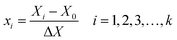
The design, mathematical modeling, and optimization of this study were performed using Design Expert 7.1.4 software. A central composite rotatable experimental design (CCD) was used for the three independent variables of initial pH, initial Fe2+ concentration, and pulp density on the process efficiency. Each factor was varied at five different levels based on the RSM, and the coded values of the variables are given in Table 2. In this study, vanadium, nickel, and copper recovery percentages in the different empirical models are the responses. The variables of Xi were coded as xi according to the following equation:37| |
 | (1) |
where xi is dimensionless coded value, Xi is real value, X0 is the value of Xi at the center point and ΔXi is the step change of real value of the variable i.
Table 2 Experimental variables at different levels used for bioleaching experiment
| Factor |
Code |
Unit |
Low axial (−1.68) |
Low factorial (−1) |
Centre point (0) |
High factorial (+1) |
High axial (+1.68) |
| Initial pH |
A |
— |
1 |
1.3 |
1.8 |
2.2 |
2.5 |
| Initial Fe2+ conc. |
B |
g L−1 |
1 |
2.62 |
5 |
7.38 |
9 |
| Pulp density |
C |
% w/v |
0.2 |
0.97 |
2.10 |
3.23 |
4 |
Three factors in CCD resulted in 20 runs of experiments (=2k + 2k + cp), and k represented the number of variables. There were 6 runs of center point experiments (cp) that evaluated the pure error augmented with 8 factorial (2k) and 6 axial (2k) experimental runs. The analysis of variance (ANOVA) of the polynomial model was carried out to evaluate the significant parameters in this study. To check the validation of the obtained models, an experiment at optimal factor levels was performed, and the experimental result was compared with the result predicted by the model.
2.5. Vanadium precipitation procedure
In order to selectively precipitate vanadium, first the other ions in the solution (e.g., Si, Fe, Ni, and Cu) were separated using pH levels increasing up to 9–10 using 1 M NaOH solution.38,39 The pH of the solutions was controlled using sodium hydroxide. In the next step, ammonium metavanadate was crystallized by the addition of NH4Cl in solid form at pH 8.0–9.0. High quality V2O5 was obtained by calcining the ammonium metavanadate at 550 °C for 4 h in a muffle furnace.
NaV6O15 nanorods were prepared by a hydrothermal method. To synthesize NaV6O15 nanorods, V2O5 powder (0.364 g) was dispersed in 30 mL distilled water, and then 5 mL H2O2 (30%) and NaCl (1.5 g, 99.5%) were added under vigorous magnetic stirring at room temperature and kept in this condition for 2 h, after which an orange suspension solution was obtained. The NaV6O15 nanorods as product were washed several times with deionized water and dried at room temperature under vacuum conditions. The dried sample was finally annealed at 500 °C in air.
2.6. Electrochemical characteristics
The electrochemical performance of the synthesized NaV6O15 sample was measured with a beaker-type three-electrode cell. The electrolyte was 1 M LiClO4 in ethyl carbonate (EC) and diethyl carbonate (DEC) (EC/DEC 1![[thin space (1/6-em)]](https://www.rsc.org/images/entities/char_2009.gif) :1 v/v). The reference electrode (RE) and counter electrode (CE) were prepared by spreading and pressing lithium metal onto titanium mesh (100 mesh). The cell was assembled in a glove box filled with pure argon gas. The working electrode (WE) was mixed with active materials NaV6O15, acetylene black, and polytetrafluoroethylene (PTFE) in a weight ratio of 80:15:5 using N-methylpyrrolidone as solvent. The black slurry was uniformly mixed under ultrasonic conditions for 2 minutes, then spread and pressed on a similar titanium mesh, followed by drying at 303 K for 24 h under vacuum which served as a current collector.
:1 v/v). The reference electrode (RE) and counter electrode (CE) were prepared by spreading and pressing lithium metal onto titanium mesh (100 mesh). The cell was assembled in a glove box filled with pure argon gas. The working electrode (WE) was mixed with active materials NaV6O15, acetylene black, and polytetrafluoroethylene (PTFE) in a weight ratio of 80:15:5 using N-methylpyrrolidone as solvent. The black slurry was uniformly mixed under ultrasonic conditions for 2 minutes, then spread and pressed on a similar titanium mesh, followed by drying at 303 K for 24 h under vacuum which served as a current collector.
3. Results and discussion
3.1. Cells adaptation
To find the maximum tolerable concentration of the oil-fired ash, the cell culture was adapted in three steps. First, 0.1 g of ash was added to 100 mL of fresh growth medium. After 4 days, the bacterial count reached 108 to 109 cells per mL variation in cell concentration, and it was concluded that the microorganisms had reached the stationary phase and could tolerate 0.1 g of oil-fired ash.
In the second step, adaptation was continued to the addition of 1 g of oil-fired ash (1% w/v). The amount of ash added to the medium at this point was 0.5 g and the bacterial count was 107 to 108 cells per mL. Adaptation continued up to the addition of 4 g of ash (4% w/v). In the third step, it was found that concentrations of ash greater than 4 g decreased the cell concentration to <106 cells per mL; this indicated that the highest tolerable concentration of the oil-fired ash was at 4% (w/v).
Cell cultures adapted from 1% to 4% (w/v) were selected for metals recovery and to choose a working cell culture, because there is a trade-off between cell concentration in culture and pulp density to which the cell culture is adapted.10,36 Metals recovery was analyzed using the ICP method. The results showed that higher metal recovery was achieved for the cell culture adapted to a 4% (w/v) pulp density. This cell culture was selected as the working cell culture for the remaining experiments.
3.2. Statistical analysis
The CCD that presents the experimental conditions and their responses is shown in Table 3. The ANOVA for each model is shown in Table 4. The quadratic model was selected for V recovery and the reduced cubic model was chosen for Ni and Cu recovery. P-values of less than 0.05 indicated that the models were statistically significant at a 95% confidence level. A high R-squared implied that the models were a good fit and could be used to navigate the design space. The coefficient of variation (CV) is defined as the ratio of the standard deviation to the mean and measures the reproducibility of the model; a model can be considered reasonably reproducible if the CV is <10%.8 Results of this study showed that all models except vanadium had CV values of <10%. Adequate precision measures signal to noise ratio and is desirable if it is >4. Results showed that the adequate precision for each model was >4, indicating an adequate signal.
Table 3 Experimental plan based on CCD and the results of metals recoveries
| Run |
Factors |
Responses |
| Initial pH |
Initial Fe2+ conc. (g L−1) |
Pulp density (% w/v) |
V recovery (%) |
Ni recovery (%) |
Cu recovery (%) |
| 1 |
1.3 |
7.38 |
0.97 |
75.6 |
98.9 |
71.8 |
| 2 |
2.2 |
2.62 |
3.23 |
13.6 |
86.3 |
57.2 |
| 3 |
1.8 |
5.00 |
2.10 |
32.0 |
91.4 |
58.1 |
| 4 |
1.8 |
5.00 |
2.10 |
33.9 |
92.4 |
58.4 |
| 5 |
1.8 |
5.00 |
0.20 |
84.0 |
100 |
100 |
| 6 |
1.8 |
1.00 |
2.10 |
26.8 |
92.2 |
66.1 |
| 7 |
2.5 |
5.00 |
2.10 |
21.0 |
85.6 |
55.6 |
| 8 |
1.8 |
9.00 |
2.10 |
56.4 |
100 |
75.4 |
| 9 |
2.2 |
2.62 |
0.97 |
18.6 |
100 |
74.4 |
| 10 |
1.8 |
5.00 |
4.00 |
28.2 |
83.4 |
51.4 |
| 11 |
1.3 |
2.62 |
3.23 |
50.4 |
87.0 |
62.4 |
| 12 |
1.8 |
5.00 |
2.10 |
32.6 |
88.2 |
56.3 |
| 13 |
1.0 |
5.00 |
2.10 |
85.6 |
95.9 |
67.4 |
| 14 |
2.2 |
7.38 |
0.97 |
33.0 |
100 |
76.7 |
| 15 |
1.8 |
5.00 |
2.10 |
32.3 |
91.0 |
60.9 |
| 16 |
1.3 |
2.62 |
0.97 |
86.7 |
100 |
91.7 |
| 17 |
1.8 |
5.00 |
2.10 |
37.5 |
93.3 |
53.3 |
| 18 |
1.8 |
5.00 |
2.10 |
34.4 |
84.9 |
57.3 |
| 19 |
1.3 |
7.38 |
3.23 |
48.1 |
79.8 |
55.0 |
| 20 |
2.2 |
7.38 |
3.23 |
12.2 |
71.8 |
25.5 |
Table 4 ANOVA for response surface models applied
| Response |
Model |
P value |
R-squared |
Adj R-squared |
CV (%) |
Adeq precision |
| V Recovery |
Full quadratic |
0.0001 |
0.93 |
0.86 |
20.68 |
12.47 |
| Ni recovery |
Reduced cubic |
0.0003 |
0.91 |
0.84 |
3.44 |
12.56 |
| Cu recovery |
Reduced cubic |
<0.0001 |
0.96 |
0.94 |
6.17 |
24.42 |
3.3. Models for metals recovery
Eqn (2)–(4) were obtained from the 20-batch runs using the Design-Expert 7.1.4 software. By applying multiple regression analysis, the experimental results of the CCD were fitted with a modified quadratic and cubic models polynomial equation. The empirical relationship between vanadium, nickel, and copper and the three test variables in coded units obtained by the application of CCD is given by:| | |
V recovery (%) = 34.07 − 21.38A + 3.61B − 13.44C + 3.32AB + 4.77AC − 0.87BC + 4.99A2 + 0.85B2 + 5.98C2
| (2) |
| | |
Ni recovery (%) = 90.28 − 1.82A + 2.33B − 4.93C − 1.23AC − 2.57BC − 0.35A2 + 1.55B2 − 5.18A2B − 4.33A2C
| (3) |
| | |
Cu recovery (%) = 57.77 − 4.90A + 2.77B − 14.37C − 2.78AC − 2.70BC + 3.49B2 + 5.25C2 − 5.81ABC − 9.85A2B
| (4) |
where A is initial pH, B is initial Fe2+ concentration, and C is pulp density. It should be noted that polynomial models are reasonable approximations of the true functional relationship over relatively small regions of the entire space of independent variables. Fig. 1 shows predicted values versus actual data. The clustering of points around the diagonal line indicates a satisfactory correlation between the experimental data and the predicted values, confirming the robustness of the model.11 The relatively high R2 and adjusted R2 (Radj2) values presented in Table 4 indicate that the model for metals recovery is capable of representing the system under the given experimental conditions.
 |
| | Fig. 1 Actual vs. predicted values for (a) V recovery, (b) Ni recovery and (c) Cu recovery. | |
3.4. Contour plots in metals recovery
3.4.1. The bioleaching of vanadium. Fig. 2(a and b) represent the two-dimensional response surfaces of vanadium recovery (%) of the relationships between different parameters at the optimized values. As clearly shown in Fig. 2(a), there is a combined effect of initial pH and initial Fe2+ concentrations at the specific pulp density of 1% (w/v). A decreasing initial pH had a positive effect on increasing vanadium recovery, but the initial Fe2+ was not very effective on the recovery of vanadium in this range. At low pH, the activity of the bacteria was increased and, therefore, the recovery of metals was improved. The maximum vanadium recovery (74%) was observed for an initial pH of 1.4 and initial Fe2+ concentration of 5 g L−1. The relationship between initial pH and pulp density at the specific initial Fe2+ concentration is shown in Fig. 2(b). According to this figure, the amount of vanadium recovered will be increased by pulp density decreasing from 3.23% (w/v) to 1% (w/v) and initial pH decreasing from 2.2 to 1.3. Increasing the pulp density resulted in low dissolved oxygen and increased heavy metals concentration which inhibited microbial growth. A maximum recovery of vanadium of >74% was observed in values of initial pH 1.4 and pulp density 1.54% (w/v) at the constant initial Fe2+ concentration of 5 g L−1.
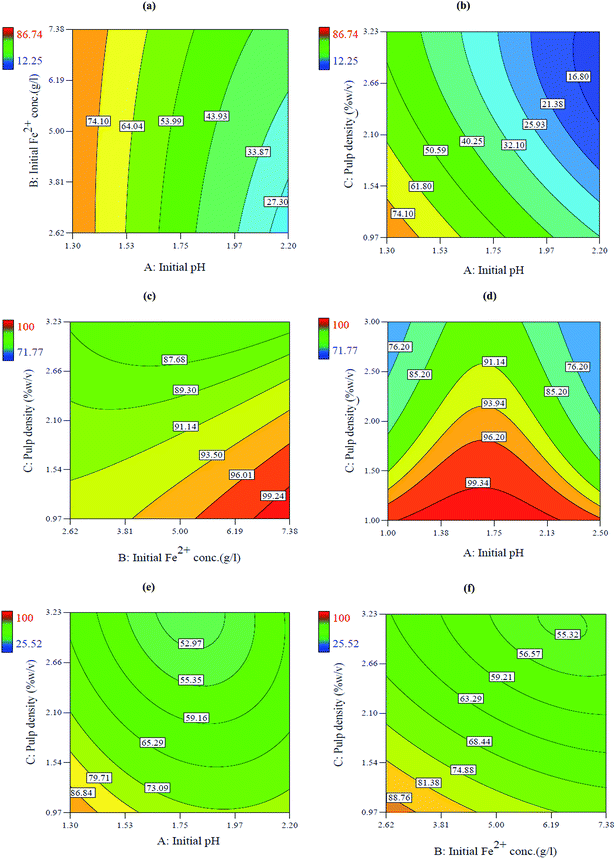 |
| | Fig. 2 Contour plots of the interactive effects: (a) for initial pH and initial Fe2+ concentration at the constant pulp density 1% (w/v) for V recovery, (b) for initial pH and pulp density at the constant initial Fe2+ concentration 5 g L−1 for V recovery, (c) for initial Fe2+ and pulp density at the constant initial pH 1.7 for Ni recovery, (d) for initial pH and pulp density at the constant Fe2+ concentration 7.4 g L−1 for Ni recovery (e), for initial pH and pulp density at the constant initial Fe2+ 2.6 g L−1 for Cu recovery (f) for initial Fe2+ and pulp density at the initial pH 1.3 for Cu recovery. | |
3.4.2. The bioleaching of nickel. Fig. 2(c) shows the interaction between initial Fe2+ concentration and pulp density at the constant initial pH of 1.7. According to this figure, the amount of recovered nickel increased by initial Fe2+ concentration increasing from 2.6 g L−1 to 7.4 g L−1 and pulp density decreasing from 3.2% (w/v) to 1% (w/v). At low pulp densities, the oxygen and CO2 were effectively dissolved and transferred to bacteria, resulting in increased bacterial activity and, therefore, improved metals recovery.19 The interaction between initial pH and pulp density at the constant of initial Fe2+ of 5 g L−1 for nickel recovery is shown in Fig. 2(d). Clearly, in a pulp density of 1.4% (w/v) and initial pH of 1.75 at an initial Fe2+ concentration of 5 g L−1, maximum nickel recovery reached 100%. Decreasing pH to about 1.75 resulted in increased bacterial growth and activity, and therefore the production of Fe3+ as the oxidant agent was increased in the bioleaching medium.17
3.4.3. The bioleaching of copper. Fig. 2(e and f) show the relationships between different parameters at the optimized values for copper recovery. Fig. 2(e) shows the effects of the interaction between pulp density and initial pH on copper recovery at a constant initial Fe2+ concentration of 2.6 g L−1. As can be seen in this figure, the amount of copper recovered is increased by decreasing initial pH and pulp density values. Increased pulp density led to increased shear stress between the solid particles (ash particles) and bacteria, and therefore recovery was decreased due to the disruption of bacteria. It is clear that the pH of the medium affected the activity of the microorganisms, and maximum activity of bacteria was found under strong acid conditions.18 According to Fig. 2(f) a maximum recovery of Cu >88% was observed in pulp density of 1.2% (w/v) and initial Fe2+ concentration of 3.2 g L−1 at the constant initial pH of 1.3.
3.5. Process optimization
It should be noted that the goal of optimization is to find a good set of conditions that will meet all of the goals, which are combined into an overall desirability function. Desirability is an objective function that ranges from zero outside of the limits to one at the goal. The program seeks to maximize this function. By starting from several points in the design space, chances for finding the best local maximum are high. In this study, optimization was based on the simultaneous maximization of vanadium, nickel, and copper recovery. The optimum conditions proposed by the model were an initial pH of 1.3, initial Fe2+ concentration of 2.6 g L−1, and pulp density of 1% (w/v), with which the maximum achieved recovery of vanadium was 80%, of nickel was 100%, and of copper was 90%.
3.6. Confirmatory experiment
To verify the suitability of the defined model equation and optimized conditions, an experiment was carried out with the parameters suggested by the model. Table 5 presents the results of the experiment conducted under optimal conditions, where the experimental values for vanadium, nickel, and copper were found to be 74%, 95%, and 88%, respectively. The results of analysis indicated that the experimental values were in good agreement with the predicted values, and these are reasonably good for the confirmation of the developed models. These results confirmed the validity of the model, and the experimental values were determined to be quite close to the predicted values. The 95% confidence interval (C.I.) is the range in which the process average was expected to fall 95% of the time.
Table 5 Verification of optimum condition suggested by the model
| Response (%) |
Target |
Correlation predicted (%) |
Confirmation experiment (%) |
95% C.I. low |
95% C.I. high |
| V recovery |
Maximize |
80.84 |
74 |
65.70 |
95.98 |
| Ni recovery |
Maximize |
100 |
95 |
94.91 |
105.09 |
| Cu recovery |
Maximize |
90.80 |
88 |
83.89 |
97.72 |
3.7. Kinetic study
Fig. 3(a) shows the extent of leaching of the metals under optimal conditions by leaching time. Ultimate metal recoveries were 76% for V, 97% for Ni, and 90% for Cu after 15 days. Fig. 3(b) shows the growth characteristics of A. ferrooxidans versus time under optimal conditions for 15 days. Interestingly, there was a decrease in the number of cells in the liquid phase during the initial growth period, which is attributed to the adsorption of cells to the oil-fired ash in the first 4 days. Moreover, the pH value increased rapidly and reached its maximum value due to bacteria lysis, ferrous ion oxidation or acid-consuming of carbonates, sulfate and silicate compound leaching. After 4 days, the bacterial growth and cell count began to increase, which was accompanied by a decrease in pH. The oxidation of Fe2+ to Fe3+ by the bacteria resulted in increased Eh.
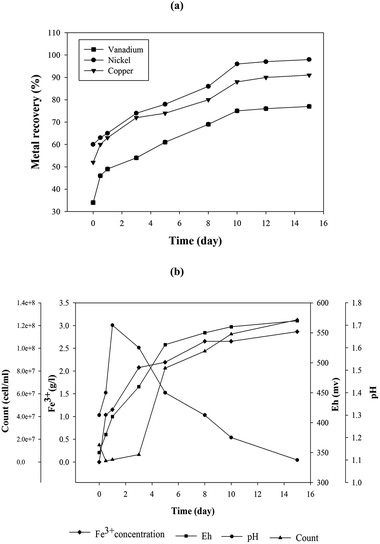 |
| | Fig. 3 (a) Metals bioleaching recovery versus time under optimal conditions, (b) growth characteristics of A. ferrooxidans cells versus time under optimal conditions. | |
Therefore, increasing Eh could be used as a criterion for bacterial oxidation of Fe2+ to Fe3+ and their activity. All these trends show that the bioleaching was done very well.
3.8. Purification of vanadium
After bioleaching many ions exist in the bioleachate liquor. Before precipitating vanadium from the solution, the other ions, such as Si, Fe, Ni, and Cu, must be separated from the solution. It was found that increasing pH to 9–10 using 1 M NaOH could remove them from the solution. Vanadium in this pH is in the form of NaVO3, and, to precipitate it, NH4Cl was added to the solution; then the ammonium metavanadate (NH4VO3) that has low solubility can be crystallized.28 The main chemical reaction can be described by the following equation in a pH range of 9.0–10.0:| | |
NaVO3 + NH4Cl → NH4VO3↓ + NaCl
| (5) |
After calcining the ammonium metavanadate at 550 °C for 4 h in a muffle furnace, a V2O5 product with >98% purity meeting the standard specification was obtained. The overall process is summarized in Fig. 4.
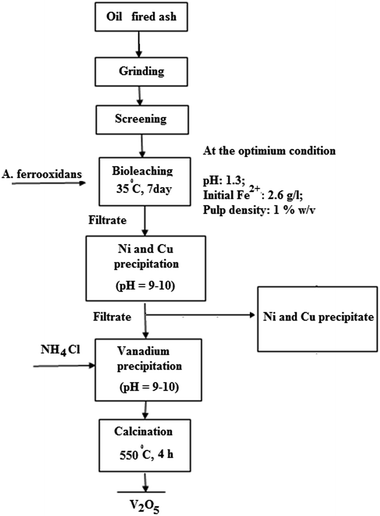 |
| | Fig. 4 Procedure of used integrated process for vanadium purification from the oil fired ash. | |
A vanadium-based compound, NaV6O15 (Na0.33V2O5) has recently attracted much interest due to its novel physical, magnetic, and superconductive properties at critical conditions; however, little systematic work has been conducted on it as a cathode material for rechargeable lithium batteries, much less on nano-scaled NaV6O15. It has been reported that nano-scaled materials of NaV6O15 can generally provide a high specific surface area and short ion diffuse pathway, which are beneficial to battery performance.35
In this work, highly ordered NaV6O15 single crystalline nanorods were prepared from V2O5 produced in the preceding step and H2O2 and NaCl as the precursors. The reaction mechanism involved is tentatively proposed as follows:35
| | |
3V2O5 + 6H2O2 → 6HVO4 + 3H2O
| (6) |
| | |
6HVO4 + 18NaCl + 6H2O → 6Na3VO4 + 18HCl + 3O2
| (7) |
| | |
6Na3VO4 + 12HCl → 6NaVO3 + 12NaCl + 6H2O
| (8) |
| | |
6NaVO3 + 4HCl + 2H2O + 2O2 → 2NaV3O8 + 4NaCl + 4H2O2
| (9) |
| |
 | (10) |
The overall reaction:
| |
 | (11) |
Fig. 5 shows the mineralogy of the sample using an XRD analyzer. Different crystalline phases of the sample before treatment are shown in Fig. 5(a). The XRD pattern of the sample after the bioleaching and purification process in order to identify the phase of vanadium is shown in Fig. 5(b). Results showed that the monoclinic layered NaV6O15 phase with lattice parameters a = 15.349 Å, b = 3.610 Å, c = 10.08 Å, and β = 108.62°, which are in good agreement with values found in the literature (JCPDS no. 77-0146), can be well indexed. The morphology of the synthesized NaV6O15 sample is shown in Fig. 6. The FE-SEM images show that the NaV6O15 sample has straight rods (Fig. 6(a)). According to Fig. 6(b), images with a 60000× magnitude showed that the NaV6O15 sample is 200–300 nm in width and several micrometers in length. This indicates that NaV6O15 nanorods can be easily produced under the present experiment conditions. Fig. 6(c) shows the EDX of the NaV6O15 nanorods. Results showed that the product consists of Na, V, and O in an atomic ratio of 1:5.7:14.25, and there is no Fe, Ni, or Si in the resulting product. The results from XRD and EDX studies further confirmed that the product is NaV6O15.
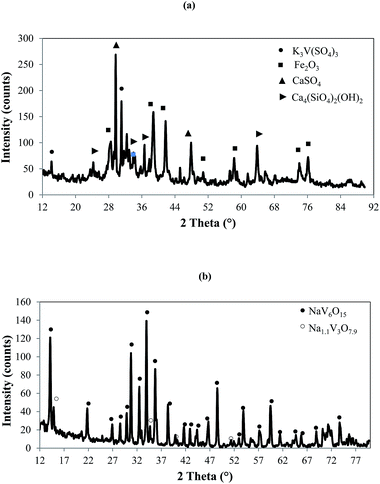 |
| | Fig. 5 XRD pattern of the sample, (a) before bioleaching and purification process, (b) after bioleaching and purification process. | |
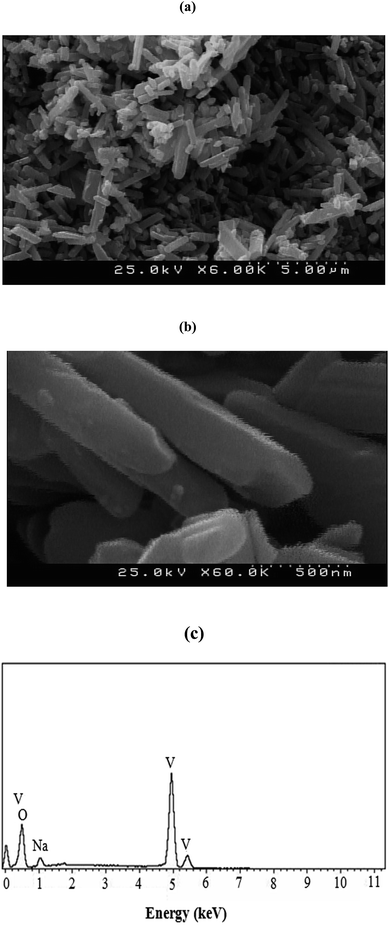 |
| | Fig. 6 FESEM images from NaV6O15 nanorods in different magnifications (a) magnification of 6000×, (b) magnification of 60000× (c) EDX of NaV6O15 nanorods. | |
The rechargeable ability of the NaV6O15 nanorod for the Li-battery was surveyed, and the cycling behavior at the specific current density of 0.02 A g−1 is shown in Fig. 7. Results showed that the sample has good cycling performance and could recharge acceptably for 20 cycles. The amount of discharge capacity was 231 mA h g−1 in the first cycle, which is near the discharge capacity reported in the literature.37,40
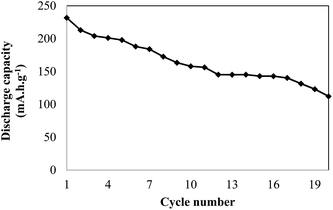 |
| | Fig. 7 Cycle performance of NaV6O15 nanorods electrode at current density 0.02 A g−1. | |
4. Conclusion
An oil-fired ash generated in a local Iranian power station was selected as a secondary source of valuable metals. The recovery of V, Ni, and Cu during bioleaching was optimized using RSM. Under optimum conditions, leaching of V, Ni, and Cu reached 74%, 95%, and 88%, respectively. Vanadium can be purified in the solution using other separated ions in the bioleachate liquor and increasing pH to 9–10. The V2O5 purity of 98% was reached by calcining ammonium metavanadate resulting from vanadium precipitation in the pregnant liquid using NH4Cl. Highly ordered single crystalline NaV6O15 nanorods were successfully synthesized from V2O5 with high purity. The nature of the crystallinity and morphology of the NaV6O15 nanorods was confirmed by XRD, FESEM EDX, and recharge ability. The discharge capacity was 231 mA h g−1 at the constant 0.02 A g−1.
Acknowledgements
This research was supported by Iran National Science Foundation (INSF) under grant no. 93015364. The authors are grateful to Stat-Ease, Minneapolis, MN, USA, for the provision of the Design-Expert 7.1.4 package.
References
- M. H. Al-Malack, A. A. Bukhari, O. S. Al-Amoudi, H. H. Al-Muhanna and T. H. Zaidi, Int. J. Environ. Res., 2013, 7(2), 455–466 CAS.
- J. Yang, Q. Wang, Q. Wang and T. Wu, Bioresour. Technol., 2009, 100, 254–260 CrossRef CAS PubMed.
- M. V. Tsygankova, V. I. Bukin, E. I. Lysakova, A. G. Smirnova and A. M. Reznik, Russ. J. Non Ferr. Met., 2011, 52, 19–23 CrossRef.
- J. C. Lee and B. D. Pandey, Waste Manage., 2012, 32, 3–18 CrossRef CAS PubMed.
- R. R. Moskalyk and A. M. Alfantazi, Miner. Eng., 2003, 16, 793–805 CrossRef CAS.
- D. He, Q. Feng, G. Zhang, L. Ou and Y. Lu, Miner. Eng., 2007, 20, 1184–1186 CrossRef CAS PubMed.
- P. R. Taylor, S. A. Shuey, E. E. Vidal and J. C. Gomez, Miner. Metall. Process., 2006, 23, 80–86 CAS.
- M. Motaghed, S. M. Mousavi, S. O. Rastegar and S. A. Shojaosadati, Bioresour. Technol., 2014, 171, 401–409 CrossRef CAS PubMed.
- B. Xin, W. Jiang, H. Aslam, K. Zhang, C. Liu, R. Wang and Y. Wang, Bioresour. Technol., 2012, 106, 147–153 CrossRef CAS PubMed.
- S. O. Rastegar, S. M. Mousavi and S. A. Shojaosadati, Bioresour. Technol., 2014, 167, 61–68 CrossRef CAS PubMed.
- D. Santhiya and Y. P. Ting, J. Biotechnol., 2006, 121, 62–74 CrossRef CAS PubMed.
- F. Amiri, S. Yaghmaei and S. M. Mousavi, Bioresour. Technol., 2011, 102, 1567–1573 CrossRef CAS PubMed.
- D. Mishra, D. Kim, D. Ralph, J. Ahn and Y. Rhee, Hydrometallurgy, 2007, 88, 202–209 CrossRef CAS PubMed.
- J. Park, Y. Han, E. Lee, U. Choi, K. Yoo, Y. Song and H. Kim, Sep. Purif. Technol., 2014, 133, 291–296 CrossRef CAS PubMed.
- A. Bharadwaj and Y. P. Ting, Bioresour. Technol., 2013, 130, 673–680 CrossRef CAS PubMed.
- D. J. Kim, D. Pradhan, J. G. Ahn and S. W. Lee, Hydrometallurgy, 2010, 103, 136–143 CrossRef CAS PubMed.
- D. Pradhan, D. J. Kim, J. G. Ahn, G. R. Chaudhury and S. W. Lee, J. Ind. Eng. Chem., 2010, 16, 866–871 CrossRef CAS PubMed.
- M. Shahrabi-Farahani, S. Yaghmaei, S. M. Mousavi and F. Amiri, Sep. Purif. Technol., 2014, 132, 41–49 CrossRef CAS PubMed.
- Z. Lin, Q. Guan-zhou, H. Yue-hua, S. Xiao-jun, L. Jian-hua and G. Guo-hua, Trans. Nonferrous Met. Soc. China, 2008, 18, 1415–1420 CrossRef.
- M. Ijadi Bajestani, S. M. Mousavi and S. A. Shojaosadati, Sep. Purif. Technol., 2014, 132, 309–316 CrossRef CAS PubMed.
- B. S. Kaith, R. Sharma, S. Kalia and M. S. Bhatti, RSC Adv., 2014, 4, 40339–40344 RSC.
- Z. Zhao, H. Long, X. Li, Y. Fan and Z. Han, Hydrometallurgy, 2012, 115–116, 52–56 CrossRef CAS PubMed.
- Y. Liu, J. Zou, X. Zeng and W. Ding, RSC Adv., 2015, 5, 7687–7696 RSC.
- L. Zeng, Q. G. Li and L. S. Xiao, Hydrometallurgy, 2009, 97, 194–197 CrossRef CAS PubMed.
- J. Hu, X. W. Wang, L. S. Xiao, S. R. Song and B. Q. Zhang, Hydrometallurgy, 2009, 95, 203–206 CrossRef CAS PubMed.
- L. Zeng and C. Y. Cheng, Hydrometallurgy, 2009, 98(1–2), 10–20 CrossRef CAS PubMed.
- Y. Chen, Q. Feng, Y. Shao, G. Zhang, L. Ou and Y. Lu, Int. J. Miner. Process., 2006, 79, 42–48 CrossRef CAS PubMed.
- Q. Hua, J. Zhao, F. Wang, F. Huo and H. Liu, Sep. Purif. Technol., 2014, 131, 94–101 CrossRef PubMed.
- B. Zhang, C. Tian, Y. Liu, L. Hao, Y. Liu, C. Feng, Y. Liu and Z. Wang, Bioresour. Technol., 2014, 179, 91–97 CrossRef PubMed.
- C. Namasivayam and D. Sangeetha, Adsorption, 2006, 12, 103–117 CrossRef CAS PubMed.
- C. Presura, M. Popinciuc, P. H. M. Van Loosdrecht, D. Van der Marel, M. Mostovoy, T. Yamauchi and Y. Ueda, Rev. Lett., 2003, 90, 026402/1–026402/4 CAS.
- J. Yu and J. C. Yu, Mater. Chem. Phys., 2007, 104, 362–366 CrossRef CAS PubMed.
- H. H. Ou and S. L. Lo, Sep. Purif. Technol., 2007, 58, 179–191 CrossRef CAS PubMed.
- S. M. Baghbanian, RSC Adv., 2014, 4, 59397–59404 RSC.
- H. Liu, Y. Wang, L. Li, K. Wang, E. Hosono and H. Zhou, J. Mater. Chem., 2009, 19, 7885–7891 RSC.
- D. G. Karamanev, L. N. Nikolov and V. Mamatarkova, Miner. Eng., 2002, 15, 341–346 CrossRef CAS.
- S. Y. Chen and P. L. Lin, Sep. Purif. Technol., 2010, 71, 178–185 CrossRef CAS PubMed.
- M. A. Al-Ghoutia, Y. S. Al-Degsd, A. Ghrairc, H. Khourye and M. Ziedan, Chem. Eng. J., 2011, 173, 191–197 CrossRef PubMed.
- R. Navarro, J. Guzman, I. Saucedo, J. Revilla and E. Guibal, Waste Manage., 2007, 27, 425–438 CrossRef CAS PubMed.
- M. Zhao, W. Zhang, F. Qu, F. Wang and X. Song, Electrochim. Acta, 2014, 138, 187–192 CrossRef CAS PubMed.
|
| This journal is © The Royal Society of Chemistry 2015 |
Click here to see how this site uses Cookies. View our privacy policy here. 


