DOI:
10.1039/C4RA17105E
(Communication)
RSC Adv., 2015,
5, 19479-19483
Quantum dot-assembled mesoporous CuO nanospheres based on laser ablation in water†
Received
26th December 2014
, Accepted 10th February 2015
First published on 11th February 2015
Abstract
A simple and green strategy is presented to fabricate CuO quantum dot-assembled nanospheres based on laser ablation of Cu metal targets in water. The colloidal nanospheres are mesoporous, with an average size of approximately 200 nm. Furthermore, the quantum dots, as a building block, can be easily tuned in size by changing the laser power. Importantly, such mesoporous nanospheres exhibit good photocatalytic activity due to their unique structure.
1. Introduction
Cupric oxide (CuO) is an important p-type semiconductor with wide applications in optoelectronics,1 gas sensors,2 field emitters,3 solar cells,4 photocatalysis,5 etc. In most cases, these applications require CuO with appropriate morphology and controlled dimensions. The often-used fabrication techniques fall into two categories: chemical processes6,7 and physical vapor deposition.8,9 However, these techniques are based on the bottom-up nanofabrication strategy, and have many drawbacks such as the use of diverse additives or sophisticated apparatuses and the difficulty in preparing some unique structures (e.g., those built by small blocks). Therefore, the development of green and cost-effective processes to obtain new and tunable nanostructures for better performances is still under intense investigation.
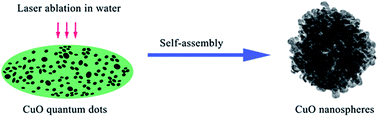
Laser ablation in liquids, belonging to the top-down strategy, is a versatile and widely adopted process to synthesize different nanoparticles. It has the advantages of simplicity, free from contamination, and easy tunability of particle sizes from several to hundreds of nanometers. As for the laser ablation of Cu plates in liquids, there are some reports. The liquids used by them are either organic media (isopropanol10 and polysiloxane11) and/or deionized water containing surfactants (polyvinylpyrrolidone12 and ligands13), with a diversity of products including Cu, Cu2O and CuO. Herein, using laser ablation of a copper target in pure water, together with low laser powers, we demonstrate the fabrication of novel hierarchical CuO nanospheres at ambient temperature. The nanosphere is assembled by CuO quantum dots with sizes of several nanometers and thus has a great number of mesopores inside. The size of the nanosphere ranges between 100 and 300 nm. Further, the quantum dots, which act as a building block, can be easily tuned in size by changing laser power. Importantly, such mesoporous nanosphere exhibits good photocatalytic activity due to its unique structure.
2. Experimental section
2.1. Samples preparation
Colloidal solutions were prepared by laser ablation of a copper metal target in deionized water. Briefly, the target in 20 mL water was irradiated for 20 min by a Nd:YAG pulsed laser (wavelength of 1064 nm, frequency of 10 Hz, pulse duration of 10 ns) with a power of 50 mJ per pulse, vigorously stirring with a magnetic stirrer. The yield was estimated to be about 0.1 μg min−1 by the laser ablation-induced mass loss of the target. After irradiation, the solutions were centrifuged at 14
000 rpm. The obtained powder-products were draught-dried at room temperature.
2.2. Characterization
The samples were examined by scanning electron microscope (SEM, Sirion 200) and transmission electronic microscope (TEM, JEM-200CX). X-ray diffraction (XRD) was measured on a Philips X'Pert with Cu Kα radiation. X-ray photoelectron spectroscopy (XPS) was recorded on an ESCALAB MK2 photoelectron spectrometer. For photocatalytic examination, 50 mg of the as-prepared product obtained by centrifugation was added into 100 mL rhodamine B (RhB) solution, followed by magnetically stirring in the dark for 30 min for the monodispersion of the nanoparticles and their adsorption equilibrium toward RhB. Then the solution was irradiated under a UV light (250 W UV lamp) and sampled at given time intervals. The filtrate was analyzed by UV-vis spectra with a UV-2401 spectrophotometer.
3. Results and discussion
3.1. Morphologies and structure
After laser ablation of a copper metal target in water, for 20 min with a power of 50 mJ per pulse, a brownish red colloidal solution was obtained (photo in the inset of Fig. 1a). XRD shows that the obtained product is monoclinic CuO (Fig. 1a) and is in good agreement with the standard values (JCPDS 48-1548). No characteristic peaks are detected from the impurities such as Cu and Cu2O. SEM observation indicates that the product is very homogeneous and well dispersed nanoparticles (Fig. 1b). The local magnification reveals that the nanoparticles are nearly spherical with a size range between 100 and 300 nm and a mean diameter of about 200 nm (Fig. 1c). Further, the detailed shape and structure of the colloidal nanoparticles are characterized by TEM, as shown in Fig. 1d and f. It can be clearly seen that the spherical nanoparticles are composed of many small quantum dots with sizes of several nanometers (Fig. 1d and e). The crystallographic plane (11−1) of CuO is observed with an interplanar spacing of 0.252 nm (Fig. 1f). These quantum dots are polycrystalline, and oriented connection occurs between them (red mark in Fig. 1f). In addition, the quantum dots can not be separated by conventional ultrasonic cleaning, indicating their strong interfacial binding.
 |
| | Fig. 1 Structure and morphology of the sample prepared by laser ablation in water (laser power of 50 mJ per pulse). (a) XRD result. Inset: the photo of the sample. (b and c) SEM images with different magnifications. (d) TEM image of some nanospheres. (e and f) TEM image of one nanosphere and its corresponding local high resolution. The red mark in (f) shows an interparticle region. | |
3.2. XPS analysis
XPS is a powerful technique for the characterization of chemical surface information. Fig. 2a shows the XPS survey of the sample. The survey spectrum exhibits the peaks of copper (Cu2p, Cu3p and Cu LMM Auger) and oxygen (O1s). No impurities are detected on the surface of the nanospheres. In the high resolution XPS spectrum of the sample (Fig. 2b), the peaks at 933.3 and 953.3 eV are attributed to Cu2p3/2 and 2p1/2, respectively.14 The gap between them agrees well with the standard value of 20 eV for CuO.15 In addition to the Cu2p3/2 and 2p1/2 peaks, two shake-up satellite peaks appear. No Cu or Cu2O phases are present, which is consistent with the XRD result.
 |
| | Fig. 2 XPS spectra of as-prepared sample. (a) XPS survey spectrum. (b) Cu 2p. | |
3.3. Structural tunability
The higher laser powers can induce the larger CuO quantum dots in the mesoporous nanospheres, or vice versa. Typically, Fig. 3 shows the nanospheres composed of smaller sized quantum dots, corresponding to a lower power of 30 mJ per pulse. Furthermore, the laser irradiation to the colloidal solution without Cu plates during laser ablation can decrease the size of the CuO quantum dots, and hence the morphology and/or size of the assembled nanospheres can be tuned. Additionally, if an electric field is applied during laser ablation, the assemblies will be spindle instead of spherical (SEM images are shown in Fig. S1†).
 |
| | Fig. 3 TEM images with different magnifications, for the sample prepared with a lower laser power of 30 mJ per pulse. | |
3.4. Formation of mesoporous nanospheres
The formation of the CuO nanospheres is involved with two steps, namely fabrication of CuO quantum dots and their subsequent self-assembly. During laser ablation in water, plasma with extremely high temperature and great pressure is generated on the interface between the Cu target and water.16 The instant reaction of Cu clusters with H2O and their aggregation occurs, forming CuO quantum dots with fresh surfaces. Due to their small dimensions, these quantum dots bombarded by the H2O molecules around undergo drastic Brownian motions. Collision inevitably occurs between the quantum dots, leading to distortion of the electric double layer,17 and to their coagulation by oriented attachment.18 Obviously, the spherical aggregate has the lowest surface energy and is the stable structure (Fig. 1 and 3). In our case, the self-assembled duration should be within 30 min according to the colour change of the colloidal solutions (from green to purple). When applying the electric field, the assembling behavior for the quantum dots is varied, hence the spindle structure (Fig. S1†). However, it should be pointed out that if initial CuO nanoparticles are too big in size (e.g., tens of nanometers, synthesized with the laser powers of >80 mJ per pulse), oriented attachment still exists but no nanospheres are formed (SEM image is shown in Fig. S2†), because of the lower activity of the nanoparticles. Accordingly, medium or low laser powers are needed (e.g., <60 mJ per pulse) to form the homogeneous CuO nanospheres. As for the electrical field induced formation of CuO nanospindles, there is one report.19 CuO is a kind of polar metal oxide that is easy to polarize under the electrical field and would be aligned in the applied field direction due to the dipolar interaction induced by the electrical field. The dipole–dipole interaction is one of the driving forces for nanocrystal aggregation.20
3.5. Photocatalytic properties
The photocatalytic activity of the mesoporous CuO nanospheres was evaluated by photocatalytic decontamination of RhB under UV light irradiation. The characteristic absorption band at about 550 nm for RhB was used to monitor the photocatalytic degradation process. Fig. 4a shows the evolution of RhB absorption spectra during the catalytic degradation process. It can be seen that the concentration of RhB decreases gradually, accompanied by the peak shift to shorter wavelengths, as the exposure time is extended, which is consistent with the colour change from initial pink to no colour as shown in the inset of Fig. 4a. Blue-shift of the peaks means that de-ethylation of RhB possibly occurs in a stepwise manner from the tetraethylated rhodamine structure to tri-, di- and mono-ethylated Rh and finally to Rh, in accordance with the previous report.21 Further, comparative experiments were carried out to investigate the catalytic activities. When the RhB solution without CuO is irradiated or when the solution with the nanospheres is kept in the dark, only a small amount of RhB was degraded and/or adsorbed. In addition, the mesoporous CuO nanospheres exhibit superior photo activities over non-porous commercial CuO powders (SEM image is shown in Fig. S3†), as shown in Fig. 4b. The reason may be attributed to the fact that the mesoporous CuO nanospheres have not only larger surface area but also more electron transport pathways than the non-porous CuO powders.
 |
| | Fig. 4 (a) Absorption spectra of RhB (20 ppm, 100 mL) in the presence of 50 mg of the sample shown in Fig. 1 under exposure to UV light. Inset: photos of the corresponding solutions. (b) Photocatalytic performances of different samples under different experimental conditions. | |
4. Conclusions
A simple and green strategy is presented to fabricate CuO quantum dot-assembled nanospheres based on laser ablation of Cu metal targets in water. The colloidal nanospheres are mesoporous and approximately 200 nm in average size. The size of the quantum dots can be easily tuned by laser power. The formation of the nanospheres includes the synthesis of CuO quantum dots and their subsequent rapid self-assembly. Importantly, such mesoporous nanosphere exhibits good photocatalytic activity due to its unique structure.
Acknowledgements
This work is financially supported by the Natural Science Foundation of China (Grants 51301152 and 61301026) and the Natural Science Foundation of Education Bureau of Jiangsu Province, China (Grant 14KJB150028).
References
- S. Manna, K. Das and S. K. De, ACS Appl. Mater. Interfaces, 2010, 2, 1536–1542 CAS.
- D. P. Volanti, A. A. Felix, M. O. Orlandi, G. Whitfield, D. J. Yang, E. Longo and H. L. Tuller, Adv. Funct. Mater., 2013, 23, 1759–1766 CrossRef CAS.
- A. Z. Liao, W. D. Zhu, J. B. Chen, X. Q. Zhang and C. W. Wang, J. Alloys Compd., 2014, 609, 253–261 CrossRef CAS PubMed.
- Y. S. Xia, X. X. Pu, J. Liu, J. Liang, P. J. Liu, X. Q. Li and X. B. Yu, J. Mater. Chem. A, 2014, 2, 6796–6800 CAS.
- Y. Li, X. Y. Yang, J. Rooke, G. V. Tendeloo and B. L. Su, J. Colloid Interface Sci., 2010, 348, 303–312 CrossRef CAS PubMed.
- L. J. Shi, C. Yang, X. T. Su, J. D. Wang, F. Xiao, J. L. Fan, C. Q. Feng and H. W. Sun, Ceram. Int., 2014, 40, 5103–5106 CrossRef CAS PubMed.
- X. J. Zhang, W. H. Shi, J. X. Zhu, D. J. Kharistal, W. Y. Zhao, B. S. Lalia, H. H. Hng and Q. Y. Yan, ACS Nano, 2011, 5, 2013–2019 CrossRef CAS PubMed.
- A. Aslani and V. Oroojpour, Phys. B, 2011, 406, 144–149 CrossRef CAS PubMed.
- Q. B. Zhang, K. L. Zhang, D. G. Xu, G. C. Yang, H. Huang, F. D. Nie, C. M. Liu and S. H. Yang, Prog. Mater. Sci., 2014, 60, 208–337 CrossRef CAS PubMed.
- M. Chandra, S. S. Indi and P. K. Das, Chem. Phys. Lett., 2006, 422, 262–266 CrossRef CAS PubMed.
- M. Saito, K. Yasukawa, T. Umeda and Y. Aoi, Opt. Mater., 2008, 30, 1201–1204 CrossRef CAS PubMed.
- P. S. Liu, Z. G. Li, W. P. Cai, M. Fang and X. D. Luo, RSC Adv., 2011, 1, 847–851 RSC.
- M. Muniz-Miranda, C. Gellini and E. Giorgetti, J. Phys. Chem. C, 2011, 115, 5021–5027 CAS.
- R. A. Gaashani, T. Radiman, N. Tabe and A. R. Daud, J. Alloys Compd., 2011, 509, 8761–8769 CrossRef PubMed.
- J. Zhu, H. Chen, H. Liu, X. Yang, L. Lu and X. Wang, Mater. Sci. Eng., A, 2004, 384, 172–176 CrossRef PubMed.
- H. B. Zeng, X. W. Du, S. C. Singh, S. A. Kulinich, S. K. Yang, J. P. He and W. P. Cai, Adv. Funct. Mater., 2012, 22, 1333–1353 CrossRef CAS.
- P. Sarkar and P. S. Nicholson, J. Am. Ceram. Soc., 1996, 79, 1987–2002 CrossRef CAS PubMed.
- S. K. Yang, W. P. Cai, G. Q. Liu and H. B. Zeng, J. Phys. Chem. C, 2009, 113, 7692–7696 CAS.
- X. Z. Lin, P. Liu, J. M. Yu and G. W. Yang, J. Phys. Chem. C, 2009, 113, 17543–17547 CAS.
- Z. Y. Tang, N. A. Kotov and M. Giersig, Science, 2002, 297, 237–240 CrossRef CAS PubMed.
- T. Watanabe, T. Takizawa and K. Honda, J. Phys. Chem., 1977, 81, 1845–1851 CrossRef CAS.
Footnotes |
| † Electronic supplementary information (ESI) available. See DOI: 10.1039/c4ra17105e |
| ‡ These authors contributed equally to this work. |
|
| This journal is © The Royal Society of Chemistry 2015 |
Click here to see how this site uses Cookies. View our privacy policy here.