A seed-less method for synthesis of ultra-thin gold nanosheets by using a deep eutectic solvent and gum arabic and their electrocatalytic application

Maryam Tohidiab, Farzaneh Aghakhani Mahyariab and Afsaneh Safavi*ab
aDepartment of Chemistry, College of Sciences, Shiraz University, Shiraz, 71454, Iran. E-mail: safavi@chem.susc.ac.ir; Fax: +98-71-36460778; Tel: +98-71-36137150
bNanotechnology Research Institute, Shiraz University, Shiraz, Iran

Received 25th December 2014 , Accepted 23rd March 2015

First published on 23rd March 2015


Abstract

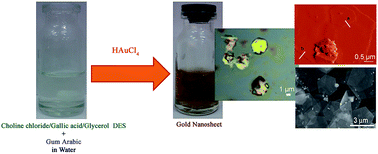
Ultra-thin and large gold nanosheets were easily synthesized by using a deep eutectic solvent (DES) as a reducing and directing agent with gum arabic (GA) as a stabilizer and shape-controlling agent through a seed-less protocol at room temperature. The applied reducing and stabilizing agents are nontoxic, cheap and biodegradable. The low amount of DES enables a kinetically controlled growth of gold nanosheets. Also, the strong binding of GA onto the surface of gold has a critical role in the formation of gold nanosheets. Large-scale glittering ultra-thin gold nanosheets can be obtained in the presence of GA. Without GA, the obtained products were thick plates and quasi-microspheres with rough surfaces. The formation of gold nanosheets depended on a number of factors, such as initial reactant concentrations and reaction temperature. The obtained products in different conditions were characterized by different techniques including field emission scanning electron microscopy, atomic force microscopy, X-ray diffraction and UV-Vis spectroscopy. Synthesized gold nanosheets were used for modification of a carbon ionic liquid electrode (CILE). A high electrocatalytic effect of gold nanocomposite CILE was observed toward hydrazine oxidation. The high conductivity and sharp edges of the gold nanosheets are responsible for this electrocatalytic activity.

Introduction

Recently, the synthesis of engineered nanostructures is attractive and has been paid more attention.1 Among these, gold nanostructures with various morphologies are of particular interest for different applications that depend strongly on their size and shape.2–6 Particularly, the unusual optical properties of anisotropic gold nanoparticles reflect the structural dependence most dramatically and can be applied in potential applications.7 In recent years, there has been special attention on the synthesis of gold nanosheets among different morphologies of gold nanostructures.1,8–16 Gold nanosheets reveal multiple surface plasmon resonance (SPR) modes from the visible–near infrared (NIR) region compared to spherical gold nanoparticles.17 Size-dependent surface plasmon absorption in the vis–NIR region18 and photoluminescence properties much stronger than nanorods19 have been reported. They also have a high percentage of edges and corners and so they can serve as more active sites for catalysis compared to spherical nanoparticles.20,21 Gold nanosheets can be used as infrared-absorbing optical coatings,22 organic vapor sensors,23 nanoblocks to fabricate nanocomponents,18,24 and surface plasmon resonators,25 and for preparation of stretchable gold electrodes.26

They can also be used in hyperthermia of tumours,12 as an excellent platform for molecular self-assembly,27 and in surface enhanced Raman spectroscopy.28 Among different sizes of gold nanosheets, micrometer-sized gold nanosheets have interesting structure due to the combined properties of their size on a micrometer scale and thickness on a nanometer scale.14

In general, wet chemical techniques have been applied for the synthesis of gold nanosheets, that can be classified particularly into seed-mediated16,29 and one-pot methods.1,11,14,15,18,30–32 Among the latter methods, some limited approaches were applied by using biological reagents.10,12,33,34

Although there are a few green methods for the fabrication of engineered gold nanostructures with high anisotropy,10,12,33,34 most reported synthetic methods often require the use of organic solvents, harsh reducing agents, polymeric stabilizers, surface capping agents, and surfactants.1 However, a simple, green, high yield and efficient synthetic method for the fabrication of gold nanostructures is still a challenge.

In the past decades, ionic liquids (ILs) have been reported as a class of promising solvents that can be applied in the synthesis of various nanomaterials.35,36 Due to the low vapour pressure and high boiling point of ILs, they were considered as green solvents. However, this feature of ILs is now extremely challenged in the recent literature37,38 based on the toxicity and poor biodegradability of most ILs.39 In addition, the high price of ILs limits their applications.38

At the beginning of this century, deep eutectic solvents (DESs) were introduced as a new generation of solvents to overcome the high price and toxicity of ILs.38 DESs were first reported by Abbott and co-workers.40,41 These solvents can be formed by mixing two or three safe components (cheap, renewable and biodegradable), including substituted quaternary ammonium salts and hydrogen-bond donors.38 DESs have some advantages including high viscosity, polarity, thermal stability, ease of preparation and low cost.42 They are interesting solvents with unique properties that can be used in shape-controlled synthesis of nanoparticles.43,44 As reported in the literature, due to the extended hydrogen-bond network in the liquid state of a DES, it can form a highly structured “supramolecular” solvent that can control the shape of ordered nanostructures.42 Until now, there are limited reports on the use of DESs in the synthesis of nanomaterials.42,44–48 Recently, two different DESs, choline chloride (ChCl)/urea and ChCl/ethylene glycol, were used as a solvent for the synthesis of gold nanoparticles (GNPs) without the use of any surfactants or seeds.42,44,47According to these reports, DESs can act as a liquid template43,44 and also a particle stabilizer.42 In these protocols, an external reducing agent such as ascorbic acid or sodium borohydride (NaBH4) was used for production of branched or networked gold nanostructures in the presence of ChCl/urea and ChCl/ethylene glycol, respectively.42,44,47

Generally, as reported in the literature, in the synthesis of GNPs, different compounds should be used to stabilize GNPs, due to the strong reactivity of free electrons present on the GNP surface.49–52 These stabilizers form weak covalent bonds with GNPs.50 One of them is gum arabic (GA) that was used as a green, biocompatible and environmentally friendly stabilizing agent for synthesis of GNPs.49,53 GA has a highly branched polysaccharide structure that is an accepted ingredient within the food and pharmaceutical industries.49,53

Herein, choline chloride/gallic acid/glycerol (ChCl/GaA/Gly) DES was used as a nontoxic, cheap and biodegradable reducing and directing agent for seed-less synthesis of gold nanosheets in aqueous solution in the presence of GA. Gallic acid (GaA) in the ChCl/GaA/Gly DES composition is a poly-phenolic compound that was used individually as a reductant in some reports and is obtained from the hydrolysis of natural plant poly-phenols.54 It has been used historically to yield blue ink by reduction of iron chloride.54 In this study, GA was also applied as the stabilizer and shape-controlling agent that promotes the development and growth of gold nanosheets. Without GA, the obtained products are quasi-microspheres with rough surfaces. The effects of HAuCl4, DES and GA concentrations and reaction temperature were investigated for the gold nanostructure synthesis. The obtained products were characterized by using different techniques including field emission scanning electron microscopy (FESEM), atomic force microscopy (AFM), X-ray diffraction (XRD) and UV-Vis spectroscopy.

Finally, the synthesized gold nanosheets were introduced into a carbon ionic liquid electrode (CILE)55 and their electrocatalytic effect was investigated toward the anodic oxidation of hydrazine.

Experimental methods

Chemicals

Tetrachloroauric(III) acid trihydrate (HAuCl4·3H2O, 99.5%), ChCl, GaA, Gly, GA and ethanol were purchased from Merck.

Synthesis of DES

ChCl/GaA/Gly DES was formed by gently stirring the ChCl, GaA and Gly at 100 °C until a clear, homogenous liquid formed after 1 h. The ChCl[thin space (1/6-em)]:[thin space (1/6-em)]GaA[thin space (1/6-em)]:[thin space (1/6-em)]Gly molar ratio was 1[thin space (1/6-em)]:[thin space (1/6-em)]0.25[thin space (1/6-em)]:[thin space (1/6-em)]0.25 as reported in the literature.56

Synthesis of gold nanosheets

Gold nanostructures were synthesized from different amounts of HAuCl4 using ChCl/GaA/Gly DES as the reducing and directing and GA as the stabilizing and shape-controlling agents. Briefly, in a 20 mL vial, 10 mL ChCl/GaA/Gly DES aqueous solution (0.01% w/v) and GA (1.5 mg mL−1) were mixed under vigorous stirring for 15 min. Different volumes of HAuCl4 solution (0.05 M) were added to the above solution with continuous stirring (500 rpm) under ambient conditions. Reduction of HAuCl4 occurred in different times, depending on the amount of added HAuCl4. Upon reduction, the color of the solutions changed from light yellow (corresponding to the color of the original HAuCl4 solution) to light pink, purple and dark purple depending on the amounts of HAuCl4 added (15–100 μL) as shown in Fig. 1A(a–e), which indicates the formation of dispersed gold nanostructures. With increasing HAuCl4 amount (150–300 μL), the bright yellow solution lead to a golden glittering suspension indicating the presence of large gold nanosheets (Fig. 1A(f–h)).
image file: c4ra17053a-f1.tif
Fig. 1 (A) Photograph images and (B) UV-Vis absorption spectra of synthesized gold nanostructures with addition of (a) 15, (b) 30, (c) 50, (d) 75, (e) 100, (f) 150, (g) 200 and (h) 300 μL HAuCl4 (0.05 M) to a 10 mL solution of 0.01% DES containing 1.5 mg mL−1 GA.

The gold nanosheets were centrifugally separated and cleaned by deionized water and ethanol. Also, as control experiments gold nanostructures were synthesized in the presence of GaA, ChCl/Gly or GA instead of ChCl/GaA/Gly DES as reducing agents.

The synthesized gold nanostructures with different amounts of HAuCl4 were evaluated by recording the UV-Vis absorbance spectra (Fig. 1B).

Also, Tyndall light scattering was examined for a colloidal suspension of gold nanosheets in water. Clear Tyndall light scattering was observed due to the ultrathin thickness of the gold nanosheets (Fig. 2).


image file: c4ra17053a-f2.tif
Fig. 2 Tyndall effect of a colloidal suspension of gold nanosheets.

Electrode preparation

A CILE, 1.8 mm diameter, was prepared using graphite powder and n-octylpyridinum hexafluorophosphate (OPFP) with a ratio of 50/50 (w/w) as described previously.55

The gold nanocomposite CILE was prepared by hand-mixing of graphite powder (40 mg), OPFP (50 mg), and gold nanosheets (10 mg). A portion of the resulting paste was packed firmly into the cavity (1.8 mm diameter) of a Teflon holder. The electric contact was established via a stainless steel handle. A new surface was obtained by smoothing the electrode onto a smooth paper.

Characterization techniques

Field emission scanning electron microscopic (FESEM) images were obtained using a Hitachi S-4160 FESEM at an accelerating voltage of 20 kV. The size of the gold nanosheets was measured by analyzing the FESEM images. Atomic force microscope (AFM) images were taken with a ARA-AFM (Ara Research Co., Iran). The absorbance measurements were made using a Shimadzu 1601 PC UV-Vis spectrophotometer. X-Ray diffraction (XRD) patterns were obtained by using a D8 ADVANCE type (BRUKER-Germany) with Cu-Kα radiation (λ = 0.1542 nm). Powder XRD patterns were taken in 0.02° steps at 1 s per step.

Voltammetric measurements were performed using an Autolab electrochemical system (Eco-Chemie, Utrecht, The Netherlands) equipped with GPES software (Eco-Chemie, Utrecht, The Netherlands). The electrochemical cell was assembled with a conventional three-electrode system, containing an Ag/AgCl (KCl, 3.0 M) reference electrode (Metrohm) and a platinum wire electrode as a counter electrode. The different working electrodes used in this study were CILE and gold nanocomposite CILE (1.8 mm diameter). The cell was a one-compartment cell with an internal volume of 10 mL. All experiments were conducted at room temperature (25 ± 1 °C).

Results and discussion

The large gold nanosheets were synthesized by simple addition of 150–300 μL HAuCl4 solution (0.05 M) to an aqueous solution of ChCl/GaA/Gly DES (0.01% w/v) in the presence of 1.5 mg mL−1 GA. Reduction of HAuCl4 occurred in different times, depending on the amount of added HAuCl4. As shown in Fig. 3, the bright yellow color of HAuCl4 solution (300 μL, 0.05 M) slowly faded with a development of glittering large gold nanosheets during the reaction time (8 h). A digital photograph and optical microscope images indicate the glittering reflection of the gold nanosheets (Fig. 3).
image file: c4ra17053a-f3.tif
Fig. 3 (A) Selected photograph images of (a) before and (b–e) after the addition of 300 μL HAuCl4 (0.05 M) to a 10 mL solution of 0.01% DES in the presence of 1.5 mg mL−1 GA at different times of (b) 30 min, (c) 1 h, (d) 3 h, (e) 5 h and (f) 8 h. (B) Optical microscope image of synthesized gold nanosheets that are shown in part (A), image (f).

Effect of ChCl/GaA/Gly DES as a green reducing and directing agent

ChCl/GaA/Gly DES was used as a nontoxic, cheap and biodegradable agent for seed-less synthesis of gold nanosheets. All of the used DES components including ChCl, GaA and Gly are completely biocompatible.56As said, DESs can act as liquid templates and can be used in shape-controlled synthesis of nanomaterials.43,44 In our proposed method, besides the directing effect of ChCl/GaA/Gly DES, reduction of HAuCl4 can also be achieved due to the presence of GaA in its composition. As reported in the literature, GaA was used as reducing agent for synthesis of GNPs.57–59 In some of these reports, GaA was applied as both reducing and stabilizing agents.57,58 This bifunctional molecule possesses both reducing and stabilizing groups, so that in situ synthesis is possible.58 In some other reports different stabilizing agents such as poly-(N-vinyl-2-pyrrolidone) (PVP)54 and peptide60 were applied besides GaA. In these protocols, in the absence of stabilizing agents, aggregation of GNPs occurred. This phenomenon is due to the formation of too large sized GNPs that cannot be stabilized in the solution. As verified, the reducing capability of GaA is due to the presence of dihydroxyl groups.54,57,60,61

It is noticeable that other applied DESs in the synthesis of GNPs, such as ChCl/urea and ChCl/ethylene, did not have reducing properties, as reported in the literature.42,44,47

In order to investigate the effect of ChCl/GaA/Gly DES as an efficient reducing agent for gold nanosheets synthesis, DES percentage dependent experiments were done for two HAuCl4 amounts (150 and 300 μL, 0.05 M). Different percentages of ChCl/GaA/Gly DES solution from 0.01–0.5% were applied for reduction of HAuCl4. The reduction of gold ions and formation of gold nanostructures occurred at every employed percentage of DES. At percentages below 0.01%, a small amount of HAuCl4 (150–300 μL, 0.05 M) was reduced after long times and the yield of the obtained products was very low. Higher yields of gold nanostructures were obtained for DES percentages of 0.01–0.5%.

Large gold nanosheets with smooth surfaces were obtained for HAuCl4 amounts of 150 and 300 μL at DES percentages of 0.01% and 0.01–0.03%, respectively (Fig. 4 and 5). With increasing the percentage of DES above these amounts for 150 and 300 μL HAuCl4 (0.05M), large nanosheets were replaced with smaller ones and higher amounts of semi-spherical nanoparticles were obtained (Fig. 4 and 5). In the case of 150 μL of HAuCl4, for 0.1% DES and above in the presence of 1.5 mg mL−1 GA, gold nanosheets completely disappeared and semi-spherical nanoparticles were formed (Fig. 4D). Disappearance of gold nanosheets occurred at DES percentages of 0.5% and above in the presence of 1.5 mg mL−1 GA for 300 μL of HAuCl4 and large nanostructures were formed (Fig. 5H).


image file: c4ra17053a-f4.tif
Fig. 4 FESEM images of synthesized gold nanostructures with addition of 150 μL HAuCl4 (0.05 M) to a solution containing (A) 0.01%, (B) 0.03%, (C) 0.05% and (D) 0.1% ChCl/GaA/Gly DES in the presence of 1.5 mg mL−1 GA.

image file: c4ra17053a-f5.tif
Fig. 5 FESEM images of synthesized gold nanostructures with addition of 300 μL HAuCl4 (0.05 M) to a solution containing (A) 0.01% GaA as a control experiment, (B) 0.01%, (C) 0.02%, (D) 0.03%, (E) 0.04%, (F) 0.05%, (G) 0.1% and (H) 0.5% ChCl/GaA/GlyDES in the presence of 1.5 mg mL−1 GA.

The results showed that with application of low percentages of DES, the rate of HAuCl4 reduction was dramatically slowed down. Therefore, when the rate of reaction was purposefully lowered by decreasing the percentage of DES, large nanosheets (average lateral size of 3 μm) are the main product with low amounts of semi-spherical nanoparticles. As said above, large gold nanosheets were obtained in DES percentages of 0.01% and 0.01–0.03% for HAuCl4 amounts of 150 and 300 μL (0.05 M), respectively, that were controlled by the slow rate of the reduction reaction. As is obvious, the range of DES percentages that can cause an appropriate HAuCl4 reduction rate for obtaining large gold nanosheets extended by increasing the amount of HAuCl4. It can therefore be concluded that the percentage of DES has a key role on the final morphology of the produced gold nanostructures.

In order to compare the reducing properties of GaA alone and also in a DES composition, a control experiment was done. For this purpose, HAuCl4 reduction was achieved by using GaA instead of ChCl/GaA/Gly DES in the presence of GA. It is observed that with the addition of 300 μL HAuCl4 (0.05 M) to a solution containing 0.01% GaA and 1.5 mg mL−1 GA, HAuCl4 reduction occurred but disordered nanosheets with some GNPs were obtained, compared to the case where large gold nanosheets were produced with ChCl/GaA/Gly DES (Fig. 5A). Also, for investigation of the reducing capability of other components of ChCl/GaA/Gly DES, as another control experiment, ChCl/Gly DES was applied for the synthesis of gold nanosheets. However, the reduction of the HAuCl4 solution did not occur even by applying high temperature conditions in this DES. These results showed that in the ChCl/GaA/Gly DES composition, GaA acts as the reducing agent. Also, the obtained results show that, although GaA reduces HAuCl4 solution, it cannot play the shape-controlling role as ChCl/GaA/Gly DES in the synthesis of large gold nanosheets.

As stated, in our protocol, we have applied GA (a plant-derived construct) as stabilizer and shape-controlling agent. The hydroxyl groups of the polysaccharide structure of GA hold the gold nanostructures through covalent bonding which can decrease the rate of HAuCl4 reduction.50 It is believed that GA preferentially binds onto the (111) facet of gold nanosheets.1 Therefore, it can act as a surface-passivating agent that promotes the development and growth of gold nanosheets. So, employing low concentrations of DES under GA stabilization can produce large ultra-thin gold nanosheets. In the absence of GA, the obtained products were quasi-microspheres with rough surfaces and small amounts of thick plates (Fig. 6A). In this case, the rate of reaction was faster compared to the system with GA, so the development and growth of gold nanosheets did not occur.


image file: c4ra17053a-f6.tif
Fig. 6 FESEM images of synthesized gold nanostructures with addition of 450 μL HAuCl4 (0.05 M) to a solution containing 0.01% ChCl/GaA/Gly DES (A) in the absence and in the presence of (B) 1.5, (C) 5, (D) 10, (E) 20 and (F) 30 mg mL−1 GA.

Effect of the amount of GA

The obtained results showed that GA has a critical role in the synthesis of gold nanosheets. As mentioned above, this green stabilizing agent has polysaccharide nature and its hydroxyl groups enable a strong binding onto the gold surface, similar to the other polysaccharides.1,50,53 This interaction can slow down the rate of reduction of HAuCl4.

For investigation of the effect of GA on the size and morphology of the final product, synthesis of gold nanostructures were done with the addition of 300 μL HAuCl4 to 10 mL solutions of 0.01% DES containing different amounts of GA (1.5–30 mg mL−1). As mentioned above, in the system without using GA, thick plates and microspheres with amorphous structures were obtained. In the presence of any amount of GA, gold nanosheets become the main product as shown in Fig. 6. At low concentrations of GA (1.5–10 mg mL−1), gold nanosheets with average size of 3 μm were obtained (Fig. 6B–D). The average size of the nanosheets did not significantly change as the concentration of GA was increased up to 10 mg mL−1. With increasing the amount of GA above 10 mg mL−1, up to 30 mg mL−1, the lateral size of the nanosheets significantly decreased (500 nm to 1 μm) and the amount of quasi-nanospheres (particles with size of 70 nm) increased (Fig. 6E and F).

A drastic structural change in the presence and absence of GA can confirm that GA influences the formation and growth of the gold nanosheets with binding to their surface and preventing the formation of quasi-microspheres. Fig. 7 shows the AFM image of the synthesized nanosheets with the addition of 300 μL HAuCl4 to 0.01% DES in the presence of 1.5 mg mL−1 GA. The AFM line maps reveal the thicknesses of the nanosheets as 12 nm (Fig. 7).


image file: c4ra17053a-f7.tif
Fig. 7 AFM image of synthesized gold nanosheets. Bottom panel shows the height profiles along the a and b lines in the AFM image. Synthesis conditions: 300 μL HAuCl4 (0.05 M) was added to a solution containing 0.01% ChCl/GaA/Gly in the presence of 1.5 mg mL−1 GA.

It should be noted that large gold nanosheets could be synthesized within 6–12 h with changing the GA amount (1.5–30 mg mL−1) for 300 μL HAuCl4 (0.05 M). Finally, after this period, gold nanosheets with smooth surfaces and sharp edges and corners were obtained. The shapes of the synthesized gold nanosheets were triangular, hexagonal and truncated triangular with different degrees of truncation. As shown in Fig. 6, with increasing the amount of GA above 10 mg mL−1, the amount of produced spherical and semi-spherical GNPs increased and also the color of the upper phase solution of the synthesized gold nanosheets after centrifugation turned to pink. These results show that a large excess of GA participates in HAuCl4 reduction besides DES.

As control experiments, HAuCl4 (150 μL, 0.05 M) was added to solutions containing different amounts of GA (1.5, 5 and 10 mg mL−1) for investigation of their reducing capability and the product morphologies in the absence of DES. In the case of using 1.5 mg mL−1 GA, no products were obtained in the time scale (12 h) of synthesis of gold nanosheets in the presence of DES. With increasing the GA concentration to 10 mg mL−1, slow reduction occurred, however only low amounts of spherical nanoparticles were obtained on this time scale, as shown in Fig. 8. So, these results show that the presence of both DES and GA is essential for the synthesis of gold nanosheets.


image file: c4ra17053a-f8.tif
Fig. 8 FESEM images of synthesized gold nanostructures with addition of 300 μL HAuCl4 (0.05 M) to a solution containing (A) 2.5 and (B) 5 mg mL−1 GA as control experiments.

For characterization of the synthesized gold nanosheets, XRD analysis was used for the product obtained from addition of 300 μL HAuCl4 (0.05 M) to 0.01% DES in the presence of 1.5 mg mL−1 GA. The peaks in the XRD pattern are in excellent agreement with the standard values of the face-centered-cubic (fcc) lattice of gold.1 Five peaks of the (111), (200), (220), (311) and (222) planes of fcc gold can be observed (2θ = 35–100) in the XRD patterns (Fig. 9). As shown in Fig. 9, in the XRD pattern of the synthesized gold nanosheets, the relative diffraction intensity of either (200)/(111) or (220)/(111) is unusually low.1,62 This examination indicates that the obtained gold nanosheets are mainly dominated by (111) facets.1,62


image file: c4ra17053a-f9.tif
Fig. 9 XRD pattern of synthesized gold nanosheets with the addition of 300 μL HAuCl4 was added to a solution containing 0.01% ChCl/GaA/Gly in the presence of 1.5 mg mL−1 GA.

Effect of the concentration of HAuCl4

For investigation of the effect of HAuCl4 amount on the morphology and size of the synthesized gold nanosheets, different amounts of HAuCl4 (15–450 μL, 0.05 M) were applied in the presence of 1.5 mg mL−1 GA (10 mL, 0.01% DES). With the addition of low amounts of HAuCl4, 15–100 μL (Fig. 1 and 10A–D), stable gold nanostructure solutions were obtained. The color of the solutions changed from light yellow to light pink, purple and dark purple depending on the added HAuCl4 amounts (15–100 μL, 0.05 M) as shown in Fig. 1A(a–e), which indicates the formation of gold nanostructures. In the range of 15–75 μL, the main products were nanospheres with low amounts of small nanosheets (30–100 nm) (Fig. 10). With increasing the HAuCl4 amount up to 100 μL, the amount of small nanosheets increased (Fig. 10). At HAuCl4 amounts above 100 μL, larger gold nanosheets were obtained that resulted in golden glittering precipitate from bright yellow solution (Fig. 1 and 3). Fig. 10E–G shows the FESEM images of the obtained products. In these cases, besides gold nanosheets, low amounts of nanospheres were produced (Fig. 10). Interestingly, for a HAuCl4 amount of 450 μL in the presence of 1.5 mg mL−1 GA (10 mL, 0.01% DES), some unique large gold nanosheets with layer-by-layer epitaxial growth on the basal planes were obtained (Fig. 10H). These ultra-thin layers preserved the well-order structure of their basal plane with smooth surfaces and sharp edges and corners. The appearance of this unique type of gold nanosheets is recognized at high concentrations of HAuCl4. This growth behavior for high HAuCl4 amounts for gold nanosheets was reported previously in the literature.1 If the reaction proceeded for longer times, the layers in these structures rolled to some extent. This phenomenon occurred mainly for higher amounts of GA (50 mg GA) and produced very interesting rose flower-like structures (Fig. 11).
image file: c4ra17053a-f10.tif
Fig. 10 FESEM images of synthesized gold nanostructures with addition of (A) 15, (B) 50, (C) 75, (D) 100, (E) 150, (F) 200, (G) 300 and (H) 450 μL HAuCl4 (0.05 M) to a solution containing 0.01% ChCl/GaA/Gly DES in the presence of 1.5 mg mL−1 GA. Inset in part H shows higher magnification.

image file: c4ra17053a-f11.tif
Fig. 11 FESEM image of rose flower like structures. Synthesis conditions: 450 μL HAuCl4 (0.05 M) was added to a solution containing 0.01% ChCl/GaA/Gly DES in the presence of 5.0 mg mL−1 GA.

Fig. 1B shows the UV-Vis spectra of the synthesized gold nanostructures with different initial concentrations of HAuCl4 in 0.01% DES containing 1.5 mg mL−1 GA in 10 mL solution. For the HAuCl4 amounts of 15–50 μL, an intense SPR band was observed at 530 nm that is mainly due to the presence of gold nanospheres. With further increase in HAuCl4 amount up to 100 μL, this SPR band gradually red-shifted, and also another low intense peak was observed at longer wavelengths that can be related to the presence of some amounts of small sized gold nanosheets in the product besides nanospheres, that are also indicated in the FESEM images (Fig. 10). As reported in the literature, two SPR bands which could be attributed to the in-plane dipole and out-of-plane quadrupole resonances are a clear sign of the presence of anisotropic gold nanosheets in the product.2 For 150–300 μL HAuCl4 amounts, the first SPR bands were more broadened and red-shifted and their intensity reduced with increasing HAuCl4 amounts. The other SPR band at longer wavelengths extended to the infrared region with increasing HAuCl4 amounts (data not shown). These observed SPR bands at high amounts of HAuCl4 indicated the decrease in the number of nanospheres and formation of large polyhedral gold nanosheets.22,33

Effect of reaction temperature

The influence of temperature on the morphology of the synthesized gold nanostructures was examined for two HAuCl4 amounts of 150 and 300 μL (0.05 M) in 10 mL solution of 0.01% DES in the presence 1.5 mg mL−1 GA as shown in Fig. 12. The selected temperatures were 0, 25 and 50 °C.
image file: c4ra17053a-f12.tif
Fig. 12 FESEM images of gold nanosheets synthesized at different reaction temperatures, (A) and (D) 0, (B) and (E) 25 and (C) and (F) 50 °C. Synthesis conditions: (A–C) 150 and (D–F) 300 μL HAuCl4 (0.05 M) was added to a solution containing 0.01% ChCl/GaA/Gly DES in the presence of 1.5 mg mL−1 GA.

In the case of a HAuCl4 amount of 150 μL (0.05 M), at 0 °C, the rate of HAuCl4 reduction reaction significantly decreased which resulted in the formation of small gold nanosheets with rounded tips (Fig. 12A). With increasing the temperature to 25 °C, the lateral size of the gold nanosheets increased and well-defined larger hexagonal, truncated triangular and triangular gold nanosheets were produced (Fig. 12B). All of the nanosheets had very smooth surfaces and sharp tips. Increase of the reaction temperature to 50 °C caused a significant decrease in the yield of gold nanosheets and an increase in the produced spherical and semi-spherical nanoparticles (<100 nm) (Fig. 12C). This can be due to the enhancement of the reduction reaction rate with increasing the temperature. It is noticeable that the number of produced spherical and semi-spherical nanoparticles was much lower at 0 and 25 °C compared to 50 °C. Also, in the case of a HAuCl4 amount of 300 μL (0.05 M) at 0 °C, some hexagonal, triangular and truncated triangular gold nanosheets were produced that did not have well defined structures (Fig. 12D). The lateral sizes of the nanosheets were enhanced by increasing the temperature to 25 °C as shown in Fig. 12E. Increasing the reaction temperature to 50 °C caused the formation of some disordered gold nanosheets accompanied by high amounts of large particles (Fig. 12F).

These observations show that at 0 °C, the rate of reduction reaction considerably reduces which leads to the formation of smaller gold nanosheets. On the other hand, at high temperatures such as 50 °C, the rate of the reduction reaction was faster with accelerated nucleation that caused the formation of more irregular GNPs.

Growth mechanisms

As reported in the literature, two mechanisms were proposed for the formation of gold nanosheets.13 In the more general mechanism, small gold seed particles are formed initially which is followed by the addition of gold ions to these seeds under the templating effect of an agent such as a surfactant, micelle or polymer that finally results in sheet like morphology.13 As the reaction proceeds, the size of the nanosheets increases with time. With this growth mechanism, the removed intermediate products at different times are only structurally well-defined nanosheets growing in size. In the second mechanism, an exotic intermediate product is observed. Many irregularly shaped GNPs already form and aggregate into relatively large masses of nanostructures at an early stage. These nanoparticles can fuse, especially near the central regions of the nanostructures. At longer times well-developed dendritic structure with sheet like appearance can be observed. With continuation of the reaction, some nanosheets emerge that seem to be composed of winding nanowire structures or some elongated nanostructures. The nanosheet edges are rough initially but with further reaction, sharp edges can be obtained.13

In our study, the formation of gold nanosheets was a slow process. For identifying the mechanism by which gold nanosheets were obtained, small amounts of the reaction solution were removed at different times and were monitored by FESEM measurement to examine the intermediate products and the nanosheets growth process (Fig. 3A and 13). Further growing of gold nanocrystals in the solution was interrupted with the fast addition of a small amount of ethanol to the removed solution. Fig. 12 shows the FESEM images of the removed solutions at different times. After 30 min and 1 h, large masses of nanostructures composed of small nanoparticles were obtained (Fig. 13A). As shown in Fig. 13, it seems that with increasing the time of the reaction, these large masses of nanostructures tried to order in semi-hexagonal shapes through fusion of the small GNPs and gold atom reorganization, and also addition of gold atoms from the solution to the nanostructures. After 3 h of reaction, well-developed dendritic structures with sheet-like appearance were observed (Fig. 13C). When the reaction time was extended to 5 h, some nanosheets appeared in which some parts were covered with smaller nanostructures (Fig. 13D). Initially, the nanosheets may have rough edges or be rounded in morphology, but finally, with gold atom reorganization, well-defined and compact gold nanosheets with sharp edges and corners were obtained (Fig. 13E). This finding suggests that the gold nanosheets’ growth mechanism is similar to the second mechanism reported in the literature.13 It seems that gold nanosheets are formed via an aggregation of tiny nanostructures, followed by their fusion and reorganization of the gold atoms.


image file: c4ra17053a-f13.tif
Fig. 13 FESEM images of products removed from reaction solution as a function of time of reaction, (A) 30 min, (B) 1 h, (C) 3 h, (D) 5 h and (E) 8 h. Synthesis conditions: 300 μL HAuCl4 (0.05 M) was added to a solution containing 0.01% ChCl/GaA/Gly DES in the presence of 1.5 mg mL−1 GA.

Electrocatalytic effect of gold nanosheets toward hydrazine

Hydrazine is a neurotoxin, carcinogenic, mutagenic and hepatotoxic substance, which has unfavorable health effects including damage to the liver, the brain, and DNA, the creation of blood abnormalities, and irreversible deterioration of the nervous system.63,64

On the other hand, hydrazine is a compound of interest to the pharmaceutical industry.64,65 It has extensive applications in industry, agriculture, and catalysis; hydrazine can act as a reducing agent, high energy rocket propellant and oxygen scavenger for corrosion control in boilers and hot water heating systems. It is also considered as a base fuel in fuel cells.64,66,67 Among various fuel molecules, hydrazine is an important fuel for a direct fuel cell system.64,68 Therefore, the development of sensitive and selective analytical methods for the detection and determination of hydrazine is necessary, due to the environmental and toxicological significance of hydrazine compounds.

Gold nanosheets synthesized by the proposed method were used for construction of an gold nanocomposite CILE. A CILE and gold nanocomposite CILE were used for detection of hydrazine. As shown in Fig. 14, a much better response for hydrazine was observed at the gold nanocomposite CILE, compared to that of the CILE.


image file: c4ra17053a-f14.tif
Fig. 14 Cyclic voltammograms at a (a) CILE and (b) gold nanocomposite CILE in 0.1 M PBS at pH 7.0 in the presence of 0.5 mM hydrazine (scan rate, 50 mV s−1).

As stated, the XRD examination indicates that the obtained gold nanosheets are mainly dominated by low-index (111) facets. As reported in the literature, the electrocatalytic properties of metal nanocrystals are highly dependent on the exposed surfaces. Experimental results as well as theoretical considerations have emphasized the importance of the anisotropic properties of crystallographic planes.69

The obtained result is much better than many previously reported works on carbon electrodes (e.g., CPE, CILE and GCE).64,70 The response of hydrazine on gold nanocomposite CILE is similar to those on some other nanocomposites with more complicated modification such as gold nanoparticles/reduced graphene oxide nanocomposites, considering both peak currents and potentials.71 This shows the excellent electrocatalytic effect of gold nanosheets for detection of hydrazine due to the high conductivity and sharp edges and corners of gold nanosheets.21

Conclusion

We have reported a simple, seed-less and efficient synthetic approach for the fabrication of large ultra-thin gold nanosheets with high yield using ChCl/GaA/Gly DES as the green reducing and directing agent and GA as the stabilizer and shape-controlling agent. Both the reducing and stabilizing agents play a pivotal role on the formation and growth of the gold nanosheets. Without stabilizing agent, the obtained products were quasi-microspheres with rough surfaces. Characterization of synthesized large ultra-thin gold nanosheets using FESEM and AFM techniques showed that the average lateral size and thickness were 3 μm and 12 nm, respectively. Gold nanosheets with different sizes can be obtained by changing the experimental conditions such as DES, GA and HAuCl4 concentration, temperature and pH. Based on the growth mechanism studies, it seems that gold nanosheets are formed via aggregation of tiny nanostructures, followed by their fusion and reorganization of the gold atoms. The effect of gold nanosheets was investigated toward the anodic oxidation of hydrazine. The CILE modified with gold nanosheets showed higher electrocatalytic activity for hydrazine than unmodified CILE. The high conductivity and sharp edges and corners of gold nanosheets are responsible for this electrocatalytic activity.

Acknowledgements

The authors wish to express their gratitude to Iran’s National Elites Foundation and Shiraz University Research Council for the support of this work.

Notes and references

  1. S. Nootchanat, C. Thammacharoen, B. Lohwongwatana and S. Ekgasit, RSC Adv., 2013, 3, 3707–3716 RSC.
  2. B. Liu, J. Xie, J. Y. Lee, Y. P. Ting and J. P. Chen, J. Phys. Chem. B, 2005, 109, 15256–15263 CrossRef CAS PubMed.
  3. M. Suzuki, Y. Niidome, Y. Kuwahara, N. Terasaki, K. Inoue and S. Yamada, J. Phys. Chem. B, 2004, 108, 11660–11665 CrossRef CAS.
  4. Y. Sun and Y. Xia, Science, 2002, 298, 2176–2179 CrossRef CAS PubMed.
  5. F. Kim, J. H. Song and P. Yang, J. Am. Chem. Soc., 2002, 124, 14316–14317 CrossRef CAS PubMed.
  6. E. Hao, R. C. Bailey, G. C. Schatz, J. T. Hupp and S. Li, Nano Lett., 2004, 4, 327–330 CrossRef CAS.
  7. X.-L. Liu, X.-N. Peng, Z.-J. Yang, M. Li and L. Zhou, Chin. Phys. Lett., 2011, 28, 057805 CrossRef.
  8. J.-U. Kim, S.-H. Cha, K. Shin, J. Y. Jho and J.-C. Lee, Adv. Mater., 2004, 16, 459–464 CrossRef CAS.
  9. N. Malikova, I. Pastoriza-santos, M. Schierhorn, N. A. Kotov and L. M. Liz-marza, Langmuir, 2002, 18, 3694–3697 CrossRef CAS.
  10. Y. Shao, Y. Jin and S. Dong, Chem. Commun., 2004, 1104–1105 RSC.
  11. X. Sun, S. Dong and E. Wang, Angew. Chem., Int. Ed. Engl., 2004, 43, 6360–6363 CrossRef CAS PubMed.
  12. S. S. Shankar, A. Rai, B. Ankamwar, A. Singh, A. Ahmad and M. Sastry, Nat. Mater., 2004, 3, 482–488 CrossRef CAS PubMed.
  13. W. Huang, C. Chen and M. H. Huang, J. Phys. Chem. C, 2007, 111, 2533–2538 CAS.
  14. P. Pienpinijtham, X. X. Han, T. Suzuki, C. Thammacharoen, S. Ekgasit and Y. Ozaki, Phys. Chem. Chem. Phys., 2012, 14, 9636–9641 RSC.
  15. C. Bouvy, G. A. Baker, H. Yin and S. Dai, Cryst. Growth Des., 2010, 10, 1319–1322 CAS.
  16. X. Fan, Z. R. Guo, J. M. Hong, Y. Zhang, J. N. Zhang and N. Gu, Nanotechnology, 2010, 21, 105602 CrossRef CAS PubMed.
  17. J. E. Millstone, S. Park, K. L. Shuford, L. Qin, G. C. Schatz and C. A. Mirkin, J. Am. Chem. Soc., 2005, 127, 5312–5313 CrossRef CAS PubMed.
  18. C. S. Ah, Y. J. Yun, H. J. Park, W. Kim, D. H. Ha and W. S. Yun, Chem. Mater., 2005, 17, 5558–5561 CrossRef CAS.
  19. K. Imura, T. Nagahara and H. Okamoto, Appl. Phys. Lett., 2006, 88, 023104 CrossRef PubMed.
  20. X. Hong, C. Tan, J. Chen, Z. Xu and H. Zhang, Nano Res., 2014, 8, 40–55 CrossRef.
  21. N. M. Andoy, X. Zhou, E. Choudhary, H. Shen, G. Liu and P. Chen, J. Am. Chem. Soc., 2013, 135, 1845–1852 CrossRef CAS PubMed.
  22. S. S. Shankar, A. Rai, A. Ahmad and M. Sastry, Chem. Mater., 2005, 17, 566–572 CrossRef CAS.
  23. B. Ankamwar, M. Chaudhary and M. Sastry, Synth. React. Inorg., Met.-Org., Nano-Met. Chem., 2005, 35, 19–26 CrossRef CAS.
  24. Y. J. Yun, G. Park, C. S. Ah, H. J. Park, W. S. Yun and D. H. Ha, Appl. Phys. Lett., 2005, 87, 233110 CrossRef PubMed.
  25. B. J. Wiley, D. J. Lipomi, J. Bao, F. Capasso and G. M. Whitesides, Nano Lett., 2008, 8, 3023–3028 CrossRef CAS PubMed.
  26. G. D. Moon, G.-H. Lim, J. H. Song, M. Shin, T. Yu, B. Lim and U. Jeong, Adv. Mater., 2013, 25, 2707–2712 CrossRef CAS PubMed.
  27. N. Lee, D. Kim, H. Kang, D. K. Park, S. W. Han and J. Noh, J. Phys. Chem. C, 2011, 115, 5868–5874 CAS.
  28. B. Ren, G. Picardi, B. Pettinger, R. Schuster and G. Ertl, Angew. Chem., Int. Ed., 2004, 44, 139–142 CrossRef PubMed.
  29. J. E. Millstone, G. S. Métraux and C. A. Mirkin, Adv. Funct. Mater., 2006, 16, 1209–1214 CrossRef CAS.
  30. X.-L. Liu, X.-N. Peng, Z.-J. Yang, M. Li and L. Zhou, Chin. Phys. Lett., 2011, 28, 057805 CrossRef.
  31. J. Lee, K. Kamada, N. Enomoto and J. Hojo, Cryst. Growth Des., 2008, 8, 2638–2645 CAS.
  32. L. Wang, X. Chen, J. Zhan, Y. Chai, C. Yang, L. Xu, W. Zhuang and B. Jing, J. Phys. Chem. B, 2005, 109, 3189–3194 CrossRef CAS PubMed.
  33. J. Xie, J. Y. Lee, D. I. C. Wang and Y. P. Ting, Small, 2007, 3, 672–682 CrossRef CAS PubMed.
  34. L. Au, B. Lim, P. Colletti, Y.-S. Jun and Y. Xia, Chem.–Asian J., 2010, 5, 123–129 CrossRef CAS PubMed.
  35. Y. Wang and H. Yang, J. Am. Chem. Soc., 2005, 127, 5316–5317 CrossRef CAS PubMed.
  36. A. Taubert, Angew. Chem., Int. Ed., 2004, 43, 5380–5382 CrossRef CAS PubMed.
  37. M. Deetlefs and K. R. Seddon, Green Chem., 2010, 12, 17–30 RSC.
  38. Q. Zhang, K. De Oliveira Vigier, S. Royer and F. Jérôme, Chem. Soc. Rev., 2012, 41, 7108–7146 RSC.
  39. A. Romero, A. Santos, J. Tojo and A. Rodríguez, J. Hazard. Mater., 2008, 151, 268–273 CrossRef CAS PubMed.
  40. A. P. Abbott, D. Boothby, G. Capper, D. L. Davies and R. K. Rasheed, J. Am. Chem. Soc., 2004, 126, 9142–9147 CrossRef CAS PubMed.
  41. A. P. Abbott, G. Capper, D. L. Davies and R. Rasheed, Inorg. Chem., 2004, 43, 3447–3452 CrossRef CAS PubMed.
  42. H.-G. Liao, Y.-X. Jiang, Z.-Y. Zhou, S.-P. Chen and S.-G. Sun, Angew. Chem., Int. Ed., 2008, 47, 9100–9103 CrossRef CAS PubMed.
  43. E. R. Parnham, E. A. Drylie, P. S. Wheatley, A. M. Z. Slawin and R. E. Morris, Angew. Chem., 2006, 118, 5084–5088 CrossRef.
  44. S. Stassi, V. Cauda, G. Canavese, D. Manfredi and C. F. Pirri, Eur. J. Inorg. Chem., 2012, 2669–2673 CrossRef CAS.
  45. J.-H. Liao, P.-C. Wu and Y.-H. Bai, Inorg. Chem. Commun., 2005, 8, 390–392 CrossRef CAS PubMed.
  46. E. R. Cooper, C. D. Andrews, P. S. Wheatley, P. B. Webb, P. Wormald and R. E. Morris, Nature, 2004, 430, 1012–1016 CrossRef CAS PubMed.
  47. M. Chirea, A. Freitas, B. S. Vasile, C. Ghitulica, C. M. Pereira and F. Silva, Langmuir, 2011, 27, 3906–3913 CrossRef CAS PubMed.
  48. D. V. Wagle, H. Zhao and G. A. Baker, Acc. Chem. Res., 2014, 47, 2299–2308 CrossRef CAS PubMed.
  49. V. Kattumuri, K. Katti, S. Bhaskaran, S. W. Casteel, G. M. Pent, D. Robertson, M. Chandrasekhar, R. Kannan and K. V. Katti, Small, 2007, 3, 333–341 CrossRef CAS PubMed.
  50. U. K. Parida, S. K. Biswal, P. L. Nayak and B. K. Bindhani, World J. Nano Sci. Tech., 2013, 2, 47–57 Search PubMed.
  51. K. V. Katti, R. Kannan and C. S. Cutler, US Pat., US20120134918 (A1), 2012, pp. 1–5.
  52. S. V. Kumar and S. Ganesan, Int. J. Green Nanotechnol., 2011, 3, 47–55 CrossRef CAS.
  53. C. Wu and D. Chen, Gold Bull., 2010, 43, 234–240 CrossRef CAS.
  54. W. Wang, Q. Chen, C. Jiang, D. Yang, X. Liu and S. Xu, Colloids Surf., A, 2007, 301, 73–79 CrossRef CAS PubMed.
  55. N. Maleki, A. Safavi and F. Tajabadi, Anal. Chem., 2006, 78, 3820–3826 CrossRef CAS PubMed.
  56. Z. Maugeri and P. Domínguez de María, RSC Adv., 2012, 2, 421–425 RSC.
  57. S. A. Moreno-Álvarez, G. A. Martínez-Castañón, N. Niño-Martínez, J. F. Reyes-Macías, N. Patiño-Marín, J. P. Loyola-Rodríguez and F. Ruiz, J. Nanopart. Res., 2010, 12, 2741–2746 CrossRef.
  58. K. Yoosaf, B. I. Ipe, C. H. Suresh and K. G. Thomas, J. Phys. Chem. C, 2007, 111, 12839–12847 CAS.
  59. A. E. Fazary, M. Taha and Y. Ju, J. Chem. Eng. Data, 2009, 54, 35–42 CrossRef CAS.
  60. A. Rao, K. Mahajan, A. Bankar, R. Srikanth, A. Ravi, S. Gosavi and S. Zinjarde, Mater. Res. Bull., 2013, 48, 1166–1173 CrossRef CAS PubMed.
  61. K. Huang, C. Yu and W. Tseng, Biosens. Bioelectron., 2010, 25, 984–989 CrossRef CAS PubMed.
  62. Z. Li, Z. Liu, J. Zhang, B. Han, J. Du, Y. Gao and T. Jiang, J. Phys. Chem. B, 2005, 109, 14445–14448 CrossRef CAS PubMed.
  63. S. Garrod, M. E. Bollard, A. W. Nicholls, S. C. Connor, J. Connelly, J. K. Nicholson and E. Holmes, Chem. Res. Toxicol., 2005, 18, 115–122 CrossRef CAS PubMed.
  64. A. Safavi and M. Tohidi, Anal. Methods, 2012, 4, 2233 RSC.
  65. B. Fang, C. Zhang, W. Zhang and G. Wang, Electrochim. Acta, 2009, 55, 178–182 CrossRef CAS PubMed.
  66. H. Yang, B. Lu, L. Guo and B. Qi, J. Electroanal. Chem., 2011, 650, 171–175 CrossRef CAS PubMed.
  67. A. Benvidi, P. Kakoolaki, H. R. Zare and R. Vafazadeh, Electrochim. Acta, 2011, 56, 2045–2050 CrossRef CAS PubMed.
  68. K. Asazawa, K. Yamada, H. Tanaka, A. Oka, M. Taniguchi and T. Kobayashi, Angew. Chem., 2007, 119, 8170–8173 CrossRef.
  69. Y. Chen, W. Schuhmann and A. W. Hassel, Electrochem. Commun., 2009, 11, 2036–2039 CrossRef CAS PubMed.
  70. N. Maleki, A. Safavi, E. Farjami and F. Tajabadi, Anal. Chim. Acta, 2008, 611, 151–155 CrossRef CAS PubMed.
  71. X. Qin, Q. Li, A. M. Asiri, A. O. Al-Youbi and X. Sun, Gold Bull., 2013, 47, 3–8 CrossRef PubMed.

This journal is © The Royal Society of Chemistry 2015
Click here to see how this site uses Cookies. View our privacy policy here.