Formal synthesis of a disaccharide repeating unit (IdoA–GlcN) of heparin and heparan sulfate

Ratnnadeep C. Sawant, Ying-Ju Liao, Yi-Jyun Lin, Satpal Singh Badsara and Shun-Yuan Luo*
Department of Chemistry, National Chung Hsing University, Taichung 402, Taiwan. E-mail: syluo@dragon.nchu.edu.tw; Fax: +886 4 22862547

Received 25th December 2014 , Accepted 28th January 2015

First published on 28th January 2015


Abstract

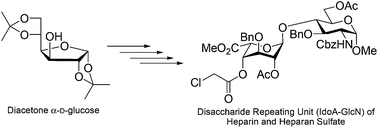
A concise route to access the key disaccharide repeating unit (IdoA–GlcN) of heparan sulfate is described. The synthesis was accomplished by commercially available diacetone α-D-glucose to functional group transformations, which led to the formation of a L-iduronate donor. This L-iduronate donor was subsequently coupled with a glucosyl acceptor to form the corresponding key disaccharide repeating unit (IdoA–GlcN) of heparan sulfate in good overall yield.

Introduction

heparan sulfate (HS) is a member of the glycosaminoglycans (GAGs) family, which perform a variety of crucial biological functions and have been broadly employed as therapeutic agents.1 It is a complex polysaccharide that has shown influential biological activities by mediating the action of numerous proteins, such as growth factors, cytokines, chemokines, viral proteins, and coagulation factors.2 It also mediates various physiologically important processes, such as viral and bacterial infection, angiogenesis, tumor metastasis, cell adhesion, and lipid metabolism.3 Owing to wide range of biological applications, the heparan sulfate structural framework has attracted significant interest in the development of new medicines. Recently, a possible role of HS in Alzheimer's disease and Parkinson's disease has been also found.4 Moreover, heparin was discovered in 1916 and has been used as a drug for the treatment of thrombotic disorders for nearly a century.5 The discovery of heparin has contributed extensively towards the development of numerous advanced medical and surgical procedures.6 Heparin, a specialized highly sulfated form of HS is not only widely used as an anticoagulant but also in the prevention and treatment of arterial and venous thrombosis.1b,7

Heparin (HP) and HS has similar disaccharide repeating units. HS consists of a disaccharide repeating unit of either iduronic acid (IdoA) or glucuronic acid (GlcA), and glucosamine (GlcN) residues, each of them are capable of carrying sulfate groups (Fig. 1). However, nearly 90% of the disaccharide units in HP contain IdoA, while only 20% of the disaccharide units in HS contain IdoA. HS can be isolated from many cell types, whereas heparin is an exclusive product of mast cells.8 Owing to the versatile nature of heparin and heparan sulfate, the syntheses of these molecules have attracted considerable attention in recent years.9 Recently, Hung et al. developed facile methodologies for the synthesis of heparin/HS-like oligosaccharides and then using the same strategy also synthesized the heparin based anticoagulant drug fondaparinux in the acquisition of L-iduronate from diacetone D-glucose.10 Moreover, the availability of the L-iduronate donor (IdoA) is rare and commercially it is expensive.


image file: c4ra17050d-f1.tif
Fig. 1 Structure of heparan sulfate 1 and its disaccharide repeating unit (IdoA–GlcN) 2.

Therefore, development of an efficient process to synthesize L-iduronate donor (IdoA) is needed. However, among the monosaccharide units of HS, the analogue that represents IdoA and GlcN requires particular attention. Herein, we report a facile protocol for the synthesis of L-iduronate donor using diacetone α-D-glucose and its application towards the formal synthesis of the disaccharide repeating unit (IdoA–GlcN) of heparan sulfate by glycosylation with a suitable glucosyl acceptor.

Results and discussion

Accordingly, first we proposed a retrosynthetic strategy for the synthesis of the disaccharide repeating unit (IdoA–GlcN) 3, as shown in Scheme 1. The disaccharide repeating unit (IdoA–GlcN) 3 could be obtained from the glycosylation reaction between imidate 4 and glucosyl acceptor 5. The adduct imidate 4 could be prepared from the L-idose derivative 6, which would be inverted from diacetone D-glucose 7.
image file: c4ra17050d-s1.tif
Scheme 1 Retrosynthetic plan for disaccharide repeating unit (IdoA–GlcN) 3.

While designing the chemical synthesis of the L-iduronate donor (IdoA), a choice was made as to whether the carboxyl function of the uronic acid units would be generated before or after chain assembly. In general, carboxylate group reduces the reactivity at the anomeric center during glycosylation and also renders the C5 position more susceptible to unwanted epimerization, especially when protected as an ester. Several groups reported that uronic acids can function as effective glycosyl donors.11 The IdoA residue is a crucial part of most protein binding sites in HP and HS.12 Numerous synthetic efforts for its acquisition have been put forward.13 A common approach involves the chemical manipulation of the more abundant D-glucose-based compounds, which differ from L-idose only by the C5 stereochemistry. The transformation has been achieved through SN2 substitution of alkyl sulfonate groups,14 stereoselective hydro-boration of exo-glucals,15 and hydride mediated C5 inversion of the uronate derivative.16 Alternatively, D-xylose17 and the D-xylodi-aldose derived from D-glucose18 were extended stereoselectively at C5, generating several IdoA derivatives.

Initially, we prepared L-iduranyl triol 6 starting from diacetone D-glucose 7 according to the reaction sequence shown in Scheme 2. The 3–OH group of diacetone D-glucose 7 was initially protected by the benzyl group in the presence of sodium hydride in DMF, followed by the usual aqueous workup, and column chromatography provided the resultant product 8 in quantitative yield with the expected purity.18a 5,6-O-Isopropylidene group of diacetone α-D-glucose 8 was then hydrolyzed regioselectively using 75% acetic acid to provide the diol 9 in 88% yield. The oxidative cleavage of diol 9 by sodium periodate in water furnished aldehyde 10 in quantitative yield, which was pure enough to use for the sequential step without further purification.


image file: c4ra17050d-s2.tif
Scheme 2 Preparation of L-idopyranose derivative 6.

To generate the pyranose ring of L-iduronic acid, we followed the Bonnaffé et al.19 procedure where a bulky trisphenylthiomethane group was installed at the C-5 position to afford compound 11. In this regard, first we treated n-BuLi with trisphenylthiomethane. The in situ generated trisphenylthiomethyl lithium was then treated with aldehyde 10 at −30 °C to afford compound 11 in 62% yield. The synthesis of 11 was necessary for achieving the exact configuration of the L-iduronyl sugar. Although for this inversion reaction of aldehyde 10 to compound 11, we tried several reaction conditions while changing the temperature, relative equivalent and time, the best result was obtained at higher temperature (−30 °C), which provided 11 in 62% yield, which is different from the literature report (−78 °C, 92% yield).19 The cleavage of thioether functionality using CuO with CuCl2 in a mixture of MeOH–H2O–DCM as the solvent provided compound 12 in 86% yield by retaining the methyl ester group at the C-6 position. Finally, acid hydrolysis of the 1,2-O-isopropylidene of 12 provided the L-iduranyl ester 6 in quantitative yield.

To obtain the disaccharide repeating unit 3 from the L-iduranyl ester 6 various synthetic steps were carried out, as shown in Scheme 3. Initially, the acetylation of L-idopyranose 6 was accomplished by treating acetyl chloride in the presence of pyridine and catalytic amount of DMAP at −40 °C, which afforded the β-form of triacetate 13 in 87% yield. The preparation of orthoester 14 was achieved through the one-pot bromination and cyclization of triacetate 13.20 In an attempt for the bromination of 13, various brominating reagents, such as TMSBr and TiBr4, were used. When TMSBr was used, several spots were observed on TLC. We then subjected the crude to cyclization using freshly distilled 2,4,6-collidine in a methanol solution but could not obtain the expected orthoester 14. However, when TiBr4 was used, the anomeric bromination of triacetate 13 was provided as sole product according to TLC (Rf = 0.4, EtOAc–hexane: 1/2), which upon subsequent treatment with freshly distilled 2,4,6-collidine in methanol provided orthoester 14 in overall 64% yield for two steps. The de-acetylation of orthoester 14 was achieved using 0.5 N NaOMe in MeOH at 0 °C which delivered the 4-hydroxy compound 15 in 51% yield.


image file: c4ra17050d-s3.tif
Scheme 3 Formal synthesis of disaccharide repeating unit (IdoA–GlcN) 3 of heparan sulfate.

Our efforts to enhance the yield of 15 were unsuccessful, even after using different reaction conditions. The lower yield was attributed to the formation of an olefin as a side product (Rf = 0.4, EtOAc–hexane: 1/2) via removal of the acidic C-5 proton followed by removal of the C-4 hydroxyl group. Owing to the requirement of free C-4 OH group in L-iduronate of disaccharide 3 for further elongation of the chain assembly,9 we installed the temporary protecting chloroacetyl group at C-4 OH of the L-iduronate donor. However, deprotection of the chloroacetyl group could be achieved under weak basic conditions without disturbing the other acetates in the disaccharide 3.21 Therefore, compound 15 when masked with a chloroacetyl chloride group at C-4 OH in the presence of pyridine, provided fully protected iduronyl compound 16 in 89% yield. Next, we cleaved the orthoester group under acidic conditions to furnish a hemiacetal compound 17 in 94% yield. The L-iduronate imidate 4 was generated by treating the hemiacetal 17 with trichloroacetonitrile under basic conditions. This well-developed concise strategy was then applied successfully for preparation of the disaccharide repeating unit (IdoA–GlcN) 3 of heparan sulfate. However, L-iduronate imidate donor 4 glycosylated with the glucosyl acceptor 5 (ref. 22) in the presence of TMSOTf, provided the key disaccharide repeating unit (IdoA–GlcN) 3 of heparan sulfate in an α/β mixture ratio of 1/3 in reasonable yield.

Conclusion

We accomplished the formal synthesis of the disaccharide repeating unit (IdoA–GlcN) 3 of heparan sulfate starting from diacetone α-D-glucose with a glucosyl acceptor through a simple synthetic route. The use of a chloroacetyl group at C-4 OH of L-iduronate moiety could provide direct access to the chain elongation on disaccharide 3 to furnish the trisaccharide moiety by coupling with the appropriate donor. This strategy disclosed the simple route for the synthesis of the key disaccharide repeating unit (IdoA–GlcN) of heparan sulfate and it is expected to provide access to other structurally related analogues for exploring their biological activities.

Experimental section

General information

Some reactions were conducted in flame-dried glassware under a nitrogen atmosphere. Dichloromethane, tetrahydrofuran, toluene, methanol, and N,N-dimethylformamide were purified and dried using a safe purification system containing activated Al2O3. All reagents obtained from commercial sources were used without purification, unless mentioned otherwise. Flash column chromatography was carried out on Silica Gel 60 (230–400 mesh, E. Merck). TLC was performed on pre-coated glass plates of Silica Gel 60 F254 (0.25 mm, E. Merck); detection was performed by spraying with a solution of Ce(NH4)2(NO3)6 (0.5 g), (NH4)6Mo7O24 (24 g) and H2SO4 (28 mL) in water (500 mL) and subsequent heating on a hot plate. The optical rotations were measured at 589 nm (Na) at ∼27 °C. The 1H, 13C NMR, DEPT, 1H–1H COSY, 1H–13C COSY, and 1H–1H NOESY spectra were recorded with 400 and 600 MHz instruments. The chemical shifts are in ppm from Me4Si, generated from the CDCl3 lock signal at δ 7.26 ppm. The IR spectra were taken with a FT-IR spectrometer using KBr plates. The mass spectra were analyzed on a Finnigan LTQ-OrbitrapxL instrument with an ESI source.
3-O-Benzyl-1,2:5,6-O-di-isopropylidene-α-D-glucofuranose (8). Commercial available diacetone D-glucose 7 (15 g, 57.69 mmol) was dissolved in DMF (144 mL). Benzyl bromide (10.09 mL, 86.53 mmol) was then added to the reaction mixture and stirred for 5 min. The reaction mixture was cooled to 0 °C. NaH (3.75 g, 95.18 mmol) was added in portions (1.25 g × 3) to the cooled solution (0 °C) and the reaction mixture was stirred for 2 hours at room temperature (24 °C). The reaction was quenched with IPA (6 mL) at 0 °C followed by the slow addition of H2O (115 mL) at 0 °C. The resulting mixture was extracted with EtOAc (100 mL × 3). The organic phase was concentrated under reduced pressure, dried over MgSO4, filtered, concentrated, and purified by flash column chromatography (EtOAc–hexane, 1[thin space (1/6-em)]:[thin space (1/6-em)]3 to 1[thin space (1/6-em)]:[thin space (1/6-em)]1) to afford 8 (20.21 g) in quantitative yield as a colourless oil. Rf = 0.6 (EtOAc–hexane = 1/2); [α]24D = −0.3 (c 1.0, CH2Cl2); IR (KBr) ν 3050, 3018, 1467, 1394 cm−1; 1H NMR (600 MHz, CDCl3) δ 7.35–7.27 (m, 5H, Ph), 5.89 (d, J = 4.2 Hz, 1H, H-1), 4.68 (d, J = 11.4 Hz, 1H, CH2Ph), 4.64 (d, J = 12 Hz, 1H, CH2Ph), 4.87 (d, J = 4.2 Hz, 1H, H-2), 4.38–4.35 (m, 1H, H-4), 4.15 (dd, J = 7.8, 3.0 Hz, 1H, H-5), 4.12 (dd, J = 8.4, 6.0 Hz, 1H, CH2), 4.02 (d, J = 3.0 Hz, 1H, H-3), 4.01 (dd, J = 8.4, 6.0 Hz, 1H, CH2), 1.49 (s, 3H, CH3), 1.42 (s, 3H, CH3), 1.37 (s, 3H, CH3), 1.31 (s, 3H, CH3) ppm; 13C NMR (150 MHz, CDCl3) δ 137.6 (CH), 128.3 (CH × 2), 127.8 (CH), 127.6 (CH × 2), 11.7 (C), 108.9 (C), 105.2 (CH), 82.6 (CH), 81.6 (CH), 81.2 (CH), 72.5 (CH), 72.3 (CH2), 67.3 (CH2), 26.8 (CH3), 26.7 (CH3), 26.2 (CH3), 25.4 (CH3) ppm. HRMS (M + Na+) calcd for C19H26O6Na 373.1622, found: 373.1620.
3-O-Benzyl-1,2-O-isopropylidene-α-D-glucofuranose (9). Acetic acid (70 mL) and water (30 mL) were added to the 8 (10 g, 28.23 mmol) in a round bottom flask. After the reaction mixture was stirred at 55 °C for 3 hours, the combined layers were concentrated under reduced pressure. The residue was purified by column chromatography (EtOAc–hexane, 1[thin space (1/6-em)]:[thin space (1/6-em)]3 to 1[thin space (1/6-em)]:[thin space (1/6-em)]1) to afford 9 (7.83 g, 88%) as a colourless oil. Rf = 0.2 (EtOAc–hexane = 1/2); [α]24D = −1.6 (c 1.0, CH2Cl2); IR (KBr) ν 3510, 3079, 1487, 1444 cm−1; 1H NMR (600 MHz, CDCl3) δ 7.35–7.28 (m, 5H, Ph), 5.90 (d, J = 3.6 Hz, 1H, H-1), 4.69 (d, J = 12 Hz, 1H, H-6a), 4.60 (d, J = 3.6 Hz, 1H, H-2), 4.56 (d, J = 11.4 Hz, 1H, H-6b), 4.11–4.08 (m, 2H, H-4, H-5), 4.02–3.99 (m, 1H, H-3), 3.78 (dd, J = 11.4, 3.0 Hz, 1H, CH2Ph), 3.67 (dd, J = 11.4, 5.4 Hz, 1H, CH2Ph), 2.92 (m, 2H, 2-OH), 1.46 (s, 3H, CH3), 1.29 (s, 3H, CH3) ppm; 13C NMR (150 MHz, CDCl3) δ 137.2 (C), 128.3 (CH × 2), 127.6 (CH), 127.5 (CH × 2), 111.4 (C), 104.8 (CH), 81.9 (CH), 81.6 (CH), 79.7 (CH), 71.9 (CH2), 68.7 (CH), 64.0 (CH2), 26.4 (CH3), 25.9 (CH3) ppm; HRMS (M + Na+) calcd for C16H22O6Na 333.1309, found: 333.1308.
3-O-Benzyl-1,2-O-isopropylidene-α-D-xylo-dialdose (10). Compound 9 (0.43 g) was dissolved in water (3 mL), DCM (3 mL) and NaIO4 (0.63 g, 2.13 mmol) were added to the reaction mixture portion wise over 20 min. Stirring was continued at 30 °C for 1.5 h and EtOH (5 mL) was added. The salts were filtered off, washed with water, and the filtrate was extracted with DCM (10 mL × 3) and dissolved in Et2O. The resulting residue was washed with H2O, dried over MgSO4, filtered, and concentrated to give 10 as a colourless syrup (0.36 g, 95%). The 1H and 13C spectra were identical to those previously reported.18a This was used in the next step without further purification.
Tris(thiophenyl)-3-O-benzyl-1,2-O-isopropylidene-β-L-orthoido-furanuronate (11). A solution of tris(phenylthio)methane (289 mg, 0.85 mmol) in anhydrous THF (2 mL) was cooled to −30 °C and n-BuLi (531 μL, 0.85 mmol) was added slowly. The mixture was kept stirring at −30 °C for 1 h. A solution of aldehyde 10 (200 mg, 0.71 mmol) in anhydrous THF (2 mL) was then injected into the reaction mixture at −30 °C. The resulting mixture was stirred at −30 °C for 2 h and the reaction was quenched with a NH4Cl solution (2 mL). The aqueous phase was extracted with EtOAc (10 mL × 3); the combined organic phases were washed with brine (2 mL), dried over anhydrous MgSO4, filtered, concentrated, and purified by column chromatography (EtOAc–hex, 1[thin space (1/6-em)]:[thin space (1/6-em)]3 to 1[thin space (1/6-em)]:[thin space (1/6-em)]1) to give product 11 (270 mg) in 62% yield as a white solid. Rf = 0.4 (EtOAc–hexane = 1/2); mp = 101–103 °C; IR (KBr) ν 3525, 3059, 1735, 1472 cm−1; 1H NMR (600 MHz, CDCl3) δ 7.69–7.67 (m, 6H, Ph), 7.35–7.24 (m, 12H, Ph), 7.08–7.07 (m, 2H, Ph), 6.00 (d, J = 3.6 Hz, 1H, H-1), 4.82 (t, J = 2.4 Hz, 1H, H-4), 4.53 (d, J = 4.2 Hz, 1H, H-2), 4.50 (d, J = 12.0 Hz, 1H, CH2Ph), 4.23 (d, J = 12 Hz, 1H, CH2Ph), 4.21 (d, J = 2.4 Hz, 1H, H-5), 3.62 (d, J = 3.6 Hz, 1H, H-3), 3.25 (s, 1H, OH), 1.50 (s, 3H, CH3), 1.33 (s, 3H, CH3) ppm; 13C NMR (150 MHz, CDCl3) 136.9 (C), 136.6 (CH × 6), 131.3 (C × 2), 129.1 (CH × 4), 128.43 (CH × 3), 128.39 (CH × 5), 127.8 (CH), 127.6 (CH × 2), 112.2 (C), 104.9 (C), 83.1 (CH), 81.9 (CH), 79.9 (C), 77.7 (CH), 76.7 (CH), 72.8 (CH), 71.7 (CH2), 27.2 (CH3), 26.6 (CH3) ppm. HRMS (M + Na+) calcd for C34H34O5NaS3 641.14606, found: 641.14616.
Methyl 3-O-benzyl-1,2-O-isopropylidene-α-L-idofuranosyluronate (12). Methanol (114 mL), CuO (730 mg, 9.19 mmol), CuCl2 (2.76 g, 20.55 mmol), and water (10 mL) were added sequentially to a solution of 11 (3.34 g, 5.41 mmol) in CH2Cl2 (10 mL). The reaction mixture was shaken vigorously for 2 h, filtered through Celite 545 and concentrated without warming above 30 °C. The residue was dissolved in CH2Cl2 (50 mL), and water (50 mL) was added, giving a Cu salt precipitate that was eliminated by filtration through a Celite 545. After decantation, the aqueous layer was extracted with CH2Cl2 (50 mL × 2). The combined organic layers were washed with a sat. aqueous NaHCO3 solution (20 mL) and water (20 mL), filtered through a silicon-treated filter, and concentrated. Flash chromatography of the residue (EtOAc–Hexane, 1[thin space (1/6-em)]:[thin space (1/6-em)]3 to 1[thin space (1/6-em)]:[thin space (1/6-em)]1) gave 12 as a colourless oil (1.56 g, 86%). Rf = 0.3 (EtOAc–hexane = 1/3); [α]28D = 24.3 (c 1.0, CH2Cl2); IR (KBr) ν 3525, 3062, 1735, 1497, 1376 cm−1; 1H NMR (600 MHz, CDCl3) δ 7.36–7.28 (m, 5H, Ph), 6.00 (d, J = 3.6 Hz, 1H, H-1), 4.71 (d, J = 11.4 Hz, 1H, CH2Ph), 4.67 (d, J = 4.2 Hz, 1H, H-2), 4.54–4.50 (m, 3H, H-5, H-4, CH2Ph), 4.18 (d, J = 4.2 Hz, 1H, H-3), 3.72 (s, 3H, COOCH3), 3.45 (s, 1H, 5-OH), 1.47 (s, 3H, CH3), 1.33 (s, 3H, CH3) ppm; 13C NMR (150 MHz, CDCl3) δ 171.7 (C), 136.6 (C), 128.3 (CH × 2), 127.9 (CH), 127.7 (CH × 2), 112.2 (C), 105.0 (CH), 82.8 (CH), 80.1 (CH), 72.1 (CH2), 69.6 (CH), 53.3 (CH), 52.4 (CH), 26.8 (CH3), 26.4 (CH3) ppm. HRMS (M + Na+) calcd for C17H22O7Na 361.1258, found: 361.1255.
Methyl 3-O-benzyl-L-idopyranosyluronate (6). Compound 12 (1.2 g, 3.54 mmol) was dissolved in a mixture of trifluoroacetic acid (6.66 mL) and water (720 μL). After 20 min stirring at room temperature (24 °C) the solvents were evaporated and the resulting solution was coevaporated with water (5 mL × 3). The residue was crystallized from EtOAc, to which the minimum pyridine necessary to reach neutrality was added, giving a quantitative yield of 6 (1.05 g) as white solid. Rf = 0.1 (EtOAc–hexane = 1/1); mp = 111–112 °C. IR (KBr) ν 3573, 3033, 2954, 1742, 1445 cm−1; 1H NMR (600 MHz, CDCl3) δ 7.37–7.28 (m, 5H, Ph), 5.07 (s, 1H, H-1), 4.62 (s, 2H, CH2Ph), 4.56 (s, 1H, H-5), 4.02 (s, 1H, H-4), 3.96 (t, J = 3.0 Hz, 1H, H-3), 3.90 (s, 1H, H-2), 3.76 (s, 3H, COOCH3) ppm; 13C NMR (150 MHz, CDCl3) δ 170.4 (C), 137.2 (CH), 128.4 (CH × 2), 128.0 (CH), 127.5 (CH × 2), 93.1 (CH), 75.5 (CH), 74.3 (CH), 72.2 (CH2), 68.1 (CH), 67.5 (CH), 52.6 (CH3) ppm. HRMS (M + Na+) calcd for C14H18O7Na 321.0945, found: 321.0948.
Methyl 1,2,4-tri-O-acetyl-3-O-benzyl-β-L-idofuranoate (13). N,N-Dimethylaminopyridine (156 mg, 1.28 mmol), pyridine (10.34 mL, 128.5 mmol) and acetyl chloride (5.48 mL, 77.1 mmol) were added to a cooled (−40 °C) suspension of crystalline 6 (3.83 g, 12.85 mmol) in CH2Cl2 (80 mL). After 10 h stirring at this temperature, the mixture was diluted with dichloromethane (150 mL) and the resulting organic phase was washed with a saturated NaHCO3 solution (50 mL × 3), water (50 mL × 2), 10% H2SO4 (50 mL × 3), and water (50 mL × 3), filtered through a phase separator filter, and concentrated. The residue was purified by flash chromatography (EtOAc–hex, 1[thin space (1/6-em)]:[thin space (1/6-em)]3 to 1[thin space (1/6-em)]:[thin space (1/6-em)]1) to give 13 (4.78 g, 87%) as a white solid. Rf = 0.5 (EtOAc–hexane = 1/2); mp = 111–113 °C; IR (KBr) ν 3692, 3570, 2955, 1750, 1443, 1373, 1227, 1145 cm−1; 1H NMR (600 MHz, CDCl3) δ 7.38–7.30 (m, 5H, Ph), 6.07 (d, J = 1.8 Hz, 1H, H-1), 5.15–5.14 (m, 1H, H-4), 5.02–5.02 (m, 1H, H-2), 4.78 (d, J = 2.4 Hz, 1H, H-5), 4.75 (d, J = 11.4 Hz, 1H, CH2Ph), 4.72 (d, J = 11.4 Hz, 1H, CH2Ph), 3.95 (t, J = 3.0 Hz, 1H, H-3), 3.76 (s, 3H, CO2Me), 2.10 (s, 3H, Ac), 2.09 (s, 3H, Ac), 2.02 (s, 3H, Ac) ppm; 13C NMR (150 MHz, CDCl3) 169.7 (C), 169.6 (C), 168.4 (C), 167.2 (C), 136.5 (C), 128.5 (CH × 2), 128.2 (CH), 127.8 (CH × 2), 89.8 (CH), 73.2 (CH), 72.9 (CH2), 72.7 (CH), 67.0 (CH), 65.0 (CH), 52.5 (CH), 20.7 (CH3), 20.7 (CH3), 20.5 (CH3) ppm. HRMS (M + Na+) calcd for C20H24O10Na 447.1262, found: 447.1276.
Methyl 4-O-acetyl-3-O-benzyl-β-L-idopyranuronate-1,2-(methyl-orthoacetate) (14). TiBr4 (106 mg, 0.23 mmol) was added to a solution of 13 (100 mg, 0.18 mmol) in CH2Cl2 (2 mL). The resulting mixture was stirred at room temperature (30 °C) for 2 h and then diluted with CH2Cl2 (10 mL), and washed with ice-cold water (5 mL). The organic layer was filtered through a Celite 545 pad, and the filtrate was filtered through a phase silicon-treated filtered, concentrated, giving methyl 1-bromo-2,4-di-O-acetyl-3-O-benzyl-L-idofuranoate. A solution of methyl 1-bromo-2,4-di-O-acetyl-3-O-benzyl-L-idofuranoate in anhydrous DCM (2 mL) containing freshly distilled 2,4,6-trimethyl pyridine (150 μL) and methyl alcohol (140 μL) was then stirred for 2 days at room temperature (30 °C). The mixture was diluted with dichloromethane (10 mL) and the resulting organic phase was washed with a saturated NaHCO3 solution (2 mL), filtered, and concentrated. The residue was purified by flash chromatography (EtOAc–hexane, 1[thin space (1/6-em)]:[thin space (1/6-em)]3 to 1[thin space (1/6-em)]:[thin space (1/6-em)]1) to give 14 (58 mg, 64% in two steps) as light yellow oil. Rf = 0.5 (EtOAc–hexane = 1/2); [α]28D = −2.0 (c 1.0, CH2Cl2); IR (KBr) ν 3552, 3031, 1763, 1472, 1505, 1440 cm−1; 1H NMR (600 MHz, CDCl3) δ 7.37–7.30 (m, 5H, Ph), 5.55 (d, J = 3.0 Hz, 1H, H-1), 5.18–5.17 (m, 1H, H-4), 4.79 (d, J = 12 Hz, 1H, CH2Ph), 4.67 (d, J = 11.4 Hz, 1H, CH2Ph), 4.54 (d, J = 1.2 Hz, 1H, H-5), 4.12 (t, J = 2.4 Hz, 1H, H-3), 4.07–4.06 (m, 1H, H-2), 3.77 (s, 3H, CO2CH3), 3.23 (s, 3H, OCH3), 2.02 (s, 3H, OCOCH3), 1.72 (s, 3H, CH3) ppm; 13C NMR (150 MHz, CDCl3) δ 170.0 (C), 168.0 (C), 136.7 (C), 128.5 (CH × 2), 128.2 (CH), 127.9 (CH × 2), 124.1 (C), 96.5 (CH), 76.0 (CH), 72.8 (CH2), 71.2 (CH), 69.5 (CH), 66.7 (CH), 52.5 (CH3), 49.0 (CH3), 24.9 (CH3), 20.6 (CH3) ppm. HRMS (M + Na+) calcd for C19H24O9Na 419.1313, found: 419.1316.
Methyl 3-O-benzyl-β-L-idopyranuronate 1,2-(methylorthoacetate) (15). Compound 14 (1.59 g, 0.55 mmol) was dissolved in methanol (20 mL) and cooled to −0 °C. A 0.5 M solution NaOMe (6.40 mL) was added, and the reaction mixture was stirred at 0 °C for 2 h and at 5 °C overnight. The solution was diluted with CH2Cl2 (20 mL) at 5 °C, quenched with aqueous NaHCO3 and H2O (10 mL each), and then extracted with (25 mL × 3). The organic fractions were dried over MgSO4 and concentrated under reduced pressure. Purification by silica gel flash chromatography [EtOAc–hexanes (1[thin space (1/6-em)]:[thin space (1/6-em)]4 to 1[thin space (1/6-em)]:[thin space (1/6-em)]1) + 1% Et3N] yielded 15 (971 mg, 68%) as a colourless oil. Rf = 0.3 (EtOAc–hexane = 1/2); [α]28D = −0.5 (c 1.0, CH2Cl2); IR (KBr) ν 3570, 3030, 1762, 1737, 1511, 1441 cm−1; 1H NMR (600 MHz, CDCl3) δ 7.39–7.31 (m, 5H, Ph), 5.50 (d, J = 1.8 Hz, 1H, H-1), 4.71 (d, J = 11.4 Hz, 1H, CH2Ph), 4.64 (d, J = 11.4 Hz, 1H, CH2Ph), 4.48 (s, 1H, H-4), 4.15–4.08 (m, 2H, H-2, H-5), 3.81 (s, 3H, CO2CH3), 3.29 (s, 3H, OCH3), 2.78 (d, J = 11.4 Hz, 1H, H-3), 1.75 (s, 3H, CH3) ppm; 13C NMR (150 MHz, CDCl3) δ 168.8 (C), 136.7 (C), 128.6 (CH × 2), 128.3 (CH), 127.8 (CH × 2), 123.4 (CH), 96.7 (CH), 75.7 (CH), 72.9 (CH), 72.8 (CH2), 71.7 (CH), 66.9 (CH), 52.4 (CH3), 50.2 (CH3), 24.3 (CH3) ppm. HRMS (M + Na+) calcd for C17H22O8Na 377.1207, found: 377.1211.
Methyl 3-O-benzyl-4-O-chloroacetyl-β-L-idopyranuronate-1,2-(methylorthoacetate) (16). DCM (15 mL) and compound 15 (374 mg, 1.05 mmol) were charged into a round bottom flask under a nitrogen atmosphere then cooled to 0 °C. Pyridine (422 μL, 5.25 mmol) was subsequently added to the reaction mixture and then cooled to −20 °C. A solution of chloroacetyl chloride (333 μL, 4.2 mmol) was slowly charged into the reaction mixture at −20 °C. After stirring the reaction mixture for 12 h, the reaction mass was diluted with DCM (10 mL) and quenched into cold water (10 mL). The organic and aqueous layers were separated and the organic layer was washed with a NaHCO3 solution and dried over magnesium sulfate. After evaporation, the residue was purified in a silica gel column using the solvent system 20[thin space (1/6-em)]:[thin space (1/6-em)]80[thin space (1/6-em)]:[thin space (1/6-em)]1 (EtOAc–Hexane–Et3N) to afford 16 as a faint yellow solid (401 mg, 89%). Rf = 0.4 (EtOAc–hexane = 1/2); mp = 120–121 °C; IR (KBr) ν 3607, 3089, 3002, 1752, 1497, 1329 cm−1; 1H NMR (600 MHz, CDCl3) δ 7.39–7.32 (m, 5H, Ph), 5.56 (d, J = 2.4 Hz, 1H, H-1), 5.24 (t, J = 1.2 Hz, 1H, H-4), 4.81 (d, J = 12.0 Hz, 1H, CH2Ph), 4.67 (d, J = 11.4 Hz, 1H, CH2Ph), 4.57 (d, J = 1.2 Hz, 1H, H-5), 4.15 (t, J = 2.4 Hz, 1H, H-3), 4.07 (s, 1H, H-2), 4.05 (d, J = 15.0, 1H, ClCH2CO), 4.00 (d, J = 15.0, 1H, ClCH2CO), 3.79 (s, 3H, COOMe), 3.24 (s, 3H, OCH3), 1.71 (s, 3H, CH3) ppm; 13C NMR (150 MHz, CDCl3) δ 167.6 (C), 166.6 (C), 136.5 (C), 128.6 (CH × 2), 128.4 (CH), 128.0 (CH × 2), 124.1 (CH), 96.5 (CH), 75.8 (CH), 73.0 (CH2), 71.0 (CH), 69.3 (CH), 68.3 (CH), 52.7 (CH3), 49.2 (CH3), 40.4 (CH2), 24.9 (CH3) ppm. HRMS (M + Na+) calcd for C19H23O9ClNa 453.0923, found: 453.0941.
Methyl 2-O-acetyl-3-O-benzyl-4-O-(chloroacetyl)-2-O-acetyl-L-idopyranuronate (17). Compound 16 (100 mg) was dissolved in a solution of AcOH–H2O (2 mL, 9/1) and stirred for 30 min at 28 °C. After evaporation, the residue was purified in a silica gel column using the solvent system 1[thin space (1/6-em)]:[thin space (1/6-em)]3 (EtOAc–toluene) to afford product 17 (90 mg, 94%) as a colourless oil (β/α mixture). Rf = 0.2 (EtOAc–hexane = 1/2). IR (KBr) ν 3607, 3089, 3002, 1752, 1497, 1329 cm−1; 1H NMR (600 MHz, CDCl3) δ 7.39–7.31 (m, 5H, Ph), 5.31 (d, J = 7.2 Hz, 1H, H-1β), 5.27–5.26 (m, 1H, H-2α), 5.18–5.17 (m, 1H, H-1α), 5.03 (d, J = 1.8 Hz, 1H, H-4α), 4.92–4.91 (m, 0.6H, H-5α), 4.83–4.82 (m, 1H, H-5β), 4.77 (s, 1H, CH2Ph), 4.74 (s, 0.6H, H-4β), 4.39 (d, J = 8.4 Hz, 1H, H-2β), 4.03–3.99 (m, 2H, H-3β, CH2Cl), 3.97 (d, J = 1.8 Hz, 1H, CH2Cl), 3.95 (d, J = 1.2 Hz, 1H, 0.6H, H-3β), 3.93 (dt, J = 3.0, 1.8 Hz, 1-H, H-3α), 3.77–3.76 (m, 3H, 2 × CH3OMe), 2.11 (s, 3H, CH3OAc), 2.05 (s, 3H, CH3OAc); 13C NMR (150 MHz, CDCl3) δ 170.1 (C), 169.6 (C), 168.2 (C), 167.3 (C), 166.3 (C), 136.4 (C), 128.6 (CH × 2), 128.5 (CH), 128.4 (CH), 128.0 (CH × 2), 127.8 (CH), 92.8 (CH), 91.9 (CH), 73.4 (CH2), 73.1 (CH2), 72.6 (CH), 72.2 (CH), 71.7 (CH), 68.5 (CH), 68.5 (CH), 67.6 (CH), 66.5 (CH), 65.3 (CH), 52.6 (CH), 40.2 (CH3), 40.2 (CH3) ppm. HRMS (M + Na+) calcd for C18H21O9NaCl 439.0766, found: 439.0783.
Methyl 2-O-acetyl-3-O-benzyl-4-O-(chloroacetyl)-2-O-acetyl-L-idopyranuronate trichloroacetimidate (4). Trichloroacetonitrile (173 μL, 1.72 mmol) and K2CO3 (166 mg, 1.15 mmol) were added to a solution of 17 (96 mg, 0.23 mmol) in CH2Cl2 (4 mL). After stirring for 12 hours at room temperature (22 °C), the reaction mixture was quenched with water and NaHCO3, dried over MgSO4, filtered, and concentrated to give the crude residue, which was purified by column chromatography [EtOAc–hexane (1[thin space (1/6-em)]:[thin space (1/6-em)]3 to 1[thin space (1/6-em)]:[thin space (1/6-em)]1) + 1% NEt3] to afford 4 as a 1[thin space (1/6-em)]:[thin space (1/6-em)]1 α/β mixture (80 mg, 62%). Rf 0.6 (EtOAc–hexane = 1/2). The imidate 19 were used directly in the next step.
Methoxy-[methyl-2-O-acetyl-3-O-benzyl-(4-chloroacetyl)-L-idofuranuranuate]-(1 → 4)-O-6-O-acetyl-2-benzylformate-2-deoxy-α,β-D-glucopyranoside (3). The imidate 4 (80 mg, 0.14 mmol) and acceptor 5 (ref. 22) (59 mg, 0.12 mmol) were azeotropically dried with toluene and dissolved in DCM (2 mL). A 4 Å molecular sieve (100 mg) was added, and the mixture was then stirred for 30 min at 21 °C. TMSOTf (8 μL, 0.045 mmol) was then added and stirred for 5 minutes. The mixture was stirred continuously for another 1 hour. The residue was purified by column chromatography with (EtOAc–toluene, 1[thin space (1/6-em)]:[thin space (1/6-em)]4) to afford the colourless oil 3α (11 mg) and white solid 3β (33 mg) in 40% yield. 3α-form: Rf = 0.3 (EtOAc–hexane = 1/1.5); [α]24D = 0.5 (c 1.0, CH2Cl2); IR (KBr) ν 3796, 3034, 2362, 1734, 1409, 1370, 1237 cm−1; 1H NMR (400 MHz, CDCl3) δ 7.35–7.24 (m, 15H, Ph), 5.66 (d, J = 7.6 Hz, 1H, H-5′), 5.32 (s, 1H, H-1′), 5.22 (s, 1H, H-2′), 5.09–5.03 (m, 2H, CH2Ph), 4.82–4.80 (m, 2H, N-H & CH2Ph), 4.68 (d, J = 9.6 Hz, 1H, CH2Ph), 4.65–4.63 (m, 1H, H-4′), 4.62 (d, J = 3.6 Hz, 1H, H-1), 4.54 (d, J = 11.2 Hz, 1H, CH2Ph), 4.41 (d, J = 11.2 Hz, 1H, CH2Ph), 4.32–4.23 (m, 2H, 6-Ha′, 6-Hb′), 4.12–4.10 (m, 1H, H-3′), 4.07–3.90 (m, 3H, OCH2Cl, CH2Ph), 3.77–3.63 (m, 3H, H-3, H-4, H-5), 3.61 (s, 3H, COOMe), 3.32 (s, 3H, OMe), 2.10 (s, 3H, CH3OAc), 2.05 (s, 3H, CH3OAc) ppm; 13C NMR (150 MHz, CDCl3, ppm): δ 170.8 (C), 169.5 (C), 167.6 (C), 166.1 (C), 155.7 (C), 138.0 (C), 136.7 (C), 136.2 (C), 128.4 (CH), 128.4 (CH × 3), 128.3 (CH × 3), 128.2 (CH × 2), 128.2 (CH × 4), 128.0 (CH), 127.6 (CH), 107.8 (C), 98.8 (CH), 80.7 (CH), 79.6 (CH), 79.4 (CH), 78.9 (CH), 76.2 (CH), 74.7 (CH2), 72.6 (CH2), 68.6 (CH), 66.9 (CH2), 62.4 (CH2), 55.1 (CH3), 54.6 (CH), 52.5 (CH3), 40.5 (CH2), 20.8 (CH3), 20.7 (CH3) ppm. HRMS (M + Na+) calcd for C42H48O16NClNa 880.2554, found: 880.2530. 3β-form: Rf = 0.2 (EtOAc–hexane = 1/1.4); mp = 116–118 °C; IR (KBr) ν 3851, 3589, 2953, 1736, 1646, 1521, 1368, 1240 cm−1; 1H NMR (400 MHz, CDCl3) δ 7.38–7.12 (m, 15H, Ph), 5.16–5.05 (m, 3H, CH2Ph, H-1′, H-5), 4.99 (d, J = 2.4 Hz, 1H, NH), 4.97 (d, J = 2.4 Hz, 1H, CH2), 4.86–4.83 (m, 2H, H-4, H-5′), 4.76–4.71 (m, 2H, H-2, CH2Ph), 4.65 (t, J = 3.6 Hz, 1H, H-1), 4.61 (s, 1H, CH2), 4.49 (d, J = 11.2 Hz, 2H, CH2Ph), 4.21 (dd, J = 12.4, 3.6 Hz, 1H, 6Ha′), 4.07–4.05 (dt, J = 10.8, 3.6 Hz, 1H, 6Hb′), 3.96 (d, J = 7.2 Hz, 2H, CH2Cl), 3.92–3.90 (m, 1H, H-3′), 3.82 (t, J = 3.2 Hz, 1H, H-2′), 3.57–3.48 (m, 2H, H-4′, CH2Ph), 3.40 (s, 3H, COOMe), 3.35 (s, 3H, OMe), 2.12 (s, 3H, CH3OAc), 2.03 (s, 3H, CH3OAc) ppm; 13C NMR (150 MHz, CDCl3) δ 170.7 (C), 169.6 (C), 168.2 (C), 166.4 (C), 155.7 (C), 137.8 (C), 137.0 (C), 136.0 (C), 128.5 (CH), 128.4 (CH × 3), 128.1 (CH × 3), 128.1 (CH × 2), 128.1 (CH × 3), 127.9 (CH), 127.2 (CH), 98.8 (C), 97.5 (CH), 78.9 (CH), 74.8 (CH), 74.3 (CH), 72.8 (CH2), 72.4 (CH2), 69.4 (CH), 69.2 (CH2), 67.1 (CH), 66.9 (CH), 66.4 (CH), 63.0 (CH2), 62.1 (CH2), 55.2 (CH3), 54.5 (CH), 52.2 (CH3), 40.3 (CH2), 29.3 (CH2), 20.9 (CH3), 20.8 (CH3) ppm. HRMS (M + Na+) calcd for C42H48O16NClNa 880.2554, found: 880.2536.

Acknowledgements

The authors wish to thank the Ministry of Science and Technology (MOST) in Taiwan (103-2113-M-005-010) and National Chung Hsing University for their financial support.

Notes and references

  1. (a) P. Gresele, C. Busti and G. Paganelli, in Heparin–A Century of Progress, R. Lever, B. Mulloy and C. P. Page, Springer, Berlin, 2012, pp. 179–209 Search PubMed; (b) R. J. Linhardt, J. Med. Chem., 2003, 46, 2551–2564 CrossRef CAS PubMed.
  2. M. M. L. Zulueta, S.-Y. Lin and S.-C. Hung, Trends Glycosci. Glycotechnol., 2013, 25, 141–158 CrossRef CAS.
  3. J. Bishop, M. Schuksz and J. D. Esko, Nature, 2007, 446, 1030–1037 CrossRef CAS PubMed.
  4. B. B. Holmes, S. L. DeVos, N. K. Foury, M. Li, R. Jacks, K. Yanamandra, M. O. Ouidja, F. M. Brodsky, J. Marasa, D. P. Bagchi, P. T. Kotzbauer, T. M. Miller, D. Papy-Garcia and M. I. Diamond, Proc. Natl. Acad. Sci. U. S. A., 2013, 110, E3138–E3147 CrossRef CAS PubMed.
  5. R. J. Linhardt and J. Liu, Curr. Opin. Pharmacol., 2012, 12, 217–219 CrossRef CAS PubMed.
  6. J. A. Marcum, J. Hist. Med. Allied Sci., 2000, 55, 37–66 CrossRef CAS.
  7. S. R. Kahn, W. Lim, A. S. Dunn, M. Cushman, F. Dentali, E. A. Akl, D. J. Cook, A. A. Balekian, R. C. Klein, H. Le, S. Schulman and M. H. Murad, Chest, 2012, 141, e195S–e226S CrossRef CAS PubMed.
  8. L.-D. Lu, C.-R. Shie, S. S. Kulkarni, G.-R. Pan, X.-A. Lu and S.-C. Hung, Org. Lett., 2006, 8, 5995–5998 CrossRef CAS PubMed.
  9. J. Liu and R. J. Linhardt, Nat. Prod. Rep., 2014, 31, 1676 RSC.
  10. C.-H. Chang, L. S. Lico, T.-Y. Huang, S.-Y. Lin, C.-L. Chang, S. D. Arco and S.-C. Hung, Angew. Chem., Int. Ed., 2014, 53, 9876–9879 CrossRef CAS PubMed.
  11. (a) J. Tatai, G. Osztrovszky, M. Kajtár-Peredyand and P. Fügedi, Carbohydr. Res., 2008, 343, 596–606 CrossRef CAS PubMed; (b) H. Tanaka, Y. Tateno and T. Takahashi, Org. Biomol. Chem., 2012, 10, 9570–9582 RSC; (c) S. U. Hansen, G. J. Miller, G. C. Jayson and J. M. Gardiner, Org. Lett., 2013, 15, 88–91 CrossRef CAS PubMed.
  12. N. S. Gandhi and R. L. Mancera, Chem. Biol. Drug Des., 2008, 72, 455–482 CAS.
  13. M. M. L. Zulueta, Y.-Q. Zhong and S.-C. Hung, Chem. Commun., 2013, 49, 3275–3287 RSC.
  14. (a) C. A. A. van Boeckel, T. Beetz, J. N. Vos, A. J. M. de Jong, S. F. van Aelst, R. H. van den Bosch, J. M. R. Mertens and F. A. van der Vlugt, J. Carbohydr. Chem., 1985, 4, 293–321 CrossRef CAS; (b) R. Ojeda, J. L. de Paz, M. Martín-Lomas and J. M. Lassaletta, Synlett, 1999, 1316–1318 CrossRef CAS PubMed; (c) H. A. Orgueira, A. Bartolozzi, P. Schell, R. E. J. N. Litjens, E. R. Palmacci and P. H. Seeberger, Chem.–Eur. J., 2003, 9, 140–169 CrossRef CAS PubMed.
  15. (a) L. Rochepeau-Jobron and J.-C. Jacquinet, Carbohydr. Res., 1997, 303, 395–406 CrossRef CAS; (b) P. B. Alper, M. Hendrix, P. Sears and C.-H. Wong, J. Am. Chem. Soc., 1998, 120, 1965–1978 CrossRef CAS; (c) H. Hinou, H. Kurosawa, K. Matsuoka, D. Terunuma and H. Kuzuhara, Tetrahedron Lett., 1999, 40, 1501–1504 CrossRef CAS.
  16. H. N. Yu, J.-I. Furukawa, T. Ikeda and C.-H. Wong, Org. Lett., 2004, 6, 723–726 CrossRef CAS PubMed.
  17. (a) A. Adibekian, P. Bindschädler, M. S. M. Timmer, C. Noti, N. Schützenmeister and P. H. Seeberger, Chem.–Eur. J., 2007, 13, 4510–4522 CrossRef CAS PubMed; (b) P. Bindschädler, A. Adibekian, D. Grünstein and P. H. Seeberger, Carbohydr. Res., 2010, 345, 948–955 CrossRef PubMed.
  18. (a) O. Gavard, Y. Hersant, J. Alais, V. Duverger, A. Dilhas, A. Bascou and D. Bonnaffé, Eur. J. Org. Chem., 2003, 3603–3620 CrossRef CAS; (b) S. U. Hansen, M. Baráth, B. A. B. Salameh, R. G. Pritchard, W. T. Stimpson, J. M. Gardiner and G. C. Jayson, Org. Lett., 2009, 11, 4528–4531 CrossRef CAS PubMed.
  19. A. Lubineau, O. Gavard, J. Alais and D. Bonnaffé, Tetrahedron Lett., 2000, 41, 307–311 CrossRef CAS.
  20. G. J. Sheng, Y. I. Oh, S.-K. Chang and L. C. Hsieh-Wilson, J. Am. Chem. Soc., 2013, 135, 10898–10901 CrossRef CAS PubMed.
  21. T. W. Greene and P. G. M. Wuts, Protective Groups In Organic Synthesis, John Wiley & Sons, New York, 3rd edn, 2007 Search PubMed.
  22. S. Hanessian, J. P. Maianti, R. D. Matias, L. A. Feeney and E. S. Armstrong, Org. Lett., 2011, 13, 6476–6479 CrossRef CAS PubMed.

Footnote

Electronic supplementary information (ESI) available. See DOI: 10.1039/c4ra17050d

This journal is © The Royal Society of Chemistry 2015
Click here to see how this site uses Cookies. View our privacy policy here.