DOI:
10.1039/C4RA16975A
(Paper)
RSC Adv., 2015,
5, 25565-25571
Synthesis, dispersion and lubrication potential of basal plane functionalized alkylated graphene nanosheets
Received
24th December 2014
, Accepted 4th March 2015
First published on 4th March 2015
Abstract
A single step facile approach for grafting of long alkyl chains in the basal plane of graphene oxide and simultaneous reduction of oxygen functionalities to restore the graphitic characteristics, is reported. Chemical and structural features of the synthesized dual-layer alkylated graphene are elucidated by infrared, 13C solid state nuclear magnetic resonance, X-ray diffraction, and high-resolution transmission electron microscopy analyses. The van der Waals interaction between the octadecyl chains grafted on graphene and the alkyl chains of lube oils provided long-term dispersion stability to the alkylated graphene. The 0.02 mg mL−1 alkylated graphene as an optimized concentration in the lube oil, decreased both friction and wear significantly under the sliding contacts between steel tribo-pairs. Micro-Raman results demonstrate the deposition of graphene nanosheets on the tribo-interfaces under the sheared contact, and reduced the friction and protects the surfaces against undesirable wear.
Introduction
Lamellar structured materials such as graphite, molybdenum disulfide (MoS2), tungsten disulfide (WS2) and hexagonal-boron nitride (h-BN) have shown immense potential as solid lubricants for a diversified range of tribological applications.1–5 However, the use of these materials as additives to liquid lubricants has been a great challenge because of their poor dispersibility. Graphene, a two-dimensional sp2 carbon sheet, exhibits remarkable mechanical, conductive and thermal properties, which are favorable from a lubrication perspective.6–8 Recently, graphene has been explored as an excellent material for friction and wear reductions. A lateral force microscopic study on epitaxial graphene showed lower friction for bilayer than single layer graphene.9 Kim et al. demonstrated graphene as a thinnest solid lubricant that reduces the adhesion and friction forces between the contact surfaces on the nano- and micro-scale while protecting the coated surface.10 Nanoscopic studies based on atomic force microscopy (AFM) and numerical simulations revealed that frictional and adhesion properties of graphene are controlled by several factors including interaction between the AFM tip and graphene, number of layers in graphene thin film, interaction/conformal contact between the graphene and underlying surface, sliding directions, etc.11–17 Besides the nanoscale frictional and adhesion properties, the micro and macro-tribological properties of graphene thin films are gaining considerable interest owing to their potential for lubrication applications.18–20 Recently, Sumant et al. have demonstrated graphene as a most wear-resistant material to protect the tribo-interfaces.21
Friction and wear are considered as parasitic events, and leads to energy wastage, material loss, shorter life of machineries tools, etc. The application of appropriate lubricant between the contact surfaces is the most effective way to reduce the friction and wear. The friction modifiers and wear preventive additives in liquid lubricants usually form a protective tribo-thin film of low shear strength, which not only reduces the friction, but also prevents the direct contact between the tribo-pairs. The nanostructural layered materials as additives to lube oils are gaining large interest, because of their (a) remarkable mechanical strength to improve the load bearing capacity, (b) high specific surface area for ease of chemical functionalization and dispersion, (c) excellent thermal conductivity to dissipate the heat from the contact area, and (d) weak van der Waals interaction between their lamella to reduce the friction under the tribo-stress.22,23 Graphene, as a freely suspended material in lubricants exhibit immense potential for industrial tribological applications. However, less research has been carried out to understand the lubrication characteristics of thoroughly dispersed graphene nanosheets in the lube oils, as compared to their thin film supported on various solid surfaces.
Oleic and stearic acids modified graphene improved the friction, wear-resistance and load-bearing capacity of lube oil and were attributed to their small size and extremely thin laminated structure.24,25 Ramaprabhu et al. have demonstrated superior frictional and antiwear properties, when ultrathin graphene was blended to the engine oil. The enhanced tribo-properties were attributed to the nanobearing mechanism and excellent mechanical strength of graphene.26 Recently, graphene oxide was added to a mineral oil by the help of a dispersant and have shown good friction-reducing and anti-wear properties. The lower shear and protection of tribo-interfaces, offered by laminated structure of graphene oxide nanosheets, reduced the friction and wear.27 Sumant et al. demonstrated that supply of graphene nanosheets on the contact interfaces is very important to maintain the low friction. They found that after 400 cycles of sliding contact, ethanol processed graphene gradually removed from the wear track, consequently friction increased until new dose of graphene has been supplied to the contact interfaces.28 Therefore, long-term dispersion stability of graphene nanosheets in lube oil is essential for their uninterrupted supply to the contact interfaces for efficient performance. Recently, Khatri et al. have selectively synthesized the edge-functionalized reduced graphene oxide by multi-step chemical approach.29 The long alkyl chains were chemically linked to the carboxylic groups located on the edge and defect sites of reduced graphene oxide, which facilitated its dispersion in engine oil and reduced both the friction and the wear of steel balls under the rolling contact. However, still there is lack of understanding on lubrication mechanism of dispersible graphene nanosheets for friction reduction and protection of contact interfaces. Herein, we report the basal plane functionalization of graphene oxide (GO) targeting hydroxyl and epoxide functionalities using long alkyl chain constituted octadecylamine (ODA). The friction and wear properties of ODA functionalized GO (GO–ODA) are probed under sliding contacts using steel tribo-pairs. The micro-Raman analyses are carried out on the worn surfaces to understand the role of GO–ODA nanosheets in friction and wear reductions.
Experimental section
Synthesis of basal plane functionalized alkylated graphene
GO, a precursor to alkylated graphene, was prepared by harsh oxidation of graphite powder and then exfoliation of oxidized product.30 In the subsequent step, ethanolic solution of ODA (2.375 mg mL−1) was added drop-wise into the aqueous dispersion of GO (3 mg mL−1) under the continuous stirring (800 rpm). The reaction mixture was then refluxed for 24 hours. During the reaction, brown dispersion of GO eventually turned into black coloured segregated material. The prepared GO–ODA material was thoroughly washed with ethanol and then separated by vacuum filtration using a membrane filter. The washing and filtration were repeated four times to afford the GO–ODA nanosheets.
Chemical and structural characterizations
Fourier transform infrared (FTIR) spectra of GO and GO–ODA samples were recorded using a Nicolet 8700 Research spectrometer with a resolution of 4 cm−1. The 13C cross-polarization magic angle spinning (CPMAS) solid state nuclear magnetic resonance (SSNMR) spectra of GO and GO–ODA samples were measured using a Bruker solid state NMR. The 13C CPMAS SSNMR spectra were obtained with a spinning speed of 8000 Hz and a 2 millisecond contact time. The CPMAS 13C SSNMR is a very powerful analytical tool to probe the loading of alkyl chains on graphene nanosheets and their conformational order. These chemically grafted alkyl chains in GO–ODA facilitate their dispersion in lube base oil, which is very important for their effectual performance as a lubricant additive for friction and wear reductions. X-ray diffraction (XRD) analyses of the GO and GO–ODA samples were carried out using a Bruker D8 Advance diffractometer at 40 kV and 40 mA with the CuKα radiation (λ = 0.15418 nm). The diffraction data were recorded at step size and step time of 0.02° and 1 s, respectively. High-resolution transmission electron microscopy (HRTEM) analyses of GO and GO–ODA samples were carried out on a JEOL 3010 electron microscope operated at 300 kV by drop casting of their ethanolic dispersion on TEM grid.
Lubrication properties of GO–ODA nanosheets
The lubrication characteristics in terms of friction coefficient and wear, were measured using microtribometer (model: NTR2, CSM Instruments, Switzerland) and standard tribometer (CSM Instruments, Switzerland). In microtribometer and standard tribometer experiments, 100Cr6 steel balls (ϕ = 2 and 6 mm, respectively) were used as sliding materials against the lubricated steel (100Cr6 and 316LN, respectively) discs. The 10W-40 commercial engine oil (make: Castrol India Ltd) was used as a reference lube oil throughout this study. The GO–ODA was dispersed in 10W-40 oil by aid of ultrasonication. The 0.1 mg mL−1 concentration of GO–ODA in 10W-40 oil was prepared as stock dispersion. Prior to tribo-experiments, stock dispersion was diluted as per the required concentration. The concentration of GO–ODA nanosheets in lube oil was optimized based on friction coefficient, measured on NTR2 microtribometer at 100 mN load and 1 cm s−1 linear speed. The microtribometer is equipped with two independent high resolution capacitive sensors for normal and friction forces. In standard tribometer experiments, sliding ball is mounted in holder which is connected through stiff lever coupled with friction force transducer. All tribo-tests were conducted at room temperature at humidity of ∼40%. The macro-tribo tests were conducted at 2 N load with 3 cm s−1 linear speed. Two dimensional wear profiles of worn areas were measured by a Dektak 6M-stylus profiler fixing 5 mg contact load and 10 μm s−1 scanning speed. In this method, tip of the diamond stylus was scanned across the wear track generating 2D wear profile. The stylus is mechanically coupled to the core of a linear variable differential transformer (LVDT) sensor. The morphological features on the worn areas were examined using field emission scanning electron microscopy (FESEM, FEI Quanta 200 F). Raman spectra of wear tracks were taken in the back scattering geometry with a Renishaw micro-Raman spectrometer (model INVIA) equipped with an Ar-ion laser operating at a wavelength of 514.5 nm.
Results and discussion
FTIR spectrum of GO (Fig. 1) exhibits strong absorptions at 3421, 1732, 1621, 1373, 1263 and 1064 cm−1, demonstrating the presence of hydroxyl, carboxyl, carbonyl, epoxy, phenol and ether groups. Among them, epoxy and hydroxyl groups are mostly located in the basal plane of GO.31,32 The loading of ODA in GO was confirmed by appearance of strong vibrational peaks (Fig. 1) at 2920 and 2850 cm−1, attributed to the methylene (C–H) asymmetric and symmetric stretches. Furthermore, disappearance of vibrational modes associated to oxygen groups revealed the loss of oxygen functionalities and restoration of graphitic structure in the GO–ODA. This is further supported by strong vibrational peak of C
C stretch at 1582 cm−1 in GO–ODA, associated to the sp2 carbon domains. The emergence of new peak at 1233 cm−1 attributed to overlapped signature of C–N and C–O stretches in GO–ODA, demonstrating the covalent interaction between the amino groups of ODA and hydroxyl/epoxy groups of GO.
 |
| | Fig. 1 FTIR spectra of GO and GO–ODA samples. | |
XRD patterns of both GO and GO–ODA were measured for probing their interlayer spacing. The GO (Fig. 2) depicts a broad diffraction peak at 2θ = 11.2° with a corresponding d-spacing of ∼0.78 nm. The higher interlayer distance was attributed to the presence of oxygen functionalities in the basal plane, as demonstrated in Fig. 3a. The loading of ODA molecules made two distinct changes in XRD pattern. Appearance of new diffraction peak at 2θ = 3.1° with a corresponding interlayer distance of ∼2.9 nm, revealing the octadecyl molecular pillars supported layers structure, provided by grafting of ODA molecules into the basal plane of GO (Fig. 3b and c). Simultaneously, several oxygen functionalities were reduced from the basal plan and afforded reduced GO structure with interlayer spacing of ∼0.41 nm (2θ = 21°), which is closer to characteristic interlayer spacing of graphene (0.34 nm). The orientation and conformational order of octadecyl chains were further examined by 13C SSNMR spectroscopy to address the structural model of GO–ODA.
 |
| | Fig. 2 Powder XRD patterns of GO and GO–ODA. | |
 |
| | Fig. 3 Schematic model of (a) GO, illustrating the distribution of various oxygen functionalities in basal plane and at edges of sheets. (b and c) Model of GO–ODA nanosheets, illustrating the octadecyl chains grafted on upper and lower layer of graphene along with restoration of interlayer distance (near to graphene characteristic d = 0.34 nm). The octadecyl chains of two different graphene nanosheets are interdigitated owing to van der Waals interactions and provided the alkyl molecular pillared structure with interlayer distance of 2.9 nm. | |
The CPMAS 13C SSNMR is a very powerful technique to probe the loading of alkyl chains on graphene and resolve their conformational order, based on 13C shifts. The oxygen functionalities in GO as elucidated by FTIR, were further corroborated by 13C SSNMR spectrum (Fig. 4), which showed strong nuclear resonance shifts at 60.2 ppm (C–O–C) and 71.1 ppm (C–OH), attributable to the high degree of epoxide and hydroxyl groups, respectively. Upon grafting of ODA, epoxy and hydroxyl groups were disappeared and five new resonance shifts emerged in the range of 41–14 ppm, illustrating the orientation and heterogeneity in conformational order of C–H functionalities in ODA molecules. The terminal methyl group resonates at 14.3 ppm, revealing the defects in the alkyl chain terminal.33 The nuclear shift at 33.0 ppm, which represents inner methylene (C3–C16) units of octadecyl chains, demonstrate trans-conformations with ordered crystalline structure. However, a well-resolved resonance at 30.3 ppm demonstrate the gauche conformations in the alkyl chains, which are responsible for the chain mobility. The 13C CPMAS SSNMR result suggests octadecyl chains grafted in the basal plane, provided the molecular pillared structure to GO–ODA exhibiting the semi-crystalline order with significant degree of gauche defects. Considering the significant degree of gauche defects and titled structure of ODA, d-spacing owing to alkyl chain pillared structure should be significantly lower than the theoretical values (2.6 nm). However, XRD result showed high basal d-spacing (2.9 nm). It is believed that the methyl and methylene units of two different layers are interdigitated with each other up to certain degree of their chain length and provided double layered structure as depicted in Fig. 3b.
 |
| | Fig. 4 13C CPMAS SSNMR spectra of GO and GO–ODA. The 13C SSNMR spectra are obtained with a spinning speed of 8000 Hz and a 2 millisecond contact time. Inset shows the expanded region between the 90–200 ppm shift. | |
In tribological application, nano-structured materials should be thoroughly dispersed in the lube oil to ensure efficient lubrication.34 In this context, dimension and surface properties of nanomaterials are important parameters, which control their dispersibility in the applicable lubricant. The microscopic images (Fig. 5) showed that GO–ODA exhibit limited number of layers, which are highlighted in their high resolution TEM image. The graphene is immiscible with 10W-40 lube oil, however, the presence of ample long alkyl chains (i.e. octadecylamine) in GO–ODA as probed by FTIR and 13C CPMAS SSNMR, facilitate its dispersion in the lube oil. The dispersion of GO–ODA nanosheets was closely monitored for one month and found to be highly stable as shown in Fig. 6. The long-term dispersion stability of GO–ODA was attributed to their high specific surface area along with presence of ample alkyl chains. The van der Waals interaction between the octadecyl chains of GO–ODA and alkyl chains of lube oil makes these nanosheets to thoroughly dispersed and provides long term stability.
 |
| | Fig. 5 TEM images of GO–ODA at (a) low and (b) high resolutions. In high resolution image, layering structure of graphene nanosheets is seen explicitly. | |
 |
| | Fig. 6 Digital images of (a) 10W-40 lube oil and (b–k) dispersion of GO–ODA nanosheets in 10W-40 lube oil as a function of time (up to one month). Time for each image is noted on the respective dispersion sample bottle. Concentration of GO–ODA nanosheets: 0.04 mg mL−1. | |
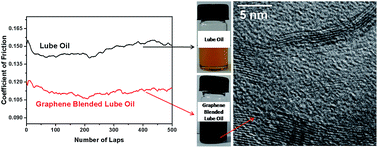
Frictional property of GO–ODA as additive to 10W-40 lube oil was examined for the steel–steel sliding contact under 100 mN load. Fig. 7a show the changes in average friction coefficient as a function of GO–ODA concentration in the lube oil. The friction coefficient was gradually reduced with increasing dose of GO–ODA and then it increased with further increasing dose of GO–ODA. The lowest friction coefficient was found at a concentration of 0.02 mg mL−1 and it was considered as optimum concentration for further tribological experiments. It is worth to mention that 10W-40 lube oil is a finished commercial engine lubricant and exhibits all required additives including friction and wear modifiers for their best performance. Nevertheless, tribo-results showed that very small dose (i.e. 0.02 mg mL−1) of GO–ODA in 10W-40 lube oil significantly reduced (∼25%) friction coefficient. After tribo-tests at 100 mN load, we couldn't see distinct wear tracks on the discs lubricated with GO–ODA blended samples. Hence, further tribo-experiments were conducted at high load (2 N) to understand the role of GO–ODA nanosheets for improved wear-resistivity.
 |
| | Fig. 7 (a) Changes in average friction coefficient as a function of increasing dose of GO–ODA in 10W-40 lube oil. (b) Evolution of friction coefficient with number of laps in unidirectional sliding contact. Load: 100 mN, linear speed: 1 cm s−1. | |
Fig. 8 compare the changes in friction coefficient as a function of sliding distance under 2 N load for 10W-40 lube oil and GO–ODA blended (0.02 mg mL−1) samples. The steel disc lubricated with 10W-40 lube oil shows gradual reduction in friction coefficient upto ∼60 meter sliding distance. The 10W-40 lube oil contains the zinc dialkyldithiophosphate (ZDDP) based additive, which initially forms the widely spaced islands of tribo-chemical thin film and then gradually extended to regular thin film of low shear strength as a function of increasing contact time.35 The stabilized and comparatively low friction after sliding distance of 60 meters, could be attributed to the formation of tribo-chemical thin film of low shear strength. The GO–ODA nanosheets blended in 10W-40 oil, exhibited significantly lower friction and further it gradually decreased with sliding distance (Fig. 8a). The another important feature is the influence of GO–ODA nanosheets on the wear behavior of the contact bodies. Fig. 8b and c show representative wear track profiles of steel discs lubricated with 10W-40 and GO–ODA blended lube oil. The wear track with 10W-40 lube oil exhibited ∼132 μm and ∼400 nm as track width and depth, respectively. In presence of GO–ODA nanosheets, both wear track width and depth reduced significantly. The microscopic images of worn discs (Fig. 9a and b) shows shallow wear tracks and more of like machining of pristine steel discs. The presence of GO–ODA nanosheets in 10W-40 lube oil improved the anti-wear properties by ∼25% reduction of wear track width as deduced from FESEM images (Fig. 9a and b).
 |
| | Fig. 8 Tribological characteristics: (a) changes in friction coefficient as a function of sliding distance under reciprocating contact. (b and c) Wear profiles of 10W-40 lube oil and GO–ODA blended lube oil (concentration: 0.02 mg mL−1) lubricated steel discs, respectively. Load: 2 N; linear speed: 3 cm s−1, sliding distance: 100 meter and stroke length: 3 mm. | |
 |
| | Fig. 9 FESEM images of worn tracks of steel discs lubricated with (a) 10W-40 lube oil and (b) GO–ODA blended lube oil. Load: 2 N; linear speed: 3 cm s−1, sliding distance: 100 meter and stroke length: 3 mm. Micro-Raman spectra, collected from the worn tracks of steel discs lubricated with (c) 10W-40 lube oil and (d) GO–ODA blended lube oil. The presence of G and D bands in Raman spectrum of GO–ODA lubricated steel disc reveals the deposition of graphene sheets on the steel contact interfaces. | |
Furthermore, Raman spectra of worn tracks were obtained to understand the role of GO–ODA nanosheets in friction and wear reductions. Herein, two characteristics Raman-active modes; graphitic lattice (G) band at 1575 cm−1, representing regular graphene skeleton; and disorder (D) band at 1355 cm−1 owing to defects and edges carbon, were considered to probe the graphene nanosheets on the wear tracks.36 The Raman spectrum of worn area lubricated with GO–ODA exhibited two well resolved peaks corresponding to G and D bands (Fig. 9d). However, steel disc lubricated by 10W-40 oil has no Raman signature in this region. These results suggest that GO–ODA nanosheets dispersed in lube oil are deposited on the contact interfaces under the sliding tribo-stress. The broadness of Raman bands suggests that graphene sheets are loosely bounded and aggregated on the contact interfaces. It is proposed that under the sheared contact, some of graphene layers are delaminated and then deposited on the contact interfaces. As the sliding goes on, the dispersed GO–ODA nanosheets in the lube oils easily sheared with weakly adhered graphene on the contact interfaces of steel ball and disc (Fig. 10), as a result friction reduces significantly. Biswas et al. have found that under the sheared contact, layered MoS2 nanosheets are weakly deposited on the contact interfaces.37 It was observed that deposition and then removal of MoS2 nanosheets from the contact interfaces are continuous process under the sliding contact stress. Furthermore, deposited graphene nanosheets on contact interfaces, protect the surface against the tribo-damages. Hence, for maintaining the low friction and protection of contact surfaces, the uninterrupted supply of solid lubricant additive is very important. This can be attained by thoroughly dispersion of graphene nanosheets in the applicable lube oil.
 |
| | Fig. 10 Schematics illustration on role of graphene nanosheets under the sliding contact. (a) The ball on disc contact with GO–ODA blended lube oil. (b) The contact interfaces are expanded to demonstrate the deposited and sheared laminates of graphene, which are responsible for friction and wear reductions. | |
Conclusions
Alkylated graphene nanosheets thoroughly dispersed in the lube oil can be excellent lubricant for industrial tribological applications. The long alkyl chains grafted via covalent interaction between the basal plane oxygen functionalities of GO and amino group of ODA, provided the molecular pillars supported dual layer structure (Fig. 3b). The van der Waals interaction between octadecyl chains of GO–ODA and alkyl chains of lube oil offers long-term stable dispersion of GO–ODA in the lube oil, which is very important for their efficient performance. The tribological results suggest that very minute concentration (0.02 mg mL−1) of GO–ODA decreased the friction under the sliding contacts of steel tribo-pairs. The remarkable tribo-performance of GO–ODA dispersion was attributed to the deposition of sheared graphene laminates on the contact interfaces, which was confirmed by micro-Raman analysis of worn steel discs. Furthermore, the deposited graphene nanosheets protect the tribo-pairs and exhibited improved wear property.
Acknowledgements
We kindly acknowledge the Director CSIR-IIP for his kind permission to publish these results. Authors are thankful to CSIR, India for financial support through 12th FYP research project (CSC-118/04). Authors are grateful to ASD of CSIR-IIP Dehradun; DST unit of Nanoscience, IIT Madras, Chennai; NMR Central Facility at IISER Kolkata; Dr T. R. Ravindran and Mr Ashok Bahuguna of IGCAR, Kalpakkam for providing their help for various measurements. Author H.P.M. acknowledges UGC, New Delhi for fellowship support.
Notes and references
- M. Dienwiebel, G. S. Verhoeven, N. Pradeep and J. W. M. Frenken, Phys. Rev. Lett., 2004, 92, 126101 CrossRef.
- M. Chhowalla and G. A. J. Amaratunga, Nature, 2000, 407, 164–167 CrossRef CAS PubMed.
- O. Tevet, P. Von-Huth, R. Popovitz-Biro, R. Rosentsveig, H. D. Wagner and R. Tenne, Proc. Natl. Acad. Sci. U. S. A., 2011, 108, 19901–19906 CrossRef CAS PubMed.
- K. C. Wong, X. Lu, J. Cotter, D. T. Eadie, P. C. Wong and K. A. R. Mitchell, Wear, 2008, 264, 526–534 CrossRef CAS PubMed.
- B. Chen, Q. Bi, J. Yang, Y. Xia and J. Hao, Tribol. Int., 2008, 41, 1145–1152 CrossRef CAS PubMed.
- A. K. Geim and K. S. Novoselov, Nat. Mater., 2007, 6, 183–191 CrossRef CAS PubMed.
- Y. Zhu, S. Murali, W. Cai, X. Li, J. W. Suk, J. R. Potts and R. S. Ruoff, Adv. Mater., 2010, 22, 3906–3924 CrossRef CAS PubMed.
- C. Lee, X. Wei, J. W. Kysar and J. Hone, Science, 2008, 321, 385–388 CrossRef CAS PubMed.
- T. Filleter, J. L. McChesney, A. Bostwick, E. Rotenberg, K. V. Emtsev, T. Seyller, K. Horn and R. Bennewitz, Phys. Rev. Lett., 2009, 102, 086102 CrossRef CAS.
- K.-S. Kim, H.-J. Lee, C. Lee, S.-K. Lee, H. Jang, J.-H. Ahn, J.-H. Kim and H.-J. Lee, ACS Nano, 2011, 5, 5107–5114 CrossRef CAS PubMed.
- Z. Deng, N. N. Klimov, S. D. Solares, T. Li, H. Xu and R. J. Cannara, Langmuir, 2013, 29, 235–243 CrossRef CAS PubMed.
- D.-H. Cho, L. Wang, J.-S. Kim, G.-H. Lee, E. S. Kim, S. Lee, S. Y. Lee, J. Hone and C. Lee, Nanoscale, 2013, 5, 3063–3069 RSC.
- C. Lee, Q. Li, W. Kalb, X.-Z. Liu, H. Berger, R. W. Caprick and J. Hone, Science, 2010, 328, 76–80 CrossRef CAS PubMed.
- P. Egberts, G. H. Han, X. Z. Liu, A. T. C. Johnson and R. W. Carpick, ACS Nano, 2014, 8, 5010–5021 CrossRef CAS PubMed.
- S. G. Balakrishna, A. S. de Wijn and R. Bennewitz, Phys. Rev. B: Condens. Matter Mater. Phys., 2014, 89, 245440 CrossRef.
- J. S. Choi, J.-S. Kim, I.-S. Byun, D. H. Lee, M. J. Lee, B. H. Park, C. Lee, D. Yoon, H. Cheong, K. H. Lee, Y.-W. Son, J. Y. Park and M. Salmeron, Science, 2011, 333, 607–610 CrossRef CAS PubMed.
- A. Klemenz, L. Pastewka, S. G. Balakrishna, A. Caron, R. Bennewitz and M. Moseler, Nano Lett., 2014, 14, 7145–7152 CrossRef CAS PubMed.
- Y. J. Shin, R. Stromberg, R. Nay, H. Huang, A. T. S. Wee, H. Yang and C. S. Bhatia, Carbon, 2011, 49, 4059–4073 CrossRef PubMed.
- D. Marchetto, C. Held, F. Hausen, F. Wahlisch, M. Dienwiebel and R. Bennewitz, Tribol. Lett., 2012, 48, 77–82 CrossRef CAS.
- D. Berman, A. Erdemir and A. V. Sumant, Mater. Today, 2014, 17, 31–42 CrossRef CAS PubMed.
- D. Berman, S. A. Deshmukh, S. K. R. S. Sankaranarayanan, A. Erdemir and A. V. Sumant, Adv. Funct. Mater., 2014, 24, 6640–6646 CrossRef CAS.
- S. Choudhary, H. P. Mungse and O. P. Khatri, J. Mater. Chem., 2012, 22, 21032–21039 RSC.
- L. Rapoport, N. Fleischer and R. Tenne, Adv. Mater., 2003, 15, 651–655 CrossRef CAS.
- W. Zhang, M. Zhou, H. Zhu, Y. Tian, K. Wang, J. Wei, F. Ji, X. Li, Z. Li, P. Zhang and D. Wu, J. Phys. D: Appl. Phys., 2011, 44, 205303 CrossRef.
- J. Lin, L. Wang and G. Chen, Tribol. Lett., 2011, 41, 209–215 CrossRef CAS.
- V. Eswaraiah, V. Sankaranarayanan and S. Ramaprabhu, ACS Appl. Mater. Interfaces, 2011, 3, 4221–4227 CAS.
- S. Maria, S. Adolfo, C. Claudia, P. Vincenzo and C. Paolo, J. Nanosci. Nanotechnol., 2014, 14, 4960–4968 CrossRef PubMed.
- D. Berman, A. Erdemir and A. V. Sumant, Carbon, 2013, 54, 454–459 CrossRef CAS PubMed.
- H. P. Mungse and O. P. Khatri, J. Phys. Chem. C, 2014, 118, 14394–14402 CAS.
- H. P. Mungse, O. P. Sharma, H. Sugimura and O. P. Khatri, RSC Adv., 2014, 4, 22589–22595 RSC.
- A. Lerf, H. He, M. Forster and J. Klinowski, J. Phys. Chem. B, 1998, 102, 4477–4482 CrossRef CAS.
- W. Cai, R. D. Piner, F. J. Stadermann, S. Park, M. A. Shaibat, Y. Ishii, D. Yang, A. Velamakanni, S. J. An, M. Stoller, J. An, D. Chen and R. S. Ruoff, Science, 2008, 321, 1815–1817 CrossRef CAS PubMed.
- V. V. Naik and S. Vasudevan, J. Phys. Chem. C, 2011, 115, 8221–8232 CAS.
- R. Gusain and O. P. Khatri, J. Mater. Chem. A, 2013, 1, 5612–5619 CAS.
- H. Spike, Tribol. Lett., 2004, 17, 469–489 CrossRef.
- K. N. Kudin, B. Ozbas, H. C. Schniepp, R. K. Prud'homme, I. A. Aksay and R. Car, Nano Lett., 2008, 8, 36–41 CrossRef CAS PubMed.
- M. Praveena, C. D. Bain, V. Jayaram and S. K. Biswas, RSC Adv., 2013, 3, 5401–5411 RSC.
|
| This journal is © The Royal Society of Chemistry 2015 |
Click here to see how this site uses Cookies. View our privacy policy here.