DOI:
10.1039/C4RA16197A
(Paper)
RSC Adv., 2015,
5, 25357-25364
Physical and electrochemical characterization of reduced graphene oxide/silver nanocomposites synthesized by adopting a green approach
Received
11th December 2014
, Accepted 2nd March 2015
First published on 2nd March 2015
Abstract
This study demonstrates the physical and electrochemical characterization of nanocomposites based on reduced graphene oxide (RGO) and silver nanoparticles (Ag NPs) synthesized by adopting a green and low cost approach using lactulose as a reducing and stabilizing agent. The RGO/Ag nanocomposites were characterized by X-ray diffraction (XRD), Fourier-transform infrared (FTIR) spectroscopy, UV-vis absorption spectroscopy and transmission electron microscopy (TEM) to obtain clear information about the removal of functional groups and morphology of nanocomposites. XRD results confirmed the formation of a high purity crystal of Ag on RGO. FTIR results established partial reduction of GO to RGO by lactulose. TEM images show that spherical Ag NPs of an average size of 4 nm are uniformly deposited onto RGO sheets and also prevent the restacking of RGO layers. The energy dispersive X-ray spectra (EDX) of RGO/Ag nanocomposites indicate the presence of Ag and graphene. Also, EDX spectra of FESEM show that Ag content increases with the increasing concentration of AgNO3 in RGO/Ag nanocomposites. The surface charge as well as stability of the nanocomposites is examined by measuring the zeta potential while electro-conductivity is measured by potentiostat–galvanostat. The zeta potential and conductivity of RGO/Ag nanocomposites is greatly improved compared to GO and RGO. The electro-conductivity of RGO/Ag nanocomposites indicates that conductivity of RGO/Ag nanocomposite increases with increasing concentration of Ag. The electrochemical result also indicates the presence of a higher amount of ionic functional groups in GO than those in RGO and RGO/Ag nanocomposites. GO indicates the lowest current which gradually increased for RGO and RGO/Ag nanocomposites, respectively.
1. Introduction
Graphene is a two dimensional (2D) single layer of sp2 hybridized carbon.1 The unique physicochemical structure with the excellent mechanical, thermal, electrical and optical properties2 of graphene has attracted a great deal of global attention for its versatile applications in the areas of supercapacitors,3 transistors,4 solar cells,5 batteries,6 fuel cells,7 hydrogen storage,8 nanoelectronics,9 electrocatalysis,10 sensors,11 electrochemical devices,12 electromechanical resonator,13 and more over nanocomposites,14 especially, polymer nanocomposites15 due to its high surface area (2630 m2 g−1).3 Reports are also available on the use of graphene in the field of biomedical engineering such as in drug delivery,16 gene transfection,17 biosensing18 as well as tumour imaging and photothermal therapy for cancer.19,20
Therefore, the synthesis of superior quality graphene is very important and many methods, such as micromechanical exfoliation of graphite using peel-off method by scotch tape,21 epitaxial growth on electrically insulating surfaces,22 thermal exfoliation and reduction,23,24 chemical vapour deposition25 and chemical reduction,26,27 have been developed to synthesize graphene. However, the challenge is to find out the most suitable method for preparing graphene with the best quality. All of the above methods, except chemical reduction, produce large area sheets with high quality but limited amount of yield, thereby, making these methods only acceptable for fundamental studies or electronic applications.1 In this regard, chemical reduction is the most promising method for producing a high volume of graphene through the exfoliation and reduction of graphene oxide (GO).26,27 Generally, there are hydroxyl, phenolic, epoxide and carboxylic groups present on the basal plane and at the edges of GO, and the existing oxygen containing functional groups help to disperse GO in polar solvents like water.28 Also, the hydrophilic property of GO permits deposition of metal nanoparticles (NPs) on the surface of it, thereby, making it suitable for different applications.
The metal nanoparticles exhibit very interesting physicochemical properties and find enormous applications in the field of photography, catalysis, optoelectronics, biomedicine and surface enhanced Raman scattering (SERS).29 Such metal nanoparticles are generally synthesized by several physical and chemical methods. Chemical methods primarily include the chemical reduction process, electrochemical technique and photothermal reduction30 and most of the methods need reducing agents as well as surfactants such as hydrazine monohydrate31 sodium borohydride32 hydroquinone,33 etc. Hydrazine monohydrate is most widely used mainly due to its strong reduction activity, however, its use adversely affect the performance of reduced graphene film (RGO). Moreover, hydrazine is highly toxic and explosive, and therefore the challenge is to prepare metal nanoparticles by employing green technological means, without using any toxic reducing agent or surfactants. Several environmental friendly reductants such as vitamin C,34 reducing sugar,35 alcohols,36 sodium citrate,37 tea,38 etc., have been developed to meet such challenges.
Incorporation of metal NPs into the graphene sheets is an interesting area to investigate since such systems provide tunable novel properties which can be exploited for different applications. The loading of metal nanoparticles such as Ag, Au, Pt, Pd, ZnO, TiO2, Co3O4, Fe3O4, CdS and ZnS39,40 into graphene produces new hybrid materials suitable for applications in the areas of super capacitor,41 electrocatalysts,42 lithium ion batteries,43 SERS,44 catalysis,45 nanoelectronics,46 imaging,47 and also in the field of biomedical and pharmaceuticals.48 Such composites are also suitable for the adsorption of biomolecules and acceleration of charge transfer between the electrode and absorbed molecules, leading to rapid generation of electrical (current) response.49 The advantages of such graphene nanocomposites are: (1) planner structure, (2) high surface area, (3) promising electrical, optical, mechanical and thermal properties, and (4) cost effectiveness.50 Graphene based metal nanocomposites are mainly prepared by two methods: (1) deposition method and (2) in situ synthesis method. In the first method, metal NPs are deposited on the graphene sheets either by physical adsorption, electrostatic binding or charge transfer interactions. In the second method, nanocomposites are prepared by a single step through the reduction of graphite oxide and metal salts. The second approach is useful for large scale productions; however, maintaining the uniformity of the particle size is a real challenge. Ag NPs are of particular interest due to their superior quantum characteristics with defined and controlled shape51 and the ability of a fast charge transfer. The cost effectiveness, high electrical conductivity, superior catalytic activity, amazing optical properties and strong surface enhance Raman effect52 have made it a very promising material for SERS,44 catalysis,53 nanoscale electronics,46 and in the field of pharmaceuticals.48
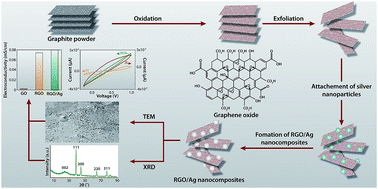
In the current work, RGO/Ag nanocomposites have been successfully prepared by the reduction of AgNO3 and GO using lactulose in a pressure cooker. For the environmental concern, a relatively simple in situ synthesis procedure has been developed where graphene is attached with silver to form RGO/Ag nanocomposites. The synthesized RGO/Ag nanocomposites are physically characterized by employing XRD, FTIR, TEM, and Zetasizer. The electrical performance is investigated by using cyclic voltammetry (CV) and current–voltage (I–V) measurements.
2. Experimental
Materials
Graphite powder and lactulose were received from Sigma-Aldrich Inc., St. Louis, MO. Concentrated sulphuric acid (98% H2SO4, GR grade), potassium permanganate (KMnO4 purified), hydrogen peroxide solution (30% H2O2), sodium nitrate (NaNO3, extra pure), and sodium hydroxide (NaOH purified) were obtained from Merck Specialties Pvt. Ltd., India. Silver nitrate (AgNO3, extra pure) was received from Spectrochem Pvt. Ltd, Mumbai, India.
Synthesis of GO
The graphene oxide was prepared from a natural graphite powder by Hummers method,54 involving following steps:
1. Graphite powder (1 g) and NaNO3 (1 g) were added in cold (0 °C) concentrated H2SO4 in a 250 mL conical flask under vigorous stirring for 2 h. After some time, the whole solution was converted into black slurry.
2. KMnO4 (6 g) was slowly added into the solution and maintained at a temperature of <20 °C for 4–5 h.
3. Then, the whole system was removed from the ice bath and for terminating the reaction, 100 mL distilled water was added and stirred for 2 h at room temperature. Next 200 mL of hot water was added into the solution and stirred for another 2 h at 98 °C temperature.
4. Finally H2O2 (20 mL) was added into the reaction mixture and the color was changed into bright yellow. To remove the impurities, the resultant mixture was washed with distilled water for several times and centrifuged. Then graphite oxide was collected and dried at 60 °C for 24 h. Fig. 1 shows the step by step preparation of GO.
 |
| | Fig. 1 Scheme illustrating the preparation of GO. | |
Synthesis of RGO/Ag nanocomposites
RGO/Ag nanocomposites were synthesized by reducing GO and AgNO3 in one step by using lactulose as a reducing and a stabilizing agent. The synthesis procedure is shown below:
1. GO (60 mg) was dispersed in 30 mL distilled water by ultra-sonication for 2 h to form the GO solution.
2. An aqueous solution of AgNO3 (10−2 mol and 10−1 mol) was prepared. AgNO3 and GO solutions were mixed and stirred for 2 h and then the required amount of NaOH was added to adjust the pH of the mixture to about 10.
3. Finally, an aqueous solution of lactulose (10 wt%) was added into the reaction mixture and sonicated for 15 minutes in a sealed 100 mL conical flask.
4. Then the conical flask was sealed with non-absorbent cotton and placed in a normal pressure cooker for 1 h to prepare RGO/Ag nanocomposites (Fig. 2).
 |
| | Fig. 2 Scheme illustrating the preparation steps of RGO/Ag nanocomposites. | |
Characterization
X-ray diffraction (XRD) patterns were recorded on an X-PERT-PRO Panalytical diffractometer using Cu Kα (λ = 1.5406) as the X-ray source at a scanning rate of 1° min−1 and generator voltage and current of 40 kV and 30 mA, respectively. The Fourier transform infrared (FTIR) spectroscopic experiment was done with a Bruker-Optics Alpha-T spectrophotometer over the range of 400 to 4000 cm−1. UV-vis absorption spectra of the prepared materials were recorded in a Perkin Elmer Lambda 25 by dispersing composite material in distilled water. The average hydrodynamic diameter (AHD) is measured by a Zetasizer Nano-ZS90 System (Malvern Inc.). The morphology of synthesized samples were characterized using a transmission electron microscope (TEM, JEOL-JEM-2100 with a 200 kV accelerating voltage). Samples for TEM analysis were prepared by drying a droplet of material suspension on a carbon coated copper grid. An energy dispersive X-ray (EDX) Analysis was done by field emission scanning electron microscopy (FESEM-JEOL). Zeta-potential measurements were performed using a Zetasizer Nano-ZS90 System (Malvern Inc.). Electro-conductivity test was investigated by an Ecopia HNS 5300. Electrochemical property was investigated by a potentiostat–galvanostat (Autolab) using 1 M H2SO4 electrolyte.
3. Results and discussion
X-ray diffraction (XRD)
Fig. 3 shows the X-ray diffraction (XRD) patterns of GO, RGO, Ag NPs and RGO/Ag nanocomposites. Fig. 3a exhibits a strong peak at 11.28° corresponding to the (002) plane of GO and inter-planner spacing of 0.783 Å, which confirms the successful preparation of GO from graphite powder through oxidation by the modified Hummers method.55 In Fig. 3b, the diffraction peak at 11.28° has disappeared, indicating the complete reduction of GO to RGO by lactulose and a broad peak appears at 23.83°. Fig. 3c shows diffraction peak of Ag NPs at 38.1°, 44.1°, 64.2°, and 77.2°, corresponding to the crystallographic planes of (111), (200), (220) and (311) of face concentrated cubic (fcc) Ag NPs, respectively (JCPDS no. 04-0783). RGO/Ag nanocomposites shows diffraction peak of both RGO and Ag in Fig. 3d. The sharp diffraction peak at 38.1° belongs to crystalline Ag and also it is more prominent than Ag NPs, confirming the formation of high purity crystal of Ag in RGO/Ag nanocomposites.56
 |
| | Fig. 3 X-ray diffraction patterns of (a) GO, (b) RGO, (c) Ag NPs and (d) RGO/Ag nanocomposites. | |
Fourier-transform infrared (FTIR) spectroscopy
FTIR provides additional evidence of the reduction ability of lactulose. Adsorption peaks of GO in Fig. 4a are situated at 3427 cm−1 and 1720 cm−1 which are attributed to OH stretching vibration and symmetric stretching vibration of –COOH group present in GO. Upon the reduction to RGO in RGO/Ag nanocomposites in Fig. 4c, it is expected that the intensity of both the characteristic bands present in GO have been decreased substantially. Regarding RGO/Ag nanocomposites, the traces in the –COO group and stretching vibration of –COO group centered at 1627 cm−1 and 1720 cm−1 respectively, indicates incomplete reduction of GO, while the peaks at 2924 cm−1 and 2854 cm−1 are assumed to C–H stretching adjacent to –COO group. The appearance of the peak at 1627 cm−1 may be due to the skeletal vibration of an epoxy group and appears to be caused by skeletal vibration of the epoxide group and graphite domain.
 |
| | Fig. 4 FTIR spectra of (a) GO, (b) RGO, and (c) RGO/Ag nanocomposites. | |
UV-vis absorption spectra
The ultraviolet-visible (UV-vis) spectra of GO, RGO, Ag NPs and RGO/Ag nanocomposites are shown in Fig. 5. GO (Fig. 5a) dispersion in water shows two characteristics peaks, a peak at 238 nm, which is due to the π–π* transition of aromatic C
C bonds and another peak at 307 nm indicating the n–π* transition of C
O bonds.57 In case of RGO (Fig. 5b), the absorption peak of GO at 238 nm is red shifted to 269 nm and absorption peak at 307 nm is totally vanished due to the removal of the carbonyl group of GO due to reduction by lactulose. Fig. 5c shows a broad peak at 420 nm which indicates surface plasmon resonance of Ag NPs.40 The shift of RGO peak from 269 nm to 271 nm and a hump at 383 nm confirm the formation of RGO/Ag nanocomposites.
 |
| | Fig. 5 UV-visible spectra of GO, RGO, Ag NPs and RGO/Ag nanocomposites. | |
Dynamic light scattering
The average hydrodynamic diameter (AHD) of GO, RGO, Ag and RGO/Ag nanocomposites is measured using DLS and plotted in Fig. 6. The average hydrodynamic diameter of GO is obtained to be 332 ± 0.35 nm. However, after the reduction of GO by lactulose, the AHD for RGO is dramatically reduced to be 137 ± 0.37 nm. The shape of graphene is presumed to be spherical in DLS measurement.58–60 The AHD of silver NPs is measured to be 179.7 ± 0.44 nm and it is 120.2 ± 0.47 nm for the RGO/Ag nanocomposites, which is much lower than both RGO and Ag NPs, suggesting interactions between RGO and Ag.
 |
| | Fig. 6 Size histogram of GO, RGO, Ag NPs and RGO/Ag nanocomposites. | |
Transmission electron microscopy
Fig. 7 shows the representative TEM images of RGO, Ag NPs and RGO/Ag nanocomposites. The TEM image of RGO in Fig. 7a reveals the crumpled and folded structure, indicating its loosely bonded layers and higher interlayer distance. The Ag NPs in Fig. 7b are observed to be spherical in shape with an average particle size of 8 nm, however, some of the smaller particles are agglomerated to create relatively larger particles which can be attributed to smaller dimension and higher surface energy of the particles. Image of Fig. 7c for the RGO/Ag nanocomposites exhibits a large number of Ag NPs (black dots) with an average size of 4 nm to be well adsorbed and uniformly dispersed on both sides of the RGO sheets. It is also apparent that the Ag NPs attached onto RGO sheets are spherical in shape and prevent the restacking of RGO layers.
 |
| | Fig. 7 TEM images of (a) RGO sheet, (b) Ag NPs and (c and d) RGO/Ag nanocomposites. | |
Energy dispersive X-ray (EDX) analysis from TEM
The EDX spectra for Ag NPs and RGO/Ag nanocomposites are respectively presented in Fig. 8a and b. The elemental plot of Fig. 8a shows the presence of Ag, confirming the successful synthesis of Ag NPs from AgNO3 by using lactulose. The EDX spectra of RGO/Ag nanocomposites indicate the presence of Ag, C and O. The peaks of Ag appear from the Ag NPs, C and O from RGO and Si from the substrate. The peaks of Cu appear from the copper grid, where sample has been prepared. Thus, EDX analysis also confirms that the RGO/Ag nanocomposites have been successfully prepared through in situ green synthesis using lactulose.
 |
| | Fig. 8 EDX spectrum of (a) RGO and (b) RGO/Ag nanocomposites obtained from TEM. | |
Energy dispersive X-ray (EDX) analysis from FESEM
To investigate the Ag content in the prepared RGO/Ag nanocomposites, we have used EDX of FESEM. The EDX spectra in Fig. 9 show that C, O and Ag are present in RGO/Ag (10−2 mol) and RGO/Ag (10−1 mol) nanocomposites. Tables 1 and 2 show the relative weight percentage of C, O and Ag in RGO/Ag nanocomposites with different concentration Ag. We can conclude that the weight percent of Ag increases with the increasing concentration of AgNO3.
 |
| | Fig. 9 EDX images of (a) RGO/Ag (10−2 mol) and (b) RGO/Ag (10−1 mol) nanocomposites from SEM. | |
Table 1 Relative weight percent of all elements present in RGO/Ag nanocomposites
| Elements |
RGO/Ag (10−2 mol) |
RGO/Ag (10−1 mol) |
| Carbon |
58.29% |
42.67% |
| Silver |
6.47% |
33.75% |
| Oxygen |
35.24% |
23.58% |
Table 2 Relative weight percent of carbon and silver in RGO/Ag nanocomposites
| Elements |
RGO/Ag (10−2 mol) |
RGO/Ag (10−1 mol) |
| Carbon |
85.83% |
51.82% |
| Silver |
14.17% |
48.18% |
Zeta potential
Zeta potential is measured to study the stability of GO, RGO, Ag NPs and RGO/Ag nanocomposites in an aqueous medium and plotted in Fig. 10. The average value of the zeta potential for GO is found to be −19 ± 0.49 mV, indicating the presence of large numbers of carboxyl and epoxy groups with high density of a negative charge in such GO sheets. RGO in aqueous medium showed a negative charge density of −25.2 ± 0.37 mV, comparatively higher negative charge than GO and it was found to be more stable than GO in an aqueous medium. In case of stable dispersion in an aqueous solution, the electrostatic repulsion interaction of negative charge is too essential.58,61 Reduction of AgNO3 by lactulose gives Ag with a zeta potential value of −33.7 ± 0.38 mV. Finally, RGO/Ag nanocomposites showed a higher negative zeta potential value of −34.4 ± 0.41 mV which is also more stable than GO and RGO.
 |
| | Fig. 10 Zeta potential of GO, RGO, Ag NPs and RGO/Ag nanocomposites. | |
Electro-conductivity
Fig. 11 shows the comparative plots of electrical conductivity of GO, RGO, RGO/Ag (10−2 mol) and RGO/Ag (10−1 mol) nanocomposites at room temperature. It is apparent from such plots that the GO is non-conductive in nature which can be attributed to the presence of several functional groups such as epoxide, hydroxyl, carbonyl and carboxyl at the basal plane of GO. Presence of such functional groups reduces the inter-planar forces and provides a hydrophilic character and moreover it lacks an extended π-conjugated orbital system. Reduction of GO has been achieved by lactulose, where a significant number of functional groups as well as oxygen is removed. The conductivity of RGO is 0.0752 S cm−1, thereby, indicates a partial restoration of conjugation. Generally, the conductivity range of fully reduced single layer graphene is in between 0.05 S cm−1 and 2 S cm−1. So, it can be concluded that some functional groups are still present in the RGO sheets which can be correlated with the FTIR spectra. A slightly higher conductivity of 0.0794 S cm−1 is obtained for the RGO/Ag (10−2 mol) nanocomposites which is attributed to the presence of 14.17 wt% Ag NPs. It is also observed that the conductivity increases to 0.274 S cm−1 when Ag content is 48.18% in RGO/Ag (10−1 mol) nanocomposites.
 |
| | Fig. 11 Electro-conductivity of GO, RGO, RGO/Ag (10−2 mol) and RGO/Ag (10−1 mol) nanocomposites. | |
Electro-chemical study
The electro-chemical behaviour of GO, RGO and RGO/Ag samples is measured by employing cyclic voltammetry (CV) and the comparative current–voltage characteristics are plotted in Fig. 12. This is apparent from the plots that for a given voltage, GO has the lowest current and it gradually increases for RGO and RGO/Ag samples, respectively. The current obtained from the RGO and RGO/Ag samples is almost orders of magnitude higher in comparison to the GO samples. The similar results are also observed from the conductivity measurements indicating the presence of functional groups in GO which have been removed by reduction using lactulose. The highest current value in RGO/Ag nanocomposites is measured due to the embedded NPs in it. Interestingly, all the samples considered in the current work exhibit a significant hysteresis loop and indicate the possibility of its use as memory elements. Among all the measurements, GO shows the highest hysteresis area than RGO and RGO/Ag. Thus, the result of GO indicates the presence of a higher amount of ionic functional groups than those in RGO and RGO/Ag nanocomposites. Such observations show that the reduction of GO with lactulose is not complete however the removal of a significant amount of functional groups has been possible, which are apparent from the relatively less hysteresis area. Therefore, the existing functional groups in GO can be exploited as memory elements.
 |
| | Fig. 12 The electrochemical behaviour of GO, RGO and RGO/Ag nanocomposites. | |
4. Conclusion
In summary, the RGO/Ag nanocomposites have been successfully synthesized by the low cost in situ reduction process without using any toxic chemicals via the green approach. The RGO/Ag nanocomposites were characterized by XRD, FTIR, UV-vis spectroscopy, DLS, TEM and EDX to investigate the structure and morphology. All the results established the formation of RGO/Ag nanocomposites. However, FTIR provides that RGO is not fully reduced; some functional groups are still present in RGO. TEM images of RGO/Ag nanocomposites displays a large number of Ag NPs (4 nm) uniformly decorated on the RGO sheets. RGO/Ag nanocomposites showed a higher negative zeta potential value, which is also more anionic and more stable than GO and RGO. It is clear from EDX spectra of FESEM that the Ag content of nanocomposites increases with increasing concentration of AgNO3. Electrical measurement established that the conductivity of RGO/Ag nanocomposites increases with the increasing weight percent of AgNPs. The electro-chemical behaviour indicates that GO has the lowest current and it continuously increases for RGO and RGO/Ag nanocomposites. GO shows the highest hysteresis area than RGO and RGO/Ag nanocomposites. Therefore, the presence of functional groups in GO can be exploited as memory elements.
Acknowledgements
The author I. Roy gratefully acknowledges the Technical Education Quality Improvement Programme, University of Calcutta for providing fellowship. A. Bhattacharyya likes to thank the Technical Education Quality Improvement Programme, University of Calcutta for his fellowship. G. Sarkar likes to thank Rajib Gandhi National fellowship, UGC, Government of India. N. R. Saha likes to thank UGC, the Government of India for his fellowship. S. Pattanayak likes to thank DST, the Government of India for her inspire fellowship. B. Bhowmick, Md. M. R. Mollick, D. Mondal, D. Maity and N. K. Bera of the University of Calcutta are acknowledged for their help. We acknowledge the CRNN, University of Calcutta for instrumental facilities.
Notes and references
- K. S. Novoselov, A. K. Geim, S. V. Morozov, D. Jiang, Y. Zhang, S. V. Dubonos, I. V. Grigorieva and A. A. Firsov, Science, 2004, 306, 666–669 CrossRef CAS PubMed.
- M. J. Allen, V. C. Tung and R. B. Kaner, Chem. Rev., 2009, 110, 132–145 CrossRef PubMed.
- M. D. Stoller, S. Park, Y. Zhu, J. An and R. S. Ruoff, Nano Lett., 2008, 8, 3498–3502 CrossRef CAS PubMed.
- X. Li, X. Wang, L. Zhang, S. Lee and H. Dai, Science, 2008, 319, 1229–1232 CrossRef CAS PubMed.
- Z. Li, F. Gong, G. Zhou and Z.-S. Wang, J. Phys. Chem. C, 2013, 117, 6561–6566 CAS.
- P. Guo, H. Song and X. Chen, Electrochem. Commun., 2009, 11, 1320–1324 CrossRef CAS PubMed.
- E. Yoo, T. Okata, T. Akita, M. Kohyama, J. Nakamura and I. Honma, Nano Lett., 2009, 9, 2255–2259 CrossRef CAS PubMed.
- Y. Zhou, Q. Bao, L. A. L. Tang, Y. Zhong and K. P. Loh, Chem. Mater., 2009, 21, 2950–2956 CrossRef CAS.
- P. Avouris, Z. Chen and V. Perebeinos, Nat. Nanotechnol., 2007, 2, 605–615 CrossRef CAS PubMed.
- L. Tang, Y. Wang, Y. Li, H. Feng, J. Lu and J. Li, Adv. Funct. Mater., 2009, 19, 2782–2789 CrossRef CAS.
- C. H. Lu, H. H. Yang, C. L. Zhu, X. Chen and G. N. Chen, Angew. Chem., Int. Ed., 2009, 48, 4785–4787 CrossRef CAS PubMed.
- F. Schedin, A. K. Geim, S. V. Morozov, E. W. Hill, P. Blake, M. I. Katsnelson and K. S. Novoselov, Nat. Mater., 2007, 6, 652–655 CrossRef CAS PubMed.
- J. S. Bunch, A. M. van der Zande, S. S. Verbridge, I. W. Frank, D. M. Tanenbaum, J. M. Parpia, H. G. Craighead and P. L. McEuen, Science, 2007, 315, 490–493 CrossRef CAS PubMed.
- S. Guo, S. Dong and E. Wang, ACS Nano, 2009, 4, 547–555 CrossRef PubMed.
- J. H. Yoon, A. M. Shanmugharaj, W. S. Choi and S. H. Ryu, Preparation and characterization of polypropylene/functionalized graphene nanocomposites, The 18th International Conference on Composite Materials (ICCM18), Jeju Island, South Korea, 21–26 August 2011, p. 5 Search PubMed.
- D. Ma, J. Lin, Y. Chen, W. Xue and L.-M. Zhang, Carbon, 2012, 50, 3001–3007 CrossRef CAS PubMed.
- L. Feng, S. Zhang and Z. Liu, Nanoscale, 2011, 3, 1252–1257 RSC.
- Y. Liu, X. Dong and P. Chen, Chem. Soc. Rev., 2012, 41, 2283–2307 RSC.
- J. Yao, Y. Sun, M. Yang and Y. Duan, J. Mater. Chem., 2012, 22, 14313–14329 RSC.
- K. Yang, L. Hu, X. Ma, S. Ye, L. Cheng, X. Shi, C. Li, Y. Li and Z. Liu, Adv. Mater., 2012, 24, 1868–1872 CrossRef CAS PubMed.
- K. S. Kim, Y. Zhao, H. Jang, S. Y. Lee, J. M. Kim, K. S. Kim, J.-H. Ahn, P. Kim, J.-Y. Choi and B. H. Hong, Nature, 2009, 457, 706–710 CrossRef CAS PubMed.
- X. Lu, M. Yu, H. Huang and R. S. Ruoff, Nanotechnology, 1999, 10, 269–272 CrossRef CAS.
- M. J. McAllister, J.-L. Li, D. H. Adamson, H. C. Schniepp, A. A. Abdala, J. Liu, M. Herrera-Alonso, D. L. Milius, R. Car, R. K. Prud'homme and I. A. Aksay, Chem. Mater., 2007, 19, 4396–4404 CrossRef CAS.
- P. Steurer, R. Wissert, R. Thomann and R. Mülhaupt, Macromol. Rapid Commun., 2009, 30, 316–327 CrossRef CAS PubMed.
- S. Park and R. S. Ruoff, Nat. Nanotechnol., 2009, 4, 217–224 CrossRef CAS PubMed.
- D. R. Dreyer, S. Park, C. W. Bielawski and R. S. Ruoff, Chem. Soc. Rev., 2010, 39, 228–240 RSC.
- S. Z. Zu and B. H. Han, J. Phys. Chem. C, 2009, 113, 13651–13657 CAS.
- J. I. Paredes, S. Villar-Rodil, A. Martínez-Alonso and J. M. D. Tascón, Langmuir, 2008, 24, 10560–10564 CrossRef CAS PubMed.
- P. Huang, J. Lin, Z. Li, H. Hu, K. Wang, G. Gao, R. He and D. Cui, Chem. Commun., 2010, 46, 4800–4802 RSC.
- V. K. Sharma, R. A. Yngard and Y. Lin, Adv. Colloid Interface Sci., 2009, 145, 83–96 CrossRef CAS PubMed.
- O. C. Compton, D. A. Dikin, K. W. Putz, L. C. Brinson and S. T. Nguyen, Adv. Mater., 2010, 22, 892–896 CrossRef CAS PubMed.
- J. F. Shen, Y. Z. Hu, M. Shi, X. Lu, C. Qin, C. Li and M. X. Ye, Chem. Mater., 2009, 21, 3514–3520 CrossRef CAS.
- G. X. Wang, X. P. Shen, B. Wang, J. Yao and J. Park, Carbon, 2009, 47, 1359–1364 CrossRef CAS PubMed.
- J. Gao, F. Liu, Y. L. Liu, N. Ma, Z. Q. Wang and X. Zhang, Chem. Mater., 2010, 22, 2213–2218 CrossRef CAS.
- C. Z. Zhu, S. J. Guo, Y. X. Fang and S. J. Dong, ACS Nano, 2010, 4, 2429–2437 CrossRef CAS PubMed.
- D. R. Dreyer, S. Murali, Y. Zhu, R. S. Ruoff and C. W. Bielawski, J. Mater. Chem., 2011, 21, 3443–3447 RSC.
- Z. Zhang, H. H. Cheng, C. Y. Xing, M. Y. Guo, F. G. Xu, X. D. Wang, H. Gruber, B. L. Zhang and J. L. Tang, Nano Res., 2011, 4, 599–611 CrossRef CAS.
- Y. Wang, Z. X. Shi and J. Yin, ACS Appl. Mater. Interfaces, 2011, 3, 1127–1133 CAS.
- P. V. Kamat, J. Phys. Chem. Lett., 2009, 1, 520–527 CrossRef.
- R. Pasricha, S. Gupta and A. K. Srivastava, Small, 2009, 5, 2253–2259 CrossRef CAS PubMed.
- J. H. Warner, M. H. Ruemmeli, A. Bachmatiuk, M. Wilson and B. Büchner, ACS Nano, 2010, 4, 470–476 CrossRef CAS PubMed.
- S. Chen, J. Zhu, X. Wu, Q. Han and X. Wang, ACS Nano, 2009, 4, 2822–2830 CrossRef PubMed.
- Y. Qian, S. Lu and F. Gao, Mater. Lett., 2011, 65, 56–58 CrossRef CAS PubMed.
- S. Dutta, C. Ray, S. Sarkar, M. Pradhan, Y. Negishi and T. Pal, ACS Appl. Mater. Interfaces, 2013, 5, 8724–8732 CAS.
- I. Roy, A. Bhattacharyya, G. Sarkar, N. R. Saha, D. Rana, P. P. Ghosh, M. Palit, A. R. Das and D. Chattopadhyay, RSC Adv., 2014, 4, 52044–52052 RSC.
- Z. Yang, H. Qian, H. Chen and J. N. Anker, J. Colloid Interface Sci., 2010, 352, 285–291 CrossRef CAS PubMed.
- K.-S. Lee and M. A. El-Sayed, J. Phys. Chem. B, 2006, 110, 19220–19225 CrossRef CAS PubMed.
- J. Liu and R. H. Hurt, Environ. Sci. Technol., 2010, 44, 2169–2175 CrossRef CAS PubMed.
- M. Pumera, Chem. Soc. Rev., 2010, 39, 4146–4157 RSC.
- S. Bai and X. Shen, RSC Adv., 2012, 2, 64–98 RSC.
- M. Rycenga, C. M. Cobley, J. Zeng, W. Y. Li, C. H. Moran, Q. Zhang, D. Qin and Y. Xia, Chem. Rev., 2011, 111, 3669–3712 CrossRef CAS PubMed.
- S. M. Nie and S. R. Emery, Science, 1997, 275, 1102–1106 CrossRef CAS PubMed.
- P. Christopher and S. Linic, J. Am. Chem. Soc., 2008, 130, 11264–11265 CrossRef CAS PubMed.
- W. S. Hummers and R. E. Offeman, J. Am. Chem. Soc., 1958, 80, 1339 CrossRef CAS.
- J. Li and C.-Y. Liu, Eur. J. Inorg. Chem., 2010, 2010, 1244–1248 CrossRef.
- M. R. Das, R. K. Sarma, R. Saikia, V. S. Kale, M. V. Shelke and P. Sengupta, Colloids Surf., B, 2011, 83, 16–22 CrossRef CAS PubMed.
- K. Krishnamoorthy, R. Mohan and S.-J. Kim, Appl. Phys. Lett., 2011, 98, 244101 CrossRef PubMed.
- Y. Wang, S. J. Zhen, Y. Zhang, Y. F. Li and C. Z. Huang, J. Phys. Chem. C, 2011, 115, 12815–12821 CAS.
- Y. Wang, Y. F. Li, J. Wang, Y. Sang and C. Z. Huang, Chem. Commun., 2010, 46, 1332–1334 RSC.
- Y. Wang, L. Q. Chen, Y. F. Li, X. J. Zhao, L. Peng and C. Z. Huang, Nanotechnology, 2010, 21, 305601 CrossRef PubMed.
- X. Qi, K.-Y. Pu, X. Zhou, H. Li, B. Liu, F. Boey, W. Huang and H. Zhang, Small, 2010, 6, 663–669 CrossRef CAS PubMed.
|
| This journal is © The Royal Society of Chemistry 2015 |
Click here to see how this site uses Cookies. View our privacy policy here.