

Cooperative transformation of nitroarenes and biomass-based alcohols catalyzed by CuNiAlOx†
Xingchao Daiab,
Xinjiang Cuia,
Hangkong Yuana,
Youquan Denga and
Feng Shi*a
aState Key Laboratory for Oxo Synthesis and Selective Oxidation, Center for Green Chemistry and Catalysis, Lanzhou Institute of Chemical Physics, Chinese Academy of Sciences, Lanzhou, 730000, China. E-mail: fshi@licp.cas.cn; Fax: +86-931-8277088; Tel: +86-931-4968142
bGraduate School of the Chinese Academy of Sciences, Beijing, 100049, China
First published on 22nd December 2014
Abstract
A simple CuNiAlOx catalyst was prepared for the cooperative transformation of nitrobenzene derivatives and biomass-based alcohols. Under the optimized reaction conditions, a range of nitrobenzene derivatives can be smoothly converted into the corresponding amines and glycerol was directly transformed into 1,3-dihydroxypropan-2-one.
Concerns about global warming and energy security have led to the exploration of alternatives for fossil resources to supply chemicals and energy.1 Biomass has gained extensive attention because of its renewability, eco-friendly nature, compatibility with biological systems, cheapness, high energy storage and wide availability.2 In the last few years, people have spent much effort to achieve the conversion of biomass to high-added value chemical products.3–6 Glycerol from biomass, as a by-product of the transesterification of triglycerides, is an abundant renewable resource and a highly functionalized molecule with three reactive hydroxyl groups. A large number of valuable compounds can be obtained via its oxidation, hydrogenolysis, dehydration, etherification, esterification or reforming.7 Interestingly, very recently, glycerol has also been used in catalytic amination reactions via hydrogen transfer mechanism,8 and hydrogen generation was achieved from glycerol through pyrolysis reaction. The results suggested that it's possible to use bio-based feedstock as a hydrogen source. It would be of great significance if bio-based feedstock could be regarded as a reducing agent for the synthesis of fine chemicals without cracking. However, until now, it is a pity that reports about synthesis of fine chemicals using bio-based feedstock directly as the hydrogen source have been few.9
Aromatic amines are widely used as important intermediates in the synthesis of chemicals such as dyes, antioxidants, pharmaceuticals and agricultural chemicals.10 A number of processes have been made for the synthesis of aromatic amines. Traditional methods for the synthesis of aromatic amines generally make use of H2![[thin space (1/6-em)]](https://www.rsc.org/images/entities/char_2009.gif) 11 or stoichiometric reducing agents such as hydrazine hydrate,12 silanes,13 sodium hydrosulphite,14 formates15 and decaborane16 as hydrogen sources, and possessed definite risk or/and lead to a certain degree of environmental pollution. Compared with these traditional hydrogenation reactions, catalytic transfer hydrogenation using cheap and easily available alcohols17 as the hydrogen source under moderate conditions, has obvious advantages with respect to selectivity, economy, safety, and pro-environment, and has been a potential process for the synthesis of aromatic amines. Despite the rapid progress in catalytic transfer hydrogenation, a lot of reports have focused on biomass-based alcohols, because alcohols with diverse structures can be efficiently produced from biomass. Thus, it would be ideal if biomass-based alcohols could be directly used as the hydrogen source. As a successful example, recently, nitroarenes could be reduced using biomass-based glycerol as hydrogen source.18 In this process, however, a large excess of glycerol was needed. It would be of atom economy if the synthesis of aromatic amines and the biomass directional transformation could be accomplished in one-pot reaction with equivalent amount of nitroarenes and biomass-based alcohols according to its final oxidation product. On the basis of our foregoing efforts about the discovery of final oxidation product of glycerol in the reductive coupling of nitrobenzene and alcohols using glycerol as the hydrogen source,19,20 here, we tried to develop one-pot synthesis of aromatic amines and high added-value oxidation products of biomass-based alcohol over a non-noble metal heterogeneous CuNiAlOx catalyst, and only with equivalent amount of nitroarenes and glycerol.
11 or stoichiometric reducing agents such as hydrazine hydrate,12 silanes,13 sodium hydrosulphite,14 formates15 and decaborane16 as hydrogen sources, and possessed definite risk or/and lead to a certain degree of environmental pollution. Compared with these traditional hydrogenation reactions, catalytic transfer hydrogenation using cheap and easily available alcohols17 as the hydrogen source under moderate conditions, has obvious advantages with respect to selectivity, economy, safety, and pro-environment, and has been a potential process for the synthesis of aromatic amines. Despite the rapid progress in catalytic transfer hydrogenation, a lot of reports have focused on biomass-based alcohols, because alcohols with diverse structures can be efficiently produced from biomass. Thus, it would be ideal if biomass-based alcohols could be directly used as the hydrogen source. As a successful example, recently, nitroarenes could be reduced using biomass-based glycerol as hydrogen source.18 In this process, however, a large excess of glycerol was needed. It would be of atom economy if the synthesis of aromatic amines and the biomass directional transformation could be accomplished in one-pot reaction with equivalent amount of nitroarenes and biomass-based alcohols according to its final oxidation product. On the basis of our foregoing efforts about the discovery of final oxidation product of glycerol in the reductive coupling of nitrobenzene and alcohols using glycerol as the hydrogen source,19,20 here, we tried to develop one-pot synthesis of aromatic amines and high added-value oxidation products of biomass-based alcohol over a non-noble metal heterogeneous CuNiAlOx catalyst, and only with equivalent amount of nitroarenes and glycerol.
A series of CuNiAlOx catalysts were prepared with simple co-precipitation method by varying the molar ratios of metal species and calcination temperatures, and recorded as Cu1Ni4Ox-450, Cu1Ni4Al1Ox-450, Cu2Ni4Al0.5Ox-450, Cu1Ni4Al0.5Ox-350, Cu1Ni4Al0.5Ox-450, Cu1Ni4Al0.5Ox-600 and Cu1Ni4Al0.5Ox-650. To explore the correlation of structure and activity, these catalysts were characterized by inductively coupled plasma-atomic emission spectroscopy (ICP-AES), BET surface-area analysis, X-ray diffraction (XRD), transmission electron microscopy (TEM), and X-ray photoelectron spectroscopy (XPS). The contents of Cu and Ni in these catalysts were firstly tested by ICP-AES, and the results were showed in Table 1. According to the results obtained, the molar ratio of Cu and Ni in each of the catalysts was calculated. The calculated results suggested that the content of Ni in all the catalysts was a little bit higher than the theoretical calibrations. That means that a small number of Cu might be loss in the preparation procedure of the catalysts.
| Entry | Catalyst | Cua wt% | Nia wt% | Cu/Ni mol/mol | SAb m2/g | APZc nm |
|---|---|---|---|---|---|---|
| a Determined by ICP-AES.b BET surface area.c Average pore size. | ||||||
| 1 | Cu1Ni4Ox-450 | 19.4 | 80.7 | 1:4.5 |
1.1 | 17.6 |
| 2 | Cu1Ni4Al1Ox-450 | 14.3 | 61.8 | 1:4.7 |
93.7 | 11.0 |
| 3 | Cu2Ni4Al0.5Ox-450 | 27.7 | 55.8 | 2:4.4 |
55.8 | 14.1 |
| 4 | Cu1Ni4Al0.5Ox-350 | 16.8 | 66.8 | 1:4.3 |
71.2 | 11.4 |
| 5 | Cu1Ni4Al0.5Ox-450 | 16.9 | 66.1 | 1:4.3 |
60.8 | 11.4 |
| 6 | Cu1Ni4Al0.5Ox-600 | 16.9 | 68.3 | 1:4.4 |
51.9 | 12.1 |
| 7 | Cu1Ni4Al0.5Ox-650 | 17.2 | 68.0 | 1:4.3 |
40.6 | 12.7 |
Then, the specific surface areas and pore size distributions of these catalysts were investigated by BET surface-area analysis and the results were given in Table 1. The results indicated that the two-component catalyst Cu1Ni4Ox possessed the smallest BET surface area, i.e. 1.1 m2 g−1, and the biggest average pore size, i.e. 17.6 nm (Entry 1). Compared with Cu1Ni4Ox-450, the BET surface areas of the three-component catalysts were remarkably enlarged when Al was introduced. The Cu1Ni4Al1Ox-450 owned the largest BET surface area, i.e. 93.7 m2 g−1, and the smallest pore size, i.e. 11.0 nm (Entry 2). Moreover, the BET surface of the Cu1Ni4Al0.5Ox catalysts gradually decreased with the increasing of the calcination temperature (Entries 4–7). For catalyst Cu1Ni4Al0.5Ox-650, which was calcined at 650 °C, its BET surface area was 40.6 m2 g−1 with an average pore size of 12.7 nm.
The XRD diffraction patterns revealed that the major crystal structure of all the catalysts might be consisted by Ni (111), Ni (200), Ni (220), Ni (311) and Ni (222) lattices, Fig. 1. The introduction of aluminium didn't change the crystal structure of Ni but leading to the formation of a small amount of NiO (111) and NiO (220) peaks. The changes of molar ratio and calcination temperature could not generate new crystal structure, and only causing the change of peak intensity. Moreover, there were no observable peaks for Cu and Al species, which implied that the copper and aluminium species might exist as amorphous state.
 | ||
| Fig. 1 XRD diffraction patterns of (a) Cu1Ni4Ox-450, (b) Cu1Ni4Al1Ox-450, (c) Cu2Ni4Al0.5Ox-450, (d) Cu1Ni4Al0.5Ox-350, (e) Cu1Ni4Al0.5Ox-450, (f) Cu1Ni4Al0.5Ox-600 and (g) Cu1Ni4Al0.5Ox-650 catalysts. | ||
CuNiAlOx catalysts with different molar ratios were further characterized by TEM and HR-TEM, Fig. 2 and S1.† The HR-TEM image shown in Fig. S1† confirmed the observations from the XRD diffraction patterns in Fig. 1. The crystal lattices of Ni (200) and Ni (111) can be observed clearly. Moreover, there was still no observable crystal lattice of Cu in the HR-TEM image, which supported the inference about the amorphous state. The effects of calcination temperature on the structures were also explored. Thus, a series of catalysts were prepared by calcining the catalyst precursors at different temperatures and were characterized by TEM and HR-TEM, Fig. 2 and S2.† The TEM image in Fig. S2† indicated that a slight aggregation happened and some biggish particles were observed on the surface of catalyst Cu1Ni4Al0.5Ox-350. When the calcination temperature increased to 600 °C, the catalyst was composed of relatively uniform nano-particles but in the case of 650 °C, slightly sintering occurred. The crystal lattice of Ni (111), Ni (200) and NiO (111) could be observed clearly in the HR-TEM in Fig. 2b, which supported the results from the XRD diffraction patterns in Fig. 1.
 | ||
| Fig. 2 TEM and HR-TEM images of Cu1Ni4Al0.5Ox-600 (a, b). | ||
The results of XPS about Cu2p and Ni2p given in Fig. S3† revealed that Cu and Ni in all catalysts existed in same form with similar spectra and the typical binding energies of Cu (932.4 eV) and NiO (854.8 eV) in all CuNiAlOx catalysts were observable. It means that Cu and Ni on the surface of all the catalysts were Cu0 and NiO. It was not in accordance with the results of XRD and HR-TEM. Thus, an inference could be obtained that NiO was formed by reason of the oxidation of Ni exposed in the air and mainly existed on the surface of the catalyst. Moreover, the changes of molar ratios and calcination temperatures neither influenced the existence form of Cu and nor did Ni.
The catalytic activity of different CuNiAlOx catalysts was initially tested by the reduction of p-Me-nitrobenzene as model reaction with KOH as the co-catalyst and one equivalent of glycerol as the hydrogen source (Table 2, Entries 1–7). Clearly, Cu1Ni4Al0.5Ox-450 showed the highest activity for the reduction of p-Me-nitrobenzene, affording p-toluidine in 90% conversion and 84% selectivity (Entry 1). When decreasing the content of Cu, the selectivity remained unchanged but lower conversions were obtained (Entry 2). Conversely, when increasing the content of Cu, the conversion and selectivity both became lower (Entry 3). Likewise, the contents of Ni and Al were changed to regulate the activity of the catalyst. Notably, the change of the content of Ni had good effect on the selectivity, though the conversion was unsatisfactory (Entries 4 and 5). Moreover, the content of Al seems to have been ideal in catalyst Cu1Ni4Al0.5Ox-450, because the addition of more or less Al results in lower conversion and selectivity (Entries 6 and 7). In order to clarify the catalytic performance of AlOx in the absence of Cu and Ni, an AlOx sample was prepared with the same procedure as CuNiAlOx. The results suggested that almost no reaction occurred when applying AlOx as catalyst with or without the addition of KOH (Entries 8 and 9). Thus AlOx itself is inactive but it is a nice component for gaining the active Cu–Ni catalyst. As it was well known, the property of base has a strong influence on the catalytic efficiency. The conversion was <5% in the absence of base (Entry 10). Hence, we explored the catalytic activity of Cu1Ni4Al0.5Ox-450 with different bases as the co-catalysts. The results suggested that KOH and tert-BuOK were the efficient bases for the reduction of p-Me-nitrobenzene in our catalytic system (Entries 1 and 15). The application of other bases such as NaOH, Na2CO3 and K2CO3 resulted in much lower conversions or/and selectivities (Entries 12–14). Then, the influence of solvents on the catalytic activity of Cu1Ni4Al0.5Ox-450 was explored with KOH as the co-catalyst. Good conversions and selectivities were achieved if using heptane, octane or cyclohexane as solvent (Entries 1, 16 and 17). If other solvents such as acetonitrile, 1,4-dioxane and toluene were used, relatively poor results were obtained (Entries 18–20). In addition, only 2% p-Me-nitrobenzene was converted if using water as solvent but the reason for the lower activity was still not clear at this stage (Entry 21).
|
|||||
|---|---|---|---|---|---|
| Entry | Catalyst | Base | Solvent | Con.b (%) | Sel.b (%) |
| a 1 mmol p-Me-nitrobenzene, 3 mmol glycerol, 50 mg catalyst, 2 mmol KOH, 2 mL solvent, Ar, 80 °C, 12 h.b Conversions and selectivities were determined by GC-FID with biphenyl as an external standard material. | |||||
| 1 | Cu1Ni4Al0.5Ox-450 | KOH | Heptane | 90 | 84 |
| 2 | Cu0.5Ni4Al0.5Ox-450 | KOH | Heptane | 72 | 85 |
| 3 | Cu2Ni4Al0.5Ox-450 | KOH | Heptane | 37 | 70 |
| 4 | Cu1Ni2Al0.5Ox-450 | KOH | Heptane | 50 | 92 |
| 5 | Cu1Ni6Al0.5Ox-450 | KOH | Heptane | 24 | 92 |
| 6 | Cu1Ni4Ox-450 | KOH | Heptane | 19 | 32 |
| 7 | Cu1Ni4Al1Ox-450 | KOH | Heptane | 28 | 46 |
| 8 | AlOx | KOH | Heptane | <1 | <1 |
| 9 | AlOx | — | Heptane | 1 | <1 |
| 10 | Cu1Ni4Al0.5Ox-450 | — | Heptane | 3 | 33 |
| 11 | — | KOH | Heptane | 13 | 15 |
| 12 | Cu1Ni4Al0.5Ox-450 | NaOH | Heptane | 33 | 85 |
| 13 | Cu1Ni4Al0.5Ox-450 | K2CO3 | Heptane | 4 | 25 |
| 14 | Cu1Ni4Al0.5Ox-450 | Na2CO3 | Heptane | 2 | 20 |
| 15 | Cu1Ni4Al0.5Ox-450 | ButOK | Heptane | 98 | 71 |
| 16 | Cu1Ni4Al0.5Ox-450 | KOH | Octane | 86 | 83 |
| 17 | Cu1Ni4Al0.5Ox-450 | KOH | Cyclohexane | 76 | 92 |
| 18 | Cu1Ni4Al0.5Ox-450 | KOH | Acetonitrile | 67 | 99 |
| 19 | Cu1Ni4Al0.5Ox-450 | KOH | 1,4-Dioxane | 65 | 75 |
| 20 | Cu1Ni4Al0.5Ox-450 | KOH | Toluene | 43 | 84 |
| 21 | Cu1Ni4Al0.5Ox-450 | KOH | Water | 2 | 99 |

Commonly, the calcination temperature is an important factor on the catalytic activity in the preparation of heterogeneous catalyst. Whereupon, a series of catalysts were prepared under different calcination temperatures and their catalytic activity for the model reaction were tested and compared (Fig. 3). As a result, the calcination temperature was optimized between 350 °C and 650 °C. The catalytic activity of Cu1Ni4Al0.5Ox took on non-linear rising tendency with the calcination temperature. From 350 °C to 400 °C, the catalytic activity was obviously improved, while it did not change much if the calcination temperature continued to rise to 600° C. Interestingly, the catalytic activity declined sharply when the calcination temperature surpassed 600 °C, which might be derived from the smaller surface area of Cu1Ni4Al0.5Ox-650 (Table 1, Entry 7).
 | ||
| Fig. 3 The catalytic activity of Cu1Ni4Al0.5Ox with different calcination temperatures for the reduction of p-Me-nitrobenzene. | ||
After optimizing the reaction conditions, the catalytic reduction of diverse nitroarenes with glycerol as reducing agent was carried out to investigate the scope and limitations of the methodology. First, nitrobenzene was effectively converted into the corresponding aniline with an excellent yield (Table 3, Entry 1). Then, a series of aromatic nitro substrates containing different functional groups such as –CH3, –NH2, –OCH3, –Cl and –Br were explored (Entries 2–12). Clearly, the structure of the functional groups did not affect the catalytic activity significantly and a good to excellent yields of desired anilines were obtained.
| Entry | Substrates | Products | T/°C | t/h | Yieldb/% |
|---|---|---|---|---|---|
| a 1 mmol nitrobenzene derivatives, 3 mmol glycerol, 50 mg catalyst, 2 mmol KOH, 2 mL heptane, Ar.b The yields were determined by GC-FID with biphenyl as an external standard material. The main by-products were azobenzene and azoxybenzene compounds based on GC-MS measurement.c 1,4-dioxane was used as solvent.d The main by-products were quinoxaline and 2-methylquinoxaline. | |||||
| 1 |  |
 |
80 | 12 | 85 |
| 2 |  |
 |
80 | 24 | 78 |
| 3 |  |
 |
80 | 12 | 80 |
| 4 | 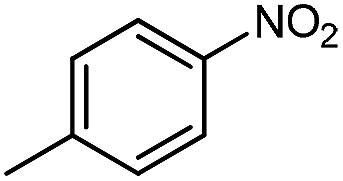 |
 |
80 | 12 | 88 |
| 5c |  |
 |
100 | 12 | 62d |
| 6c | 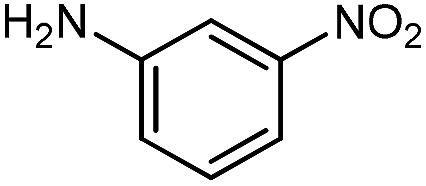 |
 |
100 | 24 | 86 |
| 7c |  |
 |
100 | 24 | 72 |
| 8 |  |
 |
80 | 12 | 81 |
| 9 |  |
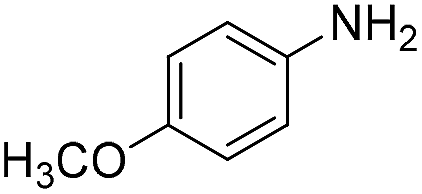 |
80 | 12 | 70 |
| 10 |  |
 |
80 | 12 | 71 |
| 11 | 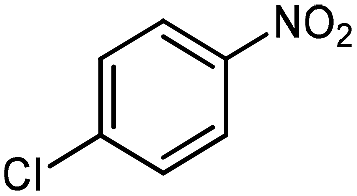 |
 |
80 | 12 | 75 |
| 12 |  |
 |
100 | 24 | 71 |
Next, we attempted to explore the hydrogen source scope of this catalyst system. Different hydrogen sources such as glycerol, glucose and fructose were studied (Table 4). The results demonstrated that the polyhydric alcohol, i.e. glycerol, and the monosaccharide, i.e. glucose and fructose were good and effective reducing agents in our catalytic system. The yield of the desired product was 85% when glycerol was used as the hydrogen source (Entry 1). Meanwhile, glycerol was transformed into 1,3-dihydroxypropan-2-one selectively with 84% yield. To our delight, 95% aniline was generated with shorter reaction time when using water as the solvent and glucose as the reducing agent (Entry 2). Similar result was gotten if the fructose was used as the hydrogen source (Entry 3). However, the oxidation products of glucose and fructose were not observable, which might be attributed to the decomposition during reaction.21 Moreover, we speculated that the similar activity of glucose and fructose might be explained by the interconversion of glucose and fructose in the alkaline solution.22,23 Namely, fructose was first converted into glucose via isomerization during the reaction, and then glucose might be the real hydrogen source for the reduction reaction. That might be the reason for the longer reaction time when fructose was used as the hydrogen source than that using glucose. As an important bio-mass based compound, it would be interesting to check the possible reactions with glycerol itself as starting material without the addition of nitrobenzene. After reacting under the same reaction conditions as given in Table 4, Entry 1, the reaction mixture was analyzed by GC-FID, GC-MS, HP-LC and LC-MS. The results suggested that no 1,3-dihydroxypropan-2-one was generated although ∼60% (average number of three parallel reactions) conversion of glycerol was obtained. The observed products were 3,3′-oxybis (propane-1,2-diol), glyceraldehyde and some unknown compounds. That means the addition of nitrobenzene which was regarded as a hydrogen acceptor might alter the route of glycerol dehydrogenation and induce the oriented conversion of glycerol to 1,3-dihydroxypropan-2-one.
| Entry | Hydrogen source | Base | t/h | Yielda/% | Yieldb/% |
|---|---|---|---|---|---|
| a Yield of aniline determined by GC-FID with biphenyl as an external standard.b Yield of 1,3-dihydroxypropan-2-one determined by HP-LC with biphenyl as an external standard.c 1 mmol nitrobenzene, 3 mmol glycerol, 50 mg catalyst, 2 mmol KOH, 2 mL heptane, Ar, 80 °C, 12 h.d 0.5 mmol nitrobenzene, 1 mmol glucose, 25 mg catalyst, 2 mmol NaOH, 2 mL water, Ar, 80 °C, 4 h.e 0.5 mmol nitrobenzene, 1 mmol fructose, 50 mg catalyst, 2 mmol NaOH, 2 mL water, Ar, 80 °C, 12 h. | |||||
| 1c | Glycerol | KOH | 12 | 85 | 84 |
| 2d | Glucose | NaOH | 4 | 92 | — |
| 3e | Fructose | NaOH | 12 | 89 | — |
In order to explore the reaction mechanism and reveal the final oxidation product of glycerol, the reaction of nitrobenzene with glycerol was traced by GC-MS, and only a small number of etherification products of glycerol were observed without oxidation products. So, the high performance liquid chromatography (HPLC) was used to analyze the final reaction mixture. As expected, the oxidation product of glycerol, that is, 1,3-dihydroxypropan-2-one, was observed. Therefore the oxidation of glycerol occurred on the secondary hydroxyl group. According to the amount of 1,3-dihydroxypropan-2-one obtained, i.e. 84%, we proposed that final oxidation product of glycerol in our system was 1,3-dihydroxypropan-2-one. Clearly, the reduction of nitrobenzene derivatives in our system is based on a borrowing hydrogen mechanism. The base (KOH) in our system is a promoter for the deprotonation of alcohol.24,25 Moreover, based on the results of XRD and XPS characterization, metallic Cu and Ni formed in catalyst CuNiAlOx, which can behave as a nice catalyst in borrowing hydrogen reactions.26–28 Thus, a possible mechanism was presented (Scheme 1). However, the synergistic effect among Cu, Ni and AlOx was still unclear.
 | ||
| Scheme 1 A possible reaction mechanism for the reduction reaction of nitrobenzene derivatives with glycerol catalyzed by Cu1Ni4Al0.5Ox-600. | ||
Conclusions
In summary, here, we have introduced a method for the cooperative transformation of nitrobenzene derivatives and biomass-based alcohols. The synthesis of aromatic amines and value-added oxidation product of glycerol could be achieved by one pot method in the presence of non-noble metal CuNiAlOx catalyst. In this transformation, only an equivalent amount of glycerol is required and the glycerol can be converted to 1,3-dihydroxypropan-2-one selectively. It offers a new method for the conversion of biomass and its derivative to high added-value product.Experiment section
Typical procedure for CuNiAlOx catalyst preparation: Cu (NO3)2·3H2O (5.1–10.4 mmol), Ni (NO3)2·6H2O (20.7–30.9 mmol) and Al (NO3)3·9H2O (0–5.3 mmol) were added to 150 mL deionized water and agitated until complete dissolution. Then, 1.25 equivalent amount of Na2CO3 was added to 50 mL deionized water and added dropwise. The mixture was stirred for a further 3 h at RT. The reaction mixture was centrifuged and washed with deionized water to remove the base until the pH value of the aqueous solution was ≈7. Subsequently, the precipitate was dried at 100 °C for 5 h, calcinated in air at 350–650 °C for 5 h, and reduced under a hydrogen flow for 3 h. Finally, a black solid sample was obtained and denoted as CuNiAlOx. All the catalysts were reduced by hydrogen before use.Typical procedure for the reduction of p-Me-nitrobenzene using glycerol as the hydrogen source: 1 mmol p-Me-nitrobenzene, 3 mmol glycerol, 50 mg catalyst, 2 mmol KOH, and 2 mL heptane were added to a 25 mL pressure tube equipped with a magnetic stirrer. Then the pressure tube was exchanged with argon and reacted at 80 °C for 12 h. After the reaction, the reaction mixture was cooled to RT, and then 20 mg biphenyl and 10 mL EtOH were added for quantitative analysis by GC-FID.
Acknowledgements
We thank the National Natural Science Foundation of China (21303228) and the Chinese Academy of Sciences for financial support.Notes and references
- Y.-C. Lin and G. W. Huber, Energy Environ. Sci., 2009, 2, 68–80 CAS.
- A. J. Ragauskas, C. K. Williams, B. H. Davison, G. Britovsek, J. Cairney, C. A. Eckert, W. J. Frederick Jr, J. P. Hallett, D. J. Leak, C. L. Liotta, J. R. Mielenz, R. Murphy, R. Templer and T. Tschaplinski, Science, 2006, 311, 484–489 CrossRef CAS PubMed.
- J. B. Binder and R. T. Raines, J. Am. Chem. Soc., 2009, 131, 1979–1985 CrossRef CAS PubMed.
- R. Rinaldi, R. Palkovits and F. Schüth, Angew. Chem., Int. Ed., 2008, 47, 8047–8050 CrossRef CAS PubMed.
- H. B. Goyal, D. Seal and R. C. Saxena, Renewable Sustainable Energy Rev., 2008, 12, 504–517 CrossRef CAS PubMed.
- M. Asadullah, T. Miyazawa, S.-i. Ito, K. Kunimori, M. Yamada and K. Tomishige, Appl. Catal., A, 2004, 267, 95–102 CrossRef CAS PubMed.
- M. Pagliaro, R. Ciriminna, H. Kimura, M. Rossi and C. Della Pina, Angew. Chem., Int. Ed., 2007, 46, 4434–4440 CrossRef CAS PubMed.
- S. Liu, M. Rebros, G. Stephens and A. C. Marr, Chem. Commun., 2009, 2308–2310 RSC.
- A. Wolfson, C. Dlugy, Y. Shotland and D. Tavor, Tetrahedron Lett., 2009, 50, 5951–5953 CrossRef CAS PubMed.
- Y. Liu, Y. Lu, M. Prashad, O. Repič and T. J. Blacklock, Adv. Synth. Catal., 2005, 347, 217–219 CrossRef CAS.
- A. Corma, P. Serna, P. Concepción and J. J. Calvino, J. Am. Chem. Soc., 2008, 130, 8748–8753 CrossRef CAS PubMed.
- U. Sharma, P. Kumar, N. Kumar, V. Kumar and B. Singh, Adv. Synth. Catal., 2010, 352, 1834–1840 CrossRef CAS.
- K. Junge, B. Wendt, N. Shaikh and M. Beller, Chem. Commun., 2010, 46, 1769–1771 RSC.
- C. T. Redemann and C. E. Redemann, Org. Synth., Coll. Vol., 1955, 3, 69 Search PubMed.
- S. Gowda, K. Abiraj and D. C. Gowda, Tetrahedron Lett., 2002, 43, 1329–1331 CrossRef CAS.
- J. W. Bae, Y. J. Cho, S. H. Lee, C.-O. M. Yoon and C. M. Yoon, Chem. Commun., 2000, 1857–1858 RSC.
- J. H. Kim, J. H. Park, Y. K. Chung and K. H. Park, Adv. Synth. Catal., 2012, 354, 2412–2418 CrossRef CAS.
- M. B. Gawande, A. K. Rathi, P. S. Branco, I. D. Nogueira, A. Velhinho, J. J. Shrikhande, U. U. Indulkar, R. V. Jayaram, C. A. A. Ghumman, N. Bundaleski and O. M. N. D. Teodoro, Chem.–Eur. J., 2012, 18, 12628–12632 CrossRef CAS PubMed.
- X. Cui, Y. Deng and F. Shi, ACS Catal., 2013, 3, 808–811 CrossRef CAS.
- X. Cui, C. Zhang, F. Shi and Y. Deng, Chem. Commun., 2012, 48, 9391–9393 RSC.
- A. V. Ellis and M. A. Wilson, J. Org. Chem., 2002, 67, 8469–8474 CrossRef CAS PubMed.
- C. A. L. de Bruyn and W. A. van Ekenstein, Recl. Trav. Chim. Pays-Bas, 1895, 14, 203–216 CrossRef.
- Z. Srokol, A.-G. Bouche, A. van Estrik, R. C. J. Strik, T. Maschmeyer and J. A. Peters, Carbohydr. Res., 2004, 339, 1717–1726 CrossRef CAS PubMed.
- S. U. Sonavane, M. B. Gawande, S. S. Deshpande, A. Venkataraman and R. V. Jayaram, Catal. Commun., 2007, 8, 1803–1806 CrossRef CAS PubMed.
- M. D. Le Page and B. R. James, Chem. Commun., 2000, 1647–1648 RSC.
- K. i. Shimizu, K. Shimura, M. Nishimura and A. Satsuma, RSC Adv., 2011, 1, 1310 RSC.
- J. He, K. Yamaguchi and N. Mizuno, Chem. Lett., 2010, 39, 1182–1183 CrossRef CAS.
- K. Shimizu, N. Imaiida, K. Kon, S. Siddiki and A. Satsuma, ACS Catal., 2013, 3, 998–1005 CrossRef CAS.
Footnote |
| † Electronic supplementary information (ESI) available: Catalyst preparation procedure and characterization details. See DOI: 10.1039/c4ra16081a |
| This journal is © The Royal Society of Chemistry 2015 |