Single step synthesis of (α-Fe2O3) hematite films by hydrothermal electrochemical deposition

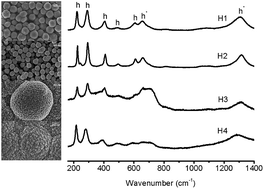
Ceren Yilmaza and Ugur Unal*abc
aGraduate School of Science and Engineering, Koc University, Sariyer, 34450 Istanbul, Turkey. E-mail: ugunal@ku.edu.tr; Fax: +90-212-338 1559; Tel: +90-212-338 1339
bKoc University, Chemistry Department, Sariyer, 34450 Istanbul, Turkey
cKoc University Surface Science and Technology Center (KUYTAM), Sariyer, 34450 Istanbul, Turkey

Received 9th December 2014 , Accepted 19th January 2015

First published on 19th January 2015


Abstract

A single step electrodeposition of α-Fe2O3 films under hydrothermal conditions without post-annealing requirement is described. Primary attention is paid to understand the effects of synthesis conditions, such as temperature, precursor concentration, pH, and time on the structure and morphology of the films. Moreover, the photoelectrochemical properties of hematite films grown by hydrothermal-electrochemical deposition (HED) are also discussed. It is discovered that HED enables the production of crystalline α-Fe2O3 phase without thermal annealing as opposed to electrodepositions reported at ambient temperature. Photoelectrochemical studies demonstrated that better performance can be obtained with the films prepared at higher pH. A net photocurrent density of 23.6 μA cm−2 is obtained in 0.1 M NaOH under 1 sun conditions at 1.23 V vs. NHE with the film prepared from a bath containing 0.05 M FeCl2 and 0.2 M NaCH3COO via hydrothermal-electrodeposition with a photocurrent onset potential of 0.96 V vs. NHE.

Introduction

There is a strong motivation to prepare ferric oxide nanoparticles of various sizes due to their novel properties and potential applications in medicine, catalysts, magnetic recording media, pigments, anticorrosive agents, gas sensors and electrochemical capacitors.1 Further, ferric oxide (α-Fe2O3, hematite) has become a very desirable material to construct photoelectrochemical cells due its bandgap (Eg = ∼2.2 eV), which allows the utilization of a considerable portion of solar energy and its stability in harsh chemical environments.2 Non-toxicity, low cost and relative abundance of hematite on earth also add to its charm. Despite these exiting features, hematite suffers from poor conductivity, short photogenerated carrier life-time and a short hole diffusion length.3 It has been demonstrated that poor charge-transport properties can be improved with nanostructured morphology that provides higher surface area.4

Several methodologies were employed to grow hematite nano-crystals including high-temperature-based techniques such as pulsed layer deposition, catalyst-assisted chemical vapour deposition and thermal oxidation.5 Techniques that require lower temperatures like solution-based approaches, chemical precipitation, sol–gel, forced hydrolysis and hydrothermal synthesis were also applied.1,6 Electrochemical synthesis is a simpler and cheaper alternative to produce semiconductor nanostructures. It is an efficient and environmentally friendly method in which thin films on various substrates of any shape and size can be produced at relatively lower temperatures from aqueous media. Furthermore, by controlling the deposition parameters like temperature, applied potential, precursor concentration, and growth rate; film thickness, composition and morphology of the films can be modified,7–9 which are important factors for the optimization of hole diffusion length or recombination rate in hematite structures.2 In spite of its advantages, electrochemical synthesis requires strict control over the applied potential and pH since the Pourbaix diagram of Fe–water system reveals the possibility to obtain several different iron oxide phases.10 It has been reported that magnetite (Fe3O4), goethite (α-FeOOH) and lepidocrocite (γ-FeOOH) can be obtained by increasing the potential from −0.4 V to 1.0 V vs. Ag(AgCl) from aqueous solutions containing FeSO4(NH4)2SO4·6H2O and CH3COOK (pH = 6) at 90 °C.9 Both cathodic or anodic electrodepositions of α-Fe2O3 from aqueous solutions involve the deposition of an iron oxyhydroxide phase followed by heat treatment to produce a hematite phase.11–14

The hydrothermal approach also offers some advantages such as control over particle size and shape, homogeneity of the products and well-crystallized particles.15 However, similar to electrodeposition, most cases of hydrothermal hematite synthesis involve the formation of β-FeOOH precursor, which is further dehydrated into α-Fe2O3 through calcinations or annealing.1 Jia and Gao reported the direct synthesis of single-crystalline α-Fe2O3 submicron-cubes via the hydrothermal method at 180 °C in the presence of a surfactant with relatively long reaction times (16–36 h).16 Hence, in this study, we combined the benefits of hydrothermal synthesis with electrochemical deposition to obtain α-Fe2O3 films directly. It is demonstrated that the single-step synthesis of crystalline hematite nanostructures is possible with hydrothermal-electrochemical deposition (HED), owing to the high growth rate facilitated by high temperature.

Experimental

Iron(II) chloride hexahydrate (FeCl2·6H2O, 99% purity) was purchased from Sigma-Aldrich. Sodium acetate (NaCH3COO, NaAc) was obtained from Merck. Indium tin oxide (ITO) (Ω < 5.0 × 10⁻⁴ ohm cm) (Rs < 100 ohm sq−1) was purchased from Teknoma Ltd, Izmir, Turkey, and fluorine-doped tin oxide (FTO) was obtained from Solaronix SA. Double-distilled high purity water was used from Milli-Q water (Millipore) system. The depositions were performed in a hydrothermal glass reactor (100 ml, Büchi Glas Uster, picoclave) at a constant potential at 130 °C. The reference electrode was Ag/AgCl saturated with KCl (Corr Instruments, S/N P11092), whereas a Pt wire served as the counter electrode. Both acidic and neutral plating solutions were used for the anodic depositions at 1.2 V (vs. Ag/AgCl (sat'ed)).13 The acidic plating solution contained 0.02 M FeCl2 (pH ∼ 3.8) and neutral plating solution consisted of 0.02 M FeCl2 and 0.08 M NaCH3COO (pH ∼ 6.2–6.8). The films were annealed at 520 °C for 30 minutes. The reaction parameters are summarized in Table 1. The crystal structure and crystallinity of the thin films were analyzed by Bruker D8 Advance with DaVinci X-ray diffractometer (XRD). ZEISS Ultraplus Field Emission Scanning Electron Microscope (FE-SEM) was used to study the surface morphology of the samples.
Table 1 Deposition parameters for hydrothermal-electrochemical deposition at 130 °C, 1.2 V vs. Ag/AgCl (satd)
Film [Fe2+] [NaAc] Deposition time
H1 0.02 M 8 min
H2 0.02 M 0.08 M 8 min
H3 0.05 M 8 min
H4 0.05 M 0.2 M 8 min


Raman scattering experiments were carried out using a Renishaw Raman Microscope system at room temperature. Before conducting any measurements, the instrument was calibrated using an internal Si sample, which was measured at a Raman shift of 520 cm−1. A 633 nm laser beam was focused on the samples. Phase transformations from FeO to Fe3O4, from Fe3O4 directly to α-Fe2O3 (martitization)17 and from Fe3O4 first to γ-Fe2O3 then to α-Fe2O318 are reported for iron oxide films during Raman scattering at high laser powers. Hence, sacrificial films were first excited at different laser powers to determine a threshold power, so that no phase transformations take place and high enough power for reasonable signal to noise ratio is achieved. At 0.12 mW, the signal intensity was very low and a laser power of 1.2 mW was determined to be a safe limit with no change in the observed spectra and high intensity signals. The spectra were taken over a range of wavenumbers from 200 cm−1 to 1500 cm−1. The acquisition time was 10 s to 30 s.

The diffuse reflectance spectra of the investigated samples were performed using a Shimadzu UV-vis-NIR 3600 spectrophotometer using integrating sphere attachments. Photoelectrochemical analyses were performed with Bio-Logic VSP model potentiostat/galvanostat system. The current–voltage (IV) characteristics of the electrodes were measured under amplitude modulated-light illumination with a 300 W xenon arc lamp (Oriel, Stratford, CT) with the 3 electrode cell system in an aqueous solution of 0.1 M NaOH. An AM 1.5 air filter was used to mimic solar radiation with a power of 100 mW cm−2.

Results and discussion

We have investigated the effect of electrodeposition under hydrothermal conditions from both acidic and neutral deposition solutions on the structure and phase of iron oxide films. The hematite thin films deposited using the hydrothermal-electrochemical deposition range in colour from brown to deep red. It was observed that the films tend to adhere on the FTO surface more strongly than ITO-coated glass. Hence, FTO was chosen as the substrate for the rest of the study. Increased precursor concentration and high pH enhance the adherence of iron oxide on the substrates. Fig. 1 shows the FE-SEM images of pristine and annealed films deposited at 130 °C and ∼2 bar. FE-SEM study showed that the pristine film prepared from an aqueous bath containing 0.02 M FeCl2 (pH = 3.8) with anodic electrodeposition, H1, is composed of monodisperse almost-spherical particles of around 300–400 nm, which preserved their size and morphology after annealing (Fig. 1a and b). By increasing the concentration of Fe2+ from 0.02 to 0.05 M, H3, the spherical shape develops into a polyhedra shape and high polydispersity in size (80–150 nm) is observed (Fig. 1e). Although particles with smaller sizes (∼50 nm) do exist, mostly larger aggregates of varying sizes are present after annealing (Fig. 1f). Nano-iron oxide particles prepared from a neutral deposition bath, H2, exhibit higher polydispersity than its counterpart that are prepared from an acidic deposition bath and distortion from spherical morphology (Fig. 1c). Nanoparticles with diameters of 50–100 nm are observed to form large, spherical aggregates of the order of micrometers. The size and morphology are preserved after annealing (Fig. 1d). When Fe2+ concentration was increased from 0.02 to 0.05 M (and corresponding [NaCH3COO]), H4, spherical nanoparticles with diameters of ∼50 nm and well-faceted polyhedra with a broad range of particle sizes form together (Fig. 1g). After annealing, an increase in the average diameter of the spherical nanoparticles to around 100 nm and the formation of micrometer sized aggregates are observed (Fig. 1h). In addition, polyhedral particles seem to have disappeared.
image file: c4ra16028b-f1.tif
Fig. 1 FE-SEM images of the films (a) H1 as-deposited, (b) H1 annealed, (c) H2 as-deposited, (d) H2 annealed, (e) H3 as-deposited, (f) H3 annealed, (g) H4 as-deposited, and (h) H4 annealed.

The anodic deposition of FeOOH films from ferrous sulfate solutions with varying pH was introduced by Cohen and Leibenguth in 1972.12 The electrodeposited FeOOH films were then converted to hematite phase by annealing. Cohen and Leibenguth used ammonium sulfate/ammonium or boric acid/sodium borate to stabilize Fe2+ ions in a neutral solution.12 Spray and Choi modified the neutral deposition bath reported by Cohen and Leibenguth by replacing ammonium sulfate/ammonium or boric acid/sodium borate with NH4Cl, and they compared the photoelectrochemical properties of the products with that of the films obtained by anodic electrodeposition from the acidic bath.13 In this study, NaCH3COO was chosen for stabilization and electrodeposition was carried out in otherwise identical conditions as the depositions in the acidic solution. The anodic deposition condition used in this study results in the oxidation of Fe2+ ions to Fe3+ ions (eqn (1)), which is followed by the precipitation of Fe3+ ions as amorphous ferric oxyhydroxide due to the limited solubility of Fe3+ ions in the plating solution ([Fe3+] ≈ 1 × 10⁻⁷ at pH 4.1) (eqn (2));9,13

 
Fe2+ → Fe3+ + 2e (1)
 
Fe3+ + 2H2O → FeOOH + 3H+ (2)

Hence, it is expected that the as-deposited films contain amorphous ferric oxyhydroxide, which is converted into crystalline α-Fe2O3 upon annealing as reported before.12,13 To identify the structure and phases of the obtained films, XRD was employed (Fig. 2). The XRD patterns of the as-synthesized films revealed peaks with the highest intensities at 2θ = 24°, 33°, and 35°, which can be indexed to the (012), (104) and (110) reflections of crystalline, rhombohedral α-Fe2O3, hematite structure {JCPDS card no. 86-0550} even before the annealing step without any other phase being detected (Fig. 2). The patterns exhibit an intensity distribution corresponding to the standard polycrystalline hematite structure, where the crystallites are randomly oriented. Moreover, the crystallinity of the films improves with no accompanying compositional changes after annealing (Fig. 2).


image file: c4ra16028b-f2.tif
Fig. 2 XRD profiles of the hematite films electrodeposited at 130 °C, ∼2 bar. The following symbols represent the reflections associated with ■ ITO (JCDPDS card no. 89-4597) and * SnO2 (JCDPDS card no. 41-1445).

To further evaluate the purity of the hematite phase, Raman spectroscopy was used. Hematite belongs to the D3d6 space group and seven transitions are expected in the Raman spectrum.17,19,20 Two A1g modes at 225 and 498 cm−1 and five Eg modes at 247, 293, 299, 412 and 613 cm−1 are expected. The Raman spectrum of the as-synthesized films at 130 °C exhibit major peaks at 226, 247, 296, 411, and 615 cm−1 with 226 and 296 cm−1 being the strongest; all these peaks correspond well to α-Fe2O3 peaks (Fig. 3). In addition to these peaks, the modes around ∼660 cm−1 and ∼1320 cm−1 were present in all the hematite Raman spectra obtained in the whole study. The 660 cm−1 mode is present in several published hematite spectra, and it is either assigned to magnetite/wüstite (FeO) impurity or considered as the characteristics of hematite and assigned to a disorder phase.21–23 There is no evidence of any other iron oxide phase in the XRD diagrams (Fig. 2). The lack of evidence for the presence of impurity phase suggests that the 660 cm−1 peak is related to the hematite phase, which has been ascribed to the disorder in the crystal lattice and the breaking of symmetry upon crystallization.21 The mode around 1320 cm−1 has been suggested to be an overtone of the peak at 660 cm−1.21 It was also ascribed to two-magnon scattering including magnon–magnon interactions of antiferromagnetic hematite.17 Further, there are additional peaks around 820 and 1050–1100 cm−1. They are reported to exist in the xx polarized hematite spectra.19 Hence, Raman spectroscopy data (Fig. 3) together with XRD (Fig. 2) demonstrate that the hematite phase forms directly with hydrothermal-electrochemical deposition at 130 °C. This behaviour is contradictory to the expected amorphous ferric oxyhydroxide (γ-FeOOH, as stated above)12,13 or goethite24 formation with anodic electrodeposition under ambient conditions and moderate temperatures. An example Raman spectrum for one of the annealed films is also provided in Fig. 3.


image file: c4ra16028b-f3.tif
Fig. 3 Raman spectra of the hematite films electrodeposited at 130 °C, ∼2 bar.

Cohen and coworkers carried out the anodic deposition from ferrous sulfate solutions in a neutral medium (pH varying between 6.6 and 8) and studied reaction kinetics.12 They have shown that the deposition rate increases with both pH and [Fe2+]. Leibenguth and Cohen discussed that the deposition proceeds through the diffusion and oxidation of ferrous hydroxyl complex and the formation of FeOOH instead of Fe2O3 depends on how fast the ions are transferred to the anode. They proposed that FeOOH forms rather than Fe2O3 owing to the fact that OH ions migrate easier than Fe2+ ions because of their smaller positive charge. The fact that the α-Fe2O3 phase is obtained directly from both acidic and neutral HED suggests that the temperature effect rather than OH ion concentration has a major role. Fig. 4 shows the charge vs. time plot for depositions with varying parameters such as temperature, pH and initial [Fe2+]. (Electrodeposition at 75 °C was also carried out under identical conditions.) It can be seen that the deposition rate increases with concentration (H1 ([Fe2+] = 0.02 M) and H3 ([Fe2+] = 0.05 M) at pH 3.8); (H2 ([Fe2+] = 0.02 M) H4 ([Fe2+] = 0.05 M) at pH ∼6.4) and pH (when H1 is compared with H2 and H3 is compared with H4), which is in accordance with what is reported by Leibenguth and Cohen. Moreover, the deposition rate increases much more effectively when the temperature is increased from 75 °C to 130 °C, while all the other parameters are kept constant (Fig. 4). The growth of hematite can be explained by the following reaction:

 
2Fe2+ + 3H2O → Fe2O3 + 6H+ + 2e (3)
with the following equilibrium potential at 25 °C calculated by using the tabulated thermodynamic values for chemical species and Nernst equation:
 
E = 0.728 − 0.177pH − 0.0592[thin space (1/6-em)]log[Fe2+] (4)
which results in the thermodynamic potentials of −0.734 V for [Fe2+] = 0.02 M and −0.75 V for [Fe2+] = 0.05 M at 130 °C, pH = 6.4, and −0.112 V for [Fe2+] = 0.02 M and −0.128 V for [Fe2+] = 0.05 M at 130 °C, pH = 3.8. Considering the fact that high overpotential is applied during deposition, the formation of hematite phase directly at high temperatures might be explained by higher reaction kinetics.


image file: c4ra16028b-f4.tif
Fig. 4 Effect of initial [Fe2+], pH, and temperature on the electrodeposition rate.

Hematite nanoparticles are useful for various applications such as the anode of photoelectrochemical cells for water splitting, detection electrode for gas sensors, the positive electrode for Li-ion batteries and the photodegradation of dyes may be promising.25–27 We have evaluated the optical and photoelectrochemical performances of the films post-annealing at 520 °C, except H1 as it did not adhere onto the substrate very effectively. The optical absorbance spectra of the films (Fig. 5a) exhibit two broad absorption bands centered at around 345 nm and 514 nm. These bands are slightly blue shifted from the reported absorption bands of hematite, which are normally observed at around 400 and 530 nm.28–30 The degree of change of the peak positions is reported to depend on the shape and size of the particles.27 Hence, the shift can be attributed to the size quantization of the hematite nanoparticles. The band at lower wavelengths can be attributed to 6A14E and the 6A14E ligand field transitions of Fe3+.27,28 The low energy band is ascribed to the 6A14T2 ligand field transition of Fe3+.27,29 In addition, two charge-transfer transitions accompany these processes: a direct transition corresponding to the ligand–metal transfer (O2 → Fe3+) at higher energy and an indirect transition at higher wavelength from the metal–metal transfer.27,31


image file: c4ra16028b-f5.tif
Fig. 5 (a) UV-visible light absorption spectra of hematite films electrodeposited at 130 °C, ∼2 bar; (b) the photocurrent responses of the hematite films at 1.1 V vs. NHE under amplitude modulated illumination; (c) the photocurrent responses of H4 with varying deposition times at 1.1 V vs. NHE under amplitude modulated illumination; (d) photocurrent–voltage (JV) curves of H4_8 min under dark and illumination at 100 mW cm−2 (AM 1.5 air filter).

The PEC performances of annealed α-Fe2O3 electrodes were measured under amplitude modulated 1 sun illumination at 1.1 V vs. NHE in 1 M NaOH (Fig. 5b) at a lower potential than theoretical water oxidation potential (eqn (3); E°(O2/H2O) = 1.23 V vs. NHE at pH 13.5). The anodic nature of the photocurrent produced suggests n-type behavior for all the films and the responses are quite stable with no sign of photocorrosion. The net photocurrent densities of the films are 11.3, 11.4, and 23.6 μA cm−2, respectively, for H2, H3 and H4. The photoresponse of the film prepared from a highly concentrated neutral bath (H4) is almost twice that of the responses of the other films. In addition, the photocurrent switching (ON/OFF) response of H4 is faster than both H2 and H3. Even though, H2 consists of smaller sized particles (Fig. 1), which provide higher surface area, and therefore, beneficial to decrease the recombination losses,13 H4 generates higher photocurrent than H2.

The difference in the photoresponses of H2 and H4 can be attributable at least, in part, to higher Fe2O3 loading on H4. As discussed above, the deposition rate increases with increasing [Fe2+]. Hence, a higher amount of hematite should be deposited from a more concentrated deposition bath at a given time, which would result in increased number of generated electron–hole pairs that can contribute to the photocurrent generation for H4. On the other hand, a similar deposition rate for H3 and H4 (Fig. 4) suggests similar Fe2O3 loading for these films. In addition, as evident in Fig. 5a, H3 displays higher photon absorption. Therefore, H3 was expected to generate higher photocurrent. However, H3 is composed of 300–400 nm sized polyhedra, whereas spherical nanoparticles of around 100 nm are observed for H4. A smaller particle size, and hence, higher surface area of H4 allows more holes to reach the hematite/electrolyte interface, which reduces the recombination losses13 and results in higher photocurrent generation.

As an effort to optimize the obtained photoresponse, films were prepared from neutral, concentrated (0.05 M Fe2+) deposition bath with different deposition times (H4_4 min, H4_16 min). The PEC performances were measured under identical conditions.

The photocurrent density increased ∼40-fold as the deposition time increased from 4 min (0.66 μA cm−2) to 8 min (23.6 μA cm−2) (Fig. 5c). Analysis of the FE-SEM images implies that the surface morphologies of the films are very similar with nanometer-sized spherical particles and micrometer-sized aggregates (Fig. 1 and 6). The thickness of the samples was measured by taking cross sectional FE-SEM images. The films deposited for 4 and 8 min resulted in films with average thicknesses of 1.2 and 1.33 μm, respectively, as calculated from the cross-sectional FE-SEM images (Fig. 6). The increase in the photoresponse from 4 to 8 min can be attributed to an increase in the number of electron–hole pairs due to the presence of additional photoactive oxide in the thicker films. After 16 min of deposition, the generated photocurrent density decreased to around 0.7 μA cm−2, which is similar to H4_4 min. It is reported that when the thickness of the hematite film reaches beyond 2.6 μm, the distance that the holes would have to travel to reach the Fe2O3/electrolyte interface is increased, which results in higher recombination probability.32 Increased hole-diffusion length together with reduced photon penetration for a thicker film29 might account for a decrease in the produced photocurrent with H4_16 min.


image file: c4ra16028b-f6.tif
Fig. 6 FE-SEM images of (a) H4_4 min and (b) H4_16 min and cross-sectional FE-SEM images of (c) H4_4 min, (d) H4_8 min and (e) H4_16 min.

The photocurrent–voltage (JV) pattern of H4 measured under identical conditions is shown in Fig. 5d. The onset potential for H4 is calculated by extrapolating the linear portion of the JV curve to zero current from where the current densities range from 15 to 60 μA cm−2. The photocurrent onset potential is calculated to be 0.96 V vs. NHE. After onset, the photocurrent shows two separated potential regions.29 In the first region, the photocurrent increases to reach 26.5 μA cm−2 at 1.23 V vs. NHE and 72.75 μA cm−2 at 1.6 V vs. NHE. This region corresponds to where the four-electron water oxidation reaction takes place (eqn (5)). The region from 1.6 V to 1.8 V (where the photocurrent density reaches 102 μA cm−2) is the second region where the two-electron water oxidation reaction (eqn (6)) also takes place.

 
2H2O → O2 + 4H+ + 4e, E°(O2/H2O) = 1.23 V vs. NHE (5)
 
2H2O → H2O2 + 2H+ + 2e, E°(O2/H2O) = 1.776 V vs. NHE (6)

The preparation of doped hematite films to enhance the PEC performances by the presented hydrothermal-electrochemical deposition technique and post-surface modifications to reduce the surface recombination probability are currently under study.

Conclusions

Hydrothermal-electrodeposition was successfully employed to produce α-Fe2O3 and the effect of electrodeposition temperature on the structure and phase of iron oxide films was studied. In line with the literature, potentiostatic electrodeposition at ambient temperatures such as 75 °C results in the formation of amorphous iron oxide particles, which can be converted to hematite (α-Fe2O3) upon thermal treatment. Combining electrochemistry with the advantages of hydrothermal synthesis allows the growth of crystalline α-Fe2O3 phase directly at a single step on the conducting glass. It is demonstrated that regardless of pH, the growth time and presence of additives (CH3COO), hematite crystals are obtained with anodic HED most probably due to the increased reaction kinetics at high temperature. The thickness of the films can be adjusted with growth time, and the pH is found to be effective on both the reaction kinetics and final particle size. Higher pH and higher precursor concentration favour increased deposition rate in line with the observations of Cohen and Leibenguth and smaller particle size.

Photoelectrochemical studies demonstrated that better performance can be obtained with the films prepared via HED than the films electrodeposited at lower temperatures. A net photocurrent density of 23.6 μA cm−2 is obtained in 0.1 M NaOH under 1 sun conditions at 1.23 V vs. NHE with the film prepared from a bath containing 0.05 M FeCl2 and 0.1 M NaCH3COO via hydrothermal-electrodeposition with a photocurrent onset potential of 0.96 V vs. NHE.

Acknowledgements

Authors thank Koc University Faculty of Science for financial support. Authors would also like to express gratitude to Turkish Ministry of Development for the financial support provided for the establishment of Koc University Surface Science and Technology Center (KUYTAM). A special thank is for Dr Baris Yagci for his help in obtaining FE-SEM images and Raman spectra.

Notes and references

  1. M. Mohapatra and S. Anand, Int. J. Eng. Sci. Technol., 2010, 2, 127–146 Search PubMed.
  2. D. K. Bora, A. Braun and E. C. Constable, Energy Environ. Sci., 2013, 6, 407 CAS.
  3. M. J. Katz, S. C. Riha, N. C. Jeong, A. B. F. Martinson, O. K. Farha and J. T. Hupp, Coord. Chem. Rev., 2012, 256, 2521–2529 CrossRef CAS PubMed.
  4. A. Kay, I. Cesar and M. Grätzel, J. Am. Chem. Soc., 2006, 128, 15714–15721 CrossRef CAS PubMed.
  5. D. A. Wheeler, G. Wang, Y. Ling, Y. Li and J. Z. Zhang, Energy Environ. Sci., 2012, 5, 6682 CAS.
  6. L. Guo, S. Ida, H. Hagiwara, T. Daio and T. Ishihara, Colloids Surf., A, 2014, 451, 136–143 CrossRef CAS PubMed.
  7. D. Pradhan and K. T. Leung, Langmuir, 2008, 24, 9707–9716 CrossRef CAS PubMed.
  8. S. Lee, S. K. Park, C. R. Park, J. Y. Lee, J. Park and Y. R. Do, J. Phys. Chem. C, 2007, 11793–11801 CAS.
  9. L. Martinez, D. Leinen, F. Martín, M. Gabas, J. R. Ramos-Barrado, E. Quagliata and E. A. Dalchiele, J. Electrochem. Soc., 2007, 154, D126 CrossRef CAS PubMed.
  10. M. Pourbaix, Atlas of Electrochemical Equilibria in Aqueous Solutions, National Association of Corrosion Engineers, Houston, TX, 2nd edn, 1974 Search PubMed.
  11. R. Schrebler, K. Bello, F. Vera, P. Cury, E. Muñoz, R. del Río, H. Gómez Meier, R. Córdova and E. A. Dalchiele, Electrochem. Solid-State Lett., 2006, 9, C110 CrossRef CAS PubMed.
  12. J.-L. Leibenguth and M. Cohen, J. Electrochem. Soc., 1972, 119, 987 CrossRef CAS PubMed.
  13. R. L. Spray and K.-S. Choi, Chem. Mater., 2009, 21, 3701–3709 CrossRef CAS.
  14. S. Jiao, L. Xu, K. Hu, J. Li, S. Gao and D. Xu, J. Phys. Chem. C, 2010, 114, 269–273 CAS.
  15. Z. Jing and S. Wu, Mater. Lett., 2004, 58, 3637–3640 CrossRef CAS PubMed.
  16. B. Jia and L. Gao, Cryst. Growth Des., 2008, 8, 1372–1376 CAS.
  17. D. L. A. de Faria, S. V. Silva and M. T. de Oliveria, J. Raman Spectrosc., 1997, 28, 873–878 CrossRef CAS.
  18. Y.-S. Li, J. S. Church and A. L. Woodhead, J. Magn. Magn. Mater., 2012, 324, 1543–1550 CrossRef CAS PubMed.
  19. D. Bersani, P. P. Lottici and A. Montenero, J. Raman Spectrosc., 1999, 30, 355–360 CrossRef CAS.
  20. S. Das and M. J. Hendry, Chem. Geol., 2011, 290, 101–108 CrossRef CAS PubMed.
  21. B. M. Klahr, A. B. F. Martinson and T. W. Hamann, Langmuir, 2011, 27, 461–468 CrossRef CAS PubMed.
  22. J. A. Glasscock, P. R. F. Barnes, I. C. Plumb, A. Bendavid and P. J. Martin, Thin Solid Films, 2008, 516, 1716–1724 CrossRef CAS PubMed.
  23. I. Cesar, K. Sivula, A. Kay, R. Zboril and M. Gra, J. Phys. Chem. C, 2009, 113, 772–782 CAS.
  24. S. Jiao, L. Xu, K. Hu, J. Li, S. Gao and D. Xu, J. Phys. Chem. C, 2010, 114, 269–273 CAS.
  25. L. Guo, S. Ida, A. Takashiba, T. Daio, N. Teramae and T. Ishihara, New J. Chem., 2014, 38, 1392 RSC.
  26. H. Liang, X. Xu, W. Chen, B. Xu and Z. Wang, CrystEngComm, 2014, 16, 959 RSC.
  27. W. Zhu, X. Cui, X. Liu, L. Zhang, J.-Q. Huang, X. Piao and Q. Zhang, Nanoscale Res. Lett., 2013, 8, 2 CrossRef PubMed.
  28. P. Kumar, P. Sharma, R. Shrivastav, S. Dass and V. R. Satsangi, Int. J. Hydrogen Energy, 2011, 36, 2777–2784 CrossRef CAS PubMed.
  29. A. Bak, W. Choi and H. Park, Appl. Catal., B, 2011, 110, 207–215 CrossRef CAS PubMed.
  30. S. K. Mohapatra, S. E. John, S. Banerjee and M. Misra, Chem. Mater., 2009, 21, 3048–3055 CrossRef CAS.
  31. T. J. Latempa, X. Feng, M. Paulose, C. A. Grimes, V. Uni, U. V. Park and V. Pennsyl, J. Phys. Chem. C, 2009, 113, 16293–16298 CAS.
  32. A. Kleiman-Shwarsctein, M. N. Huda, A. Walsh, Y. Yan, G. D. Stucky, Y.-S. Hu, M. M. Al-Jassim and E. W. McFarland, Chem. Mater., 2010, 22, 510–517 CrossRef CAS.

This journal is © The Royal Society of Chemistry 2015
Click here to see how this site uses Cookies. View our privacy policy here.