Low temperature electrolysis for iron production via conductive colloidal electrode

Qiang Wang, Yi Zhu, Qiuyang Wu, Eric Gratz and Yan Wang*
Worcester Polytechnic Institute, Worcester, Massachusetts, USA. E-mail: yanwang@wpi.edu; Fax: +1 508-831-5178; Tel: +1 508-831-5453

Received 15th November 2014 , Accepted 8th December 2014

First published on 8th December 2014


Abstract

The iron and steel industry has a history of environmental consciousness, and efforts are continually made to reduce energy consumption and CO2 emissions. However, the carbothermic process limits the further reduction of green house gas emissions, and only marginal improvements can be expected. Here, a novel and environmentally friendly method about electrochemical reduction of Fe2O3 to produce Fe is introduced at a low temperature of 110 °C in alkaline solution. In the process, an electrical-ionic conductive colloidal electrode containing the electrochemically active species (Fe2O3 particles), the liquid electrolyte (NaOH solution), and a percolating electrical conductor (C network) has been successfully fabricated and utilized to produce Fe. The simultaneous percolation of electrons and ions effectively increases the area of the current collector, and enables the process to function at higher currents/rates. To enhance the faradic efficiency and energy efficiency in the electrolyzing process, a Ti plate, which has low catalytic activity toward H2 evolution reaction, was selected as the current collector for the cathode, and Pt foil, which has high catalytic activity toward O2 evolution reaction, was utilized as the anode. XRD results confirmed all Fe2O3 was reduced to Fe and Fe3O4. The research can potentially lead to Fe smelting by reducing an aqueous Fe2O3 colloidal electrode directly to Fe powder with no direct carbon emissions.

Introduction

Fe is the most widely used metal, and currently nearly all crude Fe is produced by reducing Fe ores with coke in a blast furnace at a temperature of ∼2000 °C.1 This carbothermic reduction process directly produces liquid metal, but it generates 2 metric tons of CO2 per metric ton of crude Fe produced.2 In addition to carbon emissions from the blast furnace, the iron and steel industry contributes greenhouse gas (GHG) in several ways, including coke production emissions, the use of carbonate flux during calcination, and emissions from the carbon electrodes in electric arc furnaces.3

The iron industry has a history of environmental consciousness, and efforts are continually made to reduce energy consumption and CO2 emissions.4 However, the carbothermic process limits the further reduction of GHG, and only marginal improvements can be expected. Therefore, radical, transformational technologies are required to achieve major improvement of drastic reductions of GHG emissions. In order to achieve this goal, many alternatives have been extensively studied to produce Fe with less/no direct carbon emissions. The details of the various approaches are presented below.

Sadoway et al. at MIT5–8 have been studying molten oxide electrolysis (MOE) to produce liquid metal and O2, which occurs by the decomposition of Fe2O3 dissolved in an appropriately designed solvent melt according to the reaction given by eqn (1). With the use of an inert anode, MOE is theoretically capable of tonnage of metal production with O2 as the only by-product; as a result, MOE produces no direct GHG emissions. However, the main challenge to MOE is finding an effective inert anode, due to the oxidation that occurs at high temperatures (∼1500 °C). Recently, they have made a significant improvement to overcome the oxidation of the anode, through the formation of an electrically conductive solid solution of chromium and aluminum oxides in the corundum structure.9

 
4Fe3+ + 6O2− → 4Fe(l) + 3O2(g) (1)

Sohn et al. at the University of Utah have been studying hydrogen flash smelting (HFS) to produce pure Fe.10–21 In the process, H2 is used to reduce magnetite Fe3O4 to Fe by gas–solid flash reduction at ∼1200 °C, and the molten Fe is collected. This technology allows bypassing the problematic pelletization/sintering and coke-making steps required in blast furnace iron-making.20 However, currently hydrogen is still cost prohibitive as a reducing agent.

Low temperature electrolysis (LTE) for Fe production in alkaline solutions has been known for over half a century.21–23 Recently, the interest in developing a new iron making process with low/zero GHG emission has led to the re-examination of LTE-based process.24–27 In such a process, the reduction of Fe2O3 is carried out in a strong alkaline aqueous electrolyte (50 wt% NaOH–H2O at ∼100 °C), in which finely ground hematite Fe2O3, micrometer range particles are suspended, and some particles adhere to surface of electrode through diffusion, then reduced to Fe at the cathode. Only O2 is produced at the anode, without direct GHG emissions. Haarberg et al. deoxidate hematite with LTE, and high purity of Fe with six-twin crystal pyramid shape was obtained.28

The cathode and anode reactions for LTE are shown in eqn (2) and (3), respectively. Compared to the MOE and HFS processes, LTE process has a much lower operating temperature (∼100 °C), which potentially leads to a simpler and less expensive process design.

 
Cathode: Fe2O3(s) + 3H2O + 6e → 2Fe(s) + 6OH (2)
 
Anode: 6OH → 3/2O2(g) + 3H2O + 6e (3)

However, two reasons prevent LTE process from being adopted in commercial plants: (1) Fe2O3 particles adhering on surface of electrode is very limited, and the method is difficult to be scaled up.24 (2) Since Fe2O3 has very poor electrical conductivity, the reduction of Fe2O3 pellet has very low reaction rate and energy efficiency.

In this study, a colloidal electrode was created, which contains the electrochemically active species (Fe2O3 particles), the liquid electrolyte (NaOH solution), and a 3D percolating electrical conductor (C network). The simultaneous percolation of electrons and ions effectively increase the area of the current collector, and enables the process to function at high currents rates.

Experimental

Preparation of colloidal electrode

To prepare a high electrical-ionic conductive colloid, a certain amount of C (Ketjen back, Akzo Nobel) and 39.4 g of sodium hydroxide (reagent grade, Amresco) were added into 48.1 g of DI water (Millipore DI water). The reactant Fe2O3 powder (diameter under 5 μm, Sigma-Aldrich), and 0.9 g of sodium dodecylbenzenesulfonate (SBDS) (reagent grade, Aldrich), which helps to stabilize the dispersion of Fe2O3 powder, were added in the NaOH solution. Tube roller rolled the mixer for overnight, and was then stirred by homogenizer for 10 minutes before electrolysis was carried on.

Preparation of Fe2O3 ink electrode

50 mg Fe2O3 powder was ultrasonically dispersed into 5 ml Nafion–ethanol solution (0.05 wt% Nafion in ethanol) to form “ink” like suspension. 5 μl “ink” was dropped onto a glass carbon electrode (diameter of glass carbon is 5 mm), and dried. Then Fe2O3 particles, which is bonded together by Nafion, piled up on the surface of glass carbon to form a thin layer with thickness of 1 μm.

Electrolysis of colloid

The electrolysis was conducted in a two-electrodes electrolytic cell, as shown in Fig. S1. The homogeneously mixed Fe2O3 colloid was coated on Ti plate (the area of Ti plate that immersed in electrolyte is about 1.2 cm2) and wrapped by a polyethylene separator. As carbon, which functioned as electrical current collector, was added into colloid, the electrochemical reaction area of cathode was not only limited on Ti plate, but also extended to inside of colloid. Here Ti plate was selected as current collect for cathode, as it has very low catalytic activity towards H2 evolution reaction, which is shown in Fig. S2. The detailed electrochemical behavior will be discussed in the following paragraphs. The counter electrode is a platinum foil (the area immersing in electrolyte is about 3 cm2), which has low overpotential toward O2 evolution reaction and can increase the energy current efficiency. The electrodes, with a distance of 1 cm between each other, were inserted into electrolyte which is 45 wt% of NaOH solution, and the electrochemical cell was maintained at 110 °C. The voltage between two electrodes was controlled by Potentiostat (EC-Lab, Biologic Science) at 1.7 V, which will be explained in the following paragraph. After being electrolyzed for 5 hours, electrodes were pulled out from electrolytic cell and the product was collected and washed with DI water and ethanol. Then the reduction product was dried in oven at 70 °C for 12 hours, and its component and surface topography was characterized by XRD, and SEM.

Cyclic voltammetry test of Fe2O3 ink electrode in three-electrodes cell

A three-electrode cell is utilized to determine the redox process of Fe2O3/Fe. The working electrode is Fe2O3 ink electrode with Hg/HgO as reference electrode, and the counter electrode is Pt wire electrode. CV was carried out in 20 wt% NaOH solution in room temperature with the scan rate of 10 mV s−1.

Results and discussion

Conductivity of colloidal electrode

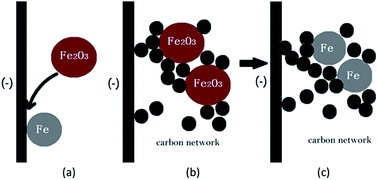
In a short, the method about electrolyzing Fe2O3 suspension in alkaline solution can be summarized into three ways.24–27 One is to disperse hematite particles in alkaline solution by continuous stirring, and the particles adhering to surface of electrode is reduced. Although the particles do not obey to simple diffusion, micrometer sized hematite particles would have a Stokes–Einstein diffusivity near 10−14 m2 s−1 in the alkaline electrolyte at 100 °C and the reaction rate and productivity are limited by the area of 2 dimensional electrode and the diffusion speed of particle in electrolyte. Fe2O3 particles need to diffuse to the electrode surface for the electrolysis occurring, which is shown in Fig. 1(a). The collision probability between hematite particles and electrode surface is also a bottle neck for the reaction rate. Additionally, the residence time about hematite particle adsorption on electrode surface may be short, and the particle was probably partly reduced. To understand the adsorption of hematite particle on surface of electrode, zeta potential of hematite was measured in electrolyte with different pH value and concentration of Na+ by Siebentritt, and they found the zeta potential of hematite particle is neutral or slightly positive in strong alkaline.29
image file: c4ra14576c-f1.tif
Fig. 1 Schematic representation of Fe2O3 electrochemical reduction process in (a) Fe2O3 particles dispersing in alkaline solution, and in (b) & (c) an electrical-ionic conductive colloid.

The second way is that a special electrolytic cell with rotating cathode or anode was designed.26 These kinds of cells can indeed enhance the contact efficiency between cathode and hematite particles, and remove the produced gas phase rapidly, but the two rotating electrodes are subjected to appreciable ohmic losses, and introducing rotating disk electrode makes electrolytic device more complicated and consumes additional energy.

The third way is pressing Fe2O3 particles into pellet, and metal wire is inserted into the pellet as current collector. The deficiency that electrical conductivity of Fe2O3 particle is poor limits the dimension of pellet can't be large.

In our approach, since the colloidal electrodes possess both electrically and ionically conductive properties, hematite particles don't need to diffuse from bulk solution to the surface of electrode for electrolyzing, and the conversion rate from Fe2O3 to Fe is not limited by the residence time of the particle adsorbing on electrode surface. The carbon network can conduct the electrons, which forms a 3D reaction network shown in Fig. 1(b) and (c). This will significantly increase the reaction area and reaction rate. Here, SDBS was added into the colloid as the function of surfactant to stabilize the dispersion Fe2O3 in colloid.30 The cathode, which Haarberg et al. applied in electro-deoxidation of Fe2O3, also has 3D reaction interface.28 However the colloid electrode in our experiment was adulterated with carbon and NaOH, therefore it can be easily reduced. Additionally, the colloid can flow, which is demonstrated in Fig. 2.


image file: c4ra14576c-f2.tif
Fig. 2 (a) The dependence of electrical conductivity and viscosity of colloid on weigh percentage of carbon (Ketjen black). (b) The fluidity of colloid with 2.5 wt% of carbon.

The effect of weight percentage of carbon on the electrical conductivity of colloid was systematically studied in our experiment, and adding carbon not only increases electrical conductivity of the colloid, but also increase its viscosity. As we know, the carbon particle dispersed in colloid attracts (van der Waals force) and collides with each other when flowing, so increasing weight percentage of carbon inevitably increases the viscosity of colloid. Fig. 1(b) and (c) sketch the microstructure of carbon network and the reduction mechanism of Fe2O3. The electrical conductance of colloid was measured with weight percentage of carbon from zero to 4 wt% with the increment of 0.5 wt%. The testing method is the following: the colloid is sandwiched between two steel cylindrical electrodes in a plastic cylinder. As the diameter of the electrodes fits the inner diameter of the cylinder well, the cross-sectional area (A) of the colloid is almost equal to the cross-sectional area of electrode, and the length of colloid (l) is the distance between two electrodes. Control the voltage between two electrodes by chronoamperometry technique at 0.1 V. For low voltage, the electrochemical reaction happened on the surface of electrode can be neglected, and the current (I) passed through colloid was almost electronic current. The electrical resistance (R) of colloid can be calculated by eqn (4):

 
R = 0.1/I (4)

And its corresponding electrical conductivity (δ) can be calculated by eqn (5):

 
δ = RA/l (5)

The viscosity about the colloids with a series of weight percentage of carbon was test by rheometer (Bohlin DSR-F). From Fig. 2(a), we can see both electrical conductivity and viscosity of colloids increase remarkably when the weight percentage of carbon was up to 4%.

The colloid should possess some kind of fluidity, which can be utilized in practical production of Fe in a flowing device. To walk a fine line between conductivity and viscosity, the percentage of carbon is optimized to 2.5 wt%, and the electrical conductivity of colloid is about 2 × 10⁻⁴ S cm−1. According to the electrical conductivity measure, we estimated that the colloid with the thickness of 2 mm on the surface of Ti current collector (the dimension of Ti is 1.5 cm × 2 cm) has the resistance of 300 Ω, the total Fe2O3 can be reduced through electrochemical method in our experiment, which will be proved with our experiment later on. This benefited from the special structure of the colloid electrode. During the reduction processing, Fe2O3 in close proximity to Ti current collector is reduced to Fe firstly, and good conductivity of Fe increased electrical conductivity of the colloid, then Fe2O3 far away from current collector can be more easily reduced. The colloid with good fluidity is demonstrated in Fig. 2(b). Good fluidity will allow us to design “flow electrolysis” in the later research, which is similar to flow batteries.

The redox process of Fe2O3 ink electrode

The anodic oxidation of iron in alkaline solution was wildly investigated, because it related to cycling performance in Fe/Ni, Fe/air batteries and corrosion of iron.31–33 For the electrochemical oxidation of iron, it is generally accepted that three or four anodic cyclic voltammetric peaks, and various species, such as Fe(OH)2, Fe3O4, γ-Fe2O3, δ-FeOOH, α-FeOOH, and β-FeOOH were reported to explain those peaks.34,35 For the cathodic reduction of Fe2O3 in alkaline solution, there are probably two mechanisms to explain the reduction process. One is hematite dissolves in alkaline solution, and dissolved iron ion is reduced, according to eqn (6)–(8).
 
2Fe2O3 + 3H2O + 2OH → Fe(OH)4 (6)
 
Fe(OH)4 + e → Fe(OH)3 + OH (7)
 
Fe(OH)3 + 2e → Fe0 + 3OH (8)

However, as the dissolution of Fe2O3 in 50 wt% NaOH solution is 2 × 10⁻³ M, and the dissolution rate is very slow, this mechanism can't be the main process of Fe2O3 reduction.

Another mechanism is reducing Fe2O3 solid particles directly through the steps described by eqn (9)–(12), which correspond to three or four cathodic peaks during cyclic voltammetric testing. Some of peaks may not be observed under certain experimental conditions:35,36

3Fe2O3 + 2H+ + 2e → 2Fe3O4 + H2
 
Eo = 0.221–0.0591pH (9)

Fe2O3 + 2H+ + 2e → 2FeO + H2O
 
Eo = −0.057–0.0591pH (10)

FeO + 2H+ + 2e → Fe + H2O
 
Eo = −0.047–0.0591pH (11)

Fe3O4 + 8H+ + 8e → 3Fe + 4H2O
 
Eo = −0.085–0.0591pH (12)

Caldas et al. reported triangular sweep voltammetry curve of porous iron electrode in alkaline solution, and only the cathodic peak corresponding to the reduction of Fe(III) to Fe(II) was observed.37 Other cathodic peaks were not visible, as they were superimposed by dramatically increasing reduction current related to H2 evolution reaction.

As its value of equilibrium potential is between the potential of eqn (9) and potential of eqn (12), H2 evolution reaction is the competing reaction during the process of electrolyzing Fe2O3, and it decreases the faradic efficiency of electrolyzing Fe2O3.

2H+ + 2e → H2
 
Eo = −0.0591pH (13)

In our experiment, we use Fe2O3 ink electrode with 1 μm thickness of Fe2O3 particle layer on the surface of glass carbon, which can eliminate the poor conductivity of Fe2O3 particle as much as possible, for the CV test in the scan rate of 10 mV s−1, and the result is shown in Fig. 3. In the first cycle, peak I, which is supposed to be the reduction from Fe2O3 to Fe, is the main cathodic peak with the peak potential of −1.06 V (vs. Hg/HgO). However before peak I, Fe2O3 is already reduced from 0 V (vs. Hg/HgO) slowly, and this part of reduction process may be related to some FeIII reduced to FeII. After −1.16 V (vs. Hg/HgO), there is a dramatically increasing cathodic current, which is related to H2 revolution. After first cycle, there are two cathodic peaks II and III, and peak II decreases with peak III increases. We suppose that after the first cycle, Fe2O3 was converted to Fe(OH)3, which has different electrochemical property and structure with Fe2O3, and the reduction of Fe(OH)3 relates to two main steps: Fe(OH)3 → Fe(OH)2, Fe(OH)2 → Fe. During the potential scanning from low to high potential, Fe is gradually oxidized to Fe(OH)2 and Fe(OH)3. However, the transformation from Fe(OH)2 to Fe(OH)3 is very hard.38 When the potential reach to 0.6 V (vs. Hg/HgO), more and more Fe(OH)2 accumulates, and less and less Fe(OH)3 produces when cycling carries on.


image file: c4ra14576c-f3.tif
Fig. 3 The CV of Fe2O3 ink electrode in 20 wt% NaOH solution with scan rate of 10 mV s−1.

This coincides with the phenomenon that peak II decreases with peak III increases. After 10 cycle, peak II disappeared and only peak III left. The CV test also demonstrates the reduction of Fe2O3 is accompanied by H2 evolution.

Electrochemical reduction of Fe2O3 colloid

In the two-electrodes electrolyzing experiment, different metals were chosen as the cathode current collector to determine the catalytic activity toward H2 evolution reaction. As Fig. S2 showed, Ti electrode has the lowest reduction current of 1 mA, and it is good for enhancing the faradic efficiency toward reducing Fe2O3. During Fe2O3 reduction on cathode, oxidation reaction happened simultaneously on anode. As eqn (2) expressed, OH was oxidized to O2 on anode. For its high catalytic activity toward O2 revolution reaction, Pt was selected as anode which is helpful for increasing the electric energy efficiency.

In the electrolyzing process, 0.8 g Fe2O3 colloid was coated on the surface of Ti electrode, and was electrochemically reduced with chronoamperometry technique at 1.7 V, which is an optimized value to balance Fe2O3 reduction and H2 revolution. We tried the voltage of 1.3 V, 1.4 V, 1.5 V, 1.6 V and 1.7 V to electrolyze the Fe2O3 colloid, and found the cathodic current is very small when the value of voltage is less than 1.7 V, which is shown in Fig. S3. In the diagram of electrolyzing Fe2O3 colloid, four distinct kinetic regimes in the current transit were observed in Fig. 4(a): (1) a rapid current increased in the first half an hour; (2) a slow current increased in the later an hour; (3) a slow current decrease in the later an hours; (4) and a relative stable current in the last 2 hours. At the first half an hour, electrochemical reaction was likely established on the Fe2O3–electrolyte interface, so the current increased very rapidly. After half an hour, some Fe2O3 particles were reduced to Fe gradually, and H2 revolution reaction happened on the surface of Fe particles accompanying Fe2O3 reduction, which is verified by CV test in Fig. 3. Two parallel reactions are responsible for gradually increased current. When the reduction processed for 1.5 hours, most of Fe2O3 was reduced to Fe, and the H2 revolution reaction became the main reaction. This is responsible for the slow current decay. After 3 hours reduction, only H2 evolved on the surface of Fe particles. Therefore, the integration of the peak area in Fig. 4(a) is the amount of charge which not only contains the charge of reduction of Fe2O3, but also includes the charge of H2 evolution. The electrolysis was operated for 5 hours to ensure that all Fe2O3 was reduced, and then the reduced product was dried in oven at 70 °C for several hours. The color of the powder changed from its original red to grey, as Fig. 4(b) shown.


image file: c4ra14576c-f4.tif
Fig. 4 (a) Electrochemical reduction of Fe2O3. With chronoamperometry technique adopted, and the voltage between two electrodes was controlled at 1.7 V; (b) the reactant of Fe2O3 and production of Fe.

XRD and SEM were adopted to characterize the reduction product. Fe2O3 was completely reduced as only Fe and Fe3O4 can be detected by XRD shown in Fig. 5. Even though the charge is enough to reduce all the Fe2O3 into Fe based on faradic law and the mass of Fe2O3, productivity of pure Fe in our experiment is low. The main reason is that part of the charge is consumed for H2 revolution reaction, and this is verified by Fray,40 as when Na2O is added, which can make H2 evolution hard, more Fe2O3 will be reduced to Fe. Secondly, during the reduction of Fe2O3, some H2 was trapped in the colloid and then made the electronic conductivity of colloid lower. Thirdly, forming Fe3O4 with Fe and H2O is a spontaneous and thermodynamically favorable reaction, as eqn (14) demonstrates:

 
3Fe(s) + 4H2O(g) → Fe3O4(s) + 4H2(g) (14)

ΔG = −101.03 kJ


image file: c4ra14576c-f5.tif
Fig. 5 (a) X-ray diffraction of electrochemical reduction product of Fe2O3; (b) & (c) SEM test about the product with different magnification.

As the fresh Fe produced by electrochemical reduction is highly active, and it can react with H2O spontaneously to form a Fe3O4 layer on the surface of Fe, after the electrolysis stopped, but Fe3O4 layer can stop the reaction going on. We put commercial pure iron powder (200 mesh, sigma) into alkaline solution in 100 °C for 30 min, and found about 1 wt% of Fe converted to Fe2O3. Fourthly, as reported by Casellato,39 Fe3O4 reduced from Fe2O3 is almost totally resistant to on-going electrochemical reduction, and the reduction of Fe3O4 is a very slow reaction. SEM demonstrates the diameter of particle produced by electrochemical reduction is micrometer and it has morphology of laminated structure shown in Fig. 5(b).

Conclusions

A uniformly dispersed Fe2O3 colloid, which has high ionic conductivity and electronic conductivity, was prepared. In our experiment, Ti plate, which has low catalytic activity toward H2 evolution reaction, was utilized as cathode current collector, and Pt electrode, which has high catalytic activity toward O2 evolution reaction, was utilized as anode in the electrolysis process, in order to enhance the electric energy efficiency and faradic efficiency. As its by-product is only O2 and the electrolysis carried on in low temperature, the method introduced here is environmental friendly and high electric energy utilization. XRD confirms that Fe2O3 is reduced to Fe3O4 and Fe. To further enhance the conversion rate from Fe2O3 to Fe and the faradic efficiency, some additives which can enhance the electrical conductivity of Fe2O3 and suppress the HER on iron and carbon particle surface will be added into electrolyte in the future research.

Acknowledgements

This work was financially supported by Worcester Polytechnic Institute (WPI).

Notes and references

  1. U.S. Geological Survey, Iron and Steel, Mineral yearbook 2007, advance release, U.S Department of Interior, April 2009, p. 37.5 Search PubMed.
  2. http://www.iea.org/publications/freepublications/publication/tracking_emissions.pdf.
  3. http://www.epa.gov/climateleadership/documents/resources/ironsteel.pdf.
  4. M. Yellishetty and P. G. Ranjitha, Resour., Conserv. Recycl., 2010, 54, 1084 CrossRef PubMed.
  5. D. H. Wang, A. J. Gmitter and D. R. Sadoway, J. Electrochem. Soc., 2011, 158, E51 CrossRef CAS PubMed.
  6. D. R. Sadoway, J. Mater. Res., 1995, 10, 487 CrossRef CAS.
  7. H. Kim, J. Paramore, A. Allanore and D. R. Sadoway, J. Electrochem. Soc., 2011, 158, E101 CrossRef CAS PubMed.
  8. H. Kim, J. Paramore, A. Allanore and D. R. Sadoway, ECS Trans., 2010, 33, 219 CAS.
  9. A. Allanore, L. Yin and D. R. Sadoway, Nature, 2013, 497, 4 CrossRef PubMed.
  10. H. K. Pinegar, M. S. Moats and H. Y. Sohn, Ironmaking Steelmaking, 2012, 39, 398 CrossRef CAS PubMed.
  11. H. K. Pinegar, M. S. Moats and H. Y. Sohn, Ironmaking Steelmaking, 2013, 40, 32 CrossRef CAS PubMed.
  12. H. K. Pinegar, M. S. Moats and H. Y. Sohn, Ironmaking Steelmaking, 2013, 40, 44 CrossRef CAS PubMed.
  13. M. E. Choi and H. Y. Sohn, Ironmaking Steelmaking, 2010, 40, 81 CrossRef PubMed.
  14. M. Y. Mohassab-Ahmed, H. Y. Sohn and H. G. Kim, Ind. Eng. Chem. Res., 2012, 51, 7028 CrossRef CAS.
  15. M. Y. Mohassab-Ahmed, H. Y. Sohn and H. G. Kim, Ind. Eng. Chem. Res., 2012, 51, 3639 CrossRef CAS.
  16. H. K. Pinegar, M. S. Moats and H. Y. Sohn, Steel Res. Int., 2011, 82, 951 CrossRef CAS.
  17. H. Y. Sohn and M. E. Choi, J. Iron Steel Res. Int., 2009, 16, 1283 Search PubMed.
  18. H. Y. Sohn, et al., Energy Technology Perspectives: Conservation, Carbon Dioxide Reduction and Production from Alternative Sources, 2009, p. 93 Search PubMed.
  19. I. Sohn and D. J. Min, Steel Res. Int., 2012, 83, 611 CrossRef CAS.
  20. H. T. Wang and H. Y. Sohn, Metall. Mater. Trans. B, 2013, 44, 133 CrossRef CAS.
  21. J. A. M. LeDuc, R. E. Loftfield and L. E. Vaaler, J. Electrochem. Soc., 1959, 106, 659 CrossRef CAS PubMed.
  22. S. J. Lloyd, Trans. Am. Electrochem. Soc., 1929, 55, 305 Search PubMed.
  23. J. Offroy, Electrolytic reduction of ferriferous material, FR 2287531 A1, 1976.
  24. A. Allanore, J. Feng, H. Lavelaine and K. Ogle, J. Electrochem. Soc., 2010, 157, 24 CrossRef PubMed.
  25. A. Allanore, H. Lavelaine, J. P. Birat, G. Valentin and F. Lapicque, J. Appl. Electrochem., 2010, 40, 1957 CrossRef CAS PubMed.
  26. A. Allanore, H. Lavelaine, G. Valentin, J. P. Birat and F. Lapicque, J. Electrochem. Soc., 2008, 155, 125 CrossRef PubMed.
  27. A. Allanore, H. Lavelaine, G. Valentin, J. P. Birat, F. Lapicque, M. D. Clark and S. Subramanian, Electrochim. Acta, 2010, 55, 4007 CrossRef CAS PubMed.
  28. G. M. Haarberg and B. Yuan, ECS Trans., 2014, 58, 19 CrossRef PubMed.
  29. M. Siebentritt, P. Volovitch, K. Ogle and G. Lefevre, Colloids Surf., A, 2014, 440, 197 CrossRef CAS PubMed.
  30. R. Krishnamoorti, J. Colloid Interface Sci., 2011, 354, 144 CrossRef PubMed.
  31. A. Inoishi, Y. W. Ju, S. Ida and T. Ishihara, J. Power Sources, 2013, 229, 12 CrossRef CAS PubMed.
  32. A. Inoishi, S. Ida, S. Uratani, T. Okano and T. Ishihara, Phys. Chem. Chem. Phys., 2012, 14, 12818 RSC.
  33. C. A. C. Souzaa, I. A. Carlosb and M. Lopes, J. Power Sources, 2004, 132, 288 CrossRef PubMed.
  34. P. Periasamy, B. R. Babu and S. V. Iyer, J. Power Sources, 1996, 58, 35 CrossRef CAS.
  35. H. Zhang and S. M. Park, J. Electrochem. Soc., 1994, 141, 718 CrossRef CAS PubMed.
  36. M. Pourbaix, Atlas of electrochemical equilibria in aqueous solutions, National association of corrosion engineers, 1974, p. 307 Search PubMed.
  37. C. A. Caldas, M. C. Lopes and I. A. Carlos, J. Power Sources, 1998, 74, 108 CrossRef CAS.
  38. S. Valeska and M. D. Thomas, J. Electrochem. Soc., 1999, 146, 4061 CrossRef PubMed.
  39. U. Casellato, N. Comisso and G. Mengoli, Electrochim. Acta, 2006, 515, 669 Search PubMed.
  40. A. Cox and D. J. Fray, Ironmaking Steelmaking, 2008, 35, 561 CrossRef CAS PubMed.

Footnote

Electronic supplementary information (ESI) available. See DOI: 10.1039/c4ra14576c

This journal is © The Royal Society of Chemistry 2015
Click here to see how this site uses Cookies. View our privacy policy here.