Nitrogen-doped porous graphene–activated carbon composite derived from “bucky gels” for supercapacitors

C. Zheng, X. F. Zhou*, H. L. Cao, G. H. Wang and Z. P. Liu*
Ningbo Institute of Materials Technology and Engineering, Chinese Academy of Sciences, Zhejiang 315201, P. R. China. E-mail: zhouxf@nimte.ac.cn; liuzp@nimte.ac.cn; Fax: +86 574 86685096; Tel: +86 574 86685096

Received 3rd November 2014 , Accepted 7th January 2015

First published on 7th January 2015


Abstract

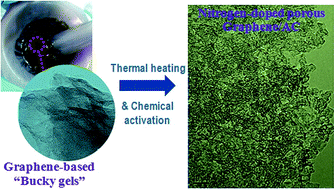
A simple method has been developed to prepare nitrogen-doped porous graphene–activated carbon (AC) composites as high-performance electrode materials for supercapacitors. The graphene-based “bucky gels”, prepared by simple mixing and grinding of graphene in ionic liquids (ILs), are carbonized to form an “untractable char” intermediate product, and finally converted to the nitrogen-doped porous graphene–AC composite by chemical activation using KOH. Results demonstrate that the introduction of graphene sheets into the composite not only effectively enhance the specific surface area and conductivity of graphene–AC composite, but also enlarge the pore size in the electrode material compared with pure AC. In addition, the nitrogen-doping can further improve the kinetics for both charge transfer and ion transport throughout the electrode. It's found that the composite has a large specific surface area of 2375.2 m2 g−1, and also contains plenty of mesopores and appreciable nitrogen-doping amount. It exhibits a specific capacitance up to 145 F g−1 at 20 mV s−1 in 6 M KOH electrolyte, and the specific capacitance decreases by only 1.6% after 5000 cycles. This kind of nitrogen-doped composite represents an alternative promising candidate as electrode material for supercapacitors.

Introduction

The lack of sufficient energy density (5–6 Wh kg−1) has been the major obstacle that hinders the wide range application of supercapacitors. In order to overcome this problem, numerous efforts have been paid to developing alternative electrode materials, such as carbon nanotubes (CNTs),1,2 graphene3–5 and CNTs–graphene hybrid materials,6,7 as well as transition metal oxides8,9 and conductive polymers10,11 with pseudocapacitive behaviors. Unfortunately, they still can't meet the higher requirements of electric systems, ranging from portable electronics to hybrid electric vehicles and large industrial equipment. Up to now, only activated carbon (AC) has been commercially used as supercapacitor electrode material due to its well-developed microstructure, high specific surface area (SSA), relatively high packing density, and low cost.12,13 However, AC-based supercapacitors account for only a comparatively small market because of their limited energy density and low conductivity. For the AC electrode material, improving its capacitive performance and conductivity appears to be the appropriate route to achieve high-performance supercapacitors.

Graphene,14 highly crystalline sp2-hybridized carbon material, has superior electrical conductivity comparing to AC materials, but owes relatively low SSA due to the fact that graphene sheets have inevitable tendency to restack because of its 2D sheet-like morphology.15,16 To resolve this problem, preparation of activated graphene by activation with KOH of reduced graphene oxide (RGO)17 can be considered as an effective approach. The activation process etches graphene sheets to generate a continuous 3D network of pores, and the SSA of the sample can reach up to 3100 m2 g−1. However, compared to commercial AC, the low packing density of activated graphene still limits its practical application. Several attempts have been dedicated to synthesize graphene–AC composite18,19 electrode materials with high SSA, excellent conductivity and relatively high packing density, ascribing to the synergistic effects of the combination of graphene and AC. In addition, another important strategy to improve the performance of carbon materials is doping heteroatoms including nitrogen,20,21 oxygen22,23 and phosphorus,24,25 which not only enhances the electronic conductivity and wetting ability, but also can induce reversible pseudocapacitance behavior. Thus, seeking for a facile and effective approach to prepare heteroatom-doped and porous graphene based materials with high SSA, packing density and electronic conductivity is very attractive for the application of graphene in supercapacitors.

In this work, a nitrogen-containing ionic liquids (ILs) were used as a new carbon precursor along with RGO to prepare nitrogen-doped porous graphene–AC composite material for supercapacitors. ILs possess some significant advantages comparing with conventional solid-state carbon precursor. ILs are liquids with fluidic property, which enable them to penetrate into porous materials easily without any additional solvent.26 Furthermore, ILs are well known as good solvents or dispersants for a variety of carbon materials. ILs have been successfully used to disperse CNTs or graphene to form “bucky gels” probably due to the π-cation/π-electronic interaction between them.27,28 In such graphene-based “bucky gel” prepared by simple grinding of RGO with ILs, graphene sheets are homogeneously dispersed in ILs, resulting in the formation of uniform carbon layers derived from ILs on graphene sheets after a carbonization process, while the N atoms in ILs were successfully reserved to form N-doped carbon. Subsequent chemical activation of the as-prepared N-doped carbon–graphene composite finally produces nitrogen-doped porous graphene–AC composite. The electrochemical tests suggest that the obtained nitrogen-doped composite exhibits high capacitance and excellent cycling stability. This facile method and good electrochemical performance make nitrogen-doped porous graphene–AC composite material potentially applicable for high-performance supercapacitors.

Experimental

Sample preparation

RGO powder used in this work was obtained by thermal annealing of GO powder, and the GO powder was prepared by chemical oxidation and exfoliation of natural graphite following the method described elsewhere.29 The experimental steps are shown in Scheme 1. Briefly, 0.1 g of obtained RGO powder was mixed with 10.0 g of ILs (1-ethyl-3-methylimidazolium dicyanamide, EMIm-dca) and subsequently grinded in an agate mortar to form “bucky gels”. The “bucky gels” were transferred into a quartz boat and thermally treated at 600 °C for 2 h in Ar atmosphere, and then 1.5 g of intermediate product was obtained. The chemical activation was carried out as following: the intermediate product (1.0 g) was mixed with KOH with a weight ratio of 1[thin space (1/6-em)]:[thin space (1/6-em)]4 and was chemically activated at 800 °C for 2 h in Ar atmosphere. The obtained sample was washed with 15 wt% HCl solution and then washed to neutral with deionized water. Finally, the sample was dried at 120 °C for 12 h. As a result, 0.1 g product was obtained. For comparison, the AC electrode material derived from pure ILs was prepared by the same process as stated above but without the addition of RGO, and the non-nitrogen-doped graphene–AC composite derived from glucose was synthesized via hydrothermal carbonization and subsequent chemical activation.
image file: c4ra13724h-s1.tif
Scheme 1 Schematic illustration showing the synthesis process of nitrogen-doped porous graphene–AC composite.

Structure characterization

The as prepared samples were characterized by a Hitachi S-4800 field emission scanning-electron microscopy (SEM) and a FEI Tecnai G2 F20 transmission electron microscopy (TEM). The EDS mapping was done on SEM equipped with an energy dispersive X-ray analyzer (Horiba EMAX). The nitrogen sorption isotherm was recorded by a Micromeritics ASAP-2020 M nitrogen adsorption apparatus. Pore size distribution plot was obtained by the Barrett–Joyner–Halenda (BJH) method. X-ray photoelectron spectra (XPS) were recorded by an AXIS ULTARDLD spectroscopy from Kratos.

Electrochemical tests

The evaluation of electrochemical performance was carried out in CR2032 coin cells. 6 M KOH aqueous solution was used as the electrolytes. For the coin cells tested in aqueous solution, the working electrode contained 80 wt% of active material, 10 wt% of poly(terafluoroethylene) (PTFE) and 10 wt% of Super P. Each electrode contains ∼10 mg active material. The electrochemical performance such as cyclic voltammetry (CV) and electrochemical impedance spectroscopy (EIS) were characterized by using a Solartron Instrument Mode 1470E electrochemical workstation at ambient condition. The CV curve and specific capacitance were measured under different scan rates in the range of 0–200 mV s−1 between 0–1 V, and the cycling ability was tested under 100 mV s−1 for 5000 cycles.

Results and discussion

“Bucky gels” can be easily prepared by grinding in an agate mortar or strongly sonicating a mixture of carbon materials and imidazolium ion-based ILs. It has been demonstrated that ILs has a high affinity toward the conjugated network in graphene possibly via a π-cation/π-electronic interaction. However, it's noteworthy that not all kinds of ILs are suitable for using as precursors for nitrogen-doped carbon materials. Studies by Wooster and co-workers30 on the stability of ILs showed that ILs composed of nitrogen-containing cations and cyano functionalized anions indeed do not decompose completely into volatile products under thermal treatment in an inert gas atmosphere, but leave significant amounts of an “untractable char”. Inspired by the above, we prepared nitrogen-doped porous graphene–AC composite for supercapacitors using EMIm-dca as the carbon precursor. As illustrated in Scheme 1, the “bucky gels” based on graphene were prepared by simple grinding in an agate mortar, and the nitrogen-doped porous graphene–AC composite was synthesized through carbonization and subsequent chemical activation. The macroscopic photograph of “bucky gels” was shown in Fig. 1a. In the “bucky gels”, the graphene sheets were dispersed to form 3D networks, and their surface was coated with a thin layer of ILs (as shown in Fig. 1b). After carbonization and chemical activation, the as-prepared sample was consisted of wrinkled nanosheets with thickness of tens of nanometers (Fig. 1c and d). The low-magnification TEM image (Fig. 1e) further confirms that the as-prepared sample exhibits nanosheet morphology, with sizes of about several micrometers. In particular, the high-resolution TEM image (Fig. 1f) clearly reveals that the nanosheets have rough surface with dense micro-/mesopores etched by KOH. In contrast, the AC derived from pure EMIm-dca displays large and dense particle morphology with diameters of 10–50 μm (as shown in Fig. S1). The entirely different morphologies indicate that graphene can act as a template to form sheet-like composite. Importantly, the nanosheet product can facilitate rapid transport of electrolyte ions due to the short diffusion pathway, which is suitable for high-rate supercapacitor with high power density.
image file: c4ra13724h-f1.tif
Fig. 1 (a) Picture of “bucky gels” prepared by grinding RGO in EMIm-dca, (b) TEM image of “bucky gels” of graphene, (c and d) SEM images of graphene–AC composite in low magnification and high magnification, and (e and f) TEM images of graphene–AC composite in low magnification and high magnification.

In order to investigate the composition and element distribution of the samples, EDS mapping analysis was carried out. The EDS mapping images of C, O, and N elements are shown in Fig. S2 and S3. Uniform distribution of C, O and N was observed in both intermediate product and the graphene–AC composite, indicating that N was homogeneously incorporated in the composite. Comparing with intermediate product, the N content of graphene–AC composite decreases obviously. It has been found that the nitrogen content strongly depends on the pyrolysis temperature.31 The nitrogen functional groups are easily removed at higher temperatures. Given all that, a relatively low activation temperature of 800 °C was selected in the synthesis process. To understand the role of nitrogen functionalities in capacitive performance, it is necessary to clarify the configurations of nitrogen on the carbon surface via XPS analysis (Fig. 2). The XPS spectra of the samples are shown in Fig. 2a. The percentage of nitrogen in intermediate product and graphene–AC composite was calculated to be around 25.1, and 3.8%, respectively. The N 1s spectra can be deconvoluted into three peaks. The peaks at binding energies of ∼398.3, ∼400.1 and ∼401.0 eV can be attributed to the C–N, C[double bond, length as m-dash]N and N–O bonds, respectively (Fig. 2b and c). The nitrogen functional groups were diminished remarkably after the chemical activation. Specially, the intensity of C–N peak became much weaker and its proportion was obviously smaller than that of C[double bond, length as m-dash]N and N–O, whereas the relative ratio of peak areas of C[double bond, length as m-dash]N and N–O rose largely, which indicates that C[double bond, length as m-dash]N and N–O are much more stable than C–N at high temperatures.


image file: c4ra13724h-f2.tif
Fig. 2 (a) XPS survey spectra of intermediate product and nitrogen-doped graphene–AC composite, and high-resolution XPS spectra of the deconvoluted N 1s peak of (b) intermediate product and (c) nitrogen-doped graphene–AC composite.

N2 sorption analysis was carried out to further characterize the porous structure of the samples. Fig. 3a shows the N2 adsorption–desorption isotherms of the samples. It's obvious that the intermediate product presents a type II isotherm according to the IUPAC classification, typical for non-porous materials with a very low Brunauer–Emmett–Teller (BET) SSA (4.9 m2 g−1, calculated in the linear relative pressure range from 0.1 to 0.3). In contrast, the matrix materials, RGO reduced by annealing treatment has a BET SSA of 552.5 m2 g−1, which indicates that the “untractable char” derived from ILs was uniformly and densely coated on graphene to form much thicker sheets than RGO. For graphene–AC composite, it exhibits type IV isotherms. A remarkable hysteresis loop can be observed extending from P/P0 = 0.4 to 0.9, suggesting the existence of mesopores (2–50 nm) in this sample. The SSA of graphene–AC composite is 2375.2 m2 g−1, far larger than that of RGO and intermediate product, which confirms that porosity was developed largely during chemical activation (see Table 1 for detailed parameters). In comparison, the AC derived from pure ILs also shows type IV isotherms but with a smaller hysteresis loop extending from P/P0 = 0.4 to 0.6, which indicates that the content of mesopores in AC is lower than that in graphene–AC composite. As we know, the presence of mesopores is very important for the rapid transport and migration of electrolyte ions during the charge–discharge process. Moreover, comparing with highly porous graphene–AC composite, the AC derived from pure ILs has a relatively lower SSA of 1446.0 m2 g−1, which further proves that the presence of graphene is favorable for porosity development during chemical activation. More information related to pore size were obtained using the BJH method. The pore size distribution of graphene–AC composite and AC were shown in Fig. 3b. Though two samples have similar pore size centered at ∼3 nm, the volume of the mesopores in the graphene–AC composite is apparently larger than that in AC, which could be mainly ascribed to the presence of graphene. Therefore, graphene plays an important role in porosity development for graphene based carbon materials.


image file: c4ra13724h-f3.tif
Fig. 3 (a) Nitrogen adsorption–desorption isotherms of RGO, intermediate product, nitrogen-doped AC and nitrogen-doped graphene–AC. (b) Pore size distribution of nitrogen-doped AC and nitrogen-doped graphene–AC.
Table 1 Porosity characterization of graphene–AC composite and AC derived from pure ILs
Samples BET surface area (m2 g−1) Total pore volume (cm3 g−1) Average pore size (nm)
Graphene–AC 2375.2 2.3 3.6
AC 1446.0 1.1 3.2


From the above analysis, we can conclude that the carbonization at 600 °C and subsequent chemical activation at 800 °C transferred graphene “bucky gels” into a nitrogen-doped porous carbon material, with a large SSA and high pore volume. Moreover, the suitable pore structure, consisting with both micro- and mesopores, is expected to be favorable in supercapacitor application. The micropores are regarded to be responsible for charge accommodation, whereas the mesopores provide diffusion channel for rapid transport and migration of electrolyte ions. In addition, the integration of graphene can also improve the conductivity of the AC materials. Given all that, the as-prepared nitrogen-doped porous graphene–AC composite can be considered as a promising candidate electrode material for supercapacitors.

CV is mostly used as a suitable tool to characterize the capacitive behavior and to quantify the specific capacitance of an electrode material. Fig. 4 shows the different CV curves of intermediate product and as-prepared nitrogen-doped porous graphene–AC composite electrode at 20 mV s−1 scan rate within a potential range of 0–1 V in 6 M KOH electrolyte. To quantitatively compare the capacitance performance of these electrode materials, the values of specific capacitance Cs (F g−1) were calculated according to the following equations:32

 
image file: c4ra13724h-t1.tif(1)
 
Cs = 4Ccell (2)
where Ccell is the specific capacitance of the coin cell (F g−1), m is the total mass of two electrodes (g), ν is the scan rate (mV s−1), (VcVa) represents the sweep potential range (V), and I(V) denotes the response current (A g−1). The capacitance mentioned in this work is Cs (based on single electrode). The intermediate product exhibits a small and nearly rectangular CV curve, corresponding to a low specific capacitance (22.5 F g−1) due to its very low BET SSA (4.9 m2 g−1). The capacitance mainly originates from the heteroatoms in the sample. After chemical activation, the as-prepared nitrogen-doped porous graphene–AC presents a typical capacitive behavior with a large rectangular CV curve, indicating that the specific capacitance primarily originates from the double-layer capacitance based on ions adsorption–desorption. The specific capacitance is 145 F g−1, which is far higher than that of non-activated sample, suggesting that chemical activation is an effective approach for carbon materials to improve their capacitive performance. In addition, the nitrogen-doping can increase the surface area accessibility for electrolyte ion transport.31


image file: c4ra13724h-f4.tif
Fig. 4 The CV curves of intermediate product and nitrogen-doped porous graphene–AC composite electrodes at a scan rate of 20 mV s−1 within the potential of 0–1.0 V.

Fig. 5a shows the CV curves of nitrogen-doped porous graphene–AC electrode at scan rates of 20 and 200 mV s−1 within a potential range of 0–1 V in 6 M KOH electrolyte. It's obvious that both the CV curves exhibit nearly ideal rectangular shape, indicating that the specific capacitance primarily originates from the double-layer capacitance based on ions adsorption–desorption. In particular, the shape of CV curves does not change remarkably as the scan rate is increased from 20 to 200 mV s−1. This result demonstrates that the nitrogen-doped porous graphene–AC has a high charge storage capacity with fast charge transfer. Fig. 5b exhibits the specific capacitance of nitrogen-doped porous graphene–AC at different scan rates. The specific capacitance is 145 F g−1 at a scan rate of 20 mV s−1. It should be noted that the electrochemical data of our sample was measured using a two-electrode configuration, which is believed to be more reliable than the three-electrode method. Further increasing the scan rate results in the decrease of the specific capacitance of the electrode, due to the mass transfer limitation of ions inside porous graphene–AC composite at high currents. However, the electrode still exhibits a capacitance as high as 126 F g−1 at 200 mV s−1, which retains 86.9% of the initial capacitance measured at 20 mV s−1. This result further demonstrates that the nitrogen-doped porous graphene–AC has relatively excellent rate capability, it also reflects nitrogen-doped electrode has fast ions diffusion. The nitrogen-doping can enhance the conductivity and wetting ability of the carbon material, which is facilitating to improve the ions transport.31


image file: c4ra13724h-f5.tif
Fig. 5 (a) CV curves of nitrogen-doped graphene–AC composite at scan rates of 20 and 200 mV s−1 within a potential range of 0–1 V, (b) specific capacitance at different scan rates, (c) the Nyquist plots of nitrogen-doped graphene–AC electrode and graphene–AC electrode (the inset shows the enlarged EIS at high frequency region), and (d) long-term cycling performance of the nitrogen-doped graphene–AC composite electrode measured at 100 mV s−1 (the insert shows the CV curves of the 1st and 5000th cycles).

The EIS analysis is one of the principal methods to examine the fundamental behavior of electrode materials for supercapacitors. The Nyquist plots for nitrogen-doped graphene–AC electrode after 1st and 5000th cycle, and the plot for the non-doped graphene–AC electrodes after 1st cycle are shown in Fig. 5c. For nitrogen-doped graphene–AC electrode, obviously, the Nyquist plots after 1st and 5000th cycle are almost identical in form, consisting of one small semicircle in the high-frequency region and an apparent straight line in the low frequency region. The x-axis intercepts in the high frequency region are equal to the solution resistance, and the semicircle is probably related to the resistance between graphene–AC particles and the interface resistance of active material/current collector.33 The small diameter of the semicircle in the high frequency region exhibits good electrical contact between graphene–AC particles. The straight line in low frequency region indicates a pure capacitive behavior, representative of the fast ion diffusion in the electrode. The more vertical the line, the closer to an ideal capacitive behavior of the electrode. In order to further analyse the effect of the presence of nitrogen-doping, non-nitrogen-doped graphene–AC derived from glucose was prepared by hydrothermal carbonization and chemical activation. As shown in the inset of Fig. 5c, both the diameters of semicircles of nitrogen-doped graphene–AC electrode after 1st and 5000th cycles are smaller than that of non-nitrogen-doped one, which further demonstrates that the nitrogen-doping can improve the conductivity for graphene-based carbon materials.

The cyclic stability of supercapacitor is a crucial parameter for its practical applications. The long-term cyclic stability of the nitrogen-doped porous graphene–AC electrode was evaluated by repeating the CV test between 0 and 1.0 V at a scan rate of 100 mV s−1 for 5000 cycles. The relationship between capacitance retention ratio and cycle number is shown in Fig. 5d. The capacitance only decreases by 1.6% of the initial capacitance after 5000 cycles. Furthermore, there is not remarkable change in the CV curve before and after 5000 cycles (Fig. 5d, inserted image), which illustrates that the nitrogen-doped porous graphene–AC displays excellent cyclic stability to be a high-performance electrode material for supercapacitors.

Based on the above discussions, it can be seen that the nitrogen-doped porous graphene–AC electrode material derived from ILs possesses high specific capacitance and excellent cyclic stability. These good electrochemical performances are mainly ascribed to the combination effect of the nitrogen-doping, the large SSA, the suitable pore size distribution, and the excellent conductivity.

Conclusions

Nitrogen-doped porous graphene–AC composite electrode material derived from “bucky gels” by carbonization and subsequent chemical activation using KOH was successfully synthesized. The graphene sheets in “bucky gels” induce the formation of sheet-like composite, which not only has large SSA and high conductivity, but also possesses relatively high mesopore content. In addition, the nitrogen-doping can further enhance the kinetics for both charge transfer and ion transport throughout the electrode. The electrochemical measurements illustrated that the nitrogen-doped porous graphene–AC electrode exhibits a high specific capacitance of 145 F g−1 (at 20 mV s−1) and an excellent cyclic stability (the specific capacitance decreases by only 1.6% after 5000 cycles). The results indicate that the nitrogen-doped porous graphene–AC composite has promising application potential in supercapacitors.

Acknowledgements

This work was supported by National Natural Science Foundation of China (Grant no. 21201173 and no. 21371176), Ningbo Science and Technology Innovation Team (Grant no. 2012B82001), the Natural Science Foundation of Ningbo (Grant no. 2013A610029) and the Zhejiang Province Preferential Postdoctoral Funded Project (Grant no. Bsh1302054).

Notes and references

  1. C. Zheng, W. Z. Qian, C. J. Cui, Q. Zhang, Y. G. Jin, M. Q. Zhao, P. H. Tan and F. Wei, Carbon, 2012, 50, 5167–5175 CrossRef CAS PubMed.
  2. A. Izadi-Najafabadi, S. Yasuda, K. Kobashi, T. Yamada, D. N. Futaba, H. Hatori, M. Yumura, S. Iijima and K. Hata, Adv. Mater., 2010, 22, E235–E241 CrossRef CAS PubMed.
  3. J. J. Yoo, K. Balakrishnan, J. Huang, V. Meunier, B. G. Sumpter, A. Srivastava, M. Conway, A. L. M. Reddy, J. Yu, R. Vajtai and P. M. Ajayan, Nano Lett., 2011, 11, 1423–1427 CrossRef CAS PubMed.
  4. M. D. Stoller, S. Park, Y. Zhu, J. An and R. S. Ruoff, Nano Lett., 2008, 8, 3498–3502 CrossRef CAS PubMed.
  5. C. Liu, Z. Yu, D. Neff, A. Zhamu and B. Z. Jang, Nano Lett., 2010, 10, 4863–4868 CrossRef CAS PubMed.
  6. N. Jha, P. Ramesh, E. Bekyarova, M. E. Itkis and R. C. Haddon, Adv. Energy Mater., 2012, 2, 438–444 CrossRef CAS.
  7. M. Q. Zhao, Q. Zhang, J. Q. Huang, G. L. Tian, T. C. Chen, W. Z. Qian and F. Wei, Carbon, 2013, 54, 403–411 CrossRef CAS PubMed.
  8. Z. Fan, J. Yan, T. Wei, L. Zhi, G. Ning, T. Li and F. Wei, Adv. Funct. Mater., 2011, 21, 2366–2375 CrossRef CAS.
  9. P. Yang, Y. Ding, Z. Lin, Z. Chen, Y. Li, P. Qiang, M. Ebrahimi, W. Mai, C. P. Wong and Z. L. Wang, Nano Lett., 2014, 14, 731–736 CrossRef CAS PubMed.
  10. D. Xu, Q. Xu, K. Wang, J. Chen and Z. Chen, ACS Appl. Mater. Interfaces, 2014, 6, 200–209 CAS.
  11. Q. Wu, Y. Xu, Z. Yao, A. Liu and G. Shi, ACS Nano, 2010, 4, 1963–1970 CrossRef CAS PubMed.
  12. L. L. Zhang and X. S. Zhao, Chem. Soc. Rev., 2009, 38, 2520–2531 RSC.
  13. Y. Zhai, Y. Dou, D. Zhao, P. F. Fulvio, R. T. Mayes and S. Dai, Adv. Mater., 2011, 23, 4828–4850 CrossRef CAS PubMed.
  14. K. S. Novoselov, A. K. Geim, S. V. Morozov, D. Jiang, Y. Zhang, S. V. Dubonos, I. V. Grigorieva and A. A. Firsov, Science, 2004, 306, 666–669 CrossRef CAS PubMed.
  15. Z. Lei, L. Lu and X. S. Zhao, Energy Environ. Sci., 2012, 5, 6391–6399 CAS.
  16. Y. Huang, J. Liang and Y. Chen, Small, 2012, 8, 1805–1834 CrossRef CAS PubMed.
  17. Y. Zhu, S. Murali, M. D. Stoller, K. J. Ganesh, W. Cai, P. J. Ferreira, A. Pirkle, R. M. Wallace, K. A. Cychosz, M. Thommes, D. Su, E. A. Stach and R. S. Ruoff, Science, 2011, 332, 1537–1541 CrossRef CAS PubMed.
  18. C. Zheng, X. Zhou, H. Cao, G. Wang and Z. Liu, J. Power Sources, 2014, 258, 290–296 CrossRef CAS PubMed.
  19. L. Zhang, F. Zhang, X. Yang, G. Long, Y. Wu, T. Zhang, K. Leng, Y. Huang, Y. Ma, A. Yu and Y. Chen, Sci. Rep., 2013, 3, 1408 Search PubMed.
  20. L. Li, E. Liu, J. Li, Y. Yang, H. Shen, Z. Huang, X. Xiang and W. Li, J. Power Sources, 2010, 195, 1516–1521 CrossRef CAS PubMed.
  21. Y. Tan, C. Xu, G. Chen, Z. Liu, M. Ma, Q. Xie, N. Zheng and S. Yao, ACS Appl. Mater. Interfaces, 2013, 5, 2241–2248 CAS.
  22. E. Raymundo-Pinero, F. Leroux and F. Beguin, Adv. Mater., 2006, 18, 1877–1882 CrossRef CAS.
  23. C. Zheng, W. Qian and F. Wei, Mater. Sci. Eng., B, 2012, 177, 1138–1143 CrossRef CAS PubMed.
  24. C. Wang, Y. Zhou, L. Sun, P. Wan, X. Zhang and J. Qiu, J. Power Sources, 2013, 239, 81–88 CrossRef CAS PubMed.
  25. X. Yan, Y. Yu and X. Yang, RSC Adv., 2014, 4, 24986–24990 RSC.
  26. J. P. Paraknowitsch and A. Thomas, Macromol. Chem. Phys., 2012, 213, 1132–1145 CrossRef CAS.
  27. T. Fukushima, A. Kosaka, Y. Ishimura, T. Yamamoto, T. Takigawa, N. Ishii and T. Aida, Science, 2003, 300, 2072–2074 CrossRef CAS PubMed.
  28. T. Fukushima and T. Aida, Chem.–Eur. J., 2007, 13, 5048–5058 CrossRef CAS PubMed.
  29. X. Zhou and Z. Liu, Chem. Commun., 2010, 46, 2611–2613 RSC.
  30. T. J. Wooster, K. M. Johanson, K. J. Fraser, D. R. MacFarlane and J. L. Scott, Green Chem., 2006, 8, 691–696 RSC.
  31. L. F. Chen, X. D. Zhang, H. W. Liang, M. Kong, Q. F. Guan, P. Chen, Z. Y. Wu and S. H. Yu, ACS Nano, 2012, 6, 7092–7102 CrossRef CAS PubMed.
  32. C. Zheng, X. F. Zhou, H. L. Cao, G. H. Wang and Z. P. Liu, J. Mater. Chem. A, 2014, 2, 7484–7490 CAS.
  33. C. Portet, P. L. Taberna, P. Simon and C. Laberty-Robert, Electrochim. Acta, 2004, 49, 905–912 CrossRef CAS PubMed.

Footnote

Electronic supplementary information (ESI) available: SEM observations of the intermediate product of AC derived from purity ILs and porous AC, EDS characterizations for the intermediate product derived from graphene-based “bucky gels” and the nitrogen-doped porous graphene–AC composite. See DOI: 10.1039/c4ra13724h

This journal is © The Royal Society of Chemistry 2015
Click here to see how this site uses Cookies. View our privacy policy here.