DOI:
10.1039/C4RA13230K
(Paper)
RSC Adv., 2015,
5, 3260-3268
The anti-cancer activity of green tea, coffee and cocoa extracts on human cervical adenocarcinoma HeLa cells depends on both pro-oxidant and anti-proliferative activities of polyphenols†
Received
27th October 2014
, Accepted 2nd December 2014
First published on 2nd December 2014
Abstract
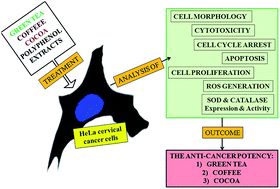
It has been shown before that dietary polyphenols possess cancer chemopreventive effects. As cervical cancer is the second leading genital malignancy in women after breast cancer, the anti-cervical cancer effects of polyphenol extracts of commonly used beverages (green tea, coffee and cocoa) were tested and compared in HeLa cells. All the extracts induced apoptosis of HeLa cells, but green tea was the most potent. However, as opposed to green tea which induced a strong anti-proliferative response in HeLa cells, coffee and cocoa extracts promoted the proliferation of surviving cells. After short-term exposure, green tea and coffee extracts, but not cocoa, induced the formation of intracellular reactive oxygen species. Only the green tea extract increased the production of superoxide anion radicals and decreased reduced glutathione levels. Gene expression of Cu/Zn and Mn-superoxide dismutase or catalase was unaltered in cells treated with extracts, but green tea partially inhibited catalase activity. The cytotoxic activity of green tea and coffee extracts was partially inhibited by vitamin C. The in vitro anti-cervical cancer potency of tested polyphenol extracts is related to their pro-oxidant and anti-proliferative activities and are exhibited in the following order: green tea > coffee > cocoa, with only green tea showing both pro-oxidative and anti-proliferative action.
Introduction
Polyphenols are widely distributed in the human diet and are mainly known for their antioxidant activity.1 As antioxidants, polyphenols may protect cell constituents against oxidative damage. However, it has become clear that in complex biological systems, polyphenols also exhibit pro-oxidant activity and several additional properties that are independent of immediate antioxidant/pro-oxidant activities. Through these mechanisms of action, dietary polyphenols could interfere with cell signaling and modulate expression of transcription factors which control cell survival, transformation and apoptosis.2
Cervical cancer is the second leading cause of cancer deaths in women worldwide with 500
000 new diagnoses annually, most occurring in the developing world.3 A large body of evidence from epidemiological and experimental studies indicates that dietary polyphenols, especially green tea catechins such as epigallocatechin-3-gallate (EGCG), act as effective chemopreventive agents towards different organ specific cancers.4–9 Epidemiological data of green tea consumption and its chemoprevention against cervical cancer are still lacking or are under the way.10 Ex vivo data demonstrated that EGCG induced apoptosis in cancer cells in more than 50% of women with cervical cancer.11 In almost 70% of green tea extract-treated patients with different stages of cervical cancer significant anti-cancer effects were present, when compared to the untreated group.12 In addition, there are several in vitro studies addressing the anti-proliferative and apoptotic mechanism of green tea polyphenol extract or EGCG in HeLa cell lines, a type of immortalized cervical carcinoma cell line.13–18 Except for one study investigating the effects of spent coffee beans extract,19 there are no studies examining the potential anti-cancer effects of coffee and cocoa polyphenol extracts on HeLa cells or any other kind of cervical cancer cells.
In the current study, we have investigated the effects of green tea, coffee and cacao polyphenol extracts on viability, cell cycle, and proliferation of HeLa cells. All extracts were previously characterized and precise data on their polyphenol composition were reported by Tantoush et al.20 and Stojadinovic et al.21 In addition, we tried to explore the mechanism of the anti-cancer action of polyphenol extracts by studying apoptosis and onset of early oxidative stress. Our experimental data suggest that there is a causal link between the polyphenol pro-oxidant and cytotoxic action in HeLa cells.
Experimental
Reagents
RPMI-1640 medium was purchased from PAA The Cell Culture Company (Linz, Austria). Gallic acid, Folin–Ciocalteu reagent, fetal calf serum (FCS), 3-(4,5-dimethylthiazol-2-yl)-2,5-diphenyltetrazolium bromide (MTT), penicillin, streptomycin, glutamine, 2,7-dichlorodihydrofluorescin diacetate (H2DCF-DA), dihidroethidium (DHE), 3,3′-dihexyloxacarbocyanine iodide (DiOC6), propidium iodide (PI), ribonuclease A (RNAse A), Triton X-100, riboflavin, protease inhibitor cocktail for general use, vitamin C and carboxyfluorescein diacetate succinimidyl ester (CFDA-SE) were purchased from Sigma Chemical Co. (St. Louis, MO, USA). Green 5-chloromethylfluorescein diacetate (CMF-DA) was from Invitrogen (Carlsbad, California, USA). Nitro blue tetrazolium (NBT), Tris and (TEMED) were from Serva Electrophoresis GmbH, Heidelberg, Germany. All tetramethylethylenediamineother chemicals were from Applichem (Darmstadt, Germany). Deionized water used in the experiments was purified in a Barnstead Smart2Pure water purification system (Thermo Scientific Barnstead, USA). Green tea, coffee and cocoa were purchased from a local grocery store.
Preparation of green tea, cocoa and coffee polyphenol extracts
Green tea catechin-enriched polyphenol extract (GT) was prepared from the commercial green tea food supplement (local distributer “Zeleni čaj” Pharmanova, Obrenovac, Serbia and producer Chengdu Wagott Pharmaceuticals Co. Ltd, Chando, China).20 Cocoa (CC) and coffee polyphenol extracts (CF) were made from the commercial cocoa powder or ground roasted coffee (mixture of Arabica and Robusta).21 Concentration of total phenolic compounds was measured following Chun et al.22 spectrophotometric assay optimized for 96-well plates using Folin–Ciocalteu's reagent and expressed in μg of gallic acid equivalents per mL or μg GAE mL−1.
Cell culture and MTT vitality assay
HeLa cells were cultured in RPMI-1640 medium, supplemented with 10% FCS, 2 mmol L−1 glutamine, 100 IU mL−1 penicillin and 0.1 mg mL−1 streptomycin. Cells were incubated at 37 °C in a humidified atmosphere with 6.0% CO2. Cytotoxicity of GT, CC and CF in HeLa cells was evaluated by MTT assay after 24 and 72 h of treatment, according to slightly modified procedure of Mosmann23 (for detailed description see ESI†).
Cell cycle analysis
Cells at different phases of cell cycle were distinguished by flow cytometric measurement of cellular DNA content.24 First, cells were seeded at density of 50
000 cells per well in 24-well plates and left overnight prior to the addition of polyphenol extracts. Cells were incubated for 24 or 48 h with 100 μg GAE mL−1 of extracts in the final volume of 1 mL per well. Upon incubation, both adherent and detached cells from each well were collected and their DNA was stained with PI. Flow cytometric analysis was performed on FACSCalibur (Becton Dickinson, Franklin Lakes, NY, USA). The obtained FL-2 area histograms were further analyzed in ModFit LT deconvolution software (Verity, Topsham, ME, USA) by fitting the best Gaussian distribution curve to G0-G1 and G2-M peaks, and then calculating the resulting S-phase. For detailed DNA staining and analysis procedure see ESI.†
Detection of apoptosis using Annexin V-FITC and PI double staining
HeLa cells were treated with 100 μg GAE mL−1 of extracts for 48 h. Upon incubation, both adherent and detached cells from each well were collected and stained with FITC-Annexin V and PI using the apoptosis detection kit from Becton Dickinson. For each measurement 20
000 events were collected. FL-1 vs. FL-3 dot plots were created in Cyflogic software (CyFlo Ltd, Turku, Finland).
Estimation of cell proliferation using CFSE dye dilution method
After division, the intensity of CFSE fluorescence in daughter cells is halved, which allows for simple detection of the number of cell divisions by flow cytometry.25 CFSE-stained cells were treated with 100 μg GAE mL−1 for 72 h. Upon incubation, both adherent and detached cells from each well were collected and analyzed for fluorescence by FACSCalibur. Distribution of cells in different generations and calculation of proliferating cell index (PCI) were performed in the Wizard module of the ModFit LT software using the standard proliferation models to fit the raw data. For detailed experimental procedure see ESI.†
Monitoring early pro-oxidant action of polyphenol extracts with flow cytometric assays
Generation of multiple ROS, in particular hydrogen peroxide, was measured with H2DCF as a substrate.26,27 As H2DCF is poorly sensitive for superoxide anion radical, DHE was used for its detection.28 The level of intracellular reduced glutathione (GSH) was determined using CMF-DA.29 The change in mTMP was monitored by using DiOC6.30 After trypsinization, HeLa cells (100
000 cells per tube) were treated with 100 μg GAE mL−1 of extracts for 15 min at 37 °C, washed and stained for 30 min at 37 °C with 20 μmol L−1 DHE or stained for 15 min with either 10 μmol L−1 CMF-DA or 10 nmol L−1 DiOC6 in PBS. To monitor the generation of ROS, cells were treated for 30 min with extracts at 37 °C, washed and stained with 10 μmol L−1 H2DCF-DA for 30 min in PBS. For each measurement 10
000 events were collected. Analysis was performed in Cyflogic software, where cells were gated according to their size and granularity and the gate was applied to corresponding FL-1 or FL-2 histograms of mean fluorescence intensity (MFI) of cells.
Monitoring the expression and activity of antioxidant enzymes in HeLa cells after the treatment with polyphenol extracts
Relative gene expression of catalase and SOD was measured by real-time RT-qPCR after 12 and 24 h of treatment with 100 μg GAE mL−1 of extracts, and analyzed with the comparative 2−ΔΔCt method.31 For determination of SOD and catalase activity cell lysates were prepared after 24 h of treatment with 100 μg GAE mL−1 of extracts. Catalase activity was determined by following hydrogen peroxide decomposition at 240 nm, as proposed by Clairborne.32 The catalase specific activity was expressed as the number of units per mg of total protein, where one unit of activity corresponds to an absorbance change of 0.01 per one s. Semi-quantitative determination of SOD in-gel activity was done as before.33 Gels were analyzed in Gel-Pro Analyzer 3.0 program (Media cybernetics, Bethesda, USA) and integrated optical density of each band was calculated. For detailed experimental procedure see ESI.†
Modulation of the polyphenol growth inhibition capacity by vitamin C
The growth inhibition potency of polyphenols was assayed by the MTT assay as indicated previously. HeLa cells were incubated for 24 h with 100 μg GAE mL−1 of polyphenol extracts, 100 μg mL−1 of vitamin C or with both simultaneously. Control cells, without the extracts or vitamin C, were set at the same time. The sum of % of growth inhibition obtained for an extract and vitamin C separately, was compared to % of inhibition obtained for the simultaneous stimulation.
Statistical interpretation
Data are presented as mean ± standard deviation and analyzed in Graph Prism 5 program (La Jolla, CA, USA). All incubations were set up in triplicate, except for the SOD and catalase gene expression analysis where each sample was analyzed in duplicate with 2 biological replicates. The differences were analyzed by one-way ANOVA, except for the experiment with vitamin C where student's t-test was used. Differences were considered significant if p < 0.05.
Results
Polyphenol extracts induce HeLa cell death in a dose-dependent manner but only GT causes marked morphological changes
All tested extracts showed cytotoxic activity in a dose-dependent manner in HeLa cells, with GT being the most potent (Fig. 1A). At the concentration of 100 μg GAE mL−1, GT reduced cell viability to 66 ± 8% after 24 h or to 31 ± 6% after 72 h of exposure. After 72 h of treatment with 100 μg GAE mL−1, CC and CF cytotoxic activity increased, leaving behind 73 ± 3 and 65 ± 7% of living cells, respectively. Concentration of 100 μg GAE mL−1 of polyphenol extracts was chosen to be tested in the following experiments for it is the first tested concentration where significant differences were observed between the control and treatment groups after 24 h of treatment. Changes in morphological characteristics of HeLa cells were assessed via light inverted microscopy (Fig. 1B). After the 24 h-treatment with 100 μg GAE mL−1 of extracts, GT promoted cell rounding which was followed with cell detachment. In CC and CF treated groups, a majority of cells retained their spindle-shaped appearance and ability to adhere to the flask surface.
 |
| | Fig. 1 Vitality and cell morphology in the presence of polyphenols. (A) Decrease of HeLa cells viability after 24 and 72 h of incubation with GT, CF and CC at concentrations ranging from 0 of 200 μg GAE mL−1. Viability was examined by MTT assay; the viability of untreated cells was taken as 100%. (B) HeLa cell morphology after 24 h of incubation with 100 μg GAE mL−1 of extracts, as assessed by light inverted microscopy. One representative experiment out of three is shown. | |
Polyphenol extracts cause arrest in different phases of HeLa cell cycle
After 24 h of treatment, GT caused significant accumulation of cells in S phase and reduction of cells in G2/M and G0/G1 phase (Fig. 2A, left). Percentage of viable cells in S phase changed dramatically, from 38.11% in the control to 61.75% in GT treated cells, as illustrated from one representative experiment (Fig. 2A, right). The S-phase cell cycle arrest resulted in significant increase in number of GT treated cells in subG0 phase after 48 h, rising from 1.92% in the control to 28.95% in GT treated group (Fig. 2B). Treatment with CF promoted cell accumulation in G2/M and sub G0 phase after 48 h. Although CC exhibited milder effect on the cell cycle in the monitored time frame, a trend for cycle arrest in G2/M phase was noticeable after 48 h (Fig. 2B).
 |
| | Fig. 2 Distribution of cell cycle phases and DNA content in HeLa cells after the treatment with 100 μg GAE mL−1 of polyphenol extracts for 24 h (A) and 48 h (B). The differences between the treated and control groups were considered statistically significant if p < 0.05 (*), p < 0.005 (**) or p < 0.001 (***). In addition, representative histograms for control and GT treated groups are shown. | |
Polyphenol extracts induce HeLa cell death via apoptosis
By using Annexin-V/PI double staining we were able to distinguish between viable cells (Annexin V−PI−, lower left quadrant), cells in early apoptosis (Annexin V+PI−, lower right quadrant) and dead cells (late apoptotic and necrotic, Annexin V+PI+, upper right quadrant) (Fig. 3A). All tested extracts induced apoptosis of HeLa cells, as demonstrated via significant increase in percentage of early apoptotic cells after 48 h of treatment with 100 μg GAE mL−1 of extracts. As in previous experiments, GT proved to be the most potent (p < 0.001, Fig. 3B). In one selected experiment, 32.6% of GT treated cells were in early apoptosis while 20.8% and 18.7% were detected in CF and CC treated cells, compared to 8.5% in the control cells (Fig. 3A).
 |
| | Fig. 3 HeLa cell apoptosis after 48 h of incubation with 100 μg GAE mL−1 of polyphenol extracts. (A) One selected cell gating profile out of three. (B) The histogram showing percentage of viable (Annexin V−PI−), early apoptotic (Annexin V+PI−) and dead (late apoptotic and necrotic, Annexin V+PI+) cells in the control and treated groups. The differences between the treated and control groups were considered statistically significant if p < 0.05 (*), p < 0.005 (**) or p < 0.001 (***). | |
Polyphenol extracts modulate HeLa cell proliferation
HeLa cells were treated with 100 μg GAE mL−1 of extracts and cell division was analyzed after 72 h of treatment. When compared to control, statistically significant decrease (p < 0.001) in PCI was observed only in GT treated cells while, on the contrary, significant increase (p < 0.001) in PCI was measured in CF and CC treated cells (Fig. 4). The percentage of total cells in the proliferating cell fraction (PCF) was only 13.3 ± 3% in GT treated cells, which was significantly lower than 78 ± 4% in the control group. From the selected histograms in Fig. 4, it can be noticed that generation 4 was the mostly populated generation in the control group with 59.41% of cells. The same trend was observed in CF and CC treated cells, with 67.96 and 68.98% of cells in the generation 4, respectively. In addition, CC was more potent than CF in stimulation of cell proliferation yielding 8.98% of cells in generation 5, which was populated with only 1.69% in untreated cells. As for GT, abatement of proliferation resulted in cells accumulating in generation 3 (55.93%) and 2 (7.79%), at expense of generation 4 (34.79%) and 5 (1.5%).
 |
| | Fig. 4 Proliferation of HeLa cells in the presence of 100 μg GAE mL−1 of polyphenol extracts, as measured by CFSE dye dilution method after 72 h of treatment and further analyzed in ModFit LT software. Representative histograms are presented with the calculated proliferating cell index (PCI) and the percentage of proliferating cell fraction (PCF). Gaussian distribution curves were fitted to detect cells in different generations, from parent to daughter generation number 5. | |
Generation of ROS in HeLa cells differs between the tested extracts
When used at the concentration of 100 μg GAE mL−1, GT and CF, but not CC, induced oxidative stress in HeLa cells after a short-term exposure. As shown in Fig. 5, GT polyphenols significantly increased the basal level of intracellular superoxide anion radical (increased ethidium fluorescence after 15 min of exposure) and other ROS such as hydrogen peroxide and hydroxyl radicals (increased DCF fluorescence after 30 min of exposure). As a consequence of increased oxidative stress in GT treated cells, the intracellular pool of GSH got depleted (reduction in CMF-GSH fluorescence after 15 min of exposure) and mTMP potential dropped below the basal level (measured as increased number of cells with low DiOC6 uptake after 15 min of exposure). Although CF induced the formation of ROS that oxidize H2DCF and a drop in mTMP, no changes were noticed in the other tested parameters. Finally, CC polyphenols induced only a drop in mTMP.
 |
| | Fig. 5 The intracellular level of ROS (including hydrogen peroxide, hydroxyl radical, peroxyl radical and peroxynitrite anion), superoxide anion radical (O2˙−), reduced glutathione (GSH) and mitochondrial transmembrane potential (mTMP) after short exposure (15 min for O2˙−, GSH and mTMP or 30 min for ROS) to 100 μg GAE mL−1 of GT, CF or CC. The differences between the treated and control values were considered statistically significant if p < 0.05 (*), p < 0.005 (**) or p < 0.001 (***). | |
Changes in antioxidant enzymes (gene expression levels and activity) after the exposure to polyphenol extracts
HeLa cells were treated with 100 μg GAE mL−1 of extracts for 12 and 24 h when relative gene expression of CuZnSOD, MnSOD and catalase was assessed with RT-qPCR. As seen in Fig. 6A, there were no significant differences in the relative gene expression levels among the control and polyphenol-treated cells for any of the tested genes. Also, CuZnSOD activity did not change after the 24 h treatment with 100 μg GAE mL−1 of polyphenol extracts (Fig. 6B, left). However, a significant decrease in catalase activity was detected in GT treated cells after 24 h, when compared to the control (Fig. 6B, right).
 |
| | Fig. 6 Changes in antioxidant enzymes after the exposure to polyphenol extracts. (A) Relative gene expression of CuZnSOD, MnSOD and catalase after 12 h and 24 h of treatment with GT, CF and CC at concentration of 100 μg GAE mL−1. (B) CuZnSOD in-gel activity and catalase specific activity after 24 h of treatment with 100 μg GAE mL−1 of extracts. The differences between the treated and control groups were considered statistically significant if p < 0.05 (*), p < 0.005 (**) or p < 0.001 (***). | |
Vitamin C interferes with the cytotoxic activity of polyphenols
After 24 h of separate exposure, 100 μg mL−1 of vitamin C and 100 μg GAE mL−1 of polyphenol extracts induced HeLa cell death. But, when vitamin C was added to each extract, their cytotoxicities were partially antagonized, resulting in lower percentage of growth inhibition when compared to the calculated sum of their individual activities (Fig. 7). Significant reduction was observed for GT and CF, but not for CC.
 |
| | Fig. 7 To assess the interference of vitamin C (Vit.C) with the cytotoxic activity of polyphenols, stimulations were carried out for 24 h with 100 μg mL−1 of Vit.C and/or 100 μg GAE mL−1 of polyphenol extracts. The sum of percentage of growth inhibition obtained for an extract and Vit.C separately (calculated) was compared to the percentage of inhibition obtained for the extract + Vit.C stimulation (obtained). The differences were considered statistically significant if p < 0.05 (*), p < 0.005 (**) or p < 0.001 (***). | |
Discussion
The aim of this study was to investigate the effects of total polyphenolic compounds extracted from commonly used green tea supplement, roasted ground coffee and cocoa powder on human cervical carcinoma HeLa cells in vitro. Our results indicate that out of all three extracts, GT possesses the strongest cytotoxic activity in HeLa cells. In fact, when used at the same concentration of total phenolic compounds (100 μg GAE mL−1), after 72 h of treatment, GT cytotoxicity was roughly twice the rate of CF and CC. Next, we have shown that all extracts induce apoptosis of treated cells but cause different alterations in cell cycle progression. After 24 h of treatment with GT, cells were detained in S phase of cell cycle resulting in subsequent accumulation of cells with fragmented DNA (subG0 phase) i.e. apoptotic cells, as later confirmed by Annexin V/PI double staining. Cells that survived the 72 h stimulation with GT and retained cell integrity, only 13% of total cells, proliferated much slower than the untreated cells. Although CF and CC exhibited similar cytotoxicity in MTT, their effects on cell cycle were different. After 48 h of exposure, CF caused cycle arrest in G2/M phase and accumulation of cells in subG0 phase, while only slight differences were observed in CC treated cells, suggesting different mechanism of action. Although CF and CC induced cell apoptosis, HeLa daughter cells originating from the parent cells that survived the CF and CC treatment seem to be more aggressive, with CC treated cells showing the highest proliferation rate after 72 h, when compared to other groups.
Independent of the magnitude of their cytotoxicity, for all extracts it was observed that their effect on HeLa cells was strongly dependent on the concentration of polyphenols and the length of incubation, suggesting a possible correlation with their pro-oxidant action. Previous reports have suggested that EGCG, a major green tea constituent, at high concentrations produces intracellular ROS, especially hydrogen peroxide.34,35 Our current findings confirm that GT polyphenols induce the generation of ROS in HeLa cells, but the early over-production of superoxide anion radical may be the reason for its high cytotoxic potency. For instance, the less potent CF polyphenols induced similar levels of H2DCF oxidizing ROS, mainly hydrogen peroxide, but did not induce the generation of superoxide anion radical. It is known that formation of superoxide anion radical precedes the formation of hydrogen peroxide, and these two products of molecular oxygen can in turn react with each other to generate the highly damaging hydroxyl radical.36 An unbalanced redox environment and mitochondrial dysfunction are important regulators of cell progression to apoptosis.37,38 An early depletion of the cellular pool of GSH was detected only after the GT treatment. However, a drop in mTMP was detected after the exposure to all three extracts, especially CF and GT. The decline in mTMP measured after the CC treatment is ROS-independent and could be a consequence of interactions formed between the rigid polymeric flavonoids present in CC and the mitochondrial inner-membrane, as reported before for quercetin and galangin.39 It should be emphasized that we measured the pro-oxidant response in HeLa cells 15 or 30 min after the initiation of treatment with polyphenols, thus generating more accurate results, since the redox state of polyphenols changes rapidly. As an example, Sang et al.40 observed by mass-spectrometry in real time that the intensity of EGCG ion in Tris–HCl buffer of pH 7.2 decreases due to oxidation, with an approximate half-life of 2 h.
Several antioxidant enzymes such as SOD and catalase provide a first line of defense against superoxide anion radical and hydrogen peroxide.41 However, HeLa cells did not down- or up-regulate the expression of antioxidant enzymes during the 12 or 24 h treatment with extracts. Therefore the partial inhibition of catalase activity by GT polyphenols, observed after 24 h, is independent of changes in gene expression. Slight decrease in catalase activity with no changes in catalase protein levels was also observed in OSC-4 cells (squamous cell carcinoma line), after the 24 h treatment with 50 μmol L−1 of EGCG.42 It is possible that phenolic compounds from GT or their cell-modified derivatives inhibit catalase activity, as reported before for maize catalase and o-coumaric acid.43 The decline in catalase activity indicates that GT treated cells are less capable of adapting to hydrogen peroxide produced by both GT polyphenols and normal cell metabolism.
To further explain the causal connection between the polyphenol pro-oxidant and cytotoxic activity, we incubated HeLa cells for 24 h with a mixture of vitamin C and individual extracts. Vitamin C interfered with the cytotoxic action of GT and CF. Relaying on previous experiments with EGCG and vitamin C,44 we assume that GT and CF polyphenols efficiently scavenge the ascorbate radicals formed due to vitamin C pro-oxidant action at high concentrations, having as a consequence reduction of polyphenol pro-oxidant activity. On the other hand, CC presumably scavenges ascorbat radicals but the decrease in cytotoxicity is not that pronounced, mainly because of low CC pro-oxidant activity.
Although we tested different extracts at the same concentration of total phenolic compounds, their polyphenol composition is very different.20,21 From our findings, we can conclude that the most potent polyphenols against HeLa cells were those containing both catechol and galloyl moieties (such as EGCG in GT), followed by phenolic acids containing catechol group with an α,β-unsaturated side chain (such as chlorogenic acids in CF), and at the end, by polyphenols with catechol group only (such as catechin or procyanidin in CC). It was shown before that a 5′(3′)-hydroxyl group in the B-ring and pyrogallol structure in a molecule is a minimum requirement for the induction of apoptosis by catechin compounds45 and that only galloyl derivatives of catechins inhibit the proliferation of several cancer cell lines.46
Conclusion
Although polyphenol compounds influence many cellular signaling pathways, their pro-oxidant action is important for the overall anti-cancer activity. Based on the in vitro results from this study, we conclude that green tea and coffee polyphenols may have potential use for the treatment of cervical cancer. Given that the blood concentration of green tea and coffee polyphenols is extremely low in plasma after oral administration,47 and that they are metabolized as other xenobiotics,1 their topical administration in further in vivo studies may be more suitable as it will allow reaching a very high concentration of polyphenols in their active pro-oxidant form.
Conflict of interest
The authors declare no conflict of interest.
Abbreviations
| C | Catechin |
| CC | Cocoa polyphenol extract |
| CF | Coffee polyphenol extract |
| CFDA-SE | Carboxyfluorescein diacetate succinimidyl ester |
| CMF-DA | 5-Chloromethylfluorescein diacetate |
| CTRL | Control, cells not treated with polyphenols |
| DHE | Dihydroethidium |
| DiOC6 | 3,3′-Dihexyloxacarbocyanine iodide |
| ECG | Epicatechin-3-gallate |
| EGC | Epigallocatechin |
| EGCG | Epigallocatechin-3-gallate |
| FCS | Fetal calf serum |
| GAE | Gallic acid equivalents |
| GSH | Reduced glutathione |
| GT | Green tea polyphenol extract |
| H2DCF-DA | 2,7-Dichlorodihydrofluorescin diacetate |
| MFI | Mean fluorescence intensity |
| mTMP | Mitochondrial transmembrane potential |
| MTT | 3-(4,5-Dimethylthiazol-2-yl)-2,5-diphenyltetrazolium bromide |
| NBT | Nitro blue tetrazolium |
| PCF | Proliferating cell fraction |
| PCI | Proliferating cell index |
| PI | Propidium iodide |
| ROS | Reactive oxygen species |
| SOD | Superoxide dismutase |
| TEMED | Tetramethylethylenediamine |
Acknowledgements
Supported by the GA no. 172024 of the Ministry of Education, Science and Technological Development of the Republic of Serbia and FP7 RegPot project FCUB ERA GA no. 256716. The EC does not share responsibility for the content of the article.
References
- C. Manach, A. Scalbert, C. Morand, C. Remesy and L. Jimenez, Am. J. Clin. Nutr., 2004, 79, 727–747 CAS.
- R. Masella, R. Di Benedetto, R. Vari, C. Filesi and C. Giovannini, J. Nutr. Biochem., 2005, 16, 577–586 CrossRef CAS PubMed.
- A. North and C. South, in Cancer incidence in five continents, ed. M. P. Curado, B. Edwards, H. R. Shin, H. J. Ferlay, M. Heanue and P. Boyle, IARC Scientific Publications, Lyon, 2007, No. 160 Search PubMed.
- I. T. Johnson, Proc. Nutr. Soc., 2007, 66, 207–215 CrossRef CAS PubMed.
- C. S. Yang, Nature, 1997, 389, 134–135 CrossRef CAS PubMed.
- G. Y. Yang, J. Liao, K. Kim, E. J. Yurkow and C. S. Yang, Carcinogenesis, 1998, 19, 611–616 CrossRef CAS PubMed.
- H. Mukhtar and N. Ahmad, Toxicol. Sci., 1999, 52, 111–117 CrossRef CAS PubMed.
- M. G. Hertog, D. Kromhout, C. Aravanis, H. Blackburn, R. Buzina, F. Fidanza, S. Giampaoli, A. Jansen, A. Menotti, S. Nedeljkovic, M. Pekkarinen, B. S. Simic, H. Toshima, E. J. M. Feskens, P. C. H. Hollman and M. B. Katan, Arch. Intern. Med., 1995, 155, 381–386 CrossRef CAS.
- J. D. Lambert and R. J. Elias, Arch. Biochem. Biophys., 2010, 501, 65–72 CrossRef CAS PubMed.
- C. Zou, H. Liu, J. M. Feugang, Z. Hao, H. H. Chow and F. Garcia, Int. J. Gynecol. Canc., 2010, 20, 617–624 CrossRef PubMed.
- F. Asif Siddiqui, M. Naim and N. Islam, Diagn. Cytopathol., 2011, 39, 482–488 CrossRef PubMed.
- W. S. Ahn, J. Yoo, S. W. Huh, C. K. Kim, J. M. Lee, S. E. Namkoong, S. M. Bae and I. P. Lee, Eur. J. Cancer Prev., 2003, 12, 383–390 CrossRef PubMed.
- Y. Qiao, J. Cao, L. Xie and X. Shi, Arch. Pharmacal Res., 2009, 32, 1309–1315 CrossRef CAS PubMed.
- M. Singh, R. Singh, K. Bhui, S. Tyagi, Z. Mahmood and Y. Shukla, Oncol. Res., 2011, 19, 245–257 CrossRef.
- M. Singh, K. Bhui, R. Singh and Y. Shukla, Life Sci., 2013, 93, 7–16 CrossRef CAS PubMed.
- Y. Wang, H. Zhang, A. Holmgren, W. Tian and L. Zhong, Oncol. Rep., 2008, 20, 1479–1487 CAS.
- A. P. Sommer, D. Zhu and T. Scharnweber, Photomed. Laser Surg., 2010, 28, 429–430 CrossRef PubMed.
- M. Yokoyama, M. Noguchi, Y. Nakao, A. Pater and T. Iwasaka, Gynecol. Oncol., 2004, 92, 197–204 CrossRef CAS PubMed.
- J. Bravo, L. Arbillaga, M. P. de Pena and C. Cid, Food Chem. Toxicol., 2013, 60, 397–403 CrossRef CAS PubMed.
- Z. Tantoush, D. Apostolovic, B. Kravic, I. Prodic, L. Mihajlovic, D. Stanic-Vucinic and T. Cirkovic Velickovic, J. Funct. Foods, 2012, 4, 650–660 CrossRef CAS PubMed.
- M. Stojadinovic, J. Radosavljevic, J. Ognjenovic, J. Vesic, I. Prodic, D. Stanic-Vucinic and T. Cirkovic Velickovic, Food Chem., 2013, 136, 1263–1271 CrossRef CAS PubMed.
- O. K. Chun, D. O. Kim and C. Y. Lee, J. Agric. Food Chem., 2003, 51, 8067–8072 CrossRef CAS PubMed.
- T. Mosmann, J. Immunol. Methods, 1983, 65, 55–63 CrossRef CAS.
- P. Pozarowski and Z. Darzynkiewicz, in Checkpoint controls and cancer, ed. A. Schönthal, Humana Press, New York, 2004, pp. 301–311 Search PubMed.
- C. R. Parish, Immunol. Cell Biol., 1999, 77, 499–508 CrossRef CAS PubMed.
- M.-L. Kuo, A. J. Sy, L. Xue, M. Chi, M. T. C. Lee, T. Yen, M.-I. Chiang, L. Chang, P. Chu and Y. Yen, Sci. Rep., 2012, 2, 822 Search PubMed.
- W. O. Carter, P. K. Narayanan and J. P. Robinson, J. Leukocyte Biol., 1994, 55, 253–258 CAS.
- R. Franco, M. I. Panayiotidis and J. A. Cidlowski, J. Biol. Chem., 2007, 282, 30452–30465 CrossRef CAS PubMed.
- T.-J. Hsieh, T.-Z. Liu, Y.-C. Chia, C.-L. Chern, F.-J. Lu, M.-C. Chuang, S.-Y. Mau, S.-H. Chen, Y.-H. Syu and C.-H. Chen, Food Chem. Toxicol., 2004, 42, 843–850 CrossRef CAS PubMed.
- P. X. Petit, H. Lecoeur, E. Zorn, C. Dauguet, B. Mignotte and M. L. Gougeon, J. Cell Biol., 1995, 130, 157–167 CrossRef CAS.
- K. J. Livak and T. D. Schmittgen, Methods, 2001, 25, 402–408 CrossRef CAS PubMed.
- A. Clairborne, in Handbook of methods for oxygen radical research, ed. R. A. Greenwald, CRC Press, Boca Raton, 1985, pp. 283–284 Search PubMed.
- C. J. Weydert and J. J. Cullen, Nat. Protoc., 2010, 5, 51–66 CrossRef CAS PubMed.
- G.-Y. Yang, J. Liao, C. Li, J. Chung, E. J. Yurkow, C.-T. Ho and C. S. Yang, Carcinogenesis, 2000, 21, 2035–2039 CrossRef CAS PubMed.
- W. Li, S. Nie, Q. Yu and M. Xie, J. Agric. Food Chem., 2009, 57, 6685–6691 CrossRef CAS PubMed.
- Free radicals in biology and medicine, ed. B. Halliwell and J. M. C. Gutteridge, Clarendon Press, Oxford, 3rd edn, 1999 Search PubMed.
- S. Pervaiz and M.-V. Clément, Biochem. Biophys. Res. Commun., 2002, 290, 1145–1150 CrossRef CAS PubMed.
- S. Desagher and J. C. Martinou, Trends Cell Biol., 2000, 10, 369–377 CrossRef CAS.
- D. J. Dorta, A. A. Pigoso, F. E. Mingatto, T. Rodrigues, I. M. R. Prado, A. F. C. Helena, S. A. Uyemura, A. C. Santos and C. Curti, Chem.-Biol. Interact., 2005, 152, 67–78 CrossRef CAS PubMed.
- S. Sang, I. Yang, B. Buckley, C. T. Ho and C. S. Yang, Free Radical Biol. Med., 2007, 43, 362–371 CrossRef CAS PubMed.
- J. M. Mates, C. Perez-Gomez and I. Nunez de Castro, Clin. Biochem., 1999, 32, 595–603 CrossRef CAS.
- T. Yamamoto, J. Lewis, J. Wataha, D. Dickinson, B. Singh, W. B. Bollag, E. Ueta, T. Osaki, M. Athar, G. Schuster and S. Hsu, J. Pharmacol. Exp. Ther., 2004, 308, 317–323 CrossRef CAS PubMed.
- E. Horváth, T. Janda, G. Szalai and E. Páldi, Plant Sci., 2002, 163, 1129–1135 CrossRef.
- H. Sakagami, H. Arakawa, M. Maeda, K. Satoh, T. Kadofuku, K. Fukuchi and K. Gomi, Anticancer Res., 2001, 21, 2633–2641 CAS.
- K. Saeki, S. Hayakawa, M. Isemura and T. Miyase, Phytochemistry, 2000, 53, 391–394 CrossRef CAS.
- N. P. Seeram, Y. Zhang and M. G. Nair, Nutr. Cancer, 2003, 46, 101–106 CrossRef CAS PubMed.
- G. Williamson, F. Dionisi and M. Renouf, Mol. Nutr. Food Res., 2011, 55, 864–873 CAS.
Footnotes |
| † Electronic supplementary information (ESI) available: More experimental details on MTT assay, DNA staining and cell cycle analysis, CFSE staining and analysis of cell proliferation, relative gene expression and activity of catalase and SOD. See DOI: 10.1039/c4ra13230k |
| ‡ These authors equally contributed to the manuscript. |
|
| This journal is © The Royal Society of Chemistry 2015 |
Click here to see how this site uses Cookies. View our privacy policy here.