DOI:
10.1039/C4RA12229A
(Paper)
RSC Adv., 2015,
5, 3757-3766
Effective adsorption of cationic dyes by lignin sulfonate polymer based on simple emulsion polymerization: isotherm and kinetic studies
Received
17th October 2014
, Accepted 24th November 2014
First published on 27th November 2014
Abstract
This study describes the synthesis of a lignin sulfonate polymer based on a simple emulsion polymerization from lignin sulfonates derived from the accessible by-products of paper pulp and the adsorption properties of the lignin sulfonate polymer towards dyes. Fourier transform infrared spectroscopy (FT-IR) was employed to characterize the successful synthesis of the lignin sulfonate polymer. The lignin sulfonate polymer presents selective adsorption of cationic dyes in aqueous solution, with a percentage adsorption of malachite green exceeding 95% at pH 7. The effects of pH, sorbent amount, initial malachite green concentration and temperature on the adsorption properties have been discussed. 4 kinetic models and 3 isotherm models were employed to evaluate the experimental data. The results indicated that the adsorption kinetics data fit a pseudo second-order kinetic model and the Langmuir adsorption isotherm was applicable for the adsorption of malachite green onto the lignin sulfonate polymer. Furthermore, the thermodynamic analysis (the values of ΔG0 are negative and between −20 and 0 kJ mol−1, the values of ΔH0 and ΔS0 are positive) demonstrates that the adsorption process of malachite green onto the lignin sulfonate polymer is endothermic, spontaneous and random. The results suggest that the lignin sulfonate polymer is a low-cost, alternative sorbent and has the potential to reduce the refractory chemical oxygen demand (COD) in effluents.
1. Introduction
The usage of dyes in some industries, such as leather, pharmaceutical, paper mills, printing, textiles and dyeing, increases yearly because of their efficacy and facile acquisition. The effluents produced by these industries are full of dye contents. The untreated discharge of these pollutants into different water bodies is extremely dangerous to aquatic organisms due to their high toxicity, poor degradability, and high solubility in water with carcinogenicity and teratogenicity. Moreover, dyes in effluents change the water transparency and lead to a decrease in both the light penetration and gas solubility of water, which may result in mutagenesis in humans.1
Most of the dyes in effluents display actually chemical oxygen demand (COD) and cannot be degraded. The conventional processes used to remove dyes in effluents are flocculation/coagulation,2 precipitation,3 membrane separation (ultra filtration, reverse osmosis),4,5 adsorption,6–10 biosorption,11–15 catalytic oxidation and ozonation.16–19 Adsorbing dyes in effluents onto adsorbents is attracting widespread interest in terms of their favourable capability for adsorbing high amounts of a broad range of pollutants, fast adsorption kinetics and simplicity of design.
Active carbon is the most appropriate adsorbent for pollutants in effluents, but its non-renewability and relatively expensiveness have been restricting its application in pollution control.20,21 Some synthetic adsorbents have been used to adsorb pollutants in effluents, but these synthetic adsorbents were substituted gradually by bio-adsorbents because of the secondary pollution in their synthetic preparation. Recently, many environmentally-friendly and modified waste carbonaceous materials, namely bio-adsorbents too, have been widely reported for the adsorption of dyes in aqueous solution.22–30
Lignin sulfonate, which derives from natural plants, is a by-product of the pulp process. There is a lot of lignin sulfonate in the effluents from paper mills. It possesses a relatively complex composition and a wide range of molecular weights, hydroxyl groups at the 4-position and methoxyl groups at the 3-position of the aromatic ring and is soluble in water. Therefore, lignin sulfonate is suitable for condensation reactions because of its functional groups.
In this work, a lignin sulfonate polymer was synthesized on the basis of emulsion polymerization in acid media, and the feasibility of applying the lignin sulfonate polymer as a dye sorbent was investigated. In addition, insight into the isotherm, kinetic and thermodynamic aspects of the adsorption is provided.
2. Experimental section
2.1. Reagents
All chemicals used in this study were of analytical reagent grade and the water used in the experiment was doubly distilled water (DDW). Malachite green, eosin, methylene blue, methyl orange and sodium hydroxide were purchased from Tianjin Kermel Chemical Reagent Company Limited, lignin sulfonate was purchased from Tianjin Fucheng Chemical Reagent Factory. Formaldehyde was purchased from Tianjin Baishi Chemical Reagent Company. Working solutions of the dyes were prepared freshly with DDW with a stock concentration 100 mg L−1.
2.2. Synthesis of lignin sulfonate polymer
200 mL of 100 mg mL−1 of lignin sulfonate aqueous solution, 10 mL hydrochloric acid, 40 mL formaldehyde solution and 0.1 g of sodium dodecyl benzene sulfonate were charged in a 500 mL three-necked round-bottom flask being equipped with a condenser pipe. The solution was refluxed for 5 h in 95 ± 1 °C oil bath. The mixture was then cooled to room temperature. After filtration, the precipitates were collected and then washed repeatedly with diluted sodium hydroxide aqueous solution and diluted hydrochloric acid in order to remove acid-soluble and alkaline-soluble small molecule impurities on the collected precipitates. Finally, the acid and alkali on the surface of the precipitates were removed with DDW, the precipitates were freeze-dried to yield a brown solid product, which was named lignin sulfonate polymer (products ranging from 60–100 mesh should be chosen for the experiment).
2.3. Characterization
Fourier transform infrared spectroscopy (FT-IR) studies (Spectrometer 2000 FT-IR) in a range of 4000–400 cm−1 with a resolution of 4 cm−1 were carried out to identify and confirm the successful synthesis of the lignin sulfonate polymer. The surface structure of the lignin sulfonate polymer was visualized and analyzed by scanning electron microscopy (SEM) (filmed under 7000 times). The porosity of the polymer was studied by N2 adsorption–desorption experiments.
2.4. Adsorption experiments
The effects of pH, initial dye concentration, adsorbent amount and temperature on the adsorption were investigated by batch absorption experiments. Batch absorption experiments were conducted in a 250 mL conical flasks with stopper, which were agitated in a thermostatic water bath with a shaking rate of 100 rpm at a room temperature of 24 ± 1 °C (except for the studies on the effect of temperature) until reaching equilibrium. Optimization of the pH was studied in solution by covering a range of pH 2.0–7.0. The pH value of the solutions was adjusted with 0.1 mol L−1 HCl or NaOH aqueous solutions. Samples were taken at given time intervals and were centrifuged at 4000 rpm for 2 min, and then the supernatant was analyzed for the residual dye concentration by using a spectrophotometer (UV-2450) equipped with 1.0 cm path length quartz cell. It is worth noting that dye could be adsorbed onto the filter papers, filtration was not chosen in this study.
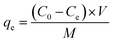
The amount of dye adsorbed per unit mass of polymer at equilibrium, qe (mg g−1), namely the adsorption capacity at equilibrium, was calculated with eqn (1). The percentage adsorption of the dye onto the polymer was calculated by using the following eqn (2).
| |
 | (1) |
| |
 | (2) |
where
C0 is the initial dye concentration in the aqueous solution (mg L
−1);
Ce is the liquid phase dye concentration at equilibrium (mg L
−1), namely the equilibrium concentration (mg L
−1);
V is the volume of dye solution (L), and
M is the weight of adsorbent (polymer) used (g).
It must be specially noted that qe in this article indicates the adsorption capacity at equilibrium, C0 indicates the initial dye concentration in the aqueous solution and Ce indicates the liquid phase dye concentration at equilibrium.
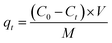
Adsorption kinetic experiments were performed with four different initial dye concentrations i.e. 15, 25, 35, 45 mg L−1 using a shaker with shaking speed of 100 rpm at 24 ± 1 °C and stirred for various contact time intervals in the range of 0–300 min. At certain time intervals, 5 mL of the sample were collected, centrifuged at 4000 rpm for 2 min and the residual concentration of dye was determined as above. The amount of dye adsorbed per unit mass of polymer at different time intervals was calculated using the following eqn (3):
| |
 | (3) |
All the qt (mg g−1) in this article indicate the amount of dye adsorbed on per unit mass of polymer at time t.
3. Results and discussion
3.1. Synthesis and characterization of the lignin sulfonate polymer
3.1.1. Synthesis. As shown in Scheme 1, the target lignin sulfonate polymer was synthesized via two steps. First, the lignin sulfonate was reacted with formaldehyde in acid media to yield an electrophile by hydroxymethylation at the ortho-position of the hydroxyl group in the aromatic ring. The lignin sulfonate polymer was synthesized by further condensation between the hydroxymethyl group in the aromatic ring and the active site at the ortho-position of the hydroxyl group in another aromatic ring.
 |
| | Scheme 1 Simple schematic illustration of the unit structure of the lignin sulfonate polymer. | |
3.1.2. FT-IR characterization. The synthesis of lignin sulfonate polymer was confirmed by FT-IR spectroscopy. The FT-IR spectra of the lignin sulfonate (dashed) and the lignin sulfonate polymer (solid) are shown in Fig. 1, where the characteristic band of the stretching vibration of the methylene linking two aromatic rings is observed at 2920 cm−1, and the characteristic band of the bending vibration of methylene is also clearly visible at 1460 cm−1.31 The results indicate the successful polymerization of lignin sulfonate. The broad band at 3357 cm−1 is due to the stretching frequency of the phenolic hydroxyl groups,32 and the band at 1040 cm−1 is due to the hydroxyl groups in the aliphatic chain.31
 |
| | Fig. 1 FT-IR spectra of lignin sulfonate (dashed line) and the lignin sulfonate polymer (solid line). | |
3.1.3. Scanning electron microscopy. As shown in Fig. 2(b), the SEM image of the lignin sulfonate polymer displays a hierarchical structure compared to that of lignin sulfonate (Fig. 2(a)). The surface area increased with the porosity, which is beneficial in order to increase the number of absorption sites per unit area and therefore enhance the adsorption properties.
 |
| | Fig. 2 Scanning electron micrographs of lignin sulfonate (a) and lignin sulfonate polymer (b). | |
3.1.4. N2 adsorption–desorption studies. To investigate the porosity of the polymer, N2 adsorption–desorption measurements were performed. As shown in Fig. 3, there is a B point at P/P0 = 0.01, according to the International Union of Pure and Applied Chemistry (IUPAC) classification, the isotherm suggests a type II adsorption–desorption process. The adsorbance increases slowly before P/P0 = 0.1 and there is no saturated adsorption at the saturation pressure, which indicates the polymer is a kind of macroporous material. The diameter distribution in the inset of Fig. 3 confirmed that the polymer is macroporous.
 |
| | Fig. 3 N2 adsorption–desorption isotherm of the lignin sulfonate polymer at 77 K. | |
3.2. The adsorption of dyes onto lignin sulfonate polymer
Four dyes, including malachite green, methylene blue, eosin B, and methyl orange, were used to study the adsorption properties of the lignin sulfonate polymer. As in the batch absorption experiments described in Section 2.4, 0.05 g polymer and 50 mL (35 mg L−1) of the dye solution were charged in a 250 mL conical flask with stopper and stirred in a thermostatic water bath with a shaking rate of 100 rpm at a room temperature of 24 ± 1 °C (except for the studies on the effect of temperature) until reaching equilibrium. Samples were taken at given time intervals and were centrifuged at 4000 rpm for 2 min, and then the supernatant was analyzed for the residual dye concentration. As shown in Fig. 4 (a: percentage adsorption, b: adsorption capacity), the polymer showed great adsorption ability towards cationic dyes including malachite green, methylene blue, but poor adsorption of anion dyes including methyl orange and eosin B. The results indicated that the polymer had selective adsorption properties towards cationic dyes. The percentage adsorption of the polymer to malachite green was about 80% with 0.05 g of polymer and 50 mL (35 mg L−1) of dye solution, which is much higher than that of the other tested cationic dye, methylene blue, and so malachite green was selected to be the adsorbate in the next studies.
 |
| | Fig. 4 (a) Percentage adsorption (%) and (b) adsorption capacity (mg g−1) of the four dyes onto the lignin sulfonate polymer. Initial dye concentration: 35 mg L−1, dye solution volume: 50 mL, polymer amount: 0.05 g. | |
Malachite green is a triphenylmethane cationic dye, widely used in industry, agriculture and aquaculture. It is present in effluents and cannot be degraded. It is well known to be toxic and cause many diseases. Adsorption methods are usually used to remove it from aqueous solutions. Moreover, the polymer in this work has a considerable adsorption efficiency to malachite green compared to the other three dyes. Therefore, malachite green was selected as the title adsorbate and the adsorption parameters of malachite green onto the polymer have been analyzed in this work.
3.3. Factors on the adsorption of malachite green on the lignin sulfonate polymer
The effects of pH, sorbent amount, initial dye concentration and temperature on the adsorption are discussed in detail below.
3.3.1. Effect of pH. It has been reported that malachite green color is stable in the pH range 3–7 and color reduction increases from pH 7–11.33 We also found that the color of a malachite green solution gradually fades when the value of pH exceeds 8. Therefore, the effect of pH on the adsorption of malachite green onto the polymer was studied in the pH range of 2.0 to 7.0. As shown in Fig. 5(a), the percentage adsorption and the adsorption capacity of malachite green onto the polymer increased with the pH. In the solutions at highly acidic pH, the adsorbance was very low. This phenomenon could be ascribed to the phenolic hydroxyl groups, the hydroxyl groups in the aliphatic chain and the sulfonate functional groups of the lignin sulfonate polymer being protonated when the concentration of H+ ions in acidic solutions is very high. Moreover, malachite green is positively charged in acidic solution,34 therefore, electrostatic repulsion happens, and a lower adsorption is observed in solutions with low pH. Additionally, the percentage adsorption and adsorption capacity increase with the increasing pH can be attributed to the gradually deprotonation of protonated phenolic hydroxyl groups, hydroxyl groups in the aliphatic chain and sulfonate functional groups. The binding sites of the polymer get negatively charged, and the electrostatic attraction between the cationic dye and the anionic functionalities of the polymer enhance the adsorption percentage of malachite green onto the polymer. Equally, a cationic exchange reaction between the protonated phenolic hydroxyl groups, hydroxyl groups in the aliphatic chain, sulfonate functional groups and malachite green would enhance the removal percentage of malachite green in water. Therefore, a higher adsorption was observed in solutions with high pH. A similar behavior has been also reported in the literature for the adsorption of malachite green onto Gx-cl-P(AA-co-AAm)/Fe3O4 (ref. 35) and organically modified clays.36
 |
| | Fig. 5 Effects of different factors on the adsorption of malachite green onto the polymer: (a) pH, (b) amount of polymer, (c) initial dye concentration, (d) temperature. The initial dye concentration is 35 mg L−1 and the polymer amount is 0.05 g in (a), (c) and (d). | |
The FT-IR spectra of the polymer–malachite green complex (dashed line) and the polymer (solid line) is shown in Fig. 6. It can be observed how the bands of the phenolic hydroxyl groups (3390 cm−1), the hydroxyl groups in the aliphatic chain (1040 cm−1), and the sulfonate functional groups (596 cm−1, 1030 cm−1, 1080 cm−1) in the polymer–malachite green complex decrease considerable in intensity compared to that of the polymer. The results indicate that malachite green was adsorbed onto the polymer through these functional groups. In other words, the phenolic hydroxyl groups, the hydroxyl groups in the aliphatic chain and the sulfonate functional groups are the sites for malachite green uptake.
 |
| | Fig. 6 FT-IR spectra of the lignin sulfonate polymer before (solid) and after (dash) the adsorption of malachite green. | |
3.3.2. Effect of amount of sorbent. The effect of the amount of sorbent on the adsorption of malachite green onto the polymer was studied, as shown in Fig. 5(b). When the initial concentration of dye solution was constant, the percentage adsorption increased with the amount of polymer until the amount of polymer exceeded 0.05 g. The percentage adsorption increased with the initial concentration of dye solution decreasing at a given polymer amount. Taking into account the amount of polymer and the initial concentration of the dye solution, 0.05 g lignin sulfonate polymer was selected for the next experiments.
3.3.3. Effect of initial concentration of dye. Adsorption kinetics is commonly used to clarify the relationship between the initial dye concentration and the rate of adsorption.37 To study the adsorption behavior of malachite green onto the polymer with respect to the adsorption rate, four solutions with different initial dye concentrations (i.e., 15, 25, 35 and 45 mg L−1) were prepared and their adsorption capacities were checked at regular time intervals. As shown in Fig. 5(c), a quicker adsorption equilibrium in the solutions with lower initial dye concentrations and a slower adsorption equilibrium in the solutions with higher initial dye concentrations were observed, which is due to the stronger adsorption driving forces in the solutions with lower initial dye concentration as compared to solutions with higher initial dye concentrations.38The effect of the initial concentration of dye on the adsorption capacity must now be studied. The time to reach the adsorption equilibrium can be obtained by the kinetics tests, then, qe and Ce can be obtained for different initial dye concentrations at constant temperature. qe and Ce are the necessary parameters to plot qe against Ce in isotherm models.
3.3.4. Effect of temperature. The effect of temperature on the adsorption of malachite green onto the polymer was conducted at 15 °C, 30 °C and 45 °C. The results are shown in Fig. 5(d); the adsorption capacity increased with the increasing temperature, which indicates that the adsorption process is an endothermic process. The adsorption capacity increased with the initial concentration of malachite green. These results are in agreement with Fig. 5(c). Moreover, the effect of temperature on the adsorption capacity at high initial concentration is stronger than that at low initial concentration. It is probably that the impetus combining the molecules of malachite green with the polymer active group is greater at higher temperature because of that the number of molecules per unit volume is bigger under high concentration of malachite green.
3.4. Adsorption kinetics study
The adsorption efficiency depends on the contact time of the solid–liquid interface in diffusion processes, the relationship between the initial dye concentration and the rate of adsorption has been represented by using adsorption kinetics. To clarify the adsorption behavior of malachite green onto the polymer with respect to time, four adsorption kinetic models including a pseudo-first-order kinetic model,39 a pseudo-second-order kinetic model,40 a second-order kinetic model,41 and an intraparticle diffusion model42 were used to evaluate the adsorption kinetic data.
3.4.1. Pseudo-first-order kinetic model, pseudo-second-order kinetic model and second-order kinetic model. The integrated mathematical forms of a pseudo-first-order kinetic model, a pseudo-second-order kinetic model and a second-order kinetic model are shown below:| |
ln(qe − qt) = ln![[thin space (1/6-em)]](https://www.rsc.org/images/entities/char_2009.gif) qe − k1t/2.303 qe − k1t/2.303
| (4) |
| | |
t/qt = 1/(k2qe2) + t/qe
| (5) |
| | |
1/(qe − qt) = K3t + α
| (6) |
where k1 (min−1) is the pseudo-first-order adsorption rate constant, k2 (g (mg min)−1) is the pseudo-second-order adsorption rate constant, k3 (g (mg min)−1) is the second-order adsorption rate constant and α is the intercept (g mg−1).The graphs shown in Fig. 7(a and b) were obtained by plotting ln(qe − qt) against t and t/qt versus t for different initial dye concentrations. The constants (k1 and k2) calculated from the slope and the intercept of the plots between ln(qe − qt) vs. t and t/qt vs. t, are given in Table 1. The correlation coefficients R2 of these two models, the values of qe calculated from the pseudo-first-order rate equation and the pseudo-second-order rate equation and the experimental qe are also given in Table 1. The values of qe calculated from the pseudo-second-order rate equation were found to be similar to the experimental qe values, whereas the values of qe calculated from the pseudo-first-order rate equation differed largely with the experimental qe values, which suggests that the pseudo-second-order rate equation describes well the mechanism of adsorption of malachite green onto the polymer. Moreover, the values of the correlation coefficients R2 from the pseudo-second-order rate equation were found to be very high for all the concentrations as compared to those from the pseudo-first-order rate equation, which also confirms the applicability of the pseudo-second-order rate equation for the adsorption of malachite green onto the polymer.
 |
| | Fig. 7 Adsorption kinetics models of malachite green onto the lignin sulfonate polymer (temperature = 24 ± 1 °C). | |
Table 1 Adsorption rate constants of pseudo-first-order kinetics and pseudo-second-order kinetics at different initial malachite green concentrations (temperature = 24 ± 1 °C)
| C0 (mg L−1) |
Pseudo first-order kinetics model |
Pseudo secondary-order kinetics model |
qe,exp (mg g−1) |
| k1 (min−1) |
R2 |
qe,cal (mg g−1) |
k2 (g (mg min)−1) |
R2 |
qe,cal (mg g−1) |
| 15 |
0.01358 |
0.9559 |
5.9005 |
0.0048 |
0.99797 |
12.314 |
11.7755 |
| 25 |
0.01230 |
0.98778 |
10.9342 |
0.0023 |
0.99526 |
21.612 |
20.6557 |
| 35 |
0.01284 |
0.99142 |
15.7429 |
0.0016 |
0.99646 |
28.743 |
27.2971 |
| 45 |
0.01275 |
0.96079 |
20.6299 |
0.0013 |
0.99568 |
36.153 |
34.4701 |
For the second-order kinetic model, as shown in Fig. 7(c), the values of the correlation coefficients R2 were observed to be very poor, which indicated the model was unsuitable to fit the experimental data for the adsorption of malachite green onto the polymer.
3.4.2. Intraparticle diffusion model. The intraparticle diffusion model is described by eqn (7), and it describes the rate determining steps of the adsorption process.where, kp is the particle diffusion rate constant [mg (g min0.5)−1] and c is the intercept (mg g−1). Intraparticle diffusion is the sole rate limiting step if the plot of qt vs. t0.5 gives a straight line that crosses through the origin. As shown in Fig. 7(d), all the curves had three portions, indicating that boundary layer diffusion, intraparticle diffusion equilibrium occurred in the adsorption process. Further shown in Fig. 7(d), the plots of qt against t0.5 for all the three concentrations do not cross through the origin, suggesting that intraparticle diffusion is not only rate limiting step for the adsorption of malachite green onto the polymer. The values of the correlation coefficients R2 were in the range of 0.962 and 0.996, suggesting that the intraparticle diffusion model was suitable to fit the experimental data.
3.5. Adsorption isotherm studies
Isotherms predict the relationship between the adsorption capacity of an adsorbent towards an adsorbate at constant temperature and liquid phase adsorbate concentration. It is important to establish the most appropriate isotherm model for the equilibrium curve. To design the adsorption system and evaluate the applicability of the adsorption process, the adsorption capacities at three different temperatures (i.e., 15, 30 and 45 °C) were studied. Three different adsorption isotherm models including the Langmuir isotherm model, the Freundlich isotherm model and the Temkin adsorption isotherm model were employed to analyze the experimental data and find the most suitable one.43–45 The different isotherm parameters were calculated and are presented in Table 2.
Table 2 Isotherm constants for the adsorption of malachite green onto the polymer at various temperatures
| |
Temperature (°C) |
| 15 |
30 |
45 |
| Langmuir, the whole concentration range (10, 20, 30, 40, 50 and 60 mg L−1) |
| Q0 (mg g−1) |
44.2087 |
60.2410 |
70.0771 |
| b (L mg−1) |
0.3604 |
0.5108 |
0.7401 |
| R2 |
0.97279 |
0.98249 |
0.99050 |
|
| Freundlich, the whole concentration range (10, 20 and 30 mg L−1) |
| KF (mg g−1) (L mg−1)1/n |
11.2459 |
21.0765 |
34.4325 |
| n |
1.4590 |
1.2217 |
1.1900 |
| R2 |
0.94627 |
0.98291 |
0.99195 |
|
| Freundlich, the whole concentration range (40, 50 and 60 mg L−1) |
| KF (mg g−1) (L mg)1/n |
2.6648 |
9.0184 |
18.0793 |
| n |
0.968 |
1.128 |
1.152 |
| R2 |
0.74505 |
0.25640 |
0.97864 |
|
| Temkin, the whole concentration range (10, 20 and 30 mg L−1) |
| Kt (L mg−1) |
5.4428 |
8.6552 |
10.5657 |
| β |
7.6899 |
9.59321 |
12.17876 |
| R2 |
0.80883 |
0.87142 |
0.9491 |
|
| Temkin, the whole concentration range (40, 50 and 60 mg L−1) |
| Kt (L mg−1) |
0.2105 |
0.5167 |
1.0966 |
| β |
38.01717 |
39.60409 |
39.92239 |
| R2 |
0.81557 |
0.30561 |
0.94845 |
3.5.1. Langmuir isotherm model. The Langmuir model was originally developed to describe gas adsorption on activated carbon. The Langmuir model was derived by following mass action, kinetic, or statistical thermodynamic approaches. The isotherm refers to homogeneous adsorption, where each interacting molecule carries a constant enthalpy and activation energy. Moreover, it is assumed that no transmigration of the adsorbate in the plane of the surface occurs during the interaction process.The mathematical equation for the Langmuir isotherm can be represented as following:
| | |
1/qe = 1/qm + 1/(bqm) × 1/Ce
| (8) |
where
qm is the maximum adsorption amount of monomolecular layer (mg g
−1) and
b is the Langmuir constant related to the adsorption energy. By plotting 1/
qe against 1/
Ce at different temperatures, lines were obtained as shown in
Fig. 8(a). The constants calculated from the slope and intercept of the plots for the Langmuir isotherm model and the values of the correlation coefficients (
R2) are given in
Table 2. The value of
R2 at all three temperatures was found to be 0.97, such high values of
R2 at all temperatures suggests that the Langmuir adsorption isotherm describes the adsorption of malachite green onto the polymer.
 |
| | Fig. 8 Adsorption isotherm models of malachite green onto the polymer at different temperatures (initial dye concentration = 10, 20, 30, 40, 50, 60 mg L−1). | |
Dimensionless constant RL (known as separation factor) is an essential feature of the Langmuir isotherm and predicts its applicability. It is defined by the following expression (9):
where,
b is the Langmuir constant. As shown in
Table 3, the values of
RL for all the three temperatures studied were found to be much lower than 1.0, which also confirms the applicability of the Langmuir adsorption isotherm model for the adsorption process of malachite green onto the polymer.
Table 3 Dimensionless constant (RL) values at various temperatures and concentrations
| T (°C) |
Co |
| 10 mg L−1 |
20 mg L−1 |
30 mg L−1 |
40 mg L−1 |
50 mg L−1 |
60 mg L−1 |
| 15 |
0.2172 |
0.12183 |
0.08466 |
0.06487 |
0.05258 |
0.0442 |
| 30 |
0.16415 |
0.08941 |
0.06144 |
0.0468 |
0.03779 |
0.03169 |
| 45 |
0.11903 |
0.06328 |
0.0431 |
0.03268 |
0.02631 |
0.02202 |
3.5.2. Freundlich adsorption isotherm. The Freundlich isotherm, one of the most widely used adsorption equilibrium models, started on an empirical ground but was shown latter to be thermodynamically rigorous for adsorption on heterogeneous surfaces. Any non-uniform distribution of adsorption heat and affinities over a heterogeneous surface leading to multilayer adsorption can be described with this isotherm.The mathematical equation for the Freundlich model is represented as:
| | |
lnqe = lnKF + (1/n)lnCe
| (10) |
where
KF is the Freundlich isotherm constant and
n is a dimensionless constant known as the heterogeneity factor.
By plotting lnqe against lnCe at different temperatures, the curves were obtained as shown in Fig. 8(b). The values of the Freundlich constants i.e. KF and n, which are calculated from the intercept and the slope between lnqe and lnCe, and the values of the correlation coefficients (R2) are given in Table 2. As shown in Table 2, the values of R2 at all three temperatures were found to be poor, which suggests that the Freundlich isotherm model is not applicable for this adsorption process.
3.5.3. Temkin isotherms. Temkin isotherm is based on the assumption that the adsorption heat decreases linearly with coverage instead of a logarithmic decrease, as implied in the Freundlich isotherm, and that there is a uniform distribution of binding energies.The mathematical equation for the Temkin model is represented as:
| | |
qe = βKt + βlnCe
| (11) |
where
β is the constant related to the heat of adsorption (
β =
RT/
b) and
Kt is the equilibrium binding constant (L g
−1) related to the maximum binding energy.
Fig. 8(c) was obtained by plotting
qe against ln
Ce. The values of
β and
Kt obtained from the slope and intercept from
Fig. 8(c) are given in
Table 2, along with the values of the correlation coefficients
R2. The values of
R2 at all the temperatures studied were found to be less than 0.95 which suggests that the Temkin adsorption isotherm model is not applicable for the adsorption process of malachite green onto polymer.
The Temkin isotherm requires that the adsorption process is accompanied by a uniform distribution of binding energies, which is hardly possible while considering adsorption from solution on to a solid. So, the Temkin isotherm model is not applicable for the adsorption process of malachite green onto polymer.
3.6. Thermodynamic parameters
Parameters including Gibbs free energy change (ΔG0), enthalpy change (ΔH0) and entropy change (ΔS0) are commonly used to evaluate the thermodynamics of an adsorption reaction. The values of KL can be calculated from eqn (12). The value of the Gibbs free energy of adsorption can be calculated from eqn (13) and the values of ΔS0 and ΔH0 can be estimated from the Van’t Hoff equation given in eqn (14).| | |
ΔG0 = −RTlnKL
| (13) |
| | |
lnKL = ΔS0/R − ΔH0/(RT)
| (14) |
where KL is the distribution coefficient, T is the absolute temperature in K and R is the gas constant (8.314 J K−1 mol−1). Fig. 8 was obtained by plotting lnKL against 1/T. The thermodynamic parameters including ΔG0, ΔS0 and ΔH0 are shown in Table 4. The values of ΔH0 and ΔS0 were calculated from the slope and intercept of the line obtained from plotting lnKL against 1/T; the values of ΔG0 were calculated based on eqn (13). As shown in Table 4, the positive values of ΔH0 and ΔS0 support the endothermic nature of the adsorption interaction of the dye on the polymer as well as an increase in the disorder and randomness at the solid–liquid interface.46–51 However, the negative values of ΔG0 support the spontaneous nature of the adsorption of malachite green onto the lignin sulfonate polymer, and the values of ΔG0 are between −20 and 0 kJ mol−1, which indicates that the adsorption of malachite green onto the polymer is dominated by a physisorption mechanism.47–51
Table 4 Thermodynamic parameters for the adsorption of malachite green onto the lignin sulfonate polymer
| MG concentration (mg L−1) |
ΔG (kJ mol−1) at temperature (K) |
ΔH (kJ mol−1) |
ΔS (J mol−1 K−1) |
| 288 |
203 |
318 |
| 10 |
−6.0876 |
−8.1675 |
−10.0278 |
31.775 |
131.583 |
| 20 |
−4.9537 |
−7.5593 |
−9.51836 |
38.975 |
152.867 |
| 30 |
−5.0978 |
−7.6327 |
−9.52483 |
37.508 |
148.272 |
| 40 |
−2.3959 |
−4.7401 |
−7.38467 |
45.446 |
165.962 |
| 50 |
−2.7493 |
−5.4484 |
−7.19801 |
40.115 |
149.331 |
| 60 |
−2.5052 |
−4.9753 |
−7.24261 |
43.007 |
158.135 |
4. Conclusions
Lignin sulfonate polymer, a macroporous material based on a simple emulsion polymerization, was successfully prepared. The lignin sulfonate polymer was employed to adsorb dyes in aqueous solution and presented selective adsorption properties towards the cationic dye malachite green at neutral pH. The –OH groups and sulfonate functional groups in the polymer are involved in the adsorption of malachite green onto the surface of the polymer. The experimental data of the adsorption of malachite green onto the lignin sulfonate polymer follow a pseudo-second-order kinetic model and the Langmuir adsorption isotherm model. The positive values of ΔH0 and ΔS0 and the negative values of ΔG0 suggest that the adsorption of malachite green onto the polymer is endothermic, and random and spontaneous in nature. The magnitude of the ΔG0 change revealed that physical forces are involved in the adsorption of malachite green onto the polymer. These results are motivating us to broaden the utility of this polymer towards the adsorption of other refractory COD species in effluents, and to synthesize new lignin sulfonate polymers bearing other active groups to adsorb refractory COD species in effluents. The simple synthesis of the lignin sulfonate polymer from cheap lignin sulfonate means it can be used as a low-cost alternative for the removal of dyes in waste water.
References
- D. Shen, J. Fan, W. Zhou, B. Gao, Q. Yue and Q. Kang, J. Hazard. Mater., 2009, 172, 99–107 CrossRef CAS PubMed.
- A. A. Latifossglu, G. Surucu and M. Evirgen, Water Pollut. IV: Model., Meas., Predict., 4th Int. Conf., 1997, pp. 733–742 Search PubMed.
- Y. Nagasaki, Jpn. Kokai Tokyo Jp., 1998, 1057967 [9857967] (Cl.C02F1).
- W. J. Koros, Chem. Eng. Prog., 1995, 91, 68–81 CAS.
- C. Bellona, J. E. Drewes, P. Xu and G. Amy, Water Res., 2004, 38, 2795–2809 CrossRef CAS PubMed.
- K. O. Saygi, M. Tuzen, M. Soylak and L. Elci, J. Hazard. Mater., 2008, 153, 1009–1014 CrossRef CAS PubMed.
- H. Serencam, A. Gundogdu, Y. Uygur, B. Kemer, V. N. Bulut, C. Duran, M. Soylak and M. Tufekci, Bioresour. Technol., 2008, 99, 1992–2000 CrossRef CAS PubMed.
- V. K. Gupta, R. Jain, A. Nayak, S. Agarwal and M. Shrivastava, Mater. Sci. Eng., C, 2011, 31, 1062–1067 CrossRef CAS PubMed.
- T. A. Saleh and V. K. Gupta, J. Colloid Interface Sci., 2012, 371, 101–106 CrossRef CAS PubMed.
- V. K. Gupta, R. Jain, A. Mittal, T. A. Saleh, A. Nayak, S. Agarwal and S. Sikarwar, Mater. Sci. Eng., C, 2012, 32, 12–17 CrossRef CAS PubMed.
- M. Ghaedi, S. Hajati, F. Karimi, B. Barazesh and G. Ghezelbash, J. Ind. Eng. Chem., 2013, 19, 987–992 CrossRef CAS PubMed.
- A. Sari, D. Mendil, M. Tuzen and M. Soylak, J. Hazard. Mater., 2009, 162, 874–879 CrossRef CAS PubMed.
- O. D. Uluozlu, A. Sari, M. Tuzen and M. Soylak, Bioresour. Technol., 2008, 99, 2972–2980 CrossRef CAS PubMed.
- R. A. Anayurt, A. Sari and M. Tuzen, Chem. Eng. J., 2009, 151, 255–261 CrossRef CAS PubMed.
- A. Sari and M. Tuzen, J. Hazard. Mater., 2009, 164, 1004–1011 CrossRef CAS PubMed.
- J. Labanda, J. Sabate and J. Llorens, Chem. Eng. J., 2011, 166, 536–543 CrossRef CAS PubMed.
- M. Turabik, J. Hazard. Mater., 2008, 158, 52–64 CrossRef CAS PubMed.
- V. K. Gupta, I. Ali, T. A. Saleh, A. Nayak and S. Agarwal, RSC Adv., 2012, 2, 6380–6388 RSC.
- S. Karthikeyan, V. K. Gupta, R. Boopathy, A. Titus and G. Sekaran, J. Mol. Liq., 2012, 173, 153–163 CrossRef CAS PubMed.
- G. Crini and P. M. Badot, Prog. Polym. Sci., 2008, 33, 399–447 CrossRef CAS PubMed.
- S. Ghorai, A. Sinhamahpatra, A. Sarkar, A. B. Panda and S. Pal, Bioresour. Technol., 2012, 119, 181–190 CrossRef CAS PubMed.
- F. Gimbert, N. M. Crini, F. Renault, P. M. Badot and G. Crini, J. Hazard. Mater., 2008, 157, 34–46 CrossRef CAS PubMed.
- S. Ghorai, A. K. Sarkar, A. BPanda and S. Pal, Bioresour. Technol., 2013, 144, 485–491 CrossRef CAS PubMed.
- H. Mittal and S. Mishra, Carbohydr. Polym., 2014, 101, 1255–1264 CrossRef CAS PubMed.
- A. Mittal, J. Mittal, A. Malviya, D. Kaur and V. K. Gupta, J. Colloid Interface Sci., 2010, 342, 518–527 CrossRef CAS PubMed.
- A. Mittal, D. Kaur, A. Malviya, J. Mittal and V. K. Gupta, J. Colloid Interface Sci., 2009, 337, 345–354 CrossRef CAS PubMed.
- A. Mittal, J. Mittal, A. Malviya and V. K. Gupta, J. Colloid Interface Sci., 2009, 340, 16–26 CrossRef CAS PubMed.
- A. Mittal, J. Mittal, A. Malviya and V. K. Gupta, J. Colloid Interface Sci., 2010, 344, 497–507 CrossRef CAS PubMed.
- V. K. Gupta and A. Nayak, Chem. Eng. J., 2012, 180, 81–90 CrossRef CAS PubMed.
- A. K. Jain, V. K. Gupta, A. Bhatnagar and Suhas, Sep. Sci. Technol., 2003, 38, 463–481 CrossRef CAS PubMed.
- M. V. Alonso, M. Oliet, J. C. Domínguez, E. Rojo and F. Rodríguez, J. Therm. Anal. Calorim., 2011, 105, 349–356 CrossRef CAS PubMed.
- G. H. Wang and H. Z. Chen, Ind. Crops Prod., 2014, 53, 93–101 CrossRef PubMed.
- I. D. Mall, V. C. Srivastava, G. V. A. Kumar and I. M. Mishra, Colloids Surf., A, 2006, 278, 175–187 CrossRef CAS PubMed.
- E. Bulut, M. Ozacar and I. A. Sengil, Microporous Mesoporous Mater., 2008, 115, 234–246 CrossRef CAS PubMed.
- H. Mittal, V. Parashar, S. B. Mishra and A. K. Mishra, Chem. Eng. J., 2014, 255, 471–482 CrossRef CAS PubMed.
- S. Arellano-Cárdenas, S. López-Cortez, M. Cornejo-Mazón and J. C. Mares-Gutiérrez, Appl. Surf. Sci., 2013, 280, 74–78 CrossRef PubMed.
- T. A. Khan, S. Dahiya and I. Ali, Appl. Clay Sci., 2012, 69, 58–66 CrossRef CAS PubMed.
- M. Bhaumik, T. Y. Leswifi, A. Maity, V. V. Srinivasu and M. S. Onyango, J. Hazard. Mater., 2011, 186, 150–159 CrossRef CAS PubMed.
- S. Legergren, K. Sven. Vetenskapsakad. Handl., 1898, 24, 1–39 Search PubMed.
-
(a) Y. S. Ho and G. McKay, Chem. Eng. J., 1998, 70, 115–124 CrossRef CAS;
(b) Y. S. Ho and G. McKay, Process Biochem., 1999, 34, 451–465 CrossRef CAS;
(c) Y. S. Ho, Environ. Sci. Technol., 2004, 38, 3214–3215 CrossRef CAS.
- Y. S. Ho, Water Res., 2006, 40, 119–125 CrossRef CAS PubMed.
- W. J. Weber and J. C. Morris, J. Sanit. Eng. Div., Am. Soc. Civ. Eng., 1963, 89, 31–59 Search PubMed.
- I. Langmuir, J. Am. Chem. Soc., 1918, 40, 1361–1403 CrossRef CAS.
- H. Freundlich, Z. Phys. Chem., 1907, 57, 385–470 CAS.
- M. Temkin and V. Pyzhev, Acta Physicochim. URSS, 1940, 12, 217–222 Search PubMed.
- V. Gopal and P. Elango, J. Indian Chem. Soc., 2007, 84, 1114–1118 CAS.
- X. K. OuYang, R. N. Jin, L. P. Yang, Y. G. Wang and L. Y. Yang, RSC Adv., 2014, 4, 28699–28706 RSC.
- R. Kumar, J. Rashid and M. A. Barakat, RSC Adv., 2014, 4, 38334–38340 RSC.
- A. S. Bhatt, P. L. Sakaria, M. Vasudevan, R. R. Pawar, N. Sudheesh, H. C. Bajaj and H. M. Mody, RSC Adv., 2012, 2, 8663–8671 RSC.
- V. K. Gupta, A. Mittal, D. Jhare and J. Mittal, RSC Adv., 2012, 2, 8381–8389 RSC.
- T. Feng and L. Xu, RSC Adv., 2013, 3, 21685–21690 RSC.
|
| This journal is © The Royal Society of Chemistry 2015 |
Click here to see how this site uses Cookies. View our privacy policy here. 


