DOI:
10.1039/C4RA11255E
(Paper)
RSC Adv., 2015,
5, 2396-2404
Monitoring analgesic drug using sensing method based on nanocomposite
Received
26th September 2014
, Accepted 7th November 2014
First published on 11th November 2014
Abstract
This paper reports a rapid, reliable and sensitive electrochemical method for the determination of acetaminophen, a safe analgesic drug. Most methods currently used for therapeutic drug monitoring require a pre-treatment of the sample. Biosensors avoid this kind of drawbacks. A horseradish peroxidase (HRP) was immobilized using core–shell ZrO@Fe3O4 nanoparticles on chitosan hybrid film electrodeposited on the surface of an Au electrode. The surface functionalization of core–shell ZrO@Fe3O4NPs on a chitosan hybrid film was characterized by cyclic voltammetry (CV), scanning electron microscopy (SEM), and electrochemical impedance spectroscopy (EIS). The experimental variables that can affect the acetaminophen amperometric response, such as the pH, temperature and applied potential, have been optimized to perform a selective determination of acetaminophen. An average limit of detection of 0.01 μM (S/N = 3) was obtained. The biosensor was finally applied to the determination of acetaminophen in complex matrices, such as pharmaceutical drugs.
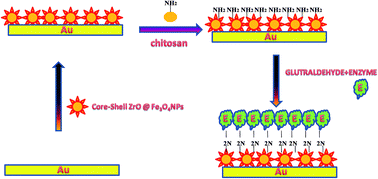
1. Introduction
APAP (N-acetyl-p-aminophenol or paracetamol) is an analgesic and one of the most commonly used drugs.1 It is an effective mild analgesic and antipyretic agent used extensively at therapeutic dosage for the safe relief of mild to moderate pain2–4 but acute overdoses can cause serious hepatic damage, which may result in death.5 Overdoses of APAP causes 2600 hospitalizations, >56
000 emergency room visits, and approximately 458 acute liver failures each year in the United States.6 Therefore, extensive efforts should be made to detect the cause of its toxicity and its mitigation but a determination of its exact level would require an accurate method. Various methods are available for the determination of acetaminophen, like Raman spectrometry,7 liquid chromatography (LC),8 chemiluminescence,9 and spectrometric methods.10 These methods, however, have some drawbacks that make them unsuitable for routine analyses, such as high cost, time consuming, need to pretreat the sample, skilled people to operate, and even low sensitivity and selectivity in some cases. Therefore, there should be a reliable and precise method for measuring APAP to maintain a constant concentration, thereby optimizing the individual dosage regimen. The use of biosensors is a method that overcomes these problems due to their intrinsic specificity, low cost, fast analyses and minimal requirements for sample pretreatment.11 Hence, the amperometric biosensors based on direct enzyme immobilization on a transducer surface are the main analytical strategies used for acetaminophen analysis.12
Nanoparticles exhibit very unique electrical and magnetic properties that are distinct from their bulk counterparts. Among these, magnetic nanoparticles are biocompatible and potentially non-toxic for biosensor applications.13–15 The immobilization of enzymes on magnetic nanoparticles has the advantage of distinctive characters like enhancing their activity, mediating rapid contact between the enzyme and substrate, and reducing mass-transfer limitations.16,17
Magnetic nanoparticles provide a large surface area and biocompatible micro-environment to the immobilized enzyme that helps in providing close proximity to the analyte and sensing element, and have been proven to be the best sensing interface for the fabrication of a biosensor. Magnetic nanoparticles have a large surface area that can be oxidized easily to form aggregates but this can change their original structure and unique properties. To overcome this difficulty, the surface of NPs has been coated with a protective layer of various materials18,19 Here, ZrO2 (zirconium oxide) has become a favored coating material owing to its good insulating property, simple synthetic procedure and chemical functionality, chemical inertness, and wear resistance.20 It is believed that magnetic nanoparticles can avoid being oxidized and maintain their magnetic properties (such as coercivity or blocking temperature) by a ZrO2 coating. Therefore, the magnetic cores can be protected from oxidation and corrosion.21
Chitosan (CHIT) is an extensive biopolymer for the immobilization of biomolecules because of its excellent film-forming ability, high permeability, mechanical strength, non-toxicity, biocompatibility, low cost, and easy availability.22 It was chosen as the orientation directing matrix because large quantities of amino and hydroxyl groups are present on the CHIT units to amplify the binding ability to enzymes.23–27
We describe the therapeutic drug monitoring of acetaminophen using biosensor based on core–shell ZrO@Fe3O4 nanoparticles on chitosan hybrid film.
2. Materials and methods
2.1. Materials
Acetaminophen (paracetamol) was purchased from Sigma (St. Louis, MO). Iron(III) chloride hexahydrate (98%), ferrous chloride tetrahydrate (FeCl2·4H2O) sodium borohydride powder (98%) and zirconium(IV) tert-butoxide were obtained from Sisco Research Laboratory Pvt. Ltd., Mumbai, India. All other chemicals were of analytic reagent grade. Double distilled water (DW) was used throughout the experiments.
2.2. Apparatus and methods
Cyclic voltammetry (CV) and electrochemical impedance spectroscopy (EIS) were performed on a potentiostat/galvanostat (Autolab, Eco Chemie, the Netherlands. Model: AUT83785) with a three electrode system consisting of a Pt wire as an auxiliary electrode, an Ag/AgCl electrode as the reference electrode and modified Au wire as the working electrode. All electrochemical experiments were performed at ambient temperature (25 °C). Fourier transform infrared (FTIR) spectroscopy was performed on a FTIR spectrometer (Make: iS10, Thermoelectron, USA). Scanning electron microscopy (SEM) was carried out at the Department of Chemistry, M. D. University, Rohtak. Transmission electron microscopy (TEM) was performed at Punjab University, Chandigarh. Ultrasonication was performed on Misonix Ultrasonic Liquid Processors (mode XL-2000 series). X-ray diffraction (XRD) was conducted on a X-ray diffractometer (Make: Rigaku, D/Max2550, Tokyo, Japan) at the Department of Physics, G. J. University, Hisar, collecting data from 20° to 70° 2θ. The database of the Joint Committee on Powder Diffraction Standards (JCPDS) was used for phase identification.
2.3. Synthesis of Fe3O4NP
Fe3O4NP were prepared according to the method reported by Predoi.28 0.5 M ferrous chloride tetrahydrate (FeCl2·4H2O) in 2 M HCl and 0.5 M ferric chloride hexahydrate (FeCl3·6H2O) in DW were mixed at room temperature. The mixture was added to 200 ml of a 1.5 M NaOH solution with vigorous stirring for about 30 min. The resulting precipitates were isolated by centrifugation at 8000× g and dried at 40 °C.
2.4. Preparation of ZrO@Fe3O4NP
ZrO@Fe3O4NPs were prepared by the hydrolysis and condensation method reported by Chaubey.20 Fe nanoparticles (3 g) and zirconium(IV) tert-butoxide (10 ml) were taken in a 50 ml beaker in inert atmosphere. To this mixture, 50 ml of ethanol was added and stirred mechanically for 2 h. The mixture was centrifuged at 10
000 rpm for 5 min. The encapsulated particles were removed and washed several times with ethanol. This zirconia coated iron oxide nanoparticles (ZrO@Fe3O4NP) were kept at 40 °C for drying. The zirconia-coated iron oxide nanoparticles were characterized by UV/visible spectroscopy, X-ray diffraction and transmission electron microscopy.
2.5. Construction of ZrO@Fe3O4NP/CHIT hybrid film onto Au electrode
The surface of the Au electrode was polished with an alumina slurry and dipped into sodium phosphate buffer (0.1 M, pH 7.0) containing chitosan (500 μl) and ZrO@Fe3O4NP suspension (500 μl) and subjected to 10 successive deposition cycles at −0.1 V to 0.1 V using a potentiostat–galvanostat (Fig. 1). The modified Au electrode was washed thoroughly with DW to remove the unbound matter.
 |
| | Fig. 1 Linear response of concentrations of acetaminophen (substrate concentration/μM) vs. current (I/mA). | |
2.6. Preparation of the enzyme electrode for the electrochemical sensing of analgesic drug
The purified HRP enzyme was immobilized on the surface of ZrO@Fe3O4NP/CHIT hybrid film. First, Au electrode was dipped into glutaraldehyde (2.5%) at room temperature and washed thoroughly with DW. This modified electrode was dipped into 10 μl of an enzyme solution (40 mg ml−1 protein) and kept undisturbed for approximately 12 h at 4 °C. The electrode was finally washed with 0.1 M Tris HCl buffer (pH 8.5) to remove the unbound enzyme. The resulting HRP/ZrO@Fe3O4NP/CHIT/Au electrode was used as the working electrode and stored at 4 °C, when not in use. The working electrode was characterized by SEM at different stages of its construction (Scheme 1).
 |
| | Scheme 1 Graphical representations of the stepwise amperometric sensor fabrication process. | |
2.7. Electrochemical characterization of HRP/ZrO@Fe3O4NP/CHIT/Au electrode
Cyclic voltammetry was carried out using a three electrode system composed of HRP/ZrO@Fe3O4NP/CHIT/Au electrode as the working electrode, Ag/AgCl as the reference electrode and Pt wire as the auxiliary electrode. Cyclic voltammograms of the bare Au electrode, ZrO@Fe3O4NP/CHIT/Au electrode, and HRP/ZrO@Fe3O4NP/CHIT/Au electrode were recorded in sodium phosphate buffer (0.1 M, pH 7.0, containing 0.1 mM H2O2) in potential ranging between −0.1 V s−1 to +1 V s−1 at a scan rate of 50 mV s−1.
2.8. Preparation of analgesic drug solution
Paracetamol (acetaminophen) was prepared in a phosphate buffer solution (pH 7.0). Solutions of different concentrations of paracetamol (acetaminophen) ranging from 0.01 μM to 10
000 μM were prepared in 0.1 M sodium phosphate buffer (pH 7.0) and stored at 4 °C until needed.
2.9. Optimization of analgesic drug biosensor
To optimize the working conditions of the biosensor, the effects of pH, incubation temperature, time, and substrate concentration on the biosensor response were studied. To determine the optimal pH, the pH of the reaction buffer, sodium phosphate buffers was varied from 5.0 to 8.0, each at a final concentration of 0.1 M. To determine the optimal temperature, the reaction mixture was incubated at different temperatures (20 °C to 50 °C) at intervals of 5 °C. The effect of the substrate concentration on the biosensor response was determined by varying the concentration of acetaminophen in the range 0.01 μM to 10
000 μM. To optimize the applied potential for acetaminophen determination, the effect of the applied potential on the response current was investigated over the range, −0.1 V to +0.1 V vs. Ag/AgCl. The optimal current was measured at −0.75 V vs. Ag/AgCl. Hence, subsequent electrochemical studies were carried at −0.07 V vs. Ag/AgCl.
2.10. Amperometric determination of analgesic drug
Each pharmaceutical product (1.0 ml) was stirred until complete dissolution and then diluted to 10, 20 and 50 ml with a phosphate buffer solution (0.1 M; pH 7.0). Finally, each pharmaceutical product (400 μl) was added to the cell containing 10 ml of phosphate buffer solution (0.1 M; pH 7.0). The measurements were performed after successive additions of the pharmaceutical product. After each addition, cyclic voltammograms was recorded by cycling the potential between −0.1 V and +0.1 V at a scan rate of 100 mV s−1. The acetaminophen content in the pharmaceutical product was determined by the present biosensor and recording the current (mA) under the optimal working conditions (Fig. 1).
2.11. Storage stability of HRP/ZrO@Fe3O4NP/CHIT/Au electrode
The long-term storage and stability of the working electrode and its amperometric current response to 100 μM of paracetamol was investigated over a period of 1 month at 4 °C.
3. Results and discussions
3.1. Characterization of ZrO@Fe3O4NP
Fig. 2A shows the XRD pattern of the ZrO@Fe3O4NP hybrid film. The peaks observed were matched up to only the bcc Fe structure and showed no peak for Fe oxide or crystalline ZrO2. TEM image of ZrO@Fe3O4NP (Fig. 2B) showed the occurrence of spherical particles tending to form chains, indicating ferromagnetic interactions. Iron nanoparticles aggregation led to the trapping of a zirconia shell during the coating process (30 nm). These observations confirm the formation of ZrO@Fe3O4NP.
 |
| | Fig. 2 (A) X-ray diffraction (XRD) pattern of ZrO@Fe3O4NPs. (B) Transmission electron microscope (TEM) image of ZrO@Fe3O4NP. | |
3.2. Scanning electron microscopy (SEM), electrochemical impedance studies (EIS) and Fourier transform infrared (FTIR) spectroscopy of the modified Au electrode
To confirm the enzyme immobilization on the ZrO@Fe3O4NP film, the surface morphology of the bare electrode (a), ZrO@Fe3O4NP/CHIT/Au electrode (b) and HRP/ZrO@Fe3O4NP/CHIT/Au bioelectrode (c) were investigated by SEM (Fig. 3). The bare electrode showed a smooth surface (top image). A roughness granular morphology observed on the ZrO@Fe3O4NP/CHIT/Au electrode confirmed the coating of nanoparticles on chitosan (middle image). Some flake-like structures were observed, which confirms the immobilization of the enzyme on the electrode (bottom image).
 |
| | Fig. 3 (A) SEM image of bare Au electrode (top), ZrO@Fe3O4NP/CHIT hybrid film modified Au electrode (middle) and HRP/ZrO@Fe3O4NP/CHIT hybrid film modified Au electrode (bottom). (B) EIS of ZrO@Fe3O4NP/CHIT hybrid film (a), HRP/ZrO@Fe3O4NP/CHIT hybrid film modified Au electrode (b) and bare Au electrode (c) in a solution containing 1 mM Fe(CN)63−/4− with 0.1 M KCl at 0.20 mV s−1 (frequency range of 0.01 Hz to 10 kHz). (C) FTIR spectra of ZrO@Fe3O4NP/CHIT/Au electrode (upper curve) and HRP/ZrO@Fe3O4NP/CHIT/Au electrode (lower curve). | |
Fig. 3B shows the electrochemical impedance spectra (EIS) of CHIT/Au electrode (a), ZrO@Fe3O4NP/CHIT/Au electrode (b) and HRP/ZrO@Fe3O4NP/CHIT/Au electrode (c). The Rct values for the CHIT/Au electrode, the ZrO@Fe3O4NP/CHIT/Au electrode and HRP/ZrO@Fe3O4NP/CHIT/Au electrode were 800 Ω, 380 Ω and 600 Ω, respectively. Upon immobilization of the enzyme, the Rct value of the HRP/ZrO@Fe3O4NP/CHIT/Au electrode increased. This is because most biological molecules, including enzymes, are poor electrical conductors, which impede electron transfer.
Fig. 3C shows the FTIR spectra of ZrO@Fe3O4NP/CHIT/Au electrode (upper curve) and HRP/ZrO@Fe3O4NP/CHIT/Au electrode (lower curve). The CHIT exhibited the characteristic absorption bands of amino saccharide at 3421 cm−1 (due to overlap of the OH and NH2 stretching bands), 2811 cm−1 (due to –CH2 stretching band) and 1647 cm−1 (due to C–O stretching band), while the 634 cm−1 in ZrO@Fe3O4NP are the characteristic bands for a Zr–O film (curve i). The enzyme mixture was immobilized onto chitosan through covalent binding with glutaraldehyde. One CHO group of glutaraldehyde was linked to a NH2 group on the surface of the enzymes, while another CHO group was bound to the NH2 group of chitosan on the CHIT/ZrO@Fe3O4NP composite film, which provided a physically more stable complex. The FTIR spectra of the HRP/CHIT/ZrO@Fe3O4NP/Au electrode showed a broadening of the peak at 3264 cm−1 and 1653 cm−1 due to the addition of carbonyl and amino groups confirming the binding of enzyme with the CHIT/ZrO@Fe3O4NP matrix (curve ii). This change suggests that the enzyme was attached to the ZrO@Fe3O4NP/CHIT/Au composite film.
 |
| | Fig. 4 Cyclic voltammograms of (i) ZrO@Fe3O4NP/CHIT hybrid film, (ii) HRP/ZrO@Fe3O4NP/CHIT hybrid film and (iii) bare Au electrode modified Au electrode in a 2.5 mM K3Fe(CN)6/K4Fe(CN)6 solution and sodium phosphate buffer 0.05 M (pH 7.2) at a scan rate of 50 mV s−1. | |
3.3. Construction of HRP/ZrO@Fe3O4NP/CHIT modified Au electrode and cyclic voltammetry measurements
To confirm the electron transfer regime, the CV technique was employed at the electrode surface. Unmodified electrode is unable to take redox reactions at the electrode surface. Modification of the electrode with ZrO@Fe3O4NP/CHIT resulted in fast electron transfer reactivity. As shown in Fig. 4, a pair of well defined, quasi-reversible redox peaks can be obtained with a ZrO@Fe3O4NP/CHIT modified electrode for 0.1 M pH 7.0 PBS. Fe3O4 NPs not only act as electron-transfer mediators, but also play an important role in the preparation of immobilized enzymes because of their desirable characteristics: large pore size and volume, and good electron conductivity (CV curve i).18 Fe3O4 NPs also create a suitable microenvironment that benefits the exposition of the active center, and increases the activity of the enzyme.19 In contrast, a decrease in the peaks was observed at the enzyme modified electrode as protein might impede electron transfer (CV curve ii). No peak was observed on the voltammogram of the unmodified electrode (CV curve iii). The results were matched with the EIS study.
 |
| | Fig. 5 Cyclic voltammograms of the HRP/ZrO@Fe3O4NP/CHIT/Au electrode in PBS (pH 7.0) in presence of substrate (i) and in the absence of substrate (ii), at a scan rate of 5 mV s−1. | |
3.4. The principle of ZrO@Fe3O4NP/CHIT hybrid film modified Au electrode for electrochemical sensing of analgesic drug
An electrocatalytic mechanism initiated by HRP is likely to catalyze the oxidation of paracetamol to N-acetyl-p-benzoquinoneimine (Scheme 2). The resulting current is proportional to the concentration of phenolic compounds in solution. This is expected because of the participation of proton(s) in the oxidation reaction of acetaminophen to N-acetyl-p-benzoquinoneimine, and vice versa within a quasi-reversible two-electron process.29 Therefore, the significantly increased redox peak currents greatly increased the electron transfer rate of APAP at the ZrO@Fe3O4NP/CHIT/AuE. As shown in Fig. 5, oxidation peak signal significantly increases to 750 μA in the presence of substrate. Fig. 6 presents the CV curve showing the electrode modified with HRP only and with HRP/ZrO@Fe3O4NP/CHIT/AuE, oxidation peak signal significantly increases to 1000 μA when the nanocomposite is decorated on the Au electrode. These results show that the electrochemical reactivity of APAP is improved remarkably on the ZrO@Fe3O4NP/CHIT/AuE.
 |
| | Scheme 2 Electrochemical reaction at the HRP/ZrO@Fe3O4NP/CHIT hybrid film modified Au electrode. | |
 |
| | Fig. 6 Cyclic voltammograms of (i) HRP/Au (ii) HRP/ZrO@Fe3O4NP/CHIT hybrid film modified Au electrode in a 2.5 mM K3Fe(CN)6/K4Fe(CN)6 solution and sodium phosphate buffer 0.05 M (pH 7.2) at a scan rate of 50 mV s−1. | |
 |
| | Fig. 7 Effects of pH (a), temperature (b) and response time (c) on the electrochemical response of the fabricated acetaminophen biosensor based on HRP/ZrO@Fe3O4NP/CHIT in 0.1 M sodium phosphate buffer. | |
3.5. Optimization of the biosensor
To improve the performance of the biosensor, the effect of the determination conditions, such as the working potential, pH, response time, and temperature on the response of the ZrO@Fe3O4NP/CHIT/Au electrode was investigated.
The effect of the working potential on the response current of the ZrO@Fe3O4NP/CHIT/Au electrode was studied. When the applied potential was changed from −0.1 V to +0.1 V, the response current increased significantly. The maximum response current was achieved at around −0.07 V. When the applied potential became more negative, there might have been interfering reactions from other electroactive species in the solution. Therefore, an applied potential of −0.07 V was selected to give a high detection sensitivity and good signal/noise ratio. The effect of the pH value on the response current of the ZrO@Fe3O4NP/CHIT/Au electrode was studied between 5.0 and 8.0 in 0.05 M PBS. The response current increased from 5.0 to 7.0 and decreased from 7.0 to 8.0, and the maximum current response was observed at pH 7.0 (Fig. 7a). Therefore, the pH 7.0 was suitable for the maximum activity of immobilized HRP, which is in agreement with that reported for soluble HRP.Effect of temperature on biosensor was also studied in order to ensure the optimization. The current response reaches a maximum at approximately 50 °C, and then goes down as the temperature turn higher. In contrast, the modified electrode without ZrO@Fe3O4NP shows that the response declines when temperature is higher than 40 °C. The result indicates that enzyme bioconjugated with ZrO@Fe3O4NP has good thermodynamic stability and life span. In order to keep consistent with the temperature of human body, 35 °C was selected for this work (Fig. 7b). The response time was less than 4 s, which shows a rapid response and the immobilized HRP could well catalyze the reduction of H2O2 (Fig. 7c). The faster response was mainly ascribed to the fact that the ZrO@Fe3O4NPs provide a favorable orientation and conductive pathway to transfer electrons. In addition, through the ZrO@Fe3O4NP exposed surface, H2O2 molecules can freely diffuse to the HRP molecules.
 |
| | Fig. 8 Cyclic voltammograms of the HRP/ZrO@Fe3O4NP/CHIT at various concentrations of acetaminophen. | |
3.6. Voltammetric determination of analgesic drug
Cyclic voltammetry (CV) was used to determine the acetaminophen concentration in an array to obtain higher sensitivity. The CV curves of different concentrations of acetaminophen at ZrO@Fe3O4NP/CHIT/AuE modified electrode were obtained (Fig. 8). The peak current increased linearly with increasing acetaminophen concentration. The limit of detection was 0.01 μM.
3.7. Reproducibility
The repeatability of the biosensor was valued at an acetaminophen concentration of 0.1 mM in PBS (0.1 M) with the same enzyme electrode. The relative standard deviation (R.S.D.) was 1.2% for ten successive assays.
3.8. Selectivity and real sample analysis
The effect of the substances that might interfere with the response of the biosensor was studied. The selectivity of the biosensor was examined in the presence of acetaminophen (0.2 mM). The addition of the same concentration of citric acid, sodium benzoate, stearic acid, sodium metabisulphite, and saccharin did not cause any observable interference. Only stearic acid decreased the response by 10% and showed a significant interference. The proposed procedure was applied to determine the paracetamol concentrations in pharmaceutical formulations. Table 1 presents the results obtained for four commercial samples by replacing acetaminophen with samples. To study the accuracy of the present method, the acetaminophen level in the samples were determined by both the pharmacopoeia method (x) and the present method (y). The values obtained by both methods matched each other with a good correlation (r = 0.95).
Table 1 Determination of acetaminophen using present sensor based on the HRP/ZrO@Fe3O4NP/CHIT/Au electrode and standard enzymatic method
| S. no. |
Sample |
Label value (mg) |
Pharmacopoeia method (mg) |
Present method (mg) |
| 1. |
A |
500 |
500 |
499 |
| 2. |
B |
250 |
250 |
255 |
| 3. |
C |
100 |
100 |
98 |
| 4. |
D |
50 |
50 |
49 |
| 5. |
E |
100 |
100 |
102 |
| 6. |
F |
450 |
440 |
450 |
| 7. |
G |
350 |
360 |
350 |
| 8. |
H |
550 |
540 |
552 |
| 9. |
I |
150 |
145 |
152 |
| 10. |
J |
500 |
490 |
500 |
3.9. Stability of the enzyme electrode
The stability of the biosensor was investigated and the current response of the biosensor retained about 90% of its original response after 40 repetitions of uninterrupted detection. In addition, the long-term stability was also tested after a month. The results showed that the current response of the sensor maintained 84% of the initial current response. This means that ZrO@Fe3O4NP ensure good stability of the biosensor.
A comparison of the present biosensor with other biosensing methods is given in Table 2.
Table 2 Comparison of the present method with other biosensing methods
| Matrix/method |
Enzyme |
Response time |
Detection limit (μM) |
Linearity (μM) |
Stability |
Reference |
| C–Ni/GCE/DPV |
— |
— |
— |
7.8–110 |
— |
30 |
| Chronoamperometry MWCNT-film coated electrode |
— |
— |
0.04 |
0.1–20 |
— |
31 |
| Carbon nanoparticles (CNPs)/GCE/voltammetry |
|
|
0.05 |
0.1–100 |
— |
32 |
| Cobalt hydroxyl nanoparticles/cyclic voltammetry |
— |
— |
10 |
2.5–1000 |
— |
33 |
| Nanogold/ITOE/cyclic voltammetry |
— |
— |
0.18 |
0.2–1500 |
|
34 |
| HRP/ZrO@Fe3O4NP/CHIT/Au |
HRP |
1 s |
0.01 |
0.01–10 000 |
|
Present |
4. Conclusions
A novel strategy for developing a composite electrode consisting HRP/ZrO@Fe3O4NP/CHIT/AuE, which showed relatively rapid response, high sensitivity, broad linear range, low detection limit, good reproducibility, and long term stability, was reported. This biosensor almost eliminated the interference. Therefore, this novel biosensor can be readily extended to the detection of other clinically important antigens using ZrO@Fe3O4NPs to develop other simple and practical biosensors.
Acknowledgements
The present work was supported to one of the author (Jagriti Narang) by SERB, Department of Science and Technology (DST), India. Thanks to all scientists referenced throughout the paper whose valuable work has guided the way through to this research.
References
- V. Rodenas, M. S. Garcıa, C. Sánchez-Pedreno and M. I. Albero, Talanta, 2000, 52, 517–521 CrossRef CAS.
- L. I. Berkeley, J. F. Cohen, D. L. Crankshaw, F. N. Shirota and H. T. Nagasawa, J. Biochem. Mol. Toxicol., 2003, 17, 95–97 CrossRef CAS PubMed.
- H. S. Oz, C. J. McClain, H. T. Nagasawa, M. B. Ray, W. J. S. de Villiers and T. S. Chen, J. Biochem. Mol. Toxicol., 2004, 18, 361–367 CrossRef CAS PubMed.
- A. M. Lucas Slitt, P. K. Dominick, J. C. Roberts and S. D. Cohen, Basic Clin. Pharmacol. Toxicol., 2005, 96, 487–492 CrossRef PubMed.
- P. A. Vaughan, L. D. L. Scott and J. F. McAleer, Anal. Chim. Acta, 1991, 248, 361–365 CrossRef CAS.
- W. M. Lee, Hepatology, 2007, 46, 966–970 CrossRef PubMed.
- N. Al-Zoubi, J. E. Koundourellis and S. Malamataris, J. Pharm. Biomed. Anal., 2002, 29, 459–467 CrossRef CAS.
- A. Marin and C. Barbas, J. Pharm. Biomed. Anal., 2004, 29, 701–714 CrossRef.
- D. Easwaramoorthy, Y. C. Yu and H. J. Huang, Anal. Chim. Acta, 2001, 439, 95–100 CrossRef CAS.
- F. A. Mohamed, M. A. AdbAllah and S. M. Shammat, Talanta, 1997, 44, 61–68 CrossRef CAS.
- M. J. Dennison and A. P. F. Turner, Biotechnol. Adv., 1995, 13, 12–17 CrossRef.
- G. A. Messina, D. E. Vito and J. Raba, Anal. Chim. Acta, 2006, 559, 158 CrossRef PubMed.
- E. Katz, I. Willner and J. Wang, Electroanalysis, 2004, 16, 19–44 CrossRef CAS.
- Z. G. Xiong, J. P. Li, L. Tang and Z. Q. Chen, Chin. J. Anal. Chem., 2010, 38, 800–804 CAS.
- H. Yin, Y. Zhou, T. Liu, T. Tang, S. Ai and L. Zhu, J. Solid State Electrochem., 2011, 15, 167–173 CrossRef CAS PubMed.
- L. M. Rossi, A. D. Quach and Z. Rosenzweig, Anal. Bioanal. Chem., 2004, 38, 606–613 CrossRef PubMed.
- J. Li, X. P. Wei and Y. H. Yong, Sens. Actuators, B, 2009, 139, 400–406 CrossRef CAS PubMed.
- A. P. Mishra, A. Tiwari and R. K. Jain, Adv. Mater. Lett., 2012, 3, 213–219 CrossRef CAS PubMed.
- H. Fang, C. Y. Ma, T. L. Wan, M. Zhang and W. H. Shi, J. Phys. Chem., 2007, 111, 1065–1070 CAS.
- G. S. Chaubey and J. Kim, Bull. Korean Chem. Soc., 2007, 28, 2279–2282 CrossRef CAS.
- L. M. Demers, C. A. Mirkin, R. C. Mucic, R. A. Reynolds, R. L. Leitsinger and G. A. Viswanadham, Anal. Chem., 2000, 72, 5535–5541 CrossRef CAS.
- S. J. Ling, R. Yuan, Y. Q. Chai and T. T. Zhang, Bioprocess Biosyst. Eng., 2009, 32, 407–414 CrossRef CAS PubMed.
- V. K. Mourya, N. N. Inamdar and A. Tiwari, Adv. Mater. Lett., 2010, 1, 11–33 CrossRef CAS PubMed.
- S. Cao, R. Mishra, S. Pilla, S. Tripathi, M. K. Pandey, G. Shah, A. K. Mishra, M. Prabaharan, S. B. Mishra, J. Xin, R. R. Pandey, W. Wu, A. C. Pandey and A. Tiwari, Carbohydr. Polym., 2010, 82, 189–194 CrossRef CAS PubMed.
- A. Tiwari and R. S. Dhakate, Int. J. Biol. Macromol., 2009, 44, 408–412 CrossRef CAS PubMed.
- A. Tiwari, J. Inorg. Organomet. Polym. Mater., 2009, 19, 361–366 CrossRef CAS.
- A. Tiwari and S. Gong, Electroanalysis, 2008, 20, 2119–2126 CrossRef CAS.
- D. Predoi, Dig. J. Nanomater. Biostruct., 2007, 2, 173 Search PubMed.
- D. Nematollahi, H. Shayani-Jam, M. Alimoradi and S. Niroomand, Electrochim. Acta, 2009, 54, 7407–7415 CrossRef CAS PubMed.
- S.-F. Wang, F. Xie and R. Hu, Sens. Actuators, B, 2007, 123, 495–500 CrossRef CAS PubMed.
- D. Sun and H. Zhang, Microchim. Acta, 2007, 158, 131 CrossRef CAS.
- F. Ghorbani-Bidkorbeh, S. Shahrokhian, A. Mohammadi and R. Dinarvand, Electrochim. Acta, 2010, 55, 2752 CrossRef CAS PubMed.
- M. Houshmand, A. Jabbari, H. Heli, M. Hajjizadeh and A. A. J. Moosavi-Movahedi, Solid State Electrochem., 2008, 12, 1117–1128 CrossRef CAS.
- S. N. Santhosh, J. S. Abraham and T. Sagara, Electrochim. Acta, 2009, 54, 6837–6843 CrossRef PubMed.
|
| This journal is © The Royal Society of Chemistry 2015 |
Click here to see how this site uses Cookies. View our privacy policy here.