DOI:
10.1039/C4RA11216D
(Paper)
RSC Adv., 2015,
5, 10869-10877
A new method for the preparation of 1,3,5-triarylbenzenes catalyzed by nanoclinoptilolite/HDTMA†
Received
25th September 2014
, Accepted 5th January 2015
First published on 6th January 2015
Abstract
A new natural surface modified nanoclinoptilolite (NCP) was prepared and applied as an efficient catalyst for the cyclotrimerization of acetophenones to obtain 1,3,5-triarylbenzenes. The results showed that the efficiency of this catalytic system was enhanced due to the surface modification by hexadecyltrimethylammonium bromide (HDTMA-Br). This proposed protocol brings about significant economic and environmental advantages, such as operational simplicity, short reaction time, mild reaction conditions, good reaction yield, and high recyclability of the catalyst. Furthermore, the only side product of the reaction is water, which makes this methodology an environmentally friendly process.
1. Introduction
In recent years 1,3,5-triarylbenzenes have attracted the interest of the chemical industry, in electroluminescent devices,1 resist materials2 and conductive polymers.3 These organic compounds possess unique properties that make them useful as building blocks in material sciences and biological applications.4 1,3,5-Triarylbenzenes have also been used for development of organic light emitting diodes and synthesis of dendrimers and fullerene fragments.5 These important compounds have been prepared by condensation of aryl acetones in various acidic media, such as HCl, H2SO4, TiCl4, SiCl4, AlCl3, SnCl4, para-toluenesulfonic acid (PTSA), Bi(OTf)3, BiCl3, FeCl3, and Amberlyst-15.6 However, in spite of their potential utility, these methods typically suffer from one or more disadvantages, such as long reaction times, poor reaction yields, using toxic reagents, catalysts, and hazardous organic solvents, lack of generality, tedious workup, generation of side products, and non-recyclability of the catalyst.
Natural zeolites are hydrated three dimensional aluminosilicates, composed of [SiO4]4− and [AlO4]5− tetrahedral as primary elements, linked by oxygen atoms. One of the important characteristics which differs zeolites from other porous materials is the variety of the pores in size and shape; thus, structural parameters of zeolites are defined by considering the size and shape of the pores and channels in the backbone. These structural characteristics strongly affect the physicochemical properties of zeolites which makes them suitable in variety of industrial applications.7
Following our previous works,8 this paper introduced a new surface modified natural NCP as a useful, efficient, and recyclable catalyst for the cyclotrimerization of different acetophenones (Scheme 1). For this purpose, the pretreated natural NCP modified by the cationic hexadecyltrimethylammonium (HDTMA) was used as the catalyst. This safe and clean procedure for catalyst production is ideally suited for automated applications in chemical industries.
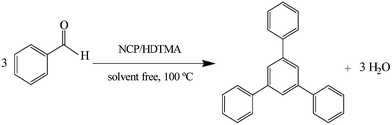 |
| | Scheme 1 General formulation for the cyclotrimerization of acetophenone. | |
2. Experimental
2.1. Materials and methods
All reagents and starting materials were supplied by Merck and Fluka and were used without further purification. Natural clinoptilolite-rich tuffs were obtained from Sabzevar region in the north-east of Iran. All solutions were prepared in double-distilled deionized water. All products were known samples and were identified by comparison of their spectral and physical data with those previously reported. Progress of the reactions was monitored by TLC. Melting points were recorded on a Bamstead electrothermal type 9200 melting point apparatus. X-ray diffraction patterns obtained from a XPertMPD diffractometer with Cu Kα radiation at 40 keV and 30 mA, and scanning rate was set to 3° min−1 in the 2θ range from 5° to 80°. Differential thermal analysis was performed on an E404 Netzch analyzer, Germany. The morphology and distribution of particles was studied by scanning electron microscope (SEM) using a KYKY-EM3200 with an accelerating voltage of 26 kV. Fourier transform infrared (FT-IR) spectra were recorded on a 8700 Shimadzu FT-IR in the range of 400 to 4000 cm−1 using KBr pellets. 1H and 13C NMR measurements were recorded on a Bruker AVANCE 300 MHz instrument using TMS as internal reference. Ball milling of the natural clinoptilolite (CP) was performed by means of a planetary ball mill (PM100; Retsch Corporation). The pH Measurements were performed by a microprocessor pH meter (HANNA, model 211). The study of the surface area was performed by N2 adsorption isotherm with BET method using PHS-1020 (PHSCHINA) analyzer. The quantity of Na+ in the solutions was analyzed by JENWAY (PFP7) atomic absorption spectrometer.
2.2. Preparation of NCP zeolite
In order to prepare the nanozeolite, a planetary ball mill in the dry state was used. In most of the experiments a CP powder with the average particle size of 75 μm was applied as the starting material. Planetary ball milling was performed in dry conditions with a period of 60 min, 10 balls of 20 mm per 30 g of powder and a milling speed of 350 rpm. The experiments were performed in a 250 ml stainless steel jar with a protective jacket of zirconium oxide. Zirconium oxide balls were utilized for dry milling.9 Fig. 1 shows the natural appearance of the original CP stone in nature.
 |
| | Fig. 1 Natural appearance image of the original clinoptilolite stone. | |
2.3. General procedure for the conversion of acetophenone into 1,3,5-triphenylbenzene
Acetophenone (1 mmol) and the surface modified NCP (0.01 g) were stirred in a small test tube for a period of 3 h at 100 °C. After completion of reaction indicated by TLC, hot ethanol (10 ml) was added to the mixture and the insoluble catalyst was isolated via simple filtration. Water was the only side product of the cyclotrimerization, which makes this procedure an environmental friendly method. The filtrate was concentrated under reduced pressure, and finally the obtained crude product was re-crystallized from EtOH![[thin space (1/6-em)]](https://www.rsc.org/images/entities/char_2009.gif) :H2O (3:1).
:H2O (3:1).
2.4. Surface modification of NCP zeolite
Hexadecyltrimethylammonium bromide (HDTMA-Br, Aldrich) was applied as surface modifier of NCP to change its hydrophobic nature to organophilic characteristic by the presence of a surfactant with a long –CH2– chain.10 For this purpose, 5 g of NCP was placed in contact with 50 ml of an aqueous solution containing HDTMA-Br (60 mM). After shaking at 70 °C for 24 h in a thermostatic bath, the sample was separated by filtration, rinsed with deionized water to remove excess HDTMA-Br, and then dried at 110 °C for 12 h.
2.5. Studying cation exchange capacity (CEC) and external cation exchange capacity (ECEC)
CEC was determined by atomic absorption spectrometry. The amount of equilibrium concentration of the exchangeable cation Na+ in the supernatant after saturation of NCP samples with Cs+ ions was measured. For this end, 1 g of NCP was added to 50 ml of cesium chloride solution (0.1 M) and the mixture was shaken with a mechanical shaker for 1 h at ambient temperature. Then, the suspension was decanted and the supernatant was kept in a 250 ml volumetric flask. This procedure was repeated for five times. The combined solution was diluted to the 250 ml mark with deionized water and the amount of the exchanged cation Na+ in solution was analyzed. The CEC of NCP was calculated by the quantity of Na+ removed per gram of NCP and expressed in meq g−1.
The ECEC of NCP-rich tuff was determined by addition of 1 g of the prepared sample in 50 ml of 0.25 mM solution of HDTMA-Br. The mixture was agitated for 8 h at 30 °C with a mechanical shaker. Then, the suspension was filtered by decantation, and the liquid was stored into a volumetric flask (500 ml). This procedure was repeated for four times, the solid was rinsed with deionized water, and the combined solution was diluted to the 500 ml mark with deionized water. The amount of alkylammonium ions adsorbed on the surface of NCP was evaluated from the quantity of Na+ ions removed per gram of NCP which is expressed in meq g−1.10
2.6. pH experiments
To show changes in the acidity of the nanozeolite after surface modification with HDTMA, pH of point of zero charge, pHpzc, of the modified (NCP/HDTMA) and the unmodified NCP was determined as follows to show effect of HDTMA on the acidity of NCP.11 pH of a series of 50 ml 0.01 M solutions of NaCl was adjusted to the value between 2 and 12 by addition of HCl (0.1 M) or NaOH (0.1 M) solutions in closed Erlenmeyer flasks. Before pH adjustment, all solutions were degassed by N2 purging to remove dissolved CO2. The pH values of these solutions were recorded as the initial pHs (pHI). Then, 0.2 g of the modified NCP/HDTMA and/or the unmodified NCP was added and the final pH (pHF) was measured after 48 h. Finally, the values of pHF vs. pHI and also pHI vs. pHI were plotted and the intersect of the lines provided the pHpzc.12
3. Results and discussion
3.1. Characterization and physicochemical properties of the unmodified and modified NCP
Zeolites are microporous crystalline aluminosilicates containing alkaline metal ions and water molecules in a three-dimensional network involving a large number of nanosized channels and cages, which provides high porosity and large surface area in these materials. Zeolites are capable to accommodate a wide variety of inorganic and organic cations which neutralize the negative charge of the framework. Therefore, the inner space of zeolite structure is available for deposition of species and numerous modifications.13 The catalytic effect of zeolites to perform organic reactions has been investigated and their catalytic activities could be explained in terms of either Lewis or Brønsted acid centers contributing to the reaction mechanism.14
3.1.1. XRD and XRF patterns. The prepared NCP was characterized by X-ray diffraction patterns (XRD) and images are shown in Fig. 2. The patterns indicated a strong and major diffraction peak located at 2θ degree value of 21.59, corresponding to the d004 reflection and the crystalline structure of NCP was recognized. The observed reflection peak can be indexed to CP crystalline structure [JCPDS no. 39-1383].15 The results showed that the original natural zeolite includes CP structure as its major component. Furthermore, presence of broad lines in the XRD pattern of the prepared NCP particles agrees with the formation of nanoparticles during the ball milling process. The average crystallite size is estimated by use of Debye–Sherrer's equation (eqn (1)):| |
 | (1) |
where: β = the excess width line at half-maximum of the diffraction peak in radians, θ = Bragg angle in degrees, and λ = wavelength. By calculation, the average crystallite size of the prepared nanozeolite was obtained 35 nm.16
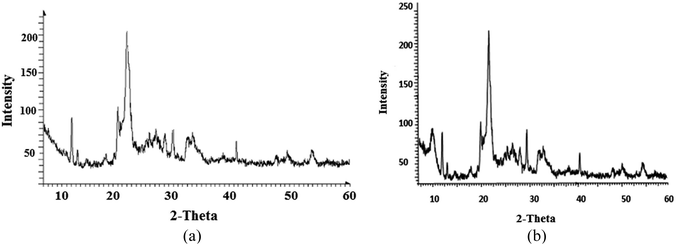 |
| | Fig. 2 XRD patterns of NCP (a), and NCP/HDTMA (b). | |
To determine the type and amount of elements presented in the zeolite sample, the X-ray fluorescence (XRF) test were performed and the results are shown in Table 1. It is revealed that SiO2 and Al2O3 are the main constituents with weight percentages of 62.68 and 9.57, respectively; whereas, P2O5 exist with the least amount (0.03%) and this material is free of SO3. These results provided the information about the ratio of silica to alumina content in nanozeolite, which determines the thermal and chemical stability, the hydrophilic nature, the number and strength of the acid sites in the acidic form, and the capacity of the ion exchange in this material. By varying the Si/Al ratio, cation content and stability of the nanozeolite would be affected, as lower number of Al causes the zeolite being more siliceous, which led to higher thermal stability. The concentrations of major elements are reported as the weight percentages of the oxides, recalculated to 100%. According to the results, the mass ratio of silica to alumina was obtained 11.55 (mole ratio = 11.14) and the mass ratio of SiO2/Al2O3 was 6.55. The L.O.I. (loss on ignition) is the percentage of volatile components, mainly crystalline bound water and organic carbon (as CO2), releases from a sample when heated to 1000 °C, and the corresponding ratio for the nanozeolite is obtained 15.62% as indicated in Table 1. This table indicated that 15.62% of the nanozeolite consisted of volatile components.
Table 1 XRF results for the nanozeolite
| Components |
SiO2 |
Al2O3 |
Na2O |
MgO |
K2O |
TiO2 |
MnO |
CaO |
P2O5 |
Fe2O3 |
SO3 |
L.O.I |
| Elements% |
62.68 |
9.57 |
2.43 |
0.77 |
1.76 |
0.17 |
0.09 |
5.51 |
0.03 |
1.04 |
0.00 |
15.62 |
3.1.2. FT-IR spectroscopy. FT-IR spectra of nanozeolite, HDTMA, and nanozeolite/HDTMA are shown in Fig. 3. In the IR spectrum of CP four groups of bands are present: (a) bands related to the internal Si–O(Si) and Si–O(Al) (in the range of 1200–400 cm−1), (b) the bands related to the zeolitic water (in the range of 1600–3700 cm−1), (c) the bands related to the pseudo-lattice vibrations of structural units (in the range of 500–700 cm−1), and (d) the bands connected with the lattice vibrations (below 400 cm−1, not shown). A broad band around 3320 cm−1 is assigned to the symmetric and asymmetric stretching vibration modes of surface silanol groups, and stretching vibration mode of hydrogen-bonded water adsorbed on the surface. The peak located at 1520 cm−1 is assigned to the bending vibration mode of O–H of the adsorbed water molecules. The located peaks at 1070 cm−1 are assigned to Si–O–Si asymmetric stretching vibration which is overlapped with the stretching vibration of Al–O–Si and Al–O. Stronger and broader bands in the region of stretching Si–O and Al–O bands and bending O–Si–O and O–Al–O vibrations for the NCP confirmed the higher surface area of the prepared nanozeolite.12
 |
| | Fig. 3 FT-IR spectra of the nanozeolite (a), HDTMA (b), and nanozeolite/HDTMA (c). | |
As it is seen from the spectrum, three new bands were appeared in the surface modified nanozeolite, corresponded to the presence of HDTMA. Two bands associated with the C–H stretching vibrations of the hydrocarbon chain around 2848 and 2918 cm−1, and a third band is attributed to the C–H bending of the methyl and methylene groups at 1476 cm−1. The vibration modes of the adsorbed HDTMA on the nanozeolite did not show any significant shifts compared to the spectrum of HDTMA, which indicated a weak interactions between the hydrocarbon chain of the surfactant and the nanozeolite surface.17
3.1.3. SEM images. The morphology and particle size of NCP and the surface modified NCP with HDTMA were studied by scanning electron microscopy and the corresponding SEM photographs are presented in Fig. 4. The monoclinic crystallites of the unmodified nanozeolite showed “elliptical-like” particles, confirmed the alteration of the layered structure of the bulk CP particles during ball-milling process. Besides, it is shown that the size of almost all individual particles and agglomerates are less than 100 nm. The image of the modified sample also revealed similar crystal shapes (spherical, elliptical or irregular) which indicates that presence of HDTMA doesn't affect the structure of nanozeolite. Due to the wide range of particle size and lack of uniformity, determination of the particle size distribution cannot be performed accurately for the modified NCP. The SEM image of modified NCP showed that the pores of the nanoparticles were blocked by HDTMA particles which also increased particles size of the obtained NCP. Results obtained from XRD and SEM studies approved that the selected method for the preparation of nanosized zeolite could be considered acceptable. Although, this mechanical procedure by means of planetary ball mills, would reduce the zeolite crystallinity; however, careful selection of conditions would lead to the production of NCP with the desirable crystalline structure.
 |
| | Fig. 4 Representative SEM images of NCP (a) and NCP/HDTMA (b). | |
3.1.4. DTA analysis. It is expected that the incorporation of HDTMA on the surface of NCP is carried out through an ion exchange process and hydrophobic interactions.18 Therefore, the cationic surfactant HDTMA from aqueous solution can be adsorbed on the surface of NCP bearing the opposite charge.19 A continuous weight loss below 200 °C in the DTA analysis is due to the removal of the physically adsorbed and coordinated water molecules (Fig. 5). A wide exothermic peak above 300 °C corresponded to the combustion and decomposition of the long chain surfactant moiety.
 |
| | Fig. 5 Differential thermal analysis of nanozeolite/HDTMA. | |
3.1.5. Studying CEC and ECEC. It is important to know the “cation exchange capacity (CEC)” and “external cation exchange capacity (ECEC)” of NCP. CEC is the capacity to adsorb exchangeable cations and ECEC relates to a part of the effective cation exchange capacity of the material with a large organic cation such as HDTMA. It was found that NCP has CEC value of 1.304 meq g−1. However, modification of the NCP surface is required to change the surface properties from hydrophilic to hydrophobic. Thus, it is necessary to know the external cation exchange capacity of NCP, which is part of the effective cation exchange capacity of the material. In the present work, ECEC value was found to be 0.38 meq g−1, which equals to 29% of the effective cation exchange capacity.HDTMA-Br was used to modify the surface characteristics of the NCP, since this surfactant contains a long chain of methylene groups responsible for organophilic properties of the CP surface. The surface is the major mineral phase of the NCP and ammonium groups which is responsible for the ion exchange with the cation (Na+) from the surface of the crystalline structure of the NCP.
3.1.6. Point of zero charge (pHpzc) of the modified and the unmodified NCPs. pHpzc of the modified and unmodified NCPs were obtained to assess the effect of HDTMA on acidity of NCP. As results show, the pHpzc for the modified and the unmodified nanozeolites obtained 7.5 and 6.6, respectively, indicating reduction in the acidity of NCP caused by surface modification (Fig. 6). However, hydrophilic nature of the nanozeolite framework makes the NCP an inappropriate material for binding the hydrophobic species.20,21 By exchanging the inorganic cations with organic ones, it is possible to convert a naturally hydrophilic CP to a material possess hydrophobic and organophilic properties.21 Thus, presence of HDTMA on the surface of NCP induced the co-adsorption of substrate molecules (organic aldehydes), due to the hydrophobic characteristic of NCP/HDTMA. This phenomenon is known as “surface solubilisation” or “adsolubilization”, which is ascribed to the partition of organic solutes between the aqueous phase and admicelles on the solid surface.17,22 This alteration is the key parameter in the more appropriate approach of organic substrate to the surface of the catalyst. It is believed that, although modification causes reduction in the acidity of NCP, easy approach of the substrate molecules to the surface of catalyst, made the modified NCP a better catalyst for the target transformation.
 |
| | Fig. 6 Determination of pHpzc for modified (a) and unmodified (b) NCP. | |
The pHPZC for a given mineral is the value at which the surface has a net neutral charge. It will possess positive charge in solution with pH < pHPZC; whereas, the negative charge at solution with pH > PHPZC would result. These effects could be explained by the deprotonation or protonation of aluminol Al–OH and silanol Si–OH groups in the framework of the nanozeolite. The very low ECEC value of the modified NCP compared to the CEC value, represents the main negative charges located in the internal pores (Table 2). Therefore, it is reasonable that the external surface of NCP could be used to load HDTMA.20,23
Table 2 Physicochemical properties of free NCP and the modified NCP/HDTMA
| Characteristic |
NCP |
NCP/HDTMA |
| Point of zero charge. Cation exchange capacity. External cation exchange capacity. |
| pH in water |
8.7 |
8.5 |
| pHpzca |
6.6 |
7.5 |
| CECb (meq g−1) |
1.304 |
1.141 |
| ECECc (meq g−1) |
0.380 |
— |
| The BET specific surface area (m2 g−1) |
125.5 |
97.31 |
| Micropore specific surface area (m2 g−1) |
141.99 |
96.03 |
| Micropore volume (cm3 g−1) |
0.0268 |
0.0193 |
| Average pore diameter of BJH desorption (nm) |
2.353 |
2.511 |
3.1.7. Pore characteristics of NCP before and after modification. Nitrogen adsorption isotherm, BET method, was used to calculate the specific surface area (m2 g−1) of NCP rich mineral and cationic surfactant modified NCP (Table 2). The results indicated that the surface area of NCP was decreased as modified by HDTMA surfactant. This cationic surfactant is composed of a large alkyl chain with a quaternary ammonium group at one end of the chain, which could not be allowed to enter the channels of NCP. The obtained values of surface area for the free NCP rich mineral and the surface modified NCP are 125.5 and 97.31 m2 g−1, respectively. It is inferred that the surface area of the modified NCP became lower by modification with HDTMA. As the cationic surfactant adsorbed on the external surface and pore opening takes place, the internal surface area of the NCP would blocked and thus the micropore surface area decreased.24 The channels of NCP were blocked by these surfactants and the diffusion of N2 throughout these channels was impeded by them. Therefore, decrease in the surface area could be ascribed to the blocking the channels of the NCP.25
3.2. Catalytic cyclotrimerization of acetophenone by the natural surface modified zeolite
Undoubtedly, catalytic efficiency of a heterogeneous catalyst would be improved by decreasing particles size to possess higher surface area. Table 3 shows effect of the particle size and amount of the modified CP on the yield of the cyclotrimerization of acetophenone. By the presence of 5 mg modified bulk (mesh 200, 75 μ) and NCP/HDTMA (<50 nm), the percent yields of reaction were obtained 51 and 68, respectively, after 3 h. Thus, a lower amount of modified NCP would lead to achieve higher reaction yield compared with the bulk CP (Table 3). By the addition of 10 mg nanozeolite/HDTMA within 2 h, the percent yield of 1,3,5-triphenylbenzene production was obtained 95%; whereas, only up to yield of 67% succeed by incorporation of micron-sized particles throughout the same time. It is worthy to note that higher amounts of both catalysts (>10 mg) did not affect the yield of desired product any more.
Table 3 Effects of size and amount of the modified CP on the yield of cyclotrimerization of acetophenonea
| Entry |
Catalyst (mg) |
Time (h) |
Yield (%) |
| CP/HDTMA |
NCP/HDTMA |
| Reaction conditions: acetophenone (1 mmol), at 100 °C, solvent free. Particles size of CP/HDTMA and NCP/HDTMA were 75 μ and <50 nm, respectively. |
| 1 |
— |
10 |
— |
— |
| 2 |
5 |
3 |
51 |
68 |
| 3 |
15 |
3 |
70 |
75 |
| 4 |
20 |
3 |
58 |
70 |
| 5 |
10 |
0.5 |
19 |
32 |
| 6 |
10 |
1 |
37 |
55 |
| 7 |
10 |
1.5 |
59 |
79 |
| 8 |
10 |
2 |
67 |
95 |
| 9 |
10 |
2.5 |
70 |
95 |
| 10 |
10 |
3 |
73 |
95 |
3.3. Effect of reaction temperature on cyclotrimerization of acetophenone by the surface modified NCP/HDTMA
In order to establish the optimum conditions for cyclotrimerization of acetophenone, the effect of temperature on the formation of 1,3,5-triphenylbenzene was studied. It is found that at moderate temperatures of 40 and 60 °C, the low reaction yield of desired product is obtained; whereas, the highest value is achieved at 100 °C as represented in Fig. 7. Therefore, the optimum conditions to reach the yield of 1,3,5-triphenylbenzene more than 95% is utilizing 10 mg of catalyst at temperature of 100 °C.
 |
| | Fig. 7 Effect of reaction temperature on the yield% of 1,3,5-triphenylbenzene. | |
3.4. Evaluation of the catalytic efficiency of NCP in comparison with some reported catalysts for cyclotrimerization of acetophenone
The advantages of the present heterogeneous catalytic system was assessed over some reported catalysts for cyclotrimerization of acetophenone as summarized in Table 4. The considered parameters for assessment included the mole fraction of the employed catalyst, temperature, reaction time, and reaction yield. As Table 4 indicated, in the present protocol a natural and simple catalyst was applied that its outcome surpassed corresponding values of the most of the conventional catalysts. Besides, this method utilized a very low amount of NCP under solvent-free conditions to carry out the reaction.
Table 4 Comparison between the catalytic effect of nanozeolite/HDTMA and some reported catalysts for cyclotrimerization of acetophenone
| Entry |
Catalyst |
Catalyst (mol%) |
Solvent |
Temp. (°C) |
Time (h) |
Yield (%) |
Ref. |
| 1 |
CuCl2 |
5 |
Free |
130 |
10 |
38 |
26 |
| 2 |
CAN |
10 |
Free |
130 |
10 |
>10 |
26 |
| 3 |
SnCl4 |
10 |
Ethanol |
Reflux |
24 |
55 |
27 |
| 4 |
HCl |
10 |
Ethanol |
Reflux |
11 |
45 |
27 |
| 5 |
Amberlyst-15 |
10 |
Ethanol |
Reflux |
15 |
52 |
27 |
| 6 |
H3PMo12O40 |
5 |
Ethanol |
Reflux |
5 |
87 |
27 |
| 7 |
PTSA |
20 |
Free |
130 |
3 |
60 |
28 |
| 8 |
NCP/HDTMA |
10 mg |
Free |
100 |
2 |
95 |
This work |
3.5. Surface modification of NCP by some quaternary ammonium salts to study their catalytic activities in cyclotrimerization of acetophenone
The effect of surface modification of NCP on its catalytic activity was investigated in this section. Permanent presence of negative charge of zeolites, makes them being a good cation exchangers. In addition, due to the pores existed on the surface of the NCP, the ion exchange simply takes place in a solution containing large cationic surfactants such as hexadecyltrimethylammonium (HDTMA), octadecyltrimethylammonium (ODTMA), and CPC (cetylpyridinium chloride) which would lead to occupation of the surface active sites of nanozeolite by these large cations.29
HDTMA-Br with a long –CH2– chain was applied for surface modification of the nanosized CP to change its hydrophobic characteristics to organophilic.10 Table 5 shows that both HDTMA-Br and ODTMA-Br acted as the best modifiers for NCP which led to achieve percent yield of 95–91% for the desired product within 3 h. CPC and BC were examined and provided yield of 85–80% for 1,3,5-triphenylbenzene during the same period. The other acidic and simple surface modifiers, represented as entries 5–10, were found to have not any significant influence on the reaction and obtained 15–36% yield during the same time.
Table 5 Effects of some surface modifiers on the catalytic efficacy of NCP
| Entry |
Modifier |
Yield (%) |
| 1 |
HDTMA-Br (hexadecyltrimethylammonium bromide) |
95 |
| 2 |
ODTMA-Br (octadecyltrimethylammonium bromide) |
91 |
| 3 |
BC (benzalkonium chloride) |
80 |
| 4 |
CPC (cetylpyridinium chloride) |
85 |
| 5 |
NH4NO3 |
36 |
| 6 |
HCl |
21 |
| 7 |
H2SO4 |
19 |
| 8 |
FeCl3–NaCl |
15 |
| 9 |
FeCl3 |
— |
| 10 |
Unmodified NCP |
Trace |
For preparation of the surface modified zeolites, 5 g NCP was mixed with 50 ml (60 mM) of the modifier solution and the mixture was stirred for 24 h. Subsequently, the mixture was centrifuged and the resulting modified nanozeolite was separated and dried at 110 °C for 12 h. CP with particles size of ∼75 μ was used for the entries 6–9.
3.6. Synthesis of different types of 1,3,5-triarylbenzenes catalyzed by NCP/HDTMA
A new one pot and highly efficient method, for preparation of different 1,3,5-triarylbenzenes in the presence of NCP/HDTMA as a green, heterogeneous, and reusable natural catalyst under solvent-free conditions is presented here. This methodology enjoys the advantages of higher reaction yield, simple work-up, and green reaction conditions in which the chromatographic separation is not necessary to acquire the pure products. Furthermore, low cost of preparation as well as substantial conversion of the substrates are the main goals by considering industrial and economic perspectives.
Scope and efficiency of the catalytic system was evaluated under the optimum conditions for the cyclotrimerization of various substituted acetophenones. For this purpose, a broad range of structurally diverse ketones such as methyl-aryl ketones and cyclic ketones were condensed to supply the related products. As shown in Table 6, the acetophenones bearing electron-withdrawing substituents in the aromatic rings, led to higher rates of cyclotrimerization in shorter reaction times and afforded products in percent yields of 83–97%. In contrast, the acetophenones owning electron-donating substituents such as CH3 and OCH3 at aromatic ring reacted slowly and the corresponding 1,3,5-triarylbenzene derivatives yield in lower level. In the case of acetophenones containing halogen at para-position of the aromatic ring, yield of the cyclotrimerized products was significantly reduced, by reduction in the electronegativity of the halogen elements. Therefore, reaction yields of triarylbenzenes varied with respect to the position of substituents attached to acetophenone. The triple condensation reaction has led to attain poor yields of reaction when ortho-CH3 substituted acetophenones were employed. Although, previous reports stated that no reaction occurs with strong electron-withdrawing nitro group, the present system provided yield of 83% for the desired product after 2.5 h (entry 3).26,28
Table 6 Synthesis of different 1,3,5-triarylbenzenes catalyzed by NCP/HDTMAa
3.7. Recyclability of nanozeolite/HDTMA in the cyclotrimerization of acetophenone
Capability of the catalyst to recycle was evaluated via cyclotrimerization of acetophenone as a typical reaction according to the common reaction procedure introduced in the Experimental section. By completion of the reaction, hot ethanol was added to the mixture and the obtained catalyst was separated by simple filtration and then dried at 100 °C. As represented in Fig. 8 the recovered catalyst can be used at least for six consecutive times without any significant loss in productivity yield.
 |
| | Fig. 8 Studying recyclability of NCP/HDTMA in cyclotrimerization of acetophenone. | |
3.8. Proposed reaction pathway for the cyclotrimerization of acetophenones
A probable proposed reaction pathway for the synthesis of 1,3,5-triarylbenzenes is shown in Scheme 2. The reaction possibly proceeds through protonation of the corresponding ketone forming intermediates (A) and (B) in the presence of the acidic nanocatalyst. The reaction between these intermediates is followed by dehydration, which produces α,β-unsaturated carbonyl compound (C). Activation of (C) via catalyst and subsequent reaction with (A), would led to provide (D) that on subsequent dehydration followed by a prototropic shift in the presence of nanocatalyst, affords (E). Finally, electrocyclization of (E) leads to a substituted cyclophloroglucinol (F) which upon dehydration, produces the desired product (G) and releases the nanocatalyst.30a
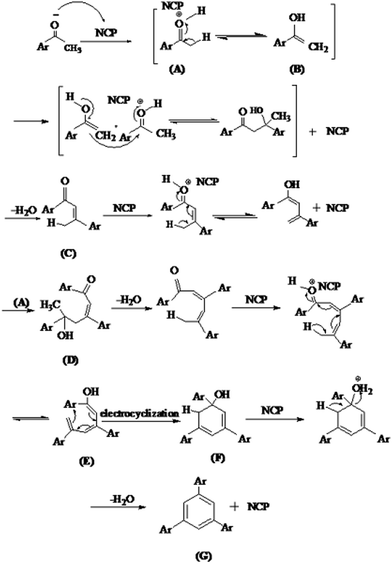 |
| | Scheme 2 A proposed reaction pathway for the synthesis of 1,3,5-triarylbenzenes. | |
4. Conclusion
The surface modified NCP/HDTMA has proved to be a useful, efficient, and recyclable catalyst for the cyclotrimerization of acetophenones to afford 1,3,5-triarylbenzenes. The present protocol has several advantages over the most of the reported methods from economic and environmental points of view, such as operational simplicity, short reaction time, mild reaction condition, good yield of the products, and recyclability of the nanocatalyst. The prominent advantages of the method lie in the cost-effective catalyst, easy work up and operational simplicity, avoidance of using harmful solvent. This methodology could be considered as an economic protocol for the preparation of 1,3,5-arylbenzenes compared with other reported methods. Furthermore, water is the only side product in this reaction method, which makes the present process an environmental benign.
Acknowledgements
Partial financial support from the Research Councils of Hakim Sabzevari University is greatly appreciated.
References
-
(a) R. Ghanbaripour, I. Mohammadpoor-Baltork, M. Moghadam, A. R. Khosropour, S. Tangestaninejad and V. Mirkhani, J. Iran. Chem. Soc., 2012, 9, 791 CrossRef CAS PubMed;
(b) M. J. Plater, M. Mckay and T. Jackson, J. Chem. Soc., 2000, 1, 2695 Search PubMed.
-
(a) J. Ikadai, H. Yoshida, J. Obshita and A. Kunai, Chem. Lett., 2005, 34, 56 CrossRef CAS;
(b) T. Kadota, H. Kayeyama, F. Wakaya, K. Gamo and Y. Shirota, Chem. Lett., 2004, 706 CrossRef CAS;
(c) Y. Shirota, J. Mater. Chem., 2005, 15, 75 RSC.
-
(a) B. Pepin-Donat, A. Geyer and A. Viallat, Polymer, 1998, 39, 6673 CrossRef CAS;
(b) E. Rebourt, B. Pepin-Donat and E. Dinh, Polymer, 1995, 36, 399 CrossRef CAS;
(c) A. Viallat and B. Pepin-Donat, Macromolecules, 1997, 30, 4679 CrossRef CAS.
- H. R. Safaei, M. Davoodi and M. Shekouhy, Synth. Commun., 2013, 43, 2178 CrossRef CAS.
-
(a) S. Zhang, Z. Xue, Y. Gao, S. Mao and Y. Wang, Tetrahedron Lett., 2012, 53, 2436 CrossRef CAS PubMed;
(b) S. S. Elmorsy, A. G. M. Khalil, M. M. Girges and T. A. Salama, Tetrahedron Lett., 1997, 38, 1071 CrossRef CAS;
(c) Z. J. Hu, J. Liu, G. A. Li and Z. B. Dong, J. Chem. Res., 2003, 778 CAS.
-
(a) R. E. Lyle, E. J. DeWitt, N. M. Nichols and W. Cleland, J. Am. Chem. Soc., 1953, 75, 5959 CrossRef CAS;
(b) M. J. Plater and M. Praveen, Tetrahedron Lett., 1997, 38, 1081 CrossRef CAS;
(c) A. F. Odell and C. W. Hines, J. Am. Chem. Soc., 1913, 35, 82 CrossRef;
(d) X. Jin, F. Xu, Q. Zhu, X. Ren, C. Yan, L. Wang and J. Wang, Synth. Commun., 2005, 35, 3167 CrossRef;
(e) N. Iranpoor and B. Zeynizadeh, Synlett, 1998, 1079 CrossRef CAS PubMed;
(f) A. Kumar, M. Dixit, S. P. Singh, R. Raghunandan, P. R. Maulik and A. Goel, Tetrahedron Lett., 2009, 50, 4335 CrossRef CAS PubMed;
(g) F. Ono, Y. Ishikura, Y. Tada, M. Endo and T. Sato, Synlett, 2008, 2365 CAS.
-
(a) A. Rashidzadeh and A. Olad, Desalin. Water Treat., 2013, 51, 7057 CrossRef CAS;
(b) T. Bahar, Asia-Pac. J. Chem. Eng., 2014, 9, 31 CrossRef CAS;
(c) S. Jevtic, S. Grujic, J. Hrenovic and N. Rajic, Microporous Mesoporous Mater., 2012, 159, 30 CrossRef CAS PubMed;
(d) T. Bajda and Z. Kłapyta, Appl. Clay Sci., 2013, 86, 169 CrossRef CAS PubMed;
(e) S. J. Royaee, C. Falamaki, M. Sohrabi and S. S. Ashraf Talesh, Appl. Catal., A, 2008, 338, 114 CrossRef CAS PubMed;
(f) C. F. Linares, M. R. Goldwasser, F. J. Machado, A. Rivera, G. Rodiguez-Fuentes and J. Barrault, Microporous Mesoporous Mater., 2000, 41, 69 CrossRef CAS.
-
(a) R. Tayebee, M. M. Amini, F. Nehzat, O. Sadeghi and M. Armaghan, J. Mol. Catal. A: Chem., 2013, 366, 140 CrossRef CAS PubMed;
(b) R. Tayebee, M. M. Amini, N. Abdollahi, A. Aliakbari, S. Rabiei and H. Ramshini, Appl. Catal., A, 2013, 468, 75 CrossRef CAS PubMed;
(c) R. Tayebee, M. M. Amini, H. Rostamian and A. Aliakbari, Dalton Trans., 2014, 43, 1550 RSC.
- S. M. Baghbanian, N. Rezaei and H. Tashakkorian, Green Chem., 2013, 15, 3446 RSC.
- M. Abatal and M. T. Olguin, Environ. Earth Sci., 2013, 69, 2691 CrossRef CAS PubMed.
- P. C. C. Faria, J. J. M. Orfao and M. F. R. Pereira, Water Res., 2004, 38, 2043 CrossRef CAS PubMed.
- A. Nezamzadeh-Ejhieh and H. Zabihi-Mobarakeh, J. Ind. Eng. Chem., 2013, 20, 1421 CrossRef PubMed.
-
(a) S. Ouki and M. Kavannagh, Waste Manage. Res., 1997, 15, 383 CrossRef CAS PubMed;
(b) A. Philippou, J. Rocha and M. W. Anderson, Catal. Lett., 1999, 57, 151 CrossRef CAS;
(c) R. J. Davis, E. J. Doskocil and S. Bordawekar, Catal. Today, 2000, 62, 241 CrossRef CAS.
-
(a) M. Akgul, B. Ozyagcıand and A. Karabakan, J. Ind. Eng. Chem., 2013, 19, 240 CrossRef CAS PubMed;
(b) R. S. Varma, Tetrahedron, 2002, 58, 1235 CrossRef CAS.
-
(a) M. M. J. Treacy and J. B. Higgins, Collection of Simulated XRD Powder Patterns for Zeolites, Elsevier, Amsterdam, 2001 Search PubMed;
(b) M. K. Doula, Chemosphere, 2007, 67, 731 CrossRef CAS PubMed.
- A. W. Burton, K. Ong, T. Rea and I. Y. Chan, Microporous Mesoporous Mater., 2009, 117, 75 CrossRef CAS PubMed.
- A. Nezamzadeh-Ejhieh and S. Tavakoli-Ghinani, C. R. Chim., 2014, 17, 49 CrossRef CAS PubMed.
-
(a) M. J. Rosen, Surfactants and Interfacial Phenomena, John Wiley, New York, 1989 Search PubMed;
(b) Z. Li and R. S. Bowman, Environ. Sci. Technol., 1997, 31, 2407 CrossRef CAS.
- J. H. O-Haver, L. L. Lobban, J. H. Harwell and E. A. O-Rear, Solubilization in Surfactant Aggregates, Marcel Dekker, New York, 1995, p. 277 Search PubMed.
- H. Guan, E. Bestland, C. Zhu, H. Zhu, D. Albertsdottir, J. Hutson, C. T. Simmons, M. Ginic-Markovic, X. Tao and A. V. Ellis, J. Hazard. Mater., 2010, 183, 616 CrossRef CAS PubMed.
-
(a) M. Rozic, D. I. Sipisic, L. Sekovanic, S. Miljanic, L. Curkovic and J. Hrenovic, J. Colloid Interface Sci., 2009, 331, 295 CrossRef CAS PubMed;
(b) A. Olad, S. Ahmadi and A. Rashidzadeh, Desalin. Water Treat., 2013, 51, 7172 CrossRef CAS.
- J. H. O-Haver and H. Jeffrey, Surfactant Adsorption and Surface Solubilization, ed. R. Sharma, American Chemical Society, Washington, DC, 1995, p. 49 Search PubMed.
-
(a) Z. Li and R. S. Bowman, Environ. Sci. Technol., 1998, 32, 2278 CrossRef CAS;
(b) Z. Li, Langmuir, 1999, 15, 6438 CrossRef CAS.
- D. A. Fungaro and C. P. Magdalena, Environ. Ecol. Res., 2014, 2, 97 CAS.
- B. C. Erdogan, Cr(vi) Removal with natural, surfactant modified and bacteria loaded zeolites, 2011, p. 97 Search PubMed.
- Y. Zhao, J. Li, C. Li, K. Yin, D. Yea and X. Jia, Green Chem., 2010, 12, 1370 RSC.
- K. Phatangare, V. Padalkar, D. Mhatre, K. Patil and A. Chaskar, Synth. Commun., 2009, 39, 4117 CrossRef CAS.
- D. Prasad, A. Preetam and M. Nath, C. R. Chim., 2013, 16, 252 CrossRef CAS PubMed.
-
(a) M. D. Baeza Alvarado and M. T. Olguin, Microporous Mesoporous Mater., 2011, 139, 81 CrossRef CAS PubMed;
(b) D. Krajisnika, A. Dakovic, M. Milojevic, A. Malenovic, M. Kragovic, D. B. Bogdanovic, V. Dondurcand and J. Milica, J. Coll. Sur. B, 2011, 83, 165 CrossRef PubMed;
(c) R. Malekian, J. Abedi-Koupai and S. Eslamian, J. Hazard. Mater., 2011, 185, 970 CrossRef CAS PubMed.
-
(a) R. Ghanbaripour, I. Mohammadpoor-Baltork, M. Moghadam, A. Khosropour, S. Tangestaninejad and V. Mirkhani, Polyhedron, 2012, 31, 721 CrossRef CAS PubMed;
(b) Q. Gao, F. Bao, X. Feng, Y. Pan, H. Wang and D. Li, ARKIVOC, 2013, iii, 49 CrossRef;
(c) X. Jing, F. Xu, Q. Zhu, X. Ren, C. Yan, L. Wang and J. Wang, Synth. Commun., 2005, 35, 3167 CrossRef CAS.
Footnote |
| † Electronic supplementary information (ESI) available. See DOI: 10.1039/c4ra11216d |
|
| This journal is © The Royal Society of Chemistry 2015 |
Click here to see how this site uses Cookies. View our privacy policy here. 


