DOI:
10.1039/C4RA11214H
(Paper)
RSC Adv., 2015,
5, 5863-5874
Organocatalytic asymmetric Michael addition of aldehydes and ketones to nitroalkenes catalyzed by adamantoyl L-prolinamide†
Received
25th September 2014
, Accepted 12th December 2014
First published on 12th December 2014
Abstract
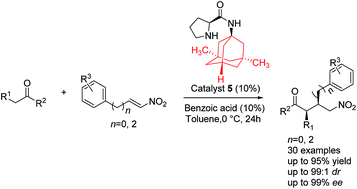
A series of adamantoyl L-prolinamides have been synthesized. These compounds have been found to be highly efficient organocatalysts for the Michael addition of aldehydes and ketones to nitroalkenes. Under the optimized reaction conditions, the corresponding Michael adducts were obtained in good yields (up to 95%), excellent enantioselectivities (up to 99% ee) and moderate diastereoselectivities.
Introduction
The organocatalytic asymmetric Michael addition of ketones or aldehydes to nitroalkenes, as carbon–carbon bond-forming reactions in organic synthesis, is one of the most powerful and effective methods for the preparation of chiral γ-nitro carbonyl compounds. The nitro group can be easily transformed into various useful functional groups, such as amines, nitrile oxides, ketones, and carboxylic acids, etc.1,2 These Michael adducts were used as important starting materials in the enantioselective synthesis of chiral biologically active compounds and natural products, such as alkaloids (−)-Rolipram,3 (+)-cryptopleurine,4 (+)-ipalbidine,5 (−)-pancracine,6 and (−)-botryodiplodin.7
The Michael addition can be classified into covalent (enamine,8 iminium,9 or dienamine activation catalysis10) or noncovalent (hydrogen-bonding and Brønsted acid,11 Brønsted base and bifunctional activation catalysis,12 or phase-transfer catalysis13) depending on characteristics of the chemical structure of the catalyst and the substrate–catalyst interaction. As one of the most widely used modern organocatalysis based on covalent character, proline and proline derivatives, such as diarylprolinol silyl ethers, prolinamides, and pyrrolidines, play an important role in asymmetric catalysis.14 Among a variety of different catalysts, prolinamide derivatives have been demonstrated as an excellent reagent in asymmetric enamine organocatalysis.15 Although these organocatalysts give good results in the process of asymmetric Michael addition reactions, discovery of environment-friendly nonmetal-catalyzed asymmetric organocatalyst in Michael addition reaction is still needed. To the best of our knowledge, except for several adamantanamine-derived catalysts,16 there is no report to date of adamantoyl L-prolinamides as organocatalyst used in asymmetric Michael addition reactions. Thus, adamantanamine-derived catalysts 2–11 (Fig. 1) were designed and tested. It was demonstrated that compound 5 (3,5-dimethyl-1-adamantanamine-prolinamide) had improved effect in catalyzing the asymmetric Michael addition of aldehydes and ketones to nitroalkenes, and the preliminary experiment results were reported here.
 |
| | Fig. 1 L-Proline adamantoyl L-prolinamide catalysts. | |
Results and discussion
N-Boc-L-proline, rimantadine, 2-aminoadamantane, 1-aminoadamantane, 1-amino-3,5-dimethyl-adamantane, 3-aminoadamantan-1-ol, N-Boc-glycine, N-Boc-L-leucine, N-Boc-L-phenylalanine are commercially available. With these compounds as starting materials, ten amides (2–11) were easily prepared in two steps in 84–91% overall yield (Schemes 1 and 2, for the general procedure see experimental section).
 |
| | Scheme 1 Synthetic routes to adamantoyl L-prolinamides 2–6. | |
 |
| | Scheme 2 Synthetic routes to catalysts 7–11. | |
Initially, the model reaction of propanal (12a) with nitrostyrene (13a) was carried out in the presence of 10 mol% of catalyst and 10 mol% of benzoic acid as an additive in toluene under room temperature (Table 1). As shown in Table 1, catalysts 1–11 exhibited significantly different catalytic activity and enantioselectivity toward the process. L-Proline (1) could catalyze this reaction, but rather poor yield and stereoselectivity were observed (Table 1, entry 1). Although prolinamide 2 could efficiently promote the process with high yields (90%), poor enantioselectivity (24% ee, entry 2) was obtained. Among the organocatalysts surveyed, prolinamides 3 and 4 showed good catalytic activity with moderate to good enantioselectivity (entries 3 and 4). To our delight, when prolinamide 5 was used, the best result was observed with an excellent yield (92%) and enantioselectivity (93% ee, entry 5). In addition, prolinamide 6 was also evaluated (entry 6). Although excellent enantioselectivity (90% ee) was obtained, the yield (57%) was moderate. To further investigate the role of catalysts, several adamantanamine-derived chiral catalysts (7–11) were synthesized and tested in the model Michael reaction. The experiment result exhibited a moderate performance on both yield and stereoselectivity (entries 7–11). According to the above results, 3,5-dimethyl-1-adamantanamine-prolinamide (5) was confirmed to be the most effective catalyst in terms of both the yield and enantioselectivity of the reaction.
Table 1 Screening of catalysts and solventsa
To further optimize the reaction conditions, some reaction parameters, including solvents, additives, temperatures, and amounts of catalyst were examined, and the results are shown in Tables 1 and 2. A range of typical solvents were first screened in the presence of benzoic acid (10 mol%) and catalyst 5 (10 mol%) at room temperature. Some nonpolar and aprotic solvents, such as hexane, THF, toluene, CHCl3, and CH2Cl2, were investigated for this reaction (Table 1, entries 5 and 12–15). The excellent yields and enantioselectivity (92% yield, and 93% ee) were obtained when the reaction was carried out in toluene (Table 1, entry 5). However, some polar solvents, such as methanol, acetonitrile, and isopropanol, gave moderate enantioselectivities (Table 1, entries 16–18), which were unsatisfactory. Moreover, we examined the influence of catalyst loading on the reaction. When the catalyst 5 was reduced to 5 mol%, the prolonged reaction time was required (Table 1, entry 19). Next, the effect of a series of different additives was tested and the results are summarized in Table 2. Apparently, the reaction proceeded very slowly in the absence of acid additives and provided poor yield after 48 h (Table 2, entries 1–3). When benzoic acid was used as an acid additive, the best result was observed with an excellent yield (92%) and enantioselectivity (93% ee) (Table 2, entry 8). Although the other acid additives, such as p-TSA, HCOOH, CH3COOH, CF3COOH, were also beneficial for this reaction, their yields and enantioselectivities were slightly lower than the result with PhCOOH (Table 2, entries 4–7). In addition, three chiral acids, tartaric acid, N-Boc-glycine and mandelic acid, were also employed and gave moderate yield and enantioselectivities (Table 2, entries 9–11). It was implied that the acid additives only provide the proton in the Michael addition. The influence of acid loading on the Michael addition was also examined (Table 2, entries 8, 12, and 13). It was observed that 10 mol% of PhCOOH gave the optimal results. We also investigated the effect of reaction temperature (Table 2, entries 8 and 14–16). The results showed that yields and enantioselectivities have not changed significantly except for the increase of diastereoselectivity (82
:
18 dr) (Table 2, entry 14) at 0 °C by decreasing the reaction temperature from room temperature to −40 °C. Based on the overall evaluation, 0 °C was selected to be the optimal reaction temperature.
Table 2 Screening of additive and temperaturea
Under the above optimized conditions, the scope of the asymmetric Michael addition reaction was investigated by applying different aldehydes and nitroalkenes in the presence of 10 mol % of catalyst 5 and 10 mol% of benzoic acid in toluene at 0 °C. The results are summarized in Table 3. The Michael addition products were obtained with good yields (81–94%) and excellent enantioselectivities (92–99% ee). The steric hindrance of the R1 group for aldehydes was beneficial for the increase of diastereoselectivity to a large degree (entries 1–7). For examples, the reaction of propanal gave a moderate diastereoselectivity (64
:
36 dr) (entry 1), while that of isovaleraldehyde provided an excellent diastereoselectivity (99
:
1 dr) (entry 4). Moreover, aromatic nitroalkenes, regardless of electron-donating or electron-withdrawing substituents on the phenyl ring (entries 8–15), participated in this process in high yield (81–94%) and excellent ee values (95–99%). The excellent enantioselectivities (93–97% ee) was also observed for the Michael addition of aldehydes to nitroalkenes containing heteroaryl groups (entries 16 and 17). Additionally, catalyst 5 could be applied for the Michael addition of alkyl-substituted nitroalkene to aldehydes with high yield (94%) and excellent enantioselectivities (99%, entry 18).
Table 3 Asymmetric Michael Additions of Aldehydes to nitroalkenes catalyzed by 5a
On the basis of above condition, the catalytic direct asymmetric Michael addition of ketones to nitroalkenes was also investigated, and the results are summarized in Table 4. As shown in Table 4, a dramatic lack of selectivity (55
:
45 dr, and 2% ee) was observed when using aliphatic ketone (Table 4, entry1). It was found that the ring size of cyclic ketones was a strong influence on the diastereoselectivity and enantioselectivity. Reaction of cyclobutanone with 13a proceeded with moderate diastereoselectivity (67
:
33 dr) and poor enantioselectivity (11% ee; Table 4, entry 2). The use of cyclopentanone afforded good diastereoselectivity (70
:
10 dr) and moderate enantioselectivity (40% ee). Notably, when cyclohexane was employed, the corresponding adduct was obtained with high yield (89%), excellent diastereoselectivity (99
:
1 dr) and excellent enantioselectivity (99% ee). Additionally, aromatic nitroalkenes containing electron-donating or electron-withdrawing substituents on the phenyl ring and heteroaryl groups (entries 5-12) gave high yield (81–89%) and excellent ee values (85–98%).
Table 4 Asymmetric Michael additions of ketones to nitroalkenes catalyzed by 5a
In order to account for the good enantioselectivity of the reaction, a plausible transition-state model is proposed in Scheme 3. The pyrrolidine functionality activates the aldehyde or ketones through the formation of an enamine intermediate, and the nitro group of trans-β-nitrostyrene is directed toward the amide group by the hydrogen bond between the NH group of the amide and the nitro group. The enamine formed in situ attacks the Si face of the nitroalkene to finish the Michael adduct. Also, the bulky aminoadamantane group is considered to be important to the high catalytic activity and enantioselectivity and diastereoselectivity of the catalyzed reactions. Our previous research20 and some other typical literatures21–23 could be taken as a support of the transition-state model.
 |
| | Scheme 3 Possible transition state of the reaction. | |
Conclusions
In summary, we have developed a new prolinamide catalyst 5 for the asymmetric conjugate addition reactions of aldehydes or ketones to nitroalkenes. This catalyst exhibited rather high catalytic efficiency and good to excellent stereoselectivity. Since the catalyst 5 can be easily prepared from commercially available Boc-L-proline and 1-amino-3,5-dimethyl-adamantane in two steps, we believe that catalyst 5 is an ideal candidate for laboratory or large-scale preparations. Further applications of the catalyst for a wider scope of reactions are being studied in our laboratory.
Experimental section
General information
Reagents and Materials were of the highest commercially available (Adamas) grade and used without further purification. Solvents were purified by standard procedures and distilled before use. The reactions were monitored by thin layer chromatography (TLC) using silica gel GF254. Column chromatography was performed on silica gel (200–300 mesh). Compounds were visualized by UV and spraying with H2SO4 (10%) in ethanol and followed by heating. The NMR spectra were recorded on a Bruker DRX400 (1H: 400 MHz, 13C: 100 MHz) or Bruker DRX500 (1H: 500 MHz, 13C: 125 MHz) with TMS as the internal standard, chemical shifts (δ) are expressed in ppm, and J values are given in Hz, and deuterated CDCl3 and was used as solvent. IR spectra were recorded on a FT-IR Thermo Nicolet Avatar 360 using KBr pellet. The mass spectroscopic data were obtained at the Agilent 1100 LC/MSD Trap LC-mass spectrometer. HPLC analysis was performed with a Shimadzu LC-10A instrument equipped with Daicel HPLC columns.
General procedure for preparation of adamantoyl L-prolinamide 2–6
To a stirred solution of N-t-butyloxycarbonyl-L-proline (1.075 g, 5 mmol) in dry dichloromethane (15 mL), was added DMAP (210 mg, 1.5 mmol). The mixture was allowed to stir for 15 min and then cooled to 0 °C and then EDCI (1.22 g, 5.5 mmol) was added. After 20 min, a solution of aminoadamantanes (4 mmol) in dichloromethane (15 mL) was added to the above reaction mixture. The resulting solution was stirred at room temperature until complete consumption of nitroalkene (monitored by TLC). The reaction was quenched with water and extracted with dichloromethane (3 × 50 mL). The combined organic layers were washed with saturated brine solution (20 mL), followed by drying over Na2SO4 and evaporating in vacuo. The crude product was purified by column chromatography to give the pure N-t-butyloxycarbonyl-L-prolineamide (2a).
To a solution of 2a (4 mmol) in CH2Cl2 (10 mL) was added TFA (3 mL). After stirring at 0 °C for 2.5 hour, the solution was concentrated under vacuum to leave a glutinous phase. The pH of the mixture was brought into the range of 12 by the addition of 2 M NaOH. The aqueous phase was extracted with ethyl acetate. The ethyl acetate extracts were pooled, washed with brine, dried over anhydrous Na2SO4, filtered off and the solvent was evaporated at low pressure to give a crude residue that was purified by column chromatography to give the pure L-prolineamide (2).
N-t-Butyloxycarbonyl-rimantadine-L-prolineamide (2a). 95% yield; White solid, m.p. 181–183 °C; [α]20D = −48.5 (c 1.0, CHCl3); 1H NMR (400 MHz, CDCl3, TMS): δ 7.60 (s, 1H), 4.34–4.24 (m, 1H), 4.00 (m, 1H), 3.49–3.32 (m, 2H), 2.45 (s, 1H), 2.15 (s, 1H), 1.91–1.73 (m, 15H), 1.63 (d, J = 8.0 Hz, 2H), 1.47 (s, 9H); 13C NMR (100 MHz, CDCl3, TMS): δ 170.6, 154.8, 80.3, 61.5, 59.7, 53.0, 47.1, 38.3, 37.1, 37.0, 35.8, 30.9, 28.4, 28.3, 14.4; IR (KBr): 1160, 1385, 1532, 1663, 2901, 3330 cm−1; HRMS (EI) m/z: calcd for C22H36N2O3 [M + Na]+ 399.2618, found 399.2618.
Rimantadine-L-prolineamide (2). 96% yield; White solid, m.p. 123–126 °C; [α]20D = −87.7 (c 1.0, CHCl3); 1H NMR (400 MHz, CDCl3, TMS): δ 7.67 (d, J = 9.2 Hz, 1H), 3.75–3.71 (m, 1H), 3.65–3.58 (m, 1H), 3.07–3.01 (m, 1H), 2.18–2.08 (m, 2H), 1.98–1.92 (m, 4H), 1.77–1.46 (m, 16H), 1.02 (d, J = 9.2 Hz, 3H); 13C NMR (100 MHz, CDCl3, TMS): δ 174.1, 60.8, 52.1, 47.4, 38.4, 37.1, 36.0, 31.1, 28.3, 26.3, 14.1; IR (KBr): 1103, 1511, 1654, 2672, 2844, 2904, 3289 cm−1; HRMS (EI) m/z: calcd for C15H24N2O [M + H]+ 249.1961, found 249.1963.
N-t-Butyloxycarbonyl-2-aminoadamantane-L-prolineamide (3a). The method for the synthesis of 3a was similar to that of 2a. 3a is white solid, 93% yield; m.p. 138–141 °C; [α]20D = −91.4 (c 1.0, CHCl3); 1H NMR (400 MHz, CDCl3, TMS):δ 7.60 (s, 1H), 4.34–4.24 (m, 1H), 4.00 (m, 1H), 3.49–3.32 (m, 2H), 2.45 (s, 1H), 2.15 (s, 1H), 1.91–1.73 (m, 15H), 1.63 (d, J = 8.0 Hz, 2H), 1.47 (s, 9H); 13C NMR (100 MHz, CDCl3, TMS): δ 170.4, 156.1, 80.4, 59.8, 53.2, 47.1, 37.5, 37.1, 37.0, 31.8, 37.8, 28.4, 27.2, 24.6; IR (KBr): 1168, 1380, 1540, 1650, 1712, 2905, 3064, 3289 cm−1; HRMS (EI) m/z: calcd for C20H32N2O3 [M + Na]+ 371.2305, found 371.2305.
2-Aminoadamantane-L-prolineamide (3). The method for the synthesis of 3 was similar to that of 2. 3 is white solid, 94% yield; m.p. 108–112 °C; [α]20D = −37.6 (c 1.0, CHCl3); 1H NMR (400 MHz, CDCl3, TMS): δ 8.19 (d, J = 5.6 Hz, 1H), 3.99 (d, J = 8.8 Hz, 1H), 3.76–3.73 (m, 1H), 3.07–3.01 (m, 1H), 2.96–2.90 (m, 1H), 2.18–2.09 (m, 2H), 1.97–1.70 (m, 16H), 1.68–1.62 (m, 2H); 13C NMR (100 MHz, CDCl3, TMS): δ 173.9, 60.8, 52.3, 47.3, 37.6, 37.1, 37.0, 32.2, 32.0, 32.0, 30.9, 27.3, 27.1, 26.2; IR (KBr): 874, 1095, 1507, 1663, 2660, 2860, 2913, 3309 cm−1; HRMS (EI) m/z: calcd for C15H24N2O [M + H]+ 249.1961, found 249.1963.
N-t-Butyloxycarbonyl-1-aminoadamantane-L-prolineamide (4a). The method for the synthesis of 4a was similar to that of 2a. 4a is amorphous powder, 88% yield; [α]20D = −95.3 (c 1.0, CHCl3); 1H NMR (400 MHz, CDCl3, TMS): δ 7.28 (s, 1H), 5.66 (s, 1H), 4.19–4.07 (m, 1H), 3.43 (m, 2H), 2.33 (s, 1H), 2.13–2.07 (m, 4H), 1.98 (d, J = 3 Hz, 6H), 1.84 (s, 2H), 1.67 (s, 6H), 1.48 (s, J, 9H); 13C NMR (100 MHz, CDCl3, TMS): δ 171.5, 154.7, 80.3, 61.8, 51.5, 47.0, 41.6, 36.3, 31.1, 29.4, 28.4, 27.6, 23.7; IR (KBr): 1164, 1385, 1646, 1707, 2901, 3321 cm−1; HRMS (EI) m/z: calcd for C20H32N2O3 [M + Na]+ 371.2311, found 371.2315.
1-Aminoadamantane-L-prolineamide (4). The method for the synthesis of 4 was similar to that of 2. 4 is white solid, 97% yield; m.p. 103–106 °C; [α]20D = −74.4 (c 1.0, CHCl3); 1H NMR (400 MHz, CDCl3, TMS): δ 7.35 (s, 1H), 3.61–3.58 (m, 1H), 3.02–2.96 (m, 1H), 2.91–2.85 (m, 1H), 2.23 (s, 2H), 2.01 (s, 5H), 2.00 (s, 7H), 1.89–1.83 (m, 1H), 1.68 (s, 10H); 13C NMR (100 MHz, CDCl3, TMS): δ 174.1, 61.2, 50.7, 47.2, 41.6, 36.4, 30.8, 29.4, 26.2; IR (KBr): 1102, 1511, 1650, 2668, 2852, 2909, 3285 cm−1; HRMS (EI) m/z: calcd for C15H24N2O [M + H]+ 249.1966, found 249.1961.
N-t-Butyloxycarbonyl-1-amino-3,5-dimethyl-adamantane-L-prolineamide (5a). The method for the synthesis of 5a was similar to that of 2a. 5a is white solid, 90% yield; m.p. 168–171 °C; [α]20D = −6.8 (c 1.0, CHCl3); 1H NMR (400 MHz, CDCl3, TMS): δ 7.02 (s, 1H), 5.91 (s, 1H), 4.29 (s, 2H), 3.66 (s, 2H), 3.48–3.89 (m, 4H), 2.46 (s, 1H), 2.17 (s, 2H), 1.97–1.90 (m, 10H), 1.71–1.58 (m, 12H), 1.48 (s, 9H), 1.02 (d, J = 6.8 Hz, 6H); 13C NMR (100 MHz, CDCl3, TMS): δ 171.6, 156.0, 80.3, 61.7, 60.0, 53.0, 47.1, 38.3, 37.0, 35.8, 31.2, 28.4, 28.2, 27.3, 24.7, 23.8, 14.4; IR (KBr): 1168, 1389, 1646, 1712, 2931, 3326 cm−1; HRMS (EI) m/z: calcd for C20H32N2O4 [M + Na]+ 399.2618, found 399.2615.
1-Amino-3,5-dimethyl-adamantane-L-prolineamide (5). The method for the synthesis of 5 was similar to that of 2. 5 is white solid, 95% yield; m.p. 82–85 °C; [α]20D = −35.4 (c 1.0, CHCl3); 1H NMR (400 MHz, CDCl3, TMS): δ 7.39 (s, 1H), 3.61–3.58 (m, 1H), 3.02–2.96 (m, 1H), 2.90–2.84 (m, 1H), 2.14–2.04 (m, 4H), 1.91–1.81 (m, 4H), 1.78–1.37 (m, 7H), 1.40–1.37 (d, J = 12 Hz, 2H), 1.30–1.27 (d, J = 12 Hz, 2H), 1.19–1.12 (m, 2H), 0.85 (s 6H); 13C NMR (100 MHz, CDCl3, TMS): δ 174.1, 61.2, 52.3, 50.7, 47.6, 47.4, 47.2, 42.7, 42.6, 40.0, 32.3, 30.7, 30.1, 26.2; IR (KBr): 866, 1516, 1642, 2848, 2901, 3281 cm−1; HRMS (EI) m/z: calcd for C17H28N2O [M + H]+ 277.2274, found 277.2274.
N-t-Butyloxycarbonyl-3-aminoadamantan-1-ol-L-prolineamide (6a). The method for the synthesis of 6a was similar to that of 2a. 6a is white solid, 91% yield; m.p. 181–183 °C; [α]20D = −86.6 (c 1.0, CHCl3); 1H NMR (400 MHz, CDCl3, TMS): δ 7.29 (s, 1H), 5.78 (s, 1H), 4.20–4.07 (m, 1H), 3.44–3.31 (m, 2H), 2.26 (s, 3H), 2.09 (s, 2H), 2.05–1.87 (m, 7H), 1.70 (s, 2H), 1.56 (s, 2H), 1.47 (s, 9H); 13C NMR (100 MHz, CDCl3, TMS): δ 171.2, 154.6, 80.4, 69.0, 61.7, 54.0, 49.0, 47.1, 44.0, 40.3, 34.9, 31.1, 30.6, 28.4, 23.6; IR (KBr): 1401, 1540, 1671, 2921, 3313, 3391 cm−1; HRMS (EI) m/z: calcd for C20H32N2O4 [M + Na]+ 387.2254, found 387.2250.
3-Aminoadamantan-1-ol-adamantane-L-prolineamide (6). The method for the synthesis of 6 was similar to that of 2. 6 is white solid, 92% yield; m.p. 154–157 °C; [α]20D = −48.1 (c 1.0, CHCl3); 1H NMR (400 MHz, CDCl3, TMS): δ 7.49 (s, 1H), 3.61–3.58 (m, 1H), 3.01–2.90 (m, 1H), 2.88–2.84 (m, 1H), 2.43 (s, 2H), 2.25 (s, 2H), 2.14–1.74 (m, 9H), 2.72–1.63 (m, 7H), 1.59–1.51 (m, 2H); 13C NMR (100 MHz, CDCl3, TMS): δ 174.4, 68.9, 61.0, 53.3, 49.0, 47.2, 44.0, 40.3, 40.3, 34.0, 30.8, 30.6, 26.2; IR (KBr): 1144, 1352, 1552, 1659, 2925, 3252 cm−1; HRMS (EI) m/z: calcd for C15H24N2O2 [M + H]+ 265.1910, found 265.1913.
General procedure for preparation of catalysts 7-11
The solution of N-t-butyloxycarbonyl-L-proline (1.052 g, 5 mmol) amantadine (604.5 mg, 4 mmol) in dry dichloromethane (6 mL) was allowed to stir for 15 min and then cooled to 0 °C and then a dichloromethane (5 mL) solution of dicyclohexylcarbodiimide (1.236 g, 6 mmol) was added. After 20 min, the resulting solution was stirred at room temperature until complete consumption of amantadine (monitored by TLC). The reaction was quenched with water and extracted with dichloromethane (3 × 100 mL). The combined organic layers were washed with saturated brine solution (100 mL), followed by drying over Na2SO4 and evaporating in vacuo. The crude product was purified by column chromatography to give the pure tert-butyl (2-(((3S,5S,7S)-adamantan-1-yl)amino)-2-oxoethyl)carbamate (7a).
To a solution of 7a (4 mmol) in CH2Cl2 (10 mL) was added TFA (3 mL). After stirring at 0 °C for 2.5 hour, the solution was concentrated under vacuum to leave a glutinous phase. The pH of the mixture was brought into the range of 12 by the addition of 2 M NaOH. The aqueous phase was extracted with ethyl acetate. The ethyl acetate extracts were pooled, washed with brine, dried over anhydrous Na2SO4, filtered off and the solvent was evaporated at low pressure to give a crude residue that was purified by column chromatography to give the pure L-prolineamide (7).
tert-Butyl (2-(((3S,5S,7S)-adamantan-1-yl)amino)-2-oxoethyl)carbamate (7a). White solid, 93% yield; m.p. 71–74 °C; [α]20D = −1.6 (c 1.0, CHCl3); 1H NMR (500 MHz, CDCl3, TMS): δ 5.84 (s, 1H), 5.33 (s, 1H), 4.14–4.12 (m, 1H), 3.68 (s, 2H), 2.08 (s, 4H), 1.99 (d, J = 2.0 Hz, 1H), 1.68 (s, 6H), 1.46 (s, 10H), 1.28–1.26 (m, 1H); 13C NMR (125 MHz, CDCl3, TMS): δ 168.7, 156.5, 80.4, 60.8, 52.4, 45.4, 42.0, 36.7, 29.8, 28.7, 14.6; IR (KBr): 576, 1049, 1164, 1487, 1679, 2909, 3322, 3407 cm−1; HRMS (EI) m/z: calcd for C17H28N2O3 [M + Na]+ 331.1992, found 331.1990.
N-((3S,5S,7S)-Adamantan-1-yl)-2-aminoacetamide (7). White solid, 97% yield; m.p. 110–112 °C; [α]20D = −8.9 (c 1.0, CHCl3); 1H NMR (500 MHz, CDCl3, TMS): δ 6.91 (s, 1H), 3.22 (s, 2H), 2.08 (m, 3H), 2.00 (s, 6H), 1.69 (s, 6H), 1.36 (s, 2H); 13C NMR (125 MHz, CDCl3, TMS): δ 172.0, 51.6, 45.8, 42.0, 36.8, 29.8; IR (KBr): 1075, 1383, 1464, 1515, 1649, 1727, 2861, 2931, 3342 cm−1; HRMS (EI) m/z: calcd for C12H20N2O [M + H]+ 209.1648, found 209.1646.
tert-Butyl (1-(((3S,5S,7S)-adamantan-1-yl)amino)-4-methyl-1-oxopentan-2-yl)carbamate (8a)24. The method for the synthesis of 8a was similar to that of 7a. 8a is amorphous powder, 90% yield; [α]20D = −10.9 (c 1.0, CHCl3); 1H NMR (500 MHz, CDCl3, TMS): δ 7.70 (s, 1H), 4.96–4.95 (m, 1H), 4.43–4.42 (m, 1H), 4.17 (s, 1H), 3.70–3.68 (m, 1H), 1.95 (s, 3H), 1.84–1.61 (m, 12H), 1.56–1.18 (m, 20H), 0.93–0.89 (m, 6H); 13C NMR (125 MHz, CDCl3, TMS): δ 156.8, 153.9, 80.7, 55.1, 52.1, 50.4, 42.5, 33.0, 32.2, 32.0, 29.6, 28.7, 26.5, 26.4, 25.9, 25.8, 25.0, 23.4, 22.2; IR (KBr) 878, 1098, 1307, 1519, 1646, 2848, 2901, 3289, 3379 cm−1; HRMS (EI) m/z: calcd for C21H36N2O3 [M + H]+ 365.2726, found 365.2724.
N-((3S,5S,7S)-adamantan-1-yl)-2-amino-4-methylpentanamide (8)24. The method for the synthesis of 8 was similar to that of 7. 8 is amorphous powder, 96% yield; [α]20D = −23.5 (c 1.0, CDCl3); 1H NMR (500 MHz, CDCl3, TMS): δ 6.96 (s, 1H), 3.25–3.22 (m, 1H), 2.07 (s, 3H), 2.01 (s, 6H), 1.68 (s, 9H), 1.44 (s, 2H), 1.32–1.25 (m, 1H), 0.96–0.91 (m, 6H); 13C NMR (125 MHz, CDCl3, TMS): δ 175.1, 54.4, 51.4, 44.7, 41.9, 36.8, 34.4, 29.8, 25.3, 23.8, 21.9; IR (KBr): 653, 1095, 1356, 1450, 1523, 1658, 1704, 2852, 2917, 3322 cm−1; HRMS (EI) m/z: calcd for C16H28N2O [M + H]+ 265.2274, found 265.2271.
tert-Butyl (1-(((3S,5S,7S)-adamantan-1-yl)amino)-1-oxo-3-phenylpropan-2-yl)carbamate (9a). The method for the synthesis of 9a was similar to that of 7a. 9a is white solid, 89% yield; m.p. 83–85 °C; [α]20D = −15.1 (c 1.0, CHCl3); 1H NMR (500 MHz, CDCl3, TMS): δ 7.31 (t, J = 14.8 Hz, 2H), 7.25 (t, J = 14.2 Hz, 3H), 5.29 (s, 2H), 4.19 (s, 1H), 3.10–3.08 (m, 1H), 2.95–2.93 (m, 1H), 2.03 (s, 2H), 1.84 (s, 6H), 1.64 (s, 6H), 1.41 (s, 9H); 13C NMR (125 MHz, CDCl3, TMS): δ 170.2, 155.8, 137.6, 129.9, 129.0, 127.2, 80.2, 56.9, 52.3, 41.7, 39.6, 36.7, 30.1, 29.7, 28.7; IR (KBr): 1042, 1172, 1258, 1540, 1667, 2856, 2921, 3052, 3318 cm−1; HRMS (EI) m/z: calcd for C24H34N2O3 [M + Na]+ 421.2461, found 421.2466.
N-((3S,5S,7S)-Adamantan-1-yl)-2-amino-3-phenylpropanamide (9). The method for the synthesis of 9 was similar to that of 7. 9 is white solid, 94% yield; m.p. 130–133 °C; [α]20D = −68.3 (c 1.0, CHCl3); 1H NMR (500 MHz, CDCl3, TMS): δ 7.34–7.29 (m, 2H), 7.27–7.22 (m, 3H), 6.94 (s, 1H), 3.48–3.46 (m, 1H), 3.22–3.19 (m, 1H), 2.75–2.70 (m, 1H), 2.08 (s, 3H), 1.99 (s, 7H), 1.69 (s, 7H), 1.29 (s, 3H); 13C NMR (125 MHz, CDCl3, TMS): δ 173.5, 138.6, 129.8, 129.0, 127.1, 57.3, 51.5, 41.9, 41.6, 36.8, 29.8; IR (KBr): 735, 894, 1111, 1348, 1516, 1662, 2851, 2917, 3309, 3383 cm−1; HRMS (EI) m/z: calcd for C19H26N2O [M + H]+ 299.2117, found 299.2122.
tert-Butyl ((S)-1-(((1R,3R,5R,7S)-3-hydroxyadamantan-1-yl)amino)-4-methyl-1-oxopentan-2-yl)carbamate (10a). The method for the synthesis of 10a was similar to that of 7a. 10a is white solid, 91% yield; m.p. 101–103 °C; [α]20D = −30.9 (c 1.0, CHCl3); 1H NMR (500 MHz, CDCl3, TMS): δ 6.29 (s, 1H), 5.23 (s, 1H), 4.00 (d, J = 5.8 Hz, 1H), 2.26 (s, 2H), 2.07–1.89 (m, 7H), 1.72–1.48 (m, 10H), 1.41 (s, 9H), 0.97–0.88 (m, 8H); 13C NMR (125 MHz, CDCl3, TMS): δ 172.3, 156.2, 80.3, 69.5, 54.7, 53.9, 49.3, 44.4, 41.7, 40.6, 40.5, 35.3, 30.9, 28.7, 25.2, 23.3, 22.7; IR (KBr): 629, 1042, 1172, 1246, 1360, 1536, 1663, 2353, 2921, 3322 cm−1; HRMS (EI) m/z: calcd for C21H36N2O4 [M + Na]+ 403.2567, found 403.2565.
(S)-2-Amino-N-((1R,3R,5R,7S)-3-hydroxyadamantan-1-yl)-4-methylpentanamide (10). The method for the synthesis of 10 was similar to that of 7. 10 is white solid, 95% yield; m.p. 120–122 °C; [α]20D = −31.1 (c 1.0, CHCl3); 1H NMR (500 MHz, CDCl3, TMS): δ 7.07 (m, 1H), 3.12 (d, J = 4.2 Hz, 1H), 2.32 (s, 3H), 2.11 (s, 2H), 1.88 (s, 2H), 1.79–1.74 (m, 4H), 1.57–1.40 (m, 8H), 1.21–1.13 (m, 1H), 0.81–0.73 (m, 6H); 13C NMR (125 MHz, CDCl3, TMS): δ 175.1, 68.9, 60.7, 54.2, 53.8, 49.2, 44.5, 44.3, 40.5, 35.3, 30.9, 25.2, 23.7, 22.0; IR (KBr): 563, 911, 959, 1037, 1136, 1217, 1262, 1328, 1548, 1654, 2851, 2917, 3048, 3342 cm−1; HRMS (EI) m/z: calcd for C16H28N2O2 [M + H]+ 281.2223, found 281.2223.
tert-Butyl((S)-1-(((1R,3R,5R,7S)-3-hydroxyadamantan-1-yl)amino)-1-oxo-3-phenylpropan-2-yl)carbamate (11a). The method for the synthesis of 11a was similar to that of 7a. 11a is white solid, 88% yield; m.p. 90–93 °C; [α]20D = −4.4 (c 1.0, CHCl3); 1H NMR (500 MHz, CDCl3, TMS): δ 7.32–7.22 (m, 5H), 5.61 (s, 3H), 5.35 (s, 2H), 4.21 (s, 1H), 3.08–3.04 (m, 1H), 2.22 (s, 1H), 1.92–1.66 (m, 14H), 1.51 (s, 2H), 1.42 (s, 6H), 1.38–1.32 (s, 1H); 13C NMR (125 MHz, CDCl3, TMS): δ 170.6, 155.8, 137.4, 129.9, 129.0, 128.8, 127.3, 80.4, 69.4, 56.8, 54.7, 49.1, 48.8, 44.4, 40.4, 40.3, 39.4, 35.2, 34.2, 30.9, 28.7, 25.3, 22.5; IR (KBr): 751, 1037, 1168, 1315, 1372, 1540, 1662, 2917, 3329 cm−1; HRMS (EI) m/z: calcd for C24H34N2O4 [M + Na]+ 437.2410, found 437.2408.
(S)-2-Amino-N-((1R,3R,5R,7S)-3-hydroxyadamantan-1-yl)-3-phenylpropanamide (11). The method for the synthesis of 11 was similar to that of 7. 11 is white solid, 96% yield; m.p. 162–165 °C; [α]20D = −52.8 (c 1.0, CHCl3); 1H NMR (500 MHz, CDCl3, TMS): δ 7.33–7.23 (m, 5H), 7.07 (s, 1H), 3.48 (d, J = 3.8 Hz, 1H), 3.20 (d, J = 13.6 Hz, 1H), 2.75 (t, J = 22.0 Hz, 1H), 2.28 (s, 2H), 2.03 (s, 2H), 1.95–1.87 (m, 4H), 1.72 (s, 7H), 1.58–1.56 (m, 2H), 1.34 (d, J = 6.2, 1H); 13C NMR (125 MHz, CDCl3, TMS): δ 173.7, 138.4, 129.8, 129.1, 127.2, 69.5, 57.2, 54.0, 49.3, 44.5, 41.4, 40.6, 35.3, 31.0, 22.5; IR (KBr):1049, 1348, 1450, 1540, 1650, 2852, 2909, 3064, 3269 cm−1; HRMS (EI) m/z: calcd for C19H26N2O2 [M + H]+315.2067, found 315.2061.
General procedure for the Michael addition
To a stirred solution of corresponding freshly distilled aldehyde or ketones (3 mmol, 3.0 equiv) in indicated solvent (2 mL) were added catalyst and benzoic acid. The mixture was stirred at the indicated temperature for 30 min, then corresponding nitroolefine (1 mmol, 1.0 equiv) was added. The resulting solution was stirred at the same temperature until complete consumption of nitroalkene (monitored by TLC). The solvent was quenched with ice water (2 mL), and extracted with ethyl acetate (3 × 10 mL). The combined organic phase was dried over Na2SO4, after removing the solvent, the crude product was purified by flash chromatography to afford the corresponding Michael adducts. Enantiomeric excess was determined by chiral HPLC analysis.
(2R,3S)-2-Methyl-4-nitro-3-phenylbutanal (14a)20. The title compound 14a was prepared from propanal and nitrostyrene according to the general procedure of Michael addition. 14a is pale yellow oil, 90% yield. 1H NMR (400 MHz, CDCl3): δ 9.71 (s, 1H), 9.54 (s, 1H), 7.36–7.27 (m, 5H), 7.22–7.16 (m, 3H), 4.82–4.78 (m, 2H), 4.71–4.65 (m, 1H), 3.84–3.78 (m, 2H), 2.83–2.75 (m, 2H), 1.02 (d, J = 7.2 Hz, 2H), 1.00 (d, J = 7.2 Hz, 3H); 13C NMR (100 MHz, CDCl3): δ 202.4, 136.6, 129.4, 129.1, 129.1, 128.2, 128.1, 78.1, 48.7, 48.4, 44.8, 44.0, 12.1, 11.7; HPLC (Chiralcel OD-H, n-hexane: i-PrOH = 90
:
10, flow rate: 1.0 mL min−1, λ = 254 nm), Tmajor = 33.6, Tminor = 25.8, 94% ee.
(2R,3S)-2-Ethyl-4-nitro-3-phenylbutanal (14b)20. The title compound 14b was prepared from butyraldehyde and nitrostyrene according to the general procedure of Michael addition. 14b is pale yellow oil, 86% yield. 1H NMR (400 MHz, CDCl3): δ 9.72 (s, 1H), 9.48 (s), 7.37–7.29 (m, 4H), 7.18 (d, J = 8.0, 2H), 4.75–4.71 (m, 1H), 4.71–4.60 (m, 1H), 3.83–3.76 (m, 1H), 2.71–2.66 (m, 1H), 1.52–1.49 (m, 2H), 0.99 (t, J = 7.2 Hz, 1H), 0.99 (t, J = 7.2 Hz, 3H); 13C NMR (100 MHz, CDCl3): δ 203.2, 136.8, 129.1, 128.2, 128.1, 128.0, 78.5, 55.0, 42.7, 20.4, 10.7; HPLC (Chiralcel AD-H, n-hexane: i-PrOH = 99
:
1, flow rate: 0.8 mL min−1, λ = 254 nm), Tmajor = 31.5, Tminor = 40.8, 98% ee.
(R)-2-((S)-2-Nitro-1-phenylethyl)pentanal (14c)20. The title compound 14c was prepared from n-pentanal and nitrostyrene according to the general procedure of Michael addition. 14c is pale yellow oil, 87% yield. 1H NMR (400 MHz, CDCl3): δ 9.70 (s, 1H), 9.48 (s), 7.37–7.28 (m, 4H), 7.18 (d, J = 7.6, 2H), 4.73–4.62 (m, 2H), 3.81–3.75 (m, 1H), 2.73–2.68 (m, 1H), 1.51–1.17 (m, 5H), 0.94 (t, J = 6.8 Hz, 1H), 0.89 (t, J = 6.8 Hz, 3H); 13C NMR (100 MHz, CDCl3): δ 203.2, 136.8, 129.1, 128.2, 128.1, 128.0, 78.4, 53.8, 43.2, 29.5, 19.8, 13.9; HPLC (Chiralcel OD-H, n-hexane: i-PrOH = 96
:
4, flow rate: 1.0 mL min−1, λ = 254 nm), Tmajor = 38.7, Tminor = 31.1, 92% ee.
(2R,3S)-2-Isopropyl-4-nitro-3-phenylbutanal (14d)20. The title compound 14d was prepared from i-pentanal and nitrostyrene according to the general procedure of Michael addition. 14d is pale yellow oil, 81% yield. 1H NMR (400 MHz, CDCl3): δ 9.93 (s, 1H), 9.71 (s), 7.36–7.27 (m, 3H), 7.19 (d, J = 7.6, 2H), 4.69–4.65 (m, 1H), 4.60–4.54 (m, 1H), 3.93–3.87 (m, 1H), 2.79–2.76 (m, 1H), 1.72–1.69 (m, 1H), 1.09 (d, J = 7.2 Hz, 3H), 0.88 (d, J = 7.2 Hz, 3H); 13C NMR (100 MHz, CDCl3): δ 204.3, 137.1, 129.2, 128.1, 128.0, 79.0, 58.7, 41.9, 27.9, 21.7, 17.0; HPLC (Chiralcel AD-H, n-hexane: i-PrOH = 97
:
3, flow rate: 0.5 mL min−1, λ = 254 nm), Tmajor = 23.7, Tminor = 28.1, 98% ee.
(R)-2-((S)-2-Nitro-1-phenylethyl)hexanal (14e)20. The title compound 14e was prepared from n-hexaldehyde and nitrostyrene according to the general procedure of Michael addition. 14e is pale yellow oil, 89% yield. 1H NMR (400 MHz, CDCl3): δ 9.70 (s, 1H), 9.47 (s), 7.36–7.27 (m, 3H), 7.17 (d, J = 7.2, 2H), 4.83–4.61 (m, 3H), 3.81–3.75 (m, 1H), 2.72–2.62 (m, 1H), 1.50–1.27 (m, 9H), 1.22 (t, J = 10.4 Hz, 1H), 1.17 (d, J = 17.2 Hz, 3H); 13C NMR (100 MHz, CDCl3): δ 203.3, 136.8, 129.1, 128.2, 128.1, 128.0, 78.5, 53.9, 43.1, 28.5, 27.0, 22.5, 13.7; HPLC (Chiralcel OD-H, n-hexane: i-PrOH = 97
:
3, flow rate: 1.0 mL min−1, λ = 254 nm), Tmajor = 40.5, Tminor = 30.4, 93% ee.
(2R,3S)-2-Benzyl-4-nitro-3-phenylbutanal (14f)25. The title compound 14f was prepared from benzenepropanal and nitrostyrene according to the general procedure of Michael addition. 14f is pale yellow oil, 90% yield. 1H NMR (500 MHz, CDCl3): δ 9.73 (d, J = 2.0, 1H), 9.59 (s), 7.43–7.07 (m, 15H), 4.89–4.85 (m, 1H), 4.78–4.72 (m, 2H), 3.90–3.85 (m, 1H), 3.15–3.02 (m, 1H), 2.84–2.77 (m, 2H); 13C NMR (125 MHz, CDCl3): δ 203.5, 127.8, 137.7, 129.7, 129.6, 129.3, 129.2, 128.9, 128.8, 128.5, 127.4, 78.5, 55.8, 54.9, 44.9, 43.9, 34.7, 34.0; HPLC (Chiralcel AS-H, n-hexane: i-PrOH = 97
:
3, flow rate: 0.7 mL min−1, λ = 254 nm), Tmajor = 49.0, Tminor = 55.3, 96% ee.
(R)-1-(2-Nitro-1-phenylethyl)cyclopentane-1-carbaldehyde (14g). The title compound 14g was prepared from carboxaldehyde and nitrostyrene according to the general procedure of Michael addition. 14g is pale yellow oil, 89% yield. 1H NMR (500 MHz, CDCl3): δ 9.51 (s, 1H), 7.35–7.28 (m, 3H), 7.24–7.22 (m, 2H), 5.02–4.97 (m, 1H), 4.75–4.71 (m, 1H), 2.10–2.05 (m, 1H), 1.92–1.90 (m, 1H), 1.69–1.55 (m, 7H); 13C NMR (125 MHz, CDCl3): δ 204.8, 139.5, 137.6, 136.8, 132.6, 129.8, 129.6, 129.2, 129.1, 128.9, 128.5, 77.8, 60.7, 49.7, 33.0, 31.9, 31.9, 25.3, 25.1; HPLC (Chiralcel OD-H, n-hexane: i-PrOH = 95
:
5, flow rate: 0.5 mL min−1, λ = 254 nm), Tmajor = 43.5, Tminor = 37.3, 97% ee.
(2R,3S)-2-Ethyl-3-(4-fluorophenyl)-4-nitrobutanal (14h)20. The title compound 14h was prepared from n-butyraldehyde and 4-fluoro-β-nitrostyrene according to the general procedure of Michael addition. 14h is pale yellow oil, 94% yield. 1H NMR (400 MHz, CDCl3): δ 9.72 (d, J = 2.4 Hz), 9.49 (d, J = 2.8 Hz, 1H), 7.19–7.15 (m, 2H), 7.07–6.99 (m, 2H), 4.82–4.70 (m, 2H), 3.84–3.79 (m, 2H), 2.61–2.55 (m, 1H), 1.78–1.57 (m, 3H),1.00 (t, J = 15.2 Hz, 3H), 0.84 (d, J = 15.2 Hz, 1H); 13C NMR (100 MHz, CDCl3): δ 202.8, 163.6, 161.1, 132.1, 129.9, 116.2, 116.0, 78.0, 55.0, 43.3, 41.8, 20.6, 11.4; HPLC (Chiralcel AD-H, n-hexane: i-PrOH = 99
:
1, flow rate: 1.0 mL min−1, λ = 254 nm), Tmajor = 25.0, Tminor = 33.3, 99% ee.
(2R,3S)-3-(4-Bromophenyl)-2-ethyl-4-nitrobutanal (14i)20. The title compound 14i was prepared from n-butyraldehyde and 4-bromo-β-nitrostyrene according to the general procedure of Michael addition. 14i is pale yellow oil, 90% yield. 1H NMR (400 MHz, CDCl3): δ 9.71 (s, 1H), 9.49 (s), 7.50–7.45 (t, J = 16.8, 2H), 7.01 (d, J = 8, 2H), 4.78–4.70 (m, 1H), 4.62–4.57 (m, 1H), 3.81–3.75 (m, 1H), 2.70–2.65 (m, 1H), 1.56–1.46 (m, 2H), 1.00 (t, J = 14.8 Hz, 1H), 0.83 (d, J = 14.8 Hz, 3H); 13C NMR (100 MHz, CDCl3): δ 202.7, 135.9, 132.3, 129.7, 122.2, 78.3, 54.6, 42.0, 20.3, 10.5; HPLC (Chiralcel AD-H, n-hexane: i-PrOH = 98.5
:
1.5, flow rate: 1.0 mL min−1, λ = 254 nm), Tmajor = 32.0, Tminor = 50.4, 98% ee.
(2R,3S)-3-(4-Chlorophenyl)-2-ethyl-4-nitrobutanal (14j)20. The title compound 14j was prepared from n-butyraldehyde and 4-chloro-β-nitrostyreneaccording to the general procedure of Michael addition. 14j is pale yellow oil, 91% yield. 1H NMR (400 MHz, CDCl3): δ 9.71 (s, 1H), 9.49 (s), 7.32–7.45 (t, J = 16.8, 2H), 7.13 (d, J = 7.6, 2H), 4.75–4.71 (m, 1H), 4.63–4.57 (m, 1H), 3.82–3.76 (m, 1H), 2.70–2.65 (m, 1H), 1.56–1.46 (m, 2H), 1.00 (t, J = 14.4 Hz, 1H), 0.83 (d, J = 15.2 Hz, 3H); 13C NMR (100 MHz, CDCl3): δ 202.7, 135.4, 134.0, 129.6, 129.4, 78.3, 54.7, 42.0, 20.3, 10.5; HPLC (Chiralcel AD-H, n-hexane: i-PrOH = 98.5
:
1.5, flow rate: 1.0 mL min−1, λ = 254 nm), Tmajor = 27.9, Tminor = 42.0, 96% ee.
(2R,3S)-3-(2-Chlorophenyl)-2-ethyl-4-nitrobutanal (14k)20. The title compound 14k was prepared from n-butyraldehyde and 2-chloro-β-nitrostyreneaccording to the general procedure of Michael addition. 14k is pale yellow oil, 82% yield. 1H NMR (400 MHz, CDCl3): δ 9.74 (s, 1H), 9.52 (s), 7.42–7.28 (m, 1H), 7.26–7.19 (m, 4H), 4.89–4.78 (m, 1H), 4.76–4.67 (m, 1H), 4.50–4.45 (m, 1H), 4.38–4.33 (m, 1H), 2.96 (s, 1H), 1.63–1.50 (m, 1H), 0.98 (t, J = 14.8 Hz, 1H), 0.86 (d, J = 14.8 Hz, 3H); 13C NMR (100 MHz, CDCl3): δ 202.9, 134.5, 134.4, 130.6, 129.3, 127.5, 77.4, 50.1, 39.2, 20.4, 10.7; HPLC (Chiralcel AD-H, n-hexane: i-PrOH = 98.5
:
1.5, flow rate: 1.0 mL min−1, λ = 254 nm), Tmajor = 16.7, Tminor = 18.7, 95% ee.
(2R,3S)-3-(2,4-Dichlorophenyl)-2-ethyl-4-nitrobutanal (14l)20. The title compound 14l was prepared from n-butyraldehyde and 2, 4-dichloro-β-nitrostyreneaccording to the general procedure of Michael addition. 14l is pale yellow oil, 81% yield. 1H NMR (400 MHz, CDCl3): δ 9.72 (s, 1H), 9.57 (s), 9.44 (s, 1H), 7.26 (d, J = 8.0 Hz, 1H), 7.17 (d, J = 8.4 Hz, 1H), 4.88–4.76 (m, 1H), 4.71–4.67 (m, 1H), 4.34–4.28 (m, 1H), 2.94 (d, J = 7.2 Hz, 1H), 1.61–1.53 (m, 2H), 0.99 (t, J = 14.8 Hz), 0.87 (d, J = 14.8 Hz, 3H); 13C NMR (100 MHz, CDCl3): δ 202.5, 135.1, 134.5, 133.2, 130.4, 130.0, 127.9, 53.7, 38.6, 20.4, 10.6; HPLC (Chiralcel AD-H, n-hexane: i-PrOH = 99
:
1, flow rate: 1.0 mL min−1, λ = 254 nm), Tmajor = 19.2, Tminor = 21.8, 98% ee.
(2R,3S)-2-Ethyl-3-(4-methoxyphenyl)-4-nitrobutanal (14m)20. The title compound 14m was prepared from n-butyraldehyde and 4-methoxy-β-nitrostyreneaccording to the general procedure of Michael addition. 14m is pale yellow oil, 83% yield. 1H NMR (400 MHz, CDCl3): δ 9.71 (s, 1H), 9.46 (d, J = 2.4), 7.09 (d, J = 8.0, 2H), 6.88–6.84 (m, 2H), 4.71–4.67 (m, 1H), 4.61–4.55 (m, 1H), 3.78 (m, J = 5.2, 4H), 2.66–2.61 (m, 1H), 1.70–1.64 (m, 1H), 1.52–1.45 (m, 1H), 0.96 (t, J = 14.8 Hz, 1H), 0.83 (d, J = 14.8 Hz, 3H); 13C NMR (100 MHz, CDCl3): δ 202.4, 159.3, 129.0, 128.5, 114.5, 78.8, 55.2, 42.0, 20.3, 10.7; HPLC (Chiralcel AD-H, n-hexane: i-PrOH = 96
:
4, flow rate: 1.0 mL min−1, λ = 254 nm), Tmajor = 19.4, Tminor = 16.4, 95% ee.
(2R,3S)-2-Ethyl-4-nitro-3-(p-tolyl)butanal (14n)20. The title compound 14n was prepared from n-butyraldehyde and 4-methyl-β-nitrostyreneaccording to the general procedure of Michael addition. 14n is pale yellow oil, 93% yield. 1H NMR (400 MHz, CDCl3): δ 9.71 (s, 1H), 9.47 (s), 7.15–7.11 (m, 2H), 7.05 (d, J = 0.8, 2H), 4.80–4.69 (m, 1H), 4.67–4.57 (m, 1H), 3.78–3.72 (m, 1H), 2.68–2.63 (m, 1H), 2.31 (d, J = 6.0, 3H),1.54–1.47 (m, 2H), 0.98 (t, J = 22 Hz, 1H), 0.82 (d, J = 14.8 Hz, 3H); 13C NMR (100 MHz, CDCl3): δ 203.4, 137.9, 133.6, 129.8, 128.1, 127.8, 78.7, 55.1, 42.4, 21.1, 20.4, 10.7; HPLC (Chiralcel OD-H, n-hexane: i-PrOH = 92
:
8, flow rate: 0.5 mL min−1, λ = 254 nm), Tmajor = 43.5, Tminor = 37.3, 97% ee.
(2R,3S)-2-Ethyl-4-nitro-3-(4-(trifluoromethyl)phenyl)butanal (14o)20. The title compound 14o was prepared from n-butyraldehyde and 4-trifluoromethyl-β-nitrostyreneaccording to the general procedure of Michael addition. 14o is pale yellow oil, 89% yield. 1H NMR (400 MHz, CDCl3): δ 9.72 (s, 1H), 9.51 (s), 7.62 (d, J = 8.0, 2H), 7.34 (d, J = 8.0, 2H), 4.83–4.76 (m, 1H), 4.69–4.63 (m, 1H), 3.93–3.87 (m, 1H), 2.77–2.72 (m, 1H), 1.56–1.45 (m, 2H), 1.00 (t, J = 8.8 Hz), 0.84 (d, J = 8.8 Hz, 3H); 13C NMR (100 MHz, CDCl3): δ 202.5, 141.4, 128.5, 126.1, 126.0, 78.1, 54.5, 42.2, 21.1, 20.3, 10.4; HPLC (Chiralcel AS-H, n-hexane: i-PrOH = 93
:
7, flow rate: 0.5 mL min−1, λ = 254 nm), Tmajor = 27.4, Tminor = 30.1, 98% ee.
(2R,3R)-2-Ethyl-3-(furan-2-yl)-4-nitrobutanal (14p)20. The title compound 14p was prepared from n-butyraldehyde and 2-(2-nitroethenyl)furan according to the general procedure of Michael addition. 14p is pale yellow oil, 83% yield. 1H NMR (400 MHz, CDCl3): δ 9.71 (s, 1H), 9.60 (s), 7.37 (s, 1H), 6.31 (s, 1H), 6.20 (s, 1H), 4.75–4.65 (m, 2H), 4.05–4.00 (m, 1H), 2.79–2.74 (m, 1H), 1.57–1.53 (m, 2H), 0.99 (t, J = 8.8 Hz, 1H), 0.89 (d, J = 8.8 Hz, 3H); 13C NMR (100 MHz, CDCl3): δ 202.4, 150.1, 14.7, 110.5, 110.4, 109.0, 108.8, 76.0, 53.4, 36.5, 20.0, 10.9; HPLC (Chiralcel AS-H, n-hexane: i-PrOH = 96
:
4, flow rate: 0.5 mL min−1, λ = 254 nm), Tmajor = 41.1, Tminor = 35.8, 93% ee.
(2R,3R)-2-Ethyl-4-nitro-3-(thiophen-2-yl)butanal (14q)20. The title compound 14q was prepared from n-butyraldehyde and 1-(2-thienyl)-2-nitroethene according to the general procedure of Michael addition. 14q is pale yellow oil, 85% yield. 1H NMR (400 MHz, CDCl3): δ 9.70 (s, 1H), 9.52 (s), 7.34 (d, J = 4.0 Hz, 2H), 7.11 (d, J = 4.8 Hz, 2H), 4.82–4.59 (m, 4H), 4.03–3.96 (m, 2H), 2.69–2.64 (m, 1H), 2.56–2.51 (m, 1H), 1.80–1.75 (m, 1H), 1.67–1.50 (m, 3H), 1.02 (t, J = 11.2 Hz, 2H), 0.90 (t, J = 11.2 Hz, 3H); 13C NMR (100 MHz, CDCl3): δ 203.4, 203.0, 137.2, 136.6, 127.1, 126.9, 126.9, 126.0, 123.5, 123.3, 78.3, 77.9, 54.9, 54.6, 39.4, 38.2, 20.7, 20.3, 11.6, 10.9; HPLC (Chiralcel AD-H, n-hexane: i-PrOH = 98
:
2, flow rate: 0.7 mL min−1, λ = 254 nm), Tmajor = 36.2, Tminor = 46.8, 97% ee.
(2R,3R)-2-Ethyl-3-(nitromethyl)-5-phenylpentanal (14r)26. The title compound 14q was prepared from n-butylaldehyde and (4-nitrobut-3-enyl)benzene according to the general procedure of Michael addition. 14q is pale yellow oil, 94% yield. 1H NMR (500 MHz, CDCl3): δ 9.71 (1H, s), 7.35–7.18 (1H, m), 4.58–4.49 (2H, m), 2.74–2.64 (3H, m), 2.51–2.47 (2H, m), 1.86–1.69 (3H, m), 1.61–1.54 (2H, m); 13C NMR (125 MHz, CDCl3): δ 203.4, 140.9, 129.1, 128.7, 126.8, 54.2, 36.6, 33.4, 31.4, 19.1, 12.3; HPLC (Chiralcel OD-H, n-hexane: i-PrOH = 90
:
10, flow rate: 0.5 mL min−1, λ = 210 nm), Tmajor = 37.4, Tminor = 40.1, 99% ee.
(S)-5-Nitro-4-phenylpentan-2-one (16a)27. The title compound 16a was prepared from acetone and nitrostyrene according to the general procedure of Michael addition. 16a is pale yellow oil, 95% yield. 1H NMR (500 MHz, CDCl3): δ 7.35 (d, J = 7.2, 1H), 7.30 (t, J = 6.6, 1H), 7.25 (d, J = 7.4, 1H), 4.75–4.71 (m, 1H), 4.65–4.62 (m, 1H), 4.06–4.03 (m, 1H), 2.95 (d, J = 7.0, 1H), 2.16 (s, 3H); 13C NMR (125 MHz, CDCl3): δ 205.8, 139.2, 129.5, 128.3, 127.8, 79.9, 46.5, 39.5, 30.8; HPLC (Chiralcel AS-H, n-hexane: i-PrOH = 92
:
8, flow rate: 0.5 mL min−1, λ = 210 nm), Tmajor = 33.6, Tminor = 26.4, 2% ee.
(R)-2-((S)-2-Nitro-1-phenylethyl)cyclobutan-1-one (16b)27. The title compound 16b was prepared from cyclobutanone and nitrostyrene according to the general procedure of Michael addition. 16b is pale yellow oil, 92% yield. 1H NMR (500 MHz, CDCl3): δ 7.36 (t, J = 14.5, 4H), 7.32 (t, J = 7.4, 3H), 5.11–5.07 (m, 1H), 4.89–4.86 (m, 1H), 4.69–4.64 (m, 1H), 3.77–3.72 (m, 2H), 3.67–3.62 (m, 1H), 3.14–3.10 (m, 1H), 3.07–3.02 (m, 1H), 3.00–2.93 (m, 1H), 2.21–2.18 (m, 1H), 2.11–2.03 (m, 1H), 1.78–1.65 (m, 1H); 13C NMR (125 MHz, CDCl3): δ 208.9, 137.4, 136.9, 129.5, 128.6, 128.5, 128.0, 78.7, 61.9, 61.4, 45.4, 44.9, 44.7, 16.2, 14.7; HPLC (Chiralcel AS-H, n-hexane: i-PrOH = 75
:
25, flow rate: 0.7 mL min−1, λ = 210 nm), Tmajor = 13.7, Tminor = 11.2, 11% ee.
(R)-2-((S)-2-Nitro-1-phenylethyl)cyclopentan-1-one (16c)27. The title compound 16c was prepared from cyclopentanone and nitrostyrene according to the general procedure of Michael addition. 16c is pale yellow oil, 90% yield. 1H NMR (500 MHz, CDCl3): δ 7.34 (t, J = 14.6, 3H), 7.29 (t, J = 13.0, 2H), 7.22–7.19 (d, J = 7.3, 3H), 5.38–5.35 (m, 1H), 5.04 (d, J = 7.8, 1H), 4.77–4.72 (m, 1H), 3.79–3.69 (m, 1H), 2.45–2.43 (m, 2H), 2.20–2.11 (m, 1H), 1.97–1.88 (m, 1H), 1.79–1.64 (m, 1H), 1.55–1.46 (m, 1H), 1.35–1.28 (m, 1H); 13C NMR (125 MHz, CDCl3): δ 218.9, 138.2, 78.7, 51.8, 50.9, 48.8, 44.6, 44.4, 42.9, 39.7, 39.1, 28.7, 27.4, 22.5, 21.0, 20.7; HPLC (Chiralcel AS-H, n-hexane: i-PrOH = 75
:
25, flow rate: 0.8 mL min−1, λ = 210 nm), Tmajor = 14.7, Tminor = 10.8, 40% ee.
(R)-2-((S)-2-Nitro-1-phenylethyl)cyclohexan-1-one (16d)27. The title compound 16d was prepared from cyclohexanone and nitrostyrene according to the general procedure of Michael addition. 16d is white solid, 89% yield. 1H NMR (500 MHz, CDCl3): δ 7.34 (t, J = 14.6 Hz, 2H), 7.29 (t, J = 14.4 Hz, 1H), 7.19 (d, J = 7.3 Hz, 2H), 4.99–4.95 (m, 1H), 4.66 (t, J = 22.4 Hz, 1H), 3.81–3.77 (m, 1H), 2.74–2.69 (m, 1H), 2.52–2.38 (m, 1H), 2.12–2.07 (m, 1H), 1.82–1.55 (m, 1H), 1.30–1.22 (m, 1H); 13C NMR (125 MHz, CDCl3): δ 212.3, 138.2, 129.3, 128.6, 128.2, 79.3, 52.9, 44.4, 43.2, 33.6, 28.9, 25.4; HPLC (Chiralcel AS-H, n-hexane: i-PrOH = 85
:
15, flow rate: 0.8 mL min−1, λ = 210 nm), Tmajor = 17.6, Tminor = 11.9, 99% ee.
(R)-2-((S)-1-(4-Fluorophenyl)-2-nitroethyl)cyclohexan-1-one (16e)27. The title compound 16e was prepared from cyclohexanone and 4-fluoro-β-nitrostyreneaccording to the general procedure of Michael addition. 16e is white solid, 84% yield. 1H NMR (500 MHz, CDCl3): δ 8.14 (d, J = 7.5 Hz, 1H), 7.63 (t, J = 15.4 Hz, 1H), 7.50 (t, J = 15.4 Hz, 2H), 7.19–7.16 (m, 3H), 7.05–7.02 (m, 3H), 4.97–4.94 (m, IH), 4.65–4.60 (m, 1H), 3.82–3.77 (m, 1H), 2.71–2.65 (m, 1H), 2.52–2.37 (m, 1H), 2.13–2.09 (m, 1H), 1.84–1.59 (m, 6H), 1.34–1.21 (m, 4H); 13C NMR (125 MHz, CDCl3): δ 212.1, 172.1, 163.6, 161.6, 134.0, 133.9, 130.6, 130.2, 130.1, 128.9, 116.4, 116.2, 79.2, 52.9, 43.7, 43.1, 33.6, 30.1, 28.9, 25.5; HPLC (Chiralcel AD-H, n-hexane: i-PrOH = 92
:
8, flow rate: 0.9 mL min−1, λ = 210 nm), Tmajor = 20.8, Tminor = 24.2, 96% ee.
(R)-2-((S)-1-(4-Chlorophenyl)-2-nitroethyl)cyclohexan-1-one (16f)27. The title compound 16f was prepared from cyclohexanone and 4-chloro-β-nitrostyreneaccording to the general procedure of Michael addition. 16f is white solid, 86% yield. 1H NMR (500 MHz, CDCl3): δ 7.30 (t, J = 14.0 Hz, 2H), 7.14 (t, J = 8.2 Hz, 2H), 4.98–4.94 (m, 1H), 4.64–4.59 (m, 1H), 3.81–3.76 (m, 1H), 2.70–2.64 (m, 1H), 2.49–2.47 (m, 1H), 2.41–2.35 (m, 1H), 2.12–2.09 (m, 1H), 1.82–1.79 (m, 1H), 1.74–1.56 (m, 3H), 1.28–1.21 (m, 1H); 13C NMR (125 MHz, CDCl3): δ 211.9, 136.8, 134.0, 130.0, 129.5, 79.0, 52.8, 43.8, 43.1, 33.6, 28.8, 25.5; HPLC (Chiralcel AD-H, n-hexane: i-PrOH = 90
:
10, flow rate: 0.9 mL min−1, λ = 210 nm), Tmajor = 27.9, Tminor = 18.8, 90% ee.
(R)-2-((S)-1-(2-Chlorophenyl)-2-nitroethyl)cyclohexan-1-one(16g)27. The title compound 16g was prepared from cyclohexanone and 2-chloro-β-nitrostyrene according to the general procedure of Michael addition. 16g is white solid, 84% yield. 1H NMR (500 MHz, CDCl3): δ 7.39 (d, J = 7.6 Hz, 1H), 7.28–7.21 (m, 3H), 4.95–4.88 (m, 2H), 4.34–4.30 (m, 1H), 2.93 (s, 1H), 2.50–2.47 (m, 1H), 2.44–2.37 (m, 1H), 2.13–2.37 (m, 1H), 2.13–2.10 (m, 1H), 1.84–1.81 (m, 1H), 1.75–1.57 (m, 3H), 1.39–1.27 (m, 1H); 13C NMR (125 MHz, CDCl3): δ 212.0, 135.9, 134.9, 130.7, 129.9, 129.3, 127.8, 77.8, 52.2, 43.2, 41.4, 33.4, 28.9, 25.7; HPLC (Chiralcel AS-H, n-hexane: i-PrOH = 90
:
10, flow rate: 0.8 mL min−1, λ = 210 nm), Tmajor = 19.7, Tminor = 14.1, 85% ee.
(R)-2-((S)-1-(4-Bromophenyl)-2-nitroethyl)cyclohexan-1-one (16h)27. The title compound 16h was prepared from cyclohexanone and 4-bromo-β-nitrostyreneaccording to the general procedure of Michael addition. 16h is white solid, 88% yield. 1H NMR (500 MHz, CDCl3): δ 7.46 (t, J = 16.4 Hz, 2H), 7.08 (t, J = 8.2 Hz, 2H), 4.97–4.94 (m, 1H), 4.62–4.60 (m, 1H), 3.80–3.75 (m, 1H), 2.70–2.64 (m, 1H), 2.50–2.47 (m, 1H), 2.42–2.36 (m, 1H), 2.12–2.08 (m, 1H), 1.83–1.80 (m, 1H), 1.75–1.57 (m, 3H), 1.29–1.21 (m, 1H); 13C NMR (125 MHz, CDCl3): δ 211.9, 137.3, 132.5, 130.4, 122.1, 78.9, 52.8, 43.9, 43.1, 33.6, 28.8, 25.5; HPLC (Chiralcel AD-H, n-hexane: i-PrOH = 90
:
10, flow rate: 0.7 mL min−1, λ = 210 nm), Tmajor = 23.7, Tminor = 28.1, 98% ee.
(R)-2-((S)-2-Nitro-1-(p-tolyl)ethyl)cyclohexan-1-one (16i)27. The title compound 16i was prepared from cyclohexanone and 4-methyl-β-nitrostyreneaccording to the general procedure of Michael addition. 16i is white solid, 83% yield. 1H NMR (500 MHz, CDCl3): δ 7.14 (d, J = 8.0 Hz, 2H), 7.07 (d, J = 8.0 Hz, 2H), 4.97–4.93 (m, 1H), 4.65–4.60 (m, 1H), 3.77–3.72 (m, 1H), 2.71–2.69 (m, 1H), 2.50–2.47 (m, 1H), 2.44–2.33 (m, 4H), 2.11–2.08 (m, 1H), 1.81–1.57 (m, 4H), 1.28–1.23 (m, 1H); 13C NMR (125 MHz, CDCl3): δ 212.5, 137.8, 135.1, 130.0, 128.4, 79.5, 52.9, 44.0, 43.1, 33.6, 28.9, 25.4, 21.5; HPLC (Chiralcel AD-H, n-hexane: i-PrOH = 92
:
8, flow rate: 0.8 mL min−1, λ = 210 nm), Tmajor = 16.7, Tminor = 18.7, 96% ee.
(R)-2-((S)-1-(4-Methoxyphenyl)-2-nitroethyl)cyclohexan-1-one (16j)27. The title compound 16j was prepared from cyclohexanone and 4-methoxy-β-nitrostyreneaccording to the general procedure of Michael addition. 16j is white solid, 81% yield. 1H NMR (500 MHz, CDCl3): δ 7.10 (d, J = 8.6 Hz, 2H), 6.88–6.86 (m, 2H), 4.95–4.92 (m, 1H), 4.63–4.58 (m, 1H), 3.80 (s, 3H), 3.76–3.71 (m, 1H), 2.70–2.64 (m, 1H), 2.50–2.47 (m, 1H), 2.43–2.40 (m, 1H), 2.11–2.08 (m, 1H), 1.82–1.58 (m, 4H), 1.28–1.24 (m, 1H); 13C NMR (125 MHz, CDCl3): δ 212.5, 159.4, 129.9, 129.6, 114.7, 114.5, 79.5, 55.6, 53.1, 43.6, 53.1, 43.6, 43.1, 35.5, 28.9, 25.4; HPLC (Chiralcel AS-H, n-hexane: i-PrOH = 90
:
20, flow rate: 0.8 mL min−1, λ = 210 nm), Tmajor = 19.7, Tminor = 20.0, 85% ee.
(R)-2-((R)-1-(Furan-2-yl)-2-nitroethyl)cyclohexan-1-one (16k)27. The title compound 16k was prepared from cyclohexanone and 2-(2-nitroethenyl)furan according to the general procedure of Michael addition. 16k is white solid, 87% yield. 1H NMR (500 MHz, CDCl3): δ 7.33 (d, J = 9.4 Hz, 1H), 6.28 (d, J = 2.2 Hz, 1H), 6.19–6.17 (m, 1H), 4.81–4.70 (m, 2H), 4.68–4.65 (m, 1H), 4.00–3.95 (m, 1H), 2.78–2.73 (m, 1H), 2.47–2.45 (m, 1H), 2.40–2.34 (m, 1H), 2.11–2.09 (m, 2H), 1.83–1.38 (m, 5H), 1.27–1.25 (m, 1H); 13C NMR (125 MHz, CDCl3): δ 152.5, 151.4, 142.7, 142.4, 110.9, 110.7, 109.3, 107.9, 77.1, 75.6, 51.4, 51.5, 42.9, 51.5, 42.9, 42.5, 37.9, 37.1, 32.9, 30.4, 28.6, 27.7, 25.5; HPLC (Chiralcel AD-H, n-hexane: i-PrOH = 98
:
2, flow rate: 1.0 mL min−1, λ = 210 nm), Tmajor = 36.7, Tminor = 30.3, 97% ee.
(R)-2-((R)-2-Nitro-1-(thiophen-2-yl)ethyl)cyclohexan-1-one (16l)27. The title compound 16l was prepared from cyclohexanone and 1-(2-thienyl)-2-nitroethene according to the general procedure of Michael addition. 16l is white solid, 84% yield. 1H NMR (500 MHz, CDCl3): δ 7.37 (d, J = 1.0, 1H), 6.32–6.31 (m, 1H), 6.21–6.20 (m, 1H), 4.83–4.80 (m, 2H), 4.72–4.68 (m, 1H), 4.02–3.97 (m, 1H), 2.81–2.75 (m, 1H), 2.51–2.36 (m, 1H), 2.15–2.11 (m, 1H), 1.89–1.86 (m, 1H), 1.81–1.63 (m, 4H), 1.35–1.27 (m, 1H); 13C NMR (125 MHz, CDCl3): δ 211.2, 151.4, 142.7, 110.7, 109.4, 77.7, 51.5, 43.0, 38.0, 32.9, 28.6, 25.5; HPLC (Chiralcel AS-H, n-hexane: i-PrOH = 80
:
20, flow rate: 0.8 mL min−1, λ = 210 nm), Tmajor = 14.2, Tminor = 12.0, 93% ee.
Acknowledgements
This work was supported by Program for Changjiang Scholars and Innovative Research Team in University (IRT13095), Training Plan for Young Teachers of Yunnan University and National Natural Science Foundation of China (no. U1202221), Scholarship Award for Excellent Doctoral Student of Yunnan Province and Graduate student research innovation project of Yunnan University (no. YNUY201417).
Notes and references
-
(a) N. Ono, The Nitro Group in Organic Synthesis, Wiley-VCH, NewYork, 2001 CrossRef;
(b) V. V. Perekalin, E. S. Lipina, V. M. Berestovitskaya and D. A. Efremov, Nitroalkenes: Conjugated Nitro Compounds, Wiley-VCH, New York, 1994 Search PubMed.
-
(a) A. G. M. Barrett and G. G. Grabowski, Chem. Rev., 1986, 86, 751 CrossRef CAS;
(b) O. M. Berner, L. Tedeschi and D. Enders, Eur. J. Org. Chem., 2002, 1877 CrossRef CAS.
- X.-F. Yang, C.-H. Ding, X.-H. Li, J.-Q. Huang, X.-L. Hou, L.-X. Dai and P.-J. Wang, J. Org. Chem., 2012, 77, 8980 CrossRef CAS PubMed.
- S. V. Pansare and R. Dyapa, Org. Biomol. Chem., 2012, 10, 6776 CAS.
- S. V. Pansare, R. Lingampally and R. Dyapa, Eur. J. Org. Chem., 2011, 2235 CrossRef CAS.
- S. V. Pansare, R. Lingampally and R. L. Kirby, Org. Lett., 2010, 12, 556 CrossRef CAS PubMed.
- O. Andrey, A. Vidonne and A. Alexakis, Tetrahedron Lett., 2003, 44, 7901 CrossRef CAS PubMed.
- For recent reviews of organocatalytic asymmetric Michael addition, see:
(a) N. Mase, Enamine catalysis of Michael reactions, Science of Synthesis, Asymmetric Organocatalysis, Georg Thieme, 2012, vol. 1, p. 135 Search PubMed;
(b) S. Toma, M. Meciarova and R. Sebesta, Eur. J. Org. Chem., 2009, 321 CrossRef CAS;
(c) S. Sulzer-Mosse and A. Alexakis, Chem. Commun., 2007, 30, 3123 RSC;
(d) R.-S. Luo, J. Weng, H.-B. Ai, G. Lu and A. S. C. Chan, Adv. Synth. Catal., 2009, 351, 2449 CrossRef CAS.
- A. Erkkilä, I. Majander and P. M. Pihko, Chem. Rev., 2007, 107, 5416 CrossRef PubMed.
- S. Bertelsen, M. Marigo, S. Brandes, P. Dinér and K. A. Jørgensen, J. Am. Chem. Soc., 2006, 128, 12973 CrossRef CAS PubMed.
-
(a) L.-W. Xu, ChemCatChem, 2013, 5, 2775 CrossRef CAS;
(b) X. Yu and W. Wang, Chem.–Asian J., 2008, 3, 516 CrossRef CAS PubMed;
(c) A. G. Doyle and E. N. Jacobsen, Chem. Rev., 2007, 107, 5713 CrossRef CAS PubMed.
-
(a) P. Chauhan and S. S. Chimni, RSC Adv., 2012, 2, 737 RSC;
(b) S. Ogawa, N. Shibata, J. Inagaki, S. Nakamura, T. Toru and M. Shiro, Angew. Chem., Int. Ed., 2007, 46, 8666 CrossRef CAS PubMed;
(c) A. N. R. Alba, X. Companyó, G. Valero, A. Moyano and R. Rios, Chem.–Eur. J., 2010, 16, 5354 CrossRef CAS PubMed.
-
(a) U. Hintermair, G. Francio and W. Leitner, Chem.–Eur. J., 2013, 19, 4538 CrossRef CAS PubMed;
(b) S.-S. Jew and H.-G. Park, Chem. Commun., 2009, 7090 RSC;
(c) B. Lygo and B. I. Andrews, Acc. Chem. Res., 2004, 37, 518 CrossRef CAS PubMed.
- For selected examples on the application of proline and proline derivatives catalysts for asymmetric Michael addition for Aldehydes to Nitroalkenes, see:
(a) D.-F. Lu, Y.-F. Gong and W.-Z. Wang, Adv. Synth. Catal., 2010, 352, 644 CrossRef CAS;
(b) S. K. Panday, Tetrahedron: Asymmetry, 2011, 22, 1817 CrossRef CAS PubMed;
(c) L.-W. Xu and Y.-X. Lu, Org. Biomol. Chem., 2008, 6, 2047 RSC;
(d) M. Tsakos, C. G. Kokotos and G. Kokotos, Adv. Synth. Catal., 2012, 354, 740 CrossRef CAS;
(e) K. L. Jensen, G. Dickmeiss, H. Jiang, L. Albrecht and K. A. Jorgensen, Acc. Chem. Res., 2012, 45, 248 CrossRef CAS PubMed;
(f) L.-W. Xu, L. Li and Z. H. Shi, Adv. Synth. Catal., 2010, 352, 243 CrossRef CAS;
(g) A. Mielgo and C. Palomo, Chem.–Asian. J., 2008, 3, 922 CrossRef CAS PubMed;
(h) C. Palomo and A. Mielgo, Angew. Chem., Int. Ed., 2006, 45, 7876 CrossRef CAS PubMed.
- For some selected reports on the application of prolinamide derivatives catalysts for asymmetric Michael addition, see:
(a) V. Bisai, A. Bisai and V. K. Singh, Tetrahedron, 2012, 68, 4541 CrossRef CAS PubMed;
(b) B. M. Trost and C. S. Brindle, Chem. Soc. Rev., 2010, 39, 1600 RSC;
(c) R. J. Reddy, H.-H. Kuan, T.-Y. Chou and K. Chen, Chem.–Eur. J., 2009, 15, 9294 CrossRef CAS PubMed.
- For some typical references in this area, see:
(a) C. B. Lavery, R. McDonald and M. Stradiotto, Chem. Commun., 2012, 48, 7277 RSC;
(b) T. T. Dang, B. Ramalingam, S. P. Shan and A. M. Seayad, ACS Catal., 2013, 2536 CrossRef CAS;
(c) J.-L. Huang, X.-H. Liu, Y.-H. Wen, B. Qin and X.-M. Feng, J. Org. Chem., 2007, 72, 204 CrossRef CAS PubMed.
-
(a) R.-S. Luo, J. Weng, H.-B. Ai, G. Lu and A. S. C. Chan, Adv. Synth. Catal., 2009, 351, 2449 CrossRef CAS;
(b) R. J. Reddy, H. H. Kuan, T. Y. Chou and K. Chen, Chem.–Eur. J., 2009, 15, 9294 CrossRef CAS PubMed.
- For selected examples see:
(a) M. Keller, A. Perrier, R. Linhardt, L. Travers, S. Wittmann, A. M. Caminade, J. P. Majoral, O. Reiser and A. Ouali, Adv. Synth. Catal., 2013, 355, 1748 CrossRef CAS;
(b) M. Wiesner, J. D. Revell and H. Wennemers, Angew. Chem., Int. Ed., 2008, 47, 1871 CrossRef CAS PubMed.
- For some typical references in this area, see:
(a) X.-Y. Chen, G.-J. Chen, J.-L. Wang, Q. Wu and X.-F. Lin, Adv. Synth. Catal., 2013, 355, 864 CrossRef CAS;
(b) Z.-G. Yang, J. Liu, X.-H. Liu, Z. Wang, X.-M. Feng, Z.-S. Su and C.-W. Hu, Adv. Synth. Catal., 2008, 350, 2001 CrossRef CAS;
(c) T. Mandal and C.-G. Zhao, Angew. Chem., Int. Ed., 2008, 47, 7714 CrossRef CAS PubMed;
(d) V. Gauchot, J. Gravel and A. R. Schmitzer, Eur. J. Org. Chem., 2012, 6280 CrossRef CAS;
(e) D.-Z. Xu, S. Shi and Y.-M. Wang, Eur. J. Org. Chem., 2009, 4848 CrossRef CAS;
(f) A.-D. Lu, R.-H. Wu, Y.-M. Wang, Z.-H. Zhou, G.-P. Wu, J.-X. Fang and C.-C. Tang, Eur. J. Org. Chem., 2010, 2057 CrossRef CAS.
-
(a) Y.-C. Wang, S. Ji, K. Wei and J. Lin, RSC Adv., 2014, 4, 30850 RSC;
(b) Y.-C. Wang, K. Wei and J. Lin, Tetrahedron: Asymmetry, 2014, 25, 1599 CrossRef PubMed.
- For some selected references of empirical discoveries in this area, see:
(a) A. Tsybizova, M. Remeš, J. Veselý, S. Hybelbauerová and J. Roithová, J. Org. Chem., 2014, 79, 1563 CrossRef CAS PubMed;
(b) C. M. R. Volla, I. Atodiresei and M. Rueping, Chem. Rev., 2014, 114, 2390 CrossRef CAS PubMed;
(c) Z. Tang, F. Jiang, L.-T. Yu, X. Cui, L.-Z. Gong, A.-Q. Mi, Y.-Z. Jiang and Y.-D. Wu, J. Am. Chem. Soc., 2013, 125, 5262 CrossRef PubMed;
(d) S. Mukherjee, J. W. Yang, S. Huffman and B. List, Chem. Rev., 2007, 107, 5471 CrossRef CAS PubMed;
(e) S. Pedatella, M. D. Nisco, D. Mastroianni, D. Naviglio, A. Nucci and R. Caputo, Adv. Synth. Catal., 2011, 353, 1443 CrossRef CAS;
(f) R. J. Reddy, H. H. Kuan, T. Y. Chou and K. Chen, Chem.–Eur. J., 2009, 15, 9294 CrossRef CAS PubMed;
(g) K. Xu, S. Zhang, Y.-B. Hu, Z.-G. Zha and Z.-Y. Wang, Chem.–Eur. J., 2013, 3573 CrossRef CAS PubMed.
- For some selected references including similar N-protected chiral catalysts in this area, see:
(a) J. Duschmalé, J. Wiest, M. Wiesner and H. Wennermers, Chem. Sci., 2013, 4, 1312 RSC;
(b) F. Bächle, J. Duschmalé, C. Ebner, A. Pfaltz and H. Wennemers, Angew. Chem., Int. Ed., 2013, 52, 12619 CrossRef PubMed;
(c) Y. Arakawa, M. Wiesner and H. Wennemers, Adv. Synth. Catal., 2011, 353, 1201 CrossRef CAS;
(d) R.-S. Luo, J. Weng, H.-B. Ai, G. Lu and A. S. C. Chan, Adv. Synth. Catal., 2009, 351, 2449 CrossRef CAS;
(e) L. Zhao, J.-F. Shen, D.-L. Liu, Y.-G. Liu and W.-B. Zhang, Org. Biomol. Chem., 2012, 10, 2840 RSC.
- For some selected references of computational insights in this area, see:
(a) C. Palomo, S. Vera, A. Mielgo and E. Gómez-Bengoa, Angew. Chem., Int. Ed., 2006, 45, 5984 CrossRef CAS PubMed;
(b) P. H. Y. Cheong, C. Y. Legault, J. M. Um, N. Çelebi-Ölçüm and K. N. Houk, Chem. Rev., 2011, 111, 5042 CrossRef CAS PubMed;
(c) M. Wiesner, J. D. Revell and H. Wennemers, Angew. Chem., Int. Ed., 2008, 47, 1871 CrossRef CAS PubMed.
- I. N. Authur, J. E. Hennessy, D. Padmakshan, D. J. Atigers, S. Lesturgez, S. A. Fraser, M. Liutkus, G. Otting, J. G. Oakeshott and C. J. Easton, Chem.–Eur. J., 2013, 19, 6824 CrossRef PubMed.
-
(a) K. S. Feu, D. L. Torre, F. Alecander, S. Silva, M. J. De, A. F. Marco, A. G. Correa and M. W. Paixao, Green Chem., 2014, 16, 3169 RSC;
(b) H. Lin, Y. Tan, W.-J. Liu, Z.-C. Zhang, X.-W. Sun and G.-Q. Lin, Chem. Commun., 2013, 49, 4024 RSC.
- K. Xu, S. Zhang, Y.-B. Hu, Z.-G. Zha and Z.-Y. Wang, Chem.–Eur. J., 2013, 19, 3573 CrossRef CAS PubMed.
- For some typical references in this area, see:
(a) X.-Y. Chen, G.-J. Chen, J.-L. Wang, Q. Wu and X.-F. Lin, Adv. Synth. Catal., 2013, 355, 864 CrossRef CAS;
(b) T. Mandal and C.-G. Zhao, Angew. Chem., Int. Ed., 2008, 47, 7714 CrossRef CAS PubMed;
(c) V. Gauchot, J. Gravel and A. R. Schmitzer, Eur. J. Org. Chem., 2012, 6280 CrossRef CAS;
(d) D.-Z. Xu, S. Shi and Y.-M. Wang, Eur. J. Org. Chem., 2009, 4848 CrossRef CAS;
(e) A. Lu, R.-H. Wu, Y.-M. Wang, Z.-H. Zhou, G.-P. Wu, J.-X. Fang and C.-C. Tang, Eur. J. Org. Chem., 2010, 2057 CrossRef CAS;
(f) Z.-G. Yang, J. Liu, X.-H. Liu, Z. Wang, X.-M. Feng, Z.-S. Su and C.-W. Hu, Adv. Synth. Catal., 2008, 350, 2001 CrossRef CAS.
Footnotes |
| † Electronic supplementary information (ESI) available: 1H and 13C NMR spectra for compounds 2–11, 2a–11a, 14a–14r, 16a–16n; The spectra of chiral HPLC for compounds 14a–14r and 16a–16n. This material is available free of charge via the Internet at http://pubs.acs.org. See DOI: 10.1039/c4ra11214h |
| ‡ These authors contributed equally to the work. |
|
| This journal is © The Royal Society of Chemistry 2015 |
Click here to see how this site uses Cookies. View our privacy policy here.