DOI:
10.1039/C4RA10413G
(Paper)
RSC Adv., 2015,
5, 1812-1817
Signal-enhanced electrochemical immunosensor for CD36 based on cascade catalysis of a GOx labeled Prussian blue functionalized Ceria nanohybrid†
Received
14th September 2014
, Accepted 7th November 2014
First published on 10th November 2014
Abstract
Human scavenger receptor B type CD36 (CD36), a member of the class B scavenger receptors, has been shown to play a critical role in the formation of atherosclerosis and may be a potential target for the treatment of atherosclerosis. Sensitive and accurate determination of CD36 is strongly desired in clinical testing in recent years. On the basis of the improved sensitivity of electrochemical immunoassays, a novel electrochemical immunosensor was constructed for CD36 with glucose oxidase (GOx) labeled Prussian blue nanoparticle functionalized Ceria nanoparticles (PB@CeO2NPs) as the signal enhancer. The prepared nanohybrid of PB@CeO2NPs exhibits excellent electrochemical catalytic activity like “artificial peroxidase”, with the cooperative catalysis of Prussian blue nanoparticles (PBNPs) and Ceria nanoparticles (CeO2NPs) for the effective reduction of H2O2, as well as strong and stable quasi-reversible cyclic voltammetry curves due to the important roles of PBNPs with their intrinsic redox electrochemical properties. Significantly, the electrochemical signal was greatly enhanced due to cascade catalysis: firstly, GOx catalyzed the deoxidization of glucose to gluconic acid with the concomitant generation of H2O2; then H2O2 was further decomposed by the catalysis of the “artificial peroxidase” of PBNPs and CeO2NPs. Thus, this proposed method was developed for the determination of CD36, based on sandwich-type immunoreactions, and it exhibited good electrochemical responses at a linear calibration range from 5.0 × 10⁻³ ng mL−1 to 80 ng mL−1, with a detection limit of 2.0 pg mL−1.
Introduction
Human scavenger receptor B type CD36 (CD36, ∼88 kD) is a member of the class B scavenger receptors1 for thrombospondin-1 and related proteins and functions as a negative regulator of angiogenesis, which contributes to inflammatory responses and atherothrombotic diseases.2,3 Furthermore, reports of late showed it may be a potential target for the treatment of atherosclerosis.4,5 Thus, the sensitive and accurate determination of CD36 is strongly desired in clinical testing in recent years.
Electrochemical immunoassays, based on the high specificity of antigen–antibody interactions with electrochemical transducers, have become important analytical tools for the sensitive, reliable, and low-cost detection of disease-associated biomolecules.6,7 Recently, there is an increasing demand for improving the sensitivity of these assays, because of the ultra-low concentrations of some protein biomarkers in body fluids or tissues. Generally, the increase in sensitivity could be achieved using nanomaterial-based signal amplification strategies.8 Due to the high chemical stability, facile preparation, low cost, and rich electrochemical, electrochromic, optical and magnetic properties, Prussian blue nanoparticles (PBNPs) have been studied extensively for biosensor construction.9,10 In particular, with the capability of catalysing the reduction of hydrogen peroxide (H2O2) at low potentials like peroxidases,11–13 PBNPs have become one of the most popular nanomaterials for detection antibody labeling for signal amplification.14–16 As a versatile rare-earth oxide material, ceria nanoparticles (CeO2NPs) have been widely used in catalysis,17 solid oxide fuel cells18,19 and optics.20 Herein, to incorporate the unique properties of PBNPs and CeO2NPs, a nanohybrid of PBNP loaded CeO2NPs (PB@CeO2 NPs) was prepared using poly(dimethyldiallylammonium chloride) (PDDA), an ordinary and water soluble cationic,21 as a linker. It is worth noting that the proposed PB@CeO2NPs exhibit an excellent electrochemical redox and catalytic activity, which would be beneficial to develop a successful signal amplification strategy.
In this work, we designed a cascade catalysis amplification approach with glucose oxidase (GOx) functionalized PB@CeO2NPs, as the signal enhancer, to develop a highly sensitive immunosensor for CD36. Based on sandwich-type immunoreactions, an amperometric current was amplified by the catalytic recycling of glucose oxidase (GOx) towards glucose, to in situ generate H2O2, and then PB@CeO2NP towards H2O2, to produce O2. Meanwhile, the structure, conductivity and biocompatibility of the electrode interface also play vital roles in the performance of an immunosensor. In this work, a chitosan–gold nanoparticle composite sensing film was prepared according to a simple and controllable electrodeposition method.22 The nature of the hydrogel chitosan and gold nanoparticle (GNP) composite monolayer offered a desirable interface for capture antibody immobilization with its good biocompatibility and abundant –NH2 groups.23 The key operational parameters related to the immunosensor construction and performance of the obtained immunosensor were investigated in detail, see Table 1.
Table 1 Comparison of the present work with other amperometric immunosensors
| Target |
Amplification strategy |
Linear range (ng mL−1) |
LOD |
Ref. |
| Neuron-specific enolase. Alpha fetoprotein. Horseradish peroxidase. PB–gold nanoparticle–ionic liquid functionalized reduced graphene oxide. Carcinoembryonic antigen. Three-layer magnetic nanoparticles with a Fe3O4 magnetic core, a PB interlayer and a gold shell. |
| NSEa |
PB–SiO2 nanocomposite catalysis H2O2 |
0.25–5.0 and 5.0–75 |
0.08 ng mL−1 |
25 |
| AFPb |
PB and HRPc synergetic catalysis H2O2 |
0.02–8 |
9 pg mL−1 |
26 |
| AFPb |
IL–rGO–Au–PDDA–PBd catalysis H2O2 |
0.01–100 |
4.6 pg mL−1 |
27 |
| CEAe |
Au–PB–Fe3O4f, GOx and HRP synergetic catalysis glucose |
0.01–80.0 |
4.0 pg mL−1 |
22 |
| CD36 |
PB@CeO2NPs synergetic catalysis glucose |
5.0 × 10⁻³–80.0 |
2.0 pg mL−1 |
Present work |
Experimental
Reagents and materials
Ceria nanoparticles (20 wt% colloidal dispersion in 2.5% acetic acid), glucose oxidase (GOx), bovine serum albumin (BSA, 96–99%), chloroauric acid (HAuCl4·4H2O), chitosan (≥85% deacetylation), and poly(dimethyldiallylammonium chloride) (PDDA, 20%, w/w in water, MW: 200
000–350
000) were purchased from Sigma Chemical Co. (St. Louis, MO, USA). The mouse monoclonal antibody against His-tag (Ab1, 0.5 mg mL−1) and the rabbit anti-human CD36 polyclonal antibody H-300 (Ab2, 0.5 mg mL−1) were obtained from Santa Cruz Biotechnology (Santa Cruz, CA). The recombinant human scavenger receptor class B CD36 protein was provided by Novoprotein Company (Shanghai, China). The bovine macrophage scavenger receptor class A (SR-A) was purchased from Cusabio. Biotech. Co. Ltd (Wuhan, China). Human serum albumin (HSA) and lipopolysaccharide (LPS, from E. coli 055:B5, L4524) were purchased from Sigma-Aldrich Chemical Co. (USA). N-hydroxy succinimide (NHS) and N-(3-dimethylaminopropyl)-N′-ethylcarbodiimidehydrochloride (EDC) were purchased from Shanghai Medpep Co. Ltd (Shanghai, China).
The other chemicals were of analytical grade and used as received. The 0.1 M phosphate buffer solutions (PBSs) at various pH values were prepared by mixing the stock solutions of 0.1 M NaH2PO4 and 0.1 M Na2HPO4 with a different proportion of 0.1 M KCl as supporting electrolyte. Deionized water was used throughout this study.
Apparatus and measurements
All electrochemical measurements of both cyclic voltammetry (CV) and square wave voltammetry (SWV) were performed on a CHI 660C electrochemical workstation (Shanghai CH Instruments Co., China). A three-electrode configuration was used for all electrochemical measurements: a glassy carbon electrode (GCE, Φ = 4 mm) as the working electrode, a saturated calomel electrode (SCE) as the reference electrode, and a platinum wire electrode as the counter electrode. The morphologies of the various nanoparticles were characterized by scanning electron microscopy (SEM, S-4800, Hitachi, Tokyo, Japan) at an acceleration voltage of 20–30 kV.
During the whole CV and SWV measurements, the modified electrode was soaked in 0.10 M PBS (pH 7.4). The CV measurement was carried out in the potential range from −0.2 to 0.6 V at 50 mV s−1. The applied SWV parameters were: an amplitude of 25 mV, a frequency of 5.0 Hz and voltage range from 0.40 to 0 V with a potential step of 4.0 mV. The stepwise modified processes of the work electrode were characterized by CV, which were performed in 2.5 mL of 0.10 M PBS (pH 7.4) containing 5.0 mM K3[Fe(CN)6]/K4[Fe(CN)6] (1
:
1) in the potential range from −0.2 to 0.6 V at 50 mV s−1.
Preparation of the PB@CeO2NP–GOx–Ab2 bioconjugates
For the preparation of the PB@CeO2NPs, 2.0 mg CeO2NPs were first dispersed in 10 mL 12.5 mol L−1 PDDA solution at room temperature under vigorous stirring conditions to obtain PDDA coated CeO2NPs. Then FeCl2·4H2O was added to the above mixture with a concentration of 6.25 mM. Subsequently, the K3[Fe(CN)6] solution was slowly mixed with the PDDA coated CeO2NPs solution, containing 6.25 mM Fe2+ with a concentration of 25 mM. Upon mixing, the corresponding solution gradually turned dark blue, indicating the formation of colloidal PB@CeO2NPs. After continuous stirring for 12 h at room temperature, the product was centrifuged and washed for several times, finally re-dispersed in 10 mL deionized water and kept at 4 °C.
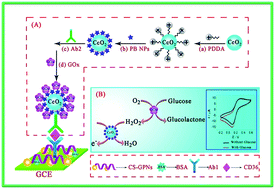
At room temperature, 100 μL of 250 μg mL−1 rabbit anti-human CD36 polyclonal antibody H-300 (Ab2) was added to 2.0 mL of the prepared PB@CeO2NP composite. The mixture was gently mixed for 6 h and then 200 μL of 200 μg mL−1 GOx was added and mixed for another 6.0 h at 4 °C. After the reaction, the above mixture was centrifuged at 3500 rpm for 15 min at 4 °C and resuspended in 2.5 mL of PBS to obtain the PB@CeO2NP–GOx–Ab2 bioconjugates. The stock Ab2 bioconjugate solution was stored at 4 °C for future use. The preparation procedure of the PB@CeO2NP–GOx–Ab2 bioconjugate is shown in Scheme 1A.
 |
| | Scheme 1 The preparation process of the second antibody bioconjugates (A) and the possible electrochemical catalysis mechanism of the sandwich-type electrochemical immunosensor (B). | |
Fabrication of the electrochemical immunosensor
Prior to surface modification, a glassy carbon electrode (GCE) was mechanically polished sequentially with 0.3 and 0.05 μm alumina powder, followed by ultrasonic cleaning in ethanol and deionized water, each for 60 s. Subsequently, the chitosan–gold nanoparticle (CS–GNP) film was coated on the pretreated GCE by electrochemical deposition. Concretely, the GCE was immersed into the mixture of chitosan (0.5%) and HAuCl4 (0.25 mg mL−1) was deposited at an applied potential of −1.5 V for 120 s. Then, the prepared sensor was rinsed with deionized water to remove unbound materials from the electrode surface. To activate the carboxyl groups of the mouse monoclonal antibody against His-tag (Ab1), NHS (100 mM) and EDC (400 mM) were mixed with 200 μL Ab1 (100 μg mL−1) under stirring for 4 h at room temperature. Then the chitosan–GNP coated GCE was immersed in the above Ab1 solution for 8 h at 4 °C. The antibody molecules were immobilized on the electrode surface, which can be attributed to the formation of a covalent bond between the active –COOH group of the Ab1 and the –NH2 group of chitosan. The non-specific binding sites were blocked with 2.0% BSA solution at 37 °C for 1 h, which was followed by rinsing with buffer and deionized water. The fabrication of the immunosensor is depicted in Scheme 1.
Measurement procedure
For the immunoreaction, the modified immunosensor was first incubated with the CD36 standard solutions or serum samples with different concentrations for 1 h at room temperature, which was followed by washing with PBS. Next, it was further incubated with 20 μL of the PB@CeO2NP–GOx–Ab2 bioconjugate for another 40 min at room temperature, followed by washing with PBS.
For the electrochemical assay, the above electrode was transferred to the electrochemical cell containing 3.0 mL pH 7.4 PBS and 3.0 mM glucose. SWV from 400 to 0 mV (vs. SCE) with an amplitude of 25 mV, a frequency of 5 Hz and a potential step of 4 mV was performed to record the electrochemical responses.
Results and discussion
Morphology of the PB@CeO2NP–GOx–Ab2 bioconjugate preparation process by SEM characterization
Scanning electron microscopy (SEM) was utilized to investigate the morphology of the PB@CeO2NP–GOx–Ab2 bioconjugate. Firstly, a typical SEM image of CeO2NPs is shown in Fig. 1A. It can be seen that all CeO2NPs have a rectangular structure with very clean surface profiles, which is consistent with the literature.24 The diameters of the CeO2NPs are found in the range from 20 to 50 nm. However, after the adsorption of PB NPs, some small granules with a size of less than 10 nm occur on the CeO2NP surfaces (Fig. 1B). Simultaneously, the surface profiles of the PB@CeO2NPs became blurred. When Ab2 and GOx were anchored on the PB@CeO2NPs, the surface of the PB@CeO2NP–GOx–Ab2 bioconjugate became more blurred due to the loading of protein molecules on the PB@CeO2NPs (Fig. 1C).
 |
| | Fig. 1 SEM images of CeO2NPs (A), PB@CeO2 NPs (B) and the PB@CeO2NP–GOx–Ab2 bioconjugate (C). | |
Step-wise CV characterization of the immunosensor layers
Cyclic voltammetry (CV) was used to study the successive layer formation of the proposed immunosensor. The cyclic voltammograms shown in Fig. 2 denote the kinetics of the electron transfer, which was marked by discrete changes in the peak current and the separation of the peak potentials. The bare GCE was characterized by fast electron transfer kinetics, limited primarily by the [Fe(CN6)]3−/4− diffusion to the surface. Accordingly, CV of the bare GCE showed a small separation between the anodic and cathodic peak potentials, corresponding to the high reversibility of the redox process (Fig. 2a). Moreover, as expected, the electrochemical deposition of the chitosan–GNP nanocomposite film on the GCE resulted in a remarkable increase in peak current (Fig. 2b) and a little decrease in the peak potential separation, which indicates a good conductivity of the GNPs and a physisorption characteristic of [Fe(CN6)]3−/4− on the chitosan film, according to the electrostatic interaction. With the immobilization of Ab1 on the modified electrode surface, the peak current decreased (Fig. 2c), which further decreased when blocked with 0.25% BSA (Fig. 2d). In addition, both the separation of redox peak potentials in curve c and d increased. These phenomena could be attributed to the immobilized protein, which blocked the diffusion of the redox probe of [Fe(CN6)]3−/4− and led to a less reversible electrochemical process.
 |
| | Fig. 2 CV of differently modified electrodes in pH 7.4 PBS containing 5.0 mM [Fe(CN)6]3−/4− as a redox probe at a scan rate of 50 mV s−1: (a) bare GCE, (b) CS–GPN/GCE, (c) Ab1/CS–GPN/GCE, (d) BSA/Ab1/CS–GPN/GCE. | |
Validation of the amplified strategy of the PB@CeO2NP–GOx–Ab2 bioconjugate
To demonstrate the intrinsic redox electrochemical properties and electrochemical catalytic activity of the PB@CeO2NP–GOx–Ab2 bioconjugate, the proposed immunosensor of the BSA/Ab1/CS–GNP/GCE was initially incubated with 50 ng mL−1 CD36 for 60 min. The resultant electrode was characterized by CV in the electrochemical cell containing 2 mL pH 7.4 PBS and the result is shown as curve a in Fig. 3. No obvious redox peak was observed at the CD36/BSA/Ab1/CS–GNP/GCE, due to the lack of a redox probe. Successively, the PB@CeO2NP–GOx–Ab2 bioconjugate was loaded on the CD36/BSA/Ab1/CS–GNP/GCE according to the sandwich-type reaction. An obvious deoxidation peak (Fig. 3, curve b) was found, implying that the effective electroactivity of the PB@CeO2NP–GOx–Ab2 bioconjugate has been successfully captured. Moreover, we have studied the electrochemical catalysis of the PB@CeO2NP–GOx–Ab2 bioconjugate in the presence of glucose. As expected, the deoxidation peak current obviously enhanced with the addition of glucose in the electrochemical cell, certifying a typical electrocatalytic reduction process of H2O2 (Fig. 3, curve c). Thus, this result suggests that not only the PB@CeO2NP–GOx–Ab2 bioconjugate acts as a good redox probe to achieve the CV signal, but also the immobilized GOx may retain high enzymatic catalytic activity and effectively amplifies the response signals.
 |
| | Fig. 3 CV curves obtained for differently modified electrodes in pH 7.4 PBS. (a) CD36/BSA/Ab1/CS–GNP/GCE. The CV waves after the sandwich-type immunoreaction of the resulted immunosensor in the absence (b) and in the presence (c) of 3.0 mM glucose in the electrolytic cell. (Scan rate 50 mV s−1). | |
Optimization of the glucose concentration
The concentration of glucose is an important parameter that determines the amplified signal of the present immunosensor. To optimize the concentration of glucose, the CD36/BSA/Ab1/CS–GNP/GCE, which reacted with the PB@CeO2NP–GOx–Ab2 bioconjugate, was scanned using SWV in PBS containing glucose with various concentrations. After repeating the SWV scans for 7 times, with a potential range from 0 to 0.40 V, the relative standard deviation (RSD) of the peak current was calculated and shown as error bars. As shown in Fig. 4, it indicates that the immunosensor has acceptable reproducibility. From Fig. 4, it is evident that only glucose that was 3.0 mM or more exhibited a relatively high response, indicating the complete cascade catalysis of the bound PB@CeO2NP–GOx–Ab2 bioconjugate. As a result, we employed an optimized glucose concentration of 3.0 mM for the further analyses.
 |
| | Fig. 4 Influence of the glucose concentration on the SWV response of the immunosensor when immunoreacted with 0.50 ng mL−1 CD36. | |
Electrochemical detection of CD36
The fabricated immunosensors were incubated in the CD36 standard solution (at room temperature for 60 min). The electrodes were then incubated with 20 μL PB@CeO2NP–GOx–Ab2 bioconjugate for 40 min, and gently rinsed using 0.10 M PBS prior to performing each electrochemical measurement. SWV was performed in PBS containing 3.0 mM glucose. A control experiment was initially performed using the BSA/Ab1/CS–GNP/GCE sensor to incubate with 10 μL PB@CeO2NPs–GOx–Ab2 bioconjugate, in the absence of any analyte. Curve a, which is depicted in the inset of Fig. 5, shows the SWV of the control experiment. The amperometric response reflects the sum of the nonspecific adsorption of the PB@CeO2NP–GOx–Ab2 bioconjugate and the catalysis of glucose. Furthermore, from the SWV curves in the inset of Fig. 5, it is evident that the magnitude of the catalysis current increases with an increase in the concentration of CD36. The results suggest that the CD36 concentration can be determined with the immunosensor. The standard calibration curve for CD36 detection is shown in Fig. 5. It was found that the SWV peak current increased linearly with an increase in the logarithm for the CD36 concentrations in the range from 5.0 × 10⁻³ to 80 ng mL−1, and the detection limit was 2.0 pg mL−1. According to the linear equation, we could detect the CD36 concentration quantitatively.
 |
| | Fig. 5 Calibration curve of the peak current of the immunosensor vs. different concentrations of CD36. The inset shows the SWV responses of the immunosensor after incubation in different concentrations (from 5.0 × 10⁻³ to 80 ng mL−1) of target CD36 under optimal conditions. | |
Specificity, stability and reproducibility of the immunosensor
Furthermore, the specificity of the proposed immunosensor was investigated. The SWV signal was detected when the immunosensors were incubated with a mixture containing 1.0 ng mL−1 HSA, 1.0 ng mL−1 LPS, 1.0 ng mL−1 SR-A and 0.10 ng mL−1 CD36, and was compared to that of each pure component. Fig. 6 indicates that the immunosensor has a good selectivity for CD36.
 |
| | Fig. 6 Specificity of the immunosensor for CD36 by comparing it with different interfering proteins: (a) 1.0 ng mL−1 HSA; (b) 1.0 ng mL−1 LPS; (c)1.0 ng mL−1 SR-A; (d) 0.10 ng mL−1 CD36; (e) a mixture containing 1.0 ng mL−1 HAS, 1.0 ng mL−1 LPS, 1.0 ng mL−1 SR-A and 0.10 ng mL−1 CD36. | |
The stability of the proposed immunosensor was evaluated by a long-term storage assay. Both the prepared immunosensor and PB@CeO2NP–GOx–Ab2 bioconjugate solutions were stored at 4 °C and SWV was measured based on the sandwiched immunoreaction at 1.0 ng mL−1 every week. During the first week, no obvious change was found and the response changed less than 4.1% of the initial current response. After storage for three weeks, the SWV response maintained 90% of the initial value (for the data see the ESI†). The results suggested that the prepared nanocomposite could maintain a favorable electroactivity and the developed aptasensor, used for CD36 analysis, had a satisfactory stability.
To test the intra- and inter-sensor reproducibility of the proposed immunoassay, three samples of different CD36 concentration (1.0, 10 and 80 ng mL−1) were tested first with the same electrode and then with different electrodes. The maximum value of the relative standard deviation was 8.9% (n = 5) for the intra-assay and 11.2% (n = 5) for the inter-assay. This indicates that our detection strategy offers a good reproducibility for the detection of CD36.
Application in the analysis of serum samples
The analytical reliability and application potential of the proposed method was evaluated by detecting CD36 in human serum samples with recovery experiments using standard addition methods. The serum samples were prepared by adding CD36 of different concentrations to human serum. The results, shown in Table 2, illustrate that an acceptable recovery was achieved (between 95% and 104%), indicating good accuracy of the proposed method for the detection of CD36 in clinical samples.
Table 2 Determination of CD36 added to normal human serum with the proposed immunosensor
| Sample no. |
Add (ng mL−1) |
Found (ng mL−1) |
Recovery (%) |
| 1 |
5.0 × 10⁻² |
5.2 × 10⁻² |
104 |
| 2 |
1.0 × 10⁻¹ |
9.5 × 10⁻² |
95 |
| 3 |
1.0 |
1.0 × 10⁻² |
100 |
| 4 |
5.0 |
4.9 |
98 |
| 5 |
50 |
52 |
104 |
Conclusions
In summary, this work has designed a new and signal-on electrochemical immunosensor for the sensitive detection of CD36 based on a signal amplified strategy. PB@CeO2NPs play a dual role as redox probes and artificial peroxidase, which can cooperate with GOx to form the cascade catalysis in the presence of glucose for signal amplification. In addition, this immunosensor interface of a CS–GNP nanocomposite film possessed excellent properties, such as good biocompatibility, high specific surface area and good electron transport capacity. The detection mechanism is based on the measurement of electrochemical signal changes induced by the capture of a PB@CeO2NP–GOx–Ab2 bioconjugate with interfacial sandwiched immunoreactions in the test solution containing glucose. By integrating the immune recognition of this molecular biological technology and nanobiotechnology with electrochemical detection, this novel cascade signal amplification strategy can determine the target of CD36 down to the femtogram level. Furthermore, this immunosensor can also be employed for the detection of other clinically significant biomarkers.
Acknowledgements
We gratefully thank the National Natural Science Foundation of China (81370836) and the Natural Science Foundation Project of Chongqing City (CSTC2011JJA10078), China.
Notes and references
- D. Neculai, M. Schwake, M. Ravichandran, F. Zunke, R. F. Collins, J. Peters, M. Neculai, J. Plumb, P. Loppnau, J. C. Pizarro, A. Seitova, W. S. Trimble, P. Saftig, S. Grinstein and S. Dhe-Paganon, Nature, 2013, 504, 172–176 CrossRef CAS PubMed.
- R. Nergiz-Unal, T. Rademakers, J. M. Cosemans and J. W. Heemskerk, Cardiovasc. Hematol. Agents Med. Chem., 2011, 9, 42–55 CrossRef CAS.
- S. Srikanthan, W. Li, R. L. Silverstein and T. M. McIntyre, J. Thromb. Haemostasis, 2014, 12, 1906–1917 CrossRef CAS PubMed.
- R. L. Silverstein and M. Febbraio, Sci. Signaling, 2009, 2, re3 CrossRef PubMed.
- R. L. Silverstein, W. Li, Y. M. Park and S. O. Rahaman, Trans. Am. Clin. Climatol. Assoc., 2010, 121, 206–220 Search PubMed.
- B. V. Chikkaveeraiah, A. A. Bhirde, N. Y. Morgan, H. S. Eden and X. Y. Chen, ACS Nano, 2012, 6, 6546–6561 CrossRef CAS PubMed.
- N. J. Ronkainen, H. B. Halsall and W. R. Heineman, Chem. Soc. Rev., 2010, 39, 1747–1763 RSC.
- X. Pei, B. Zhang, J. Tang, B. Liu, W. Lai and D. Tang, Anal. Chim. Acta, 2013, 758, 1–18 CrossRef CAS PubMed.
- L. Chen, X. Wang, X. Zhang and H. Zhang, J. Mater. Chem., 2012, 22, 22090–22096 RSC.
- J. Han, Y. Zhuo, Y. Chai, R. Yuan, W. Zhang and Q. Zhu, Anal. Chim. Acta, 2012, 746, 70–76 CrossRef CAS PubMed.
- P. J. Ni, Y. Zhang, Y. J. Sun, Y. Shi, H. C. Dai, J. T. Hu and Z. Li, RSC Adv., 2013, 3, 15987–15992 RSC.
- N. Zhu, S. Han, S. Gan, J. Ulstrup and Q. Chi, Adv. Funct. Mater., 2013, 23, 5297–5306 CrossRef CAS.
- A. V. N. Kumar and J. Joseph, RSC Adv., 2014, 4, 10975–10981 RSC.
- X. Chen, X. L. Jia, J. M. Han, J. Ma and Z. F. Ma, Biosens. Bioelectron., 2013, 50, 356–361 CrossRef CAS PubMed.
- Y. M. Liu, W. J. Guo, X. L. Qin, X. Meng, X. W. Zhu, J. P. Wang, M. S. Pei and L. Y. Wang, RSC Adv., 2014, 4, 21891–21898 RSC.
- L. Y. Cao, Y. L. Liu, B. H. Zhang and L. Lu, ACS Appl. Mater. Interfaces, 2010, 2, 2339–2346 CAS.
- F. Yang, J. Graciani, J. Evans, P. Liu, J. Hrbek, J. F. Sanz and J. A. Rodriguez, J. Am. Chem. Soc., 2011, 133, 3444–3451 CrossRef CAS PubMed.
- S. Park, J. M. Vohs and R. J. Gorte, Nature, 2000, 404, 265–267 CrossRef CAS PubMed.
- Y. C. Dong, S. Hampshire, B. Lin, Y. H. Ling and X. Z. Zhang, J. Power Sources, 2010, 195, 6510–6515 CrossRef CAS PubMed.
- M. E. Contreras-Garcia, M. L. Garcia-Benjume, V. I. Macias-Andres, E. Barajas-Ledesma, A. Medina-Flores and M. I. Espitia-Cabrera, Mater. Sci. Eng., B, 2014, 183, 78–85 CrossRef CAS PubMed.
- V. Mohanta and S. Patil, Langmuir, 2013, 29, 13123–13128 CrossRef CAS PubMed.
- Y. Zhuo, P.-X. Yuan, R. Yuan, Y.-Q. Chai and C.-L. Hong, Biomaterials, 2009, 30, 2284–2290 CrossRef CAS PubMed.
- Q. Zhang, X. J. Chen, F. L. Tu and C. Yao, Biosens. Bioelectron., 2014, 59, 377–383 CrossRef CAS PubMed.
- F. L. Qu, H. Y. Sun, S. F. Zhang, J. M. You and M. H. Yang, Electrochim. Acta, 2012, 61, 173–178 CrossRef CAS PubMed.
- Z. Y. Zhong, J. L. Shan, Z. M. Zhang, Y. Qing and D. Wang, Electroanalysis, 2010, 22, 2569–2575 CrossRef CAS.
- Y. X. Dai, Y. Y. Cai, Y. F. Zhao, D. Wu, B. Liu, R. Li, M. H. Yang, Q. Wei, B. Du and H. Li, Biosens. Bioelectron., 2011, 28, 112–116 CrossRef CAS PubMed.
- Q. Gao, N. Liu and Z. F. Ma, Anal. Chim. Acta, 2014, 829, 15–21 CrossRef CAS PubMed.
Footnote |
| † Electronic supplementary information (ESI) available. See DOI: 10.1039/c4ra10413g |
|
| This journal is © The Royal Society of Chemistry 2015 |
Click here to see how this site uses Cookies. View our privacy policy here.