
Sulfamethazine copper(II) complexes as antimicrobial thermal stabilizers and co-stabilizers for rigid PVC: spectroscopic, thermal, and DFT studies

Ahmed M. Mansour* and Riham R. Mohamed
Chemistry Department, Faculty of Science, Cairo University, Gamaa Street, Giza 12613, Egypt. E-mail: inorganic_am@yahoo.com; mansour@sci.cu.edu.eg; Fax: +20 2 35728843; Tel: +20 2 01222211253

Received 17th July 2014 , Accepted 2nd December 2014

First published on 2nd December 2014


Abstract

[CuL2(OH2)]·1.5H2O (1), [CuL2(bpy)]·0.66H2O (2) and [CuLQ(OH2)]·H2O (3) (HL = sulfamethazine, bpy = 2,2′-bipyridine and HQ = 8-hydroxyquinoline) complexes were prepared, characterized (elemental analysis, infrared spectroscopy, thermogravimetric analysis, ultraviolet-visible spectroscopy, magnetic and conductivity measurement), and tested for their antibacterial activity. Coordination of HL to the Cu(II) ion did not markedly change its toxicity, but the presence of a secondary ligand gave rise to lower activity. Sulfamethazine and its complexes have been investigated as thermal stabilizers and co-stabilizers for rigid poly(vinyl chloride). A synergism has been achieved when the investigated compounds were mixed in an equivalent weight ratio with the reference stabilizers. The experimental studies have been complemented by density functional theory data in terms of optimization, natural bond orbital (NBO) analysis, and molecular electrostatic potential maps. The structural-thermal stabilization relationship showed that energy of the highest occupied molecular orbital, ΔE, and softness were the most useful descriptors for the correlation with the thermal stability.

1. Introduction

Metal complexes of sulfonamides are of great interest in the field of bioinorganic chemistry.1–3 Sulfonamides are a vital class of antimicrobial agents because of their low cost, and their ability to slow down the bacterial growth in the wounds or infected organs without appreciable toxicity to normal tissues. For example, zinc sulfadiazine is used to prevent bacterial infections in animals suffering from burns,2 whereas a silver sulfadiazine complex is applied in human topical burn therapy.3 As reported, sulfonamides can interact with metal ions such as mono-, bi- or tridentate ligands.4 Sulfamethazine (HL) (Fig. 1) is a sulfa-based drug used as an antibacterial agent to treat diseases.5 In a similar way to other sulfonamides, HL presents a chemical structure that favors chemical modification by means of complexation with metal ions to initiate new complexes with more convenient antimicrobial properties.6 Binuclear [Cu2(CH3COO)2L2]·2dmf and polymeric {[CuL2]·2H2O} complexes have been isolated, characterized, and their magnetic properties were discussed by Borrás et al.7 Recently, the crystal structures of octahedral Cu(II),8 Zn(II), and Cd(II) sulfamethazine,9 prepared from the acid form in the presence of ammonia as a deprotonating agent, showed important aspects in which the coordination sphere is formed from pyrimidic, and sulfonamidic N atoms of two sulfa molecules, water, and the terminal amino of a third sulfa molecule.
image file: c4ra07212j-f1.tif
Fig. 1 Structure of the sulfamethazine ligand (HL) utilized in this work.

Poly(vinyl chloride) (PVC) is widely used in the construction of materials, food packaging, decoration, medication and commodities (construction tubing, films and toys). Some attempts were made to prepare antibacterial PVC composites to protect PVC from bacteria or microbes during their daily usage by adding zirconium phosphate containing nano Ag+ (ref. 10) or TiO2/Ag+ nanoparticles.11 However, PVC undergoes extensive degradation during its molding and applications at higher temperatures12 come with an unacceptable discoloration, and a loss of physical and mechanical properties together with a change in molecular weight.13 Various kinds of thermal stabilizers have been used to inhibit the degradation of PVC,14 but unfortunately the heavy metal chlorides formed as by-products acted as a catalyst for the subsequent dehydrochlorination of PVC.15 Organic stabilizers have been studied for use as a thermal stabilizer for PVC.16,17 A new trend has been established for the use of thermal stabilizers with an antimicrobial nature to obtain thermally stable, antimicrobial PVC composites.16,17

In the present work, three Cu(II) complexes containing HL as a primary ligand, and 2,2′-bipyridine (bpy), or 8-hydroxyquinoline (HQ) as a secondary ligand were prepared (Fig. 2), and characterized, to assist in the understanding of the modulation of the antibacterial behavior of HL upon complexation and/or in the presence of another ligand. Investigation of the compounds studied as thermally stable antimicrobial PVC composites was also explored. Molecular geometry, electronic structure,18,19 NBO analysis, and molecular electrostatic potential maps are also discussed.


image file: c4ra07212j-f2.tif
Fig. 2 Local minimum structures of complexes (a) 1, (b) 2, and (c) 3 obtained at the B3LYP/LANL2DZ level of theory.

2. Experimental

2.1. Synthesis of complexes

Complex 1 (ref. 8) was prepared by dissolving 2 mmol of NaL (602 mg) with 1 mmol of copper sulfate (CuSO4·5H2O; 249 mg) in 20 mL of water and the solution was heated to reflux for 2 h, after which a brick-red complex was isolated, separated by filtration and washed with water. Complexes 2 and 3 were synthesized by adding 1 mmol of bpy (158 mg) or HQ (146 mg) to a 1 mmol aqueous solution of CuSO4·5H2O, and the solution was gently heated until there was complete dissolution of the secondary ligand, and a color change. Next, an aqueous solution of sodium sulfamethazine (2 mmol for 2, and 1 mmol for 3) was added and the resulting solution was refluxed for 4 h, where green and brown complexes were precipitated, for 2 and 3, respectively. The low molar conductance values indicated that the complexes had a non-electrolytic nature.20 Binary copper complexes of bpy, and HQ were also used for comparison with the new mixed-ligand complexes. The purity of the investigated compounds was checked using thin-layer chromatography as a secondary determinant of purity.

Data for 1: Color: brick-red. Yield: 73%. Elemental analysis (%): calculated – C24H28CuN8O5S2·1.5H2O: C 43.43, H 4.37, N 16.89, found – C 43.49, H 4.16, N 17.18. Infrared spectroscopy (IR) (cm−1): 3538, ν(H2O), 3360 ν(NHss2), 1625 ν(CN)py, 1591 ν(CN)py, 979 ν(SN), 675 ν(CS). Mass spectroscopy (MS): m/z: 619 [M+]. Ultraviolet-visible spectroscopy (UV-vis; dimethylformamide (DMF), nm): 295, 715. Molar conductance (10−3 M, DMF, Ω−1 cm2 mol−1): 3.23. μeff (298 K, μB): 2.21.

Data for 2: Color: green. Yield: 89%. Elemental analysis (%): calculated – C34H34CuN10O4S2·0.66H2O: C 51.89, H 4.49, N 17.80, found: C 52.76, H 4.17, N 18.46. IR (cm−1): 3469 ν(NHass2), 3354 ν(NHss2), 1625 ν(C[double bond, length as m-dash]N)py, 1603 ν(C[double bond, length as m-dash]N)bpy, (1568, 1475, 1447) ν(C[double bond, length as m-dash]C)py, 972 ν(SN), 676 ν(CS). MS: m/z: 789 [M+]. UV-vis (DMF, nm): 300, 750. Molar conductance (10−3 M, DMF, Ω−1 cm2 mol−1): 8.50. μeff (298 K, μB): 1.85.

Data for 3: Color: brown. Yield: 81%. Elemental analysis (%): calculated – C21H19CuN5O3S·H2O: C 50.14, H 4.21, N 13.92, found: C 49.72, H 4.12, N 15.88. IR (cm−1): 3440 ν(NHass2), 3373 ν(NHss2), 1630 ν(C[double bond, length as m-dash]N)py, 1593 ν(C[double bond, length as m-dash]N)HQ, 1306 ν(C–O)HQ, 1498 ν(C[double bond, length as m-dash]C)sulfa, 1461 ν(C[double bond, length as m-dash]C)HQ, 1000 ν(SN), 674 ν(CS). MS: m/z: 522 [M+]. UV-vis (DMF, nm): 295, 340, 411, 690. Molar conductance (10−3 M, DMF, Ω−1 cm2 mol−1): 9.30. μeff (298 K, μB): 1.53.

2.2. Physical measurements

Fourier-transform infrared (FT-IR) spectra were recorded using potassium bromide pellets on a Jasco FTIR-460 Plus. The UV-vis spectra were scanned on a Shimadzu Lambda 4B spectrophotometer. Elemental microanalysis was performed using Elementar Vario EL III. Thermogravimetric analysis (TGA) was performed in a nitrogen (N2) atmosphere (20 mL min−1) in a platinum crucible with a heating rate of 10 °C min−1 using a Shimadzu DTG-60H simultaneous differential thermogravimetry (DTG)/thermogravimetry (TG) apparatus. Magnetic measurements were carried out on a Sherwood Scientific magnetic balance using the Gouy method,21 and mercury(II) tetrathiocyanatocobaltate(II) {Hg[Co(SCN)4]} as a calibrant. A digital Jenway 4310 conductivity meter (cell constant 1.02) was used for the determination of the molar conductance.

2.3. DFT calculations

The gas phase geometries of 1–3 were optimized without symmetry restrictions in the singlet state at DFT/B3LYP/LANL2DZ (ref. 22) level of theory using a Gaussian 03 package.23 Compounds 1–3 were characterized as local minima using harmonic frequency analysis. Electronic spectra were obtained using time dependent-density functional theory (TD-DFT).18,19 NBO analysis,24 molecular electrostatic potential maps25 and the analysis of frontier molecular orbitals were performed at the same level of theory.

2.4. Method of evaluation of the stabilizing efficiency

Samples of PVC (additive free, and K = 70, supplied by Hüls AG, Germany) were prepared by mixing 1 g of PVC powder with stabilizer (2% weight). Then, 0.2 g of the resulting fine powder was used in the study. Two methods were used for the evaluation of the stabilizing efficiency of the studied compounds. The first method was to measure the induction period (Ts) using Congo red dye paper, where its color changes from the red to blue once it reaches the evolved hydrogen chloride (HCl) gas at 180 °C in air.26 The second method was potentiometric measuring of the dehydrochlorination rate at 180 °C, in air (330 mL min−1) using a Sartorius Entris digital pH meter type G822.27 All the experiments were carried out in triplicate and the mean results are given. The extent of discoloration of PVC as a function of the degradation time was also determined by visually comparing the thermally degraded samples at various time intervals with the blank and the investigated reference thermal stabilizers.

2.5. Molecular mass determination by gel permeation chromatography (GPC)

The average molecular mass of PVC was determined using GPC-high-performance liquid chromatography, with a Waters 600 system controller, and a 717 Plus autosampler with a Phenomenx Phenogel™ 5 μm 50 A column, 300 × 7.8 mm with detection using a Waters model 2410 refractive index detector. The eluent is THF (100% by volume). Flow rate: 0.7 mL min−1. Temperature: 50 °C. Injection volume: 25 μL.
2.5.1. Standards. Polystyrene 25[thin space (1/6-em)]000, 13[thin space (1/6-em)]000, 4000, 2500, 200 g mol−1 (1.0% m v−1). The cubic fit calibration curve was obtained using a Waters Millennium 32 GPC System Software.
2.5.2. Samples. Samples were dissolved in THF at an approximate 1.0% m v−1 concentration.

2.6. Antibacterial activity

The antibacterial activity of compounds was tested on Staphylococcus aureus as a Gram-positive bacterium, and Escherichia coli as a Gram-negative bacterium using a modified Kirby–Bauer disc diffusion method under standard conditions using Mueller-Hinton agar medium (tested for composition and pH), as previously reported.22

3. Results and discussion

3.1. IR assignments

In order to clarify the bonding modes of sulfamethazine, bpy, and HQ in the reported complexes, the IR spectra of the free ligands, and their complexes were studied, and assigned on the basis of the careful comparison ((ESI) Table S1). The shifting of ν(C[double bond, length as m-dash]N)py mode (py: pyrimidine) of HL28 to a lower wave number in 1 and the observation of two modes (1625 and 1591 cm−1) indicates that the two sulfa ligands attached to the copper ion are not iso-energetically bound (discussed later). The presence of ν(S–N) at a higher wave number (979 cm−1), with respect to HL,29 supports the interaction of a sulfonamidic N with a metal ion. The νss(SO2) mode was found at the same position as NaL indicating that this group remains intact. The IR spectra of the complexes prepared from either the nitrate or sulfate salts are typical and confirm that the anion of the metal salt has no role in the chelation. The bands observed at 1638, 1625, and 972 cm−1 in 2 were assigned to ν(C[double bond, length as m-dash]N)bpy, ν(C[double bond, length as m-dash]N)py and ν(S–N), respectively, suggesting that HL and bpy were bidentate ((ESI) Table S1). For 3, the absence of ν(OH), and the shifting of the ν(C[double bond, length as m-dash]N)HQ to a lower wave number (1593 cm−1) confirmed the mono-negatively bidentate nature of the HQ ligand. The IR spectrum of 3 also showed two bands at 1630 and 1000 cm−1 which were assigned to the ν(C[double bond, length as m-dash]N)py and ν(S–N) modes related to the involvement of sulfamethazine in the chelation through sulfonamidic and pyrimidic nitrogen atoms.
Table 1 Effect of mixing stabilizers of NaL on the thermal stability (Ts)a
Compound mixing ratio Induction time (min)*
a * The overall mixed stabilizer concentration was kept constant at 2 mass% of PVC.
NaL (25%)[thin space (1/6-em)]:[thin space (1/6-em)]DBLC (75%) 60
NaL (50%)[thin space (1/6-em)]:[thin space (1/6-em)]DBLC (50%) 74
NaL (75%)[thin space (1/6-em)]:[thin space (1/6-em)]DBLC (25%) 52
NaL (25%)[thin space (1/6-em)]:[thin space (1/6-em)]Ca–Zn stearate (75%) 56
NaL (50%)[thin space (1/6-em)]:[thin space (1/6-em)]Ca–Zn stearate (50%) 60
NaL (75%)[thin space (1/6-em)]:[thin space (1/6-em)]Ca–Zn stearate (25%) 52


3.2. TGA/DTA

The thermal decomposition of 1 was accompanied by a loss of 1.5H2O molecules, 4.26% (calculated: 4.06%) via two peaks at 47 °C and 80 °C. The TG curve of 2 exhibited a mass loss stage at 66 °C which was assigned to the desorption of 0.66H2O, 1.56% (calculated: 1.50%). Between 100 and 200 °C, complex 2 shows no weight loss. The degradation of 1 and 2 are incomplete in a N2 atmosphere up to 1000 °C reflecting their high stability30 with overall mass loss amounts of 63.51% and 83.08%, respectively. The TG curve of 3 showed three main decomposition events. The 1st stage at 72 °C is assigned to the loss of one hydrated H2O (found: 3.02%, calculated: 3.44%). The 2nd event (235 °C and 299 °C) was accompanied by elimination of NH2phSO2, and a pyrimidine moiety with a mass loss of 53.82% (calculated: 53.97%). The 3rd and 4th steps at 510 °C and 929 °C bring the total mass loss up to 87.74% (calculated: 87.85%) expected for metallic copper as a final residue. Therefore, the presence of two sulfa ligands will increase the stability of the thermal decomposition in the N2 atmosphere.

3.3. DFT studies

The optimization of 1 was based on its crystallographic data8 by taking into account that the terminal NH2 group of a third sulfa molecule is bonded to the metal ion. As shown in Fig. 2a, the Cu atom exhibits a distorted square-pyramidal geometry which is coordinated to two sulfonamidic nitrogen atoms [Cu–N12 = 2.098 Å, and Cu–N31 = 2.050 Å], one pyrimidic [Cu–N20 = 2.104 Å] of two sulfa molecules, water [Cu–O40 = 2.184 Å], and terminal NH2 [Cu–N69 = 2.039 Å]. The value of the angular structural index parameter τ (ref. 31) is 0.15 which is characteristic of square-pyramidal stereochemistry. The pyrimidic N39 is close to Cu atom by 2.817 Å. If this distance is short enough to be considered as Cu–N interaction, the coordination polyhedron around the Cu can be considered to be a highly distorted octahedron. In this case, it is worth noting that while the Cu–N bond lengths of one sulfa ligand are somewhat similar [Cu–N12 and Cu–N20], for the other molecule, one of the distances is longer than the other (ESI Table S2). The difference between the four-member chelate angles of the two sulfa molecules [N12–Cu–N20 = 64.1° and N31–Cu–N39 = 53.8°] and the axial angles [N20–Cu–N39 = 92.4° and N12–Cu–N39 = 118.4°] is the cause of the distortion. Selected calculated bond lengths and angles are compared in Table S2. A good agreement was found except for the Cu–N69, which deviated largely from the experimental value. This happened because the calculations were performed in the gaseous state, whereas packing molecules with inter- and intra-molecular interactions are treated in the experimental measurements. According to NBO analysis, the electronic arrangement of CuII is [Ar]4s0.273d9.344p0.425p0.01, 10.029 valence and 0.010 Rydberg electrons with 28.034 total electrons leaving +0.9654 as a natural charge Cu atom. The occupancies of Cu 3d orbitals are as follows: dxy1.992 dxz1.977 dyz1.860 dx2y21.720 dz21.790.

Fig. 2b shows the optimized structure of [CuL2(bpy)] (2) together with the labeling scheme used. Complex 2 contains a copper atom in a highly-symmetric octahedral geometry coordinated by four N atoms of two anionic bidentate sulfamethazine molecules, and two N atoms of a neutral bpy ligand. The two covalent sulfonamidic bond distances are equal (2.437 Å), and longer than pyrimidic Cu–N bonds (2.033 Å). The bond distances Cu–Nbpy (2.056 Å) are also equal. The electronic configuration of the Cu atom is [Ar]4s0.273d9.334p0.415p0.01, 17.994 core electrons, 10.009 valence electrons, and 0.01508 Rydberg electrons with 28.018 electrons as total electrons, which is in agreement with the calculated natural charge (+0.9817e) on the copper atom. The occupancies of Cu 3d orbitals are as follows: dxy1.988 dxz1.992 dyz1.374 dx2y21.985 dz21.990.

A view of the optimized structure [CuLQ(OH2)] 3 and its atom numbering are shown in Fig. 2c. The copper is four coordinated with N2O2 environment, coming from a bidentate N,O quinolinate ligand [Cu–N50 = 2.003 Å, Cu–O49 = 1.970 Å], sulfonamidic N6 [Cu–N6 = 1.988 Å] of an anionic sulfa drug, and water [Cu–O51 = 2.037 Å]. If the interaction of the N5 atom with Cu (2.818 Å) is considered as a five bond, thus the structure is a highly distorted square-pyramidal (τ = 0.21). The electronic arrangement of CuII is [Ar]4s0.293d9.354p0.32, 17.995 core electrons, 9.950 valence, and 0.009 Rydberg electrons with 27.954 total electrons leaving +1.045 as a natural charge on the copper atom. The occupancies of the Cu 3d orbitals are as follows: dxy1.826 dxz1.887 dyz1.952 dx2y21.699 dz21.981.

3.4. Electronic structure

Sulfonamides and their derivatives were characterized by a single absorption band at 260 nm.4 The electronic spectrum of NaL showed two absorption bands in DMF at 260 and 276 nm.29 Complex 1 displayed two absorption bands at 295, and 715 nm (ESI, Fig. S1) assigned to internal ligand transitions, and the unresolved (2B1g2B2g, 2B1g2A1g, and 2B1g2E1g) transition, in that order, in octahedral geometry, where the hexacoordinated environment is completed by a solvent and/or the terminal NH2 of a third sulfa molecule.32 The spectrum of 2 (ESI, Fig. S1) showed a sharp band at 300 nm allocated to π → π* of the aromatic systems as well as a broad band at 750 nm assigned to a d–d transition in an octahedral geometry. The solution of HQ itself displayed two electronic transitions at 315 and 380 nm. Coordination of only HQ to Cu(II) gave rise to four bands at 290, 338, 412, and 595 nm (ESI, Fig. S1). The broad band at 412 nm can be assigned to ligand to metal charge transfer (LMCT) transition for the quinolinate,33 while the band at 595 nm is attributed to a d–d transition. Complex 3 is characterized by four bands at 295, 340, 411, and 690 nm. Comparison between 3 and the binary complex suggested that the internal ligand transitions are established at 295 and 340 nm, LMCT from quinolinate moiety is at 411 nm, and the unresolved d–d transitions can be considered to be at 690 nm in octahedral geometry.

This study was supported by TD-DFT calculations in the gas phase. In the model structures of 1–3, to reduce the computer time, the aniline ring was replaced by a methyl group. Three absorption bands at 333, 481, and 631 nm with oscillator strengths of 0.0468, 0.0345, and 0.0051 are the features of 1. The band at 631 nm is arising from H → L (highest occupied molecular orbital (HOMO): H and lowest unoccupied molecular orbital (LUMO): L), which is actually dyz → dx2y2, (ESI, Fig. S2) characterized to octahedral geometry. The band at 481 nm is allocated to H/H−1 → L, while the transition at 333 nm is accounted for H−7 → L [π(SO2) → dx2y2 LMCT]. The TD-DFT spectrum of 2 is composed of three transitions at 477, 516, and 817 nm assigned to H−2 → L+1, H−3 → L, and H−1 → L. LUMO with β-spin is mainly of Cu dx2y2 character with contributions from π-bonding of bpy rings, whereas LUMO+1 is mainly of Cu dz2 nature (Fig. 3). Therefore, the electronic transition at 817 nm is assigned to dxz → dx2y2. Assignments of the other transitions are as shown in Fig. 3. Complex 3 showed mainly three bands at 368, 513, and 772 nm assigned to H−5 → L, H−1 → L, and H−2/H−3 → L as well as two shoulders at 374, and 461 nm allocated to H−3 → L, and H−2 → L/H → L+1, respectively. As shown in Fig. 4, the band at 368 nm characterizes the LMCT from the quinolinate to Cu dz2, while the one at 461 nm is assigned to π(SO2)/π(py)/π(An) → dz2 LMCT.


image file: c4ra07212j-f3.tif
Fig. 3 TD-DFT calculated electronic transitions for complex 2.

image file: c4ra07212j-f4.tif
Fig. 4 TD-DFT calculated electronic transitions for complex 3.

The observed effective magnetic moment values are 2.21, and 1.85μB (298 K) for 1, and 2, respectively. These values are in the acceptable range (1.60–2.20μB) for the non-interacting magnetically diluted copper complexes.34 Complex 3 shows a slightly low magnetic moment value (1.53μB) that may indicate that the copper centers are anti-ferromagnetically coupled to some extent.18

3.5. Antibacterial activity

Sodium sulfamethazine and its complexes were screened in vitro for their antibacterial activity against S. aureus as a Gram(+) organism, and E. coli as a Gram(−) organism. Tetracycline was used as a standard and tests with this were performed under the same conditions. NaL showed higher toxicity against S. aureus than against E. coli that may be because of the different cell wall structure of the bacteria tested. Complex 1 is able to kill the microorganisms with a large inhibition zone when compared to NaL. It is well known that the active species of the sulfamethazine drug is actually the ionic form. In other words, sulfamethazine penetrates the bacterial cells in the unionized form and once they enter a cell, their bacterial action would be because of its ionized form.35 The increased activity of 1 can be explained by Tweedy's chelation theory,36 which determined that the lipophilicity of the organic ligand is changed by reducing of the polarizability of the Mn+ ion via the L → M donation, and the possible electron delocalization over the complexes. Lipophilicity is related to membrane permeation in biological systems. Complex 1 may also release the anionic form of sulfamethazine when it enters into the cell. In contrast, complexes 2 and 3 showed lower activity when comparing NaL with complex 1. Complex 3 containing quinolinate and one sulfa molecule is about three times more active than the bpy 2 with two sulfa ligands. This behavior can be interpreted in terms of lipophilicity, stability, and the strength of the sulfonamidic Cu–N bonds, not in terms of the number of sulfa molecules per complex. The relationship between chelation, and bacterial toxicity is very complex, and other factors such as steric properties, electronic properties, diffusion, receptor sites, and pharmacokinetics should be considered.

3.6. Thermal stabilization

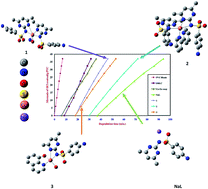
3.6.1. Stabilization of thermally degraded rigid PVC. The results (ESI, Table S3) of the thermal stabilization of rigid PVC stabilized by the compounds studied indicated the greater stabilizing efficiency of NaL, and its complexes compared with the reference compounds (dibasic lead carbonate (DBLC) and cadmium–barium–zinc (Cd–Ba–Zn) stearates). This was indicated by the longer thermal stability periods (Ts) during which no detectable amounts of HCl are liberated. As shown in Fig. 5 (ESI, Table S4), the stability value of NaL is almost seven times higher than those of the reference compounds. The efficiency is attributed to their radical potency, which interferes with the PVC radical degradation process. This most probably occurs not only through trapping of the radical species in the degradation process, but also by blocking the radical sites created on the PVC chains.
image file: c4ra07212j-f5.tif
Fig. 5 Dehydrochlorination rate of PVC blank, PVC stabilized with reference stabilizers and the stabilizers investigated. All experiments were carried out in triplicate and the mean results are given.
3.6.2. Effect of mixed stabilizers. It became of interest to examine the effect of mixing the investigated stabilizer, together with those used in industry, on the efficiency of stabilization in general. For this purpose, NaL was chosen for testing its efficiency as co-stabilizer. Mixing was done in the ranges of 0–100% of NaL relative to the reference. The total mixed stabilizer concentration was kept constant at 2 wt% based on the polymer weight. Results of the Ts value for each combination are shown in Table 1. As shown in Fig. 6 (ESI, Table S5), a true synergistic behavior was observed from the combination of NaL with any of the reference stabilizers used, irrespective of the class to which each reference stabilizer belonged. The maximum synergism was achieved, when NaL and either of the reference stabilizers were mixed in equimolar ratios (Table 1). The mixing process showed a slight improvement in the Ts (ESI, Fig. S3 and Table S6). A remarkable improvement in the dehydrochlorination rate (after the thermal stability) of the thermally degraded rigid PVC as a result of mixing was observed (ESI, Fig. S4 and Table S7). Thus, it seems that the different mechanisms by which both the investigated and the reference stabilizers work are beyond the obtained synergistic effect.
Table 2 GPC measurements of degraded PVC samples
Sample Degradation time (min) Mw (g mol−1) × 104 Mn (g mol−1) × 104 PD
PVC (blank) 0 27.30 11.9 2.294
PVC 30 26.46 9.943 2.662
PVC + NaL 30 26.12 10.483 2.492


image file: c4ra07212j-f6.tif
Fig. 6 Dehydrochlorination rate of PVC blank, PVC stabilized with DBLC and the investigated stabilizer (NaL) in different ratios. All experiments were carried out in triplicate and the mean results are given.
3.6.3. Elucidation of the molecular mass by GPC. GPC measurements were carried out on the PVC before and after 30 min of the thermal degradation process. The values of Mw, Mn and the polydispersity are presented in Table 2. The presence of the studied compounds results in a slight decrease in the Mw values of PVC. A decrease in the Mw value of the blank PVC sample from 2.730 × 10⁵ to 2.646 × 10⁵ upon 30 min of thermal degradation was observed. After the degradation, the Mw of the PVC sample stabilized with NaL decreased from 2.730 × 10⁵ to 2.612 × 10⁵. This confirms the good stabilizing effect of NaL, which decreases the extent of chain scission of PVC. The solubility test also indicates the absence of gel formation reflecting the absence of the crosslinking during the degradation. This is evidence for the high efficiency of the investigated compounds, which can preserve both the mechanical and physical properties of the polymer.
3.6.4. Effect of mixed stabilizers on the extent of discoloration of the thermally degraded PVC. The effect of mixing the stabilizer NaL with DBLC and Cd–Ba–Zn stearate, in various weight ratios, on the degree of discoloration of thermally degraded rigid PVC is shown in Table 3. All the samples were heated at 180 °C, in air, for 60 min. All the mixed stabilizers exhibited a lower extent of discoloration than the reference stabilizer, rather than the investigated stabilizers when they are used alone. In all cases, the sample treated with a 1[thin space (1/6-em)]:[thin space (1/6-em)]1 weight ratio of the investigated and reference stabilizers showed the least degree of discoloration and consequently better color stability. This confirms the synergistic effect between their modes of action.
Table 3 Effect of mixing NaL with reference stabilizers on the discoloration of thermally degraded rigid PVC at 180 °C, in air, for 60 mina
Weight ratio NaL[thin space (1/6-em)]:[thin space (1/6-em)]DBLC Color Weight ratio NaL[thin space (1/6-em)]:[thin space (1/6-em)]Ca–Zn stearate Color
a The overall mixed stabilizer concentration was kept constant at 2 mass% of PVC.
100/0 image file: c4ra07212j-u1.tif 100/0 image file: c4ra07212j-u2.tif
75/25 image file: c4ra07212j-u3.tif 75/25 image file: c4ra07212j-u4.tif
50/50 image file: c4ra07212j-u5.tif 50/50 image file: c4ra07212j-u6.tif
25/75 image file: c4ra07212j-u7.tif 25/75 image file: c4ra07212j-u8.tif
0/100 image file: c4ra07212j-u9.tif 0/100 image file: c4ra07212j-u10.tif


3.6.5. TGA for stabilized and non-stabilized PVC. TG data for the non-stabilized and stabilized PVC with the investigated stabilizers are shown in Table 4. The investigated stabilizers improved the thermal stability of PVC, as the initial decomposition temperature of PVC stabilized with NaL, and complexes 1–3 was recorded at 240, 275, 270, and 262 °C, respectively, compared with the unstabilized one, which was 180 °C. Furthermore, the unstabilized PVC lost 44% of its mass at 300 °C with respect to the stabilized one with NaL (58%), and complex 2 (42%). At 350 °C, the unstabilized PVC lost 61% of its mass, while PVC stabilized with NaL lost 65% of its mass and PVC stabilized with 2 lost 60%. From the previously mentioned results, it was clear that for all stabilizers above 250 °C their degradation rate is higher than that of PVC.
Table 4 TG data for PVC blank and PVC stabilized with the investigated stabilizers
T (°C) PVC PVC + NaL PVC + 2 PVC + 3 PVC + 1
Initial decomposition temperature (IDT) 180 °C 240 °C 270 °C 262 °C 275 °C

T (°C) Mass loss% of PVC Mass loss% of PVC + NaL Mass loss% of PVC + 2 Mass loss% of PVC + 3 Mass loss% of PVC + 1
200 5 0 0 0 0
250 11 22 0 0 0
280 32 52 20 15 20
300 44 58 42 40 42
350 61 65 60 60 60
400 62 63 65 62 65


3.7. Structure–thermal stabilization relationship

The crucial aim of structure–thermal stabilization relationship is to correlate the induction period (Ts) of the reported compounds with different quantum chemical descriptors such as EHOMO, ELUMO, energy gap, ionization energy, electron affinity, dipole moment, hardness, and softness. Energies and compositions of the frontier molecular orbitals18,25 are important parameters in several chemical and pharmacological processes. EHOMO is associated with the electron donating ability, while ELUMO indicates the ability of the molecule to accept electrons. A good correlation (R2 = 0.9998) was found between Ts and EHOMO, where the stability of PVC increases (except 3) as EHOMO decreases. ΔE can be used to decide whether the molecule is hard or soft. A soft molecule is more polarizable than the hard one. It was found that NaL, the most significant stabilizer compound here, has the highest ΔE and the lowest dipole moment values (ESI, Table S4). The chemical hardness and softness of a molecule are good indicators for the chemical reactivity of a given molecule. The order of the softness is NaL < 1 < 2 < 3 suggesting that a hard compound has a highest stabilization performance.

The molecular electrostatic potential (MEP) map24 is used for a qualitative explanation of electrophilic or nucleophilic attack as well as H-bond interactions, and defines regions of local negative and positive potential in the molecule. As shown in Fig. 7, the NaL molecule is covered by region of zero potential. For 1 and 3, the main contribution to the strong positive charge region is coming from the metal center, while a region of zero potential is spreading all over the remaining area. In the case of 2, a positive area is located over the metal, and the contribution to the negative region is pending on the bipyridine residue. Therefore, the presence of zero potential areas will increase the thermal stability of the PVC.


image file: c4ra07212j-f7.tif
Fig. 7 Molecular electrostatic potential of complexes (a) NaL, (b) 1, (c) 2, and (d) 3. The electron density isosurface is 0.004 au.

4. Conclusion

Structural studies of binary and ternary Cu(II) complexes of the sulfamethazine antibacterial drug have been studied both experimentally and theoretically and are correlated here. Complex 3 containing quinolinate and one sulfa molecule is three times more toxic, as antibacterial agent, than the bipyridine 2 with two sulfa ligands. This may be interpreted in terms of lipophilicity, stability, and the strength of the sulfonamidic Cu–N bonds, not in terms of the number of sulfa molecules per complex. Investigation of the studied compounds as thermally stable antimicrobial PVC composites has been also explored. A good stabilization effect of the free drug was observed, which can preserve both the mechanical and physical properties of the polymer by decreasing the extent of the chain scission of PVC and prevents the gel formation. The free ligand was chosen also for testing its efficiency as co-stabilizer. Mixing the investigated stabilizers with any of the reference stabilizers leads to a remarkable improvement both in the Ts value and in lowering the extent of discoloration, reaching its maximum at the equivalent weight ratio of the investigated stabilizer to the reference one. A structural thermal stabilization relationship showed that EHOMO, energy gap, softness, and MEP maps were the most significant descriptors for correlating the molecular structures of the studied compounds and their thermal stabilization performance.

References

  1. S. Roland, R. Ferone, R. J. Harvey, V. L. Styles and R. W. Morrison, J. Biol. Chem., 1979, 254, 10337 CAS.
  2. (a) N. C. Baenziger, S. L. Modak and C. L. Fox, Acta Crystallogr., Sect. C: Cryst. Struct. Commun., 1983, 39, 1620 CrossRef; (b) C. J. Brown, D. S. Cook and L. Sengier, Acta Crystallogr., Sect. C: Cryst. Struct. Commun., 1985, 41, 718 CrossRef.
  3. (a) N. C. Baenziger and A. W. Struss, Inorg. Chem., 1976, 15, 1807 CrossRef CAS; (b) D. S. Cook and M. F. Turner, J. Chem. Soc., Perkin Trans. 1, 1975, 2, 1021 RSC.
  4. A. M. Mansour, Inorg. Chim. Acta, 2013, 394, 436 CrossRef CAS PubMed.
  5. F. de Zayas-Blanco, M. S. García-Falcón and J. Simal-Gándara, Food Control, 2004, 15, 375 CrossRef CAS.
  6. G. M. Golzar Hossain, Syntheses and structural studies of metal complexes of sulfa drugs, PhD thesis, Cardiff University, 2005.
  7. L. Gutierrez, G. Alzuet, J. Borrás, A. Castineiras, A. Rodriguez-Fortea and E. Ruiz, Inorg. Chem., 2001, 40, 3089 CrossRef CAS PubMed.
  8. J. B. Tommasino, F. N. R. Renaud, D. Luneau and G. Pilet, Polyhedron, 2011, 30, 1663 CrossRef CAS PubMed.
  9. A. García-Raso, J. J. Fiol, S. Rigo, A. López-López, E. Molins, E. Espinosa, E. Borrás, G. Alzuet, J. Borrás and A. Castiňeiras, Polyhedron, 2000, 19, 991 CrossRef.
  10. X. Chen, C. Li, L. Zhang, S. Xu, Q. Zhou, Y. Zhu and X. Qu, China Particuol., 2004, 2, 226 CrossRef CAS.
  11. Q. Cheng, C. Li, V. Pavlinek, P. Saha and H. Wang, Appl. Surf. Sci., 2006, 252, 4154 CrossRef CAS PubMed.
  12. I. C. McNeill, L. Memetea and W. J. Cole, Polym. Degrad. Stab., 1995, 49, 181 CrossRef CAS.
  13. (a) K. Patel, A. Velazquez, H. S. Calderon and G. R. Brown, J. Appl. Polym. Sci., 1992, 46, 179 CrossRef CAS; (b) J. P. H. M. Hillemans, C. M. C. J. Colemonts, R. J. Meier and B. J. Kip, Polym. Degrad. Stab., 1993, 42, 323 CrossRef CAS; (c) R. J. Meier and B. J. Kip, Polym. Degrad. Stab., 1992, 38, 69 CrossRef CAS.
  14. (a) R. D. Dworkin, J. Vinyl Technol., 1989, 11, 15 CrossRef CAS; (b) G. Y. Levai, G. Y. Ocskay and Z. S. Nyitrai, Polym. Degrad. Stab., 1994, 43, 159 CrossRef CAS.
  15. (a) J. F. Rabek, J. Lucki, H. Kereszti, T. Hjertberg and Q. B. Jun, J. Appl. Polym. Sci., 1990, 39, 1569 CrossRef CAS; (b) W. H. Cheng and Y. C. Liang, J. Appl. Polym. Sci., 2000, 77, 2464 CrossRef CAS.
  16. M. W. Sabaa, S. T. Rabie and R. R. Mohamed, J. Therm. Anal. Calorim., 2012, 109, 1503 CrossRef CAS.
  17. M. M. Fahmy and R. R. Mohamed, Molecules, 2012, 17, 2927 CrossRef PubMed.
  18. A. M. Mansour, Inorg. Chim. Acta, 2013, 408, 186 CrossRef CAS PubMed.
  19. N. T. Abdel-Ghani and A. M. Mansour, J. Coord. Chem., 2012, 65(5), 763 CrossRef CAS.
  20. J. Pons, A. Chadghan, J. Casabó, A. Alvarez-Larena, J. Francesc Piniella and J. Ros, Polyhedron, 2001, 20, 2531 CrossRef CAS.
  21. N. T. Abdel-Ghani, M. F. Abo El-Ghar and A. M. Mansour, Spectrochim. Acta, Part A, 2013, 104, 134 CrossRef CAS PubMed.
  22. (a) N. T. Abdel-Ghani and A. M. Mansour, Eur. J. Med. Chem., 2012, 47, 399 CrossRef CAS PubMed; (b) N. T. Abdel-Ghani and A. M. Mansour, Inorg. Chim. Acta, 2011, 373, 249 CrossRef CAS PubMed.
  23. M. J. Frisch, G. W. Trucks, H. B. Schlegel, G. E. Scuseria, M. A. Robb, J. R. Cheeseman, V. G. Zakrzewski, J. A. Montgomery, R. E. Stratmann, J. C. Burant, S. Dapprich, J. M. Millam, A. D. Daniels, K. N. Kudin, M. C. Strain, O. Farkas, J. Tomasi, V. Barone, M. Cossi, R. Cammi, B. Mennucci, C. Pomelli, C. Adamo, S. Clifford, J. Ochterski, G. A. Petersson, P. Y. Ayala, Q. Cui, K. Morokuma, D. K. Malick, A. D. Rabuck, K. Raghavachari, J. B. Foresman, J. Cioslowski, J. V. Ortiz, A. G. Baboul, B. B. Stefanov, G. Liu, A. Liashenko, P. Piskorz, I. Komaromi, R. Gomperts, R. L. Martin, D. J. Fox, T. Keith, M. A. Al-Laham, C. Y. Peng, A. Nanayakkara, C. Gonzalez, M. Challacombe, P. M. W. Gill, B. G. Johnson, W. Chen, M. W. Wong, J. L. Andres, M. Head-Gordon, E. S. Replogle and J. A. Pople, GAUSSIAN 03 (Revision A.9), Gaussian, Inc., Pittsburgh, 2003 Search PubMed.
  24. A. E. Reed, L. A. Curtiuss and F. Weinhold, Chem. Rev., 1988, 88, 899 CrossRef CAS.
  25. A. M. Mansour, Spectrochim. Acta, Part A, 2014, 123, 257 CrossRef CAS PubMed.
  26. ASTMD 4202-92, Test Method of Thermal Stability of Poly(Vinyl Chloride) (PVC) Resin, Withdrawn 1998.
  27. Z. Vymazal, E. Czako, B. Meissner and J. Stepek, J. Appl. Polym. Sci., 1974, 18, 2861 CrossRef CAS.
  28. G. M. Golzar Hossain, A. J. Amoroso, A. Banu and K. M. A. Malik, Polyhedron, 2007, 26, 967 CrossRef PubMed.
  29. A. M. Mansour, J. Mol. Struct., 2013, 1035, 114 CrossRef CAS PubMed.
  30. (a) G. Faraglia, F. Barbaro and S. Sitran, Transition Met. Chem., 1990, 15, 242–245 CrossRef CAS; (b) N. T. Abdel-Ghani and A. M. Mansour, J. Mol. Struct., 2011, 991, 108–126 CrossRef CAS PubMed.
  31. (a) J. Pons, A. Chadghan, J. Casabo, A. Alvarez-Larena, J. F. Piniella and J. Ros, Polyhedron, 2001, 20, 2531 CrossRef CAS; (b) A. M. Mansour, J. Coord. Chem., 2013, 66(7), 1118 CrossRef CAS.
  32. (a) C. Fernandes, A. Neves, A. J. Bortoluzzi, A. S. Mangrich, E. Rentschler, B. Szpoganicz and E. Schwingel, Inorg. Chim. Acta, 2001, 320, 12 CrossRef CAS; (b) D. H. Lee, N. N. Murthy and K. D. Karlin, Inorg. Chem., 1997, 36, 5785 CrossRef CAS PubMed.
  33. G. Psomas, A. Tarushi, E. K. Efthimiadou, Y. Sanakis, C. P. Raptopoulou and N. Katsaros, J. Inorg. Biochem., 2006, 100, 1764 CrossRef CAS PubMed.
  34. A. Cotton and G. Wilkinson, Advanced Inorganic Chemistry, 2nd edn, 1972 Search PubMed.
  35. W. O. Foye, T. L. Lemke and D. A. Williams, Principles of medicinal Chemistry, Williams & Williams, 4th edn, 1995, pp. 709–713 Search PubMed.
  36. B. Tweedy, Phytopathalogy, 1964, 55, 910 Search PubMed.

Footnote

Electronic supplementary information (ESI) available. See DOI: 10.1039/c4ra07212j

This journal is © The Royal Society of Chemistry 2015
Click here to see how this site uses Cookies. View our privacy policy here.