DOI:
10.1039/C4RA10015H
(Paper)
RSC Adv., 2014,
4, 56870-56875
One-pot synthesis and evaluation of novel 3-aryl-6-ethoxycarbonyl-4-hydroxy-2H-pyran-2-one as a potent cytotoxic agent†
Received
8th September 2014
, Accepted 14th October 2014
First published on 17th October 2014
Abstract
A series of new open chain analogs of Phelligridin J were synthesized by a clean one-pot approach. These compounds were evaluated for their in vitro cytotoxicity against normal and breast cancer cell lines. All the compounds exhibited potent cytotoxic activity in the lower micro molar range. Compound 5o exhibited the maximum cytotoxic activity with IC50 values of 12.49 and 13.76 μM, whereas compound 5a showed two-fold selectivity viz. IC50 values of 21.80 to 43.40 μM against breast cancer (MCF7) and normal fibroblast (NIH3T3) cell lines, respectively.
Introduction
Many successful drug discovery programs have originated from natural products.1 Identification of vital pharmacological properties of products in limited supply from nature has ascribed high importance to these products and to finding simple methods for their laboratory synthesis. Poor physical and pharmacodynamic properties, and complex structures of natural products can act as obstacles to rapid progress in drug discovery. However, analogizing of natural products can be used in attempts to address these problems, and also as a tool to understand molecular mode of actions and biological problems from a chemical biologist's point of view.1 Hence, efforts have been made by medicinal chemists to find highly efficient and simple methods to synthesize natural products and their analogs.2
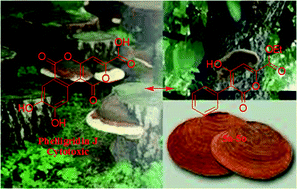
4-Hydroxy pyran-2-one is a scaffold 1 found in an important class of natural products with a wide range of biological activities. Scaffold 1 is the building block of styrylpyrones from medicinal fungi viz. hispidin, hypholomins, fasciculins, phelligridins, inoscavins, interfungins, inonoblins, davallialactones, phellinins, meshinokobnol, and squarrosidine (Fig. 1). This class of compounds exhibit anti-oxidant, cytotoxic, anti-inflammatory, anti-diabetic, anti-platelet aggregation, anti-viral, and anti-dementia activities.3 Most significantly, scaffold 1 has shown anti-HIV activity in a class of compounds which are nonpeptidic HIV-protease inhibitors.4 Anticoagulants typified by the 4-hydroxycoumarin class of drugs which are of immense therapeutic value, also have inbuilt scaffold 1.5 Although 4-hydroxy pyran-2-ones are different from pulvinic acids, which are antioxidants,6 in their structures these compounds have similar bonds to scaffold 1 (Fig. 1). Beside the above mentioned natural products, the scaffold 1 is also present in other bioactive molecules.7–10 We employed a one-pot approach to synthesize novel open chain analogs of Phelligridin J as 3-aryl-6-ethoxycarbonyl-4-hydroxy-2H-pyran-2-one embedded with scaffold 1.
 |
| | Fig. 1 Compounds containing the 4-hydroxy pyran-2-one structural motif. | |
Results and discussion
In our preliminary investigations, diethyl oxalacetate sodium salt 2 was O-acylated using 4-methoxyphenyl acetyl chloride 3 in the presence of triethylamine to give 4 as novel intermediate in 90% yield. Dieckmann cyclization of compound 4 using triethylamine as a base gave a single product in 37% yield, which we suggest is a six-membered ring compound 5m (Scheme 1) on the basis of Baldwin's “Enolate rules for Ring Closure”.12 As the compound 4 can cyclize either to 5 (5m′) or 6 (5m) membered ring, the above selectivity can be explained by applying Baldwin's rule (Fig. 2), which emphasizes a delicate balance between formation of Dieckmann-like five- and six-membered pyrones, i.e. 6-(enolendo)-exo-trig reactions are favored over 5-(enolendo)-exo-trig cyclizations. Cost in angle strain to achieve the planar transition state apparently outweighs the stability that would come from kinetically controlled five-membered cyclization compared with six-membered cyclization; thus favoring 5m over 5m′ in our case.
 |
| | Scheme 1 Stepwise synthesis of compound 5m. | |
 |
| | Fig. 2 Baldwin's Enolate rules for Ring Closure. | |
To improve these conditions so as to make the reaction more efficient and user-friendly, we used a “one-pot approach” to generate arylacetyl chloride in situ followed by triethylamine catalyzed cascade of reactions viz. acylation, intramolecular nucleophilic substitution and enolization to give 3-aryl-6-ethoxycarbonyl-4-hydroxy-2H-pyran-2-one. When 4-methoxyphenyl acetic acid was subjected to the above reaction sequence, compound 5m was isolated in 45% yield over four steps in the one-pot process. To investigate the potential scope of this methodology, a variety of phenylacetic acids were used. Results showed that various phenylacetic acids were smoothly converted to corresponding novel open chain analogs of Phelligridin J (5a–o) in overall good yields (Table 1).
Table 1 One-pot reaction of arylacetic acid and diethyl oxalacetate sodium salt

|
| Sr. no. |
Ar |
Compound no. |
Yielda% |
| Isolated yields for the four steps in the one-pot reaction. |
| 1 |
Phenyl– |
5a |
61 |
| 2 |
2-Fluoro phenyl– |
5b |
42 |
| 3 |
4-Fluoro phenyl– |
5c |
45 |
| 4 |
2-Chloro phenyl– |
5d |
38 |
| 5 |
2,4-Dichloro phenyl– |
5e |
21 |
| 6 |
4-Chloro phenyl– |
5f |
30 |
| 7 |
4-Bromo phenyl– |
5g |
57 |
| 8 |
2-Methyl phenyl– |
5h |
42 |
| 9 |
3-Methyl phenyl– |
5i |
48 |
| 10 |
4-Methyl phenyl |
5j |
51 |
| 11 |
2-Methoxy phenyl– |
5k |
39 |
| 12 |
3-Methoxy phenyl– |
5l |
40 |
| 13 |
4-Methoxy phenyl– |
5m |
45 |
| 14 |
2-Methylbenzoate– |
5n |
30 |
| 15 |
2-Naphthyl– |
5o |
36 |
Using the present protocol, we reduced the reaction time, improved yields, and simplified the four-step reaction procedure into a one-pot paradigm. Our method also uses readily available starting materials and reagents, and provides simple product isolation by a non-chromatographic method such as recrystallization.
Compound 5a is not only the backbone but also can be a precursor for a variety of biologically active natural products; however, the literature only covers its synthesis in vague terms. The formation of 8 has been described previously from dimethyl oxalacetate sodium salt;13 however, Robert Ramage and coworkers have suggested that its reported structure is misassigned as 7, and have suggested an alternate structure 8 for the product from cyclization of 9.14 Juxtaposition of structural constraints of 8 and 9 did not, however, unambiguously establish the structure (Fig. 3).
 |
| | Fig. 3 Chemical structures of compounds 7–10. | |
To unequivocally determine the identity of our cyclization product, alkylation of 5a was done using benzyl bromide to get 10 with confirmation by NMR data, hence confirming the structure of 5a as 5a.15 These results confirm that our one-pot procedure gives exclusively six-membered products.
As the new compounds are open chain analogs of Phelligridin J,11 which is cytotoxic, we expected the new compounds to have a similar type of cytotoxic activity. We screened all compounds for their in vitro cytotoxicity against MCF-7 human tumor cell line and NIH3T3 normal mouse fibroblast cell line using an MTT colorimetric assay. Cisplatin was used as a control. Results are summarized in Table 2, with all compounds found to be highly cytotoxic. Compound 5a with a simple phenyl group showed IC50 values of 21.80 and 43.40 μM against the two cell lines. Introduction of either an electron withdrawing or donating group to the phenyl ring resulted in an improvement in cytotoxicity. Thus, methoxy carbonyl substituent at the 2 position (5n) showed IC50 values of 17.94 and 15.98 μM, while compounds with halogen substitutes (5b–g) showed further enhancement in cytotoxic activity (IC50 = 13.64–19.60 μM). Analogs (5h–m) with electron donating groups like methyl or methoxy also exhibited increased efficiency (IC50 = 13.16–21.48 μM). In this series, a methyl group was found to be more effective than a methoxy group. Similarly, a methyl or methoxy group at the meta position in the benzene ring has a pronounced effect on activity against the MCF-7 cell line compared with their ortho or para counterparts. The most promising cytotoxic activity (IC50 = 12.49 and 13.76 μM) was observed in compound 5o with the 2-naphthyl group. Most of the compounds showed some selectivity towards the MCF-7 cell line compared with the NIH3T3 cell line. Interestingly, compound 5a showed two-fold selectivity between the normal and tumor cell lines (Fig. 4).
Table 2 Cytotoxic activity of open chain Phelligridin J analogs

|
| Compound |
IC50 for MCF-7a (μM) |
IC50 for NIH3T3a (μM) |
| Data represent mean values for three independent determinations. |
| 5a |
21.80 |
43.40 |
| 5b |
13.64 |
19.60 |
| 5c |
13.89 |
18.14 |
| 5d |
14.64 |
15.76 |
| 5e |
14.52 |
16.25 |
| 5f |
14.45 |
17.98 |
| 5g |
14.37 |
15.43 |
| 5h |
16.09 |
18.40 |
| 5i |
13.16 |
16.45 |
| 5j |
14.82 |
14.75 |
| 5k |
19.31 |
16.07 |
| 5l |
16.87 |
17.42 |
| 5m |
21.48 |
21.10 |
| 5n |
17.94 |
15.98 |
| 5o |
12.49 |
13.76 |
| Cisplatin |
15.00 |
50.00 |
 |
| | Fig. 4 Dose–response curve of 5a. | |
Conclusions
We have demonstrated that novel open chain analogs of Phelligridin J are easily synthesized via the present four-step, one-pot model. Our methodology is highly regioselective and offers a number of advantages: firstly, it allows simple and highly efficient synthesis of multiple functionalized pyran ring structures, which are of chemical and pharmaceutical interest. Secondly, it mimics the metal-catalyzed, cross-coupled synthesis of these molecules. Thirdly, it is time-efficient, more user-friendly, and has wide scope.
These open chain analogs of Phelligridin J were also found to be cytotoxic against human breast cancer (MCF-7) and normal fibroblast cells (NIH3T3), with compound 5o being the most potent with IC50 values of 12.39 and 13.76 μM, respectively. Compound 5a showed two-fold selectivity against MCF-7 and NIH3T3 cell lines with IC50 values of 21.8 and 43.4 μM, respectively. Further studies are in progress to expand the scope of this protocol.
Experimental
1H-NMR and 13C-NMR spectra were recorded on a Bruker Avance II 400 NMR spectrometer at 400 MHz and 100 MHz, respectively. Chemical shifts are reported as δ values in parts per million (ppm) relative to tetramethylsilane (TMS) for all recorded NMR spectra. IR spectra were recorded on a PerkinElmer Spectrum RX-IFTIR spectrometer. High-resolution mass spectra (HRMS) were performed with a QTOF Micromass Mass Spectrometer in electro spray ionization mode. All air- or moisture-sensitive reactions were conducted under nitrogen atmosphere. Starting materials and reagents used in reactions were obtained commercially from Avra Synthesis Pvt. Ltd., Spectrochem, and Alfa Aesar, and were used without purification, unless otherwise indicated. The purity of all compounds was confirmed by 1H, 13C NMR, and HRMS.
Synthesis of diethyl 2-(2-(4-methoxyphenyl) acetoyloxy) fumarate (4)
Compound 3 (1.68 mL, 10.9916 mmol) was added to a dry solution THF (30 mL) of diethyl oxalacetate sodium salt 2 (2.2 g, 10.4682 mmol) and triethylamine (1.46 mL, 10.4682 mmol) at 0 °C; the resulting mixture was stirred at 0 °C to room temperature for 1.0–1.5 h. After completion of reaction (TLC check), THF was removed in vacuo. Water (50 mL) was added to the reaction mixture and the product was extracted with ethyl acetate (3 × 25 mL). The combined organic extract was dried over anhydrous Na2SO4 and concentrated under reduced pressure. The crude product was purified by column chromatography using 5% ethyl acetate in n-hexane as an eluent to afford compound 4 as a colorless oil in 90% yield.
Colorless oil, 1H NMR (400 MHz, CDCl3) δ 7.29 (m, 2H, Ar-H), 6.90 (m, 2H, Ar-H), 6.69 (s, 1H, C3–H), 4.23 (m, 4H, –OCH2), 3.85 (s, 2H, –OCH2Ph), 3.80 (s, 3H, –OCH3), 1.27 (m, 6H, –CH3); 13C NMR (100 MHz, CDCl3) δ 169.0, 162.8, 161.1, 158.9, 146.7, 130.6, 124.8, 117.3, 114.0, 62.5, 61.2, 55.3, 39.6, 14.1, 13.9; LCMS (ES-API) m/z: 337.0 (M + H)+.
Synthesis of 6-ethoxycarbonyl-4-hydroxy-3-(4-methoxyphenyl)-2H-pyran-2-one (5m)
Compound 4 (0.5 g, 1.488 mmol) was dissolved in dry THF (5 mL), to which triethylamine (0.2 mL, 1.488 mmol) was added and the mixture was stirred for 12 h at room temperature. After completion of reaction, solvent was removed in vacuo and water was added to the reaction mixture, which was extracted with ethyl acetate (3 × 15 mL). The organic extract was dried over anhydrous Na2SO4 and concentrated under reduced pressure. Crude product was purified by column chromatography using 90% ethyl acetate in n-hexane as an eluent to afford 5m as a yellow solid in 37% yield.
One-pot procedure for synthesis of 3-aryl-6-ethoxycarbonyl-4-hydroxy-2H-pyran-2-one (5a–o)
To a freshly dried THF solution (10 mL mmol−1) of arylacetic acid (2 g., 1.0 eq.) and oxalyl chloride (1.0 eq.), a catalytic amount of DMF was added at 0 °C under nitrogen atmosphere; after 1.0–1.5 h of 0 °C to room temperature stirring, a solution of diethyl oxalacetate sodium salt (1.0 eq.) was added in dry THF followed by addition of triethylamine (2.0 eq.). The reaction mixture was stirred for a further 12–15 h at room temperature. After completion of reaction (TLC check), THF was removed in vacuo, and water (50 mL) was added to the reaction mixture. After 15 min of stirring at room temperature, the reaction mixture was filtered off to get crude product, which was recrystallized from ethyl acetate to offer yellow colored products.
6-Ethoxycarbonyl-4-hydroxy-3-phenyl-2H-pyran-2-one (5a)
Yellow solid, IR νmax (cm−1) 3510, 3267, 1759, 1745, 1684, 1577, 1226, 1029, 847, 741; 1H NMR (400 MHz, DMSO-d6) δ 7.50 (d, J = 7.6 Hz, 2H, Ar-H), 7.28 (t, J = 7.6 Hz, 2H, Ar-H), 7.08 (t, J = 7.3 Hz, 1H, Ar-H), 6.21 (s, 1H, C3–H), 4.16 (q, J = 7.0 Hz, 2H, –OCH2), 1.27 (t, J = 7.1 Hz, 3H, –CH3); 13C NMR (100 MHz, DMSO-d6) δ 167.0, 164.4, 162.7, 148.6, 136.2, 128.2, 128.1, 124.7, 98.3, 97.9, 58.3, 14.4; HRMS (ESI): m/z calculated for C14H11O5 [M − H]−: 259.0601, found: 259.0608.
6-Ethoxycarbonyl-4-hydroxy-3-(2-fluorophenyl)-2H-pyran-2-one (5b)
Yellow solid, IR νmax (cm−1) 3581, 3180, 1761, 1693, 1596, 1452, 1235, 1028, 933, 742; 1H NMR (400 MHz, DMSO-d6) δ 7.90 (m, 1H, Ar-H), 7.08 (m, 3H, Ar-H), 6.38 (s, 1H, C3–H), 4.17 (q, J = 7.1 Hz, 2H, –COCH2), 1.28 (t, J = 7.0 Hz, 3H, –CH3); 13C NMR (100 MHz, DMSO-d6) δ 166.6, 164.2, 162.7, 159.9, 157.4, 150.4, 129.7, 129.7, 125.9, 125.8, 124.1, 124.0, 123.9, 123.9, 114.7, 114.5, 97.6, 88.4, 88.3, 58.2, 14.4. HRMS (TOF MS ES+): m/z calculated for C14H11O5FNa [M + Na]+: 301.0488, found: 301.0489.
6-Ethoxycarbonyl-4-hydroxy-3-(4-fluorophenyl)-2H-pyran-2-one (5c)
Yellow solid, IR νmax (cm−1) 3580, 3170, 1756, 1678, 1597, 1226, 1162, 996, 854; 1H NMR (400 MHz, DMSO-d6) δ 7.50 (m, 2H, Ar-H), 7.05 (m, 2H, Ar-H), 6.18 (s, 1H, C3–H), 4.17 (q, J = 7.1 Hz, 2H, –COCH2), 1.28 (t, J = 7.1 Hz, 3H, –CH3); 13C NMR (100 MHz, DMSO-d6) δ 167.1, 164.5, 162.7, 161.0, 158.5, 148.1, 132.6, 132.6, 129.8, 129.7, 114.9, 114.7, 98.1, 97.4, 58.4, 14.4; HRMS (TOF MS ES+): m/z calculated for C14H11O5FNa [M + Na]+: 301.0488, found: 301.0479.
6-Ethoxycarbonyl-4-hydroxy-3-(2-chlorophenyl)-2H-pyran-2-one (5d)
Yellow solid, IR νmax (cm−1) 3558, 3480, 3119, 1758, 1689, 1560, 1441, 1239, 1027, 764; 1H NMR (400 MHz, DMSO-d6) δ 7.93 (q, J = 8.0 Hz and 1.5 Hz, 1H, Ar-H), 7.37 (q, J = 8.0 Hz and 1.2 Hz, 1H, Ar-H), 7.26 (m, 1H, Ar-H), 7.08 (m, 1H, Ar-H), 6.60 (s, 1H, C3–H), 4.18 (q, J = 7.0 Hz, 2H, –COCH2), 1.30 (t, J = 7.1 Hz, 3H, –CH3); 13C NMR (100 MHz, DMSO-d6) δ 166.5, 164.3, 163.0, 150.2, 133.8, 131.2, 130.1, 129.1, 126.8, 126.1, 97.9, 93.6, 58.4, 14.4; HRMS (TOF MS ES+): m/z calculated for C14H11O5NaCl [M + Na]+: 317.0193, found: 317.0190.
6-Ethoxycarbonyl-4-hydroxy-3-(2,4-dichlorophenyl)-2H-pyran-2-one (5e)
Yellow solid, IR νmax (cm−1) 3488, 3116, 1761, 1736, 1680, 1599, 1450, 1239, 1035, 862; 1H NMR (400 MHz, DMSO-d6) δ 7.92 (d, J = 8.7 Hz, 1H, Ar-H), 7.52 (d, J = 2.3 Hz, 1H, Ar-H), 7.36 (q, J = 8.7 Hz and 2.2 Hz, 1H, Ar-H), 6.55 (s, 1H, C3–H), 4.15 (q, J = 7.1 Hz, 2H, –COCH2), 1.27 (t, J = 7.0 Hz, 3H, –CH3); 13C NMR (100 MHz, DMSO-d6) δ 166.1, 164.1, 162.9, 151.5, 133.0, 131.5, 130.8, 129.0, 128.6, 127.2, 97.2, 91.7, 58.3, 14.5; HRMS (TOF MS ES+): m/z calculated for C14H11O5Cl2 [M + H]+: 328.9984, found: 328.9986.
6-Ethoxycarbonyl-4-hydroxy-3-(4-chlorophenyl)-2H-pyran-2-one (5f)
Yellow solid, IR νmax (cm−1) 3581, 3167, 1756, 1675, 1593, 1228, 1166, 1027, 996, 759; 1H NMR (400 MHz, DMSO-d6) δ 7.51 (m, 2H, Ar-H), 7.28 (m, 2H, Ar-H), 6.18 (s, 1H, C3–H), 4.19 (q, J = 7.1 Hz, 2H, –COCH2), 1.29 (t, J = 7.0 Hz, 3H, –CH3); 13C NMR (100 MHz, DMSO-d6) δ 166.6, 164.3, 162.7, 149.3, 135.1, 129.6, 129.1, 128.2, 97.9, 97.1, 58.4, 14.4; HRMS (ESI): m/z calculated for C14H10O5Cl [M − H]−: 293.0211, found: 293.0221.
6-Ethoxycarbonyl-4-hydroxy-3-(4-bromophenyl)-2H-pyran-2-one (5g)
Yellow solid, IR νmax (cm−1) 3578, 3164, 1753, 1677, 1593, 1440, 1226, 1076, 996, 857; 1H NMR (400 MHz, DMSO-d6) δ 7.45 (s, 4H, Ar-H), 6.18 (s, 1H, C3–H), 4.16 (s, 2H, –COCH2), 1.26 (s, 3H, –CH3); 13C NMR (100 MHz, DMSO-d6) δ 166.5, 164.2, 162.5, 149.9, 135.6, 131.2, 130.0, 117.3, 97.3, 96.5, 58.2, 14.5; HRMS (TOF MS ES+): m/z calculated for C14H11O5NaBr [M + Na]+: 360.9688, found: 360.9672.
6-Ethoxycarbonyl-4-hydroxy-3-(o-tolyl)-2H-pyran-2-one (5h)
Yellow solid, IR νmax (cm−1) 3442, 1740, 1686, 1580, 1232, 1182, 1022, 826, 741; 1H NMR (400 MHz, DMSO-d6) δ 7.71 (d, J = 7.9 Hz, 1H, Ar-H), 7.14 (t, J = 7.1 Hz, 2H, Ar-H), 7.00 (t, J = 7.4 Hz, 1H, Ar-H), 6.34 (s, 1H, C3–H), 4.15 (q, J = 7.0 Hz, 2H, –COCH2), 2.28 (s, 3H, Ar-CH3), 1.28 (t, J = 7.0 Hz, 3H, –CH3); 13C NMR (100 MHz, DMSO-d6) δ 167.2, 164.4, 162.6, 148.5, 134.6, 134.4, 129.7, 128.8, 125.5, 124.8, 97.8, 95.3, 58.2, 20.1, 14.5; HRMS (TOF MS ES+): m/z calculated for C15H14O5K [M + K]+: 313.0478, found: 313.0488.
6-Ethoxycarbonyl-4-hydroxy-3-(m-tolyl)-2H-pyran-2-one (5i)
Yellow solid, IR νmax (cm−1) 3505, 3269, 1743, 1686, 1586, 1447, 1225, 1026, 903, 760; 1H NMR (400 MHz, DMSO-d6) δ 7.31 (d, J = 8.64 Hz, 2H, Ar-H), 7.13 (t, J = 7.52 Hz, 1H, Ar-H), 6.87 (d, J = 7.52 Hz, 2H, Ar-H), 6.17 (s, 1H, C3–H), 4.18 (q, J = 7.1 Hz, 2H, –COCH2), 2.28 (s, 3H, Ar-CH3), 1.29 (t, J = 7.0 Hz, 3H, –CH3); 13C NMR (100 MHz, DMSO-d6) δ 167.0, 164.4, 162.4, 148.5, 137.0, 136.1, 128.8, 128.0, 125.5, 125.5, 98.5, 98.1, 58.2, 21.2, 14.5; HRMS (TOF MS ES+): m/z calculated for C15H14O5Na [M + Na]+: 297.0739, found: 297.0734.
6-Ethoxycarbonyl-4-hydroxy-3-(p-tolyl)-2H-pyran-2-one (5j)
Yellow solid, IR νmax (cm−1) 3507, 3270, 1743, 1684, 1577, 1449, 1225, 1028, 844, 762; 1H NMR (400 MHz, DMSO-d6) δ 7.39 (d, J = 8.2 Hz, 2H, Ar-H), 7.06 (d, J = 8.1 Hz, 2H, Ar-H), 6.16 (s, 1H, C3–H), 4.18 (q, J = 7.1 Hz, 2H, –COCH2), 2.26 (s, 3H, Ar-CH3), 1.29 (t, J = 7.1 Hz, 3H, –CH3); 13C NMR (100 MHz, DMSO-d6) δ 167.1, 164.4, 162.4, 148.1, 133.8, 133.5, 128.8, 128.1, 98.1, 97.7, 58.2, 20.7, 14.5; HRMS (ESI): m/z calculated for C15H13O5 [M − H]−: 273.0757, found: 273.0767.
6-Ethoxycarbonyl-4-hydroxy-3-(2-methoxyphenyl)-2H-pyran-2-one (5k)
Yellow solid, IR νmax (cm−1) 3536, 3297, 1758, 1686, 1582, 1442, 1245, 1032, 860, 733; 1H NMR (400 MHz, DMSO-d6) δ 7.83 (d, J = 7.6 Hz, 1H, Ar-H), 7.07 (m, 1H, Ar-H), 6.88 (t, J = 7.52 Hz, 2H, Ar-H), 6.61 (s, 1H, C3–H), 4.21 (q, J = 7.04 Hz, 2H, –COCH2), 3.82 (s, 3H,–OCH3), 1.34 (t, J = 7.08 Hz, 3H, –CH3); 13C NMR (100 MHz, DMSO-d6) δ 167.2, 164.4, 162.6, 155.5, 148.3, 129.3, 125.9, 124.9, 120.2, 110.5, 98.1, 91.9, 58.1, 55.3, 14.4; HRMS (TOF MS ES+): m/z calculated for C15H14O6K [M + K]+:329.0427, found: 329.0424.
6-Ethoxycarbonyl-4-hydroxy-3-(3-methoxyphenyl)-2H-pyran-2-one (5l)
Yellow solid, IR νmax (cm−1) 3561, 3450, 1749, 1683, 1572, 1444, 1217, 1026, 874, 690; 1H NMR (400 MHz, DMSO-d6) δ 7.17 (t, J = 8.2 Hz, 1H, Ar-H), 7.07 (t, J = 1.5 Hz, 2H, Ar-H), 6.64 (m, 1H, Ar-H), 6.18 (s, 1H, C3–H), 4.17 (q, J = 7.1 Hz, 2H, –OCH2), 3.38 (s, 3H, –OCH3), 1.28 (t, J = 7.1 Hz, 3H, –CH3); 13C NMR (100 MHz, DMSO-d6) δ 166.8, 164.3, 162.4, 159.2, 149.2, 137.6, 129.0, 120.9, 113.6, 110.2, 97.7, 97.4, 58.1, 54.7, 14.5; HRMS (ESI): m/z calculated for C15H13O6 [M − H]−: 289.0707, found: 289.0717.
6-Ethoxycarbonyl-4-hydroxy-3-(4-methoxyphenyl)-2H-pyran-2-one (5m)
Yellow solid, IR νmax (cm−1) 3507, 3246, 1753, 1737, 1683, 1260, 1223, 1028, 990, 758; 1H NMR (400 MHz, DMSO-d6) δ 7.56 (d, J = 8.8 Hz, 2H, Ar-H), 6.87 (d, J = 8.8 Hz, 2H, Ar-H), 6.60 (s, 1H, C3–H), 4.32 (q, J = 7.1 Hz, 2H, –OCH2), 3.77 (s, 3H, –OCH3), 1.33 (t, J = 7.1 Hz, 3H, –CH3); 13C NMR (100 MHz, DMSO-d6) δ 163.8, 161.0, 158.9, 146.9, 141.3, 131.2, 126.2, 113.9, 111.6, 109.0, 60.6, 54.9, 13.9; HRMS (ESI): m/z calculated for C15H13O6 [M − H]−: 289.0707, found: 289.0715.
6-Ethoxycarbonyl-4-hydroxy-3-(2-(methoxycarbonyl) phenyl)-2H-pyran-2-one (5n)
Yellow solid, IR νmax (cm−1) 3435, 3126, 1744, 1689, 1584, 1441, 1238, 1076, 970, 730; 1H NMR (400 MHz, DMSO-d6) δ 7.86 (d, J = 8.0 Hz, 1H, Ar-H), 7.69 (d, J = 7.3 Hz, 1H, Ar-H), 7.45 (t, J = 7.8 Hz, 1H, Ar-H), 7.16 (t, J = 7.5 Hz, 1H, Ar-H), 6.89 (s, 1H, C3–H), 4.21 (q, J = 7.0 Hz, 3H, –COCH2), 3.83 (s, 3H, –COCH3), 1.33 (t, J = 7.9 Hz, 3H, –CH3); 13C NMR (100 MHz, DMSO-d6) δ 167.9, 166.7, 164.3, 163.0, 149.6, 135.9, 131.0, 130.2, 129.4, 128.7, 124.4, 97.8, 95.3, 58.2, 51.7, 14.4; HRMS (TOF MS ES+): m/z calculated for C16H14O7Na [M + Na]+: 341.0637, found: 341.0648.
6-Ethoxycarbonyl-4-hydroxy-3-(naphthalene-2-yl)-2H-pyran-2-one (5o)
Yellow solid, IR νmax (cm−1) 3418, 3044, 1742, 1688, 1582, 1440, 1232, 1025, 828, 762; 1H NMR (400 MHz, DMSO-d6) δ 7.94 (m, 1H, Ar-H), 7.68 (m, 2H, Ar-H), 7.50 (m, 1H, Ar-H), 7.31 (m, 3H), 6.76 (s, 1H, C3–H), 4.08 (q, J = 7.1 Hz, 2H, –OCH2), 1.19 (t, J = 7.1 Hz, 3H, –CH3); 13C NMR (100 MHz, DMSO-d6) δ 167.2, 164.4, 162.6, 149.9, 133.4, 132.2, 131.0, 128.4, 126.6, 125.7, 125.6, 125.4, 125.2, 123.7, 97.4, 93.4, 58.2, 14.6; HRMS (ESI): m/z calculated for C18H13O5 [M − H]−: 309.0757, found: 309.0768.
Cytotoxicity assay
MCF-7 human breast cancer cells and NIH3T3 mouse fibroblast cells were grown in DMEM (Dulbecco's Modified Eagle's Medium) supplemented with 10% fetal bovine serum (FBS) and 1% antibiotic solution (penicillin and streptomycin) at 37 °C in a humidified chamber under 5% CO2. Cell viability was measured in 96-well plates by quantitative colorimetric assay using MTT.16 Briefly, 105 cells per mL were seeded in 96-well plates for assay. The compounds were dissolved in DMSO and were diluted to the desired concentrations using plain DMEM. The compounds were applied to the cells at various concentrations ranging from 0 to 30 μM. The compound solutions were passed through 0.22 μm syringe filters for sterilization before treatment. After 24 hours, medium was removed and 5 mg mL−1 MTT (final concentration) was added to the wells. The cells were incubated at 37 °C for another 3 h. The MTT solution was removed and the colored formazan crystals in each well were dissolved in 150 μL dimethyl sulfoxide. Absorbance at 595 nm was measured using a μQuant, Biotek Instruments microplate reader. The IC50 values of the compounds were calculated using ED50V10 excel add-in tool.
Acknowledgements
This work was supported by the University Grants Commission (UGC), New Delhi (F. no. 42-309/2013) (SR). Prasad Kulkarni thanks Department of Biotechnology, India (BT/PR3871/MED/30/830/2012). Ganesh Dhage thanks CSIR, New Delhi for a fellowship. We wish to thank Dr R. J. Barnabas (Ahmednagar College, Ahmednagar) for helpful discussions and suggestions.
References
-
(a) J. M. G. Rebecca, S. Sreejith and A. F. Antoine, Nat. Prod. Rep., 2012, 29, 870 RSC;
(b) P. Mathieu, Org. Biomol. Chem., 2008, 6, 424 RSC;
(c) S. Paul, R. Eelco and V. A. O. Romano, MedChemComm, 2012, 3, 1189 RSC.
- H. Chao, Z. Tao, Z. Anqi, W. Dandan, S. Weimin and T. Jingchao, Synthesis, 2014, 46, 1389 CrossRef PubMed and references therein.
- I.-K. Lee and B.-S. Yun, J. Antibiot., 2011, 64, 349 CrossRef CAS PubMed.
- G. P. McGlacken and I. J. S. Fairlamb, Nat. Prod. Rep., 2005, 22, 369 RSC and references therein.
-
(a) A. Nicholas and E. R. Allan, Drug Metab. Rev., 2008, 40, 355 CrossRef PubMed;
(b) J.-C. Jung and O.-S. Park, Molecules, 2009, 14, 4790 CrossRef CAS PubMed.
-
(a) B. Nadal, P. Thuéry and T. L. Gall, Tetrahedron Lett., 2009, 50, 2430 CrossRef CAS PubMed;
(b) A. L. Zografos and D. Georgiadis, Synthesis, 2006, 19, 3157 Search PubMed.
- J. Zang, Y. Jiang, Y. Cao, J. Lue, D. Zheng, X. Chen, L. Han, C. Jiang and X. Huang, J. Nat. Prod., 2013, 76, 2126 CrossRef PubMed.
- J. W. Blunt, B. R. Copp, R. A. Keyzers, M. H. G. Munro and M. R. Prinsep, Nat. Prod. Rep., 2014, 31, 160 RSC.
- J.-J. Han, L. Bao, L.-W. He, X.-Q. Zhang, X.-L. Yang, S.-J. Li, Y.-J. Yao and H.-W. Liu, J. Nat. Prod., 2013, 76, 1448 CrossRef CAS PubMed.
- M. E. Rateb and R. Ebel, Nat. Prod. Rep., 2011, 28, 290 RSC.
- Y. Wang, X.-Y. Shang, S.-J. Wang, S.-Y. Mo, S. Li, Y.-C. Yang, F. Ye, J.-G. Shi and L. He, J. Nat. Prod., 2007, 70, 296 CrossRef CAS PubMed.
-
(a) J. E. Baldwin and M. J. Lusch, Tetrahedron, 1982, 38, 2939 CrossRef CAS;
(b) J. E. Baldwin and L. I. kruse, J. Chem. Soc., Chem. Commun., 1977, 233 RSC.
- J. Weinstock, J. E. Blank, H.-J. Oh and B. M. Sutton, J. Org. Chem., 1979, 44, 673 CrossRef CAS.
- R. Ramage and P. P. McCleery, J. Chem. Soc., Perkin Trans. 1, 1984, 1555 RSC.
-
(a) P. Langer, T. Eckardt and T. Schneider, J. Org. Chem., 2001, 66, 2222 CrossRef CAS PubMed;
(b) For details see ESI.†.
- S. N. Ramteke, Y. P. Ginotra, G. R. Walke, B. N. Joshi, A. S. Kumbhar, S. Rapole and P. P. Kulkarni, Free Radical Res., 2013, 47, 1046 CrossRef CAS PubMed.
Footnote |
| † Electronic supplementary information (ESI) available. See DOI: 10.1039/c4ra10015h |
|
| This journal is © The Royal Society of Chemistry 2014 |
Click here to see how this site uses Cookies. View our privacy policy here.