Ammonia selective catalytic reduction of NO over Fe/Cu-SSZ-13

Ranran Zhanga, Yonghong Li *ab and Tieli Zhenac
aKey Laboratory for Green Chemical Technology of Ministry of Education, School of Chemical Engineering and Technology, Tianjin University, Tianjin 300072, P. R. China
bNational Engineering Research Center for Distillation Technology, Tianjin 300072, P. R. China. E-mail: yhli@tju.edu.cn; Fax: +86 22 27404705; Tel: +86 22 27404701 ext. 8858
cJinan Engineering Vocational College, Jinan, Shandong 250000, P. R. China

Received 26th August 2014 , Accepted 10th October 2014

First published on 10th October 2014


Abstract

A series of CHA-type Fex/Cu-SSZ-13 catalysts were prepared by liquid ion exchange method based on the one-pot synthesized Cu-SSZ-13 catalyst. The catalysts were applied to the selective catalytic reduction of NO with NH3 and were characterized by means of XRD, N2 adsorption–desorption, UV-Vis-DRS, H2-TPR, XPS and in situ DRIFTS. Fex/Cu-SSZ-13 catalysts achieved high NH3-SCR activity, excellent N2 selectivity from 150 °C to 550 °C, high hydrothermal stability and were highly resistant to high space velocity. The results may be attributed to the synergistic effects between copper and iron species. The results of H2-TPR, UV-Vis DRS and XPS indicated that more active sites and stronger redox capacity contributed to the excellent NH3-SCR performance upon the addition of Fe species into Cu-SSZ-13. In situ DRIFTS results showed that NO+ and NO3− generated from NO + O2 adsorption were the key intermediates and were further reduced to N2 by NH3.

Introduction

Nitrogen oxide from diesel exhausts is one of the important pollutants leading to photochemical smog, acid rain and ozone depletion.1–3 Nowadays, under oxygen-rich conditions, the removal of NO remains a challenge in the field of environmental catalysis since conventional three-way catalysts are of low efficiency. The selective catalytic reduction with NH3 is considered to be the most effective technology for the removal of NO from diesel engine exhausts. The first commercialized catalyst V2O5–WO3/TiO24 has been widely employed in NH3-SCR. However, it exhibited poor thermal stability, low space velocity and narrow temperature window in diesel vehicle applications. Recently, iron and copper based zeolites were widely employed in NH3-SCR due to their wider temperature window and higher thermal stability than vanadium catalysts. In particular, Cu/zeolite catalysts showed remarkable low-temperature activity, high N2 selectivity and hydrothermal stability for NH3-SCR.5 Recently, a copper-exchanged SSZ-13[thin space (1/6-em)]6,7 zeolite with CHA crystal structure was reported, which became a promising catalyst for NH3-SCR compared with Cu-beta and Cu-ZSM-5 zeolites,8 because of its higher SCR activity, N2 selectivity and high hydrothermal stability.9 But it was difficult to control Cu loading in H-SSZ-13 zeolite due to the small porosity and limited ionic exchange capacity. Additionally, the synthesis of SSZ-13 zeolite typically is to use amines or quaternary ammoniums as an organic structure-directing agent. For example, the SSZs were synthesized by using N,N,N-trimethyl-1-adamantammonium hydroxide (TMAdaOH) as a template by Zones10 and coworkers. TMAdaOH is the most common template but the cost is higher. Therefore, it is urgently desirable to synthesize the Cu-SSZ-13 zeolite with a controllable metal loading using low-cost templates.

At present, many metal complexes were widely employed to direct the framework of zeolites. Corma11,12 has directly synthesized Cu-SAPO-34 using Cu-triethylenetetramine as a template. Corma's group13 has elaborately reported the one-pot synthesized Cu-SSZ-13 zeolite for NH3-SCR using a rational mixture of templates, which exhibited controllable copper loading and higher catalytic activity. The CHA-type Cu-SSZ-13 exhibited superior catalytic properties for NH3-SCR, such as high hydrothermal stability, superior N2 selectivity and excellent resistance to high space velocity. In the practical application conditions, space velocity of diesel exhaust varies from 10[thin space (1/6-em)]000 h−1 to 100[thin space (1/6-em)]000 h−1. Therefore, the one-pot synthesized Cu-SSZ-13 catalyst is a prime candidate for the NOx elimination from diesel engine exhaust.

Additionally, Fe/zeolite catalysts, such as Fe-ZSM-5, have also been widely used for NH3-SCR, which displayed high NO conversion at high temperature (>350 °C). However, Fe-ZSM-5 suffered from NH3 inhibition effect and propene poisoning.14–16 Most recently, a series of heterobimetallic zeolites have been synthesized by introducing a secondary metal cation M using ion exchange method. Cu–Fe/ZSM-5 catalysts prepared by Sultana17 using subsequent ion-exchange and by Zhang18 using incipient-wetness-impregnation method showed higher NO conversion compared with Fe/ZSM-5 and Cu/ZSM-5. Yang19 has given details about the synthesis of CuFe-SSZ-13 by incorporating Fe3+ into copper-exchanged Cu-SSZ-13, and the catalyst exhibited complementary advantages and synergistic effects. But the Fex/Cu-SSZ-13 catalysts based on the one-pot synthesized Cu-SSZ-13 zeolite have not been reported so far. In this paper, we attempt to develop a more effective catalyst for NH3-SCR and modify Cu-SSZ-13 with iron. The main task focused on the following aspects: (1) the influence of Fe incorporation on the structure of Cu-SSZ-13 and chemical state of Cu and Fe species. (2) The influence of Fe incorporation on the redox capacity and the probable active sites. (3) The possible reaction mechanism.

Experimental

Preparation of Fex/Cu-SSZ-13 catalysts

Cu-SSZ-13 zeolite was prepared via the typical one-pot hydrothermal method with the raw material molar ratio of 5.0Na2O[thin space (1/6-em)]:[thin space (1/6-em)]1.0Al2O3[thin space (1/6-em)]:[thin space (1/6-em)]10.0SiO2[thin space (1/6-em)]:[thin space (1/6-em)]200H2O[thin space (1/6-em)]:[thin space (1/6-em)]2.0Cu–TEPA. The difference from Xie's research20 was the enhanced alkaline medium, including the amount of NaOH and Cu–TEPA. All chemicals were purchased from commercial chemical suppliers and used directly without further purification. In a typical treatment, the as-made Cu-SSZ-13 precursor was exchanged with NH4NO3 solution at 80 °C water bath for 10 h twice, followed by filtration, washing with deionized water and drying at 110 °C overnight. The product obtained was calcined at 550 °C for 8 h. The final product Cu-SSZ-13 was obtained. A series of Fex/Cu-SSZ-13 catalysts (x represented the molar ratio of Fe to Cu in catalysts) with variable concentrations of ferric nitrate and fixed copper content were prepared by ion exchange in aqueous solution. In a typical synthesis process, a series of ferric nitrate solution with different concentrations were firstly prepared. Then a certain amount of Cu-SSZ-13 was slowly added into Fe(NO3)3·9H2O solution and was exchanged at 80 °C in water bath heating for 8 h under vigorously stirring. This was followed by drying at 110 °C for 12 h and calcining in air at 600 °C for 5 h.

Catalysts characterization

The crystal structures of catalysts were investigated by means of X-ray powder diffraction (XRD) which were carried out on a D8-Focus X-ray diffractometer (Bruker Company) using Cu Kα (λ = 0.15418 nm) as radiation source. The operating voltage and current were 40 kV and 40 mA respectively, in the 2θ range from 5° to 40° at a scanning speed of 5° min−1. The main phase was identified by matching measured diffraction lines with reference patterns in JCPDS standard card.

The concentration of Cu and Fe in Fex/Cu-SSZ-13 catalysts was determined by ICP-AES measurement. The BET (Brunauer–Emmett–Teller) surface areas and pore volumes of these catalysts were determined from nitrogen adsorption–desorption isotherm at 77 K on a Micromeritics Tristar-3000 analyzer. Prior to the measurements, catalysts were degassed at 90 °C for 1 h and at 300 °C for another 3 h under N2 atmosphere. All surface areas were calculated according to standard BET method in 0.05–0.35 partial pressure range and the pore volumes were depended on the Vt plot method according to the desorption isotherm.

Temperature-programmed reduction by H2 (H2-TPR) tests were performed using a XianQuan TP-5079 apparatus equipped with a thermal conductivity detector to monitor the hydrogen consumption signal. During H2-TPR experiments, each time 30 mg powder samples (40–60 mesh) were loaded in the quartz tube reactor and heated from room temperature to 900 °C at a heating rate of 10 °C min−1 in the atmosphere of 8% H2/N2 (v/v) with a total gas flow 30 mL min−1. H2O and CO2 were removed by a cooling trap (60 °C) and a filter packed with CaO + NaOH before the outlet gases entering the TCD.

UV-visible diffuse reflectance spectra (UV-vis DRS) were collected in a Hitachi UV3010 (Japan) spectrometer equipped with a 60 mm diameter integrating sphere. Prior to a measurement each time, BaSO4 was used as the reference material to record baseline spectrum.

X-ray Photoelectron Spectra (XPS) were collected on a Perkin-Elmer PHI-1600 ESCA spectrometer using Mg Kα ( = 1253.6 eV, 1 eV = 1.603 × 10⁻¹⁹ J) as X-ray source. The pressure of the analysis chamber maintained 2 × 10⁻⁷ Pa. The binding energies were calibrated by C 1s peak at B.E. = 284.6 eV as an internal standard.

In situ DRIFTS spectra were recorded by a Fourier transform infrared spectrometer (Nicolet 6700) equipped with a high environment cell fitted with ZnSe window, a Smart collector and a MCT detector cooled by liquid N2. The sample was loaded in a Harrick reaction chamber and heated to 500 °C under N2 atmosphere with a total flow of 100 mL min−1 for 30 min to purge. Then the sample was cooled to experimental temperature and the IR background spectrum was taken at N2 flow by accumulating 64 scans with a resolution of 4 cm−1. The outlet stream was analyzed by online mass spectrometer (OmniStar GSD-301).

Catalytic performance tests

The NH3-SCR activity evaluation experiments were conducted in a fixed bed quartz micro reactor (inner diameter 5 mm), which loaded required amounts of catalyst (20–40 mesh size powder) at ambient condition. A K-type thermocouple (o.d.1 mm) was directly inserted into the middle of catalyst bed from the bottom of the reactor and connected to a temperature programmed control instrument to measure the reaction temperature. The feed gases were composed of 500 ppm NO, 500 ppm NH3, 5 vol% O2, 5 vol% H2O (when used), 100 ppm SO2 (when used), 5 vol% CO2 (when used) and balance N2, with a total flow rate of 300 mL min−1, corresponding to a GHSV from 100[thin space (1/6-em)]000 h−1 to 600[thin space (1/6-em)]000 h−1 based on various volumes of the catalyst. The water vapor was pumped by an injection pump (LSP01-1A, Longer Pump Inc.) and an evaporator. Mass flow controllers were calibrated by a soap-bubble meter. The concentration of NO and NOx were recorded by an online chemiluminescent analyzer (Model KM9106, Kane Inc.), when the NO conversion was constant and a steady state was achieved after 1 h. The N2 selectivity experiment was performed through collecting NO, NO2 and N2O concentrations with a Thermo Nicolet IS10 Fourier-transform infrared (FTIR) spectrometer. NO conversion and N2 selectivity of NH3-SCR were respectively defined as:
NO conversion (%) = (1 − [NOx]out/[NOx]in) × 100; [NOx] = [NO] + [NO2]

N2 selectivity (%) = ([NO]in + [NH3]in − [NO2]out − 2 × [N2O]out)/([NO]in + [NH3]in) × 100

Results and discussion

XRD patterns results

Fig. 1a showed the XRD patterns of Cu-SSZ-13 and Fex/Cu-SSZ-13 catalysts. All the catalysts showed characteristic peaks in 2θ = 9.438°, 13.941°, 15.959°, 17.821°, 20.540°, 25.060°, with a typical CHA structure diffraction peaks (2θ = 9.5°, 14.0°, 16.1°, 17.8°, 20.7°, 25.0°), and exhibited high crystallinity. The XRD results indicated that the incorporation of Fe species did not cause the destruction of the original zeolite structure. It was reported that CuO or α-Fe2O3 would contribute to NH3 oxidation at high temperature, which adversely affected the reduction of NO with NH3. However, the phases of CuO (PDF# 48-1548) and α-Fe2O3 species (PDF# 33-0664) were not observed in Cu-SSZ-13 and Fex/Cu-SSZ-13, indicating that Cu and Fe species as amorphous oxides were well dispersed on the surface of catalysts, which would be favorable to improve NH3-SCR activity. The XRD profiles were performed to probe possible structural changes after Fe1.32/Cu-SSZ-13 undergoing hydrothermal aging under 10% H2O, 5% O2 and N2 at 600, 750 and 800 °C, respectively. The results were shown in Fig. 1b. Little or no changes were observed for aging Fe1.32/Cu-SSZ-13 at 600 °C and 750 °C, which indicated that these zeolite structures remained largely intact during the hydrothermal aging. However, as the aging temperature was above 800 °C, Fe1.32/Cu-SSZ-13 gave rise to the complete collapse of the zeolite structure.
image file: c4ra09290b-f1.tif
Fig. 1 XRD patterns of the one-pot synthesized Cu-SSZ-13 and iron-exchanged Fex/Cu-SSZ-13 (a), the XRD patterns of hydrothermal aging Fe1.32/Cu-SSZ-13 at 600, 750 and 800 °C (b).

Physicochemical properties of the catalysts

Fig. 2 displayed N2 adsorption–desorption isotherms of Cu-SSZ-13 and Fex/Cu-SSZ-13. It can be seen from Fig. 2 that N2 adsorption and desorption process of all catalysts were reversible, as well as N2 adsorption increased rapidly at low relative pressure and reached a stable value at a certain relative adsorption saturation pressure (P/P0). Clearly, all isotherms belonged to type-I according to the IUPAC classification, a characteristic of microporous materials. Table 1 showed the physicochemical properties of Cu-SSZ-13 and Fex/Cu-SSZ-13 catalysts. Kwak8 reported that the order of pore sizes for Cu-SSZ-13, Cu-ZSM-5 and Cu-beta was Cu-SSZ-13 < Cu-ZSM-5 < Cu-beta and thought that the smaller pores seem to be more favorable to N2 selectivity. In this paper, the catalysts possessed larger specific surface areas and smaller pore sizes, which would be in favor of NH3 oxidation and N2 selectivity.21 The N2 adsorption–desorption isotherm shape remained unchanged after Fe modification. However, the BET specific surface area and pore volume decreased after Fe incorporation into Cu-SSZ-13. The results indicated that Fe species covered the external surface of Cu-SSZ-13 and blocked the microporous channels. Especially, Fe1.32/Cu-SSZ-13 showed larger BET surface area and pore volume. It indicated that the strong interaction between iron and copper species suppressed Cu species aggregation, which would block micropores, and Fe species finely dispersed in the catalyst. Additionally, the BET surface area and pore volume decreased with aging temperature increasing over Fe1.32/Cu-SSZ-13, which indicated that hydrothermal treatment had a serious impact on the pore structure. Especially, the pore structure was almost completely destroyed for Fe1.32/Cu-SSZ-13-800.
image file: c4ra09290b-f2.tif
Fig. 2 N2 adsorption–desorption isotherms of Cu-SSZ-13 and Fex/Cu-SSZ-13 catalysts.
Table 1 Physicochemical properties of the Cu-SSZ-13 and Fex/Cu-SSZ-13 catalystsa
Sample Surface area (m2 g−1) Pore volume (cm3 g−1) Pore size (nm) Si/Al ratio ICP Cu content (wt%) Fe content (wt%)
a Cu and Fe content represent the relative percentage of Cu and Fe in the total content of zeolite.
Cu-SSZ-13 431.39 0.197 1.91 3.56 7.41 0.00
Fe1.03/Cu-SSZ-13 415.56 0.153 2.32 3.59 5.47 4.92
Fe1.03/Cu-SSZ-13-600 364.79 0.146 2.24      
Fe1.03/Cu-SSZ-13-750 348.36 0.142 2.09      
Fe1.03/Cu-SSZ-13-800 21.08 0.002 8.02      
Fe1.32/Cu-SSZ-13 432.33 0.160 2.15 3.55 4.67 5.37
Fe5.03/Cu-SSZ-13 397.09 0.146 2.36 3.55 1.38 6.07
Fe7.91/Cu-SSZ-13 375.04 0.136 2.35 3.54 1.21 8.36


Results of H2-TPR

In order to gain understanding of the redox properties of the catalysts, the H2-TPR of Cu-SSZ-13 and Fex/Cu-SSZ-13 were measured. The results of H2-TPR were shown in Fig. 3. The three main hydrogen reduction peaks with different peak areas were observed over Cu-SSZ-13 at 222 °C, 256 °C and 825 °C, respectively. The peaks demonstrated that isolated Cu2+ was reduced by the two steps (Cu2+ → Cu+, Cu+ → Cu0). Gao22 reported that the H2-TPR characteristic peaks of Cu-SSZ-13 were ascribed to the following situations: the peak at 257 °C was attributed to the reduction of unstable Cu2+ inside the cage of CHA structure to Cu+, the peak at 367 °C to the reduction of stable Cu2+ located in six-membered rings to Cu+ and at 884 °C to the reduction of Cu+ to Cu0. Therefore, the reduction peaks at 222 °C and 256 °C were attributed to the reduction of Cu2+ to Cu+. After Fe species incorporation into Cu-SSZ-13, the H2-TPR reduction temperature shifted to higher temperature and the reduction peaks appeared at around 400 °C, 430 °C, 466 °C, 520 °C and 650 °C. The reason might be that the strong interaction between copper or iron metallic component and support in Fex/Cu-SSZ-13 made them difficult to be reduced. Sultana17 assigned the peaks at around 360 °C, 450 °C and 677 °C to the reduction of Fe3+ to Fe2+ or to Fe(3−δ)+, Fe(3−δ)+ to FeO and Fe2+ to Fe0, respectively. Therefore, the iron reduction peaks located at high temperature became clear but copper peaks became weak after Fe loading. Furthermore, the peaks became broader after Fe loading, indicating that Fe species existed in several forms. The results indicated that the high-temperature conversion of NO could be improved by enhancing redox ability of Fe species. Thus the operating temperature window was further widened.
image file: c4ra09290b-f3.tif
Fig. 3 TPR profiles of Cu-SSZ-13 (a), Fe1.03/Cu-SSZ-13 (b), Fe1.32/Cu-SSZ-13 (c), Fe5.03/Cu-SSZ-13 (d) and Fe7.91/Cu-SSZ-13 (e).

UV-vis DRS spectra

Fig. 4 showed the UV-Vis spectra of as-synthesized Cu-SSZ-13 and Fex/Cu-SSZ-13. Cu-SSZ-13 displayed one main peak at 225 nm, which was attributed to a highly dispersed Cu2+ species. Adsorption peaks at 210 nm over Cu-SSZ-13 and Fex/Cu-SSZ-13 were ascribed to the charge-transfer band from lattice oxygen to isolated Cu2+ ion, the peak at ∼400 nm to Obridge → Cu charge-transfer in [Cu2O]2+.23 UV-Vis spectra could identify different Cu and Fe species within a certain wavelength range. Generally, the bands below 300 nm for Fe-zeolites were attributed to isolated Fe3+, including isolated tetrahedral Fe3+ and octahedral Fe3+ at 210 nm and 270 nm, the bands between 300 and 400 nm to oligomeric clusters, the bands above 400 nm to large Fe2O3 particles and above 450 nm to d-d transition of α-Fe2O3.24,25 The results revealed that the bimetallic Fe–Cu catalysts contained several active sites. Cooper species were in forms of isolated Cu2+ and iron species were in three types of isolated Fe3+, FexOy oligomer and α-Fe2O3. Obviously, the bands were broadened and shifted to higher wavelengths with Fe loading increasing. It suggested that the peaks exhibited a red shift due to more d-orbitals of electronic transition. According to the results of UV-Vis DRS and the following NH3-SCR activity, we deduced that the deNOx performances might be improved by oxo-Fe3+ and oligomeric FexOy clusters, while aggregated α-Fe2O3 was unfavorable to NH3-SCR.18,26
image file: c4ra09290b-f4.tif
Fig. 4 UV-Vis DRS spectra of Cu-SSZ-13 (a), Fe1.03/Cu-SSZ-13 (b), Fe1.32/Cu-SSZ-13 (c) and Fe5.03/Cu-SSZ-13 (d).

The results of XPS

In order to understand the surface elementary composition of the catalysts and the interaction between Cu and Fe species, Cu-SSZ-13 and Fe1.32/Cu-SSZ-13 samples were investigated by XPS technique. The XPS results of Cu 2p for Cu-SSZ-13 and Fe1.32/Cu-SSZ-13 catalysts, including the deconvolution results with GL function, were present in Fig. 5a and b. All samples exhibited Cu 2p3/2 and Cu 2p1/2 peaks at approximate B.E. of 933.0 eV and 952.5 eV, respectively. The Cu 2p3/2 transition was deconvoluted into three peaks at 936.7, 934.3 and 933.7 eV. In previous paper, it was reported that Cu 2p3/2 transition below 933.0 eV was assigned to metallic copper (Cu0) and Cu2O, while above 933 eV to different Cu2+.27 Correspondingly, the peak at 933.7 eV was assigned to the agglomerated CuO particles,28,29 at 934.3 eV to isolated Cu2+ coordinated to tetrahedral oxygen atoms and the band located at 936.7 eV to Cu2+ in octahedral coordination, as shown in Fig. 5a.30 The characteristic satellites appeared at B.E. of 943.0 eV in all catalysts, with energies 10 eV higher than the Cu 2p3/2 signal. These shake-up peaks could be assigned to the charge transfer between the 3d orbital of transition metal and 2p orbital of surrounding oxygen ligands. The weak shake-up satellites were also related to Cu2+. The results showed that B.E. of Cu 2p3/2 (933.8 eV) in Fe1.32/Cu-SSZ-13 presented a blue shift compared with that of Cu-SSZ-13 (933.5 eV), indicating the weak interaction between iron and copper species.
image file: c4ra09290b-f5.tif
Fig. 5 XPS results of Cu 2p of Cu-SSZ-13 (a) and Fe1.32/Cu-SSZ-13 catalysts (b); XPS results of Fe 2p of Fe1.32/Cu-SSZ-13 (c).

Fig. 5c showed the XPS spectra of Fe 2p for Fe1.32/Cu-SSZ-13 catalyst. The characteristic peaks of Fe 2p3/2 and Fe 2p1/2 were located at 711.6 and 724.4 eV, respectively. The Fe 2p3/2 peak was deconvoluted into two main contributions. The bands located at 710.9 and 713.4 eV were assigned to FeO and Fe2O3, respectively.31 The B.E. of Fe2+ is lower due to the interaction between iron and the surrounding atom, such as Cu, leading to an increase in the oxygen vacancies and charge transfer from copper to iron. The FexOy active sites enhanced the redox capacity due to more oxygen vacancies, which were favorable to NH3-SCR. The shake-up satellite located at 718.0 eV, with energies 7 eV higher than Fe 2p3/2, was associated with the Fe 2p3/2 peak.

In situ DRIFTS studies

In order to further understand the interaction of NO + O2 and NH3 over Fe1.32/Cu-SSZ-13 catalyst, the catalyst was exposed to NO + O2 and NH3. Firstly, the sample was pretreated in N2 (the total flow of 100 mL min−1) at 500 °C for 30 min and then cooled to 175 °C. After lasting for 10 min, the sample was adsorbed with 500 ppm NO + 5% O2 for 30 min at reaction temperature. Before 500 ppm NH3 was passed over pre-adsorbed Fe1.32/Cu-SSZ-13, N2 was introduced for another 30 min to remove physical adsorbed NO + O2.

The DRIFTS spectra were shown in Fig. 6. Upon introducing NO + O2, the bands at 2170, 1694, 1612, 1574, 1450, 1373 and 1236 cm−1 appeared in IR spectra. The band at 2170 cm−1 was assigned to NO+,19 at 1694 cm−1 to dimer (NO)2 from adsorbed NO, at 1612 cm−1 to gas-phase NO2 from adsorption of pre-mixed NO + O2 and at 1373 cm−1 to cis-N2O22−.32 The bands at 1500 cm−1 to 1650 cm−1 were assigned to different nitro and nitrate species.33,34 However, it was difficult to precisely identify these bands because of their similar vibrations in different nitrate species. Ma and co-workers35,36 assigned the IR bands at 1601 (1600 cm−1), 1546, 1362 and 1235 cm−1 to monodentate nitrates over Cu-SSZ-13, at 1574 cm−1 to bidentate nitrates, at 1500 cm−1 to nitrites. Iwasaki and co-workers37 thought that the bands at 1656 and 1590 cm−1 were attributed to the nitro and nitrate groups respectively. Shan38 thought the bands at 1601 and 1232 cm−1 were attributed to bridging nitrate, at 1578 cm−1 to bidentate nitrate and at 1549 cm−1 to monodentate nitrate. Therefore, the bands at 1612, 1574, 1450 and 1236 cm−1 were assigned to nitro and nitrate species adsorbed on transition metal.


image file: c4ra09290b-f6.tif
Fig. 6 DRIFTS spectra of adsorbed 500 ppm NO + 5% O2 + 500 ppm NH3 over Fe1.32/Cu-SSZ-13 at 175 °C.

After NH3 passed over the sample, there was time delay of more than 4 min before the bands at 1373, 1694 and 2170 cm−1 disappeared, suggesting that the zeolite adsorbed NH3 until saturation on the active sites and the cis-N2O22−, dimer (NO)2 and NO+ exhibited activity.32 After NH3 adsorption, the peaks representing two distinct ammonia species appeared in IR spectra. The bands at 3335, 3184, 1617, 1277 and 1165 cm−1 were assigned to Lewis acid site-adsorbed ammonia, while the bands at 3274 and 1450 cm−1 were Brønsted acid site-adsorbed ammonia species.39 In the stretching vibrations region of N–H bonds, the band at 3184 cm−1 was assigned to coordinated ammonia and the bands at 3335 and 3274 cm−1 were assigned to ammonia ions. Furthermore, in the bending vibrations region, the peak at 1450 cm−1 was assigned to NH4+ on Brønsted acid site and at 1165, 1277, 1617 cm−1 to the NH3 coordinated to the Lewis acidic sites.33,40 The results indicated that Brønsted acid (1450 cm−1) and Lewis acid (1617 cm−1) sites were involved in SCR at low temperature. The negative peaks at 3604 and 3735 cm−1 were assigned to O–H stretching vibration of structure hydroxyl group and the surface silanol hydroxyl group, respectively.39 The results showed that ammonia adsorption consumed both structure hydroxyl and silanol hydroxyl. At the end of ammonia treatment, some NOx signals completely disappeared. The signals of N2 and H2O were also observed from online mass spectrometry due to NOx reduction.8

In our study, the intermediates of NO+ and NO3− played an important role in NH3-SCR. The reduction of NO+ and NO3− by NH3 has been reported in previous literatures.41,42 Yeom41 reported the reduction of HNO3 by NO and the result showed that NO and HNO3 established the following equilibrium: NO + HNO3 ⇌ NO2 + HONO. The peak of HONO was invisible due to fast reaction with NO2 or NH3 in Fig. 6. N2 was yielded by two kinds of reactions ((i) HNO3 + NH3; (ii) HNO3 + NO + NH3) according to Yeom's report. So we speculated that the possible reaction process was shown in Scheme 1.


image file: c4ra09290b-s1.tif
Scheme 1 Reaction process of NH3 and pre-adsorbed NO + O2 over Fe1.32/Cu-SSZ-13 at 175 °C.

Catalytic performance tests

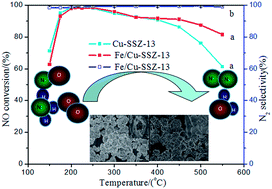
The influence of ion exchange level on NH3-SCR. The activities of a series of Fex/Cu-SSZ-13 and Cu-SSZ-13 catalysts were investigated under the “standard SCR” condition. Fig. 7a showed the NO conversion results over Cu-SSZ-13 and Fex/Cu-SSZ-13 catalysts in the temperature range of 150 °C to 550 °C under a high hourly space velocity of 150[thin space (1/6-em)]000 h−1. The NO conversion increased rapidly below 200 °C and slowly declined above 400 °C with the temperature increasing and reached above 85% in the temperature range of 175 °C to 450 °C over Cu-SSZ-13. Especially in the region of 175 °C to 350 °C, the NO conversion remained above 90%. Compared with Cu-SSZ-13, Fex/Cu-SSZ-13 with a low iron exchange level exhibited higher NO conversion within a broader temperature window of 175 °C to 550 °C. Particularly, NO conversion was improved remarkably (above 85%) above 400 °C. Thus, Fex/Cu-SSZ-13 catalysts have enlarged the operating temperature window. Clearly, high temperature activity was further improved due to the synergistic effects between Cu and Fe species. However, Fex/Cu-SSZ-13 zeolites with higher iron exchange level resulted in a significant decrease of NO conversion in the whole temperature window. In order to investigate the effect of ion exchange level on NO conversion, the average conversion of NO in the temperature range of 200 °C to 400 °C was calculated and was shown in Fig. 7b as a function of Fe/Cu (molar ratio). The results of Fig. 7b suggested that the suitable iron loading could promote NO conversion, while the excessive iron loading could block the “channel” of zeolites. This could also be explained by N2 adsorption–desorption results. Therefore, the choice of the ion-exchange concentration was also very important for improving the NO conversion.
image file: c4ra09290b-f7.tif
Fig. 7 NO conversion over Cu-SSZ-13 and Fex/Cu-SSZ-13 catalysts with variable molar ratio of Fe to Cu under GHSV of 150[thin space (1/6-em)]000 h−1 in the temperature range of 150 °C to 550 °C as a function of reaction temperature (a), the average NO conversion over Fex/Cu-SSZ-13 as the molar ratio of Fe to Cu (b) and N2 selectivity as a function of reaction temperature (c).

Most notably, the results in Fig. 7c showed that the concentrations of N2O and NO2 were less than 10 ppm and N2 selectivity reached almost 100% in the whole operating temperature range over Fe1.32/Cu-SSZ-13.

Effect of space velocity on NH3-SCR activity. In the practical application conditions, space velocity of diesel exhaust varies due to the different driving conditions. Therefore, the effect of space velocity on NH3-SCR activity was evaluated and the results were shown in Fig. 8.
image file: c4ra09290b-f8.tif
Fig. 8 NH3-SCR activity under different GHSV over Cu-SSZ-13 catalyst (a) and Fe1.32/Cu-SSZ-13 catalyst (b).

Fig. 8a showed the effect of space velocity on NO conversion over Cu-SSZ-13 catalyst. Obviously, NO conversion decreased with the GHSV increasing from 100[thin space (1/6-em)]000 h−1 to 600[thin space (1/6-em)]000 h−1 in the temperature range of 150 °C to 550 °C. The influence was not clearly observed above 400 °C, but the decrease of catalytic activity below 300 °C was remarkable. On the one hand, the short duration of exposure between NO and NH3 resulted in the decrease of NO conversion. On the other hand, non-selective NH3 oxidation produced NO at high temperature and the availability of NH3 was limited, leading to the decrease of NO conversion. However, very high NO conversion (>80%) was obtained from 200 °C to 450 °C under all GHSV conditions. The results suggested that Cu-SSZ-13 catalyst showed superior resistance to the high space velocity.

In order to further understand the resistance to gas hourly space velocity property of Fex/Cu-SSZ-13 zeolites, Fe1.32/Cu-SSZ-13 was investigated under GHSV of 100[thin space (1/6-em)]000 h−1 to 200[thin space (1/6-em)]000 h−1. As shown in Fig. 8b, Fex/Cu-SSZ-13 catalysts achieved the similar NO conversion above 200 °C under the different space velocity, indicating that they were effectively resistant to high gas hourly space velocity.

H2O, SO2 and CO2 tolerance of Fex/Cu-SSZ-13. Fig. 9 showed the results of anti-poisoning performance over Cu-SSZ-13 and Fe1.32/Cu-SSZ-13 catalysts. Fig. 9a showed the SO2 tolerance and H2O tolerance results of Cu-SSZ-13 and Fe1.32/Cu-SSZ-13 at 300 °C under a space velocity of 150[thin space (1/6-em)]000 h−1. When SO2 was added into the reaction system, NO conversion decreased slightly because of SO2 competitive adsorption with reaction gases, but NO conversion restored after SO2 was removed. The presence of H2O slightly decreased NO conversion. This was due to the A decreased and Ea increased in Arrhenius equation, leading to the decrease of the reaction rate.43 Since the co-existence of SO2 and water vapor in the combustion exhaust often leads to the deactivation of the SCR catalysts, therefore, it is necessary to investigate the effects of SO2 and H2O on NO conversion. However, when SO2 and H2O were simultaneously added into feed gases, NO conversion rapidly decreased from 95% to 25% and hardly restored to the original level over Cu-SSZ-13. The result could be explained that ammonium sulfate and copper sulfate formed on the surface of the catalyst and blocked the active sites, resulting in the catalyst permanent poisoning.44 Compared with Cu-SSZ-13, Fe1.32/Cu-SSZ-13 catalyst displayed better resistance to water and sulfur dioxide. When 100 ppm SO2 and 5% H2O were present in the feed gases, NO conversion decreased from 98% to 86% and then restored after they were removed. Fig. 9b showed that pure CO2 and the co-presence of CO2 and H2O in diesel exhaust had no effect on NO conversion. The conclusion was in accordance with previous ref. 45.
image file: c4ra09290b-f9.tif
Fig. 9 NO conversion over Cu-SSZ-13 and Fe1.32/Cu-SSZ-13 catalysts at 300 °C under GHSV of 150[thin space (1/6-em)]000 h−1 in the co-presence of H2O + SO2 (a); H2O + CO2 (b).
Influence of hydrothermal aging of the catalysts on activity. In order to further investigate hydrothermal stability, the Cu-SSZ-13 and Fe1.32/Cu-SSZ-13 catalysts were treated in 10% H2O, 5% O2 and N2 at 600, 750 and 800 °C for 8 h to probe the influence of hydrothermal aging on the catalytic activity. Fig. 10 showed the SCR activities of fresh and hydrothermal aging samples. NO conversion of hydrothermally treated samples decreased on the whole temperature range, especially, at high temperature. Furthermore, the deNOx activity of Fe1.32/Cu-SSZ-13 decreased with increasing aging temperature. Fe1.32/Cu-SSZ-13-600 and Fe1.32/Cu-SSZ-13-750 achieved more than 85% NO conversion from 200 °C to 350 °C. However, when the aging temperature was 800 °C, NO conversion decreased significantly. The SCR activity result was in accordance with XRD and BET results. Compared with Cu-SSZ-13-600, Fe1.32/Cu-SSZ-13-600 showed higher NO conversion, indicating that Fe1.32/Cu-SSZ-13 was more robust and resistant to relatively harsh hydrothermal treatment than Cu-SSZ-13. This result was related to the higher Si/Al ratio in Fe1.32/Cu-SSZ-13 than Cu-SSZ-13.
image file: c4ra09290b-f10.tif
Fig. 10 NO conversion of Cu-SSZ-13 and Fe1.32/Cu-SSZ-13 after hydrothermal aging.

Conclusions

In conclusion, a series of CHA-type Fex/Cu-SSZ-13 catalysts were prepared by liquid ion exchange method on the basis of Cu-SSZ-13. The characteristics of the catalysts were investigated by means of XRD, N2 adsorption–desorption, H2-TPR, UV-Vis DRS and XPS. The catalytic performances and the reaction mechanism were studied in NH3-SCR system and in situ DRIFTS, respectively.

Zeolite structure remained unchanged after Fe incorporation into Cu-SSZ-13 as shown in XRD patterns. H2-TPR results indicated that Fex/Cu-SSZ-13 showed good redox ability within a wider temperature range than Cu-SSZ-13, due to the high-temperature redox performance and rich forms of iron species. The XPS and UV-Vis DRS results suggested that there were more active sites, such as Fe3+ and FexOy after Fe loading and there was strong interaction between Fe and Cu species. The results were favorable to NH3-SCR activity. In situ DRIFTS results suggested that both Brønsted and Lewis acid sites were involved in NH3-SCR. At low temperature, cis-N2O22−, NO+ and NO3− were main active groups and reacted with adsorbed NH3.

The catalytic performances of Fex/Cu-SSZ-13 were improved after iron incorporation, due to the synergistic effects between iron and copper species. Particularly, when the molar ratio of Fe to Cu approached 1.0, the bimetallic zeolite showed the comprehensive advantage compared with the parent monometallic zeolite. A wider operating temperature window and high N2 selectivity (>98%) were obtained over Fe1.32/Cu-SSZ-13. NO conversion was more than 85% in the temperature range of 175 °C to 550 °C. Although water tolerance and sulfur tolerance increased over Fex/Cu-SSZ-13 compared with Cu-SSZ-13, NO conversion rapidly decreased from 98% to 86% and hardly restored under the co-existence of H2O and SO2. Therefore, the development of catalysts with high H2O and SO2 tolerance needs to be further investigated.

Acknowledgements

We acknowledge gratefully the financial subsidy of the Program of Universities' Innovative Research Terms (no. IRT0936).

Notes and references

  1. H. Bosch and F. Janssen, Catal. Today, 1988, 2, 369–521 CrossRef CAS.
  2. V. I. Parvulescu, P. Grange and B. Delmon, Catal. Today, 1998, 46, 233–316 CrossRef CAS.
  3. P. Granger and V. I. Parvulescu, Chem. Rev., 2011, 111, 3155–3207 CrossRef CAS PubMed.
  4. M. Kobayashi, R. Kuma and A. Morita, Catal. Lett., 2006, 112, 37–44 CrossRef CAS.
  5. M. Colombo, I. Nova and E. Tronconi, Catal. Today, 2010, 151, 223–230 CrossRef CAS.
  6. D. W. Fickel, E. D'Addio, J. A. Lauterbach and R. F. Lobo, Appl. Catal., B, 2011, 102, 441–448 CrossRef CAS.
  7. I. Bull, R. S. Boorse, W. M. Jaglowski, G. S. Koermer, A. Moini, J. A. Patchett, W. M. Xue, P. Burk, J. C. Dettling and M. T. Caudle, US. Pat., 0 226 545, 2008.
  8. J. H. Kwak, R. G. Tonkyn, D. H. Kim, J. Szanyi and C. H. F. Peden, J. Catal., 2010, 275, 187–190 CrossRef CAS.
  9. S. J. Schmieg, S. H. Oh and C. H. Kim, Catal. Today, 2012, 184, 252–261 CrossRef CAS.
  10. S. I. Zones, J. Chem. Soc., Faraday Trans., 1991, 87, 3709–3716 RSC.
  11. R. M. Franco, M. Moliner, C. Franch, A. Kustov and A. Corma, Appl. Catal., B, 2012, 127, 273–280 CrossRef.
  12. R. M. Franco, M. Moliner, P. Concepcion, J. R. Thogersen and A. Corma, J. Catal., 2014, 314, 73–82 CrossRef.
  13. R. M. Franco, M. Moliner, J. R. Thogersen and A. Corma, ChemCatChem, 2013, 5, 3316–3323 CrossRef.
  14. J. Y. Luo, X. Hou, P. Wijayakoon, S. J. Schmieg, W. Li and W. S. Epling, Appl. Catal., B, 2011, 102, 110–119 CrossRef CAS.
  15. M. Devadas, O. Kröcher, M. Elsener, A. Wokaun, G. Mitrikas, N. Söger, M. Pfeifer, Y. Demel and L. Mussmann, Catal. Today, 2007, 119, 137–144 CrossRef CAS.
  16. L. Ma, J. Li, Y. Cheng, C. K. Lambert and Li. Fu, Environ. Sci. Technol., 2012, 46, 1747–1754 CrossRef CAS PubMed.
  17. A. Sultana, M. Sasaki, K. Suzuki and H. Hamada, Catal. Commun., 2013, 41, 21–25 CrossRef CAS.
  18. T. Zhang, J. Liu, D. Wang, Z. Zhao, Y. Wei, K. Cheng, G. Jiang and A. Duan, Appl. Catal., B, 2014, 148, 520–531 CrossRef.
  19. X. Yang, Z. Wu, M. Moses-Debusk, D. R. Mullins, S. M. Mahurin, R. A. Geiger, M. Kidder and C. K. Narula, J. Phys. Chem. C, 2012, 116, 23322–23331 CAS.
  20. L. Xie, F. Liu, L. Ren, X. Shi, F. Xiao and H. He, Environ. Sci. Technol., 2014, 48, 566–572 CrossRef CAS PubMed.
  21. J. H. Park, H. J. Park, J. H. Baik, I. S. Nama, C. H. Shinb, J. H. Leec, B. K. Choc and S. H. Ohc, J. Catal., 2006, 240, 47–57 CrossRef CAS.
  22. F. Gao, E. D. Walter, E. M. Karp, J. Luo, R. G. Tonkyn, J. H. Kwak, J. Szanyi and C. H. F. Peden, J. Catal., 2013, 300, 20–29 CrossRef CAS.
  23. S. T. Korhonen, D. W. Fickel, R. F. Lobo, B. M. Weckhuysen and A. M. Beale, Chem. Commun., 2011, 47, 800–802 RSC.
  24. X. Shi, F. Liu, L. Xie, W. Shan and H. He, Environ. Sci. Technol., 2013, 47, 3293–3298 CAS.
  25. X. Shi, F. Liu, W. Shan and H. He, Chin. J. Catal., 2012, 33, 454–464 CrossRef CAS.
  26. M. S. Kumara, M. Schwidder, W. Grünert, U. Bentrup and A. Brückner, J. Catal., 2006, 239, 173–186 CrossRef.
  27. T. Ghodselahi, M. A. Vesaghi, A. Shafiekhani, A. Baghizadeet and M. Lameiial, Appl. Surf. Sci., 2008, 255, 2730–2734 CrossRef CAS.
  28. M. H. Kim, I. S. Nam and Y. G. Kim, J. Catal., 1998, 179, 350–360 CrossRef CAS.
  29. C. D. Wagner, Handbook of X-ray photoelectron spectroscopy, ed. G. E. Muilenberg, Perkin-Elmer, USA, 1st edn, 1979, ch. 3, pp. 74–80 Search PubMed.
  30. D. Chadwick and T. Hashemi, Corros. Sci., 1978, 18, 39–51 CrossRef CAS.
  31. S. J. Roosendaal, B. Van Asselen, J. W. Elsenaar, A. M. Vredenberg and F. H. P. M. Habraken, Surf. Sci., 1999, 442, 329–337 CrossRef CAS.
  32. Y. Peng, C. Wang and J. Li, Appl. Catal., B, 2014, 144, 538–546 CrossRef CAS.
  33. D. Wang, L. Zhang, K. Kamasamudram and W. S. Epling, ACS Catal., 2013, 3, 871–881 CrossRef CAS.
  34. K. I. Hadjiivanov, Catal. Rev., 2000, 42, 71–144 CAS.
  35. L. Ma, J. Li, Y. Cheng, G. Cavataio, R. W. McCabe, L. Fu and J. Li, Appl. Catal., B, 2014, 156–157, 428–437 CrossRef CAS.
  36. S. Yang, C. Wang, J. Li, N. Yan, L. Ma and H. Chang, Appl. Catal., B, 2011, 110, 71–80 CrossRef CAS.
  37. M. Iwasaki, K. Yamazaki, K. Banno and H. Shinjoh, J. Catal., 2008, 260, 205–216 CrossRef CAS.
  38. W. Shan, F. Liu, H. He, X. Shi and C. Zhang, Chem. Commun., 2011, 47, 8046–8048 RSC.
  39. H. Zhu, J. H. Kwak, C. H. F. Peden and J. Szanyi, Catal. Today, 2013, 205, 16–23 CrossRef CAS.
  40. H. Sjövall, E. Fridell, R. J. Blint and L. Olsson, Top. Catal., 2007, 42, 113–117 CrossRef.
  41. Y. H. Yeom, J. Henao, M. J. Li, W. M. H. Sachtlera and E. Weitz, J. Catal., 2005, 231, 181–193 CrossRef CAS.
  42. M. Aschi and F. Grandinetti, Chem. Phys. Lett., 1997, 267, 98–104 CrossRef CAS.
  43. C. Ciardelli, I. Nova, E. Tronconi, B. Konrad, D. Chatterjee, K. Ecke and M. Weibel, Chem. Eng. Sci., 2004, 59, 5301–5309 CrossRef CAS.
  44. X. Zhang, B. Shen and K. Wang, Ind. Eng. Chem. Res., 2013, 19, 1272–1279 CrossRef CAS.
  45. T. Yu, J. Wang, M. Shen and W. Li, Catal. Sci. Technol., 2013, 3, 3234–3241 CAS.

Footnote

Postal address: School of Chemical Engineering and Technology, Tianjin University, 92 Weijin Road, Tianjin 300072, P. R. China.

This journal is © The Royal Society of Chemistry 2014
Click here to see how this site uses Cookies. View our privacy policy here.