
Production of novel biodiesel from transesterification over KF-modified Ca–Al hydrotalcite catalyst

Juan Chen, Lihua Jia*, Xiangfeng Guo*, Lijun Xiang and Shengfeng Lou
College of Chemistry and Chemical Engineering, Key Laboratory of Fine Chemicals of College of Heilongjiang Province, Qiqihar University, Qiqihar 161006, China. E-mail: jlh29@163.com; xfguo@163.com

Received 30th August 2014 , Accepted 5th November 2014

First published on 6th November 2014


Abstract

A series of KF-modified Ca–Al hydrotalcite (xKF/HTL-M) solid base catalysts was prepared in methanol, and characterized by thermogravimetry analysis (TG-DTA), X-ray diffraction (XRD), scanning electron microscopy (SEM) and carbon dioxide temperature-programmed desorption (CO2-TPD). The catalytic activity was investigated in the transesterification of ethylene glycol monomethyl ether (EGME) with methyl laurate (ML) to produce a novel biodiesel of ethylene glycol monomethyl ether monolaurate (EGMEML). The effect of the mass content of KF and the main reaction parameters such as EGME to ML molar ratio, amount of catalyst, reaction time and temperature on the yield of EGMEML were examined. The results indicate that a new phase of KCaF3 formed in xKF/HTL-M, and acted as the main active sites for the transesterification. In addition, xKF/HTL-M has excellent catalytic performance in the production of EGMEML. The highest yield of 97.7% was obtained over 24.7KF/HTL-M at EGME/ML molar ratio of 3.0, catalyst amount of 5 wt%, and reaction time of 4 h at 120 °C. Moreover, the catalyst displays a good stability and reutilization. A satisfactory yield of 90% was obtained after use for five consecutive cycles without significant deactivation. Finally, the activation energy (Ea) of the reaction of EGME with ML over 24.7KF/HTL-M was obtained as 27.11 kJ mol−1.

1. Introduction

The rapid exhaustion of fossil diesel and severe environmental problems have become important issues in recent decades. Owing to the similar physicochemical properties to fossil diesel, abundant feedstock, low toxicity and easy biodegradability,1,2 biodiesel (FAMEs) has been generally considered as an alternative green energy, and is generally obtained by transesterification reaction of alcohol and triglycerides with catalysts. Moreover, the use of biodiesel could significantly reduce emissions of volatile organic compounds (VOCs), particulate matter (PM), SO2, CO, and unburned hydrocarbons (HCs) compared to commercially available diesel.3 However, the oxygen content of traditional biodiesel is quite low. To fully develop the potential biodiesel as an alternative fuel and polish its exhaust emissions property, such as smoke, CO and HC, researchers attempted to increase the oxygen content by introduction of ester groups into the molecules to reduce engine-out exhaust emissions.4–6 Recently, a kind of novel biodiesel, which was synthesized by the transesterification reaction of FAMEs with short chain glycol ethers mainly using homogeneous base catalysts,5,6 has attracted more attention. Similar to the production of the conventional biodiesel, the usage of homogeneous catalysts could corrode the equipments easily, and create large amounts of caustic wastewater giving rise to high production cost and serious environmental pollution.4–7 Therefore, it is very important to develop a new heterogeneous catalyst for the production of novel biodiesel. There are few literatures which used heterogeneous catalysts to synthesize novel biodiesel. Fan et al.,8 used calcinated sodium silicate as a catalyst for the synthesis of a novel biodiesel of ethylene glycol monomethyl ether fatty acid monoester, the yield was above 90.0% with the molar ratio of ethylene glycol monomethyl ether (EGME) to methyl laurate (ML) of 2[thin space (1/6-em)]:[thin space (1/6-em)]1, catalyst amount of 5 wt% (catalyst/ML), reaction time of 6 h and temperature of 120 °C. The calcinated sodium silicate as an environmentally benign catalyst became a promising route for the production of the novel biodiesel.

Hydrotalcites (HT) with the structure of two-dimensional sheets can stack to build a tridimensional network linked by anions and water molecules.9,10 Calcinated at an appropriate temperature, it can decompose well-dispersed mixed metal-oxides which have high catalytic performance in traditional biodiesel production.11 Campos-Molina et al.,12 found Ca–Al hydrotalcite of Ca to Al atom ratio of 2 can convert into mayenite and CaO calcinated at 750 °C, which was active in biodiesel production using sunflower oil as feedstock. Sun et al.,13 used Ca–Al hydrotalcite of Ca to Al atom ratio of 3 as the supporter to prepare K2CO3/Ca–Al hydrotalcite by the grind method, it displayed high catalytic activity in the reaction of soybean oil and methanol, the highest yield of the biodiesel was about 94.0%. The catalyst showed good stability, the biodiesel yield could be over 87.4% after used for five cycles. Gao et al.,14 prepared KF/Ca–Al hydrotalcite of Ca to Al atom ratio of 3 by the grind method, which was highly effective for the reaction of palm oil with methanol. The biodiesel yield was close to 100% as the loading content was 80 wt% or 100 wt% of KF·6H2O to Ca–Al mixed oxides.

It is well known, impregnation method is a common method to prepare the supported catalyst and water is usually used as solvent. Nevertheless, Tao et al.,15 first used methanol as the impregnation solvent and supported KF on the mesoporous Mg–Fe bi-metal oxides to synthesize a novel catalyst. They found the impregnation solvent had great effect on the structures and catalytic performances of the catalyst, and the novel catalyst revealed higher catalytic activity to the reaction of soybean oil and methanol than that of the catalyst synthesized in water. Moreover, the novel catalyst showed well stability, the biodiesel yield was 57.6% after used for five cycles.

Inspired by the previous reports, a series of effective solid bases of KF-modified Ca–Al hydrotalcites thereby was prepared in methanol and water as impregnation solvent, and used as catalyst in the production of novel biodiesel. As expected, the catalyst synthesized in methanol displayed excellent catalytic activity in the transesterification of ethylene glycol monomethyl ether (EGME) and methyl laurate (ML). X-ray diffraction (XRD), thermogravimetry analysis (TG-DTA), scanning electron microscopy (SEM), and carbon dioxide temperature-programmed desorption (CO2-TPD) were performed to characterize the structure of the catalyst, in an attempt to explain the correlation between structure and activity of the catalyst. In addition, the effect of KF mass content and main reaction parameters on the novel biodiesel yield was investigated. Moreover, the reaction dynamics of EGME with ML over KF/HTL-M was studied.

2. Experimental

2.1. Chemical reagents

All chemicals used in the present work were of A.R. grade and purchased from Aladdin, China.

2.2. Preparation of KF-modified hydrotalcite catalysts

Ca–Al hydrotalcite was prepared by reference to the literature,13,14 the specific preparation procedure was as follows: 6.66 g (0.06 mol) CaCl2 and 4.83 g (0.02 mol) AlCl3·6H2O dissolved in 80.0 mL deionized water, namely solution A, while 4.24 g (0.04 mol) Na2CO3 and 6.41 g (0.16 mol) NaOH dissolved in 80.0 mL deionized water, namely solution B. Subsequently, both solutions were synchronously dropped into 50.0 mL 65 °C deionized water under vigorous stirring, keeping pH at 11. The suspended liquid was aged at 65 °C for 48 h. After filtration, the precipitate was washed with deionized water until the pH of filtrate was near 7. The filtration was dried at 90 °C for 10 h and calcined at 550 °C for 8 h. Finally, the Ca–Al mixed oxides were obtained.

KF-modified hydrotalcite catalysts were obtained by the impregnation method. The Ca–Al mixed oxides were immersed in KF·2H2O methanol or aqueous solutions with different amounts of KF (6.17%, 12.3%, 18.5%, 24.7% and 30.6% wt/wt Ca–Al mixed oxides supporter), stirred vigorously for 4 h, then transferred to a rotary vacuum evaporator to remove the impregnation solvent, and activated in a tubular furnace at 180 °C for 4 h under vacuum. The resultant composites were named as xKF/HTL-M or xKF/HTL-W, where ‘x’ stands for the nominal KF loading mass percentage, ‘M’ means methanol as the impregnation solvent and ‘W’ means water as the impregnation solvent.

2.3. Characterization of the catalysts

Thermogravimetric analysis (TG-DTA) was carried out using NETZSCH STA F3. 10 mg of the sample was used and alumina was used as reference. TG and DTA curves were obtained from 25 to 900 °C under an inert nitrogen with a heating rate of 10 °C min−1.

Powder XRD diffraction was performed on a Bruker D8 Advance (Germany) diffractometer, using Cu Kα radiation (λ = 1.5418 Å) at 40 kV and 50 mA. The scanning speed was 3° min−1 and scanned area ranged 2θ = 10–60°.

Morphology of the samples was observed by SEM using a Rigaku S-4300 spectrometer (Japan). The voltage was 20 kV and the vacuum degree of the sample room was better than 10−4.

The basic strength and basicity of the samples were studied with CO2-TPD, described in detail by Zhang et al.,16 About 10 mg of the sample was placed into a quartz tube, using He of 100 mL min−1 to sweep the surface impurities of the catalyst at calcination temperature for 60 min, then introduced 100 mL min−1 He + 5 vol% CO2 into the system for 60 min before cooling to 100 °C. Afterwards, physisorbed CO2 was desorbed from the catalyst blowing at 100 °C in He of 100 mL min−1. Finally, with increasing the temperature from 100 to 820 °C, chemisorbed CO2 was removed from the sample and monitored with a thermal conductivity detector (TCD).

2.4. Catalytic tests of KF/HTL-M(W) for the novel biodiesel

The novel biodiesel was prepared by transesterification between methyl laurate (ML) and ethylene glycol monomethyl ether (EGME) catalyzing by xKF/HTL-M (W). The reaction equation was followed:
image file: c4ra09214g-u1.tif

The transesterification of ML and EGME was carried out without solvent like our group previous work.8 9.63 g (45.0 mmol) of ML, desired amount of EGME and as-developed catalyst mixed in a glass flask, equipped with a thermometer, and water-cooled condenser. The reaction was kept in an oil bath at 120 °C on a hot plate with magnetic controlled stirrer. All the reaction duration was in N2 protection. At the end of the reaction, quickly stopped by cooling in water and separated the catalyst from the reaction system by decantation and centrifugation. The supernatant liquid was purified in a rotary vacuum evaporator to remove excess EGME and byproduct methanol. The residue was quantitatively analyzed by gas chromatography (GC) based on peak area normalization method8,17 in a GC9800 equipped with a flame ionization detector and a KB-17 capillary column (30 m × 0.25 mm × 0.25 μm), the temperature of the oven, injector, and detector were 250, 280, and 250 °C, respectively. The yield (Y) and turnover frequency (TOF) were calculated by the following equations:

image file: c4ra09214g-t1.tif

image file: c4ra09214g-t2.tif
where m1 is the actual mass of biodiesel (g), m2 is the theoretical mass of the biodiesel (g), and w is the mass concentration of the novel biodiesel determined by GC; and molactual is the moles of the novel biodiesel produced at time t and fm is the total basic sites (mmol g−1) of the catalyst obtained by CO2-TPD.

2.5. Reusability and stability tests

The reusability of KF/HTL-M was performed under the optimized reaction conditions. After the reaction, the catalyst was recovered by centrifugation and decantation, washed with ethyl acetate three times, dried at 90 °C and regenerated by activating at 180 °C for 4 h, then reused for the next round. After every cycle, the catalysts were characterized using XRD and CO2-TPD.

The leaching content of K and Ca in the residues filtrated off the catalyst were monitored as follows:18 the reaction was proceeded under the optimized conditions with 24.7KF/HTL-M as catalyst. After one hour, the hot reaction mixture was cooled quickly and the catalyst was centrifuged. The content of K and Ca in the supernated liquid were measured by atomic absorption spectroscopy (AAS, Thermo Scientific, ICE3000 series), then the supernated liquid continued reacting for the next five hours. Meanwhile, the composition of reaction solution without EGME was analyzed by GC with an interval of 1 h, the novel biodiesel yield was calculated.

Koros–Nowak test was conducted according to the literature.19 In a typical test, the effect of reaction time on the novel biodiesel yield over different amount of 24.7KF/HTL-M was determined under optimized conditions, the corresponding TOFs to 40% yield were calculated to verify the effect of heat or mass transfer on the reaction rates under tested conditions.

2.6. Reaction kinetics

The reaction kinetics of ML with EGME over 24.7KF/HTL-M was carried out by reference to the literature.20 All the reactants and catalyst were assumed to be perfectly mixed for the vigorous stirring, so the reaction system would be regarded as pseudo-homogeneous; and the sizes of catalyst powders were small, so that the external and internal mass transfer resistance were negligible; adsorption and desorption rates of the reactants on the solid catalyst were fast enough, and the heterogeneous-catalyzed transesterification reaction was controlled by chemical step.

3. Results and discussion

3.1. Catalytic performance of KF/HTL

3.1.1. Effect of impregnation solvent. The effect of the impregnation solvent on catalytic performance was investigated in the production of the EGMEML. The novel biodiesel yield of 97.7% was obtained over 24.7KF/HTL-M, while only 67.4% was found over 24.7KF/HTL-W under the molar ratio of EGME/ML of 3.0, catalyst amount of 5 wt%, reaction temperature of 120 °C and reaction time of 4 h. It implies that the catalytic performance of 24.7KF/HTL-M was higher than that of 24.7KF/HTL-W. Therefore, methanol was chosen as the impregnation solvent for the further investigation.
3.1.2. Effect of KF mass content. The effect of KF mass content of xKF/HTL-M on catalytic performance was investigated as shown in Table 1. With the increase of KF amount from 6.17% to 24.7%, the novel biodiesel yield increased from 66.7% to 97.7%. However, further increased the loading amount of KF to 30.6%, the yield reduced to 88.4%. Similar phenomenon was observed for other solid base systems on the production of the traditional biodiesel, in which the decline in catalytic activity was found when the loading active component exceeded a certain amount.13 On the basis of the results, 24.7% loading amount of KF was chosen as the optimum loading amount.
Table 1 Effect of the KF loading amount on the basicity of the catalyst and the novel biodiesel yield. Reaction condition: molar ratio of EGME/ML of 3.0, catalyst amount of 5 wt%, reaction time of 4 h, and reaction temperature of 120 °C
Catalysts KF loading amount (%) Basicity (mmol g−1) Yield (%)
6.17KF/HTL-M 6.17 4.66 66.5
12.3KF/HTL-M 12.3 5.06 77.2
18.5KF/HTL-M 18.5 4.48 85.2
24.7KF/HTL-M 24.7 5.03 97.7
30.6KF/HTL-M 30.6 4.44 88.4
24.7KF/HTL-W 24.7 6.96 67.4


3.2. Influence of the reaction parameters

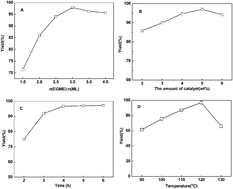
The transesterification reaction could be mainly influenced by the following parameters, such as EGME/ML molar ratio, amount of catalyst, reaction time and temperature. The effect of those parameters on the yield of the novel biodiesel was examined as shown in Fig. 1.
image file: c4ra09214g-f1.tif
Fig. 1 Influence of reaction parameters on the yield of the novel biodiesel: (A) catalyst amount of 5 wt%, reaction time of 4 h, and reaction temperature of 120 °C; (B) molar ratio of EGME/ML of 3.0, reaction time of 4 h, and reaction temperature of 120 °C; (C) molar ratio of EGME/ML of 3.0, catalyst amount of 5 wt%, and reaction temperature of 120 °C; and (D) molar ratio of EGME/ML of 3.0, catalyst amount of 5 wt% and reaction time of 4 h.

As shown in Fig. 1A, with the increase of EGME/ML molar ratio from 1.5 to 3.0, the yield of the novel biodiesel increased from 71.4% to a maximum of 97.7%. However, the yield decreased slightly with the increase of EGME/ML molar ratio above 3.0. The excess of EGME may dilute the reaction system, resulted in the reaction rate reduction;21 as well as more energy was demanded to recover the excess EGME from the mixed reactants after the reaction.22 So the molar ratio of EGME/ML was chosen as 3.0 in the following experiments.

The usage of the catalyst could be beneficial to obtain a high product yield in relatively short reaction time. However, excessive amount of the catalyst leads to increasing of viscosity of the reaction system, causes a problem of mixing and a demand of higher power consumption for adequate stirring.22 To overcome this kind of problem, an appropriate amount of catalyst had to be investigated. As shown in Fig. 1B, when the catalyst amount was 5 wt%, the yield of the novel biodiesel was maximum as 97.7%.

The effect of reaction time on the yield of the novel biodiesel was studied (Fig. 1C). The yield of the novel biodiesel increased with the time going by until 4 hours. After 4 h, the yield was not significantly increased, it indicates that the reaction reached the equilibrium state.

In addition, the effect of reaction temperature on the yield was studied (Fig. 1D) for the intrinsic rate constant was a strong function of temperature.23 The results indicates that the yield raised with the increase of temperature from 90 °C to 120 °C, and the yield of the novel biodiesel reached 97.1% at 120 °C. As the temperature further increased to 130 °C, the yield decreased sharply to 65.9%, which may originate from the vaporization of EGME and the formation of bubbles, and restrain the reaction on the three-phase interface.24

According to the above-mentioned experiments, the high yield of the novel biodiesel was obtained under EGME/ML molar ratio of 3.0, catalyst amount of 5 wt% with respect to ML, reaction duration of 4 h at 120 °C.

3.3. Relationship between the structure and catalytic activity of KF/HTL-M(W)

To explore the high catalytic performance of KF/HTL-M(W), the catalysts were characterized by TG-DTA, XRD, SEM and CO2-TPD, and the relationship between the structure and performance of the catalysts was deeply discussed.

As shown in Fig. 2, the TG profile of the support precursor has three noticeable weight loss steps, corresponding to three endothermic peaks in the relevant DTA profile with the transition temperatures at 143 °C, 291 °C and 723 °C, respectively. The first weight loss of 6.51% at 25–180 °C was assigned to the removal of physically adsorbed water on the precursor surface;25 the second loss of 4.80% at 180–580 °C was appointed to the loss of crystal water and constitutional water with form of OH;25,26 and the last loss of 27.6% at 580–900 °C was attributed to the decomposition of the structural carbonate.8


image file: c4ra09214g-f2.tif
Fig. 2 TG (A) and DTA (B) curves of support precursor, 24.7KF/HTL-W and 24.7KF/HTL-M.

After loading KF, the TG-DTA profiles changed greatly compared with that of the precursor. For 24.7KF/HTL-W, the first two losses appeared at the transition temperature of 170 °C and 308 °C, respectively; the last two losses arose at 683 °C and 736 °C, respectively. However, for 24.7KF/HTL-M, the first loss steps were at 25–180 °C, and the last two losses were at 580–900 °C.

Based on the analysis of TG-DTA profiles, it could be concluded the structure of the catalyst changed remarkably by introducing KF compared with the supporter, and the impregnation solvent affected the structure of the catalyst significantly.

XRD patterns of the supporter before and after calcination, 24.7KF/HTL-W and 24.7KF/HTL-M were shown in Fig. 3A. The typical peaks of layer structure of hydrotalcite precursor presented at 11.3°, 22.8°, 31.1°, 35.4°, 39.6° and 47.1°, which were in agreement with the previous reports.12,27 The peaks at 29.4°, 43.4° and 48.5° imply that there was the crystal phase of CaCO3,28 which may result from the precipitating agent of Na2CO3 or atmospheric CO2 reacted with partial Ca cations. After the precursor was calcined at 550 °C for 8 h, the typical peaks of the layered structure partially disappeared, which states that the layered structures of hydrotalcite were partially collapsed. And the diffraction peaks of CaCO3 could be observed as the calcination temperature was too low to make it decomposition.29


image file: c4ra09214g-f3.tif
Fig. 3 XRD patterns of the precursor and catalysts. (A) Support precursor (a), supporter calcinated at 550 °C for 8 h (b) 24.7KF/HTL-W (c) and 24.7KF/HTL-M (d); (B) 6.17KF/HTL-M (a), 12.3KF/HTL-M (b), 18.5KF/HTL-M (c), 24.7KF/HTL-M (d) and 30.6KF/HTL-M (e).

After loading KF, the typical peaks of the layered structure still remain well compared with that of the calcined supporter. It means that introducing KF did not affected significantly the layered structure of the catalysts. For the XRD pattern of 24.7KF/HTL-W, the new peaks of 17.2°, 20.0°, 26.5° and 39.5° were observed, which belong to the diffraction peaks of Ca3Al2(OH)12,26 the peaks of 20.0°, 28.5° and 40.7° correspond to that of CaAl2F4(OH),14 the peaks of 28.5° and 40.7° line with that of KCaF3 crystal phase (JCPDS file 49-1737), and the peaks of 28.5°, 35.1°, 40.7°, 45.7° and 54.8° ascribe to that of KCaCO3F.14 In the pattern of 24.7KF/HTL-M, the new phases are mainly KCaF3 and KCaCO3F crystals, and it can be found that the diffraction peaks of KCaF3 appeared notably, while the peaks of the crystal phase of KCaCO3F were relatively weak. In conclusion, the varied phases formed in methanol and water solvent, and the obvious difference of XRD patterns was well agreement with the TG results.

The yield of the novel biodiesel over 24.7KF/HTL-M was obviously higher than that of 24.7KF/HTL-W (Table 1), it indicates that the 24.7KF/HTL-M has higher catalytic activity than that of 24.7KF/HTL-W. Combined with the analysis of TG-DTA and XRD, it could be deduced that KCaF3 phase was more effective to the synthesis of the novel biodiesel.

Fig. 3B shows the XRD patterns of xKF/HTL-M. After loading KF, the characteristic peaks of KCaF3 appeared at 28.5° and 40.7°, and the peaks of KCaCO3F arose at 28.5°, 35.1°, 40.7°, 45.7° and 54.8°. Moreover, as the loading amount increased from 6.17% to 24.7%, the intensity of those peaks increased gradually. However, further increased the loading amount to 30.6%, the intensity of all peaks decreased slightly, which may result from the excess of KF covering the active sites, and well dispersing on the catalyst surface, so that the characteristic peaks of KF were not obviously emerged.

SEM was employed to investigate the morphologies of the samples. The morphology of the support precursor was hexagonal flakelet structure with sharp particle edge and smooth surface, which stacked parallelly to each other (Fig. 4A). Upon calcination, the morphology seemed to be similar to that of the hydrotalcite precursor. This phenomenon attributed to the so-called “memory effect” of hydrotalcites, which corresponded to that of Zn–Al hydrotalcites and Mg–Al hydrotalcites.30,31 But the rough and defective surfaces were observed from Fig. 4B, it may cause by the release of water, CO2 and the transformation of crystallographic phase. After loading KF in methanol (Fig. 4C), 24.7KF/HTL-M retained layered morphology, the uniformed round nano-particles well dispersed on the supporter surface and few cubic crystals could be observed. Combined with the results of XRD, the round nano-particles could be ascribed to the crystals of KCaF3 and KCaCO3F, and the cubic crystals may be CaCO3. The well-dispersed KCaF3 and KCaCO3F nanoparticles were accessible to reactants, which was the main reason for the so high catalytic activity. In contrast, the layered structure of 24.7KF/HTL-W was partially collapsed (Fig. 4D), and the new agglomeration formed on the layer like mushrooms, the cohesion of the active phases was unfavorable to the catalytic reaction.


image file: c4ra09214g-f4.tif
Fig. 4 SEM images of support precursor (A), supporter calcinated at 550 °C for 8 h (B), 24.7KF/HTL-M (C) and 24.7KF/HTL-W (D).

Fig. 5A illustrates the CO2-TPD profiles of 24.7KF/HTL-M and 24.7KF/HTL-W. From the profile of 24.7KF/HTL-W, a weak desorption peak was observed at 200–400 °C, which attribute to the weak basic sites. In accordance with the XRD analysis, the weak basic sites might be the Ca3Al2(OH)12 and CaAl2F4(OH). The desorption peaks at 400–560 °C and 690–800 °C were found, both of them shifted to the lower temperature region compared with that of 24.7KF/HTL-M. It can interpret that the activity of 24.7KF/HTL-W is lower than that of 24.7KF/HTL-M. Combined with the basicity of the two catalysts, it can be concluded the basicity and the activity of the catalyst were greatly affected by the impregnation solvent.


image file: c4ra09214g-f5.tif
Fig. 5 CO2-TPD profiles of catalysts with different solvents (A) and catalysts with different KF loading amounts (B). 6.17KF/HTL-M (a), 12.3KF/HTL-M (b), 18.5KF/HTL-M (c), 24.7KF/HTL-M (d) and 30.6KF/HTL-M (e).

The desorption peaks at 400–560 °C, 580–690 °C and 690–800 °C for all the catalysts prepared in methanol (Fig. 5B) were observed, which belong to the moderate basic sites, strong basic sites and super basic sites, respectively.32 With the increase of KF loading amount from 6.17% to 24.7%, the desorption peaks at 400–560 °C and 690–800 °C increased gradually, while the peak at 580–690 °C decreased. This means that part of the strong basic sites can be transformed into the moderate basic sites and super basic sites due to the increase of KF loading amount, and the quantity of super basic sites of 24.7KF/HTL-M was slightly higher than that of 18.5KF/HTL-M, the ratio of the peaks area of them at 690–800 °C was about 1.54[thin space (1/6-em)]:[thin space (1/6-em)]1. As the KF loading amount further increased to 30.6%, the quantity of super basic sites was not increased significantly. Together with the analysis of XRD and TG-DTA, it was deduced that the peaks appeared at 690–800 °C belong to the desorption of CO2 reacted with the new crystal KCaF3, and the peak at 580–690 °C is in line with the desorption of the structural carbonate in the catalysts. The catalysts basicity and the novel biodiesel yield vs. the increase of KF loading amount are depicted in the Table 1. It can be seen the basicity lined with the novel biodiesel yield except for 18.5KF/HTL-M. As shown in Fig. 5B, an obvious desorption peak at 690–800 °C appeared as the KF loading amount increased to 18.5%, which indicates that the catalytic activity depended not only on the basicity but also on the base strength.

3.4. Reusability and stability of KF/HTL-M

Reusability is one of the most important factors for the industrial viability of KF/HTL-M as a heterogeneous catalyst in the synthesis of the novel biodiesel. It could be observed that the yield of the novel biodiesel of 97.1%, 95.7%, 94.9%, 92.8% and 90.0% was obtained as 24.7KF/HTL-M used for five consecutive reactions, respectively (Fig. 6A).
image file: c4ra09214g-f6.tif
Fig. 6 (A) Effect of repeated use of 24.7KF/HTL-M on the yield of the novel biodiesel and the basicity; (B) and (C) XRD patterns and CO2-TPD profiles of fresh (a), first used (b), second used (c), third used (d) and fourth used (e) 24.7KF/HTL-M; and (D) leaching test of the 24.7KF/HTL-M catalyst.

To explain the change of catalytic activity, the catalysts after used in every cycle were characterized by XRD and CO2-TPD (Fig. 6B and C). After the catalyst was used for five consecutive rounds, the intensity of characteristic peaks became weaker, and new peaks at 32.3°, 37.4° and 53.8° appeared in the XRD patterns (Fig. 6B), which belong to CaO.18 As shown in Fig. 6C, with the increase of run times, the desorption peak of the super basic sites shifted to lower temperature and the intensity became weaker. Meanwhile, a new desorption peak was observed at 450–550 °C after the catalyst was used for four times, which associates with the desorption of CO2 reacting with CaO.18 The analysis of XRD corresponds to that of CO2-TPD for the used catalysts. It can be concluded that the reduction of the catalytic activity is likely subjected to the out-leaching of some K and Ca in the catalyst.

To investigate the stability of KF/HTL-M, the leaching test was conducted under the optimized conditions with 24.7KF/HTL-M as catalyst. As shown in Fig. 6D, about 44% yield of novel biodiesel was obtained after one hour, the yield of the novel biodiesel of the supernated liquid filtrated off the catalyst remains constant over the next five hours; the amounts of K and Ca leached into the supernated solution were 0.02214 mg g−1 and 0.02523 mg g−1, respectively, and the percentages of K and Ca leached into the supernated liquid were 0.502% and 0.216% compared with the amounts of K and Ca in the catalyst added in the system. It reveals that 24.7KF/HTL-M catalyst has good stability, and the nature of the transesterification catalyzed by KF/HTL-M is a heterogeneous reaction.18

3.5. Koros–Nowak test

To identify heat or mass transfer limitations in measurements of catalytic rates, the Koros–Nowak test was proceeded. As shown in Table 2, the observed TOFs did not significantly change with the increase of catalyst amount. Therefore, the rates of the reaction of ML with EGME were not limited by heat and mass transfer.19
Table 2 Koros–Nowak test for heat and mass transfer limitations. Reaction conditions: molar ratio of EGME/ML of 3.0, reaction temperature of 120 °C, and yield of 40%
Catalyst amount (wt%) Total basic sites (mmol) TOF (×10−3 s−1)
2 0.332 1.90
3 0.493 1.89
4 0.654 1.89
5 0.820 1.89


3.6. Common catalysts in the synthesis of novel biodiesel

To demonstrate the high catalytic activity of KF/HTL-M, some traditional homogeneous and heterogeneous solid base catalysts were used for the production of novel biodiesel and compared with that of 24.7KF/HTL-M. The yield of the transesterification catalyzed by KF, KOH, CaO and calcinated Na2SiO3 were listed in Table 3.
Table 3 Results of common catalysts in the transesterification
Catalysts n(EGME)/n(ML) Catalyst amount (wt%) Temperature (°C) Time (h) Yield (%)
KF 3.0 5 120 4 6.54
KOH 3.0 5 120 4 37.1
CaO 3.0 5 120 4 62.7
Cacinated Na2SiO3 3.0 5 120 4 54.8


The results show that the catalytic activity of CaO was the strongest among of them (Table 3). However, it was difficult to separate from the product mixture owing to the formation of the gel, which was demonstrated from the experimental process, and corresponded to the literature.33 Therefore, KF/HTL-M is a high-efficiency heterogeneous catalyst for the transesterification.

3.7. Kinetics of transesterification reaction

The kinetics of transesterification of ML with EGME over KF/HTL-M was discovered. To be easy for the statement, A was used for ML, and B was used for EGME, CA0 and CB0, a and b represented the initial concentrations and reaction order of A and B, respectively. The reaction rate equation was as follows:
 
−dCA/dt = kCAaCBb (1)

When CB0CA0, CAa could be regarded as constant, eqn (1) was simplified as eqn (2), while CA0CB0, CBb could be viewed as constant, eqn (1) was simplified as eqn (3). In the eqn (2) and (3), k1 and k2 stands for rate constant of A and B, respectively.

 
image file: c4ra09214g-t3.tif(2)
 
image file: c4ra09214g-t4.tif(3)

Consequently, a and b were calculated by the eqn (4) and (5).

 
image file: c4ra09214g-t5.tif(4)
 
image file: c4ra09214g-t6.tif(5)

The graphs of −lg(dCA/dt) vs. −lg(CA) and −lg(dCB/dt) vs. −lg(CB) were obtained as shown in Fig. 7A. The plots of −lg(dCA/dt) vs. −lg(CA) and the plot of −lg(dCB/dt) vs. −lg(CB) show good linear relationship, and the values of slope are found to be 0.98 and 1.04, respectively, which are close to 1. It indicates that the grading number a and b of reactant A and B was 1, respectively. The results demonstrate the reaction rate formula of the ML with EGME was likely to follow second-order kinetics. Therefore, the rate equation can be written by the following equation:

 
image file: c4ra09214g-t7.tif(6)


image file: c4ra09214g-f7.tif
Fig. 7 The transesterification reaction kinetics analysis of ML with EGME over 24.7KF/HTL-M: (A) plots of −lg(dCA/dt) vs. −lg(CA) (□) and −lg(dCB/dt) vs. −lg(CB) (○); (B) plot of ln[thin space (1/6-em)]k vs. 1/T.

The activation energy (Ea) could be calculated based on the Arrhenius eqn (7):

 
k = A[thin space (1/6-em)]eEa/RT (7)
where R is the gas constant (J mol−1 K−1), T is the absolute temperature (K), A is the pre-exponential factor (L mol−1 min−1), Ea is the activation energy of the reaction of ML and EGME (J mol−1).

To estimate the activation energy of the reaction of ML and EGME catalyzed by 24.7KF/HTL-M, the relationship of ln[thin space (1/6-em)]k vs. 1/T was discussed, and the scatter plot is shown in Fig. 7B. On the basis of the eqn (7), Ea and A were calculated, which were 27.1 kJ mol−1 and 41.3 L mol−1 min−1, respectively. The rate constant (k) was found to be 10.4 × 10⁻³ L mol−1 min−1 at 120 °C. As the literature reported, when Ea was in the range of 10–15 kJ mol−1, the reactions were limited by diffusion, and when Ea was greater than 25 kJ mol−1, the reactions were governed by chemical step.34 In this work, the activation energy of 27.1 kJ mol−1 was excess of 25 kJ mol−1, so the reaction of ML with EGME catalyzed by KF/HTL-M was controlled by the chemical step.

4. Conclusions

KF modified Ca–Al hydrotalcite in methanol solvent has been prepared as an effective catalyst for the production of the novel biodiesel. Analyses by various modern instruments revealed that KF reacted with the supporter of Ca–Al hydrotalcite, and transformed into KCaF3, which is dominant for the transesterification of ML and EGME. The catalyst shows an excellent catalytic activity and a good stability, the yield of 97.7% was obtained under the optimized conditions and it could be used for five consecutive cycles without deactivation. Therefore, KF/HTL-M as a promising candidate in transesterification has significant benefits for an environmentally benign procedure of novel biodiesel.

Acknowledgements

This work was supported by the National Natural Science Foundation of China (21176125), the Science Research Project of the Ministry of Education of Heilongjiang Province of China (12521594, 2012TD012, JX201205), the Natural Science Foundation of Heilongjiang province of China (B201114, B201313), and the Key Program of Science and Technology of Qiqihar, Heilongjiang Province (GYGG–201108), and the Graduate Innovation Fund of Heilongjiang Province of China (YJSCX2013-014X).

References

  1. A. F. Lee, J. A. Bennett, J. C. Manayil and K. Wilson, Chem. Soc. Rev., 2014, 43, 7887–7916 RSC.
  2. C. H. Su, Appl. Energy, 2013, 104, 503–509 CrossRef CAS PubMed.
  3. A. M. Ashraful, H. H. Masjuki, M. A. Kalam, I. M. Rizwanul Fattah, S. Imtenan, S. A. Shahir and H. M. Mobarak, Energy Convers. Manage., 2014, 80, 202–228 CrossRef CAS PubMed.
  4. A. F. Zhang, X. D. Du, J. H. Lei, Y. Liu and Y. Bi, Anal. Lett., 2010, 43, 858–866 CrossRef CAS.
  5. D. Y. Jiang and Y. Bai, J. Renewable Sustainable Energy, 2012, 4(3118), 1–10 Search PubMed.
  6. Y. Li, H. J. Guo, Z. Zhu, Y. Feng and S. H. Liu, Int. J. Green Energy, 2012, 9, 376–387 CrossRef CAS.
  7. Y. C. Sharma, B. Singh and J. Korstad, Fuel, 2011, 90, 1309–1324 CrossRef CAS PubMed.
  8. F. L. Fan, L. H. Jia, X. F. Guo, X. P. Lu and J. Chen, Energy Fuels, 2013, 27, 5215–5221 CAS.
  9. G. L. Fan, F. Li, D. G. Evans and X. Duan, Chem. Soc. Rev., 2014, 43, 7040–7066 RSC.
  10. X. Zhang, Z. Wang, N. L. Qiao, S. Q. Qu and Z. P. Hao, ACS Catal., 2014, 4, 1500–1510 CrossRef CAS.
  11. X. F. Liu, B. B. Fan, S. C. Gao and R. F. Li, Fuel Process. Technol., 2013, 106, 761–768 CrossRef CAS PubMed.
  12. M. A. J. Campos-Molina, J. Santamaría-González, J. Meérida-Robles, R. N. Moreno-Tost, M. C. G. Albuquerque, S. N. Bruque-Gaámez, E. Rodriíguez-Castelloón, A. Jimeénez-Loópez and P. Maireles-Torres, Energy Fuels, 2010, 24, 979–984 CrossRef CAS.
  13. C. J. Sun, F. X. Qiu, D. Y. Yang and B. Ye, Fuel Process. Technol., 2014, 126, 383–391 CrossRef CAS PubMed.
  14. L. J. Gao, G. Y. Teng, G. M. Xiao and R. P. Wei, Biomass Bioenergy, 2010, 34, 1283–1288 CrossRef CAS PubMed.
  15. G. J. Tao, Z. L. Hua, Z. Gao, Y. Zhu, Y. Zhu, Y. Chen, Z. Shu, L. X. Zhang and J. L. Shi, Chem. Commun., 2013, 49, 8006–8008 RSC.
  16. H. Zhang, F. N. Gu, Q. Liu, J. J. Gao, L. H. Jia, T. Y. Zhu, Y. F. Chen, Z. Y. Zhong and F. B. Su, RSC Adv., 2014, 4, 14879–14889 RSC.
  17. R. L. Grob and M. A. Kaiser, Modern practice of gas chromatography, ed. R. L. Grob and E. F. Barry, John Wiley & Sons Inc, Hoboken, 4th edn, 2004, vol. 8, pp. 446–448 Search PubMed.
  18. C. S. Castro, L. C. F. Garcia and J. M. Assaf, Fuel Process. Technol., 2014, 125, 73–78 CrossRef CAS PubMed.
  19. N. Kaur and A. Ali, RSC Adv., 2014, 4, 43671–43681 RSC.
  20. C. C. Liu, W. C. Lu and T. J. Liu, Energy Fuels, 2012, 26, 5400–5407 CrossRef CAS.
  21. R. L. Song, D. M. Tong, J. Q. Tang and C. W. Hu, Energy Fuels, 2011, 25, 2679–2686 CrossRef CAS.
  22. A. P. S. Dias, J. Bernardo, P. Felizardo and M. J. N. Correia, Fuel Process. Technol., 2012, 102, 146–155 CrossRef CAS PubMed.
  23. H. T. Wu, J. H. Zhang, Y. P. Liu, J. L. Zheng and Q. Wei, Fuel Process. Technol., 2014, 119, 114–120 CrossRef CAS PubMed.
  24. G. Anastopoulos, G. S. Dodos, S. Kalligeros and F. Zannikos, Biomass Convers. Biorefin., 2013, 3, 169–177 CrossRef CAS PubMed.
  25. M. Islam and R. Patel, J. Hazard. Mater., 2011, 190, 659–668 CrossRef CAS PubMed.
  26. S. K. Tang, L. P. Wang, Y. Zhang, S. F. Li, S. J. Tian and B. Y. Wang, Fuel Process. Technol., 2012, 95, 84–89 CrossRef CAS PubMed.
  27. L. J. Gao, G. Y. Teng, J. H. Lv and G. M. Xiao, Energy Fuels, 2010, 24, 646–651 CrossRef CAS.
  28. W. W. S. Ho, H. K. Ng and S. Y. Gan, Bioresour. Technol., 2012, 125, 158–164 CrossRef CAS PubMed.
  29. N. Viriya-Empikul, P. Krasae, B. Puttasawat, B. Yoosuk, N. Chollacoop and K. Faungnawakij, Bioresour. Technol., 2010, 101, 3765–3767 CrossRef CAS PubMed.
  30. Q. H. Liu, B. C. Wang, C. X. Wang, Z. J. Tian, W. Qu, H. J. Ma and R. S. Xu, Green Chem., 2014, 16, 2604–2613 RSC.
  31. S. K. Sharma, P. A. Parikh and R. V. Jasra, J. Mol. Catal. A: Chem., 2007, 278, 135–144 CrossRef CAS PubMed.
  32. G. J. Tao, Z. L. Hua, Z. Gao, Y. Chen, L. J. Wang, Q. J. He, H. R. Chen and J. L. Shi, RSC Adv., 2012, 2, 12337–12345 RSC.
  33. S. Yan, H. Lu and B. Liang, Energy Fuels, 2008, 22, 646–651 CrossRef CAS.
  34. V. Brahmkhatri and A. Patel, Ind. Eng. Chem. Res., 2011, 50, 6620–6628 CrossRef CAS.

This journal is © The Royal Society of Chemistry 2014
Click here to see how this site uses Cookies. View our privacy policy here.