
Aminosilane-functionalization of a nanoporous Y-type zeolite for application in a cellulose acetate based mixed matrix membrane for CO2 separation

Hamidreza Sanaeepura, Ali Kargaria and Bahram Nasernejad*b
aMembrane Processes Research Laboratory (MPRL), Petrochemical Engineering Department, Amirkabir University of Technology (Tehran Polytechnic), Mahshahr Campus, Mahshahr, P.O. Box 415, Iran
bChemical Engineering Department, Amirkabir University of Technology (Tehran Polytechnic), Hafez Ave., P.O. Box 15875-4413, Tehran, Iran. E-mail: Banana@aut.ac.ir; Fax: +98 21 66414213; Tel: + 98 21 64543128

Received 17th August 2014 , Accepted 6th November 2014

First published on 6th November 2014


Abstract

The purpose of this study is the surface modification of a micro-sized nanoporous zeolite through a silylation reaction and the incorporation of the silylated particles into a homogeneous cellulose acetate (CA) membrane to achieve better polymer-zeolite adhesion in the corresponding mixed matrix membranes (MMMs). In the current study, 3-aminopropyl(diethoxy)methylsilane (APDEMS) was used as the silane coupling agent and micro-sized nanoporous sodium zeolite-Y (NaY) as the precursor zeolite. The unmodified pure form of the zeolite (NaY), the silane-modified zeolite (NaY-sm) and the corresponding MMMs were characterized using DLS, BET, FTIR-ATR, XRD, SEM, and TG/DTA analyses. Moreover, the CO2/N2 separation performances of the prepared membranes were evaluated through the gas permeation measurements. The results demonstrated that the modification results in an increase in average particle diameter, external surface area, and overall volume (or size) as well as a decrease in the micropore surface areas, volumes, and the crystallinities of the resultant modified zeolite particles. In addition, the modification led to an improvement in the uniformity of the particle distributions all over the MMM structure and a considerable reduction in the numbers/sizes of the undesirable cracks and agglomerates. The CO2 permeability of CA increased about 77.19% at 4 bar for the CA/NaY-sm 20 wt% membrane. It could be almost concluded that not only did the CO2 permeability of CA/NaY-sm membranes not decrease when compared to CA/NaY membranes, but the permeability also actually showed an average 4.67% increase. Moreover, an average CO2/N2 selectivity of 6.34% was obtained for NaY-sm filled MMMs compared to those filled with the pure NaY (≥4 bar). This can be a significant contribution to developing new materials in the field.

1. Introduction

Carbon dioxide (CO2) is the most abundant greenhouse gas (GHG) in the atmosphere that is mainly emitted by the industrial sectors.1 Membrane gas separation has been proposed as emerging technology for CO2 capture and storage (CCS).2,3 High performance gas separation membranes can be fabricated by incorporating inorganic fillers into the polymeric membranes to form mixed matrix membranes (MMMs). Zeolite-filled MMMs have the potential to achieve a superior separation performance with equal or greater fluxes compared to existing polymer membranes while retaining their advantages.4,5 However, the most common problem of a non-selective “void”, due to a poor interaction or de-wetting of the polymer chains and external surface of the zeolite at the interface between them, can result in a degradation of the MMM performances.6

To date, different strategies have been considered for achieving better polymer-zeolite adhesion in the zeolite-filled mixed matrix membranes (MMMs) for gas separation. These strategies are as follows: (a) chemical treatment (mainly via a silanation reaction) of the zeolite surface using different organic functional groups (silane coupling agents),7 (b) creating a nanoscopic inorganic whisker-like or roughened structure (through the five routes of halide/Grignard decomposition reaction, solvothermal deposition, modified solvothermal deposition, ion exchange induced surface crystallization, and epitaxial surface growth) on the outer zeolite surfaces,8–10 (c) surface-initiated polymerization with preformed zeolites,9 (d) in situ synthesis of zeolites within prefabricated polymer matrixes,11 (e) annealing the membranes above the glass transition temperature of the polymer,11,12 or (f) adding plasticizer and/or antiplasticizer additives into the membrane formulation.13 Furthermore, a few works were focused on introducing the concept of zeolite-filled porous MMMs and their potential use in gas separations.14,15 This resulted in an increase in permeation performance, but it also resulted in an undesirable decrease in selectivity when compared with the dense MMMs.

Silane coupling agents have a general formula of RnSiX4−n (R: the functional organic group, X: an easily hydrolysable group such as methoxy, ethoxy or acetoxy).16,17 When they are hydrolyzed to silanols, RnSi(OH)4−n, they react with hydroxyl groups on the zeolite surface and amino groups or other functional groups in the polymer matrix to enhance the compatibility between the phase boundaries.18–20 Amino-, vinyl-, and acrylsilane modified zeolites are some of the new constituents of MMM materials.21 A unique feature of zeolites modification by aminosilanes is their high capacity for adsorption of CO2 as well as higher CO2/N2 selectivity at low partial pressures due to preferential reactions with CO2.22 Aminosilanes, a particular type of organosilanes, contain primary, secondary, and tertiary amines. They have a hydrolytically sensitive center that can react with hydroxyl groups (or silanols) on the zeolite surface to form a silylated surface where silicon is covalently bonded to the surface via an oxygen atom (organic-modification of silanols).23–25 The covalent bonds formed through the hydrolysis and condensation reactions between the organosilane and the zeolite surface in a polar medium remove the surface silanol groups and make the surface hydrophobic.18 The most prominent types of aminosilane coupling agents are γ-aminopropyltriethoxysilane (APTES), N-β-aminoethyl-γ-aminopropyltrimethoxysilane, γ-glycidyloxypropyltrimethoxysilane, 3-aminopropyldimethylethoxysilane (APDMES) and 3-aminopropyldiethoxymethylsilane (APDEMS).26 The NH groups on the surface of the modified zeolite could react with the polar carbonyl (–CO) and oxycarbonyl (–COO) groups of cellulose acetate (CA) through an acid–base ionic interaction.

A more commonly cited silane coupling agent in the previously reported studies is APDEMS with two alkoxy groups. It has two ethoxy (CH3CH2O) groups and an additional hydrophobic group (CH3), and when compared to APTES (with three ethoxy groups) it may lower the number of coupling points with the zeolite surface during the silanization reaction.27 The presence of APDEMS introduces an approximately 5–9 Å gap between polymer chains and zeolite surface and thus decreases the negative effect of partial pore blockage of zeolites by polymer chains. Moreover, it produces the subsequent effect of polymer chain rigidification.28 Clarizia et al.29 incorporated a very high loading of 30 wt% NaA zeolite (with a mean value of about 3.0 μm and Si/Al ratio of equal to 1.0) modified with APDEMS, diethanolamine (DEA) and poly-α-pinene (PαP) into modified polyetheretherketone (PEEK-WC). By comparing the three coupling agents at high loading values close to the percolation threshold, they concluded that DEA, being the smallest coupling agent, was more effective in reducing the void between the zeolite and the polymer. They demonstrated that it most probably achieved better results at lower zeolite contents (for example in a MMM containing 10 wt% PαP as additive). Unfortunately, they have not reported the effect of other coupling agents in low zeolite contents. In another work, according to the same BET results of surface area and total pore volume of zeolites 3A, 4A and 5A before and after modification with APDEMS, Li et al.30 demonstrated that the micropore of zeolites is not influenced by the addition of APDEMS. Moreover, they showed that MMMs made from incorporating the modified-zeolites into a polyethersulfone (PES) matrix have CO2 permeability and selectivity both higher than those of MMMs with unmodified-zeolites at 20 wt% loading. Similar to Chung et al.28 they also attributed the results to the 5–9 Å distance between the polymer chains and the zeolite surfaces made by APDEMS, which decreases the degree of the partial pore blockage of the zeolites by polymer chains. In a critical review, Basu et al.31 stated that the presence of larger pore sizes in zeolites (13X in comparison with 3A, 4A, 5A) result in a facilitated movement of the gas molecules and hence increased the permeability. In addition, a further modification with silane coupling agents resulted in a selectivity increase.

This work contains a design method to incorporate an aminosilane-functionalized NaY zeolite with large pore sizes and enhanced CO2 sorption properties into a commercial CA membrane material to form new MMMs. This was done to investigate their performance for post-combustion carbon capture (the CO2/N2 separation). To the best of our knowledge, this is the first time the so-called membranes are prepared and tested. A very commonly used aminosilane coupling agent, APDEMS, is chosen for zeolite modification. In addition, a simple method of fabricating a dense membrane is also chosen to prepare the MMMs.

2. Experimental

2.1. Materials

Cellulose acetate (CA), average Mn ∼ 30[thin space (1/6-em)]000 by GPC, with acetyl content 39.8 wt% and bulk density of 1.3 g mL−1 at 25 °C, was acquired from Sigma-Aldrich® (Saint Louis, MO, USA). Sodium Y zeolite (NaY) powder was also supplied by Sigma-Aldrich® (Saint Louis, MO, USA). The aminosilane coupling agent, 3-aminopropyl(diethoxy)methylsilane 97%, APDEMS, with a boiling point of 85–88 °C/8 mmHg and a density of 0.916 g mL−1 at 25 °C, was also purchased from Sigma-Aldrich® (Saint Louis, MO, USA). Analytical grade tetrahydrofuran (THF) and ethanol were acquired from Merck (Darmstadt, Germany) and used without further purification. All the gases were 99.999% pure and purchased from Technical Gases Ltd. supplied by the Oxygen Yaran Company, Mahshahr, Iran.

2.2. Grafting the zeolites

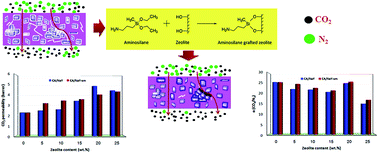
2 g dried zeolite powder was suspended in 100 ml ethanol (as a polar medium) and stirred in a glass round bottom flask for 1 h at 80 °C. 8 ml APDEMS (4 ml aminosilane per g zeolite) was used as the grafting agent and was added dropwise into the mixture using a precision syringe under stirring. After the completion of the reaction (24 h), the mixture was then cooled to room temperature, filtered and washed with ethanol several times. Finally, the grafted or silane-modified zeolites were dried in a vacuum oven at 100 °C overnight. A proposed schematic of the grafting reaction between APDEMS and the zeolite surface is illustrated in Fig. 1.
image file: c4ra08783f-f1.tif
Fig. 1 A schematic of the chemical modification of the zeolite surface.

2.3. Membrane preparation

THF was chosen as the solvent for CA because of its sufficient evaporation rate to quickly form a uniform polymer–particle composite after casting on a glass plate. The CA polymer was dried overnight at 80 °C in an oven before use. The NaY powder was also dried overnight at 100 °C in an oven, and that was followed by further drying for two-days at 120 °C in a vacuum oven before use. A predetermined amount of NaY-sm and CA in THF solvent (15 wt% solution) was well mixed through the following procedure. First, a certain amount of NaY-sm (e.g., 0.0150 g of NaY-sm for the CA/NaY-sm 5 wt% membrane sample) was added to 8.5 g of THF in a 100 ml round glass bottle with a plastic sealing cap and was stirred for 24 h at room temperature. Then, about 10% of the total CA (e.g., 0.135 g of 1.350 g CA for CA/NaY-sm 5 wt%) was added to the NaY-sm/THF suspension and further stirred for 4 h. This readily formed an organic thin layer made by CA chains (in a dilute and less viscose solution) around the solid NaY-sm particles. Subsequently, the remaining second part of CA was added to the mixture and it was mixed entirely for 6 h to take the advantage of the more organic–organic compatibility with the previously formed CA layer. Finally, the mixture was filtered and degassed for about an hour at room temperature and spread onto a clean glass plate with a doctor's blade with a 300 μm gap. After a day of solvent evaporation, the membrane was detached from the plate and placed in a 150 °C vacuum oven for 48 h by particular care in slow initial heating and final cooling rates. The final membrane thicknesses were measured by a digital micrometer (Mitutoyo®, Seisakusho, Tokyo, Japan); and their average value was about 30 ± 1 μm.

2.4. Gas permeation experiments

The pure gas permeability was measured by the variable feed pressure and the constant volume permeation method. All the membrane samples were tested at room temperature (∼25 °C) and the test pressure in the range of 2–10 bar. The rate of pressure increase (dp/dt) at the permeate side at steady state was measured by an absolute pressure transmitter (type 691, Huba Control, Würenlos, Switzerland) and used to calculate the permeability using the following equation:
 
image file: c4ra08783f-t1.tif(1)
where P is the gas permeability in Barrer (1 Barrer = 1 cm3 (STP) cm cm−2 cmHg−1 s−1), V is the dead-volume of the downstream chamber (cm3), l is the membrane thickness (cm), p0 is the feed pressure (atm), dp/dt is the steady rate of pressure increase in the downstream side (atm s−1), A is the effective membrane area (cm2), and T is the absolute temperature (K). It should be noted that to ensure the accuracy of the data acquisitions, each measurement was replicated on three different membrane samples with the same composition, and the reported value is the arithmetic mean of the three samples.

In addition, the ideal selectivity of two pure components was calculated by dividing the respective permeabilities in the same conditions.

 
image file: c4ra08783f-t2.tif(2)
where PA and PB are the permeability of pure gases A and B, respectively.

2.5. Characterizations

Dynamic light scattering (DLS) analysis was done on the solid NaY zeolite powder as well as the silane-modified powder (NaY-sm) to determine the particle-size distribution (PSD). DLS analysis was performed with a Scatteroscope-I advanced DLS type nano-micro particle size analyzer (Qudix Inc., Seoul, Korea) on the zeolite powders suspended in water (22 °C) to determine the particle sizes and distributions, based on the intensity of light scattered. The total exposure time taken for DLS analysis was 8 s with an exposure time of 0.246 s. The experiment produced an average count rate (scattering intensity) of 217 kcps, in kilocounts per second, where:
Average count rate ∝ (diameter of particles)6 × (number of particles)

To characterize the textural properties of the particles, the Brunauer–Emmett–Teller (BET) surface area and the volume of micro pores were determined by N2 adsorption–desorption isotherms in liquid nitrogen (76 K) using a TriStar II 3020 V1.03 analyzer (Micromeritics Instrument Co., Norcross, GA) after degassing the samples at 150 °C for at least 4 h under vacuum (<10−3 Pa). The linear part of the (BET) equation (p/p0 = 0.05–0.3) was used to calculate the BET surface area. The t-plot method was applied to determine the micro pore volume of the particles.

Fourier transform infrared-attenuated total reflectance (FTIR-ATR) spectroscopy was performed on the zeolites and membrane samples using a Perkin-Elmer Spectrum, Frontier model, Version 10.03.06 (Perkin-Elmer Instruments, Norwalk, USA) in the range of 600–4000 cm−1. In the case of liquid silane coupling agent, the FTIR spectrum was performed in transition mode. For each specimen, 32 scans were collected with a wavenumber resolution of 4 cm−1.

The X-ray diffraction (XRD) patterns of the membranes were analyzed on an X'Pert MPD wide-angle X-ray diffractometer from Philips, The Netherlands. The measurements were carried out at room temperature using monochromatic radiation of α-rays emitted by Cu at a wavelength of 1.54 Å, accelerating voltage of 40 kV, and tube current of 40 mA. To identify the crystal structure, the scan range – the angle (2θ) of diffraction – was varied from 3° to 70° with a step increment of 0.02° s−1.

The morphological observation of the zeolites and membrane samples was carried out by scanning electron microscopy (SEM). After sputter-coating with gold by a BAL-TEC SCD 005 sputter coater (BAL-TEC AG, Balzers, Liechtenstein), the samples were tested by SEM (KYKY-EM3200, KYKY Technology Development Ltd., Beijing, China). In the case of cross section observations of membranes, the samples were fractured in liquid nitrogen.

Thermal analyses of the membranes were carried out using TG/DTA. The TG/DTA measurements were carried out using a Bahr (Wetzlar, Germany) STA-503 instrument. TG/DTA runs were recorded at a scan rate of 10° min−1 up to 600 °C. The sample compartment was flushed with dried, ultra-high pure argon at all times.

3. Results and discussion

3.1. Characterizations

3.1.1. DLS. The results of the DLS analyses for pure and silylated zeolites are summarized in Table 1. As can be expected, the particle size distributions are shifted towards higher values with the modification reaction. The average particle diameter of silylated zeolites ranges from 1.22 to 1.74 μm, a ∼ 43% increase. The increase in particle sizes is very far from the previously mentioned distance of around 5–9 Å, which was due to the presence of APDEMS between the polymer chains and the zeolite surface. This can be due to a crosslinking reaction occurring simultaneously with the silylation. The silanol groups of APDEMS can react with each other by crosslinking to form Si–O–Si linkages. Therefore, a three-dimensional network is formed around a zeolite particle.17
Table 1 DLS results of NaY and NaY-sm zeolite powders suspended in water (22 °C)
Distribution (%, intensity) d(0) d(5) d(10) d(25) d(50) d(75) d(90) d(95) d(100) Averaged
Particle size diameter (μm) NaY 0.308 0.672 0.762 0.948 1.22 1.56 1.95 2.20 4.81 1.22
NaY-sm 0.054 0.933 1.07 1.36 1.74 2.20 2.79 3.16 6.90 1.74


3.1.2. BET. A summary of the BET results for pure and silylated zeolites are listed in Table 2. As can be seen, both the (BET and micropore) surface areas and (micro- and total pore) volumes show a decrease of about half of their initial values with the silylation reaction. This is when the particle external surface area increases about 65% and the average pore diameter does not change significantly. These observations can be initially emphasized firstly by the blockage or narrowing of a significant portion of the zeolite openings by the silane coupling agents in the silylation reaction.32 Secondly, it suggests a successful surface modification reaction, which results in an increased external surface area and overall volume (or size) of the zeolite particles, well consistent with the DLS results.
Table 2 BET results of NaY and NaY-sm zeolite powders
Sample BET surface area (m2 g−1) Micro pore volume (cm3 g−1) Total pore volumea (cm3 g−1) Micro pore surface areab (m2 g−1) External surface areac (m2 g−1) Average pore diameterd (nm)
a Single point desorption total pore volume of pores less than 84.11 nm width at p/p0 = 0.98.b Calculated by the t-plot method.c Calculated by the t-plot method.d Desorption average pore width (4V A−1 by BET).
NaY 619 0.285 0.297 596 16.6 1.92
NaY-sm 313 0.137 0.155 285 27.4 1.97


3.1.3. FTIR-ATR. FTIR-ATR spectra of (a) silane coupling agent, (b) NaY zeolite, (c) silylated zeolite (NaY-sm), (d) neat CA and the related MMMs containing 20 wt% NaY (e) and NaY-sm (f) zeolites are shown in Fig. 2. The FTIR spectrum of liquid APDEMS as the silane coupling agent is also presented in the spectrum (a) in Fig. 2. The peak at 3354 cm−1 corresponds to the –OH stretching vibrations of the hydroxyl group. This was also caused by overlapping the –NH2 stretching of primary amines in the spectra (3500–3300 cm−1), which appear approximately at the same frequency of –OH stretching. In this case, the corresponding –NH bending vibration is located at 1575 cm−1. The absorption peaks at 2973, 2926, and 2879 cm−1 correspond to –CH3, –CH2 and –CH asymmetric stretching vibrations. The corresponding bending vibrations of –CH3 and –CH2 are located at 1390 and 1482 cm−1, respectively. The characteristic alkoxy or ether absorption bands of the sample appeared at 1258 cm−1 for C–C–O stretching and two absorption bands around 950 to 750 cm−1 (C–O stretching), in accordance with Lou et al.33 Strong absorptions around 1100–1075 cm−1 together with a weak absorption at ∼1165 cm−1 correspond to Si–O–C2H5 vibrations. Moreover, the absorption peaks at 1297 and 1258 cm−1 are attributed to the Si–CH3 and Si–CH2– stretching vibrations, respectively, where the latter appeared at the same frequency of alkoxy C–C–O stretching.34 In the FTIR spectrum (b) in Fig. 2, for the NaY zeolite, a characteristic broad peak at 3650–3200 cm−1 corresponds to Si–OH stretching. The related Si–OH bending vibration (∼900–850 cm−1) appeared with the Si–O–Si vibration (1100–1000 cm−1) as another characteristic peak for the zeolite at 1100–850 cm−1. In the silylated zeolite, shown in the FTIR spectrum (c) in Fig. 2, the absorption peaks at 1307 and 1263 cm−1 are those strengthened by the Si–CH3 and Si–CH2– stretching vibrations of the grafted groups. Moreover, the absorption peaks at 2966 and 2920 cm−1 are those strengthened by the –CH3 and –CH2 stretching vibrations of the grafted groups.35 On the other hand, a typical absorption of the –NH2 stretching of primary amines (3500–3300 cm−1) can weaken the –OH stretching vibrations of the zeolite hydroxyl groups. Thus, the FTIR results demonstrate that the surface of NaY zeolite has been successfully modified by the silylation reaction without altering the zeolite structure. In the FTIR-ATR spectrum of the neat CA membrane, spectrum (d) in Fig. 2, a broad band at 3484 cm−1 represents the OH stretching vibrations of the hydroxyl group in the CA membrane.36 In addition, a band at 1637 cm−1 is attributed to the interlayer stretching and bending vibration modes of molecular water. The characteristic peaks of CA at 1738 (C[double bond, length as m-dash]O stretching), 1368 (CH3 symmetric deformation), 1220 (acetate C–C–O stretching), and 1035 (C–O stretching) cm−1 are clearly observed, which are generally in accordance with Yang37 and Benosmane et al.38 Furthermore, absorptions at 2942 and 1432 cm−1 are attributed to CH3 asymmetric stretching and CH3 asymmetric deformation, respectively. The characteristic peaks of the saccharide structure of CA are observed at around 1161 (stretching of the C–O– bridge), 1122 and 1035 (skeletal vibration involving the C–O stretching) cm−1. The absorption band at 901 cm−1 is attributed to the β-linked glucan structure.39 In addition, a small absorption peak is observed at ∼2119 cm−1 for the high temperature dried CA, which is assigned to a heat-dissociated or weakly bonded –C[triple bond, length as m-dash]C–, a characteristic absorption of the acetylene. This can be explained if there is enough thermal energy required for disassociation of intra- and/or inter-molecular hydrogen bonding, leading to the formation of a methylenic proton (OCH2–C[triple bond, length as m-dash]C–). Therefore, it is suggested that a rearrangement reaction had taken place to yield a new fragment.40 In the FTIR-ATR spectra of NaY and NaY-sm filled membranes in spectra (e) and (f) in Fig. 2, respectively, the peak intensities of CA are generally decreased by incorporating both the pure and silylated zeolites into the polymer matrix with a severe reduction for NaY-sm compared with NaY. However, the intensities of multiple characteristic peaks of neat CA in the range of 1200–1000 cm−1, which corresponded to C–O stretching vibrations, show less reduction at the presence of zeolites in the membranes. This is caused by overlapping of the Si–O stretching of zeolites in the spectra, which appear approximately at the same frequency of C–O stretching.41,42 This is repeated almost in the range of 800–600 cm−1, which may correspond to Al–O stretching vibrations.39
image file: c4ra08783f-f2.tif
Fig. 2 FTIR-ATR spectra of (a) the silane coupling agent (APDEMS), (b) NaY zeolite, (c) silylated NaY zeolite (NaY-sm), (d) neat CA membrane, (e) CA/NaY (20 wt%), and (f) CA/NaY-sm (20 wt%) mixed matrix membranes.
3.1.4. XRD. XRD patterns of NaY zeolites before (a) and after silane modification (b) are presented in Fig. 3. In addition, the XRD patterns of the pure CA membrane (c) and mixed matrix membranes containing 20 wt% NaY (d) and NaY-sm (e) are also depicted. NaY zeolite exhibits all the characteristic peaks according to Kariduraganavar et al.43 and Ma et al.,44 indicating that the sample is of the pure faujasite (FAU) phase. The crystalline structure of the NaY zeolite may be slightly disrupted during the surface modification by APDEMS, resulting in a slight decrease in the peak intensities and in turn, the crystallinity of NaY-sm zeolite when compared to that of the pure NaY. Interestingly, this decrease in the XRD peaks of NaY crystals may also be explained by considerable changes caused by silylation reaction in the surface openings and/or channels of the zeolite, where the APDMS does not exist in the crystalline state. CA has two broad crystalline peaks at 12° and 22°, in accordance with Achoundong et al.45 and Ma et al.42 After incorporating the NaY or NaY-sm zeolites into the CA, the membrane patterns show the characteristic peaks of both the zeolites and CA. However, a slight decrease in the intensity of CA peaks suggests that the CA loses some amount of its crystallinity in the presence of zeolites.
image file: c4ra08783f-f3.tif
Fig. 3 XRD patterns of (a) NaY zeolite, (b) silylated NaY zeolite (NaY-sm), (c) neat CA membrane, (d) CA/NaY (20 wt%), and (e) CA/NaY-sm (20 wt%) mixed matrix membranes.
3.1.5. SEM. Fig. 4a and b show the SEM images of NaY and NaY-sm zeolite powders. A three-dimensional crystalline structure is observed for the NaY zeolites with the particle sizes ranging mainly from about 1–1.5 μm (Fig. 4a). Another noticeable observation is the existence of some small aggregates (∼2–4 μm) that consist of only a few adjoined particles. The issue is enhanced for silylated zeolites with a greater tendency to form larger aggregates due to new adhesive forces between amine functional groups of the surface modified zeolites. This results in the formation of some new crystals. These crystals have hexagonal plates with small octahedra that growing from the surface, and consequently result in the formation of those of shaped in Fig. 4b as twined particles.46 These have a lesser degree of crystallinity that is previously demonstrated by the XRD spectra. Generally, the SEM results for zeolite sizes are consistent with the previous results of DLS and BET analyses.
image file: c4ra08783f-f4.tif
Fig. 4 SEM images of (a) NaY and (b) NaY-sm powders.

SEM images of the cross section and top surface of the neat CA membrane (Fig. 5a and b) show a dense and uniform structure with no defects all over the membrane area. Moreover, a rather rough cross sectional area is observed, whereas a smoother surface is found for the membrane. As can be seen for unmodified NaY zeolite loaded membranes (Fig. 5c to e), more of the zeolite particles are properly distributed in the polymer matrix. However, there are a few agglomerates that are intensified at higher zeolite contents and coincide with the improper particle aggregates.36 These are inaccessible points for the gas molecules to pass through and can act as dead zones in the membrane matrix. The aminosilane modified zeolites provide an improved filler-polymer interfacial adhesion due to the acid–base ionic interactions of NH groups on the surface of the modified zeolite with the carbonyl (–CO) and oxycarbonyl (–COO) groups of CA in order to form hydrogen bonds. A similar hypothesis was previously suggested by Nik et al.47 for APMDES modified zeolites with polyimide. As can be seen in the magnified cross section images of NaY-sm loaded CA membranes (Fig. 5g to i), the surface modified zeolites significantly improve the particle distribution and can also lead to a shift of undesirable cracks to a lesser extent. Moreover, the cracks almost completely vanish at higher NaY-sm loadings. Finally, when comparing the surface image of neat CA (Fig. 5b) with the surface images of the MMMs containing NaY and NaY-sm (Fig. 5f and j), it is observed that the membrane surfaces are roughened by the incorporation of zeolites, which is more evident for NaY rather than it is for NaY-sm filled membranes. This can also be another sign of the reduction in the number or size of the agglomerates by using the modified zeolites.


image file: c4ra08783f-f5.tif
Fig. 5 SEM images of the prepared membranes: (a) CA (cross), (b) CA (surface), (c) CA/NaY 5 wt% (cross), (d) CA/NaY 20 wt% (cross), (e) CA/NaY 25 wt% (cross), (f) CA/NaY 20 wt% (surface), (g) CA/NaY-sm 5 wt% (cross), (h) CA/NaY-sm 20 wt% (cross), (i) CA/NaY-sm 25 wt% (cross), and (j) CA/NaY-sm 20 wt% (surface).
3.1.6. TG/DTA. Fig. 6 shows the TGA spectra of the neat CA membrane and the related mixed matrix membranes containing 5, 20 and 25 wt% of NaY and NaY-sm zeolites. A three-step degradation can be observed for all the membrane samples. An initial weight loss of ∼5% before 350 °C is observed for all the membrane samples due to elimination of the physisorbed water molecules or remaining solvents in the samples. Afterwards, the mass loss curves undergo a major decomposition step that takes place at temperatures from 350–400 °C, which is well consistent with the results obtained by Ma et al.42 for 0.3–0.5 μm sized HZSM5-filled CA membranes. It is worthy to note that the decomposition of grafted silane takes place from 300 to 450 °C,48 and hence, its major decomposition overlaps with the observed second step. The final decomposition step starts at ∼400 °C and reaches a horizontal asymptote next to 580 °C.
image file: c4ra08783f-f6.tif
Fig. 6 TGA spectra of the neat CA membrane and the related mixed matrix membranes containing NaY and NaY-sm zeolites.

Although the origin of the poor/perfect compatibility between the interphases is complicated, silane modified zeolite surfaces can improve the interfacial strength between two interphases: the dispersed zeolite and the polymer matrix.26 This results in an almost better thermal stability of the NaY-sm loaded membrane samples in comparison with the NaY loaded ones. This can be observed in the data that was obtained by DTA analysis and is summarized in Table 3. A significant decline in the thermal stability of the membranes can also be seen with 5 wt% NaY (Tg = 174 °C, main step decomposition starts at 305 °C) or NaY-sm (Tg = 174 °C, main step decomposition starts at 307 °C) when compared to that of the neat CA membrane (Tg = 191 °C, main step decomposition starts at 341 °C). A substantial decrease (∼14%) in Tgs of the MMM based on the glassy (polyimide) polymers at the lower loadings of larger micron-sized zeolite 13X, against an increase in Tgs by incorporating the smaller nanosized 4A types, was also reported by Boroglu and Gurkaynak.49 Generally, a membrane containing 20 wt% NaY has the most thermal stability among all the membrane samples. However, the amino silane modified zeolites cause a slight increase in the stability of CA/NaY-sm membranes containing 5 and 25 wt% NaY-sm as compared to the related CA/NaY ones (see Table 3, the temperatures corresponding to onset 2).

Table 3 Summary of DTA data of CA and MMMs containing NaY and NaY-sm zeolites
Membrane Transition temperature (°C)
Onset 1 Max 1 Onset 2 Max 2 Onset 3 Max 3
CA 44 191 341 374 396 440
CA/NaY 5 wt% 39 174 305 359 390 511
CA/NaY 20 wt% 33 210 352 377 395 402
CA/NaY 25 wt% 53 181 324 354 387 408
CA/NaY-sm 5 wt% 76 174 307 367 387 415
CA/NaY-sm 20 wt% 84 178 330 373 393 515
CA/NaY-sm 25 wt% 102 181 331 359 388 407


3.2. Gas permeation

Concerning the gas separation performance of the aminosilane modified zeolite-filled cellulose acetate membranes, the CO2 and N2 permeation measurements were conducted at different modified zeolite loadings (0–25 wt%) as well as multiple pressures (2–10 bar). Moreover, the NaY-sm contained MMMs are compared with those filled with pure NaY zeolites.

Fig. 7 shows the effect of NaY-sm particle loadings on the (a) CO2 permeability and (b) CO2/N2 selectivity of the membranes. The reaction mechanism of CO2 with the amines immobilized on a solid carrier has been extensively analyzed.50–53 Generally, it is very complicated due to the additional occurrence of physisorption on the surface and the open pores of the solid supports. However, a typical reaction pathway that is frequently presented for immobilized primary amines is as follows:51

 
CO2 + RNH2 + RNH2 ⇌ RNHCO2 + RNH3+ (3)
 
image file: c4ra08783f-t3.tif(4)
where eqn (3) and (4) are associated to the dry and wet CO2 chemisorption processes, respectively. The values of −50 to −118 kJ mol−1 CO2 were reported for the enthalpy change of reaction for dry CO2 chemisorption. The values of −56 kJ mol−1 CO2 and −47 to −53 kJ mol−1 for H2O were also reported for wet CO2 chemisorption. The formation of the carbamate ion (RNHCO2) at dry sorption and bicarbonate (HCO3) and carbonate (CO32−) ions at wet sorption is observed.53 It is well established that the formation of carbamate (eqn (3), an amine/CO2 feed ratio of 2) is considerably faster than the formation of bicarbonate, resulting from the limiting stoichiometry for chemisorption of CO2 (eqn (4), an amine/CO2 feed ratio of 1). It is also known that the formation of bicarbonate is only observed when a long contact time is permitted. In addition, humid CO2 adsorption is significantly dependent on CO2 pressure, relative humidity of the feed, the proper surface and/or capillary water condensation in the solid supports, and the accessibility of active sites.51 It is also stated that exceeding determined water content in the CO2 streams leads to a decrease in the CO2 adsorption capacity due to the competitive adsorption between CO2 and H2O at the same adsorption sites. Although modification of the zeolite surface with the aminosilane coupling agent results in a significant increase towards a high hydrophobic material when compared to the hydrophobicity of the pristine zeolite, the modified surface still contains some –OH groups (FTIR spectra, Fig. 2) which makes it slightly hydrophilic. Thus, in addition to dry CO2 adsorption by aminosilane-functionalized zeolite, further CO2 can be adsorbed in the presence of some amount of moisture. This can also lead to regenerating amine molecules as described by the following equation:52
 
RNHCO2 + H2O ⇌ RNH2 + HCO3 (5)


image file: c4ra08783f-f7.tif
Fig. 7 The effect of NaY-sm particle loadings on (a) CO2 permeability and (b) CO2/N2 selectivity; the lines are only a guide to the eye.

The increase in CO2 permeability with increasing amounts of NaY-sm zeolites (Fig. 7a) can now be explained according to the abovementioned mechanisms. The higher the NaY-sm loading in the CA matrix, the further the CO2 molecules can be adsorbed. This results in a facilitated transport of CO2 molecules via the NaY-sm zeolites in addition to that occurred by solution and diffusion of CO2 through the CA matrix. Therefore, a considerable increase in CO2 permeabilities, for example ∼40% increase from 2.63 to 3.67 Barrer (at 2 bar), can be observed with only a 5 wt% of NaY-sm loading into the CA. Afterwards, a milder growth is observed in CO2 permeabilities with the increment in NaY-sm contents up to 25 wt%. This may be due to the effect of agglomerates that are further formed in the high NaY-sm filled membrane samples and cause a difficulty in gas transport through the membranes. In case of CO2/N2 selectivity, Fig. 7b, a slow decrease in gas permeability is observed at all pressures up to 15 wt% NaY loading, and then it approaches a maximum at 20 wt% and finally it experiences a severe decline at 25 wt%. This maximum at high loading of 20 wt% NaY-sm can be due to the greater formation of carbamate ions at the particle surfaces, according to eqn (3), and their lower disassociation rates, particularly at higher CO2 concentrations (or the pressures higher than 4 bar). This can result in a considerable accumulation of adsorbed CO2 molecules, which are trapped in the polymer/particle interfaces, and consequently lead to bottlenecking the pathways of N2 molecules across the membrane (Fig. 8). However, higher particle loading from 20 wt% to 25 wt% in Fig. 7b results in a significant decline in CO2/N2 selectivity of the membrane by reaching a “percolation threshold” (the critical volume fraction of the filler). This means an interconnection of particles and/or agglomerates with each other forms non-selective pathways across the membranes (see discussions on SEM observations, Section 3.1.5).


image file: c4ra08783f-f8.tif
Fig. 8 A schematic representation of CO2/N2 selectivity improvement via the facilitated CO2 transport in the CA/NaY-sm membranes; the most widely used kinetic diameter was chosen for the effective molecular diameters of the penetrant gases, which are 3.3 and 3.64 Å for CO2 and N2 molecules, respectively.

Fig. 9 presents the effect of feed pressure, from 2 to 10 bar, on the CO2 permeability and CO2/N2 selectivity of the CA/NaY-sm membranes. As can be seen in Fig. 9a, CO2 permeabilities of all the membrane samples decrease as the pressure increases. This is a common behavior of glassy polymers and also MMMs below the plasticization pressure.54–57 An increase in feed pressure forces the polymer chains to form a closer packing density and thus decreases the gas permeability. As there is not enough considerable difference between effective molecular diameters of CO2 and N2 (the most widely used scales of these gases for diffusion through the polymeric membranes is the so-called kinetic diameter, which is 3.3 and 3.64 Å for CO2 and N2, respectively),58 the same behavior can occur for selectivities,59–61 as shown in Fig. 9b. The severe decline in selectivity of the CA/NaY-sm 25 wt% membrane sample with increasing pressure is due to reaching a percolation limit of the solid particles.


image file: c4ra08783f-f9.tif
Fig. 9 The effect of feed pressure on (a) CO2 permeability and (b) CO2/N2 selectivity; the lines are only a guide to the eye.

Fig. 10 presents a comparison between the performance of CA/NaY mixed matrix membranes36 and those filled with NaY-sm. At lower particle loadings (≤15 wt%), an increase in CO2 permeability of the NaY-sm loaded MMMs compared to those filled with NaY zeolites is observed. According to a review conducted by Basu et al.31 on the strategies to enhance filler/polymer compatibility, the introduction of trimethylsilyl-glucose (TMSG) into a glassy cellulose ester structure leads to a significant increase in gas permeability due to the action as a plasticizer, thereby increasing the chain mobility. On the other hand, Calabrese et al.17 showed an occurrence of a crosslinking reaction between the silanol groups of coupling agents to form intermolecular Si–O–Si linkages (discussions on DLS results, Section 3.1.1). It can be concluded from these two studies that the crosslinked network formed by APDEMS molecules on the zeolite surfaces may act as plasticized regions, owing to the motions of CH3 and NH2 side groups. The amine functional groups of organosilanes provide a potential for various polar and hydrophobic interactions with CO2 molecules.25 On the other hand, by further increasing the amount of NaY-sm (≥20 wt%) into the CA matrix and the subsequent increase in the amount of pores blocked by the silane molecules, pore blockage becomes more prominent in order to decreasing the CO2 permeability of NaY-sm as compared to an increase in CO2 permeability of NaY zeolites due to the facilitation of CO2 transport by open pores of the NaY zeolites. Therefore, non-interacting or just diffusive N2 molecules suffer more from the issue.62 This can result in a higher selectivity of NaY-sm loaded MMMs in all cases.


image file: c4ra08783f-f10.tif
Fig. 10 Comparing the (a) CO2 permeability and (b) CO2/N2 selectivity of NaY and NaY-sm zeolites in the MMMs at 4 bar.

4. Conclusion

3-Aminopropyl(diethoxy)methylsilane (APDEMS) was used for silylation of a NaY zeolite surface to investigate the effect of surface modified zeolite (NaY-sm) in cellulose acetate (CA) gas separation membranes. The results of chemical/structural analyses showed an achievement in a proper silane modification reaction and also a morphological improvement of the prepared mixed matrix membranes (CA/NaY-sm) in comparison with those of the CA/NaY membranes. In most cases, better gas permeation results were obtained using NaY-sm instead of NaY in the membranes. An optimum permselectivity behavior was obtained using a 20 wt% NaY-sm loading into the CA matrix. At a pressure of 4 bar, CO2 permeability increased from 2.28 to 4.04 Barrer (up to 77.19%) for the CA/NaY-sm 20 wt% membrane as compared to the neat CA membrane. This coincided with an almost no considerable change in the CO2/N2 selectivity of CA/NaY-sm 20 wt% as compared to the neat CA membrane. A slight increase of an average 4.67 and 6.34% was also observed, respectively in the permeability and selectivity of the CA/NaY-sm MMMs as compared to the CA/NaY ones at higher pressures (≥4 bar).

Acknowledgements

We thank Mr Abtin Ebadi Amooghin (Department of Chemical Engineering, Tarbiat Modares University, Tehran, Iran) for his kind assistance.

References

  1. S. Sanaeepur, H. Sanaeepur, A. Kargari and M. H. Habibi, Int. J. Renewable Sustainable Energy, 2014, 33, 203–212 CrossRef .
  2. A. Kargari and M. Takht Ravanchi, in Greenhouse gases-capturing, utilization and reduction, ed. G. Liu, InTech, Rijeka, Croatia, 2012, ch. 1, pp. 3–30 Search PubMed .
  3. M. Takht Ravanchi, T. Kaghazchi and A. Kargari, Desalination, 2009, 235, 199–244 CrossRef CAS PubMed .
  4. Y. Li, G. He, S. Wang, S. Yu, F. Pan, H. Wu and Z. Jiang, J. Mater. Chem. A, 2013, 1, 10058–10077 CAS .
  5. C. Liu, S. Kulpathipanja, A. M. W. Hillock, S. Husain and W. J. Koros, in Advanced membrane technology and applications, ed. N. N. Li, A. G. Fane, W. S. Winston Ho and T. Matsuura, John Wiley & Sons Ltd., Hoboken, New Jersey, 2008, pp. 789–819 Search PubMed .
  6. G. Dong, H. Li and V. Chen, J. Mater. Chem. A, 2013, 1, 4610–4630 CAS .
  7. T.-H. Bae, J. Liu, J. S. Lee, W. J. Koros, C. W. Jones and S. Nair, J. Am. Chem. Soc., 2009, 131, 14662–14663 CrossRef CAS PubMed .
  8. M. E. Lydon, K. A. Unocic, T.-H. Bae, C. W. Jones and S. Nair, J. Phys. Chem. C, 2012, 116, 9636–9645 CAS .
  9. S. Shu, S. Husain and W. J. Koros, J. Phys. Chem. C, 2007, 111, 652–657 CAS .
  10. W.-G. Kim, X. Zhang, J. S. Lee, M. Tsapatsis and S. Nair, ACS Nano, 2012, 6, 9978–9988 CrossRef CAS PubMed .
  11. M. Rezakazemi, A. Ebadi Amooghin, M. M. Montazer-Rahmati, A. F. Ismail and T. Matsuura, Prog. Polym. Sci., 2014, 39, 817–861 CrossRef CAS PubMed .
  12. C. I. Chaidou, G. Pantoleontos, D. E. Koutsonikolas, S. P. Kaldis and G. P. Sakellaropoulos, Sep. Sci. Technol., 2012, 47, 950–962 CrossRef CAS .
  13. D. Şen, H. Kalıpçılar and L. Yilmaz, J. Membr. Sci., 2007, 303, 194–203 CrossRef PubMed .
  14. C. V. Funk and D. R. Lloyd, J. Membr. Sci., 2008, 313, 224–231 CrossRef CAS PubMed .
  15. J.-T. Chen, C.-C. Shih, Y.-J. Fu, S.-H. Huang, C.-C. Hu, K.-R. Lee and J.-Y. Lai, Ind. Eng. Chem. Res., 2014, 53, 2781–2789 CrossRef CAS .
  16. M. U. M. Junaidi, C. P. Khoo, C. P. Leo and A. L. Ahmad, Microporous Mesoporous Mater., 2014, 192, 52–59 CrossRef CAS PubMed .
  17. L. Calabrese, L. Bonaccorsi and E. Proverbio, J. Coat. Technol. Res., 2012, 9, 597–607 CrossRef CAS .
  18. H. Zhou, Y. Su, X. Chen, S. Yi and Y. Wan, Sep. Purif. Technol., 2010, 75, 286–294 CrossRef CAS PubMed .
  19. Y. Zhang, J. Sunarso, S. Liu and R. Wang, Int. J. Greenhouse Gas Control, 2013, 12, 84–107 CrossRef CAS PubMed .
  20. T. T. Moore and W. J. Koros, Ind. Eng. Chem. Res., 2008, 47, 591–598 CrossRef CAS .
  21. B.-Z. Zhan, M. A. White and M. Lumsden, Langmuir, 2003, 19, 4205–4210 CrossRef CAS .
  22. Z. n. Bacsik, N. Ahlsten, A. Ziadi, G. Zhao, A. E. Garcia-Bennett, B. n. Martín-Matute and N. Hedin, Langmuir, 2011, 27, 11118–11128 CrossRef CAS PubMed .
  23. C.-H. Cheng, T.-H. Bae, B. A. McCool, R. R. Chance, S. Nair and C. W. Jones, J. Phys. Chem. C, 2008, 112, 3543–3551 CAS .
  24. D. M. Pacheco, J. R. Johnson and W. J. Koros, Ind. Eng. Chem. Res., 2012, 51, 503–514 CrossRef CAS .
  25. M. H. Kassaee, D. S. Sholl and S. Nair, J. Phys. Chem. C, 2011, 115, 19640–19646 CAS .
  26. X. Y. Qu, H. Dong, Z. J. Zhou, L. Zhang and H. L. Chen, Ind. Eng. Chem. Res., 2010, 49, 7504–7514 CrossRef CAS .
  27. M. A. Aroon, A. F. Ismail, T. Matsuura and M. M. Montazer-Rahmati, Sep. Sci. Technol., 2010, 75, 229–242 CAS .
  28. T.-S. Chung, L. Y. Jiang, Y. Li and S. Kulprathipanja, Prog. Polym. Sci., 2007, 32, 483–507 CrossRef CAS PubMed .
  29. G. Clarizia, C. Algieri, A. Regina and E. Drioli, Microporous Mesoporous Mater., 2008, 115, 67–74 CrossRef CAS PubMed .
  30. Y. Li, H.-M. Guan, T.-S. Chung and S. Kulprathipanja, J. Membr. Sci., 2006, 275, 17–28 CrossRef CAS PubMed .
  31. S. Basu, A. L. Khan, A. Cano-Odena, C. Liu and I. F. J. Vankelecom, Chem. Soc. Rev., 2010, 39, 750–768 RSC .
  32. H. Liu, Y. Li, W. Shen, X. Bao and Y. Xu, Catal. Today, 2004, 93–95, 65–73 CrossRef CAS PubMed .
  33. Y. Lou, G. Liu, S. Liu, J. Shen and W. Jin, Appl. Surf. Sci., 2014, 307, 631–637 CrossRef CAS PubMed .
  34. D. L. Pavia, G. M. Lampman, G. S. Kriz and J. R. Vyvyan, Introduction to spectroscopy, Brooks/Cole, Belmont, CA, 4th edn, 2009 Search PubMed .
  35. P. Wei, X. Qu, H. Dong, L. Zhang, H. Chen and C. Gao, J. Appl. Polym. Sci., 2013, 128, 3390–3397 CrossRef CAS .
  36. H. Sanaeepur, B. Nasernejad and A. Kargari, Greenhouse Gas. Sci. Technol., Oct. 27, 2014 Search PubMed  , accepted manuscript.
  37. Y. Yang, in Polymer data handbook, ed. J. E. Mark, Oxford University Press, New York, 1999, pp. 49–56 Search PubMed .
  38. N. Benosmane, B. Guedioura, S. M. Hamdi, M. Hamdi and B. Boutemeur, Mater. Sci. Eng., C, 2010, 30, 860–867 CrossRef CAS PubMed .
  39. H. Dogan and N. D. Hilmioglu, Vacuum, 2010, 84, 1123–1132 CrossRef CAS PubMed .
  40. C. Badarau and Z. Y. Wang, Macromolecules, 2004, 37, 147–153 CrossRef CAS .
  41. A. A. Kittur, S. S. Kulkarni, M. I. Aralaguppi and M. Y. Kariduraganavar, J. Membr. Sci., 2005, 247, 75–86 CrossRef CAS PubMed .
  42. X. Ma, C. Hu, R. Guo, X. Fang, H. Wu and Z. Jiang, Sep. Purif. Technol., 2008, 59, 34–42 CrossRef CAS PubMed .
  43. M. Y. Kariduraganavar, A. A. Kittur, S. S. Kulkarni and K. Ramesh, J. Membr. Sci., 2004, 238, 165–175 CrossRef CAS PubMed .
  44. N. Ma, J. Wei, R. Liao and C. Y. Tang, J. Membr. Sci., 2012, 405–406, 149–157 CrossRef CAS PubMed .
  45. C. S. K. Achoundong, N. Bhuwania, S. K. Burgess, O. Karvan, J. R. Johnson and W. J. Koros, Macromolecules, 2013, 46, 5584–5594 CrossRef CAS .
  46. O. G. Nik, B. Nohair and S. Kaliaguine, Microporous Mesoporous Mater., 2011, 143, 221–229 CrossRef CAS PubMed .
  47. O. G. Nik, X. Y. Chen and S. Kaliaguine, J. Membr. Sci., 2011, 379, 468–478 CrossRef CAS PubMed .
  48. S. Khemakhem and R. B. Amar, Colloids Surf., A, 2011, 387, 79–85 CrossRef CAS PubMed .
  49. M. S. Boroglu and M. A. Gurkaynak, Polym. Bull., 2011, 66, 463–478 CrossRef CAS .
  50. X. Zhang, S. Schubert, M. Gruenewald and D. W. Agar, Chem. Eng. J., 2005, 107, 97–102 CrossRef CAS PubMed .
  51. R. Serna-Guerrero, E. Da'na and A. Sayari, Ind. Eng. Chem. Res., 2008, 47, 9406–9412 CrossRef CAS .
  52. F. Su, C. Lu, S.-C. Kuo and W. Zeng, Energy Fuels, 2010, 24, 1441–1448 CrossRef CAS .
  53. C. Gebald, J. A. Wurzbacher, P. Tingaut, T. Zimmermann and A. Steinfeld, Environ. Sci. Technol., 2011, 45, 9101–9108 CrossRef CAS PubMed .
  54. A. Ebadi Amooghin, H. Sanaeepur, A. Moghadassi, A. Kargari, D. Ghanbari and Z. Sheikhi Mehrabadi, Sep. Sci. Technol., 2010, 45, 1385–1394 CrossRef .
  55. A. Ebadi Amooghin, H. Sanaeepur, A. Kargari and A. Moghadassi, Sep. Purif. Technol., 2011, 82, 102–113 CrossRef PubMed .
  56. H. Sanaeepur, A. Ebadi Amooghin, A. Moghadassi, A. Kargari, S. Moradi and D. Ghanbari, Polym. Adv. Technol., 2012, 23, 1207–1218 CrossRef CAS .
  57. O. Hosseinkhani, A. Kargari and H. Sanaeepur, J. Membr. Sci., 2014, 469, 151–161 CrossRef CAS PubMed .
  58. S. Matteucci, Y. Yampolskii, B. D. Freeman and I. Pinnau, in Materials science of membranes for gas and vapor separation, ed. Y. Yampolskii, I. Pinnauand B. D. Freeman, John Wiley & Sons Ltd., West Sussex, United Kingdom, 2006, pp. 1–47 Search PubMed .
  59. H. Sanaeepur, A. Ebadi Amooghin, A. Moghadassi and A. Kargari, Sep. Purif. Technol., 2011, 80, 499–508 CrossRef CAS PubMed .
  60. S. Bandehali, A. Kargari, A. Moghadassi, H. Saneepur and D. Ghanbari, Asia-Pac. J. Chem. Eng., 2014, 9, 638–644 CrossRef CAS .
  61. M. Omidkhah, M. Zamani Pedram and A. Ebadi amooghin, J. Membr. Sci. Technol., 2013, 3, 119 Search PubMed .
  62. J.-M. Duval, A. J. B. Kemperman, B. Folkers, M. H. V. Mulder, G. Desgrandchamps and C. A. Smolders, J. Appl. Polym. Sci., 1994, 54, 409–418 CrossRef CAS .

This journal is © The Royal Society of Chemistry 2014
Click here to see how this site uses Cookies. View our privacy policy here.