
Photoluminescence study of optically active diaminopyridine intercalated graphene oxide

Abhisek Gupta, Bikash Kumar Shaw and Shyamal Kumar Saha*
Department of Materials Science, Indian Association for the Cultivation of Science, Jadavpur, Kolkata 700032, India. E-mail: cnssks@iacs.res.in

Received 16th August 2014 , Accepted 25th September 2014

First published on 25th September 2014


Abstract

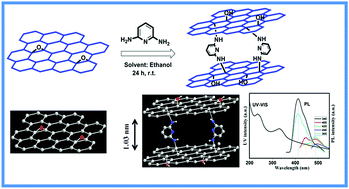
Diaminopyridine (DAP) ligand is successfully intercalated in GO layers to achieve a layered-type structure with interlayer separation ∼1.03 nm. Density functional theory (DFT) was applied to investigate the stability of the modified structure along with its interlayer separation, and agrees well with the experimental results. As-synthesized diaminopyridine functionalized GO (DAP–fGO) composites show better photoluminescent (PL) property compared with GO via surface passivation. Experimental observation of excitation-dependent PL spectra of DAP–fGO composite was further verified by DFT calculations of HOMO–LUMO band gaps. We believe that this study will help to design different GO-based nanomaterials with potential physical, chemical and optical applications.

Introduction

Graphene, being a zero band gap semiconductor, has attracted research attention and technological interest in the fields of physics, chemistry and materials science1−3 because of its unique electronic, thermal and mechanical properties.4–6 However, because of the absence of a band gap, graphene cannot be used in digital logic performing devices where a band gap is required to provide distinct ‘on’ and ‘off’ states.7 In attempts to overcome this limitation, we have reported previously graphene/graphene oxide (GO)-based intercalated structures of different interlayer separations,8–10 Although graphene has versatile applications in magnetic,11 electrical12 and electrochemical areas,13 it remains unexplored in optical applications because of the poor optical property generated from its zero band gap characteristics. Oxygen-rich graphene derivative such as graphene oxide (GO) possess a finite electronic band gap generated through disruption of π networks. The oxygen-enriched functional groups of GO (such as epoxy, hydroxyl, and carboxyl) can be considered as reactive sites for tuning of its chemical and physical properties. Because of its layered structure and chemical reactive sites, GO undergoes intercalation by suitable molecules resulting in one-dimensional expansion along its z-axis.14 The concept of tailoring the interlayer distance between GO sheets is of great importance. Compared with its very high perspectives, very limited graphene-based hybrid materials with new structural and functional properties have recently been prepared through intercalation of various molecules/species such as amino acids, primary aliphatic amines, diaminoalkanes, polymers, ammonium ions, silica spheres and isocyanates in GO layers.15–21

In our previous works,9,10 to tune the GO interlayer separation, we intercalated GO by azo-pyridine and aminoazo-benzene ligands, which involved mainly the reaction of the active carbon centers of the phenolic moieties present at the edges of GO. In the present study, we report successful intercalation of diaminopyridine (DAP) ligand in GO layers without the aid of any coupling agent, to develop a novel ‘N-crosslinked’ nano-carbon hybrid material (DAP–fGO). Detailed FTIR and XPS spectroscopic measurements revealed formation of covalent bonds between the intercalated DAP molecules and the GO sheets. DFT study was used to investigate the stability of the modified DAP–fGO composite structure along with its interlayer separation. As-synthesized DAP–fGO composites show better photoluminescent (PL) property compared with GO via surface passivation. Experimental observation of excitation dependent PL spectra of DAP–fGO composite is further verified by DFT calculations of HOMO–LUMO band gaps. This combined experimental and theoretical study of the electronic structure of DAP–fGO composite as a function of chemical modification of graphene, provides valuable information for fabrication of tailored GO-based nanomaterials with improved chemical and physical properties.

Experimental sections

Chemicals

2,6-Diaminopyridine (Merck), sodium chloride (Merck), ultrafine graphite powder (Loba), potassium permanganate (Merck), concentrated sulfuric acid (Merck, 98% pure), hydrogen peroxide (30%, Merck), hydrochloric acid (35%, Merck), methanol (99.9%, Merck) and double distilled water were used without further purification.

Synthesis

GO was synthesized from natural graphite by a modified Hummers method.22 In a typical experiment, X mg of DAP (X = 15, 30, 45) was dissolved in 50 ml of ethanol, and the freshly prepared solution was added dropwise to a 10 ml suspension of GO under vigorous stirring. The reaction was continued for 24 h at room temperature. During this reaction the mixture was protected from light. The as-synthesized DAP–fGO-X (X = 15, 30, 45) composite was isolated from the solution by centrifugation and washed thoroughly with 1[thin space (1/6-em)]:[thin space (1/6-em)]1 ethanol/water (30 ml, four times) to remove all unreacted compounds. The final product is dried overnight under vacuum at 80 °C.

Characterization

To characterize the final product, powder X-ray diffraction (XRD) measurements were carried out using an X-ray diffractometer (RICH SEIFERT-XRD 3000P with X-ray Generator-Cu, 10 kV, 10 mA, wavelength 1.5418 Å). For the TEM study, we used a JEOL-2011 high resolution transmission electron microscope. Raman spectra were obtained from a micro-Raman spectrometer (Model: JYT-6400). The sample for Raman measurements was excited at 514 nm. FTIR spectroscopic measurements were carried out using a NICOLET MAGNA IR 750 system. X-ray photoelectron spectroscopy (XPS) was carried out using an OMICRON-0571 system. DFT analysis regarding the total energies and molecular orbital (MO) calculation of the optimized composite structures were done with B3LYP/6-31G levels of theory using the standard program in the Gaussian 03 software package. UV-VIS absorption spectra were measured with a Cary UV 5000 spectrophotometer. PL spectra and photostability were investigated using a Horiba Jobin Yvon Fluromax-4 spectrofluorometer with a xenon lamp. The sample was excited continuously at excitation wavelength 340 nm for 1200 s to collect the fluorescence emission intensities every 120 s at the corresponding optimal emission wavelength.

Results and discussion

X-ray diffraction (XRD) is a powerful and widely used tool for characterization of layered materials. We performed powder XRD study of our DAP–fGO samples to investigate the intercalation of DAP molecules in the graphene layers. DAP–fGO-45 composite shows diffraction peaks at a 2θ value of 8.6°. For GO the peak appears at a 2θ value of ∼12.4° (interlayer separation ∼0.719 nm). The shifting of peaks to lower 2θ values compared with the corresponding peak of starting GO is unambiguously ascribed to an increase in interlayer separation (XRD study of GO, DAP–fGO-15 and 30 are shown in the ESI). According to Bragg's law, the value of the interlayer separation is found to be 1.03 nm with an overall increase in GO interlayer separation of about 0.309 nm compared with the starting GO. The full-width-at-half-maximum (FWHM) value of the diffraction peak in the XRD pattern of the DAP–fGO-45 derivative was found to be much higher than the corresponding value of the pristine GO sample indicating intercalation of DAP molecules in GO layers.

The Debye–Scherrer equation was employed to estimate the mean crystallite thickness of the DAP–fGO-45 composite:

 
t = /FWHM[thin space (1/6-em)]cos[thin space (1/6-em)]θ (1)
where t is the mean crystallite thickness, K is a dimensionless shape factor with a value of about 0.9, λ is the wavelength of the X-ray used (λ = 1.5418 Å), θ is the angular position of the peak and FWHM is the full-width-at-half-maximum obtained from the graph (expressed in radians). The value of the average crystallite thickness for the DAP–fGO-45 composite is ∼37.5 Å. The number of layers (N) considering the lattice spacing as d is:
 
N = t/d (2)

Taking t as 37.5 Å, the number of layers for DAP–fGO-45 composite was found to be ∼4.

Fig. 1b shows TEM images of the DAP–fGO-45 composite taken at three different magnifications, from which it is seen that four to five GO layers are stacked together to form a composite structure as estimated from the XRD analysis. This type of stacking of GO layers resulting from functionalization by potentially cross-linking agents has also been reported by other workers.18,23


image file: c4ra08748h-f1.tif
Fig. 1 (a) XRD pattern and (b) TEM images of DAP–fGO composite.

The functionalization of GO with DAP molecules was further confirmed by the FTIR analysis. Fig. 2a shows the FTIR spectra for GO and DAP–fGO-45 composites. (FTIR profiles of DAP–fGO-15 and DAP–fGO-30 composites are shown in the ESI.) Pure dried GO exhibits the usual peaks at 3432, 1702, 1628, 1400, and 1067 cm−1 corresponding to the hydrogen-bonded O–H stretching, carbonyl (C[double bond, length as m-dash]O) stretching, C[double bond, length as m-dash]C stretching, O–H deformation, and C–O stretching of the epoxides (C–O–C), respectively. In the DAP–fGO-45 composite, the peak at 3430 cm−1 is caused by the combined effect of the –OH and –NH groups. The combined effect of skeletal C[double bond, length as m-dash]C vibration and pyridinic C[double bond, length as m-dash]N vibrations is observed at 1624 cm−1. It is also seen from the FTIR analysis that the epoxy group is not present in the composite, while there are some new peaks at 1564, 1248 and 1047 cm−1 corresponding to amine NH bending, C–N stretching and C–O stretching vibrations. These results confirm that DAP molecules react with the oxygen-containing functional groups of GO, generating C–N covalent bonds through nucleophilic addition reaction of amine and epoxy.


image file: c4ra08748h-f2.tif
Fig. 2 (a) FTIR and (b) RAMAN spectra of GO and DAP–fGO composite.

The high sensitivity of electronic structures makes Raman spectroscopy a powerful non-destructive tool for characterizing ordered and disordered structures of carbon materials. Fig. 2b shows the Raman spectra of GO and the DAP–fGO-45 composite. The Raman spectra of GO shows a characteristic G band at 1600 cm−1, which corresponds to first-order scattering of the E2g phonon of the in-plane vibration mode of sp2 carbon atoms, and a D band at 1345 cm−1, which originates from the structural defects and partially disordered structures of the sp2 domains and includes the vibration contributions of sp3-hybridized domains.24 However, for the DAP–fGO-45 composite, the G band is red-shifted to 1592 cm−1 and the D band is blue shifted to 1348 cm−1. This type of shifting in binding energies of D and G bands has also been reported in some functionalized graphitic materials.25 The intensity ratio of D/G bands (ID/IG) is a measure of the disorder and reveals the degree of in-plane defects and edge defects in the carbon materials.26 In the present study, the ID/IG ratio of the DAP–fGO-45 composite is calculated to be ∼0.909, which is slightly smaller than that of the initial GO (∼0.927). This observation implies an increase in the domain size of sp2 carbon atoms in the DAP–fGO-45 composite caused by nucleophilic addition of the amino groups of DAP molecules to GO and subsequent formation of covalent bonds.

We analyzed the XPS spectra of GO and DAP–fGO-45 composite to discover the binding energies of the bonds present in GO and the composite. For GO (XPS spectra shown in Fig. S4 of the ESI), the low-range XPS spectrum (Fig. S4a) shows only C and O 1s core-level photoemission peaks, whereas the XPS spectrum of DAP–fGO-45 composite (Fig. 3a) shows the characteristic C 1s, N 1s, and O 1s core-level photoemission peaks at ∼285, ∼399, and ∼532 eV, respectively. From the XPS analysis, the C[thin space (1/6-em)]:[thin space (1/6-em)]O[thin space (1/6-em)]:[thin space (1/6-em)]N ratio was found to be approximately ∼0.64[thin space (1/6-em)]:[thin space (1/6-em)]0.32[thin space (1/6-em)]:[thin space (1/6-em)]0.04, which is close to the C[thin space (1/6-em)]:[thin space (1/6-em)]N ratio (∼0.62[thin space (1/6-em)]:[thin space (1/6-em)]0.05) estimated from the elemental analysis.


image file: c4ra08748h-f3.tif
Fig. 3 (a) Low range XPS spectrum. (b) High resolution deconvoluted XPS peaks for C-1s and (c) for N-1s of DAP–fGO composite.

The high-resolution carbon 1s XPS spectrum of GO is conveniently fitted by three peaks at 284.8, 286.8, and 288.1 eV, corresponding to C–C, C–O (hydroxyl and epoxides), and C[double bond, length as m-dash]O (carboxyl) groups of GO,10 whereas the high-resolution carbon 1s XPS spectrum of the DAP–fGO-45 composite shown in Fig. 3b is deconvoluted into five components. The binding energy component at 284.87 eV is typically attributed to the C–C bond of the graphitic network,27a while the peaks at 285.79 and 286.3 eV originated from the C–N23 and C[double bond, length as m-dash]N27b bonds, respectively. Another component at 286.5 eV accounts for the C–O27a,c bonds, and the highest binding energy peak at ∼288.8 eV is assigned mainly to the presence of carboxylic groups.18

Understanding the chemical nature of nitrogen in the DAP–fGO-45 composite is of great importance as this could provide useful information about interactions between GO sheets and the nitrogen-containing groups of intercalated DAP. Fig. 3c shows a high-resolution nitrogen 1s XPS spectrum, which was fitted by three components. The lower binding energy component at 398.4 eV (ref. 27d) is attributed to –C[double bond, length as m-dash]N bonds of pyridine and a second dominant peak, resulting from the presence of amine groups, is observed at ∼399.7 eV.23,27d The appearance of this component is assigned to grafting of the amine-containing DAP onto the GO framework. The higher binding energy component of the DAP–fGO-45 spectrum (401.2 eV) arises as a result of protonated amine groups.27e Previous studies by other workers on intercalation of amine-containing species in GO18,23 also highlighted this type of protonated group, which appears as a result of unavoidable exposure to air/electron beams during sample preparation and XPS measurements.18

Therefore, XRD, FTIR, Raman and XPS analysis all suggest that intercalation of DAP molecules into GO layers seems to occur entirely through a nucleophilic ring-opening reaction of the epoxy groups situated at the basal plane of GO (shown in Scheme 1). The ring-opening amination reaction of the epoxy group as a result of attack by nucleophiles (here the amino groups of DAP molecules) has been well documented for reactions between GO and amino-containing molecules, as well as for intercalation reactions.


image file: c4ra08748h-s1.tif
Scheme 1 Schematic diagram of the formation of DAP–fGO composite.

Fig. 4a shows the combined UV-Vis absorption spectrum and PL spectra under variable excitation wavelengths for the DAP–fGO-45 composite (detailed optical studies of GO, DAP–fGO-15, 30 and 45 are given in the ESI). A broad absorption region was observed in the UV-Vis spectrum of the composite, with two peaks at ∼235 and 335 nm. These two peaks are assigned to the π–π* and n–π* transitions of the composite. Moreover, in the DAP–fGO-45 composite we observed excitation wavelength-dependent PL modulation. With red shifting of excitation wavelength, the emission peak intensity in the longer wavelength region (∼490–500 nm) was intensified, whereas the peak intensities in the blue region were suppressed. These trends in PL emission pattern and UV absorption in the composite can be attributed to amino functionalization of graphene oxide, which improves the emission efficiency of the sp2 domains of GO nanosheets28–30 by removing non-radiative recombination inducing reactive sites such as the epoxy groups on the basal plane of GO via nucleophilic ring-opening amination reaction.


image file: c4ra08748h-f4.tif
Fig. 4 (a) UV-Vis spectra and excitation-dependent PL spectra of DAP–fGO composite. (b) Probable scheme for the PL mechanism.

The presence of discrete sp2 C[double bond, length as m-dash]C carbon domains and various functional groups, such as amino, hydroxyl, carboxylic groups, means that different electronic transition states will appear as a result of bonding and anti-bonding of molecular orbitals. This tunable PL can be attributed to the band to band (π*–π transition) and interstate to band transitions (n–π transitions) resulting from amino, hydroxyl, carboxylic group functionalization. Generally π*–π transitions dominated in the lower wavelength region. As excitation wavelength gradually increased to the higher region, n–π transitions dominated and π*–π transitions were suppressed.

A probable scheme for this PL mechanism has been proposed below. At a particular excitation wavelength it is assumed that ε is the energy corresponding to the radiative emission. It is also assumed that ε+ > ε > ε, where ε+ and ε denote the higher and lower radiative emission energies, respectively. Now the total radiative emission energy of the system E = f(ε).

Therefore, the total radiative energy at lower wavelength region:

 
[επ*–π+ + εn–π + εn–π ] = E (3)

However, taking into consideration the possibility of the presence of some sort of non-radiative groups along with the amino, hydroxyl, carboxylic groups, means an extra term −Δεε1, Δε2, Δε3) must be incorporated into eqn (3) as a result of the quenching probabilities of the non-radiative groups. Δε represents the total quenching component within the energy gap caused by non-radiative species (assuming that the quenching bands lie within the energy band).

Therefore, E = f (εε).

Now eqn (3) takes the following form at the lower wavelength region:

 
[επ*–π+ + εn–π + εn–π] − Δε1 = E (4)

As excitation wavelength shifts towards the visible region, the equation can be modified as follows:

 
[εn–π + εn–π] − Δε2 = E (5)

Finally, at the higher wavelength region the equation can be modified as:

 
εn–π − Δε3 = E (6)

These equations clearly depict the excitation wavelength-dependent heterogeneous PL modulation resulting from amino, hydroxyl, carboxylic group functionalization, which is in accordance with our proposed energy band diagram model as shown in Fig. 4b.

Detailed DFT calculation

For theoretical study, we start with a bi-layer GO structure into which diamine pyridine molecules are sandwiched. Intercalated structures are optimized in steps with increasing numbers of DAP molecules to obtain the stable DAP-intercalated graphene structure. We have also shown how stabilization energies are altered on addition of different functional groups into this stable parent optimized structure. The HOMO–LUMO energy levels and generation of additional band gaps resulting from addition of functional groups are calculated.

To begin, we take an extended bi-layer 2-D graphene sheet, functionalized with one DAP molecule. The amine groups of the DAP molecule are attached to the active carbon centers of the epoxy moieties of two graphene sheets via a ring-opening amination reaction. For optimization to acquire a stable DAP-intercalated graphene structure, three molecules of DAP are required, as shown in Fig. 5. The optimized structure has an energy value of −5522.33 hartree units. For this optimized structure, the two-dimensional graphene sheets are slightly displaced outward from the plane because of bonding with the amino groups of the bifunctional DAP ligand. The bond lengths and bond angles of the optimized doped structure are summarized in Table 1.


image file: c4ra08748h-f5.tif
Fig. 5 Optimized structure of the DAP–fGO composite system.
Table 1 Bond lengths and bond angles of the optimized DAP–fGO composite structure
Bond length (Å) N156–C89, N5–C158 C22–C93 C20–C115 C24–C90
1.448 10.505 10.556 10.613
Bond angle (deg) C137–N156–C89 C147–N162–C13    
132.73 134.24    


Its HOMO–LUMO molecular orbital pictures and energies are shown in Table 2. This DAP-intercalated graphene system shows a HOMO–LUMO band gap of around 3.62 eV. Using this structure as parent structure (1), we proceed to the next step of addition of functional groups (having non-bonded electron pairs). The first shallow state is created by addition of hydroxyl groups (–OH) to the surface of DAP-intercalated graphene. From the molecular orbital calculations, the optimized structure (2) generates a band gap of about 3.12 eV. Consequently, we see that the daughter system having more non-bonded electron-rich groups shows a smaller band gap. Considering this effect, we have incorporated carboxyl groups (–COOH) in place of hydroxyl groups into the parent structure to see whether the same trend is followed. In fact, carboxyl groups, having more non-bonded electron pairs because of the two oxygen moieties, form a shallow state of band gap ∼2.83 eV (3). So, theoretically, it has been observed that incorporation of electron-rich substituents such as hydroxyl, carboxylic groups, into the DAP–fGO-45 composite framework, results in two additional band gaps because of an increase in non-bonding shallow state levels of –OH and –COOH groups. This has also been observed from the experimental PL modulation with changes in excitation wavelength, and also in the PL of annealed DAP–fGO-45 composite (Fig. S6b) where the PL humps corresponding to the electron-rich substituent were suppressed. Atomic coordinates of all optimized structures of 1, 2, and 3 are given in the ESI.

Table 2 DFT predicted structures of DAP–fGO composite and their band gaps and spatial arrangements of HOMO–LUMO and their energies
Structure Band Gap HOMO LUMO
image file: c4ra08748h-u1.tif 3.62 eV image file: c4ra08748h-u2.tif image file: c4ra08748h-u3.tif
image file: c4ra08748h-u4.tif 3.12 eV image file: c4ra08748h-u5.tif image file: c4ra08748h-u6.tif
image file: c4ra08748h-u7.tif 2.83 eV image file: c4ra08748h-u8.tif image file: c4ra08748h-u9.tif


Conclusions

We have described a convenient approach for preparation of an intercalated layered-type structure by functionalizing GO sheets with a diaminopyridine (DAP) moiety. In the composites, the GO sheets are attached through amino moieties to achieve a layered-type structure with an interlayer separation of 1.03 nm. The formation of DAP–fGO composites is further supported by a detailed series of structural characterizations, XRD, Raman spectroscopy, FTIR, and XPS analysis. Structural stability and interlayer separation is confirmed using DFT calculation. This intercalated layered-type functionalized GO composite shows better optical properties compared with GO via surface passivation. Excitation-dependent PL spectra of the DAP–fGO composite are further supported by the DFT calculations. The present investigation provides a combined way for experimental and theoretical study of the electronic structure of DAP–fGO composite as a function of chemical modification of novel ‘N-crosslinked’ graphene oxide, which could provide valuable information to researchers for fabrication of different GO-based nanomaterials with potential physical, chemical and optical applications.

Acknowledgements

AG and BKS acknowledge CSIR, New Delhi, for awarding fellowship and SKS acknowledges DST, project no. SR/S2/CMP-0097/2012.

References

  1. A. K. Geim and K. S. Novoselov, Nat. Mater., 2007, 6, 183 CrossRef CAS PubMed.
  2. J. Wu, W. Pisula and K. Müllen, Chem. Rev., 2007, 107, 718 CrossRef CAS PubMed.
  3. Y. Zhang, W. Y. Tan, L. H. Stormer and P. Kim, Nature, 2005, 438, 201 CrossRef CAS PubMed.
  4. A. Balandin, S. Ghosh, Z. W. Bao, I. Calizo, D. Teweldebrhan, F. Miao and N. C. Lau, Nano Lett., 2008, 8, 902 CrossRef CAS PubMed.
  5. K. S. Novoselov, A. K. Geim, V. S. Morozov, D. Jiang, I. M. Katsnelson, V. I. Grigorieva, V. S. Dubonos and A. A. Firsov, Nature, 2005, 438, 197 CrossRef CAS PubMed.
  6. G. C. Lee, D. X. Wei, W. J. Kysar and J. Hone, Science, 2008, 321, 385 CrossRef PubMed.
  7. P. Avouris, Z. Chen and V. Perebeinos, Nat. Nanotechnol., 2007, 2, 605 CrossRef CAS PubMed.
  8. M. Baskey and S. K. Saha, Adv. Mater., 2012, 24, 1589 CrossRef CAS PubMed.
  9. A. Gupta and S. K. Saha, Nanoscale, 2012, 4, 6562–6567 RSC.
  10. A. Gupta, B. K. Shaw and S. K. Saha, J. Phys. Chem. C, 2014, 118, 6972 CAS.
  11. A. J. Akhtar, A. Gupta, D. Chakravorty and S. K. Saha, AIP Adv., 2013, 3, 072124 CrossRef PubMed.
  12. A. J. Akhtar, A. Gupta, B. K. Shaw and S. K. Saha, Appl. Phys. Lett., 2013, 103, 242902 CrossRef PubMed.
  13. A. Gupta, A. J. Akhtar and S. K. Saha, Mater. Chem. Phys., 2013, 140, 616 CrossRef CAS PubMed.
  14. M. Herrera-Alonso, A. A. Abdala, M. J. McAllister, I. A. Aksay and R. K. Prud'homme, Langmuir, 2007, 23, 10644 CrossRef CAS PubMed.
  15. A. B. Bourlinos, D. Gournis, D. Petridis, T. Szabó, A. Szeri and I. Dékány, Langmuir, 2003, 19, 6050 CrossRef CAS.
  16. S. Stankovich, A. D. Dikin, C. O. Compton, B. H. G. Dommett, S. R. Ruoff and T. S. Nguyen, Chem. Mater., 2010, 22, 4153 CrossRef CAS.
  17. W. S. Hung, C. H. Tsou, M. D. Guzman, Q. F. An, Y. L. Liu, Y. M. Zhang, C. C. Hu, K. R. Lee and J. Y. Lai, Chem. Mater., 2014, 26, 2983 CrossRef CAS.
  18. T. Tsoufis, F. Katsaros, Z. Sideratou, J. B. Kooi, M. A. Karakassides and A. Siozios, Chem.–Eur. J., 2014, 20, 8129 CrossRef CAS PubMed.
  19. Z. H. Liu, Z. M. Wang, X. Yang and K. Ooi, Langmuir, 2002, 18, 4926 CrossRef CAS.
  20. Z. Lei, N. Christov and X. S. Zhao, Energy Environ. Sci., 2011, 4, 1866 CAS.
  21. D. D. Zhang, Z. S. Zu and H. B. Han, Carbon, 2009, 47, 2993 CrossRef CAS PubMed.
  22. (a) D. Li, M. B. M€uller, S. Gilje, R. B. Kaner and G. G. Wallace, Nat. Nanotechnol., 2008, 3, 101 CrossRef CAS PubMed; (b) N. I. Kovtyukhova, P. J. Ollivier, B. R. Martin, T. E. Mallouk, S. A. Chizhik, E. V. Buzaneva and A. D. Gorchinskiy, Chem. Mater., 1999, 11, 771 CrossRef CAS.
  23. T. Tsoufis, G. Tuci, S. Caporali, D. Gournis and G. Giambastiani, Carbon, 2013, 59, 100–108 CrossRef CAS PubMed.
  24. F. Tuinstra and L. J. Koenig, J. Chem. Phys., 1970, 53, 1126–1130 CrossRef CAS PubMed.
  25. J. Yan, Y. Zhang, P. Kim and A. Pinczulk, Phys. Rev. Lett., 2007, 98, 166802 CrossRef.
  26. Z. Jin, J. Yao, C. Kittrell and M. J. Tour, ACS Nano, 2011, 5, 4112 CrossRef CAS PubMed.
  27. (a) X.-Z. Tang, W. Li, Z.-Z. Yu, M. A. Rafiee, J. Rafiee, F. Yavari and N. Koratkar, Carbon, 2011, 49, 1258 CrossRef CAS PubMed; (b) U. Gelius, P. F. Heden, J. Hedman, B. J. Lindberg, R. Manne, R. Nordberg, C. Nordling and K. Siegbahn, Phys. Scr., 1970, 2, 70 CrossRef CAS; (c) Y. Xue, Y. Liu, F. Lu, J. Qu, H. Chen and L. Dai, J. Phys. Chem. Lett., 2012, 3, 1607 CrossRef CAS; (d) B. J. Schultz, R. V. Dennis, J. P. Aldinger, C. Jaye, X. Wang, D. A. Fischer, A. N. Cartwright and S. Banerjee, RSC Adv., 2014, 4, 634 RSC; (e) I. V. Pavlidis, T. Vorhaben, T. Tsoufis, P. Rudolf, U. T. Bornscheuer, D. Gour-nis and H. Stamatis, Bioresour. Technol., 2012, 115, 164–171 CrossRef CAS PubMed.
  28. K. P. Loh, Q. Bao, G. Eda and M. Chhowalla, Nat. Chem., 2010, 2, 1015 CrossRef CAS PubMed.
  29. G. Eda, Y. Lin, C. Mattevi, H. Yamaguchi, H. Chen, I. Chen, C. Chen and M. Chhowalla, Adv. Mater., 2010, 22, 505 CrossRef CAS PubMed.
  30. Q. Mei, K. Zhang, G. Guan, B. Liu, S. Wang and Z. Zhang, Chem. Commun., 2010, 46, 7319 RSC.

Footnote

Electronic supplementary information (ESI) available: Details of XRD, FTIR of DAP–fGO-15, 30; XRD, XPS and optical property (UV and PL and reason of optical property) of GO, and detailed optical measurements (PL, change of PL with pH and conc. change, photostability, atomic coordinates of all calculated structures) and are given in ESI. See DOI: 10.1039/c4ra08748h

This journal is © The Royal Society of Chemistry 2014
Click here to see how this site uses Cookies. View our privacy policy here.